Returning with his first artist album in 13 years, revered techno innovator Mike Parker continues to shape out his explorations around 170 with his latest work for Samurai Music, Echo Disintegrator. Transcending genre lines with his unmistakable sonic stamp, the seasoned US producer crafts an extended trip through his exacting, lithe frequencies and brutalist rhythms. As evidenced on recent EPs Envenomations and Sabre-Tooth, Parker can comfortably slip into a hard-stepping D&B structure and make it his own. 'Earth Energy Imbalance' leaps forth with precision and purpose, wrapping atonal synth shapes around the stark beat in staggering high definition. 'Positronic Tentacles' finds a similar rolling momentum, even threading ruthlessly trimmed vocal snatches into the lyrical pulse of the lead tones. 'Radiative Force' teases its own mutant funk out of the envelopes shaping the molten sonics coursing through the middle of the frequency range. Elsewhere, Parker explores a variety of accented grooves around typical D&B tempos, remaining reliably broken while dipping into half-time space on 'Lunar Nocturne' and finding a low-slung swagger in the carefully deployed pressure of 'Ghost Rain' and 'Echo Disintegrator'. 'Beat Activator' pivots on a dense bed of bass with a crooked, off-beat slant before 'Dragon Bravo' casts a similarly dembow-informed beat into a dense tapestry of cyclical machine shrieks and snarls. There is a ruthless consistency to Parker's approach across Echo Disintegrator, riding the loops without flinching and forcing the focus deep into the minutae of every sonic element. Both brilliantly functional and profoundly subtle, there's a visceral, physical quality to the sound design that makes it a listening experience like no other.
Buscar:low e
A veteran touch meets fresh intent on this pair of cuts for CA, where decades of experience translate into effortless groove. Best known as part of Sugar Ray, American DJ, musician, rapper, singer, record producer and radio personality DJ Homicide_ shows his range here with two confident, club-ready jams. 'Wild Mary' leans into a smooth 90s hip-hop and r&b feel, all creamy vocals and soft-focus chords riding an easy swing. Flip it over and 'Get Up Steez' digs deeper into early hip-hop attitude, driven by tougher drums, crunchy low end and soaring falsetto hooks.
- A1: Sweet Fruity Brunch - Red Parrot (Scruscru 12" Remix)
- A2: Bralan Arias, Craftsmanship - Rhythm Roulette (Scruscru Remix)
- A3: Fred Aster - Matine (Scruscru Remix)
- B1: Delfonic - Gift Of Love (Scruscru Rework)
- B2: Dj Legeres - Walktowalkin (Scruscru Mustplayable Remix)
- B3: Nico Cortazzo - Empyrean Jazz (Scruscru Remix)
The super rework magician Scruscru has been cooking up more goodness for Volume two of Blur's ReWax EP, and it's packed with disco-meets-jazz house class. First up, he tackles Sweet Fruity Brunch's 'Red Parrot' and makes it into a rolling jam with lush pads. Elsewhere, 'Rhythm Roulette' has punchy drums but plenty of piano euphoria, 'Matine' becomes a coy and funky number and 'Gift Of Love' is a romantic heart 'WalkToWalkIN' is a shuffling and jazzy vibe and 'Empyrean Jazz' closes with some spiritual percussion and gentle horns that will always seduce once the lights go low.
- A1: Live From Mumbai
- A2: No Other Than
- A3: Powerman & Iron Fist (Fighting Without Fighting Version)
- A4: The Sure Shot!
- B1: Fresh Like Dougie
- B2: How To Cut & Paste (Lesson 1)
- B3: Audobahn
- C1: All Out War
- C2: Break Down
- C3: Golden Crown (Feat. Oxygen)
- D1: Fashion Plate
- D2: Sister Of Phyllis Diller
- D3: Heroes Of The East (Feat. Paten Locke)
- D4: The Pack Up (Part 3)
Cassette Box Set[38,87 €]
AE Productions in association with Sure Shot Recordings and In Effect Recordings are pleased to announce a 10 Year Anniversary Edition of the critically acclaimed Phill Most Chill and Paul Nice album as the Fabreeze Brothers.
The hugely successful first edition which was pressed on colour vinyl and supplied in double fold out sleeve sold out in only 2 weeks from release date and then the 2nd pressing black vinyl edition sold out a little while later but has for years been out of print but is increasingly requested by shops, via email, social media, AE Productions website back in stock requests, etc…
As it has been 10 years since original release back in 2015 at the time of proceeding with manufacturing, it was the perfect opportunity to do a 3rd pressing to mark the anniversary but we had to pull out all the stops for a 3rd run of this incredible album and also make it subtly different again in packaging design from the 1st and 2nd pressings so that each has it’s own particular feel and quality.
With help from the original designer and all-round vinyl artwork supremo Mr Krum we have found some nice adjustments for the gatefold sleeve where the detail from the insert sheet found in the original issues is incorporated into the inside panels of the sleeve. We have also tweaked the hype sticker to mark the 10th Anniversary Edition and updated the vinyl labels so as to work better with the new Splatter vinyl which follows the original red and yellow vinyl but each splattered with the opposite colour.
For something a little extra we have compiled a Limited Expanded Edition Double Cassette Box Set that includes the original album and also a ‘Bonus Tape’ which features all of the remixes, alternate versions, Original Versions of album cuts and bonus tracks found on B-sides of the array of singles and we included for good measure 2 tracks that only appeared on the promotional only LP sampler that ended up being different on the final release. This is limited to cassette just for the non-vinyl heads as all of these tracks already appear on vinyl. The outer box is A5 card in black with gold foil Fabreeze Brothers logo and comes with discography booklet.
‘The Bonus Tape’ from the box set is also available as a standalone cassette release with alternate j-card art work so that it has it’s own flavour and so that anyone that purchased one of the original run of cassettes that sold out before we could even ship any copies, did not need to purchase the main album again unnecessarily and to make it noticeable from the Expanded Edition Box Set version.
This version also has an alternate shell design in keeping with the clear shell with dark liner that was commonplace back in the 90’s and the cassette geeks may note the red text on the spine as was also a common design back then – giving this a pseudonym of ‘the 90’s tape’ during the design process.
We couldn’t stop there so we also have an extremely low quantity Limited Edition Mini Disc version which is the main album plus 8 of the bonus tracks from The Bonus Tape – only missing the 2 least significant alternate versions but clocking in at just a few seconds under 80 minutes – the absolute maximum for the format! Mini Disc???!!! You’re probably asking – yes!
While looking into the cassette duplication options we realised that the duplicator also offers Mini Disc production so we thought that it may be worth doing a very small run just because not only are professionally manufactured Mini Disc’s rare in Hip Hop, they are rare within the entire music industry as they never really took off as a medium to purchase music but ended up as the choice for home recorded Walkman and car use. Indeed, AE boss Mr Fantastic still has his main machine, portable and old discs. Amazingly also, the sleeve artwork transferred brilliantly to the Mini Disc template. They are manufactured using high quality Sony discs using ATRAC 4.5 codec.
All releases are supplied with unique free download codes on cards that are included inside the packaging but also with the Expanded Edition cassette and Mini Disc having 2 cards – 1 for the main album and a 2nd card for ‘The Bonus Tape’. The free downloads are supplied direct from Phill Most Chill’s Bandcamp page keeping it independent.
Steve O’Sullivan returns under his Bluetrain alias, channeling the essence of dub into groovy,
endlessly cycling patterns shaped by submerged chords and tectonic low-end pressure. The influence of Mike Ink’s monolithic Studio One era is unmistakable, where reduction becomes
propulsion and each delay-trail etches its own pulse into the haze. Limited colourec vinyl.
Glasgow, Scotland duo Thomas + James deliver their silky-smooth dub laced sounds for Federsen’s Alt Dub with the four-track ‘Realtime’ EP.
Thomas + James are a Glasgow-based DJ and production duo whose sound reflects a deep immersion in electronic music. Raised in the city’s west end and shaped by early exposure to techno pioneers like Luke Slater, Slam and Jeff Mills alongside the atmospheric legacy of ’90s drum & bass, their productions lean into a dub infused, forward-looking aesthetic.
Drawing equally from house traditions via influences such as St Germainand Laurent Garnier, the pair blur the lines between dub techno, deep house, acid and minimal.
Their new EP onFedersen’s Alt Dub captures that hybrid vision with a maturity that belies their years, being born in 2006,marking them out as a quietly compelling new voice from Glasgow’s next generation.
Leading the release is the original title-track ‘Realtime’, setting the tone with a sturdy yet pared-back rhythm section, oscillating synth flutters, bouncy sub-bass and hazy textures that subtly shift across the arrangement.
Label boss Federsen steps in next with his interpretation, reducing the track to its deepest foundations and recasting it as a delicately drifting soundscape of evolving spatial echoes, weighty low-end pressure and restrained, muted drums.
On the flip, Thomas + James return with ‘Armonia’, an ethereal, dub-leaning deep house cut propelled by billowing pads, delayed vocal chants, fluid dub chords and a heavily swung, minimalist groove.
The EP closes with ‘X-Intense’, further highlighting the duo’s groove-driven signature sound as reverberant, airy stabs weave through breathy vocals and shuffled percussion to bring the release to a hypnotic conclusion.
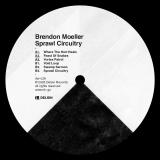
An artist that never stops exploring new territories in sound, Brendon Moeller returns to Delsin with six deep techno steppers following up his Highly Concentrated EP from 2022. Low in frequencies, high in energies. Over the course of six tracks Moeller morphs his iconic dub informed productions into highly intelligent rhythmic arrangements. From introvert techno loops to adventurous dub stepping heavy hitters, it's a full pack of an exciting new chapter in Moeller's extensive catalogue.
House royalty unite. Ralphi Rosario’s Chicago pedigree meets Bob Sinclar’s global dancefloor finesse on this uplifting, piano-charged vocal house weapon. A driving 4/4 groove underpins soaring chords and a powerful lead vocal from Donna Blakely, while Lego’s production keeps the low-end tight and club-focused. A great Chicago-classic where Bob Sinclar transformed it into a club weapon with energy, poise, breakdown drama and hands-in-the-air moments.
Big-room soulful house with crossover appeal.
Grady Steele (Formant Soundsystem) debuts on FELT with the tender spectre of Nausea, poignant patterns captured through the dusk-hued window pane.
Co-founder of the Formant Soundsystem, a travelling rig that’s powered forward-thinking dances in London and Paris, Grady Steele has championed both experimental and club music at the cutting edge. Concurrently to this, he debuted his own productions back in 2024 for Archaic Vaults. Uniquely intimate, his music shone lowkey and warm with an assured glow. It’s no surprise then to find his inimitable sounds land neatly on Fergus Jones’ FELT imprint.
Nausea extends across seven movements, narrating sentimental parallels of familiarity. Grady posits concentrated pangs of post-rave nostalgia with rich melodic sustenance, a vivid introspection tempered with field recordings and live instrumentation. Strummed guitars and aching pads move purposefully with the suspended pace, an immersive beatless vista from its opening quiet moments through to the guttural noise-laden finale. It’s a brief, beautiful collection from Grady Steele and another string to FELT’s unpredictable bow.
Written, recorded and produced by Grady Steele
Mastered by Miles Whittaker
Cover photo by Alex Kurunis
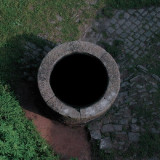
The album opens with the ominous guitar-driven Hollow Sky, accompanied by its haunting music video's verdant vistas. The song, with Iceglass ghostly vocals, shimmers with that sounds like an Omnichord flittering like sonic firefly lights and brooding bass. This perfectly scores the less traveled wanderings through the dark wooden path of Dante's perdition, leading to the titular well that graces the album cover. The Crater opens with an unsettling riff and bass, with low, repetitive frequencies on the synth create a sense of unease. Here, Iceglass recounts a fatalistic requiem for the king of romance that is cataclysmic and leaves a scar upon the earth. With Fall Industrial Wall, once again, Iceglass channels a silky and Nico-like emotive deadpan; against a dirgelike melody backed by minimal synth, bass, and drum. Almost medieval and plaintive, with its folk droning horns, deep and shallow in their resonance. This song is anachronistic, setting the scene of ruins centuries-old with crumbling edifices strewn about like memories lost in time. With the poetic lyrics of The Chamber do we find the eponymous abyss. Here, dualities are laid bare; besides love, there is heartbreak, and without this sorrow, what meaning would there be to love if one knows not what it is to lose? This song encapsulates the idea that love is heartbreak, and love lost is reaching the deepest chamber of the heart. This is carried through a sombre horn, minimalist drum machine, and deliberate bassline overlaid with Iceglass german and english lyrics. The Well is led in with a softly distorted bassline overlaid with eerie banshee howls give way to Iceglass otherworld vocal refrain, echoing through time as if emanating from a hole in the ground, and encircling that hole is a garden of woe and despair. The sinfully seductive song The Moor features a captivating SAX SOLO courtesy of Perseas; a welcome shift in tone, juxtaposed well with the intensity of Iceglass tenebrous vocal purr. This hitherto unexplored foray into dark sensuality takes the song into sordid mid 80s territory, bringing to mind a dusky drive along a serpentine road, with equally haunting instrumentations straddling time with icy fire. Broken Characters is an acoustic folk interlude featuring Selofan's Dimitris Pavlidis on guitar. Here we find a more gentle approach with its earnest and romantic lyrics. The song's melodic hook is a soft caress along with the forlorn horn elements highlighting Iceglass at her most Nico-sounding vocal yet, singing the sorrowful truth that most artists are indeed broken characters. Chimerical opens with dirgelike synth organs. The chill of winter has befallen the lamentations sung by Iceglass carried by haunting chord progressions and minimal percussion, plaintively beseeching the song's subject to remain elusive, idealistic, and a dreamer. After an album highlighting more Jill than Jack, our male protagonist finally makes his ascent in the sonorous and breathtaking Dark Hill, a masterful march of sweeping synth horns, and trepidatious drum machine with William Maybelline's bellowing voice cracking like thunder, rattling the atmosphere like his heart against his ribs. Spirals swirls in a cautionary knell of cathedral-esque droning synth dirge, with Icarian lyrics shining like a sombre ray of hope; like the sun's rays creeping into the darkest of places. The song, minimalist in its tight percussion, echoes with the solace of Larissa Iceglass vocal litany; invoking elements of the supernatural, almost like a Casio preset sequenced to the beating of an angel's wings.
- A1: It’s So Hard
- B1: It’s So Hard (Part Two)
"Die ""big voice"" aus Flint, Michigan, die uns den Smash-Hit „Norma Jean“ bescherte meldet sich kraftvoll mit „It’s so Hard“ zurück. „It’s so Hard“ ist eine tiefgründige, gefühlvolle Beat-Ballade mit einer Botschaft, die eine Geschichte erzählt, die wir leider nur zu gut kennen – die Geschichte zweier vielversprechender junger Menschen, deren Leben ein jähes Ende findet, als sie ungewollt in die Welt der Gaunereien, Drogen und Waffen geraten, die sie umgibt. Gestärkt durch eine unverkennbare Detroit-Härte nimmt dich der Track mit auf eine Reise quer durch das Land und verbindet den coolen East-Coast-Swagger der Isleys aus der T-Neck-Ära mit dem entspannten Groove, den die WC-Lowrider-Soul-Szene so liebt. Ein unverfälschter Ausdruck der Gewalt, die viel zu viele junge Menschen ertragen müssen.
- 1: Blunts Rolled By (Ft. Ras_G)
- 2: Toast Up The Broccoli (Ft. Kahil Sadiq)
- 3: 2High (Ft. Koreatown Oddity)
- 4: Sourdiesel (Interlude)
- 5: Edeus Og (Spacebase Hybrid)
- 6: Haze
- 7: Ate2Manyedibles
- 8: Smoking? (Ft. Zeroh)
- 9: Nickelsackkah (Ft. Kahil Sadiq)
- 10: Kush Og
- 11: Blunt2Thaface
- 12: Grabbaskills
- 13: Lordsunlib Og (Spacebase Hybrid)
- 14: 47 + 2
- 15: Last Nugg
- 16: Regular (Somebeforenone) Outro
"BLUNTS ROLLED" GSF13 the first posthumous release of unheard music by RAS-G'. Eighteen raw transmissions: unreleased beats, remixes, loops & smoky spacecraft meditations arranged in true mixtape spirit exactly as RAS envisioned them. This isn’t a vault dump, it's RAS_G in full form - unfiltered, joyful, psychedelic & rooted in the low end theory.
"BLUNTS ROLLED" continues the ASP mission: connecting hood to heaven, ancient to future, earthly to astral. These sounds crackle with cosmic dust & Cali sunshine - grounded in LA soil, projected into Saturn’s rings. Featuring transmissions from ASP family Kahil Sadiq, The Koreatown Oddity, Zeroh, and even G himself... voices and energies orbiting each other in intimate, galaxy-folding, head-nodding, fronto-scented universes.
High Cube is the beat-focused brainchild of Brian Foote (Peak Oil, Leech) and Paul Dickow (Strategy, Community Library), two low-key legends of the American experimental underground. After some 30-odd years of making music separately and together, Foote and Dickow are collaborating in earnest for the first time as a duo. For this debut, the pair enforced a simple, stringent set of rules: five instruments, a one-hour timer, and a total ban on overthinking.
The result is a record that is the sound of two old friends unplugging the usual levers and letting the "accident" of their chemistry take the wheel. It is drier, sparser, and decidedly "chunky"—a fictional band stepping into a suit to drive around for a while. It is neither dance nor chill-out, but a moody, complex trajectory defined not by the gear used to make it, but by the narrative mood it compels.
"Volcano Snail” starts things off in a disheveled shuffle, locking into gear with blurred and bubbling effluence. The shimmering dimness is lit low, with a woozy gait that recalls the headiest highs and luminescent lows of Jan Jelinek. “Underwater Welder” is a foggy, neon-lit cruise of skittering low-ends suspended in a permanent fall of color, while “A Dragon’s Treasure is its Soul” offers blown-apart, low-end city pop fragmented into an array of rhythmic detritus. Chordal textures hover in the air as a percussive loop takes its beguiling and frolicking shape.
B-side opener “Yonaguni” shapeshifts in real time, drifting with the grace of a glacier before bobbing in a frigid pool of vibrating clatter, static, and synth stabs. “Ofid+wor” offers a tried and true blitz of braindance, nodding to an endless list of 20th and 21st-century electronic body music. Buoyant closer “Mother of Thousands” holds a gravity-defying tenderness, pirouetting on a breeze with the elegance of effervescent longing. Woven together, the six extended tracks of High Cube are tethered to nothing but the ether—a giant sonic leap of peripheral absurdity from two artists with a lifetime of shared rhythm.
Groovy, functional and elegantly reduced Micro House. AFRV008 brings Dubfound for a tight, late-night or early mroning leaning 12" on Aforisme. Freak Love EP moves with that signature micro-house precision: crisp drums, warm low-end pressure and hypnotic groove shifts that keep the floor locked without ever overdoing it. On the A-side, “Freak Love” sets the tone with elastic rhythms and a stripped-back, forward-driving pulse. Flip to “Hold Me Up” for a deeper, more rolling mood, minimal elements arranged with maximum impact. Maher Daniel closes it out with his remix, adding extra swing and a refined, spacious touch that feels made for long blends and after-hours moments.
Interstellar Echoes is a deep, hypnotic blend of Dub Techno and Dub House swing, built for late-night systems and long transitions. WM002 on Watermellow Music brings Benjamin Shock into full orbit mode: Warm chords drift through cavernous delays, low-end pulses stay locked and steady, and each track unfolds like a slow-moving spacecraft patient, spacious, and heavy with atmosphere. From the rolling drive of “Analog Odyssey” and the expansive glide of “Space & Time” to the tougher push of “Thunder Jam” and the weightless swirl of “Orbital Resonance,” this 12” is pure cosmic dubbing subtle, immersive, and endlessly repeatable.
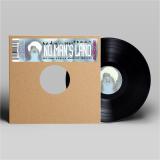
Complimenting his singular debut LP, 2025’s ‘Light Months Will Fly Over Us’, singer-songwriter and producer Addy Weitzman sees his thoughtful artrock and new wave aesthetic expanded by The Time & Space Machine for a limited three-track 12".
The long-running alias of British DJ, archivist and acid pioneer Richard Norris, this trio of remixes from The Time & Space Machine’s central processing unit finds Norris in a jubilant raving mode, his trademark psychedelia contributing to Slacker at its best and baggiest. The initial mix captures Weitzman’s songwriting in full, including his portentous vocal hook – “No man is a prophet in his own land” – a proverb first found in the gospels, blessed with the innovative Norris’s application of hypnotic groove, fat low-end and a ton of percussion.
The B-side sees Norris stripping things back in two directions: the Shango Dub draws focus on the higher vibrations found in the track’s beautifully intertwined percussive and synth elements, while the Riddim Mix reduces the frequencies further still, with a phased, slightly fried drum workout primed to spin heads as the night gets deeper and darker.
- A1: Preacher Man
- A2: Beauty And The Beast
- A3: Last Breath
- A4: White Lines
- A5: I Can't Wait
- A6: Bully
- A7: All The Love
- B1: This One Here
- B2: Highs And Lows
- B3: Mission Control
- B4: Circles
- B5: Damn
- B6: Losing Your Mind
Tape Cassette[15,92 €]
The latest tape from Captured Visions offers up smoky, low-key deepness that is perfectly suited to the imperfections of the format. Arcade, aka Nathan Stephenson, opens up this compact but potent collection with 'Grace 01', a dreamy house sound for calm and reflection with a gentle smattering of toms and smeared chords soothing the soul. 'Grace 02' moves more but remains well below the surface, with liquid pads and cuddly kicks. '03' spins out into electro drum patterns with bleeping digital synths and crunchier hits, and '04' closes with ghostly chords that drift in and out of focus over a cavernous and dubby low end from late 90s Berlin.
Afrikanische Meisterwerke der Akustikgitarre, die auf Mississippis beliebter ,African Guitar Box" aufbauen. 1979 und 1980 machte sich ein junger britisch-kenianischer Musiker namens John Low auf den Weg, um von seinen Helden das Fingerstyle-Gitarrenspiel zu lernen. Er reiste durch Kenia, Tansania, Kongo und Sambia, besuchte Stars wie Jean-Bosco Mwenda, Losta Abelo und Emmanuel Mulemena und wohnte manchmal sogar bei ihnen. Außerdem nahm er brillante, aber bisher wenig bekannte Künstler wie Francis Kitime aus Tansania und Mtonga Wanganangu aus Kenia auf. Unabhängig von ihrem Status ging John jedem Künstler demütig wie ein Schüler entgegen. Er nahm in Häusern, auf Dorfplätzen und an Wasserstellen auf. Die Sessions sind intim und ungezwungen, die Künstler fühlen sich wohl. Johns Kassettendeck nahm einige der größten Künstler des Kontinents auf, zusammen mit dem Klang von Gelächter, spielenden Kindern und klirrenden Gläsern. Fünf Jahrzehnte später bieten diese Bänder einen seltenen Einblick, wie Fingerstyle-Gitarre außerhalb der angespannten Atmosphäre kommerzieller Studios tatsächlich klang. Einige dieser Songs erschienen auf John Storm Roberts' vergriffenen Original Music-Compilations (die Mississippi stark inspirierten). Andere wurden nie öffentlich zugänglich gemacht. Alle wurden von Andrew Walter (Honest Jon's, Abbey Road) fachmännisch restauriert und von den Originalbändern remastert. John Low liefert Notizen und Songtexte, und der tansanische Musikwissenschaftler John Kitime gibt die Perspektive der Musiker wieder. Lizenziert von John Low und den Künstlern, gepresst auf hochwertigem Vinyl bei Smashed Plastic in Chicago.
- 01: Maanitus &Amp; Tšiižik
- 02: Markka
- 03: Melkutus
- 04: Letška
- 05: Kuuen Parin Hoirola
- 06: Brišatka
- 07: Tšiižik
- 08: Kirkonkellot
- 09: Kirkonkellot Korkea
- 10: Hoirola, 3 Parin
- 11: Lippa
- 12: Kyngäkiža
- 13: Ristakondra
- 14: Vanha Polkka
- 15: Viistoista
- 16: Vanha Valssi
- 17: Kiberä
- 18: Maanitus Kuokan Kanteleella
- 19: Tuuti Lasta Nukkumahe
Vinyl[22,65 €]
Death Is Not The End present a further volume of Arja Kastinen's eerie amalgamations of 110 year old wax cylinders with her own meticulously transcribed takes, this time focussing in on Armas Otto Väisänen's field recordings of kantele player Iivana Mišukka (b. 1861 d.1919).
"Ivana Mišukka (1861–1919) was one of the Karelian kantele players recorded by the folk music researcher Armas Otto Väisänen on wax cylinders in 1916 and 1917. In the early 20th century, the remote areas of Border Karelia were undergoing the final phase of a transformation in musical culture, with the ancient runo song tradition giving way to newer forms of music. This transition is reflected in Mišukka's repertoire and choice of instrument. The ancient small kantele, hollowed out of a single piece of wood, was already rare at the turn of the century. Mišukka's kantele was a new type of instrument with 26 strings, constructed of several parts, but he played it using the traditional plucking technique. Like other Border Karelian kantele players, his repertoire consisted of music rooted in runosong culture, as well as newer dances and songs from the east and west. Most of the recorded material falls into the latter category.
Ivan Bogdanov Mišukka was born out of wedlock in Suursara village, Suistamo, on 1 May 1861. He began playing the kantele at the age of five or six, quickly mastering the instrument. In adulthood, he was considered one of the area's best master players. Mišukka was landless for most of his life and lived in different parts of the Suistamo parish. His first wife, Tekla Markintytär, died in 1897 at the age of 40, and his second wife, Jevdokia Filipintytär Jeminen, died in 1907 at the age of 50. Seven children were born from the first marriage, two of whom died young. The third wife, Maria Ignatintytär Gurnan (Kuurnanen), was a well-known master of lamentations. Together with Maria, Iivana Mišukka worked as a tenant farmer in the village of Suursara. Mišukka suffered from rheumatism, which prevented him from participating in physical work like Maria. This was apparently partly the reason why Iivana Mišukka went to earn extra money by playing the kantele on gig trips. He often had other traditional artists from Suistamo as his travelling companions, such as the runosingers Konstantin Kuokka and Iivana Onoila. Iivana Mišukka died in Leppäsyrjä village, Suistamo, on 18 May 1919 at the age of 58, and his kantele was donated to Teppana Jänis.
Mišukka only used 14 of the 26 strings on his kantele, playing the same tunes either a fourth higher or lower. He tuned his kantele to the major scale using fifths, except for a low seventh scale degree on the upper strings, but not below the fundamental. Since he did not use the seventh note of the scale on the upper strings at all, he could use the major scale both lower and a fourth higher with this tuning. According to Mišukka, the sound of higher, or 'finer', strings is 'more beautiful', while that of lower ones is 'greater'. Among runosingers, the size of the thirds varied, ranging from major to minor to neutral. A similar phenomenon can be observed in kantele tunings, where the third, sixth and seventh scale degrees vary in a comparable way.
During a meeting, Väisänen suggested that Mišukka play the smaller kantele belonging to Konstantin Kuokka. The idea was to bring it closer to the horn to improve the recording quality. However, the kantele was completely out of tune, and now Mišukka tuned it to the Lydian scale (track 18).
Using the old plucking technique, Mišukka placed his right middle finger on the fundamental tone, his right index finger on the second scale degree, his left middle finger on the third scale degree and his left index finger on the fourth scale degree, and his right thumb on the fifth. The thumb also played the notes above the fifth note of the scale. As Mišukka remarked to Väisänen: 'Peigaloll' tuloo enemb ruadoa' (the thumb has to do more work). However, he did not use the seventh note of the scale on the upper strings at all. Below the fundamental note, he played the seventh and sixth notes of the scale with his right middle finger of and the fifth note of the scale with his right ring finger. This fifth scale degree below the fundamental is almost always used as a drone. Sometimes, when the melody required it, Mišukka, like other players, also varied the fingering. He would also occasionally strike the same string with the side of his fingernail after plucking it.
The wax cylinder recordings of Karelian kantele players are kept in the archives of the Finnish Literature Society in Helsinki, Finland. Copies were made of them onto reel-to-reel tapes in both the 1960s and 1980s. The 1960s copies are mono and the 1980s copies are stereo. However, not all kantele recordings from these decades have survived.
The sound of the kantele is difficult to hear in wax cylinder recordings due to its low volume, and it occasionally becomes completely obscured by noise. During the copying process, the cylinder sometimes rotates unevenly, resulting in breaks or jumps in the music. Additionally, the rotation speed of the cylinder in the copies does not correspond to the performance speed of the original music, which alters the pitch. However, since Väisänen's precise notes are available in the archive, it is possible to deduce the melodies, their speed, and the tuning level of the kantele in the recordings. Of the copies of the original recordings from the 1960s and 1980s, I have selected the one that best met the requirements of this publication and adjusted the speed of the recording to align with Väisänen's notes. To enhance the listening experience, I have replayed the songs, which now partly overlap the old recordings on this release."
— Arja Kastinen