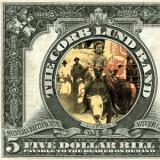
Five Dollar Bill was originally released in 2003, and is now going to be widely available on vinyl for the first time. This record includes songs that are staples in Corb Lund’s live set, such as “(Gonna) Shine Up My Boots” and “Time to Switch to Whiskey.” In addition to these lively jams, Five Dollar Bill features everything from romantic imagery of Corb’s homeland, “Short Native Grasses (Prairies of Alberta),” to songs that give the listener a glimpse into the life of working class folks, such as “Roughest Neck Around” which is an ode to oil riggers and the grit that is required with that lifestyle. “‘Five Dollar Bill’ was a big milestone for me for lots of reasons. It was my first record after my metal band, The Smalls, broke up and it’s when I got really serious about western music. I really dove into my family’s cowboy ancestry and my very rural upbringing in this batch of songs. It was also our first record of many produced by Harry Stinson who is now a very close friend, and our first brush with Nashville, Tennessee, as we recorded half the record down there. It was our last record with Ryan Vikedal on the drums before he flew off into fame and fortune with Nickelback. It was also our last record as a trio. It was my first gold album,” says Lund, “And we are still playing lots of these songs at our shows. It really defined my path forward as a western songwriter and helped lay the foundation for my whole career."
This limited edition release is part of the Corb Lund - Dark Horses Club. New West Records will be releasing unreleased records and material from Corb Lund throughout 2025 and 2026.
Buscar:lüüp
I envision this music as emanating from a moon inhabited by otherworldly life forms and ecosystems; these sounds as evoking the moon’s topographies, beings, lunar rivers, and strands of light — as if this moon’s essence were itself sonic, vibrational matter.
Musically and acoustically, Strands Of Lunar Light departs from a set of tones corresponding to a confined harmonic series segment of a very low fundamental frequency: 5.15 hertz. Through twelve continuous sections, each employing various methods of activating openly tuned guitar strings, the music is sculpted from the twenty-four pitches corresponding to harmonics 24 through 47 of this fundamental frequency.
At times, the natural second (octave) harmonics of the open strings are activated and introduce a secondary, octave transposed version of the original harmonic series segment, doubling the fundamental frequency to 10.30 hertz, and thereby revealing a brighter vibrational realm.
As a consequence of the rational pitch relationships integral to harmonic series of tones, these two sub-audio fundamental frequencies (pitch wise existing two and three octaves below the E-string of a double bass, respectively) can be heard in the music as the frequencies of the interference patterns produced by the simultaneous sounding of any pair of adjacent tones in the respective sets of tones.
These interference patterns, of 5.15 or 10.30 hertz (depending on the octave of the tones produced), are perceived as even pulsations occurring with varying degrees of clarity over the course of the piece.
I imagine these fundamental frequencies and their related harmonic tones as the elemental components of a moon, and this music as offering a glimpse into its vast lunar-sonic existence.
Fredrik Rasten, August 2024
- The Luckiest Man
- Sewing A Button
- Board Of Desire
- Lot Tour
- Meeting Peter
- Michael Winning
- Michael Losing
- Detective Chuck
- Chuck Sad
- Michael Giving Up
- Bill’s Bargain
- Patricia’s Theme
- Patricia’s Theme Reprise
- The Whammy
John Carroll Kirby brings his signature sound tofilm scoring with the official soundtrack album forfeature film ‘The Luckiest Man in America’, whichpremiered at the Toronto Film Festival andreceived a wide theatrical release.
John Carroll Kirby’s background is steeped in jazz,but his signature sound blends genres and styles.He has collaborated with artists ranging fromsuperstars Solange, Frank Ocean, Harry Stylesand Steve Lacy (earning him a GRAMMY nod forthe smash hit ‘Bad Habit’) to beloved indiemusicians like Connan Mockasin, Yves Tumor,Eddie Chacon and Liv.e.
John Carroll Kirby has released several recordswith Stones Throw, most recently ‘Blowout’ in2023, which Pitchfork called “endlessly vibey… hismost energetic and immediately enjoyable releaseyet.”
His records have received previous support fromPitchfork, The FADER, LA Times, The Guardian,BBC Radio 1, BBC 6 Music, MOJO, Clash andVICE, among many others.
Kirby has toured extensively across NorthAmerica, Europe, Australia / NZ and Asia, and ison tour throughout Summer 2025 with Khruangbinin the US.
For fans of Duval Timothy, Sam Gendel, AlabasterdePlume
- A1: The Harmony Society - Bus Stop Boogie
- A2: The Joe Tatton Trio - Bang Bang Boogalo
- A3: Ivan Von Engelberger's Asteroid - Lunartics
- A4: Earl Dawkins - Secret Universe
- A5: The Magnificent Tape Band - Heading Towards Catastrophe (Instrumental)
- B1: The Disarrays - Help Me
- B2: The Mandatory Eight - The Hardest Day
- B3: The Sorcerers - In Pursuit Of Shai Hulud
- B4: The Magnificent Tape Band - When I Saw You (Instrumental)
- B5: The Disarrays - Anaesthise Me
ATA Records is pleased to announce the release of Early Works 2: Funk, Soul & Afro Rarities From The Archive, a compilation of tracks recorded in the fledgling days of the label paired with some rediscovered treasures from more recent years. While the majority of the album is previously unreleased material several tracks have appeared on different formats.
This is a rare chance for listeners to experience the birth of the ATA's enduring concept and recording techniques from the comfort of their own home.
In 2020 label founder and musician Neil Innes decided to destroy the studio he had spent 14-years building, destroy it and rebuild it from the ground up.
Once the studio began to take shape again and Innes was finally able to take a breath he began rooting through the label's archives, pulling out reels that had been propping up tables, holding open doors and generally lurking in nooks and crannies for years.
His trip down memory uncovered a wealth of dusty musical treasures and also got him thinking about tracks from newer artists, nuggets to compliment the archive gold.
Along with the first airings of tracks by The Harmony Society, The Disarrays this 11track comp includes appearances by studio favourites: The Magnificent Tape Band, The Sorcerers, The Mandatory Eight, Ivan Von Engleberger's Asteroid and long time collaborator Chris Dawkins (recording under Earl Dawkins).Also on the comp is Joe Tatton's Bang Bang Boogaloo, previously only released on 7 inch and greatly desired by record diggers everywhere.
Vinyl A Coloured Vinyl[20,59 €]
Vinyl B Black Vinyl[12,56 €]
Vinyl B Coloured Vinyl[20,59 €]
Known for his ability to create captivating, emotionally charged techno, Jonathan Kaspar eventually returns to Cocoon Recordings with his third contribution Twofold Split. One, yet simultaneously two releases that once again showcase his extraordinary talent through condensed techno with a pinch of trance, weaving together driving rhythms and atmospheric textures in a way that feels innovatively progressive.
Drifting hypnotically, this might be the most fitting way to describe what Jonathan Kaspar unfolds before us here. The rolling percussion grooves seamlessly intertwine with the siren's spectral tone, gradually blending into the alchemy of ‘Yah’ as it erupts into the mix. By the time the peak arrives, there’s a raw intensity in the air - the track seems to bend and stretch then drills and twists until it cracks, but never loses its sense of purpose and remainsanchored in its deep, pulsating groove. On the flip side, ‘Silver Lines’ stands as a counterpart, offering a contrast in both sound and atmosphere. With its minimalist arrangement, the track first nestles in gently, lulling the listener into its world—only to tighten its grip as a synth sequence gradually opens its cut-off filter, slicing through the calm, drilling into the mind, and shifting the mood from tranquil to tense.
Emotional Especial reaches a landmark with its 50th release. Started in 2012 as a “dancier & trippier”, club friendly spin off, sub label to Emotional Response, it has gone on to forge a path, releasing a myriad of artists including the opening release by Jamie Paton (Cage & Aviary / ESP Institute) to Richard Sen (Bronx Dogs), the debut of Khidja (Malka Tuti / DFA) and on to unearthing the breaks masters Alphonse (Klasse Wrecks) and Junior Fairplay (Crimes Of The Future), the uplifting Italo influenced Lauer (Robert Johnson), the new wave anthem of Sfire (featuring Sophie), plus perfect remixes bt Kris Baha (CockTail D’amore) and INHALT (Dark Entries), the NYC pop-rave-vox of Kim Ann Foxman, through to showcasing upcoming artists like Berlin’s Giraffi Dog (Aiwo Recs) and the global acid adventures of Akio Nagase (Chill Mountain) to most recently, the slo-mo trance muscle of 53X and post-rave uplighters of Remotif (Space Lab) and DJ 1985.
As with every 10th release on the label, the label present a various artists “Showcase” of what and where the label is. Aptly it is recent signing 53X who opens Gracias Especial with the bounce of Radar. Finland’s Jonne Lydén debut EP on Especial, Zen ’23 came out of nowhere, more than simply riding a zeitgeist of the “Trance Revival”, his all-live analogue symphonies drop the bpms, presenting widescreen beats, darkroom bass, sirens and tripped out vox all mix to propel a singularly driven.
Taking things much deeper has been the hallmark of Jamie Paton’s remixes for the label. As well as providing the opening EP in 2013, designing every sleeve and producing 20 remixes and counting another 2 for the label here, it’s impossible not to associate Especial with Jamie’s music. First, he reworks rising star DJ, but recent break out producer Chez De Milo, with a trademark dub excursion that takes the ethnic origins of Kremer to a space echo wonderland. Space is the place, the lulling beats, see you falling through the gaps, true dub style.
Alphonse makes a rightful return to Especial, with Raze Rave highlighting the allusive producers’ unique understanding of the varied history of rave culture via a techno-suite of soundscapes, perfectly mixing uplifting breaks, memory inducing vocal samples and dub bass, with a nod to the pop sensibility that rave encompassed, while being that allusive “lost chord” moment of man and machine.
The finale returns to the trance acid expanse of 53X, with the mastery of label stalwart Jamie Paton. An apt marriage, Paton takes the title cut from Lydén’s debut EP and crafts a trademark durge-dub, where TB303 and space echo intertwine with the De Witte vocal, hinting at touches of dub, new wave, trance and acid house all in one melting pot of sound the label optimistically termed “Protoid” back at inception of summer 2013.
- 1: 7
- All I Wanna Do Is Party
- In The Club Featuring Hitech
- Lipsync
- Alberta
- Higher
- Ppp (Interlude)
- Arcadia
- Leave
- Bet On Me
- Darker The Better
LOSER pressing on - LIGHT BLUE BIO VINYL. Auf ihrem kaleidoskopischen zweiten Album, The Starrr Of The Queen Of Life, definiert Debby Friday den Erfolg auf ihre Weise. ,Ich will ein Star sein, diesen Wunsch kann ich nicht verbergen", sagt sie. ,Aber ich will nicht den Traum von jemand anderem leben oder einem vorgegebenen Weg folgen." Für die nigerianisch-kanadische Universalgelehrte bedeutet Starrr zu sein, in den Extremen zu leben: öffentlich oder privat, Selbstüberschätzung oder Demut, Fliegen oder Fallen. Ein Starrr zu sein bedeutet, den apokalyptischen Hedonismus eines nächtlichen Raves zu umarmen - und die Gemeinschaft im ,dunklen Raum, Mädchen in der Schlange für die Toilette" in der brummenden House-Hymne ,All I Wanna Do Is Party" zu finden. Es bedeutet, dass sie mit den Detroiter Techno-Wunderkindern HiTech in ,In The Club" Zeilen über Flaschen auf Eis austauscht und auf der Tanzfläche ausflippt, während sie zugibt, dass sie ,in diesen Tagen kaum auf der Tanzfläche ist". Es ist der Sound der Entdeckung, was nach dem Erfolg kommt, von dem die meisten Künstler nur träumen - wie man hell brennt, ohne auszubrennen. In 11 Songs stellt The Starrr Of The Queen Of Life Freitags chamäleonartigen Gesang zur Schau. Von der spärlichen, hauchzarten Schönheit des liebeskranken ,Leave" bis hin zum treibenden Post-Punk von ,Darker The Better". Der Gewinn des Polaris-Preises 2023 für ihr Debütalbum GOOD LUCK hat Debby Friday nur noch mehr angespornt: ,I'm tryna see more/ Man, I want the payoff" rappt sie über laserartige Synthesizer auf dem mühelos kopierten Kiss-off ,Lipsync`. Aber das Leben auf Messers Schneide kann nur eine gewisse Zeit lang aufrechterhalten werden: Während einer Nonstop-Tournee zur Unterstützung des Albums wurde sie schwer krank. Die Diagnose? Stressinduzierte Gürtelrose. Diese Erfahrung zwang Friday dazu, sich nach innen zu wenden. Im folgenden Jahr änderte sich ihr Management, ihre Routine und ihre Prioritäten. Um ihre Vision von radikaler Ehrlichkeit auf der Tanzfläche zum Leben zu erwecken, rekrutierte Friday den australischen Produzenten Darcy Baylis (Wicca Phase Springs Eternal). Die beiden kehrten zwischen ihren Tourneen in ihre De-facto-Heimat London zurück und tauschten im Studio von morgens bis Mitternacht Ideen aus. The Starrr Of The Queen Of Life ist voll von verschlüsselten, wenn-du-weißt-schon-wem-Referenzen, die Liebesbriefe und Anspielungen aus den Namen von It-Girl-Parfüms, französischem Cognac und hellenistischen Prophetinnen, die in Zungen sprechen, verweben. Es liest sich wie eine Manifestation von Freitags Streben nach einem experimentellen Popsound, der sich immer noch unverkennbar nach ihr anfühlt. ,Dieses Album handelt von der Idee, nach etwas zu greifen", sagt sie. ,Es geht darum, die Zeichen zu sehen und diesem Impuls zu folgen, immer mit der Möglichkeit, entweder in die Sonne zu fliegen oder auf die Erde zurückzufallen." Auf The Starrr Of The Queen Of Life erhebt sich Debby Friday in die Lüfte, um ihre Flügel zu befestigen und dem Klang ihrer eigenen Stimme zu folgen.
- A1: Any Other Grey
- A2: Der Brandtaucher (Stringed Version)
- A3: Der Erscheinungen Flucht (Stringed Version - Edit)
- A4: Feral Agents (Feat. King Dude)
- A5: Mar'yana (Ballad Version)
- A6: Blighter (Eumesville Session)
- A7: The Ballad Of Mariupol (Defiance Version)
- B1: Mourir À Madrid (Extract)
- B2: Reversion (Edit)
- B3: Aphrodite
- B4: Das Feuerordal (Live In Kyiv, 2023)
- B5: Anderswo
- B6: Hawker (Edit)
- B7: The Secret Germany (Eumesville Session)
- B8: Mauserballett (Edit)
- C1: Perpetua
- C2: Le Vertige Du Vide (Jr Version)
- C3: Body English
- C4: To Teach Obedience (Live In Jerusalem, 2015)
- C5: The Beast Pain
- C6: This Surrender
- C7: The Spanish Drummer (Eumesville Session)
- C8: Maschera E Volto (Edit)
- D1: Generation Zeitsturm (Live Intro)
- D4: One Flesh
- D5: Uropia O Morte (Solo Version - Live In Dublin, 2023)
- D6: My Traitor's Heart
- D7: Die Geiselfrage (Edit)
- D2: Skirmishes For Diotima (Alt. Take)
- D3: The Death Of Longing (Live In Berkeley, 2012)
Wer ROME seit der 20-jährigen Bandgeschichte verfolgt, wird nicht bestreiten können: Jerome Reuter ist immer für eine Überraschung gut. Sicher ist der Folk Noir, die düstere Liedermacherkunst mit Akustikgitarre und melancholischen Vocals, seine kreative Basis und Kontinuität. Doch immer wieder finden sich auf seinen Alben atmosphärische Ambienttracks – filmmusikartige Collage und Vertonungen der Konzeptthemen, die ROMEs Ursprung in der Post-Industrial-Culture belegen. Und immer wieder überschreitet er souverän die Grenze zu anderen Genres wie dem Post Punk und dem dunklen Elektropop. Statt luziden Akustikakkorden treten dann noisige, kalte Elemente ins Zentrum, martialische Samples, analoge Synthieklänge und programmierte Beats, die auch auf dem Szenedancefloor nicht stören würden.
„Terres de Sang“ ist nun anlässlich des 20-jährigen Bandjubiläums eine Kollektion von Songs und Instrumentals, die in diesen Versionen noch nicht erhältlich sind, sei es live oder in Remixen. Dazu kommen jene typischen ROME-Klangkollagen, die man von den Intros der Livekonzerte kennt. „Terres de Sang“ ist ein Füllhorn der unterschiedlichen Stile, Themen und Stimmungen, die ROME seit zwei Dekaden kennzeichnen. Daraus ergibt sich kein eigenständiges neues Album, aber ein ebenso spannendes wie unterhaltsames Kaleidoskop der unerschöpflichen Kreativität Jerome Reuters, das dem ROME-Sammler aus dem Herzen spricht. Darunter finden sich auch alternative Liveversionen von beliebten ROME-Hits wie „Das Feuerordal“, „Blighter“ und „Secret Germany“.
Erhältlich als:
- 2CD Digipak
- Schwarzes, 180 Gramm schweres 12“ Doppel-Vinyl, Extra audiophiler Tonträger von hoher Qualität - deutsche Pressung, Gatefold-Klappverpackung, Mehrfarbig bedruckte Innenhüllen, Limitiert auf 500 Exemplare
For his first Mondoj release, Finnish musician Olli Aarni journeys to the wide oblique, where shapes are implied by slants of light previously thought impossible, coming from sources dispersed and hidden. The paranoid eye turns them into phantasms: distant pop songs, fields of fair folk spinning vocoded fudge, an exquisite tasting menu, the shiny towers of an inflatable castle protruding from underground. Scientific inquiry reveals spoken word, diatonic harmony, wide stereo fields, spectral shenanigans, strong scores of wonder and tenderness on the Geneva Emotional Music Scale.
Bubblegum as they are, it's imperative to take these phantasms at face value. The real is elusive; they are all we have. And yet it's also imperative to question them with the greatest scrutiny, because what is wonder and tenderness worth if artificial? Cotton candy can be damned to the void by a single drop of rain. Lucky thing it's drought season. It's up to you, now, whether and how to partake.
And for the hidden truth: among these mirages hide true wonders, the likes of which you've never seen, undiscovered insectile joys, passionate hearts, berries blue to black, rasp to lingon. They are never to be disregarded.
- A1: Intro
- A2: Quit Rappin
- A3: Tell You The Truth
- A4: Gta Vi
- A5: Backflip Or Sumn
- B1: Keep It 100
- B2: R.i.p. Barneys
- B3: Bad Timing
- B4: Social Media Can't Help You
- B5: Maestro's Tension
- C1: Fuck The Party Up (Feat. Rio Da Yung Og)
- C2: Chalkzone (Feat. Lil 9)
- C3: Pressure
- C4: I Want It All
- C5: It's A Secret (Feat. Allblack)
- D1: Spousal Abuse
- D2: Ice Chili
- D3: To Be Honest
- D4: Fictional
Thank You For Using GTL is a 2020 album from vaunted Los Angeles rapper, Drakeo the Ruler. The album contains verses recorded entirely through phone service from GTL while Drakeo the Ruler was incarcerated at Men’s Central Jail in Los Angeles, California. The album focuses on topics such as the targeting of rap and rappers by the US criminal justice system, the prison-industrial complex, incarceration, capitalism, and the gray area between what’s real versus fiction in hip-hop. Lauded by Pitchfork as “Likely the greatest rap album ever recorded from jail,” and included at number 32 on their 50 Best Albums of 2020, the album serves as an interesting moment in hip-hop, further cementing Drakeo the Ruler as one of LA’s most beloved rap luminaries. For the very first time, for any album, on any format, Drakeo’s music will be available on vinyl for fans. Pressed on Green & Blue A Side B Side vinyl and limited to 1700 copies.
Iridescent Blue Color Vinyl[40,29 €]
- I'm | Getting Sick
- Evicted | 05 24
- We've | Made It This Far
- Undercurrent
- King | Of Swords
- Omw
- Happy | Is Hard
- Tired
- Keep | Driving
- I'll | Be Here 03 56
Vines, the solo project of New York-based multi-instrumentalist and composer Cassie Wieland, offers a window into her inner world through expansive swaths of sound. She pieces together a celestial mix of synths, percussion, strings, and vocoded voice, making music that is at once deeply personal and cinematic in scope. This diaristic approach first took shape with her 2023 EP Birthday Party, and is crystallized on her debut LP, I’ll be here. With the sweeping and vulnerable I’ll be here, Vines arrives fully formed as an artist who crafts deeply resonant and open music–the kind that invites listeners in to listen, reflect, and share in the journey of learning through living.
“It was through making music that I was able to meet myself,” Wieland said. “Anything I’m going through or feeling is something that somebody else out there can relate to, and that’s really special to me.”
I’ll be here is both a culmination of years spent creating gossamer soundscapes and an opening to a new journey for Wieland as an artist. The album grew out of her years as a composer and songwriter, and builds on the language she developed on Birthday Party, which transformed the tumultuous feelings of the passing of time into minimalist meditations. It was just a start, though–a prologue, a development of the kind of language and ideas she wanted to express. With I’ll be here, she digs deeper and writes music that feels more sprawling, further solidifying her singular voice.
Wieland’s musical composition process is similar to journaling, lending itself to the music’s honesty. When she writes, she makes room for all the ideas she has; in these sessions, there are no wrong ideas, and she allows the music to be attuned to the experiences she’s having at the time. With I’ll be here, Wieland zeroes in on themes of anxiety, loneliness, navigating human connection, and having to grow up from a young age, ultimately coming to a place of acceptance. And though it began as a journal written in solitude, her collaborators shape the music with her.
Working with friends, in fact, was a crucial part of bringing the record to life. “Everything that was supposed to happen came together so easily because of the people involved,” Wieland said. I’ll be here was co-produced and recorded with Wieland’s longtime collaborator Mike Tierney, a four time Grammy-nominated engineer who has worked with artists across the contemporary classical and experimental scene like minimalist pioneer Steve Reich, LA’s preeminent classical ensemble Wild Up, and various bands on Bang on a Can’s Cantaloupe Music label. Percussionist and composer Adam Holmes and violinist Adrianne Munden-Dixon are two other longtime collaborators who are frequent fixtures of her live show. Holmes plays synths, drums, and banjo; in live settings, his kit is loaded with elements of the songs that are then triggered by MIDI, making the music an interactive, evolving experience. The album’s gentle, filamented edges are colored by Munden-Dixon, whose poignant string melodies elevate Wieland’s introspective compositions, as well as cellist Helen Newby, saxophonists Julian Velasco and Jordan Lulloff, and bassist Pat Swoboda.
Wieland takes an economic approach to writing music, building the swirling and immersive landscapes of Vines through short melodies, lyrics, and phrases. As each element layers and interweaves, they grow into sprawling webs of ghostly sound. Prior to Vines, Wieland composed pieces for other people to play using a minimalist’s sensibility, writing slowly unfolding melodies for instruments like violin and saxophone. In recent years, she sharpened her solo style across a variety of singles and covers which have garnered significant attention on social media for their emotional resonance (“being loved isn't the same as being understood” in particular went massively viral on TikTok in 2024). Birthday Party, her debut as Vines, brought her writing to a much more intimate space, centering on her vocoded voice cloaked in feathery reverb. A series of recent singles, meanwhile, including “I am my home,” showcase the way that Wieland’s music is born from the story of her innermost feelings, extending far beyond just the self.
Though Wieland’s music often deals with dark themes, it unfolds with tender melancholy, the kind that feels like a warm embrace. On “Evicted,” Wieland wonders if she’s getting sick or moving on, if she’s lost or found. Her vocals expand with each lyrical repetition, as the instrumentals slowly encircle and the music’s rhythm grows and bursts into a heart-wrenching, yet radiant wave reminiscent of post-rock bands like Explosions in the Sky. “Tired” follows a similar trajectory, building from a looping, melancholy rhythm and floating lyrics into a solemn resignation. Elsewhere, Wieland takes a more ruminative approach: “Omw” begins with twinkling piano and melancholy strings that gradually transform into an undulating mass. It is a song born out of the warm feeling of reminiscence, the slight return of hope that comes with nostalgia.
With any searching journey, there is also a point of understanding. The title track closes the album with the freedom of acceptance. A marching drum beats steadily beneath Wieland’s open vocals, moving forward, ever onward as it flies into the ether. In Wieland’s delicately textured music, there is room to come into yourself, and learn to love whomever that is. I’ll be here is a special space that can be all your own, one in which to feel what needs to be felt. “This is music for your story,” Wieland said. “I want you to use it how you need it.”
- A1: Free Your Mind
- A2: Your Fantasy
- A3: Nursery Rhymes
- A4: Magic
- B1: Funky Bone
- B2: Backup N Funktown
- B3: Bump-A-Rump Ability
- B4: Crisis
In 1979, Record Player privately pressed and issued a solitary 45 on their Gem City Records imprint in Dayton, Ohio. Though they had recorded a host of other songs, and were on the verge of signing to a major label, their trajectory stalled and the band splintered by the early 1980s. In the early 2000s, Record Player principle Charles Jackson surfaced with their unreleased songs. Todate, only two Record Player songs have been reissued, as part of Now-Again's long-running Soul Cal series. Now, the entirety of their oeuvre is presented here as Free Your Mind, and their story detailed in words by Bret Sjerven. This is a special release for us at Now-Again, and will be perfect for any fan of the deep disco scene that birthed the likes of Luther Davis, Edge of Daybreak, Tomorrow's People, Split Decision Band, and so many others issued by us, Numero Group, and other like minded labels.
- 1: Because I Got High (Dirty Radio Edit)
- 2: Crazy Rap (Colt 45 & Zig Zags)
- 3: She Won't Let Me Fuck
- 4: Hush
- 5: Tumbleweed
- 6: Let's All Get Drunk
- 7: Tall Cans
- 1: Palmdale
- 2: Mississippi
- 3: The American Dream
- 4: Because I Got High
Enjoy The Ride Records in conjunction with Universal Music Group proudly presents Afroman - The Good Times.
The Good Times was released in the summer of 2001; the album climbed the Billboard charts and was certified gold within a month of its release.
The Good Times includes the Certified Platinum singles "Because I Got High" and "Crazy Rap (Colt 45 & 2 Zig Zags)," along with 9 other tracks that will take you back to that early aughts summer, blasting the radio with the windows down (or with the windows rolled up while you baked out your car - we don't judge).
The Good Times is a limited edition 2xLP pressed on colorful vinyl. The packaging features new center label art on the B(lunt) Side, as well as a screen-printed D(ank) Side. Housed in a wide-spine jacket with a 12" x 24" single-sided full-color insert.
- A1: Agadou
- A2: Zabadak
- A3: Big Bamboo
- A4: Se Me Quieres
- B1: Saragossa Band X Madagascar 5 - Agadou (Extended Mix)
- B2: Big Bamboo (Jonny Nevs Remix)
- B3: Kalimba De Luna (Bob Shepherd X Da Clubbmaster Extended Remix)
- B4: Agadou (Jonny Nevs Remix)
- B5: Saragossa Band X Madagascar 5 - Zabadak (Extended Mix)
- B6: Se Me Quieres (Jonny Nevs Remix
Die Stimmungsgaranten sind zurück – auf farbigem Vinyl! Mit der Saragossa Band – Original Hits & Remixes erscheint eine ganz besondere Ausgabe für alle Fans von Kult-Partyhits.
Seite A bietet die beliebtesten Klassiker der legendären Band in ihren Original Versionen:
Agadou
Zabadak
Big Bamboo
Se Me Quieres
Auf Seite B wird es modern: Frische, brandneue Remixe dieser Klassiker bringen den typischen Saragossa-Sound ins Hier und Jetzt – perfekt für heutige Dancefloors, Sommerpartys und gute Laune nonstop!
Whispers of Granite is the exciting new collaboration between Norwegian vocalist and vocal composer Trude Eidtang and German keyboardist and composer Andreas Hack. Their debut album, Liquid Stone, offers a unique fusion of melancholic folk, indie and progressive rock, enriched by Trude's expressive vocals and Andreas' atmospheric instrumentation. Trude Eidtang is renowned for her evocative, haunting voice and deep emotional resonance within the progressive rock genre. She first gained recognition as the lead vocalist of White Willow, later founding her own project When Mary, where she crafts vocal-driven organic-electronic music that blends art-pop, indie, and conceptual storytelling. Andreas Hack is a celebrated German composer and keyboardist known for his innovative work in progressive rock. As a founding member of Frequency Drift, Andreas helped shape the band's distinctive, atmospheric sound. He has also expanded his creative range through projects like Feeling of Presence, which delves into ambient and post rock, and most recently, Haven of Echoes, known for its progressive and evocative sound. The collaboration between Trude and Andreas in Whispers of Granite brings together their individual strengths to create a compelling and immersive musical experience, drawing influences from folk, indie, and cinematic music, combining melancholic progressive rock with lush, atmospheric textures. Trude's vocals are at the heart of the music, intertwining seamlessly with Andreas' atmospheric keyboard work and intricate guitar arrangements. Together, they craft a sound that balances melancholy and hope, fragility and strength. The album's title, Liquid Stone, reflects the thematic duality that runs throughout the project. It symbolizes the tension between fluidity and permanence, capturing the transformational shifts Trude explores in her lyrics. The fusion of organic and industrial elements in the music mirrors the interplay between raw human emotion and the rigid structures of the world. Liquid Stone marks a bold step into new musical terrain.
Since its founding back in 2014, Blume has carved a unique place in cultural landscape, issuing free-standing works, spanning the historical and contemporary, that represent singular gestures of creativity within the field of experimental sound. Joining their broad efforts in building networks of context and understanding that already includes the works by Werner Durand, Sarah Hennies, Bruce Nauman, John Butcher, Jocy de Oliveira, Mary Jane Leach, Valentina Magaletti, Alvin Curran, Julius Eastman, Alvin Lucier, and following the first ever vinyl release to attend to James Tenney's legendary Postal Pieces, the label now presents the first LP published by the visionary Swiss composer Jürg Frey. Drawing from the transformative power of breath and resonance, this release represents one of the most profound explorations of musical metamorphosis to emerge from the contemporary experimental landscape.
The completed work represents a "conjunction of these two artists" that has "activated a transformative form of experimentalism." These renderings "dance with an airy lightness, humour, and play, imbuing them with a beauty and emotiveness that can be rare within experimental music." They exist as "breaths, carrying the curiosities of life, belonging to no time and all time, to no one and everyone: a human music to be inhaled and pondered, for which the outcome remains unknown." In this liminal space between composition and interpretation, between breath and resonance, Zurria and Frey have created something that transcends the boundaries of experimental music itself, offering what might be called a metaphysical cartography of sound in its most essential form. As Bradford Bailey observes in his penetrating liner notes, "music is rarely a fixed entity," existing instead in a state of perpetual flux, "taking on the influences of its interpreters and performers." This fundamental truth finds its most eloquent expression in the transformative collaboration between Italian flutist Manuel Zurria and Frey, longtime member of the Wandelweiser Group. Where conventional recordings might preserve a definitive version, this release activates what Bailey calls "states of unknowing and continued experimentation," allowing Frey's compositions to evolve into entirely new dimensional territories. The original string quartet and piano works dissolve into breath-carried architectures of sound, where "the original remains in a constant dialogue with its transformation." This is not mere arrangement but ontological metamorphosis - an alchemical process through which crystalline harmonies are reborn as atmospheric phenomena.
The metaphysical dimensions of this transformation become clear through detailed analysis of the musical result. Where Frey's original compositions operate through what he calls "basic confidence in the clear and restricted material," Zurria's interpretation activates entirely new perceptual territories. Space holds almost atomic sense of weight against the airy punctuations of timbres, textures, and tones, creating "suspensions of time within which questions and identities posed by instrumentation fade." The Extended Circular Music pieces - each comprising "a small number of bars to be repeated an undetermined number of times" - become organizations of sound that defy being definitive or fixed. Originally scored for different combinations of violin, viola, cello, and piano, these works now exist as pure phenomena of breath and resonance, where "hanging, breath-length utterances dance and intertwine amongst complex harmonic clusters and conjunctions."
The philosophical implications of this transformation illuminate a lineage of composers who have moved "away from abstraction and responding to the need to create" something beyond mere technique. Drawing parallels to Morton Feldman's understanding of non-functional harmony, Zurria's approach represents "a transformative form of experimentalism" that activates what Frey calls the "thaumaturgic power" of music - its capacity to heal and transform consciousness itself. The result is "a radical reimagining of ambience: sprawling sonorities and resonances adrift in space, carrying the liberated traces of the work's former incarnations and their truths." In Zurria's interpretation, Frey's String Quartet n.3 becomes something approaching "an organ played in slow motion, its seals leaking," while the Extended Circular Music pieces transform into "glacial chords from a diverse palette of voicings, harmonies, timbres, and tones."
Performed by Manuel Zurria. Recorded and mixed by Zurria at BigCardo, Catania between 2022-2024, with mastering by Bruno Germano at Vacuumstudio, Bologna, this Blume release represents a profound exploration of musical transformation.
This new "Experimental Chapter" by DJ Narciso comes as no surprise, really. Autonomous in the motorization of his music, pushing for progress within the framework of an undeniable (inescapable?) heritage. Twisting and bending sound every step of the way, Narciso definitely keeps in touch with the dancefloor, offering the always much needed transcendence through distinctive, non-linear melodies and patterns. The artist pursues a direct link with bodies in motion but seldom in the expected, institutionalized way club culture is being largely promoted.
This is challenging dance music, proud statements of difference. Narciso's previous record was named "Diferenciado". Now we get "Dificuldades", a track that simultaneously carries the weight of being somewhat odd and the difficulties of life. Check how the piano is venting, freestyle, communicating a feeling, and then lets itself get stuck in a loop, but that's exactly when the groove really starts flowing. And then another layer. It's like direct speech.
A common assertion of pride is found in the origin of the artists. The ghetto as a place where any transformation projects more power precisely because of... inherent difficulties. As others (including himself) did in more or less obvious ways, Narciso clearly states "I come from the ghetto" ( "Não Sabes" ). Twice the value. At least. Almost every segment of music in this album ends up sounding heavily emotional, reaffirming what may be - perversely - a well-known characteristic of Portuguese music: melancholy.
"Não Quero" begins side B as a march maybe more significant than a thousand words, such is the ominous tone of its texture. Next track is another lunar tarraxo, pulling down the shades. Then, "Dor de Barriga" lets things loose again, steering clearly off road, shouting this way and that until a peaceful resolution comes. In "Livra-me Desta", vocal snippets blend into synth snippets, disembodied voices abandon all traces of humanity and finally mutate into different entities that, towards the end, again sound vaguely human but now we find ourselves doubting. Closer "Bob" is a rather classic percussion track with plenty of echo, reverb and an unconscious nod to dodecaphonic music. Unlikely? No, the structural ADN of this music is made up of elements western and eastern, southern and northern. To say all-over-the-place is usually not flattering but in this case the expression translates as wonder, surprise, The Unexpected, and reveals Narciso perfectly at ease inside the nucleus of creation.