Audiophile 180glp pressing includes eight 12"x12" art print reproductions of analog film stills by renowned experimental filmmaker Daïchi Saïto. The first purely solo record by Jason Sharp - where every sound is created by his saxophone, breath, heartbeat & modular synthesis rig. Sharp's customized electroacoustic biofeedback system utilizes a heart monitor to turn his pulse into signal & tempo responsively synthesized in real time during peformance & recording. Produced by Radwan Ghazi Moumneh (MATANA ROBERTS, SUUNS, BIG | BRAVE, ERIC CHENAUX, JERUSALEM IN MY HEART). For Fans of Fennesz, Christina Vantzou, Tim Hecker, Klaus Schulze, Ben Frost, Gas, Windy & Carl, Colin Stetson. Montréal saxophonist and electroacoustic composer Jason Sharp presents his third album on Constellation. The Turning Centre Of A Still World is Sharp's first purely solo record and his most lucid, poignant, integral work to date. Following two acclaimed albums composed around particular collaborators and guest players, Sharp conceived his third as an interplay strictly bounded by his own body, his acoustic instrument, and his evolving bespoke electronic system. The Turning Centre... is a singular sonic exploration of human machine calibration, interaction, expression and biofeedback. Using saxophones, foot-controlled bass pedals, and his own pulse - patched through a heart monitor routed to variegated signal paths that trigger modular synthesizers and samplers - Sharp paints with organic waves of glistening synthesis, pink noise and digitalia. Melodic strokes and harmonic shapes ripple and crest across ever-shifting seas, through an inclement cycle from dawn to dusk. The album's six main movements navigate a world where placid surfaces are always roiled and disquieted by a deeper inexorable gyre: the gravitational pull and tidal perpetuity of our bodies made of water, buffeted by terrestrial atmospheric pressures, wrung out by emotions, coursing with blood, sustained by breath, inescapably yearning for and returning to ground again and again. Sharp's heartbeat literally courses through these compositions - while only occasionally surfacing as a clearly audible pulse or rhythm, it physically feeds into a spectrum of generative synthetic processes that help constitute and conduct the music.
Buscar:lucid
Bram Weijters' Crazy Men is a thrilling take on Belgian jazz-rock and fusion from the 1970s.Consisting of musicians from a wide array of contemporary jazz bands including Lucid Lucia (ex BRZZVLL), Dans Dans, STUFF. and Cargo Mas, the ensemble is led by Antwerp based piano and keyboard player, Bram Weijters.
Delain are a Dutch symphonic metal band formed in 2002 by former Within Temptation keyboardist Martijn Westerholt, intending for the band to be a project, but after their debut record Lucidity Delain became so successful, a live band was formed. The second album, April Rain, was released in 2009 to critical acclaim within the rock and metal scene. The album features guest contributions by cellist Maria Ahn and Nightwish vocalist and bassist Marko Hietala. Three singles were released: “April Rain”, “Stay Forever” and “Nothing Left”.
Delain’s April Rain is an album that belongs in the collection of every symphonic metal fan. It’s available as a limited edition of
1000 individually numbered copies on smoke coloured vinyl, including an insert!
Binding a deep social and political conscious with rigorous musical experimentation, the Brussels based, Italian pianist, performer, composer, Giovanni Di Domenico, delivers Downtown Ethnic Music, the 4th instalment of Die Schachtel’s Decay Music series, focused on inspired contemporary experimental efforts in the ambient, ethereal, and emotively abstract music.
Over the last decade or so, Giovanni Di Domenico has carved a deep path through a diverse number of discrete fields within experimental music, working in various ensembles - Abschattungen, AufHeben, Bonjintan, Cement Shoes, Delivery Health, Going, etc. - as well as producing a discography of critically heralded solo efforts, and intimate collaborations with Jim O'Rourke, Tatsuhisa Yamamoto, Akira Sakata, Arve Henriksen, Tatsuhisa Yamamoto, Alexandra Grimal, Nate Wooley, Chris Corsano, and others.
Downtown Ethnic Music encounters Di Domenico reimagining the future of urban music, pluming the mysterious and emotive depths of self, to arrive at vision of sonorous utopia, radically divergent from those of the past. Hybridizing numerous forms of musical practice, while making a conceptual nod to Jon Hassell’s notion of the "fourth world”, as well as the cross-temporal transnationalism of Roberto Musci, Aktuala, Futuro Antico, and the Third Ear Band, Di Domenico’s vision of democracy - rendered through the creative metaphors of sound - is a true to life, bristling conflict, as open-ended as it is ordered, and as dramatic and tense as it is beautiful, playful, and refined.
A colorful tapestry of ideas, experiences, histories, and reference points, woven from a pallet of electronics, synthesis, and various acoustic sources - the intervening rhythms of drummer João Lobo, vocals by Pak Yan Lau and Patshiva CIE women choir, the horns of Ananta Roosens and Jordi Grognard etc. - across the length of Downtown Ethnic Music, the boundaries between idiom, expressive concept, collective, and individual blur, giving way to a visionary, forward-thinking rendering of electroacoustic music, that subtly reminds us of the social and political potential of art.
Seamlessly incorporating bubbling electronic abstraction, sprawling ambience and long tones, throbbing kosmische, acoustic free improvisation, and the human voice, Giovanni Di Domenico’s Downtown Ethnic Music represents a high-water mark in an already astounding career. Issued by Die Schachtel in a one-time edition of 250 copies, pressed to 180g marble vinyl and housed in a pro-printed inner sleeve and jacket, contained in a silk-screen PVC sleeve.
This, one of the greatest radio shows ever made onto a record as it combines a Radio interview with Roky Erickson in full gloom while he is presenting the demos of tracks that may ended up on the great great The Evil One LP Earlier versions of mine mine mind, two headed dog, and click your fingers applauding the play previously released on vinyl by France's Sponge Records in 1976.. The bonuses (interviews, demos, rarities) are dandy, but the album is treasure enough. Its retro-metal chops have more kaboom than the irony-diluted pap of current poseurs, and its bent lyrics mop the floor with wannabe-kooks like Jad Fair. Some savvy touches- such as Roky's progressive pre-PC designation that the swamp monsters are 'alligator-persons'- hint that Roky was more lucid than he let on.
The latest collection by Cascadian resident loscil aka Scott Morgan is a stunning meditation on light, shade, and decay, sourced from a single three-minute composition performed by a 22-piece string orchestra in Budapest.
The subsequent recording was lathe-cut on to a 7-inch, then “scratched and abused to add texture and color,” from which the entirety of Clara was sampled, shape-shifted, and sculpted. Despite their limited palette, the compositions summon a sense of the infinite, swelling and swimming through luminous depths. Certain tracks percolate over narcoleptic metronomes while others slowdive in shimmering shadowplay, sounding at times like some noir music of the spheres.
Although Morgan's compositional premise for Clara was quite defined, the resultant work is wonderfully opaque and spatial, equal parts lush and lurking, traced in fine-grained gradients and radiant silences. The album's title comes from the Latin for ‘bright': a fitting muse for this masterpiece of celestial electric currents and interstitial ether, where “shadows are amplified and bright spots dimmed.”
Tape
It might be easy to assume that the distinctly focused compositional voice unveiled on Rose Bolton's The Lost Clock is the product of its creator's rigorous, almost hermetic dedication to her own particular aesthetic universe. A quick survey of Bolton's artistic career, however, reveals that her carefully sculpted approach to abstract electronica has been forged through a longstanding engagement with a wide range of intertwining creative activities.
This album—coming out on Important Records' cassette imprint, Cassauna—demonstrates both the Toronto-based composer's unique mastery of colour and her gift for breathing a tactile, organic quality into synthetic landscapes. Bolton's distinctive sensibility is akin to that of a painter—every hue has been carefully mixed so as to imbue its accompanying gesture with its own life and personality. This tangible dimensionality her electronic work assumes, however, can be traced back to the work Bolton has been doing since the 1990's. She has produced a large and varied catalogue of work that includes pieces for solo performers, chamber ensembles, orchestra, electronics, voice, and to accompany installations and films. A number of her works reside in several of these zones simultaneously, such as Song of Extinction, an ambitious collaboration between herself, filmmaker Marc de Guerre, poet Don McKay, and multiple live ensembles, that was mounted in an abandoned power station for Toronto's Luminato Festival.
This quasi-instrumental vitality isn't the only feature of The Lost Clock that reflects Bolton's diverse artistic practice. It can also be heard within the structural realm. Each of the collection's four tracks trace a patient unfolding and favour a certain roundness of timbre, even as finer details begin to fidget along the perimeter of the music. As with her writing for the concert hall, Bolton doesn't shy away from the evocative here, yet she doesn't pursue this poignancy through conventional, direct or quasi-narrative means. Her compositions lead the listener gradually through their impressionistic sonic scenery, but neither the path they take nor their ultimate destination are at all predictable. The ostensible gentleness each piece exudes dissolves as dissonances slowly insinuate themselves, obscure textures writhe just out of earshot, percussive lattice work materializes, or as the overall blend begins to exert a heavier weight. Her lucid-dream vision of form functions in tandem with her acute micro-level attentiveness to engender a vivid and elusive soundworld that resists classification.
Over more than two decades Rose Bolton has been garnering acclaim and enthusiasm from audiences and major collaborators alike. Last year, her brooding string quartet The Coming Of Sobs was nominated for Classical Composition of the Year at the JUNO Awards, following earlier accolades such as SOCAN Awards for Young Composers, and the Canadian Music Centre's Norman Burgess Fund. Her music has been commissioned by the likes of the CBC, stalwart experimental music festival the Sound Symposium, as well as key interpreters and ensembles such as percussionist David Schotzko, accordionist Joseph Petric the Esprit Orchestra, Continuum, Arraymusic, the Kitchener-Waterloo Symphony, and guitar quartet Instruments of Happiness (led by Tim Brady). Together with Marc de Guerre, she produced an 8-speaker sound and video installation for Toronto's Nuit Blanche Festival. She's also been featured by the likes of revered pianist Eve Egoyan, The Vancouver Symphony, L'ensemble contemporain de Montréal, The Music Gallery, and AKOUSMA, while appearing in concert alongside the likes of Jerusalem in My Heart (Constellation Records), Tanya Tagaq, and Francis Dhomont. Bolton is also a respected film composer, notably contributing music to the highly regarded documentary Anthropocene: The Human Epoch (co-directed by Jennifer Baichwal, Nicholas de Pencier and Edward Burtynsky).
As a performer, she variously employs electronics, violin, and viola. Parallel to her engagement with exploratory approaches, she's invested in the fiddle traditions of the British Isles, and various Canadian regions. She teaches this repertoire at the Royal Conservatory of Music. Bolton has also performed with Rhys Chatham, Owen Pallett, opened for Charlemagne Palestine, and appears on recordings by the likes of Chatham and Aidan Baker. In 1999 she joined the Canadian Electronic Ensemble, whose fifty-years together make them the world's longest-running live-electronic music group. In February 2020, the CEE held a residency and provided guest lectures at Carnegie Mellon University's music department. Bolton has also led workshops at the Banff Centre, also founded the SOCAN/ Moog Audio-sponsored program EQ: Women in Electronic Music, which worked to foster community and mentorship among (trans/cis) women and non-binary individuals.
"Empire was originally released on 20th August 1990, and is the band’s most commercially successful album to date, reaching triple platinum status.
It featured the top 10 hit, “Silent Lucidity”, which was nominated for 2 Grammys, and “Jet City Woman”. The follow up to the groundbreaking Operation: Mindcrime, the album was produced by Peter Collins, and recorded in Washington and Vancouver in the spring of 1990. Empire features brilliant and intelligent lyrics and songwriting complimented by incredible musicianship, with the songs ranging from beautiful ballads, strong melodic rockers, and classic heavy fist pumpers. This version, newly remastered at Abbey Road Studios, brings together all the available recordings to narrate the story of this remarkable album. It also contains a DVD which features the accompanying promotional videos and a live performance of the album. The deluxe version features new sleeve notes by noted journalist Alex Milas who spoke with Geoff Tate at length, discussing the making of the album and the concept behind it, and is housed in a 10″ x 10″ box, providing the definitive package."
Indie Retail Exclusive Water Spirits color vinyl LP More Energy Fields, Current is a definitive new peak in the recorded continuum of prolific producer/percussionist Carlos Niño. Featuring contributions from more than a dozen exciting voices in the creative music constellation of Los Angeles (of which Niño's has been a central force for over 2 decades), including Sam Gendel, Nate Mercereau, Jamael Dean, and Jamire Williams, the album collects 10 pristine gems of collaborative communication helmed by the Southern Californian sage, elegantly presented in his unique "Spiritual, Improvisational, Space Collage" style. The album is ripe with "ambient" passages that function like open portals between moments of consonance and clarity, and epic post-hip hop opuses like the heavy/heady "Thanking the Earth." But even in the occasional absence of drums, there is a powerful pulse implicit in the program's frequency of consciousness. It's a testament to Niño's foundations as a DJ. His distinct ability to craft a kinetic, cinematic sonic experience from dozens of independent, often rhythmically-ambiguous improvisational memories is more fluently displayed on More Energy Fields, Current than anything we've heard from him to date. It resonates, lucidly, with the way Niño's mentor Iasos - who is known to the world as an original founder of New Age music - has described his work: "Real Time Interactive Imagination, Flow Texturization." On More Energy Fields, Current, Niño immerses us in the watery depths of his world, spiriting us like a submarine through exotic nether-leagues of untouched sound. And when we arrive at the final, bookending piece "Please, Wake Up." (an extended version of the opening theme, featuring saxophonist Shabaka Hutchings), it's like a return, safely to shore.
Repress
Punctual like a Swiss watch, Driftmachine presents a new album that once again astounds and delights. We know their trademark: solid mechanical percussions, forceful bass and melodies systematically built around circular patterns. "Spume & Recollection" is the sixth Umor Rex album by the Berlin duo, and what better way to celebrate the label's 15th anniversary than with a new record from the masters of labyrinthine cables and patches. Regarding "Nocturnes" (UR 2014), their debut album, we described their sound as precise and symmetrical, identical concrete blocks mounted and articulated in a random order. Their already obsessive style continued to evolve with their third record, "Colliding Contours" (UR 2016), now pushing further into abstract dub, ultra-tense grooves, and even more kinetic loops, moving further away from conventional musical structures. Between these two albums they released the remarkable "Eis Heauton" (UR 2015), a kind of hypnotic experiment informed by shadowy atmospheres, chance, and an intuitive dialogue with their musical machines, a unique situation in which they acted as bemused observers in hunt for epiphanies, resulting in an exquisite amalgamation of lucid dream-logic and mechanical precision. A one-of-a-kind soundtrack for minute and wordless scenes unfolding in pitch-black back alleys and hidden, alchemical basements. A similar map was explored with "Shunter" (UR 2018), a superb secret meeting between avant-garde phantasmagoria and concrete experimentation. "Radiations" (UR 2017) offered B-sides and bonus tracks, in addition to collaborations with Shackleton and The Sight Below, a kind of preamble that united Driftmachine’s different expressions and leanings.
When Andreas Gerth and Florian Zimmer come up with new material, one listens with high expectation. Looking back on their discography, one could safely anticipate a high quality album densely layered with their familiar leitmotifs. And yet, "Spume & Recollection" takes us by surprise and finds a new way to transfix. Fresh methods and ideas are introduced to their dynamics and formula. Yes, of course, you can still expect a healthy dose of kosmische, which is one of the dominant features in Driftmachine’s DNA; but this is now entwined with novel materials, semi-material patterns of alien code stretching over exhilaratingly tense and detailed grooves, clouds of gas shifting on top of deep dub architecture and blocking out the sun for prismatic effect. Even more of a surprise is the immediate, streamlined nature of these tracks, making "Spume & Recollection" their most accessible record and, perhaps, the most addictive (and this without sacrificing the essential mystery and strangeness at the core of Driftmachine’s sound).
We have previously described their work as post-industrial-dub; right now, we might just call it hypno-music for man and machine to dance and dream together. "Spume & Recollection" takes this concept as far as it can go without breaking, and finds some strange new feelings, and weirdly danceable grooves, to shed some light on this dark and dazzling ride.
All songs written & produced by Andreas Gerth & Florian Zimmer in Berlin Mastered by John Tejada Artwork & Photos by Daniel Castrejón
81355 (pronounced `bless') is a meeting of the minds between three pillars of the Indianapolis music scene; Sirius Blvck, Oreo Jones, and Sedcairn Archives. While the three have worked together in the past, this is their first start-to-finish collaboration, and the result is the stunning and distinctive debut Time I'll Be of Use. Simultaneously mystical and stark, somber and danceable, the project grapples with hard-wired truths and imagines alternate realities with better futures. These lucid wanderings amongst the street fires sound like a cross between the ghost of progressive electronic music of the 70s with its innovative eccentricities, and acrobatic wordplay delivered with sharp resolve. While surrealist in its metaphors and abstraction, it doesn't betray a present awareness. Reflecting on Black struggle in the pandemicridden and democracy faltering landscape of 2020, each member arrived from a synchronistic space, and the recording process ended up being largely intuitive. On "Capstone," the opening track on the album, Sirius Blvck offers a look from inside his space, "This is what we've come to. Generational curses I still can't undo. Just taught my lil girl to tie her shoes now she running to. Holy smokes lungs made of leather like it's comfortable. Climbing up this infinite ladder to get a better view." These three musical vagabonds have met up to find even themselves surprised with the results. Drawing inspiration from the likes of biting poetic commentary of the late Naptown residents, Etheridge Knight and Kurt Vonnegut, OJ summons a golden-era flow and paints a picture of the group's influences, surroundings, and trajectory in one fell swoop in "Thumbs Up." "Alright, in my feelings tonight, Honda Civic overturned as it burns through the night. Bone Thugs in these streets no Surender in sight. I'm writing poems from a jail cell, Etheridge Knight. I throw a fit when I flip it, it's all vintage. A pearl white Bronco like OJ you done did it. The sunshine shatters the rock painted so vivid. Two-hundred fifty pounds of gifted we so lifted_ wassup?" Sirius, with poetry present even in his speaking voice, adds, "It's a way to carve our story in the sky before we're gone. This is us choosing to believe that this time, things will be different. It is an affirmation to the universe. This time I'll see the whole blessing. This time I'll be of use."
1985 duo album form vibraphone player Walt Dickerson and bassist
Richard Davis, this beautifully atmospheric LP was recorded in
New York in 1977.
“Music of extreme sophistication yet perfect lucidity...A Zen-like tranquillity pervades this album of duets with another virtuoso Richard Davis.”
- R.W. Melody Maker
“Quite an achievement, balancing fantasy and friction with grace as a fulcrum... calm, lucid, colourful, and captivating.” - Art Lange, Coda
A balancing act between diverse genres, bound together by a distinctive, emotive and rough edged sound. That is what Danny Jeroense a.k.a. CANVAX creates in his small homestudio in Deventer (NL). The Koortsdroom EP is exactly that. You probably know what it's like. Waking up in the middle of the night screaming, with your heart beating in your throat. But are you really awake... or stuck in limbo. You just can't tell.
The idea for Suemori's new alias arose in conversation with Osàre! Editions label boss, Elena Colombi. An inheritance from his grandfather, the name sets the tone of the album that synthesises traditional Japanese instruments into an electronic format. Dub and drone’s eerie resonance collides with staccato electro and fizzling acid on ‘Yakkosan.’ Driven by a meditative beat, flutes and choral voices glide through 'Senpai Kouhai' while ‘Hankumoi’ shudders with lucid synth. The cultural iconography of Japan emerges from this dark, textual landscape, haunted both by the ghosts of the past and spectral sound of the future.
Words by Hannah Pezzack
When pianist Paul Bley passed away on January 3, 2016, we lost one of the most important improvisers/innovators of modern jazz. He was
instrumental in the surge of free jazz in the 60s.
He established his iconic style and remained influential throughout his life in both avant-garde and mainstream jazz.
The album here is the sequel to SteepleChase’s 1986 LP ‘Live’ from the live recording of March 26, 1986 at Copenhagen’s famous Jazzhus Montmartre.
“If you appreciate Bley’s quintessential lyricism and Lundgaard’s singing lines, this one and the other (‘Live Again’) are noteworthy albums.” - A.G., Compact
“The beautifully clear recording captures Bley’s incisive touch to perfection... recommended to both confirmed Bley addicts and anyone in need of a representative introduction to the startlingly focused genius of the most lucid of romantics.” - Michael Tucker, Jazz Journal International
KNTXT kicks off 2021 by welcoming exciting new talent ONYVAA to its ranks. The much vaunted DJ and producer debuts with her Lost Angeles EP, a superbly powerful four tracker that is perfectly at home on this agenda setting label.
ONYVAA is an LA based artist who has been on a swift rise up through the global techno ranks in the last couple of years. She brings classy Detroit, melodic and dub influences to her music, and her raw analog aesthetic always helps ensure her stylish tracks bring plenty of atmosphere to go alongside her strong modular live-sets. Now, she steps up with a much anticipated debut on Charlotte de Witte's KNTXT label having struck up a personal friendship with the influential artist.
Says ONYVAA, "Lost Angeles was inspired by my time back home in LA and things feeling a bit foreign to my everyday life pre-covid. I’m super grateful for all of Charlotte’s support and really proud to be a part of the KNTXT family. Hoping to play these tracks out on the dance floor soon!"
Opener 'The Way It Is' wastes no time in laying down a heavyweight techno groove that is run through with edgy, laser-like synth riffs. It's an all consuming wall rattler that will blow clubs away. 'Lucid' is a darkened techno roller again lit up with expertly designed synths that are bright yet menacing as distant vocal sounds add another layer of tension. It's an all out acid attack on 'LXD' which places you at the heart of a rave, strobe lights flashing, smoke in the air, darkness enveloping you. The title track closes out at hyper speed, with turbocharged drum programming, interwoven bass and clanking industrial motifs all getting you thoroughly in the zone.
Says Charlotte, "I met Shelby for the first time after a show in Athens. We visited the city the day after and instantly became friends. Whenever the opportunity would arise, we’d spend time together. I love being around the ball of energy that is Shelby and I’m beyond excited to have her and her music on my label. Expecting big things from her!”
This is a fantastic new signing for KNTXT and surely the start of even bigger things for ONYVAA.
The fifth album from Oklahoma-bred singer/songwriter Parker Millsap, Be Here Instead emerged from a wild alchemy of instinct, ingenuity, and joyfully determined rule-breaking. In a departure from the guitar-and-notebook-based approach to songwriting that shaped his earlier work, the Nashville-based artist followed his curiosity to countless other modes of expression, experimenting with everything from piano to effects pedals to old-school drum machines (a fascination partly inspired by the early-’70s innovations of Sly Stone and J.J. Cale). As those explorations deepened and broadened his musical vision, Millsap soon arrived at a body of work touched with both unbridled imagination and lucid insight into the search for presence in a chaotic world. Produced by John Agnello (Kurt Vile, Sonic Youth, Waxahatchee) and mainly recorded live with Millsap’s full band, Be Here Instead marks a stylistic shift from the gritty and high-energy folk of his previous output, including 2018’s acclaimed Other Arrangements and 2016’s The Very Last Day (an Americana Music Association Awards nominee for Album of the Year). With its adventurous yet immaculately detailed sonic palette, the album warps genres to glorious effect, at one point offering up what Millsap aptly refers to as a “disco-Americana showtune.” In another creative breakthrough, Be Here Instead forgoes the character-driven storytelling of his past in favor of a more introspective and endlessly revelatory form of lyricism, an element he traces back to the charmed nature of his songwriting process. “Because the lyrics were appearing seemingly out of nowhere and with no prior intent, some of them started to feel like transmissions from my subconscious, rather than the preconceived linear stories or waking thoughts of my earlier songs,” says Millsap. “They feel like words I needed to hear from myself, and not just things I wanted to say to someone else.”
‘In Praise Of Shadows’ is a delirious dreamland of soulful
vocals, D’Angelo-ish guitars and muted electronic beats.
Its fourteen tracks are a contemplation on “the balance
of light and dark, the painful things you have to heal
from or accept, that bring you through to a better
place,” says the 25-year-old Puma Blue, real name Jacob
Allen. “It’s about finding light in darkness - and realising
that it’s what got me here today.”
Puma Blue’s nocturnal, soul-searching sound was born
from a decade in which the 25-year-old was plagued
with insomnia, “for literally a decade, I just couldn’t
sleep,” says the cult-acclaimed London
songwriter/producer. That certainly helps to explain the
hazy, late-night “voicemail ballads” of the early EP
releases that propelled him to prominence, 2017’s
‘Swum Baby’ and 2018’s ‘Blood Loss’ earning him a
reputation as affecting chronicler of unrequited love and
inner turmoil.
It’s an intimacy still present across ‘In Praise Of
Shadows’ but there’s also a new maturity and lucidity to
the way in which Allen deals with his demons and
celebrates beauty across his debut album, influenced no
doubt by his journey over the last two years in which a
blossoming romance has finally helped him to sleep
whilst a burgeoning career forced the previously
bedroom-bound songwriter out into the open, driving
him to find new perspectives on loss, love and
everything in-between.
2LP pressed on 180g milky clear vinyl (first pressing
only).
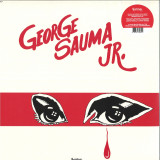
Favorite Recordings proudly presents an exclusive eponymous LP by Brazilian singer and composer George Sauma Jr., originally produced in 1985. Imagine a never-marketed release on which you’d hear not only the beautiful and genuine George’s songs but also the work from two figures of the Brazilian Music Golden Age: Arthur Verocai and Junior Mendes! A much-needed album for all Brazilian connoisseurs.
Back in the days, George Sauma Jr. was a young artist from Rio de Janeiro, learning on his side how to play chords and compose songs since he was 10. Still at the university, he’s influenced by Brazilian artists like Cassiano or Tim Maia, deeply fascinated by the arrangements and the “levada” (the groove) of all these new Brazilian songs. Simple and romantic music that resonated to his soul and creativity.
Around 1985, the story took an unexpected turn. George tells: “Dna Deyse Lucidy, the mother of Junior Mendes was a candidate for deputy and went to my father’s company to advertise. When I saw her, I shouted, “I’m a big fan of your son!” ” Of course, she could not praise more the work of her son. On her advises, George went to his studio on Rua Siqueria Campos at Copacabana. Junior loved the project and sent him to Arthur Verocai to improve the arrangements. Without money, the decision was taken to record everything at Junior Mendes’ studio on an 8-channel mixer. It was a small set-up but the emotions were there! George surely had other plans for some of his songs but without the budget, they ended up doing everything the best they could. And they did very fine with a top-notch team of musicians: Paulo Black on Drums, Arthur Verocai on Guitar, Ricardo Do Canto on Bass and Helvius Vilela on Keyboards.
Leaving the studio with the tapes, George tried to knock doors of international labels, but none did even dare to give him an answer. With less than 1000 copies pressed back in the days and without any distributor or label behind him, he went with proud to record stores, but received nothing than a strong reality check regarding the difficulties for a young Brazilian artist to achieve something on the saturated market of the 80s. Even for free, record stores didn’t want it. In the end, he ended up giving copies to friends and families, knowing deep inside that the songs were good! George tells: “I decided to leave, calm and conscious. I’ve still made three more albums, however on tapes, as it was more affordable. This time, just for my pleasure…”.
Thirty-five years after, it’s with great emotion that this first album by George Sauma Jr. is now made available as Vinyl LP with its original offset printed innersleeve & CD
EUPHORIC STUDIES by Kamron Saniee ? SVS RECORDS SVS017
Positivity. Lucidity. Velocity. In his second solo release, Kamron Saniee presents six animated studies of concentrated, rhythmic electronica – Euphoric Studies – in search of an "everyday euphoria" for the sunlit hours.
The works are characterized by a playful yet incisive energy, harkening back to the exuberance of early 2000s post-techno experimentation. Bubbling synthesizer melodies and emergent textural grooves serve to guide listeners towards a lucid, stimulated state.
Saniee acknowledges his classical influences on the track 'Badinage', in which a theme by Marin Marais played back on the violin is repurposed and diffused into a radiating sonic tapestry.
On the 10-minute opus 'Rhythm Force', raining percussive elements and drifting, formant harmonies create a prolonged and invigorating environment. The use of overlapping meters in 'Amnion' creates a similarly buoyant energy.
Originally released on Celluloid Lunch (Canada), really excited to do the Euro edition. Drawing influence from the looser end of the Ork records catalogue, the sensitive side of Ohio’s proto-punk scene and the grittiest and most sluggish tangent of 70’s power pop, Itchy Self’s debut 12” is an exploration of fully formed songs treated with spontaneous delivery. The group got together in early 2020 for 3 practices and a recording session and here are the results, laid out in their raw form. This is cross-generational racket n roll music that wears its heart on its loosey goosey sleeve. ‘B what you B’ is a life affirming testament to living against the grain that calls to mind the Modern Lovers’ aggressive positivity. Title track ‘Here’s the Rub’ is a barrage of abstract lyrics and skronky shred. ‘God Bless the Ego’ is an ode to the looseness and blurry eyed lucidity of indie rock’s forbearers such as Chilton, Kilgour, Pollard and Malkmus. ‘Reprobate’ is a Stones style ballad that channels the Saints and Johnny Thunders in equal measures. ‘Playing MTV’ is an audacious end remark to the record, that rips on classic Velvets strut and testifies it’s own ridiculous merit through boastful and catty lyrics. All in all, of course, it’s only Rock n Roll. This record is 1 part follow up to the Protruders “Poison Future” 12” on Feel It records (2019) and 1 part the first chapter of a new and exciting group formed in Canada’s capital of de-proffessionalized rock music. Recorded to 1/4 inch tape by Scott Munro (Preoccupations) and mastered by Mikey Young (Total Control), this record should provide a concise opening statement to anyone with the least bit of concern about Itchy Self. You’re gonna need an ocean of calamine lotion. Sorry State Records
THERION have always been a band that have challenged themselves to explore new paths, while remaining true to their musical core values. For their 17th studio album, mastermind Christofer Johnsson and his collaborator Thomas Vikström have created something that has been previously unthinkable to the guitarist and the singer. "We have done the only thing that was left of all the different angles to explore", explains Christofer. "We have decided to give the people what they kept asking for. 'Leviathan' is the first album that we have deliberately packed with THERION hit songs."
True to the Swede's words, the album opens with the catchy and swift tune 'The Leaf Of The Oak Of Far' featuring female and male antiphonal singing as well as a choir that seems to have evolved straight out of THERION's breakthrough full-length "Theli" (1996). This is immediately followed by the obvious highlight 'Tuonela', in which Christofer cleverly underscores this hit-track's Finnish vibe by employing NIGHTWISH’s "metal voice" Marko Hietala. Next up in this parade of future fan-favourites is the title track 'Leviathan' that offers classic THERION material with operatic female vocals and a massive choir.
Christofer Johnsson's passion for classic voices, choirs, and orchestral elements as well as his penchant for epic melodies in combination with rock and metal shines clearly through the following sing-along ballad 'Die Wellen Der Zeit', which indicates another nod to German romantic composer Richard Wagner. "Ever since 'Theli', Wagner has been and will always be at the core of THERION", emphasises Christofer. "When we started to combine metal and opera, it was something new and original. Today, symphonic metal has long been a firmly established genre."
When THERION came into being in 1988 by changing name from the already existing band BLITZKRIEG, which was founded a year earlier, Christofer had rather taken inspiration from SLAYER's "Reign In Blood" among other classic metal albums. At the beginning, the Swedes were firmly rooted in death metal, a genre which they helped to define, as witnessed by their debut album "Of Darkness...." (1991). Yet even back then, there were hints of "something else" lurking beneath the rough surface.
The use of female vocals is another core ingredient of THERION today, which developed gradually. CELTIC FROST had basically introduced the female element to extreme metal on "To Mega Therion" in 1985. THERION began with both a female and male vocalist emulating a church like choir already in their sophomore full-length 'Beyond Sanctorum' (1992). With Symphony "Masses: Ho Drakon Ho Megas" (1993) and "Lepaca Kliffoth" (1995), Christofer continued to developed his trademark sound by gradually drifting towards cleaner vocals and more keyboards. With "Theli", the Swedes had firmly established a reputation of pushing the boundaries of metal in the 90s – among such acts as their compatriots TIAMAT, THE GATHERING, and MOONSPELL that were often referred to as "gothic metal" at the time.
THERION continued to break new ground leaving inspiration for others to follow in their wake: On "A'arab Zaraq - Lucid Dreaming" (1997), Christofer further explored the use of Near Eastern music in metal which he had already begun in 1992, while "Secret Of The Runes" (2001) dared to have Swedish lyrics in some songs. While critics were left confused and fans challenged, THERION were often ahead of their times and vindicated in hindsight. Even the band's 25th anniversary excursion "Les Fleurs Du Mal" has by now overcome the initial shock the album caused and is only beaten in terms of streaming by the classic "Vovin" (1998).
When Christofer faced the question of where to go next after the dramatic "Beloved Antichrist" (2018) had finally fulfilled his musical mission, his answer is "Leviathan" named after a giant sea monster from Judeo-Christian myth that has roots in Babylonic lore: THERION have created a giant hit album – and for the first time in the history of the Swedes, their fans are not asked to explore something new, but simply to lean back and enjoy the best from their band!
A lucid dream meeting of synth waves, aquatic jazz spirits and drum-triggered electronics.'Linha D'Água'translates as 'water lines', fitting for an album that traces boundaries between water and air through an echo chamber of dizzying oceanic layers and free flowing ideas.
This is not a record based on genres. It's an album that navigates through atmospheres, through explorations and discoveries, through curiosity and dialogue. The eight tracks were recorded in a single day in the studio, but it is the result of more than two years of collaborations.
Mauricio Takara and Carla Boregas are two towering figures of the Brazilian underground/experimental scene, where they provide the rhythm section for demented genre-bending trio Rakta. While that band is all ritual percussion and red-blooded passion, as a duo they're a blue-water flowing counterpoint. From the drums, Takara fires melodies and, with the synthesizer, Carla sculpts the sound. The result iscaught somewhere between abstract improvisation and propulsive rhythm. Each song's an organic layering of manipulated synthesizers and acoustic sounds; teasing new rhythms from the drum kit via MIDI (and a near-telekinetic bond between Carla and Mauricio).
Sometimes'Linha D'Água'driftsclosest to ambient music, as in the title track, in 'Mãe D'Ouro' and 'Bocca Chiusa'; sometimes it runs into free jazz, as in 'Traçado Entre Duas Linhas'. There are moments when Carla and Mauricio explore a universe of tension that comes closest to the cosmic music of 70s Germany, as in 'Rosa de Areia' and 'Constante de Distância'; in others they evoke the metallic sounds of Indonesian gamelan (on 'Execution').
Carla Boregas is a founding member of the band Rakta, which started in 2011. She co-founded Auta, a DIY space dedicated to adventurous music in São Paulo hosting artists like Feminine Hi-Fi and Deafkids. She is also part of the transdisciplinary duo Fronte Violeta.
Mauricio Takara also plays drums/percussion with the bands Hurtmold and São Paulo Underground (with trumpeter Rob Mazurek from Chicago). Takara has played with a dizzying array of improv / experimental / jazz figures such as Pharoah Sanders, Damo Suzuki, Yusef Lateef, Joe Lally (Fugazi), Naná Vasconcelos, Prefuse 73, Makoto Kawabata and more.
Phantasy’s #PH100 retrospective continues with PH45RMX. Denham Audio, perhaps one of the most prolific British production crews emerging in some time, arrive on Phantasy with a breakbeat-heavy and lucid take on James Welsh’s ‘Cold Land’.
Originally released under Welsh’s original alias of Kamera in 2015, ‘Cold Land’ remains one of the underrated gems in the label’s back catalogue. Initially emerging from a shed in rural Mallorca, it’s halcyon poly synths and skittish drums immediately recall the wide-eyed optimism of 90s IDM. Far from mere ‘braindance’, ‘Cold Land’s emotive quality affords it a unique timelessness.
Fresh from releases on Lobster Theremin and E-Beamz, Denham Audio build on their recent reputation for both nuance and impact, comfortably interweaving the dreamy melody of Welsh’s with unapologetic breaks, taking the original’s futurist sonics into the parallel scene of UK hardcore and DnB. For those with a warehouse going spare, the alternate ‘Raw Mix’ hits even harder.
clear red & blue mixed vinyl
- "Gut-churning bass" - The Wire
- "a deep dive into UK soundsystem forms, half-time bass pressure and lucid electronics" - DjMag
- "a hell of a journey through a subaquatic scape" - Backseat Mafia
- "evoking oceanic stillness and violence, the song ebbs and flows between delicate rippling and powerful waves" - Fuxwithit
- Plays on Rinse FM France and UK & Tom Ravenscroft BBC Radio 6
30% of profits on this record go to an ocean cleanup organisation TBA
The electronic musician and Poker Flat founder's contemplative new studio album takes in minimal house music, moody techno and effervescent breaks across 11 unique tracks. His previous LP Paradise Sold alongside Langenberg was released in 2018 to critical acclaim, and described as "elegantly euphoric" by Mixmag. Never Ending Winding Roads is an entirely solo release however, with much of it produced during the months of enforced isolation due to the coronavirus pandemic. Many of the track titles reflect Steve's headspace during this time, with themes of solitude, contemplation and reflection brought to the fore perhaps more than with any of his previous work. Steve's formative musical years were spent during Germany's techno and acid-house heyday, with his love for a perfect groove as apparent now as it was back then. His DJ skills and a keen, innovative ear led him not down the typical path of the early nineties trance and harder dance scene, but instead towards a fresher, hybrid sound-merging stripped deep house, tweaked out acid and more minimal forms of techno and electronic music: a strand of music he fiercely champions to this day.
"My mindset when making Never Ending Winding Roads was completely different to any other project I have embarked on. I didn't have to tour, and instead could focus 100% on writing music without having the dancefloor as a constant influence. This allowed me creative freedom to explore a range of styles and emotions, and as a result, it is the album I feel most satisfied with to date." says Steve Bug.
With 11 brand new tracks, Never Ending Winding Roads is a meticulously produced and deeply engaging electronic album; one that explores various shades of house, techno and broken beat with Steve's celebrated attention to detail and consummate originality. Album opener Lucid Loops perfectly sets the tone, immediately ensnaring you with a hypnotic, undulating synth line and a faintly menacing undertone thanks to hushed, discordant strings and unnerving vocal stabs. This atmosphere of quiet paranoia permeates many of the tracks on Never Ending Winding Roads, most explicitly in the sinewy groove and sketchy, panic-inducing synth line of Locked Away In My Head.
This album more than perhaps any other in his career sees Steve experimenting with broken-beats, to incredible effect. Tracks like A Conscious Machine and Electro Harmonix are melodic, emotionally-rich cuts: burst of radiant optimism that juxtapose beautifully with the album's darker moments. Elsewhere tracks like Yellow Snake find Steve exploring deep, dubby territory, while album closer Upon Mountains is a cosmic, arpeggiated masterpiece: an 8bit computer game soundtrack reimagined as a poignant electro ballad.
Composed, produced, and arranged by Eartheater alone, Phoenix: Flames Are Dew Upon My Skin draws a path back to the primordial lava lake from which she first emerged, as it also testifies to the reincarnating resurrections the project has undergone over its first full decade of existence. While the album renews her focus on guitar performance and legible structure, Eartheater balances the unabashed prettiness of acoustic harmonic songs with the dissonant gestural embroidery of oblique instrumentals. Having fallen back in love with the idioms that first captivated her, she worked to crack open the techniques that had fossilized inside of her, while still seeking to apply the electro-alchemical knowledge she picked up along her journey. The result of a laborious revival in fire, Phoenix recontextualizes Eartheater’s combinatorial approach to production within her most confident abstractions, adjacent to some of her most direct songs to date.
Eartheater composed and workshopped most of Phoenix over a ten-week artist residency (FUGA) in Zaragoza, Spain, housed in a sprawling, cubic glass facility that looked out over wildflower-flecked mountains. Following an intensive period of recording and touring, the residency provided her with an unprecedented period of solitude in the small Spanish town. Her newfound sense of isolation ultimately became liberating, leading her to sidestep the crutches and steady grids inherent to electronic music, and to conceive pieces rooted in her guitar and her desire to perform with other players live.
Eartheater’s voice glows brighter than ever at the center of Phoenix’s arrangements — her familiar operatic highs are grounded by newly expanded velvety lows, leaping lucidly up and down octaves. Her intricate guitar work flits across baroque fingerpicked passages and latches into cyclical figures that meet her voice in lush harmonic progressions. From her own guitar parts, to the orchestral string arrangements she wrote for the Spanish conservatory group Ensemble de Camara, to the harp and violin lines performed by her close friends and collaborators Marilu Donovan and Adam Markiewicz of LEYA, Eartheater’s applications of acoustic instruments bring an extraordinary emotional emphasis to her compositions. Phoenix prepares for a future where electronic sound — or even electricity itself — isn’t guaranteed, but where her music could still come to life with a group of hands dexterously winding across instruments against the light of the fire. Eartheater drew inspiration for Phoenix from geological imagery, whose turbulence and potential for genesis mirror the trajectory of her own life and relationships. The album’s instrumental pieces directly reference these moments of upheaval, colliding audio of volcano and lightning storms with resplendent string and vocal arrangements. “Volcano” looks out over the album from its peak at the center, its tectonic plates colliding in towering melodies and layers of vocal harmonies, as piano accents crest and cascade down the mountainside. When Eartheater sings, “I’m still building mountains underground,” she is trying to reconcile the pinnacles of her ambition with the comforts of a simple existence buried beneath the surface. “Diamond in the Bedrock” finds her admiring the gemstone forming under intense pressure inside her, but rejecting the romantic promise that the diamond signifies, choosing instead to escape a relationship that has come to stifle her.
With the album’s subtitle, Flames Are Dew Upon My Skin, Eartheater imagines being tempered to a state of perfect equilibrium, suspended between melting and freezing, where fire could streak across her body and appear as a crystalline blush. This image captures the tension at the heart of the Eartheater project, as she decides how best to distill her passion and render it cool to the touch; to find beauty in simple pleasure, while keeping one eye fixed on the peaks that loom in the horizon. The album is mixed by Kiri Stensby and mastered by Heba Kadry, featuring photography by Daniel Sannwald.
Krakow based Olivia joins Pinkman with a modern twist on ancient charming practices. "Dancing Snake" takes you to a surging tomb rave in the heat of the desert. Your dehydrated soul will be satisfied by liquid notes of acid, while your mind is hypnotized by oriental melodies. Grubby rhythms and crunchy kicks reminisce about reality, making you wonder whether this all was just a lucid dream.
2020 reboot for Detroit's legendary Metroplex.
The Label Say "Cologne based producer Bas Grossfeldt has crafted an outstanding release perfectly aligned with Juan Atkin’s brilliant Metroplex aesthetic. As a relatively new name in the scene, Bas Grossfeldt’s music sounds as if it were the results of decades of focused experience in the studio.
With a background in installation, choreography and performance art, Bas Grossfeldt is the artists alias to focus on the musical side of things. His deeply rooted interest in the relation of space and body is also translated into his music. The fusion of spaced-out textures, rhythmical distortions, cold waves of synthesis, and enough modern production prowess ensures a release saturated with innovation and abundant imagination. A rare release for the seminal Detroit label, which also represents Juan Atkins’ interest in the arts world and new, different approaches.
The exchange between the label head and the artist, initially came to life because internationally renown conceptual artist Mischa Kuball, knowing Juan from a joint project, sent him the demo of Bas Grossfeldt. Especially intrigued by the track „Lost In Translation“, Juan and Bas started exchanging, approaching the record as an „art project“ and a classical EP at the same time, for example leading into the cover being made by Bas Grossfeldt/Søren Siebel himself and including numerous hidden references to the sound.
Each track embraces an incredible array of sounds and styles, from soundscapes to mind-bending Techno – all equally as effective for the brain as the dancefloor.
“Lost In Translation” opens the release with a cinematic piece of electronica permeating with frozen emotion and melancholic soul. The beautiful track captures a foggy morning’s haze, the first chill of winter with only a gentle kick-drum keeping the cold from completely taking over. It is also accompanied with a hypnotizing abstract video by film-artist Svenja Voß.
Continuing in a dubby, winter haze is “Lost In Sensation” which floats alongside a sharp, metallic rhythmic arrangement and a gentle, ever-present kick drum. Deep, heavily saturated atmospheric textures sleep underneath the sounds while lucid melodies float in and out.
“Your Orbit” rounds out the release with the most club-ready production. Disorienting melodies and gritty synths capture a dreamlike perception while a tough kick drum and clattering percussion drives the music deeper into undiscovered dancing territories just left of center. "
After the success of the 2 Late 4 Love EP, Roy Of The Ravers returns to Emotional Response with a double LP with a deeper perspective, experimenting in ambient and drone textures, lucid techno travails and acid interludes.
Recorded between 1997 and 2017, the album was pieced together over the last six months after Roy's archives were first feared lost and then found. Approached by the label to release a follow up with something more introspective and personal, it was discovered that a recent move to a new studio had led to over 20 years of music being misplaced after it was believed they were mistakenly dropped at a local charity store. However, deep in a box of what were thought to be patch cables were in fact the decades worth of hard drives and here presented, is a sample of those lost recordings.
The nature of the music is introspection, eschewing the acid beats and white noise for a personal encounter between man and machine. The orchestral opening of the title track gives way to the submarine beats, pulsing TB303 and gliding hats of Robinson College 10 to set the outlook to come. Even with the scattering A Dim And Distant Past waking lulled senses, the melodies and feel all lead to a pause and reflect rather than jump and shout.
This is continued with the haunting drives of Bounce Erec and Oriental X0X-Press; the twisted, warped jams of The Weber Traum Boat Pt.3, Ichi and Roland Corp Labs 05; and the beautiful, heartfelt odes in Sade Lost Theme, The Clock House Pt.2 and closer, Nemesis '01. The album's melodic nature hums and shines as CS (6x8) appears as much a centre piece as a alternative consideration to the acid tinged, club bangs of Roy's releases to date.
A surprise package maybe, but in the rolling, word of mouth phenomena that was Emotinium II, all this and more was sensed and so White Sunrise Music II, spreading across 12 songs of contrasting moods, is a further affirmation that there is something good and worthy of exploration.
Parisian "Geo Balasta" pulls an extra-lucid extra techno from the earth's surface that has allowed him to open for Salut C'est Cool. His unexpected productions, bordering on derision, constitute the DNA of an acidic shiver which finds its sources in Green Velvet, the Horrorist or Gigi d'Agostino and which will soon be released on the 'Johnkôôl Records' label.
- A1: Lucid Dream - 04 54
- A2: La Marbrerie - 06 22
- A3: Sophora Japonica - 02 47
- A4: Ginkgo Biloba - 03 31
- B1: Nouveau Monde - 06 45
- B2: Room With A View - 03 31
- B3: Le Crapaud Doré - 03 30
- B4: Liminal Space - 04 05
- C1: Human - 06 55
- C2: Babel - 04 18
- C3: Esperenza - 04 22
- D1: Raverie - 07 56
- D2: Solastalgia - 04 00
- D3: Human 07:25
Color Vinyl[20,63 €]
2x12"
„Room With A View“ sees Rone returning to his musical roots and the set-up of his early albums: purely electronic, solitarily conceived without any musical collaborators. At the same time he was able to leave his comfort zone through a new kind of artistic liaison. The album was produced alongside a live show commissioned by the Théâtre du Châtelet in Paris and developed together with choreography collective (LA) HORDE and 20 dancers of the Ballet National de Marseille. This new kind of collaborative approach allowed Rone to produce his most sincere and far-reaching music in some time. Inspired by discussions of collapsologie and climate change, „Room With A View“ offers food for thought on how to deal with one of the most pressing issues of humanity.
The Fenchman manages to let his trademark sound shine in a new light, pleasing early fans as well as every electronica enthusiast. Typically melodic beats like „Ginkgo Biloba“ nestle against tracks that exhibit classic influences from Boards of Canada („La Marbrerie“) to SAW-era Aphex Twin („Raverie“), euphoric dancefloor rhythms sit next to contemplative synth work. Tracks like „Sophora Japonica“ showcase Rone’s mastership in atmosphere, which sometimes requires no drums at all. Elsewhere, Rone is clearly reviving the club-centric vibe of „Tohu Bohu“ and experimenting with elements of dub. It all makes for and adventurous and rewarding listen.
Most importantly, Rone is redefining the notion of „organic“ in electronic music through use of field and voice recordings. Be it his own child chattering, Aurelien Barrau or Alain Damasio debating, or the dance troupe rehearsing and discussing the show. "Because the writing process of the album was very machine focused, it seemed appropriate to feed back a human touch into the music and to still have bodies involved". Thus „Esperanza“ uses the steps of the dancers as a rhythm to start a new track, while in „Human“ they serve as a choir. This idea of extended human collaboration becomes apparent also on the album cover.
- A1: Lucid Dream - 04 54
- A2: La Marbrerie - 06 22
- A3: Sophora Japonica - 02 47
- A4: Ginkgo Biloba - 03 31
- B1: Nouveau Monde - 06 45
- B2: Room With A View - 03 31
- B3: Le Crapaud Doré - 03 30
- B4: Liminal Space - 04 05
- C1: Human - 06 55
- C2: Babel - 04 18
- C3: Esperenza - 04 22
- D1: Raverie - 07 56
- D2: Solastalgia - 04 00
- D3: Human 07:25
Black Vinyl[17,10 €]
2x12" Marbled Vinyl
„Room With A View“ sees Rone returning to his musical roots and the set-up of his early albums: purely electronic, solitarily conceived without any musical collaborators. At the same time he was able to leave his comfort zone through a new kind of artistic liaison. The album was produced alongside a live show commissioned by the Théâtre du Châtelet in Paris and developed together with choreography collective (LA) HORDE and 20 dancers of the Ballet National de Marseille. This new kind of collaborative approach allowed Rone to produce his most sincere and far-reaching music in some time. Inspired by discussions of collapsologie and climate change, „Room With A View“ offers food for thought on how to deal with one of the most pressing issues of humanity.
The Fenchman manages to let his trademark sound shine in a new light, pleasing early fans as well as every electronica enthusiast. Typically melodic beats like „Ginkgo Biloba“ nestle against tracks that exhibit classic influences from Boards of Canada („La Marbrerie“) to SAW-era Aphex Twin („Raverie“), euphoric dancefloor rhythms sit next to contemplative synth work. Tracks like „Sophora Japonica“ showcase Rone’s mastership in atmosphere, which sometimes requires no drums at all. Elsewhere, Rone is clearly reviving the club-centric vibe of „Tohu Bohu“ and experimenting with elements of dub. It all makes for and adventurous and rewarding listen.
Most importantly, Rone is redefining the notion of „organic“ in electronic music through use of field and voice recordings. Be it his own child chattering, Aurelien Barrau or Alain Damasio debating, or the dance troupe rehearsing and discussing the show. "Because the writing process of the album was very machine focused, it seemed appropriate to feed back a human touch into the music and to still have bodies involved". Thus „Esperanza“ uses the steps of the dancers as a rhythm to start a new track, while in „Human“ they serve as a choir. This idea of extended human collaboration becomes apparent also on the album cover.
- A1: Two Kingdoms
- A10: Le Chateau, Bleu Celeste
- A11: My Garden
- A12: Borders (Feat Sarah Linhares)
- A13: Projections (Feat Sarah Linhares)
- A14: Light & Shade (Feat Majin Blobfish)
- A15: Elevation
- A16: Natural Mystic (Feat Sarah Linhares)
- A17: Xxx
- A2: Knees Wet (Feat Sarah Linhares)
- A3: Overboard (Feat Sarah Linhares)
- A4: Alchemy
- A5: Alchemy (Feat Sarah Linhares)
- A6: Royal Seed
- A7: Home
- A8: Lucid Dream
- A9: A Part Of Me
Pacific Shore makes modern melancholy hip-hop-soul-jazz with love. The duo’s "road music” evokes a dreamlike and cinematic musical journey. In the studio and on stage, the duo shows that machines, live instruments, and vocals can make electronic music organic, warm, and alive.
Immersed in the studio for a while, the duo are back with the album "Two Kingdoms", their biggest project so far. Without complex, these 17 tracks transport us between vaporous pop/funk groove and hybrid experimentations. A lively, moving and poetic work in search of a certain sense of life on Earth.
As Ying and Yang the album is a combination of two interdependent chapters, we find the voice of their faithful friend and collaborator Sarah Linhares on the tracks Overboard, Knees Wet, Borders among others. As well as the very intriguing Majin Blobfish on Light & Shade and the appearance of a new voice from Pacific Shore on several titles: Two Kingdoms, Home, A Part of Me...
► One half of duo Lumisokea and persistent sonic explorer ANDREA TAEGGI (Opal Tapes, SM-LL, Type, Präsens Editionen) debuts on OOH-sounds with a new solo album under-the-influence of mushrooms.
► Recorded at Willem-Twee synthesis studios in Holland, Mycorrhiza is a lucid excursion into a new form of 'ritual-computer-music' — gamelan from the future.
►Master + Cut by Helmut Erler, D&M Berlin. Limited Edition of 200, 12" black vinyl housed in gold cardboard sleeve with 'ad-hoc' fluo sticker.
Of course this is not the first album born under-the-influence of mushrooms, but apparentlyTaeggi doesn't take them here as he rather observes the cognitive and intelligent behavior of mycorrhizal fungal roots—one of the great mysteries inhabiting the forest soil, and from which a network of beneficial underground relationships with plants sprouts. Known as Mycelium, this fascinating wood-wide-web very much resembles the intricacy of the human neural system—transporting carbon, water and nutrients from one tree to another. A mutualistic symbiosis that Taeggi similarly establishes with the rather rare arsenal of sound machineries he had access to at Willem-Twee synthesis studios in Holland—a center for experimentation inspired by Berio and Maderna's Studio di Fonologia RAI in 1950s Milan.
In the process of tweaking and feeding electric impulses and sound signals into instruments of the likes of the iconic ARP 2500/2600 and a number of testing/measuring units from the 50/60s—originallynot conceived as musical instruments—Taeggi engages into an exchange of nutrients and information, while abruptly sabotaging un-welcome elements, hence accelerating the sound superhighway towards spectral psychedelic tension—a process he seems to be extremely in control of. Taking a step aside from his usual minimal approach to address more complex structures and augmented mind-sets, Mycorrhiza sounds at times like gamelan from the future: a lucid excursion into a form of "ritual-computer-music" with a conspicuous penchant for detail,alluding to a continuitybetween pseudo-cerimonial and laboratory-like computer music, steering clear from any reference to a specific creed or religion—imagine Stockhausen drinking the Amazonian sacred brew Ayahuasca..
The swarming micro-movements of "Cuttleburrs" multiply in a series of crescendos marked by sudden falls, saturated drums incursions and tense sonic clusters, introducing the more explicit gamelan percussive tones and compositional forms of "Kodama" and "Icaro". Recorded on the ARP 2500, "Mycorrhiza" uses white noise generators, resonant bass and spring reverb to conjure up a magical fungal diorama, which expands into the spooky shadows of skeletons and demons of "Phantasmagoria" and the spectral mystics of "Oculus Cordis"—the Eye of the Spirit — in which Taeggi grapples with the same sine-wave generators that Stockhausen used in his seminal "Studie I" and "Studie II".
On his third and album, Rainbow Doll, the New Jersey house mystic Joey Anderson speaks to us. Of course, like everything Anderson does, the message is encoded. On tracks like "Beside Me" and "Cindy," his voice rings out in dream incantations-on the latter, he repeats a Mark Hollis-like mantra over a perfect, minimalist house loop while the former sounds like the late, great Ron Hardy taking the razor-and-tape to Ike Yard.
It's his third record for the Berlin-based label Avenue 66, and graciously illuminates the dream logic introduced on his debut for the imprint, the 2013 leftfield classic "Above The Cherry Moon." While Rainbow Doll satisfies those outre impulses, the album's core comprises what are perhaps Anderson's most indelible dance tracks to date, like "Bounce With It," a jacking anthem which sees him at mission control, sending widescreen synth lines soaring through the atmosphere.
With the aforementioned vocals punctuating five of the eight tracks, Rainbow Doll is Anderson's most personal work to date. It's his first album in four years, but also his shortest, most concise full-length. Even with a more direct approach, the elusive, dreamlike quality which has made his work so intriguing remains intact. He speaks of dreams throughout the record, even as his uncanny methodology comes into focus. More than ever before, we understand the materials Anderson uses to construct his Escher-like tracks. We hear his fingers on the keys, the sturdy east coast house beats he learned to dance to. The dreams have become lucid. As he puts it deep in the album, they "seem so real."
Belonging is the second full length album by Berlin based producer Takeleave.
The multi-instrumentalist dedicates this release to an allegory of arrival and homesickness, after his first album Inner Sea focused on the journey itself. While the latest album was mostly written in different places, Belonging has been produced solely in the same place in Berlin, where most of the songs have evolved from intuitive jams on the instrument.
„This album turned out to sound as intimate and intuitive as it was for me when writing these songs. I feel like i got a little step closer to my own sound over the last year.“
'Postlude' is the second release on Solitary Dancer's new imprint, Private Possessions. After having released on some of the world's most esteemed underground labels such as Dark Entries, Graded, and Optimo, Private Possessions was borne out of a desire to control all aspects of output pertaining to the development, creation, and dissemination of their music, video, and other media. Following their debut LP 'Rites Of Passage', 'Postlude' is a three-track affair which juxtaposes two of the album's floor-focussed cuts with an extended version of 'Test Dream'. The latter has been processed into a 15-minute "Devisualization" using degradation techniques that slowly destroys the piece over time, harkening the ever-changing lucidity and memories of our own dreams.
High in demand this 7" from LUCID PARADISE (FUNK NIGHT RECORDS): ERIC BOSS/ E DA BOSS and ISHTAR/GIZELLE SMITH. Hot modern soul boogie record produced by SOUL SUPREME (AKA LOVE'S HIGH). B/w "TONIGHT (LOVE'S HIGH REMIX)". Peak boogie delights for a dancefloor near you courtesy of STAR CREATURE!
Roman Poncet's 2018 debut LP stands an impressive work in its own right. Now Figure has invited a group of artists to contribute new takes on standout album cuts. Some clearly for the floor, some nestling on its verges. But all adding to the unique Gypsophila-vibe.
Antigone turns in dust shaking flurry of tribal drumming, ceaselessly pounding and rattling away for an exhilarating and at the same time grounding rhythmic experience.
Wiggling and squelching, Efdemin blends a bunch of lively elements into one wildly roaming remix, which despite all its inner momentum retains an orderly structure, testament to the artist's extraordinary production skills.
On the flipside, Margaret Dygas adventurously goes on a trip of finely tuned acoustics, patiently letting each sound grow into what becomes an enthralling piece of enchanted electronica. Evocative, emotional and of serene beauty, Echoplex closes the collection with an epic track, led by grand strings and flute-like synths, begging to be dropped at the break of dawn.
Ophir Kutiel AKA Kutiman is a multi-instrumentalist from Tel Aviv, a “psychedelic space funk architect” to quote Straight No Chaser. When we were approached by his label Siyal about recruiting ZamZam/Khaliphonic artists for a remix project, we loved the idea right away - dub without borders or boundaries is our passion, and getting our hands on Kutiman’s freeform analog explorations felt like an amazing opportunity to push that passion further. All four remixes revel in the freedom of the original tunes, and each, while anchored in dubwise techniques, are totally unhindered by tempo or other genre constraints.
Alter Echo & E3 open with a remix of “Unknown,” the set’s only 140 tune, full up with a bubbling cauldron of bassline and flutes, esoteric vinyl archaeology, spring reverb shocks, and swung percussion.
J:Kenzo, known for 140 and 160 bpm sound system bangers, here takes the chance to stay deep - but in a chill mode - unfurling a beautiful journey of syncopated drum work and slapping percussion framing the lush, meandering melodies of the original “Behind The Noise."
Gulls’ rework of “Mineral” rocks with an offbeat feel, technically in four, but swaying like it’s in three. Plucked guitar figures recall the African roots of contemporary bass music, and tape hiss buffets the listener back and forth through a sonic hall of portals and passages.
Perhaps the most surprising of all four four versions is Headland’s closing “Lucid Dream” remix, which sets course for dub techno country and never looks back. Combining the best of the producer’s masterful sound design and sense of build-and-drop dynamics with the idiom’s 4/4 pulse and focus on immersive space, Headland closes a set as inspired as the album it was based on.
DJ, producer, singer-songwriter, one-half of world-touring soul duo Myron & E (Stones Throw), founder of boogie outfit The Pendletons (Bastard Jazz), part of electro-funk duo Lucid Paradise, and an endless string of collabos. Over 2 decades in the game means multi-faceted artist Eric Boss knows his way around music. Having been there, done that, gotten the t-shirt and watched the fat lady sing, it's finally time for E to take center stage and deliver his finest effort yet with solo record "A Modern Love", an effervescent collection of raw funk, sweet soul, west coast vibes and classic hip hop, produced by Björn Wagner and Steffen Wagner (The Mighty Mocambos / Bacao Rhythm & Steel Band).
"A Modern Love" has all the ingredients of a future classic. High-profile guests Check: with Gift Of Gab (Blackalicious) rapping on "I Wanna Ride", a track with more bounce than a lowrider chevy on Santa Monica boulevard, and soul siren Gizelle Smith featuring on "Spiders", a spooky number that will get you jumping out of your seat like you've been attacked by giant 8-legged arachnids. Need some dancefloor action "Get Next To You" gets down to serious bizniz with crisp drums and a catchy hook guaranteed to get the party started. Something for lovers We've got it covered with "Is It Love", where Eric waxes lyrical about his sweetheart over a honey-drenched soul beat.
From reggae-flavored vibes being served in inspirational number "Your Life Is Up to You" to the slow-burning grooves of "Merry Jane" which features singer Ishtar, the 10 tunes on "A Modern Love" all attest to Eric Boss' talent and versatility. Judging by how quickly the limited edition 45 of album opener "Closer To The Spirit" sold out when it was released, it seems safe to say Eric Boss is a king Midas with the golden touch when it comes to providing fresh grooves for contemporary ears, and "A Modern Love" is set to prove so once again.
Shape-shifting left
coast producer Sage Caswell likens his latest full-length to a surrealist
architectural space: "I walk up to a building and Evil Twin is playing. A copy of
me is at the door and I let myself in. Inside the house is inside my head; each
room is a different song and emotion." A distinct dream sequence logic threads
together these nine nuanced tracks, which swerve from vaporous melancholy to
ecstatic motion to nocturnal wanderlust, alternately lucid and opaque.
Last year's relocation
from his beloved home base of Los Angeles to Madison, Wisconsin certainly played
a role, as pulling up roots inevitably does: "I love L.A. more than I can
properly articulate, but I saw an opportunity to leave so I took it." The
experience prompted an exploratory set of recordings inspired by notions of separation,
vulnerability, and "how it feels to identify the things in your life that don't
feel like you." Evil Twin captures
Caswell at his most fluid and dualistic, mapping a multi-hued maze of twisted rhythms
and refracted textures, fluctuating between beatific expanse and amniotic
bangers.
Previous releases for
Spring Theory and Far Away showcased Caswell's capacity for innerspace club
voyaging but here his vision skews even more vividly elusive, immersive and
immaterial, lost and found. The record's contradictions were deliberate and,
most importantly, therapeutic: "Evil Twin was intended to be as much a visual idea
as a soundtrack to feeling out of control. I didn't really want to talk about
it, so I made this album."
In 2017 Blair French came out of hibernation to release contrasting but similarly sun-kissed EPs on Rocksteady Disco and Claremont 56.
Here, he returns to action with a scintillatingly sunny and sensual six-tracker on NuNorthern Soul that may well be his strongest release to date.
Given French's chameleon-like musical history, that's certainly a bold claim.
Over the years, he's been a member of a multitude of musical collectives - most notably Cosmic Handshakes and Formless Figures - established his own DIY record label (Fat Finger Cosmic) and released music that touches on a dizzying array of styles, from award-winning movie soundtracks and Afro-fired deep house, to skewed techno, blissful ambience and experimental hip-hop.
On Patio Pastel, French is in full on sand-between-the-toes Balearic mood, delivering a range of lucid, ear-pleasing compositions that will sashay their way into your consciousness.
Contrast, for example, the drowsy organs, glistening pedal steel and undulating hand percussion of opener 'Patio Pastel' with the Serge Gainsbourg style chanson-goes-tropical bliss of 'La Playa De Tercipelo', which features some deliciously breathy vocals from Stephanie Lyon.
Then there's 'Morning Sail', a sumptuously evocative soundscape rich in toasty, dub disco bass, shuffling percussion and lilting, Jonny Nash style guitar solos (see also the effortlessly horizontal Lounsbury Gardens'), and the kaleidoscopic, saucer-eyed Balearic pop brilliance of ;'Human Make Human', where new age synthesizer melodies and the fuzzy vocal refrain of Kasi Seguin gentle dances above an Afro-flecked, mid-tempo groove.
Throughout the EP, French mixes electronic and acoustic instrumentation, drawing together musical elements from a myriad of styles to create sumptuous new fusions.
It's particularly evident on superb closer 'Belle Isle Sunsets', where colourful synth motifs, eyes-closed guitar riffs and Mediterranean-warm chords wrap themselves around a gently pulsating, impressively layered groove.
Like the rest of the EP, it's perfectly pitched, expertly executed and wonderfully atmospheric.
Emotional Rescue announces the second EP of music from one of the label's favourites as part of a non-defined series where two of their (un)classic songs are remastered, reappraised and reinterpreted with new versions by a contemporary artist for reinterpretation today.
Thomas Leer is a respected and revered musician in both experimental and electronic circles. Having moved from Scotland to London in the late 70s, he moved away from playing in punk based bands, to debut his self-financed 'Private Planes' 7" in 1978, before releasing the cult-album 'The Bridge', with Robert Rental, the following year.
Signing to Cherry Red, he released the heralded '4 Movements' in 1981 and followed with 'All About You' in 1982, and it is from these 2 EPs that this release is sourced. The release starts with Saving Grace from the latter, a long famous "Cosmic classic"; it's mid-tempo, spacey, lifting repetition is the perfect soundtrack for those Baldelli trips straight to the stars.
This is backed with Tight As A Drum, a quintessential Leer production, where Teutonic drums is overlaid with sequencers and synth tones to elevate the song to some kind of disorientating outer-dimensional dub, while his lucid, spoken word vocals instill degradation and reinvention.
Asking Bullion to offer his own take on these two songs was the perfect pairing. A revered artist in his own time, the warmth and depth of his versions takes the originals to his own inner world; sampling, rewiring, reprogramming, resigning and replaying. An EP for the floor, the head and the heart.
Keys are Benedikt Frey and Chris Cox, the front and rear covers of a lucid
narrative of an incomprehensible nature. Substance induced Hara-kiri, a human
consciousness leaving it's temporary and insignificant vessel, a motorcycle ride
through the sands of a desolate Martian desert or a twisted eternity dissolved
inside Pandora's Box. These are just a few of the scenes effortlessly evoked by
the epic yet somehow erotic omnibus of slow-motion electronica that is Voltage.
In a time dominated by robotic beat and melody, this 8 part expedition away from
the dancefloor may surprise, disorientate and hypnotise. Allow Keys to seal you
in their infinite vacuum of flirtatious melancholia.
Jonny Rock is somewhat of a sorcerer, an omnipresent eye that gathers secret ingredients from far and wide—old school House oddities, hypnotic melodies of the Orient, the furthest reaches of Disco, the easy pace of Turkish psychedelic funk—fusing it all into his own shrouded code, a string of immaterial messages, both subliminal and lucid, that highlight his eccentric sense of storytelling and nuance. He imbues a sense of familiarity in his music, implying history that might not be studied but still feels learned, a quality inherent to productions born from a vast catalog of influence (and the inseparable sample material). Jonny conjures euphoric acid flashbacks, herds of crowds through Istanbul alleys, the misty morning residue from raves of yore, orchestral winds blown across the Aegean riviera, and he manages to concentrate their essence into singular details such as a snare drum. Both sides of his eternally-awaited ESP debut lean toward his dark arts—'Tye Die Techno' drives a relentless hard-edged drum kit that could throw an otherwise self-respecting Goth into a heated breakdance battle, while the title track and theme, 'Ode To A Happening On Earth,' plays with the imagery of ritual, fantasy and role-playing—but throughout this malevolent stew, there is a sustained hint of the artist's playful nature. No matter how murky the trip becomes, Jonny is always there, a light at the end of the tunnel, with a big hug to reassure that everyone will be OK. He is one clever bastard—if you know, you know.
On her deeply moving debut album At Weddings, Sarah Beth Tomberlin writes with the clarity and wisdom of an artist well beyond her years. Immeasurable space circulates within the album's ten songs, which set Tomberlin's searching voice against lush backdrops of piano and guitar. Like Julien Baker and Sufjan Stevens, she has a knack for transforming the personal into parable. Like Grouper, she has a feel for the transcendent within the ordinary.
Born in Jacksonville, Florida, and now based in Louisville, Kentucky, Tomberlin wrote most of At Weddings while living with her family in southern Illinois during her late teens and early twenties. At 16, she finished her homeschooling curriculum and went to college at a private Christian school she describes, only half-jokingly, as a "cult." By 17, she had dropped out of school, returned home, and begun to face a period of difficult transition in her life. The daughter of a Baptist pastor, Tomberlin found herself questioning not only her faith, but her identity, her purpose, and her place in the world.
"I was working, going to school, and experiencing heavy isolation," Tomberlin says of the time when she first began writing the songs on At Weddings. "It felt monotonous, like endless nothingness. It was a means to get through to the next step of life." In songwriting, Tomberlin found relief and lucidity she had trouble articulating otherwise. When she was 19, she wrote "Tornado" on her parents' piano, and began to develop confidence in her music. A year later, she had written enough songs to fill an album.
Throughout At Weddings, Tomberlin's lyrics yearn for stability and belonging, a near-universal desire among young people learning to define themselves on their own terms for the first time. "I am a tornado with big green eyes and a heartbeat," she sings on "Tornado," her voice stretching to the top of her range. Rich, idiosyncratic imagery — a fly killed with a self-help book, brown paper bags slashed violently open, clouds that weep over a lost love — sidle up to profound realizations about learning to be alive in this world. "To be a woman is to be in pain," Tomberlin notes on "I'm Not Scared." On "A Video Game," she muses, "I wish I was a hero with something beautiful to say."
Tomberlin cites the hymns she grew up singing in church as her greatest musical influence, and while At Weddings in many ways documents the unlearning of her childhood faith, it's easy to hear the reverential quality of sacred music in her songs. "A lot of hymns talk about really crazy stuff — being saved from the depths and the mire, judgment. When you actually realize what you're singing, it becomes really overwhelming," Tomberlin says. "I grew up singing in church. I was still helping to lead worship when I started coming to terms with the realization that I didn't know if I believed. I felt nauseous and shaky reading these words I was singing and feeling their intensity. If I did believe this, how could I sing these words without being scared out of my mind That's what's influenced how I write."
At Weddings is laden with reverence for music itself, for the power it has to heal others and help people navigate their lives. It is a record about learning to love oneself and others without reservation, from a place of deep sincerity — a lifelong challenge whose tribulations Tomberlin articulates beautifully. "My number one goal with my music is for honesty and transparency that helps other people find ways to exist," she says. With At Weddings, this remarkable young songwriter offers up comfort and wonder in equal measure.
a1 | Any Other Way
a2 | Untitled 1
a3 | Tornado
a4 | You Are Here
a5 | A Video Game
b1 | I'm Not Scared
b2 | Seventeen
b3 | Self Help
b4 | Untitled 2
b5 | February
- A1: Hyper On Experience - Lift Me Up (Luna-C Remix
- A2: Pete Cannon - The Box (Sunny & Deck Hussy Remix
- B1: Alex Jungle - The Need In Me (M-Project Remix
- B2: Shadowplay - Calling Me (Clayfighter Remix
- C1: Wislov - You Make Me Happy (Audio X Remix
- C2: Paul Bradley - Magic (Empyreal Remix
- D1: Sunny & Deck Hussy - Only You (Mannik Remix
- D2: Ant To Be - Nobody Likes Me (Scartat Remix
- E1: Demcore - Believe (Ant To Be Remix
- E2: Rock Deh Riddum (Dj Ham Remix
- F1: Anglerfish & Lucider - Rumba! (Shoreman Remix
- F2: Audio X - Set Your Feelings Free (Liquid Remix
* This triple pack LP is the 100th release from Kniteforce Records, and is a showcase for the brand new 'old skool' styled hardcore. Containing a spread of big name artists from the originals, such as Liquid, Hyper On Experience, Luna-C, Alk-e-d, Dj Ham and Future Primitive, to newcomers such as Pete Cannon, Alex Jungle and Ant To Be, every track slams home the new old sound of today (yesterday) with the style and competence expected from the Kniteforce Family. Full of variety, and the very essence of the music from 1991 - 1996, this is not to be missed!
Club / DJ Support
Billy Bunter, the Fat Controller, Glowkid, Slipmatt, Dj Jedi, Dj Luna-C, Dj Brisk, Clayfighter, Jimni Cricket, Bustin, Sc@r, Doughboy, Saiyan, Dave Skywalker, Ponder and many others
Forever cursed with 'deep-' and 'tech-house' labels by the press due to decisions taken 10 years ago before he had any idea how this industry worked, Avatism returns mildly angrier than ever before with 'Ate-Up', an EP the producer actually started writing during an MDMA-induced lucid dream after Vakant label boss spiked his drinks in 2011. To give his poor soul some credibility, we've enlisted AQXDM (Aquarian & Deapmash, fresh from their storming debut on Bedouin Records) and the mysterious Maenad Veyl (Veyl, Pinkman, Death & Leisure) on remix duties.
By track two we've already blitzed Cutty Ranks samples via Dawn Of The Dead chatter through Street Fighter vamps and Pulse X resurrection subs. All you can do with Mars89's mesh of gutter sonics is pick out the landmarks you recognise: 'oh yeah that's kinda drill, mmmm gqom, oooo Night Slugs' but like the best hallucinations you just shut your eyes and ride it.End of The Deathsounds like it comes from no place in particular.
Slotting way outside of the current batch of hard-to-describe club music that we're all struggling with, End of The Deathis the Tokyo native's third release, his 2nd for Bokeh (after 2017's Lucid DreamEP) and his first official appearance on wax (after a run of 30 'Biological Tides'/'Poltergeist' dubplates). Bokeh pays full respect to Mars89's futuristic intent with a bad acid Akira sleeve airbrushed by Patrick Savile and a limited VR headset edition - accompanied by a 360° video environment by Seth de Silva.
Bokeh Edwards and Mars89 met at the Bokeh Versions x Diskotopia night in Tangram hairdressers, Tokyo (sponsored by Pioneer) in October 2016. He's a crucial member of the Tokyo's Chopstick Killahz, a self-described "Post Tribal DJ Unit" lurking on the fringes of the city's grime scene. Mars89's self released his debut EP East End Chaos in 2016 on a limited run of zines. He's also recently composed music for Amazon Fashion Week Tokyo 2017A/W and started a residency at Bristol's Noods Radio to highlight DJ and production talent elsewhere in Asia.
It is said that every generation casts its mind back to a previous era in times of crisis; the resources that will allow us to decode the questions of our moment may lie in the myths of another era.
Le Renard Bleu, the new musical and cinematic collaboration between Lafawndah and composer Midori Takada, and filmmakers Partel Oliva, takes a cross- generational echo as ground zero for recovering a crucial myth for uncertain times: the blue fox.
As transmitted by Takada, the fox appears in both ancient Senegalese and Japanese folktales as the trickster archetype; belonging both to the heavens and to the earth, the fox is the agent of chaotic good, shaking the world up when its energy has become stagnant. Above all else, the fox is famous for its cunning nature.
Renard Bleu marks the first new music released by Takada in nearly twenty years; it would be difficult to overstate the importance of her return to the public eye. Her first solo record, 1983's Through the Looking Glass, has been rediscovered and heralded as a lost classic; the influence of her percussion trio, the Mkwaju Ensemble, continues to permeate and inspire a new generation entranced by its lucid beauty, playfulness, and sensual patience. Takada has performed in numerous film score orchestras, including the ensemble for Akira Kurasawa's Dreams, coincidentally a key influence on Renard Bleu.
In the ensuing years, Takada has worked closely with theater group the Suzuki Company of Toga on productions of Electra and King Lear, an experience, she says, that allowed her to pursue 'a unity of music, body and space.' Recent live solo performances have evinced the depths of her exploration of all three.
Equally, it is Lafawndah's freedom of tone, decentralized maps of ancient and modern music cultures, and alloying of devotional intensity with modern songcraft casts her as a distinct relative of Midori Takada's.
Over the course of two EPs, self- directed music videos, and countless live performances, Lafawndah has drawn out an uncompromising exploration of how theater, situational intervention, and choreography can amplify the affective palate of forward pop music. One can trace the influence of artists such as Meredith Monk, Carlos Sara, and Andy Kaufman as much as musical antecedents AR Rahmann, Missy Elliott, or Geinoh Yamashirogumi.
It is in a mutual commitment to this unity that Lafawndah, Takada and Partel Oliva find fertile aesthetic common ground.
The music of Renard Bleu originated in Takada's preoccupation with the legend of the fox; after constructing a vivid instrumental composition dramatizing the spirit animal's journeys through waterphone, bells, marimba and various forms of drums, Lafawndah responded - in her inimitable mix of fairytale and undertow-- with melodies and lyrics capturing a dialogue between her and the fox himself. Eventually, the duo met in Tokyo for a week of communing with the material at Avaco Creative Studios, where new elements were composed on site.
Created in partnership with KENZO and premiered today via their channels, it was Partel Oliva who imagined a contemporary cinematic frame for the myth of the fox to re- appear, creating a hybrid of choreography and narrative around Takada and Lafawndah's performance of their joint composition (also titled Le Renard Bleu.) Returning to film in Japan for the third time, Partel Oliva's moving image work (Club Ark Eternal, The Pike and the Shield) has set the standard for and revolutionized the fashion art film. Their deployment of original music, dance, and a highly stylized mis en scene coalesces here in the casting of Los Angeles krump artist Qwenga as the eponymous fox, stalking the halls of the ancient Noh theater in which Takada and Lafawnda's performance takes place.
Why call up the myth of the fox now In Le Renard Bleu, Lafawndah and Takada's collapsing of distance between generations, styles, and milieus intimates that the relationship to time must be shaken. The future lies in fragments in the past; to remember is to recover it; the fox rises to thicken the plot.
hand-numbered clear mint vinyl LP in spray-painted sleeve limited to 200 copies (comes in different coloured sleeve, we cannot guarantee which one you will receive)
A lucid, dynamic, atmospheric trip through consciousness, incorporating an incredible range of texture, tone, and three-dimensional space. This is a glimpse into the most emotive, most personal of Dead Fader's extensive work. There are delicate moments of introspection, furtive agitation, and exuberance, all tightly interwoven into a singular, enthralling whole.
Taken from Gabe Gurnsey's upcoming debut solo LP, 'Physical' on Phantasy, 'Eyes Over' zones in on a proto-Hacienda groove that's undistilled militant funk, loose and lucid elements of electro and dub-laden drums conspire to offer an alluring landscape for Gurnsey's restless vocals. The harder-hitting Extended Dub takes more precise aim at the dancefloor, allowing each disparate, analogue element more room to unfold across a throbbing baseline.
Leonid Nevermind is back with a new sophisticated detroit house EP. 4 groovy soulful tracks with storytelling titles, hazy vocal elements, slapping funky basslines and bluesy piano patterns enswathing with mysterious chords and thrilling lucid melodies.
Feedback:
Anton Zap: Independent sound, another great record by Leo!
Move D: Very nice! Really cool!
DJ QU: Super nice EP. Feeling it!
Delta Funktionen: High-quality fresh stuff! Very happy to hear it!
Laurent Garnier: Many thanks for the great release. I love the mood of
the 4 tracks very much.
Duplex: This EP is a gem!
Brendon Moeller:´Inner Hub´ and ´Poetry of the Heart´ for me! Dope.
Marco Shuttle: Nice sound, ´Inner Hub´ is the one I like best :)
John Heckle: This is great, liking all 4 of these, thanks.
Or:la: Sounding nice
Dubbyman: It sounds powerful and nothing conventional!
Nocow: Good sound, go on!
Dasha Redkina: Good music
Jelly Roll Soul: "Poetry Of The Heart" is great!
André Kronert: it's a very nice record. Love it
A kind of intimate scrapbook of the startling collaboration between the techno maestro and this long-standing musical collective based in Bishkek, devoted to the roots music of Kyrgyzstan. Loose-leaved but balanced, lucid and intimate, it sets out from stunning a cappella and virtuosic komuz and kylak, mouth harp and traditional percussion: not field, but expert studio recordings, using marvellous vintage microphones, made over several days in Berlin. Further, a few of these are deftly treated by Moritz, using Reichian de-synced double-tracking, and discreet effects. Also two ten-minute dubs: a deadly, signature Berlin steppers, plus its version; and an echoing, mystical drum session, recorded live on stage in Bishkek. And a side-long, dream-like summation: the locomotive, oceanic, clangorous, dread Facets. Ravishing, rooted, searching music; beautifully presented.
Remixes from Ruede hagelstein & Amin Fallaha, Scuba, Julien Bracht and Tom (Alt-J) Hymn to the Night is the debut album from rising electronic post-punk duo, Lea Porcelain. The album was writt en and recorded over a two year period in Berlin's FUNKHAUS, a broadcasti ng house created under Soviet supervision that now houses the world's biggest recording studio. We are proud of what we have made and we have learned a lot through the process,' recall the band. The spectrum of the album is extremely wide.
Every song works together, playing with very different moods. We would describe it as atmospheric, cinemati c and melancholic'. Including the singles, 'Bones', 'Out Is In', and 'Warsaw Street' The song is rich in vibrant synthesizers and gentle vocals laced with percussion as lively as a marching band, creati ng a track as quixoti c as a lucid dream. - Stereogum
Ominous motorik kraut rumblings and the thudding electronic trickery of prime era Underworld. - Godisinthetvzine
Music-wise, we're thinking of smooshing together Joy Division with Echo & The Bunnymen (sure) coupled with the modern-downbeatness of The XX. So everything dressed in black basically. Brilliant stuff . - Killing Moon
An electronic duo from Frankfurt, Lea Porcelain have a dark, twisted yet oddly enti cing sound. - Clash Magazine
Freshly dressed after a double helping of made to measure goodness, Aficionado size up another summer time smash for the sandal-wearing masses.
Keen to capture the coastal cool of the Wirral peninsula, the label crack out the crystals and summon strange-wave sorceress Brenda Ray for another hit of her interplanetary excellence.
Wandering from new age haze to celestial rays on this tripped out trio, our genre blending genius takes the fourth world into the fifth dimension of psychedelic sound.
Our spiritual journey begins with the chakra cleansing 'Solartude', an out-of-body beauty which bathes us in swirling flute, dreamy chimes and shimmering tape delay before sending us off towards the Orient.
Eastern tones and hushed vocals ride a glistening sequence as this flawless fusion of exotica and dub suggests a medicated Martin Denny stumbling out of Chinatown and into a humid mangrove.
Next stop on the voyage of self discovery is 'Space Dustin', a lunar lullaby for lucid dreamers which sees Brenda spin Fairlight mallets, celestial keys and whispered vocals into an immersive ode to the outer rim. Floating free of space and time, perhaps you too can glimpse the excellent birds.
Over on the flipside and the temperature begins to rise. 'Skip, Hop To Bop' sees Brenda dabbling with dub Techno, setting Basic Channel synths and stirring strings to a skittering rhythm. Dislocated and disoriented we descend into a strange subterranean world of Rothschild parties, Lynchian noir and muffled Techno.
Surrounded by swirling voices, shuffling percussion grabs hold of you and all that remains is to sway.
Officially Aficionado.
When Steve Lawler first sent us 'Crazy Dream,' he told us that he had made the record 'specifically with Turbo in mind,' thus sending us on a quasi-lucid journey down a rabbit hole of self-discovery from which we have only recently emerged. Most labels would simply talk up a nuts-to-the-wall floor-filler with a killer 'White Horse' bassline from an acid house legend and be done with it, but the fact remains that if we forgo an opportunity to learn more about ourselves as dance music imprint, we are doing our fans a disservice whether they could possibly be expected to realize it or not. We hired a board-licensed Forensic Poet to parse the track's lyrical references to nothing being 'quite as it seems,' 'feeling naked and confused,' and rising above 'the push and shove.' What was he trying to tell us The poet assured us that all it meant was that Lawler admires Turbo and thought the track would be a good fit, and that we should put our clothes back on, wipe the confused looks from our faces, and stop pushing and shoving one another because everything was exactly as it seemed. We paid him his $25 and did as we were told. For the remixes, we took a track made especially for us and enlisted a diverse cast of Turbo All-Stars to spin it into a release for everyone, a proprietary practice we call 'Human Alchemy: The Future of Generosity™.' Finland's Jori Hulkkonen, Belgium's Charlotte de Witte, and Argentina's DJs Pareja trace a beautiful global triangle for lovers of acid bangers, stripped-down techno, and tripped-out weirdness, respectively. At Turbo, giving party people what they need is more than just a crazy dream. It's a crazy reality.
4x12 LP, Limited to 150. Deluxe Outersleeve with Punched Out Centerpiece 'Window' and 4 Printed Innersleeves. Deltawerk is the newly Amsterdam based project of Pascal Terstappen aka Applescal and Polynation member Hessel Stuut. Together they are releasing their debut full length LP, entitled 'Passages",
Applescal has to date released on labels including Ghostly International and Traum Schallplatten, while the efforts for his own label Atomnation have seen him welcome music from the likes of Gidge, Weval, David Douglas and Sau Poler, amongst others. Voted at a very respectable #03 for XLR8R's coveted 'Best New Act' in 2015, Hessel Stuut is a member of Polynation and has significant experience not only playing live music, but as a producer, visual artist and designer too. Together, they form Deltawerk, a dynamically electronic duo whom when united create human and lucid music, which feels as much at home in an underground rave as it does in an open-air live performance. While there is a faint echo of artistic collision, the album undoubtedly provides an eerie sense of unity for both Pascal and Hessel's own discography, conserving the warm subculture of
analog and modular instrumentation.
The quiet before the storm. The abyss before birth. The moments that came before everything else. This is Episode Zero, Ben Gibson's inaugural album on Chronicle. It takes us soaring through a musical narrative, beaming down into vast acoustic valleys of sound. From the very rst notes the intent is apparent, lucidly slipping into a pool of full moon atmospherics. Departing deeper he carefully calculates each and every step, building momentum and pace until the way back is completely forgotten. Tracks like "Foreclosure" reach peak potential with crushed, mangled percussion, while others such as "Symptom" maintain a more seductive yet equally deadly pull. Building upon pillars of 12"s, Chronicle and Ben Gibson are now venturing into a new territory with Episode Zero marking the rst step. Join us.
Stockholm-based Wolfbrigade announce the news of their ninth full-length album, titled Run With The Hunted, set for release on April 28th through Southern Lord.
Formed in 1995, initially as Wolfpack, after five years they ventured into the new millennium as Wolfbrigade. The band have released an impressive volume of LPs and smaller releases, and have toured widely over the years, becoming one of the premier acts of their genre. Their damning music surges with outcries against human socio-political injustices, yearning for transformation and freedom.
Wolfbrigade's Run With The Hunted strikes with ten brutal new tracks of their trademark d-beat, hardcore-crust-punk fury, elevating both the harsh intensity and the melodic attributes of their music to new extremes of savageness. There's a concentrated sense of urgency across the record, and a sense of dystopia fuelling the scathing vocal wrath. Run With The Hunted was recorded in both Studio Fredman in Gothenburg (At the Gates, In Flames, Martyrdöd), by Fredrik Nordström and Henrik Udd, and in Sunlight Studio (Dismember, Entombed, Grave) in Stockholm, by Tomas Skogsberg.
About the new album, Wolfbrigade declares, We looked to explore our rawness, writing straight-up, in-your-face, primitive songs. On this record, we decided to push the melodic strains even further, but without losing either intensity or brutality. Lyrically we have been inspired by both classic and obscure dystopian literature, finding suitably horrible metaphors for the decline of western society. The search for freedom continues, but this time the path is pointed inwards, into ourselves.'
Run With The Hunted
In this space between chaos and conformity disorderly moments welcome new phases into existence, leading to the awakening of an elevated version of the self. Between highs and lows, Transitions of Life remain; the concept behind Synthek's first solo full length sound narrative on his Natch Records imprint. Unfolding across a vexing two-year transformation phase, Synthek's crossings along rough roads are the tribulations to reveal this intimate personal journey of reve- lation through emotional downshift, spiritual upheaval and cerebral quandary. In this dominion, Synthek shapes the eleven track escapade along a sophisticated array of synths and warm analog drums, while contrasting the build and decline of atmosphere through deep bass soundscapes.
Pivotal turning points execute the programming of the album's three part sound design; beginning from darkness and repression, evolving to a more colourful aerial majesty of lucid dream state, morphing into the developed nature of life lessons learned; Transitions of Life making its incarnation into the discovery of the self and re-entry into reality.
*Transitions of Life is a 2x12' release made available through Natch Elements, intro- spective extension to the Natch Records imprint. Visual embodiment of the project artfully presented with photographic time capsule by Salar Kheradpejouh of Berlin, Germany with graphic work curated by Jacopo Saveritano, co-founder of Natch Records.
Mechanisms Industries owner Fanon Flowers extends the PRRUKBLK catalog with a slice of wax in his signature style. Vivid synth work with repetitive sequences that linger through the listeners mind long after the initial listen. ''Strong Interaction EP'' is combined of 4 dancefloor cuts on the moody side of things. Beautiful patches and lucid hats come together in a wash of dancefloor oriented techno.
Visible Cloaks' Reassemblage is a collection of delicately rendered passages of silence and sound that invokes - and invites - consciousness. The foundation of the duo's second album is gently poured upon the ground their musical predecessors explored, using the materials of chance operations, MIDI translation,' and other generative principles that favor inclusive musical environments over the narrowly constrained.
In 2010, Spencer Doran, one part of Visible Cloaks alongside Ryan Carlile, prepared the first volume of Fairlights, Mallets, and Bamboo, a mixtape indicated by Doran as an investigation into fourth-world undercurrents in Japanese ambient and pop music, years 1980 - 1986.' These mixes contextualized the outré orbit of Yellow Magic Orchestra-related solo projects and their abstract, radiant forays as forever futuristic modes of music.
Reassemblage evokes similar musical futures celebrated on the Fairlights mixes, but does so observantly rather than reverently. The title Reassemblage, for example, is taken from a film essay by Trinh T. Minh-ha, which explores the impossibility of ascribing meaning to ethnographic images. The author aims to speak nearby' rather than speak about.' In other words, to embrace lapses of understanding, and realize that the impulse to map direct meaning across a cultural gap often results in further disconnect.
In an effort to speak nearby' rather than speak about,' Visible Cloaks filters and forms source material to become young again. Often the duo strip tonal elements of their specificity or randomize melodies so they become stirring and lucid. Essential patterns emerge, conscious experience heightens. In these moments, the musical language of Reassemblage finds unlimited resonance and presents a path to uninhabited realities.
The origin of this language could be described as translingual or polyglottal, working within the eastern / western feedback loop of influence, Fourth World ambiguity, and the universality of human emotion. Incorporating an international array of virtual instruments to advance the idea of panglobalism through digital simulation, tones and colors cohere into a living, breathing pool of sensorial experience in Visible Cloaks' environs.
Beyond embracing the fluidity of worldly musical influences, Visible Cloaks works fluently between mediums. The contribution of stalwart digital and installation artist Brenna Murphy's dream dimensions to Reassemblage's cover artwork and surrounding videos extends the album's exploration of global headspace into a visual, visceral reality.
Two years on from his critically acclaimed self-titled debut LP and 2016's similarly transcendent club hit Safe/Multiply, Ghost Culture is pleased to announce his new EP Nucleus. Due for release on Phantasy, Nucleus, captures the enigmatic London artist's signature sound in the reflection of unexpected, vibrant new lights.
Leading with the understated groove of 'Coma', Ghost Culture quickly reaffirms his unwavering ability to hold the collective energy of a dancefloor, yet colours his latest work with a sense of intimacy and experimentation that resonates stronger than ever.
'ICO130' explores almost every facet of Ghost Culture's electronic form, as gasping synths and stuttering drum patterns flirt with an aching, unfurling emotional vocal sample, acknowledging both classic IDM influences such as Aphex Twin and Authechre, while subtly nodding towards contemporary, crystalline RnB.
The EP's centrepiece, 'NGC1275' adds flavour to a stirring, reflective acid line, amid a complex flurry of minor deconstructions and distortions, highlighting Ghost Culture's unique, contrarian ability to inspire both beckoning darkness and escapist fantasy through his work.
While the opening half of the five track EP is more primed for the night, Nucleus' leads to an introspective denouement. 'Perseus' pits raw electronics against a framework of loose, lucid drums, before 'NGC1265' delivers a wistful, brooding conclusion that makes an emotive case that impacts powerfully across just a short sketch.
Six years after his last album on Miasmah, Schattenspieler, it's great to find Marcus Fjellström resurrected after several long years spent composing his audio-visual opera Boris Christ.
Born out of shattered dreams and an obscured vision of the future, Skelektikon is a delirious yet lucid exploration of the farthest and most conflicted reaches of the heart, teeming with confusion, passion, and ghostly shadows. Being no conventional composer in any way, Marcus stumbles further down his musical domain of detuned orchestral (re-)arrangements and pain-inducing synth passages, arriving at a most unique and personal result. Where Schattenspieler gave way to noir filled alleyways, Skelektikon fills them with paranoia. It's the sound of Limbo, of dancing amoebas, of deviant skeletons, nostalgia and futurism, or quite possibly none of that.
Inhabited by the bizarre and the beautiful, Marcus's music is a blurred yet encouraging representation of how you can never trust your own feelings - or eyes and ears for that matter. And yet, we can't shake the idea that the truth is to be found somewhere within this alien language, as delivered to us through the speakers. Opening our eyes after the final track has dissipated, we wouldn't be surprised to find someone or something there, staring at us, in silent and unsettling knowledge.
Bristol based Afro-beat band, Matuki are releasing their debut 7 single on December 2nd via Stutter & Twitch, featuring an exclusive remix by Shunya. As each side of the record paints a juxtaposing image, Matuki drives forward as they make a name for themselves as Bristol's most engaging afro-funk band. Side A 'Sanimenteren' showcases fiery horn melodies and liquid guitar riffs, whereas Side B 'INJO' changes direction completely, as Manchester producer Shunya takes the reins. By morphing Matuki's steadfast rhythm into a lucid downtempo glitch, Shunya creates a unique and mesmerizing new perspective towards the urban band's signature style. Likened to the legends Fela Kuti and Afro Manding the authentic Afro band punctured Bristol's music scene after an exceptional debut performance at Glastonbury's Glade Stage, blending jazz & psychedelic influences with urban-funk. The result Mesmerizing tracks and heavyweight horn lines that reflect on how the 12-piece collective are never afraid to venture out of their comfort zone, to create something special.Turbo-boosted grooves and fusing Afro Manding with intoxicating Fela Kuti horn lines, Matuki creates a rhythm so deep and hypnotic, it takes you on a journey' - Rhythm Passport'Matuki mix the classic ingredients - brass, beats, vocals and electricity - into something suitably hot'n'spicy..., If Bristol's Afrobeat scene gets any hotter we might as well move to Lagos' - Canteen Bristol. Fronted by master drummer and vocalist, Abraham Ebou Sanyang (Savanna, Magoma), Matuki mixes traditional afro-beat sounds with heavy doses of contemporary urban funk, into an exciting concoction of world music. The ensemble recently expanded after merging their sound with the Bristol Jazz Student ensemble Jamba Horns, and has previously collaborated with an array of versatile musicians including the Bristol Samba community. After the success of their debut performance, Matuki saw airplay from Bristol based DJ Hiphoppapotamus, and Miles Chambers of Lyrical Minded as well as BCFM, Bristol City Radio, Radio Ujima and Radio Helsinki, as an energizing sound bled into the airwaves. Touring the UK festival circuit, performing at Secret Garden Party, Green Man, Farmfest, Kendal Calling, Glastonbury to name a few, saw Matuki turn unassuming audiences into dancing frenzies, wherever they play.