Hawkwind have always been associated with music festivals, most notably the free festivals, where Dave Brock has said that, at
those events, the band is not shackled to appease an audience by giving them what they expect and have paid to see. With that obligation removed, the band can relax and experiment more than usual and gigs become even more fun. Their sessions, where they played for free, sometimes with the Pink Fairies, at Canvas City, outside the official site of the Isle Of White Festival in 1970, are a matter of legend and Nik Turner gained much attention when he painted his face silver and was much photographed as a result. During his set, Jimi Hendrix referred to him as 'the cat with the silver face'. However, when we think of Hawkwind and festivals, the word Stonehenge leaps to the fore.
The band always loved being there, enjoying the whole event as well as the freedom of how and when they played. This was not a time of business, but a time of fun. The most important one of these was Stonehenge 1984, which proved to be the last festival before the authorities moved in the following year to block the festival from being set up and Hawkwind ended up playing a few miles away instead. It was the sad end to an era. It had taken place twelve times and, had it been allowed one more time, it would have become a public event and the powers that be were determined to prevent that from happening. Happily, the 1984 festival was recorded and filmed and the Hawkwind Solstice Eve and Solstice Morning were both preserved...and we should be grateful for that.
The fact that Hawkwind were playing for free didn't mean it was a basic show. As well as the line-up of Dave Brock, Harvey Bainbridge, Huw Lloyd Langton (who played the evening session, but not the following morning), Nik Turner, Alan Davey and Danny Thompson, there were half a dozen dancers, a mime artist and fire spitting. A free event, it was the ideal time to introduce the new rhythm section to the band in the form of Danny Thompson on drums and Alan Davey on bass, with Harvey moved to keyboards. A move which was to have a long term affect in the way he made music, leading to his solo career, as well as years playing synths for Hawklords, in years to come, after his stint as the Hawkwind keyboards player came to an end.. Danny fitted the bill comfortably and drummed for the band until he left in 1988, to be replaced by Richard Chadwick. Danny went on to play for other bands including Bedouin and Pre Med. He also recorded a cassette album called Skinwalker. Alan made a good team alongside Dave Brock and it can be seen on the video just how pleased he was to be playing alongside Dave Brock, a man whom he had only met for the first time in November 1982, backstage at the Ipswich Gaumont. He went on to be the longest serving Hawkwind bass player, before moving on to pursue solo projects and form a nmber of bands. So in terms of the line-up, Stonehenge 1984 had a notable impact on the formation of the band for a number of years and, indeed, the destinies of Harvey, Danny and Alan. As if that were not enough to make the event special in the annals of Hawkwind, they played an interesting and varied main set in the evening, featuring a blend of old and new Hawkwind songs, along with numbers from Inner City Unit and
Bob Calvert's Lucky Leif And The Starfighters album. In keeping with the relaxed atmosphere, there was a considerably extended
version of Ghost Dance, lasting around ten minutes. The sunrise set was special too, with a long, laid-back, jam at dawn, in fitting with the occasion.
A lovely and relaxing start to the day and the kind of jam they couldn't really play to a paying audience. It's good to have the
memories of this significant festival gathered together in three formats.
Enjoy this special set, which commemorates a special event, not only in the history of Hawkwind, but of the saga of Stonehenge festivals.
Buscar:lucky 7
The Pet Parade,” the title track to Fruit Bats’ newest album, might be a surprising opening track for longtime fans of Eric D. Johnson’s beloved indie folk-rock project. The six-and-a-half-minute tone poem smolders and drones over just two chords, inspired by the strange and silly community events that he saw growing up outside of Chicago, in La Grange, Illinois, in which people dressed up and showed off their pets. Decades later, The Pet Parade emerges in troubled times, living within what Johnson refers to as the beauty and absurdity of existence. While many of the songs on The Pet Parade were actually written before the pandemic, it’s impossible to disassociate the record from the times. As an example, producer Josh Kaufman (Bob Weir, The National, and Bonny Light Horseman, in which he plays with Johnson and Anaïs Mitchell) was brought in for his deep emotional touch and bandleading abilities. However, Johnson, Kaufman, and the other musicians on The Pet Parade drummers Joe Russo and Matt Barrick (The Walkmen, Fleet Foxes), singer-songwriter Johanna Samuels, pianist Thomas Bartlett (Nico Muhly, Sufjan Stevens), and fiddler Jim Becker (Califone, Iron & Wine) were forced to self-record their parts in bedrooms and home studios across America. Still, says Johnson, “The songs have enough intimacy that it doesn’t sound like it was made a million miles away.” Such tension and turmoil also impacted the lyrics of The Pet Parade. While “Cub Pilot” and “Here For Now, For You” began as more traditional love songs from a personal “I” to a specific “you” Johnson quickly realized that these songs needed to comfort broader audiences, changing the words to a more inclusive “we” and “us.” So too in “The Balcony,” a song ostensibly about a particular space in his grandmother’s apartment, but one that evolved into a metaphor on patience. At times upbeat and reassuring (“Eagles Below Us”) and at times quietly contemplative (“On the Avalon Stairs”), The Pet Parade marks a milestone for Johnson, who celebrates 20 years of Fruit Bats in 2021. In some ways still a cult band, in other ways a time-tested act, Fruit Bats has consistently earned enough small victories to carve out a career in a notoriously fickle scene. And Johnson himself who has played in The Shins, composed film scores, gone solo and returned back to the moniker that started it all, and most recently, earned two GRAMMY® nominations with Bonny Light Horseman doesn’t take this long route of life’s pet parade for granted. “I’m still really excited to make records,” he says. “Lucky and happy and maybe happier that things went slower for me. I’m savoring it a lot more.
The National’s second album, Sad Songs For Dirty Lovers (2003) proved a leap forward from 2001’s eponymous debut, showing a band adept at delivering warm embraces and gut punches in equal measure. With word of mouth now spreading on the band, critics proved equally enthusiastic... Pitchfork in their glowing review called it a “Gorgeous train wreck” that “Lives up to its blunt title (with) Matt Berninger’s self-eff acing barbs matched by the band’s equally potent hooks,” while Uncut also became early champions saying the album was “A genuine treasure... Livid as a bruise, this is brave, desperate, beautiful music.” No longer a secret among those that know, Sad Songs For Dirty Lovers is an important record in The National’s discography with this new remaster showing that it’s more than standing the test of time.
"I’ve had the pleasure of being a Fall fan since I was a teen.
I was lucky enough to have some guidance from my local record shop stoner-lords.
They turned me on to many of my heroes, but once I heard my first slanted and barky Fall song, I was part of the army for life.
The word prolific gets tossed around a lot.
It almost seems like a slag-off in the press, as if they wish the artist would produce less so they wouldn’t have to do their self imposed job of judging releases for the rabble.
The Fall is subjected to this lazy word often.
Yet I can honestly say that I am SO thankful for any nugget of Fall that lands at my feet and in my brain.
Live Fall performances are always a pleasure because they seem to take what already made the Fall great and push it even a bit more into the rough and bloody uncharted wasteland that is drug scorched proto-punk and heady political poetry.
So, it is with great pleasure that we introduce this Fall bootleg soundboard recording to you.
Recorded during one of the many strong points in the bands vast and mighty history.
They really burn bright here and bring every ounce of what you expect from this formidable force.
We have reached out to every surviving member of the band, the sound person, the bootlegger who recorded it and the photographer and received their blessings & help piecing it all together.
Castle Face will be donating 50% of our profits to Centrepoint which helps the homeless in the Manchester area get back on their feet, so the local and deserving Fall fans get a little, and give a little back, too.
Nothing but the hits here folks and as raw as you dig it.
This one really is exceptional in terms of live sound for The Fall.
All the stars were aligned over St. Helens that eve.
And it wouldn’t be complete with a bit of Fall fan saltiness so, fuck you too, Jason.” - John Dwyer
It’s out on Castle Face Records exclusively on vinyl (12” and a 7” in a gatefold jacket, including a digital download) on February 19th
The 1st Album is the gigantic debut studio album by German duo Modern Talking. The album peaked at number one in Germany, spending four weeks atop the chart and 18 weeks within the top 10. It sold more than eight million copies worldwide; it was certified platinum in Germany and Austria and gold in Poland and Spain. The album spawned two singles, with “You’re My Heart, You’re My Soul” topping the charts in Germany (where it spent four weeks at the top), Austria, Switzerland and Belgium, while charting inside the top five in France, Norway and Sweden. This song has about half a billion views on YouTube.
The sleeve contains gold-spot varnish on the Modern Talking logo on the front cover and the package includes an insert.
On their Night Dreamer debut, Sarathy Korwar and his allstar “UPAJ Collective” gain brand new ground in their mission to rebalance spiritual jazz with authentic Indian classical music. “UPAJ” means “to improvise” inHindi, and recording direct-to-disc at Artone Studios with almost no preconceived directions, they truly capture the “spirit of spontaneous improvisation”, as Sarathy puts it, like never before.
Sarathy Korwar 2020
"Recording in one take, direct-to-disc is a unique scenario to be in. I feel very blessed to be presented this opportunity. I decided very early on that in order to make the best use of this scenario, the music had to be completely improvised and spontaneous. That is the only true way to record within the limitations of one take. No regrets, no mistakes, no fear and no judgement. These were the ideals. In a way, this was about creating a utopian vision of a world I would like to live in. A microcosm of the ideals that I would like to live by, in the recording studio. The vision of going into the studio with this in mind, was more important than the resulting music we created. Process over product.
Before the session we did some collective breathing exercises that I have learnt from my mother (who is a pranayama practitioner/teacher) and Wim Hof. I believe this helps centre the focus of the group and balances the mind, making it most receptive to new sounds and inspiration.
The song So said Said is a tribute to Edward Said. Intimate Enemy, a tip of the hat to the book of the same name by Ashis Nandy (Intimate Enemy: Loss and recovery of self under colonialism). A cover of Flight IC408 by State Of Bengal is on Side B, as I am a massive fan of the band. Elephant Hangover is the imagery that the tune conjures for me personally on listening to it. A beautiful remix by the brilliant Osunlade of So said Said is on side D.
Thank you to the gifted musicians - Al, Tamar, Achuthan and Giuliano for trusting and letting go. I am lucky to spend time with you."
- 1: Fender Iv - Everybody Up
- 2: The Sonics - Marlene
- 3: James Mask - Hootchie Coochie Gal
- 4: John Worthan - The Cats Were Jumpin
- 5: Vince Maloy - Hubba Hubba Ding Ding
- 6: Don Wade - Gone, Gone, Gone
- 7: Billy Wayne - I Love My Baby
- 8: Wally Willette And His Globe Rockers - Pink Elephantssi
- 1: Darrell Rhodes And The Falcons - Four O'clock Baby
- 2: Arlie Miller And The Bullets - Lou Ann
- 3: Cruisers - Betty Ann
- 4: Joe D. Johnson - Rattlesnake Daddy
- 5: Bobby Mcdowell - Lonely
- 6: Jerry Arnold And The Rhythm Captains - Can't Do Without
- 7: Gene Terry - The Woman I Love
- 8: Glen Glenn - Blue Jeans And A Boys' Shirtside C
- 1: Red Moore - Crawdad Song
- 2: Maylon Humphries And His Tri-Seniors - Worried 'Bout Yo
- 3: Van Brothers - Servant Of Love
- 4: Sonny Fisher - Sneaky Pete
- 5: Benny Cliff Trio - Shake Um Up Rock
- 6: Gene Norman - Snaggle Tooth Ann
- 7: Tommy Nelson - Hobo Bop
- 8: Lloyd Mccollough - Gonna Love My Babyside D
- 1: Don Ellis And Royal Dukes - Blue Fire
- 2: Sonny Wallace - Black Cadillac
- 3: Floyd Mack - I Like To Go
- 4: Rod Morris - Alabama Jailhouse
- 5: Carl Trantham And The Rhythm Allstars - Where There's A
- 6: Jim Oertling - Back Forty
- 7: Hodges Brothers - I'm Gonna Rock Some Too
- 8: Lonesome Drifter - Eager Boy
Nach Crazy Rhythms Of Mata Hari, Shake Your Bones, dem Cool Cat Club und Born To Hula! Folgt nun der 5. Teil der DJ-Set Serie auf Stag-O-Lee. Wie auch bei den Vorgängern handelt es sich hier um einen auf 80 Minuten eingedampftes DJ-Set von einem verdienten Recken der Zunft - Keb Darge. Gaz Mayall folgt direkt mit Volume 6. Linernotes: Rockabilly didn't cross my world until the early nineteen eighties at a Dirtbox weekender in Bournemouth, until then I was a pure northern soul boy. I didn't really get stuck into collecting the stuff until a decade later, but when I did what a wonderful world of tunes opened up to me, and I went wild on it. I was very lucky to be doing a record stall in Camden market at the time just across from Boz Boorer and Neil Scott's stall. They along with other serious collectors Dave Vickers, Barney Koumis, Cosmic Keith, Jim Fox, Dave Crozier, and many others taught me all I needed to know. I only ever made one great rockabilly discovery which none of them knew, "Little Bit Lonesome" by Charles Ross, but I was happy enough buying all their recommendations as they were all new and exciting for me. I have done several rockabilly comps before, but sadly the Philippines typhoon in 2013 destroyed my village and forced me to sell the bulk of my collection. Here are some of my favourites that I never got round to putting out before that happened. Two of the aforementioned collectors are no longer with us. I therefore dedicate this comp to Dave Vickers and Cosmic Keith who both had a huge influence on my life and my musical taste.
Kurt Vile’s ‘Speed, Sound, Lonely KV (ep)’ was recorded and mixed in sporadic sessions that spanned four years at The Butcher Shoppe studio in Nashville, TN. It includes five songs - covers of John Prine and “Cowboy” Jack Clement as well as two originals - and was recorded alongside a cast of local heavies like Bobby Wood, Dave Roe and Kenny Malone, with Dan Auerbach (The Black Keys) and Matt Sweeney (Chavez, Superwolf) tossed into the mix as well.
Most importantly, it features what KV has called “Probably the single most special musical moment in my life” - a duet with the late John Prine on the songwriter’s well-loved tune, ‘How Lucky’. “The truth is John was my hero for a long time when he came into The Butcher Shoppe to recut one of his deepest classics with me. And, man, I was floating and flying and I couldn’t hear anything he told me while he was there till after he was gone for the night,” notes Vile in a personal statement that accompanies the record. “A couple nights later we were playing ‘How Lucky’ together again; this time onstage at the Grand Ole Opry on New Year's Eve at the turn of 2020. Nothing like seeing John and his band of musical brothers and family and friends playing into the new decade in front of an adoring audience on that stage in Nashville, TN... and, yup, that’s just how lucky we all got that night."
-LTD. COL. EDITION-
We are always sitting on a handful of unreleased songs that didn't make their way to albums. Listening back to these gems we decided to launch a new series entitled Big Crown Vaults and the first volume features the music of Lee Fields & the Expressions. These tunes were cut during the Special Night & It Rains Love sessions. Listening to these tracks you can imagine how difficult some of these decisions were in the first place to leave them off the albums. An absolute standout is "Regenerate," a song that finds Lee in the country soul realm, a style that Mr Fields, a North Carolina native, flourishes in. A drum break starts the song and then drops into a chorus where El Michels, Paul & Big Bill Schalda belt out the earworm chorus. Lee sings an encouraging tune about finding your way out of a low point in a relationship while The Expressions lay down an airtight groove. "Thinking About You" takes it back to the dance floors with what will surely be a hit at Soul parties around the globe. An uptempo drum break opens the song and Lee launches into a tale about the unbreakable bond with his significant other and how they keep each strong through moments of hardship and pain. People who have seen Lee perform live in the last decade might have been lucky enough to hear his rendition of Little Carl Carlton's "Two Timer". For those of you who haven't heard it, Big Crown Vaults has got you covered. A faithful version of the song showcases Lee's gorgeous voice and the Expres- sion's unwavering groove. Another treat on here is the fuzzed out funk banger "Do You Know" where Fields uses his platform to address some of our societal woes in a "Make The World" style. A deeper from the vaults number is "Out To Get You", an instrumental that Lee never laid down vocals to. Even as just a rhythm track it stands as a testament to The Expressions musical prowess, the band that created 5 studio albums with Lee Fields which will go down in history as stone classics.
"I have been in love with the Detroit sound of techno since forever, so when I discovered Subradeon, I was immediately struck by the soul and energy of their music. I have been lucky enough to get to know Giuseppe and Salvatore over the last year and so it was always a dream for me to have them release a record together on Sous. Now this is happening, I couldn't be more excited. They have made three spectacularly good tracks that I know will last forever in my heart, and hopefully in yours too" opens Anja.
Sous has been drip feeding us top line releases all year long, despite the world coming to a standstill, Anja believes that continuing to release music is important to keep spirits high. She has been showcasing some of the newer talent from around the globe alongside some household names including Marcus Suckut, Fort Romeau and Mella Dee to the last release from Italian duo Reform.
October brings Subradeon. Hailed as the new school of the techno scene, they might have grown up in the Neapolitan underground scene, but their sound has become a melting pot of influences from their current home town of Berlin and the duo's self- confessed spiritual home of Detroit.
Giuseppe Salone and Salvatore Lannotta deliver their debut release 'Breaking Down Borders' on Sous, compromising of their characteristic raw soul, profound meaning and energetic purpose. This package includes a remix from Techno pioneer Stephen Brown (Djax Records, Transmat, Music Man).
Joshua Abrams’ first album Natural Information from 2010, superb avant-jazz, newly remastered at Dubplates & Mastering.
In his book Powershift, published in 1990, writer and businessman Alvin Toffler predicted that the century ahead would be defined by speed and that time itself is destined to become our most valuable commodity. When Joshua Abrams recorded Natural Information, originally released by Eremite in 2010, he was reacting against such commodification of time and the diminishing attention span that accompanies it by offering music with an irresistible groove, rooted in the sinuous rhythms of the human body and the full play of our senses.
At the heart of this music is the sound of the guimbri, a North African three-stringed bass lute, which Abrams started to play following a visit to Morocco during the late 90s. Traditionally the instrument has a key role in mystical healing ceremonies. Abrams, already a well-established figure in Chicago’s vibrant musical communities, had no desire to repackage tradition. He recognized however that the involving, springy and percussive sound of the guimbri was just the right voice to communicate vital data, to relay the natural information we all need in order to get back in touch with the pulsating continuities of a world we all share.
With Natural Information Abrams entered a new phase of his musical life, extending an invitation to the trance, where time intersects with timelessness. He carried with him a wealth of playing and listening experience. As a bass player he had worked with a host of notable musicians including guitarist Jeff Parker and percussionist Hamid Drake, and had been a member of back porch minimalism outfit Town And Country and the improvising trio Sticks And Stones.
The guimbri is a shaping presence on this remarkable recording, but Abrams also plays bass, bells, kora, sampler and synthesizer. Sympathetic friends including guitarist Emmett Kelly, vibraphonist Jason Adasiewicz and drummers Frank Rosaly and Nori Tanaka join him for the project. They set out not to contrive some neat hybrid but to enable coordinated energies and enriching influences to pulse and flow through living, breathing music. Ten years further into a century seemingly dedicated, as Toffler foresaw, to the survival of the fastest, the deep involving groove of Natural Information seems still more relevant, more illuminating, more vital.
Joshua Abrams: guimbri, mpc, percussion, harmonium, bass, bells, dulcimer, donso ngoni, ms20
Jason Adasiewicz: vibraphone
Emmett Kelly: guitar
Frank Rosaly & Noritaka Tanaka: drums
2023 Restock
Within the elusive confines of this film awaits an unreleased album that defies categorisation by a musician who in a different time and space would be revered amongst some of the most important exponents of progressive rock, dark ambient, Krautrock and pioneering synthesiser composition - not to mention sound design and art-house film scores. As a protégé of François Bayle and Luc Ferrari who had studied classical music before immersing himself in found-sound manipulation and oscillators, Alain Pierre quickly became an enthusiastic go-to man for sound sculpture and technical studio proficiency in Belgium’s small film industry.
To the many generations of dedicated fans of the visual work of Philippe Druillet it might seem virtually impossible to adequately “score” the alien, futurist landscapes of the man who many called the “space architect” (on account of his space age reductions of Gothic cathedrals, Art Nouveau, and Indian temples), but once you have heard the sonic reactions of Alain Pierre on this the first-ever dedicated Druillet documentary, Ô Sidarta, complete with his own equivalent sound palette, it will be difficult to “hear” Druillet’s world via any other composer. Despite Druillet’s truly incredible record sleeve designs for projects like cosmic disco ensemble Black Sun, concept albums such as Attention by Jean-Pierre Mirouze (composer of Le Mariage Collectif), Parisian metal bands like Sortilège, gatefold portraits of Jimi Hendrix, later period albums by William Sheller and most relevantly on albums by Igor Wakhévitch (Docteur Faust, 1971) as well as separate releases by both Richard Pinhas and Georges Grünblatt (both from the cosmic prog outfit Heldon), it is fair to say that this criminally unreleased album by Alain Pierre would conjure up the closest synergy between sound and vision that either artist would come close to.
The almost twelve of continuous music that Alain Pierre supplied for Ô Sidarta in 1974 fortunately appears in its entirety, unedited, as it does here for the first time ever away from its original broadcasts. Broadcast on Belgian and French TV that autumn, the film received a warm reception from Druillet fans, prospective film producers and space rock fans lucky enough to catch the short feature.
Throughout his career Alain’s commitment to conceptual music excelled within both cinematic realms as well as with the live arena. Never shying away from the constraints of transporting heavy synthesiser technolog and unpredictable analogue equipment to public spaces, Alain took his self-initiated “live” work very seriously. It was within his lesser-documented performances that you would find the closest sound to the music on Ô Sidarta, proving that the Druillet collaboration was naturalistic and conceptually close to Alain’s personal stylistic agenda. A rare recording of a one-off concert at the Université libre de Bruxelles in October 1976 reveals a very similar set of movements and soundscapes found on Ô Sidarta. This rare artefact has been included on the second side of this record under its original title Notions de physique intérieure (Notions Of Interior Physics) and stands as a perfect companion piece to Ô Sidarta - complete with a very similar “kit list” including the welcome addition of an Arp Sequencer, a Korg Vocoder and a Theremin (a back line whose total would far surpass any stationary studio of the era never mind a live show!).
By looking back at his original composition for one of his very first solo soundtrack commissions, Ô Sidarta, you can hear that back in 1974 Alain had already successfully managed to combine more unlikely musical influences, experimental techniques, and previously unheard soundscapes and studio tricks in to one twelve-minute score than most musicians fail to cram in to a whole discography. But still there is so much music yet to be discovered and Ô Sidarta is just the tip of the iceberg in the middle of a cosmic sea. Much like a character from one of Philippe Druillet’s books, Alain Pierre is a rogue pilot, steering his own ship in to the unknown, uncharted, unnoticed and quite unbelievable.
- A1: Beautiful Life
- A2: Never Gonna Say I'm Sorry
- A3: Lucky Love
- A4: Edge Of Heaven
- A5: Strange Ways
- A6: Ravine
- A7: Perfect World
- B1: Angel Eyes
- B2: Whispers In Blindness
- B3: My Déjà Vu
- B4: Wave Wet Sand
- B5: Que Sera
- B6: Just 'N' Image
- B7: Experience Pearls
- B8: Blooming 18
• Demon Records presents ‘’The Bridge’, the 1995 studio album by Ace of Base
• Ace of Base are one of the most successful pop groups who ruled the charts in the 1990s,
producing inescapable pop singles, including 10 UK top 40 singles
• Singles include: ‘Beautiful Life’, ‘Lucky Love’ and ‘Never Gonna Say I’m Sorry’
• This reissue is pressed on 140g Clear vinyl with original artwork and printed inner sleeve
GILA is an electronic music producer from Denver, Colorado. His debut album, Energy Demonstration, blends bass-heavy, leftfield techno with detailed ambient textures, and showcases GILA’s impeccable production style.
Energy Demonstration - out 20th November on Lex Records - follows earlier, club-focused releases on XL Recordings, LuckyMe & Benji B’s Deviation. GILA, (pronounced “hee-la”) takes his name from the gila monster, the only venomous lizard native to the United States -- slow yet powerful with a potentially deadly bite, this colourful reptile possesses many of the same qualities as GILA’s music.
GILA started to make his mark as one half of rap duo, Gorgeous Children, before striking out on his own. As GILA, his signature, hard-edged sounds have been championed by Thom Yorke, Flying Lotus, Benji B, Jamz Supernova, and led to collaborations with Boys Noize and Rustie. Since signing with Lex, GILA’s released a pair of EPs; 2019’s Trench Tones and 2020’s Three Riders.
As a DJ GILA has shared stages with Metro Boomin, Telefon Tel Aviv and fellow Lucky Me alumni Rustie & Hudson Mohawke.
Brand new studio album! Featuring Captain Sensible and Paul Gray from The Damned, with Johnny Moped drummer Marty Love! Who, what and why are The Sensible Gray Cells? Captain: "Paul Gray and myself being garage psych aficionados would prefer to hear more of this kind of music and this is our contribution to the cause. If I said that some of the songs were 'Damned rejects' that shouldn't be seen as an indication of inferior songwriting.. more that they're not wearing the right shirt." A Postcard From Britain came out in 2013. What have you been up to since then? Captain: "I've never been a prolific writer.. being a lazy so and so I think it's best to wait for inspiration to call.. which explains the 7 year gap..( how many albums could the Beatles have crammed in that period!) but in the meantime PG rejoined the Damned and we've gigged about a bit, which is always fun - CAN WE HAVE GIGS BACK AGAIN PLEASE!" A Postcard From Britain was a snapshot of modern life. Does the new album cover similar themes or have you taken a new direction? Captain: "It's sad that high streets around the world have been destroyed by online shopping but nobody's forcing people to do it.. but what can you do. These are very strange times were living though - I just count myself lucky to have been around to witness the 2nd half of the 20th century.. a fab time for music, culture, ideas.. and that without even mentioning Benny Hill and On The Buses. The new album coincides with all this virus malarkey.. which, unpleasant as it is will undoubtedly be used by the powers that be to tighten the screws on us little people on behalf of their billionaire paymasters. Blah blah, etc. There's a bit of that hidden away in the album."
Repress
Exciting Bristol-based artist Myth debuts on Amsterdam's boutique imprint The North Quarter with his hard-hitting “Long Time Coming EP”. Both stripped-back and widescreen at the same time, the project captures the essence of the Dub & Jungle influences that are ingrained throughout the five-tracks. Myth's undeniable technical prowess and ear for an effortless groove are on display as he shows he's one of the the brightest talents in the scene today.
Presenting the 5th release on the Dub Conductor Music label. This one comes in a different style to usual, and we have been lucky enough to feature the legendary trombonist Vin Gordon on a brand new dancehall-tinged bubbler! The horns were recorded in The Rolling Lion Studio, London in July 2014 . The rest of the track was mixed and produced by Dub Conductor in our Ireland based studios.
Between Christmas 2000 and New Year 2001 producers Ekkehard Ehlers and Stephan Mathieu recorded an album of warm, soft, delicately crackling electronic music in the space of that week. It was christened with the ambivalent title "Heroin" and was released on CD via the label Brombron in 2001 and later in 2003 re-issued on Kit Clayton's Orthlorng Musork on double-LP with remixes the pair had commissioned as expansions.
17 years later Heroin sees its first vinyl release to include all 13 tracks from the original CD track-list on this LP + 12“ set. The centerpiece "Herz" finally receives its long deserved vinyl treatment (side C, at 45rpm) and on the flip side Thomas Brinkmann contributes a mirror in a magnificent remix of that very piece on side D.
Ehlers and Mathieu were both highly prolific solo artists during the period 2000-2004, and in just two years after the initial release of "Heroin" each had produced over half a dozen new solo recordings: among them the serial masterpiece Ehlers' "Plays" (Cornelius Cardew, Hurbert Fichte, John Cassavetes, Albert Ayler, Robert Johnson) released as 5 stunning LPs in a series on Staubgold, while Mathieu's 'Full Swing Edits' spread over five 10" records plus his album 'FrequencyLib' on Mille Plateaux, 'Die Entdeckung des Wetters' on Lucky Kitchen and ‘The Sad Mac’ on Atsushi Sasaki’s Headz label were greeted to critical acclaim.
Both artists were expanding their conceptual sonic approaches in the glow of developing laptop technologies which would to these times in 2020 seem quite primitive, but these two in that period used the state-of-the-art to aid and abet their conceptual visions, while at times the duo used unorthodox experimentation - yet always had a distinctively melodic and musical form at its heart and soul.
Ehlers can be seen as a conceptualist, as a meta-musician who interrogates the mediums and methods of sound production - reflecting on the conditions and possibilities of improvisation (e.g. "Plays Albert Ayler") and exploits ideas of mutation and distortion of popular aesthetics played out within a ghostly form of divine pop beauty in his project März.
Mathieu, originally a drummer and co-founder of what has come to be known as the Berlin 'Echtzeitmusik' scene. His approach could be similarly described as working a critical analyst and researcher: Subtly and precisely working in the realm of processing as a method of intervening in melodious/harmonic analog sound sources.
Ehlers and Mathieu may not think too much about their singular productions and publications outcomes, but instead concentrate on the process and musical personality that characterizes their gesture- style itself stays in the background - and they usher a music from small minimal sound sources coaching a patient music of slow intervention - much like a refraction of light than a concrete painting or a blurred photograph - beatus accident.
And indeed, "Heroin" is an album that embraces the happy accident being made up of reduced, often very catchy and very direct micro hooks which seem laser-guided into a space accepting obvious melodic beauty in what feels like an observation of musics unfolding and revealing it's DNA, embed with for a kind of yearning for innocence and naiveté - as if Satie were on the jukebox in "The Crying of Lot 49". Not to say the music is "reduced", but rather: 'restricted' and born from acceptance of limitations, and the artists allowing the sounds to just "be.." with some incremental degrees of coercion.
The album not only sounds like that of 2 producers who are both dreamers and scientists, but that Ehlers and Mathieu chose to work with these means in a dialogue together to reduce pop music to its musical/tonal core, it is not Pop music anymore, rather a ghostly pointilistic itteration of song. "Heroin" is located at this transition, around that point at which tracks, that were or could have become pop compositions, irrevocably slip into a static harmonic nirvana. We are invited to follow the arch of Heroin in a slow-motion morphine musical haze.
Heroin sounded timeless when originally released and proof is that it remains so, one wishes that Ehlers and Mathieu would convene again for a week, a month or an entire year to continue this process of slow rumination, picking affectionately over the sounds they both love - and then maybe when everything is condensed, evaporated they would write more songs with those sonic refractive elements that remain.
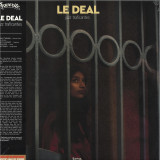
Favorite Recordings presents Jazz Traficantes by LE DEAL, a new musical adventure from the finest French jazzmen with Florian Pellissier (Piano & Fender Rhodes - Camaraõ Orkestra, Cotonete,
Aldorande, Setenta), Yoann Loustalot (Flugelhorn – Bruit Chic, Old & New Songs, Aerophone, Lucky Dog), Théo Girard (Upright Bass – Pensée Rotatives, Discobole) and Malick Koly (Drums - The Wallace
Roney Quintet). Needless to say, they’re used to play all over the globe and quite often to New York. During one of these
trips to the Big Apple, they discovered that the legendary Van Gelder studio (where most of Blue Note, Verve and CTI albums were recorded) was still active and opened so they decided to book a few days session.
Here is the story told by Florian Pellissier: “The tracks had been written the night before. We were going to run through them and then record. A simple plan. Van Gelder had passed a while back, but he left the keys and secret codes with his faithful assistant Maureen before heading off to create the right sound up in heaven. Nothing had changed in the atmosphere or configuration, not even the way the mics were placed. The studio and its wooden beams still exuded New York’s sixties jazz, dimly lit streets and clubs where anything might happen past midnight. Maureen knew just how to capture the ambiance of the sessions and bottle the energy without spilling a drop, taking infinite care to collect each cymbal tone, drum roll and trumpet phrase, without losing a single vibrating bass string or the slightest keyboard pause.”
Indeed, the four contrabandists succeeded to deliver an outstanding album, filled with themes that’ll get stuck in your head, just like in the 19 minutes long performance “Mexican Junkanoo Suite” and its three
parts. But more than just beautiful melodies, LE DEAL truly managed to bring a sense of drama to their compositions, going into the deepest emotions through gutted arrangements, improvising with great attention to the articulation of their ideas. From the beginning to the end, musicians and engineers did their best to emulate the proper vintage sound. Jazz Traficantes could prove once and for all that
French Jazz can indeed cross the borders. The album will be available as Tip-On Deluxe Vinyl LP but also on CD & Digital with a bonus track, “Noche en la Carcel”
Our lucky 13th release is here!
We have a powerful serving by Russian team Scruscru meets Meowsn.
Both have really cool releases under their belt on Sloth Boogie, NOmada, Nurvous & Star Creature Universal Vibrations.
So, here at Outplay we're very excited to bring you 'Surr Rendez-Vous EP'
A patchwork of creative sampling, wonky jazz chords and powerful synth melodies with a small sprinkling of tongue-in-cheek makes for a super cool four tracker.
The story of the tracks made us reminisce of the rise of the loose beat, broken house of a few years back, while this one still feels very contemporary.
Being a firm believer of letting the music speak for itself: enjoy!