After humble lo-fi beginnings in the Australian Art-Pop Underground, Donny Benet has expanded his cult-like following across the Globe with a resonant Array of danceable Repertoire dealing with Love- and Affection. New album "Mr Experience" marks a new chapter, informed by a wealth of musical- and personal development.
For Mr Experience, Donny envisioned a Soundtrack to a Dinner-Party- Set in the late 1980's. While his earlier Recordings drew Inspiration from DIY Pop Conspirators such as Ariel Pink & John Maus, Donny channelled the Stylings of Bryan Ferry & Hiroshi Yoshimura as the Impetus for new Material, evident on the Intimacy found on ‘Girl Of My Dreams’ and it's lush production- with a soothing whistle-along Chorus for good Measure!
Sincerity has been a key component of Donny Benet’s output since the beginning. His songs deal with genuine Emotion served on a kitsch Platter. An alter-ego manifested in the beginning of the 2010's, Donny has blurred the Lines of Artifice to create a back- Catalogue that can embrace- and challenge, often simultaneously, - the notion of Irony in Art.
"Mr Experience" moves further away from ironic Notions as Donny explores lyrical- and musical themes which embody Observations of Maturation in his audience, his tightknit musical Community- and himself. While ‘mature’ is a term that often rings hollow as an album descriptor, the term couldn’t be more apt for Mr Experience.
Previous album The Don was created with the luxury of time. The phenomenal Response to that Album across Europe- and the United States - fuelled by accompanying Music Videos clocking in Views in the Millions- meant that there were scant Windows of Opportunity to write- and record a follow-up.
With a legacy in Sydney’s music community, working with Sarah Blasko, and tightknik collaborators Jack Ladder & Kirin J Callinan, Donny Benet is accustomed to collaboration on the Stage- and in the Studio, mostnotably on the 2014 full-length release Weekend At Donny’s.
“There is such immense talent evident in every aspect of the Donny Bene experience - the vision of the character, the steadfast adherence his narrative and the musicality of Benet himself all combine to makesomething truly genius.” - Double J, Australin.
“Donny Benet makes feminine music for everybody” - Vice, Netherlands.
“The Don does not sound like amusical copying machine”. - 3voor12 National, Netherlands.
“The set was punctuated with virtuosic solos and exquisite harmonies, and added another layer of genius to the show.
We almost couldn’t handle it... Donny for president!" - Indie Berlin.
“Everyone loves Donny Benet” - Feature in Gonzai, France.
“Phenomenal Australian Showman... Offers Top-Class Dance Music with Virtuose-Bass Guitar- and Keyboard Parts & incredible Sound-Colour feel.” - Podujatie.sk, Slovakia.
Donny has toured Europe five times since the start of 2018 and has played in the UK, Austria, Germany, Slovakia, France, Netherlands, Spain, Portugal, Belgium, Denmark, Switzerland, Czech Republic, Greece and Sweden. The Don will revisit Europe twice in 2020, once for his own headline shows in May then back again in August for festivals!
Buscar:lux experience
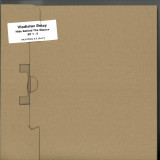
Vladislav Delay presents the fifth and last EP in his "Hide Behind The Silence" series. Intuitive and raw music, momentary and reflective, released on Ripatti's own label "Rajaton".
--
Stillness is a myth. Consider concepts such as ”still water”, or ”still air” for that matter. Go to a restaurant, ask them for a glass of still water, hold it against the light and see where we’re at. Even though the water itself has been captured and imprisoned in the glass, it never stops breathing. It’s filled with tiny particles, dancing. Everything can be explained on a molecular level, but since we’re not scientists – and even if you happen to be – it’s the natural world of perception that moves me.
Still air is very similar. A hot summer’s day with zero wind feels completely still. It’s the closest I have felt to complete stillness. Or for a more urban adaptation, imagine the same vibe inside a normal apartment. In those moments, revelations and mind- blowing experiences can be had with experiments in stillness.
Try this: Just sit down for a minute on a sunny day, making sure there’s enough natural light. Do absolutely nothing. Try not to breathe for a bit. (If you need a mental anchor, you can play Cage’s 4’33” in your head but nothing else.) Watch the tiny dots of dust dancing :..’ ̈.:; ́ ́*°.,’:,. ̈ ̈ ̈ ̈:,.’
The movement is crazy, but the feeling of stillness comes from witnessing how subtle it is. In (perceived) complete stillness, every act of microscopic mobility seems to speak volumes. Yet, it feels both reassuring and oddly threatening that the stillness is never complete. What if we would need absolute stillness? Or is it just enough that we can perceive something as such? Extremes attract, so for both water and air, extraordinary movement is equally fascinating. That is also a luxury item of sorts. For us to enjoy a very ”loud” body of water or air, we need to be safe, in enough control of the situation. So when you are, it’s worthwhile to pay attention and take it all in.
A rapid flowing free with extreme strength and just barely in control. Look at that water go! No still water on this one, only ”sparkling”. A windy day when birds seem surprised how hard it is to fly, but in the end they make it. Trees bend but don’t break. The wind shows you its movement but doesn’t hurt you. It feels friendly, like a big clumsy dog that doesn’t quite understand its size.
It’s beautiful to be a guest of the elements, but not at the mercy of them. A new kind of dialogue forms.
Vladislav Delay's complete "Hide Behind The Silence" series. Intuitive and raw music, momentary and reflective, released on Ripatti's own label Rajaton.
Stillness is a myth. Consider concepts such as ”still water”, or ”still air” for that matter. Go to a restaurant, ask them for a glass of still water, hold it against the light and see where we’re at. Even though the water itself has been captured and imprisoned in the glass, it never stops breathing. It’s filled with tiny particles, dancing. Everything can be explained on a molecular level, but since we’re not scientists – and even if you happen to be – it’s the natural world of perception that moves me.
Still air is very similar. A hot summer’s day with zero wind feels completely still. It’s the closest I have felt to complete stillness. Or for a more urban adaptation, imagine the same vibe inside a normal apartment. In those moments, revelations and mind- blowing experiences can be had with experiments in stillness.
Try this: Just sit down for a minute on a sunny day, making sure there’s enough natural light. Do absolutely nothing. Try not to breathe for a bit. (If you need a mental anchor, you can play Cage’s 4’33” in your head but nothing else.) Watch the tiny dots of dust dancing :..’ ̈.:; ́ ́*°.,’:,. ̈ ̈ ̈ ̈:,.’
The movement is crazy, but the feeling of stillness comes from witnessing how subtle it is. In (perceived) complete stillness, every act of microscopic mobility seems to speak volumes. Yet, it feels both reassuring and oddly threatening that the stillness is never complete. What if we would need absolute stillness? Or is it just enough that we can perceive something as such? Extremes attract, so for both water and air, extraordinary movement is equally fascinating. That is also a luxury item of sorts. For us to enjoy a very ”loud” body of water or air, we need to be safe, in enough control of the situation. So when you are, it’s worthwhile to pay attention and take it all in.
A rapid flowing free with extreme strength and just barely in control. Look at that water go! No still water on this one, only ”sparkling”. A windy day when birds seem surprised how hard it is to fly, but in the end they make it. Trees bend but don’t break. The wind shows you its movement but doesn’t hurt you. It feels friendly, like a big clumsy dog that doesn’t quite understand its size.
It’s beautiful to be a guest of the elements, but not at the mercy of them. A new kind of dialogue forms.
Q&A with Sasu Ripatti:
1) Tell us something about the EP series ”Hide Behind the Silence”, what’s the idea and what can we expect?
Exploration of inaction. Of many kinds. In arts and in personal life, or at bigger and more serious levels. Questioning myself as a human being as well as an artist. Acknowledging the growing activism all around, and the very clear need for it, and how it reflects my own inaction.
Musically speaking, after Rakka, Isoviha and Speed Demon, I finally found some relief, but more importantly lost the need to go musically ever more outward and intensive. I felt quite strongly certain periods/moods from the past and they made me revisit some musical ideas or states of mind I was exploring early on.
It’s about live moments being captured, not much premeditation or editing. More intuitive and raw, even though the end result (to me) feels and sounds quite introspective and calm. It’s not very ambitious. Momentary and reflective.
2) Your music doesn’t sound very silent. Does it come from somewhere behind the silence?
Oh, this time to me it sounds quite quiet and playing with space if not silence. I don’t know what’s actually behind silence, but I think silence is the source of everything. We just don’t understand it yet.
3) What kind of thoughts or experiences gave inspiration to this series?
Writing this in Nov ’22, it’s not a stretch to say the world has been really unwell. Sometimes, like Mika Vainio put it, the world eats you up. I feel a bit like that. And I try to hide in my studio and stay away from it all, but it’s getting harder by the day. I’ve been questioning myself and thinking if what us artists are doing is worth anything, and whether it’s just a selfish thing I’ve been doing for the past 25 years, running away from everything. I haven’t come to a conclusion yet.
4) Is it easy for you to be in silence, or around silence?
Absolutely. I not only hide behind silence but I also love silence. It’s only since I started going back to nature as a grown-up person that I sensed and was enveloped by silence, true silence. I have begun to appreciate it a lot. I think all the people should spend more time in silence.
All tracks composed and produced by Sasu Ripatti.
Artwork by Marc Hohmann, photography by Shinnosuke Yoshimori.
Mastering by Stephan Mathieu for Schwebung Mastering.
Vinyl cut by SST Brueggemann.
Publishing by WARP Music Ltd.
Four essential cuts from Ghana & Cape Verde, compiled by Arp Frique...
Music is a great connector, bringing people together in many ways. On his journey in music so far, Arp Frique has been fortunate to meet many beautiful artists. The songs on this first edition of "Radio Familia" are deeply connected to the musicians he performs with. Join the music family on a trip through exciting sounds from Ghana and Cape Verde and listen to their story in both words and music.
Arp Frique never played a show without including Americo Brito’s epic song “C’est Dudu”. The song originally appeared on his album “Fidjo Di Mizeria” from 1989 but he had been performing his anthem for years and it came in many shapes and forms. After spending a lot of time in Paris, he (like many others in those days) got inspired by new records from Guadeloupe and Martinique, especially “kadans”. Incorporating latin piano motifs borrowed from salsa and merengue and a bold choice to sing in French, the song and album became an instant success for Americo in and outside the clubscene (note: DJs were not the primary source of dance music in those days, bands played all night to keep the dancers moving). The addition of C’est Dudu to this compilation became especially relevant since Americo recently passed away. Fortunately, his anthem just like all his other music will remain with us for decades to come.
While going through the archives with Americo Brito for the Radio Verde compilation, he introduced Arp Frique to a band called Imilux Star, of course again well connected with Americo. This Cape Verdean band residing in Luxemburg (where there is a substantial Cape Verdean community) definitely added a different flavor to the musical pallet the islands are famous for: heavy syncopated rhythms coming from the drum computer. They released two albums which both became very popular in their scene and the track “Yolanda” from their 1988 album “Jota Dê” got to Arp Frique’s attention too late to add to the Radio Verde comp. The band is still performing to this day in the Luxemburg-Cape Verdean live circuit.
While Arp Frique was on the road with his lead singer Mariseya, they talked much and deep about Ghanaian music (especially highlife) and he learned a lot about the community from Ghana in the Netherlands, mostly in Amsterdam and The Hague. Mariseya’s dad, Nana Adomako Nyamekye, came to see their liveshow while in the UK which was very special to them considering he is one of the highlife artists Arp Frique has grown to be very fond of. His deeply funky and bubbly bass driven song “Obra Twa Owuo” is about life and death, telling us we should all love each other as we still have life to live. Originally released on “Ano Plan” from 1982, the album is filled with philosophical advice. In his own words: “A message to all humans that something awaits us all at the end of life. Let’s live together with love.
Bnnyhunna, from the Ghanaian community in the Netherlands, joined Arp Frique’s live experience several times playing keyboards and synthesizers. His dad Elvis Kwasi Ankomah, just like him, developed a high level of musicianship while performing regularly in church. The song “Fa Wokoma Mame” (give me your heart) from his only studioalbum “Mfa Menko” released in 1995 is about showing his love to a lady but only if she puts her trust in him completely. The album talks about love, pain, relationships and life. Having worked with artists like Daddy Lumba, Nana Ampadu, Amakye Dede and many other hiplife and highlife legends, he still plays in church every week and has been doing so ever since he was 15 years young.
With its tenth record from Fortunato Durutti Marinetti, Quindi continues to celebrate songwriting and storytelling framed by curious musicality. In keeping with the label's trajectory to date, this is an album which draws on a universal human sentimentality and presents it with an uncommon flair. In the case of Toronto-based Daniel Colussi, the man behind Eight Waves In Search Of An Ocean, his melancholic poetry cuts through with a clarity which calls to mind all-time greats from Anette Peacock through to Lou Reed and Leonard Cohen.
Turin-born Colussi has drifted through various bands, guises and styles over the past 20 years, but since settling into Fortunato Durutti Marinetti as a vehicle for his songs, he's found a strong expressive impetus which transcends genre to become entirely hinged on the power of his words and melodies. The first album under this alias was a 2020 cassette album, Desire, later pressed on vinyl due to demand in tandem with the release of 2022's Memory's Fool. On each record, Colussi has found distinct arrangements of players to set the mood, ranging from gently lilting art and folk rock through to orchestrated balladry, but Eight Waves In Search Of An Ocean widens the palette of Fortunato Durutti Marinetti to create an album in which each song feels like a tale unto itself.
Colussi's renewed approach is instantly apparent as album opener 'Lightning On A Sunny Day' unfurls, informed greatly by producer Sandro Perri's input pursuing a hybrid electro-organic sound. The addition of drum machines and synths to the musical palette bring with them the strong connotations of pop while the sax and violin sounds similarly smooth and silky, and one can't help but think of John Martyn's slide into the digital sound of Sapphire or Kraftwerk's bittersweet synthetic tenderness.
Within this sound, there's still space for the energy to fluctuate according to the whims of songs. 'The Flowers' turns inward with a soft-touch composition as delicate as the petals Colussi describes falling to the floor. 'Misfit Streams' and first single 'Clerk Of Oblivion' savour the fluid, luxuriant tone of fretless bass with all the 80s connotations intact. Colussi remains the central focus whatever happens around him, in possession of the kind of unforced charisma which drives a song deep into the listener's heart. It's at once entirely his own style and yet comforting and familiar. The lyrics might sweep you into the singer's inner world, similarly to the experience listening to late 60s Tim Buckley, or you might well inhale the mellow jazziness of the harmonic movement like you would Joni Mitchell on Hejira.
The emotional direction of each track is never linear - 'Smash Your Head Against The Wall' snarls its rhythm section before the strings sow their aching beauty to cool the song's temper, winding up as a track of distinct halves jabbing at each other. "I Need You More' leaves space for spiralling flute solos and strangely stiff, militaristic drum rolls in the midst of a sweet, slightly sad synth ballad, the final wave receding back into the tidal undulations of Colussi's unique exploration of his muse.
The artist himself dubs his musical expression as "poetic jazz rock" with a sideways glance - it's not exactly poetry, far from trad jazz and it doesn't really rock, yet the tag feels uncannily like it fits, just like the curious music it's used to describe.
Vladislav Delay presents the fourth EP in his "Hide Behind The Silence" series with five 10" releases coming throughout 2023. Intuitive and raw music, momentary and reflective, released on Ripatti's own label "Rajaton".
Stillness is a myth. Consider concepts such as ”still water”, or ”still air” for that matter. Go to a restaurant, ask them for a glass of still water, hold it against the light and see where we’re at. Even though the water itself has been captured and imprisoned in the glass, it never stops breathing. It’s filled with tiny particles, dancing. Everything can be explained on a molecular level, but since we’re not scientists – and even if you happen to be – it’s the natural world of perception that moves me.
Still air is very similar. A hot summer’s day with zero wind feels completely still. It’s the closest I have felt to complete stillness. Or for a more urban adaptation, imagine the same vibe inside a normal apartment. In those moments, revelations and mind- blowing experiences can be had with experiments in stillness.
Try this: Just sit down for a minute on a sunny day, making sure there’s enough natural light. Do absolutely nothing. Try not to breathe for a bit. (If you need a mental anchor, you can play Cage’s 4’33” in your head but nothing else.) Watch the tiny dots of dust dancing :..’ ̈.:; ́ ́*°.,’:,. ̈ ̈ ̈ ̈:,.’
The movement is crazy, but the feeling of stillness comes from witnessing how subtle it is. In (perceived) complete stillness, every act of microscopic mobility seems to speak volumes. Yet, it feels both reassuring and oddly threatening that the stillness is never complete. What if we would need absolute stillness? Or is it just enough that we can perceive something as such? Extremes attract, so for both water and air, extraordinary movement is equally fascinating. That is also a luxury item of sorts. For us to enjoy a very ”loud” body of water or air, we need to be safe, in enough control of the situation. So when you are, it’s worthwhile to pay attention and take it all in.
A rapid flowing free with extreme strength and just barely in control. Look at that water go! No still water on this one, only ”sparkling”. A windy day when birds seem surprised how hard it is to fly, but in the end they make it. Trees bend but don’t break. The wind shows you its movement but doesn’t hurt you. It feels friendly, like a big clumsy dog that doesn’t quite understand its size.
It’s beautiful to be a guest of the elements, but not at the mercy of them. A new kind of dialogue forms.
Q&A with Sasu Ripatti:
1) Tell us something about the EP series ”Hide Behind the Silence”, what’s the idea and what can we expect?
Exploration of inaction. Of many kinds. In arts and in personal life, or at bigger and more serious levels. Questioning myself as a human being as well as an artist. Acknowledging the growing activism all around, and the very clear need for it, and how it reflects my own inaction.
Musically speaking, after Rakka, Isoviha and Speed Demon, I finally found some relief, but more importantly lost the need to go musically ever more outward and intensive. I felt quite strongly certain periods/moods from the past and they made me revisit some musical ideas or states of mind I was exploring early on.
It’s about live moments being captured, not much premeditation or editing. More intuitive and raw, even though the end result (to me) feels and sounds quite introspective and calm. It’s not very ambitious. Momentary and reflective.
2) Your music doesn’t sound very silent. Does it come from somewhere behind the silence?
Oh, this time to me it sounds quite quiet and playing with space if not silence. I don’t know what’s actually behind silence, but I think silence is the source of everything. We just don’t understand it yet.
3) What kind of thoughts or experiences gave inspiration to this series?
Writing this in Nov ’22, it’s not a stretch to say the world has been really unwell. Sometimes, like Mika Vainio put it, the world eats you up. I feel a bit like that. And I try to hide in my studio and stay away from it all, but it’s getting harder by the day. I’ve been questioning myself and thinking if what us artists are doing is worth anything, and whether it’s just a selfish thing I’ve been doing for the past 25 years, running away from everything. I haven’t come to a conclusion yet.
4) Is it easy for you to be in silence, or around silence?
Absolutely. I not only hide behind silence but I also love silence. It’s only since I started going back to nature as a grown-up person that I sensed and was enveloped by silence, true silence. I have begun to appreciate it a lot. I think all the people should spend more time in silence.
All tracks composed and produced by Sasu Ripatti.
Artwork by Marc Hohmann, photography by Shinnosuke Yoshimori.
Mastering by Stephan Mathieu for Schwebung Mastering.
Vinyl cut by SST Brueggemann.
Publishing by WARP Music Ltd.
Kevin Morby writes (and records, and imagines) at an almost incomparable clip, and his most recent album, This Is A Photograph, studies life, time and mortality through myriad lenses. It's a dynamic, buoyant record on big, heavy themes, so it only makes sense that Morby found he wasn't quite done with it on its completion. More Photographs (A Continuum) finds new nooks, corners and vantage points. "If This Is A Photograph is a house that you have been living inside of," says Morby, "then More Photographs is, perhaps, the same home just experienced differently. As if you, its inhabitant, have taken a tab of something psychedelic and now, suddenly, you've replaced your eyeglasses with kaleidoscopes." Here, Morby returns to his landmark album's bottomless themes with new wisdom, new imagination, and the winking, looping call backs that tie his full body of work together in uniquely special ways." Everything you once thought was familiar," he continues, "suddenly appears differently, shifting shapes, color and sonic landscapes." "Five Easy Pieces Revisited" captures the same moment from Bobby's point of view; "This Is A Photograph II" takes a similar tact, revisiting its predecessor from a different angle. "Triumph" explores more of the myths and deaths that surround Memphis, TN, this time inspired by Big Star's Chris Bell. And "Kingdom Of Hearts" arrives as an origin story to both This Is A Photograph and its new companion." With every collection of songs," says Morby, "I feel I must cast them out of me before moving onto the next project, and here I knew that what I had begun with This Is A Photograph was not finished. Releasing this collection is my tying a bow on that time and place in my creative life." With a luxurious nine tracks - three re-imaginings and six brand new songs - More Photographs (A Continuum) is prequel, sequel and primer to an already rich and generous record from one of our most luminous modern songwriters.
Rare Montreux festival sessions from 1982.
Live Album by Detroit/Tribe Jazz Icon Reggie Fields.
Featuring an All-Star Line-up.
First ever vinyl reissue.
180g BLACK vinyl limited to 500 copies (w/obi strip) . Non-Returnable.
The Real ShooBeeDoo (AKA Reggie Fields) has always been a consistent name on the Detroit jazz scene … Fields who played with Pharoah Sanders while he was living in Motor City, worked with Sun Ra in the late 1970s and early 80s and who was also a close associate of the Afro-centric TRIBE label and artist collective, leaving his marks on a few essential TRIBE sessions such as Phil Ranelin’s “The Time Is Now!” as well as Ranelin & Wendell Harrison’s masterpiece “A Message From The Tribe”. It was Wendell Harrison who gave Fields the chance to record his landmark solo album (Reminiscing from 1981) to be released on his Wenha imprint. Reggie chose to record under his moniker “The Real ShooBeeDoo” because he built a rock-solid reputation as an internationally acclaimed performer under that name.
In 1982 he embarked on a European tour and performed at various clubs in countries such as Germany, Holland, Belgium, Italy, Switzerland, Luxemburg, France and Norway. This ecstatic touring vibe can later be heard on his fantastic ‘‘Live at Montreux Jazz Festival, 1982” album (simply called ‘Good To Go’).
“Good To Go” which we are proudly presenting you today features 10 tracks consisting of smooth Jazz-rumbas, French avant-garde jazz vocalizations, bass lines that can blow through walls as if they were made from paper, foot stomping rhythmic beats, lyrics that are pure poetry and ecstatic beats that took the crowd on a musical trip that ended in them raving for more. Playing before a large and enthusiastic crowd, Reggie’s spiritual cosmic free-flowing rhythms took the audience by storm…and the stakes were high because the bill was pretty impressive, he shared the stage with some of the biggest names in the genre (the festival bill also included Miles Davis, Dizzy Gillespie and Sonny Rollins).
Also…a quick closer look at the cast of all-star players featured on the album is most likely to be enough to get an impression that this is a very special record. Detroit preferred pianist Earl Van Riper brings his rich musical experience to the table that he perfected during his collaborations with Marcus Belgrave, Eddy ‘Cleanhead’ Vinson, Dinah Washington, Wes Montgomery and countless others. On the tenor saxophone we have Robert Barnes known for his work with Donald Bird…and last but not least we have Tani Tabbal on drums who is famous for his performances and recordings with Roscoe Mitchell and Sun Ra!
All of the above makes this rare album a total must-have that just begs for a prominent place in your record collection.
Tracklist:
Jumping With The Bellboy , Dark Eyes , Qu'est Ceque C’est , Do You Call that Friendship , Oo Shoobee Doo , Crazy She Calls Me , Have You Met Miss Jones , Ye Brac Hareesee , Hit That Jive Jack , Too Late Now
"The Tragically Hip announce they will be releasing a special version of their sophomore album, Road Apples 30th Anniversary Deluxe, on Friday, October 15. The album is available in comprehensive physical deluxe CD and Vinyl and Pure Audio blu-ray audio box set editions.
Created to mark the 30th anniversary of the band’s second studio album which became their first record to hit #1, the Road Apples 30th Anniversary Deluxe editions were carefully crafted with input from each living member of the band. The outcome is a deep dive behind the scenes of what made this album one of the most beloved in The Tragically Hip’s vast catalogue. With all tracks completely remastered in 2021 by Ted Jensen at Sterling Sound in Nashville, for the first time, fans will hear music from the band with all the grit, vibrancy, and passion of their original recordings, second only to being in the recording studio with them. The physical box set editions, (CD and Vinyl), of the release will contain special Dolby Atmos, 7.1, 5.1 and binaural mixes by Richard Chycki of Road Apples and 5 cuts from Saskadelphia, ensuring fans have a one-of-a-kind listening experience. Fans and collectors will also appreciate the brand-new artwork for each of the packages within the physical box sets.
The expansive deluxe editions of the release are jam packed with rare and more previously unreleased and never heard before pieces of music chronicling The Tragically Hip’s Road Apples era, including:
• Road Apples, the original album re-mastered in 2021 by Ted Jensen at Sterling Sound in Nashville.
• Saskadelphia, as released earlier this year.
• Live At The Roxy Los Angeles, May 3rd 1991, originally recorded for a Westwood One radio show, often bootlegged and sought after by fans for many years. It has been re-mastered and expanded and includes the rare “Killer Whale Tank” version of New Orleans Is Sinking. This legendary Roxy show is now a double vinyl album. This album is available exclusively in physical product.
• Hoof-Hearted, an album of previously unreleased demos, outtakes, and alternate versions."
Vladislav Delay presents the third EP in his "Hide Behind The Silence" series with five 10" releases coming throughout 2023. Intuitive and raw music, momentary and reflective, released on Ripatti's own label "Rajaton".
--
Stillness is a myth. Consider concepts such as ”still water”, or ”still air” for that matter. Go to a restaurant, ask them for a glass of still water, hold it against the light and see where we’re at. Even though the water itself has been captured and imprisoned in the glass, it never stops breathing. It’s filled with tiny particles, dancing. Everything can be explained on a molecular level, but since we’re not scientists – and even if you happen to be – it’s the natural world of perception that moves me.
Still air is very similar. A hot summer’s day with zero wind feels completely still. It’s the closest I have felt to complete stillness. Or for a more urban adaptation, imagine the same vibe inside a normal apartment. In those moments, revelations and mind- blowing experiences can be had with experiments in stillness.
Try this: Just sit down for a minute on a sunny day, making sure there’s enough natural light. Do absolutely nothing. Try not to breathe for a bit. (If you need a mental anchor, you can play Cage’s 4’33” in your head but nothing else.) Watch the tiny dots of dust dancing :..’ ̈.:; ́ ́*°.,’:,. ̈ ̈ ̈ ̈:,.’
The movement is crazy, but the feeling of stillness comes from witnessing how subtle it is. In (perceived) complete stillness, every act of microscopic mobility seems to speak volumes. Yet, it feels both reassuring and oddly threatening that the stillness is never complete. What if we would need absolute stillness? Or is it just enough that we can perceive something as such? Extremes attract, so for both water and air, extraordinary movement is equally fascinating. That is also a luxury item of sorts. For us to enjoy a very ”loud” body of water or air, we need to be safe, in enough control of the situation. So when you are, it’s worthwhile to pay attention and take it all in.
A rapid flowing free with extreme strength and just barely in control. Look at that water go! No still water on this one, only ”sparkling”. A windy day when birds seem surprised how hard it is to fly, but in the end they make it. Trees bend but don’t break. The wind shows you its movement but doesn’t hurt you. It feels friendly, like a big clumsy dog that doesn’t quite understand its size.
It’s beautiful to be a guest of the elements, but not at the mercy of them. A new kind of dialogue forms.
‘Where is Agartha? What is the specific region in which it lies? Along what road, through what civilizations, must one walk in order to reach it?.’ Saint-Yves d’Alveydre in 1886
Agartha, the debut full-length album by Japanese producer Wata Igarashi, is a mysterious, divine thing. Named for the mythical secret kingdom, understood as a complex maze of underground tunnels, perhaps designed by Martians who colonised the Earth tens of thousands of years ago, it’s a similarly mystical, perhaps even cosmic trip – but this time, exploring an inner, deeply personal cosmos. Beautifully detailed and bustling with rich incident, it takes Igarashi’s music to new places, which still retaining his unique sonic imprimatur; in this respect, it’s perfectly at home with Kompakt, a label that’s always encouraged artists to make the visionary music they need to create, to take risks and make sideways steps into uncharted territory.
An eloquent producer and DJ, Igarashi has been releasing techno for eleven years now, appearing on such imprints as The Bunker NY, Delsin, Midgar, and Time To Express; he has also self-released his productions via his WIP net label. Throughout, Igarashi has consistently explored his unique approach to techno and electronic music, one that’s eloquent and poised, even when it shifts into more psychedelic terrain; he’s a master at balancing the sensual and the functional, and he has an unerring ear for the right texture, the right tone, at the right time. He brings all of this into Agartha, his most thorough-going expression of self to date.
For Agartha, Igarashi had a strong concept he wanted to explore. Visualising specific scenes from an imaginary film based on the titular secret kingdom, he created soundtracks for those scenes, spending time during the pandemic in his studio, working away carefully at the ten tracks here. Given his background in creating music for television and advertisements, Igarashi is well-placed to explore the marriage of the sonic and the visual in such intimate ways, but freed from commercial concerns, he let his imagination run riot. He also drew on a rich palette of musical influences – techno is in there, of course, but you can also hear the smoky, improvised jazz of the likes of Miles Davis (to whom the album’s title is an indirect nod), and the minimalism and systems music of Steve Reich.
The latter is particularly pronounced on the gorgeous, beatless drift of “Floating Against Time”, where an arpeggiated sequence lingers, lovingly, around your ears for nine blissful minutes, coasting across swooning drones and waves of ambient noise. “Ceremony Of The Dead”, originally composed as part of a Sony 360 Reality Audio spatial sound concert, is a deep pass into systems composition, with various patterns overlaid and interlocking, before a wordless vocal rises from the depths, a gorgeous counterpoint to the swarming textures that gather across the track. On the other hand, tracks like “Burning” and “Subterranean Life” nudge toward Fourth World territory, painting deluxe dreamscapes of uncertain provenance; the title cut is an abstract drift-world, Igarashi painting an alien tableau dotted by shape-shifting creatures.
Agartha’s conceptual framework means that everything on the album sits perfectly together; listening to it in one sitting is a dizzying, lush experience. Its imaginings of inner landscapes recall, in some respects, the nautical, aqueous mythologies of the Drexciyan universe, though from different perspectives. But the result is Igarashi’s own creation, a deluxe, enchanting trip through the visionary Agartha of this unique producer’s cinematic mind’s-eye.
Wo liegt Agartha? In welcher spezifischen Region liegt es? Auf welchem Weg, durch welche Zivilisationen muss man gehen, um dorthin zu gelangen?'
Saint-Yves d'Alveydre im Jahr 1886
Agartha, das Debütalbum des japanischen Produzenten Wata Igarashi, ist ein geheimnisvolles, göttliches Ding. Benannt nach dem mythischen, geheimen Königreich, das als ein komplexes Labyrinth unterirdischer Tunnel verstanden wird, die vielleicht von Marsmenschen angelegt wurden, die vor Zehntausenden von Jahren die Erde kolonisierten, ist es eine ähnlich mystische, vielleicht sogar kosmische Reise - aber dieses Mal erforscht es einen inneren, zutiefst persönlichen Kosmos. Wunderschön detailliert und voller reichhaltiger Begebenheiten, führt es Igarashis Musik an neue Orte, die dennoch seine einzigartige klangliche Handschrift bewahren. In dieser Hinsicht hat es bei Kompakt ein perfektes Zuhause gefunden - einem Label, das Künstler immer ermutigt hat, jene visionäre Musik zu machen, Risiken einzugehen und seitwärts Schritte in unbekanntes Terrain zu tun.
Der eloquente Produzent und DJ Igarashi veröffentlicht seit elf Jahren Techno auf Labels wie The Bunker NY, Delsin, Figure und Time To Express; außerdem hat er einige Produktionen über sein Label WIP net selbst veröffentlicht. Dabei hat Igarashi stets seinen einzigartigen Ansatz für Techno und elektronische Musik verfolgt, der kontrolliert und ausgeglichen ist, selbst wenn er sich in psychedelisches Terrain begibt; er ist ein Meister der Balance zwischen dem Sinnlichen und dem Funktionalen und hat ein untrügliches Gespür für die richtige Textur, den richtigen Ton zur richtigen Zeit. All das bringt er in Agartha ein, dem bisher umfangreichsten Ausdruck seiner selbst.
Für Agartha hatte Igarashi ein starkes Konzept, das er erforschen wollte. Er stellte sich bestimmte Szenen eines imaginären Films vor, der auf dem titelgebenden geheimen Königreich basiert, und schuf Soundtracks für diese Szenen. Während der Pandemie verbrachte er Zeit in seinem Studio und arbeitete sorgfältig an den zehn Tracks. Mit seinem Hintergrund als Komponist von Fernseh- und Werbemusik ist Igarashi prädestiniert dafür, die Verbindung von Klang und Bild auf solch intime Weise zu erforschen, aber frei von kommerziellem Dünkel ließ er seiner Fantasie freien Lauf. Er schöpfte auch aus einer reichen Palette musikalischer Einflüsse - Techno ist natürlich dabei, aber man hört auch den rauchigen, improvisierten Jazz von Miles Davis (an den der Titel des Albums eine indirekte Anspielung ist) und den Minimalismus und die Systemmusik von Steve Reich.
Letzteres ist besonders ausgeprägt in dem wunderschönen, beatlosen "Floating Against Time", wo eine arpeggierte Sequenz neun Minuten lang liebevoll um die Ohren fliegt und über schwelende Drones und Wellen von Umgebungsgeräuschen gleitet. "Ceremony Of The Dead", ursprünglich als Teil eines Sony 360 Reality Audio-Raumklangkonzerts komponiert, ist ein tiefes Eintauchen in eine Systemkomposition, bei der sich verschiedene Muster überlagern und ineinander greifen, bevor sich ein wortloser Gesang aus der Tiefe erhebt, ein wunderschöner Kontrapunkt zu den wimmelnden Texturen, die sich über den Track legen. Andererseits bewegen sich Tracks wie "Burning" und "Subterranean Life" in Richtung der Vierten Welt und malen luxuriöse Traumlandschaften ungewisser Herkunft; der Titeltrack ist eine abstrakte Scheinwelt, in der Igarashi ein außerirdisches Tableau malt, das von formwandelnden Kreaturen übersät ist.
Der konzeptionelle Rahmen von Agartha ermöglicht, dass alles auf dem Album perfekt zusammenpasst; es in einem Zug durchzuhören ist eine schwindelerregende, opulente Erfahrung. Wata's Vorstellungen von inneren Landschaften erinnern in gewisser Hinsicht an die nautischen, wässrigen Mythologien des drexciyanischen Universums, wenn auch aus einer anderen Perspektiven betrachtet. Aber das Ergebnis ist Igarashis ureigene Schöpfung, ein luxuriöser, bezaubernder Trip durch das visionäre Agartha dieses einzigartigen Produzenten mit seinem cineastischen Blick.
- A1: Jazz Is Merely The Negroes Cry Of Joy & Suffering
- A2: Introit- Joy N’ Suff’rin
- A3: Jazz Is The Musical Expression Of The Triumph Of The Negroes Spirit
- A4: Kyrie Eleison- Lawd Hav’ Merci
- B1: This Endless Repetition Is Like A Chain Around The Spirit. And Is A Reflection Of The Denial Of A Future To The Negro In The American Way Of Life
- B2: Dias Ire- Chain Around The Spirit
- B3: Another Restraining Factor In Jazz Are The Changes
- B4: Tuba Mirum- The Changes
- C1: The Negro Experiences The Endless Daily Humiliation Of American Life Which Bequeaths Him A Futureless Future
- C2: Rex Tremendae –Futureless Future
- C3: The Negro Transforms America’s Image Of Him Into A Transport Of Joy!
- C4: Recordare-Recall The Joy 02:06
- C5: Jazz Reflects The Improvised Life Thrust Upon The Negro
- C6: Confutatis-Repression
- C7: Through Spirituals, Through The Blues, Then Through Jazz We Made A Memory Of Our Past And A Promise Of All To Come
- C8: Lacrimosa- Weeping Our Lady Of Sorrow
- D1: Because Jazz Is The One Element In American Life Where Whites Must Be Humble To The Negro
- D2: Offerturium-Hostias-Humility
- D3: Only When Whites Have Paid The Price In Suffering To Be The Negroes Equal
- D4: Sanctus- Holy, Holy, Holy
- D5: The Jazz Body Is Dead But The Spirit Of Jazz Is Alive
- D6: Agnus Dei-Jazz Is Dead!
- D7: Lux Aeterna – Eternal Light (Angel Bat Dawid) / My Rhapsody (Severson-Leist) Feat. Marshall Allen & Knoel Scott
- D8: Long Tone For Rayna Golding (A Binti Zawadi Our Future)
Requiem for Jazz is a 12-movement suite composed and arranged by Angel Bat Dawid, inspired in part by dialogue from Edward O. Bland’s 1959 film “The Cry of Jazz.”
The original form of the music was premiered at the 2019 edition of the Hyde Park Jazz Festival in Chicago, where Angel conducted a multigenerational fifteen-piece instrumental ensemble (all Black musicians from Chicago’s creative music community) alongside a four- person choir (featuring singers from Black Monument Ensemble), dancers, and visual artists in performance.
Angel mixed and post-produced recordings from the performance – adding interludes, vocals and additional sounds, as well as transcribing a piece from “The Cry of Jazz” film. The final movement of Requiem for Jazz features Marshall Allen and Knoel Scott of the Sun Ra Arkestra. Their contributions were recorded remotely at the historic Arkestral Institute of Sun Ra in Philadelphia in late 2020.
The final Requiem for Jazz work in album form is an immersive 24-track, double LP experience. The physical package is a deluxe, heavyweight gatefold jacket with liner notes by South African writer Nombuso Mathibela, artwork by Damon Locks, and a large fold out poster designed by Jeremiah Chiu, featuring poetry written by Angel Bat Dawid in dedication to all of her collaborators on the project. Additionally, there is a limited Thy Kingdom Come purple color vinyl edition of Requiem for Jazz available for the first pressing only.
- A1: Breezeplate (2022 Remaster) 03 44
- A2: Squarewave Colorwheel (2022 Remaster) 04 33
- A3: Toypieceplate (2022 Remaster) 03 33
- A4: Dodecatheon (2022 Remaster) 04 21
- A5: Sunsculpture One (2022 Remaster) 03 10
- B1: Sienna (2022 Remaster) 02 42
- B2: Kekker (2022 Remaster) 04 45
- B3: Gauss (2022 Remaster) 02 30
- B4: Billionwatt (2022 Remaster) 03 44
- B5: Continentsunderclouds (2022 Remaster) 03 08
- B6: Sunsculpture Two (2022 Remaster) 04 30
»Holo« by the US-American three-piece Kiln, first released in 1998, is one of those rare records that managed to carve out a niche of its own while also building bridges to variety of genres like Chicago-style post-rock, the ambient mysticism of projects like Rapoon or the music made at the intersection of shoegaze, and electronic music in the late 1990s. Lush textures, subtle rhythms, jazzy inflections and electronic experimentation seamlessly blend into each other over the course of the eleven tracks. This reissue through the German label Keplar makes the fully revised version, self-released by the group in 2007 under the name »Holo re/lux,« available on vinyl for the very first time. »Twenty-five years later this newly mastered vinyl edition is evidence that the sound of ›Holo‹ continues to attract like-minded listeners,« says member Clark Rehberg III. »Which on many levels means that our mission was successful.«
Rehberg had embarked on this mission together with Kevin Hayes and Kirk Marrison in 1993. They had first worked together under the name Fibreforms as a live trio that used treated guitars, kit drums, and tapes of found sound to explore the balance between band composition and recording experiments, while Marrison made heavy use of the Akai S612 sampler as a fabricating strategy with the project Waterwheel. »Kiln seemed to encapsulate the evolution and melding of those previous approaches to one that insisted on the continual opening up of the compositional process, allowing more of the mystery that can be discovered through studio experiments—and accidents—to become important elements of creating our music,« says Rehberg of the trio that is still going strong after three decades. »The word Kiln implies heat and transformation, an attitude that we apply to every sound we use—we begin with notes and performance and then mosaic with shape and colour.«
»Holo« followed up on the trio’s debut self-titled EP that had been recorded in the summer of 1996. »That same year, during a lull in our collabs, Kirk began building pieces on a low-memory Mac using an early 8-channel DAW,« explains Rehberg. Enchanted by the unprecedented fidelity and energy of those recordings, the three reconvened to build upon them and make more music in that manner. »I’d say our intention was no different than any other time: create something immersive and compelling: dense melodic blasts of uniquely constructed but ultimately accessible audio moments.« The group worked individually and in pairs for about 18 months while being spread across the United States. »We poured everything into it that we had at the time, working dead-end jobs by day and on audio in every other open moment. I remember the struggle of that process, but also the pure joy as we pulled down countless moments of magic while the pieces took shape.«
Rehberg says that he still hears »a time-stamp of those efforts and the belief that we were creating a special audio experience« when listening back to »Holo,« a record the band itself chose to revise almost a decade after its initial release. »Ultimately we just felt those pieces needed more impact and we had the tools and ability to make that happen,« he explains. 16 years after that and a quarter of a century after it first introduced Kiln as a force to be reckoned with, the remastered version feels indeed timeless. It is both a snapshot of the first extensive album project by a group whose bond is still »diamond strong,« as Rehberg puts it, and a record that continues to sound fresh, if not visionary also today.
All tracks composed and recorded by Kevin Hayes, Kirk Marrison, Clark Rehberg III.
Originally released on Thalassa in 1998.
Remaster by Stephan Mathieu. Vinyl cut by LUPO.
Cover art by Kirk Marrison & Clark Rehberg III.
Text by Kristoffer Cornils.
Stillness is a myth. Consider concepts such as ”still water”, or ”still air” for that matter. Go to a restaurant, ask them for a glass of still water, hold it against the light and see where we’re at. Even though the water itself has been captured and imprisoned in the glass, it never stops breathing. It’s filled with tiny particles, dancing. Everything can be explained on a molecular level, but since we’re not scientists – and even if you happen to be – it’s the natural world of perception that moves me.
Still air is very similar. A hot summer’s day with zero wind feels completely still. It’s the closest I have felt to complete stillness. Or for a more urban adaptation, imagine the same vibe inside a normal apartment. In those moments, revelations and mind- blowing experiences can be had with experiments in stillness.
Try this: Just sit down for a minute on a sunny day, making sure there’s enough natural light. Do absolutely nothing. Try not to breathe for a bit. (If you need a mental anchor, you can play Cage’s 4’33” in your head but nothing else.) Watch the tiny dots of dust dancing :..’ ̈.:; ́ ́*°.,’:,. ̈ ̈ ̈ ̈:,.’
The movement is crazy, but the feeling of stillness comes from witnessing how subtle it is. In (perceived) complete stillness, every act of microscopic mobility seems to speak volumes. Yet, it feels both reassuring and oddly threatening that the stillness is never complete. What if we would need absolute stillness? Or is it just enough that we can perceive something as such?
Extremes attract, so for both water and air, extraordinary movement is equally fascinating. That is also a luxury item of sorts. For us to enjoy a very ”loud” body of water or air, we need to be safe, in enough control of the situation. So when you are, it’s worthwhile to pay attention and take it all in.
A rapid flowing free with extreme strength and just barely in control. Look at that water go! No still water on this one, only ”sparkling”. A windy day when birds seem surprised how hard it is to fly, but in the end they make it. Trees bend but don’t break. The wind shows you its movement but doesn’t hurt you. It feels friendly, like a big clumsy dog that doesn’t quite understand its size.
It’s beautiful to be a guest of the elements, but not at the mercy of them. A new kind of dialogue forms.
new pressing on red & black swirl vinyl. RIYL: New Order, Drab Majesty, The KVB, Black Marble, The Soft Moon. Layering synths, guitars, electronic percussion and live drums, Houses of Heaven fuses early industrial and techno rhythms with the melodicism of shoegaze and a heavy dose of dub-influenced effects on their first full-length album titled 'Silent Places.' Written against the backdrop of the Northern California wildfires, ever-growing tent cities and the continued rise of empty luxury housing in the Bay Area, the album explores the intimate experiences that transpire within the chaotic confines of modern living. Opener "Sleep" basks in the tension surrounding the album's inception with blown-out kick drums, claustrophobic verses, and deteriorating vocal effects. Sharp arpeggiated synths and woozy strings neutralize the track's subterranean anxiety with texture and sensuality. Produced by Matia Simovich (Inhalt) and with engineering credits that include Monte Vallier (Weekend) and John McEntire (Tortoise), it's a potent introduction to the muscular sound design underpinning the album. Booming taiko drums sound the beginning of "Dissolve the Floor," the album's most club-ready track. A pulsing arpeggio gives the song its industrial heartbeat while disintegrating tape delay throws menace into the hazy atmosphere. The undulating techno beat breaks and repairs itself with seductive and satisfying timing. "In Soft Confusion" doesn't stray from the album's obsidian narrative as it envisions and ponders the aftermath of human extinction. Sonically speaking, though, it's the album's most uptempo offering with Tecon's supremely infectious chorus vocal hook and Beck's dizzying guitar riffs. The intricate electronic drum programming is elevated by Ott's live drumming, which lends a refreshingly human touch to the potentially icy, and often mechanical, sonic territory of synthdriven music. Adding density to the album's shadowy allure are the unusual sounds and vintage outboard effects that Tecon and Simovich impressively maneuver into the album's tonal palette. Great care has been taken to finesse familiar pop structures with an inventive edge. It's this mindfulness of past and present that is sure to secure Silent Places as a standout album in the new decade. Also Available From Houses Of Heaven: Remnant 12" EP
Before 2020, Ocean Alley could have broken. The six-piece had spent two years touring relentlessly off-the-back of their breakthrough record Chiaroscuro, spending months on the road and away from their loved ones, on the brink of burnout. Then the world shut down. And although there was a universal experience of suffering and isolation during ex-tensive lockdowns, Ocean Alley found themselves gifted with a forced break - where time slowed down and they could be with their loved ones, while also finding space to recon-nect with themselves. This luxury of time allowed experimentation in new ways for the band, who since inception had always felt their way through the music with communal jam sessions. It was uncharted territory for the group who for the first time operated as a bedroom band - particularly frontman Baden Donegal who revealed that a number of tracks on their upcoming fourth album Low Altitude Living started as “shitty GarageBand demos” he recorded solo at the beginning of lockdown. When comparing the creative process of their three previous full-lengths - the ARIA-nominated Lonely Diamond (2020), their Gold-certified breakthrough Chiaroscuro (2018) and self-assured debut Lost Tropics (2016) - this in itself was the big-gest difference.y
One of the last great albums of the first wave of Peruvian rock, originally released in 1974, linking psych-tinged rock with Afro-Latin American beats and folk pop. This first record by (former Traffic Sound and Los Nuevos Shain's member) Zulu was also his last and one of the most enigmatic albums released in Peru in the '70s, as the artist vanished into the religious path, making sure his music got as unnoticed as possible... Reissued for the first time with the collaboration of Zulu, including extensive liner notes and one extra track. DESCRIPTION: The first record by Zulu was also his last. Shortly after releasing it in 1974, the artist withdrew from the music scene and never returned. 46 years later, his music still sounds out of time. His musical eclecticism heralded a different era and linked rock with Afro-Latin American beats and pop. His debut and only LP is one of the last great albums of the first wave of Peruvian rock. No other original records of this type were released in Peru until the early 80s. In the 70s, in Peru, most rock groups sang in English. For his LP, Zulu chose to sing in his own language and focus on his own emotions and experiences. In the early days of his career he became member of Los Shain's, for less than a year. Then he was invited to join Traffic Sound playing bass guitar and keyboards and record the band's third album "Lux". An offer to start a solo career would follow and 'Como una escalera ', 'Alegría' and 'Cariño grande' 45s were released. The expectations that his first solo singles generated were met by the release of the LP Zulu in 1974, boasting an eclectic and innovative sound. Andean folk, Afro-Latin beats, psych-tinged prog rock scents, moog glides, choir arrangements spread across the entire album creating a truly unique piece of music. A few demos were also recorded for the next album but this never saw the light. In December 1974, a few months after the LP was released, the artist decided to disappear. At this point of his life, he started to become aware of the need to define spirituality. After exploring and comparing countless religious, philosophical, psychological texts and trying transcendental meditation and yoga, he concluded that the Bible was the most profound and clearest text. While this was going on, his public figure grew thanks to the success of his album. At the end of 1974, Zulu surprised the manager of IEMPSA, Augusto Sarria, by communicating his decision to leave show business. The artist vanished into the religious path, making sure his music got as unnoticed as possible... This is the first ever reissue of Zulú's 1974 album. It has been supervised by the artist himself and includes extensive notes and the extra track 'Haces mal, pobre chico', B side to his first single that never made it into the album.
Limited to: 300 copies.
Lera Lynn blurs the boundaries between genres, carving out a sound inspired by art-pop, indie-folk and the outer edges of American roots music. She’s a singer. She’s a songwriter. She’s a road warrior. She’s a multi-instrumentalist and producer. She’s a mother.
Texas born, Nashville resident Lera Lynn is just as comfortable creating an album entirely by herself, as she is collaborating with her heroes. In 2018, she worked with T Bone Burnett and Rosanne Cash on tracks that were not only picked up by the TV show True Detective, but Lynn was cast as a recurring character who performs in a dive bar frequented by the main characters.
However, nothing could have prepared Lynn for the lessons learned during motherhood. She welcomed her first son during the early months of the pandemic and began writing down her insights, chronicling this newfound experience of shifting priorities, strange endings, and new beginnings. Inside, she was battling postpartum depression. Outside, a bigger picture began taking shape: a feeling of interconnectedness, of cyclic renewal, of the knowledge that every beginning is an end and every end is a beginning. Those realizations coalesced into Something More Than Love, a record filled with synthesizers, lush soundscapes, the pop-noire punch of Lynn's voice, and the most dynamic melodies of her career.
Inspired by the cyclical patterns that shape our place in the world, Something More Than Love was co-produced and largely performed by Lynn and her partner, Todd Lombardo (Kacey Musgraves/Donovan Woods/Kathleen Edwards). They'd met years earlier, not long after Lynn relocated to Nashville from her college town (and musical launchpad) of Athens, Georgia. "My first time ever co-writing a song was in Nashville with Todd," she says of the ACM-nominated multi-instrumentalist. The two became fast friends and, eventually, partners; their creative chemistry giving way to romance and a growing family. That partnership reached a new milestone in 2021, with the newfound parents sharpening their creative instincts and expanding their palette for Lynn's sixth album.
"A lot of people were making records during the pandemic," Lynn notes, "and all they had was time. But it was the opposite experience for us. We created this whole record while still in the fog of early parenthood, and we didn't have the luxury of waiting for lightning to strike. We had to be focused and intentional."
Striking a balance between intimate self-reflection and universal insight, Something More Than Love poses big questions over even bigger-sounding music, with tempos and layered arrangements that find Lynn at her most dynamic. Illusion opens the album with spacey synthesizers before snapping into a taut, 1980s-influenced groove, combing reverb and rhythm into a song that swoons one minute and struts the next. I'm Your Kamikaze — a deconstructed burst of indie garage-rock, heavy on melody and percussive pulse — unfolds like a salute to self-sacrifice, with Lynn dedicating her own existence to ensuring her child's flourishing. What Is This Body? finds her reassessing her ideas of physical identity and womanhood, while the album's gorgeous title track makes room for slow-burn strings and a meteoric chorus.
Together, those songs turn Lera Lynn's experience with absolute surrender — surrendering oneself to the trials and triumphs of motherhood — into a universal record about the experiences that bind us together. This isn't just Lynn's story. It's the story of a life cycle that repeats itself over and over, every termination point becoming a starting line, every death matched by a rebirth, every edge giving way to the circular slope of the ouroboros.
‘Reich’s music expands from minimalist austerity to more full-bodied passages and back again. Reminiscent of his earliest work, it is very beautiful.’ – Financial Times
‘The music has tender energy, and an undercurrent of melancholy. Its droning tones sometimes seem to be pulling apart – like taffy, or like Richter’s stretching spaghetti stripes of color.’ – New York Times
Nonesuch Records releases the first recording of Steve Reich’s Reich/Richter, performed by Ensemble intercontemporain and conducted by George Jackson. The composition was originally written to be performed with German visual artist Gerhard Richter and Corinna Belz’s film Moving Picture (946-3).
Reich describes Richter’s book Patterns, which served as source material for the film: “It starts with one of his abstract paintings from the ’90s. He scanned a photo of the painting into a computer and then cut the scan in half and took each half, cut that in half and two of the four quarters he reversed into mirror images. He then repeated this process of ‘divide, mirror, repeat’ from half to quarter, eighth, sixteenth, thirty-second, all the way up to 4096th. The net effect is to go from an abstract painting to a series of gradually smaller anthropomorphic ‘creatures’ (since the mirroring produces bilateral symmetry) to still smaller very fine stripes.
“Belz described the film in terms of ‘pixels’. It begins with two-‘pixel’ stripes and the music begins with a two-sixteenth note oscillating pattern. When the film moves to four ‘pixels’, the music moves to a four-sixteenth note pattern, then to eight, and sixteen,” the composer continues. “After that, I began introducing longer note values – initially eighth notes, and later to quarter notes. By the middle of the film, when the images move from 512 to 1064 pixels, the music really slows to dotted half notes. Finally, as the ‘pixel’ count begins to diminish, the music moves back into more rapid eighths and then ending with the most intense rapid sixteenth movement.”
After more than one hundred performances of Reich/Richter at The Shed in New York in 2019, it was performed in London at the Barbican by the Britten Sinfonia conducted by Colin Currie and then in Paris at the Philharmonie, where this recording was made. The Austrian ensemble Windkraft Tirol, led by Kasper de Roo, will perform Reich/Richter on September 8 at Szentrum, Silbersaal in Schwaz, and the LA Phil New Music Group, led by Brad Lubman, performs the piece, accompanied by Richter and Belz’s film, at Walt Disney Concert Hall in Los Angeles on April 1, 2023.
Nonesuch has recorded every new piece of music by Steve Reich since 1985, beginning with The Desert Music and continuing through 2018’s Pulse/Quartet, resulting in twenty-two albums and the two box sets Phases in 2006 and Works: 1965-1995 in 1997. The label will put out a collection of his complete works in 2023.
Reich released a book last month, Conversations, that includes dialogues with past collaborators, fellow composers, musicians, and visual artists who have been influenced by his work, including: David Lang, Brian Eno, Richard Serra, Michael Gordon, Michael Tilson Thomas, Russell Hartenberger, Robert Hurwitz, Stephen Sondheim, Jonny Greenwood, David Harrington, Elizabeth Lim-Dutton, David Robertson, Micaela Haslam, Anne Teresa de Keersmaeker, Julia Wolfe, Nico Muhly, Beryl Korot, Colin Currie, and Brad Lubman. Booklist said in its review, ‘Iconoclastic American composer Steve Reich is singular in his own right, and when he is in conversation with other equally iconoclastic composers, conductors, sculptors, musicians, percussionists, and video artists, sparks not only fly, they sparkle. Reich and his colleagues conduct lovely give-and-takes during which they share stories, creative approaches, and viewpoints. Reich's Conversations is the best kind of eavesdropping.’
Steve Reich has been called ‘America’s greatest living composer’ (Village Voice), ‘the most original musical thinker of our time’ (New Yorker), and ‘among the great composers of the century’ (New York Times). His music has influenced composers and mainstream musicians all over the world. Music for 18 Musicians and Different Trains have earned him two Grammy Awards, and in 2009, his Double Sextet won the Pulitzer Prize. Reich’s documentary video opera works – The Cave and Three Tales, done in collaboration with video artist Beryl Korot – have been performed on four continents. His recent work Quartet, for percussionist Colin Currie, sold out two consecutive concerts at Queen Elizabeth Hall in London shortly after tens of thousands at the Glastonbury Festival heard Jonny Greenwood (of Radiohead) perform Electric Counterpoint followed by the London Sinfonietta performing his Music for 18 Musicians.
In 2012, Reich was awarded the Gold Medal in Music by the American Academy of Arts and Letters. He has additionally received the Praemium Imperiale in Tokyo, the Polar Music Prize in Stockholm, the BBVA Award in Madrid, and the Golden Lion at the Venice Biennale. He has been named Commandeur de l’Ordre des Arts et des Lettres and has been awarded honorary doctorates by the Royal College of Music in London, The Juilliard School, and the Liszt Academy in Budapest, among others. ‘There’s just a handful of living composers who can legitimately claim to have altered the direction of musical history and Steve Reich is one of them’, states the Guardian.
Pierre Boulez founded the Ensemble intercontemporain in 1976 with the support of Michel Guy (who was France’s Minister of Culture at the time) and the collaboration of Nicholas Snowman. The Ensemble’s thirty-one soloists share a passion for twentieth and twenty-first century music. Under the artistic direction of Matthias Pintscher, the musicians work in close collaboration with composers, exploring instrumental techniques and developing projects that interweave music, dance, theater, film, video and visual arts. In collaboration with IRCAM (Institut de Recherche et Coordination Acoustique/Musique), the Ensemble intercontemporain is also active in the field of synthetic sound generation. New pieces are commissioned and performed on a regular basis. Resident of the Cité de la musique – Philharmonie de Paris, the Ensemble performs and records in France and abroad, taking part in major festivals worldwide.
George Jackson, winner of the 2015 Aspen Conducting Prize, came to attention after stepping in at short notice with Orchestre de Paris, where he stepped in for Daniel Harding. Recent highlights include leading Ensemble intercontemporain at Festival Romaeuropa, the Rainy Days Festival in Luxembourg, and Festival D’Automne in Paris, as well as conducting the RTÉ National Symphony Orchestra, the orchestra of Opéra de Rouen and the world premiere of Tscho Theissing’s Genia with Theater an der Wien. His varied operatic experience includes performances at Opera North, Hamburg State Opera and Opera Holland Park, as well as conducting a new production of Hänsel und Gretel at Grange Park Opera.