The EP also includes a remix of the popular single ‘SAMO’, which
spent four weeks on the BBC 6 Music playlist, accompanied by an
animated lyric video paying homage to the graffiti tag it was named
after by Al Diaz and American artist and wunderkind, Jean-Michel
Basquiat. The final track on the EP is a remix of ‘Waiting on a Train’,
presenting a new and special version of the original song, with the
presence of featuring artists Ellen Beth Abdi and Chunky remaining
strong.
Formed in 1978 with a core line-up of Jez Kerr, Martin Moscrop and
Donald Johnson, A Certain Ratio emerged from the hallowed grounds
of the late 1970s punk scene, and from that day on they’ve moved
forwards with gleeful disregard for the boundaries of style and genre,
their eye fixed firmly on constant progression.
Поиск:lyric johnson
Все
Will Johnson of Centro Matic's ninth solo album. No Ordinary Crown, hums with palpable motion. Travelers, runners and conductors fill its lyrics, and gesticulating storms and emotional highs and lows seep through the instinctual quality of its rock ’n roll performances. It’s also cabled by ephemeral momentum. The songs were conceived in stolen moments and brief windows of time between the responsibilities of family and a multi-hyphenate career. The singer, songwriter, multi-instrumentalist, painter and novelist describes the demo process as “fairly jagged,” a gathering and stitching of audio snippets recorded via cell phone and dictaphone over a year and half. “I finalized the songs on short tours where I could hear my thoughts a bit more clearly,” he says. “Somewhere along the line someone advised me to never be afraid to hurt my characters, that I will always be able to get them out of it,” he says. “I do want there to be these small victories and small portals of hope.” With No Ordinary Crown, people may behave badly, and the road may get rough, but the reward is in the journey. Released via Austin label Keeled Scales (home to Katy Kirby, Buck Meek of Big Thief, Why Bonnie, Twain, Sun June
Tape[9,45 €]
Endlich ist sie erhältlich: Die limitierte Vinyl-Edition von The Book Of Making.
Eric Johnson, der mit einem Grammy ausgezeichnete Multi-Genre-Gitarrist, liefert mit Yesterday Meets Today & The Book of Making zwei Geschwister-Alben, die während des Pandemie Lockdowns fertiggestellt wurden. Johnson hat Inventur gemacht - sowohl emotional als auch musikalisch - und die vielen unvollendeten Tracks, Outtakes, Demos und klanglichen Ideen in seinem Archiv durchforstet, um die 18 Songs zusammenzustellen, die schließlich auf den Alben landeten: "Jedes Mal, wenn ich eine Platte mache, mache ich normalerweise zwei Platten; ich lagere einige der Stücke, die ich nicht verwendet habe, im Tresor", erklärt Johnson. Mit dem Luxus der Zeit war Johnson in der Lage, zwei vollwertige Alben abzuliefern, wobei weitere Tracks Ende des Jahres als EP veröffentlicht werden sollen.
Verpackung: Schwarzes Vinyl mit Standardgewicht. Standard-Hülle. Inklusive 11x11 Einleger mit Lyrics und Album Credits
Tommy Prine’s debut album is not only a long-awaited introduction but a testimony to Prine’s twenties and the loss, love, and growth that has defined them. Co-produced by close friend and kindred musical spirit, Ruston Kelly, and beloved Nashville engineer and producer, Gena Johnson, the album is rich and dynamic, from cathartic jams to nostalgic storytelling. The son of late songwriting legend, John Prine, Tommy Prine grew up in Nashville surrounded by music, art and writing. As a child, he thought all parents were musicians, as his father “going to work” meant performing shows for adoring fans and writing songs. Tommy learned to play guitar by watching his father play, copying the ways his fingers moved and inadvertently developing his own singular style. Summers spent in his mother’s homeland of Ireland lent their own inspiration too and ten straight years camping at Bonnaroo introduced Prine to a swath of music not belonging under the greater Americana umbrella and his musical tastes grew to become decidedly eclectic, spanning John Mayer, Outkast, Bon Iver, the Strokes and more. In a way, what makes Prine’s own music so special is how he’s navigated life and creativity apart from his family’s name—as he once said, on stage, to a disorderly request for one of his dad’s songs, “You’re not about to get an hour of John Prine Junior.” It wasn’t until Prine reached his mid-twenties, though, that he considered a career of his own in music and began to share with others the songs he wrote in private. It took a long while for Prine to even share the songs he’d been writing about the triumphs and tragedies of his life, only recently deciding to let his friends and now-collaborators Ruston Kelly and Gena Johnson hear what he’d been putting together. This Far South is an emotionally complex but universally accessible debut that sonically brings together a colorful patchwork of musical influences and lyrically explores existential questions and emotional experiences.
Tape[9,45 €]
Eric Johnson, der mit einem Grammy ausgezeichnete Multi-Genre-Gitarrist, liefert mit Yesterday Meets Today & The Book of Making zwei Geschwister-Alben, die während des Pandemie Lockdowns fertiggestellt wurden. Johnson hat Inventur gemacht - sowohl emotional als auch musikalisch - und die vielen unvollendeten Tracks, Outtakes, Demos und klanglichen Ideen in seinem Archiv durchforstet, um die 18 Songs zusammenzustellen, die schließlich auf den Alben landeten: "Jedes Mal, wenn ich eine Platte mache, mache ich normalerweise zwei Platten; ich lagere einige der Stücke, die ich nicht verwendet habe, im Tresor", erklärt Johnson. Mit dem Luxus der Zeit war Johnson in der Lage, zwei vollwertige Alben abzuliefern, wobei weitere Tracks Ende des Jahres als EP veröffentlicht werden sollen.
Verpackung: Schwarzes Vinyl mit Standardgewicht. Standard-Hülle. Inklusive 11x11 Einleger mit Lyrics und Album Credits
BLUE & BONE VINYL
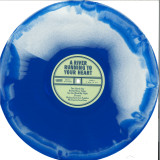
Eric D. Johnson rarely lingers at one location too long. As a kid growing up in the Midwest, Johnson's family moved around a lot, but it wasn't until he became a touring musician years later that motion became a central part of his identity. That transient lifestyle stoked an enduring reverence for the world he watched pass by through a van window. A sense of place is a unifying theme he's revisited with Fruit Bats throughout its many lives. From the project's origins in the late '90s as a vehicle for Johnson's lo-fi tinkering to the more sonically ambitious work of recent years, Fruit Bats has often showcased love songs where people and locations meld into one. It's a loose song structure that navigates what he calls "the geography of the heart." "The songs exist in a world that you can sort of travel from one to another," says Johnson. "There are roads and rivers between these songs." Those pathways extend straight through the newest Fruit Bats album, aptly titled A River Running to Your Heart . Self-produced by Johnson_a first for Fruit Bats_with Jeremy Harris at Panoramic House just north of San Francisco, it's Fruit Bats' tenth full-length release and one that finds the project in the middle of a creative resurgence. After two decades of making music, hard-earned emotional maturity has seeped into Johnson's songs, resulting in a more complex sound that's connected with audiences like no other previous version of Fruit Bats. A River Running to Your Heart represents the fullest realization of that creative vision to date. It's a sonically diverse effort that largely explores the importance of what it means to be home, both physically and spiritually. And while that might seem like a peculiar focus for an artist who's constantly in motion, for Fruit Bats, home can take many forms_from the obvious to the obscure. Lead single "Rushin' River Valley" is a self-propelled love song written about Johnson's wife that clings to the borrowed imagery of the place where she grew up in northern California. Then, there's the gentle and unfussy acoustic ballad "We Used to Live Here," which looks back to a time of youthful promise and cheap rent. But the wistful "It All Comes Back" is perhaps the most stunning and surprising track on the album, Johnson's production skills on full display. Built upon intricate layers of synths, keyboards, and guitars, it's a pitch-perfect blend of tone and lyricism that taps into our shared apprehensions and hopes for a post-pandemic life. "We lost some time / But we can make it back / Let's take it easy on ourselves, okay?" sings a world-weary but ultimately reassuring Johnson in the song's opening lines. It's the kind of performance that makes you hope Fruit Bats stays in this one place, at least for a little while longer.
The increasingly vital Jorkes makes a big step up to the acclaimed Live at Robert Johnson label with her standout Sweet Dreams EP. As with all Jorkes EPs, the artwork features photography shot by Daniel Rajcsanyi.
Jorkes has been making big and bold moves recently. She is the co-founder of the unique Freeride Millenium label which is a hotbed for queer dance music. German-born but Austria based, she has an influential residency at Radio 80000 alongside ParisBöhm and is a resident at Stuttgart's Romantica where she plays a thrilling mix of disco, house, techno and everything in between. She is someone who always serves to highlight the importance of the dance floor as a place of sexual and cultural liberation and this new EP is another innovative statement that comes as she rides a wave of high profile radio, DJ and media support for recent outings on her own label.
Opener 'You Will be Mine' is a song about obsessing after an unattainable stranger on the dance floor who disappears into the night. It's a silky disco house sound with chords that sing and a floating bassline that lifts you off your feet. The melodic motifs bring charm and cosmic energy and the whole track has a lush, musical feel. The equally excellent 'Robot Lover' muses on human detachment in this technological era of internet porn, dating apps and screen obsessions and how a robotic lover might be a better fit than a real life partner. It is another elastic and disco-tinged rhythm, with elegant chords and dancing keys over a suspensory bassline. Intimate vocal whispers bring tenderness to this timeless track.
On the flip side, 'Sweet Dreams' layers up infectious claps and tinny percussion over an irresistible deep house groove. It's a widescreen, symphonic sound that brings very real but subtle joy and closer 'CDEvaLo' is the name of a crossdressing male-to-female and sex-worker friend of Jorkes. She sings the introduction lyrics in Greek and they translate as "It was a very beautiful day, while we were sitting at the park we thought of going out for a coffee and realized we have no money and are absolutely broke. So we discussed about who is gonna put the wig on to "go and make a visit“ Greek slang for sex work so we'll have money again." It is a comment on the number of young people who arrived in Athens over the years to do cross-dressing sex work after being kicked out by their Orthodox Christian homes. The track flips the script with a more playful disco sound, characterful vocoder vocals and glossy synths over a jacked house beat.
This is an expansive EP that shows off the different sides to Jorkes's unique sound.
Most audiophiles know Alan Parsons Project's I Robot by heart. Engineered by Parsons after he performed the same duties on Pink Floyd's Dark Side of the Moon, the 1977 record reigns as a disc whose taut bass, crisp highs, clean production, and seemingly limitless dynamic range are matched only by the sensational prog-rock fare helmed by the keyboardist and his creative partner, Eric Woolfson. Not surprisingly, it's been issued myriad times. Can it be improved? Relish Mobile Fidelity's stupendous UltraDisc One-Step 180g 33RPM box set and the question becomes moot.
Mastered from the original master tapes and pressed at RTI on MoFi SuperVinyl, I Robot comes to life with reference-setting realism on this numbered, limited-edition reissue. Boasting immaculate highs and lows, generous spaciousness, and see-through transparency that takes you into the studio with Parsons and Woolfson at Abbey Road, this definitive edition is designed to demonstrate the full-range capabilities of the world's best stereo systems while offering listeners the convenience of having all the music on one LP.
Featuring a nearly inaudible noise floor, this transcendent UD1S edition functions as a repeat invitation to savor reference-grade soundstages, immersive smoothness, sought-after instrumental separation, three-dimensional imaging, and consummate tonal balances. Able to be played back at high volumes without compromise or fatigue, it is a demonstration record for the ages – the likes of which are no longer being made. This is the very reason you own and invest in high-end audio gear.
The special characteristics of this UD1S version extend to the premium packaging. Housed in an elegant slipcase, the reissue features special foil-stamped jackets and faithful-to-the-original graphics. Aurally and visually, it is made for discerning listeners who prize sound quality and production, and who desire to fully immerse themselves in everything about this conceptual landmark. The Alan Parsons Project's most famous record deserves nothing less.
Inspired by and loosely based around the Isaac Asimov stories of the same name, I Robot delves into themes of artificial intelligence and technological dominance that make the record extremely relevant in the 21st century. Indeed, Parsons and Woolfson's pinnacle creation dovetailed with the ascendency of Star Wars, which itself is experiencing a rebirth in an age of self-driving cars, smart devices, and mindless automation. Lyrically, songs such as "The Voice" call into question human behavior – and their relationship to increasing robotic supremacy – in everyday life. Parsons and Woolfson reflect the associated paranoia, dichotomy, and transformation via shifting sci-fi arrangements steeped in drama and moodiness.
The absorbing tunes on I Robot also continue to fascinate due to their perfectionism and innovation. Borrowing from Pink Floyd's strategies, Parsons and Woolfson utilize a looped sequence on the title track to create new downbeats. "Some Other Time" employs two different lead vocalists and yet gives the illusion that only one is involved. Captivating strings, a piccolo trumpet, and bona fide pipe organ grace "Don't Let It Show." The origins of "Nucleus" stem from a unique analog keyboard concoction dubbed "the Projectron," devised by Parsons and electronic engineer Keith Johnson. Andrew Powell's orchestral and choral arrangements top it all off, with "Total Eclipse" arriving as a frightening track that presages the climactic "Genesis Ch. 1 V. 32."
Does man or machine win in the end? Decide as you get lost in Mobile Fidelity's UltraDisc 180g 33RPM LP pressing. Secure your numbered copy today!
More About Mobile Fidelity UltraDisc One-Step and Why It Is Superior
Mobile Fidelity Sound Lab's UltraDisc One-Step (UD1S) technique bypasses generational losses inherent to the traditional three-step plating process by removing two steps: the production of father and mother plates, which are created to yield numerous stampers from each lacquer that is cut. For UD1S plating, stampers (also called "converts") are made directly from the lacquers. Since each lacquer yields only one stamper, multiple lacquers need to be cut. Mobile Fidelity's UD1S process produces a final LP with the lowest-possible noise floor. The removal of two steps of the plating process also reveals musical details and dynamics that would otherwise be lost due to the standard multi-step process. With UD1S, every aspect of vinyl production is optimized to produce the best-sounding vinyl album available today.
MoFi SuperVinyl
Developed by NEOTECH and RTI, MoFi SuperVinyl is the most exacting-to-specification vinyl compound ever devised. Analogue lovers have never seen (or heard) anything like it. Extraordinarily expensive and extremely painstaking to produce, the special proprietary compound addresses two specific areas of improvement: noise floor reduction and enhanced groove definition. The vinyl composition features a new carbonless dye (hold the disc up to the light and see) and produces the world's quietest surfaces. This high-definition formula also allows for the creation of cleaner grooves that are indistinguishable from the original lacquer. MoFi SuperVinyl provides the closest approximation of what the label's engineers hear in the mastering lab.
Special 10th Anniversary Edition In Brown Card Artboard Sleeve With Additional Lyric Print Insert
Slowdive singer and songwriter’s third solo album, which was originally released in November 2012. It is a stunning record and one which, upon its release, underlined the claims that Neil was one of the finest and most underrated British songwriters of recent times. It’s also a very special release in the Sonic Cathedral catalogue; the shoegaze label licensed the record from Jack Johnson’s Brushfire imprint for the UK and Europe and it was the start of a relationship that also gave us the Black Hearted Brother album in 2013 and, ultimately, brought about the reformation of Slowdive in 2014. But Palindrome Hunches is a very different beast. Both stately and understated, this moody and mesmerising collection of peculiarly British folk songs was made with the Band of Hope, a Wallingford, Oxfordshire based collective consisting of Ben Smith (violin), Drew Milloy (double bass), Paul Whitty (piano) and Tom Crook (guitar). Together with producer Nick Holton, banjo player Kevin Wells and backing singer Aimee Craddock, they recorded the album to tape over a few weekends in the music room of their local junior school. “At first we were going to record in a studio, but everything seemed too clean,” said Neil at the time. “We just went through the songs and recorded them live without very much rehearsal. We wanted to be spontaneous and simple and to keep the little mistakes that sneaked in.” This goes a long way to explaining the album’s humanity and intimacy, and also why it has had a quiet life of its own over the past decade, gradually growing in stature alongside Neil’s more high-profile activities with Slowdive; copies of the 2012 original and even the 2017 repress currently fetch up to triple figures on Discogs. The stunning opener ‘Digging Shelters’ was used to devastating effect in the posthumously released James Gandolfini movie Enough Said – a fitting home for a song that rubs shoulders here with ruminations about love and loss such as ‘Tied To You’ and ‘Spin The Bottle’ and, on ‘Wittgenstein’s Arm’, an Austrian pianist who had his right arm amputated in World War I and lost three of his brothers to suicide. The wordplay of the title track is almost light-hearted in comparison; “I wanted to write a song that was the same forwards and backwards, but it didn’t quite work out,” explained Neil, adding that he also chose ‘Palindrome Hunches’ for the album’s title because “I like the idea of things being reversible”. A couple years later, by reforming his old band, he proved that. And now, ten years on, it’s the perfect time to rewind to this understated, underrated classic. Side A 1 Digging Shelters 2 Bad Drugs and Minor Chords 3 Wittgenstein’s Arm 4 Spin The Bottle 5 Tied to You Side B 1 Love Is a Beast 2 Palindrome Hunches 3 Full Moon Rising 4 Sandy 5 Hey Daydreamer 6 Loose Change. Praise for Palindrome Hunches on its original release: ““Nope, it ain’t shoegaze as it's been codified and re-codified. But why be disappointed in someone following his muse to a logical conclusion when that path was always the one he walked on?” – Pitchfork An exquisite set of dark folk music” – The Times “Draws from the same understated, reflective well as John Martyn” – MOJO “‘Tied To You’ doesn’t merely evoke Nick Drake but withstands the comparison – evidence of the songs’ quality” – Financial Times “Halstead’s songs breathe the sort of honesty and goodness that’s harder and harder to find in the iTunes age” – The Independent “Given the chance, they could be songs that continue to enchant for many years to come” – The Line Of Best Fit
Re-mastered from the original master tapes.
180 gr vinyl pressed by Optimal in Germany using the Metal Mothers from Pallas.
Facsimile reissue using the original photo by Jean-Pierre Leloir.
Double insert using an original color photo by JP Leloir.
Each record has been visually checked to prevent defects.
Recorded October 22, 1958, Olympia hall, Paris.
Original LP issue: Brunswick 87 903.
“They’d been living in Europe for months. They’d appeared in Cannes and at Knokke (…) yet the only thing missing was the consecration that a great concert in Paris would bring. They won that last battle with astounding brio, in front of an audience of connoisseurs. There were many there who thought modern jazz had never been so well- served in Paris.” (Jazz Magazine). Hard bop had arrived! Hallelujah! On its first French appearance, in July ‘58 at the Cannes Festival – the first and only Cannes jazz festival – the Donald Byrd Quintet had brought the house down. Yet four of its five members were relatively unknown in France… The French knew that the leader had replaced Kenny Dorham in the Jazz Messengers, that Doug Watkins was the Messengers’ bassist, and that pianist Walter Davis Jr. was still only 18 when he’d played with Charlie Parker. As for Art Taylor, even if his name meant something to fans, it was still difficult for people to have a more precise idea of his musical qualities. Only Bobby Jaspar was well-known to Paris audiences, and the tour marked the return of the prodigal son, the musician who’d decided, after setting the Club St. Germain on fire, to try his luck in the States early in 1956 – J.J. Johnson had hired him, and then Miles Davis (for a short spell) before Donald Byrd brought him into the group he was taking to Europe. This new tour would climax at the Olympia theatre during one of the “Jazz Wednesdays” that were organised there, ever since the Jazz At Carnegie Hall” tour – Zoot Sims, JJ. Johnson, Lee Konitz, Phineas Newborn – had inaugurated the series a little earlier. Byrd and his band took pains not to disappoint a Paris audience they knew to be particularly fickle, and they astutely varied the public’s pleasures throughout the evening. The complicity that united the rhythm section – Walter Davis Jr., Doug Watkins and Art Taylor – was much in evidence on Ray’s Idea; mistrusting the traps of the spectacular at all costs, Donald Byrd, producing brilliant inventions on the trumpet, took the lion’s share of the honours on a theme that was then much in fashion, Dear Old Stockholm, adapted from a Swedish traditional song; on Flute Blues, Bobby Jaspar proved he was still a specialist on that instrument, and Paul’s Pal showed that, on tenor, the playing of Sonny Rollins hadn’t gone unnoticed. It must be said that it didn’t have much effect on the discreet lyricism underlying the choruses he played during his “St. Germain” period. The Olympia spectators weren’t sparing in their applause for the five musicians. How else could they have reacted, faced with the fire the band showed during a tune like The Blues Walk? It wouldn’t take much for us to applaud, too, even if it is fifty-five years later…
Text – Alain Tercinet
Mondays at The Enfield Tennis Academy, x2 LPs of long-form, lyrical, groove-based free improv by acclaimed guitarist & composer Jeff Parker's ETA IVtet. Recorded live at ETA (referencing David Foster Wallace), a bar in LA’s Highland Park neighborhood with just enough space in the back for Parker, drummer Jay Bellerose, bassist Anna Butterss, & alto saxophonist Josh Johnson to convene in extraordinarily depth-full & exploratory music making. Gleaned for the stoniest side-length cuts from 10+ hours of vivid two-track recordings made between 2019 & 2021 by Bryce Gonzales, Mondays at The Enfield Tennis Academy is a darkly glowing séance of an album, brimming over with the hypnotic, the melodic, & patience & grace in its own beautiful strangeness. Room-tone, electric fields, environment, ceiling echo, live recording, Mondays, Los Angeles. Jeff Parker's first double album & first live album, Mondays at The Enfield Tennis Academy belongs in the lineage of such canonical live double albums recorded on the West Coast as Lee Morgan’s Live at the Lighthouse, Miles Davis' In Person Friday & Saturday Night at the Blackhawk, San Francisco & Black Beauty, & John Coltrane's Live in Seattle.
While the IVtet sometimes plays standards &, including on this recording, original compositions, it is as previously stated largely a free improv group —just not in the genre meaning of the term. The music is more free composition than free improvisation, more blending than discordant. It’s tensile, yet spacious & relaxed. Clearly all four musicians have spent significant time in the planetary system known as jazz, but relationships to other musics, across many scenes & eras —dub & Dilla, primary source psychedelia, ambient & drone— suffuse the proceedings. Listening to playbacks Parker remarked, humorously & not, “we sound like the Byrds” (to certain ears, the Clarence White-era Byrds, who really stretched it).
A fundamental of all great ensembles, whether basketball teams or bands, is the ability of each member to move fluidly & fluently in & out of lead & supportive roles. Building on the communicative pathways they’ve established in Parker’s -The New Breed- project, Parker & Johnson maintain a constant dialogue of lead & support. Their sampled & looped phrases move continuously thru the music, layered & alive, adding depth & texture & pattern, evoking birds in formation, sea creatures drifting below the photic zone. Or, the two musicians simulate those processes by entwining their terse, clear-lined playing in real-time. The stop/start flow of Bellerose, too, simulates the sampler, recalling drum parts in Parker’s beat-driven projects. Mostly Bellerose's animated phraseologies deliver the inimitable instantaneous feel of live creative drumming. The range of tonal colors he conjures from his extremely vintage battery of drums & shakers —as distinctive a sonic signature as we have in contemporary acoustic drumming— bring almost folkloric qualities to the aesthetic currency of the IVtet's language. A wonderful revelation in this band is the playing of Anna Butterss. The strength, judiciousness & humility with which she navigates the bass position both ground & lift upward the egalitarian group sound. As the IVtet's grooves flow & clip, loop & repeat, the ensemble elements reconfigure, a terrarium of musical cultivation growing under controlled variables, a tight experiment of harmony & intuition, deep focus & freedom.
For all its varied sonic personality, Mondays at The Enfield Tennis Academy scans immediately & unmistakably as music coming from Jeff Parker‘s unique sound world. Generous in spirit, trenchant & disciplined in execution, Parker’s music has an earned respect for itself & for its place in history that transmutes through the musical event into the listener. Many moods & shapes of heart & mind will find utility & hope in a music that combines the autonomy & the community we collectively long to see take hold in our world, in substance & in staying power.
On the personal tip, this was always my favorite gig to hit, a lifeline of the eremite records Santa Barbara years. Mondays southbound on the 101, driving away from tasks & screens & illness, an hour later ordering a double tequila neat at the bar with the band three feet away, knowing i was in good hands, knowing it would be back around on another Monday. To encounter life at scales beyond the human body is the collective dance of music & the beholding of its beauty, together. – Michael Ehlers & Zac Brenner
- A1: Rock This Mother
- A2: Talk To Me Girl
- A3: You Can Find Me
- A4: Check This Out
- A5: Jesus Going To Clean House
- A6: Hope You Understood
- A7: Is It What You Want
- A8: Love Is Everlasting
- A9: This Is Hip-Hop Art
- A10: Opposite Of Love
- A11: Do You Know What I Mean
- B1: Saving All My Love For You
- B2: Look Out Here I Come
- B3: Girl You Always Talking
- B4: Have A Great Day
- B5: Take My Hand
- B6: I Need Your Love
- B7: Your Town
- B8: Talk Around Town
- B9: Booty Head/Take A Little Walk
- B10: I Love My Mama
- B11: I Never Found Anyone Like You
Vinyl LP[23,49 €]
As the sun sets on a quaint East Nashville house, a young man bares a piece of his soul. Facing the camera, sporting a silky suit jacket/shirt/slacks/fingerless gloves ensemble that announces "singer" before he's even opened his mouth, Lee Tracy Johnson settles onto his stage, the front yard. He sways to the dirge-like drum machine pulse of a synth-soaked slow jam, extends his arms as if gaining his balance, and croons in affecting, fragile earnest, "I need your love… oh baby…"
Dogs in the yard next door begin barking. A mysterious cardboard robot figure, beamed in from galaxies unknown and affixed to a tree, is less vocal. Lee doesn't acknowledge either's presence. He's busy feeling it, arms and hands gesticulating. His voice rises in falsetto over the now-quiet dogs, over the ambient noise from the street that seeps into the handheld camcorder's microphone, over the recording of his own voice played back from a boombox off-camera. After six minutes the single, continuous shot ends. In this intimate creative universe there are no re-takes. There are many more music videos to shoot, and as Lee later puts it, "The first time you do it is actually the best. Because you can never get that again. You expressing yourself from within."
"I Need Your Love" dates from a lost heyday. From some time in the '80s or early '90s, when Lee Tracy (as he was known in performance) and his music partner/producer/manager Isaac Manning committed hours upon hours of their sonic and visual ideas to tape. Embracing drum machines and synthesizers – electronics that made their personal futurism palpable – they recorded exclusively at home, live in a room into a simple cassette deck. Soul, funk, electro and new wave informed their songs, yet Lee and Isaac eschewed the confinement of conventional categories and genres, preferring to let experimentation guide them.
"Anytime somebody put out a new record they had the same instruments or the same sound," explains Isaac. "So I basically wanted to find something that's really gonna stand out away from all of the rest of 'em." Their ethos meant that every idea they came up with was at least worth trying: echoed out half-rapped exhortations over frantic techno-style beats, gospel synth soul, modal electro-funk, oddball pop reinterpretations, emo AOR balladry, nods to Prince and the Fat Boys, or arrangements that might collapse mid-song into a mess of arcade game-ish blips before rallying to reach the finish line. All of it conjoined by consistent tape hiss, and most vitally, Lee's chameleonic voice, which managed to wildly shape shift and still evoke something sincere – whether toggling between falsetto and tenor exalting Jesus's return, or punctuating a melismatic romantic adlib with a succinct, "We all know how it feels to be alone."
"People think we went to a studio," says Isaac derisively. "We never went to no studio. We didn't have the money to go to no studio! We did this stuff at home. I shot videos in my front yard with whatever we could to get things together." Sometimes Isaac would just put on an instrumental record, be it "Planet Rock" or "Don't Cry For Me Argentina" (from Evita), press "record," and let Lee improvise over it, yielding peculiar love songs, would-be patriotic anthems, or Elvis Presley or Marilyn Monroe tributes. Technical limitations and a lack of professional polish never dissuaded them. They believed they were onto something.
"That struggle," Isaac says, "made that sound sound good to me."
In the parlance of modern music criticism Lee and Isaac's dizzying DIY efforts would inevitably be described as "outsider." But "outsider" carries the burden of untold additional layers of meaning if you're Black and from the South, creating on a budget, and trying to get someone, anyone within the country music capital of the world to take your vision seriously. "What category should we put it in?" Isaac asks rhetorically. "I don't know. All I know is feeling. I ain't gonna name it nothing. It's music. If it grabs your soul and touch your heart that's what it basically is supposed to do."
=
Born in 1963, the baby boy of nine siblings, Lee Tracy spent his earliest years living amidst the shotgun houses on Nashville's south side. "We was poor, man!" he says, recalling the outhouse his family used for a bathroom and the blocks of ice they kept in the kitchen to chill perishables. "But I actually don't think I really realized I was in poverty until I got grown and started thinking about it." Lee's mom worked at the Holiday Inn; his dad did whatever he had to do, from selling fruit from a horse drawn cart to bootlegging. "We didn't have much," Lee continues, "but my mother and my father got us the things we needed, the clothes on our back." By the end of the decade with the city's urban renewal programs razing entire neighborhoods to accommodate construction of the Interstate, the family moved to Edgehill Projects. Lee remembers music and art as a constant source of inspiration for he and his brothers and sisters – especially after seeing the Jackson 5 perform on Ed Sullivan. "As a small child I just knew that was what I wanted to do."
His older brother Don began musically mentoring him, introducing Lee to a variety of instruments and sounds. "He would never play one particular type of music, like R&B," says Lee. "I was surrounded by jazz, hard rock and roll, easy listening, gospel, reggae, country music; I mean I was a sponge absorbing all of that." Lee taught himself to play drums by beating on cardboard boxes, gaining a rep around the way for his timekeeping, and his singing voice. Emulating his favorites, Earth Wind & Fire and Cameo, he formed groups with other kids with era-evocative band names like Concept and TNT Connection, and emerged as the leader of disciplined rehearsals. "I made them practice," says Lee. "We practiced and practiced and practiced. Because I wanted that perfection." By high school the most accomplished of these bands would take top prize in a prominent local talent show. It was a big moment for Lee, and he felt ready to take things to the next level. But his band-mates had other ideas.
"I don't know what happened," he says, still miffed at the memory. "It must have blew they mind after we won and people started showing notice, because it's like everybody quit! I was like, where the hell did everybody go?" Lee had always made a point of interrogating prospective musicians about their intentions before joining his groups: were they really serious or just looking for a way to pick up girls? Now he understood even more the importance of finding a collaborator just as committed to the music as he was.
=
Isaac Manning had spent much of his life immersed in music and the arts – singing in the church choir with his family on Nashville's north side, writing, painting, dancing, and working various gigs within the entertainment industry. After serving in the armed forces, in the early '70s he ran The Teenage Place, a music and performance venue that catered to the local youth. But he was forced out of town when word of one of his recreational routines created a stir beyond the safe haven of his bohemian circles.
"I was growing marijuana," Isaac explains. "It wasn't no business, I was smoking it myself… I would put marijuana in scrambled eggs, cornbread and stuff." His weed use originated as a form of self-medication to combat severe tooth pain. But when he began sharing it with some of the other young people he hung out with, some of who just so happened to be the kids of Nashville politicians, the cops came calling. "When I got busted," he remembers, "they were talking about how they were gonna get rid of me because they didn't want me saying nothing about they children because of the politics and stuff. So I got my family, took two raggedy cars, and left Nashville and went to Vegas."
Out in the desert, Isaac happened to meet Chubby Checker of "The Twist" fame while the singer was gigging at The Flamingo. Impressed by Isaac's zeal, Checker invited him to go on the road with him as his tour manager/roadie/valet. The experience gave Isaac a window into a part of the entertainment world he'd never encountered – a glimpse of what a true pop act's audience looked like. "Chubby Checker, none of his shows were played for Black folks," he remembers. "All his gigs were done at high-class white people areas." Returning home after a few years with Chubby, Isaac was properly motivated to make it in Music City. He began writing songs and scouting around Nashville for local talent anywhere he could find it with an expressed goal: "Find someone who can deliver your songs the way you want 'em delivered and make people feel what you want them to feel."
One day while walking through Edgehill Projects Isaac heard someone playing the drums in a way that made him stop and take notice. "The music was so tight, just the drums made me feel like, oh I'm-a find this person," he recalls. "So I circled through the projects until I found who it was.
"That's how I met him – Lee Tracy. When I found him and he started singing and stuff, I said, ohhh, this is somebody different."
=
Theirs was a true complementary partnership: young Lee possessed the raw talent, the older Isaac the belief. "He's really the only one besides my brother and my family that really seen the potential in me," says Lee. "He made me see that I could do it."
Isaac long being a night owl, his house also made for a fertile collaborative environment – a space where there always seemed to be a new piece of his visual art on display: paintings, illustrations, and dolls and figures (including an enigmatic cardboard robot). Lee and Issac would hang out together and talk, listen to music, conjure ideas, and smoke the herb Isaac had resumed growing in his yard. "It got to where I could trust him, he could trust me," Isaac says of their bond. They also worked together for hours on drawings, spreading larges rolls of paper on the walls and sketching faces with abstract patterns and imagery: alien-like beings, tri-horned horse heads, inverted Janus-like characters where one visage blurred into the other.
Soon it became apparent that they didn't need other collaborators; self-sufficiency was the natural way forward. At Isaac's behest Lee, already fed up with dealing with band musicians, began playing around with a poly-sonic Yamaha keyboard at the local music store. "It had everything on it – trumpet, bass, drums, organ," remembers Lee. "And that's when I started recording my own stuff."
The technology afforded Lee the flexibility and independence he craved, setting him on a path other bedroom musicians and producers around the world were simultaneously following through the '80s into the early '90s. Saving up money from day jobs, he eventually supplemented the Yamaha Isaac had gotten him with Roland and Casio drum machines and a Moog. Lee was living in an apartment in Hillside at that point caring for his dad, who'd been partially paralyzed since early in life. In the evenings up in his second floor room, the music put him in a zone where he could tune out everything and lose himself in his ideas.
"Oh I loved it," he recalls. "I would really experiment with the instruments and use a lot of different sound effects. I was looking for something nobody else had. I wanted something totally different. And once I found the sound I was looking for, I would just smoke me a good joint and just let it go, hit the record button." More potent a creative stimulant than even Isaac's weed was the holistic flow and spontaneity of recording. Between sessions at Isaac's place and Lee's apartment, their volume of output quickly ballooned.
"We was always recording," says Lee. "That's why we have so much music. Even when I went to Isaac's and we start creating, I get home, my mind is racing, I gotta start creating, creating, creating. I remember there were times when I took a 90-minute tape from front to back and just filled it up."
"We never practiced," says Isaac. "See, that was just so odd about the whole thing. I could relate to him, and tell him about the songs I had ideas for and everything and stuff. And then he would bring it back or whatever, and we'd get together and put it down." Once the taskmaster hell bent on rehearsing, Lee had flipped a full 180. Perfection was no longer an aspiration, but the enemy of inspiration.
"I seen where practicing and practicing got me," says Lee. "A lot of musicians you get to playing and they gotta stop, they have to analyze the music. But while you analyzing you losing a lot of the greatness of what you creating. Stop analyzing what you play, just play! And it'll all take shape."
=
"I hope you understood the beginning of the record because this was invented from a dream I had today… (You tell me, I'll tell you, we'll figure it out together)" – Lee Tracy and Isaac Manning, "Hope You Understand"
Lee lets loose a maniacal cackle when he acknowledges that the material that he and Isaac recorded was by anyone's estimation pretty out there. It's the same laugh that commences "Hope You Understand" – a chaotic transmission that encapsulates the duality at the heart of their music: a stated desire to reach people and a compulsion to go as leftfield as they saw fit.
"We just did it," says Lee. "We cut the music on and cut loose. I don't sit around and write. I do it by listening, get a feeling, play the music, and the lyrics and stuff just come out of me."
The approach proved adaptable to interpreting other artists' material. While recording a cover of Whitney Houston's pop ballad "Saving All My Love For You," Lee played Whitney's version in his headphones as he laid down his own vocals – partially following the lyrics, partially using them as a departure point. The end result is barely recognizable compared with the original, Lee and Isaac having switched up the time signature and reinvented the melody along the way towards morphing a slick mainstream radio standard into something that sounds solely their own.
"I really used that song to get me started," says Lee. "Then I said, well I need something else, something is missing. Something just came over me. That's when I came up with 'Is It What You Want.'"
The song would become the centerpiece of Lee and Isaac's repertoire. Pushed along by a percolating metronomic Rhythm King style beat somewhere between a military march and a samba, "Is It What You Want" finds Lee pleading the sincerity of his commitment to a potential love interest embellished by vocal tics and hiccups subtlely reminiscent of his childhood hero MJ. Absent chord changes, only synth riffs gliding in and out like apparitions, the song achieves a lingering lo-fi power that leaves you feeling like it's still playing, somewhere, even after the fade out.
"I don't know, it's like a real spiritual song," Lee reflects. "But it's not just spiritual. To me the more I listen to it it's like about everything that you do in your everyday life, period. Is it what you want? Do you want a car or you don't want a car? Do you want Jesus or do you want the Devil? It's basically asking you the question. Can't nobody answer the question but you yourself."
In 1989 Lee won a lawsuit stemming from injuries sustained from a fight he'd gotten into. He took part of the settlement money and with Isaac pressed up "Saving All My Love For You" b/w "Is It What You Want" as a 45 single. Isaac christened the label One Chance Records. "Because that's all we wanted," he says with a laugh, "one chance."
Isaac sent the record out to radio stations and major labels, hoping for it to make enough noise to get picked up nationally. But the response he and Lee were hoping for never materialized. According to Isaac the closest the single got to getting played on the radio is when a disk jock from a local station made a highly unusual announcement on air: "The dude said on the radio, 107.5 – 'We are not gonna play 'Is It What You Want.' We cracked up! Wow, that's deep.
"It was a whole racist thing that was going on," he reflects. "So we just looked over and kept on going. That was it. That was about the way it goes… If you were Black and you were living in Nashville and stuff, that's the way you got treated." Isaac already knew as much from all the times he'd brought he and Lee's tapes (even their cache of country music tunes) over to Music Row to try to drum up interest to no avail.
"Isaac, he really worked his ass off," says Lee. "He probably been to every record place down on Music Row." Nashville's famed recording and music business corridor wasn't but a few blocks from where Lee grew up. Close enough, he remembers, for him to ride his bike along its back alleys and stumble upon the occasional random treasure, like a discarded box of harmonicas. Getting in through the front door, however, still felt a world away.
"I just don't think at the time our music fell into a category for them," he concedes. "It was before its time."
=
Lee stopped making music some time in the latter part of the '90s, around the time his mom passed away and life became increasingly tough to manage. "When my mother died I had a nervous breakdown," he says, "So I shut down for a long time. I was in such a sadness frame of mind. That's why nobody seen me. I had just disappeared off the map." He fell out of touch with Isaac, and in an indication of just how bad things had gotten for him, lost track of all the recordings they'd made together. Music became a distant memory.
Fortunately, Isaac kept the faith. In a self-published collection of his poetry – paeans to some of his favorite entertainment and public figures entitled Friends and Dick Clark – he'd written that he believed "music has a life of its own." But his prescience and presence of mind were truly manifested in the fact that he kept an archive of he and Lee's work. As perfectly imperfect as "Is It What You Want" now sounds in a post-Personal Space world, Lee and Isaac's lone official release was in fact just a taste. The bulk of the Is It What You Want album is culled from the pair's essentially unheard home recordings – complete songs, half-realized experiments, Isaac's blue monologues and pronouncements et al – compiled, mixed and programmed in the loose and impulsive creative spirit of their regular get-togethers from decades ago. The rest of us, it seems, may have finally caught up to them.
On the prospect of at long last reaching a wider audience, Isaac says simply, "I been trying for a long time, it feels good." Ever the survivor, he adds, "The only way I know how to make it to the top is to keep climbing. If one leg break on the ladder, hey, you gotta fix it and keep on going… That's where I be at. I'll kill death to make it out there."
For Lee it all feels akin to a personal resurrection: "It's like I was in a tomb and the tomb was opened and I'm back… Man, it feels so great. I feel like I'm gonna jump out of my skin." Success at this stage of his life, he realizes, probably means something different than what it did back when he was singing and dancing in Isaac's front yard. "What I really mean by 'making it,'" he explains isn't just the music being heard but, "the story being told."
Occasionally Lee will pull up "Is It What You Want" on YouTube on his phone, put on his headphones, and listen. He remembers the first time he heard his recorded voice. How surreal it was, how he thought to himself, "Is that really me?" What would he say to that younger version of himself now?
"I would probably tell myself, hang in there, don't give up. Keep striving for the goal. And everything will work out."
Despite what's printed on the record label, sometimes you do get more than one chance.
- A1: Rock This Mother
- A2: Talk To Me Girl
- A3: You Can Find Me
- A4: Check This Out
- A5: Jesus Going To Clean House
- A6: Hope You Understood
- A7: Is It What You Want
- A8: Love Is Everlasting
- A9: This Is Hip-Hop Art
- A10: Opposite Of Love
- A11: Do You Know What I Mean
- B1: Saving All My Love For You
- B2: Look Out Here I Come
- B3: Girl You Always Talking
- B4: Have A Great Day
- B5: Take My Hand
- B6: I Need Your Love
- B7: Your Town
- B8: Talk Around Town
- B9: Booty Head/Take A Little Walk
- B10: I Love My Mama
- B11: I Never Found Anyone Like You
Cassette[11,72 €]
As the sun sets on a quaint East Nashville house, a young man bares a piece of his soul. Facing the camera, sporting a silky suit jacket/shirt/slacks/fingerless gloves ensemble that announces "singer" before he's even opened his mouth, Lee Tracy Johnson settles onto his stage, the front yard. He sways to the dirge-like drum machine pulse of a synth-soaked slow jam, extends his arms as if gaining his balance, and croons in affecting, fragile earnest, "I need your love… oh baby…"
Dogs in the yard next door begin barking. A mysterious cardboard robot figure, beamed in from galaxies unknown and affixed to a tree, is less vocal. Lee doesn't acknowledge either's presence. He's busy feeling it, arms and hands gesticulating. His voice rises in falsetto over the now-quiet dogs, over the ambient noise from the street that seeps into the handheld camcorder's microphone, over the recording of his own voice played back from a boombox off-camera. After six minutes the single, continuous shot ends. In this intimate creative universe there are no re-takes. There are many more music videos to shoot, and as Lee later puts it, "The first time you do it is actually the best. Because you can never get that again. You expressing yourself from within."
"I Need Your Love" dates from a lost heyday. From some time in the '80s or early '90s, when Lee Tracy (as he was known in performance) and his music partner/producer/manager Isaac Manning committed hours upon hours of their sonic and visual ideas to tape. Embracing drum machines and synthesizers – electronics that made their personal futurism palpable – they recorded exclusively at home, live in a room into a simple cassette deck. Soul, funk, electro and new wave informed their songs, yet Lee and Isaac eschewed the confinement of conventional categories and genres, preferring to let experimentation guide them.
"Anytime somebody put out a new record they had the same instruments or the same sound," explains Isaac. "So I basically wanted to find something that's really gonna stand out away from all of the rest of 'em." Their ethos meant that every idea they came up with was at least worth trying: echoed out half-rapped exhortations over frantic techno-style beats, gospel synth soul, modal electro-funk, oddball pop reinterpretations, emo AOR balladry, nods to Prince and the Fat Boys, or arrangements that might collapse mid-song into a mess of arcade game-ish blips before rallying to reach the finish line. All of it conjoined by consistent tape hiss, and most vitally, Lee's chameleonic voice, which managed to wildly shape shift and still evoke something sincere – whether toggling between falsetto and tenor exalting Jesus's return, or punctuating a melismatic romantic adlib with a succinct, "We all know how it feels to be alone."
"People think we went to a studio," says Isaac derisively. "We never went to no studio. We didn't have the money to go to no studio! We did this stuff at home. I shot videos in my front yard with whatever we could to get things together." Sometimes Isaac would just put on an instrumental record, be it "Planet Rock" or "Don't Cry For Me Argentina" (from Evita), press "record," and let Lee improvise over it, yielding peculiar love songs, would-be patriotic anthems, or Elvis Presley or Marilyn Monroe tributes. Technical limitations and a lack of professional polish never dissuaded them. They believed they were onto something.
"That struggle," Isaac says, "made that sound sound good to me."
In the parlance of modern music criticism Lee and Isaac's dizzying DIY efforts would inevitably be described as "outsider." But "outsider" carries the burden of untold additional layers of meaning if you're Black and from the South, creating on a budget, and trying to get someone, anyone within the country music capital of the world to take your vision seriously. "What category should we put it in?" Isaac asks rhetorically. "I don't know. All I know is feeling. I ain't gonna name it nothing. It's music. If it grabs your soul and touch your heart that's what it basically is supposed to do."
=
Born in 1963, the baby boy of nine siblings, Lee Tracy spent his earliest years living amidst the shotgun houses on Nashville's south side. "We was poor, man!" he says, recalling the outhouse his family used for a bathroom and the blocks of ice they kept in the kitchen to chill perishables. "But I actually don't think I really realized I was in poverty until I got grown and started thinking about it." Lee's mom worked at the Holiday Inn; his dad did whatever he had to do, from selling fruit from a horse drawn cart to bootlegging. "We didn't have much," Lee continues, "but my mother and my father got us the things we needed, the clothes on our back." By the end of the decade with the city's urban renewal programs razing entire neighborhoods to accommodate construction of the Interstate, the family moved to Edgehill Projects. Lee remembers music and art as a constant source of inspiration for he and his brothers and sisters – especially after seeing the Jackson 5 perform on Ed Sullivan. "As a small child I just knew that was what I wanted to do."
His older brother Don began musically mentoring him, introducing Lee to a variety of instruments and sounds. "He would never play one particular type of music, like R&B," says Lee. "I was surrounded by jazz, hard rock and roll, easy listening, gospel, reggae, country music; I mean I was a sponge absorbing all of that." Lee taught himself to play drums by beating on cardboard boxes, gaining a rep around the way for his timekeeping, and his singing voice. Emulating his favorites, Earth Wind & Fire and Cameo, he formed groups with other kids with era-evocative band names like Concept and TNT Connection, and emerged as the leader of disciplined rehearsals. "I made them practice," says Lee. "We practiced and practiced and practiced. Because I wanted that perfection." By high school the most accomplished of these bands would take top prize in a prominent local talent show. It was a big moment for Lee, and he felt ready to take things to the next level. But his band-mates had other ideas.
"I don't know what happened," he says, still miffed at the memory. "It must have blew they mind after we won and people started showing notice, because it's like everybody quit! I was like, where the hell did everybody go?" Lee had always made a point of interrogating prospective musicians about their intentions before joining his groups: were they really serious or just looking for a way to pick up girls? Now he understood even more the importance of finding a collaborator just as committed to the music as he was.
=
Isaac Manning had spent much of his life immersed in music and the arts – singing in the church choir with his family on Nashville's north side, writing, painting, dancing, and working various gigs within the entertainment industry. After serving in the armed forces, in the early '70s he ran The Teenage Place, a music and performance venue that catered to the local youth. But he was forced out of town when word of one of his recreational routines created a stir beyond the safe haven of his bohemian circles.
"I was growing marijuana," Isaac explains. "It wasn't no business, I was smoking it myself… I would put marijuana in scrambled eggs, cornbread and stuff." His weed use originated as a form of self-medication to combat severe tooth pain. But when he began sharing it with some of the other young people he hung out with, some of who just so happened to be the kids of Nashville politicians, the cops came calling. "When I got busted," he remembers, "they were talking about how they were gonna get rid of me because they didn't want me saying nothing about they children because of the politics and stuff. So I got my family, took two raggedy cars, and left Nashville and went to Vegas."
Out in the desert, Isaac happened to meet Chubby Checker of "The Twist" fame while the singer was gigging at The Flamingo. Impressed by Isaac's zeal, Checker invited him to go on the road with him as his tour manager/roadie/valet. The experience gave Isaac a window into a part of the entertainment world he'd never encountered – a glimpse of what a true pop act's audience looked like. "Chubby Checker, none of his shows were played for Black folks," he remembers. "All his gigs were done at high-class white people areas." Returning home after a few years with Chubby, Isaac was properly motivated to make it in Music City. He began writing songs and scouting around Nashville for local talent anywhere he could find it with an expressed goal: "Find someone who can deliver your songs the way you want 'em delivered and make people feel what you want them to feel."
One day while walking through Edgehill Projects Isaac heard someone playing the drums in a way that made him stop and take notice. "The music was so tight, just the drums made me feel like, oh I'm-a find this person," he recalls. "So I circled through the projects until I found who it was.
"That's how I met him – Lee Tracy. When I found him and he started singing and stuff, I said, ohhh, this is somebody different."
=
Theirs was a true complementary partnership: young Lee possessed the raw talent, the older Isaac the belief. "He's really the only one besides my brother and my family that really seen the potential in me," says Lee. "He made me see that I could do it."
Isaac long being a night owl, his house also made for a fertile collaborative environment – a space where there always seemed to be a new piece of his visual art on display: paintings, illustrations, and dolls and figures (including an enigmatic cardboard robot). Lee and Issac would hang out together and talk, listen to music, conjure ideas, and smoke the herb Isaac had resumed growing in his yard. "It got to where I could trust him, he could trust me," Isaac says of their bond. They also worked together for hours on drawings, spreading larges rolls of paper on the walls and sketching faces with abstract patterns and imagery: alien-like beings, tri-horned horse heads, inverted Janus-like characters where one visage blurred into the other.
Soon it became apparent that they didn't need other collaborators; self-sufficiency was the natural way forward. At Isaac's behest Lee, already fed up with dealing with band musicians, began playing around with a poly-sonic Yamaha keyboard at the local music store. "It had everything on it – trumpet, bass, drums, organ," remembers Lee. "And that's when I started recording my own stuff."
The technology afforded Lee the flexibility and independence he craved, setting him on a path other bedroom musicians and producers around the world were simultaneously following through the '80s into the early '90s. Saving up money from day jobs, he eventually supplemented the Yamaha Isaac had gotten him with Roland and Casio drum machines and a Moog. Lee was living in an apartment in Hillside at that point caring for his dad, who'd been partially paralyzed since early in life. In the evenings up in his second floor room, the music put him in a zone where he could tune out everything and lose himself in his ideas.
"Oh I loved it," he recalls. "I would really experiment with the instruments and use a lot of different sound effects. I was looking for something nobody else had. I wanted something totally different. And once I found the sound I was looking for, I would just smoke me a good joint and just let it go, hit the record button." More potent a creative stimulant than even Isaac's weed was the holistic flow and spontaneity of recording. Between sessions at Isaac's place and Lee's apartment, their volume of output quickly ballooned.
"We was always recording," says Lee. "That's why we have so much music. Even when I went to Isaac's and we start creating, I get home, my mind is racing, I gotta start creating, creating, creating. I remember there were times when I took a 90-minute tape from front to back and just filled it up."
"We never practiced," says Isaac. "See, that was just so odd about the whole thing. I could relate to him, and tell him about the songs I had ideas for and everything and stuff. And then he would bring it back or whatever, and we'd get together and put it down." Once the taskmaster hell bent on rehearsing, Lee had flipped a full 180. Perfection was no longer an aspiration, but the enemy of inspiration.
"I seen where practicing and practicing got me," says Lee. "A lot of musicians you get to playing and they gotta stop, they have to analyze the music. But while you analyzing you losing a lot of the greatness of what you creating. Stop analyzing what you play, just play! And it'll all take shape."
=
"I hope you understood the beginning of the record because this was invented from a dream I had today… (You tell me, I'll tell you, we'll figure it out together)" – Lee Tracy and Isaac Manning, "Hope You Understand"
Lee lets loose a maniacal cackle when he acknowledges that the material that he and Isaac recorded was by anyone's estimation pretty out there. It's the same laugh that commences "Hope You Understand" – a chaotic transmission that encapsulates the duality at the heart of their music: a stated desire to reach people and a compulsion to go as leftfield as they saw fit.
"We just did it," says Lee. "We cut the music on and cut loose. I don't sit around and write. I do it by listening, get a feeling, play the music, and the lyrics and stuff just come out of me."
The approach proved adaptable to interpreting other artists' material. While recording a cover of Whitney Houston's pop ballad "Saving All My Love For You," Lee played Whitney's version in his headphones as he laid down his own vocals – partially following the lyrics, partially using them as a departure point. The end result is barely recognizable compared with the original, Lee and Isaac having switched up the time signature and reinvented the melody along the way towards morphing a slick mainstream radio standard into something that sounds solely their own.
"I really used that song to get me started," says Lee. "Then I said, well I need something else, something is missing. Something just came over me. That's when I came up with 'Is It What You Want.'"
The song would become the centerpiece of Lee and Isaac's repertoire. Pushed along by a percolating metronomic Rhythm King style beat somewhere between a military march and a samba, "Is It What You Want" finds Lee pleading the sincerity of his commitment to a potential love interest embellished by vocal tics and hiccups subtlely reminiscent of his childhood hero MJ. Absent chord changes, only synth riffs gliding in and out like apparitions, the song achieves a lingering lo-fi power that leaves you feeling like it's still playing, somewhere, even after the fade out.
"I don't know, it's like a real spiritual song," Lee reflects. "But it's not just spiritual. To me the more I listen to it it's like about everything that you do in your everyday life, period. Is it what you want? Do you want a car or you don't want a car? Do you want Jesus or do you want the Devil? It's basically asking you the question. Can't nobody answer the question but you yourself."
In 1989 Lee won a lawsuit stemming from injuries sustained from a fight he'd gotten into. He took part of the settlement money and with Isaac pressed up "Saving All My Love For You" b/w "Is It What You Want" as a 45 single. Isaac christened the label One Chance Records. "Because that's all we wanted," he says with a laugh, "one chance."
Isaac sent the record out to radio stations and major labels, hoping for it to make enough noise to get picked up nationally. But the response he and Lee were hoping for never materialized. According to Isaac the closest the single got to getting played on the radio is when a disk jock from a local station made a highly unusual announcement on air: "The dude said on the radio, 107.5 – 'We are not gonna play 'Is It What You Want.' We cracked up! Wow, that's deep.
"It was a whole racist thing that was going on," he reflects. "So we just looked over and kept on going. That was it. That was about the way it goes… If you were Black and you were living in Nashville and stuff, that's the way you got treated." Isaac already knew as much from all the times he'd brought he and Lee's tapes (even their cache of country music tunes) over to Music Row to try to drum up interest to no avail.
"Isaac, he really worked his ass off," says Lee. "He probably been to every record place down on Music Row." Nashville's famed recording and music business corridor wasn't but a few blocks from where Lee grew up. Close enough, he remembers, for him to ride his bike along its back alleys and stumble upon the occasional random treasure, like a discarded box of harmonicas. Getting in through the front door, however, still felt a world away.
"I just don't think at the time our music fell into a category for them," he concedes. "It was before its time."
=
Lee stopped making music some time in the latter part of the '90s, around the time his mom passed away and life became increasingly tough to manage. "When my mother died I had a nervous breakdown," he says, "So I shut down for a long time. I was in such a sadness frame of mind. That's why nobody seen me. I had just disappeared off the map." He fell out of touch with Isaac, and in an indication of just how bad things had gotten for him, lost track of all the recordings they'd made together. Music became a distant memory.
Fortunately, Isaac kept the faith. In a self-published collection of his poetry – paeans to some of his favorite entertainment and public figures entitled Friends and Dick Clark – he'd written that he believed "music has a life of its own." But his prescience and presence of mind were truly manifested in the fact that he kept an archive of he and Lee's work. As perfectly imperfect as "Is It What You Want" now sounds in a post-Personal Space world, Lee and Isaac's lone official release was in fact just a taste. The bulk of the Is It What You Want album is culled from the pair's essentially unheard home recordings – complete songs, half-realized experiments, Isaac's blue monologues and pronouncements et al – compiled, mixed and programmed in the loose and impulsive creative spirit of their regular get-togethers from decades ago. The rest of us, it seems, may have finally caught up to them.
On the prospect of at long last reaching a wider audience, Isaac says simply, "I been trying for a long time, it feels good." Ever the survivor, he adds, "The only way I know how to make it to the top is to keep climbing. If one leg break on the ladder, hey, you gotta fix it and keep on going… That's where I be at. I'll kill death to make it out there."
For Lee it all feels akin to a personal resurrection: "It's like I was in a tomb and the tomb was opened and I'm back… Man, it feels so great. I feel like I'm gonna jump out of my skin." Success at this stage of his life, he realizes, probably means something different than what it did back when he was singing and dancing in Isaac's front yard. "What I really mean by 'making it,'" he explains isn't just the music being heard but, "the story being told."
Occasionally Lee will pull up "Is It What You Want" on YouTube on his phone, put on his headphones, and listen. He remembers the first time he heard his recorded voice. How surreal it was, how he thought to himself, "Is that really me?" What would he say to that younger version of himself now?
"I would probably tell myself, hang in there, don't give up. Keep striving for the goal. And everything will work out."
Despite what's printed on the record label, sometimes you do get more than one chance.
"Kontakt Audio and Infinite Fog Productions proudly present the 25-th anniversary reissue of the one of most unique albums on avantgarde/neoclassic music – Ihor Tsymbrovsky – Come, Angel.
Recorded in 1995 in Ukraine and released in 1996 just as a small run on cassette on Polish label Koka Records, the album without any promotion little by little became legendary and madly wanted by many fans all around the world. And from the first seconds, you can hear why it is so. Pretty hard to explain what songs play Ihor, moreover that would be senseless. “Come, Angel” is one of those albums which are so unique that takes you in a vacuum of verbal forms in an attempt to describe the record. In a few words, this is definitely very intimate and deeply emotional music with an absolutely incredible voice. The first associations could forward you to Antony Hegarty from Antony And The Johnsons, Marc Almond, Arthur Russell, Baby Dee, Bjork. Experienced listener familiar with these great artist knows that all of them are inimitable and Ihor Tsymbrovsky is totally inimitable as well.
In 2016 well-known German label Offen Music published 3 tracks from the album “Come, Angel” which brought a lot of attention to Ihor’s music. This time we’re excited to announce the first full album reissue on CD, Double vinyl, and tapes. Beside the full version of the album, you’ll find an exclusive bonus song from the cult compilation “Music The World Does Not See” – Nefryt Records 2000.
~
“For me, music is a certain way of cultural survival. Here I do not set myself theoretical problems or experiments.
The connotations of life are important: rhythms, melodies, their connection with language, poetry, real life, virtual or imaginary space. It is very important to me how the recitation of work sounds, how consonant and vowel sounds dissolve in singing, how they combine musically. I understand sound space as a field of my interpretations, preferences, priorities, and I do not use direct imitation. If I hear a melody or a musical phrase, and it is fixed in my memory, later I extract it in my own interpretation, as already formed by this field. In art, the goal is in the work itself, not outside it. For me, the expression “To be is to create a new reality” is another winged reality.” – Ihor Tsymbrovsky
~~
“Tsymbrovsky – an architect, musician, a poet, an artist; one of the most underestimated musicians in Ukraine’s artistic world. Many critics pulled their hair out trying to get to the bottom of Tsymbrovsky’s music. It has been inspired by jazz, minimal, modern, ethnic, and meditation music. Tsymbrovsky is not a virtuoso, however, he creates whole worlds with his astonishing falsetto. Although Cymbrovsky’s music is simple it is made of many elements. Filled with magic and unusual sensitivity and warmth it can be therapeutic for the listener. This is that kind of music, which can be listened to many times – in a different way each time.” – Koka Records.
~~~
“Igor Tsymbrovsky’s only album “Come Angel” (1995) still remains perhaps the most bizarre phenomenon in Ukrainian music since independence. The story of its author is a vivid example of cultural amnesia. In the pre-Internet era, Tsymbrovsky was a prominent figure in the Ukrainian underground, performed on the “Red Route”, went on tour in Germany. However, he left a minimum of evidence of his activity and became a silent legend for a few. We talked to Igor to find out where he came from and where he was going.
The album “Come Angel” is eight compositions performed with a falsetto to the accompaniment of a piano. (Tsymbrovsky’s falsetto is a legacy of the Lviv Dudaryk choir, where he sang as a child.) It would seem that it could be easier. But, despite such ascetic tools, Tsymbrovsky managed to create a phenomenon unique to Ukrainian culture. Some people compare him to Benjamin Clementine and Anthony Hegarty, but no comparison will be exhaustive. The lyrics of the songs attract special attention: two of them were written by Tsymbrovsky himself, the others demonstrate his remarkable literary knowledge. Here and Guillaume Apollinaire, and Mikhaijl Semenko, and even less obvious poets, such as Mykola Vorobyov or Jozsef Attila.
The young performer’s first performance took place in 1987 in the club of the Forestry Institute. It is quite symbolic that this room used to be a Jesuit church because such a chamber environment suits his songs about angels much better than the noise of big festivals. However, there were also many festivals in Tsymbrovsky’s career: in 1989, Chorna Rada and Chervona Ruta, in 1991, Kharkiv’s Nova Scena and Ukrainian Nights in Gdansk, Alternativa in Lviv. Ihor calls his first performances musical performances and notes that they sounded completely different. Unfortunately, we will never know exactly how.” – Amnesia
~~~~
“The magicians at Dusseldorf’s Offen Music pluck a madly beguiling pearl of late-night songcraft by Ukraine’s Ihor Tsymbrovsky to follow their vital releases by Toresch and Rex Ilusivii. Come Angel was first recorded in Lviv, Ukraine, in 1995, and issued on cassette by Poland’s Koka Records in 1996. There appears to be no prior mention of the release or artist on the internet and quite how it came into of Offen Music possession is not disclosed, and that only ratchets the record’s enigma to astonishing degrees once you’ve heard the music. In a quivering, high register, androgynous trill, Ihor Tsymbrovsky beckons heavenly beings in the remarkable A-side Come, Angel against a swirling backdrop of phasing, subtly delayed organ. It was recorded in one take (this is the 2nd version), and, if we’re not mistaken, you can hear the keys being pressed rhythmically in the background, which seems to be the song’s only tangible connection to this mortal world as Ihor vaults octaves high and close-in-the-mix with the sort of alien, dreamlike vocal that requires pinching oneself to make sure you’re awake. Spellbinding is definitely the word. On the other side he (we’re assured it is a ‘he’ in the promo text) sets two poems by Mykola Vorobyov and Mykhal Semenko, respectively, to emphatic piano keys, this time more shy of FX save for some delay, placing that willowing, avian vocal at a dreamy arms reach in Roses for the Poet, and with a sort of liturgical dark jazz feel, sorta like Lewis repenting his sins as a castrato monk, in the spare atmosphere in By the Sea. This is gold-seal business, we tell ya. Clock the clips and clear some swooning room.” – Boomkat
credits:
Music By – Ihor Tsymbrovsky
Lyrics By: Ihor Tsymbrovsky (tracks: C2, D1)
Atilla Joszef (tracks: B1)
Mychajl Semenko (tracks: B2, C1,C3, D2)
Mykoła Worobjow (tracks: A1,A2)
Engineer – Edward Hryhorjew
Remastering – Ihor Tsymbrovsky"
This is no easy listen... sparse, complex, often brooding arrangements coupled with Cassandra Wilson's deep, earthy voice and complicated phrasing demand your attention. Waver and you're lost. But... give this album the listening time & space it deserves and reap the rewards. Unusual, highly atmospheric tracks that combine superb singing and marvellously "distant" musical backings to weave real magic.
Cassandra Wilson's own excellent, jazz tinged compositions sit alongside a stunning set of ingenious covers from a highly diverse spectrum of composers. "Last Train To Clarksville" is transformed from a catchy pop song into a stripped-down and genuinely effective jazz vocal work-out. "Harvest Moon" slows down Neil Young's already wistful ballad to an almost painful level and, in so doing, takes it to an even higher level of gentle reflection. Hank Williams' "I'm So Lonesome I Could Cry" & U2's "Love Is Blindness" are transformed into 3 in the morning jazz club classics. The vocals and backing to Robert Johnson's "32-20" are simplified to the point where only the essence of the blues is allowed to shine and, Lewis Allan's "Strange Fruit" becomes as desolate and challenging as it's horrific lyrics.
Taking inspiration from the likes of Isaac Hayes and Lonnie Liston Smith, ‘Piggyback’ is up-tempo and simmering from the off, with synth strings building tension in the intro alongside a menacing guitar riff and haunting brass stabs.
‘Piggyback’ is a social commentary on the idea that we all become more successful only by associating with people higher up the ladder than ourselves.
‘Deeper In Love’ sees Corbin return to his soulful roots, drawing influences from the likes of Al Green, Syl Johnson and Leroy Hutson to create a smooth groove helped along by some stunning horns and backing vocals.
Speaking about the song Nick says, “Lyrically it was partly inspired by John Legend’s ‘Ordinary People’ - I wanted to write a love song about how challenging times can bring people closer together. The last year or so has really tested a lot of relationships and I felt it was important to have light and shade.”
Recorded at Ernie McKone’s Boogie Back studio in North London, Nick is supported by a stellar line-up of musicians including Mick Talbot on Hammond and Wurlitzer and the dream team horn section of Tom White (Labrinth) and Paul Jordanous (Rag 'n' Bone Man).
Rudolf Abramov is taking a step in a different direction from his last release on Höga Nord Rekords. This 7” contains the works of deep mining in an old hard drive during the introversion of the pandemic quarantine. These two gems have been going under a bit of tasteful polishing before reaching the point of release and the result is a punk meets Stoner rock experience propelled by hard sequencers and drum machines.
This record is as English/Irish as you find em: straight forward instrumentation and lyrical performance presented with a dirty and rough production. The beats are stripped with an edgy punch and the synthesisers are overdriven, giving them guitar like qualities.
The Paracetamol/Clonex 7” is a release of covid demons, and the sound of spitting out the bitter taste of isolation, or to use his own words: “On this 7" you will find absurd and desperate lyrics accompanied by heavy English and Irish accents, driven robotic drum machines, dirty synths, crunching bass, and as unpolished as your dad's old Angle grinder. All that served alongside your favourite cheese and onion crisps”
Praised for his genuine originality, the American-Canadian Rufus Wainwright has established himself as one of the great male vocalists and songwriters of his generation. In 2004 he released Want Two, his fourth studio album. According to Wainwright himself, it is the darker sibling of 2003’s Want One - its subject matter concerned with “the world we live in” after Want One focus on the intensely personal. Wainwright produced the album in collaboration with Grammy Award winning British producer Marius de Vries, who is best known for work with U2, Madonna and Björk.
His mother Kate McGarrigle and aunt Anna McGarrigle both sing on the track “Hometown Waltz”. The album also features Wainwright’s popular tracks “The One You Love”, “Agnes Dei” and “Old Whore’s Diet”. The latter features Anohni from Antony and the Johnsons.
Want Two includes an insert with lyrics.
Following 2019’s critically-acclaimed sophomore album, I Spent the Winter Writing Songs About Getting Better, Proper. is making their return with The Great American Novel. “The Great American Novel is a concept album about how Black genius, specifically my own, goes ignored, relentlessly contested, or just gets completely snuffed out before it can flourish,” vocalist Erik Garlington said. “This record is a concept album that’s meant to read like a book; every song is a chapter following the protagonist through their 20s. Imagine a queer, Black Holden Caufield-type coming up in the 2010s.” The result is an album that is both lyrically and musically heavy, the former something fans have come to expect from Garlington’s unflinchingly honest lyrical content, but the latter something that’ll be refreshingly new. Channeling the heavier music he listened to during his adolescence — from post-hardcore outfit At the Drive-In to progressive metal band System of a Down — Garlington and the rest of Proper. — bassist Natasha Johnson and drummer Elijah Watson — push themselves in ways they haven’t before, culminating in an ambitious project that showcases the new sonic territory the band is heading in. Recorded by Bartees Strange in early 2021 and mixed/mastered by Brian DiMeglio, TGAN is made up of 14 songs, with three of them to be singles dropped throughout the course of the album’s release