In spring 2025, Abul Mogard and Rafael Anton Irisarri created the source material for their second album, Where Light Pauses in the Silence of the Sun, during a three-day residency at Morphine Raum in Berlin. Functioning as both recording studio and performance venue, the space has no stage, with the audience gathered around the performers. Working within an open framework, the duo reshaped the music each evening while recording the performances live to multitrack. Rotary speakers, modular synthesizers and bowed guitar formed the core of their sonic language, captured through a 1970s mixing console and microphones placed around the room.
Back in Mogard’s studio in Rome, the material was further crafted as motifs were stretched, fragments isolated, and tempos dissolved. Irisarri recorded additional guitar textures and treatments in New York, while passages recorded by Martina Bertoni and Andrea Burelli in Berlin reinforced the harmonic centres and brought breath, refinement and a new sensibility to their compositions. The process continued as Mogard’s layering and subtraction reassembled everyone’s parts into the final arrangement.
The album opens with “In the Eastern Wild,” building from a sparse outline into a monumental formation of low-frequency weight, its internal motion shaped by the rotating Leslie speaker. “Over the Domes” widens into a broader acoustic field, where sustained modular tones meet waves of softly plucked guitar. The music then turns inward with “A Blue Descent,” centred on Bertoni’s cello, whose growling timbre introduces a melancholic depth.
At the album’s centre, “In a Quiet Radiance” unfolds around a slow guitar ostinato, its luminous stillness opening into a more expansive and reflective state. Across its ten-minute span, Burelli’s violin lines and Bertoni’s lower cello phrases gradually surface, weaving through the harmonic field. Mogard brings Burelli’s processed voice to the fore, its emotive, operatic presence becoming one of the record’s pivotal moments. “Of Blessed Ages” suspends the sonic flow, shifting between parallel major and minor chords as lingering, slowly decaying melodies shape the music’s internal drift. The closing “Among Shadows” settles into a darker resonance as layered textures recede.
Mogard and Irisarri’s shared language balances restraint and maximalism. UK magazine Crack describes the music as “a tidal wave held in suspension,” while Dutch newspaper de Volkskrant writes, “What a colossal sound, and how this music strikes at the emotions.” Reflecting on the residency sessions, Irisarri recalls: “At moments I genuinely couldn’t tell if a sound was coming from me or from Abul. It stopped feeling like two people making decisions and began to feel like we were inside a system moving on its own."
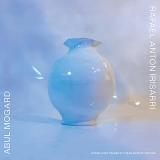
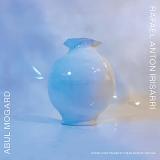
Marja de Sanctis’ cover artwork revisits the vessel sculpture from the duo’s first album, Impossibly Distant, Impossibly Close. There it appeared as raw, unfired clay. Here it has been fired in the kiln and finished with a glaze. Light gathers on its polished surface and spills into the surrounding space. As she explains, “I wanted to convey the idea of continuity within the duo, and the vessel became a kind of container for that idea. However, their music felt different this time, and with the collaboration of Martina and Andrea, I felt it should have a sleeker, softer, more glamorous look, very distant from the first raw appearance.” The transformation of the vessel from raw clay to fired form suggests a passage from immediacy toward permanence, mirroring the music’s gradual expansion.
Search:m 16
In spring 2025, Abul Mogard and Rafael Anton Irisarri created the source material for their second album, Where Light Pauses in the Silence of the Sun, during a three-day residency at Morphine Raum in Berlin. Functioning as both recording studio and performance venue, the space has no stage, with the audience gathered around the performers. Working within an open framework, the duo reshaped the music each evening while recording the performances live to multitrack. Rotary speakers, modular synthesizers and bowed guitar formed the core of their sonic language, captured through a 1970s mixing console and microphones placed around the room.
Back in Mogard’s studio in Rome, the material was further crafted as motifs were stretched, fragments isolated, and tempos dissolved. Irisarri recorded additional guitar textures and treatments in New York, while passages recorded by Martina Bertoni and Andrea Burelli in Berlin reinforced the harmonic centres and brought breath, refinement and a new sensibility to their compositions. The process continued as Mogard’s layering and subtraction reassembled everyone’s parts into the final arrangement.
The album opens with “In the Eastern Wild,” building from a sparse outline into a monumental formation of low-frequency weight, its internal motion shaped by the rotating Leslie speaker. “Over the Domes” widens into a broader acoustic field, where sustained modular tones meet waves of softly plucked guitar. The music then turns inward with “A Blue Descent,” centred on Bertoni’s cello, whose growling timbre introduces a melancholic depth.
At the album’s centre, “In a Quiet Radiance” unfolds around a slow guitar ostinato, its luminous stillness opening into a more expansive and reflective state. Across its ten-minute span, Burelli’s violin lines and Bertoni’s lower cello phrases gradually surface, weaving through the harmonic field. Mogard brings Burelli’s processed voice to the fore, its emotive, operatic presence becoming one of the record’s pivotal moments. “Of Blessed Ages” suspends the sonic flow, shifting between parallel major and minor chords as lingering, slowly decaying melodies shape the music’s internal drift. The closing “Among Shadows” settles into a darker resonance as layered textures recede.
Mogard and Irisarri’s shared language balances restraint and maximalism. UK magazine Crack describes the music as “a tidal wave held in suspension,” while Dutch newspaper de Volkskrant writes, “What a colossal sound, and how this music strikes at the emotions.” Reflecting on the residency sessions, Irisarri recalls: “At moments I genuinely couldn’t tell if a sound was coming from me or from Abul. It stopped feeling like two people making decisions and began to feel like we were inside a system moving on its own."
Marja de Sanctis’ cover artwork revisits the vessel sculpture from the duo’s first album, Impossibly Distant, Impossibly Close. There it appeared as raw, unfired clay. Here it has been fired in the kiln and finished with a glaze. Light gathers on its polished surface and spills into the surrounding space. As she explains, “I wanted to convey the idea of continuity within the duo, and the vessel became a kind of container for that idea. However, their music felt different this time, and with the collaboration of Martina and Andrea, I felt it should have a sleeker, softer, more glamorous look, very distant from the first raw appearance.” The transformation of the vessel from raw clay to fired form suggests a passage from immediacy toward permanence, mirroring the music’s gradual expansion.
- 1: Spoken
- 2: Blister
- 3: Decade
- 4: Paradise Lost
- 5: Revolution
- 6: Static
- 7: Inquisition
- 8: Ideal
- 9: Love
- 10: Firecracker
- 11: Industry
- 12: Obscene Jigsaw Puzzle
- 13: Brothers And Sisters
- 14: American As Apple Pie
- 15: Simply By The Book
- 16: Things Can Turn Around
- 17: Promise
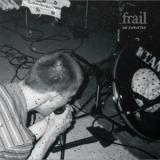
Post-Hardcore nach Philly-Art. Unzufrieden mit dem metallischen Youth-Crew-Format, verfolgte Frail die wilde, lärmende Wut der Generation X gegen alles und jeden im rasanten Tempo von San Diego. ,No Indus Try" - die erste und einzige Vinyl-Compilation des Quintetts - enthält wichtige Singles für die Labels Yuletide, Bloodlink und Kidney Room sowie seltene Compilation-Tracks aus ihrer Zeit von 1993 bis 1995. Kommt mit 24-seitigen Zine, das die Band in Notizen, Zitaten, Fotos, Flyern und revolutionärer Literatur dokumentiert. Make Your Own Noise.
- A1: Intro + Colors (Feat. Nic Hanson) (Live À L'olympia)
- A2: Love On Me (Feat. Later.) (Live À L'olympia)
- A3: Tiger Teeth (Feat. Nic Hanson) (Live À L'olympia)
- B1: Djon Maya Maï (Feat. Victor Démé) + Bensema (Feat. Lass) (Live À L'olympia)
- B2: Danse (Feat. Sirius Trema) (Live À L'olympia)
- B3: Nuit Blanche (Feat. Clou) (Live À L'olympia)
- B4: Les Hommes C'est Pas Des Mecs Bien (Feat. Clou) (Live À L'olympia)
- C1: Intemporel (Live À L'olympia)
- C2: Manyé (Avec David Walters)(Synapson Remix)(Live À L'olympia)
- C3: Toujours (Feat. Tim Dup & Lass) (Live À L'olympia)
- C4: Breathe (Feat. Thaïs Lona) (Live À L'olympia)
- C5: Guess What (Feat. Nic Hanson) (Live À L'olympia)
- D1: All In You (Feat. Anna Kova) (Live À L'olympia) + Going Back To My Roots (Feat. Tessa B) (Live À L'olympia)
- D2: Between The Lines (Dub Version) (Live À L'olympia)
- D3: Together (Feat. Beat Assailant) + Superfinal (Feat. Tbow, Thaïs Lona, Sirius Trema, Pierre Mirabeau) (Live À L'olympia)
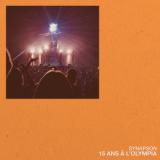
On October 16, 2025, Synapson took over the Olympia for a sold-out anniversary concert, celebrating 15 years of their career. A symbolic night in an iconic venue, in front of a crowd that came to relive the tracks that shaped their journey.
Today, the duo unveils “15 ans à l’Olympia”, a live album recorded during this unique show, a vibrant testament to their stage energy and the evolution of their project.
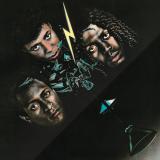
WRWTFWW Records unleashes the first ever release of legendary post-disco, funk, soul and electronic UK trio Imagination's cult album Night Dubbing in (well deserved) double LP format. The limited edition full-length comes with pristine audiophile treatment and luxurious packaging : a 45rpm and Half Speed Mastered DLP housed in heavyweight silver cardboard sleeve.
Imagination's singular 1983 album Night Dubbing is a refined deconstruction of black British soul and club pop, filtered through the deep studio and mixing techniques of dub music. Elegant, restrained, and, in its very own subtle way, radical, the record reshapes choice selections from the group's stellar catalogue into an immersive and out-of-this-world listening experience.
The special mixes on Night Dubbing are built on time and space. Basslines elongate and dissolve. Vocals appear, vanish, and reappear like ghosts. Drums fall away into vast silences, while echoes, tape edits, and precise engineering manoeuvres smoothly slide across the stereo field, revealing themselves like magic over repeated listens. Far from simple extensions or 12" versions, Night Dubbing treats the studio itself as an instrument, opening new dimensions of sound.
Often cited as a foundational record in the genesis of the house genre, the album also features the historic Larry Levan remix of "Changes", a Paradise Garage anthem that helped shape the direction of club music for decades to come.
More than 40 years on, Night Dubbing remains a seminal work. Its influence continues to echo through contemporary dance music, offering a blueprint for how pop could be transformed into something darker, stranger, more physical - a timeless sound that drifts effortlessly from the dancefloor into space.
Important note : it sounds amazing played on 33rpm too !
- A1: Suoivex Hddnflg 2:55
- A2: Spctrlcgntn 3:20
- A3: Umbra Scout 2:02
- A4: Suoivex Hddnflg (Egyptian Lover Remix) 3:55
- B1: Thad Songs 1:03
- B2: Paddaborn-Poddpurri 3:03
- B3: Zum Skan_Die_Ren! 3:27
- B4: Extrustraktures 1:38
- B5: Paddaborn-Poddpurri (Felix Da Housecat Electro Mix) 3:40
- C1: Cuttching 1:31
- C2: Yo Uth 2:34
- C3: Inter Ruptus 2:54
- C4: Inter-Ruptus (Umwelt Remix) 5:18
- D1: Samuel Hemingway 3:34
- D2: Nonullmorphemes 1:20
- D3: Dynaquenz 3:07
- D4: Nonullmorphemes (Sniper Mode Remix) 4:20
pdqb shows no signs of slowing down. Relentlessly productive and constantly locked into transmission mode, it delivers 13 tracks of its unmistakable Electro-Cognition sound. Sharp, futuristic, body-moving music wired straight into the nervous system.
From precision electro workouts to mind-bending synth transmissions, every track hits with purpose, style, and identity.
However, the remix lineup is equally heavyweight. Four elite reworks from four serious operators, each one twisting the source code into new dimensions.
---
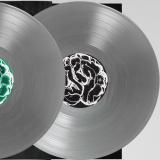
Half pinball table, half neural reactor, wired directly into a wall of aging synthesizers. The so-called Transient Witness (aka Preconscious Data Quantum Buffer) records not what people did - but what they almost did: Every flash of hesitation, every thought that vanished before becoming real, every dream erased at sunrise.
At its center pulses a synthetic brain, decoding impulses too brief for language. These signal transients are micro-events that appear and disappear in milliseconds.
When activated, the table will not play sound. It remembers it. Each collision of steel ball and sensor triggers forgotten futures, lost timelines, phantom rhythms from decisions never taken. Basslines from parallel selves. Melodies from unrealized lives. Percussion patterns from collapsing probabilities.
The 13 original tracks featured on this release are a transmission recovered from one of its sessions. Electro pulses, synaptic breaks, machine funk, and signals from thoughts that never survived long enough to exist.
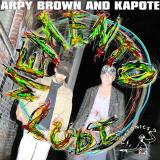
Arpy Brown & Kapote Announce Collaborative Album Memento Ludi via Toy Tonics
A sun-drenched fusion of yacht rock, house and modern indie dance energy – out June 26, 2026
BERLIN, GERMANY — Toy Tonics is proud to announce Memento Ludi, the first collaborative album by label founder Kapote and multi-instrumentalist producer Arpy Brown, arriving June 26, 2026.
The album is a funk-driven journey that bridges the warmth of 1970s analog recordings with the pulse of contemporary dance music. Blending neo-soul grooves, yacht rock harmonies and modern house rhythms, Memento Ludi captures the spirit of classic musicianship within a forward-looking club context.
But Memento Ludi is more than a typical house record. The album moves fluidly between dancefloor tracks and fully developed songs. Every instrument was performed live by the artists themselves: guitars, bass, keyboards and percussion recorded in the studio by Arpy and Kapote. After jamming and recording the basis of every song in a live procedure they carefully resample the parts to create the organic, human touch that defines the Toy Tonics sound.
The title Memento Ludi — Latin for “remember to play” — reflects the album’s philosophy: bringing joy, spontaneity and musicality back into dance music at a time when many club tracks feel increasingly mechanical and formulaic.
The collaboration arrives during a particularly busy moment for both artists. While spending countless hours in the studio, Kapote and Arpy Brown have also maintained intensive international touring schedules with the Toy Tonics crew, road-testing many of the tracks as “secret weapons” in their DJ sets from Melbourne to Los Angeles via their homebase Berlin.
“We wanted to make a record that felt like a lost studio session from 1978 — resampled and synthesised in 2026,” says Kapote.
- 01: Kneebone Barton
- 02: Through The Gaps (Pt.1)
- 03: Are We Fast?
- 04: Golow
- 05: One More Trawl
- 06: Cornish Affirmative
- 07: E-Bow An Howl
- 08: Through The Gaps (Pt. 2)
- 09: What’s Your Name?
- 10: Look At It
- 11: A Letter Home
- 12: Pysk
- 12: We Don’t Catch Fish
- 13: Home To Mother
- 14: Through The Gaps (Pt. 3)
- 15: Rose Of Nevada
Mark Jenkin, the BAFTA Award winning director, editor, screenwriter, cinematographer and musician, presents the score to his new film, Rose of Nevada on Invada Records. Unique among British feature filmmakers for the analogue way in which he crafts his films - all three feature films have been shot on 16mm using a Bolex clockwork camera – as well as his multifaceted roles as the writer, director, director of photography and editor of the film, once more he is responsible for handling the sound design and composing the original score.
The new score mirrors the techniques employed in the film, with analogue synthesisers drawing the listener into nebulous hypnotic tones and delicate movements.
Composed, produced, engineered and performed by Mark Jenkin using synthesiser, guitar, percussion and loops & effects, the environmental recordings remind us of the context in which the music was originally borne, but as the score ebbs and flows between ambient tranquil seas and crashing storms, it affirms its presence as a powerful stand-alone piece of work.
The score’s physical release follows the Cornish director’s third feature film: the time-travelling Rose of Nevada cinematic release in UK and Irish cinemas on 24 April, with a BFI Blu-ray and BFI Player release in the summer.
- 1: As Ganhadeiras De Itapuã – Maré Mansa
- 2: Ubunto – O Vento Part. As Ganhadeiras De Itapuã
- 3: Castanheiro – Este Samba É Meu
- 4: Eduardo Araújo – Madrugada
- 5: Tyaraju & Dutra – Pé De Foguete
- 6: Tema Iv – Tema Iv
- 7: Orquesta El Sabor De Nacho – Bim Bim Bom Bom “Que Se Sepa”
- 8: The Trinikas – Remember Me
- 9: Tommy Mcgee – Now That I Have You
- 10: Trevor Dandy – Is There Any Love
- 11: Wilfred Luckie – My Thing
- 12: The Sylvers – Wish That I Could Talk To You (Kenny Dope Edit)
- 13: K.l. Hamilton – I'm Trying
- 14: ?Wil Collins & Willpower – Anything I Can Do
- 15: Powerline – Watching You (Brand New Remix)
- 16: Mac Mathunjwa – Give Us More Love (Edit)
- 17: Tapper Zukie – Visions Of Love
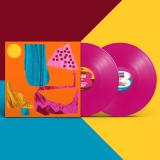
magenta vinyl[26,85 €]
- 1: As Ganhadeiras De Itapuã – Maré Mansa
- 2: Ubunto – O Vento Part. As Ganhadeiras De Itapuã
- 3: Castanheiro – Este Samba É Meu
- 4: Eduardo Araújo – Madrugada
- 5: Tyaraju & Dutra – Pé De Foguete
- 6: Tema Iv – Tema Iv
- 7: Orquesta El Sabor De Nacho – Bim Bim Bom Bom “Que Se Sepa”
- 8: The Trinikas – Remember Me
- 9: Tommy Mcgee – Now That I Have You
- 10: Trevor Dandy – Is There Any Love
- 11: Wilfred Luckie – My Thing
- 12: The Sylvers – Wish That I Could Talk To You (Kenny Dope Edit)
- 13: K.l. Hamilton – I'm Trying
- 14: ?Wil Collins & Willpower – Anything I Can Do
- 15: Powerline – Watching You (Brand New Remix)
- 16: Mac Mathunjwa – Give Us More Love (Edit)
- 17: Tapper Zukie – Visions Of Love
Black Vinyl[25,17 €]
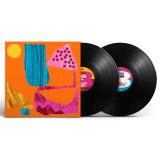
For the ninth installment of his Hardspace series, Len Faki once again dives into his personal vault to present four reworks that bridge the gap between raw funk and modern, high-impact club dynamics. True to the project's ethos, Faki has selected tracks that have been reshaped through his specific sonic signature to maximize their energy on today's dancefloors.
A1. DJ Assault - U Can't See Me (Hardspace Mix) The release opens with a relentless edit of Detroit legend DJ Assault. Faki takes the raw Ghetto-tech energy of the original and embeds it into a massive, modern framework. While the iconic vocal hook retains its street-level grit, the Hardspace update provides a significantly tighter groove and a powerful low-end presence, propelling the track from the warehouse straight into the present.
A2. Myles Sergé - Trans Milenio (Hardspace Mix) With Myles Sergé, Faki explores more hypnotic territory. He extracts the driving, repetitive elements of the original and sharpens the rhythmic angles. The result is a prime example of the Hardspace sound: a deep, almost meditative loop that gains entirely new spatial depth through subtle filter movements and a crystal-clear percussion layer.
B1. Jad & The - Deep Dark Grimey Dancefloor Moment (Hardspace Mix) On the flip side, Faki leans into the brooding atmosphere of Jad & The. As the name suggests, this mix is crafted for the "wee hours". Faki amplifies the "grimey" textures and contrasts them with a stoic, forceful beat. The trippy, almost menacing synth elements are rearranged within the stereo field, creating an immersive pull that is impossible to escape.
B2. Deepchild - Baller (Hardspace Mix) To close out the EP, Faki brings the jacking spirit of Deepchild's "Baller" back into the ring. Through meticulous re-arrangement and quantization, he gives the track the "tightness" essential for a modern DJ set. The playful, bouncing synths remain, but are now grounded by a heavy-duty beat foundation.
H009 is a hand-picked collection that demonstrates how Len Faki unites diverse musical personalities and eras under the Hardspace umbrella. Whether it's raw ghetto vibes or hypnotic deepness, every track has been transformed with technical precision and deep respect for the original to meet the demands of global dancefloors.
Any follower of Andrew Weatherall (a particularly fervent and erudite tribe) will be familiar with 'The Sons of Slough.' Comprising Andrew's brother Ian and Duncan Gray, they have produced music together for twenty years and throughout Andrew has been an avid supporter playing their records at his shows, helping Duncan set up his Tici Taci label and generally being a good friend.
Their mutual admiration for Factory Records made it an obvious place to seek inspiration for a tribute record. The influence of Factory on Andrew and Ian's lives is difficult to overstate. They spent a fair chunk of the 80s travelling all over the country to catch the label's artists perform.
New Order were pretty much top of the list and the Factory ethos of creativity over commercialism was to become Andrew's main drive throughout his career.
Ian and Duncan have reworked New Order's "In a Lonely Place" as a homage to Factory and the inspiration they were to a whole generation. David Holmes, Keith Tenniswood and Sean Johnston (all long time Weatherall collaborators) used the track as a jumping off point bringing Factory, New Order, their own musical perspective and most of all Andrew together in a unique tribute to shared times and fond memories.
It premiered 25 years ago on the cult Solid Steel show on BBC Radio. It first appeared on a CD-R with a photocopied cover, followed by a cassette release via Blend Records.
Ninja Tune described it as the most important mixtape in the history of Polish electronic music-a release that fused the best of 90s trip-hop with the sounds of the future, carving out a new horizon.
"Virtual Cuts" by the polish duo Skalpel is arriving for the first time ever on vinyl, featuring newly designed artwork by Bartek Szymkiewicz.
- A1: Alauda - Zbajmowane
- A2: Holiday 80 - Kwiaty Niczyje
- B1: Dyyune - Nie Braknie Z?Udze?
- B2: Schmoltz - Deszcz
- C1: Tamten & Freux - Twarze Za Mg??
- C2: Beard In Dust - Mój Dzie?
- D1: Zambon - Nie Wdycha?
- D2: Etnobotanika - Strze? Si?
- D3: Dj Duch - Jak Tu Pi?Knie
- E1: Ptaki - Unreleased 2012
- E2: Pejza? - Róbmy Swoje
- E3: Skalpel - Wy?Ej
- F1: Pol Rax - Domy Z Betonu
- F2: Julia Rover - Spacer Kobiety
- F3: Saska Boys - Gra
To celebrate a decade and a half of excavating the hidden treasures of the Polish underground, The Very Polish Cut Outs presents a definitive anniversary compilation featuring 15, mostly unreleased, tracks from the years 2008-2025.
Since its inception, the label has been instrumental in bridging the gap between Poland's rich musical heritage and the modern dancefloor, and this release serves as a comprehensive time capsule of that journey. From early, legendary edits that defined the label to brand-new, forward-thinking productions, the collection showcases the evolution of a label that turned crate-digging into a national cultural phenomenon.
The compilation brings together a heavy-hitting roster of the label's most influential contributors, featuring essential tracks and rarities from artists such as Pejza?, Ptaki, Holiday 80, Skalpel, Etnobotanika and the label boss Zambon. The sonic palette is vast, moving seamlessly from sun-drenched Balearic and dusty disco-funk to the grittier realms of house and breakbeat. It is a celebration of the label's unique ability to transform forgotten melodies from the 70s and 80s into timeless club anthems, while simultaneously pushing the boundaries of contemporary Polish electronic music.
In keeping with the label's deep-rooted commitment to physical culture, this milestone release is a strictly limited, vinyl-only pressing. The amazing artwork is as always, the work of Bartosz Szymkiewicz.
Sicilian-born, Amsterdam-based Fran LF returns to Nastia's imprint with three Techno tracks built over a year of studio work, each one telling part of a single story that unfolds across the EP. The narrative moves through different chapters, starting with tracks that shift and transform as they play out, building tension through evolving elements rather than straightforward drops. These are straight-up warehouse cuts - the kind that start one way and shift into something heavier as they unfold. Dubby atmospheres that harden into driving rhythms, basslines that anchor the groove, and synths that evolve throughout.
Closing the record is a remix from Sicilian producer LPV, a close friend and admirer who reworks "Tsufuru Relaxation" with his signature dark, driving approach. He strips it down, adds a relentless bassline, and gives the track a completely different, moody and ethereal energy while respecting what made the original work.
Solid dancefloor techno with enough depth to keep things interesting.
NO Return!
"Leave The Ground" the 1st album of the powerhouse live-band Extraviolette. Get ready to groove along the funky rhythm section, the soulful vocals and the piercing brass that transport you back to the heart of the Disco Era. Based in Leipzig these nine musicians want spread their love for the music of the 70ties and are committed to energise their audience with new music they haven't heard, yet.
With a keen sense for intricate arrangements and hypnotic grooves, Mäder's debut on Paradijs Boogie crafts a sonic universe that invites both dreaming and dancing. His productions strike a delicate balance between organic elements and contemporary club aesthetics, always driven by a deep passion for musical innovation.
Andalusian emerging-talent producer GAZZI, a young yet influential figure within the broader Spanish electronic scene, presents an LP that feels like a quiet turning point in his career. Rooted in ambient and new-age minimalism, the record drifts through piano-based textures, soft pauses, and spacious moments that invite deep introspection.
Across its delicate arrangements, GAZZI captures the sensation of slowing down in a world where everything feels fleeting. These tracks hold space for reflection-offering nostalgia, stillness, and the subtle suggestion that hope remains at the edges of even the most ephemeral moments. Each piece unfolds like a landscape suspended in time, shaped by restraint, emotional nuance, and a profound sense of presence.
Presented by Glossy Mistakes, the release reflects the label's ongoing commitment to uplifting a new wave of contemporary Spanish artists, highlighting creators who are redefining the country's sonic identity through experimentation, sensitivity, and forward-thinking sound design.
In GAZZI's own words:
"These songs were made to sit with the wound - to let you drift, to feel scattered, contemplative; they're meant to keep you from thinking too much - or maybe to make you think a lot."
The result is a meditative, deeply personal body of work-one that not only marks a cornerstone in GAZZI's artistic path but also extends Glossy Mistakes' mission to showcase innovative, emotionally resonant voices from Spain's evolving music landscape.