
Two new Moxy Edits — bass-heavy, floor-ready, summer certified.
Two new Moxy Edits — bass-heavy, floor-ready, summer certified.

We Jazz Magazine, Issue 16 / Fall 2025 "Thembi" for Pharoah Sanders. 128 pages, 170 x 240 mm in size and printed on 140g Edixion paper with laminated 300g Invercote covers. All articles presented in English. 50 pages of Pharoah Sanders by Henry Boon, Pierre Crépon, Tony Higgins, Arsi Keva, Patrick Preziosi, Andy Thomas and Seymour Wright, Tomoki Sanders by Tej Adeleye, Don Cherry by Magnus Nygren, Jameszoo by Rob Garratt, Discaholic column by Mats Gustafsson, album reviews, live reviews, photo essay & more.

Sunset Spokes Vinyl[50,21 €]

Skimask Orange Vinyl[32,14 €]

Frankfurt electronica via Santo Domingo, Dominican Republic. Equally inspired by early Internet and the promise of technology, Boundary's "Terrain Scanner" narrates a device that allows the indigenous people of the isle to localise and protect their rare earths and minerals. It's ancient, hence deeply integrated with the surrounding flora. Pay close attention and you will get to hear the shimmering stream nearby.

"Developer Archive 16" is the latest EP from Developer, released on his personal imprint. Initially established as a vinyl-only label, the platform has since expanded to include digital releases. This EP delivers a collection of groove-driven, drum-infused techno tracks from Developer’s personal archive, reflecting his signature sound and production expertise. Featuring a total of eight tracks—four on vinyl and four as digital exclusives—Developer continues to craft powerful rhythms designed for both the club and the warehouse.
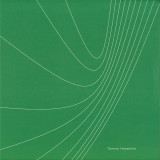
A second appearance of Tammo Hesselink on the Mantis series. Fusing the spatial effects treatments of dub with the metallic clang of industrial percussion and the stark negative space of minimal, Tammo Hesselink's sonic practice continues to create compelling, complex forms. His exacting style toys with atmospheric processing and mechanised motifs in place of traditional melodic elements, unearthing nuanced expression from timbre and rhythm while delivering firm structures for advanced soundsystem immersion.

As the new year kicks off its time to return to the party bangers and who better to invite for than the awesome Crash Party. After releasing his debut album Everything Happens for a reason on his own Big Beat Sunday label – we were able to convince the busy producer to return for a 2-track party drop for our infamous Toxic-Funk series.
Kicking off things with instant intoxicating classic break with some timeless "wonder"-ful groove with an equally legendary rap-flows. Now what does that mean? Instant party classic A-side named Tribe Called Wonder!
On the flip-side Crash Party slows down the beats a bit but leaves it equally toxic with some big grooves on the Break On jam. Like the A-Side this jam features some legendary rap hooks which goes smoothly with the oldskool vibes.
Breakbeat Paradise Recording delivers yet another belter for the crate for the funky DJs keeping it real and keeping it vinyl!


Repress!
The sixteenth edition of Defected’s vinyl series continues to commit the label’s biggest digital releases to wax, delivering some of the best house music previously unavailable on vinyl. EP16 brings together four recent releases from Defected’s catalogue of world-class house. First up on the A-side is Claptone & Rune’s ‘Calabria’, a highly anticipated release from summer 2022 thanks to its warm familiarity, big rubbery bassline and brassy saxophone hook that captivated dancefloors instantly. Similarly, Jack Back’s ‘Feeling’ has a hint of noughties nostalgia, released in March of 2022 ready to sweep dancefloors with a rave-ready bass and electrifying vocal. The B-side opens with Ibiza stalwart Marco Faraone’s 2021 release ‘My Name’, featuring intoxicating vocals from Lolita Leopard; dripping with attitude. Closing out this club-focused collection is Payfone’s distinct ‘Day & Night’, featuring an orchestral approach to composition and a deep house groove that bursts in with ease.

“My introduction to “noise” came from a record shop in Lake Worth, Florida ran by a musician named Kenny 5. Kenny had left Detroit sometime in the mid nineties and had begun selling used records and CD’s from the downtown strip of this tiny southern Florida city in a humble shop sandwiched between a deli and a dog grooming business. Kenny previously was on labels like Amphetamine Reptile and timeSTEREO, and the records and videotapes that would be on repeat at his shop were a vast sonic expanse that spoke to the eclecticism of his experience as a touring musician participating and adjacent to American noise culture through the early to late 90’s. In 1998, I was eleven years old and I would order a pizza with him and watch VHS tapes of Japanese noise and deathmatch bootlegs, as well as any other sonic and subcultural rarities that far outstripped my age to comprehend (notably the RRR “Journey Into Pain” compilation and various Vanilla Tapes videos). This widecast net of information formed an introduction to a reality that did not fall deaf on me, but it took many years later for me to reorient the specific freedoms of what this dense and cathartic sound culture had imparted on my life and would continue onward to.
What does this have to do with this selection of choice recordings from the Secret Boyfriend catalog for the enmossed label? For the uninitiated, Secret Boyfriend is the long running moniker of Ryan Martin, North Carolina musician and label proprietor of the Hot Releases imprint. For over a decade from this writing I have watched Secret Boyfriend, and Hot Releases by extension as a curatorial and archival effort, embodying the multiplanal capacity that noise loosely functions from as an umbrella ideology and formalist avenue for sound creation. For anecdotal purposes, from (before) 2006 until roughly 2023 the East Coast of the United States showcased a vibrant network of eclectic regional festivals that saw wide swaths of artists addressing and negotiating the notion of what qualified “noise” from a conceptual and ideological perspective. Some festivals honed in on particularities in aesthetics and tropes, and others had a kind of “catch-all” implementation that allowed for a salvation of the sort of alienated and singular artistry that was amassing throughout these territories. While clear guidelines had been set from regional predecessors as to how noise with a capital “N” should maneuver, Secret Boyfriend is emblematic in the spirit of fluidity that was either implicitly coupled to the notion of the genre, or grew to evolve towards or devolve from.
Within Secret Boyfriend performances, I have seen and admired a mirroring from a ravenous appreciator of this culture at large back towards itself. Typical of a Secret Boyfriend set is an interchangeable narrative arc wherein blistering feedback laden scrap metal improvisations are forayed into naive ambient or “pop” songs, or skipping CDs, or mixer feedback play, or delayed Roland 707 drum workouts all at once and in a unique hegemony. Secret Boyfriend's stylistic mastery of each endeavor is at once an homage to a history of loving listening and enacting, while a brave step into the realm of actualizing the unique fluidity of his own practice. In performance and the action of network engagement, Secret Boyfriend operates a survey of that which he sought to hear and that which he cultivates around his work. His operations are mirrors, and the project (alongside his other peers) is a reflection on the ethos of his time.
Conversely his recording practice narrows in on these moments and allows for a different kind of intimacy or alienation for the non live listener. This record of selected “pop songs” (let's call them that) is particularly poignant at a time when the culture Martin mirrors is at a strange crossroads with itself. The aforementioned festival networks necessarily change and shift. The onlookers become the artists, the artists find new horizons, and the spaces for these cycles fade into locales of a distant memory. It seems, from my perspective, that audiences currently yearn for a more bottlenecked experience, searching for some ontologically vetted manifestation of an idea, of a sound and less for an experience that functions in opposition to our collective banalities. This makes sense in the face of general global catastrophism that plagues us. We need certainty of what something is somewhere, don’t we? Noise as an idea has expanded and contracted to so many iterations of itself it is hard to tell what it even is, and it is particularly difficult to identify in the absence of solid network activations a moment to reflect on its own complexities and nuances. In the face of so much change, I argue that the language of noise culture at large has on one hand become increasingly didactic and predictable, and laughably inclusive and non linear on the other. Probably has always been this way, but now we are in the midst of a moment of extreme access and indexicality, which somehow cauterizes expansion and naivety and chance.
This record highlights the Secret Boyfriend that obscures didacticism by highlighting output that opens up for more challenging catharsis and emotive signal processing. It provides an entry to the materialism of a cultural field full of ecstatic complexity and beautiful inconsistency. In these muted moments Secret Boyfriend has given us over his career we have an argument for evolving languages that further challenge our notions of what is supposed to happen and how it is supposed to be presented. In his more song oriented expansiveness, we can punctuate the ability to think in new modalities. Listening to these recordings reminds me of the polarity of sitting in the record store as a kid and understanding that His Name Is Alive is on 4AD and (gasp!) timeSTEREO. This trite early impression that nothing is really as different as our imaginations might want them to be, and that we can do whatever we want mostly within the creative realms we work through is an important filter to look through Secret Boyfriend as a project and a vessel. If we can achieve abandon and vulnerability through our artistic endeavors, then we have a sound model for, maybe, new potentialities. If that’s too much projection, or just complete liberal bullshit, I am fine with that. Secret Boyfriend's oeuvre at best offers us moments of reprieve to ponder these complexities, or at least a moment to zone out on a drive through North Carolina Highway 54.
You have one pocket of life that you must do whatever you want to inside of. Secret Boyfriend does it affectionately, in a variety of forms, and always with deep sentimentality. These recordings are a wonderful set of songs to begin further investigation from. Thank you Ryan for allowing as many avenues as possible to continue a broad cultural exchange and conversation that intersect and refract while being the kind of artist that is brave enough to not phone in the effort.”
- Nick Klein , May 2024


"We’ve taken a selection of the most in-demand and asked-for titles in our Brazil 45’s catalogue and given them a loving repress. Marking the third release in our now signature series, we shone the light on two sought-after tracks from Noriel Vilela and Juca Chaves.
On the A side, originally released in 1971 on Copacabana Records, Noriel Vilela's 1971 cover of Tennessee Ernice Ford's '16 Tons'. Ford’s 1955 original was a classic American pop-country-folk song, that Noriel masterfully flipped it into a low-slung, deeply toned samba groover.
On the B side Juca Chaves classic 'Take Me Back To Piaui' was released on 7"" by RGE In 1970 and features on his album 'Muito Vivo' from 1972. Sublime orchestration, velvety vocals and the instantly uplifting cuica tones, make this a must-have Brazilian cut. Chaves was an active critic of the Brazilian military dictatorship, and like Veloso and Gil, was exiled in the early 1970s, to Portugal and later Italy."

Die Grammy-nominierte Künstlerin, Produzentin und Labelchefin TOKiMONSTA bringt ihr neues Studioalbum "Eternal Reverie" an den Start. Neben der unwiderstehlich eingängigen, Samba-inspirierten Dancefloor-Hymne "Corazón / DEATH BY DISCO PT 2" ist der R&B-Tune "On Sum" mit Tokis langjährigem Kollaborateur Anderson .Paak und der aufstrebenden Neo-Soul-Sängerin und Rapperin Rae Khalil eines der Highlights. Die Stimmen der beiden Vokalisten verweben sich nahtlos in TOKiMONSTAs typische Beat-Rhythmen und üppige Synth-Akkorde und ergänzen sich gegenseitig in ihren gefühlvollen Kadenzen – eine Meisterklasse des klassischen Duetts.
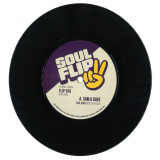
It's been a while, but after some significant restructuring behind the scenes, Soul Flip is back in the groove, with a fresh new look, and more sweet, soulful sounds.
Chapter 16 of the Soul Flip story sees Del Gazeebo breathe fresh life into a couple of absolute classics, steering them directly at the dancefloor.
First up for the Soul Flip treatment is Sam & Dave's "Soul Man", Del somehow making an already big tune even bigger, and very much more DJ-friendly.
On the flip, Del takes the O'Jays original version of "Now That We Found Love" & injects it with fresh energy. It also retains the glorious strings from the album version that was edited out from the original 7" (UK only) release.

***
Mord.
Morderstwo.
Rotterdam.
Herdersmat.
***
Limited amount of part 16 of the Herdersmat series available now. This vinyl was previously available only by purchasing the full MORDH003. Generic black sleeve.

* Top slice of early 90’s digital roots from reggae legend Earl 16, best known for his work with the likes of Lee Perry, Augustus Pablo, Mikey Dread, Leftfield and Dreadzone.
* Produced by Earl Sixteen and previously only available on Earl’s 1992 LP `Boss Man’ (released on CD as `Roots Man’).

Vol.8 PT2[26,01 €]
Vol.9[22,14 €]
Vol.1[23,49 €]
Vol.13 PT2[23,40 €]
Vol.13 PT1[23,49 €]
Vol.15[26,47 €]
Since 2008 our Spiritual Jazz series has presented unlimited horizons. Each album celebrates the rich tradition of African-American songs based on the belief in a higher force than oneself and has also focused on geographical areas, such as Europe or Japan, thus recognizing that these territories have immense cultural riches. Religions, like Islam, whose musical traditions have vivid Arabic and North African resonances, have also been highlighted. The stylistic range of all the above is wide.
Yet historic record labels, from Blue Note and Impulse! to Prestige and Steeplechase, have also featured because their catalogues are musical treasure troves that could not be more relevant to Spiritual Jazz, even though they issued vast amounts of music between the late '30s and present day, that have not been confined to any one school.
Spiritual Jazz 16 is a focus on Riverside and its associated sister labels. Riverside itself was founded in 1953 by Orrin Keepnews and Bill Grauer, and became an important purveyor in that decade and beyond of what would be marketed as of modern jazz. That coinage was itself an amorphous, umbrella term that essentially created a demarcation from the vocabulary of pre-war classic jazz and inter-war big band swing, thus recognizing that improvising artists were breaking new creative ground that would subsequently give rise to a flurry of sub-genres, for example bebop, hard bop, cool, modal and Latin jazz. And it's from this multiplicity of sub-genres that we choose the deepest, most vibrant selections that the vast, pan-generational catalogue of Keepnews & Grauer has to offer

