12. Mr Black Sheep (LPX Bonus Track)
13. Chain Gang Pimpin (LPX Bonus Track)
14. The Mix (LPX Bonus Track)
15. Not The One (LPX Bonus Track)
16. Standing Ovation (LPX Bonus Track)
"Black Sheep" bringt einige der bisher schärfsten Texte und elektrisierendsten Darbietungen von Cakes Da Killa, der vollends seine Vielseitigkeit nutzt: melodische Hooks, noch raffiniertere Pointen und die charakteristische Stimme, die mit durchsetzungsfähiger, roher Kraft alles durchdringt. Während sich in den globalen Verhältnissen Dunkelheit abzeichnet, bietet Cakes neue Fluchtwege - nicht aus Fahrlässigkeit, sondern aus Erholung, um weiter zu kämpfen. Ihm eilt sein kritischer und gesellschaftlicher Beifall voraus: Er hat bei Glastonbury, Governors Ball, Sonar und Whole Festival gespielt und mit allen - von Honey Dijon über Injury Reserve bis Rye Rye - zusammengearbeitet.
Search:m black
"Black Sheep" bringt einige der bisher schärfsten Texte und elektrisierendsten Darbietungen von Cakes Da Killa, der vollends seine Vielseitigkeit nutzt: melodische Hooks, noch raffiniertere Pointen und die charakteristische Stimme, die mit durchsetzungsfähiger, roher Kraft alles durchdringt. Während sich in den globalen Verhältnissen Dunkelheit abzeichnet, bietet Cakes neue Fluchtwege - nicht aus Fahrlässigkeit, sondern aus Erholung, um weiter zu kämpfen. Ihm eilt sein kritischer und gesellschaftlicher Beifall voraus: Er hat bei Glastonbury, Governors Ball, Sonar und Whole Festival gespielt und mit allen - von Honey Dijon über Injury Reserve bis Rye Rye - zusammengearbeitet.
Back On Black Records are set to reissue the D.R.I. "Greatest Hits" album, originally released in 2001. D.R.I.'s music has combined elements of punk rock, thrash metal, speed metal and heavy metal, while their early material has been described as hardcore punk. They are often cited as one of the key bands that helped create the crossover thrash genre, along with S.O.D., Suicidal Tendencies and Corrosion Of Conformity.
Streng limitierte 'Yolk' LP Version des Kultalbums: Transparent vinyl with Orange 'Fireball'! Twilight Force wissen wirklich, wie man starke Melodien mit orchestralen Arrangements und schnellen Tempi kombiniert! Die Gruppe möchte ein intensives und erinnerungswürdiges Hörerlebnis schaffen; die Zuhörer in ein magisches Universum gefüllt mit Wundern, heldenhaften Erzählungen und bezaubernden, mystischen Welten entführen.
- Ltd. Col. LP: ('Yolk' LP/ Transparent vinyl with Orange 'Fireball')
% discount from 25x !!!
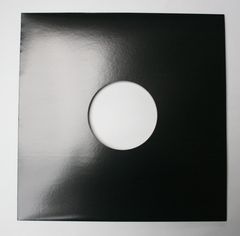
unicoloured empty cover / sleeve for vinyls without an inner sleeve !!! Awesome for for white labels, because frazzled paper covers can be very annoying in the case !!
*Cover - UK Style thin without spine
* black unicoloured
* hole on both sides
* 280gr/m2 paper
unifarbene leercover / sleeves für platten ohne extra papier innenhülle !!! sehr geil für white labels, da die zerfetzten papiercover supernervig im case sind !!
* Maxihülle - UK Style dünn ohne Rücken
* schwarz unifarben
* Doppelloch
* 280gr / m²
% discount from 25x !!!
unicoloured empty cover / sleeve for vinyls with an inner sleeve !!! Awesome for for white labels, because frazzled paper covers can be very annoying in the case !!
* Cover - 3mm Spine
* black unicoloured
* hole on both sides
* 280gr/m2 paper
unifarbenes leercover / sleeves für platten in papier innenhüllen !!! sehr geil für white labels, da die zerfetzten papiercover supernervig im case sind !!
* LP Hülle - mit 3mm Rücken
* schwarz unifarben
* Doppelloch
* 280gr / m²
Ten Fingerz produces tracks bursting with dancefloor energy, influenced in turn by acid house, 90s techno, the French Touch, or jazzy Afro-House sounds. An insatiable vinyl collector, it's when he's at the turntables that his ten fingers twitch to play furious, powerful and groovy house, flirting with the funkier side of techno.
With an ep of 4 tracks on the Swiss label Black Pattern Records, he returns to the forefront of the scene accompanied by solid house music warriors such as The Checkup, DJ Merci and Dexter Troy.
Available on ltd edition white vinyl, only 300 pressed. Includes extended album download.
Ivan The Tolerable is the alter ego solo project of Middlesbrough based musical wizard Oli Heffernan. Aside from his solo work as ITT, Oli has played in numerous bands over the years including Year Of Birds, King Champion Sounds with members of the Ex, Detective Instinct, and Shrug, and has collaborated with icons like Mike Watts of the Minutemen, and J Mascis of Dinosaur Jr.
On Black Water/Brown Earth, Heff called in the help of his Dutch friends Mees and Elsa in King Champion Sounds again and wrote the album in a long-distance session. The album feels like an excursion in nature, featuring bird song, flowing water, pots and pans percussion, and a genuine feel of wandering about and experiencing the outside world with eyes and ears wide open. It is a band effort too, with organic sounding drums, the characteristic saxophone, and droning synths.
‘Elsewhere, gentle intonations of morning with almost childlike embellishments and rhythmic beats, and more flute, might lull and comfort but nothing ever sits exactly in time which might make this Ivan The Tolerable’s most frustrating album at times but also one of his most interesting to really delve into aurally. ‘Sawdust’ is another sonic interlude, little more than a purge of effects and ideas but in a place where effects and ideas are plentiful. However, it’s centrepieces ‘Seaweed’ and ‘Signs’ that provide the pulsing, grooving dual that makes the second half of Black Water/Brown Earth a sheer delight. The former being simply kind of folky with a bit of sitar but utterly immersive, the latter oddly upbeat with eastern vibes and tubular rhythms, combined it is nearly twenty minutes of serene experimentalism.
The shorter tracks are perhaps designed to temper the mood or counter and reflect the passage of time on an album of mostly structured improvisation, and it may only be closer ‘Memory’ that is truly free to roam musically, its long jazzy segments skipping off into the farthest corners of the left field’.
A milestone of the Black music movement, originally released on Vault in 1969. The debut album of Elaine Brown was arranged by piano player amd composer Horace Tapscott, conducting the Californian Pan-Afrikan Peoples Arkestra. A true political manifesto, the album is an accurate meeting between black poetry and spiritual jazz. After her debut Elaine went to release an eponymous second album on Motown. Elaine Brown is an African American activist and a former leader of the Black Panther Party - Minister of Information and Chairman.
The Morning Papers Have Given Us the Vapours was made with the black watch bandmates and producers/engineers Rob Campanella (Brian Jonestown Massacre, The Tyde, The Warlocks) and Andy Creighton (The World Record, Parson Red Heads). Ben Eshbach, formerly of The Sugarplastic, arranged the strings. Kesha Rose guests on lead vocals on the second single, Oh Do Shut Up. And the great Lindsay Murray once again lends her beautiful backing vox to a number of tracks.
the black watch songwriter/frontman John Andrew Fredrick wrote the ten songs on this, his Los Angeles-based band's latest album, entirely unselfconsciously, with no set goal in mind other than to revel in the joy of songwriting, and, eventually, the luxury of recording his music with his more-than-accomplished band. The Morning Papers Have Given Us the Vapours, produced separately and together by Rob Campanella and Andy Creighton evinces the black watch's often stunning ability to, as Andy Gill once observed in The Independent, "find chaos in the calm, melody in the miasma."
Fredrick, who has also published four comedic novels and a book on the early films of Wes Anderson, jovially describes himself as "a recovering Anglophile--one who'll never, one hopes, fully recover." From his home studio in the Angeleno Heights district of L.A., he waxes eloquent about how being branded, as it were, as a too-ardent lover of British music, film, and literature has left him as bemused as has the tag "prolific" that is often affixed to reviews of his work.
"I just don't think it's all that interesting to note that we've made so many records. Looked at one way, it's a sort of deflection from talking about the timbre if not the quality of the individual songs. Though I know it can be intimidating for fans who've just discovered us--a sort of 'My goodness, where do I start with this band that has put out LPs since 1988?' I get it. I do. I picture someone standing at our slot at a bin at a record store becoming overwhelmed at the prospect of picking the 'wrong' title. And then walking away and not picking up anything from us!" Fredrick laughs. "What can you do indeed?"
He started his career as a songwriter as a result of an American Football injury that left him bedridden in the home he grew up in in Santa Barbara, California. The year The Beatles immortal double-album came out at Christmastime he broke his leg so badly that he had to be home-schooled for an entire year. His parents, ex-teachers themselves, refused to let him watch telly for more than an hour a day. He propped a Silvertone acoustic on top of the massive cast that screamed all the way up to his thigh from his toes, and began to write little melodies and lyrics that, doubtless, did not in the least mask his love for the Fabs, The White Album in especial.
And he read and read and read--histories of the American Revolution and Civil War, mostly, and as many Dickens novels as his mum and dad could bring him. "That year," Fredrick observes, "surely made me who I am today. Proof that intensely unfortunate-seeming events can prove most fortunate. As a sport-mad kid, it made me absolutely mental that I was exiled from the activities I loved most and the school teams I played on. What a blessing undisguised that injury was! Not that I'd like to experience anything like it ever again, mind you."
Fredrick can even recall a few of the melodies he wrote as boy ("Utterly trite, of course, completely jejune"); and in a way, The Morning Papers Have Given Us the Vapours showcases a kind of get-back-to-where-you-once-belonged sensibility. "I didn't intend, this time, to make an album per se. I write both songs and fiction in order to find out what happens, to find out what I might want to say," he notes. "Rob often asks me what a particular song is about; and I often reply that I either don't know, or would prefer that others say. Same thing goes for when people ask me where they should start with our discography. I never know what to say. Our LP from 2011, Led Zeppelin Five (remastered in 2021 for its tenth anniversary), has been our best seller, I think--but that may be because some stoned Zepheads thought their gods had perhaps put out a record they'd missed!"
Despite being deadly serious about music-making, TBW's been known to either whimsically or perversely title their albums. Examples: Jiggery-Pokery (an allusion to John Lennon assessing George Martin's productions), After the Gold Room (a pun on the Neil Young classic plus a local eastside L.A. watering hole), Sugarplum Fairy, Sugarplum Fairy (echoing Lennon's famous count-off to A Day in the Life), Fromthing Somethat (a garbled spoonerism/lyric while doing a vocal), Brilliant Failures (the 2020 release that, along with Fromthing Somethat, was named Album of the Year by venerable indie rock magazine The Big Takeover), and the aforementioned LZ5.
For the new LP, the band recruited longtime friends and allies Ben Eshbach (the Emmy-Award-winning frontman of The Sugarplastic) and Lindsay Murray (Gretchens Wheel) to compose and arrange strings and sing heaps of lovely backing vocals, respectively.
And the result? A collection of songs that Fredrick, in his quite-but-not-quite self-deprecatory way, might call another set of brilliant failures. "Every song, every LP we do, is a failure of sorts--no matter how powerful or beautiful or pleasing-to-us it turns out," John concludes. "I have often said that my aim is to write songs as good as anything on The Beatles... and I will never achieve my goal. And thus I'll have to keep at it, keep trying. And chin-chin to that!"
And now your attention's been brought to a band (or you've heard of them or heard a track or two down the years) that has been pegged by The L.A. Weekly as "a national treasure" as well as "the most criminally-neglected indie pop group imaginable."
So here's to the prospect of that ostensible neglect becoming as much of a thing of the past as John Andrew Fredrick's year-long stint in bed.
- Gods On Safari
- The World Shadow
- Rocket Number Nine
- The Voice Of Pan
- Dawn Over Israel
- Space Mates
- Conversation With Saturn
Black Vinyl[25,42 €]
2024 REPRESS
To understand the significance of the word 'featuring' on Featuring Pharoah Sanders And Black Harold, consider how infrequently Sun Ra used it and the exact way it had been used. The October Revolution in Jazz, organized by Bill Dixon in the West Village in 1964, presented a vivid cross section of approaches to the new music, including a sextet led by Ra. For the October Revolution's continuation, titled Four Days in December, held at nearby Judson Hall on the last days of 1964, the Arkestra performance presented Pharoah Sanders as well as a flautist (who was and remained obscure thereafter) named Harold Murray, nicknamed Black Harold. It wasn't until long after Sanders had achieved worldwide acclaim with John Coltrane that Ra and manager Alton Abraham decided to issue the music they'd recorded at Judson Hall. After its first release in plain or handdecorated covers in 1976, Featuring Pharoah Sanders And Black Harold remained an exceptionally rare item in the El Saturn discography, known to a few lucky collectors. We're lucky to have this glimpse of what Sanders sounded like in such a different context, galvanizing the large group and in turn being inspired to make his first significant contribution on record.' —John Corbett (excerpt from the liner notes)
It’s been a minute, but Sneaker Social Club is gassed to facilitate the return of the mighty House Of Black Lanterns, locking in for the dankest 2-step flex in a sincere ode to pirate radio culture. Dylan Richards has always displayed an affinity for low-end pressure threaded through his versatile HOBL output on Houndstooth and his prior work as King Cannibal, but he’s never dialled in to UKG with this much focus before.
The A side comes on strong with ‘Back To Back Special’, a dark garage creeper with negative space so vast it becomes all consuming — all the better for the ample MC toasting and spring reverb FX splashes to ping out around the skeletal, hard-knocking swing and snarling bass. ‘Out To The Private Number’ maintains the theme, flipping soulful UKG tropes into an ice-cold update for these malevolent times.
On the flip, Richards pushes the formula further out with ‘Slew’, which deploys hardcore-minded bass hooks in a devilishly dissected rhythmic framework and amps up the yard intensity on the MC source material to create a deadly intersection of garage, rave and dancehall. ‘Summon Like’ dials up the eeriness and lets the growl of the bass take centre stage in a potent, unnervingly minimalist dance wrecker that simply confirms the crystal clear vision Richards is pursuing on this record.
It’s a devout love letter to the edgiest of garage’s golden era without being limited to a simple genre study. Instead, a broad church of soundsystem exaltation gets expressed through the Richards’ elevated production vocabulary, capturing the shockout, mind-blowing spirit of the most trailblazing plates when they first got dropped on an unsuspecting crowd.