Yves Jarvis is back with his third solo album entitled, The Zug
The Montreal, Canada based artist's unique vision for "psychedelic- jazz- folk"
comes into sharper focus, with elevated production and a waterfall of creative
ideas presented with an ever growing confidence in craft.Jarvis continues to
refine his creative approach to the core of his being, where music and life
intertwine in harmonious fashion. He fuses genre elements into a symbiotic
relationship where wistful folk, tender R&B, and jazz experiments feed into one
another to grow lush new forms. Though he maintains an air of mystery with his
lyrics, Jarvis's whisper-soft words can be interpreted as both deeply personal and
politically motivated.
Suche:m craft
Pharis and Jason Romero are pure craftspeople
A renowned banjo builder, Jason spent years developing his own personal
designs, and on 'Tell 'Em You Were Gold', his handmade instruments take center
stage. Over a half dozen uniquely crafted banjos are played by the duo in the
course of the album. There's conviction and delicacy in this music, which ranges
from duets that showcase the pair's deep psychic and artistic connection to solo
banjo meditations and full band romps. Recorded over six days in an old barn in
Horsefly, British Columbia, the album displays the multiple Juno Award-winning
duo playing music that is honest, direct, and reflective of life's beauty and
knottiness.
- 1: Kingdom
- 2: Do It Now (Feat Hyro The Hero)
- 3: Push Me Down
- 4: Hold On
- 5: Machines
- 6: For The Glory (Feat Johnny 3 Tears And Charlie Scene Of Hollywood Undead)
- 7: Undefeated
- 8: Sirens
- 1: Lights Out
- 2: *Etching*
- 3: The Comeback (Feat Craig Mabbitt Of Escape The Fate)
- 4: Four Letter Words
- 5: End Of The World
- 6: A Hope In Hell
All Good Things create cinematic epic rock that celebrates the underdog, lifts the fallen, and all out gloats in victory. Pairing post-apocalyptic pump-up rock with powerful lyrics, AGT crafts a massive, bombastic sensory assault of anthemic heavy rock, summoning vistas associated with gaming or blockbuster movies. Their worldwide 'For The Glory' hit has accumulated more than 50 million streams, now their full length debut album 'A Hope In Hell' is set for release on August 20th.
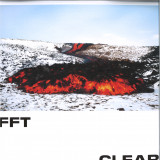
Numbers will release ‘Clear’, the debut album by FFT, on 24th June 2022.The result of three years of focused writing and programming by the London-based producer, ‘Clear’ is deeply psychedelic, defined by a mature sense of melody and structures crafted at a monumental scale.
Though FFT has previously released a handful of tracks under various names, it wasn’t until 2017’s ‘FFT1’ EP on theUncertainty Principle label that his production talents began to fuse into a distinct and personal style, especially evident in FFT’s‘Regional/Loss’ EP on The Trilogy Tapes in 2019, multiple releases on Bruk Records and2021’s ‘Disturb Roqe,’also released on Numbers.Through it all, FFT has mastered a complex sense of mood catalyzed by sound itself: He builds patches and presets from scratch, and feels these synths and software have their own objectives and reactions, creating a kind of compositional feedback loop.The result is an album that brings to mind a collision of electronic pioneers like Delia Derbyshire and Bernard Parmegiani, 2000’s braindance, the Max-imized wares of an OPN or Objekt and the rough rhythmatics of SND or Mika Vainio
The layering of sonic elements and intentions is starkly audible across these nine tracks.They can be seismically concussive and grandiose, but granular and fluid - echoing the Icelandic volcanic eruption that features in the artwork photography byGeorge Cowan. ‘Clear (Eight-Circuit Mix)’sets a euphoric tone immediately accelerated by the jagged sounds and vocal textures of ‘Redeemer’. ‘3 Sided’ channels hyper-urbanity from its almost entirely analogue palette, and by contrast ‘Disturb Roqe 2’is bracingly digital, gyrating in random cycles between clustered percussion, metallic splinters of audio and artificial vocal tics.
Opening side two, ‘You’ve Changed’ adheres to a more abrasive core, while ‘Heal’ and ‘Heal (Alt Mix)’evolved out of linked pieces in FFT’s live sets that grew into complete tracks in the months before Covid-19.The significant intensity of ‘Heal’ in particular was refined during strobe-heavy live performances and is the album at its most turbulent, the claustrophobia interrupted by dazzling arpeggios.The overall impact of 'Clear' is cinematic and precise, marking the arrival of an impressive electronic musician who is not new but has come into his own as a fully developed artist
Sean Thompson's Weird Ears self-titled full-length debut centers the
seasoned singer-songwriter/guitarist in the immediacy of he present
moment - Born and raised in Nashville, Thompson cut his teeth playing in
a slew of projects around the city's rock, folk, and experimental scenes
both as creative collaborator and session player, spanning from the
experimental math-rock of Gnarwhal to the psychedelic country rock of
Teddy & the Rough Riders, Promised Land Sound, or Skyway Man, to
more Recently joining singer-songwriter Erin Rae as a one-man-righthand band
When asked about the connective throughline in his projects, Thompson doesn't
hesitate: "From Gnarwhal to now, I've always wanted to make something that
feels alive." Taking equal inspiration from the improvisational grooves of the
Grateful Dead as well as the craft of songwriters like JJ Cale & Joni Mitchell,
Thompson's songwriting debut marks the arrival of a unique voice grounded by
wide-reaching, generous ears.
For the best part of 10 years, For Those That Knoe has maintained its position as a platform for obscure and under-represented artists of recent past, (re)introducing their music to the world in the form of a stories told in chapters and specially crafted albums.
Taking a slightly different tack, For Those That Knoe is looking to the present rather than back in time with a first LP outing for Slovenian producer Vid Vai.
Vid Papez has had a succession of quality EPs under his belt, originally classically trained on violin, lute and guitar, his sound has developed into a lush mix of catchy breakbeat rhythms, precise intelligent percussion and other-worldly melodies and sound scapes.
In constructing Laminar Flow, Vid has taken inspiration from fluid dynamics and coupled it with early influences in the form of UK bleep, IDM and breakbeat sounds. The result is a timeless piece of liquid-smooth sonic art that is strongly relevant in 2022 whilst also giving a gentle nod to the pioneers of the deeper end of the rave scene.
After a small nap, Tokyo’s finest Studio Mule is back on the scene, bringing the world some deeply composed guitar music from Japan, crafted by Shin Sasakubo.
Since almost 20 years the guitarist is specialized in classic and contemporary Andean and Peruvian music. a knowledge that he deepened through a three-year stint in Peru between 2004 and 2007.
During his time in Latin America, he played live in Argentina, Chile, or Bolivia and researched in the works of Peruvian novelist, poet, and anthropologist José María Ar-Guedas, as Shin Sasakubo’s take on art is not one-dimensional.
He also loves movies, painting, photography, writing, and theater - artforms that con-stantly influence his music on many different layers. since his return to his hometown Chichibu City in the japanese Saitama Prefecture, he launched the "Chichibu Avant-Garde School”, a college that looks through art and lectures on the Chichibu region, and his en-vironmental and folkloristic history.
As sincerely driven composer, he released three guitar leaning albums in the past ten years. his latest sensation “Chichibu”, originally only released in Japan, now travels the globe via Studio Mule, making his fantastique listening voyage available for all those souls that seek joy through the sound of guitar strings.
IATT is pleased to once again team up with Black Lion Records for the follow up to 2019's Nomenclature; our new full length album entitled Magnum Opus. We've meticulously crafted this album to leap from where Nomenclature left us thematically.
The listener is catapulted from the 1700s (Arsenic Ways) further back in time to a much darker, older world and the esoteric sciences of Alchemy. It was in this time man aimed to harness the world around him, bending the natural elements in a quest to obtain power, knowledge, control, and even immortality itself.
Alchemy was the key to unlocking the secrets of existence and elevating one's self to the pinnacle of enlightenment through transmutation and manipulation of the earthly elements. It was only through the process of Magnum Opus (the great work) that alchemists could harness the elementals in their purest form to create the Philosopher's Stone - the key to power, enlightenment, and immortality.
Just as in alchemy itself, creating this album has been a journey of transformation for us; a period of great growth as individuals and as a unit. It's through adversity, struggles, and the forging of the elements - of literal blood, sweat, and tears - we strive to transcend and elevate to our highest selves, "the great work", Magnum Opus.
Sound Like: (Immolation, Spawn of Possession, Death, Emperor, Obscura)
White & Black Splatter Vinyl[40,04 €]
James 'Perturbator' Kent and Cult of Luna are the masters of their respective worlds. Over the last decade, the French maestro has become the most expectation-breaking name in synthwave, transcending its '80s video game aesthetic with metal and post-punk.
Meanwhile, the Swedish sextet have affirmed themselves as post-metal's biggest stars. Seismic riffs, earth-quaking growls and brave collaborations with everyone from Julie Christmas to Colin Stetson have ensured they're as blistering as they are forward-thinking.
Eclecticism and violence are married in Final Light: Perturbator's team-up with Cult of Luna singer/guitarist Johannes Persson. The pair's self-titled debut album is the perfect conglomerate between seemingly incompatible sounds.
On its opening track, the insidious "Nothing Will Bear Your Name", synths bubble to construct an arresting opening half. Then, release. Johannes' roar strikes and guitar chords boom as computerised beats anchor the chaos.
"It Came with the Water" echoes Cult of Luna's 2013 titan Vertikal, invoking images of an urban dystopia as its deep guitar melody grinds beneath sci-fi electronica. The title track's distorted EDM beats, on the other hand, are all James 'Perturbator' Kent, capable of invigorating the seediest of underground nightclubs. Both parties are clearly playing to their strengths - but for them to do so in such perfect harmony is, in itself, a genre-demolishing feat.
Lyrically, Final Light seethes with anger. "There was so much that I was so fucking pissed about," Johannes explains. "Some of my friends were dealing with a poisonous person: a narcissistic, crazy person. I was walking around full of anger and hate, so I think that came out in those lyrics."
The tandem's story began in 2019. Walter Hoeijmakers, the artistic director of the Netherlands' lauded Roadburn festival, approached James 'Perturbator' Kent with the opportunity of doing a commissioned piece with any musician of his choosing. As soon as the pair began work on their boundary-decimating songs, they knew that they had to be immortalised as an album.
"It was immediate," states Perturbator. "It's a project that I really want to share; it's not only the fruit of a collaboration between me and one of my favourite musicians, but also very unique and once-in-a-lifetime."
They wrote and recorded together in Paris before the start of the pandemic. Covid, which postponed the Roadburn festival at which the band would have debuted, gave them time to perfect what they'd crafted.
Johannes recorded additional vocals at Cult of Luna's resident studio in Umeå, Sweden, fully capturing the rage of his apocalyptically harsh voice.
Borders were built to be shattered. This is the sound of their destruction. Single-handedly, Final Light have birthed a new, bleak breed of experimental metal.
Black Vinyl[34,03 €]
James 'Perturbator' Kent and Cult of Luna are the masters of their respective worlds. Over the last decade, the French maestro has become the most expectation-breaking name in synthwave, transcending its '80s video game aesthetic with metal and post-punk.
Meanwhile, the Swedish sextet have affirmed themselves as post-metal's biggest stars. Seismic riffs, earth-quaking growls and brave collaborations with everyone from Julie Christmas to Colin Stetson have ensured they're as blistering as they are forward-thinking.
Eclecticism and violence are married in Final Light: Perturbator's team-up with Cult of Luna singer/guitarist Johannes Persson. The pair's self-titled debut album is the perfect conglomerate between seemingly incompatible sounds.
On its opening track, the insidious "Nothing Will Bear Your Name", synths bubble to construct an arresting opening half. Then, release. Johannes' roar strikes and guitar chords boom as computerised beats anchor the chaos.
"It Came with the Water" echoes Cult of Luna's 2013 titan Vertikal, invoking images of an urban dystopia as its deep guitar melody grinds beneath sci-fi electronica. The title track's distorted EDM beats, on the other hand, are all James 'Perturbator' Kent, capable of invigorating the seediest of underground nightclubs. Both parties are clearly playing to their strengths - but for them to do so in such perfect harmony is, in itself, a genre-demolishing feat.
Lyrically, Final Light seethes with anger. "There was so much that I was so fucking pissed about," Johannes explains. "Some of my friends were dealing with a poisonous person: a narcissistic, crazy person. I was walking around full of anger and hate, so I think that came out in those lyrics."
The tandem's story began in 2019. Walter Hoeijmakers, the artistic director of the Netherlands' lauded Roadburn festival, approached James 'Perturbator' Kent with the opportunity of doing a commissioned piece with any musician of his choosing. As soon as the pair began work on their boundary-decimating songs, they knew that they had to be immortalised as an album.
"It was immediate," states Perturbator. "It's a project that I really want to share; it's not only the fruit of a collaboration between me and one of my favourite musicians, but also very unique and once-in-a-lifetime."
They wrote and recorded together in Paris before the start of the pandemic. Covid, which postponed the Roadburn festival at which the band would have debuted, gave them time to perfect what they'd crafted.
Johannes recorded additional vocals at Cult of Luna's resident studio in Umeå, Sweden, fully capturing the rage of his apocalyptically harsh voice.
Borders were built to be shattered. This is the sound of their destruction. Single-handedly, Final Light have birthed a new, bleak breed of experimental metal.
- A1: Orhythmo - Nagel
- A2: Spinnuts - Zweimal Schlafen Atmosphäre
- A3: Ypy - Ms
- B1: Keihin - Exhale
- B2: Dj Nobu - Yakou Gai
- C1: Gabber Modus Operandi - Kisah
- C2: Coni - Ängelsbäcksstrand
- C3: City - 9K
- D1: Ryo Murakami - Reminiscence
- D2: Sapphire Slows - Hinotori
- D3: Compuma - Flowmotion (In Dub)
- D4: Albino Sound - Celestial Sphere
Versatility does not even come close to describing how the humble Japanese ¥ØU$UK€ ¥UK1MAT$U is considered to be one of the best DJs in the world by many of his peers. From his debut at DJ Nobu’s FUTURE TERROR event to performing 3 years consecutively at Berlin Atonal Festival, Yukimatsu’s sets have to be heard for you to understand.
In this special mix album, Yukimatsu gathers round his producer friends to build vessels of the story structure. Threading the pages together, interweaved by friendship and sine waves, he has crafted a masterful presentation from their individual messages. Pulling and stretching all sonic shapes and shades while exploring the farthest reaches of sound, the result is a frequency soup of twelve outstanding tracks that when sequenced together, become part of a greater, grander story: Midnight is Comin’.
From the sound art experimentations of orhythmo – Nagel and wide yawning strings in Ryo Murakami – Reminiscence to the rhythmic slo-mo haze of Sapphire Slows – Hinotori and the exponentially pulsing colours from DJ Nobu - Yakou Gai. The DMT-like spacious virtual meditation hall of KEIHIN – Exhale follows the uneasy footsteps of YPY – MS to the intermissioning chapter of City – 9K. Fall into the wormhole of COMPUMA –Flowmotion (IN DUB) and be transported to the reverb-drenched, intimate experience of Coni – Ängelsbäcksstrand, the primal invocations of Gabber Modus Operandi – Kisah (which also means story in Bahasa Indonesian) to the transcendent notes of SPINNUTS - Zweimal schlafen atmosphäre. The soaring universe of Albino Sound – Celestial Sphere wraps up the album with crystalline notes.
“Versatile is not even close to describing his music selection and mixing skills as he plays anything without prejudice and is purely music loving. He is extremely humble, can mix anything and make it sound interesting.” – nolens.volens (Bangkok, Thailand)
Amy Winehouse’s Live at Glastonbury 2007 will be available on vinyl for the first time from June 3. It captures her performance on the Pyramid Stage at that year’s festival, 15 years ago this summer.
Winehouse’s show, her second at Glastonbury, will be released in a 2LP black vinyl set. They bring back to the fore one of the most memorable highlights of her all-too-short career, capturing not only her unique artistry and song craft, but the singer and writer’s trademark, between-songs banter and the sheer love for her emanating from the festival crowd. Highlights include “Rehab,” “You Know I’m No Good,” “Love Is A Losing Game,” “Valerie,” and “Tears Dry On Their Own,” as well as her cover of Toots and the Maytals’ “Monkey Man.”
Amy played a second set later the same day on the Jazz World Stage, and returned to the Pyramid Stage the following year, firmly establishing herself as part of the world-famous festival’s remarkable history. The artwork for the forthcoming release includes recollection of the performance by Glastonbury Festival’s co-organizer Emily Eavis. “Amy Winehouse was a Glastonbury-goer through and through,” she says. “She either came and played or, when she wasn’t working, came and camped. She played in the blistering heat and the heavy rain, and there were so many magical moments to her performances.”
Because is proud to announce the signing of French artist Aime Simone.
Aime is a young singer and songwriter making flamboyant, epic and minimalistic pop songs. Previously based in Berlin, where he crafted his sound and found his voice, Aime is now based in Paris. Since he started making music a few years ago, he has been working fully self-produced and self-distributed, amassing over 10 M streams worldwide and getting a lot of attention from international fans. He released digitally only his debut album ‘Say Yes, Say No’ last summer which includes songs such as “Shining Light” & “In The Dark Time”.
Following the steps of artists such as Christine and The Queens & Feu! Chatterton, he was recently awarded with the prestigious Chorus new talent prize. Because Music now releasing the first time very physical edition of “Say yes Say Now” and working with him to develop his audience & live dates happening this summer in France. International tour dates expected after summer time. In the meantime Aime Simone is writing his new album .
Israeli producer Nenor delivers a 4-tracker of impeccably produced dancefloor weapons for his second outing on Razor-N-Tape.
Since releasing on Moodyman’s legendary Mahogani label a few years back and as part of duo Rabo & Snob, Nenor has been honing his craft in the studio, and now puts his skills on full display on an EP that ranges from the poppy disco house of 'How Can I Be Free' to the deep Larry Heard-esque textures of 'Do You Remember,' and the gritty underground bangers of the title track and 'Work That.' He did indeed take his time on this beautifully crafted record, and the result is something quite special.
Johannes Kolter is Kolter, an artist formerly known as DJOKO, and now a hotly tipped breaks and garage head who has already got plenty of attention. Here though he makes a grand and widescreen statement with the first release on the all-new Pilot label. It is a stylish and adventurous record with plenty of killer cuts from the downbeat hip hop opener to the deep house delights of 'Journey' via the elastic and energetic future house kicks of 'Roboflow.' Showcasing both a knack for well craft synths and expert drum programming precisions, this record plays out like a mini DJ set with all the twists and turns you need to keep you on your toes and fully engaged.
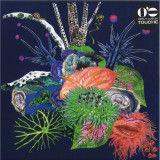
O’o share many of the musical characteristics of their ornithological namesake. The Kaua’i O’O produced the most exquisite birdsong before its extinction in Hawaii in the late 1980s. The beauty and character of its voice was delicate and mysterious, tuneful and surprising. You can experience it with just a cursory websearch, a haunting cri de coeur from the last century. If the poor O’O is consigned to history, then life is just beginning for this French duo, based in Spain, who’ve won plaudits and awards already in their short musical lifespan.
O’o are about to release their sublime debut album Touche. This is not an endling, it’s just the beginning: “I found the name on a website of weird English language words, and I loved the way the letters were arranged like a pair of glasses,” says O’o singer Victoria Suter. “Afterwards, I went onto YouTube and started listening to the last bird of its species, calling for a mate that would never come. I thought: ‘Oh my God, that’s so sad’. Then we talked about the name and we thought it could be a nice thing to honour it and keep it alive in some way.”
Suter met her musical partner Mathieu Daubigné at college in Agen, South West France, when the pair were studying music theory in their teens. Victoria moved to Barcelona in 2010; Mathieu followed six years later. Their debut EP, Spells, appeared in 2018 a beautifully crafted patchwork of vocals and samples that is redolent of the uncanny vocalese of Laurie Anderson. The bird makes an appearance at the beginning of the EP: “Sweet tooth beak. Soft melody peak / Oh O’o, go round and round in circles / Looking for a honeydrop, til you vanish, til you drop”.
That sense of profound longing for something lost is carried over to Touche, as well as the same heightened sensory awareness of the world around them. What has developed in spades is the creative process. O’o have blossomed organically, augmenting their pop sensibilities. Avant-garde techniques have been brought to heel as the pair create off-kilter pop music that warms the heart and nourishes the brain. The catalyst that enabled this bold pop transformation came with the song ‘Touche’ itself, a saucy chanson at the heart of the album. Suter’s wry narrative about a botanical femme fatale is inserted into a lithe and skittish song with reggaeton beats and an inviting, balmy atmosphere.
“The song is about a flower which attracts male insects, producing the very same smell as the female of the species,” explains Victoria. “The poor male is fooled by the sex-appeal of this botanical trap, and gets so excited that he exhausts himself and wastes all his other chances of ulterior mating and having any offspring. The flower entices the insect in in mermaid-like fashion, to come nearer and touch her. It’s the hot track!”
‘Touche’ reaches into hitherto unexplored areas of pop, while the rest of the album is accessible in the way that James Blake, Radiohead or Kate Bush are accessible, and it always challenges, in a way that pop isn’t supposed to. Suter writes playful, poignant, observational songs that tell stories as well as tell us something about ourselves. Songs like ‘Dorica Castra’ are built upon the voice as an instrument, centrifugal and layered from its core.
Complimentary to this method is Daubigné, who brings startling innovation with found sounds, samples and clever vocal manipulations—creating unique, otherworldly sonic flourishes. A guitar whirs like a musical spinning top on ‘Spin’, created in Ableton; an Ondes Martenot appears to make a guest appearance on the title track, though it’s the ingenuity of the Prophet 8 synthesiser. “I’ll often say to Mathieu, ‘what’s that?’” says Suter, He’ll reply, ‘that’s your voice’.”
O’o found their own voice when they won a competition held by the legendary festival organisers Primavera Sound. Victoria entered the band into a competition she saw on Instagram, sending off rough demos on the final day of entry, thinking little more about it other than the fact Mathieu might be annoyed. Soon they would have to build a live set from scratch and figure out how to present their music for the first time. At stake was seventy hours of recording time at Aclam studios, used by Rosalía and Kendrick Lamar, and for the winner a coveted spot at the festival. A pool of 350 acts were whittled down, and then O’o triumphed at a Battle of the Band style face off.
The O’O might be extinct, but O’o the band have learned how to fly. Just watch them go.
Swedish duo Thunder Tillman come together again in healing harmony to produce a much needed LP for troubled times. Thunder and his life coach Pony bring their spirits in sync for 40 minutes of improvised soundtracks for mental and physical wellbeing.
Recorded on Stockholm’s Wind Island, the pair have carefully selected specimens from their collection of vintage musical paraphernalia to channel these specific vibrations for maximum healing power.
Side one is a gentle wake up call for the soul, with pipes and chimes that gently give way to mind-expanding synths and feedback echoes that sound like sun glistening off a mountain river. Those sounds lead into an electric piano and life affirming synth figure, before disintegrating into santoor strings and chants with a slight Indian flavor. It’s a cosmic combination that invites relaxation and meditation, and the kind of deep breathing exercises that could turn back the clock on a host of bodily ailments. An electric piano comes back to the foreground with a bass and synth combination that drives forward with healing hands, before parting the frequencies for ear-tickling pads and voices. Rounding out the side is a chiming synth and santoor figure that brings the wandering spirit home and to rest.
Side two starts up with Cosmic Osmosis - a motorik drum machine beat and bass line that briefly brings to mind some of their more krautrock inspired modes across their three previous Eps, but soon collapses back into visceral synth twinkles and relaxing washes of analogue tones. It’s a dynamic that drives the whole record, sounds that excite the soul perhaps even the body on an atomic level, before bringing that energy down to a calming, relaxing home. There’s a craftsmanship to their synthesized tones that goes beyond mere artistry, and the interplay between sounds and frequencies is especially inspired, to the point where the music practically sparkles out of the speakers. Side two closes out with harmonic chimes that could put you on a Himalayan mountain side, and succeeds in raising the spirit, mind and body to higher plains of cosmic consciousness.
The Aural Healing Program is accompanied by a 40 minutes Visual Healing Program that will be unveiled in conjunction with the vinyl release. The first visual healing session featuring side B opener Cosmic Osmosis, is already available for all to partake. So just relax, let go and let the frequencies guide you.
Without a brutal evaluation of their own becoming, TV Priest might have never made their second album. Heralded as the next big thing in post-punk, they were established as a bolshy, sharp-witted outfit, the kind that starts movements with their political ire. There was of course truth in that, but it was a suit that quickly felt heavy on its wearer's shoulders, leaving little room for true vulnerability. "A lot of it did feel like I was being really careful and a bit at arm's length," says vocalist Charlie Drinkwater. "I think maybe I was not fully aware of the role I was taking. I had to take a step back and realize that what we were presenting was quite far away from the opinion of myself that I had. Now, I just want to be honest." Having made music together since their teenage years, the London four-piece piqued press attention in late 2019 with their first gig as a newly solidified group, a raucous outing in the warehouse district of Hackney Wick. Debut single "House of York" followed with a blistering critique of monarchist patriotism, and they were signed to Sub Pop for their debut album. When Uppers arrived in the height of a global pandemic, it reaped praise from critics and fans alike for its "dystopian doublespeak," but the band - Drinkwater, guitarist Alex Sprogis, producer, bass and keys player Nic Bueth and drummer Ed Kelland - were at home like the rest of us, drinking cups of tea and marking time via government-sanctioned daily exercise. As such, the personal and professional landmark of its release felt "both colossal and minuscule" dampened by the inability to share it live. "It was a real gratification and really cathartic, but on the other hand, it was really strange, and not great for my mental health" admits Drinkwater. "I wasn't prepared, and I hadn't necessarily expected it to reach as many people as it did." As such, My Other People maintains a strong sense of earth-rooted emotion, taking advantage of the opportunity to physically connect. Using "Saintless" (the closing song from Uppers) as something of a starting point, Drinkwater set about crafting lyrics that allowed him to articulate a deeper sense of personal truth, using music as a vessel to communicate with his bandmates about his depleting mental health. "Speaking very candidly, it was written at a time and a place where I was not, I would say, particularly well," he says. "There was a lot of things that had happened to myself and my family that were quite troubling moments.Despite that I do think the record has our most hopeful moments too; a lot of me trying to set myself reminders for living, just everyday sentiments to try and get myself out of the space I was in." "It was a bit of a moment for all of us where we realised that we can make something that, to us at least, feels truly beautiful," agrees Bueth. "Brutality and frustration are only a part of that puzzle, and despite a lot of us feeling quite disconnected at the time, overwhelmingly beautiful things were also still happening." This tension between existential fear born from the constant uncertainties of life, and an affirmative, cathartic urge to seize the moment, is central to My Other People, a record that heals by providing space for recognition, a ground zero in which you're welcome to stay awhile but which ultimately only leads up and out. For TV Priest, it is a follow-up that feels truly, properly them; free of bravado, unnecessary bluster or any audience pressure to commit solely to their original sound.
Mind Eclipse completes Deetron’s triptych for Running Back. After Body Electric and Ego Rave, it’s the missing part in a tale of youthful exuberance told by a seasoned raver and transported into the here and now. Taking the essence of the carefree energy of those days, its warehouses and fields minus the (sometimes!) aural clumsiness, Deetron delivers four studies in the transformation of said emotional states.
Mind Eclipse aka Trancehouzztool does exactly what it says on the tin: big synths, swirl and twirl during an extra long break down for an uproar – serotonin shower included. HG acts like an umbrella to that. Almost melancholic in its presence and meandering between highs and lows, it’s the perfect counterpoint and offset.
On the other side, Phoenix sounds like a lost Border Community hymn that found its way near a Roland 909 for peak time purposes, before The Shore closes the book in a hybrid state between electro and disco or the soundtrack to IDM supporters in a gym workout (also available in an alternative version digitally for those who like their beats straight).
It won’t eclipse your mind though that Deetron knows what he does in the studio, so expect finest artistry, crafty tricks and technical expertise. „’Til the sweatshirts are falling down of us…“