In Zusammenarbeit mit dem britischen Entwickler-Studio Kaizen Game Works veröffentlicht das Kölner Soundtrack-Label Black Screen Records im Frühjahr 2021 Barry "Epoch" Toppings funkigen "City-Pop meets Vaporwave"-Soundtrack zu dem von der internationalen Gaming-Presse gefeierten Open World Adventure Game Paradise Killer auf Vinyl. Barrys Toppings Soundtrack erscheint auf limitiertem 180g Crystal Clear Vinyl und kommt in einem von 80er Animes & City Pop-Alben inspirierten Artwork der deutschen Designerin Mizucat. Zudem enthält das Vinyl ein gefaltetes A2 Poster und einen Download Code. Die Sounds des Paradieses. Die Musik eines kosmischen Traums. Tracks einer anderen Realität. Das Tempo eines Verbrechens, dass alle Verbrechen beendet. Der Beat von lange verlorenen außerirdischen Göttern. Die Playlist des "Investigation Freaks". Lass dich von der Musik ins Paradies führen. Fühle die glühend heiße Sonne auf deiner Haut. Rieche unerträglich heißen Beton. Genieße den süßen Geschmack von Verbrechen, begangen, auf einer tropischen Insel in einer alternativen Realität. Erinnerst du dich daran, wie wir am Strand getanzt haben? Neben den paradiesischen Straßen? Du hast mir dieses Mix-Tape auf dem Dach deines Apartments gemacht. Wir haben den Mond angestarrt. Du sagtest, du würdest den Mond töten. Ich glaubte dir nicht. Wie falsch ich doch lag.
Der in Chicago ansässige Multi-Instrumentalist JODI, aka Nick Levine* (ex-Pinegrove) ist sanft und doch sehr kraftvoll in seinem Songwriting und veröffentlicht mit "Blue Heron", das JODI selbst als "queer country" bezeichnet, - eine Reihe von intimen und bemerkenswert präsenten Momenten, die an Größen wie Jason Molina, Mount Eerie, Duster und Julie Doiron erinnern. Für Levine ist JODI eine Art Alter Ego, eine Linse, durch die es Fragen stellen, Grenzen verschieben und aus der inneren Welt heraustreten kann. Das Album fängt Levines fortwährende Suche nach Bedeutung ein; eine Suche, bei der während des Schreib- und Aufnahmeprozesses ein paar zufällige Begegnungen mit einem Vogel - einem großen blauen Reiher - JODI lehrte, den Zufall des kreativen Ausdrucks zu umarmen und sich seiner Symbolik als Metapher für das Verständnis der eigenen Arbeit und der Welt hinzugeben. Indem JODI sich ganz der Symbolik verschrieb, ließ sich Levine einen großen blauen Reiher auf den Rücken tätowieren und tauchte in einen gefrorenen Teich in Chicago ein, um den Blaureiher für immer als Cover und Titel des Albums zu verewigen. Während "Blue Heron" an den Fäden der Bedeutung kratzt und versucht, der Welt einen Sinn zu geben, ist es ein Werk, das letztlich nur in der vollständigen Hingabe an Kräfte, die größer sind als man selbst, einen Abschluss findet. Es umarmt den Zufall, die Zufälligkeit und das Schicksal mit einer erhabenen Neugierde und findet schließlich einen Sinn in der Zufälligkeit von allem.
During 2019, Blondie was invited to perform in Havana, Cuba as part of a cultural exchange through the Cuban Ministry of Culture. This was a 40 year ambition come especially for songwriter & guitarist Chris Stein, who had longed to visit Cuba for most of his life. Artist and director Rob Roth documented this special moment and career highlight by shooting a short film titled “BLONDIE: VIVIR EN LA HABANA”.
The film is broken up into 3 parts — Water, Fire and Air — and present a meditation on the experience as well as highlights from the two-night live musical performances with special guests Alain Perez, David Torrens and Cuban Fusion Pioneers Sintesís at Havana’s famous Teatro Mella.
With narration from Blondie founding members Debbie Harry, Chris Stein, and Clem Burke, providing a glimpse into the passion and beauty they discovered in Havana and the magic moments of performing alongside incredible Cuban artists. “BLONDIE: VIVIR EN LA HABANA” goes beyond the atypical short form film and live music documentary by presenting a portrait of the legendary band’s first experience in Havana and of the magical exchange between musicians from the two cities each call home and their intertwined influences.
The sound track for the film features Cuban musicians Carlos Alfonso, Ele Valdés, María del Carmen Ávila, Alejandro Delgado, Juan Carlos Marin, Jamil Schery, Degnis Bofill, Adel González
Released in July on limited edition pale blue vinyl to accompany the film which will feature throughout 2021 in many prominent Film Festivals inc the Tribeca Film Festival.
Synth legend Suzanne Ciani, Demdike Stare’s Sean Canty & Finders Keepers’ Andy Votel come together on this killer hour-long 2014 synapse popper of a collaboration pooling the occasional group’s esoteric collage-based approach into a remarkably foreboding session pregnant with a dread that’s never quite resolved. Think Vladimir Ussachevsky, Todd Dockstader, Spectre and Company Flow melted thru the Deutsch-Italo industrial DIY tape era and funneled thru an almost impenetrable fog of Ann Arbor basement noizze.
Hustling some of Neotantrik’s most amorphous gestures, ’241014’ is a four-segment movement of reduced Buchla treatments, destroyed vinyl loops and scraping foley suspense; like a cosmic dream diary layered into a collage of drones and clatters. Little in Ciani’s extensive catalogue has hinted at what’s on display here; the joyful lullaby-pop of “Seven Waves” or metallic alien soundscraping of “Flowers of Evil” are only hinted at. She instead paints new sonic vistas, allowing space for her collaborators to make themselves known; Votel’s chiming toy autoharp and Bubul Tarang (a Punjab string instrument) add a distinctive flavor, while Canty’s grimy drones and noise-soaked textures drizzle pitch-black molasses into the cracks and crevices. Together, the effect is a bit like hearing Philip Jeck improvising over Popol Vuh’s peerless Moog-led debut “Affenstunde” or Demdike Stare knocking out impromptu reworks of Tangerine Dream’s abstrakt early run.
Perhaps unusually, the trio have still never set foot in a studio together, exclusively maintaining their practice in-the-moment and on stage when schedules intersect. So it’s all the more remarkable that their improvisations naturally find a democracy of role and such a heightened level of intuition, beautifully converging their thoughts to mutual, open-ended conclusions that leaves billowing room for interpretation. In a most classic sense, it’s like the sensation of sleep paralysis or dream/nightmare ambiguity, with a level of suggestiveness that’s disorienting from end to end.
For the first time the recordings are now available in high fidelity (there was a tape version a couple of years back) - now remastered by Rashad Becker to better represent the otherworldly scope of their actions on stage, from the NWW-like queues and drone of ‘Scanned Accents’ and keening silhouette of ‘Second Action,’ to new sections of subaquatic Porter Ricks-like murk in ‘Anti-Contraction’ and the levitating webs of synth and tactile, sampled textures in ‘Last Canción.’ Tape music and synth music have long shared a passionate embrace, and here turntablism coolly slides in on the action. Canty and Votel’s background in beat tape assembly and crate digging pays off: they’re keenly experimental creators but bring an unfussy sense of rhythm and performance that’s miles beyond any facile repetition of a nostalgia for vintage glory. Combined with Ciani’s delicate Buchla work - it’s a unique proposition.
IZIPHO SOUL are thrilled to announce our forthcoming 45!
Alabama born, Mississippi raised and Louisiana transplanted native, Arthur Foy was a must see entertainer with his own band and show. In 1980 he recorded the absolute masterpiece: ‘Love Dreams’. Rich soulful vocals, expert instrumentation, production and ‘never enough Rhodes’ are everything that a gifted ear craves for.
The original MCS 45 is owned by only a select bunch of DJs and discerning collectors; a proven rarity with only seven copies documented on Popsike.
On the flip we present the southern strutter - ‘Love Storm’ - a song that builds as the title suggests. Co-produced and written with the legendary Carl Marshall adds to the credentials and charm. Sadly Arthur passed away in 2018, his music and performing meant everything to him; we are therefore proud to play our part in his musical legacy and dedicate this record to his memory.
out of Stock
Last delivered 5 years ago available to reorder, subject to availability
Originally released in 1975, Force It is UFO’s fourth studio album. Produced by Ten Years After’s Leo Lyons, it was their first album to chart in the US and enabled the band to kick up a rockier gear.
Containing many classic tracks still in their live set today, such as “Shoot Shoot” and “Let It Roll”, this newly remastered 2LP gatefold deluxe version includes the Record Plant live set from 1975.
This limited-edition version is pressed on clear vinyl.
Out now for the first time on vinyl! The world first heard Pill on their self-titled cassette release on Dull Tools. And the world took note. Evan Minsker, writing for Pitchfork, says 'they are loose with form, they pack in a lot of ideas, and they successfully deliver an emotionally complex narrative where joy is accompanied by an impossible-to-ignore undercurrent of danger. The band's debut outing is enigmatic—a Dull Tools record through and through—but it's also well crafted, full of stellar performances and unflinching lyrics.'
The band then signed to Mexican Summer, releasing their debut LP. Shortly after, prolific in a way that has become a hall- mark of Dull Tools artists, they release another cassette, 2017's 'Agressive Advertising'. If one thought the self-titled cassette couldn't get more acerbic and confrontational, Agresstive Advertis- ing proved them wrong.
Now both releases are available on one LP. This LP is an important document of New York City's DIY scene and one of the best bands to emerge from it. Pill are an ever present force in NYC's scene. Playing small clubs like Baby's All Right, DIY spaces like Silent Barn and even the Museum of Modern Art. When the art and culture of New York is examined in, much in the way we examine culture from the past, you can bet that Pill will be a shining example of this moment in time.
out of Stock
Last delivered 5 years ago available to reorder, subject to availability
More excellence from the Basin Rock label following albums from Nadia Reid, Julie Byrne, Aoife Nessa Frances, Jim Ghedi, Alex Maas..
With a special knack for balancing bright pop melodies with a drifting sense of melancholy, LA based Johanna Samuels new album Excelsior! is a tender, honest document of the importance of companionship above all else. Named after Dylan’s “Visions of Johanna”, Samuels grew up on the classic songwriters of yesteryear (George Harrison, Tom Petty, Neil Young) and after a healthy dose of Elliott Smith and Jon Brion, has spent the best part of the last decade honing her craft.
her band and producer Sam Evian but it's songs are full of West Coast sunshine. It's Evian's first full album production at his own Flying Cloud Studios. Recorded mostly to tape, the album is as a gorgeous combination of vintage instrumentation, strong melodic hooks, killer harmonies and Samuels’ elegant voice.
Samuels seeks those answers through companionship, exploring the depths of her relationships and then calling upon a handful of womxn to provide the album’s backing vocals - a task she’d always performed herself until now. As such, Excelsior! makes a space for the voices of Courtney Marie Andrews, Hannah Cohen, Lomelda’s Hannah Read, A.O. Gerber, Louise Florence and Olivia Kaplan.
The album takes its name from the signature that Samuels’ grandpa would use before he sadly passed away last December. “He was a very important person to me and he helped raise me,” Johanna explains. “He signed all of his letters and emails ‘Excelsior!’, including the exclamation point. It means ‘ever upward’ and that’s what I wish for everyone: to grow from listening with more empathy and from hearing each other out. I hope this record makes people want to be gentler with each other and themselves.”
Hand-numbered vinyl edition of 500 copies is 180gramLP in window-cut artboard jacket that frames eight different images from Magid's The Barragan Archives project, printed on four 12"x12" art card inserts including an artworked inner sleeve. The original score for the acclaimed feature-length artworld documentary by multi-disciplinary artist Jill Magid: an exploration of the contested legacy of the Mexican architect Luis Barragan and an art intervention in its own right. Griffin wrote, performed and recorded The Proposal soundtrack with an understated but wide-ranging electro-acoustic sensibility that organically compliments the film's enigmatic narrative and the discreet beauty of Barragan's architectural spaces. Various acoustic instruments combine with electronics, sampling and ambient treatments for an ever-shifting suite of musical vignettes across the album's thirteen tracks. Guest musicians include Matana Roberts, Reut Regev, Jim White (Xylouris White, The Dirty Three), Jason Ajemian (Helado Negro), and Sophie Trudeau and Timothy Herzog (Godspeed You! Black Emperor) alongside Griffin's own contributions on multiple instruments, field recordings and production. Griffin weaves an iridescent musical tapestry, threading various genres with sublime thematic and atmospheric coherence, echoing Magid's contemplative, cerebral journey. The music also works enchantingly on its own as a subtly haunted, evocative and meditative album.
The Montreux Album was released in 1978 as the fifth studio album by English rock band Smokie. It was named after Mountain Studios in Montreux, Switzerland, where the album was primarily recorded. Recorded at the hight of the band’s popularity, this is the last album made in partnership with Nicky Chinn and Mike Chapman. Three singles were released: “For a Few Dollars More”, “Oh Carol”, and “Mexican Girl”, all of which charted well across Europe.
This limited edition of 1000 numbered copies is released on solid pink vinyl. It includes 4 bonus tracks including the #1 hit-single “Stumblin’ In” by Chris Norman & Suzi Quatro, “Roll On Baby”, “Love’s A Riot” & “A Stranger With You” by Chris Norman & Suzi Quatro. Also included: liner notes in the gatefold sleeve and a beautifully etched d-side.
Das Chaos beschäftigt uns seit jeher - als Spezies und als Individuum. Vor ziemlich genau zweitausendsiebenhundert Jahren schrieb der griechische Oldschooler Hesiod: "Wahrlich, zuerst entstand das Chaos und später die Erde …", ein Kollege berichtigte, das Chaos werde nicht geboren, sondern sei ursächlich. Aber wie verhalten wir uns diesen Erkenntnissen gegenüber? Gute Frage.
Mit der neuen 10" von Nepumuk werdet ihr dem Chaos nicht Frau oder Herr, aber das wird euch egal sein. Denn auf zwölf Tracks in 27 Minuten gibt der Nepumuk klar zu verstehen, dass das Chaos in Ordnung ist. Nicht weil es geil oder wünschenswert wäre, sondern weil es die existenzielle Grundlage jeder Punchline ist. Die sitzen, bringen Perspektive ins Chaos - setzen es in Bezug zur herrschenden Realität, bis klar wird, dass Chaos und Lebensrealität ein und dasselbe sind: Leider doch nicht in Ordnung.
out of Stock
Last delivered 5 years ago available to reorder, subject to availability
Tape Crackers: An Oral History Of Jungle Pirate Radio. Rollo Jackson is a London-based filmmaker who grew up immersed in the city's dance music culture of the mid-90's. His films, whether for the likes of Hot Chip, Man Like Me, or Warp Records bare the traits of someone whose formative years were spent clad in the brash hues of a Versace print shirt and the bright white of a fresh pair of Reeboks. Whatever his subject, the spirit of too many late nights spent doing homework to the crackling sounds of pirate radio, or of weekends spent in booming, sweaty warehouses on the outskirts of London is always threaded throughout. Rollo presents a documentary DVD entitled Tape Crackers, an oral history of Jungle music and an affectionate, touching, and, at times, incredibly funny, tale of bedroom obsessiveness. Told through Michael Finch's tape collection which he recorded while growing up in Islington, North London, it's also an untold (or more accurately unheard) history of UK underground music of the last 10 years - Jungle, Garage and Grime are all knitted into the story through the MCs and DJs who manned the decks and mics. Movers of the underground today such as Riko Dan and B Live are on some of the tapes played in the film. The D90s might be dusty but this music still sounds ultra-crisp. Warning, may contain: late days of Dream FM, middle days of Kool FM/MC Ruff and DJ Uproar on Dream FM/MC Fize and DJ Swiftly/Riko Dan on Pressure FM/Evil B on Rude FM/DJ Target and Maxwell D on Rinse FM/DJ Brockie, MC Five-O and MC Moose on Kool FM in 1993/DJ SL with Strings, Koji and Flinty Badman (Ragga Twins) + Demon Rockers.
70s/80s influenced ambient mixed up with a healthy dose of UFO's, abduction, occultism, paranoia, astral flow, new age and long lost Atlantis. 2020 was the year when Albert Kuningas debut vinyl on Escape From Synthesis was released and now the second part of this ambient/
dark ambient masterpiece is available! Finally it's time to get physical vinyl copies of legendary Bandcamp-only release "Music for UFO document programs 2" with a never before heard bonus track called 'Sateenkaarisilta 2'! Don't sleep on this one as it's limited release of 200pcs only.
out of Stock
Last delivered 5 years ago available to reorder, subject to availability
Blue Vinyl
Lynch protégé and Twin Peaks sound designer Dean Hurley coaxes an incredible puzzlebox of atmospheres and mood pieces on this killer contribution to our Documenting Sound series, now remastered and pressed on vinyl for what is, perhaps unsurprisingly, the most cinematic and neon-lit instalment in the series. Like a
smudged and overdubbed copy of the BoC Maxima tape, with added iridescence.
Across almost 40 minutes we transition from aerosolised synths to romantic chromatics, thru to Nurse WIth Wound-style severed rhythms and fading glimmers of hope, ‘Concrete Feather’ epitomises Dean Hurley’s prized knack for nuanced instrumental story-telling in the finest and most engrossing style we could imagine. Against the backdrop of the Hollywood film industry that has primed us for as long as we can all remember, the music spans a panorama of lush, mirage-like choral pads and starry flickers thru to gloaming
nightmare sequences and screwed drums, while touching on some of the dankest synth tones this side of his ‘Anthology Resource’ volumes or indeed his soundtrack work for Twin Peaks: The Return. It’s full of dread and a slowly unfolding sense of tragedy.
“Having a regular practice of recording is probably the single most important element to my craft. It’s a way of dropping indiscriminate mile markers while constantly moving forward in time without ability to pause.
Over the years, working for David Lynch taught me a great deal about this and the concept and importance of experimentation. I’ve found myself clinging to those lessons during this time and using them as tools for both productivity and balance. His notion of experimentation is a simple one, yet incredibly profound. It was one of the very first words I heard him say during our initial meeting, and I never stopped hearing the term daily over the subsequent 13 years working together. An ‘experiment’ can provide a legitimate mental back-entrance into the act of creation. It can position an approach toward discovery as opposed to effort, and eliminate the thought that one needs to ‘will’ something into existence. It also aids in calming the judgmental
side of a brain from stepping on/interfering with expression…after all, experiments are not about success or failure, they’re simply about learning. In the Lynch school of thought, multiple experiments then become firewood…and with firewood, one can not only build but actually sustain a fire…even turn it into a multipleacre blaze or more.
Dean Hurley
20 Jahre TURBOSTAAT galt es Anfang 2019 zu Feiern - die Band beschenkte sich selbst mit dem üppigen Livealbum NACHTBROT! Die Alben drei bis sieben der Band charteten allesamt, zweimal davonTop 20 und 2020 "Utlande" erstmals sogar Top 10. Die Live-CD sowie die neue Vinylversion 2021 ist via Cargo erhältlich: Doppel-LP, weißes Vinyl, 140 gr, Klappcover mit 16-seitigen Foro-Booklet in LP-Format! "Rückblickend ist es leider nicht mehr zu beantworten, ob überhaupt jemand von uns zur ersten Probe erschienen wäre, wenn wir damals gewusst hätten, dass das automatisch bedeutet, für die nächsten zwei Jahrzehnte Verpflichtungen zu haben. Unser erstes Konzert spielten wir am 08.05.1999 als eine von drei Bands im Husumer Speicher. Marten war im Besitz eines 8-Spur Tape Recorders, dem Yamaha MT8X, mit dem wir, so gut es eben ging, im Juli 1999 im eigenen Proberaum ein Demo mit fünf Liedern aufnahmen..." Der Rest ist Geschichte, dauert nun schon 20 ereignisreiche Jahre und ist nachzuvollziehen auf "Nachtbrot", dem ersten Turbostaat Live-Album. Aufgenommen bei drei aufeinanderfolgenden Konzerten im April 2018 im Conne Island in Leipzig. Ihr langjähriger Wegbegleiter und Freund Moses Schneider produzierte das Album. "Nachtbrot" liefert eine Zusammenfassung der Bandgeschichte, zusammen mit den stets wichtigsten Bandmitgliedern: ihren Fans. Denn Turbostaat stammen aus einer Szene, in der das Agieren auf Augenhöhe Teil der Definition von Punk ist. Wie immer, seit 20 Jahren, verabschiedet sich Jan nach jeder Show mit dem gleichen Satz: "Danke euch, dass wir das hier machen dürfen".
Dauw welcome Spanish based artist Jason Kolàr to the label with his new work Loops & Pieces (2017-2020). It’s a prelude to his new full-length album coming in October 2021 through Dauw.
Three years after Stroom TV released his debut album Modified Perspectives, Kolàr now offers a documentation of sounds he has been working on in the period 2017-2020. According to Kolàr, this tape is full of vaporous drafts transforming into solid forms with the help of time and distance. Compared to his previous work, the music on Loops & Pieces is much more stripped down and minimal, yet the dreamy character remains.
I first discovered khroniky – Ukranian folk songs – in the Highlands of Scotland. I was watching a screening of Bajka, a mesmerising documentary made by the filmmaker Lucia Nimcová and sound artist Sholto Dobie. I knew nothing about these ballads beforehand, but I was fascinated by these odd, beautiful songs, especially the easy way in which they mixed misery and levity, where gentle melodies blend with tales of dark violence. The folk songs describe hardship, murder, torture, death in gulags, heavy drinking, outsmarting men, love affairs. But they’re often very funny too – many of the songs make fun of marriage, and there’s an amazing subcategory of khroniky songs called potka (vagina) songs.
The khroniky have never been properly documented because they were considered too crude, or contained lyrics that were problematic, politically. When Ukrainian folk songs have been archived in the past, it’s normally a sanitised, more polite version of the ones that Lucia remembers from her childhood. Lucia grew up on the other side of the Ukrainian border in Slovakia. She is part of the Rusyn (Ruthenian) minority ethnic group found in the borderlands of Slovakia, Hungary, Romania, Ukraine and Poland. Rusyn is a centuries-old Slavic language, looked down upon as a poor, uneducated dialect by the neighbouring Ukraine and Slovakia. It was forbidden to talk about Rusyn culture at Nimcova’s primary school, but the khroniky stayed in her memories.
“I remember weddings when I was young,” says Lucia, who now lives in Addis Abeba, Ethiopia. “At the end of the night, when everyone was drunk and the young couple would go around their guests, people would sing in Rusyn. There was singing and dancing, and songs about being in prison or falling in love. I picked up the lyrics and sometimes my mum would make my sister and I sing them for people we met on the train. I was about five or six but the lyrics still come back when I sing to my kids.”
Determined that these rich, nuanced, unique songs shouldn’t be forgotten, she decided to record them. Over two years, Lucia, joined by experimental musician Sholto Dobie, visited Rusyn villages high in the Carpathian mountains to rediscover the songs and make the documentary. It was at the beginning of war breaking out in Ukraine in 2014.
“The Rusyn community is a very closed one,” explains Lucia. “Sometimes we’d have to wait several days to hear someone sing; we had to earn their trust before they shared something very personal to them. We’d stay up ‘til 5am at a wedding, then go straight to a morning baptism, or collect haystacks with the villagers, hoping they’d sing while they were working.”
DILO is named after an important independent Ukrainian daily newspaper that was shut down when the Red Army entered Lviv in 1939. The four long tracks on DILO blur field recordings with song; an unpolished, privileged glimpse into a private world. We hear dogs barking and insects buzzing in the summer heat, then a blast of hurdy gurdy or violin will drift in, or a plaintive song soars softly over the rural background noise, with casually harrowing lyrics about a cuckoo, “lifeless in a world of misery”, as translated in the album’s booklet.
For both Lucia and Sholto, it was important not to tamper too much with what they heard. “When you think about ethnography,” Lucia explains, “you have to have a lot of time, love and respect to document it with sensitivity.”
“The songs all have their own atmosphere and intimacy from the spaces they were recorded in and it was important to maintain these particularities and move with them,” adds Sholto, who now lives in Vilnius, Lithuania. “They guide and sometimes interrupt a journey between interiors – domestic spaces; in kitchens, by the fire – and exteriors; marketplaces, cow sheds. We used contact microphones to record metal bridges and fences, and we spent one afternoon recording a wool processing machine, the details of the rattling and tuning wheels are the ground layer for the third track.”
Lucia took rough notes and diary entries during the recording process, which are now shared in the booklet alongside a selection of lyrics, loosely translated, but revealing the depth and astonishing beauty that sometimes lies in the language of these folk songs.
The feel of the album is intimate, flipping between laughter, where a woman sings about selling her pussy to buy a cow in one track, then shifts to a raw, painful truth; an adult son asks his mother why his dad won’t be back for dinner, as he’s gone to war.
Since Lucia and Sholto began working together in 2014, they have shared the audio recordings on radio and film and shown photos in gallery spaces, making sure these special, smutty, poignant songs don’t get lost. This new record and booklet joins that same continuum, another glorious fruit from the same rare tree.
Nimbus West spirit jazz essential: the Creative Arts Ensemble's classic debut One Step Out. One of the most sought after and highly-regarded titles to have appeared on Tom Albach's celebrated Nimbus West imprint, One Step Out is a timeless work of spiritualized jazz. A true gem from the Los Angeles jazz underground, the album was pianist and composer Kaeef Ruzadun Ali's first recording as leader of the Creative Arts Ensemble, the only large ensemble group that emerged directly from Horace Tapscott's legendary Pan Afrikan Peoples Arkestra community jazz group. A Los Angeles native, Kaeef was introduced to the Tapscott circle in the late 1970s. His first experience of the Arkestra's ethos was through PAPA tenorist Michael Session, who took him to the famous "Great House" at 2412 South Western Ave., LA -- a large mansion house which members of the Arkestra had taken over as a space for communal living. Life in the Great House was a continuous stream of music, dance and community events. "When I walked in there," recalled Kaeef, "it was like this whole rush came over me, just from going in the front door -- It was like a very, very warm feeling of love. I went and I came out with 'Flashback Of Time', and that was my first arrangement." Kaeef quickly became a significant contributor of compositions to the Arkestra's songbook -- his piece "New Horizon" would be recorded by Horace Tapscott for the latter's Tapscott Sessions series. But "Flashback Of Time" would eventually appear on One Step Out, played by the new group he had put together from stalwart Arkestra members. Inspired by both Tapscott's example and by the Art Ensemble of Chicago, Kaeef had wanted to follow their lead by assembling a larger unit. Featuring seasoned Arkestra regulars including reedsman Dadisi Komolafe, drummer Woody "Sonship" Theus and altoist Gary Bias, with veterans Henry "The Skipper" Franklin on bass and George Bohannon on trombone, One Step Out is a key document of the Los Angeles radical jazz underground. Featuring the sanctified vocals of Kaeef's sister, B. J. Crowley, the album is a tour de force of spiritually energized independent jazz music.
Limited coloured marbled vinyl edition of this album
Remember 1961 - This compilation , compiled with love, is a musical chronicle with a lot of nostalgia and
pathos. The international super hits of 1961 not only trigger memories and emotions, but also reflect the
unique spirit of the times of this calendar year.
In addition to the chart positions of the individual songs, the record also reviews the great events of the
year 1961 and this makes it an exceptional gift for all those who celebrating their 60th birthday in 2021, but
also a fascinating contemporary document and addition to any collection.
Vinyl kommt in blau, Klappcover und bedruckter Innenhülle! Die meisten Dinge im Leben entstehen zufällig. Die große Liebe, eine schicksalhafte Begegnung und manchmal auch eine zweite Karriere. Oliver Perau alias Juliano Rossi hätte 1996 sicherlich nicht damit gerechnet, dass er 2021 immer noch als Rossi unterwegs sein würde. Damals hatte sich gerade die alternative Rockband Terry Hoax, die Perau 1988 mit einem Freund gegründet hatte, nach acht europaweit erfolgreichen Jahren aufgelöst. Doch Perau wollte sein Versprechen, bei der ersten Ausstellung des befreundeten Fotografen Olaf Heine zu singen, halten. Also fragte er den Jazzpianisten Lutz Krajenski, ob man zusammen alte Swing-Klassiker präsentieren könnte. Schließlich war Perau seit frühster Kindheit begeistert von Sammy Davis jr., Dean Martin, Burt Bacharach, Barbra Streisand, Tom Jones und Frank Sinatra. So stand Perau im Sommer '96 mit dem eilig ironisch hinzugefügten Künstlername Juliano Rossi vor Galeriebesuchern und Terry-Hoax-Fans und sang entrückt What the world needs now von Bacharach. "So viele entsetzte Gesichter habe ich selten gesehen" sagt Perau lachend und ergänzt nach kurzer Pause "aber für mich war es wie eine Offenbarung". 25 Jahre später veröffentlicht Juliano Rossi sein fünftes Album, Terry Hoax gibt es auch wieder und zusätzlich tourt Perau seit 9 Jahren durch Pflegeheime und macht Musik für Menschen mit Demenz. Ein sehr ungewöhnliches und in dieser dreigleisigen Konsequenz sicherlich einzigartiges Sängerleben, dass offensichtlich glücklich macht. So jedenfalls wirkt Herr Rossi und sein neues Album "Drunk On Love". Aus der Zeit gefallene glamouröse Songs irgendwo zwischen The Doors, Burt Bacharach und Dean Martin.
Tony Scott (born Anthony Joseph Sciacca June 17, 1921 – March 28, 2007) was an American jazz clarinetist and arranger with an interest in folk music around the world. For most of his career he was held in high esteem in new-age music circles because of his involvement in music linked to Asian cultures and to meditation. Tony performed with many star as Billie Holiday, Sarah Vaughan and Harry Belafonte and before moving to Italy in the early ‘70’s he just cut two sought after masterpiece moving forward from his early idea of bop and cool jazz. In particular ‘Djanger Bali’ (1967 Saba) - recorded with The Indonesian All Stars - and the self titled Tony Scott (1968 Verve) - featuring Richard Davis on bass, John Berberian on oud and Attila Zoller on guitar – set the pace for a revolution in terms. This set recorded in Africa around the mid 90’s is a pure rhythm festival pushing the boundaries of his afro fusion agenda
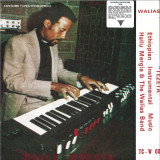
From their genesis as members of the Venus club in-house band in the early 70s, Hailu Mergia and the Walias Band were at the forefront of the musical revolution during an era where modern instruments and foreign styles superseded the traditional fare to become the staple sound of Ethiopia. No one would argue that the Walias were the trailblazing powerhouse of modern Ethiopian music. They were the first band to form independently without affiliation to a theatre house, a club or a hotel; unprecedented and risky as they had to raise all funding for expenses by themselves including buying equipment. They were the first to release full instrumental albums, considered to be commercially unviable at the time. They opened their own recording studio, with band members Melake Gebre and Mahmoud Aman doubling as technical buffs during sessions. They were also the first independent band to tour abroad. In short, they were the pioneers every band tried to emulate; some more successfully than others.
Odds are, any Ethiopian over the age of 35 who had access to TV or radio by the early 90s, will instantly recognize the sound of Walias. What is not a given is, how many would actually identify the band itself. Barely a day went by without hearing the Walias either in the background on radio or as an accompaniment to various programs on TV.
This Tezeta album, the band’s second recording, released in 1975, is one of those that have been impossible to find for nearly three decades. Sourced by Awesome Tapes From Africa and expertly remastered by Jessica Thompson, its unique and funky renditions of standards and popular songs of the day are so quintessentially Walias, flavorful and evocative. Hailu's melodic organ, unashamedly front and center in every track, makes even the complex pieces accessible.
Profoundly engaging; it's an immersive trip down memory lane for those of us getting reacquainted with it, while also an enthralling and gratifying experience for fresh ears.
Virtually unknown recording outside Ethiopia.
Documents Mergia & Walias legendary early period.
Follow-up to reissue of hugely popular seminal Ethiopian instrumentals LP Tche Belew (ATFA012)
Cassette-only, released in 1975 on the band’s in-house label to fund their record store.
Beautifully-rendered instrumentals of classic Ethiopian standards.
out of Stock
Last delivered 4 years ago available to reorder, subject to availability
A sonic clash of Tropical, On-U and Eastern proportions, t-woc drops 6 tracks of dope sound system bashment for Strangelove. Informed by Mick's musical wanderlust and prolific digging, Pentangle deftly blends a mélange of influences where Caribbean steel drum, Anatolian melodies and the sounds of the Maghreb all float through the mix.
Like his work for Macadam Mambo/ Emotional Response- its a sound hard to pin down and all woven into a heady brew percolating somewhere in the dance-floor twilight zone. With early works created pre-lockdown at an artist residency in The Dock in County Leitrim, the heads down groove of 'Crazy Bronco' & 'Goddy' don't sound out of place with an early 90's Uk bass culture. Elsewhere the deeper cuts rub against a little sunshine as the late night swing of Midnight Magic riffs off Junior Delgado's roots classic.
With killer artwork c/o Marius Houschyar Strangelove is super stoked to release this collection of outernational rhythms from the Irish vinyl wallah, mix engineer and producer
Vital Sales Points:
Follow up to the labels previous exotic waves of Scribble & Sjunne Ferger,
out of Stock
Last delivered 5 years ago available to reorder, subject to availability
With A Little Help From My Friends captures one special night on November 21, 2020 when Steve Lukather, Joseph Wil-liams and David Paich appeared with the new line-up of Toto for a global event originating from Los Angeles, CA. Join-ing Lukather, Williams and Paich for this next chapter in their indelible history are new band members bassist John Pierce (Huey Lewis and The News), drummer Robert "Sput" Searight (Ghost-Note / Snarky Puppy), and keyboardist / back-ground vocalist Steve Maggiora (Robert Jon & The Wreck). Keyboardist Dominique "Xavier" Taplin (Prince, Ghost-Note) and multi-instrumentalist / vocalist Warren Ham (Ringo Starr) segued over continuing their tenure in the ensemble. This marks the fifteenth incarnation of the Toto line-up in consideration of band members or sidemen who joined or exited.
The track listing features “Till The End,” “Hold The Line,” “Pamela,” “Kingdom of Desire,” “White Sister,” “You Are The Flower,” “I Won’t Hold You Back,” “Stop Loving You,” “Home Of The Brave,” “Rosanna,” and “With A Little Help From My Friends.” In the DVD and Blu-ray releases, a documentary is featured alongside the performance, featuring thoughts from all members of the band that appeared that evening.
Steve Lukather a.k.a. Luke shares, “When the music is performed by great musicians it honors TOTO. The documentary featured on the DVD and Blu-ray offers great insights in to our thoughts looking forward. David, who stands with us, alongside Joe and myself, desire to keep this music alive. And Paich could pop in any time for a show as a special surprise. When it came to plan this specific set list, we picked an eclectic group of songs for this one night only show.
The album will be released on June 25, 2021 on transparent 180 grams vinyl, CD+DVD and CD+Blu-ray.
The DVD is region-free, and playable worldwide. DVD audio track: PCM 2.0
Tekanan is the full-length debut of Melbourne-based Indonesian-Australian drummer and sound artist, Rama Parwata. A thorough exploration of rhythmic capabilities and percussive improvisation under ever-shifting timbral and stylistic environments, Tekanan is Parwata’s examination and documentation of his vast musical influences in electro-acoustic improvisation, Indonesian gamelan music, free jazz, electronic music, R&B, and noise music, whilst still maintaining an entirely unique non-idiomatic musical voice. Tekanan sees Parwata experimenting with not only the drum kit, but additionally implementing no-input mixing boards, musique-concréte sampling techniques, junk percussion, electric guitar, and computer music production to create a relentlessly metamorphosing soundscape that abruptly, yet seamlessly oscillates between ethereal ambiances to turbulent barrages of rhythm and noise through five unique movements.
Aptly named after the Indonesian word for pressure and stress, Tekanan was composed by Parwata with the intent of it being a listening experience which would pressure the listener to have no clear indication of the direction of the music and where it will ultimately settle, leading the listener on a sinuous, yet intriguing aural journey. This title additionally applies to the pressure of the challenging nature of the music, in a performative sense, which pushed Parwata to his physical and mental limits to perform and compose.
“As cliche or banal this might sound, I tried to make a record that was purposely made to be hard to put into a box. I didn’t want to make a “drumming” record or a noise record or anything of the type, but a record that just contained "good” music (or what I constitute as being good). Many aspects of my musical life were injected into this release: gamelan music (the first music I was exposed to), noise, hip-hop, free-improvisation, Xenakis, jazz, electronic music. Ultimately this record is a homage to those musical influences.” - Rama Parwata -
An active figure in Australia’s experimental music and art scenes, Parwata has worked with the likes of Marco Fusinato, Robin Fox, and Robbie Avenaim, and choreographers Stephanie Lake, Juliet Burnett, and Melanie Lane. He is also a member of seminal long-running Melbourne Doom Metal band, Whitehorse.
As of 2019, Parwata has been a co-curator and committee member of Melbourne’s legendary concert series, Make It Up Club, which has been presenting weekly avant-garde improvised performances since 1998.
It might be easy to assume that the distinctly focused compositional voice unveiled on Rose Bolton's The Lost Clock is the product of its creator's rigorous, almost hermetic dedication to her own particular aesthetic universe. A quick survey of Bolton's artistic career, however, reveals that her carefully sculpted approach to abstract electronica has been forged through a longstanding engagement with a wide range of intertwining creative activities.
This album—coming out on Important Records' cassette imprint, Cassauna—demonstrates both the Toronto-based composer's unique mastery of colour and her gift for breathing a tactile, organic quality into synthetic landscapes. Bolton's distinctive sensibility is akin to that of a painter—every hue has been carefully mixed so as to imbue its accompanying gesture with its own life and personality. This tangible dimensionality her electronic work assumes, however, can be traced back to the work Bolton has been doing since the 1990's. She has produced a large and varied catalogue of work that includes pieces for solo performers, chamber ensembles, orchestra, electronics, voice, and to accompany installations and films. A number of her works reside in several of these zones simultaneously, such as Song of Extinction, an ambitious collaboration between herself, filmmaker Marc de Guerre, poet Don McKay, and multiple live ensembles, that was mounted in an abandoned power station for Toronto's Luminato Festival.
This quasi-instrumental vitality isn't the only feature of The Lost Clock that reflects Bolton's diverse artistic practice. It can also be heard within the structural realm. Each of the collection's four tracks trace a patient unfolding and favour a certain roundness of timbre, even as finer details begin to fidget along the perimeter of the music. As with her writing for the concert hall, Bolton doesn't shy away from the evocative here, yet she doesn't pursue this poignancy through conventional, direct or quasi-narrative means. Her compositions lead the listener gradually through their impressionistic sonic scenery, but neither the path they take nor their ultimate destination are at all predictable. The ostensible gentleness each piece exudes dissolves as dissonances slowly insinuate themselves, obscure textures writhe just out of earshot, percussive lattice work materializes, or as the overall blend begins to exert a heavier weight. Her lucid-dream vision of form functions in tandem with her acute micro-level attentiveness to engender a vivid and elusive soundworld that resists classification.
Over more than two decades Rose Bolton has been garnering acclaim and enthusiasm from audiences and major collaborators alike. Last year, her brooding string quartet The Coming Of Sobs was nominated for Classical Composition of the Year at the JUNO Awards, following earlier accolades such as SOCAN Awards for Young Composers, and the Canadian Music Centre's Norman Burgess Fund. Her music has been commissioned by the likes of the CBC, stalwart experimental music festival the Sound Symposium, as well as key interpreters and ensembles such as percussionist David Schotzko, accordionist Joseph Petric the Esprit Orchestra, Continuum, Arraymusic, the Kitchener-Waterloo Symphony, and guitar quartet Instruments of Happiness (led by Tim Brady). Together with Marc de Guerre, she produced an 8-speaker sound and video installation for Toronto's Nuit Blanche Festival. She's also been featured by the likes of revered pianist Eve Egoyan, The Vancouver Symphony, L'ensemble contemporain de Montréal, The Music Gallery, and AKOUSMA, while appearing in concert alongside the likes of Jerusalem in My Heart (Constellation Records), Tanya Tagaq, and Francis Dhomont. Bolton is also a respected film composer, notably contributing music to the highly regarded documentary Anthropocene: The Human Epoch (co-directed by Jennifer Baichwal, Nicholas de Pencier and Edward Burtynsky).
As a performer, she variously employs electronics, violin, and viola. Parallel to her engagement with exploratory approaches, she's invested in the fiddle traditions of the British Isles, and various Canadian regions. She teaches this repertoire at the Royal Conservatory of Music. Bolton has also performed with Rhys Chatham, Owen Pallett, opened for Charlemagne Palestine, and appears on recordings by the likes of Chatham and Aidan Baker. In 1999 she joined the Canadian Electronic Ensemble, whose fifty-years together make them the world's longest-running live-electronic music group. In February 2020, the CEE held a residency and provided guest lectures at Carnegie Mellon University's music department. Bolton has also led workshops at the Banff Centre, also founded the SOCAN/ Moog Audio-sponsored program EQ: Women in Electronic Music, which worked to foster community and mentorship among (trans/cis) women and non-binary individuals.
Bring Me The Head of Kyle Bobby Dunn is a full length triple vinyl reissue of the original 2012 double compact disc album from Canadian composer Kyle Bobby Dunn. It was recorded at Bunce Cake studios in Brooklyn and remote parts of Ontario. The compositions are mostly long, slowly evolving minimal ambient and drone based works created from electric guitar processing. Perhaps more cinematic than previous albums, some pieces have since appeared in BBC documentaries and independent films over the years since its release. The original recordings on this Diggers Factory vinyl edition, however, have been remastered and practically rebuilt from the fog of their initial masters which have often been considered the composer's most quiet and even translucent works. Iranian composers and engineers, Milad Bagheri and Maryam Sirvan have brought out a certain clarity and freshness to the music and Dunn has considered it an almost completely different listening experience from the originals.
The album was critically praised and became a favourite of most fans and even after several subsequent albums later it remains a favourite and of the composer's as well.
Kojaque follows his critically acclaimed cult concept record, ‘Deli Daydreams’, with an
expansive, urgent debut album. In this landmark debut, Kojaque mines both his
emotional interior as an artist, and the external forces of a love triangle barrelling
towards chaos. ‘Town’s Dead’ is a mind-bending, explosive and expansive trip,
documenting a tumultuous love triangle that unfolds across New Year’s Eve in a
place where gentrification poses as much a threat as the violence of street dealers.
Sonically, the record smashes any previous expectations, stretching an aural palate
that leaps from rage to solace, from clattering musical combustions to tender
ruminations. The tremendous scope and scale of ‘Town’s Dead’ demonstrates an
artist utterly untethered to assumptions about what a particular voice or genre should
be, and instead explores radical musical territory. Dark corners of parks, bedrooms,
clubs, streets and psyches are excavated and pouring over the rubble is an artist
who refuses to conform, unafraid of the vulnerabilities that are exposed when the
voice rings true, because there’s just no point in being anything else.
Kojaque is part of a new wave of Irish artists flooding the world with blistering and
sophisticated literature, film and music - ideas and work that emerged from a social
revolution stonewalled by late-stage capitalism. Welcome to that state of mind, where
the path less travelled is the only one worth taking.
On the announcement of his debut album Kojaque has said: “‘Town’s Dead’ comes
from the potential that I see in Dublin and in the people I’m surrounded by day in and
day out. There’s nothing but talent and ambition among young people, I’m constantly
reminded of that through the art and music that I see being made but I think so often
the city grinds you down, it takes your hope and your ambition. I know that it can
change because so many of my friends express the exact same wants, desires and
frustrations with living in Ireland. If so many of us are on the same page then I know
that things can change, there just needs to be some sort of catalyst to kick start that
change and for me that’s always been art and music. Time and time again, amazing
art continues to be made in spite of the struggles and setbacks that are presented
when living here. The title track and the album is a fight against what can sometimes
feel inevitable, it’s a rejection of what people tell you is your destiny as a young
person in the city, Town’s NOT dead it’s just Dormant.”
CD housed in digisleeve containing 12-page lyric and photo booklet.
Black double vinyl housed in 5mm wide spine single sleeve with 12-page lyric and
photo booklet.
“Hints of Odd Future and its offspring... Kojaque is not your average rapper” - i-D
“Dublin’s hip-hop community are making waves right now... an intimate introduction
to the world this bold artist inhabits” - Clash
“Social realist rhymes set to silky hip-hop” - NME
“Likeable and funny” - Trench
“The Dublin MC forcing us to face real life; both the gory and the glory” - Wonderland
“Ireland’s freshest hip-hop hope, Kojaque, serves ‘soft hip hop’ with a side order of
poetry and performance art” - Notion
Heading into the spring of 2020, T. Hardy Morris
had 12 demos that he thought would make-up his
next album. Then everything changed. The world
took a break and so his plans to record did as well.
As we all watched and waited out the storms; viral
and societal, we seemed to wake up scrolling
through a whole new century, a time Morris began
to refer to as ‘The Digital Age of Rome’.
He scrapped the demos and began a collection of
songs in quarantine where the unprecedented
times and topics were unavoidable. He wanted to
document the era sonically and lyrically in some
way. “I wanted it to sound like how the world felt to
me in the second half of 2020. Uncomfortable and
chaotic, dystopian but still beautiful.”
‘The Digital Age of Rome’ was recorded in a
deserted downtown Athens, Ga. With long-time
collaborator / producer Adam Landry.
By 1991, the world’s most celebrated trumpeter could look back on five decades of musical evolution – his own, and that of the world around him. Miles Davis had found ways of marrying jazz with classical ideas, then later R&B, rock and funk, producing hybrid offspring that shaped the course of popular music and had come to define his legend. In 1985, he’d left Columbia after thirty years to sign to Warner Bros. Records, a label riding high with best-selling artists like Madonna, Van Halen and Prince, with whom he had a mutual admiration and friendship.
Miles Davis’s lifelong love for France is well-documented, and in July 1991, he became a Knight of their Legion of Honour. Davis received the award from French culture minister Jack Lang, who described him as: "The Picasso of jazz." A few days before, he played this electrifying set at the Vienne Jazz Festival with the Miles Davis Group. He passed away two months later in September 1991.
Miles Davis’ performance at Jazz a Vienne on July 1, 1991 became one of his final live performances before he passed away on September 28, 1991, and this previously unreleased set includes two songs written by Prince, “Penetration” and “Jailbait”. The package features liner notes from music historian, journalist, and producer Ashley Kahn, with art designed by Bruno Tilley.
Black Truffle is pleased to announce the first-ever vinyl reissue of Remko Scha’s Guitar Mural 1 featuring The Machines, originally published as a rare cassette edition by Taal Beeld Geluid in 1982. A computational linguist by profession, Scha played an important role in the development of sound, installation, and digital art in the Netherlands from the late 1970s onward, co-founding the performance and exhibition space Het Appolohuis in Eindhoven in 1980. Alongside Paul Panhuysen and Jan Van Riet, Scha was a founding member of the radical improvisation group The Maciunas Ensemble, though he is best known for his work with mechanised electric guitars, documented on the legendary 1982 LP Machine Guitars.
Guitar Mural 1 documents an installation of Scha’s mechanical guitar ensemble The Machines held at a Groningen gallery space in 1982. Five electric guitars hang from the wall, their strings sounded by rotating rubber strings and a sabre saw controlled by a mechanical apparatus, as well as four ropes criss-crossing the five instruments on the wall. Once the mechanism was set up, Scha’s only intervention was to vary the speed at which it operated. Where Machine Guitars presents short excerpts clearly distinguished by rhythmic and timbral variation, here we are confronted with four enormous side-long slabs of percussive string attack and the resulting clouds of harmonics. Variation is minimal across the duration of each side, making for a sculptural listening experience, as if we are patiently examining each facet of a static object. But significant variety exists between the four sides, each of which shows off a different facet of what The Machines were capable of. The first two excerpts feature open strings sounded at rapid tempos, dissolving the percussive attack into a continuous stream of sound reminiscent of Charlemagne Palestine’s ‘strumming’ technique. On the third side, the strings are partly muted and the tempo slightly lowered, resulting in layers of relentlessly chugging rhythm somewhere between an ensemble of hand drums and an early Velvet Underground bootleg. On the fourth side, havoc breaks loose in percussive waves of asynchronous repetition that bring Scha’s sound world close to that of another pioneer experiment in musical mechanisation, the Solar Music of Joe Jones.
Presented as a limited edition 2LP set in a deluxe gatefold sleeve accompanied by stunning visual documentation of the original installation, remastered audio and new liner notes from Alan Licht and Van Lagestein, Guitar Mural 1 is an exhilarating document occupying a unique space between kinetic sculpture, hardcore minimalism and rock & roll.
out of Stock
Last delivered 5 years ago available to reorder, subject to availability
Documented during peak isolation times in Los Angeles, between December 2020 and January 2021. These pieces were performed as Live AV pieces from 2017-2019, at Coaxial Arts, Zebulon and Desert Daze 2019, but not documented in a release until later. Signal processing and sequencing frameworks built in Max 8 with signals generated from Prophet '08, a broken AW16G, 0-coast, Max, and a MC-909. With the context of the electromagnetic medium, the absence of live performance and moving visuals and the new "spirit" of the pestilent times, "Cutting Them All Off" should barely be represented as reworks of the originally performed pieces. What was once pulsing and blasting out of PA speakers live is now referenced as a distant past document. These pieces (for better or for worse) have been removed and cut-off from their contextual source and can only be presented in their displaced/liberated state. Like a fish out of water gasping for air, or the only drunk survivor of a car crash that was his fault.
Christopher Reid Martin started Rotary ECT in 2016. The project focuses on highly active signal processes on synchronized Audio -> Visual signals, with many signals being constructed to self-generate. Much like a rotary machine's rotation, the process is consistent and signalled when turned on. Much like electroconvulsive therapy, a human need to be there to actively monitor and attend to the process and generation of the signals being emitted.
Christopher currently works for Cycling '74, is a curatorial/programmer at Coaxial Arts Foundation and ⅓ of curators (alongside J.Prey and J. Rivera) behind the ephemeral stream Cathode TV/Cathode Cinema. Christopher continues to show gallery works, both virtual and physical, digital and video works and performs in other numerous events and projects such as Bailouts, CGRSM (with Gabie Strong), Shelter Death, Gate (with Michael Morley) and Via Injection. He has performed and collaborated with artists Joseph Hammer, Bryce Loy (RIP), Tetuzi Akiyama, Christopher Thompson, James Roemer, Andrew Scott, Gabie Strong, Michael Morley, Lev Abramov and many others.
180g schwarzes Vinyl, Cover auf 300g GC1 INSIDE/OUT, gefütterte Innenhülle, 2seitiges Insert, Downloadcode. Tony Conrads Konzept von Minimal Music als Maximalismus des Ausdrucks ist eine der Inspirationen für TRIALOGOS. Die Musik entsteht aus der Spannung zwischen den Beiträgen der drei Akteure Conny Ochs, Sicker Man und Kiki Bohemia, die aus unterschiedlichen musikalischen Subszenen stammen. Im Zusammenspiel ergeben sich so musikalische 'Trialoge'. Das Ergebnis sind kinematografische Klangflächen, die sowohl helle Interferenzen schaffen, als auch düstere, verzerrte Wirklichkeiten verbergen. Dabei wirken die Stücke des Debüt-Albums "Stroh zu Gold" hoch emotional. Sie sind das Ergebnis einer kollektiven Improvisation und Instant Composition, und eben keine Konstruktion. TRIALOGOS sind: Conny Ochs, Sicker Man and Kiki Bohemia. Conny Ochs ist längst fester Bestandteil der Exile-On-Mainstream-Familie. Zeugen sind seine Solo-Alben und natürlich die Kollaborationen mit Doom-Legende Scott "Wino" Weinrich. Tobias Vethake ist Multiinstrumentalist und Komponist. Als Komponist von Schauspiel- und Filmmusiken arbeitete er u.a. am Volkstheater Wien und dem Imperial War Museum London und schrieb Soundtracks u.a. für Muxmäuschenstill (D), Bye Bye Berlusconi (I) und Seance (US). Er ist auch Produzent und Co-Autor diverser internationaler Vero?ffentlichungen (z.B. Serengeti (US / Anticon), SchneiderTM (D / Editions Mego), Gregor Schwellenbach (D / Kompakt). Die Berliner Musikerin und Sängerin Kiki Bohemia produziert und veröffentlicht eigenes Material und kollaboriert mit internationalen Künstlern unterschiedlichster musikalischer Genres (z.B. Yann Tiersen, The Brian Jonestown Massacre, Blainbieter, The Crack-Up Collective). Echtzeitkompositionen, Live- Filmvertonungen, Musik fu?r Kunstinstallationen, Performances und Live-Ho?rspiele sind Zeugnisse ihrer Affinität zu experimentellen und aleatorischen Auffu?hrungsansa?tzen und Improvisation (u.a. Documenta Kassel 2012, Schauspielhaus Hamburg, Sophiensaele Berlin, Kater Holzig, Deutschlandradio Kultur).
Returning to a heavier, more aggressive sound, in 1975 Black Sabbath delivered their sixth classic album in a row. Taking almost a year to complete, Sabotage is Black Sabbath at their best and possibly their most musically experimental. Brought up to date for 2021 is the original album newly remastered as well as a full concert recorded on the 1975 Sabotage Tour of North America. In addition to a selection of tracks from Sabotage, this live album includes the Black Sabbath classics War Pigs, Iron Man and Paranoid. Also included in this super deluxe edition is a replica of the rare Japanese single ‘Am I Going Insane (Radio)’, which completes the audio package for this fan-friendly deep dive into the classic Black Sabbath album, Sabotage.
The battle against the plague has raged hard for over a year. Around the globe, dancefloors are empty, layers of dust and broken bottles strewn across them…the glowsticks have long faded to black. But the Cologne mothership KOMPAKT has managed to prevail, bringing inspiration and hope through the message of music to a decaying humanity.
The Reawakening is finally in sight. It is only fitting that New York’s Steve Moore (of Zombi, Gianni Rossi and Lovelock fame) makes his return to KOMPAKT now with this foursome. Especially as his last release for us, “Frame Digging” (KOM 415) directly preceded the start of the pandemic.
AUTO SEQUENCE START – the time arrived for us to press the reset button. The cycle has completed.
Der Kampf gegen die Seuche tobt nun bereits seit über einem Jahr. Rund um den Globus sind die Tanzflächen leer, Schichten von Staub haben sich darüber gelegt, zerbrochenen Flaschen liegen herum ... auch die Leuchtstäbe sind längst erloschen. Doch das Kölner Mutterschiff KOMPAKT hört nicht auf, der darbenden Menschheit Inspiration und Hoffnung durch die Botschaft der Musik zu bringen.
Das Wiedererwachen ist in Sichtweite. Umso passender, dass der New Yorker Steve Moore (bekannt durch Zombi, Gianni Rossi und Lovelock) nun mit dieser 4 Track Maxi sein KOMPAKT-Comeback feiert. Denn seine letzte Veröffentlichung für uns, "Frame Digging" (KOM 415), war direkt vor Beginn der Pandemie erschienen.
AUTO SEQUENCE START - die Zeit ist gekommen, den Reset-Knopf zu drücken. Der Kreis schließt sich.
out of Stock
Last delivered 2 years ago available to reorder, subject to availability
Almost all records are a snapshot, a musical ribbon bow that documents a very specific moment in time or simply ties-off everything up to that point. Indigo De Souza’s I Love My Mom, her debut LP initially released in 2018, was the latter; a collection of the best songs she’d written in the few years that preceded it, recorded quickly and breathlessly and thrown out into the world.
Consisting of ten songs, I Love My Mom feels both raw and unabashed. Indigo pulled a band together for the first time, and was quickly encouraged to commit her songs to tape. Recorded at her friend’s house, they played almost everything live in just a few days, and released the record naturally, with little fanfare. That the record quickly took on a life of its own, deeply resonating with those who heard it, is a testament to Indigo’s songwriting which took inspiration from the unique worlds created by Arthur Russel, Sparklehorse, The Microphones, as well as contemporaries such as LVL UP and Happyness.
Two of the songs have racked up more than a million streams each on Spotify: “Take O Ur Pants” and “How I Get Myself Killed.” The former balances an often breezy lead vocal with gnarly undercurrents of guitar before the whole thing lets rip in its punchy chorus, while the latter, the album’s opening track, finds a different mood entirely, a slacker rock gem that repeats its chorus as a chest-beating mantra. Elsewhere, “Good Heart” furthers the dichotomy which sits at the record’s core, each moment of quiet introspection soon met by a cacophonous burst of energy.
遠き火、遠き雲 (Tōki Hi, Tōki Kumo / A Distant Fire, A Distant Cloud) is the second collaboration by Tomoyoshi Date and Stijn Hüwels. The album was commissioned by Laaps.
Tomoyoshi Date and Stijn Hüwels met for the first time in 2015 in Tokyo, being introduced to each other by Chihei Hatakeyama. That same evening, they recorded what would later become Hochu-Ekki-Tou, their first album, released on Home Normal in 2019. For "Tōki hi, tōki kumo", they teamed up again to create a slow and bright album, using field recordings, processed guitar, piano and synth. The title refers to a poem by Tadahito Ichinoseko, recited by the poet on the album as well.
Tomoyoshi Date creates acoustic and organic sounds with a little touch of digital processing. He began to create electronic music in 1998. In 2003, he forms the group Opitope with Chihei Hatakeyama (released by SPEKK), in 2012 the group ILLUHA with Corey Fuller (released by 12k), and the group Melodia with Federico Durand (Home Normal). His solo albums were released from Flyrec (2009, Japan) and Own Records (2011, Luxembourg). Also he worked as emergency doctor until 2014, and started his ambient oriental medical clinic "Tsuyukusa Clinic" in Tokyo since 2014. Tomoyoshi currently resides in Narita, close to Tokyo.
Stijn Hüwels has a profound fascination for minimalism. He's using mainly layers of processed guitar and field recordings. He released on Dauw, mAtter, Eilean Rec., Home Normal, White Paddy Mountain and Slowcraft/Lifelines. He released albums in collaboration with Chihei Hatakeyama, Norihito Suda, An Moku and Ian Hawgood. Together with James Murray he forms Silent Vigils. Stijn lives and works in Leuven and Brussels, Belgium. He's also curating Slaapwel Records since 2014, a label dedicated to music to fall asleep with.
Following ‘Heirloomʼ, which came out on E. Sagglia and Death Kneelʼs now defunct Summer Isle label in 2018, ‘The Cormorantʼ is the latest album by Australian native Jason Campbell.
After taking exactly a year to complete, Campbell perceives the work on ‘The Cormorantʼ as “a document of small-town Australia, concerned with the natural environment and the rugged coastline that I call home.”
The sounds of his native Australian domain, located by the coastlines of New South Wales, are meticulously explored and dissected throughout the entire album, where ocean swells or conversations at the local food court are layered onto sequences of violin tremolos, detuned cymbals and delayed piano chords.
Throughout the albums run time, ‘The Cormorantʼ encompasses a destructive sonic realm of its own, and yet the pieces also manages to stands out individually; from the highly emotive opening ‘Emerge Againʼ, which features an accelerative volley of machine clatter and pitch shifted choruses, slowly merging into a bed of candid breaths and piano chords, to the deeply emotive, corrosive title track ‘The Cormorantʼ and the albums pre-culminating reprieve ‘A Fallen Eucalyptʼ, each piece showcases a unique, riveting sonic investigation of J. Campbellʼs coastal home.
In the end, ‘The Cormorantʼ is the culmination of a sincere, introspective and deeply invigorating journey, resulting in an album that is not merely about the examination of oneʼs topography, but about passion, existence and self- discovery.
Dr. Feelgood’s best-of - ‘Singles (The U.A. Years)’ - is to be remanufactured and reissued on vinyl for the first time since its original release in 1989.
Released on 11 June, ‘Singles - The U.A. Years’ is a celebration of 26 tracks of Dr. Feelgood at their absolute peak. Having formed in 1971 in Essex, founding members Lee Brilleaux (singer), John B. Sparks (Sparko) on bass guitar, John Martin (The Big Figure) on drums and guitarist Wilko Johnson, whose iconic and renowned choppy style of playing saw the band build huge notoriety in London’s live music scene resulting in a record deal with US Artists in 1974.
From the moment she began writing her new album, Japanese
Breakfast’s Michelle Zauner knew that she wanted to call it
‘Jubilee’. After all, a jubilee is a celebration of the passage of time
- a festival to usher in the hope of a new era in brilliant technicolor.
Zauner’s first two albums garnered acclaim for the way they
grappled with anguish; ‘Psychopomp’ was written as her mother
underwent cancer treatment, while ‘Soft Sounds From Another
Planet’ took the grief she held from her mother’s death and used it
as a conduit to explore the cosmos.
Now, at the start of a new decade, Japanese Breakfast is ready to
fight for happiness, an all-too-scarce resource in our seemingly
crumbling world.
‘Jubilee’ finds Michelle Zauner embracing ambition and, with it, her
boldest ideas and songs yet. Inspired by records like Bjork’s
‘Homogenic’, Zauner delivers bigness throughout - big ideas, big
textures, colours, sounds and feelings. At a time when virtually
everything feels extreme, ‘Jubilee’ sets its sights on maximal joy,
imagination and exhilaration. It is, in Michelle Zauner’s words, “a
record about fighting to feel. I wanted to re-experience the pure,
unadulterated joy of creation… The songs are about recalling the
optimism of youth and applying it to adulthood. They’re about
making difficult choices, fighting ignominious impulses and
honoring commitments, confronting the constant struggle we have
with ourselves to be better people.”
Throughout ‘Jubilee’, Zauner pours her own life into the universe
of each song to tell real stories and allowing those universes, in
turn, to fill in the details. Joy, change, evolution - these things take
real time and real effort. And Japanese Breakfast is here for it.
Available on clear with yellow swirl coloured vinyl.
out of Stock
Last delivered 5 years ago available to reorder, subject to availability