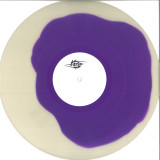
ON SAND COLOUR VINYL FOR FIRST TIME
Post-Punk? Indie-Rock? Post-Hardcore? The Van Pelt walked between all these worlds. Spoken/sung vocals, anthemic pop hooks, fiery guitars and a tightly wound rhythm section made them stand outs of the DIY basement scene they emerged from.
RELATED TO: The Lapse, Native Nod, St Vincent, Blonde Redhead, Enon, Jets to Brazil, Vague Angels.
ABOUT “STEALING FROM OUR FAVORITE THIEVES”:
90s NYC indie heroes The Van Pelt have had a lasting power far greater than so many of the other once bigger bands of that era have had. The sort of interest that has neither waxed nor waned over the decades since they disbanded, yet just mysteriously continues on despite their discography being out of print since the end of the last millennium. So what is it that sets them apart? Too soft to have ran with the AmRep or Touch and Go crowds, not hip enough to have made sense on Matador or Merge, ernest yet not histrionic enough to make it onto the “best emo bands” lists, not weird enough to be on bills with Arto Lindsay and Thurston Moore, etc. In a sense, their outsider status comes not from the wings, but from the dead center eye of the storm. The 90s were happening all around them, they were witnesses thereof, yet they emerged transcendent of it all. You Follow? Maybe it’s worth having a listen to see what I mean.
Barcelona’s La Castanya records is treating us with the first ever rerelease of the two Van Pelt albums to mark the 20th anniversary of Sultans of Sentiment, their benchmark album. They teased us in 2014 that this might be on the docket with the release of Imaginary Third, a collection of singles and unreleased Van Pelt tracks which were originally intended to have been the components of their third album, including the alt-famous “Speeding Train”. Now we’ll finally have access to their entire discography. The first album, Stealing From Our Favorite Thieves is an explosion of anthems belted out as if the war was already lost yet they were hoisting that tattered banner anyhow until there wasn’t a shred to salvage. The momentum coming out of that album had every major label in the States salivating at the possibility of turning them into the next Nirvana. Instead, The Van Pelt followed it up by pulling the van into the garage, leaving the engine running, funneling the exhaust into their lungs, and blissfully deciding to bow out of the race with the epic Sultans of Sentiment. Of course as the story goes, their intended financial flop was the exact opus that jettisoned them into the history books. Buy both albums. You’ll need them both.
Search:m flo
- A1: Nanzen Kills A Cat
- A2: The Good, The Bad, And The Blind
- A3: Yamato (Where People Really Die)
- A4: My Bouts With Pouncing
- A5: Don’t Make Me Walk My Own Log
- B1: The Young Alchemists
- B2: We Are The Heathens
- B3: Pockets Of Pricks
- B4: Let’s Make A List
- B5: Do The Lovers Still Meet At The Chiang Kai-Shek Memorial?
BRAND NEW VINYL PRESSING ON GREEN VINYL FOR FIRST TIME
Recorded in 1996, the second album from this NYC quartet featured a new line up & sound. Clean, warm, spacious guitars paired with repetitive, hypnotic songs showcased the band reaching a new peak. Beloved by those initiated, it continues to find new devotees.
RELATED TO: The Lapse, Native Nod, Blonde Redhead, Enon, Jets to Brazil, Vague Angels
90s NYC indie heroes The Van Pelt have had a lasting power far greater than so many of the other once bigger bands of that era have had. The sort of interest that has neither waxed nor waned over the decades since they disbanded, yet just mysteriously continues on despite their discography being out of print since the end of the last millennium. So what is it that sets them apart?
Too soft to have ran with the AmRep or Touch and Go crowds, not hip enough to have made sense on Matador or Merge, ernest yet not histrionic enough to make it onto the “best emo bands” lists, not weird enough to be on bills with Arto Lindsay and Thurston Moore, etc. In a sense, their outsider status comes not from the wings, but from the dead center eye of the storm. The 90s were happening all around them, they were witnesses thereof, yet they emerged transcendent of it all. You Follow? Maybe it’s worth having a listen to see what I mean.
Barcelona’s La Castanya records is treating us with the first ever rerelease of the two Van Pelt albums to mark the 20th anniversary of Sultans of Sentiment, their benchmark album. They teased us in 2014 that this might be on the docket with the release of Imaginary Third, a collection of singles and unreleased Van Pelt tracks which were originally intended to have been the components of their third album, including the alt-famous “Speeding Train”. Now we’ll finally have access to their entire discography. The first album, Stealing From Our Favorite Thieves is an explosion of anthems belted out as if the war was already lost yet they were hoisting that tattered banner anyhow until there wasn’t a shred to salvage. The momentum coming out of that album had every major label in the States salivating at the possibility of turning them into the next Nirvana. Instead, The Van Pelt followed it up by pulling the van into the garage, leaving the engine running, funneling the exhaust into their lungs, and blissfully deciding to bow out of the race with the epic Sultans of Sentiment. Of course as the story goes, their intended financial flop was the exact opus that jettisoned them into the history books. Buy both albums. You’ll need them both.
Blue and orange Stardust vinyl, limited to 500 copies. Since 2016, Indiana's Wraith have been emitting their incendiary brand of blackened thrash and speed metal into the world. Summer 2024 will see them release their debut full length under the Prosthetic Records label banner; prepare for Fueled By Fear. What started as a one-man band many moons ago has evolved into a propulsive beast of a band. Channeling a reverence to classic metal from a bygone era, Wraith incorporate their distinctively blistering sonic signature to create something urgent and contemporary. The band have previously described their collective mission as follows: a war of aggression on the dour confines of the modern metal scene and total sonic annihilation. Fueled By Fear captures the raw punk edge of their previous releases; a sound that will already be familiar to converts who have caught the band live in all their full-throttled abrasive glory. The album was self-produced by the band in Griffith, Indiana -, with engineering, mixing and mastering handled by CJ Rayson. Each member brings their own influences and stylistic flourishes to the table, combining to create a tightly wound, cohesive collection of scorching tracks that reflect their individual personalities and tastes.
Brand New Heavies have long had their legacy assured. They played a vital role in establishing the Brit-funk sounds of the 80s and 90s and are one of the most enduring acts on Acid Jazz. Now, their standout album Heavy Rhyme Experience Vol. 1 has two of its finest cuts singled out and pressed up to this Bonafied Funk reissue on P-Vine Japan. The tunes are a blend of their signature sounds with some top-level featured guests including hip hop royalty Main Source and the one and only Grand Puba. Timeless dance floor delights, for sure.
Who is Isabelle Lewis, anyway?
What kind of music does she make? Is she an opera singer? Does she write pop songs? Does she compose ethereal ambient soundscapes? Does she play chamber music on the violin? Is she producing dark, electronic beats?
Well… yes. But Isabelle Lewis is not so much a person as a project. Isabelle’s debut album, Greetings, credits a trio of composer–performers at its heart: producer Valgeir Sigurðsson, vocalist Benjamin Abel Meirhaeghe, and violinist Elisabeth Klinck. The sound of the elusive Isabelle Lewis is heard most clearly in the push and pull between them, the three-way tension that gives the album its musical and emotional drive.
Each of the three brings more to the collaboration than those epithets might imply. Elisabeth’s solo performance practice incorporates composition, improvisation, live electronics, and a close command of bowing and fingering techniques that make her fiddle sing, whisper or whistle as required. Benjamin is a self-taught countertenor - keening, crooning, and swelling to a voluptuous sensuality—but also an interdisciplinary stage director and performer. Well known for his work as a producer and studio collaborator, and as a composer of scores for film and stage, Valgeir’s solo discography interweaves meticulously crafted electronics, drones, noise, and other digital elements with acoustic instruments and vocals recorded with naked, unflinching clarity.
But the extravagant theatricality Benjamin brings to the aptly titled “Drama”—also featuring a heroic violin solo from Elisabeth—grapples against the thudding bass of the implacable digital backdrop. On “Mother, Shelter Me” Valgeir’s austere and detailed production throws the hushed violin and vocals into stark relief. The result is an exquisitely uncanny juxtaposition of past and present, human and mechanical, like a Rococo treasure viewed under cold fluorescent lights, or an 18th-century automaton slowly opening its clockwork eyes.
Even the lyrics seem somehow out of time. On “O Solitude,” Benjamin goes so far as to quote an entire song by the first great English opera composer, Henry Purcell, verbatim. No stranger to Purcell’s music, which has made its way into Benjamin’s theatrical productions as well, here Isabelle Lewis removes Purcell’s melodies and harmonies and sets the text, Katherine Phillips’s 17th century translation of a poem by Antoine Girard de Saint-Amant, to new music whose heightened, archaic character nevertheless seems haunted by Baroque ghosts.
Throughout the album, the outsized emotions and timeless archetypes of Benjamin’s lyrics feel like relics from some half-forgotten past—from the neatly rhymed couplets of “Fisherman,” a seemingly straightforward (but still somewhat askew) character study, to the abstraction of “Moonshell,” whose words seem like the fragments of some ancient, lost lament. It is just another of many ways in which Isabelle Lewis carefully distorts the listener’s notions of time. On a more micro level, time can stop for a moment of weightless, drifting ambience, and then plunge forward as the cloud of harmonies suddenly lock into tempo with the drop of the bass or the change of a chord. Or else that weightless moment is allowed to be, as in the aptly named prologue and epilogue to these Greetings (“Voicemail”/“…and farewell”), or in the interstitial tracks that bind the album together, connecting its dramatic peaks with expanses of meditative stasis.
The album as a whole is elegantly shaped, swelling from an intimate, interpersonal statement into something deeper and more spacious. The first half of the album leans slightly towards self-contained pop songcraft and ticking beats, while side B jumps off from “O Solitude” into the almost symphonic grandeur of songs like “Moonshell” or the instrumental “Not the water, air, or the dirt.”
But as it progresses, the contrasts only grow more sublime: antique and postmodern, human and machinelike. The ominous weight of the droning sub-bass and trombone (guest player Helgi Hrafn Jónsson) only makes the interplay between vocals and violins (guest player Daniel Pioro joining Elisabeth) seem more delicate and vulnerable. The ethereal string tremolos of “Moonshell” seem to pull against the heavy, shuddering electronics and layers of crooning vocals.
And that, in short, is where you will find Isabelle Lewis. Like an ancient stone archway, or a delicate house of cards, the architecture of Greetings is held together by the tension between opposing forces. Not just in Elisabeth’s playing, Benjamin’s singing, or Valgeir’s arrangements and production but in the conflict and contrast that generates the synergy between them.
Oh—Isabelle says hi, by the way. She’s looking forward to meeting you.
Part 2 of 5 in the LOST SCIENCE Series. Galaxies is a killer track that formed a very important part of Blame's Logical Progression sets toward the end of the nineties. The flip is a VIP of another track from that era. Understanding & Knowing VIP is a peak time floor filler for the ages
Records Available
Naoki Zushi. Perhaps best known for his stellar guitar contributions to psych folk group, Nagisa Ni Te, Zushi has had a parallel career, for several decades, slowly releasing solo albums that spotlight his exultant guitar playing. Originally released to CD only by Shinji Shibayama of Nagisa Ni Te’s Org imprint in 2018, IV has Zushi playing and writing at a peak, its six songs slowly unfurling with a kind of paradoxical understated grandeur. This is psychedelic guitar music at its most paced and considered, yet given to flights of inspiration, and in this respect, Zushi sits within a lineage of guitarists who’ve used their instrument both as textural anchor and improvisatory tool – think of figures like Phil Manzanera and Robert Fripp, but also Roy Montgomery, Liz Harris of Grouper, even Tom Verlaine on his instrumental solo albums. Like those artists, Zushi locates moments of deep emotional resonance amidst luxuriant textural and melodic exploration. Zushi’s history stretches back to the mid 1970s. While for many, he first appeared on the scene as a founding member of noise legends Hijokaidan, alongside Jojo Hiroshige, his musical contributions predate that encounter. He started out playing progressive rock and improvised music, making home recordings of when he was in high school. He was a member of Rasenkaidan (Spiral Staircase) alongside Hiroshige and Idiot (Kenichi Takayama), the group that soon mutated into Hijokaidan (Emergency Staircase). Zushi and Takayama would soon form Idiot O’Clock, in 1982; Zushi also led his own Naoki Zushi Unit, starting in 1983. But for many, Zushi’s first significant appearance on record was as a member of Shinji Shibayama’s mid-eighties psych-pop group, Hallelujahs, whose sole album was recently reissued on vinyl. That group mutated into Nagisa Ni Te, and Zushi has played a significant role as their lead guitarist for several decades. His own solo music has appeared sporadically – Paradise (1987), Phenomenal Luciferin (1998), III (2005) and IV, with a few recent, meditative offerings, For My Friends’ Sleep (2021) and Nocturnes (2022). With IV, though, Zushi achieved something remarkable, a kind of extended exploration of the time-altering properties of echoplexed, hypnotically spiralling guitar interplay. The opening ‘Mirror’, “a song about the mirror inside me,” Zushi explains, starts out as a lush psych-folk song, slow and gentle, but soon takes to the skies with a cat’s cradle of Fripp-esque guitars, before thick, droning chords sweep the song to a drowsy coda. ‘Nocturne’ weaves silver skeins of guitar melody around a cyclical chord pattern; it gathers energy and quiet intensity through insistent repetition. The rest of the album explores the nuance Zushi can draw out of simple elements, building on what ‘Mirror’ and ‘Nocturne’ offer – the profundity of a chord change; the melancholy of a few quietly sighed words; the exhilaration of a guitar solo bursting out of the speakers; the subtle shifts in emotional register offered by tone and touch. Throughout, there’s something quiet, yet ineffable, shading the contours of the songs, such that it makes perfect sense when Zushi says, “What I want to express through music may be ‘sense of mystery’.” A few of the songs had their basic parts recorded at LM Studio and Studio Nemu with Shibayama and Masako Takeda joining on bass and drums, respectively; much of the album, however, was tracked at Zushi’s home studio. That seems appropriate for a collection of songs that are expansive in their intimacy. Asked what drove the sessions, Zushi answers, “I thought I’d make IV an album that particularly focuses on the guitar play.” And focus it does, as Zushi’s sky-scraping, soaring, elemental tone is front and centre throughout. But these are no guitar heroics; rather, Zushi uses the guitar as conduit and diviner, a tool for spirit location, and IV is his most eloquent expression yet of such singular magic.
An extremely prolific artist, whose work encompasses composition, opera, theatre, radio plays, film or performance, Ergo Phizmiz returns in due time to the Discrepant fold long after his 'Two Quartets' and 'Disco Carousel' - under his given DW Robertson name - albums. A purveyor of the Creative Commons rights, Phizmiz has been deploying much of his work on the ever expanding Free Music Archive directed by WFMU since the early 2000's, creating a sprawling and defiant body of work that defies given and stale notions of sound hierarchies, history and copyright through a process that comprises collage, sampling, reappropriation, songwriting, covers and pretty much any available media with a playful and thoughtful approach.
For this new Discrepant entry, Phizmiz goes back in time to push into the future a number of pieces recorded more than two decades ago creating this perpetual motion outside a linear chronologic progression. Anticipating by almost 20 years the memefication of ASMR videos, 'Selected Ambient & ASMR Works 2001-2003' - itself a pun on the AFX classics - embraces the ambient tag not at its functional face value, but instead as a means to the "evocation of imaginary spaces, and correspondingly the invention of their sonic environments". Collecting recordings from a myriad of instruments - violin, xylophone, banjo, kora, found percussion and so on...-, shortwave radio and field recordings to create loops with different lengths that play with and/or against themselves continuously in a process "(dis)conjunction" not far removed from Feldman's 'Why Patterns?' or hip-hop's sampledelia. A free-floating temporal space that collapses the flashing images of Angelfire pages unto Web 2.0 sense of displacement.
For Moxy Muzik’s 6th birthday, we’re excited to present Moxy Editions 008—a collection of tracks that perfectly encapsulates the label’s signature sound.
The first track comes from none other than Detroit techno pioneer Stacey Pullen. Darius Syrossian, Moxy's founder, has been a fan of Stacey since the '90s, and this track captures the essence of Moxy’s vibe: techno energy infused with disco and house influences. This track was a peak-time staple in Darius’s sets all summer, igniting dance floors from DC10 and Amnesia to festivals across the UK and Europe. The buzz is palpable, with daily requests flooding in for the track ID whenever a clip surfaces on Darius’s social media.
Next, Darius brings his own twist to Audiojack’s “Get Down,” capturing the spirit of DC10’s late 2000s terrace sound. Tribal percussion, a deep groove, and a massive drop make this remix a dance floor weapon. Videos of this track’s electric energy have surfaced from epic nights at KOKO London, Space Miami, and Solid Grooves DC10, showcasing its undeniable impact.
Kicking off the B side Vincent Caira contributes a refined US house and garage track that’s bound to resonate with purist house heads. This sophisticated production by the Canadian producer is as smooth as it is engaging—a true gem for those who appreciate the finer details of house music.
Rounding out the release is a track by Buckley, the legendary Back to Basics DJ from Leeds. This one’s a tribute to the old-school Todd Terry sound, perfect for fans of classic, raw house beats. If you’re into that vibe, this track is sure to hit the mark.
This collection brings together iconic artists and authentic sounds that will resonate with Moxy’s long-time fans and newcomers alike. Enjoy the journey!
Following the release of Co-Accused's VA006 EP this summer, the Glasgow promoters and label heads pick out one of the last release’s heady talents for his own solo EP. UK wonky techno and jacked-up-riff master Luke’s Anger presents Corporate Hell EP for release this December, busting out with bare back to basics raw jam energy. Known for bringing an edge of fun and funk to techno, Luke’s been a big feature of Jerome Hill’s much respected Don’t Records, also released by Sunil Sharpe’s Earwiggle and high-spec club trax imprint Sneaker Social Club.
‘Corporate Hell’ opens the release with a bumping four four stomper, driven by a screaming melody line that lifts the dancefloor energy from the off. ‘The Sentinel’ follows with yet another big dancefloor moment made up of super slick machine funk, hammering away with grimy distortion.
Over on the B Side, the rawest of the raw ‘UFOh No!’ drives up the intensity in classic wonky techno style, off kilter melodies riff beside a shuffling beat lifting the levels another notch. To close out the EP the heady peak time pace of the EP stays lifted with bleep techno mover ‘Haffa Bar Jack’ in what’s a pure and relentless-to-the-end banger. This is classic Luke’s Anger material, made for the DJ and dance floor at its core.
Pain Management presents a debut collaborative release from Bristol’s Larry McCarthy & mysterious newcomer Eris FM. The limited edition single fuses hellish Bristolian dub with tender vocal excursions on two dark cuts in equal parts tough and tender. A heartfelt comedown offering for the hyperactive via two cathartic weapons primed for maximum emotional release.
The A side’s foolish titular opener is a hellish mess of dub delays and eerie narrative exposition. Reminiscent of blown-out early No Corner offerings; a tangled mess of sirens and harsh noise ensnare FM’s disembodied commands. Turn your phone off / Tell no one where you are / Go out / Press your lips to the cracks in the soil. Overtly human exposition shrouded in a plosive shell of sawtoothed frequencies and machine drum paranoia. The effect is an unsettling hybrid of softness and uncertainty. A teeth-grinding mess of grit and potent anxiety primed for anti-dancefloor devastation; one to comfort the disturbed or disturb the comfortable depending on where you’re at.
On the flip ‘Red’ applies this same methodology to a beatless format, noisy chaos swapped out for ascendent grandeur. Here FM’s voice has more room to breathe, floating above an ever expanding synthscape. Reflective prosaic cohesion replaces the A side’s splintered present-tense directives.The rawness remains but on Red it takes the form of a commanding emotive clarity rather than claustrophobic uncertainty. A subtle heartbeat rhythm pulses beneath the nebulous pads, swaying like a slow dance in the early hours.
Hyper-limited run of 100 7” records
With his latest release "Precious Skin", Amsterdam based Hitam initiates the launch of "Rhiza Semar"- a label, focused on combining dynamic dance floor oriented productions with a left field approach to electronic music. Driven by a strong attraction to artistic innovation, it aims to develop a catalogue of sonic structures which transcend boundaries and traditionalism, immersing the audience in landscapes that are both familiar and otherworldly.. The essence resonates through it's first instalment. A four-track EP offering a dense and muddy trip into the fields of abstract techno. Besides some minor changes to the overall mixdown each track is recorded live. No arrangements, just the primal and impetuous necessity to create. All tracks, just like living organisms, evolve and progress, from the soft tones of 'Precious Skin' to the ominous yet soft allure of 'Chanu Akan'. Words by Costanza Acernese
- Messié Julián
- La Flor De La Canela
- El Caballero Del Olmedo
- Lo Desembre Congelat
- Be Careful, It's My Heart
- Monasterio De Santa Chiara
- Ay, Venga, Paloma Venga
- Becqueriana
- No Puedo Ser Feliz
- Vete De Mi
- Si Me Pudieras Querer
- No Dejes Que Te Olvide
- Canción De La Barca
- Chivo Que Rompe Tambo
To celebrate the 40th anniversary of The Jesus And Mary Chain’s debut single ‘Upside Down’ is being reissued on 7” vinyl which - as per the original pressing of the release - comes with a colour variation of the original artwork design. To be released on 6 December 2024.
Originally released in November 1984, it put the band on the map selling 50,000 copies and subsequently became one of the first major successes for the now iconic British independent label Creation.
The b-side is a cover of the Syd Barrett written ‘Vegetable Man’, a track not officially released on a Pink Floyd album until 2016’s The Early Years 1965–1972 box set, but a track that caught the imagination of the band in the early-mid 80’s and their cover is an unmistakable and celebrated version.
The single topped the UK Indie Chart twice, once in February 1985 and then again in the March. It stayed in the Indie charts for a huge 76 weeks making it one of the biggest selling indie singles of the 1980s.
Hailing from East Kilbride in Scotland, The Jesus And Mary Chain revolves around brothers Jim and William Reid, the bands founders and only consistent members. The band are recognised as being key to the development of the shoegaze scene and have remained uncompromising in their sound releasing eight albums, most recently ‘Glasgow Eyes’ released earlier this year.
- A1: Aoneko No Torso 02 15 Min
- A2: Dream 01 15 Min
- A3: Bibo No Aozora 03 19 Min
- A4: Blu 02 59 Min
- A5: A Flower Is Not A Flower 03 12 Min
- A6: 20220302 02 42 Min
- A7: Opus 05 21 Min
- A8: Dancing In The Sky 01 04 Min
- B1: Suite For Krug In 2008 Movement I 06:30 Min
- B2: Suite For Krug In 2008 Movement Ii 07:10 Min
- B3: Suite For Krug In 2008 Movement Iii 05:14 Min
Jonathan Bockelmann is a classical guitarist and composer based in Munich who first made waves in 2023 with his debut album ‘Childish Mind’. His entry into composing were arrangements he had made of pieces by Japanese composer Ryuichi Sakamoto. Some of these have been released digitally in three editions and are now available on vinyl for the first time. The record comes in high quality packaging with an embossed art print and features both some of Sakamoto’s lesser-known works like the ‘Suite for Krug’ as well as iconic pieces like ‘Bibo No Aozora’.
- Part 1 - Creamcheese Düsseldorf - 1968
- Part 2 - Creamcheese Düsseldorf - 1968
The experimental project Pissoff was founded in the late 60s by multimedia-artist Eberhard Kranemann and some friends who studied together at the Düsseldorf Academy Of Fine Arts. The chaotic, loud and soundwise undisciplined band took part in various events at this location and other places. Due to the intense fluctuation of band-members the performances by Pissoff were characterized by continously changing participants and variations of the involved equipment: cello, violin, clarinet, tenor saxophone, flute, vocals, electric guitar, electric bass guitar, organ and drums. In 1968 Pissoff performed together with Joseph Beuys who was professor of sculpture at the Art Academy at that time. During this incomparable audiovisual interaction Joseph Beuys staged his Hndaktion: in concentrated manner he moved his hands in front of his head while listening and visually reacting to the very loud and abstract staccato-rhythms by Pissoff. The event was recorded by Eberhard Kranemann on a Telefunken mono-tape-recorder and remains the only existing audio-material by Pissoff until today. On that night Eberhard played cello, clarinet and tenor saxophone while the other members added sounds by electric guitar, electric bass and drums. Earliest musical experimentations that can be defined as the origins of the band Kraftwerk already started in 1967 by Eberhard Kranemann and Florian Schneider-Esleben. Sometimes Kranemann invited Florian Schneider-Esleben to join Pissoff.
- Love Struck Baby
- Pride And Joy
- Texas Flood
- Tell Me
- Testify
- Rude Mood
- Mary Had A Little Lamb
- Dirty Pool
- I'm Cryin
- Lenny
Repress! It's safe to say that hip-hop has never seen an album like Ol’ Dirty Bastard's 1995 solo debut Return to the 36 Chambers. The brief glimpses of ODB's unhinged genius provided by Wu-Tang Clan's landmark Enter the Wu-Tang album two years earlier were begging to be expanded on to a larger canvas, and, with RZA guiding production, the album promised to give Dirty the creative license to make one of the most bizarre, entertaining and original LPs in hip-hop history. With his raspy, drunken flow and dark sense of humor, Dirty fearlessly attacks from all angles, throwing himself fearlessly into punchy rhyme attacks (“Damage,” with GZA), drugged-out party jams (the monster singles “Brooklyn Zoo” and “Shimmy Shimmy Ya”) and bizarre, grimly hilarious fantasies of sex and violence (“Don't U Know” and the R&B-tinged “Sweet Sugar Pie”). Backed by RZA's appropriately gritty, dissonant beats and appearances from the Clan, Return became an instant hit, selling over 1 million copies and earning a Grammy Award nomination for Best Rap Album in 1996. The album stands as a high water mark in the Wu-Tang Clan's collective creative output and was selected as one of the Best 100 Rap Albums by The Source magazine in 1998. In honoring the legacy of one of hip-hop's most innovative releases, Get On Down is proud to present this incredible and unique special edition of Ol’ Dirty Bastard's Return to the 36 Chambers as a double LP which contains the complete original album, remastered for optimal sound quality.