‘Where is Agartha? What is the specific region in which it lies? Along what road, through what civilizations, must one walk in order to reach it?.’ Saint-Yves d’Alveydre in 1886
Agartha, the debut full-length album by Japanese producer Wata Igarashi, is a mysterious, divine thing. Named for the mythical secret kingdom, understood as a complex maze of underground tunnels, perhaps designed by Martians who colonised the Earth tens of thousands of years ago, it’s a similarly mystical, perhaps even cosmic trip – but this time, exploring an inner, deeply personal cosmos. Beautifully detailed and bustling with rich incident, it takes Igarashi’s music to new places, which still retaining his unique sonic imprimatur; in this respect, it’s perfectly at home with Kompakt, a label that’s always encouraged artists to make the visionary music they need to create, to take risks and make sideways steps into uncharted territory.
An eloquent producer and DJ, Igarashi has been releasing techno for eleven years now, appearing on such imprints as The Bunker NY, Delsin, Midgar, and Time To Express; he has also self-released his productions via his WIP net label. Throughout, Igarashi has consistently explored his unique approach to techno and electronic music, one that’s eloquent and poised, even when it shifts into more psychedelic terrain; he’s a master at balancing the sensual and the functional, and he has an unerring ear for the right texture, the right tone, at the right time. He brings all of this into Agartha, his most thorough-going expression of self to date.
For Agartha, Igarashi had a strong concept he wanted to explore. Visualising specific scenes from an imaginary film based on the titular secret kingdom, he created soundtracks for those scenes, spending time during the pandemic in his studio, working away carefully at the ten tracks here. Given his background in creating music for television and advertisements, Igarashi is well-placed to explore the marriage of the sonic and the visual in such intimate ways, but freed from commercial concerns, he let his imagination run riot. He also drew on a rich palette of musical influences – techno is in there, of course, but you can also hear the smoky, improvised jazz of the likes of Miles Davis (to whom the album’s title is an indirect nod), and the minimalism and systems music of Steve Reich.
The latter is particularly pronounced on the gorgeous, beatless drift of “Floating Against Time”, where an arpeggiated sequence lingers, lovingly, around your ears for nine blissful minutes, coasting across swooning drones and waves of ambient noise. “Ceremony Of The Dead”, originally composed as part of a Sony 360 Reality Audio spatial sound concert, is a deep pass into systems composition, with various patterns overlaid and interlocking, before a wordless vocal rises from the depths, a gorgeous counterpoint to the swarming textures that gather across the track. On the other hand, tracks like “Burning” and “Subterranean Life” nudge toward Fourth World territory, painting deluxe dreamscapes of uncertain provenance; the title cut is an abstract drift-world, Igarashi painting an alien tableau dotted by shape-shifting creatures.
Agartha’s conceptual framework means that everything on the album sits perfectly together; listening to it in one sitting is a dizzying, lush experience. Its imaginings of inner landscapes recall, in some respects, the nautical, aqueous mythologies of the Drexciyan universe, though from different perspectives. But the result is Igarashi’s own creation, a deluxe, enchanting trip through the visionary Agartha of this unique producer’s cinematic mind’s-eye.
Wo liegt Agartha? In welcher spezifischen Region liegt es? Auf welchem Weg, durch welche Zivilisationen muss man gehen, um dorthin zu gelangen?'
Saint-Yves d'Alveydre im Jahr 1886
Agartha, das Debütalbum des japanischen Produzenten Wata Igarashi, ist ein geheimnisvolles, göttliches Ding. Benannt nach dem mythischen, geheimen Königreich, das als ein komplexes Labyrinth unterirdischer Tunnel verstanden wird, die vielleicht von Marsmenschen angelegt wurden, die vor Zehntausenden von Jahren die Erde kolonisierten, ist es eine ähnlich mystische, vielleicht sogar kosmische Reise - aber dieses Mal erforscht es einen inneren, zutiefst persönlichen Kosmos. Wunderschön detailliert und voller reichhaltiger Begebenheiten, führt es Igarashis Musik an neue Orte, die dennoch seine einzigartige klangliche Handschrift bewahren. In dieser Hinsicht hat es bei Kompakt ein perfektes Zuhause gefunden - einem Label, das Künstler immer ermutigt hat, jene visionäre Musik zu machen, Risiken einzugehen und seitwärts Schritte in unbekanntes Terrain zu tun.
Der eloquente Produzent und DJ Igarashi veröffentlicht seit elf Jahren Techno auf Labels wie The Bunker NY, Delsin, Figure und Time To Express; außerdem hat er einige Produktionen über sein Label WIP net selbst veröffentlicht. Dabei hat Igarashi stets seinen einzigartigen Ansatz für Techno und elektronische Musik verfolgt, der kontrolliert und ausgeglichen ist, selbst wenn er sich in psychedelisches Terrain begibt; er ist ein Meister der Balance zwischen dem Sinnlichen und dem Funktionalen und hat ein untrügliches Gespür für die richtige Textur, den richtigen Ton zur richtigen Zeit. All das bringt er in Agartha ein, dem bisher umfangreichsten Ausdruck seiner selbst.
Für Agartha hatte Igarashi ein starkes Konzept, das er erforschen wollte. Er stellte sich bestimmte Szenen eines imaginären Films vor, der auf dem titelgebenden geheimen Königreich basiert, und schuf Soundtracks für diese Szenen. Während der Pandemie verbrachte er Zeit in seinem Studio und arbeitete sorgfältig an den zehn Tracks. Mit seinem Hintergrund als Komponist von Fernseh- und Werbemusik ist Igarashi prädestiniert dafür, die Verbindung von Klang und Bild auf solch intime Weise zu erforschen, aber frei von kommerziellem Dünkel ließ er seiner Fantasie freien Lauf. Er schöpfte auch aus einer reichen Palette musikalischer Einflüsse - Techno ist natürlich dabei, aber man hört auch den rauchigen, improvisierten Jazz von Miles Davis (an den der Titel des Albums eine indirekte Anspielung ist) und den Minimalismus und die Systemmusik von Steve Reich.
Letzteres ist besonders ausgeprägt in dem wunderschönen, beatlosen "Floating Against Time", wo eine arpeggierte Sequenz neun Minuten lang liebevoll um die Ohren fliegt und über schwelende Drones und Wellen von Umgebungsgeräuschen gleitet. "Ceremony Of The Dead", ursprünglich als Teil eines Sony 360 Reality Audio-Raumklangkonzerts komponiert, ist ein tiefes Eintauchen in eine Systemkomposition, bei der sich verschiedene Muster überlagern und ineinander greifen, bevor sich ein wortloser Gesang aus der Tiefe erhebt, ein wunderschöner Kontrapunkt zu den wimmelnden Texturen, die sich über den Track legen. Andererseits bewegen sich Tracks wie "Burning" und "Subterranean Life" in Richtung der Vierten Welt und malen luxuriöse Traumlandschaften ungewisser Herkunft; der Titeltrack ist eine abstrakte Scheinwelt, in der Igarashi ein außerirdisches Tableau malt, das von formwandelnden Kreaturen übersät ist.
Der konzeptionelle Rahmen von Agartha ermöglicht, dass alles auf dem Album perfekt zusammenpasst; es in einem Zug durchzuhören ist eine schwindelerregende, opulente Erfahrung. Wata's Vorstellungen von inneren Landschaften erinnern in gewisser Hinsicht an die nautischen, wässrigen Mythologien des drexciyanischen Universums, wenn auch aus einer anderen Perspektiven betrachtet. Aber das Ergebnis ist Igarashis ureigene Schöpfung, ein luxuriöser, bezaubernder Trip durch das visionäre Agartha dieses einzigartigen Produzenten mit seinem cineastischen Blick.
Buscar:m funk
Eine der wichtigsten Stimmen der britischen Folkmusik, Shirley Collins, kehrt mit "Archangel Hill", ihrem dritten Album für Domino, zurück. Es erscheint am 26. Mai und enthält eine weitere unvergleichliche Sammlung von Songs, die Collins ausgewählt hat, die meisten aus traditionellen Quellen, andere von ihren Lieblingsautoren.
Shirley Collins ist mit ihren 88 Jahren zumindest im Vergleich zu den Liedern die sie singt noch ein junges Mädchen. Die Urheber vieler ihrer Lieder waren oft in einem ählichen Alter, als sie in den 1950er und 60er Jahren bekannt gemacht und aufgenommen wurden. Heute beansprucht Shirley den Status der Älteren und der Wahrerin der Tradition, so, wie sie es einst taten, als sie Shirley als helläugiges, lockiges Mädchen aus Sussex anleiteten. Seither scheint sie sich kaum verändert zu haben. Sie strahlt noch immer dieses pflichtbewusste und doch schelmische, lebhafte, jugendliche Funkeln aus, das auf den Titelbildern der frühen Alben zu sehen ist. Niemand sonst kennt alte Lieder so gut wie Shirley Collins und webt bei jeder Aufführung einen neuen genetischen Code, eine neue Offenbarung, eine neue Perspektive in sie ein. Aber Shirleys Zauber besteht nicht nur in der Beschwörung von Liedern, sondern auch in der Beschwörung des Landes. Es gibt eine stille Muse in dieser Platte, die von der Kreide der South Downs durchdrungen ist, der Landschaft, die sich in die Knochen von Collins' eingegraben hat. Archangel Hill ist zu Ehren von Shirleys Stiefvater benannt, der den Mount Caburn, ein Wahrzeichen in der Nähe von Collins' Haus in Lewes, Archangel Hill nannte.
Sometimes I sink into the dark side of life,
Lucky me to have music to pull me back into the light” Kutiman
Following on from his critically acclaimed Open LP released in October, revered polymath Kutiman returns to Siyal Music with his Dense EP. Kutiman continues to push forward with developing his sound as we see the artist creating his first ever electric leaning release. Not the only first, as the haunting vocals layered throughout are a result of Kutiman debuting his very own voice. Kutiman pulls elements from various musical inspirations, be it moody electronica, garage and 2step, modern classical music, ambient or twisted r'n'b. The outcome is a unique, cutting edge blend of emotional pitched down vocals, melodic airy pianos and glitching sound effects.
“This EP expresses emotions from a dark period that I went through. At the time I was into dark electronics and also found inspiration from Rhythm and Sound, Burial, The Blaze, Plasticman and more. The EP all started from a little "Volca" drum machine, which I hooked up and set up a mostly analogue setup around it with some synths and drum machines that enabled me to "jam" a lot of the music without the need to stop for overdubbing or editing”. Kutiman
With an illustrious career spanning over a decade, Ophir Kutiel aka Kutiman moved to Tel Aviv as a teenager to study jazz at the prestigious Rimon music college. It was during this time that he was able to immerse himself in music, with influences cited as Massive Attack, DJ Shadow, Amon Tobin and Parliament. Fast forward to 2007 and his self-titled debut album received a 8.2 rating from Pitchfork and set the precedent for what was to come. Other tastemakers to highlight over the years include; The Guardian, Billboard, The New Yorker, The Wire, Uncut and XLR8R among others. Kutiman is forever pushing boundaries with his music, and draws on a range of world influences from spiritual jazz to psychedelic funk. ‘Dense EP’ sees Kutiman adding yet another string to his musical bow, as we enter the era of electronic inspired music.
DJ Paul Sitter returns with a new batch of hot hits, this time we get into Sergio Leone's westerns, with great music by Ennio Morricone, whose riffs are used on this 45. This is complemented by rap Anderson.Paak, T.I., Method Man and Busta Rhymes. Definitely a bomb for the dance floors (ask if you want to the b-side clip sent)
Ziegen zu Tode starren! Die psychedelischen Agenten, die von ARSGOATIA aufgespürt wurden, mögen unterschwellig geglaubt haben, sie starrten den Teufel an. Aber der Teufel lebt im Spiegel und versteckt sich immer noch unter den Menschen. Eingeschworen auf den fauligen Samen und die lebensfeindliche Schöpfung, atmen ARSGOATIA 2021 in Salzburg/Österreich ihre Zungen aus, aus dem Gefolge der Funkenfluggesellschaft und den Bewohnern der mystischen Neudegg Alm. ARSGOATIA zelebriert das goldene und heilige Metall des Todes, das sich mit Blutrausch, Antiklerikalismus, Perversion, rasender Gewalt und Grausamkeit schnell nähert!
Dies ist die Kunst der Schöpfung der Ziege. Es ist die Darstellung der Obszönität und ARSGOATIA ermöglicht den Zugang zu ihrer musikalischen Phantasie jenseits dieser Welt. Der erste Ausbruch des kommenden Fluches "Hiding Amongst Humans" trägt den Titel "In The Veins Of The Saints" und bietet eine atemberaubende Färbung voller Heuchelei und Verwünschungen. Eine Täuschung, um andere Menschen auf einen anderen Standard zu bringen, als den, auf den sie sich selbst bringen. Es geht nicht darum, dass man seine Regeln nicht einhält, sondern darum, dass man für andere andere Regeln hat als für sich selbst.
Unrilis drops the latest release in its reinvigorated Rilis release series with a four-track EP by Ritzi Lee who is known for his hypnotic grooves and analogue sounds.
Rino Cerrone launched the Rilis series in the '90s as an outlet for his own experimental tracks and in 2022 the Unrilis team decided to relaunch the project.
Ritzi Lee is a Dutch artist based in Amsterdam who is well-known for his releases on underground imprints ranging from Bas Mooy's Mord to Ben Klock's Klockworks and his dark and dystopian style with raw percussion is a perfect fit for the Rilis style.
Talking about his new Rilis series release, Ritzi Lee said: 'I'm a big fan of the early Rilis releases. That sound was always integrated to my DJ sets and a big inspiration for most of my productions. The early Naples techno sound was always about pushing the limits, but at the same time keeping it groovy and funky. So, I was able to use those rules and apply them into this release while still combining my own signature sound. I think it's best described as ruff edged with a minimalistic approach, but making sure to keep it warm sounding. I'm really happy with the result, as feels like there is a strong Amsterdam/Naples connection in this sound and I would say it is a perfect match.'
French producer, musician and DJ, Thomas Arroyo aka Laroye has over the last couple of years been dropping musical releases in all the right places, Atjazz Record Company, Vision Recordings and Freerange Records to name a few, Local Talk are extremely proud to present 'Let It Go' to the world.
From his studio in Brighton where he resides nowadays, Laroye has produced four highly musical compositions that will appeal to a wide audience of house heads as well as the jazz, soul, and funk communities.
The EP offers everything from vocal soul /boogie jams like 'Beauty in motion' and 'Grateful' to the deep vocal house of 'Let it go' and the jazz-funk with a strong rare groove feel on 'People out there'.
Just 100% quality all the way.
Specimen Records continue their exploration into the deeper reaches of electro with an EP from Berlin based Richard Easel, featuring remixes from close collaborators Datawave and Federico Leocata. The EP comprises of 3 distinct styles in one release, Easel with intricate sublimation and experimental modular sounds of the Buchala. Datawave’s remix of Exterreri, with his trademark spatial depth charged electro and Federico Leocata with his unique funky-minimal approach, which renders his darkly mysterious sound unlike Metaphysix underpinning a sound suited to Specimen.
Richard Easel is the electro project of Berlin-based DJ and producer and Italian born Riccardo Sbardella. He derives his sense of style out of the various IDM and Hip Hop projects he has created throughout his production journey. Richard Easel is an artistic endeavour that serves as an outlet for his own interpretation of Electro. The word Easel comes from Buchla Music Easel, as a tribute to his passion for modular synthesisers, and especially for West Coast Synthesis.
Serge Geyzel and Karsten Pflum are old friends, with a common musical ground and passion. Since 2020 they have been collaborating prolifically - focusing their energy and effort on dance oriented electro, with strong acid, breakbeat and IDM vibes. “EP 2” is a five tracker, displaying a palette of funky, tight, deep and quirky excursions into their acid galaxy.
- A1: Sturm
- A2: Fallschirm
- A3: Das Haus
- A4: Aufruhr
- A5: Immer Wieder
- A6: Am Tag Danach
- B1: Rien Ne Va Plus
- B2: Der Einzige
- B3: Musik
- B4: Brüchiges Eis
- B5: La Boom
- C1: Sturm (Live)
- C2: Fallschirm (Live)
- C3: Kapitän (Live)
- C4: Verrückt (Live)
- C5: Zirkus (Live)
- D1: Machtspiele (Live)
- D2: Hungriges Herz (Live)
- D3: Alles Neu (Live)
- D4: Tanz Der Moleküle (Live)
10 Jahre Tacheles – das MiA. Erfolgsalbum erscheint als Vinyl Neuauflage “Unser fünftes Album fühlt sich an wie unser erstes“, beschrieb Frontfrau Mieze das Gefühl zum Album, welches mit Tacheles einen Titel trägt, das einen Zustand beschreibt, den sie mit den Worten „Geradeaus, direkt, unmittelbar“ definiert. Es herrsche ein „absolutes Jetzt-Gefühl, ich fühle mich Tacheles“.
Genau 10 Jahre später lässt sich festhalten, das hat wunderbar funktioniert. Tacheles ging in den deutschen Charts hoch bis auf Platz 3 und die Single Fallschirm wurde zum Hit. Eingängiger, aber doch außergewöhnlicher, farbenfroher Pop, getragen durch Miezes einprägsame Stimme. Eine Rezeptur, welche Nostalgie mit Moderne vereint, und eben jenen Jetzt-Zustand zeitlos erscheinen lässt.
Zur Feier dieses runden Geburtstages und pünktlich zur kommenden MiA. LIVE Tour, erscheint das Album nun erstmalig als (Doppel-)Vinyl. Neben dem Studio Album veröffentlicht die Band erstmals einen KonzertMitschnitt aus der ausverkauften Max-Schmeling-Halle in Berlin aus der Tacheles Tour 2012, einem für MiA. absolut einzigartigen Konzerterlebnis.
Fans erhalten ab dem Start der Vorbestellungen am 14. Oktober 2022 die Chance, sich das limitierte Stück für ihre Sammlung zu sichern, offizieller Release der Re-Issue ist am 11. November.
A cult icon on the international film scene, Japanese actress Meiko Kaji, born in Tokyo, has been put into the spotlight internationally by Quentin Tarantino when he heavily based his Kill Bill film on the 1973 revenge genre film 'Lady Snowblood,' one of Kaji's most famous films. By the time she appeared in it, she had already made almost fifty feature films (she began her career in 1965) among which the cult 'Stray Cat Rock' and 'Female Prisoner Scorpion' film series and she was one of the most famous exploitation actresses in Japan doubling as a sex symbol. This gave the studios the idea of getting her to start a singing career and release music closely associated with the films she starred in often singing the theme songs. Thus she began releasing records at the dawn of the 70s, recording several 7" singles and five albums for Teichiku which have become sought-after and almost as cult as her films.
Drawing on her film roles, the music on these albums were an uber-cool mix of kayokyoku (Japanese Pop), traditional Enka Music, Acid Folk and Funky beats arranged by the best producers of the time in a cinematic way that could sound like Ennio Morricone or Jean-Claude Vannier. that explosive cocktail is featured in full blow on the first album from the Meiko Kaji reissue program, 'Hajiki Uta' released by Teichiku in 1973.
The album featured two film songs, namely 'Urami Bushi' used for the film series "Female Prisoner Scorpion" and 'Onna No Jumon' featured in the film 'Female Prisoner Scorpion - Jailhouse 41,' which have been composed by Shunsuke Kikuchi who also composed the score for these films. At first Kaji was unsure of her singing talents as told to Hashim Bharoocha in an interview but she quickly rose to the challenge: "I told Shunsuke Kikuchi that I couldn’t imagine myself singing the songs. He said I could ignore the melody that he wrote, and just sing it the way I wanted to. That really lifted the pressure off my shoulders, and I decided to sing the song as the character in the film. The director was also happy with that idea.”
The rest of the album follows the same pattern with atmospheric songs such as "Onna Hagure Uta" or "Onna Somuki Uta" displaying Meiko's sombre singing over a superb slow-burning groove, which precedes the funkier "Hitori Kaze" featuring a wah wah guitar, a breakbeat-like rhythm section and slick string arrangement, shaping the unique Meiko Kaji signature sound.
Wewantsounds is delighted to reissue "Hajiki Uta" and the rest of Meiko Kaji superb early 70s albums for the first time in fifty years in their glorious original Japanese artwork, with remastered audio, cementing further the actress' reputation as a true international pop culture icon.
Shortly after Arnic's debut on the imprint, Tresydos is back for its second EP of 2023 with another fresh talent. Signed by Italian artist Deyayu, "A Taste Of Intelligence" showcases Alessandro's colourful, deeply cosmic productions. Seamlessly blending elements reminiscent of house, trance, breaks, garage and dub, Deyayu's 4-tracker gathers a versatile collection of contemporary house music drenched in feeling and groove that sits superbly within the evergrowing catalogue of Tresydos.
While the EP's A-side is drizzled in interstellar melodies, chunky basslines and bleepy warm textures, its B-side ventures into jazzier territory with "film noir" undertones where syncopated and funky drum programming perfectly complement the bouncy bass and tumbling synth leads. The EP includes a dub-infused deep-house groover exclusive to Bandcamp, adding extra depth and
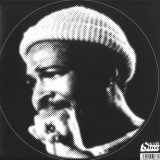
Marvin Gaye at his very best! Two classics from Gaye’s esteemed catalogue, ‘I Wanna Be Where You Are’ and ‘I Want You’ with alternative mixes that have never been on 12 inch before. Plucked from the Deluxe Edition of the spellbinding ‘I Want You’ album that was mixed Kevin Reeves & remastered by Ellen Fitton, these two cuts have always called out for loud and proud pressing on either side of a 12.
Up first, ‘I Wanna Be Where You Are’ written by the magical pairing of Leon Ware and Arthur 'T-Boy' Ross with Ware also behind the production controls. An abbreviated cover of Michael Jackson’s hit, it sees Gaye take a brief respite from his usual steamy and sensual swooning to express his love for his family. Jackson would then return the favour, taking influence from Marvin’s 1977 hit ‘Got to Give it Up’ to make ‘Don’t Stop ‘Til You Get Enough’.
Originally a 1:17 minute segue on the album, the Unedited version clocks in at over 6 minutes, turning it from a transitionary passage to a standalone gem. Extending those delectable grooves, building and breaking with a sun-kissed, funk channelling feeling that washes over like a warm wave. With the 7 inch release trading hands for over £75 on Discogs this ain’t one to miss.
On the flip, ‘I Want You’ written by the same duo as the A, with Leon Ware once again on the production and released as part of the same ’76 album. It was an LP that introduced a change in musical styles for Gaye, songs such as this giving him a disco audience thanks to Leon Ware. The Jam-Alternate version leaves Gaye’s vocals till the final section, letting that sweet soaring soundtrack sing to its absolute emotive peak. Sunrise or sunset, this one is not to be used lightly - tears of joy on the dancefloor guaranteed.
As NuNorthern Soul eases into its second decade, the label welcomes back a familiar face: Benjamin J Smith, a multi-instrumentalist, songwriter, and pro-ducer whose emotive, colourful and atmospheric compositions are the very definition of ‘Balearic’.
Famously, it was Smith’s The Movedrill Projects album that kicked off the NuNorthern Soul story way back in 2012, and he’s periodically returned to the imprint on numerous occasions since. It’s fitting, then, that Smith is stepping up once more, with NuNorthern Soul found-er Phil Cooper selecting to showcase two overlooked gems from his bulging back catalogue.
Both tracks are taken from Smith’s digital-only album Mojave (Vintage Californian Dreams), a set of thor-oughly gorgeous, West Coast-inspired library music compositions smothered in sumptuous strings and in-formed by the artist’s love of jazz-funk, languid jazz-rock and the kind of luscious, sunset-ready soundscapes that defy neat categorization.
Opening proceedings, and sitting on side A of the vinyl release, is the breath-taking ‘Marina Del Rey’, where layered, reverb-laden harmonic vocalisations, twin-kling electric piano improvisations, lazy guitar licks, spacey synth flourishes and sultry strings slowly rise above a toasty bassline and gentle, Latin-tinged beats. Smith cannily adds layers of sound throughout while moving the musical story forwards, leading to a mem-orable, awe-inspiring conclusion.
In contrast, ‘Big Sur’ sees Smith take an imaginary road trip through the driest, dustiest parts of the Cali-fornian countryside. Psychedelic rock style organ mo-tifs, sustained Hammond B-3 chords and glistening West Coast rock guitar solos dance atop a rubbery bassline and intoxicated, loose-limbed drums, with Smith’s eyes-closed vocalisations – drenched in reverb and delay – adding extra layers of aural loveliness. Like ‘Marina Del Rey’, ‘Big Sur’ is a vivid, widescreen con-coction tailor-made for soundtracking films that have yet to be made.
Drop a needle on Psyché's debut album and you'll see visions, or rather Mediterranean visions, be they of waves of heat shimmering above dunes of sand, or of women dancing around a bonfire on a rocky plain, or of bushy cliffs overlooking emerald-green and turquoise sea. The name Psyché is of course ancient Greek for 'soul' or 'mind', signifying the band's love of psychedelic funk, but also the wide range of Mediterranean influences – from Southern Europe to the Balkan Peninsula, and from Anatolia to the Maghreb – that provide an endless source of inspiration for their hypnotic sound and minimalist style.
Psyché members Marcello Giannini (Guru, Nu Genea, Slivovitz), Andrea De Fazio (Parbleu, Nu Genea, Funkin Machine) and Paolo Petrella (Nu Genea) have been active in the Naples music scene for almost two decades, most notably during the first wave of the new Neapolitan Power movement (Slivovitz, Revenaz Quartet). Over the years they have often crossed paths and collaborated on side projects in various genres (math-rock duo Arduo and, more recently, synth-pop duo Fratelli Malibu), before working together as the rhythm section of Nu Genea's live band. Following their first tour with Nu Genea in 2018, they started Psyché with the intent of exploring more minimalist styles and making music with just a few elements.
A unique combination of psychedelia, groove and improvisation, the music of Psyché goes back to the roots of our future; it evokes visions of a mythical past, blending centuries-old music traditions and mixing them with modern genres. Like a warm Mediterranean breeze, it travels across lands, seas and eras, distilling essential rhythms and cosmic pulsations.
The album's opener "Kuma" (titled after the first ancient Greek colony on the Italian mainland, now an archeological site near Naples) is like a vibrant, magical wave. With its deliberately simple harmony and sharp guitar riffs, it travels across the Mediterranean from Italy to North Africa, first lapping gently on Greek and Turkish shores – with some compositional elements reminiscent of Italian pop legend Lucio Battisti – and then speeding up and landing on the driving, syncopated rhythms of afrobeat. While listening to it your eyes fill with images of small white houses shining in the sun, of fig trees heavy with fruit, of spice bazaars and colourful medinas, and you can almost feel the desert wind blowing in your hair.
The journey continues with two examples of Psyché's bold and elegant approach to contemporary afrobeat and cumbia fusion: "Cumbia Mahàre" and "Amma". The former combines minimal synths and exhilarating rhythmic patterns of drums, percussion, guitar and bass, drawing us into the movements of an imaginary ritual dance (the term mahàre was used in Southern Italian dialects to indicate witches). Next is the cinematic and mysterious ambiance of "Angizia" (a snake goddess worshipped by the Marsi in ancient Italy), another fascinating mixture of different sonic traditions and cultures where hip-hop/funk drums are blended with Maghreb influences, Balkan echoes, and hypnotic, Theremin-like synths that have sort of a sci-fi movie quality to them.
The title track "Psyché", with its uptempo afro-rhythms, ethereal vocalizations and refined percussion, is almost a manifesto of the band's style and confirms the freshness of their minimalism, which is not afraid of taking in the sun of lands confined between the sea and the desert. The following "Manea" (named after the Roman-Etruscan goddess of the dead) is an afro-funk number with smooth and introspective dreamy jazz touches, and with an arrangement dominated by a guitar that, dripping notes like drops of water, creates a delicate, cinematic sound. Next, we come to "Hekate" (the Greek goddess of magic, witchcraft and crossroads), a track that fuses psychedelia, spacious Latin guitars and a fast, tight groove. The album comes to a close with the exquisite melodic ballad "Kelebek", which seamlessly combines hip-hop drums and dreamy guitars, and whose warm, flowing sonorities and evocative atmospheres conjure the image of a butterfly (which is what kelebek means, in Turkish) floating over the Mediterranean and, from there, the world.
Four Flies' new imprint Edizioni della Notte is back with a 12-inch maxi single of infectious remixes of Francesco Fisotti's boogie funk track "La Tartana" by eclectic Neapolitan DJ/producer Whodamanny.
The original track, which comes from the 2021 album Lido Sirena (named after a beach resort in the Salento area of Apulia, where Fisotti used to spend his summers as a child), blends funky disco, synths, drum-machine beats and improvisation into an exciting new sound that Fisotti calls "Adriatic funk".
Inspired by slow-tempo but irresistible Italo and cosmic disco tunes, in particular Tonino Balsamo's 1983 "Sta Guagliona Mo Ddà" (one of the rarest Neapolitan grooves ever, recently reissued by Periodica Records), Whodamanny's two remixes amplify the original's dancefloor potential by adding a nocturnal vibe and elements such as synths and electronic drums, as well as a short vocal line ("Don't stop till the music stops") to create a catchy call-and-response effect.
Whodamanny himself explains that he produced not one, but two remixes due to his love of extended dub versions. "It's sort of a professional quirk," - he says - "but you know, it's inevitable. You're sitting at the mixer, listening over and over to a track… Of course you'll find bits you can stretch out to create a fantastic flow! And my approach is always the approach of a DJ. I want whatever I produce to work well in my DJ sets, so these remixes too were bound to be club-oriented."
- A1: Afrocult Foundation - The Quest (Version Piano Solo)
- A2: Orchestre Lipua-Lipua - Distingue (Edit)
- A3: B G. And Fibre - (G#) Thanks And Praises
- A4: Akwassa - I Don`t Want No-Body (To Tell Me)
- A5: Aura - I Got To Make It
- B1: Akofa Akoussah - Ramer Sans Rame
- B2: Francis Bebey - La Condition Masculine
- B3: Benis Cletin - Jungle Magic
- B4: Sorry Bamba - M&Bife Je T`aime
- B5: Gregoire Lawani - Elle M` Mordu La Langue
After "Afro Exotique - Adventures In The Leftfield, Africa 1972-88" was enthusiastically embraced by heads, collectors and core Africa Seven enthusiasts alike, we dived back down into the vaults, and hope we've come up with another volume of listenable esoterica from roughly the same period.
"The Quest", courtesy of fleeting 1978 leftfield supergroup Afro Cult Foundation (featuring Joni Haastrup, Remi Kabaka and friends) sets the tone-bar high and sideways, with 4.50 mins of atmospheric, effected solo piano drift to get things started.
Congolese ensemble band "Orchestre Lipua Lipua" introduces gently lilting Soukous with 1977's, "Distingue", before BG and Fibre's "Thanks and Praises" introduces some wobbly, Moog tinged Lagos reggae shuffle to proceedings.
Akwassa's 1974 funker "I Don't Want Nobody" peels off into a Hammond / wah wah / moog mini odyssey half way through, before Tongolese chanteuse Akofa Akoussah's stirring "Ramer San Rame" introduces emotional charge into proceedings.
Francis Bebey's "La Condition Masculine" (1976) is a centre piece of the album, with it's skippy drum machine rhythm and spoken world vocal, but we'll admit, we probably wouldn't have used it if we'd read a translation of that vocal first.
Benis Cletin's "Jungle Magic" (1979) acid funk intro then gives way to a blatant, and at times slightly unhinged homage to the all conquering (at the time) "I Feel Love", Sorry Bamba's "M'Bife Je T'Aime" keeps the leftfield funk groove rolling, before the mournful, immersive croon of Gregoire Lawani's "Elle M'a Mordu La Langue" brings proceedings to a reflective close.
Mr. Confuse returns with a brand new series of 7Inches on Confunktion Records.
"No Time To Snooze" is a heavy up tempo funk tune with a disco feel. On the flipside "Break It Loose" catches your ear with a nice melody and a smooth breakdown part. Both songs feature heavy funk drums, a powerful horn section, funky guitar and driving Rhodes sound. Just the right sound for funkateers, organic sound lovers, disco heads and b-boys.
Don't miss this release on Confunktion Records as the 7 Inch vinyl version is limited to 300. Be quick on this one!