Propulsive tabla percussion and meditative drones collide in deep instrumental conversation on Shruti Dances, the debut collaborative album between UK heavyweights Auntie Flo and Sarathy Korwar, forthcoming on the newly relaunched, Make Music imprint.
Across six exchanges of dynamic electronic production and richly layered Indian classical percussion, Shruti Dances discovers two architects of rhythm and movement on an explorative journey through South Asian tonality and diasporic identity.
One an elemental force on drums, the other on the decks, London-based, Indian-raised drummer/composer, Sarathy Korwar and Scottish-Goan producer/DJ, Auntie Flo first connected back in 2019, unaware both were navigating opposite ends of the beat equilibrium. Where Auntie Flo (aka Brian D’Souza) was new to Korwar’s reimagining of jazz, Indian classical music, electronics and spoken word, Korwar was already a big admirer of Auntie Flo’s intl-facing club output, having first discovered D’Souza’s Rainfall On Red Earth off his Soniferous Garden 12” and 2019 SAY award-winning (Scottish Album of The Year), Radio Highlife. Once properly acquainted, Korwar invited Auntie Flo to remix a track off his landmark 2019 album, More Arriving, described by The Guardian as “a stylistic leap from jazz to hip-hop to spoken word…a protest record encompassing the breadth of immigrant experiences”.
The seeds of an unlikely yet powerful musical bond had been sown and when mutual friend, co-founder of Mixcloud, and Make Music label organiser, Nikhil Shah, asked the duo to inaugurate the label’s new live/electronic direction (previously home to Leon Vynehall, U and George Fitzgerald), Korwar and D’Souza hit the studio. Expanding on early conversations around traditional Indian instrumentation, practicing meditation and improvisation, Shruti Dances (a riff on free dance movement, Ecstatic Dance) was born. Meaning 'that which is heard' in Sanskrit, shruti refers to a note in musical terms, but in this case also references the album’s most prominent influence and instrument, the shruti box.
“The shruti box formed the basis of the sound of the project. It’s a drone instrument, similar to a harmonium, and it makes an amazing sound. I’ve spent the last two years studying sound therapy, and immersing myself in ambient and drone through the Ambient Flo project, and am particularly interested in how they can induce meditative states of consciousness. I was really excited to hear what the Shruti box could do with this EP.” Auntie Flo
Across six tracks, (each named after 6 of the 7 main musical notes in the Indian solfege system), Shruti Dances draws on a celestial mix of traditional percussion and processed digital effects. On opening track Dha, Korwar’s sparse tabla rhythms hop across D’Souza’s scattered, arpeggiated synths, where as on Pa, a Balearic shuffle channels Moroccan Gnawa music and Senegalese sabar meets Mark Ernestus’s Ndagga Rhythm Force. Harmonic speed tabla and roaming drones provide a sense of the ethereal and fourth-worldly on Ma, a track that’s resplendent, curious atmosphere would fit snug into the deep listening-focused programming of Auntie Flo’s Ambient Flo online radio station, a curatorial platform and avenue exploring his interest/promotion of mental health, launched over the UK’s first lockdown. Ni sees Korwar pick up the sticks, thrashing toms in a spirited frenzy, whilst downtempo album closer Sa offers some room for reflection, its slow, swirling chords cloud our focus, leaving us with all but the distant sound of birdsong.
Buscar:m p sound project
Jasmyn is the new solo project created by Jasmyn Burke, former singer-songwriter and frontwoman of the critically acclaimed Canadian band, Weaves. Having two JUNO nominations for Alternative Album of the Year and two SOCAN Songwriting Prize nominations, Burke has established herself as one of Canada's most exciting and fresh voices. With this new project, she has decided to use her own name, Jasmyn, to mark the start of exploring her own unique sound as a solo artist. Collaborating remotely with Los Angeles-based producer John Congleton (St. Vincent, Angel Olsen, Sharon Van Etten) on a body of work she had compiled over months of being in lockdown. Finally in the Spring of 2021, Jasmyn went to LA to record with Congleton, exploring themes of finding patterns in life and how to perhaps change them. On the general direction of her new album In the Wild, Jasmyn said, "This was written during the Fall of 2020; The world was feeling pretty heavy, and I felt myself wanting to write music that created a mood of happiness and space to grow. I feel like I have grown and changed as a person over the last few years and wanted to write songs that created a sense of confidence and well-being." With Weaves receiving worldwide support from the likes of Rolling Stone Magazine, NPR, Pitchfork, and more, Jasmyn is excited to share a new side of herself, perhaps her most honest and raw work to date.
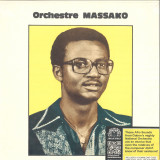
We are very excited to announce the release of "Orchestre Massako", the 14th compilation in our Analog Africa Limited Dance Edition serie. For this project we focussed on Afro Sounds from Gabon's mighty National Orchestra and its legendary band leader, Jean-Christian Mboumba Mackaya known as Mack-Joss, literraly the baobab of Gabonese music. Two songs also feature the singer Amara Toure, whose specific voice is impossible not to recognise and who has already been in the center of the previous compilation "Amara Toure 1973-1980" released back in 2015.
First full release by BSS (Luigi Vittorio Jansen) on Hivern following contributions to both 'Fragments' and 'Hivernation' projects. 'Bredius' showcases four tracks whose common thread is a detailed sound design of electrified percussion and a delicate and emotional approach to melodies. The EP will be available in two different versions: a standard one and a limited edition with the covers printed at l'Anacronica in Barcelona. Both artworks designed by Luigi himself.
Tresor Records is proud to announce 333 Mirrors from Torus, the artist alias of Joeri Woudstra. Coupled with its catalogue number
333, it indicates the large-scale conceptual thoughts behind the record, typical of Woudstra's practice. As an artist, he sets out to
frame re-interpretable references that trigger some subconscious recognition in listeners, with no set way to interpret them but leading to singular feelings and thought processes. The eect, a combination of static electronic sounds and looser field recordings, speaks to each listener differently.
333 Mirrors is, in part, the continuation of a project called These Cars Do Not Exist, made with videographer Mark Prendergast during the Covid-19 limbo. The live performed short film sold out selected popup cinemas in 2020 in a short sprint of shows. Two of the tracks on that project, Sound of the Drums and Chroniko, are re-imagined on 333 Mirrors, emanating as versions created in live performances. Set to be released as a single, Chroniko VIP will be accompanied by an enduring theme from that project, the three-winged bird, this time deceased. On 333 Mirrors, in exploring the ambient, stretched sonic universe of this project more, Woudstra moves from these three winged birds to the phoenix, finding a rebirth on the b-side with tracks that inhabit a similar sound as Deep Mid, Torus's inclusion on the recent Tresor 30 compilation. The sound of Torus places importance on the multi-faceted approach to sampling, pushing the idea behind the practice beyond usual boundaries. How to break the unwritten rules? Woudstra looks within by resampling previous Torus releases and reverse-engineering the sounds of the most revered pop and electronic musicians alive today, references that trigger recognition, melancholy and nostalgia in the listener.
3000 Mirrors features a staccato arpeggiating rigid pattern, the sonic eect of standing in front of a strobe until it becomes the anchor. Silence and interruption are used as a device to explore the physically uncomfortable, more the central compositional tool than the disrupted harmonic structures. Woudstra has never stepped foot in Tresor, so when writing this record, an enduring question spoke to him, what is Tresor when you have never been? How do you sample the essence of an unknown location? The closing track, Omnia, is the sound of anticipation, where the rave beckons. This imagined industrial space is calling for you.
The music world is most fortunate that the past two decades have witnessed the rediscovery of mind-opening music that went under-recognized when originally released, and the wellspring of musical content produced by a generation of brilliant musicians. One such musician was the late great drummer Steve Reid, whose reissued eclectic recordings on his own Mustevic Sound label gave his career a second wind.
Though teased on a well-received compilation, one Mustevic release never saw reissue: New Life Trio’s Visions Of The Third Eye, a tremendous collaborative effort between Reid, guitarist Brandon Ross and bassist David Wertman.
Due to overwhelming demand, Early Future Records and Finders Keepers Records are proud to announce a second limited edition pressing of the classic and final Mustevic recording. The release also includes a 20-page written zine featuring an in-depth testimonial and interview with Brandon Ross, and an explorative essay by Finders Keepers’ Andy Votel, as well as a wealth of archival photos, scores and reviews.
Reid’s long and varied career began in his native New York City, where he was involved early on as a member of the Apollo Theater House Band and the R&B scene of the 1960s, including recordings with Martha Reeves and James Brown. In the late 1960s, Reid spent three years in West Africa absorbing musical traditions and experimenting with artists such as Fela Kuti, Guy Warren and Randy Weston. After a stint in prison for dodging the draft as a conscientious objector, the drummer came out swinging in the 1970s. He worked regularly as a session and Broadway musician even while immersing himself into the jazz world, from the straight-ahead styles of Freddie Hubbard and Horace Silver to the otherworldly sounds of Sun Ra and Charles Tyler.
The do-it-yourself ethos of the New York Loft Scene inspired Reid to create his own label, Mustevic Sound, on which he began releasing his own recordings and those of a couple of friends. One of these trusted friends was David Wertman, a young bassist from New York who released his own Kara Suite on Mustevic in 1976.
New Life Trio’s story began when Wertman moved from New York to the more sedate but creatively vibrant town of Northampton, Massachusetts. Here Wertman met Brandon Ross, a young guitarist from New Jersey who had relocated there with his brother to join a coterie of New York expats who had found a comfortable, collaborative environment amidst the liberal college towns in the area, including avant-garde legends Archie Shepp and Marion Brown. Wertman and Ross became friends and began to perform together regularly, both formally and informally.
A string trio of Wertman, Ross and violinist Terry Jenoure was set to record, but Jenoure dropped out just prior to the date. This led Wertman to call his friend Steve Reid to come join the two at the Tin Pan Hollow Studios in Vermont to record what would become Visions Of The Third Eye on December 6, 1978. Originally conceived as an all-acoustic date, the recording would morph slightly when Ross added electric guitar muscle on a number of pieces. Reid would then take the helm and release the recording in 1980, giving a very auspicious birth to what has now become a classic spiritual jazz recording.
Fast forward to 1995…..New Life Trio gets a belated second wind from Stuart Baker’s inclusion of the Ross-voiced “Empty Streets” on his Universal Sounds of America compilation. The brief, haunting lead track just hinted at what the full Visions Of The Third Eye album had to offer. Audience awareness resulted in the pursuit of out-of-print original LPs, thus the rarity of Visions Of The Third Eye led to it becoming a kind of “holy grail” record for collectors of jazz and creative music. The album’s cover image was even incorporated into the cover of Freedom, Rhythm & Sound (SJB, 2009), a wonderful coffee table book presenting album covers from those revolutionary decades in Black creative music. The recording’s legend was cemented.
New Life Trio’s legend continues to grow partly due to the brevity of its existence. The triumvirate of Reid, Ross and Wertman would never work together again. Each member would continue along his own path, finding success in numerous projects. Reid’s career was reinvigorated with the reissue of the bulk of his Mustevic Sound recordings in the early 2000s, which led him to a rewarding partnership with Four Tet’s Kieran Hebden until Reid’s untimely passing in 2010. Wertman balanced life between Florida and Massachusetts as a regular in the local jazz scene, recording numerous projects with his wife, Lynne Meryl, before passing away in 2013. The fantastically creative Ross has remained active in the New York creative music scene with a number of projects, most notably with Henry Threadgill, Cassandra Wilson and Harriet Tubman, a wildly eclectic co-led band with underpinnings of rock, dub and free jazz.
Batsaykhan is the rebirth of the first project to ever release on Favela Discos, only a few hours after the label’s blogspot was put online back in 2013. Formerly known as Batsaykhantuul, Batsaykhan is not only one of Nuno Oliveira’s alter-egos but also something between a science fiction character and an ancestral spirit doomed to wander the earth in an apparently human physical manifestation.
The first album, Maestro Ir Noras, is a small and simple collection of tracks featuring only guitars and other stringed instruments, the second, being even smaller (only a single track) already seemed to lead us on through the psychedelic desert that would define the sound of the project.
After a long hiatus, Batsaykhan finally emerged from the drawer, or maybe it was from the desert, only to reveal that he had shape-shifted, now taking the form of a trio. With the help of André Azevedo and Tito Silva, Nuno started working on old demos of unpublished compositions and adapting them to the new formation. The trio started the process of refining the songs and the sound of the record, using only a strict selection of synths, percussions, bass and guitar.
They ended up settling down on a terrain of moving sands for those who feel the need to define their sound, between a forest of psychedelia, a river of ambient and the obvious desert that has buried the guitars under its “western” sand.
Batsaykhan’s self-titled release, and the project’s first long play will finally unveil itself on the last day of February, digitally and on 12’’ vinyl, with design and artwork by Rita Laranja.
140g Black vinyl LP – Printed inner sleeve – Sealed plastic sleeve
In Trux We Pux is an editorial project organized by the Porto based label and collective Favela Discos. Focusing on the city’s thriving experimental and improvised music scene, it sets out to portrait in a series of four volumes some of the characteristic sounds and collaborative practices that have been in development in Porto during the last few years.
In Trux We Pux 02 contains the first of Favela Discos’ collective pieces to be published, and it was chosen to represent a long series of site-specic pieces developed by the collective since its formation. Most of the time these pieces remain lost in time or in the label’s archives.
Desilusão Óptica is an audiovisual piece developed for the festival Serralves em Festa 2017 and was recorded between the concert and rehearsals. The piece is influenced by the book Musicophilia by Oliver Sacks, and tries to explore the notion of auditory hallucination, in this case based on the idea of a phantom sound unconnected to its object.
Starting quietly with a single flute note, Desilusão Óptica slowly grows fuller but more uncomfortable as the pitch rises gradually in a hypnotic effect. The sound we hear is a mix of the sound produced live, its manipulation and repetition, thus the piece exists between the time when it happens, its immediate repetition and ghosts of past sounds.
The flute, delayed and sampled, embodies both the sounds it produces and memories of past sounds, creating a confusion between objecto and sound. The sound is produced by an object but is at the same time separated from it, like in Mulholland Drive when we watch a singer emotionally dedicated to a performance and whose voice keeps on singing even when her body collapses.
Like in Dub Music, the musicians are divided into two groups: those who play, in this case divided by winds, percussion and electric guitars, and the dub master / sound manipulators who launch samples of previous recordings and manipulate the sound that is produced live, through loopers and delay pedals.
Vinyl now gone back to June. RIYL: Slowdive, DIIV, Electric Youth, The Cure, My Bloody Valentine. Solo project of Los Angeles based Matthew Doty (ex-Saxon Shore). For Matthew Doty, Deserta has always been about exploring a sonic universe that allows him to express a kaleidoscope of emotions, without having to say much at all. Through a patchwork of reverb-tinged textures – drone guitars, lingering synths and driving percussion – the Los Angeles-based singer/songwriter and multi-instrumentalist weaves together stories of care, frustration and catharsis that ultimately stretch to a gentle resolve. On new album Every Moment, Everything You Need, Doty chronicles the kind of year we all fear, full of uncertainty, tension and sustained pressure, and transforms it into a celebration of perseverance. It’s an essential reminder that we have the power to shape the stories we tell. The pandemic meant that Doty had to give up his studio and downsize a lot of his gear and instead, carve out a space in his two-bedroom apartment to craft the next chapter of Deserta. Sharing the space with his wife and son, Doty and his partner are also essential healthcare workers, which meant the couple would often have to tag-team childcare, along with 13-hour shifts in PPE and people constantly calling with questions about the ever changing guidelines and protocols. Once the blueprint for Every Moment, Everything You Need was set, Doty reached out to a number of collaborators to stitch together his vision for the sonic landscape. James McAlister (Sufjan Stevens, The National, Taylor Swift) came onboard to perform and record drums, while Caroline Lufkin (Mice Parade) wrote and performed vocals on the ethereal “Where Did You Go.” Elsewhere, the LP was mixed by Dave Fridmann (Tame Impala, Mogwai, Interpol), with Beach House and Slowdive producer Chris Coady engineering and co-producing, making this the first time Fridmann and Coady had worked together on a project. While the vocals are more prominent than Deserta’s previous albums, it’s their amalgamation with the instrumental aspects that secures Every Moment, Everything You Need as Deserta’s most confident and assured release to date. An affecting emotional candor teamed with persistent riffs and tenacious rhythms sees Doty unafraid to dive deeper; an unrestrained approach that ushers in a lustrous purging of agitation and anxiety. Showcasing those dark, exhaustive thoughts through crucial swells and looped, electronic soundscapes, it’s an LP that’s infinitely layered, with something new to discover with each and every enchanting listen.
140g Black vinyl LP – Printed inner sleeve – Sealed plastic sleeve
In Trux We Pux is an editorial project organized by the Porto based label and collective Favela Discos. Focusing on the city’s thriving experimental and improvised music scene, it sets out to portrait in a series of four volumes some of the characteristic sounds and collaborative practices that have been in development in Porto during the last few years.
Milteto is an informal orchestra born out of the Favela Discos collective somewhere in 2014. The idea, that had been around for a while, was materialized for a concert in one of the first events hosted by Favela, in the extinct Picadilly Pub in Porto, a small strip club turned underground venue. It was one of those wet pre-covid nights where the condensation dripped down the mirrored walls, in a loud endurance contest that resulted in a fainted audience member.
For a very large number of reasons, it would be hard to define Milteto’s whole “career” in an album: the band has always inhabited the live context, trying to create massive immersive sound experiences for both the listeners and the musicians, subconsciously seeking to achieve transcendence by volume.
So, in reality this is a momentary reflection of an always mutating entity, instead of trying to define the several years of drastically different experiences in just 45 minutes, they took to the album as just another live presentation where they adapted to the idea of what a record could be as if they would adapt to a venue.
Faced with the idea of creating an album that reflected the project’s mutability, the band looked at the medium itself for inspiration, as the vinyl record has two sides, they thought that maybe it would be a good idea to reflect that on the music. So the recording sessions were split into two days, with two different groups of guests. One side set to recreate a more physical manifestation of the band, the other a more mental side, the first teeming with percussion, the other with electronic devices and synthesisers.
Soul / Electro / jazz / trip hop. It was in 2019 that Matteo (one of the 3 members of the band Chinese Man and co-founder of the label CMR) met the first musicians who would be part of the project "Matteo & Bro". Starting with guitarist Karim Addadi and bassist Christophe Lincontang (with whom he collaborates on a film score), Matteo then surrounded himself with drummer Hugo Pollon and saxophonist, flutist and Duduk (Armenian flute) player Lamine Diagne. A real desire to launch a project where the musicians are at the heart of the creative process progressively grew as the meetings went on. The artists gather in Bron (near Lyon) for the composition of the eponymous opening track. On this album we also find the voices of two female artists, Isadora (Belgium) on "Sweet Shadows" and Tania Saleh (Lebanon) on "Sakakeen", as well as General Elektriks with its keyboards and its sublime groove on several tracks ("Bina" & "Prumirim"). Between programming & electronic production, arrangements and composition, the demos take shape, the groove and the universe between soul, funk, trip hop and world music extend the desire and the production of an album. Due to the health crisis, the album is finally recorded in late 2021 with the help of Sodi, sound engineer and producer of many albums (Fela & Femi Kuti, Saul Williams, Deluxe, IAM ...). For the orchestration of the tracks "Path" and "Sakakeen", Matteo also called on Franck Lebon (film music composer) to add a cinematic dimension to these two tracks. Tracklist : 01 – Bron / 02 - Prumirim ft. General Elektriks / 03 - Sweet Shadows ft. Isadora / 04 - With S / 05 - Path ft. Franck Lebon / 06 - Sakakeen ft. Tania Saleh / 07 - Bina ft. General Elektriks / 08 – Playa
The clandescent Federico Sutera and Laurent Schmidhäusler form the insidious duo Rotkeller, known for their excursions into ponderous and maundering interpretations of electronic music. Their last release on Thrènes was an experimental and perplexing delight that perpetuated their virtuosity. The Swiss pair has returned to release a pressing technoid sound on the Thrènes imprint entitled Antimatter.
The project kicks off the track 'Antimatter'. It has distinctive and emphatic patterned percussions and a wandering pad that wistfully saunders in and out. There are clever uses of claps, crisp hats and insisted clicks. The track lays the foundation of the sound to expect from the EP with comprehensive yet wonderous beats.
'DipK' follows the opening track, which has a bit more body and sways. It was made for the waning hours of a club when it might be getting bright outside, but the crowd doesn't want to leave. It has a captivating synth that runs throughout and an infectious bassline; the sound allows the mind to roam free but rhythmic drums, hits and snares make the body move.
Midway through is the Kangding Ray remix of 'Tetra4'. The French-born but Berlin-based artist is known for his mastery in blurring the lines between techno and experimental, and this track is a testament to his talents. The cut has a classic underground club feel as it simply keeps up the tempo. The oscillating synth is compounded with spacy fluttering stabs with a kick drum that adds resounding velocity to the track.
The penultimate track, 'Skpp Skpp', features B.Skupin. It has an enchanting heavy breath prominent throughout the cut, accompanied by ethereal choir chants and a deep repetitive voice before being replaced by a siren-like synth. The beats fluctuate by dropping in and out, enhanced by the catalyst of deep drums and luring drops.
The final cut is the original mix of 'Tetra4', which keeps the same modus operandi of the remix. The telling differences come in the pensive drops and ability to slow tempo momentarily with hypnotic synths and drifting rhythms.
- Etran De L'air - Tarha Ebouse Dighe Mane
- Oumou Diabate And Kara Show - Wara
- Jeich Ould Badu - Elyn
- Alkibar Jr - Adouna
- Amaria Hamadalher - Tarhanine
- Luka Productions And Kandiafa - Ne Be Massa Wofo
- Andal Sukabe - Hey Malale
- Hama - Alhoria
- Veyrouz Mint Seymali - Saghmi Yessri
- Bounaly - Takamba
- Oyiwane - Fatima
In 2020, Sahel Sounds hosted a project called Music from Saharan WhatsApp. This series consisted of ephemeral digital EPs, documenting live performances by some of the most exciting acts in the Sahel playing music, including Nigerién techno, wedding rock, Woodabe guitar, WZN, traditional music, Mandingue music, and more.
Responding to an open call from our network of artists, musicians recorded a handful of tracks on their cellphone and sent them over the popular mobile app WhatsApp. Each session was hosted for a month on Bandcamp and sold on a sliding scale, with all profits wired directly to the musicians. After a month, the EP would disappear, replaced by another one.
Now, some of the label's favorite tracks from this series are collected for the first time outside of Bandcamp as the Music from Saharan WhatsApp compilation LP. This LP features tracks by established Sahel Sounds artists such as Etran de L'Aïr, Hama, Alkibar Jr, Amaria Hamadaler (of Les Filles de Illighadad), and artists new to the label like Bounaly and Andal Sukabe.
- A1: Signe" (Eric Clapton) - 3:13
- A2: Before You Accuse Me" (Ellas Mcdaniel) - 3:36
- A3: Hey Hey" (Big Bill Broonzy) - 3:24
- A4: Tears In Heaven" (Clapton, Will Jennings) - 4:34
- B1: Lonely Stranger" (Clapton) - 5:28
- B2: Nobody Knows You When You're Down And Out" (Jimmy Cox)
- B3: Layla" (Clapton, Jim Gordon) - 4:46
- B4: Running On Faith" (Jerry Lynn Williams) - 6:35
- C1: Walkin' Blues" (Robert Johnson) - 3:37
- C2: Alberta" (Traditional) - 3:42
- C3: San Francisco Bay Blues" (Jesse Fuller) - 3:23
- D1: Malted Milk" (Robert Johnson) - 3:36
- D2: Old Love" (Clapton, Robert Cray) - 7:53
- D3: Rollin' & Tumblin'" (Muddy Waters) - 4:10
Strictly limited to 10,000 numbered copies, pressed on MoFi SuperVinyl at RTI, and mastered from the original master tapes, Mobile Fidelity's ultra-hi-fi UltraDisc One-Step 180g 45RPM 2LP collector's edition enhances the blockbuster work for today – and the ages to come. Surpassing the sonics of any prior version, it peels away any remaining limitations to provide a transparent, lively, ultra-nuanced presentation of a record that won six Grammy Awards – including prizes for Album of the Year, Best Male Rock Vocal Performance, and Best Rock Song. The expanse and depth of the soundstage, fullness of tones, natural snap and extension of the guitar strings, realistic rise and decay of individual notes, and roll of Clapton's vocals all attain demonstration-grade levels.
Housed in a deluxe box, the UD1S Unplugged pressing features special foil-stamped jackets and faithful-to-the-original graphics that illuminate the splendor of the recording and the reissue's premium quality. No expense has been spared. Aurally and visually, this UD1S reissue exists as a curatorial artifact meant to be preserved, touched, and examined. It is made for discerning listeners that prize sound quality and production, and who desire to fully immerse themselves in the art – and everything involved with the album, from the images to the finishes.
Truly, everything about Unplugged matters. Having sold more than 10 million copies in the U.S. and more than 26 million copies worldwide, the 1992 work resonates with listeners of all generations and speaks a universal language. Recorded for MTV before a very small audience on January 16, 1992, the 14-track set became the signpost for future acoustic-based endeavours that witnessed artists of all stripes re-examining their catalogues and, in many instances, as Clapton does here, placing familiar originals in fresh contexts and unveiling spirited versions of cover material. Needless to say, Clapton's session turned MTV's series into can't-miss programming for which the likes of Rod Stewart, Tony Bennett, Nirvana, Pearl Jam, and more would soon participate.
Kicking off his performance with a spirited instrumental to establish the mood, Clapton immediately wades into the style that originally caught his attention as a British teenager in the early 1960s: American blues. Backed by a superb band that includes guitarist Andy Fairweather Low, pianist Chuck Leavell, bassist Nathan East, and drummer Steve Ferrone, Slowhand delivers a rhythmic, toe-tapping rendition of Bo Diddley's "Before You Accuse Me" that announces he's come to reconnect with his muse. What follows over the course of nearly the next hour stirs the heart, shakes the soul, moves the mind, and invigorates the senses.
Of course, there's no talking about Unplugged without keying in on "Tears in Heaven," the striking ballad Clapton penned about the death of his four-year-old son. More emotional, direct, spare, and healing than the studio version released a year prior, it crackles with an intimacy, maturity, poignancy, honesty, sweetness, and integrity that inform the entire concert. Indeed, how Clapton frames other favorites here – transforming "Layla" into a relaxed, comfortable stroll and ruminating on the seasoned ripples flowing throughout "Old Love," for example – indicate both a creative rebirth and gleeful acceptance of the next phase of his career.
And that very direction (two of Clapton's next three albums would be all-blues projects) is what really makes Unplugged so indispensable. Equivalent in mastery if not in volume to the output that earned him his "God" nickname, interpretations of Jesse Fuller's "San Francisco Bay Blues" (complete with kazoo!), Big Bill Broonzy's "Hey Hey," Robert Johnson's "Walkin' Blues" and "Malted Milk," and Muddy Waters' "Rollin' & Tumblin'" showcase a learned professor in his element and all the wheels turning.
In every regard, Clapton's Unplugged session was appointment listening when it came out in August 1992. With the arrival of MoFi's UD1S pressing, that sensation is more urgent than before.
More About Mobile Fidelity UltraDisc One-Step and Why It Is Superior
Instead of utilizing the industry-standard three-step lacquer process, Mobile Fidelity Sound Lab's new UltraDisc One-Step (UD1S) uses only one step, bypassing two processes of generational loss. While three-step processing is designed for optimum yield and efficiency, UD1S is created for the ultimate in sound quality. Just as Mobile Fidelity pioneered the UHQR (Ultra High-Quality Record) with JVC in the 1980s, UD1S again represents another state-of-the-art advance in the record-manufacturing process. MFSL engineers begin with the original master tapes and meticulously cut a set of lacquers. These lacquers are used to create a very fragile, pristine UD1S stamper called a "convert." Delicate "converts" are then formed into the actual record stampers, producing a final product that literally and figuratively brings you closer to the music. By skipping the additional steps of pulling another positive and an additional negative, as done in the three-step process used in standard pressings, UD1S produces a final LP with the lowest noise floor possible today. The removal of the additional two steps of generational loss in the plating process reveals tremendous amounts of extra musical detail and dynamics, which are otherwise lost due to the standard copying process. The exclusive nature of these very limited pressings guarantees that every UD1S pressing serves as an immaculate replica of the lacquer sourced directly from the original master tape. Every conceivable aspect of vinyl production is optimized to produce the most perfect record album available today.
MoFi SuperVinyl
Developed by NEOTECH and RTI, MoFi SuperVinyl is the most exacting-to-specification vinyl compound ever devised. Analog lovers have never seen (or heard) anything like it. Extraordinarily expensive and extremely painstaking to produce, the special proprietary compound addresses two specific areas of improvement: noise floor reduction and enhanced groove definition. The vinyl composition features a new carbonless dye (hold the disc up to the light and see) and produces the world's quietest surfaces. This high-definition formula also allows for the creation of cleaner grooves that are indistinguishable from the original lacquer. MoFi SuperVinyl provides the closest approximation of what the label's engineers hear in the mastering lab.
SACD
Mastered from the original master tapes, Mobile Fidelity's numbered hybrid SACD enhances the blockbuster work for today – and the ages to come. Peeling away remaining sonic limitations to provide a transparent, lively, ultra-nuanced presentation of a record that won six Grammy Awards (including prizes for Album of the Year, Best Male Rock Vocal Performance, and Best Rock Song), it places Clapton and company in your room. The expanse and depth of the soundstage, fullness of tones, natural snap and extension of the guitar strings, realistic rise and decay of individual notes, and roll of Clapton's vocals all attain demonstration-grade levels. A perennial audiophile favourite, Unplugged now tosses its hat into the ring as a demonstration disc.
140g Black vinyl LP – Printed inner sleeve - Sealed plastic sleeve
In Trux We Pux is an editorial project organized by the Porto based label and collective Favela Discos. Focusing on the city’s thriving experimental and improvised music scene, it sets out to portrait in a series of four volumes some of the characteristic sounds and collaborative practices that have been in development in Porto during the last few years.
In Trux We Pux 01, the first record of the collection, is focused on the electronic side of the eclectic but characteristic experimental and improvised scene in Porto, and contains a selection of 23 musicians that have been developing their own take on whatever niche genre they dwell in. Among the list of musicians are Filipe Silva (HHY & The Macumbas), Crónica Electrónica’s heads @c, ocp, coletivo vandalismo and several others that populate a thriving scene that spans a wide gamut of sounds, from delicate to abrasive.
As the tracks themselves, the different approaches to composition and production add to this compilation’s schizophrenia. The first side of the record offers us a spacious and abstract scenery, starting with a collage of field recordings, banjos, and fans, narrated by google translate’s voice. The following two tracks flow along the granular tide of ambient spaces and atmospheres slowing down a bit before the second side turns around 180º and heads towards more rhythmic fields.
Coletivo vandalismo & querido lider present us with their exploration of half balearic, half german-synth-music pulsing away at the beat of broken down dancehallish drums and reggae breaks. Challenger & Lorr No’s track is a trainwreck heading down a break driven jungle that lead us to the album’s closing arguments: MOSCXS’ sludged beat goth-step exploration around the poem “Poema Agreste” by Glória de Sant’Anna.
140g Black vinyl LP – Printed inner sleeve – Sealed plastic sleeve
In Trux We Pux is an editorial project organized by the Porto based label and collective Favela Discos. Focusing on the city’s thriving experimental and improvised music scene, it sets out to portrait in a series of four volumes some of the characteristic sounds and collaborative practices that have been in development in Porto during the last few years.
In Trux We Pux 04 is the last in a series of four records organized by Favela Discos, set out to shine a light on Porto’s thriving experimental and improvised music scene. Throughout the collection the label tries to expose the eclectic sound and collaborative practices that have been in development in the last few years in the city by promoting the collaboration between artists and the creation of new collective improvisation pieces.
As the first album dwelled into the electronic spectre of the scene, this volume veers itself to the physical side of experimental and improvised explorations. Although there is space for outsiders manipulating the sound by electronic means, most of the music in this album is plucked, bowed, percussed or sung. The artists themselves are as varied as the music they played, among the 13 artists that collaborated for the creation of this album are many promising newcomers but also some of the more recognizable and relevant names in the scene, with the presence of the Sonoscopia founder Gustavo Costa, João Pais Filipe one of the most characteristic drummers in Portugal, and the DIY duo and underground staple Calhau!.
As we could suspect, the diverse selection of musicians, while providing us a view on the various kinds of musical languages that populate the city’s scene, also creates a dynamic collection of sounds. Spanning a large gamut of sub-sub-genres, from near-musique concrète to tribal noise, the album is a rollercoaster collage that miraculously achieves logic and cohesion, like a voyeur listener taking us on a journey through an abandoned mall where most of the bands in Porto rehearse, whose halls reverberate with a cacophony of music.
- A1: Sleepwalkers
- A2: Money For All
- A3: Do You Know Me Now?
- A4: Angels
- B1: World Citizen - I Won't Be Disappointed
- B2: Five Lines
- B3: The Day The Earth Stole Heaven
- B4: Modern Interiors
- C1: Exit - Delete
- C2: Pure Genius
- C3: Wonderful World
- C4: Transit
- D1: World Citizen
- D2: The World Is Everything
- D3: Thermal
- D4: Sugarfuel
- D5: Trauma
REMASTERED
Grönland Records announce a revised, remastered reissue of “Sleepwalkers” by DAVID SYLVIAN. Available as a gatefold 2LP with exclusive art print and as a gatefold digipack CD, this new edition also features the previously unreleased track “Modern Interiors”.
in the 00s, DAVID SYLVIAN produced two of his strongest and most solitary statements, BLEMISH and MANAFON. but those records don’t tell the whole story. during that the same period, SYLVIAN created an alternate body of work: a series of collaborations and side projects with leading talents of pop and improv, electronic and contemporary classical music. the best of these recordings are gathered here on SLEEPWALKERS, meticulously sequenced and remixed: the fruits of one-off meetings and lifelong partnerships, they jump from bliss to intrigue, romance to sensuality, as arch experiments lead into the lushest pop.
the single ‘world citizen – i won’t be disappointed,’ written with RYUICHI SAKAMOTO, is a sublime example, with an impeccable melody and lyric warmed by SYLVIAN’S gorgeous tenor. SYLVIAN has worked with SAKAMOTO for close to three decades. by contrast, on ‘pure genius,’ a collaboration with CHRIS VRENNA aka tweaker, he sounds like he’s walked into a heist flick, singing the part of a delusional, dangerous bedroom genius. as sylvian explains, tracks like this ‘give me a chance to write in a way that’s completely non-personal, playful. it’s an exercise of some kind, working within the parameters of a given assignment.’
intrigue of a different kind drives ‘sugarfuel,’ with music by JEAN-PHILIPPE VERDIN, aka READYMADE FC. the lyrics offered ‘an opportunity to grapple with a more overt sexual theme than anything i’d previously attempted, as suggested by a vocal sample in the original track provided, a threateningly insistent ‘i’m on your side.’ so i took that as my point of entry and ran with it. i would love to write more on this subject should i find the right context. you’re always aware of walking a thin line exploring sexuality with language alone. the failings of the great and the good are strewn all around.’
NINE HORSES’ ‘wonderful world’ strolls in on a black tie bassline and the echoing coos of swedish chanteuse STINA NORDENSTAM, whose high chirps brush hands with SYLVIAN’S lead; there’s the blistering ‘money for all’ by FRIEDMAN and SYLVIAN, an oblique response to the fallout of 9/11 and the war on iraq. this is followed by the last known recording of SYLVIAN’S singing voice in over a decade, ‘do you know me now?’, a live studio recording later augmented by JAN BANG, EIVIND AARSET and ERIK HONORÉ. it’s certainly a title that’s become more relevant over time as SYLVIAN, in the latter stages of his career, repeatedly comes face to face with a new generation of admirers fixated on the life and times of the band formed by his younger self. SYLVIAN is one of only a handful of musicians to have successfully moved on from overt pop beginnings into a domain all his own but is consistently plagued by the misguided desires or expectations of some unfamiliar with his evolution to do a u-turn, pick up where he left off in the late 90s. although this compilation, as well as his writing for NINE HORSES, adequately shows SYLVIAN’S traditional love of melody is
intact, that it’s consistently remained part of his output, there’s no denying his focus has shifted, evolved.
the refusal to embrace complacency, the need to cover new ground ‘as older generations of popular musicians have a moral duty to explore despite, or because of, the greater possibility of failure’ will, i believe, lead to a reassessment of his later work that embraces a sightly more complex relationship with what we’re referring to as ‘melodic’, accompanied by an exploration of improvisation without dogma or beholden to any ‘givens’ for which he’s not infrequently been castigated. for SYLVIAN, there are no such boundaries. it’s obvious that different facets of his work co-exist without conflict but not necessarily for the majority of his audience. again, this places SYLVIAN in the odd, rare, unenviable(?) position of moving forwards leaving many in his devoted audience behind as, should he decide to return to music, it’s unlikely he’ll be aiming to placate an audience in love with work that preceded the 00s. in fact we’ve no idea where new work, should it surface, may lead.
SLEEPWALKERS also spotlights the innovators who contributed to MANAFON and BLEMISH. CHRISTIAN FENNESZ hangs a crackling, shimmering curtain behind the vocal on ‘transit,’ matching his signature mass of sui generis sounds to sylvian’s stately performance. and the title track began with an instrumental handed to SYLVIAN by MARTIN BRANDLMAYR of POLWECHSEL, soon after the first recording session for MANAFON. spite crackles in the gaps between the percussion, and onkyo artists TOSHIMARU NAKAMURA and SACHIKO M set the stage for the scathing lyrics in the chorus.
it cuts close to the bone and so do the two spoken word cuts, ‘angel’ and ‘thermal,’ produced by SAMADHISOUND recording artists JAN BANG and ERIK HONORÉ (and featuring ARVE HENRIKSEN on trumpet). SYLVIAN describes the latter work as a ‘love poem’ to his daughter. ‘‘thermal’ reflects on a period when our time in sonoma, ca was coming to an end. we’d stayed in temporary accommodation which had lulled us into a false sense of security. we had pear, apple, lemon, and figs trees growing in the yard. a small but exotic paradise. a cocoon. but the cracks were beginning to show in the relationship between ex-wife INGRID CHAVEZ and i which is where i think this underlying sense of anxiety, which runs throughout the poem, is derived from, coupled with the need to provide physical and spiritual stability to the children, the youngest of whom was just under two at the time. the poem is addressed to her. our world was dissipating, coming apart at the seams, but we were an island unto ourselves.’
‘five lines’ marked the start of a new partnership with acclaimed young composer DAI FUJIKURA, who at the time of recording was also working on remixes of MANAFON for what became DIED IN THE WOOL. the string quartet was performed by the celebrated ICE ENSEMBLE and written for SYLVIAN, who FUJIKURA cites as an early influence. says SYLVIAN, ‘the composition moves through numerous changes in time signature but as i had no knowledge of what these were i just relied on my gut instinct, and responded, as i always do, with what felt right to me, composing an entirely new melody in the process. some months later i was working in a studio in london and dai dropped by. i rather tentatively asked if he’d like to hear a rough mix of the song as it stood, painfully aware that my contribution might make no sense to him at all but, to my relief he loved the result.’
there’s one further new addition to this collection, the first official release of a track composed in response to the tsunami in fukushma, ‘modern interiors’, featuring SYLVIAN once again in collaboration with BANG and AARSET.
like 2000s EVERYTHING AND NOTHING, SLEEPWALKERS is a retrospective of a particular decade when SYLVIAN was free of major label interference and could follow his own instincts without having to explaining himself – but it’s also an eye-opening complement to his solo releases. as SYLVIAN explains, ‘some collaborations seem to be a one-off exchange but you can never be too certain of that fact. others have been long term. in this respect, RYUICHI comes to mind. there’s others with whom you hope to continue working as you feel you’ve barely scratched the surface. other times offers come out of the blue, welcome, inspired. regardless, it’s wonderfully explorative to have so many possibilities to juggle with. each collaboration seems timely. it’s as if there’s a rightness to the exchange at a given moment in time.’
in the meantime, we hope you enjoy the work presented here, personally selected, remixed and sequenced and entirely remastered. these are the orphans, abused, estranged, exotic, migrating from diverse corners of the globe, brought together under one roof which they're learning to share despite their differences.
‘as many of you will already be aware, despite relatively continuous work on solo albums, i’ve maintained strong ties with a number of musicians throughout my life in one context or another. on this new collection, let’s call it SLEEPWALKERS 2.0, a selection of collaborative work produced over the period encompassing blemish through to manafon, i’ve included compositions by nine horses as well as more fleeting flirtations and one-offs. neglected offspring. represented also is long term friend and writing partner, RYUICHI SAKAMOTO, as well as more recent but potentially equally productive partnerships such as CHRISTIAN FENNESZ, ARVE HENRIKSEN and contemporary classical composer DAI FUJIKURA.
i hope you enjoy the work presented here, personally selected, remixed and sequenced and entirely remastered. these are the orphans, abused, estranged, exotic, migrating from diverse corners of the globe, brought together under one roof which they're learning to share despite their differences.
we contain multitudes. we’re nothing if not contradictory.’
DAVID SYLVIAN, 2010
(consistency is contrary to nature, contrary to life: aldous huxley)
The movements of KUNZITE’s Mike Stroud and Agustin White have seen them orbiting around each other, occasionally crossing paths yet consistently admiring each other’s work. The pair traversed the globe separately with their different projects and personal adventures -- Mike touring with his band Ratatat and Agustin on a spiritual journey exploring yoga, meditation and psychedelics -- while looking to one day do something together. The formation of KUNZITE saw them finally able to merge their minds and mission, with a sound that blends psychedelia with electronic, beat-heavy production and live instrumentation. Most of the recording process for their new album, VISUALS, started while at Agustin’s stripped back studio in Hawaii, and finished at Mike’s barn studio in upstate New York, with instrumentation including acoustic, electric and lap steel guitars, organ, synthesizers and the charango.
- 1: Scroll
- 2: Montana (Main Theme)
- 3: Noise Destroys Something
- 4: Wonderful
- 5: Pesticides
- 6: Revenge
- 7: Comtech
- 8: Greyhound
- 9: Second Test
- 10: Desecration
- 11: Tell Me Your Heart
- 12: Dark Materials
- 13: Becky's Theme
- 14: Blue Tunnel
- 15: Manifesto
- 16: Ranger Gary
- 17: At Peace - Freedom Club
- 18: Prophecy
- 19: Skidders
- 20: Montana (Reprise)
Ted K. Kaczynski is notorious for both tragically murdering three people (and wounding an additional 23) via bombs sent in the mail and for his numerous writings on the evils of technology he composed during his primitive residency in the woods of Montana. Film director Tony Stone's choice to have the renowned electronic artist Blanck Mass score the film is somewhat ironic and creates an obvious tension perfect for the controversial and complex subject matter. 2020 saw the first Blanck Mass movie score, for the soundtrack to Nick Rowland's acclaimed cinematic debut Calm with Horses. This expansion into new areas of melodic composition and textural exploration won Blanck Mass many new fans, with the BBC's acknowledged number one film buff Mark Kermode proclaiming the work the soundtrack of the year. In 2021, Blanck Mass won the prestigious Ivor Novello Award for Best Original Film Score and has firmly established himself at the forefront of the latest wave of experimental soundscape wizards. Recording during lockdown at his studio in Edinburgh, Scotland, Blanck Mass's Ben Power was in the perfect setting for a musical piece intended to capture the isolation central to Kaczynski's story. Power was also working with a director in a time zone 10 hours behind and thus many sessions required working in the middle of the night, which added a fitting intensity to the composition process. He said of the project "I wanted it to feel like an `epic'" and drew on the legends Sergio Leone and Ennio Morricone for inspiration in encapsulating the energy of the perceived good vs. evil. The gentle madness of sound achieved is exquisite and slowly builds in intensity and desperation as the score moves along. Power is able to perfectly capture the complexity, the terror and the deep emotionality of the film while presenting an often breathtakingly beautiful and always masterful album that stands on its own as a work of art. For Fans of Tim Hecker, Oneohtrix Point Never, DJ Shadow, Coil, Arca, Andy Stott, Fuck Buttons.
First Word Records is extremely delighted to present 'Torn : Tonic' — the sophomore album from singer, performer, poet and producer, Allysha Joy.
Delivered unfiltered, straight from the soul, ´Torn : Tonic' pulls us into a 10 track journey that weaves through the multiplicity of letting go, standing tall, and creating space all at once. The album's expansive and vivid exploration of healing examines the power that comes with accepting the complexity of change. Allysha walks listeners through the remedy she finds in sound and emerges empowered to share this healing with others. Deeply moving and lyrically compelling, 'Torn : Tonic' hosts a stellar line-up of artists, creating a world of collective power, growth, and hope.
Allysha Joy is an integral member of the vibrant Melbourne soul & jazz scene, well known for both her solo work and as lead vocalist for 30/70. A uniquely-talented soul, her husky voice, and formidable Fender Rhodes prowess have garnered attentive audiences around the world.
Her 2018 debut album 'Acadie : Raw' was named 'Best Soul Album' at the Music Victoria Awards, featured in Bandcamp's 'Top Soul Albums' of the year and received a nomination for 'Best Jazz Album' at the Worldwide Awards. An incredibly prolific artist, Allysha has released on labels; Rhythm Section, Gondwana, Future Classic, Total Refreshment Centre and now another drop for First Word, after her acclaimed 2020 EP, 'Light It Again'.
Allysha's production on 'Torn : Tonic' effortlessly arches across a sonic palette, comprised of shuffling broken grooves and exquisite celestial melodies. There are healthy swathes of skippy neo-soul boom bap sensibilities, entwined with stark swing-laden electronic percussion, Detroit-esque sun-saturated synths, and Antipodean bruk backbeats. And whilst this project was produced entirely by Joy herself, she is far from alone, inviting in an array of female and non-binary artists to bless assorted tracks with their own unique gifts. Ego Ella May, BINA, Rara Zulu, Belle Bangard and Dancing Water all appear, expanding upon the formulaic roles of featured artists to share the creative space as equal collaborators.
'Torn : Tonic' exudes vibes, from the opening whiplash snare of 'Peace, to the rolling jazz-bruk of lead single 'Let It!', to the sweet soulful sonics of 'Still Dreaming', to the closing triumphant shout of "All Joy!!" on 'G.N.D.', this is a 40-minute opus that will definitely require repeat listening.
Allysha's poetic introspection reveals the album's intention to demand space, purpose, and pleasure. Her words are deliberate and direct to the alarm bells and messages her artistic vision carries. Fluid, cross-genre, and spirited with generational stories embodied, 'Torn : Tonic' sits at the intersection of a feminist manifesto of Joy's momentous leap as an artist, and her exploration of what it means to be human in today's capitalist-driven world.
In Allysha's words, 'Torn : Tonic' is exactly as the name describes. "It is looking directly into the shadow of pain and overcoming it with joy. No love songs! Just social, political, emotional anthems for change! It is the first record I have produced entirely on my own and it feels like that perseverance that I have consistently had to conjure up is embedded in this music, overcoming my own conditioning in a society and industry that constantly tells me I can't, so I must!"