Tape
Parisian quintet En Attendant Ana have dazzled since day one. From the muted strains of their 2016 EP "Songs From The Cave", to the assured 2018 TiM debut "Lost & Found", to the sparkling refrains of "Juillet"; released just before the world collapsed around us, and which stood as the band's rebirth and purest statement of their music ambitions - until now. "Principia" is the band's third album and is without a doubt their best yet. Bandleader & principal songwriter Margaux Bouchaudon's voice anchors many of the songs on "Principia", her crystalline delivery ringing out like a bell as the band swoons & sways beneath her. The songs on "Principia" were composed from a place of confusion about the state of the world and her place in it, looking outward and inward for answers. They question our perception of others, the one they have of us and finally the one we have of ourselves in a society where the individual is king and the group is forgotten. Guitarist Max Tomasso - newly joined just before the recording of "Juillet"- feels more "moved-in" on these tunes, his sly guitar-work gliding effortlessly through. No showboating - only prickling at the precise moment necessary in suit of the song itself. New member Vincent Hivert (their touring sound man, Hivert joined the group just as touring was underway for "Juillet", replacing founding member Antoine Vaugelade)'s bass-work is rubbery & flexible, bouncing around and thru the melodies on a rhythmic sugar-high, practically urging on drummer Adrien Pollin's metronomic swing. The band's secret weapon, multi-instrumentalist Camille Frechou's trumpet & saxophone are more present & considered in the arrangements, adding a new layer of sophistication to the group's already debonair indie pop. Her beatific harmonies add a yearning to Bouchaudon's lilting phrases; sometimes uplifting, other times melancholic. Bouchaudon says "One of the most important points we tried to focus on was the place given to each instrument. For the first time, we withdrew parts, we were careful not to play everyone at once and I think that the result is a much lighter album in which every musician has a specific place and moment". But this album is also the first one to have been shaped entirely by the band, from the conception to the production. The meeting of Vincent Hivert and Margaux Bouchaudon gave birth to a duet in which the technical and artistic aspects were intertwined from the very beginning of the conception of "Principia". Apart from reshaping En Attendant Ana's dynamic, Vincent Hivert was able to think as a musician and producer as soon as they started working on Margaux Bouchaudon's demos which brought a new dimension to their music. The two of them recorded and mixed the album together reuniting their references and artistic goals. "Principia" is a great step forward without sacrificing the things that make the band unique. The nods to French pop (both current & classic) still permeate the proceedings, and the group's penchant for Anglo-Saxon indie pop from The Nineties (think Electrelane, Stereolab, American Analog Set) still rings out, but there's an air of - dare we say - maturity in "Principia"s twelve songs. The group always felt a little 'out-of' and 'ahead-of' its time, but tunes like "Wonder" "The Cutoff" and "Same Old Story" are cinematic and romantic, and absolutely feel like the next great phase of an already great band.
Search:m twelve
IDK says of USEE4YOURSELF, his second album and the sequel to his 2019 debut Is He Real?. The project sees Jay reflect upon how the lack of love in his home growing up has affected his views on relationships, women, and lastly, religion—tying back to the theological themes of Is He Real?.
US4Y features more ambitious production than IDK’s past releases, showcasing how he could be viewed as a producer before a rapper—which he himself has touched upon in tweets. It also boasts an impressive feature list of twelve other artists ranging from Slick Rick to Young Thug to MF DOOM to T-Pain. Furthermore, US4Y includes uncredited spoken appearances from DMX, Mike Tyson and others
Blackploid has become one of Central Processing Unit's stalwarts in the past couple of years. Martin Matiske's project contributed a trio of EPs to the Sheffield label across 2021 and 2022, with each of them showing off the kind of electro chops and production sensibilities that made Blackploid an ideal fit for an imprint which also boasts the likes of Cygnus, Silicon Scally and Bochum Welt among its catalogue.
Now, for CPU's first release of 2023, Matiske levels things up with the debut Blackploid LPEnter Universe. Across these twelve tracks, Matiske leaves us in no doubt that he's a prime mover in the world of modern electronic music.Enter Universedoes not let up from start to finish, delivering a dozen pieces of leftfield electro that draws from the sound's greats while also showcasing an unpredictability and flair that is all of Blackploid's own.
The tone is set from the first frosty chords of opening cut 'Pulsation'. The track traverses the starscape on pitter-patter drums and chirruping synths, a lively and slightly dystopian roller with an adventurous undercurrent reminiscent of classic Rephlex drops. It's a style which Blackploid often draws for throughout the rest ofEnter Universe, albeit with elements added or subtracted at each stage.
Indeed, this album features some of the most unusual production you will hear on any record this year. While the grooves pulse away in a manner reminiscent of Drexciya or Legowelt, Blackploid layers the mixes with a whole cornucopia of synth tones. 'The Mission' boasts a bleep-bloop breakdown that sounds like malfunctioning rotary telephones; 'Silent Room' is a ghoulish jam which harks back to Warp's legendary Artificial Intelligence compilations; 'Automatik' and 'Wormhole' are defined by some brilliantly strange low-ends - you'll be thinking of Mr. Oizo's 'Flat Beat' with the wiggly former, while the gurgling, writhing anti-lead that dictates 'Wormhole' is oddly thrilling and more than befits the track's title.
This inventive approach is also apparent in some of the structural choices onEnter Universe. While the tracks here all keep a steady, dancefloor friendly pulse, several of them surprise you by switching up the approach after a minute or two. 'Pulsation', 'Automatik' and 'The Mission' all feature moments where a new element - extra hi-hats, a synth line entering from leftfield - inject fresh impetus into the tune to keep the listener on their toes.
Blackploid may push the sonic envelope onEnter Universe, but this does not mean there is no room for melody. In particular, the cuts here which most strongly channel 'Computer World'-era Kraftwerk do so by fronting some slyly tuneful work, particularly in the low end of the mix. 'Unidentified' serves up delightfully springy chords, 'Cell Mutation' leads from the bassline, and 'Space Curve' features little cells of melody and counter-melody working together to closeEnter Universeout on a high.
Blackploid's debut LP Enter Universe marries Drexciyan electro and Warp-school electronica with some brilliantly inventive production choices.
- A1: Follow Your Dreams (Feat Chilani)
- A2: Stimulation Dub (Feat Paul Powell)
- A3: Piel A Piel (Feat Jacob Gurevitsch & Charlotte C)
- B1: Bridge To Oran (Feat Reinhard Vanbergen)
- B2: Twilight (Feat Clarita De Quiroz)
- B3: Suenos (Padilla's Tribute)
- C1: Art Of Sax (Feat Bruno Soares)
- C2: Jaleo (Feat Rodrigo Sha)
- C3: Space Cruiser (Feat Roberto Lodola)
- D1: Mudo (Feat Rodrigo Sha)
- D2: Turn The Tide (Into Love) (Into Love)
- D3: Volver (Feat Paco Fernandez)
Music For Dreams signal the summer with the debut LP from Ibizan royalty DJ Pippi & Willie Graff, released digitally on May 27th with the physical version following on the 8th July. The latest bounty from the Danish label’s long and fruitful relationship with the White Isle, Follow Your Dreams is a twelve plate tapas packed with the assorted styles and flavours of the Balearic sound - a complex blend delivered with a warmth, feeling and tone which bring it all together as a whole.
Collaborating on and off over the past fifteen years, with resulting singles gracing the likes of Compost, Leng and Archipelago, DJ Pippi and Willie Graff posses a unique combination of Balearic heritage; one an Italian export who helped originate the sound and style of the genre through his legendary DJ sets at the likes of Pacha and KU in the eighties, the other a trailblazing talent born on the island, who started his residency at Pacha in summer 2000 at the tender age of 17. Their intergenerational entente speaks to Pippi’s unyielding passion for sonic progression and the musical maturity of Graff, as well as a shared love of the soulful side.
After opening the dimension door via a hypnagogic contribution to recent Ruf Kutz comp 'Expansion Pack 2: Textures' and offering a sonic submersion into his 'Deep Waters Mixtape', Inner Glow takes the controls for RK18, treating the DJs and dancers to a high grade house triptych.
For the uninitiated, the man behind the music is a lifelong friend from Ruf Dug's Sydney sojourn, when the two would host mushroom squat parties with the rest of the "Bodega Clan", and who helped mastermind the seminal Paradise Lost warehouse parties. Virtuously patient, the Australian spent the years since perfecting his craft, maxing out the XP and emerging as his evolved form, Inner Glow.
On the A-side, Inner Glow comes through with the two clubbiest cuts from the 'Deep Waters' cassette, unmixed, mastered loud and exclusive to vinyl. Already a firm favourite with Bradley Zero 'Party People' pulses on the A1, its one note bassline and taut pads keeping tension at a maximum. At the top of the frequency band sparse stabs and nuanced percussion dance in tandem, while the deft use of E-Smoove and First Choice acapellas provide an underground intertext Sprinkles would be proud of.
'Call Me' coaxes us into the shadow realm with the lure of Lynchian dialogue, slowly taking shape as a dub techno phantom. It's a heads down affair as urgent subs push against the mist of static, until a rising, wriggling keyboard riff unwinds waists with a hint of UKG exuberance.
Inner Glow brings the beatific on the B-side's 'Love Has No Age', combining rippling keys and MK vocal chops over waves of hiss and haze.
The percussion combines classic house swing with the tinny hats of electro, keeping perfect time as the soulful vocals swell into the sublime.
Over the last twelve months Ruffy's rocked the spot from Pikes to Houghton with these heaters, and now he's sharing them with you.
Historically Fucked is a four way entanglement made to create short, eruptive songs and then set about obliterating them from the inside, like improvising a barrel to encase themselves in and then proceeding to lick their way out of it. It is about playing and laughing at playing, and it is about not doing either of those things sometimes. Sometimes it is to do with talking, howling or grunting, and sometimes it is to do with hitting and rubbing.
Historically Fucked contains four people, who each share the same duties, and whose names in sequence are Otto Willberg, David Birchall, Greta Buitkuté and Alecs Pierce. They are from Manchester and often other places. Guitar, bass, drums and voices keenly jostle amid the group’s frenzy of spontaneous rock throttles. Some of these rampant exercises in avant are collected on ‘The Mule Peasants’ Revolt of 12,067’, the band’s new album, released by Upset The Rhythm on February 3rd. This is the group’s first release since 2018’s mantlepiece staple ‘Aliven Wool’ (Heavy Petting). This is Rock and/or Roll as fertilizer, uncivilised and free, as if one were to imagine what the Plastic Ono Band would’ve hit upon if they had read ‘Riddley Walker’, the sound of an entire timeline of expression put back together back-to-front, misshapen and irradiated.
‘The Mule Peasants’ Revolt of 12,067’ is not mere Sedentary Rock but Blasted Basalt, Frog worshipping cave-funk, harmolodic hullabaloo-wop, a musical game of “badger in the bag”. It is the sound of sacks crammed full of aggregate, a chimerical mind-meld, a seductive din that is to a hound dog in blue suede shoes what a raking of the dorsal fin with a fat marrow pinecone is to a pelican in the midst of being fired from the academy.
‘The Mule Peasants’ Revolt of 12,067’ by Historically Fucked was recorded by Rory Salter, mixed by Otto Willberg and mastered by Mikey Young. The liminally worrisome artwork was painted by John Cobweaver.
“They say these days that History is Fucked. Nothing ever dies but continues to rule the earth as an undead tyrant that cannot accept its own decomposition, look earwardly upon the dance of the proudly dead and decrepit!”
Vymethoxy Redspiders, Leeds 2022
- A1: Danny - Maantielta Taloon (Nachts Scheint Die Sonne) (Nachts Scheint Die Sonne)
- A2: Koivistolaiset - On Siita Aikaa (Good Grief Christina) (Good Grief Christina)
- A3: Danny - Muuttokoon Maailma Taa (Cigarettes Women & Wine) (Cigarettes Women & Wine)
- A4: Virve Rosti - Antaudun (Giving Up Giving In) (Giving Up Giving In)
- A5: Mona Carita - Mona Carita Soita Mulle (Call Me - Theme From American Gigolo) (Call Me - Theme From American Gigolo)
- A6: Virve Rosti - Ohari (The Runner) (The Runner)
- B1: Markku Aro - Lady Lady Lady (Lady Lady Lady) (Lady Lady Lady)
- B2: Eini - Pista Valot Pois (Vamos A Bailar) (Vamos A Bailar)
- B3: Mona Carita - Mika Fiilis (Flashdance... What A Feeling) (Flashdance... What A Feeling)
- B4: Tarja Jykyla - Jos Valot Sammuttaisit (Turn Out The Night) (Turn Out The Night)
- B5: Seija Simola - Luotan Rakkauteen (Thief Of Hearts) (Thief Of Hearts)
- B6: Tauski Peltonen & Meiju Suvas - Kay Mun Vierellain (Hand In Hand) (Hand In Hand)
The pioneer of electric pop music, Giorgio Moroder (born April 26, 1940 in Ortisei, Italy) is an internationally acclaimed songwriter and producer who left his trace also in Finnish popular music. Several Moroder’s compositions and productions were released in Finland with Finnish lyrics in the 1970s and 1980s, when Moroder had his most creative peak. This compilation includes twelve Finnish Moroder covers from early bubblegum pop to electronic disco. Giorgio Moroder began his musical career as a singer. He gained success performing bubblegum pop in the late 1960s. He wrote some of his hits himself, but he also sang songs written by others. During his singer years he succeeded with songs Looky Looky (1969) and Son of My Father (1971). The latter became well known also in Finland, where it was covered by one of the most famous Finnish singers in 1960s and early 1970s, Ilkka Lipsanen alias Danny. The song found its way to Finland via Britain, where British band Chicory Tip had covered it first and made it to the charts with the song. Danny was not the only Finnish singer in the early 1970s who looked at Moroder’s repertoire when searching for good songs. Koivistolaiset was a singing and dancing duo of sisters Anja and Anneli Koivisto who were well-known celebrities in 1970s Finland. They released Moroder’s composition Good Grief Christina as On siitä aikaa in 1973. This song was also discovered from Chicory Tip’s repertoire. Cheerful and danceable bubblegum pop was an early 1970s phenomenon and in Finland it was the most popular music played in discos during those years.
- A1: Logic System - Unit
- A2: Kraftwerk - Computerwelt (2009 Remastered
- B1: Whodini - Magic's Wand
- B2: Rocker's Revenger - Walking On Sunshine (Feat Donnie Calvin
- C1: Klein & Mbo - Dirty Talk (European Connection
- D1: Liaisons Dangereuses - Los Niños Del Parque
- D2: Yello - Bostich
- E1: The The - Giant
- F1: The Residents - Kaw-Liga
- G1: Clan Of Xymox - Stranger
- G2: A Split - Second - Flesh
- H1: Severed Heads - Dead Eyes Opened
- H2: The Weathermen - Poison!
- I1: New Order - Blue Monday
- J1: Anne Clark - Our Darkness
- J2: 16 Bit - Where Are You?
- K1: Phuture - We Are Phuture
- K2: Model 500 - No Ufo's (Vocal
- L1: Frankie Knuckles Feat Jamie Principle - Your Love
- L2: Quest - Mind Games (Street Mix
- M1: Jasper Van't Hof - Pili Pili
- N1: Guem Et Zaka Percussion - Le Serpent
- N2: Hugh Masekela - Don't Go Lose It Baby
- O1: Sly & Robbie - Make 'Em Move
- Q1: The Ecstasy Club - Jesus Loves The Acid
- R1: Foremost Poets - Reason To Be Dismal?
- S1: Lhasa - The Attic
- S2: A Guy Called Gerald - Voodoo Ray
- T1: M/A/R/R/S - Pump Up The Volume - Usa 12" Mix
- T2: Bobby Konders - Nervous Acid
- U1: Meat Beat Manifesto - Helter Skelter
- V1: Raze - Break 4 Love
- W1: Sueño Latino With Manuel Goettsching Performing E2-E4 - Sueño Latino (Paradise Version
- X1: Off - Electrica Salsa
- O2: Brian Eno - David Byrne - Help Me Somebody
- P1: Primal Scream - Loaded (Andy Weatherall Mix
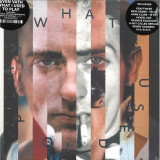
For this uniquely personal retrospective spread over twelve vinyl discs, Sven Väth takes us back to the early days of his DJ career. On What I Used To Play we meet great pioneers of electronic music, gifted percussionists, obscure wave bands, and innovative producers of a bygone 'new electronic' era. Rough beats and irresistible grooves from the identification stage of house, techno, and acid remind us not just how far electronic music has evolved over the past four decades, but how great it was to dance to EBM, techno, and house for the very first time.
If there is one protagonist of the electronic music scene who has remained curious, innovative and at the very cutting edge of music for over four decades, it's Sven Väth. His multi-layered artist albums and Sound of the Season mix compilations have been defining the genre for over two decades, and even today, he is constantly on the lookout for the next top tune to add to the highlights of his next set. At least, that's the case when he's not producing them himself as an artist or remixer. "Actually, it's always been part of my DNA to think ahead," and nothing had been further from his mind than looking back at his past, but when in spring of 2020 the international DJ circuit had to be scaled down to virtually zero, the 'restless traveler' suddenly had time. Time to stop and reflect on "how it actually was back then, at the very beginning of my career..."
"It was a great trip and with every track, beautiful memories came flooding back".
In the London apartment, he had just moved into, Sven has set up a "little music room", where he cocooned himself for several days, "to look way back for the first time and review my musical journey through the eighties, so to speak."
The interim result was six thematically oriented playlists with a grand total of 120 tracks from 'early 80s' to 'Balearic late 80s', together with excursions into afrobeat, European new wave, and EBM sounds and a few epochal techno/house tracks from the USA in between. From these 'Best of Sven Väth's favorites', the project What I Used To Play crystallized. Sven remembers how the Cocoon team reacted to his proposal: "They found the idea of making a compilation out of it MEGA from the beginning and everyone said 'Sven, go for it', but then, of course, the work really started, namely, to clear the rights and to get clean sounding masters of the up to 40-year-old tracks. There was also disappointment, of course. We couldn't clear certain titles because the rights holders in the USA had fallen out with each other or simply disappeared from the scene. In short, it wasn't easy, but now I can safely say we got the most important tracks."
Finally, after two years of research, curation, design, and administrative fine-tuning, the "little retrospective" from 1981 to 1990 is available. The exquisitely packaged, and three-kilo heavy box set is not only physically impressive, WIUTP is also the definitive record of Sven Väth's musical development. On each of the twenty-four sides of vinyl, you can trace track by track, what influenced him during which phase, and how he took off as a DJ from his parents' Queen's Pub straight into the spotlight at Dorian Gray. There and at Vogue (later OMEN), Sven became the style-defining player in the DJ booth that he still is today.
1981 - 1990: Future Sounds of Now
In the early eighties, the crowd in clubs like Vogue and Dorian Gray danced to what nowadays we call 'dance classics' - mainly disco, funk, soul, and chart pop. It was up to a new generation of DJs, including Sven Väth, the youngest protagonist in the Rhine-Main area at the time, to create their own club-ready music mix. Good new tracks and potential floor-fillers were rarities that had to be sought out and found, in order to prove oneself worthy.
Without MP3s, internet streaming, or other digital download possibilities, music didn't just gravitate to the DJ, instead, it had to be tracked down. In well-stocked record stores in Frankfurt and Wiesbaden or even in Amsterdam, London, or New York, Sven and friends sourced the material for countless magical nights. On WIUTP we can follow Sven's very personal journey through this wild, innovative era in which synth-pop, funk, hip-hop, and disco were successively replaced as 'club music' by house, techno, acid, and breakbeat. By the end of the decade, it was clear to see that these once exotic 'fringe' phenomena would soon become 'mass' phenomena.
Early 80s
Dirty Talk by the Italian-American duo Klein & M.B.O. represents the most innovative phase of the Italo-disco genre in the early eighties like no other track. Mario Boncaldo (I) and Tony Carrasco relied entirely on the original synthetic drum and percussion sounds of the Roland TR-808, coupled with the raunchy vocals of Rossana Casale and guitar accents of Davide Piatto. Of course, other tracks from this period were also influential in style, most notably Unit by Logic System, which worked as the perfect soundtrack to the laser lighting system at the legendary Dorian Gray club. With stomping beats and robotic rap interludes, Bostich by Yello also belongs on Sven's eternal playlist - after all, it caught the attention of Afrikaa Bambaataa, who invited the Swiss duo to perform at the Roxy in New York in 1983.
EBM Wave - Mid 80s
From today's point of view, the almost ten-minute-long, downtempo track Giant by Matt Johnson's band project The The, would probably not be considered an obvious club classic. However, a closer (re)listen reveals the rhythmic intricacies of the percussion overdubs by JG Thirlwell (aka Foetus) on Johnson's composition, and it becomes clear why this exceptional piece of music is one of Sven's absolute favorites. Other classics from this phase include Kaw-Liga by the mysterious The Residents, the hypnotic-synthetic Our Darkness by Anne Clark (and David Harrow), and last but not least, the somber, monotonous anthem Where Are You? by 16Bit, one of Sven Väth's projects together with Michael Münzing, Luca Anzilotti from 1986.
US House - Late 80s
You certainly can't talk about Chicago house without mentioning Frankie Knuckles. The resident DJ at the Warehouse not only gave the name to an entire genre, but also produced epochal floor fillers on the Trax label like the timeless Your Love, sung (and moaned) by Jamie Principle. Acid house protagonists Phuture also hail from Chicago, and on We Are Phuture (also released on Trax) we hear the chirping acid sounds of the legendary Roland TB-303 in full effect. Another featured classic is No UFO's by Detroit's Model 500 aka Juan Atkins, who is rightly considered the 'Godfather of Techno' even if the genre-defining track from 1985 still breathes with the spirit of hip-hop and electro from the first breakdance era.
Afrobeat
Le Serpent, by Algerian-born Abdelmadjid Guemguem, is a track that sounds completely different from everything else on WIUTP. Made in 1978, it's a monumental, rousing groove created without bass or synths, just with five congas! Even though Guem sadly passed away in 2021, his immortal, acoustic beats are understood all over the world and will continue to enrich many thousands of DJ sets for years to come. Another classic that not only Sven appreciates beyond measure is Hugh Masekela's Don't Go Lose it, Baby. In addition to being one of the most important jazz pioneers, the trumpeter and freedom fighter from Johannesburg was very experimental, integrating electronic sounds into his music in later years, in a similar vein to Miles Davis and Herbie Hancock. Dutch jazz pianist Jasper van't Hof's afrobeat project Pili Pili has also aged well. The trance-like, almost sixteen-minute-long track of the same name, manages to fill a whole side on the seventh of twelve vinyl discs in the WIUTP box.
UK-US-Euro - Late 80s
Time for a change of scene, in the truest sense of the word, and from a musical perspective, this section is like landing on another planet. First up is Andrew Weatherall's classic remix of Primal Scream's Loaded, featuring the iconic Peter Fonda sample (lifted from the 1966 biker film Wild Angels) that came to personify the mood triggered by the British Second Summer of Love in the late eighties: "We wanna be free to do what we wanna do, and we wanna get loaded...". This period also saw the emergence of M/A/R/R/S whose only single, 1987's Pump Up The Volume, became a club classic with support from DJ legend CJ Mackintosh. In this most eclectic of sections, we also encounter New York house and reggae producer Bobby Konders and his seminal Nervous Acid.
Balearic - Late 80s
Those who know him, know that Sven had already lost his heart to the 'magic island' of Ibiza as a teenager, so with that in mind, the WIUTP project couldn't end without a Balearic chapter. Inspired by Manuel Göttsching's E2-E4, the immortal, eponymously titled Sueño Latino belongs in there without question. Equally popular on the island was, and still is Break 4 Love by Raze, which thinking about it, would also fit perfectly into the house chapter. Last, but not least, there's an overdue reunion with Sven Väth himself, in his role as frontman of the successful Frankfurt trio OFF. Together with Michael Münzing and Luca Anzilotti (later of Snap!) this 'Organization For Fun' created the off-the-wall club hit Electric Salsa in 1986 which incidentally turned into an international chart smash, putting Sven in the enviable position of having to decide between pop stardom and a DJ career. Well, we all know how that decision turned out and the rest, as they say, is history. A not insignificant part of his story is What I Used To Play. Enjoy!
Meg Baird’s songs are rarely made up of tidy stories. In fact, for Meg, mystery itself is often the
medium. With ‘Furling’, Meg’s fourth album under her own name, she explores the breadth of
her musical fascinations and the environments around them - the edges of memory,
daydreams spanning years, loose ends, loss, divergent paths, and secret conversations under
stars. ‘Furling’ moves through these varied spaces with the slippery, misty cohesiveness of a
dream - guided by an ageless, stirring voice that remains singular and unmistakable.
Since co-founding the beguiling and beautiful Espers in the mid-aughts amid Philadelphia’s
fertile underground music community, Meg’s solo recordings have constituted just a fraction of
her work.
Her first solo LP, the disarmingly out-of-time ‘Dear Companion’ (2007), saw her carve a quiet,
sunlit space away from the flickering swirl of Espers. Since her last solo releases, ‘Seasons on
Earth’ (2011) and ‘Don’t Weigh Down the Light’ (2015), Meg has lent thunderous drumming,
lead vocal, and poetry to Heron Oblivion (Sub Pop) on an album that garnered praise from the
New York Times and made Mojo’s Top Ten Albums Of 2016 list. She collaborated with harpist
Mary Lattimore on the mesmerizingly hazy ‘Ghost Forests’ (2018). She’s played drums with
Philadelphia scuzz-punks Watery Love (In The Red, Richie Records) and explored her deep
familial folk roots in the Baird Sisters (Grapefruit Records). She also contributed her vocal
arrangements to albums from Sharon Van Etten, Kurt Vile, Will Oldham and Steve Gunn, and
toured with Angel Olson, Dinosaur Jr., Bill Callahan, Thurston Moore and Bert Jansch, among
others.
Yet ‘Furling’ is the album that most irreverently explores the span of her work and musical
touchstones. It showcases her natural tether to 1960s English folk traditions. But it also reveals
her deep love for soul balladry, the solitary musings of Flying Saucer Attack and Neil Young
shackled to his piano deep in the foggy pre-dawn, dubby Bristol atmospherics, the melancholy
memory collage of DJ Shadow’s ‘Endtroducing’, and the delicious, Saturday night promise of
St. Etienne.
‘Furling’ was primarily recorded at Louder Studios by Tim Green (Bikini Kill, Nation of Ulysses,
Melvins, Wooden Shjips). Additional piano and vocal recording were captured at Panoramic
Studios in Stinson Beach, CA with Jason Quever (Papercuts). It was mastered in Brooklyn by
Heba Kadry, who mixed Bjork’s ‘Utopia’ and mastered albums for Slowdive, Cass McCombs
and Beach House.
For all its adornments, ‘Furling’ remains deeply intimate. The entire album was performed by
Meg and her long-time collaborator, partner, and Heron Oblivion bandmate Charlie Saufley.
While her prior solo work hinted at more expansive horizons, ‘Furling’ explores the idea of Meg
Baird as a band much more freely. Venturing beyond the musical confines of fingerstyle guitar,
she plays drums, mellotron, organs, synths, and vibraphone over her piano and guitar
foundations. Her distinctive, simultaneously elegiac and uplifting vocals, meanwhile, connect
surreal dream montages, graft sunshine sonics to swooning mediations on romantic solidarity
in trying times, and weave odes to the simple gestures of friendship - and the loss of family and
friends.
This rich sound world makes the songs a varied bunch: ‘Twelve Saints’ mates Pacific sunset
ambience and Pink Floyd pastoral to a meditation on mortality and escape. The infectious and
kinetic ‘Will You Follow Me Home’ contemplates hope and longing through the looking glass of
a Jimmy Miller-era-Stones strut. And in the closing piece, ‘Wreathing Days’, language
disintegrates over tone clusters that feel somewhere between falling and flying.
‘Wreathing Days’ also reveals much about Meg’s mastery of contrast - situating the dear and
delicate adjacent to chaos. And while it’s true that some songs on ‘Furling’ grapple with
humanity’s existential unknowns in stark terms, they primarily revel in the mysteries that hide in
nature and humanity at their most ordinary. ‘Furling’ lives in the notion that whole universes of
experience, enlightenment, elation and ecstasy can bloom in these corners.
- A1: Break The Spell (Feat Zander Miller)
- A2: Every Cloud Has A Silver Lining
- A3: Elephant In The Room (Feat Khrono K)
- A4: The Boundary Between You & The Outside World
- A5: Scratch Beneath The Surface
- A6: Cast Pearls Before Swine
- B1: Heart Breaker
- B2: Heart Breaker (Hood Joplin Dream Girl Edit)
- B3: Idiom (Feat Driftnote)
- B4: Digital Dotex
- B5: Trippy Staircase To Portal Wonderland
- B6: Mirage
Korea Town Acid (Jessica Cho) is wildly creative. She is an electronic artist at her core, but that barely scratches the surface of what her sound encompasses. Citing influences as UK future bass, glitch, jungle, and alternative hip hop, KTA fuses these sounds with concepts of movement and texture, to create multi-faceted works that go beyond the club. Born in Seoul, Korea, Toronto based DJ/Producer Korea Town Acid maintained a fierce but mindful schedule amidst pandemic induced lockdowns. With the ease of restrictions and the gradual return to a version of normalcy, KTA continues to thrive, without hitting pause. In 2021 she released her full length LP Metamorphosis, a self produced ten-track record, featuring collaborations from Toronto based artist DESIIRE, U.K based Korean pianist and rapper Pianwooo, Seoul rapper PNSB, L.A beatmaker Dreamdave, and New Jersey MC, L.J The Alien. She swiftly followed that up six months later with the release of Cosmos, another self produced full length LP that boasts the 2022 Juno Award nominated track, ‘Sobriety’. She also contributed to Cadence Weapon’s 2021 Polaris Prize winning record Parallel World, producing the track ‘Play No Games’. Despite touring restrictions in 2021, KTA delivered a notable hardware set as part of Hinter Live, showcased at POP Montreal, and continued her monthly online residency at The Lot Radio in New York. Korea Town Acid released her latest LP, Elephant in The Room, via URBNET. The twelve track self produced and mixed album, was mastered by East End Mastering in Toronto, ON, and features a lineup of Canadian guest collaborators, including Zander Miller, Khrono K, and Hood Joplin. In anticipation of the release, KTA has been actively securing live performance sets to showcase new tracks, with recent appearances at Vancouver’s Wonderment Festival, Montreal’s MUTEK Festival Toronto’s Summer of Seoul festival at the TIFF Atrium, Peprally, and Promise Cherry Beach series
- A1: Don Drummond, Tommy Mccook & The Skatalites - (Music Is) My Occupation (Ring Of Fire) (Music Is)
- A2: Tommy Mccook & The Baba Brooks Band - Alley Cat Ska
- A3: Don Drummond & The Skatalites - Cool Smoke
- A4: Don Drummond & The Skatalites - Garden Of Love
- A5: Tommy Mccook - Twelve Minutes To Go
- A6: The Baba Brooks Band - Girls Town Ska
- A7: The Baba Brooks Band - Vitamin A
- B1: Lester Sterling & The Skatalites - Latin Goes Ska
- B2: Roland Alphonso, Don Drummond & The Skatalites - Alipang
- B3: Don Drummond & The Tommy Mccook Band - Lucky Seven
- B4: Frank Anderson & Roland Alphonso - Musical Store Room
- B5: The Baba Brooks Orchestra - Musical Communion
- B6: Roland Alphonso & The Skatalites - Sandy Gully
- B7: Don Drummond & The Baba Brooks Band - Doctor Dekker
- C1: Roland Alphonso & The Baba Brooks Band - Nuclear Weapon
- C2: Roland Alphonso & The Skatalites - Corner Stone
- C3: Baba Brooks & Don Drummond - Knockout Punch (Aka Cotton Tree) (Aka Cotton Tree)
- C4: Don Drummond & The Skatalites - Don De Lion
- C5: Tommy Mccook & The Skatalites - Rocket Ship
- C6: Roland Alphonso & The Skatalites - Feeling Fine
- C7: Don Drummond & The Skatalites - Mesopotamia
- D1: Don Drummond & The Skatalites - Eastern Standard Time
- D2: Don Drummond & The Skatalites - Thoroughfare (Treasure Isle) (Treasure Isle)
- D3: Don Drummond & Roland Alphonso & The Skatalites - Silver Dollar
- D4: The Skatalites - Street Corner
- D5: Don Drummond - University Goes Ska
- D6: The Skatalites - Good News
- D7: Don Drummond & Tommy Mccook - Jfk's Memory
This September sees the fourth release from the label Either. Label founder Jamie Clarke is behind the title track ‘Angor Animi feat. Emdee’ and a second track featuring Emdee, the third track is a remix of the title track from Romania’s Barac.
Either is built on Clarke’s sure feel for early hours dance floor tunes. The releases to date are enriched by remixes from Pablo Mateo, Ryan Crosson, Silverliining…
On Clarke’s title track Emdee’s vocals carry us along over squelchy acid bass, gritty stab lines, saturated drums and tribal-tinged percussion. On track 2 ‘Extraction’ Clarke picks up the journey theme. Here the mood brightens and trips-out, Emdee’s chanting vocal carry us over sonorous organs, swinging rhythms. Track 3 returns to the dynamically processed elements of the title track, Romanian minimal maestro and Moment Records Boss Barac sweeps us into a twelve-minute rushing tide of organic drums and swaying subs.
Repress of Kaitlyn's solo debut Euclid (primarily written on a Buchla Music Easel synthesizer), it was inspired by her love of mbira music, early electronic music pioneers like Laurie Spiegel, Oskar Sala, and Terry Riley, and euclidian geometry. Each of the first six songs on Euclid were initially structured using euclidian geometry, an idea which Smith explored while attending a class at the San Francisco Conservatory. As Smith explains, "We each chose a 3D shape and assigned our own guidelines to the different components that make up the shape. For example each point of the shape represents a different time signature, each line between the points represents a pitch, each shape within the closed lines represents a scale, etc. And then you play the shape." Despite their heady geometric origins, the songs have a playfulness and warmth that makes them inviting and memorable. In addition to the buoyant grooves of Smith's synthesizers, some of the songs feature wordless vocals, which energize the otherworldly songs, while grounding them with Smith's earthly presence. She slows things down for the second half of the record, which features a collection of twelve short pieces, Labyrinths I-XII. Originally composed as new soundtracks to old silent films she found online, Smith says the tranquil Labyrinth pieces are "intended to feel like one is walking through a holographic labyrinth and encountering different experiences such as hang gliding, viewing microbes under a microscope, ice fishing in Alaska, and watching glaciers collapse." Despite their brevity, most of these songs feel like mini odysseys, effortlessly casting a cinematic hue on the the listener's world. Throughout Euclid Kaitlyn Aurelia Smith consistently delivers sonic puzzles draped in a warm Pacific mist. At times these songs feel so alive like the musical analog to roots growing deeper and stronger, leaves on branches bending towards the light, or the sun peeking over the horizon, briefly igniting the air with a primordial swirl of warm and cool colors.
- A1: Noonday Yellows
- A2: Rain
- A3: Dusk
- A4: The Jantzen Rag (Raccoons)
- A5: Pleasant, This Garden
- B1: Bedroom Of The Absent Child Lost Creek Suite
- B2: Bedroom Of The Absent Child Lost Creek Suite Into The Groves
- B3: Bedroom Of The Absent Child Lost Creek Suite Warm Pathways
- B4: Bedroom Of The Absent Child Lost Creek Suite Sunny Banks
- B5: Bedroom Of The Absent Child Lost Creek Suite Fragrant Duff
- B6: Bedroom Of The Absent Child Lost Creek Suite Beaver's Pond
- B7: Track 12
Black Vinyl[22,48 €]
Written and recorded between 1972 and 1982 in Western Oregon, Back to the Woodlands is a previously unreleased, and nearly lost, album made by Ernest Hood during the same era as his near mythical album Neighborhoods . A visionary combination of field recordings, zithers, and synthesizers, Back to the Woodlands offers an unprecedented depth of access to this singular artistic mind. Born into a musical family, Ernest Hood began a promising career as a jazz guitarist during the 1940s, touring internationally with his brother Bill Hood and the saxophonist Charlie Barnet , before contracting polio in his late twenties. The disease left Ernest unable to play the guitar and confined him to a wheelchair for the rest of his life. It also forced him to adapt and innovate around his musical practices in the face of adversity; Hood's value of sound matured with a remarkably democratic and nonhierarchical approach and application. Taking up the zither, a less physically-demanding stringed instrument to the guitar, embarking upon the unprecedented process of incorporating field recordings into his work as early as 1956, and eventually discovering the synthesizer, Hood's music became imbued with optimism and subtle cultural critique. This ethos and technique - refined over the coming decades - would lay the groundwork for a sprawling body of radio work, mail order recordings for homebound listeners, and Neighborhoods , self- issued as a small vinyl edition in 1975. Where Neighborhoods , a nostalgic opus, drawing from a well of collective memory of the 1950s, is defined by traces of human activity, Back to the Woodlands leaves the modern world behind, delving into Hood's love for nature. Only recently discovered in his archives, the album dramatically expands his concept of "musical cinematography," imagistically triggering states of sensory memory from within its zither and synthesizer melodies, intertwined with field recordings made during Hood's extensive travels throughout Oregon. If Neighborhoods is a retreat into the gauzy joys of a romanticized past, Back to the Woodlands is an immersion in the timeless sanctuary of the natural world. A fascinating counterpoint to its predecessor, Back to the Woodlands brings us even closer to Hood's belief in the transportive qualities of sound; that field recordings could serve as a vehicle for the imagination and liberation, particularly for those with similar mobile disabilities as his own. Across the album's twelve compositions, the rippling instrumental harmonics - shifting between abstraction and playful melody - fold so seamlessly into the birdsong, bubbling brooks, and other environmental ambiences, that they often give the impression of having been recording within the landscapes toward which they whisper. Falling somewhere between the immersive calm of healing music and New Age, the creative field recording practices of sound ecologists world building for Folkways, and the jazz infected ambiences during Obscure / Editions EG's highest heights, Back to the Woodlands sculpts an singular proximity of music for its moment; a form of ambient sonic realism that draws the consciousness toward its surroundings as much as within. Working closely with his estate to maintain his original vision, Freedom to Spend has restored and remastered this never before released, lost masterpiece by Ernest Hood from the original tapes. Ernest Hood's Back to the Woodlands will be issued on vinyl, as well as on CD in combination with its contemporary Where the Woods Begin , with new liner notes by Michael Klausman . On behalf of Ernest Hood and Freedom To Spend, a portion of the proceeds from this release will benefit Oregon Wild, an organization dedicated to protecting and restoring Oregon's wildlands, wildlife, and waters as an enduring legacy for future generations.
- A1: Second Chance Ft. Kimberly Davis (Club Mix)
- A2: Try My Love (On For Size) Ft. Teni Tinks (Club Mix)
- B1: Life Is A Dancefloor Ft. Kimberly Davis (Club Mix)
- B2: Look, Don't Touch Ft. Teni Tinks (Extended Mix)
- C1: Bring On The Rain Ft. Joss Stone
- C2: When Love Breaks Down Ft. Teni Tinks
- D1: Slippery People Ft. Ramona Renea & Fiorious
- D2: Tell Me It's Not Over Ft. Adi Oasis
- E1: Love's Been Waiting Ft. Kimberly Davis
- E2: You Ain't Love Ft. Teni Tinks (Club Mix)
- F1: Finally Ready Ft. Billy Porter (Extended Monologue Mix)
- F2: The One That Got Away Ft. Obi Franky (Extended Mix)
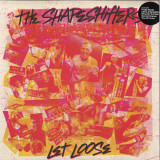
From an aspiring b-boy to working with luminaries Billy Porter, Joss Stone, Kimberly Davis and Teni Tinks, The Shapeshifters, Simon Marlin announces the release of his brand-new studio album “Let Loose”.
Wrapped in a defining optimistic mood and colourful palette, “Let Loose” plays with the friction between musical persona and influence, delivering a masterclass in Simon’s flourishing depth of integrity as a producer and admiration to those that exert their enduring influence upon him.
“I'm a facilitator of talent. I'm blessed that over the years I've managed to put a team of people together - as a producer, that's what I do, very much in the old school sense like a Quincy Jones or Gamble & Huff, they’re the guys I try to emulate - and make something magic out of nothing, but do it in a contemporary way. That’s what really floats my boat, and that's what this whole project is about.” Simon Marlin – The Shapeshifters
Across the latest and long-awaited studio album “Let Loose” The Shapeshifters pledge rhythmic allegiance to the golden era disco records and their spellbinding qualities; embracing the tension often found between tradition and future to craft a euphoric, certifiable body of work presented to the devoted audience he deserves. The Shapeshifters exemplify a scene in rude health one that is now switching on an ever-younger fan base, and with Marlin being the beating heart of it it’s easy to see why The Shapeshifters are more in demand in the clubs than ever.
The twelve-track album is illuminated with vocal collaborations including the recently released and debut collaboration with the Grammy, Tony and Emmy Award-winning Billy Porter.
Layers of rushing strings, flares of brass and hedonistic grooves provide refreshing dancefloor power dynamics and deliver a liberating, triumphant and inherently uplifting record.
Taking an impeccably smooth course through disco-infused house, The Shapeshifters continue the rich relationship with Glitterbox and its record label; one that has yielded instant classics that epitomise the label’s ethos for preserving disco’s mission to uplift and empower.
Twelve years after their debut album On Location, George Kooymans and Frank Carillo return to the front with their second album entitled Mirage. Recorded over a period of approximately three years in various studios and countries, Mirage offers ten tracks that illustrate the natural chemistry between the two guitarists, showcasing artistic excellence, as well as a wide array of musical influences.
George and Frank are accompanied by Paul Orofino (banjo, guitar, Hammond organ), Rinus Gerritsen (bass), Bobby Langenberg (drums), Ocki Klootwijk (bass), John Sonneveld (keyboards, programming) and George’s daughter Cassy on harmony vocals.
Mirage is available as a limited edition of 1000 individually numbered copies on white coloured vinyl and includes an insert.
On in february, Isik Kural works like a photographer of sound, documenting the passing and returning of time as if material snapshots of life's temporality. Across the album's twelve songs, each composed from chance loops and cocooned within the soft container of Isik's memorable voice and melody play, time is held on to hopefully, impossibly, eternally.
Born in Istanbul, Isik studied music engineering at the University of Miami, alighted in New York City, and eventually settled in Glasgow, immersing in a sound design masters and audiovisual practice. While these paths guided him between different projects and cities, a voice was simultaneously growing inside the artist, informed by a vision of the world in its everyday luminosity. This voice was expressed in the lyrical and instrumental waves of 2019's As Flurries, a cassette collection for Italian label Almost Halloween Records.
Isik Kural's in february will be released on October 15, 2021 on vinyl, cassette, compact disc, and digital formats. On behalf of Isik, a portion of the proceeds from this release will benefit Turkiye Egitim Gonulluleri Vakfi, an organization that creates and conducts workshops, educational training programs and after school programs for children across Turkey.
4 Cuts Placed In "A First Quarter", the companion piece to Solos, is the sonic result of a collaboration with artist Lawrence Weiner. As Landry remembers, “I was working for Keith Sonnier at Castelli Gallery and met Lawrence. He asked ‘can you make a video for me?’ So we did "To and Fro..." At some point he was working on "A First Quarter" (1973) and wanted me to do the music. I said ‘I already have the music.’ He said ‘what do you mean?’ I had recorded several pieces with Kurt Munkcasi and walked around the set playing the music on a boom box.”
The set features one solo each by Landry and contrabassist Rusty Gilder, a duo for the tenor saxophones of Landry and Richard Peck, and an ensemble piece for Landry, Peck, Gilder, trumpeter Robert Prado, and drummer David Lee, Jr. Starting the record off is “Requiem for Some,” inspired by Gil Evans’ long, placid tones. The anchor is Lee’s dry cymbal attack and fancy footwork, dancing around overlapping and recombining horns, chords held just shy of splintering. “4th Register” is a grainy delayed solo tenor piece, presaging “Kitchen Solos” from Fifteen Saxophones by several years. “Piece for So” was, according to Landry, “a chance to give Rusty a solo”. Mostly known as an ensemble bassist, Gilder bounced between Lafayette, Charlotte, and New York, leaving a slim recorded legacy. Here, he stretches out for twelve minutes and change – with keen upper register detail and meaty up-tempo walk, he could have been mentioned in the same breath as players like Dave Holland and Barre Phillips. The closing “Duo Vivace” finds Landry and Peck sparring on tenors, the latter holding a melodic line while Landry leans into explosive glossolalia, until both become birds in flight.
Written and recorded between 1972 and 1982 in Western Oregon, Back to the Woodlands is a previously unreleased, and nearly lost, album made by Ernest Hood during the same era as his near mythical album Neighborhoods . A visionary combination of field recordings, zithers, and synthesizers, Back to the Woodlands offers an unprecedented depth of access to this singular artistic mind. Born into a musical family, Ernest Hood began a promising career as a jazz guitarist during the 1940s, touring internationally with his brother Bill Hood and the saxophonist Charlie Barnet , before contracting polio in his late twenties. The disease left Ernest unable to play the guitar and confined him to a wheelchair for the rest of his life. It also forced him to adapt and innovate around his musical practices in the face of adversity; Hood's value of sound matured with a remarkably democratic and nonhierarchical approach and application. Taking up the zither, a less physically-demanding stringed instrument to the guitar, embarking upon the unprecedented process of incorporating field recordings into his work as early as 1956, and eventually discovering the synthesizer, Hood's music became imbued with optimism and subtle cultural critique. This ethos and technique - refined over the coming decades - would lay the groundwork for a sprawling body of radio work, mail order recordings for homebound listeners, and Neighborhoods , self- issued as a small vinyl edition in 1975. Where Neighborhoods , a nostalgic opus, drawing from a well of collective memory of the 1950s, is defined by traces of human activity, Back to the Woodlands leaves the modern world behind, delving into Hood's love for nature. Only recently discovered in his archives, the album dramatically expands his concept of "musical cinematography," imagistically triggering states of sensory memory from within its zither and synthesizer melodies, intertwined with field recordings made during Hood's extensive travels throughout Oregon. If Neighborhoods is a retreat into the gauzy joys of a romanticized past, Back to the Woodlands is an immersion in the timeless sanctuary of the natural world. A fascinating counterpoint to its predecessor, Back to the Woodlands brings us even closer to Hood's belief in the transportive qualities of sound; that field recordings could serve as a vehicle for the imagination and liberation, particularly for those with similar mobile disabilities as his own. Across the album's twelve compositions, the rippling instrumental harmonics - shifting between abstraction and playful melody - fold so seamlessly into the birdsong, bubbling brooks, and other environmental ambiences, that they often give the impression of having been recording within the landscapes toward which they whisper. Falling somewhere between the immersive calm of healing music and New Age, the creative field recording practices of sound ecologists world building for Folkways, and the jazz infected ambiences during Obscure / Editions EG's highest heights, Back to the Woodlands sculpts an singular proximity of music for its moment; a form of ambient sonic realism that draws the consciousness toward its surroundings as much as within. Working closely with his estate to maintain his original vision, Freedom to Spend has restored and remastered this never before released, lost masterpiece by Ernest Hood from the original tapes. Ernest Hood's Back to the Woodlands will be issued on vinyl, as well as on CD in combination with its contemporary Where the Woods Begin , with new liner notes by Michael Klausman . On behalf of Ernest Hood and Freedom To Spend, a portion of the proceeds from this release will benefit Oregon Wild, an organization dedicated to protecting and restoring Oregon's wildlands, wildlife, and waters as an enduring legacy for future generations.
12 of the heaviest early tracks by the master of rebetika music. Markos Vamvakaris sings from the hash dens of the Greek ports of the 1930s - mournful, poetic, bitter music of love and long nights. Rebetika is the sound of Greece and Asia Minor clashing amid civil war, mass population exchange, and the anarchy of the late 19th and early 20th centuries. Poetic, mournful, and bitter, rebetika music was born in the hash dens (tekes) of Mediterranean ports, its verses whispered in Greek prisons before spilling out to the greater population in the 1930s, propelled in no small part by a series of remarkable recordings by Markos Vamvakaris. Markos, as he’s known to this day, sang heady, drugged out songs of love, pain and yearning at brothels, bars and hash dens in the port of Piraeus. He arrived as a youth in 1917, working as a skinner in a tannery. By the time he picked up the bouzouki around 1924, he was fully taken by the life of the manges, the lowest rungs of the Greek social ladder. They lived by their own code and in total opposition to the rest of the population, and rebetika was their music. On these twelve early tracks, recorded in Athens between 1932 and 1936, Markos was already a master of the bouzouki. His forceful, clean playing compliments his hoarse voice and his stunning rhythmic sensibility, the result of his years as a champion zebekiko dancer. Tracks build and spiral outward, his open-note drones and melodic lines drawing calls of ecstasy and encouragement from his fellow musicians. Translations of songs like “Hash-Smoking Mortissa” and “In The Dark Last Night” provide a glimpse into the life and language of the manges - Ottoman cafe music, the calls of displaced Greeks of Smyrna, the chaos and suffering of port life, it all comes through Markos’ songs. These recordings, incredibly rare and expertly remastered, mark the height of rebetika, the brief period between the music’s emergence on the recording scene in the early 1930s and government censorship of all lyrics starting in 1936. During the Axis occupation there was no rebetika recording, and though Markos had some hits in the years after the war, he never again attained this level. These are the dizzying, entrancing, and heaviest works of one of the great artists of the 20th century. Pressed on 160gm vinyl, includes full size 8 page booklet with historical notes, rare photos, and lyric translations.