Suicide AFTR 7 moves deeper into the shadows on this release, stripping things back while letting the groove hit harder. Built on pumping 808s, restless synth lines, and a subtle acid pulse, the project blends electro, cold wave, and leftfield instincts into something leaner and more focused than earlier records. There’s a proto-80s spirit running through it: raw, tactile, and slightly unpolished, where tension lives in the negative space and repetition becomes hypnotic rather than obvious.
For the first time, real bass guitar and drums enter the picture, adding human weight beneath the electronics without diluting Suicide AFTR 7’s core identity. The result feels rawer, more intimate, and quietly confrontational. Music for late nights, dim rooms, and inward motion. Still unmistakably SA7, but closer to the bone.
Suche:m y n c project
Ron Basejam is, of course, a project from Crazy P co-founder James Baron where he focuses on deep and heavy house. He lands on Leeds label 20/20 Vision here with 'Maynard', which is a trudging rhythm brought to life with bluesy vocals and big horns. 'Bighorn' then works the filters to cook up an emotionally charged and loopy sound and 'Is It Daylight?' cuts more loose with a soulful, dusty sound that Moodymann would love. Last but not least is the cosmically charged 'The 8 Bit Slowdown' with its jazzy reed work and raw, broken, driving beats. A smart and varied four tracker from a real G.
- A1: The Bird
- A2: Heart Don't Stand A Chance
- A3: The Waters (Feat. Bj The Chicago Kid)
- A4: The Season / Carry Me
- B1: Put Me Thru
- B2: Am I Wrong (Feat. Schoolboy Q)
- B3: Without You (Feat. Rapsody)
- B4: Parking Lot
- C1: Lite Weight (Feat. The Free Nationals United Fellowship Choir)
- C2: Room In Here (Feat. The Game & Sonyae Elise)
- C3: Water Fall (Interlude)
- C4: Your Prime
- D1: Come Down
- D2: Silicon Valley
- D3: Celebrate
- D4: The Dreamer (Feat. Talib Kweli & Timan Family Choir)
Ten years ago, Anderson .Paak didn't just release an album; he staged a full-scale takeover of the soul and hip-hop landscape. Released on January 15, 2016, Malibu served as the definitive arrival of an artist who had spent years grinding in the underground before a star-making turn on Dr. Dre’s Compton. While his previous work hinted at his potential, Malibu was the moment the world met the "Cheeky Andy" persona in full—a virtuosic drummer, a raspy-voiced crooner, and a sharp-witted rapper all rolled into one. The album is a sprawling, sun-drenched journey through the Southern California coast, blending 1970s funk, church-reared gospel, and gritty boom-bap into something that feels both nostalgic and entirely futuristic. With a heavyweight production lineup including 9th Wonder, Madlib, Kaytranada, and Hi-Tek, the record maintains a warm, analog texture that was a breath of fresh air in an increasingly digital era. It’s an album that breathes, full of intentional imperfections and the kind of "in-the-pocket" groove that can only come from a seasoned live performer. Beyond the infectious, dance-floor-ready energy of tracks like "Am I Wrong" and "Come Down," the album is a deeply autobiographical masterwork. .Paak uses the 65-minute runtime to unpack his life story with startling clarity, touching on his mother’s gambling addiction, his father’s incarceration, and his own brushes with homelessness with a sense of resilience that never feels heavy-handed. He weaves these heavy themes through a lens of triumph, grounded by vintage surfing documentary samples that give the project its cinematic, coastal atmosphere. It’s a celebratory record born out of struggle, anchored by his impeccable technicality on the drums and a guest list—featuring ScHoolboy Q, Rapsody, and The Game—that feels hand-picked to complement his specific brand of West Coast swagger. A decade later, Malibu stands as a modern classic and the blueprint for the soulful revivalism that would eventually lead .Paak to global superstardom and Grammy-winning heights. It remains a testament to the idea that the most profound music often comes from the most personal places, proving ten years on that the best way to move forward is to stay rooted in the groove.
Rosita is a cheerful, well-liked woman with a fiery desire to have children. Those around her find it irresponsible because she can barely take care of herself. When Rosita does manage to become pregnant, she chooses to keep her pregnancy a secret.
David Martijn, guitarist and synth player in the electro-rock band GOOSE, wrote the music for the full-length album 'Holy Rosita'. His experience as a composer for projects such as 'De Dag', 'War of the Worlds', 'De Twaalf', and '1985' contributed to Martijn's desire to challenge himself again to come up with a fresh, distinctive sound, as he does with every project.
"My initial feeling was that I would have to step far out of my comfort zone to let the music tell this delicate story. I soon felt that the music needed to be light and open, in contrast to the uncertain and complex reality in which Rosita finds herself. Therefore, it seemed like a good plan to keep the score very close to Rosita and much less focused on her surroundings or reality. The music had to be, as it were, a reflection of the thoughts and feelings playing out in Rosita's mind. That is often hopeful, determined, lively, sometimes a bit naive, and at other times very lonely, sad, and uncertain." - David Martijn
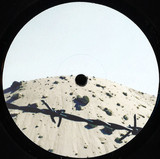
This limited edition of 100 white label 12” vinyls presented by the BLACK INDUSTRIAL RESEARCH GROUP is released to coincide with shows at London’s Ormside (November 19), Bristol’s Arnolfini (November 21) and Cardiff’s Chapter (November 29), ahead of the 2026 publication of the project’s extensive vinyl boxset. One-sided and hand-stamped with hidden reverse insert, the record features an original composition by DUBMORPHOLOGY (TREVOR MATHISON + GARY STEWART) reworking the words of JOHN AKOMFRAH (from an interview by APPAU JNR BOAKYE-YIADOM and OLIVER FUKE).
Rave-o-lution - Teknology EP (HDK-3)is a manifesto disguised in project.
Forged in the raw energy of the underground, Rave-o-lution - Teknology EP explores the connection between machine, movement and collective consciousness. This is not nostalgia, it’s forward motion. Teknology as a tool, rave as a language, evolution as a necessity.
Across four different versions, the same core signal mutates and adapts, shifting pressure, tempo and density while staying locked to its original frequency. Each version is built for a different moment on the floor, from deep hypnosis to pure mechanical drive.
Sometimes a pad emerges in the break, a moment of suspension where emotion cuts through the structure. A brief opening. A breath inside the system. Proof that even the hardest teknology carries feeling beneath the steel.
HDK-3 is made for soundsystems at full power, bodies in sync, and minds ready to disconnect from the surface and dive deeper.
No compromise.
No decoration.
Just rave — evolved.
The Spoiled is an Italian post-punk project led by Giovanni Santolla, blending electronic beats, distorted synths, and reverb-soaked guitars into a dark, romantic, and nostalgic sound.
In 2024, the project self-released the debut EP Time distributed by Manic Depression, followed in 2025 by the full-length Living Ghosts via Swiss Dark Nights—an album that firmly established The Spoiled within the contemporary post-punk scene. Following the album’s release, Giovanni collaborated with international acts including This Eternal Decay, Darkways, Corlyx, Chaos International, and Hinfort, while maintaining a dense touring schedule across Europe and sharing the stage with artists such as Traitrs, Hinfort, Darkways, and Ductape.
The new album When It Rains, set for release on Avant! Records on April 17, 2026, expands The Spoiled’s artistic vision with a focus on intense, romantic soundscapes that delve deeply into human intimacy and interpersonal relationships. Embracing a warmer and more personal sonic direction, the record blends elements of indie rock and electrogaze music that enrich and revitalize the dark, melancholic palette that has defined the project’s earlier works.
Still playing homage to the forefathers of the genre such as Clan of Xymox, The Sound and Pink Turns Blue, When It Rains opens the path of The Spoiled to new soundscapes, exploring broader emotional territories while preserving the atmospheric depth and introspective tone that have become its signature.
FFO: Twin Tribes, Clan of Xymox, She Past Away, Mareux, The Soft Moon, Pink Turns Blue.
- 01: Dune
- 02: Kundela Mawedi
- 03: Paco
- 04: Cameo
- 05: Cacopoulos
- 06: Khettara
- 07: Hell Dorado
- 08: Papambra
- 09: Porpora
Killer Groove Records proudly presents the self-titled debut album by Italian cinematic funk trio Atabasca. A sonic journey where funk, psychedelia and desert groove merge into a timeless narrative suspended between rhythm and vision.
"Atabasca" marks the debut release from the cinematic funk trio, dropping March 27th on limited edition LP, CD digipack and digital formats, the latter featuring an exclusive bonus track. This is a project built on evocative imagery: each song unfolds as an open scene, an emotional landscape where listeners can step inside and write their own ending.
Lap steel, kalimba, percussion and guitars interweave with bass and drums, striking an original balance between tradition and experimentation that evokes unwritten soundtracks for worlds at once distant and familiar. The record navigates between melancholy and irony, tension and release, with a sharp focus on dynamics and sonic narrative.
Deserts, seas, imaginary villages, getaways, pursuits and collective rituals: "Atabasca" emerges as a collection of musical landscapes that unfolds through vivid, evocative imagery.
Jazz-funk, world music, afrobeat, psychedelia and the Italian Golden Age of movie soundtracks merge into a singular emotional geography: warm, analog and deeply human.
The musical journey opens with "Dune", a melancholic statement that leaves room for imagination, before igniting with "Kundela Mawedi" and its cascading lap steel over haunting vocal chants. "Paco" tips its hat to classic westerns, tracing a bandit's trajectory, while "Cameo" drifts back to childhood through minimal rumba and shimmering kalimba. The cinematic imagery continues in "Cacopoulos", a nod to Spaghetti westerns and Eli Wallach, built on raw drum patterns and distorted guitars. Intensity builds in "Khettara", where afrobeat rhythms and Middle Eastern textures intertwine, before "Hell Dorado" tears off in pursuit of the American dream's funk-fueled mirage. "Papambra" weaves hypnotic polyrhythms between kalimba and lap steel, while "Porpora" delivers a sensual, visceral tango of passion and tension. The digital edition closes with "Reprise", a sequel that stretches the album's central theme into an expansive, meditative interpretation.
The tracks were recorded in single takes, capturing the raw energy and natural atmosphere of the performance. Artistic production was handled by the trio alongside Andrea Fabrizii (digger, musician, producer and catalogue curator for CAM Sugar), while Riccardo Ricci mastered the album at Velvet Room Mastering Studio in Brighton.
Like a desert blooming within the evergreen forests of the planet's far north, a unique, alien, disruptive environment. This is the vision behind Atabasca, the project of Luca Mongia (guitars, lap steel, keyboards, vocals), Paolo Mazziotti (bass, keyboards, vocals) and Valerio Pompei (drums, percussion, vocals).
Individually active for over twenty years on both the national and international scenes, the three Italian musicians came together in 2023 to create a project that merges experience, experimentation and creative freedom. Their music is imaginative and at times dreamlike, blending the classic concept of the instrumental trio with the worlds of film scoring and sound design.
Atabasca's sound moves through jazz-funk, world and cinematic territories, weaving together afrobeat, desert and psychedelic influences into a personal and timeless language. Each piece is a scene; each sound, a fragment of a world, a journey between reality and imagination where groove, texture and organic timbre merge into a singular sonic ecosystem: a perpetually shifting balance that generates new inner landscapes.
For fans of Khruangbin, Surprise Chef and instrumental psych-funk!
- 1: Pain And Punishment
- 2: Protect Ya Well Bein
- 3: Antennas
- 4: Bowel Movement
- 5: Fictitious Bravado
- 6: Fire Off
- 7: Grindin Axe
- 8: Shogunn’s Warsong
- 9: Tha Source Wall
- 10: Buss Em Up
- 11: Executive Council
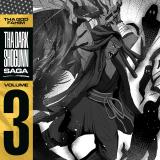
Tha God Fahim's timeless creative instincts have been evident from the moment his art began to circulate. Emerging unexpectedly from the epicenter of trap music, the Atlanta emcee quickly distinguished himself with sharp wordplay and atmospheric production that couldn't be further from the monotonous sounds echoing Around Him. With Just A Few Projects To His Name, Tha God Fahim Was Still A Hungry Young Talent On The Rise when he unleashed Tha Dark Shogunn Saga in late 2016. Among his most memorable early releases, the album kicked off an unprecedented creative explosion, as Fahim cemented his status with more than 50 projects released over the next two years. Followed by an equally compelling sequel released just a few
months later, the overall saga became an important moment in Tha God Fahim's rise, evoking shadowy street corners and smoke-filled hallways. Nearly a decade later, Fahim is expanding this series into a full trilogy with Tha Dark Shogunn Saga, Vol. 3. Reviving the unmistakable vibe of the original projects, the new collection finds our hero back in warrior mode, sharpening his lyrical blade over rich production from Cookin Soul, Nicholas Craven, Fortes, and Fahim himself.
PURE GARAGE RETURNS WITH A CAREFULLY CURATED SELECTION OF COLLECTIBLE CLASSICS.
Pure Garage, the best-selling UKG compilation of all time, returns with a fresh stack of high value collectible classics on DJ friendly vinyl.
With a host of gold & platinum selling compilation albums under it’s belt, plus countless sold out events across the UK, Pure Garage is known and trusted by both hard-nosed purists & the casual listener.
This latest foray coincides with an incredible resurgence in interest for the UK Garage sound, bringing together 8 high collectible infectiously funky cuts, spread across a DJ Friendly 2 slices of vinyl.
Pure Garage Collectible Classics Volume 1 opens with Buggin Me by garage pioneer Zed Bias alongside Al Brown, a groovy bassline, funky beats and a great vocal hook combine perfectly to showcase the mighty Zed Bias at his funky best.
Set It Off, by Chris Mack / Flavour, is a truly collectible record. Originally only available on vinyl as a limited white label press, copies of Set It Off have been trading hands on sites such as Discogs for as much as £130… It’s worth buying this compilation purely to get hold of this track on vinyl!
Another track that is going for big money on reseller sites is Romantic 2001 by DJ Deller. With this minimal 2 step riddim having sold for up to £120. This is definitely one for the collectors.
Funkaholics aka Jeremy Sylvester rounds off the first piece of vinyl on this album with the bass heavy Down 2 Da Ground.
Vinyl 2 kicks off with the sing-a-long classic from 1998, Anthill Mobs’s track Don’t Leave Me, followed hotly by the speed garage sounds of Body Grooving by M.F. Project.
Finally, Deep Impact drops My Fantasy followed up with a regular name of the Pure Garage live event line ups, Scott Garcia drops his soulful club classic Music Takes You, rounding out an impressive batch of tracks representing everything exciting about the UK Garage genre.
PURE GARAGE COLLECTIBLE CLASSICS VOL 1 will be released on double vinyl 16th December 2022!
- A1: La-Di-Da-Di – Main Vocal Version
- A2: The Show – Main Vocal Version
- B1: La-Di-Da-Di – Street Version, Recorded Live At Lincoln Projects In 1984
- B2: The Show – Previously Unreleased Demo Version, Recorded In 1984
Limited Edition of 1,000 Hand-Numbered Units on Ruby Red Vinyl. Includes never heard before audio and lyrics printed on heavy board inner sleeves!
40 years later - and still no one does it like this. We’re celebrating the unstoppable legacy of one of hip-hop’s most iconic collaborations: Doug E. Fresh and Mc Ricky D (now globally known as Slick Rick) “La Di Da Di" along with the pop dance tune "The Show."
From its very first breath, this track reshaped sound, style, and storytelling — a cultural moment that became a timeless movement. Decades on, its influence is everywhere: sampled, quoted, reimagined — but never duplicated. “La Di Da Di”and “The Show” didn’t just belong to an era — they created one.
To mark this monumental anniversary, the Hip-Hop legends decided to drop a limited 12” 40th Anniversary Edition. The release features the original versions of “La Di Da Di” and “The Show” - plus a rare demo of "The Show" as well as an unreleased street version of "La-Di-Da-Di" recorded live from The Lincoln Projects in Harlem NY) that take you deeper into the sound that started it all with the Get Fresh Crew.
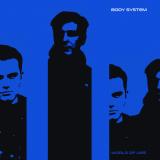
The origins of Body System date back around 35 years. Dissatisfied with previous experiences, the project was conceived as a meeting point between Sheffield and Detroit techno and German and Belgian body music. At the time, it never fully developed and remained largely an idea, with only a few sketches recorded on DAT. More than three decades later, that original concept has been revived. Following an invitation to contribute the track In Your Mind to the soundtrack of Electronic Body Movie, directed by Pietro Anton, the project was reopened and reworked, taking shape in the present while remaining rooted in its initial vision. These five tracks reflect an awareness of both past and contemporary electronic music, filtered through an undiminished experimental approach and a conscious refusal to adhere to stylistic conventions or predefined genres. Presented in ONE-OFF truly limited edition of 300 copies lacquered pressed on 180 gr. high quality solid BLACK vinyl. All tracks have been specially remastered and mastered for vinyl by Daniel Hallhuber at Young and Cold Studios (Germany).
- 1: Wisco (5:09)
- 2: Bborn Again (6:44)
- 3: Pez (4:4)
- 4: Coni (5:7)
- 5: Plz (6:21)
PPP: a whirlwind new link-up between contemporary club heartthrobs Piezo, DJ Plead and DJ Python. A trio of the best in the game come together for a new collaborative project on Facta and K-LONE’s Wisdom Teeth imprint.
The project was recorded gradually over a two year period at Piezo’s studio in Milan. Initial sketches were written when Python came to stay for a few days in late 2023. Later, when Plead travelled through the city, he stopped by to add his own contributions - and the record grew incrementally and organically from there across multiple visits.
The initial MO was to workshop a warped take on early 00s minimal and tech house - but at a certain point the record took on a life and soul of its own, spreading out in a number of disparate yet interconnected creative directions: from the peak-time euphoria/melancholia of ‘Wisco’ through to the shoegazed minimal of ‘Plz’, via proggy psychedelia (‘Bborn Again’), glitched Perlon reconstructions (‘Pez’) and downbeat downtempo (‘Coni’).
At points you can clearly hear their individual voices break through: be it Python’s whale-song melodies on ‘Coni’, Plead’s frenetic hand drums on ‘Wisco’, or Piezo’s sound-design freakouts on ‘Pez’. At other points the joins are harder to find as the record takes on a unique voice far beyond the sum of its parts.
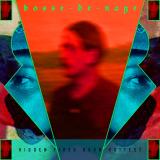
There's a tendency in metal to mistake aggression for honesty, volume for depth. To confuse the performance of darkness with its actual weight. Hidden Fires Burn Hottest, the new album from San Francisco-based post-black metal band Bosse-de-Nage, sidesteps this entirely. It’s the group’s most fully realized work yet, precisely because it refuses to be pinned down.
Bosse-de-Nage have been working with The Flenser for over fifteen years. They were one of the first bands the label ever partnered with and have the longest active relationship in the label's history. But unlike most bands who build momentum through constant touring and visibility, Bosse-de-Nage has largely existed apart from the music world's usual machinery. They've evolved on their own terms, in relative isolation, allowing the work to develop without outside pressure or influence. What began rooted in black metal anonymity has mutated into something that actively defies categorization. The aggression is still there, but it's no longer the point. Hidden Fires Burn Hottest finds the band treating emotions like physical objects, feelings with spatial properties. “No Such Place"" describes a space that can't exist but does anyway, somewhere between thought and location. ""Immortality Project"" examines infinite possibility not as promise but as problem, endless options collapsing under their own weight. These songs don't use metaphor to describe emotion. They make emotion into something you could theoretically touch.
Tracked by Jack Shirley (Deafheaven, Oathbreaker) at Atomic Garden East and mixed and mastered by Richard Chowenhill of Agriculture, Hidden Fires Burn Hottest was years in development, with some tracks beginning in 2018.
The long writing process offered time that most records don't get. Time to live with ideas, revise endlessly, to let structures settle. For the first time, lyricist Bryan Manning wrote everything in advance, creating a surplus to pull from rather than working under deadline pressure. The difference shows.
Coming off Further Still, an album built on constraint and economy, Bosse-de-Nage sought the opposite: sprawl, strangeness, fewer rules. Space for ideas to develop without rushing them. Dynamics that move through quiet as much as noise. Presence earned through atmosphere instead of volume. The record even includes ""Mementos,"" which might be considered the first love song the band has ever written.
Nothing here coheres into a theme. These are pieces pulled from low moments and private feelings made public through sound. The band has never been interested in positivity, in music that resolves cleanly or offers comfort. But bleakness doesn't mean humorlessness. There's something darkly funny running through much of it, even when it shouldn't be.
Hidden Fires Burn Hottest doesn't explain itself. It just insists: what you feel is as real as what you can see."
REPRESSED !
Patrick Keel is a multi-instrumentalist, composer, producer, and performer. The Pool was his solo project, the sum of fifteen years of experience in live bands, studios, and home recording. Patrick was heavily influenced by the radio of the early and mid 1960's in Dallas. The British bands and Black soul of the era gave him a distinct style, and shaped his musical attitude. The New Wave/Punk/D.I.Y. attitudes of the late 1970s inspired him to express himself in a new way. 1980 saw the release of "Pool One," a sixty minute home-produced cassette. "Pool Two" followed in 1981, which received much praise and little distribution. In 1982 he released a 5-song self-titled vinyl EP of tight, skeletal, synthetic dance music.
In 1983, 'Dance It Down/Jamaica Running' 12' EP was released on Moment Productions. Based on response from D.J.'s in New York and the Bronx, Patrick went back in the studio and remixed two songs from the self-titled EP for rapping, scratching and break dancing. "Jamaica Resting" was sped-up, extended, and reconfigured as "Jamaica Running". The whirlpool synth-strut of 'Dance It Down' came out of the studio as 'Dance In Dub', with a heavier kick and extended dub outro. These spacious versions were optimal for DJ play, slotting regularly in sets at hip clubs like Danceteria. For this reissue we've added two bonus European remixes from the 1984 12' of 'Dance It Down/Jamaica Running', released on Nunk records from Belgium. Both songs employ the use of a Boss DR-55, Korg MS-20, Korg PolySix, and a Prophet 5, and were mixed on a 16- track Ampex recorder. The Pool's spartan, self-assured songs are experiments you can dance to.
All songs have been remastered for vinyl by George Horn at Fantasy Studios in Berkeley. The record comes housed in a newly designed jacket by Eloise Leigh, updating the magenta and blue grid and Pool logo of the Moment Productions release. Each copy includes a 12-page booklet with a never seen before photos, press clippings and notes.
- A1: The Upsetters - Kentucky Skank
- A2: U. Roy* - Double Six
- A3: David Isaacs - Just Enough
- A4: The Upsetters - In The Iaah
- A5: The Upsetters - Jungle Lion
- A6: David Isaacs - We Our Neighbours
- B1: The Upsetters - Soul Man
- B2: U. Roy* - Stick Together
- B3: I. Roy* - High Fashion
- B4: The Upsetters - Long Sentence
- B5: The Upsetters - Hail Stones
- B6: The Upsetters - Ironside
- B7: The Upsetters - Cold Weather
- B8: The Upsetters - Waap You Waa
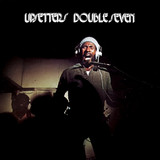
'Double Seven, released by Trojan in late 1973, was the last album Lee 'Scratch' Perry would release on the label for some considerable time, and it was essentially the final album project he put together before establishing his own Black Ark studio. Opening track 'Kentucky Skank' sets the tone with a slow creeper whose frying sounds underscore its role as a praise song to the Colonel's KFC recipes; the cosmic Moog blips come courtesy of Ken Elliott at Camden's Chalk Farm studio, also prominently featured on U-Roy's double-tracked, stereo-panned gambling ode 'Double Six.' David Isaacs' 'Just Enough' was cut a few years prior, which makes it slightly out of phase with the rest of the set, though the enigmatic 'In The Iaah' sounds mightily fresh, with its uncredited chorus said to come courtesy of the Wailers. Perry's own 'Jungle Lion' has hilarious roars from the maestro at the start, strangely grafted atop a reggae re-make of Al Green's 'Love and Happiness.'
'Overall, Double Seven melds the soul, funk, reggae and dub elements that were constant in Perry's work during this phase. His enhanced audio spectrum and endless reference points would keep his music continually apart from that made by his peers.'
—David Katz (excerpt from the liner notes)
NOSUCHKEY makes a bold debut on the Art of Memory label with a deadly four track EP of masterfully reduced but stylish and evocative minimal techno. NOSUCHKEY is actually a side project from Nico Purman. He served up the first two releases on the label and this new alias is focused on straight forward techno. Over more than a decade Purman has established himself on Vakant, Crosstown Rebels and Curle, and now heads in an exciting new direction designed to make a huge impact on the floor. Opener 'Stages' is post minimal techno with a focus on mind melting melodic riffs that ripple over the rooted drums. It is sci-fi in style with a hint of Detroit greats like Jeff Mills and really takes you into the future. The excellent 'FMFMFM' is another fluid bit of deep techno that is wired up with languid synths constantly wrapping and warping round the drums. Keeping up the pressure is 'Lunch', with a stripped back but impactful techno style built on rubbery kicks and with modulated synth lines constantly shapeshifting throughout the mix. Direct but dynamic, it is excellently timeless techno that leads on to closer 'ACD RDFN'. There is urgency, paranoia and cyber tension in this one that really keeps you locked as it journeys deep into a blackened yet cinematic cosmic abyss. NOSUCHKEY is a false address, a lack of a word, a character or sign that makes a whole code unable to find its final path: The Specified Key does not exist.
- A1: Abay
- A2: Tew Ante Sew
- B1: Mengedegna
- B2: Kahn
- C1: Sew Argen
- C2: Nafekeñ
- D1: Abet Wubet
- D2: Guramayle
- D3: Gud Fella
- D4: Guramayle (Slight Return)
180g Heavy double vinyl LP with liner notes by Tyran Grillo. Limited Japanese Obi for the first pressing. Original artwork by Russell Mills and photography by Jean-Baptiste Mondino.
The third Time Capsule is a body of dub reinterpretations by celebrated producer Bill Laswell of Ethiopian singer Gigi. Curated by Tokyo record collector, music researcher and seasoned reissue supervisor Ken Hidaka, it is the first time Illuminated Audio is pressed to vinyl after its CD release in 2003.
Ejigayehu Shibabaw was born in 1974 in Chagni, northwestern Ethiopia and by pursuing a career as a singer, went against her father’s strict, traditional gender roles. As Gigi, she embraced the same musical freedom she had strived for in her personal life, incorporating the Ethiopian church, funk, hip-hop, West and South African music into her work. She first settled in Nairobi, then Addis Ababa, where she quickly established herself as one of the city’s leading singers. A move to San Francisco in 1998 led to a long and fruitful creative partnership with bassist and producer Bill Laswell.
Around the same time, Chris Blackwell had stepped away from Island Records to start the art house film company and label Palm Pictures. He took an interest in Gigi and together with Laswell, pulled together an all-star cast of musicians for her self-titled US debut album, including Herbie Hancock, Pharoah Sanders and Wayne Shorter. It won international critical acclaim, not just for its musicianship but for making Gigi a “defining voice for the Ethiopian expatriate community”, as journalist Tyran Grillo praises in his Time Capsule liner notes. From the nation-defining 1896 victory over Italian invaders to the quiet revolutionaries who wear simple shemma garments, Grillo believes the themes in Gigi make it “a shower of sunlight on her homeland for those ignorant of its struggles.”
After its success, Blackwell encouraged them to go back into the studio to rethink the album and Illuminated Audio was born. “Anyone can make a voice sound worldly”, Grillo remarks, “but rare are those who can make one sound inner-worldly.” Gigi was clear with Laswell to give her vocals a minor role “because it’s already been done.” Instead her Amharic verse is fleeting, exhaling through the textures like ghostly fragments; soaring yet muted. Yet the album is still titled under her name, an assertion by Laswell of her central role in the album’s creation. Not only was it a fully endorsed project by Gigi, but she would be present throughout its development, giving feedback on half-finished ideas as Laswell played them back in the studio. “It works perfectly”, she reflected after the album’s release. “We wanted to capture the whole spirit of each track, and Bill’s remixes create a different music language that really puts you in a pleasant place”.
This new vocabulary takes its lead from a technical approach that Laswell had been perfecting during a furtive creative period at the turn of the millennium. Much like his ambient interpretations of Miles Davis (Panthalassa, 1998), Bob Marley (Dreams of Freedom, 1997), and Carlos Santana (Divine Light, 2001), Laswell approached Illuminated Audio by returning to the original multitrack masters. Gigi wasn’t just reworked, but recomposed into an expansive lattice of instruments, submerged in a watery ambience of dub and trance undercurrents.
Sonically, this new language that Gigi refers to, is manifested by the original album’s more understated parts being pushed to the fore. Explaining his contrasting methods, Laswell saw Gigi as being “put together in a way that fits”. Contrastingly, in Illuminated Audio, “a lot of things that I featured in the remix weren’t as audible in the original.” Instrumentation laying near-dormant, deep in the mix, are brought to the fore: the acid rock guitar and Wayne Shorter’s saxophone on ‘Tew Ante Sew’, Graham Haynes’ flugelhorn on ‘Nafekeñ’, Laswell’s bass on ‘Kahn’, the melodica in Mengedegna or the floating synths and talking drums in ‘Gud Fella’.
Brought to his attention by mentor DJ Nori, Hidaka describes Illuminated Audio as a “masterful sonic exploration into ethereal ambience and dub” and made sure this reissue also contained a full remaster to give its “deep musicality” much better dynamics and density in the overall sound. Hidaka admits that Laswell's music “is sometimes so out-there, it is often misunderstood” and, indeed, to dub album non-believers this might seem like a prolific producer imposing himself on another artist’s work; eternally developing rearrangements that never quite get to its destination. But that’s missing its true power and triumph. This is more than the reissue of a remix, but “a wholly unique musical entity”, as Hidaka describes. Illuminated Audio refers to the illuminated manuscripts that comprise the major part of Ethiopian art and its new compositions stand in proud solitude as a rare body of reworks that both informs and enhances their originals.