Tape
The Forbidden Dance label is marking their first year of existence and with already top-notch names (Vick Lavender, Alton Miller, The Mechanical Man) with the first three releases, they are celebrating the one year mark with another global gem, disco and house finest - Ilija Rudman!
Where Wild Horses Go is conveying an unquestionable sense of 80's electro and synth boogie filled with smooth and heavily reverberated rhythmics drenched in strong snares. Aligned with catchy and spaced-out disco pads, the album is riddled with ever strong analogue elements processed in a light, quirky and summerish way but with enough groove in some tracks easily applicable on the dancefloors in the late hours.
Dead Horse Gang is a brainchild music band/brand by Ilija Rudman dedicated to cinematic dance concept laying on the Los Angeles funk attitude, Art Of Noise perception of sound and raw 12-bit grooves making a statement of mid 80's culture with surf vibe of California summer.
"Dead Horse Gang Music is more than music, it's a way of life, a way of thinking, a path to a maximum freedom of the one, who can accept it."
-Ilija Rudman
Beats News
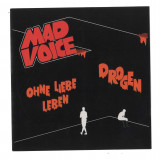
If ever talking about a „ghost“ of an Austrian record, both in terms of getting info about and getting your hands on, the only output of short-lived band „Mad Voice“ would be a prime example of such. It took a couple of years to track original band members and the master tape down, which in the end made for Wiener Brut being able to carry out an exclusive re-release of this 7 inch. Get ready for a perfect blend of minimalistic Pop, Synthwave and NDW!
Der Artikel ist vergriffen. Wir senden Dir gerne eine Mail, sobald er wieder verfügbar ist. Klicke zum Aktivieren auf "in Stock Mail"
What is no+no? Is it a definitive no to the madness and decay of democracy surrounding us? Is it a negative yes to another reality? Is it an affirmation of a change to come? Somewhere between feedback loops, pitched down vocals, distorted dub, cosmic synths, primitive beats and drone guitars there might be an answer.
On their 6th release, DRNTTCKS for the first time deviated from their usual practice of recording all sessions directly and just editing around edges. During the lockdowns they found themselves in a situation wholly different to their improv approach - alone in the rehearsal room, they listened to what the other has recorded. All based on lose structures that were conceived during the last row of live shows before the shit hit the fan, these songs took shape brick by brick/take by take, resulting in a much more straight forward, defined sound which received an additional heavyweight fidelity treatment from OLO Mastering Berlin.
The freeform noise surfaces of past releases fade into the background in favor of slowed-down proto-techno beats and repetitive bass lines, catching the harsh, immersive vibe of DRNTTCKS' pre-pandemic live concerts, and function as the sonic equivalent of the quagmire of chaos we reside in.
Der Artikel ist vergriffen. Wir senden Dir gerne eine Mail, sobald er wieder verfügbar ist. Klicke zum Aktivieren auf "in Stock Mail"
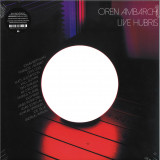
Black Truffle is pleased to announce Live Hubris, documenting the hypnotic and electrifying live performance of Oren Ambarchi’s 2016 LP Hubris by a fifteen-strong band at London’s Café Oto. Over three days in May 2019, Oto toasted Oren Ambarchi at 50/Black Truffle at 10 with Ambarchi and a large group of close friends and collaborators in a series of performances that interspersed existing projects with new collective endeavours, culminating with this: fourteen members of the extended Black Truffle family together on stage, joined by one special virtual guest, to translate the intricately studio-constructed layers of Hubris into a muscular live band workout.
Operating with only the bare minimum of pre-gig preparation after the planned afternoon rehearsal had to be wrapped up prematurely due to noise complaints, the gargantuan group lurches into motion with a 21-minute rendition of ‘Hubris Part 1’, powered by the pulsating electronics of Konrad Sprenger (the ‘ringmaster’ at the ensemble’s core) and no less than seven electric guitars spinning a web of intricately interlocking palm-muted polyrhythms. The layers of closely related but metrically distinct lines create ripples of shifting accents, flickering changes in emphasis that ricochet along the endless central pulse. Gradually building in density, this motorik continuum becomes the backdrop for the haunting tones of Eiko Ishibashi’s processed flute and an extended feature from long-distance guest Jim O’Rourke on guitar synth.
After the brief interlude of the second part, where Albert Marcoeur-esque guitar arpeggios accompany a halting attempt at phone conversation, the full ensemble gears up for the epic side-long rendition of ‘Hubris Part 3’. Now joined by the astonishing triple drum line-up of Joe Talia, Will Guthrie and Andreas Werliin, the layered pulse of the opening piece becomes a burning funk-fusion groove. Beginning on a medium simmer, the ensemble initially stick to its pulsating one-note mantra, over which Ambarchi unfurls a beautiful example of his signature shimmering Leslie-toned guitar harmonics, eventually joined by Ishibashi’s flute and some brooding, distorted dissonance from Julia Reidy’s guitar. Building steadily for the first nine minutes, the heat then rises dramatically with a first, gloriously loose chord change: with the all drummers now rolling and tumbling like a twice-cloned Jack DeJohnette circa 1970, Mats Gustafsson enters on baritone, his tortured roars and shrieks driving the band to peaks of insane intensity. Finally, the exhausted ensemble drops out, leaving only the jagged, skittering fuzz of Ambarchi’s guitar, brought to an abrupt conclusion at the command of crys cole. Arriving on hot pink vinyl with artwork by Lasse Marhaug and an extensive selection of live photos by Ivan Weiss and Fabio Lugaro, Live Hubris brings this ambitious and outrageous evening of music to the safety of the home stereo.
Both regulars of the club, arts and queer scenes of New York, Berlin and London of the last three decades, it's surprising Wolfgang Tillmans and Honey Dijon only met five years ago. A walk between clubs in Brooklyn resulted in the two having a mutual interest to collaborate. Busy as both are, the wait was long, but well worth it. This week's release of Honey Dijon's Euphoria Mix of 'Can't Escape into Space' sets the tone for what is left of this summer: Our desire to be together, with friends and strangers, close up on dancefloors, festivals and open airs. Honey's and Wolfgang's shared unapologetic spirit comes alive as Dijon transforms Tillmans's original song into an electrifying dance floor banger. As we can already sense a reawakening of our freedom blowing in the air, even if many clubs remain closed, the two musicians' call to come together again is euphoric and inescapable.
The original version of the song was released last winter in the midst of lockdown, accompanied by a video showing an empty nightclub and its mirror balls performing for the camera, filmed in 2017 by Tillmans, in pre-pandemic Fire Island. A new video accompanies Honey Dijon's Euphoria mix with three vignettes of longing and passion.
Autarkic (Nadav Spiegel) is known for his impact on the Leftfield/Electronica scene, and on this LP he is taking a turn back to his roots - Songs in Hebrew, guitars, synths and samples wrapped with Lo-fi esthetics that he's recognized with.
Steve Summers delivers his long anticipated debut double lp for L.I.E.S. Stepping up with 13 tracks, Summers goes across the board exploring all ends of the long lineage of Chicago House music. As a member of Mutant Beat Dance with Traxx and Beau Wanzer or under his Rhythm Based Lovers alias Summers has always managed to tread the line between classic Chicago styles and modern psychedelic Jakbeat floor beaters.
On the aptly titled "Generation Loss" we get the the full spectrum; from the old school 80s acid of "Who Knows" to the long form lysergic blackhole of "Boxed In" or the dx funk of "Unknown Origin" Summers cements his signature style which he has refined over years throughout this LP.
Der Artikel ist vergriffen. Wir senden Dir gerne eine Mail, sobald er wieder verfügbar ist. Klicke zum Aktivieren auf "in Stock Mail"
Dublin's Splitradix delivers an EP of intense and melancholic acid / braindance with plenty of ''light in darkness'' to quote Yellow Magic Orchestra. Opener Laplace Formal is a moody, hyper melodic piece for a dreamy dance floor. The oddly titled second track, The Dry Canal, is the centerpiece of the EP. Dry, deep and stomping acid taking you through a tunnel of sound - the two dark droney melody lines slowly but surely turn the piece into something truly epic and unforgettable... Opening the flipside, Empty Sea 1000 is a slow, lazy acid cut from another dimension, very nice! Lucan 303 Distribution Service is heavy on the kick. Basic at first, it later turns into a wonderfully melodic Rephlex-like cut. Last one, Laplace Formal (Navs' No Jacket Required Remix) is a laidback and more euphoric version of the EP's opening track.
Deathbomb Arc is very excited to be working with Pumpkin Witch yet again for another vinyl edition, this time of their 2nd album 'In The Frightful Gaze of the Pumpkin Witch'! Never before available on vinyl, this raw and, of course spooky, dungeon synth classic is full of dead leaf incantations and brutally minimal no-fi mad doctor rhythms. All hail the Pumpkin Witch!
"Naive overlooked New Beat / New Age project from 1989"
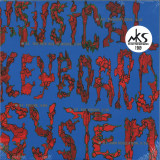
Sometimes in life, a certain incentive is needed to convert talent into productivity. As for the case of MKS, the enigmatic and musical disguise of Nicolas Aubard, it was a merely coincidental encounter at the end of the 80s that set the stone rolling. For Nico, it all began in his hometown of Saint-Quentin in Northern France. At a young age, he got obsessed with Japanese and American cartoon culture. Being a devoted collector of cartoon-related toys and widgets, he spent hours watching anime series on TV and creating scale models of science fiction and horror-related sceneries. Growing up in a musical household, young Nico took on stringent training in classical and jazz piano. But, frustrated with the fact of not being the technical virtuoso he wanted to be, he turned away from his training at the age of 16. “I had no choice, as I felt as if my creativity got limited by my piano. That’s when I got drawn into the world of synthesizers.” Not long after, Nico put together a home studio and started to experiment with ambience and sound-inserts. Despite years of experimentation and music making, all Nico’s productions stayed between the 4 walls of his modest home studio. Something that would change in 1988, when Nico bumped into Emmanuel “Manu” Prevost.
“We met on a night out in Lille”, Nico recalls. “I usually just stood by the dj booth, as I wasn’t a good dancer. So instead of throwing shapes at the dancefloor, I started a conversation with the dj, who happened to be Manu. By the end of the night, I handed him a demo tape of the album I was wanting to do.” Propelled by good fate, a fruitful collab happened between Nico and this dj. For Manu, everything also fell in place: “At the time, I was looking for a composer to work on producing a new beat record. As a dj, I often crossed the Belgian border for gigs and this new style was in full explosion over there. I heard Nico’s songs and naively told him: “Let’s make an album”, without knowing how.” Despite the high hopes for the new alliance, the project turned out to be a shot in the dark. “I assumed Manu already had some experience, as he proposed to do the mastering himself. But funnily he only told me after the release of the record that it was his first time too. But you know, we managed.” Not willing to release under his own name, Nico came up with Musical Keyboard System, abbreviated as MKS. The alias was born and the journey ready to take off.
The album finally released in September 1989. After the release, Nico went on a low-key promo tour together with Manu in Northern France. “We aired a video clip on FR3 for two songs, together with a short interview. In their studio, we created a scrimpy décor with some green plants to resemble the Vietnam jungle (as for the track Nam Revelation) and we shot the clip. Manu even lay down behind a screen operating the fog machine.” As a live act, MKS’ career was rather short-lived, with a first and final gig in the Theatre of Saint-Quentin a few months after the release. “In France, we would remain illustrious strangers. Yet in the meantime, our music got played on new age radios in the USA.” After the end of MKS, Nico moved to Paris and Manu took on his military duty. In the army, Manu met movie animator Jacques Rouxel (the man behind French cult series Les Shadoks) and got him in touch with Nico. The duo collaborated with Rouxel on some compositions, before they went their separate ways at last. Nico went on to pursue his childhood dream, as a pioneer in France for integrating 3D animations into classical cartoons. Manu in turn became a producer for feature films.
Der Artikel ist vergriffen. Wir senden Dir gerne eine Mail, sobald er wieder verfügbar ist. Klicke zum Aktivieren auf "in Stock Mail"
Charlemagne Palestine's performance on the organ of the Friedenskirche, Eupen for the reihe-M showcase at the Meakusma Festival 2019 was one of the many highlights of that year's festival edition. This record features the full live performance as Palestine conjures up his dense definition of maximized minimalism, introducing the performance with a minimalist drone and himself singing on top. His voice touches upon melancholy and the absurd and gives the piece context and direction. From there on, anything goes.
Der Artikel ist vergriffen. Wir senden Dir gerne eine Mail, sobald er wieder verfügbar ist. Klicke zum Aktivieren auf "in Stock Mail"
Martinou lands on Nous'klaer Audio with his debut album RIFT. Emerging from a waking forest entranced by sun-rays reflected in the morning dew and the sound of rustling leaves in the rising wind. RIFT is a captivating road through the riddles of an imaginary landscape, full of noisy and organic textures bound by hypnotic and soothing melodies. From the calm opener of Absorption (Citywide) to the breathtaking Cirrus Apparition, and from the piercing tones of Velvet back to the closing act ...in all it's splendor. An album consisting of twelve tracks for every moment, a triple vinyl suited for warming up and tearing down a dancefloor, but best listened to from start to finish. Artwork by Romee van Oers. Including download code.
Der Artikel ist vergriffen. Wir senden Dir gerne eine Mail, sobald er wieder verfügbar ist. Klicke zum Aktivieren auf "in Stock Mail"
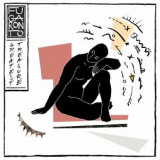
Fuga Ronto's second release Greatest Treasure is a musical journey exploring different kinds of territories by blending elements of synth funk, dub, fusion, new wave and ambient with household noises, reverb vocals and quotes from movies to adventure games. Out of playful recording sessions the Zurich duo Schweizer and Shiller created songs with track names that read like movie titles. The treasure quest begins with a tongue-in-cheek intro before the title track kicks in. It’s all about exotic boogie with adventurous lyrics and voodoo magic. The rhythm guitar, percussion and multilingual chanting driven single „Falling Star“, lures even unathletic feet onto the dancefloor. "Columbo De Domingo“, a rolling instrumental based on a four chord sequence creates an illusional staircase moment. The tracks on the B-side guide towards slower and dreamier attempts. "Mirror To Water" builds on swaying synth pads that lead up to a laid-back song with breathy male and female vocals over a shuffling drum beat. It’s epilogue "Wobble In The Pool" sticks to the mood and takes the sounds further into dubby lands. The closing chapter "Mystery Of Zambio" is a delightful two- parter. Nostalgic melodies take the lead at first to be replaced by chords and a choir in the second part, until they dance away into the fade-out. Maybe a hint for a continuation of the story? One would hope so.
Der Artikel ist vergriffen. Wir senden Dir gerne eine Mail, sobald er wieder verfügbar ist. Klicke zum Aktivieren auf "in Stock Mail"
When 'Push Comes To Shove' is the seventh studio album by Artist 'Soft Riot', he's the stylised musical alter-ego of Glasgow-based Canadian artist JJD.
Resonating with references from all corners of the synthpop’s origins (DAF, Fad Gadget and John Foxx to name a few), Soft Riot’s latest release nonetheless manages to retain its own individual voice, melding and reinterpreting its antecedents with a personal twist and an impressive demonstration of synth-craft and programming. Following on from 2018’s The Outsider in the Mirrors, these eight tracks represent a change in themes and an evolution in production and sound.
The forthcoming single and album opener “Taking The Edge Off” sets out the Soft Riot manifesto, a propulsive future-synth tale of forging ever-forwards in an increasingly noisy world.
“It’s No Laughing Matter” is a hedonistic yet propulsive dance-floor slammer — shades of minimal synth and metallic Belgian new beat condense in side one closer “Fate’s Got A Bone To Pick With You” and the dizzying italo-matic muscle workout “Don’t Get Yourself Bent Out Of Shape” is the ultimate self-help smack down.
The outcome has been a sideways step into more new wave pop aesthetics, and a looser sound (underpinned by the warmth of the production). This overall makes the album groove into a more dance-floor orientated full sound, thawing some of the cold-wave angularity The Outsider In The Mirrors.
Soft Riot has previously released six studio albums, including a wide range of remixes for other artists including Lebanon Hanover, Keluar, Celebration and Attrition.
He is also regularly touring the European underground synth/wave/post-punk circuit and sometimes beyond -
(Possession Records with UPC 'PSSN04').
Dark Entries continues celebrating our 10 year anniversary with ‘Preservation Bias’, a compilation of lost songs and rarities from Linea Aspera out June 28th. The group formed in London in November 2011 by Ryan Ambridge (Synths/Programming) and Alison Lewis (Vocals/Synths). Within the duo, Alison writes and performs all vocal elements, while Ryan is responsible for producing, recording and mixing the electronics. We released their debut self titled album in June 2012 that was followed by a posthumous vinyl reissue of their tour cassette “II” on Weyrd Son Records in 2013. For all recordings Ryan utilizes an analog synthesizer set up: Roland SH-09, Roland Juno 6, Vermona DRM MKiii, Korg Poly 800 and Analogue Solutions Semblance. Linea Aspera's sound includes clear influences from 1980s electronic body music, synth-pop, industrial and noise. Lyrically the band incorporates the sciences of osteology, neuroscience, and anthropology weaving a new medical language around themes of desire, despair and renewal. Linea Aspera is the muscle attachment on the back of the femur and translates to 'rough line' in Latin. ‘Preservation Bias’ features all three songs from the limited ‘II’ tour cassette EP, four songs from the 2012 self-titled limited cassette EP and one song from the Desire Records 2013 compilation ‘And You Will Find Them In The Basement’. All songs have been mastered by George Horn at Fantasy Studios in Berkeley. Each LP is housed in jacket designed by Niall Greaves and includes a double-sided insert with lyrics.
Der Artikel ist vergriffen. Wir senden Dir gerne eine Mail, sobald er wieder verfügbar ist. Klicke zum Aktivieren auf "in Stock Mail"
Tartine Records is pleased to present their duo Coco à Gogo with a brand
new 4 tracks EP. After a first track released this year on the various “Cut A Rug” of french imprint Aurore 404,
the duo formed by John Tareugram and Nuno is proud to brings you this seaside-flavoured release made between Paris and French West-coast.
The Coco à Gogo’s intentions are to take you deeply out of yourself keeping the dance-floors and your fav old-fashioned 80’s cabriolet in your mind…
Moments of unbridled creation often manifest themselves in rather eccentric ways. Be it a sudden eureka moment, where the internal light-bulb flickers on sharply, or the seamless state of flow that appears when writer and pen are in-tune. But what about electronic musicians and that of the equipment around them? In Robert Babicz’s instance, the very sounds produced by this relationship morph into shapes and colours; sonic frequencies become visible objects due to the rare phenomenon, and indeed gift, of synesthesia.
Evidenced by Robert Babicz ’s eighth album, Utopia , this inherent creative process has resulted in a body of work that embodies his own personal experiences, forming a life soundtrack to epitomise moments of both elation and hardship. Memories enjoyed contrast with those endured, interwoven in a tapestry of musical expression that encapsulates a human story we can all relate to. Set for release on Marc Romboy’s Systematic, a label of which the Polish-born artist is more than familiar with given his two previous ‘Butterfly’ LPs, the album touches upon some of society's fundamental challenges, most notable of which is our search for the ideal world. Perhaps most strikingly is Robert’s assertion that the ‘Utopia’ we seek is not in fact a destination; rather it is a journey, one in which we must introspectively assess the notion that to find “ a better world to live in, we must create it each day ourselves.
Each track therefore is a reflection of such a discovery, acting as an auditory representation of Robert’s personal tale and typifying the evolution that naturally ensues. In this instance the symbolic nature of the butterfly, showcased in the album’s cover artwork, represents this transformatory experience. The voyage soon begins with Childhood , an ambient introductory piece that blissfully sets the tone of the release with emotive keys and warm, ethereal pads. Heartstone soon takes the helm, as progressive synths converge on a rhythmic kick-hat backbone, before the instrument-dotted Heroes opens with a stunning guitar-riff lead and resonant snare patterns.
The subdued tones of Hotel Kalimba soon grace us, a beautiful interluding track that works to rise and fall simultaneously, paving the way for a reworked version of Sonntag, one of Robert’s most popular tracks previously released on the well-established Kompakt label. Come Down swiftly ups the tempo, featuring a compelling main bassline that accompanies the poignant storytelling of vocalist Zera , before the hypnotic hum of Super Cactus softens the pace and gifts us a glimpse into a world far-removed from ours.
We are graced with another bespoke offering in Sin , an enchanting seven-minute rework of Robert’s debut Systematic track of the same name, whilst the heartfelt sense of No One Else undulates with a gentle lucidity, as Zera’s docile tones shimmer amidst a saxophone solo that evokes feelings of contemplation and anguish in one. Climax soon emerges with its breaks-inspired drum patterns and ethereal synth pulses, before the cosmic notes of Garden of Souls leave us in a haze of starry, wide-eyed reflection. Alice Rose ’s mesmerising vocals amplify the meditative qualities of Infinity Inside , a delicate penultimate record that unfurls into the album’s eventual closing track: Utopia .
Der Artikel ist vergriffen. Wir senden Dir gerne eine Mail, sobald er wieder verfügbar ist. Klicke zum Aktivieren auf "in Stock Mail"
A child of punk and noise, Pierre G. Desenfant, under the Blackthread monicker, pursues the multiple incantations of an immersive and inner quest, carved from the limbo of his own dreams, cinematographic miniatures where the intimacy of words and spoken word meets the chiseled luxury of analog machines.
In his songs of a new century, Blackthread experiments with the precision of the scalpel, an outstanding storyteller floating on vaporous synthetic mist. Sumptuous magnetic clouds in which balances an emaciated bass, choirs on the horizon, a soul keyboard or a minimal, almost hypnotic beat. We slide between scenes in sequences, carried by the echo of this voice dancing between the murmuring and the sung, hints of Gil-Scott Heron flirt with Pansonic, Coil and Eno-esque ambience.
Written and constructed over three years, his third album The Way You Haunt My Dreams was recorded with urgency in only a few days, with the contribution of sounds from friends Béatrice Morel, Frédéric D. Oberland, Stéphane Pigneul deOiseaux-Tempête, Rémi Dulaurier and the complicity of Johannes Buff (Zombie Zombie, Lee Ranaldo and The Dust, Enablers) in the mix. Contemporary photographer Gaël Bonnefon illustrates the album with his striking silver-toned clichés.
Sparkling with a sensitive bark and piercing directly the heart, Blackthread delivers with The Way You Haunt My Dreams a black and red diamond, addictive hollywood wandering, already blending into the night to haunt dreams in technicolour.
Blackthread is a story of development. Removing the traditional guitars and drums of noise rock in which he made his more conventional apprenticeship, Desenfant has reached a minimalistic formula in finding a new path. Constructed with minimal tools (a bass, analog synthesizers and his voice), his music, after these few years, expresses a plethora of sounds and feelings. Spoken words, whispers and explosions, this disciple of Brian Eno, Silver Apples and Alva Noto writes a beatless techno, rock devoid of guitar, an ambient enhanced with texts of icy beauty.
With The Way You Haunt My Dreams, Blackthread grapples with the tension of a certain genre of dark rock and literary post punk, superimposed in ambient music. Continuing with this sense of mood, Desenfant succeeds with this new album in developing a rare songwriting in experimental synth music. Blackthread is also a story of the voice. Never suffocated by acoustic research, the words of the vocalist give this disc its depth of personality, somewhere between neuroleptic reverie and confrontation with the musician's catharsis.
Der Artikel ist vergriffen. Wir senden Dir gerne eine Mail, sobald er wieder verfügbar ist. Klicke zum Aktivieren auf "in Stock Mail"