The story of So-Do is both familiar and completely unique. A classically trained multi-instrumentalist with a poet’s sensibility and a passion for folk music meets a worldly bar owner with a love for psychedelia, post-punk and dub in the small town neither could bring themselves to leave. Over two years, they play dozens of shows in independent live houses across Japan, cut and self-release three singles – two 7”s and a 12” – and leave behind just eight tracks, all of which are set to be reissued for the first time forty years on.
So-Do’s Studio Works ’83-’85 collects the full output of this iconoclastic post-punk phenomenon, whose sparse, syncopated arrangements were infused with a dubbed-out flair that owed more to Dennis Bovell’s productions of Orange Juice, the Jah Wobble basslines of Public Image Limited or Adrian Sherwood’s live dubs of Mark Stewart than even they knew at the time.
Because for lead songwriter Hideshi Akuta, music offered an escape from the existential malaise of small-town life, folding a melancholy nihilism into tracks like ‘Kakashi’ and ‘Hashiru’ (which translates as ‘run’), or taking aim at the inequalities and creeping apathies of the middle classes, as he does on ‘Get Away’ and ‘Nothing’.
And if Talking Heads had CBGBs, Sex Pistols had the Roxy, then So-Do had Buddha. Influenced by Buddha venue owner and amateur producer Atsuo Takeuchi, Akuta turned So-Do’s sound towards dub, crafting playful, ironic and funky compositions that crackle with live energy at the vanguard of Japan’s nascent independent music scene.“So-Do is hard to explain,” Takeuchi says. “It’s been a struggle for years to try to find the words for our music.” The answer perhaps, is just to listen.
Both familiar and completely unique, So-Do extend Time Capsule’s genre-defining exposition of Japan’s reggae-inspired music of the ‘70s and ‘80s, as collected on the label’s two critically acclaimed Tokyo Riddim compilations, and London-based live outfit Tokyo Riddim Band.
Embracing the rip-it-up-and-start-again ethos of the early ‘80s, So-Do burned bright for a short time and then burned out. Their legacy is about to be reignited. Expect it to catch alight once more.
All songs are written & composed by Hideshi Akuta
Produced by Atsuo Takeuchi
Artwork by Ben Arfur
Liner Notes by Anton Spice, Ayana Honma, Kay Suzuki
Curated by Kay Suzuki
Licensed from Atsuo Takeuchi (Oregano Cafe)
Tape Restoration and Mastered by Mike Hillier at Metropolis Studios, London, UK
Time Capsule | TIME023 | 1983-1985 → 2025
Pop & More Nuovo in Stock
Ultima entrata il 26.05.2025
Ultima entrata il 23.05.2025
Remix Edition
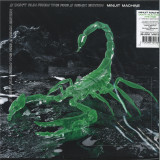
"Don't Run From The Fire" is Minuit Machine's 5th release. It's a four-track EP. One year and a half after coming back from a one-year hiatus, Minuit Machine keeps on transforming and evolving. From dark electronic, to EBM, the duo reasserts its hybrid identity, always dark wave, but with strong touches of techno and EBM. Don't Run From The Fire talks fear and desire. How love, and feelings in general affect us all as human beings. How we try to run away when we feel in danger. We run away, or we stand still, ready to attack, like a scorpio. We hide how much we're afraid, how much we'd like to hide. It's about control, trying to take control when everything is out of control. When the world around us is chaotic and dangerous. Don't Run From The Fire is about fighting, for who we are, who we want to become. It's about understanding what we truly want and embrace it. Don’t Run From The Fire – Remix Edition is a new version of the original EP with 4 additional remixes from Rein, Parallx, Crystal Geometry and Maud Geffray.
As 2024 unfolds, DBB008 emerges like a breath of clarity amidst the noise. “Fresh Air” by Ober Dada—an alter ego of Keyn Acid—is a journey between the mechanical and the organic, the familiar and the unexplored. Out both digitally and as a 200-limited vinyl edition, “Fresh Air” invites listeners into a world where space expands, time is unbroken and every beat matters.
Limited 200 copies!
- A1: Les Pensees
- A2: L'usine A Disques (Duke Ellington & Louis Armstrong Remix)
- A3: Dreader Than Dread (Feat L'entourloop & Skarra Mucci)
- A4: Who's The Real Skinhead? (Ska Edit)
- B1: Old Mob Blues (Feat Shaolin Beatmaker)
- B2: Design Of The Future (Feat Dizzy Dustin (Ugly Duckling)
- B3: Streets Of Neryhi
- B4: The Earth Is My Witness (Feat Caminuksuk (Bloc)
The Architect is an artist that travels through styles: Swing, Jazz, Electro, Soul, Funk and Hip Hop... A real digger of hidden samples, he is also beatmaker for the famous collective L'Entourloop! 2019 marks its big comeback, with the announcement of a new album and a new immersive live under the name of The Architect & the Unique Orchestra. The 1st EP of the beatmaker The Architect entitled "Foundations" is finally available on vinyl more than 6 years after its original release in 2013 !
When SW. AKA, Stefan Wust, first established SUED in 2011, their compelling, cosmic and anonymous material struck a rare chord, emanating far beyond the freeform Berlin underground in which it was written. Unknowingly, Los Angelean Oliver Bristow had
established a parallel musical universe, founding the hyper-specific label Acid Test, inviting pioneering artists such as Donato Dozzy, Tin Man and Pepe Bradock to indulge in glorious interpretations of 303 control. Without compromise, these were records that quietly
reinvigorated electronic music.
Some years later, a new label, SWOB, unites Wust and Bristow in a very different landscape. And while it would be easy to transform the purity and integrity of this special alchemy into something like nostalgia, yearning for an alternative culture before
influencers and against algorithms, SWOB endeavours to find inspiration in arguably tougher truths.
“By the mid-90s, the techno scene had already reached a breaking point”, recalls Wust.
“Today, the scene is so highly professionalized that it barely resembles what was once called the "underground. But "underground" was never more than the simple reality that music circulated on cassettes among friends or that dubplates were played at illegal
parties... The consequence of today’s professionalization is the death of the original movement.”
Still, no one can kill an idea. Here, inspired by the “Outside Tekno” or “Outkast Techno” that emerged to subvert even back in the day, SWOB are proud to introduce the tekkNOthing trilogy, a new project from SW. beginning on cassette and culminating later
on vinyl. Some years in development, tekkNOthing first began to take shape during the 2020 global pandemic, when ‘the underground’ quickly began to mean something radically different once again.
“I noticed how everything was accelerating while simultaneously spinning in circles – existing in a kind of creative limbo on a global scale”, recalls Wust. “And that’s where true freedom lies: for artists – in any sense – to consciously engage with this necessity. In
other words, irrationality or nonsense can eventually generate meaning.” While hardly capitulating to the contemporary hammering of techno’s most recent developments, tekkNOthing’s first chapter quickly establishes a frenetic pace; tracks like ‘nuclearFALLoutX’ and ‘paslolESmess’ interlock and unfold at a tempo removed from that typically associated with SW. while ‘euroBSS’ and ‘viscousHEAT’ successfully experiment with a more guttural palette, veering far into a rejuvenating and previously uncharted leftfield.
A resolutely human endeavour, the music of SW. is nonetheless written and recorded in the looming shadow of AI, whose free-form adoption of pop culture, hip-hop and techno reminds Wust of “when photography emerged in the 19th century... painting was no
longer bound to naturalism. Similarly, music today is no longer bound to fixed standards – through AI, it can become truly free.”
If not in competition, than taking inspiration from this landscape of new opportunity, tekkNOthing diversifies further with eight unpredictable tracks across part II, taking in stuttering machine-funk on ‘crAMPDUNK’, a freeform organ jam via ‘sonicENdo’ and the
inexplicable piston-percussive, post-punk exotica heard on ‘poorTENOOR#a#01’ DJs with dual cassette decks skills might even find function in the more overtly floor-focused ‘DU ¨NEhowSE#1takeÄ’ or ‘lookLOOK’.
The times may have changed, but the promise remains simple; more music, more freedom.
Ultima entrata il 22.05.2025
Transversales Disques proudly presents Alain Goraguer Rare Soundtracks & Lost Tapes.
French composer Alain Goraguer who first made a name for himself as a sideman and arranger for Serge Gainsbourg wrote very few soundtracks, but amongst them, the legendary La Planète Sauvage (1973) is an absolute staple of France’s essential music.
During that same period of time, Goraguer wrote two rare and beautiful scores using the same masterclass arrangements. On L’Affaire Dominici (1975), Alain Goraguer creates a theme of great melodic clarity from a palette of breathy flutes, clavinet D6 baroque textures, wah-wah guitars and slow-paced drums that clearly reminds La Planete Sauvage’s atmosphere. The same can be said about the score of Au delà de la peur (1975) with its descending clavinet melody, twanging bass riff, funky drums and flashes of bended electric guitars. This record also includes never before released tracks found in the vaults of French national radio: beautiful and timeless orchestral compositions recorded at Studio 105, Maison de la radio.
REMASTERED FROM THE ORIGINAL MASTER TAPES
Baby Huey drew comparisons to Otis Redding, but a fatal heart attack in 1971 prevented him seeing the fruition of a successful career and the actual release of this Curtis Mayfield penned song. An original pressing on Curtom originally sold for over £300. Hard Times' has been sampled over 50 times by artists including A Tribe Called Quest, Lil Wayne, Biz Markie and The Chemical Brothers. Listen To Me' has been sampled by Eric B & Rakim, Wu-Tang Clan. Public Enemy, Grandmaster Flash and many more. This is the first time these tracks have been released in the UK
- A1: Pas De Pétard
- A2: Tembleque
- A3: L’indomptable Gnonnas Pop
- A4: How Much Love Naturally Cost
- A5: Fini Les Pavés
- B1: Dadjê Von O Von Non (Version 1983)
- B2: Azian Vignin
- B3: Yiri Yiri Boum
- B4: Les Comédiens
- C1: I Got You (I Feel Good)
- C2: Tu Es Tout Seul
- C3: Bailando Mi Solo
- C4: Abito
- C5: Adigbedoto
- C6: Bon Anniversaire (Version 45 Tours)
- D1: Irma Koï (Club Edit)
- D2: Okpo Videa Bassouo
- D3: Intelligement
- D4: La Musica En Vérité
An official retrospective (1967 to 1985) of the legendary Beninese Composer, Gentleman & Salsero Gnonnas Pedro, who recorded dozen of albums & singles from the 1960s the 2000s with mythical bands such as Los Panchos, Les Dadjes & Africando !
21 tracks covering the extremely wide musical spectrum of this mythical artist in 40 years of career : Afrobeat, Salsa, Funk, Soul, Jerk & Folk frenzied grooves that will set any dancefloor on fire !
Available in a beautiful Limited Deluxe 2xLP gatefold edition (with a digital voucher including a Bonus track) & in HQ digital format with very detailed biography & liner notes in French & English, + Exclusive pictures, never seen before.
Bonus track : "À Ma Fille" (Digital only, includes with the download voucher of the album that comes with the release)
180 G. BLACK VINYL WITH LINER NOTES IN CREOLE, FRENCH, ENGLISH
Originally released in 1979, "Spiritual Sound" lives up to its name, a soaring, triumphant album, six tracks of spirit magic from Guadeloupe.
Telluric, intense, terribly alive, the gwoka drums of Guadeloupe carry the identity of a painful and fervent island. Marked forever by the crime of slavery, Guadeloupe's créolité cherishes the ka drums and their natural environment: the low-pitched boula drum with male goatskin, the high-pitched soloist makè drum with female goatskin, the chacha, ti bwa, triangle, calabash and other percussion instruments that surround them, and the voices - the fiery, proud, timbred, urgent voices of the gwoka.
This album is also a legend for its voices: in his then dazzling youth, singer Lukuber Séjor was one of the first gwoka artists to largely feminize the chorus of répondè, who converse with his text delivered in a straight and powerful voice.
And everything here sets new standards. In 1979, Mizik Filamonik - Spiritual Sound proclaimed a spiritual patriotism of ferocious intensity. The album by Lukuber Séjor - whose spelling alone is a battle - sets out to give Guadeloupe the intangible weapons of self-respect and self-knowledge, through a singular practice of traditional music.
The genesis of gwoka music is less straightforward than one might imagine... The drums performed the servile task of accompanying the work of slaves in the fields and during the “corvées” imposed by the administration, before being freely practiced by the common people after the abolition of 1848. At the heart of the conviviality of the Guadeloupeans furthest from the cities - geographically and socially - the gwoka drums come out for carnival, funeral wakes and neighborhood celebrations, but also during strikes, fits of anger and armed vigils of the riots and revolts that have punctuated the island's history. For generations, governors of the colony and then the prefects of the overseas department of Guadeloupe have been viewing the gwoka as a potential for turbulence and a threat to public order.
But as the Beatlesmania, “chanson engagée” and rock revolutions unfolded in Europe, young people turned to the drums of mizik a vié nèg (“bad negro music”, in Creole), which Guadeloupeans had learned to despise by following the “assimilation” process advocated by the school system and most of the political class. At the end of the sixties, in a Guadeloupe mourning the deadly repression of the May 1967 social movement, they played traditional music, refusing to wrap it up in tourist prettiness and madras folk costumes. Instinctively, they played a rough and contemporary gwoka, led by the incendiary Guy Konkèt. This was the era of decisive 45 rpm records such as Robert Loyson's Kann a la richès, which brought to light the fieriest words of union rallies.
At his home in Sainte-Anne, Lukuber Séjor played with flautist Olivier Vamur and his brother Claude Vamur, who cobbled together a drum kit from tin crockery and became, a few years later, the most influential drummer in Kassav'.
These were the years of the Bumidom program, when young Guadeloupeans were encouraged to emigrate to mainland France. At the age of twenty, Lukuber Séjor embarked on the liner Irpinia, disembarking at Le Havre and taking the train to the Gare Saint-Lazare - the route taken by thousands of young West Indians who went on to study or looked for work, all the while trying to maintain a link with their homeland. In this case, it's at the Antony university residence, where Lukuber played the drum and participated in a thousand gwoka updates and aggiornamentos, while exile reinforced the need for a spiritual link with the native land.
In 1978, Guy Konkèt played at the Salle Wagram, a historic event for West Indian music. After serving as répondè - i.e. backing vocalist - on one of his home-recorded albums, Lukuber joined his live band. Little by little, he became one of the key artists on a circuit parallel to French show business. At a student party in Caen, he met a young woman from Martinique who, at the time, was more motivated by her ambitions as a visual artist than by her vocation as a musician. Her name was Jocelyne Béroard and, a few years before she plunged into the Kassav' adventure and became the greatest West Indian singer of her generation, she designed the cover of Lukuber Séjor's LP.
This ambition was obvious and imposed its will. A more or less regular band was formed, with Roger Raspail, Rudy Mompière and Éric Danquin on ka drums, Claude Vamur on ti bwa, Olivier Vamur and Françoise Lancréot on flutes and Annick Noël on keyboards. Lukuber Séjor is set on wanting to extend the gwoka palette to other instruments, as the jazz-rock revolution opens a thousand new doors. Annick Noël will play a wide range of timbres and textures on electric piano and synthesizer. Another novelty: the répondè are two men and two women, Roger Raspail, Olivier Vamur, Françoise Lancréot and Maryann Mathéus ...
Mizik Filamonik - Spiritual Sound is a self-production in which the singer and leader sank all his savings, allowing him no more than a single day in the studio. The first side is more of a musical manifesto, with the first two tracks, Éritage and Penn é plézi, being instrumentals. The third, Son, forcefully celebrates the need for Guadeloupeans to connect with the gwoka. In fact, Jocelyne Béroard's cover shows a tambouyé in the shadow of a cloudy sky, against which a radiant sun is rising and whose light will soon flood the entire landscape. The silhouette and face of this man strongly evoke the immense Vélo, master of the ka, rejected at the time on the fringes of society.
The second side of the LP is surprising. Formally, three tracks are explicitly linked like the three parts of a triptych. Primyé voyaj evokes the appalling tribulation of Africans deported as slaves to Guadeloupe; dézyèm voyaj speaks of the Bumidom program and the economic, political and social forces driving young Guadeloupeans towards the mirage of prosperity in France; twazyèm voyaj closes the cycle with the emigrants' return from Europe after years away from their island...
This gwoka, obsessed with the need to save Guadeloupe spiritually, appeals far beyond the politicized audience. Mizik Filamonik - Spiritual Sound instantly became a classic, although Lukuber Séjor never really made a career for himself as a musician.
After all, the album was released in 1980, with no promotional resources in France or Guadeloupe - and therefore no concerts. The thirty-two-year-old author, composer and performer made his own third trip back to Guadeloupe. He set up a small woodworking business, which he lost in Hurricane Hugo in 1989. His other activity, teaching in a medical-educational institute, became the core of his professional life. He continued to be an active campaigner - a campaigner for the Creole language, a campaigner for the reawakening of identity, a campaigner for special education, a campaigner for a thousand causes that he ignited with his generous and perceptive enthusiasm, such as the defense of breadfruit fries...
The echoes of his 1979 album have not died down. Of course, the use of Penn é plézi as the theme tune for Radio Guadeloupe's funeral notices from 1980 to 1992 kept him in the collective memory, but he continues to sing and compose sporadically, as with his all-female
vocal group Vwapoulouéka... Still convinced that music is a means of liberating the spirit, he continues the journey of a young man eager to deploy the power of Creole music and language.
Bertrand Dicale
"Grey Hoodie is the 1st official album of the young producer and DJ Pentola, born in Apulia and based in Milan. Grey Hoodie is a mixture of electronic vibes inspired by the UK sound from 90s and 2000s. Broken-Beat, UK Garage, Jungle, Deep-House are the ingredients of these 8 tracks in which you can also recognize a post-Dilla flavor, all embellished by the presence of jazz musicians like Stefano De Santis, G-Foxxx and Stefano Nardon, and the singer Aljiaa. Anyone could write a good review of this album just by listening to the snippets that compose it and realize the conceptuality of the work that aims to achieve different goals, including that of being the album made with the greatest passion possible and with the greatest spirit of aggregation. Grey Hoodie is Pentola's sonic refuge, the place where the artist feels most at ease, where he manages to bring together the harmonies of jazz with the percussions and grooves of modern electronic music with that "touch" inspired by J Dilla, leader of Detroit's underground hip-hop scene in the mid-1990s."
Ultima entrata il 21.05.2025
Anneleen Boehme is a prominent figure in the Belgian jazz scene, known for her work as a double bassist across various projects.
Her virtuosity on the double bass was already evident in LABtrio, and her skill as both a composer and bandleader was showcased in Grand Picture Palace. Now, in her solo work, we experience Anneleen's genuine vulnerability, as she explores the deep connection with her ever-present companion: the double bass. Her music is a balm for the soul, and her playing is deeply moving, leaving no listener unaffected.
In this solo project, Anneleen Boehme pushes the boundaries of the double bass, striving to transcend them in all their forms. She places particular emphasis on the instrument's acoustic sound, subtly highlighting its rich, resonant voice. The music that warms her heart is at the core of this exploration: both her original compositions written specifically for the double bass, as well as solo arrangements of existing works and improvisations. Her passion for both jazz and classical music is beautifully expressed throughout. This is an embrace of the double bass, its deep tones, and pure musicality.
Eunoia is Anneleen Boehme's debut solo album, set for release on April 18th, 2025, and it is a dedication to herself.
"I wrote a story about who I am, about the path I've walked so far. About how the mind can drive you mad and how, amidst it all, you can find peace. I hope it will offer you the same. Sadness, joy, and comfort for your soul."
The double bass has the unique ability to convey our most melancholic emotions, and this album is no exception. Yet, its warm tones also offer a sense of healing and comfort. In most tracks, the double bass stands alone in its simple elegance, but in Fuga Ante Proelium, Anneleen's voice joins her instrument, adding a new layer to the musical experience.
- A1: So I Don’t Forget (Intro)
- A2: Nothing’s Gonna Fill You Up
- A3: No Joke
- A4: Catch Me
- B1: Pocketful Of Paranoia
- B2: Lay Low
- B3: Before It’s All Over
- B4: The Love That I Feel
- C1: Motel
- C2: Sell My Memories (Interlude)
- C3: Get Me Some Grief
- C4: I’m Alive
- C5: Caught (Catch Me Reprise)
- D1: Won’t Let This World Break My Heart
- D2: No One
- D3: Mallet Groove
DJ Support: Jamie Cullum (BBC Radio 2), Huey Morgan (BBC Radio 6), Gilles Peterson (BBC Radio 6), Deb Grant (New Music Fix, BBC Radio 6)
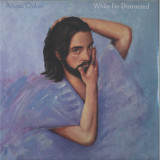
On debut album ‘While I'm Distracted’, London-based New Zealander Arjuna Oakes draws inspiration from contemporary soul and jazz, touches of global folk, electronica, modern classical, and post-rock, with dynamic arrangements and production. ‘While I'm Distracted’ is an album about fighting for your innocence and right to be a vulnerable and honest human. Arjuna’s songwriting explores themes of identity, depression, existentialism, social media, loss of innocence, and finding hope for the future through artistic expression.
'I'm obsessed with albums,' says Arjuna. 'I've made seven EPs, but needed time to tackle a full length record. I was using the EPs to learn the craft of how to make a great album, much like a director will make short films before they make a feature. I wanted to take the listener on a journey and spark their imagination. Hopefully the album expresses complex emotions, rather than having an intellectual concept. I'd rather ask questions than answer them'.
Across the album, Arjuna performs vocals, piano, keyboards, synths, production, and wrote the string arrangements. He’s joined by Harrison Scholes on bass, Jo Jenkins and Andre Smith on guitar, Sam Notman on drums, Louisa Williamson on saxophone, Nathan Haines on flute, Kate King on french horn, Leah Thomas on clarinet, Hilary Hayes and Emma Colligan on violin, Chris Van Der Zee on viola, Charley Davenport on cello, Zane Hawkins on percussion, James Macewan on trumpet, and additional production by Callum Mower.