Reissue for this classic album from '67 on Orange Impulse Rec. Considered to be the last Coltrane's lifetime release it includes the all-time classic "Welcome", as defined by Coltrane himself “the song is that feeling you have when you finally do reach an awareness, an understanding which you have earned through struggle. It is a feeling of peace. A welcome feeling of peace."
The complete album + 2 bonus tracks - limited edition pressing on 180g blue coloured vinyl, contains new specially prepared liner notes by Penguin Guide to Jazz's writer Brian Morton and by Paris' prestigious Jazz Magazine A timeless statement from a jazz giant, the studio album Coltrane captures John Coltrane at his most focused and expressive. Originally released on Impulse!, this LP is pure intensity and elegance. Performed by Coltrane's classic quartet with McCoy Tyner , Jimmy Garrison , and Elvin Jones , the quartet delivers tight and powerful interplay throughout.
e TUNJI [TOON-GEE]
[e] TUNJI [TOON-GEE]
deleted
The Item is out of Stock. We will send You an Email as soon as it´s available again if you click on "in Stock Mail"
Following the genre-redefining revelations of A Love Supreme in 1965, John Coltrane began a dramatic shift toward spiritual free jazz, abandoning familiar forms in favor of a more abstract sonic palette and bold questions he'd spend the rest of his life and career pursuing. Meditations, released by Impulse! in 1966, continues that emotional throughline while retaining, for the last time in full, the classic quartet that propelled Trane to greatness: pianist McCoy Tyner, bassist Jimmy Garrison and drummer Elvin Jones. (They're further augmented by Pharoah Sanders on tenor sax and additional drummer Rashied Ali.) Meditations pushes Coltrane’s spiritual jazz into heightened realms of energy and abstraction — a powerful document of transformation, intensity, and devotion in Coltrane’s recorded legacy.
Das 1966 bei Impulse! Records erschienene Album “Meditations“ fing John Coltrane in einer Umbruchphase
ein. Einerseits enthielt es die letzten Aufnahmen, die der Saxofonist mit der kompletten Besetzung seines
legendären Quartetts einspielte. Zum anderen präsentierte er auf dem Album mit dem Tenorsaxofonisten
Pharoah Sanders und dem zweiten Schlagzeuger Rashied Ali zusätzlich neue musikalische Weggefährten,
die Coltranes letzte Schaffensphase mitprägen sollten. In dem suiteartigen Programm fließt die Musik als
fortwährende Meditation über Transzendenz und kollektiven Ausdruck. “Meditations” hebt Coltranes Spiritual Jazz in höhere Sphären der Energie und Abstraktion. Das Album, das oft als spiritueller Nachfolger
von “A Love Supreme” bezeichnet wird, bleibt ein kraftvolles Dokument der Transformation, Intensität und
Hingabe in Coltranes musikalischem Vermächtnis
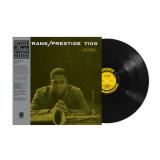
Original Jazz Classics celebrates John Coltrane’s centennial with this release of the mono edition of Coltrane. Originally released on Prestige in 1957 the album features Coltrane alongside Johnnie Splawn, Sahib Shihab, Red Garland, Mal Waldron, Paul Chambers, and Albert “Tootie” Heath. This new edition of the album is released on 180-gram vinyl pressed at RTI with all-analog mastering from the original tapes at Cohearent Audio and a Stoughton Tip-On Jacket.
Limited edition high-definition premium vinyl for super fidelity, 180g audiophile pressing - the complete LP + 2 bonus tracks Coltrane's sessions for Atlantic in late October 1960 were prolific, yielding the material for 'My Favorite Things', 'Coltrane Plays the Blues', and 'Coltrane's Sound'. 'My Favorite Things' was destined to be the most remembered and influential of these, and while Coltrane Plays the Blues is not as renowned or daring in material, it is still a powerful session. As for the phrase "plays the blues" in the title, it's not so much an indicator that the tunes are conventional blues, but more indicative of a bluesy sensibility.
Another of the albums that Prestige would issue several years after it was recorded, Bahia is drawn from a couple of sessions that the iconic tenor saxophonist recorded for the label in the late 1950s, during a time in which he was exploring different genres with various players, including pianist Red Garland, bassist Paul Chambers, plus drummers Jimmy Cobb and Art Taylor. The album has plenty of Trane hallmarks in the saxophone lead, and there is noteworthy contribution from trumpeter Wilbur Harden on ‘My Ideal’ and Freddie Hubbard on ‘Something I Dreamed Last Night.’ This is simply a great Coltrane listening experience.
John Coltrane's landmark 1961 jazz album My Favorite Things was born of the same recording sessions that yielded a majority of the albums Coltrane Plays the Blues (1962), Coltrane's Sound (1964), and Coltrane Legacy. That My Favorite Things was recorded in less than three days was in itself, remarkable. This record marked a significant turning point in Coltrane's career and showcased his distinctive playing style, which continues to inspire and influence musicians to this day. Coltrane's playing on My Favorite Things can be described as innovative, exploratory, and deeply emotive. The unforced, practically casual soloing styles of the assembled quartet — which includes Coltrane (soprano/tenor sax), McCoy Tyner (piano), Steve Davis (bass), and Elvin Jones (drums) — allow for tastefully executed passages à la the Miles Davis Quintet, a trait Coltrane no doubt honed during his tenure in that band, notes AllMusic. Coltrane was known for pushing the boundaries of jazz and expanding the possibilities of the saxophone as an instrument. Throughout the album, Coltrane's improvisations are characterized by their intensity, virtuosity, and sheer creativity. The title track is a modal rendition of the Rodgers and Hammerstein song "My Favorite Things" from The Sound of Music. Coltrane's use of modal playing made him a pioneer — modal jazz emphasizes improvisation over specific chord progressions. Coltrane's modal approach allowed him to explore a broader range of tonal colors and to create more open and expansive musical landscapes. Each track of this album is a joy to revisit. The ultimate listenability may reside in this quartet's capacity to not be overwhelmed by the soloist. As a soloist, the definitive soprano sax runs during the Cole Porter standard "Everytime We Say Goodbye" and tenor solos on "But Not for Me" easily establish Coltrane as a pioneer of both instruments. In 1998, My Favorite Things received the Grammy Hall of Fame award. The album attained gold record certified status in 2018, having sold 500,000 copies. We've given this definitive reissue of such a landmark album the presentation it deserves: Mastered directly from the original master tape by Ryan K. Smith at Sterling Sound and cut at 45 RPM. Pressed on 180-gram vinyl at Quality Record Pressings, and housed in tip-on old style gatefold double pocket jackets with film lamination by Stoughton Printing.
"The recordings that make up Afro Blue Impressions were acquired by jazz impresario/auteur Norman Granz during the tours he produced for many jazz artists during the 1960s, though they weren't issued until 1973. Recorded at shows in Berlin and Stockholm, the John Coltrane Quartet -- with pianist McCoy Tyner, bassist Jimmy Garrison, and drummer Elvin Jones -- is in tremendous form here, using a familiar repertoire in order to expand upon the group's own building blocks in creating the new post-harmonic system that the saxophonist was developing. Reissued on vinyl by Craft Recordings, released as part of the Craft Jazz Essentials series. "
Audiophile reviews rave about saxophone master John Coltrane's immortal Impulse! records, A Love Supreme (1964) and Ballads (1963). Ballads is an album that will never go out of style and never be unwelcome on any jazz lover's turntable.
You're about to experience Ballads at its peak of vinyl perfection — in UHQR format on Clarity Vinyl, with the added bonus of a double 45 RPM cut by Ryan K. Smith at Sterling Sound. Ryan's cut has his characteristic clarity and transparency all set against Quality Record Pressing's usual noiseless backgrounds on 200-gram flawless records. Each UHQR will be packaged in a deluxe box and will include a booklet detailing the entire process of making a UHQR along with a hand-signed certificate of inspection. This will be a truly deluxe, collectible product.
For this 45 RPM 2LP edition you'll also receive a !2" x 12" 12-page booklet featuring liner notes by Ashley Kahn and recording session images by Jim Marshall.
The intense passionate Coltrane interpretation of standards such as "All Or Nothing At All," "What's New," "It's Easy To Remember" and the Sinatra classic "Nancy (With The Laughing Face)" are the essence of Ballads. When asked why attempt such an undertaking, Coltrane replied "Variety."
While it may have been a short detour by Trane before he exploded off into the nether regions of jazz music a few years later, it is still a fantastic document of one of the premier jazz groups of the 1960s.
Recorded December 21, 1961 and September 18 & November 13, 1962 at Rudy Van Gelder Studios.
"It's impossible to sleepwalk through tracks like "You Don't Know What Love Is" and "I Wish I Knew" and impart them with even a fraction of the emotional heft that the Quartet achieves. This is the type of jazz album in which the music just washes over the listener with it's restrained grace and beauty, and while it may not have the adventurousness that some listeners think Trane should have had each and every time he recorded, I'd say it shows off a side of him that only makes us appreciate his more bold and daring albums even more." — The Jazz Record
« Lush Life » (1958) is among John Coltrane’s best endeavours on the Prestige (and Music) label. One reason can easily be attributed to the interesting personnel and the
subsequent lack of a keyboard player for the August 16, 1957, session that yielded the majority of the material. Coltrane (tenor sax) had to essentially lead the compact trio of himself,
Earl May (bass) and Art Taylor (drums). The intimate setting is perfect for ballads such as the opener ‘Like Someone in Love ». John Coltrane doesn’t have to supplement the frequent
redundancy inherent in pianists, so he has plenty of room to express himself through simple and ornate passages.
May provides a platform for Coltrane’s even keeled runs before the tenor drops out, allowing both Earl May and then Art Taylor a chance to shine.
The fun cat-and-mouse-like antics continue as Taylor can be heard encouraging the tenor player to raise the stakes and the tempo – which he does to great effect.
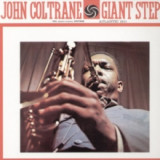
Released in 1960, Giant Steps was a watershed album for John Coltrane, solidifying the saxophone legend's reputation as one of the most influential and innovative musicians in jazz history, as well as delivering jazz to an increasingly mainstream audience, while garnering significant critical acclaim.
Although this was John Coltrane's debut for Atlantic, he was concurrently performing and recording with Miles Davis. Within the space of less than three weeks, Coltrane would complete his work with Davis and company on another genre-defining disc, Kind of Blue, before commencing his efforts on this one.
Coltrane (tenor sax) is flanked here by essentially two different trios. Recording commenced in early May of 1959 with a pair of sessions that featured Tommy Flanagan (piano) and Art Taylor (drums), as well as Paul Chambers — who was the only bandmember other than Coltrane to have performed on every date. When recording resumed in December of that year, Wynton Kelly (piano) and Jimmy Cobb (drums) were instated — replicating the alternate non-Bill Evans lineup featured on "Freddie the Freeloader" on Kind of Blue, sans Miles Davis of course. At the heart of these recordings, however, is the laser-beam focus of Coltrane's tenor solos.
All seven pieces issued on the original Giant Steps are Coltrane compositions. He was, in essence, beginning to rewrite the jazz canon with material that would be centered on solos — enabling the solo to become infinitely more compelling. This would culminate in a frenetic performance style using melodic phrasing that noted jazz journalist Ira Gitler accurately dubbed "sheets of sound."
The Giant Steps chord progression consists of a distinctive set of chords that create key centers a major third apart. Jazz musicians ever since have used it as a practice piece, its difficult chord changes presenting a "kind of ultimate harmonic challenge", and serving as a gateway into modern jazz improvisation. Several pieces on this album went on to become jazz standards, most prominently "Naima" and "Giant Steps."
The Penguin Guide to Jazz selected this album as part of its suggested "Core Collection" calling it "Trane's first genuinely iconic record." In 2003, the album was ranked No. 102 on Rolling Stone magazine's list of The 500 Greatest Albums of All Time, 103 in a 2012 revised list, and 232 in a 2020 revised list.
Undeniable music perfection deserves definitive sound and top-notch packaging. This reissue was mastered directly from the original master tape by Ryan K. Smith at Sterling Sound and cut at 45 RPM. Pressed on 180-gram vinyl at Quality Record Pressings, and housed in tip-on old style gatefold double pocket jackets with film lamination by Stoughton Printing.
Overall, Giant Steps is not only a critical triumph but also a defining moment in John Coltrane's career. Its innovative compositions, masterful performances, and profound influence on jazz make it an essential entry in Coltrane's discography and a timeless masterpiece in the history of the genre.
These recordings come from the same sessions that produced 1961's My Favorite Things. This is one of the least well-known Coltrane albums, partly because it is an all blues format and partly because it was released at the end of his association with Atlantic records.
Plays The Blues features the talents of McCoy Tyner, Elvin Jones and Steve Davis. It is the beginning of his work with Tyner and Jones in quartet form. For that alone this recording would be important. Although this album is called Plays The Blues, this is by no means the only blues which Coltrane plays. There are blues elements, moods and feelings in all of his best-known recordings. Listen to "Slowtrane," "Blue Train," "Bessie's Blues" among others and one can't help but hear the blues vibe.
The original six tracks are fantastic and have that same blues vibe. They hit the listener right in the heart and soul and don't let go. All six are superb, but "Blues To Bechet," "Mr. Day," "Mr. Knight" and "Blues To Elvin" are absolute classics.
Cut at 45 RPM. Pressed on 180-gram vinyl at Quality Record Pressings, and housed in tip-on old style gatefold double pocket jackets with film lamination by Stoughton Printing.
This may be one of the pearls in the history of jazz recordings, the John Coltrane Quartet featuring; McCoy Tyner, Jimmy Garrison, and Elvin Jones with guest Eric Dolphy. It’s the John Coltrane Quartet at its peak with Elvin Jones confirming once again his rank as one of the all times greatest percussionists. The program on that fiery broadcast night in February 1962 on Symphony Sid’s (a long-time jazz disc jockey in the United States) radio program included three long selections: “Mr. PC,” “Miles’ Mode” (aka “Red Planet”), and a nearly 20-minute reading of “My Favorite Things,” which Trane always performed as an extended jam.
Released in July 1963, "Impressions" is a compilation of recordings from various sessions between 1961 and 1963 of John Coltrane. The album showcases the range of Coltrane's musical interests, from modal jazz and hard bop to ballads, reflecting his evolving style during the early 1960s and received positive reviews for its adventurous spirit and technical brilliance. Critics and fans alike praise the album for capturing a pivotal moment in Coltrane's career as he moved towards more experimental and spiritual jazz. The early 1960s were a period of significant evolution for Coltrane. Having recently left Miles Davis's sextet, Coltrane was delving deeper into modal jazz, a style that focuses on scales (or modes) rather than traditional chord progressions. This period saw Coltrane pushing the boundaries of jazz with extended solos, complex improvisations, and a deeper spiritual search, which would later culminate in his iconic album "A Love Supreme."
music to be issued on The Avant Garde (with Don Cherry), Coltrane's Sound and the all-time classic My Favorite Things, he embarked on the making of Coltrane Plays the Blues, a thematic LP consisting of six tunes based on the blues. "Blues for Bechet", one of the two pieces on this album on which Trane plays the soprano sax, is obviously dedicated to the jazzman who brought this instrument to jazz: Sidney Bechet. Pianist McCoy Tyner sits out on "Blues to Bechet" and both takes of "Blues to You", reducing the band to a trio on these tracks.
This original three-track set questioned all sorts of norms, the standout item “Chasin’ The Trane” lasting 16 minutes with the tenor man the only soloist and a 12-bar grid the only thing for performers and fans to hold on to. “Spiritual”’ was the first time Trane opened and closed a piece entirely out-of-tempo, while the conventional “Softly As In A Morning Sunrise” began with over three minutes of just the rhythm trio before his soprano solo. Bonus track on this LP “Blue Train” recorded in Sweden. Not merely the first live Trane to be issued, but a turning-point for him and essential listening for us. This version is limited on Solid Purple & Solid Red mixed vinyl.
Analogue Productions (Atlantic 75 Series) Celebrating the 75th Anniversary of Atlantic Records! Coltrane playing with his former Miles Davis bandmates Featuring originals "Harmonique" and "Like Sonny" 180-gram 45 RPM double LP Pressed at Quality Record Pressings Tip-on old style gatefold double pocket jacket by Stoughton Printing The first album to hit the shelves after Giant Steps, Coltrane Jazz was recorded in November and December 1959, although one of the eight tracks ("Villiage Blues") was recorded in late 1960.
On everything save the aforementioned "Village Blues," Coltrane used the Miles Davis rhythm section of pianist Wynton Kelly, bassist Paul Chambers, and drummer Jimmy Cobb AllMusic describes Coltrane Jazz as the saxophone legend's preparation for his launch into his peak years of the 1960s. There are three standards aboard, but the group reaches their peak on Coltrane's original material, particularly "Harmonique" with its melodic leaps and upper-register saxophone strains and the winding, slightly Eastern-flavored principal riffs of "Like Sonny," dedicated to Sonny Rollins. The moody "Village Blues" features the lineup of McCoy Tyner on piano, Elvin Jones on drums, and Steve Davis on bass; with the substitution of Jimmy Garrison on bass, that personnel would play on Coltrane's most influential and beloved 1960s albums. Sound excellence can be found on this definitive deluxe 180-gram 45 RPM 2LP Analogue Productions (Atlantic 75 Series) reissue of Coltrane Jazz.
"On August 26, 1965, we find John Coltrane and his quartet recording at RCA Victor Studios on 24th Street in Manhattan. In the tunes tracked for Sun Ship, we hear Coltrane revisiting ground he had covered in the past with heightened sensitivity and a deepened interest in timbre. Sun Ship is a portrait of Coltrane’s most important band during his most important year, and while it’s sometimes overlooked in Coltrane’s discography — probably because it was released posthumously — it’s a crucial document for understanding what this band had accomplished, and it also offers a glimpse of why Coltrane moved beyond it. He needed to be in places where he was less sure of himself."
2025 ist das 60. Jubiläumsjahr von John Coltranes Albumklassiker „A Love Supreme“. Mit ”A Love
Supreme: Mono Edition” kann man jetzt einen faszinierenden neuen Blick auf dieses ikonische Album
werfen.
“A Love Supreme” erschien in einer Ära, als Alben sowohl in Mono als auch in Stereo veröffentlicht
wurden. Für viele Audio-Nostalgiker ist nicht zwangsläufig immer der Stereo-Mix der Bessere, sie bevorzugen teilweise die kraftvollen, prägnanten Mono-Varianten. Zum 60. Jubiläum erscheint das Album jetzt
erstmals seit über 50 Jahren wieder im originalen Mono-Mix, originalgetreu von Ryan K. Smith von den
analogen Originalbändern gemastert, bei RTI auf 180-g-Vinyl gepresst und im Gatefold-Tip-on-Cover. Eine
hochinteressante Ergänzung für die Plattensammlung aller Coltrane-Fans!
This beloved 1963 Impulse! LP is a career highlight for both Johnny Hartman and John Coltrane. Hartman was apparently Coltrane's suggestion for the recording date, and his deep, dark voice meshes perfectly here with Coltrane's tenor. The material is well-chosen, including definitive readings of 'My One and Only Love' and 'Lush Life.' McCoy Tyner fills out the chords, augmenting the harmonies and keeping the tone of these ballads respectful but not overly sentimental. All the players get to the deep structure of the songs and are not afraid to play in the most essential and elegant manner.
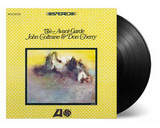
The Avant-Garde is an album by the two jazz giants John Coltrane & Don Cherry. Coltrane plays compositions by Ornette Coleman accompanied by the members of Coleman’s quartet: Don Cherry, Charlie Haden, and Ed Blackwell. The album is a result of the mutual respect and friendship between Coltrane and Coleman. It’s the ability of each to complement the other that lends heavily to the success of these recordings. Both fans of jazz music as of one of the two jazz musicians will love this records, as it brings the best of both to the surface. So don’t let this record pass you by, as there’s a lot of great playing all over this album.
• 180 GRAM AUDIOPHILE VINYL
deleted
The Item is out of Stock. We will send You an Email as soon as it´s available again if you click on "in Stock Mail"
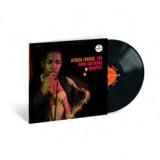
This 1961 Impulse album was particularly notable for Coltrane’s use of the expanded sound provided by a ‘big band’ with trumpets, trombone, baritone sax, Eric Dolphy’s bass clarinet and flute, and (most unusually) French horns, euphonium and tuba. Overlaying this backing is one of Coltrane’s great quartets with Messrs. Tyner (who, with Dolphy, did the arranging), Workman and Jones. The album’s centrepiece is the extended Coltrane composition, ‘Africa’. The tune’s luscious arrangement provides hints of Ellington, Gil Evans and even Charles Mingus in the brass harmonics and ensemble dynamism that Coltrane manages to coax from these players.
Elsewhere, the other Coltrane original, ‘Blues Minor’, provides another trademark blast of tenor pyrotechnics from the man who hardly lets up for the tune’s seven-and-a-half minutes. By comparison, Coltrane’s version of Greensleeves is a relatively restrained affair, in effect, mimicking the man’s superlative version of My Favourite Things recorded the previous year, with its jaunty soprano sax theme, but given an added dimension with its ‘big band’ accompaniment.
Finally, there’s ‘Song Of The Underground’, a traditional song recorded at the same session and included here as a bonus track.
All tracks orchestrated and conducted by Eric Dolphy. John Coltrane- tenor & soprano sax; McCoy Tyner- piano, Jimmy Garrison- bass: Elvin Jones - drums; Plus: Booker Little, Freddie Hubbard, Julian Priester, Eric Dolphy, Paul Chambers, Art Davis, and others, Recorded May and June 1961
deleted
The Item is out of Stock. We will send You an Email as soon as it´s available again if you click on "in Stock Mail"
The complete album + 4 bonus tracks - limited edition pressing on 180g red coloured vinyl, contains new specially prepared liner notes by Penguin Guide to Jazz's writer Brian Morton and by Paris' prestigious Jazz Magazine Besides achieving a very personal and characteristic sound, John Coltrane opened the way to free jazz, allowing himself to play long and complex improvisations that increasingly strayed from the tunes in which they were based. By the time he recorded Ballads, He had already delved into freer and longer solos and compositions, and as a result he had his devoted followers as well as his detractors.
VERVE ACOUSTIC SOUNDS SERIE: komplett analog von Ryan K. Smith bei Sterling Sound von den
Originalbändern gemastert, QPR-Pressung (180 g), stabiles Tip-On-Gatefold (Stoughton Printing), wattierte Innenhülle.
“Africa/Brass”, im September 1961 veröffentlicht, war Coltranes erstes Album für das noch junge Label Impulse! Records. Das Werk markierte einen Wendepunkt in der Karriere des Saxofonisten und gilt laut dem
“AllMusic Guide to Jazz” als “Schlüsselwerk für das Verständnis des Weges, den John Coltrane in seiner
letzten Schaffensphase mit seiner Musik einschlug”. Für das im Studio von Rudy Van Gelder aufgenommene
und von Creed Taylor produzierte Album erweiterte Coltrane sein Quartett zu einem großen Ensemble mit
bis zu sechzehn Musikern. Coltranes leidenschaftliche, freie Improvisationen auf dem Tenor- und Sopransaxofon stehen dabei in reizvollem Kontrast zu dem kompakten, rhythmischen Sound des Blechbläser-lastigen
Orchesters unter der Leitung von Cal Massey. Die Arrangements für die Big Band wurden von Eric Dolphy
und McCoy Tyner erst während der Proben im Studio angefertigt
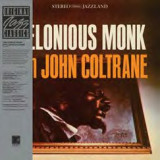
Die Jazzland-Sessions von Thelonious Monk und John Coltrane, die allgemein als eine der größten Kollaborationen zwischen den beiden einflussreichsten Musikern des modernen Jazz gelten (Miles Davis ausgenommen), sollten auch auf anderen Ebenen gewürdigt werden. Während die Meisterschaft der beiden Hauptakteure über jeden Zweifel erhaben ist, sollte auch dem unvergleichlichen Bassisten Wilbur Ware Anerkennung gezollt werden, der ein so mächtiger Anker ist, wie man ihn sich nur wünschen kann. Diese Aufnahmen von 1957 bieten auch eine Vielfalt an Trio-, Quartett-, Septett- oder Solo-Piano-Besetzungen ohne Schlagzeuger, die alle die fesselnden und skurrilen Kompositionen von Monk betonen. Das laut geschrieene ”Off Minor” und das robuste, dreiminütige ”Epistrophy” mit den legendären Saxophonisten Coleman Hawkins, Gigi Gryce und dem brillanten, unterschätzten Trompeter Ray Copeland sind charakteristische Stücke, die jeder Jazzfan verehren sollte.
deleted
The Item is out of Stock. We will send You an Email as soon as it´s available again if you click on "in Stock Mail"
The same crew as the boundary pulsing improvisation record Bent
Arcana has made a trajectory shift and picked up Ben Boye along
the path. The aptly-named Moon-Drenched is the second installment
from these sessions and keeps a heavy-lidded late night perspective
on things as it eases from the somewhat familiar liminal twilight
of skittering hues of black-blue and snaking street groove, to
fizzing off into the ether in pursuit of lunar prism beams heretofore
unseen. The more rhythmically dialed bits here have a lysergic halo of
strangeness to them, and the wispy bits between are spun of iridescent
gossamer. It sounds like a frizzled message from a future just filthy
with guitar hoots echoing off of neon-splattered high rises, oil-slicked
waterways and skittering digital beasts. For Castle Face’s money this
is the strangest slice of this last bunch of John Dwyer and his crew’s
improvisations.