Das selbstbetitelte Debütalbum von Creedence Clearwater Revival aus dem Jahr 1968 machte die Welt mit
den gitarrenspielenden Brüdern John und Tom Fogerty, dem Schlagzeuger Doug Clifford und dem Bassisten Stu Cook bekannt, vier jungen Männern aus El Cerrito in der San Francisco Bay Area. Obwohl sie
an einem Ort und in einer Zeit auftauchten, in der trippige psychedelische Visionen an der Tagesordnung
waren, widersetzten sich CCR den Trends und stießen stattdessen auf eine reiche, traditionelle Nahtstelle
der amerikanischen Musik, die mit Blues, Country, Rockabilly, Gospel, Folk und R&B verbunden war.
Während ihrer kurzen Zeit als Band erlebten Creedence eine beispiellose Kreativitätsphase, zwei ihrer sieben
Studioalben landeten auf Platz 1, sie spielten über 150 Tourneen in der ganzen Welt, einschließlich eines
Auftritts als Headliner in Woodstock, und erzielten 14 Top Ten-Singles. Jetzt erscheinen alle grandiosen,
sieben Studioalben auf farbenfroher Colour Vinyl.
Buscar:mach 2
Das selbstbetitelte Debütalbum von Creedence Clearwater Revival aus dem Jahr 1968 machte die Welt mit
den gitarrenspielenden Brüdern John und Tom Fogerty, dem Schlagzeuger Doug Clifford und dem Bassisten Stu Cook bekannt, vier jungen Männern aus El Cerrito in der San Francisco Bay Area. Obwohl sie
an einem Ort und in einer Zeit auftauchten, in der trippige psychedelische Visionen an der Tagesordnung
waren, widersetzten sich CCR den Trends und stießen stattdessen auf eine reiche, traditionelle Nahtstelle
der amerikanischen Musik, die mit Blues, Country, Rockabilly, Gospel, Folk und R&B verbunden war.
Während ihrer kurzen Zeit als Band erlebten Creedence eine beispiellose Kreativitätsphase, zwei ihrer sieben
Studioalben landeten auf Platz 1, sie spielten über 150 Tourneen in der ganzen Welt, einschließlich eines
Auftritts als Headliner in Woodstock, und erzielten 14 Top Ten-Singles. Jetzt erscheinen alle grandiosen,
sieben Studioalben auf farbenfroher Colour Vinyl.
Nach dem Erfolg der ersten Version dieses Albums, das die Welt mit der mongolischen Kultur und ihren einzigartigen Grundwerten der Erhaltung der Natur und der spirituellen Verbindung mit der Natur vertraut macht, kehren The Hu mit einer DELUXE-Version zurück, an der William DuVall von Alice in Chains, DL von Bad Wolves & LP und Serj Tankian von System of A Down mitgewirkt haben. Erhältlich als Doppel-Vinyl,
Die aus der Mongolei stammende Band The HU ist mit ihrem neuen Musikstil, den sie "Hunnu-Rock" nennen - abgeleitet vom mongolischen Wortstamm für Mensch, "hu" - anders als alle anderen Rockbands der Welt. Seit ihrer Veröffentlichung ist die Band auf Platz 1 der Billboard World Albums Chart, auf Platz 1 der Top New Artist Albums und weltweit auf Platz 5 der Hard Rock Music Album Charts (USA, Kanada, UK und mehr). Sie tourten ausgiebig durch die Welt, mit ausverkauften Shows in Europa, Großbritannien und den Vereinigten Staaten. Nach dem Erfolg des Albums The Gereg, das mit den viralen Rockhits "Wolf Totem" und "Yuve Yuve Yu" auch die Top 10 im Rockradio erreichte, sind The Hu mit ihrem neuen Album Rumble of Thunder zurück, das weltweit in 6 Vinyl-Farbvarianten erhältlich ist. Dieses Album verbindet die Welt mit der mongolischen Kultur und ihren einzigartigen Grundwerten der Erhaltung der Natur und der spirituellen Verbindung mit der Erde. Diese Grundwerte werden auf dem neuen Album zusammen mit den tiefsinnigen Texten, die das mongolische Volk erheben, voll zur Geltung gebracht, denn die Band wünscht sich Wohlstand und Frieden für alle.
This incredible 10" 5 vinyl box set is limited to under 200 copies, and comes with 3 black, and two white vinyl records. This is Ray Keith under his "Dune" name changing the entire game with some combination jungle and old skool rave in a way that only Ray can do. Absolutely epic, and absolutely unmissable!!!
- 45: Lux
- 431: 42
- Vienna Sur Mer
- Runde Um Runde
- Ich Kann Nicht Schlafen
- Alles Ist Gleich
- Tourist
- Verbautes Haus
- Hinter Jalousien
- Der Regen In Wien
- Mädchen Mit Herz
- Lass Uns Spazieren
- Wolfgang Von Kempelens Sprechmaschine
LIMITED 2 LP[30,04 €]
"Wien - die Stadt mit dem wahrscheinlich schönsten Namen. Allein der Klang ist schon Musik." (Andreas Dorau) Grund genug, der österreichischen Hauptstadt ein ganzes Album zu widmen. Die Idee dafür entstand, als Dorau gemeinsam mit zwei Freunden an einem Stadtplan Lübecks arbeitete und dessen brachliegende Geschichten abseits der üblichen Attraktionen erforschte. In Dorau entflammte die Faszination für das Porträtieren einer Stadt aus der Sicht des unvoreingenommenen Touristen, des Besuchers und Außenstehenden. Musikalisch spannt das Album einen weiten Bogen und bietet sowohl wunderschöne Pop-Momente ("Der Regen in Wien"), knarzigen Kawaii-Minimalismus zusammen mit der Kölnerin Stefanie Schrank ("Lass uns spazieren gehen") aber auch Stücke, die sich in ihrem Charakter jeder Einordnung entziehen ("Alles ist gleich"). "Wien" ist somit nicht das erwartbare Album, das der Titel zunächst vermuten lässt. Vielmehr bietet die Platte Einblicke in Andreas Doraus" persönlichen Zugang zur Stadt, die zuweilen auch ein schwierig-schmieriges Verhältnis offenbaren. Und während Popmusik aus und über Österreich im Grunde schon bei Mozart und Schönberg begann, ist Pop aus Deutschland über Österreich vermutlich eher eine Neuerung. Wenn es dann auch noch ein norddeutscher Musiker ist, der ein monothematisches Album über die österreichische Hauptstadt macht, drängt sich fast zwangsläufig die Frage auf: Ist das schon Austro-Pop?
- 45: Lux
- 431: 42
- Vienna Sur Mer
- Runde Um Runde
- Ich Kann Nicht Schlafen
- Alles Ist Gleich
- Tourist
- Verbautes Haus
- Hinter Jalousien
- Der Regen In Wien
- Mädchen Mit Herz
- Lass Uns Spazieren
- Wolfgang Von Kempelens Sprechmaschine
- Platz Auf Erden
- Ottakringer Lightboy
- Rauchen In Wien
- Ich Schwöre
- Tiere Im Prater
- Teddy
- Ein Augenblick Mit Unterschrift
- Schlangen In Der Stadt
- Austropop
- Der Spleen
- Nichts Ist So Wie Es Einmal Schien
Black Vinyl[23,49 €]
"Wien - die Stadt mit dem wahrscheinlich schönsten Namen. Allein der Klang ist schon Musik." (Andreas Dorau) Grund genug, der österreichischen Hauptstadt ein ganzes Album zu widmen. Die Idee dafür entstand, als Dorau gemeinsam mit zwei Freunden an einem Stadtplan Lübecks arbeitete und dessen brachliegende Geschichten abseits der üblichen Attraktionen erforschte. In Dorau entflammte die Faszination für das Porträtieren einer Stadt aus der Sicht des unvoreingenommenen Touristen, des Besuchers und Außenstehenden. Musikalisch spannt das Album einen weiten Bogen und bietet sowohl wunderschöne Pop-Momente ("Der Regen in Wien"), knarzigen Kawaii-Minimalismus zusammen mit der Kölnerin Stefanie Schrank ("Lass uns spazieren gehen") aber auch Stücke, die sich in ihrem Charakter jeder Einordnung entziehen ("Alles ist gleich"). "Wien" ist somit nicht das erwartbare Album, das der Titel zunächst vermuten lässt. Vielmehr bietet die Platte Einblicke in Andreas Doraus" persönlichen Zugang zur Stadt, die zuweilen auch ein schwierig-schmieriges Verhältnis offenbaren. Und während Popmusik aus und über Österreich im Grunde schon bei Mozart und Schönberg begann, ist Pop aus Deutschland über Österreich vermutlich eher eine Neuerung. Wenn es dann auch noch ein norddeutscher Musiker ist, der ein monothematisches Album über die österreichische Hauptstadt macht, drängt sich fast zwangsläufig die Frage auf: Ist das schon Austro-Pop?
I’m Not In Love“ ist der unverkennbare Song von 10cc. Innovativ, unverwechselbar und der Katalysator, der
die Band zu internationalen Superstar machte. Der Song stand 1975 zwei Wochen lang an der Spitze der
britischen Single-Charts und erwies sich als der Durchbruch von 10cc außerhalb des Vereinigten Königreichs.
Er erreichte die Spitze der Charts in Kanada und Irland sowie die Top 10 der Charts in mehreren anderen
Ländern, darunter Australien, Westdeutschland, Neuseeland, Norwegen und die Vereinigten Staaten, wo er
auf Platz 02 landete.
Der Song erfreut sich anhaltender Beliebtheit und wurde seit seiner Veröffentlichung über drei Millionen Mal im US-Radio gespielt. 1976 wurde er mit drei Ivor Novello Awards für den besten Popsong, den
internationalen Hit des Jahres und das meistgespielte britische Werk ausgezeichnet. Der Song wurde in
zahlreichen Filmen und Fernsehsendungen gespielt, darunter The Virgin Suicides und Guardians of the
Galaxy.
Nun hat die BBC „I’m Not In Love“ zum „größten Liebeslied aller Zeiten“ gekürt, das nächstes Jahr
sein 50-jähriges Jubiläum feiert. Die 7“ erscheint am Valentinstag auf passend romantischem rotem Vinyl
und enthält die Single in voller Länge, sowie die Original-B-Seite ”Good News”.
Firework Shimmer Vinyl[28,15 €]
Like a passenger riding shotgun on a road trip, The Villagers Companion offers its own unique perspective and story to tell. Featuring tracks recorded alongside last year’s acclaimed villagers, TVC captures the miles between the start and destination—the faded gas station pit stops, the plastic saint statue stuck to the dashboard for safe travels or luck. It embodies the essence of the journey without the burden of driving—the experience of the ride itself.
The album takes us through the heart of Califone’s magic: reverb-drenched piano chords, electronic whirs, and layers of experimental noise. Guided by Tim Rutili’s abstract, fragmented lyrics—both strange and familiar—delivered through his warm, well-worn vocals, it creates an experience as evocative as it is haunting. Often passing through what seem to be the spaces between radio frequencies, the stations never meant to be heard. Crackles of static, feedback loops, and fleeting signals bloom into meditative moments, with each sound given space to breathe, unravel, and shimmer in slow decay. The result resonates deeply, transforming what might be noise into something profound, hypnotic, and totally immersive.
As with villagers, Rutili and company continue to explore what it means to get lost while surrounded by modern technology. Like a ghost in a machine or a whispered prayer stuck in a telephone line, Califone adds soul—be it damned or saved. And they do so with the kind of transformative magic granted perhaps only to artists a quarter of a century into their craft. The kind that turns a photograph into a tableau, or any darkened space with a microphone into a makeshift confessional. A song into a hymn, and a hymn into a soundtrack to a life.
Black Vinyl[29,62 €]
Like a passenger riding shotgun on a road trip, The Villagers Companion offers its own unique perspective and story to tell. Featuring tracks recorded alongside last year’s acclaimed villagers, TVC captures the miles between the start and destination—the faded gas station pit stops, the plastic saint statue stuck to the dashboard for safe travels or luck. It embodies the essence of the journey without the burden of driving—the experience of the ride itself.
The album takes us through the heart of Califone’s magic: reverb-drenched piano chords, electronic whirs, and layers of experimental noise. Guided by Tim Rutili’s abstract, fragmented lyrics—both strange and familiar—delivered through his warm, well-worn vocals, it creates an experience as evocative as it is haunting. Often passing through what seem to be the spaces between radio frequencies, the stations never meant to be heard. Crackles of static, feedback loops, and fleeting signals bloom into meditative moments, with each sound given space to breathe, unravel, and shimmer in slow decay. The result resonates deeply, transforming what might be noise into something profound, hypnotic, and totally immersive.
As with villagers, Rutili and company continue to explore what it means to get lost while surrounded by modern technology. Like a ghost in a machine or a whispered prayer stuck in a telephone line, Califone adds soul—be it damned or saved. And they do so with the kind of transformative magic granted perhaps only to artists a quarter of a century into their craft. The kind that turns a photograph into a tableau, or any darkened space with a microphone into a makeshift confessional. A song into a hymn, and a hymn into a soundtrack to a life.
Burnski's Pilot label fires up the back burners once again here for some cruising tech house that oozes cool. Robin Graham is the man on the machines and his 'Like This" (Italo Summer mix) kicks off with some subtle prog vibes, a throwback bassline and bubbly synths that percolate through the mix to soothing effect. 'Set Me Free' has glistening and silvery hi-hats and a choppy groove with some big stabs and 'Enter 1' is the sort of cut you want to hear at the afters with its trippy melodic details and deft synth sequences dancing about the mix. 'Subject A' is a driving tech house number with plenty of astral synth sounds and fresh future feels.
FELT welcomes back Civilistjävel! with »Följd«, the follow-up to last year’s »Brödföda«. 7 tracks further chronicling his melancholic murk, ever drifting towards that faint dub glow. Features a collaboration with Thomas Bush Jolly Discs.
Uncanny are the nocturnal sounds that ebb patiently from Tomas Bodén and his machines. His music continues to uncover equal parts beauty and dread from isolation, a purposeful slow pace guiding those gentle noises through the arctic air surrounding its author. No matter the weather, these expressions as Civilistjävel! continue to find a loving home on Fergus Jones’s FELT imprint.
On »Följd«, he naturally develops on the inclinations found on »Brödföda«. »XIII«’s unsettling warble melts into the dusky spurts of »XIV«. Further on, the dew-glowed ambience of »XV« precedes »XVI«’s dub trudge which casts a hypnotic grey shadow. »XVII«’s wind-swept acid redux then quietly transitions into the stunning introspective drone of »XVIII« before closer »XIX« comes into view, its positive dawn enacted through Thomas Bush’s croons lilting amongst organs, guitars and tempered sound design.
Civilistjävel! continues to emote a great deal with very little, a reliable abstract practitioner that posits »Följd« as an arresting audio tale within his celebrated oeuvre.
Hardanger is a collaboration by Mariska Baars (aka Soccer Committee), Niki Jansen, and Rutger Zuydervelt (aka Machinefabriek). The title refers to the instrument played by Jansen, the Hardanger fiddle. It’s a fresh addition to the established musical chemistry from regular collaborators Baars and Zuydervelt.
The music on Hardanger started with improvisations by Niki Jansen, guided by Mariska Baars, who responded with vocal and guitar recordings. Rutger Zuydervelt used this material as the building blocks for the two long-form pieces found on the album. These tracks are like two sides of the same coin, one a collage-like electro-acoustic piece, the other more drawn-out and contemplative.
--
Mariska Baars is probably better known as soccer Committee, creating an experimental blend of ambient rooted in folk music, with minimal arrangements. She has been releasing albums since 2005. In addition to her solo output she is part of improvisation ensemble Piiptsjilling and Fean (Laaps, 2020) and has worked on several duo albums with Rutger Zuydervelt. On other occasions she collaborated with a.o. Annelies Monseré, Wouter van Veldhoven, Peter Broderick and Greg Haines.
Niki Jansen is a violinist who plays both the regular and a hardanger fiddle.She specializes in folk music, especially old Dutch folk music. She plays in various ensembles like Twee violen en een bas (with Jos Koning and Willem Raadsveld), and country quartet Daisy Chain. In addition to music, she also works as a sustainability advisor for governments and institutions and manages a food forest in a cooperative.
Rutger Zuydervelt is perhaps better known as Machinefabriek, the alias under which he releases music since 2004. The stream of releases since is vast, many of them collaborations (with Peter Broderick, Gareth Davis, Chantal Acda, Dirk Serries, and many many more). He regularly works with Mariska Baars, with whom he also plays in Piiptsjilling and Fean (Laaps, 2020). Zuydervelt is an avid composer of scores for film and dance performances, and also works as a graphic designer.
The influence of the UK’s Steel City on electronic music is well documented and undisputed and continues to push the envelope with key figures such as Winston Hazel (Forgemasters, The Step), DJ Parrot/Crooked Man, Richard Benson (RAC, SWAG, Altern 8), Chris Duckenfield (RAC, Popular Peoples Front, SWAG, All Ears Distribution), a thriving underground club scene and the likes of Synaptic Voyager reinforcing the city’s rich musical legacy.
Matt White and Paul Baines have been making off-kilter, emotive, late night electronic jams since meeting in the early 90’s and while life took them on different paths for a while, they have recently blown the thick layer of dust from their synths and drum machines and got busy in the studio to create some amazing new music which draws influence from that classic UK techno sound which played such an important part in the development of dance music culture around the world. With recent releases on Frame Of Mind, Acquit and Telomere Plastic the duo are clearly on a roll, wearing the heritage of their city on their sleeve and delivering what can only be described as heartfelt, authentic machine music made with love and soul.
From the opening beats of lead track Dawn Till Dusk we are drawn in to another place which feels comfortably familiar yet organic, fluid and loose in a way that tugs on the heartstrings. A million miles from cookie-cutter tech house, this is two guys in a bedroom studio, digging deep on hardware machines to create a sound to get completely lost in. Lonely Promontory takes things deeper still with immersive pads, taught electro beats and blissed-out melodic lines which give just hint of optimism and recall those beloved sounds of B12, Redcell and Likemind.
Flipping over we have Stellar Engine which goes a littler heavier on the beats and bass whilst still retaining a floating quality, once again highlighting the hardware jam workflow that Synaptic Voyager utilise in their studio. Once Exposed takes us back to those heady days of the early 90’s when techno, house and ambient electronics combined to create a heady blend of deep atmospherics and driving beats which could work on both dance floors and car stereos alike. Rounding off the EP we have Cognitive Network which goes for a straighter four on the floor techno groove and a killer bassline to lose yourself in. These recordings were delivered to the label in unedited long form (some tracks totalling 15 minutes or more in length!) which Jimpster lovingly edited into the versions which you hear on this release.
- A1: Progetto Tribale - The Sweep
- A2: Onirico - Echo Giomini
- A3: Open Spaces - Artist In Wonderland
- B1: Alex Neri – The Wizard (Hot Funky Version)
- B2: M C.j. Feat. Sima - To Yourself Be Free - Instrumental Mix Energy Prod
- B3: Mato Grosso - Titanic Expande
- C1: Dreamatic - I Can Feel It (Part 1)
- C2: Carol Bailey - Understand Me Free Your Mind (Dream Piano Remix)
- C3: The True Underground Sound Of Rome - Secret Doctrine
- D1: Don Carlos - Boy
- D2: Lazy Bird – Jazzy Doll (Odyssey Dub)
Vol 2[28,99 €]
Volume 1 of this expertly curated project of 90s Italian House - put together by Don Carlos.
If Paradise was half as nice… by Fabio De Luca.
Googling “paradise house”, the first results to pop up are an endless list of European b&b’s with whitewashed lime façades, all of them promising “…an unmatched travel experience a few steps from the sea”. Next, a little further down, are the institutional websites of a few select semi-luxury retirement homes (no photos shown, but lots of stock images of smiling nurses with reassuring looks). To find the “paradise house” we’re after, we have to scroll even further down. Much further down.
It feels like yesterday, and at the same time it seems like a million years ago. The Eighties had just ended, and it was still unclear what to expect from the Nineties. Mobile phones that were not the size of a briefcase and did not cost as much as a car? A frightening economic crisis? The guitar-rock revival?! Certainly, the best place to observe that moment of transition was the dancefloor. Truly epochal transformations were happening there. From America, within a short distance one from the other, two revolutionary new musical styles had arrived: the first one sounded a bit like an “on a budget” version of the best Seventies disco-music – Philly sound made with a set of piano-bar keyboards! – the other was even more sparse, futuristic and extraterrestrial. It was a music with a quite distinct “physical” component, which at the same time, to be fully grasped, seemed to call for the knotty theories of certain French post-modern philosophers: Gilles Deleuze, Félix Guattari, Paul Virilio... Both those genres – we would learn shortly after – were born in the black communities of Chicago and Detroit, although listening to those vinyl 12” (often wrapped in generic white covers, and with little indication in the label) you could not easily guess whether behind them there was a black boy from somewhere in the Usa, or a girl from Berlin, or a pale kid from a Cornish coastal town.
Quickly, similar sounds began to show up from all corners of Europe. A thousand variations of the same intuition: leaner, less lean, happier, slightly less intoxicated, more broken, slower, faster, much faster... Boom! From the dancefloors – the London ones at least, whose chronicles we eagerly read every month in the pages of The Face and i-D – came tales of a new generation of clubbers who had completely stopped “dressing up” to go dancing; of hot tempered hooligans bursting into tears and hugging everyone under the strobe lights as the notes of Strings of Life rose up through the fumes of dry ice (certain “smiling” pills were also involved, sure). At this point, however, we must move on to Switzerland.
In Switzerland, in the quiet and diligent town of Lugano, between the 1980s and 1990s there was a club called “Morandi”. Its hot night was on Wednesdays, when the audience also came from Milan, Como, Varese and Zurich. Legend goes that, one night, none less than Prince and Sheila E were spotted hiding among the sofas, on a day-off of the Italian dates of the Nude Tour… The Wednesday resident and superstar was an Italian dj with an exotic name: Don Carlos. The soundtrack he devised was a mixture of Chicago, Detroit, the most progressive R&B and certain forgotten classics of old disco music: practically, what the Paradise Garage in New York might have sounded like had it not closed in 1987. In between, Don Carlos also managed to squeeze in some tracks he had worked on in his studio on Lago Maggiore. One in particular: a track that was rather slow compared to the BPM in fashion at the time, but which was a perfect bridge between house and R&B. The title was Alone: Don Carlos would explain years later that it had to be intended both in the English meaning of “by itself” and like the Italian word meaning “halo”. That wasn’t the only double entendre about the song, anyway. Its own very deep nature was, indeed, double. On the one hand, Alone was built around an angelic keyboard pattern and a romantic piano riff that took you straight to heaven; on the other, it showcased enough electronic squelches (plus a sax part that sounded like it had been dissolved by acid rain) to pigeonhole the tune into the “junk modernity” section, aka the hallmark of all the most innovative sounds of the time: music that sounded like it was hand-crafted from the scraps of glittering overground pop.
No one knows who was the first to call it “paradise house”, nor when it happened. Alternative definitions on the same topic one happened to hear included “ambient house”, “dream house”, “Mediterranean progressive”… but of course none were as good (and alluring) as “paradise house”. What is certain is that such inclination for sounds that were in equal measure angelic and neurotic, romantic and unaffective, quickly became the trademark of the second generation of Italian house. Music that seemed shyly equidistant from all the rhythmic and electronic revolutions that had happened up to that moment (“Music perfectly adept at going nowhere slowly” as noted by English journalist Craig McLean in a legendary field report for Blah Blah Blah magazine). Music that to a inattentive ear might have sounded as anonymous as a snapshot of a random group of passers-by at 10AM in the centre of any major city, but perfectly described the (slow) awakening in the real world after the universal love binge of the so-called Second Summer of Love.
For a brief but unforgettable season, in Italy “paradise house” was the official soundtrack of interminable weekends spent inside the car, darting from one club to another, cutting the peninsula from North to centre, from East to West coast in pursuit of the latest after-hours disco, trading kilometres per hour with beats per minute: practically, a new New Year’s Eve every Friday and Saturday night. This too was no small transformation, as well as a shock for an adult Italy that was encountering for the first time – thanks to its sons and daughters – the wild side of industrial modernity. The clubbers of the so-called “fuoriorario” scene were the balls gone mad in the pinball machine most feared by newspapers, magazines and TV pundits. What they did each and every weekend, apart from going crazy to the sound of the current white labels, was linking distant geographical points and non-places (thank you Marc Augé!) – old dance halls, farmhouses and business centres – transformed for one night into house music heaven. As Marco D’Eramo wrote in his 1995 essay on Chicago, Il maiale e il grattacielo: “Four-wheeled capitalism distorts our age-old image of the city, it allows the suburbs to be connected to each other, whereas before they were connected only by the centre (…) It makes possible a metropolitan area without a metropolis, without a city centre, without downtown. The periphery is no longer a periphery of any centre, but is self-centred”.
“Paradise house” perfectly understood all of this and turned it into a sort of cyber-blues that didn’t even need words, and unexpectedly brought back a drop of melancholic (post?)-humanity within a world that by then – as we would wholly realise in the decades to come – was fully inhuman and heartless. A world where we were all alone, and surrounded by a sinister yellowish halo, like a neon at the end of its life cycle. But, for one night at least, happy.
2024 was a big year for Regulate Recordings and their sister club night “Shake Your Rump”. DJ Deviant’s “The Rhythm” & “Make Em Bounce” burned up dance floors in spring, “Summer Jam” saw Atomphunk & Deviant team up with Seattle MCs Mugs and Pockets to devastating effect. “Summer Jam” lit up the second half of the year with support from the Allergies, Boca45 and 6 Music and was included in Craig Charles’s “Funkiest Tracks of 2024”.
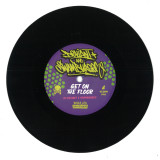
Regulate move into the new year by setting off two certified bangers. Master of the decks DJ Deviant is back on production duties; lead track “Get On The Floor” sees him once again collaborating with Swamburger (Mugs and Pockets) for a full force party starter. The production pulls influences from the earliest days when hip hop and disco were joined at the hip, with nods to The Sugar Hill Gang and The Furious Five, as well as the Golden Age and artists like Chubb Rock and Big Daddy Kane. Swamburger’s machine gun delivery and Deviant’s sharp cuts pull the track right into 2025 for maximum impact.
Flip side “Where’s The Party Clap” is a big trunk of cut and paste funk with a popping bass line, horns, claps, cuts and a groove that just doesn’t quit.
2006
"GlaubeLiebeTod"Wenn ein Album so erfolgreich war wie "Wahrheit oder Pflicht" wächst die Erwartungshaltung ins Unermessliche! Doch OOMPH! haben die schwierige Aufgabe mit Bravour gemeistert!"GlaubeLiebeTod" ist das mit Abstand abwechslungsreichste Werk des Trios. OOMPH! haben sich deutlich weiter entwickelt und ihr Spektrum um etliche neue Elemente bereichert. Beispielsweise sticht der dramatische Stampfer "Spiel mir das Lied vom Tod" heraus. Völliges Neuland betritt die Band auch mit der morbiden Piano-Bombast-Ballade "Eine Frau spricht im Schlaf". Die unverzerrten, sehnsüchtigen Gitarren in "Das letzte Streichholz" sowie die düsteren Doom-Riffs in "Land in Sicht" hat man in dieser Form ebenfalls noch nicht bei OOMPH! gehört. Nicht neu, aber dennoch überraschend ist die phasenweise Rückbesinnung auf die EBM-Anfänge des Trios in den frühen Neunzigern, die u.a. bei der ersten Auskopplung "Gott ist ein Popstar" deutlich wird. Abgesehen davon gibt es natürlich noch genügend Nummern, die die bisherige Linie weiterführen und mit hymnischen Hooklines und fantasievollen Sounds auftrumpfen. Dazu zählen vor allem der wunderschöne "Träumst Du" und der mächtige Metaller "Mein Schatz".
- A1: Turned To Dust (Rolling On)
- A2: London May
- A3: Tonight With The Dogs I'm Sleeping
- A4: Boise, Idaho
- A5: The Water's Fine
- A6: Sometimes It's Hard To Breathe
- B1: New Water
- B2: Guns Are For Cowards
- B3: Downstream
- B4: One Of These Days (I'm Gonna Spend The Whole Night With You)
- B5: Is My Living In Vain?
- B6: Our Home
Black Vinyl[22,65 €]
Ltd Edition!
Bonnie "Prince" Billy - Alias des Musikers Will Oldham - wird am 31. Januar 2025 sein neues Studioalbum mit dem Titel "The Purple Bird" veröffentlichen. "The Purple Bird" wurde in Nashville mit dem Produzenten David "Ferg" Ferguson und einem Ensemble erstklassiger Session-Musiker aufgenommen. Es könnte als "eine richtige Nashville-Platte" bezeichnet werden, die aus einer Sammlung von Songs besteht, die hauptsächlich am Küchentisch von Ferg entstanden sind.
Auf "The Purple Bird" arbeitet Bonnie "Prince" Billy erst zum zweiten Mal in seiner illustren Karriere mit einem Produzenten zusammen. Seine Beziehung zu Ferg reicht mehr als zwei Jahrzehnte zurück bis zu den Sessions für das Johnny Cash-Album American III mit Rick Rubin, bei denen Ferg als Tontechniker fungierte und bei denen Cash eine Coverversion des BPB-Tracks "I See A Darkness" aufnahm. Die beiden haben im Laufe der Jahre an zahlreichen Projekten zusammengearbeitet, aber an keinem so intensiv wie an "The Purple Bird". Was bedeutet "eine richtige Nashville"-Platte für den rätselhaften Bonnie "Prince" Billy? Zu Beginn der Sessions hatte Ferg zu Oldham gesagt : "Ich will keine Country-Platte machen, mach einfach deinen Scheiß, Will."
Und in der Tat haben Oldham und Ferg, zusammen mit ihren Mitstreitern, ein beeindruckendes Album eingespielt und somit einen neuen Höhepunkt im umfangreichen Katalog von Bonnie 'Prince' Billy geschaffen.
Don McLeans neu gemasterte Version von Prime Time aus dem Jahr 1977 ist ein Zeugnis von McLeans Glauben an die Macht der Melodie und wirkt dem
Stereotyp entgegen, das ihm wegen „American Pie“ auferlegt wurde. Die CD enthält einen Bonustrack, „If You Can Dream“.