Pääkallo's mission is to bring surf guitars, Finnish melancholy, and macabre lyrics skills all together. The band includes members of Deathchain, Jess and The Ancient Ones and ex-Cosmo Jones Beat Machine, from occult rock fame through swamp blues to death metal. New selftitled album comes out in March 2023.
Поиск:mach 2
Все
The second Abstract Cuts release is an EP split four ways, but with new, unconventional approaches to the dancefloor at the heart of each submission and all using vintage drum machines and samplers. The Robot Dance Connection's 'Powers Of Ten' (R2d2 live edit) kicks off side one, shiny high frequency polish played off against a gorgeously stubborn techno beat, before the slinkier and smoother 'Gold Saucer' by Brunzi offers an equally danceable but less angular counterpoint. Flip it over and Tomska's 'Lethal Overdose' (Touch dub 2022) offers rushing sonics, off kilter snare damage and four to the floor thump, before Emille's 'Jeu Froid' completes the set in grimy basement style.
Existing somewhere between the post-psychedelic period of Soft Machine and the electric funk of Herbie Hancock's Headhunters, Black And White, the 1976 album from Norway's Vanessa is without question a formidable beast of a jazz-rock record. A potent brew of sonic experimentation and pulsating off-kilter groove. Taking their name from the genus of Nymphalidae butterfly, Vanessa was founded in 1971 by saxophonist Svend Undseth and pianist Frode Holm, the founder of the Oslo record store turned imprint, Compendium Records. Unsurprisingly analogous to the music championed across the Compendium catalogue Black And White is clearly influenced by the UK Canterbury scene, highlighted by Compendium's focus on the recordings of Soft Machine alumni Hugh Hopper and Elton Dean. Vanessa's spirit also lies synonymous with the collective pedigree on the label's roster including British progressive jazz stalwart Keith Tippett and Mirage (a UK group consisting of ex-members of Centipede and The Mike Westbrook Orchestra), together with the avant-rock collective Henry Cow and the experimental synthesiser-jazz of US ex-pat Joe Gallivan (together with Charles Austin).
Often dubbed the 'Compendium house band' owing to Holm's association with the label, the Vanessa sound is inherently familiar yet undeniably original. Each of the album's four long compositions are a meld of complex angular jazz laced with swirling electronic textures - furious rhythms that surge in intoxicating intensity before easing into fluid passages of soulful post-bop. The dichotomy of these styles plants the group firmly into radical new jazz territory alongside their Canterbury contemporaries. Despite their brief existence, the band, alongside the label left an indelible mark on Norwegian jazz-rock and the headier side of European progressive music at large.
Reissue of 1976 Norwegian Jazz-Rock album.
Post-psychedelic period Soft Machine meets the electric funk of Herbie Hancock's Headhunters
Transferred and restored from the original master tape.
The incongruous, yet glorious, creative partnership between Nancy Sinatra and Lee Hazlewood was well underway when the two singular artists reunited to record 1972’s Nancy & Lee Again, a follow-up to their bestselling duet debut, Nancy & Lee. Nancy, the eldest daughter of Frank Sinatra, had been working with the Oklahoma-born songwriter since 1965, when she topped the pop charts with “These Boots Are Made For Walkin’.” Over the next five years, the two artists forged a prolific relationship in the studio, with Hazlewood writing and producing many of Nancy’s solo hits. Soon, the duo found success with a series of duets, including “Sand,” “Summer Wine,” and “Some Velvet Morning” – all of which appeared on their highly-influential 1968 debut.
Not long after the critical acclaim and chart success of Nancy & Lee died down, however, Hazlewood unexpectedly relocated to Sweden, leaving his musical partner in the proverbial dust. America, meanwhile, was in the midst of a cultural shift, as the Vietnam War waged on. By the turn of the decade, the musical landscape had changed significantly. “Trivial music and not profound music became unimportant,” recalls Nancy, speaking to Hunter Lea. “It was a tough time.” And yet, despite the circumstances, the stars somehow aligned for the duo to record some of their most magnificent music together.
Returning to Los Angeles for the project, Hazlewood – who reprised his role as producer – chose to take a new direction with the duo’s sophomore album. Nancy recalls, “It was more dramatic; it was more fun to do, more challenging to do…. It was more grandiose.” For the lush, orchestral arrangements, they collaborated with Larry Muhoberac (an original member of Elvis Presley’s TCB band, whose early ‘70s credits also included Barbra Streisand, Neil Diamond, and Lalo Schifrin) and Clark Gassman, who had worked on Hazlewood’s 1970 LP, Cowboy in Sweden. Backing vocals from brothers John and Tom Bahler, who remain two of the most recorded singers in history, added additional texture to several songs.
The big sound that Nancy describes above is exemplified in the album’s cinematic opener, “Arkansas Coal (Suite).” Clocking in at nearly six minutes long, the dynamic overture tells the tale of an ill-fated coal miner (sung by Hazlewood), while Nancy adjusts her vocals to sing as both the miner’s daughter and his wife. Hazlewood’s knack for vivid, nuanced storytelling shines throughout Nancy & Lee Again, particularly in “Paris Summer,” which details the conflict that a married woman faces, as she engages in a passionate affair. Another highlight is the country-inspired hit, “Did You Ever,” which was released as the album’s lead single. After it landed at No.2 on the U.K. pop charts, the song served as an alternate title track in several countries, including LP pressings in the U.K., Germany, and Canada.
One of the most emotionally-charged moments on Nancy & Lee Again is a cover of Dolly Parton’s “Down From Dover.” The heartbreaking tune tells the tale of a pregnant teenager, who has been abandoned by her lover and her family and ultimately gives birth to a stillborn baby. While Parton’s 1970 version was sung from the teenager’s point of view, Hazlewood and Sinatra transformed the country song into a duet. Hazlewood, who offers the man’s side of the story, sings in a notably deeper octave than his signature baritone.
Another poignant selection is “Congratulations,” which describes a soldier coming home from Vietnam. “His face has grown old and his eyes have grown cold/And they tell you of where he has been/Congratulations, you sure made a man out of him,” Hazlewood sings, pointedly. Nancy, who performs as the vet’s wife, argues that the song had a deeper meaning for her duet partner. “Lee started out a hawk, he was an army guy, so he was all for the war in the beginning. We didn’t talk about it, but at some point, he changed radically. ‘Congratulations’ was almost like an apology from him. I don’t want to put words in his mouth, but it was as though he was saying ‘I’m really sorry.’”
The song “Friendship Train” could also be interpreted as an apology of sorts – this time to Nancy. “You’ve been hurt and I’ve been hurt/Now we’re living pain,” the tune opens. When Hazlewood moved to Sweden without telling his longtime musical partner, Sinatra was understandably upset. “I felt pretty betrayed. I mean, who does that? Who just up and disappears like that? I’ll never understand it,” she reveals. But the uplifting duet – a slice of ‘70s pop perfection – offers reaffirming words of love between friends. “Lee felt things very deeply and tended to express his feelings in song instead of in real life,” explains Nancy.
The 10-track album closes with the stripped-down “Got It Together.” Backed by an acoustic guitar, the song is equal parts playful and candid, as the duo has an impromptu, spoken-word conversation about their lives. “I wish that we’d quit getting so old,” laments Nancy, who later shares her wish to have children (she would do so in the next few years). Hazlewood, meanwhile, attempts to remedy his past wrongdoings – this time asking his partner, “Can I go back to Sweden?” With that, Nancy gives her blessing.
This definitive reissue of Nancy & Lee Again also includes two bonus tracks. Both are stylistic departures for the duo – but fit right in with the psychedelic pop of the era. The first one, “Think I’m Coming Down,” is a harmony-filled reflection on a toxic relationship. “I think that was one of [Lee’s] drug things. I don’t mean that he used drugs; I mean that he was trying to be part of that culture. Trying to be hip,” explains Nancy, who delivers an emotive vocal performance on the solo track. Also included is “Machine Gun Kelly,” penned by a staple of the 70s singer-songwriter movement, Danny Kortchmar (James Taylor, Carole King, Linda Ronstadt). Recorded several months after the release of the album, the song found Nancy reuniting with Billy Strange, who arranged many of her solo albums, as well as Nancy & Lee. Sinatra and Hazlewood first performed “Machine Gun Kelly” during their residency at Las Vegas’ Riviera Hotel in February 1972 (later released as a concert documentary on Swedish television). While the recording has long remained a career favorite of Nancy’s, it would be decades before it was officially released.
Nancy & Lee Again remains a creative high point in the careers of Sinatra and Hazlewood and, upon its release, garnered rave reviews from Billboard, Record World, and Cash Box, among others. Yet, Nancy & Lee Again never received the spotlight it so utterly deserved. “We didn’t have label support at all in those days,” recalls Nancy. “Without the strength of a label, records die. We were old. We were old-fashioned. We were just not what was happening. It’s a very ageist kind of business.” Nevertheless, she adds, “I think it’s a very good album. I think it’s timeless.” Now, after years of being a sought-after rarity, this gem in the Sinatra-Hazlewood canon can finally get its due.
Five decades later, Nancy’s legacy only continues to grow, as new generations discover her impressive catalog (which boasts nearly 20 studio albums – her duets with Hazlewood among them – and dozens of charting singles, including the theme song to the 1967 James Bond film, You Only Live Twice). In 2020, Sinatra was recognized by her peers when “These Boots Are Made For Walkin’” was inducted into the GRAMMY® Hall of Fame. That same year, Sinatra partnered with Light in the Attic for Nancy Sinatra: Start Walkin’ 1965-1976, a definitive survey of her most prolific period. LITA has also reissued Sinatra’s classic debut, Boots, and her iconic, 1968 album with Lee Hazlewood, Nancy & Lee. The label looks forward to celebrating Nancy over the coming years with a variety of special releases, exclusive merchandise, and more.
The incongruous, yet glorious, creative partnership between Nancy Sinatra and Lee Hazlewood was well underway when the two singular artists reunited to record 1972’s Nancy & Lee Again, a follow-up to their bestselling duet debut, Nancy & Lee. Nancy, the eldest daughter of Frank Sinatra, had been working with the Oklahoma-born songwriter since 1965, when she topped the pop charts with “These Boots Are Made For Walkin’.” Over the next five years, the two artists forged a prolific relationship in the studio, with Hazlewood writing and producing many of Nancy’s solo hits. Soon, the duo found success with a series of duets, including “Sand,” “Summer Wine,” and “Some Velvet Morning” – all of which appeared on their highly-influential 1968 debut.
Not long after the critical acclaim and chart success of Nancy & Lee died down, however, Hazlewood unexpectedly relocated to Sweden, leaving his musical partner in the proverbial dust. America, meanwhile, was in the midst of a cultural shift, as the Vietnam War waged on. By the turn of the decade, the musical landscape had changed significantly. “Trivial music and not profound music became unimportant,” recalls Nancy, speaking to Hunter Lea. “It was a tough time.” And yet, despite the circumstances, the stars somehow aligned for the duo to record some of their most magnificent music together.
Returning to Los Angeles for the project, Hazlewood – who reprised his role as producer – chose to take a new direction with the duo’s sophomore album. Nancy recalls, “It was more dramatic; it was more fun to do, more challenging to do…. It was more grandiose.” For the lush, orchestral arrangements, they collaborated with Larry Muhoberac (an original member of Elvis Presley’s TCB band, whose early ‘70s credits also included Barbra Streisand, Neil Diamond, and Lalo Schifrin) and Clark Gassman, who had worked on Hazlewood’s 1970 LP, Cowboy in Sweden. Backing vocals from brothers John and Tom Bahler, who remain two of the most recorded singers in history, added additional texture to several songs.
The big sound that Nancy describes above is exemplified in the album’s cinematic opener, “Arkansas Coal (Suite).” Clocking in at nearly six minutes long, the dynamic overture tells the tale of an ill-fated coal miner (sung by Hazlewood), while Nancy adjusts her vocals to sing as both the miner’s daughter and his wife. Hazlewood’s knack for vivid, nuanced storytelling shines throughout Nancy & Lee Again, particularly in “Paris Summer,” which details the conflict that a married woman faces, as she engages in a passionate affair. Another highlight is the country-inspired hit, “Did You Ever,” which was released as the album’s lead single. After it landed at No.2 on the U.K. pop charts, the song served as an alternate title track in several countries, including LP pressings in the U.K., Germany, and Canada.
One of the most emotionally-charged moments on Nancy & Lee Again is a cover of Dolly Parton’s “Down From Dover.” The heartbreaking tune tells the tale of a pregnant teenager, who has been abandoned by her lover and her family and ultimately gives birth to a stillborn baby. While Parton’s 1970 version was sung from the teenager’s point of view, Hazlewood and Sinatra transformed the country song into a duet. Hazlewood, who offers the man’s side of the story, sings in a notably deeper octave than his signature baritone.
Another poignant selection is “Congratulations,” which describes a soldier coming home from Vietnam. “His face has grown old and his eyes have grown cold/And they tell you of where he has been/Congratulations, you sure made a man out of him,” Hazlewood sings, pointedly. Nancy, who performs as the vet’s wife, argues that the song had a deeper meaning for her duet partner. “Lee started out a hawk, he was an army guy, so he was all for the war in the beginning. We didn’t talk about it, but at some point, he changed radically. ‘Congratulations’ was almost like an apology from him. I don’t want to put words in his mouth, but it was as though he was saying ‘I’m really sorry.’”
The song “Friendship Train” could also be interpreted as an apology of sorts – this time to Nancy. “You’ve been hurt and I’ve been hurt/Now we’re living pain,” the tune opens. When Hazlewood moved to Sweden without telling his longtime musical partner, Sinatra was understandably upset. “I felt pretty betrayed. I mean, who does that? Who just up and disappears like that? I’ll never understand it,” she reveals. But the uplifting duet – a slice of ‘70s pop perfection – offers reaffirming words of love between friends. “Lee felt things very deeply and tended to express his feelings in song instead of in real life,” explains Nancy.
The 10-track album closes with the stripped-down “Got It Together.” Backed by an acoustic guitar, the song is equal parts playful and candid, as the duo has an impromptu, spoken-word conversation about their lives. “I wish that we’d quit getting so old,” laments Nancy, who later shares her wish to have children (she would do so in the next few years). Hazlewood, meanwhile, attempts to remedy his past wrongdoings – this time asking his partner, “Can I go back to Sweden?” With that, Nancy gives her blessing.
This definitive reissue of Nancy & Lee Again also includes two bonus tracks. Both are stylistic departures for the duo – but fit right in with the psychedelic pop of the era. The first one, “Think I’m Coming Down,” is a harmony-filled reflection on a toxic relationship. “I think that was one of Lee’s drug things. I don’t mean that he used drugs; I mean that he was trying to be part of that culture. Trying to be hip,” explains Nancy, who delivers an emotive vocal performance on the solo track. Also included is “Machine Gun Kelly,” penned by a staple of the 70s singer-songwriter movement, Danny Kortchmar (James Taylor, Carole King, Linda Ronstadt). Recorded several months after the release of the album, the song found Nancy reuniting with Billy Strange, who arranged many of her solo albums, as well as Nancy & Lee. Sinatra and Hazlewood first performed “Machine Gun Kelly” during their residency at Las Vegas’ Riviera Hotel in February 1972 (later released as a concert documentary on Swedish television). While the recording has long remained a career favorite of Nancy’s, it would be decades before it was officially released.
Nancy & Lee Again remains a creative high point in the careers of Sinatra and Hazlewood and, upon its release, garnered rave reviews from Billboard, Record World, and Cash Box, among others. Yet, Nancy & Lee Again never received the spotlight it so utterly deserved. “We didn’t have label support at all in those days,” recalls Nancy. “Without the strength of a label, records die. We were old. We were old-fashioned. We were just not what was happening. It’s a very ageist kind of business.” Nevertheless, she adds, “I think it’s a very good album. I think it’s timeless.” Now, after years of being a sought-after rarity, this gem in the Sinatra-Hazlewood canon can finally get its due.
Five decades later, Nancy’s legacy only continues to grow, as new generations discover her impressive catalog (which boasts nearly 20 studio albums – her duets with Hazlewood among them – and dozens of charting singles, including the theme song to the 1967 James Bond film, You Only Live Twice). In 2020, Sinatra was recognized by her peers when “These Boots Are Made For Walkin’” was inducted into the GRAMMY® Hall of Fame. That same year, Sinatra partnered with Light in the Attic for Nancy Sinatra: Start Walkin’ 1965-1976, a definitive survey of her most prolific period. LITA has also reissued Sinatra’s classic debut, Boots, and her iconic, 1968 album with Lee Hazlewood, Nancy & Lee. The label looks forward to celebrating Nancy over the coming years with a variety of special releases, exclusive merchandise, and more.
- A1: Arkansas Coal (Suite)
- A2: Big Red Balloon
- A3: Friendship Train
- A4: Paris Summer
- A5: Congratulations
- A6: Down From Dover
- B1: Did You Ever?
- B2: Tippy Toes
- B3: Back On The Road
- B4: Got It Together
- B5: Machine Gun Kelly (Bonus Track, First Time On Vinyl)
- B6: Think I'm Coming Down (Bonus Track, Previously Unreleased)
Big Red Balloon Swirl Edition! Light in the Attic Records is proud to present the next installment of the Nancy Sinatra Archival Series with the first ever reissue of the classic 1972 album Nancy & Lee Again. Recorded during a 1972 reunion between Nancy and the enigmatic Hazlewood, the album contains some of the pair's most enduring and ambitious duets including the epic "Arkansas Coal (Suite)," the sensual "Paris Summer" and the incredibly powerful Dolly Parton-penned "Down From Dover." Equal parts daring, psychedelic, cinematic, and sweet, Nancy & Lee Again reveals with each track a timeless, natural chemistry between two artists who would remain influential for generations to come. Nancy & Lee Again is available in a variety of formats, including vinyl and CD. The vinyl LP is presented in an expanded gatefold jacket and is accompanied by a 20-page booklet, featuring an array of photos from the legendary singer, actress, and activist's personal collection, as well as in-depth Q&A with Nancy Sinatra, conducted by the reissue's GRAMMYr-nominated co-producer, Hunter Lea (also available in the CD package). All formats have been beautifully designed by Darryl Norsen of D. Norsen Design, and include two bonus tracks, "Machine Gun Kelly" (first time on vinyl) and the previously unreleased "Think I'm Coming Down." Nancy, the eldest daughter of Frank Sinatra, had been working with the Oklahoma-born songwriter since 1965, when she topped the pop charts with "These Boots Are Made For Walkin'." Over the next five years, the two artists forged a prolific relationship in the studio, with Hazlewood writing and producing many of Nancy's solo hits. Soon, the duo found success with a series of duets, including "Sand," "Summer Wine," and "Some Velvet Morning" - all of which appeared on their highly-influential 1968 debut. Not long after the critical acclaim and chart success of Nancy & Lee died down, however, Hazlewood unexpectedly relocated to Sweden, leaving his musical partner in the proverbial dust. America, meanwhile, was in the midst of a cultural shift, as the Vietnam War waged on. By the turn of the decade, the musical landscape had changed significantly. "Trivial music and not profound music became unimportant," recalls Nancy, speaking to Hunter Lea. "It was a tough time." And yet, despite the circumstances, the stars somehow aligned for the duo to record some of their most magnificent music together. Returning to Los Angeles for the project, Hazlewood - who reprised his role as producer - chose to take a new direction with the duo's sophomore album. Nancy recalls, "It was more dramatic; it was more fun to do, more challenging to do_. It was more grandiose." Nancy & Lee Again remains a creative high point in the careers of Sinatra and Hazlewood and, upon its release, garnered rave reviews from Billboard, Record World, and Cash Box, among others. Yet, Nancy & Lee Again never received the spotlight it so utterly deserved. "We didn't have label support at all in those days," recalls Nancy. "Without the strength of a label, records die. We were old. We were old-fashioned. We were just not what was happening. It's a very ageist kind of business." Nevertheless, she adds, "I think it's a very good album. I think it's timeless." Now, after years of being a sought-after rarity, this gem in the Sinatra-Hazlewood canon can finally get its due.
The electronic music producer and DJ whose catalogue of collaborations namechecks acts as diverse as Agoria, Green Velvet, Roman Flugel to Nitzer Ebb, Depeche Mode and David Holmes is set to release his 6th studio album The Strand Cinema on the 24th March on his own label PKR.
The last five years have seen an evolutionary shift for the electronic musician, undertaking more soundtrack work, including for film (Nightride on Netflix, Rough), radio (The Northern Bank Job BBC R4) and theatre (East Belfast Boy).
The Strand Cinema album is a tribute to the art deco cinema building , The Strand, where Phil’s recording studio is. A stirring and beautiful record, it seamlessly traverses the worlds of contemporary classical to beautifully elevated dance music with a recognisably cinematic influence. Managing to sound both grand and expansive, as well as minimal and introspective – it’s a record that explores the macro and the micro.
The opening track “Strand Cinema”, begins with a steady, gentle, looping pulse, almost recalling the kosmische ripples of Cluster, before sweeping and enveloping strings enter, resulting in a track that manages to sound both grandiose and tender in one fell swoop.
Lead single “Atlantic” perhaps most perfectly encapsulates the various sonic worlds that Kieran is operating in, merging a bordering on euphoric dance beat layered with infectious melodies, while remaining anchored to organic sounds, as strings and percussion collide with the driving and hypnotic groove of the track.
“Strike the Match” showcases Kieran’s talents for detail, in a track that feels almost palpably textural and rich in complexity but without feeling overly busy or superfluous; while “Elephant in Castle” utilises intense, almost gargling electronics, that drone with a foreboding and ominous tone, but also produces fractured moments of light, beauty and poignancy.
Created during Covid Kieran’s method was “To literally be like a tuning fork and ask: What's in my chest? If I were to describe what's inside me, and what's going on in the outside world, If I had to score that in a film, what would it sound like right now? I guess I sort of soundtracked my own life”
“One positive side of lockdowns was that we spent more time in natural surroundings where I’d make field recordings. I’d also record acoustic sounds: cello, violin, percussion, guitar etc and then create my own sample bank from all these single one-note sounds. So, creating your own loops and drones. The album was created from organic sounds manipulated by machines; melted, mangled and hacked with computers but machines only sound as good as the human spirit put into them.
The idea of nature and humans versus technology is the concept behind the album’s A/V show which debuts in Belfast in March before touring. Featuring works by 11 artists from across the worlds of film, animation, advertising, architecture, computer science and dance such as Scottish BAFTA nominated Simone Smith, LA based director Frederico Marzio Vitetta who is famous for skateboarding films like ‘Wet Dream’ with Spike Jonze, to futuristic CGI from BAFTA nominated Kris Kelly and a video from contemporary dancer Oona Doherty. onscreen visualisations that explores The visuals explore nature and technology along a timeline from past, present to future with cinema as a loose reference point with varying degrees of utopian versus dystopian moods.
Here you have the second EP part of Minimono "Half Way Trough" mini saga.
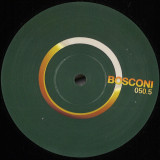
Bosco050.5 follows the sound of the previous one serving four most exciting electro, italo-disco and acid infected floor burners!
"Run it Back" is a simple and dry tune, has those big cutting edge sounds typical of the early 2000 80's contaminated electro.. perfect for your starting set or in recreating that unique atmosphere.
On the A side follows "Half Way Trough", an effortlessly driving tech-acid house tune, strangely compelling, with a timeless feeling.. looking like an essential weapon for any dancefloor.
B side starts with the spicy electro-disco tune "Over The Machines" epic and functional at the same time with evocative arpeggios and a mechanical vocodered speach.
The Ep ends with the cyberfunk stomper "Revolution" , a twisted electro funk groover in typical Minimono vein.
Fabio Della Torre and Ennio Colaci celebrate this 50th.5 release on Bosconi in great style, remodernising the sound that they used to like when they first met in the early 2000, under the influence of those Berlin labels like Areal, Sender, Festplatten, Funkhaus, Beautycase, Lasergun, Gigolo.. and all of those labels who trademarked the sound of those unforgettable Berlin day
Atlanta native Tha God Fahim has emerged as a leading figure in hip-hop’s thriving modern underground, captivating listeners with masterful street soliloquies and timeless production. Uninterested in the flashy trappings of the modern rap game, Fahim has channelled his energy into building a phenomenal catalog, blending soulful aesthetics with hard-edged rhymes. Now, the talented emcee is taking a break from his dizzying mixtape schedule to unveil the new studio album "Iron Bull".
Highlighting the power of relentless determination, the collection finds Tha God Fahim stronger than ever, elevating beyond adversity while remaining true to self. "Iron Bull" includes guest appearances by Mach-Hommy, Your Old Droog, and Jay NiCE, along with hypnotic production by Nicholas Craven, SadhuGold, Camoflauge Monk, and Fahim himself.
Balearic believers rejoice! Japanese tropical-fusioneers Coastlines are back with the worldwide vinyl release of Coastlines 2. The follow-up to their classic debut, this is the sound of Coastlines's global influences. If the dedication to intricate sonic details is particularly Japanese, the overarching feel captures the sprawling grandeur of the international balearic community. As they put it, Coastlines 2 presents "a more precise and beautifully polished magic hour." If that isn't Balearic, we don't know what is.
Takumi Kaneko and Masanori Ikeda don’t radically alter their sumptuous template with this second LP; and we wouldn't want them to. Yet with a more focused flow from first track to last, both Coastlines and Be With feel this is an even stronger album than their first. One thing that hasn't changed is the use of instrumentals instead of words to express their themes; namely, "the emotional expression of being soaked."
Opener "Tenderly" is appropriately titled, a gentle Latin shuffle easing you back into the Coastlines sound. An organ-heavy synthy exotica that's in step with Lovelock's contemporaneous "Washington Park". Their über-horizontal take on Hawkshaw & Bennett's "Mile High Swinger" (from Synthesiser And Percussion, reissued by Be With!) evokes cocktails-by-the-pool as the sun slowly sets. The blunted deep jazz-funk swing of "Alicia" is a rearranged reimagining of the Gabor Szabo song from his classic Jazz Raga LP. This here sounds like an outtake from The Chronic.
As the sun goes down, "Combustione Lenta" soundtracks the relaxing slow burn of an idyllic bonfire on an isolated beach. Displaying a beautiful new side of Coastlines, we're treated to Moments In Love vibes and melancholic guitar arcs. The piano-laden early morning wonder of "Night Cruise" started life as a completely different song, but the duo found a particularly good loop from the initial sketch and reconstructed it into this sophisticated 80s instrumental soul groove. "Waves And Rays" is all undulating acid waves and lighthouse light. A chopped and screwed steel drum G-Funk with soaring synths and nods toward the squelchy machine soul of Mtume and Jam & Lewis. Yes, *that* good.
The bouncy futureboogie cosmic chug of "Sky Island" represents the beginning of the sunrise, casting images of 80s Japanese fusion and definitely one to play out early doors to get the crowd stepping. "Area Code 868" is the strutting staccato sound of Joe Sample waking up in the Caribbean to craft his piano funk drenched in sunshine. Accordingly, the tentative, naive melodies of "Sand Steps" represent that vivid feeling first thing in the morning, as you step on to the sandy beach in the sunshine and take a deep breath. The world is yours.
The emotional, organ-piano-steel drum-driven "Song For My Mother" is a slo-mo show of sincere gratitude to all the great mothers. "Yasmin's Theme" is Coastlines's Brazilian homage, recalling for them that early summer feeling. It's propelled laconically by the carnival beat of batucada`s big bass surdo drum and complimented by sweeps of warm keys and radiant vocal harmonies. Blissful beatless closer "Asafuji" conjures a scene from a wonderful morning spent with the people of Shizuoka, the symbolic mountain of Japan, Mt Fuji and its inhabitants. It sounds like Dâm-FunK jamming with Sabres Of Paradise.
Coastlines 2 was painstakingly crafted, across the pandemic, at Masanori's rented place in Tokyo and then brought back to his home studio and worked on slowly and repeatedly. With limited time to see each other, the duo became more united in their "consciousness with natural progress."
Mastered by Simon Francis and cut by Cicely Balston at Air Studios, this magnificent double LP has been pressed by the good people at Record Industry.
Mit "Morphing Polaroids" legt die gebürtige Japanerin und seit 2018 in Berlin lebende Saeko Okuchi alias Saeko Killy ihr Debütalbum bei Bureau B vor. In den letzten Jahren konnte sie sich in der Berliner Szene rund um den Club Sameheads einen Namen als DJ und Live-Künstlerin machen. Nachdem 2021 ihre erste EP "!"#$%&"( )* - Dancing Pikapika" auf dem Osakischen Label Chill Mountain erschien, folgte eine fruchtbare Jamsession während des pandemiebedingten Lockdowns, aus der schließlich die 11 Titel umfassende LP "Morphing Polaroids" hervorging. Das Ergebnis ist ein kontemporärer Leftfield-Clubsound, der mühelos Elemente von Dub, Post-Punk und Kraut mit elektronischen Beats vereint.
- A1: Track Id Anyone (Feat. Caribou)
- A2: Nices Wölkchen (Feat. Apparat)
- A3: Royal Asscher Cut
- B1: Magical Boy (Feat. Matthew Dear)
- B2: Das Wort (Feat. Dirk Von Lowtzow)
- B3: Homesick (Feat. Ada)
- C1: La Duquesa
- C2: Marilyn Whirlwind
- C3: My Plans (Feat. Matthew Dear)
- D1: Don´t Lose My Mind
- D2: Amygdala (Feat. Milosh)
- D3: Ich Schreib' Dir Ein Buch 2013 (Feat. Hildegard Knef)
- E1: Nooooo
- F1: Auroville
Black Vinyl[24,33 €]
140G
- Limited Edition auf 2023 Stück weltweit, handnummeriert zum 10-jährigen Jubiläum! Die 2LP erscheint im transparenten Vinyl (crystal clear), die Bonus 7inch im schwarzen Vinyl inkl. Gatefold Sleeve!
2013 verblüffte DJ Koze die Menschheit mit seinem zeitlosen Meisterwerk `Amygdala´, einem Album voller psychedelischer Strahlkraft, Tiefe und magischen Klangwelten, in denen es auch nach 10 Jahren Dauerschleife immer noch neue Nuancen zu entdecken gibt. Dieses Jubiläum feiern wir nun mit einer gnadenlos limitierten Coloured Vinyl Edition. Schnell Warenkorb Patsche Patsche machen!
Elias Devoldere is the drummer in bands such as Nordmann, Hypochristmutreefuzz, Suwi, Robbing Millions, and John Ghost. Following an ep, Kaiku, released last summer, Bloomed > Exploded is his debut full length as a solo artist. Besides writing and singing, he composed, played, recorded, and produced the bulk of the ten songs himself. 'Everything blooms', he explains the title of his first album. 'Until it explodes, and something else is able to grow from it'. In this case, what came full cycle is an intimate coming-of-age album of intangible atmospherics, crisp melodies, and understated rhythmical patterns.
BLOOMED >
'As a kid, I just wanted to play football, you know?', says Elias. 'But when I was eight years old, my parents made me choose between drawing school and music school'. And thus began a dedication to rhythm for Elias. At 18, he enrolled at the Royal Academy of Fine Arts in his hometown of Ghent, opting for a jazz education. 'Not because I aspired to become a master 'jazz drummer', but to learn music, to become a good musician'. It was at the academy that, after an impromptu jam session, Nordmann first came together. The exhilarating instrumental quartet went on to win second place at the prestigious Humo's Rock Rally in 2014, and released three albums to critical acclaim, with a new one in the works.
Devoldere, in the meantime, had completed his degree with a craving - ironically - for music. 'I was in over my head with jazz for such a long time, and went on an epic discovering spree. Moses Sumney, James Blake, Kendrick Lamar, Connan Mockasin... Lots of stuff I had missed over the years. In a way, I reconnected with the kind of music I was into before jazz dominated my life. Pink Floyd was my first love, for instance, and later Radiohead proved to be a game changer. Diving back into those kind of sounds, I was feeling the urge to follow my old dreams, of being a solo artist - or something more than 'just' a drummer, anyway. So I bought a guitar, an interface for my laptop, and started writing'.
EXPLODED
When he released his 5 track ep Kaiku in the summer of 2021, it summarised a lot of firsts for Elias. First time writing lyrics, first time as a lead vocalist, first time recording his own songs all by himself. The songs had been around for a while, but taking those leaps took a long time. 'Making the ep helped me to find my voice, in every way possible'. Still, in the aftermath of the pandemic, the songs on Bloomed > Exploded sprouted in a time of upheaval. 'Musically the album is quite serene, gentle even. But the themes speak of internal unrest and uncertainty. There are a lot of questions on the album, as it turned out. Duality, as the title suggests, coming from the struggle between a wish to turn everything upside down and a search for peace. Honestly: the prospect of my 30th birthday was messing with my head too'.
Recording during a period of solitude in France, Elias initially relied heavily on synthesizers and drum machines. 'Explode / Boalis was one of the first songs I wrote for this album, and pivotal for its atmosphere, based mostly on electronic elements. Later, I did use 'real' drums on most of the other songs, though, and contributions from other musicians, but the overall mood is very cohesive'. 'Pure', that's how Bruno Ellingham, the UK engineer who mixed the album, described it. Much to the delight of Elias, who reached out to Ellingham because of his previous work with bands such as Massive Attack and Portishead. 'Hearing the end result, I thought he really captured the essence of the original demo's. For me, that adds to this album being a sincere reflection of my true self. 'Take a dive/ Into the place where it's more quiet', as I sing in the last song, that kind of sums it up for me'.
Soundway releases a storming compilation of Cameroonian-born, Nigerian-based super producer Nkono Teles’ solo work.
The pioneer of West African electronic music was known for being tapped by over 100 other musicians to produce or arrange their music, from King Sunny Adé, Guy Lobe, even Steve Monite’s
album “Only You” and more. Having already appeared on Soundway’s best-selling compilation “Doing It In Lagos”, here more of Nkono’s
limited solo work is carefully remastered and reissued on
vinyl for the first time. One of a small handful of pioneers of the Nigerian electronic music scene in the 1980s (alongside the likes
of Jake Sollo & William Onyeabor), Teles was known for being tapped by over 100 musicians to feature on, produce or arrange their music. The list of ‘80s Nigerian records that his sound and style embellished
is seemingly endless: Steve Monite (he arranged and produced the music on the Only You album recently re-issued by Soundway), Dizzy K, Peter Abdul, Odion Iruoje, Steve Black, Rick Asikpo, Feladey, Charly Boy, Majek Fashek & Sonny Okosuns, to name just a few,
all engaged his enigmatic production and keyboard services throughout the 1980s. He became known as the first person in Nigeria to push the use of the drum machine into popular music and created a unique and original boogie-funk sound combining these new
beats with guitars and an array of new and affordable synthesiser sounds that started appearing in the early 1980s.
18 Jahre werden es 2023 bei den 4 Freunden von Kärbholz aus dem beschaulichen Ruppichteroth.
Da wird sich ein mancher denken, irgendwann müsse sich der Verschleiß doch bemerkbar machen. Mitnichten.
Auf Kapitel 11: „Barrikaden“ hört Ihr 11 Stücke. Songs, die mal im kleinen, mal im großen Gewand Geschichten aus dem Leben erzählen.
Hier ist mehr "Killswitch Engage" drin als "Hosen". Das macht es schwer, die Songs in Schubladen zu pressen.
KÄRBHOLZ - Kapitel 11: „Barrikaden“ ist eine gut 40 minütige, musikalische Reise durch die verschiedenen Ecken des Kärbholz-Kosmos, ohne sich dabei aber jemals selbst zu verlieren. Ein Album, das seine musikalische Komplexität meist erst auf den zweiten Blick verrät, einen am Ende wohlig zurücklässt und erneut auf Entdeckungsreise schickt.
Erneut standen den vier Jungs das Produzententeam Eike Freese (Chameleon Studios) und Alexander Dietz (Heaven Shall Burn, Chemical Burn Studios) zur Seite.
Mit seinen expliziten schwedischen Texten und der Betonung des "Hard" im Hard Rock sind Knogjärn eine Band, deren Herz und Seele tief in diesem Genre verwurzelt sind. Ihre Herangehensweise an melodischen Hardrock, kombiniert mit härteren Elementen aus Hardcore und Metal, macht Knogjärn zum Schmelztigel mit weiteren diversen Subgenres wie Punk, Rock'n Roll und sogar Hip-Hop/Rap. Erstmalig ist das Album nun auch als LP erhältlich - natürlich auf klassisch, schwarzem Vinyl.