As a first listen it was 2 am, 46° in a village Portugal, in a Convent, after a good night out. That moment stroke me from being magic, the energy was perfect, we were laughing and relaxing amongst friends. That listen was pushing the magic further because of the surprises it has all along the journey. A first groaning A simple rhythm Soft realms Noisy Round sounds Type machine sounds, of a sampled hi hat that never reveals, cut cut cut cut. Just because it's fun to not reveal it. And put that fist cut part of the upcoming timber that is not 'yet' one. It's like if the drum pack was used the wrong way, which is a great way. Flipping. (=to flip something) Belp has this ability to bring the most horrible samples in front, and turn over your mind to enjoy what first sounds like 'horrible'. Facade. 'Crocodile' is flipping it over. Rhythmically vibrating, ears are wide open, full attention. I'm into the non-repetition. Track 'Crocodile's call reminds me of the call in 'Klabb' by Deena Abdelwahed as well as within its playful change of tempo, of notes. Who cares The album is like a randomly composed pack. It is not random. It's flipping something, and I like that disturbance, it's what I want to hear. It is alive, through composition, arrangements, falsely randomised, non-arranged, it is a trick; it is the drunk clown playing 'endless preparations for a ceremony' and 'catch'. Not bothering about anything reveals a deep understanding of music and of arts, a crafted album in details. It is years of listening, it is years of challenging ones ears, and putting it all together in this piece.
Buscar:mach one
Irish mastermind David Kitt aka New Jackson returns to Permanent Vacation with his forth record for the label. This time out he takes his beloved MPC and XOX machines back to Japan, their birthplace, for five imagined train journeys. The results are some of the most stunning and multilayered music he has produced to date with that constant locomotion pushing us on down the tracks and providing the perfect soundtrack to the sights and romance of the land of the rising sun.
transparent red vinyl[8,36 €]
The four tracks on this EP represent a bit of a transitional phase for Louis Jaquet (aka Kid Who), marking a move from a basic setup with an MPC2000XL sampler and a computer to a fully-fledged hardware studio. The initial versions of these tracks were quick jams that he had made early on in this change, but which had lay dormant on his hard drive for some time, before being revisited and reworked for this release with the new equipment.
'Rhythm Code' began life as an exercise in using only freely distributed software synths, and the majority of those sounds are still there, bar some additional acid sequences and tweaks to the rhythm parts.
On 'ZF Cut' his focus switched to samples, in an effort to squeeze the most he could out of his MPC, which at the time had only recently been upgraded. The unassuming beige box gives colour to anything you feed into it (breakbeats in particular), and a host of basic onboard effects add further quirky character, in this case hollow drones and rumbles which are the core of the track.
One of Kid Who's early purchases was a cheap old Yamaha multitrack cassette recorder, which presents many opportunities for sound manipulation. Different tape speeds, tape types and manual manipulation during playback open up a world of noisy, woozy atmospheres, some of which formed the basis of 'Spool Night'.
Of all four, 'Timescape' required the least revising, and the version presented here is very close to the original, 100% computer-based draft. Although the beat was built with Roland 707 drum machine sounds, a staple of early Chicago house records, he wanted to juxtapose these with a more up-to-date techno aesthetic, with a handful of final touches added in the new studio to finish
The four tracks on this EP represent a bit of a transitional phase for Louis Jaquet (aka Kid Who), marking a move from a basic setup with an MPC2000XL sampler and a computer to a fully-fledged hardware studio. The initial versions of these tracks were quick jams that he had made early on in this change, but which had lay dormant on his hard drive for some time, before being revisited and reworked for this release with the new equipment.
'Rhythm Code' began life as an exercise in using only freely distributed software synths, and the majority of those sounds are still there, bar some additional acid sequences and tweaks to the rhythm parts.
On 'ZF Cut' his focus switched to samples, in an effort to squeeze the most he could out of his MPC, which at the time had only recently been upgraded. The unassuming beige box gives colour to anything you feed into it (breakbeats in particular), and a host of basic onboard effects add further quirky character, in this case hollow drones and rumbles which are the core of the track.
One of Kid Who's early purchases was a cheap old Yamaha multitrack cassette recorder, which presents many opportunities for sound manipulation. Different tape speeds, tape types and manual manipulation during playback open up a world of noisy, woozy atmospheres, some of which formed the basis of 'Spool Night'.
Of all four, 'Timescape' required the least revising, and the version presented here is very close to the original, 100% computer-based draft. Although the beat was built with Roland 707 drum machine sounds, a staple of early Chicago house records, he wanted to juxtapose these with a more up-to-date techno aesthetic, with a handful of final touches added in the new studio to finish
White Shadows In The South Seas is the title of a book written in 1919 by Frederick O'Brien as part of a trilogy he wrote based on his experiences living in the Pacific islands in the early part of the 20th century. His book was taken as the starting point for a film to be directed, initially, by Robert Flaherty (famous at the time for his groundbreaking documentary / fiction film Nanook Of The North) with W.S.Van Dyke as his support. The film, ultimately, apart from the title, had little to do with O'Brien's book and Flaherty left the film after a few months leaving Van Dyke to finish it.
I purchased O'Brien's book, along with many others, from Basement Books, a secondhand bookstore in Melbourne/Australia. Part of my 'Islomania' and on going fascination with all things Pacific. When I discovered there was a 1929 silent film based on the book I sought it out and started to present it as part of my 'Live Music/Silent films' repertoire. Tabu by Frederick Murnau, which coincidently also had Flaherty as co-director originally, was the first film I ever wrote / improvised a score for and presented as a live film/music performance. My repertoire extends to over 23 films now.
My eclectic and diverse musical and artistic interests extend into 'Hawaiian', 'Exotica', 'Ambient' and 'Electronic' Music. I have produced several volumes of so called 'Electronic, Ambient, Exotica' on CD and Vinyl, including Kiribati, Globe Notes, Rayon Hula ( on Vinyl, CD and digital format ) and most recently, New Globe Note on Vinyl and White Shadows In The South Seas on CD.
White Shadows In The South Seas features some of the music presented in my live screenings of the 1929 silent film.
The film is the story of Dr. Matthew Lloyd, an alcoholic doctor who is disgusted by the exploitation by white people of the natives on a Polynesian island. The natives dive for pearls, however, numerous accidents occur and one diver dies. In anger, Dr. Lloyd punches Sebastian, the employer. As revenge and to prevent further interruption of his activities, he tricks Dr. Lloyd onto a ship with a diseased crew (thinking they are ill) and his men rough him up and send the ship off into a storm. Dr. Lloyd survives and is washed ashore on an island where none of the natives have ever seen a white man before. Lloyd is rescued and ultimately falls in love with the chief's daughter, who is Taboo, hence Lloyd is prevented from pursuing his love for her. An incident occurs and a young boy is thought to have drowned but Lloyd is able to revive him, earning him points and permission with the chief's daughter. Lloyd begins to realise that the local islanders have no sense of the value of the black pearls which grow in abundance around their island and he starts to dive for them and collect them. One morning the white man Sebastian unexpectedly turns up on a scooner and starts to offer the islanders trade for their pearls. Llloyd tries to interrupt the encounter and is shot and dies. His wife and the islanders morn for his dead body and, symbolically, the passing of a way of life.
Mike Cooper plays - Electric and acoustic lap steel guitars / electronics / Zoom Sampletrack / Kaos Pad / Casio SK1 / Korg Drum Machine / Self Made Instruments.
It also features field recordings made on Pulau Ubin by Mike Cooper during a month as Artist In Residence for The Artist Village / Singapore.
I would like to acknowledge and thank Lawrence English (Room40 Records) for his assistance and encouragement with the original recordings and the CD version of White Shadows In The South Seas.
All music written and played by Mike Cooper PRS/MCPS - except Po Mahina (trad. Arr. Cooper) and Hilo Hanakahi (trad. Arr. Cooper)
Recorded and Mixed at the Steelworks in Rome 2012/2013.
A White Shadow In The South Seas
In February 2014 'A White Shadow In The South Seas' was the title of an audio-visual installation I made at the Teatro In Scatola in Rome, Italy, presented as part of a series of sound installations titled 'Visitazioni' produced by Proposte Sonore.
The essay below, as well as our collection of Hawaiian shirts, Exotica and Hawaiian vinyl records, was an inspiration for this installation.
'..the transformation and reconstitution of the souvenir commodity as an indigenous ethnic art form and a scarce relic of Hawai'i's romanticized past...' from - Clothing and Textile Reasearch Journal - From Kitsch to Chic by Marcia A. Morgado.
And....
Michael Thompson's Rubbish Theory (1979)
' ...a critical aspect of Western culture is the pre-disposition to see objects in terms of two overt categories: the transient and the durable. Objects identified as transient have finite life spans and lose value over time, whereas those identified as durable have infinite lives and over time increae in value....category assignments are arbitrary, but once assigned a category membership determines relative value. Fashion apparel-by defenition-is assigned to the transient category; paintings commonly are designated durables....how is it that transient objects.. ( e.g. Hawaiian shirts and vinyl records ) ..sometimes become durables.
Objects assigned to the rubbish category are largely invisible, have no value and, ideally, no life span. Fashion for example, no longer worn and relegated to the back of the wardrobe has fallen into the covert rubbish category. But rubbish can be rescued and transformed. Thompson says ' What I believe happens is a transient object gradually declining in value and in expected life span may slide across into rubbish. Here it exists in a timeless and valueless limbo where it has a chance to be re-discovered and be successfully transformed to a durable. Such transferes are radical: objects gradually slide from transcience to rubbish, but the transformation from rubbish to durable involves an all-or-nothing leap across two boundaries, that separating the worthless from the valuable and that between the covert and the overt. Things drift into obscurity but they leap into prominence.
The delightful consequence of this hypothesis is that in order to study the social control of value we must study rubbish.
The rubbish-to-durable transformation is accompanied by the development of highly specialized knowledge derived from the discovery of subtle variations and complex details that went unnoticed in the objects transient stage. The discoveries initiate renewed interest in the object and its market value begins to climb. As prices soar beyond the reach of ordinary people, the object becomes available only in high priced collectors' markets. Furthermore, as market values rise, the aesthetic value of the object undergoes a reassessment as well, and it becomes increasingly apparent that the objects intrinsic beauty has been overlooked. Ultimately the object is re -assigned as a durable and becomes recognized as a timeless classic.
Exotica, Ambience and Pacificism - A dialogue with Mike Cooper & Professor Philip Hayward Deputy Pro Vice Chancellor of Research Southern Cross University, Lismore, Australia.
2018 played host to a bumper crop of sounds from some of Philly's grittiest, including Great Circles mainstays M//R and Chaperone. To close out the year that was, we are pleased to present Heckadecimal's 'Murder Tape.'
A Minneapolis-based producer and acid auteur, Heckadecimal has been a fixture within the vibrant Midwestern electronic music community for nearly 20 years. Founder of the legendary 'Anti-human' events and co-curator of the ever-prolific Always Human Tapes imprint - alongside Ryan Wurst and Peter Lansky - Heckadecimal's reputation is one of unrelenting creativity and tireless advocacy for sonic experimentation. His work has found its way to light via a slew of pseudonyms and stage monikers, including The Worm, noface and Wonder Sirens.
In short - Heckadecimal lives and breathes the sonic matter that he leaves pouring out of studio monitors, busted bar systems and finely tuned rave stacks, wherever his travels take him.
Live performance lies at the core of Heckadecimal's practice. When he stormed through Inciting HQ in Philly earlier this summer, he took command over an arsenal of hardware that reminded us of how Octave One or Shawn Rudiman might show up. These were machines that he had lived with; touched with custom modifications, hand-drawn stickers and pockmarks incurred in battle, one got the sense that the gear was a personal extension of the artist.
Perhaps it's a bit maudlin, but we feel a certain kinship with this project. Indeed, these tracks at times feel very much of a piece with the gnarled tonalities in which our stable typically traffics; all low-slung riddims that reach at equal lengths towards mutated IDM aesthetics and post-Packard Plant techno extrusions. These are future perfect grooves that glide along under the vast Midwestern sky, providing a fertile communication conduit with the City of Brotherly Love.
Give thanks for acid. Great Circles will see you in the New Year..
The man behind Workshop and Out To Lunch famously takes his time to make electronic productions that are, in turn, out of time. Over the course of his career he's released tracks that could have been made yesterday, years ago, or a decade into the future. with Avenue 66 he's found a leftfield home that celebrates pure creativity, that embraces the liminal, the weird and the sublime. Light Surfing fits all of these descriptors.
The double-LP rewards deep, repeated listening. There's plenty to unpack, but those who cherish the murky bangers that have been Lowtec's stock and trade will find plenty to love. "Boy With The Broken Glasses" weaves a subtle, dancehall-inflected riddim into hazy ambient house, while the closer, "Burnt Toast," is the latest example of Kuhn's uncanny ability to perfectly fit a soulful vocal sample into an alien dance floor soundscape.
Unexpected moments of sideways beauty also unfurl across the four sides. The two-part "Light Surfing" is one of Lowtec's most evocative suites to a date-its mournful string soundtrack is the album's recurring, longing motif. Elsewhere, as on "Mynthenquai," Kuhn applies avant-garde strategies to his synth leads, taking us on head-spinning melodic journeys.
Light Surfing is a masterful balancing act between dream states and machine-like efficiency, the experimental and functional, precision and spontanaeity. Lowtec could have only gotten here by taking his time.
Working with artists like David August and Daniel Brandt, Frieder Nagel is known for managing projects in venues ranging from theatres to clubs, for concerts to audiovisual experiments. He finally signs his first solo work Distract Robots to be released on January 18 on InFiné and invites his listeners to get lost in an universe that spans from euphoric to devastating excitement. - mastered by Zino Mikorey, the magician behind Nils Frahms latest album.
Frieder Nagel invites his listeners to get lost in a universe that spans from euphoric to devastating excitement. He is known for managing projects in venues ranging from theatres to clubs, for concerts to audio-visual experiments - working with artists like David August, La Boum Fatale and Daniel Brandt (Brandt Brauer Frick). The first time he appeared on stage, in 2016 at Berlin's infamous Radialsystem V, armed with several synthesizers, effects, drum machines, one grand piano; and backed by the German Symphony Orchestra (DSO). This critically acclaimed debut was streamed by Boiler Room later and led to further collaborations with Philharmonie Essen or his ensemble show at Reeperbahn Festival.
Now finally Nagel Žs first solo work Distract Robots will be released by French label InFineŽ. This 12" has become an album in miniature with a final polish by mastering guru Zino Mikorey known for his work for Nils Frahm Žs All Melody. This EP offers up a mystical world, full of warm synths and detailed sound clusters morphing into each other to form utterly dark and dystopian ballads. Nagel gets lost in obsessively endless sessions with his instruments. He isolates himself and spends night after night drifting away from reality. The result is that his tracks carry moments of utterly deep relief and deliverance, as well as despairing sadness and stoical escapism.
Pete 'Bassman' Bain, one of the founding members of the UK cult psych rock band Spacemen 3, formed Alpha Stone after Spacemen 3 and his other band The Darkside split up in the mid-nineties. In 1996 the band recorded the album 'Stereophonic Pop Art Music' and it was released on Bomp! Records on Compact Disc. The album hasn't had a 'proper' vinyl release until now, 2018, when Hoga Nord Rekords continues their collaboration with Pete Bassman by releasing the album.
You can clearly hear that Pete Bassman was the driving force behind Alpha Stone; fuzz, synthesiser -sweeps, programmed drums and processed vocals are the cornerstones in Alpha Stone's sound. Raga-like mantras, heard in Farmer C, lies track to track with more percussion driven grooves and psychedelic pop oriented songs. The album's sound has obviously survived the 20+ years shelved in obscurity and proves the 'Drugby' sound still vital!
It's always hard to sum up a bands particular sound in a few words, but you could say that if you put guitar and bass, synthesisers, a drum machine, and Julian Copes record collection in the hands of an alien, you've got Alpha Stone!
Naphta is a DJ and producer hailing from Wroclaw, Poland. Also, one half of Polish DJ/producer duo, Pvre Gold and host of Wroclaw's infamous Loud & Clear parties, he takes inspiration from a variety of electronic stylings, with a thick dose of soul and southern rap and acid techno thrown in for good measures. After a string of 12's released on Studio Barnhus, Omena , Father And Son Records And Tapes, Transatlantyk and his first LP with a full live band as Naphta & The Shamans; the Polish producer returns to the latter with his debut EP for COSMIC CLUB, SKYLAX RECORDS sub-label. This is house music like you've never heard before - loose, freaky, hippie, voodoo machine funk, highly infectious grooves for any modern dancefloor. As usual : Vinyl only. SKYLAX RECORDS 4 EVER !
Keysound Recordings are proud to present an EP from one of the UK's most exciting production talents, Otik.
The EP consists of four original productions on vinyl 'Top Ten', 'Latex', 'Notion' and 'True Level,' plus on the digital a refix of 'Top Ten' from label co-owner Blackdown 'Top Ten.'. Collectively they are weighty contributions to the space emerging between techno and bass music currently being forged by labels such as Timedance, Hessle Audio, 3024 and Ilian Tape. 'And Keysound of course haha...' adds Otik. 'I've been very inspired by these labels'. 'I'm based in North East London but I'm originally from Bristol. I've been producing since the age of about 15 but didn't really get into UK dance music until the age of 18,' he adds. In recent times, Otik's released on 17 Steps, Dusky's label, DEXT Recordings, Durkle Disco, Push & Run, Tessier-Ashpool and Infinite Machine. He will also be releasing on Nous Disques later this year.
Perhaps one of the most unique and unlikely exponents of the highly collectible genres of ambient electronics, experimental tape-music and PINA (Private Issue New Age), this English-born Jamaican- raised sound designer, artist and existentialist furrowed his own unblinkered path through lesser chartered electronic fields for many moons before eventually teaming up with Bill Laswell (with Material) and Daevid Allen in New York to bring self-taught synthesis to Gong during their most oblique periods.
Creating two impossibly rare self-pressed vinyl LPs of conceptual inner-visionary outer-galactic angular tonal-dronal alien-art soundscapes in the process, the man known under figure shifting guises such as Dennis Wise/Denis Weise/Dr. Wise etc, combined a culture of sound system circuitry and radiophonic trickery adding Tea-pot poetry and sci-fidelity future- folk to his magnetic mesh.
Presented here as the first ever dedicated Wize Music collection this record combines compositions spanning 1979-1984 in both a solo capacity as well as small- group projects featuring members of the Emerald Web band.
Imagine a comic book where a Funkenstein monster called 'Laraaji-Scratch Perry' invaded your record shelf while Komendarek and Holger Czukay kept lookout... Dr. Dennis might be the only one Wise enough to outsmart all of them with his powerful amorphous anaesthetic.
Günter Schickert, four decades of multi-instrumental cosmic explorations, under Berlin's sky, above genres, and compromises.
It was memorable the time when I firstly listened to his debut LP of 1974, the monumental Samtvogel. It overwhelmed me with layers of echoing guitars roaring into space, causing a powerful release of dopamine spreading through my skin, in the way an Interstellar Overdrive', or a Richard D James Album would do. It was a proof of the divine to discover Günter Schickert, it is a profound honour today to present on Marmo his seventh album to date, Labyrinth, the first to be released on vinyl format since 1983`s Kinder In Der Wildnis.
Schickert's Samtvogel, self-published first, then licensed to Brain, equaled the imaginative leap and sonic power of the early Pink Floyd, Manuel Gottsching's Inventions For Electric Guitar or A.R. & Machines's Die Grüne Reise. What followed, from his second LP Überfällig on Sky Records to his collaborations with Klaus Schulze, Jochen Arbeit and Schneider TM, even if little acclaimed, spans a large spectrum of music styles, always through a distinctive and personal aesthetic, that is deeply linked to the one he firstly crafted back in '74, when Schickert pioneered the use of echo effects applied to guitar playing.
And now Labyrinth, a record that stands for versatility, where genres do not matter, soundscapes or life situations take over, song-writing emotions pop out, handing out a spectrum of surprises to the listener. You may find yourself flying low along steep cliffs and with a blink of eye you are thrown into a Middle Eastern scenery.
The album is divided into two parts, two different production bulks and periods of Günther Schickert's life. Side A features a selection of tracks recorded in 1996, appearing on the 2012 album HaHeHiHo, released via Pittsburgh based VCO Recordings, on a limited press of 100 units, tape format only. I felt that the visionary and emotional richness of these pieces deserved the vinyl format and a chance to reach to a wider audience.
The Raga-inspired Morning' opens Labyrinth with exotic charm and bitter-sweet nostalgia. Sieben' kicks off with the same guitar scales of the previous theme, before the motorised progressions of a Korg MS-20 synth surprisingly storm in, carrying along an intersecting multitude of filters and sharp guitar effects, flowing into an epic, paradisiac ending. Ninja Schwert' remains on astral dimensions, it is a struggle of cosmic forces, where the steady ride of a pounding beat gets embraced by different guitar layers and analogue electronic filtering. The side closes up with HaHeHiHo', a slow ballad featuring Mr. Schickert on vocals, guitar, bass guitar and drum machine - an example of simple, stripped down yet gifted songwriting that is capable to reach the heart of the listener.
Side B contains material produced between 2007 and today. The intricate, bewildering Tsunami' shows the multi-instrumental and recording abilities of Günter Schickert: a field-recorded storm with mesmerising powers, a peculiar progressive approach to guitar playing. Mysterious sinister spirits and sounds are emerging and the feeling of being lost in a pleasant trance arises. In contrast, Oase' muffles the intensity and jumps into a completely different soundscape, where in liaison with the sounds of a rolling drum tom and a desert-like trumpet, the microphone carefully captures the found sound tones of everyday-life objects and actions. Like HaHeHiHo on side A, Checking' represents the vocal gem of the B side, in a raw and direct way of songwriting like if Syd Barrett was his invisible helper. Palaver' (which means unnecessarily talk' in German) assembles different vocal recordings of Schickert into a bizarre free-style conversation through a mysterious language, where he attempts to emulate illiterate children conversating. The final track, Morning (Slide)', reprises the opening theme, this time solely performed through the caressing dilated sounds of Günter's slide guitar.
PLEXITY
...the simplistic complexity of subliminal melodic aggression.
Drivetrain (Detroit, USA) - 'Lozen'
A paradoxal tribal eruption crafted by label chief, Derrick Thompson.
Filtered patternization built on barbaric harmonic algorithms.
Teknobrat (Ottawa City, CANADA) - 'Relapse'
A vicious debut headlining a twisted, distorted analog synth abducted by
a rancid 909 beat machine.
DJ Mourad (Tunis, TUNISIA) - 'All Fixed Up'
We welcome another revered DJ/Producer, this one takes
an expedition through incalculable rainbows of acid-tech and the unexplained.
Hughes Giboulay (Beaucaire, FRANCE) - 'Genése'
Another first installment to Soiree...highlighting an emotionally driven
chord progression with encapsulating rhythm incisions, biting at the bass foundation.
New Aussie label, Corella Records, run by producer/DJ Blind Tiger (formerly Captn K) is broadening the repertoire with a second release, a new indie disco
12" single, Forbidden Fruit.
Forbidden Fruit - Field of Fruit Mix, is the one to check out. It's an indie dance/nu-disco excursion with driving bass and piano. Reverb slathered vocals from Steve Hensby
and dreamy strings make this track an uplifting 8 minute journey.
With a touch of early Chicago House in the piano stabs, Georgio Moroder in the rhythm, the drive of Underworld and repetitive elements reminiscent of Field.
Forbidden Fruit - Original Mix, is serving up some classic disco with funky synth bass, driving drums and percussion and the full range of vocalist Steve Hensby makes this a great dance floor mover.
Forbidden Fruit - Fruit Jam Mix, Blind Tiger delivers party jam vibes. Complete with electro drum machine, party goers and warped electric guitar from Luke
Dux. It's a fun, stripped-back remix, that feels like the guys have stumbled on a vintage drum machine and a bunch of instruments at a house party and start cooking up a fruity jam.
A little of something for everyone on this one, check it out.
ndio was a short lived but influential trio of John Beltran, Sam McQueen and Seth Taylor. They released an album and three EPs of hi tech ambient techno on Derrick May's Transmat and the Rhythmic Tech label between 1999 and 2010. Here, three tracks from their self titled 2003 EP and one that was released on Styrax get put together, remastered and recut for the next Delsin reissue. Opener 'Winter Long' is classy techno cut that looks into the future. A symphony or gorgeous strings lights up the backdrop as scintillating drums dance and shimmery in the foreground. A Detroit sense of melody adds colour and ensures utter timelessness. 'Blue Fantasy' is another track that show off the power of machines to make music that touches your soul with its gorgeous strong stabs and masterful drum programming, and 'Inca' then slips more into a house groove, with busy, shuffling drums driving along beneath acidic twitches and broad, heavenly pads. It's slick, urgent and compelling and 'Nolita' closes things with more delicate dancing machines, rueful synth work and rubber bass. It's archetypal Detroit techno that sounds as good and forward facing now as it ever did.
Fresh from releases on his own Polymath Records, as well as Natura Sonoris and Sodai, that have seen support from the likes of Maceo Plex, Bicep, and ANNA; UK producer Third Son debuts on Dusky's 17 Steps imprint with the 'Machine Love' EP.
The synth laden 4 tracker utilises electro, acid, techno and breakbeat influences to provide a rugged and bold reflection of the current clubbing landscape; one that is set to melt underground dance-floors this autumn.
'Machine Love's squelchy synths and gritty percussion build towards a chopped and skewed finale, that has proved a ferocious piece of club artillery in Dusky's sets this summer.
Next up is 'Bloodsport', a dance floor primed roller that consists of dusty breaks, squealing atmospherics and a meandering baseline. 'I Hear Laurel' follows, a cosmic alliance of ghostly vocals and hard hitting distorted synths that feels like meditative ode to rave music of the past. Closing the EP is 'Ambiturner', stacked with syncopated drums and twisting synths that scatter across the stereo stacks.
All things come from and return to the same source - such is the theory of Monism; an ancient philosophy, but also accounting for the music of Jeroen Search. Dictated by an ethos of exclusively recording live takes and the only ever editing happening while a tune is being created, each finished track is imbued with that unique magic of the moment. Such too is the nature of Monism, Search's first LP in over two decades of electronic explorations and personal as well as artistic growth. As with any of his music that has been released so far, the tracks on here hold a timeless quality, existing within their own frame of reference than - that is their immediate experience. Across a carefully arranged course, the album naturally unravels its many ideas, ranging from moments of pensive ambient pieces to thick washes of dub echo and layers of modulated synths, all while providing an endless array of hypnotizing bare-bone grooves in the process. A true Figure mainstay, Jeroen Search upholds his artistic relevancy without any reinventing or switching up the formula - rather by simply keeping true to his accomplished craft.
Cryovac Recordings is an independent label brought into existence by artists that believe in their craft. It is a platform to unite factions of the Detroit underground and display their sovereign sounds. Cryovac is a fresh view of the techno soundscape that is forever changing. Our aim is to translate this time into the grooves of vinyl.---a.garcia
Here we are with Cryovac's 21st offering: a thumping, machine funk EP that is sure to snap your set into overdrive. This four tracker throws back to the minimal feels, yet is still futuristic, mildly quirky (in the best ways) and slamming at the same time. The tracks all have that bounce, glitch and experimentation that you come to expect from label founder Andy Garcia and friends. This is also a very versatile record that won't leave your play crate too often. Pick one up at a quality record shop near you!!—Vince Patricola
Lost Futures is a new label that explores experimental and often radical approaches to dance music from the past. In a musical landscape that increasingly claims to seek and reward new forms and ideas, Lost Futures delves into the recent past to revisit forward-thinking, optimistic projects that, owing to the social, musical or outright political climate, perhaps struggled to find an audience. Allowing only time to re-contextualise these leftfield, sometimes misunderstood and ultimately human bodies of work, Lost Futures taps into the inherent idealism of rave.
LF001 trips back until the early nineties to revisit the alternative scene emerging from the Dutch city of Utrecht. Here, three young men - DJ Zero One (Sander Friedeman), TJ Tape TV (Arno Peeters) and DJ White Delight (Richard van der Giessen) - joined forces to form 'The Awax Foundation'. Inspired by the transcendent and revolutionary electronic music arriving on their shores imported from Chicago and Detroit, combining their knowledge, gear and ever-expanding vinyl collection allowed additional freedom in paying sincere tribute to these intoxicating sounds, while also developing their tastes in a more personal, eclectic direction.
The musical flavours of Awax initially leaned toward acid house and the roots of techno. However, with three different mindsets in the mix, their tastes were rarely fixed. One thing each shared in common was a devotion to collecting rare sounds, specifically more adventurous and international samples than those emanating from the increasingly-hard, masculine dance music emerging from the Netherlands during the period. Inspired by the cross-over global sound of bands like Suns of Arqa, or 'World Music', as it was perhaps patronisingly termed at the time, the trio became interested in the idea of making techno with 'ethnic instruments'.
Of course, this being 1992, none of The Awax Foundation had access to such instruments, instead, they had a vast, collective library of samples from all over the world. There were no collaborations and no clear plan. Instead, they set to work using a Yamaha TX16W sampler, the legendary Atari 1040ST computer, a cheap mixing desk and a couple of low-end synths and FX machines. When Richard mentioned the project to his friend, Akin Fernandez, the London DJ and owner of cult label Irdial Discs, Fernandez was intrigued enough to invite the trio to record a one-hour show for his 'Monster Music Radio' series on London's then-burgeoning Kiss FM.
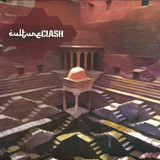
Forced to come up with a name, 'CultureClash' seemed like the obvious choice, even if the members of Awax were only creatively sparring among themselves. Along with the term 'ethno-techno', slightly dubious to a hopefully more conscious Western audience in 2017, these were the only guiding principles to the quietly ambitious project that soon combined cutting-edge machine rhythms with samples sourced from everywhere from Bolivia to Togo, and inspired by everything from Ravi Shankar's epic soundtrack to the Oscar-winning movie Ghandi, to the technical limits of their own setup requiring a dazzling degree of cut-and-paste work. Some tracks even emerged out of academic studies within the ethnomusicology department at The University of Amsterdam.
The show aired on October 2nd, 1992, recorded in one blistering take and without any rehearsals, traversing a huge variety of tempos and styles. If the performance wasn't seamless, it was undeniably thrilling, fresh and ambitious. As such, several labels, including Fernandez's aforementioned Irdial Discs expressed an interesting in commercially releasing CultureClash, while another imprint proposed a series of twelve-inches and an album. But the sheer complexity of the project meant that it never saw the light of day, while the trio embarked on different journeys ahead, both creative and personal.
Twenty five years later, and the original CultureClash lineup and founding members of The Awax Foundation provide the sound of the first release from Lost Futures. An otherworldly, ambitious and optimistic compilation, accompanied by extensive sleeve notes from the trio, CultureClash is a timeless ode to experimentation in dance music's ever-overlapping culture.