6 track LP pressed on 12" black vinyl with black centre label, black disco insert, black laminated sleeve with barcode detail.
* London based label SM-LL presents its second main label 12" LP release, Zimní Král, from Italian artist Andrea Taeggi.
* Andrea Taeggi works in Berlin as a composer, live performer and electronic music producer. Besides his solo practice
— on his own name or under the moniker Gondwana, he is co-leading long-standing electroacoustic project Lumisokea. His music has been released on vinyl and dubplate on labels Opal Tapes, Type, and Präsens Editionen.
* The music on this record was made using a vast array of rare analog machines Taeggi had the chance to work on at the Willem-Twee synthesis studio in Holland (built with the iconic Studio di Fonologia RAI as a blueprint). Most of the percussive sounds come from an Analog Computer, which has been rarely used only as a music instrument (its main purpose was flight simulation). In fact, during the Cold War times it was also used as a measurement tool by civil engineers and even by the army. At present, no one has ever officially released music recorded at the Willem-Twee synthesis studio.
*The music on this record further explores cyclical, minimal and hypnotic concoctions - a particular investigation focused on unusual rhythms that Taeggi had already started on his well-received 'Mama Matrix Most Mysterious', released on Type in 2015. Think walls of sub frequencies, snappy rollercoasters of the mind, labyrinths in hyperspace & snakes eating their own tails.
Suche:mach one
"The album's one of Ra's greatest from the 70s -- recorded in Italy in 1978, and featuring some incredibly otherworldly keyboards that are some of his most enigmatic on record! Original tracks from the album include "Disco 3000", an incredible workout on synthesizer, with a tiny bit of drum machine, a little "Space Is The Place" breakdown, and all of the wild sound you'd expect from a Sun Ra album -- plus more long tracks -- the sweetly soulful "Friendly Galaxy", a great soul jazz number, and "Dance Of The Cosmo Aliens", which has spooky organ, frenetic bass, and somber percussion" Check!
One afternoon in 1975, friend and fellow music traveler, Harold Schroeder, showed up at Poo-Bah Record Shop where Tom Recchion worked selling records and experimental music to people, forcing them to buy albums that he swore would change their lives. Harold asked if Tom wanted to share in a studio space close to the shop. After seeing it Tom immediately said "YES!". They moved in and divided the space in half. On Tom's half he made drawings, paintings, performances, video, sculptures, installations, and music. Harold had his all set up for music with his newly acquired Steiner-Parker synth and guitars and things. At the beginning they played under the name The Two Who Do Duets. Soon the late-night jam sessions that took place in the back of Poo-Bah moved over to the fourth floor of 35 South Raymond. It was pretty beat up and derelict, the way one imagines an artist's studio to look. They could make all the noise they wanted. No one else was on their floor. The music heard on this LP has remained unheard since it was recorded and was created just before and right after the inaugural concert by the Los Angeles Free Music Society (LAFMS) groups Le Forte Four, Doo-Doettes, and Ace & Duce. That concert took place in late January 1976. The sessions on this release feature members of the newly formed and expanded Doo-Doettes, which now included Dennis Duck, Juan Gomez, Harold Schroeder, and Tom Recchion, as well as Ju Suk Reet Meate from Smegma and Ace, of Ace & Duce. 35 S. Raymond eventually became a sort of LAFMS headquarters, with Chip Chapman of Le Forte Four, artist and future Extended Organ vocalist/guitarist Paul McCarthy, and soon to become singer for Nervous Gender, punk/folk artist Phranc, who along with many other artists and musicians, moved into the building. 35 S. Raymond allowed for free expression and explorations of all sorts. Some wild parties ensued, not to mention the luxury of endless hours of experimentation. Parking was free and so was the art and music. Ace found the tapes for side one ("Tom's Studio") in his archive and Ju Suk Reet Meate found the tapes for side two ("50 Of Every American Are Machines") and edited them both for this release. No overdubs or remixing was emplo
Damian Lazarus & The Ancient Moons have released their new track 'Feedback Loop'. This is the latest single to be taken from their forthcoming new album Heart of Sky, out on July 20th through Crosstown Rebels/BMG. Showcasing the warm textures of Jesse Appiah's soulful vocals and the Ancient Moons' top notch production, 'Feedback Loop' already sounds like a classic and is undoubtably one of the album's key moments. The song is about A.I., a conversation between man and machine, and rolls out of the speakers like a 21st Century update of Bristol's Wild Bunch sound system. Remixes for the dancefloor from Bedouin and Serge Devant, plus dubs from the legendary Mad Professor, follow on all formats next month.
Detroit label My Baby focusses on letting underground local talent shine, and that is the case with the second EP, a various artists affair featuring label boss Mister Joshooa, plus Remote Viewing Party and Tammy Pickle with a remix from My Baby.
The acts featured on this release are all residents of the famous TV Lounge/TV Bar venue in Detroit. The 12" includes Eddie C along with My Baby boss and TV Bar booker Mister Joshooa-who work together here as Tammy Pickle-plus Rickers, who is one half of ATAXIA, and How to Kill Detroit co-founders Remote Viewing Party, while Rickers and Joshooa also link as My Baby to remix one of the tracks.
First up are Remote Viewing Party with the superb '410'. It's five bumping minutes of silvery tech with whirring machines and gurgling synths all weaving around well programmed and punchy drums. Sure to infect real energy and freakiness into any club set.
Mister Joshooa makes his first appearance with the alluring 'Alright Fine', a slow and absorbing track of gloopy bass, percolating drums and unsettling vocals. Subtle acid lines and prickly hi hats all make this one really jump out of the speakers.
Next up, Mister Joshooa links with Rickers for a standout remix of '410' that is even more physical and driving. The metallic groove is run through with alien sounds, shooting synths and ghoulish voices that are filled with paranoia and will make a great atmosphere in the club.
Joshooa and downtempo disco don Eddie C then collaborate as Tammy Pickle for 'Indifference,' which is a perfectly slow and sensuous number with elastic synths and bass. Crisp hits drive it along and encourage you to sink deep into the groove.
This record is jam packed with talent and original ideas, and one that marks out this label as one to watch.
Dirty Projectors Melden Sich Mit Neuem Album Lamp Lit Prose Zurück!
Lamp Lit Prose Erscheint Nur Anderthalb Jahre Nach Dem Selbstbetitelten, Lezten Album. Man Darf Es Getrost Als Yang Zum 2017er Yin Verstehen. Die Dunklen Zeiten Des Break-up-albums Hat Longstreth Hinter Sich Gelassen. Nun Herrscht Hoffnung Statt Das Gebrochene Herz. Die Stärke Aus Der Neuen Lebensbalance Macht Lamp Lit Prose Zum Wahrscheinlich Zugänglichsten Album Des Dirty Projectors Kataloges. Songtitel Wie I Feel Energy, I Found It In U Oder (i Wanna) Feel It All Sprechen Für Sich. Zurück Sind Die Gitarren, Zurück Sind Auch Die Verschlungenen Gesangsharmonien. Lamp Lit Prose Ist Das Wiederbekenntnis Zu Den Soundidealen Von Dirty Projectors. Produziert Wurde Lamp Lit Prose Vom Gesicht Der Band, Dave Longstreth, In Seinem Ivo Shandor Studio In Los Angeles. Und Wieder Hat Er Eine Illustre Schar Von Gästen An Bord: Syd, Empress Of, Amber Mark, Haim, Rostam, Robin Pecknol, Dear Nora Sowie Nat Baldwin Und Mike Johnson, Die Beide Schon Sein Vielen Jahren Die Rhythmus-sektion Der Dirty Projectors Ausmachen.
The music on this EP was conceived in China, between 1989 and 1993. The original tracks were mixed to DAT in real time, in a small neighbour-proof studio inside my apartment in Macau, a 19th floor with a view to the hurricanes. There's a small, unexpected or improbable story behind each track, some little magic fused with the local atmosphere, certainly guaranteeing their lasting authenticity 25 years later.
TAIPEI DISCO
Late 80s Guangzhou was an exotic city where the traditional past coexisted in harmony with the present and even already with the future.
I'd rather spend my weekends in Guangzhou than diving into Hong Kong consumerism - as most ex-pats in Macau did. I took a cab at the border and travelled 150 Km through chaotic roads with family and friends until reaching the hot, humid, mega South China metropolis.
We ate on street joints in the evenings, went on to a karaoke bar and ended up at Taipei Disco, the only proper club in town. All the others were inside hotels and played generic music or they were seedy, sleazy, smoky cabarets.
Taipei Disco used to be a cinema and played cantonese pop music and anglo-saxon pop/rock (that was new). The spacious dance floor was generously lighted, the atmosphere was airy and modern. Boys and girls were in the habit of dancing in pairs, one in front of the other, observing a respectful yet sensual distance. When the girl took a few steps back, the boy went along and vice versa. With legs and feet (more than the upper bodies) synchronized with the music, they never exceeded in extroversion. Cool.
I always carried a MicroComposer and a portable DAT recorder in my travels through China and weekends in Canton. Any spontaneous musical idea was imediately recorded and memorized. The MicroComposer allowed multitrack recording, which was very handy on the road. Based on the emphatic choreography of Taipei Disco's dancers, i started to compose a rhythm track while sitting at a table, with headphones, listening to Cantopop in the background. As if by magic - not a rare occasion in music - everything began fitting together. Odd as it may seem, the track ended up sounding more germanic (Kraftwerkian) than Cantonese pop.
The story ends in a circle: the cantonese DJ at Taipei Disco, whom i used to ask to play certain records, wanted to play my music at the disco when it was basically only just a rhythm track and little else. From a cupboard under his set up he took out a battered keyboard (unrecognizable brand) and invited me to play over the track with the available sounds on the keyboard. The circle was complete, with Cantonese clubbers happily dancing forwards and backwards, as if it were another Cantopop hit.
I didn't get payed but the house offered us free ice cream cups in which little Portuguese flags were sticked.
The track would be finished later, in studio, with vocoder strings ensemble and synth solos.
TAIPEI DISCO (LIVE)
The live version of 'Taipei Disco' was recorded during a live set at the China Pop venue, in Macau, 1993. China Pop was a rock club built in the ample space of an old fishing warehouse, located in the labyrinthic Inner Harbour area. It was decorated with large Mao Zedong and Cultural Revolution posters and memorabilia and had a unique atmosphere, fusing Pop Art with film noir. We began our performance at 1AM, pretty early for Macau's nightlife standards. We were lucky. An audience showed up. And in Macau there were always several friends among the audience, which tranformed a musical performance into a relaxed party.
The atmosphere was particularly surreal on that night. The front row was dominated by French Crazy Horse dancers, a sort of Oriental Moulin Rouge. The girls had finished their last performance of the evening at the Crazy Horse and were still energized from their show. During our performance, right in front of us and perfectly synched, we could hear the famous irreverent screams of can-can dancers. You always had to expect the unexpected in Macau.
RED MAMBO (IMPROMPTU)
I was familiar with the Portuguese-speaking African countries well before having lived in China. I found myself returning several times to one in particular, always attracted by its magic and very distinct, identitary culture and music: Cape Verde.
During the early years of DWART a lot of the inspiration for drum machine rhythms (Roland's TR series) came from African music, especially from new musical trends that gained full autonomy with Cape Verde's independence from Portugal, as was the case with funaná.
I had the privilege of having known and befriended some of the greatest Capeverdian composers, musicians and singers during the 70s and 80s, such as Bana, Luís Morais, Cesária Évora, Paulino Vieira, Chico Serra, Tito Paris, and historical bands such as Bulimundo (ambassadors of funaná) and Os Tubarões (great innovators of morna, coladera and funaná, with the sonic impact of an afro-beat big band).
When Luís Filipe de Barros began playing Os Tubarões for the first time on Portuguese radio, that was the turning point for African music in Portugal. The 'Tabanca' album was so widely heard and talked about that it quickly got a Portuguese release through one of the big labels of the time.
The mystic of this band from the Santiago Island would reach the East. Os Tubarões played to a packed room in Macau in 1992, and after the bombastic gig we arranged a dinner and party at my place.
We ate and drank generously and the moment came for a jam session at the small studio on the 19th floor. Because Os Tubarões didn't all fit in the studio, we recorded an impromptu with only three of the musicians: Tótó Silva (electric guitar), Mário Russo Bettencourt (bass) and Zeca Couto (piano). And there we were improvising without barriers, suddenly detached from cultural roots, labels and constraints, a truly unique moment. The track is now being released exactly as it was recorded, imbued with the real communion between the musicians. And it could only be titled 'Red Mambo'. I wish to dedicate it to the memory of Ildo Lobo and Jaime do Rosário, founders of Os Tubarões, sadly and too soon departed from the land of music.
AE Productions in association with In Effect Recordings are proud to present the next installment from Philadelphia legend Phill Most Chill, this time with beats provided by Nova Scotia based DJ/Producer Jorun Bombay, under the guise of Jorun PMC - with a tip of the hat to Hip Hop legends Run DMC. If you've heard either of Jorun's incredible Rock The Discotek mixes you may have heard one or two tracks from this 12' in their early form as parts of those mixes. Here at AE Productions we thought it was a shame that they weren't available as songs in their own right on vinyl so here they are with an extra track for good measure and with more of Phill Most Chill's trademark artwork making the sleeve look incredible!
The EP opens with Can't Stop Won't Stop and gets straight down to business. Phill Most Chill starts on the first beat of the first bar almost as if he can't wait to rock the spot. This is pure party Hip Hop fueled by uptempo Disco Breaks, but don't be fooled by that statement - this is no crossover rap music, we mean the type of party that could be found in parks in New York in the early days of Hip Hop. Listen for a whirlwind of extended turntable action from Jorun who slices like a food processor throughout.
Magic Disco Machine stays with the classic Disco Break sound with various nods to Block Party Classics which create a great club friendly track. Again with some serious turntable skills from Jorun to complement Phill's hype rhymes, this is the brand new exclusive track for this release and has all the credentials of a summer party classic.
The final track here The Champ stays with the classic block party theme but this time utilising a raw Funk groove that will be a surefire hit with B-Boys and B-Girls worldwide and shouldn't fail to get any Hip Hop party moving. This could be considered the most underground sounding of the three tracks assembled here.
A warm human hand sculpts the icy machine-like sounds into a meticulous harmony over undulating bass and entrancing snares, clasps and industrial heartbeats. This continuous circulation of sound and its ever beating rumbling-flexed sub bass found in Rebecca Goldberg's newest batch of acid-techno arrangements effectively replicate the natural functions of omega 3, or -3, fatty acids albeit in musical-form. Whereas ingesting the special carboxylic acids found in plant and marine oils woll fortify your vascular system into a well-oiled machine, Goldberg is using a table of various analog machines to manifest a similar, yet uniquely propulsive flow of energy through a composite of frenetic hi-hats and trudling kick drums, looping under spacey Rolands waving out reverb splashed frequencies coiling synthetic intonations.
The beats reach the feet, the bass unlocks the hips and the synths pull and twist the shoulders, staving off stagnation or decimating a collective clotting - we are loosened in restorative ways to the sleek assemblages of one of Detroit's leading DJs/composers on the electronic music scene. Goldberg's 25-minute odyssey is unceasing in its sinuous stream of mesmeric techno music, as if powered on by relentless agents found in the healthful acids for which this EP gets its title.
Goldberg has distinguished herself by cultivating the seeds of techno into something that designedly meditates on the enduring vitality of the organic and the holistic in our lives--even as our socialization, and maybe even our dance floors, are predominantly digital in character and operation. -3 continues to stimulate our brains in two ways, just like 2017's 313 Acid Queen. Her previous record used field recordings and found sounds from the shores of Detroit's Belle Isle and other neighborhood sidestreets to thread the simple majesty of the flora and fauna that sustains even if at the corners of a concrete metropolis. -3 is bringing you from the outdoors into the inner workings of your body--particularly the blood cells that act as fuel for your limbs, your lungs and your brain. It's the -3 fatty acids that keep your system strong and smooth. It's Rebecca Goldberg's latest acid techno fever dream that keeps you perceiving that (and other things) even as you dance...
Producer Okzharp and vocalist-artist-dancer Manthe Ribane both hail from South Africa, where Manthe still resides, while Okzharp lives in the London where he is a DJ and producer, initially cutting his teeth in LV, who in 2007 were one of the very first acts signed to Hyperdub. Manthe has been at the forefront of South Africa's cutting edge fashion, art and dance worlds for over a decade. After leaving LV, Okzharp and Manthe started collaborating, going on to release two well-received EPs on Hyperdub, 'Dumella 113' and 'Tell Your Vision', recorded in Joburg and London respectively. The recording of 'Closer Apart' reflects the title. Okzharp says 'Most of the music came out of headphone moments in hotel rooms, planes and airports in the brief periods of time that we spent together.' Describing Manthe as a co -producer, he continues 'She selected instrumental sketches and we developed them together, sometimes just keeping the bare bones or a melody or rhythm, or trying different elements or sounds.' Even though the album was built long distance, the short periods they spent together were the ground zero for creativity. Okzharp recalls 'One particular moment in Milan last year, we had a whole free day before our flight so we visited the Salone di Mobile design show. We were so inspired by an installation there just walking around, listening to the amazing soundtrack. That evening our flight was delayed, so we sat on the floor of the airport terminal putting musical ideas down for 'Time Machine' on the laptop speakers and writing the lyrics. "Tic Toc time, we'll be fine / Airport queues, cerulean blues / Viper trails cross the skies / Lights reflect in your eyes...' ' 'Closer Apart' has a softness and openness that contrasts the tougher sound of the EPs. Manthe explains, 'The new music is a 360 turn, an expression of my 'Lady' side. I grew up listening to Jazz, Classic and Gospel, I am a very soft spoken person, and it resonates with being confident with that. It's been crazy finding balance and finding a smart way to strengthen my weaknesses, I had to trust the process.'
In 2017, Benedikt Frey released his breathtaking debut album with the ESP Institute, Artificial, and now as we finally come up for air, we're more than proud to offer an eclectic collection of remixes that's nothing short of essential. Side A leads with H For Hysteria remixed by a beloved hero, Nicolas Chaix a.k.a. I:Cube, one of the most prolific and respected electronic artists Paris has to offer. His touch is considered and elegant, imbuing the track with a tasteful 303+808 backbone to support an array of patiently floating melodies and angelic vocal samples. Following this, Tolouse Low Trax of Du¨sseldorf's infamous Salon Des Amateurs remixes the same track, stripping instrumentation down to a skeletal palette of bass guitar and stabbing percussive punctuations, chopped up inna minimalist stylee that has become his beat-making signature. Side B leads with a remix by another Du¨sseldorfer, DJ Normal 4, whose re-imagination of Private Crimes takes us for an even more menacing ride, half-timing the tempo and skillfully rolling out a barrage of jungle snares from rave days of yore. Closing the release is the most aggressive remix of them all, a bonafide techno beatdown of the same track by DALO, the co-producing artist to whose haunting vocals lace the original version. Her dark vision opens with sparse industrial drums that blossom into a driving assault of raw machinery, definitely not for the faint-of-heart. An all-around solid release here, fun for all the family... more than just the tip!
'syncho Sound System & Power' Features The Music Of Nigeria Fuji Machine,
Which Includes Some Of The Country's Finest 'fuji' Master Drummers And Singers, And Is Newly Recorded By Soul Jazz Records In Lagos, Nigeria. Fuji Is The Heavily Percussive And Improvisational Style Of Nigerian Popular Music, At Once Modern And Yet Deeply Rooted In The Traditional Islamic Yoruba Culture Of Nigeria.
Here On This Album Nigeria Fuji Machine's Striking And Powerful Lead Vocalist Taofik Yemi Fagbenro Soars Above A Wild And Energetic Backdrop Of Polyrhythms Played On Traditional Talking Drums, Trap Drums, Electronic And Street Percussion To Create A Powerful Wall Of Intense Sound. Fuji Is A Hi-energy Street Music, Heavily Percussive Which Evolved Out Of The Islamic Celebration Of Ramadan, Which Became A Major Event In Mid-20th Century Lagos. Groups Of Young Men Walked Through Muslim Neighbourhoods At Night Singing Improvised 'wéré' Music To The Accompaniment Of Pots, Pans, Drums, Bells
And Anything Else Available, Waking Believers For The Early Morning Prayer. By The Early 1970s This Music Had Crossed-over Into Popular Nigerian Culture Where It Came To Be Known As Fuji, First Made Popular By The Artist Alhaji Sikiru Ayinde Barrister, As The Music Began To Be Performed Commonly At Parties And Social Events. In The 1970s And 1980s Three Nigerian Artists - King Sunny Adé, Chief Ebonezer Obey And Fela Kuti - All Secured International Major Record Deals Bringing Popularity To The Nigerian Musical Styles Of Juju (adé And Obey) And Afro-beat (fela Kuti's Unique Mixture Of Highlife, Funk And Jazz) Abroad, But In The Process Ignoring Much Of Nigeria's Rich Musical Landscape. Fuji Is, Alongside Highlife, Juju, Afro-beat, Sakara, Afro-reggae, Waka, Igbo Rap, Apala And Numerous Others - One Of These Central Styles Of Nigerian Music. The Singer Barrister Described The Music As Follows: 'fuji Music Is A Combination Of Music Consisting Of Sakara, Apala, Juju, Aro, Afro, Gudugudu, And Possibly Highlife.' Juju Performer King Sunny Adé Described The Difference Between The Two
Styles Of Fuji And Juju Somewhat Competitively Thus: 'fuji Music Is More Or Less Like My Music Without Guitars. It's Like I'm Singing In A Major Key And They Are Singing In A Minor. The Music Itself Is The Music Of Juju Music.' Today Fuji Remains A Powerful Popular Music With Deep And Powerful Islamic Roots
Which Continues To Modernise And Attract New Generations Of Young Nigerians And Nigeria Fuji Machine's 'syncho Sound System & Power' Is A Powerful And Intense Musical Experience. This Album Is Released As A Limited-edition Heavyweight Vinyl Edition (+free Download Code), Deluxe Cd And Digital Format.
Crosstown Rebels deliver their next album in the form of a masterful offering from Chic Miniature. The cosmic duo, Ernesto Ferreyra and Guillaume Coutu Dumont make a welcome return to the label with eight tracks of melodic bliss.Fourteen years in the making, a thread of mystery weaves its way through the tapestry of this melancholic LP. It's a true journey through a sublime sonic soundscape. Opening track Adormecido is shrouded in mystery, closely followed by Miso Drunky with its tribal drums and dramatic synth stabs. Kaléidoscope bubbles up next, swiftly followed by Tilt with its genteel cowbell. Then comes Año Uno the first track created back in 2004 with its impressive church-like bells. Suki Ni is twinkling and sublime that flows into the delicate groove of Let It Slide, which samples an ambient rain storm. The album closes on La Sandunga gracefully littered with plentiful percussion.Of the album, the pair explain how they were 'raised on old technology and integrated the newer technology in our everyday lives as it was developing' a fact that is clearly apparent upon listening to the album. They give a sonic hat tip to their 'love of melancholic melodies....almost always rooted in the past, but to us, no time is attached. Are the new machines dreaming about the past, or are the new ones contemplating the future that lays ahead'. The album proves their ability to fuse the new with the old to create an album bursting with timeless tracks.Ernesto Ferreyra and Guillaume Coutu Dumont's partnership is a true meeting of musical minds. Their first release was gifted to us way back in 2005- the Conexio´n Califa EP released on German imprint Raum Musik. Since then they've released on Musique Risque´e as well as a previous EP on Crosstown Rebels. Individually, they've released a plethora of music with Ferreyra also heading up his own label Loosen Up Records and Guillaume signing music to Musique Risquée amongst others.
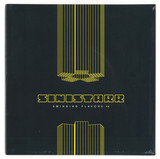
Swinging Flavors is BACK! After releasing material from names such as Simon Off aka Sun People, Moresounds, DJ Madd, Ticklish, Sully, Addison Groove, Itoa and Lynch Kingsley our 7' vinyl series devoted to Bass Culture and dancefloor vibes is back again with the the Sixth One aka BMRSF006. After having a Japan vs USA Chicago Footwork sound clash with DJ Fulltono and DJ Earl's 'Tribal Dancer', now it's time for an atlantic connection - in the name of Bass Music obviously.
On the A Side you'll find Sinistarr's '55555': the Detroit bass producer - with a 10yrs experience in sound design and recently appeared with an astonishing work on legendary dBridge label Exit Records - gives us a pure example of his sonic craziness with a minimal-but-high-impact work, with chopped vocal samples, magic flutes and heavy basses.On the B Side '55555' gets a full treatment by Philip D. Kick: Cosmic Bridge honcho Jim Coles - well known in the worldwide bass scene as Om Unit - surprisingly comes back with his iconic footwork moniker giving to the original vibes a more accentuate rave touch, with hyper speed drum patterns, amen breaks and piano notes.
Dilated Pupils is a collective group of likeminded friends home-based in the Netherlands. When forces are joined in one of their many studios each individual brings his own influences and styles to the table. Together they share a distinct flavor in productions and raw one-take jam sessions created with the use of analogue machines and often recorded on tape. Each of them have their own solo productions as well as other collaborations, but when united as Dilated Pupils they prefer to be known jointly as one entity with their own unique and distinguished sound. Since 2014 the group has developed an interesting and widespread discography with releases on labels such as Fear of Flying, Sol Asylum, Mode of Expression, Tabla, Music is Art, Dorcas, Make Sense and Mayak.
Following on from the release of FBA21 Collected Works 1996 -2017, which was released November 2017 Matthew Puffett decided to wrap up the project, with a handpicked selection of artists to remix key tracks from the compilation. Amongst these figures are some significant influences on Puffett`s early years The set includes Kirk Degiorgio, whose reworking of 'Cross Dissolve' reimagines the track in full machine mode, serving up a slab of driving techno for the main room. A fan since the early 90s, Kirk and Matt have been in contact over the years, culminating to this powerful re-creation. Steven Rutter (B12) has also reworked 'Cross Dissolve', but in contrast to Degiorgio, Rutter's mix brings out an almost abstracted, ambient mood, a characteristically expressive and textured piece from one of the leading figures in UK electronica. Hardway Bros, Sean Johnston (Andy Weatherall's partner in 'A Love From Outer Space) tackles 'Mourning', a piece of melancholic euphoria. In typical Johnston style, Sean slows it all down, bringing it to a mid-tempo Balearic vibe. A big influence on Matthew in the 1990s, Lee Grainge used to work at the infamous Fat Cat records. A renowned arbiter of sounds, Grainge turned Matt onto countless records from Detroit and beyond, which was crucial in shaping FBA's sound. Here, he remixes 'Diagram', in a manner reminiscent of classic dub techno, Basic Channel. Another influence on FBA's sound is former Eevo Lute Muzique boss from Eindhoven, Stefan Robbers. FBA recorded a mini album for EevoNext in 2009, and the pair team up again here to reinvent 'Machines Can Help'.
In ancient LDDLM times, BLDDLM even, Belgium could well have been the freaky house and ecstasy center of the world. If only we could remember all the lost hours... But after all, as the Brussel saying goes: 'it's Friday, tomorrow is Tuesday'.
At LDDLM, we try not to reminisce, that was just setting the mood.We are very happy to welcome ARTHUR JOHNSON in our non-fold, a young producer from Liege via Marseille and La Dame Noir. AJ is amongst those ever mutating artists, his u-turns slowly composing a real personality, and one fitting our contrarian attitude. In a way PERFECT STRANGER reminds us of a good 90's Farley/Heller remix, not so much camp Fire Island than almost sweaty late night trancer. We love those tracks that do not fit our ethos a priori but that we can't stop playing. COSMO VITELLI is a long time family friend and he beams up this stranger through the axis into some kind of romantic italo-german anthem.
BALLADA and SECRETARY DISCORDIA show a different side of AJ, a dub march echoing Dif Juz and a percussive machine funk number. We sincerely hope AJ keeps on straying for the best, his way being our way.
Following 2017's 'Path of Ruin', DJ Richard returns to Dial with his much-anticipated sophomore LP, 'Dies Iræ Xerox'. Undoubtedly one of the most distinctive and fully-formed electronic producers in recent memory, DJ Richard imprinted the sound of a bubbling US underground with his label, White Material, founded in 2012 alongside Young Male. His first solo LP for Dial, 2015's 'Grind', found DJ Richard delicately establishing a discipline between his East Coast noise heritage and a physical, emotive tradition of house music, mastered during an extended stay in Berlin. Now firmly settled once more in his hometown of Providence, 'Dies Iræ Xerox' is a personal and uncompromising journey that finds the Rhode Island native in reflective form, journeying without compromise into both his creative influences and personal psyche. In part adapting its title from the Latin hymn 'Dies irae', otherwise known as 'Day of Wrath', 'Dies Iræ Xerox' melds the physical and psychological aspects of DJ Richard's production ethos in sharper, more widescreen vision than before; the oceanic swells of ambience yet more powerful, and the rigid basslines sharper still. With the chaos of the Berlin club scene an increasingly distant memory, the album is enriched with a contemplative, even brittle tone, as informed by film soundtracks and literature as the pulse of city living. Still, this is new material from DJ Richard, a touring DJ as distinctive as any other to be found behind the decks at some of the world's finest clubs and festivals. On 'Dies Iræ Xerox', the artist finds the space to write 'the records I really want to play', and each suggests a template for genuine dancefloor transcendence, beginning with the electrifying 'Vanguard' . The sludgy yet sophisticated crawl of 'Tunnel Stalker' sets the tone for the menacing yet somehow melancholy EBM of 'In Broad Daylight', while the record draws to a breathless close with the affecting, drum machine lethargy of 'Gate of Roses'. Drawing little distinction between his more physically rousing material and searching soundscapes, 'Dies Iræ Xerox' instead finds a passage of catharsis throughout both. 'Dissolving World', the album's breathtaking centerpiece, is a choral feature hypnotically overwhelmed by walls of electronic feedback, forging a dramatic link between old ways and new. On the bold and near-beatless 'Ancestral Helm' and 'Final Mercy', DJ Richard seems to grant both music and raw emotion the ability to simply float in the air, brilliantly, poignantly unresolved. If 'Grind,' inspired by the weathered coastlines of Rhode Island, was a record concerning "the border between civilization and the ocean," then 'Dies Iræ Xerox' is an unapologetic follow-up concerning that between macabre obsessions and fear of death. Produced during a murky, transitional period, DJ Richard found himself particularly drawn to Medieval European art and mysticism, fascinated by depictions and philosophies of the antichrist and end-times. Greatly influencing the uncompromising, apocalyptic tone of the album, these investigations have created an engaging and personal vision of the 'Day of Wrath.'
Only one month after the release of their first ep on MT on May 2018, Vactrol Park continue surprising, this time with a full LP in the shape of 'Music from the Luminous Void'.The album sees VP delve much deeper into more atmospheric realms. Using modular synths and unexpected drum machine sequencing they leave the 4X4 beats behind in favor of off-world rhythms and ever growing bass. Starting with Drops's high frequency tension, laying on top of those heavy kick drums it keeps on growing and growing. From there it moves to the 'End of the party' groove that is Novikov's Notation, and its trippy monotonic rhythm. The A-side ends with the heavy sampled ambient track Macbeth, bringing forward that mesmerizing flute solo by Italian artist Luca Spagnoletti yet succeeding in avoiding the kitsch, and with a touch of class. The B-side delves even deeper into ambience and atmospheric muzak. Starting with Bells, that features again Spagnoletti on flute. Then we get into the real gems of the album - Anstruther and Glove. The first is a pure trip into modular psychedelia and repetitive jazzy-like drum rhythms, creating tension right from the start and plays with it throughout the track before decaying slowly into Glove, which is in sense both the catharsis and the decompression session of the album. Like a 2018 version of Vangelis, this track's soundscape will keep you dreaming with your eyes closed long after the album ends.
180g vinyl