The debut album from Addy Weitzman, ‘Light Months Will Fly Over Us’ explores new-wave, romantic pop and art rock with elegance and ambition, drawing from Weitzman’s scattered network of collaborators, as well as a “frighteningly vast” personal archive of compositions. Sequenced by Seth Troxler and released on his Slacker 85 label, it represents a pivot in musical direction for the imprint, and a showcase for the songwriting craft Weitzman honed as a member of cult electro duo Footprintz, and Montreal synth-pop projects The Beat Escape and Dawn to Dawn.
The title Light Months Will Fly Over Us is derived from a line in a poem by the Russian writer Anna Ahkmatova. Weitzman was immediately struck by its “hopefulness, its mystery… it gives the feeling of being suspended, hanging in a dream-like state”. This interpretation has been translated to the album, rich in memorable songwriting that nonetheless invites the listener to lean in further. Delicately mixed by engineer Pierre Guerineau, known for his work alongside Marie Davidson, each of the eight tracks gently interrogates life’s greater mysteries; fear, love and salvation, each defining and revealing the human soul.
Opener ‘End of The Line’ invites us into an immediately lush space of lounge lizard existentialism, soft brass and piano helping Weitzman introduce “where the journey begins and the fantasy dies”. Across orchestral arrangements arranged by Adam Wilcox, whose sensitive, ambitious compositions are weaved throughout the album, ‘Beyond The Speed of Life’ brings to mind the laments of Scott Walker. Navigating vulnerability via grandeur, Weitzman’s earnest vocals flourish in wide-eyed call-and-response with the object of a transcendent love affair.
Alongside collaborator, Richard Lamb, the next chapter of the LP plunges into contrasting machine-driven moods; the wry, bubbling ‘Entertainment Is All I Wanted (And I Found It)’ is imbued with the playfulness and experimentation of 80s electronic pioneers such as Fad Gadget, while the tougher, icier ‘Stranger To Your Kind’ shifts in a more instrumental direction, recalling Weitzman’s dancefloor experience, as well as contemporaries such as Matthew Dear.
Album centerpiece and striking first single ‘Running & Returning’ is the first of a suite of three tracks in collaboration with Weitzman’s The Beat Escape and Dawn to Dawn bandmate, Patrick Boivin. Blending lush saxophones and angular guitars with a wistful melodic touch and lyrics, its irresistible art-rock rhythm provides the foundation for one of Weitzman’s most involving vocal performances.
It’s followed by an anthem for existential absurdity: ‘Ice Cream Candle’ provides a driving acceptance that “the more and more you learn, the less you understand”; Weitzman submits to this uncertainty with equal grace on ‘No Man’s Land’, as baroque invocations of “words swept through the fields” and meeting “where the water lilies grow” give way to a blistering guitar solo, humbly riding hypnotic percussion.
For the compassionate finale of Light Months Will Fly Over Us, Weitzman narrates the experience of ‘Gabrielle’, a woman slipping between rooms between shuttered blinds in the towering city, “where cigarettes and roses fill the air.”
As lyrically delicate as it is musically ambitious, Light Months Will Fly Over Us is a sublime debut album, enriched with care, love and much-needed enchantment.
quête:machìna
- A1: A Necesssary Escape (Part 1) (2 15)
- A2: Strike | Machine (6 00)
- A3: First Steps Upward (1 58)
- A4: Members Of The Universe (3 11)
- A5: Human Deceleration (1 31)
- A6: Solid State Ricochet (2 31)
- A7: Echoes (5 47)
- B1: Atlas Imperial (5 45)
- B2: Artificial Insanity (5 55)
- B3: To Our Guided Voices (1 32)
- B4: A Necesssary Escape (Part 2) (8 07)
- B5: A Necesssary Escape (Part 3) (3 41)
Black Vinyl[21,43 €]
'A Necessary Escape' ist der Soundtrack zum demnächst erscheinenden Film 'Dakar: Race Against The Desert'. Die physischen Formate umfassen CD, Vinyl und eine limitierte Farbvinyl-Edition in Curacao-Blau. Es ist der vierte Album-Soundtrack von M83 und wurde in Frankreich und den USA von M83s Anthony Gonzalez zusammen mit den regelmäßigen M83-Mitwirkenden Joe Berry und Clement Libes aufgenommen. Der Film erscheint am 12. Mai digital bei Universal Pictures und feiert seine weltweite Kinopremiere am 26. Juni in der MK2 Bibliothèque in Paris. Unter der Regie des französischen Schauspielers und Regisseurs Jalil Lespert wird hier die weltberühmte Rallye Dakar begleitet - ein Event, das seit 45 Jahren die ultimative Bewährungsprobe für Belastbarkeit, Können und Ausdauer im Motorsport darstellt. Das 9.000 Kilometer lange Rennen dauert 14 strapaziöse Tage durch raues Wüstengelände. Mit beispiellosem Zugang taucht dieser Film in das härteste Autorennen der Welt ein. Begleitet wird dies von einem wunderbaren Score den Gonzalez perfekt auf den Film zugeschnitten hat. Ambient trifft auf sphärische Klangcollagen und ist damit der perfekte Ausgleich zu den im Film dokumentierten Strapazen um die berühmte Rallye. Nach dem fantastischen 'Fantasy'-Album von 2023 oder dem 2011er Klassiker 'Hurry Up, We're Dreaming' ein weiterer Geniestreich des französischen Sound-Magiers und seinem M83-Projekt!
The Australian master of the dark synth arts is back and – boy – he is out for blood.
We’ve been missing Marc Dwyer solo project Buzz Kull since his latest single Last In The Club from late 2019 and since back then we knew he was up to something. At first glimpse, the minimal wave days of We Were Lovers seem far away now that Marc has gone full Club Body Music with his upcoming new album, but there is a thread that binds Buzz Kull hits from the past such as Into The Void, Avoiding The Light and New Kind Of Cross with these ten new cuts: a thread of darkness proper to the most handsome man in the game and that’s here to stay.
Echoes of 90’s era Front 242 and Front Line Assembly will resonate from tracks like Fascination and Dead Inside; elements of early body music flirting with the dark side of British synthpop will rave from the grooves of Dancing with Machines and Man on the Beat, while late 80’s Belgian new beat cellar-like vibes rise from Do You See and Burn it to the Ground.
But Buzz Kull’s third full-length is not just about music subgenres we all know and love, it’s about a feeling that comes alive only with the dark and drives you through the small hours just to leave you drained and filled at once. The creature of the night is on the loose, the sticky dancefloor its natural habitat, its lust for the upside-down world of the club can’t be cured.
Mexican enfant extraordinaire Iñigo Vontier is rolling in with his debut EP for Feines Tier and it’s a match made in heaven. Just judging on the name alone, as he seems to be from some kind of royal Tier family descent. But enough with the mind-numbingly bad puns and on to some brain-meltingly good music.
Rolling. Everything’s rolling. Zongato is rolling. We don’t know who or what a Zongato is (a Google search just led to a Twitch streamer with that name and 0 followers), but they are definitely rolling. It’s got this special combination of straight and uncompromising beat and bass paired with psychedelic synth sirens floating around your head that somehow only the Mexicans really know how to nail.
Astrolo is rolling. Like a well-oiled machine. Well, maybe like a not so well-oiled machine, one that’s shrieking and creaking, but has been running since forever and reliably will do so until we’re all gone from this Earth.
If you ask Google Translate, Mucha Onda means „very cool“ in English, „molto bello“ in Italian or „valde frigidus“ in Latin and there is nothing more to add to that.
The psychedelics are back (were they ever gone?) and kick in in full swing on Hedonist Lizard. A dangerous cocktail of high-proof alcoholic drum and bass patterns paired with some sugary spicy herbals of unknown origin, better not down it in one go. You were warned.
On The Sounds Are Good, the sounds are good indeed! And rolling.
- A1: Pharoah Jones
- A2: Ghost Gospel
- A3: Ill Feeling
- A4: Capital Punishment
- A5: Do Not Adjust
- A6: Cool Green Trees
- A7: Chill Scratch
- A8: Poisonous Fumes
- A9: Welcome Aboard The Starship
- B1: Keep On Runnin
- B2: Sounds Impossible
- B3: Painted Faces
- B4: The Knew Style
- B5: Chicken Wing Blues Sauce
- B6: Kool Breeze
- B7: Sexx Bullets
- B8: Soul Child
- B9: Take Off Runnin
- B10: Centurian
- B11: Bozack
- B12: Church
- B13: Splash One
- B14: Hank
- B15: 73 Goatee
"Chasing the funky symphonies that filled my head and my dreams..."
December 25th, 2023 - an Instagram post. Stimulator Jones shared half a dozen FIRE tracks from his beat tape archive. We were immediately drawn to the rough hewn boom bap.
"I'd release that", Rob commented.
Hours of material was shared and the result is this: Cool Green Trees (1999-2005). A collection of beats and loops Stimulator Jones created between the ages of 14-20 at home in his basement, bedroom and computer room in Roanoke, Virginia.
You will not believe the profound soulful genius contained within these naive schoolboy melodies.
December 25th, 1998 - 25 years ago to the day and his much-coveted Yamaha SU10 sampler was finally bestowed upon young Stimmy AKA Sam Lunsford: "I immediately hooked up a CD Walkman to the input jack and looped the beginning two bars of Grover Washington Jr.'s "Mercy Mercy Me". I don't know what exactly was so thrilling about hearing two measures of music repeating over and over but it was so infectious and hypnotizing and enthralling to me. I'll never forget that ecstatic rush of making my first loop - an uncontrollable, gleeful smile plastered all over my face." When you hear the pocket breakbeat symphonies featured here on Cool Green Trees, you'll feel the same sense of frisson.
In the wake of his Stones Throw breakthrough - Exotic Worlds & Master Treasures - Stimulator Jones was pegged by many as a 90s throwback artist. However, he literally IS a 90s artist. He's been recording music most of his life and he's now 40. He created the bulk of Cool Green Trees as a teenager. Everything before 2004 was recorded when Sam was still in school. He was in 8th grade when he made the 1999 tracks - he didn't even have his learner's permit. This album is a snapshot of a young man in a simpler time. Things were still mysterious back then and he was flying blind, relying on his ears and having to figure things out for himself: "I had no road map for becoming a beatmaker. I have been collecting music since I was a kid, I am a lifelong digger and seeker of cool and interesting sounds. I was there in the golden age of Hip Hop, and while I may have been a suburban white kid in Roanoke, Virginia, I was tuned in and I bought so many classic albums when they came out. I was attracted to Hip Hop because of the musical and poetic quality. I was hypnotized by the rhythms, partially because I was a drummer. I didn't brag about collecting my breakbeat records or making beats - it was something I did in isolation. It wasn't something I generally wanted to bring attention to and it didn't really score me any cool points. I certainly wasn't flexing on social media about it."
Hell, he can do that now!
Opener "Pharoah Jones" was inspired by Yesterday's New Quintet and Madlib's ability to capture that classic 70s sound whilst playing all the instruments. Sam created this one stoned afternoon by laying down a 2 bar loop and a shaker loop on his Yamaha SU700 sampler. He hung a microphone from the ceiling and played his Yamaha Stage Custom drum kit over the top before adding ender Rhodes and playing his dad's Selmer tenor sax through an Electro Harmonix Memory Man echo pedal. Yes! Up next, "Ghost Gospel" utilises a dope loop from a gospel record and adds some soul-funk drums overtop, whilst working that filter knob. Says Sam: "The loop reminded me of something Ghostface would rap over. The sample was in 3/4 waltz time but I flipped it for a 4/4 groove, a technique I picked up from RZA. "Ill Feeling" uses sped-up pieces from a dusty old funk record and putting them over a classic NOLA drum loop; gain chopping up a slow, bluesy 3/4 time signature and bending it to a 4/4 groove. Classy shit. "Capital Punishment" features drums tapped in live, inspired by MF Doom's Special Herbs series. "Do Not Adjust" consists loops found on a compilation of 70s French music at Happy's Flea Market, a classic Roanoke digging spot.
The sublime, evocative title track, "Cool Green Trees" was created when Sam was still living at home. He dumped samples off his SU10 into the family desktop and arranged them in a demo version of Pro Tools: "This track was sort of my ode to the DJ Shadow style of sample based production. Super spacey, slow, and moody. The heavily filtered drums were inspired by Alec Empire's 'Low on Ice' album. I later added some scratches and sounds from a Spider Man storybook record." "Chill Scratch" snags the final bit of a bossanova record and pairs it with a drum loop before adding experimental scratching run through an Electro Harmonix Memory Man echo pedal. "Poisonous Fumes" was made using a sampler, mixer and a turntable; a kind of mixtape beat collage with added scratches and sounds from various records. Using dialogue from superhero records was a nod to Madlib. "Welcome Aboard The Starship" is dark, downtempo trip-hop with a spooky bent. Sam paired a slow, hard drum loop with a guitar sample grabbed off a psychedelic rock record. To finish, he added various backwards sounds and weird atmospheric effects and a little scratching. Swoon.
Side B opens with "Keep On Runnin", made on a borrowed Roland SP202 sampler. Having always loved the sound of the Lo-Fi filter on those machines, reminiscent of the Emu SP1200, Sam always imagined Del or another of the Hieroglyphics crew rapping over this beat. You can certainly hear why. "Sounds Impossible" sees Sam experimenting with layering multiple kick samples at different volumes to create patterns similar to those heard by Showbiz and Lord Finesse during their God-level 1995 period. "Painted Faces" was made by chopping up a REDACTED record which he had gotten from Happy's Flea Market and paired it with a REDACTED drum loop. By the time Sam recorded "The Knew Style", he had acquired a shitty old 1960s portable turntable off eBay. It didn't function properly when he bought it but his brother opened it up, cleaned it out and got it working: "I remember he told me that there was a bunch of sand inside of it when he opened it up, as if its previous owner had taken it to the beach. I would take that turntable on my Happy's Flea Market digs so I could preview records...that's how I found this loop."
"Chicken Wing Blues Sauce" loops up a classic blues joint and pairs it with some REDACTED drums. A bit of filtering and arranging et voilà! "Kool Breeze", from 1999, is one of Sam's oldest surviving beats, as is "Sexx Bullets". The Roots sampled the same record, leaving Sam frustrated yet vindicated. "Soul Child" was an early SU10 creation, looping a dusty old Soul Children 45 and pairing it with 70s rock drum loops to great effect. "Take Off Runnin" was another loop found digging with a portable turntable. Paired with some boom bap drums it makes for a hypnotic head-nod groove. "Centurian" was intended to be a little beat interlude a la Pete Rock. The sample is from a sun-dappled soft-psych record and it's paired with a Robin Trower drum loop that just happens to fit perfectly. Sometimes you slap things together kind of haphazardly and magic happens. "Bozack" was the first beat Sam made using Pro Tools, his first foray into using chopped sounds instead of loops, an exciting new world. "Church" is beat interlude using a Phil Upchurch loop with the "Long Red" drums - a favourite break of Dilla et al. Sam was really on a tear in late 2004, probably because he was unemployed and phoneless and able to just make beats all day. He made "Splash One" on a borrowed Yamaha SU700 and again was experimenting with tapping the drums in live with his fingers, instead of using a loop or sequenced pattern. Channeling 9th Wonder, Sam used a water splash sound effect from a Batman record as a percussive element, hence the title (also a 13th Floor Elevators reference). The main loop is a backwards portion of one of his favourite Roy Ayers songs.
"Hank" is another fun little beat interlude thing, created on a borrowed Roland SP202 sampler with the fantastic Lo-Fi effect that resembled the Emu SP1200 at a fraction of the price. "73 goatee", from 99, is another of his oldest surviving beats, created in his bedroom with his Yamaha SU10 and his brother's Vestax MR-300 4-track recorder: "This one will always feel special. I can remember having a feeling all the way back then on the night that I created it that this was a solid beat with a catchy loop. There was something in the Fender Rhodes melody that resonated with me emotionally, and I had never heard a producer sample that portion before. I felt like I had found my own unique sound, my own unique loop. It came from an Ahmad Jamal '73. I actually even recorded myself rapping and scratching over this beat way back then, I still have that version in all its imperfect sloppy glory."
Sam explains just how much these tracks mean to him: "They all have immense historical and sentimental value and I'm proud of them. These beats come from an innocent, simple time when I was just figuring out how to craft these sounds. They're something very personal to me. They are the initial part of a journey that I really was taking *alone*. There was no YouTube. I couldn't Google shit. I didn't even know any other beatmakers, producers or DJs in my town that could teach me anything. It was always just me, alone, in a room with some equipment - chasing the funky symphonies that filled my head and my dreams. What I was doing wasn't cool. Most of my peers thought I was a weirdo and couldn't care less. Creating these sounds was an anti-social endeavour. In a sense, I felt like it was me against the world, and all I had to instruct and assist me were the recordings produced by my heroes - RZA, DJ Premier, Erick Sermon, Beatminerz, Showbiz, Diamond D, Beatnuts, Prince Paul, The Bomb Squad, Pete Rock, Q-Tip, E-Swift, Mista Lawnge, DJ Shadow, Cut Chemist, Peanut Butter Wolf, El-P and so many more...I dedicate this collection to them, and to my older brother Joe who has always been a musical and technical guiding light for me.
This was a time before every kid was a self-described producer and beatmaker, before everyone had a DAW, before Kanye and "chipmunk soul", before Red Bull beat battles, before there was any social media beyond chat rooms and AOL Instant Messenger, before Soundcloud, before SP-404 mania, before lo-fi beats to study to, before Splice, before targeted ads for MIDI chord packs, etc. In 99 when I told people that I had a sampler and made beats I was mostly met with bewildered confusion and indifference. Kids and adults alike would wonder why I got this weird machine for Christmas instead of something worthwhile like a Playstation or a mountain bike or even a guitar for that matter because at least that could be used to make "real music". Back then, sampling was still not widely respected as an art form - it was seen as lazy, talentless and unoriginal at best and outright criminal theft at worst. I had gotten respect for playing drums and guitar and things of that nature but this was a step in the wrong direction in the eyes of many."
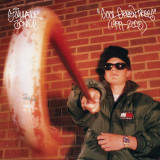
The cover photo is a picture of Sam standing on his back porch in the latter part of 1998, just before he got his first sampler. He was 13 years old, in 8th grade. His dad took the picture with his 35mm film camera: "I actually wanted to be pointing my dad's .22 pistol at the camera lens but he wouldn't let me. He gave me an old walking cane to use instead. The Tommy Hilfiger puffer jacket came from the lost and found at William Fleming High School where my mom worked as a secretary. I was thrilled when she brought it home because we never spent money on expensive name brand clothing like that - we were for the most part strictly a sale rack, bargain bin, thrift store, yard sale, flea market kind of family when it came to clothes. My watch is some cheap off-brand fake gold department store watch." Mastering for this vinyl edition was overseen by Be With regular Simon Francis and it was cut by the esteemed Cicely Balston at Abbey Road Studios to be pressed in the Netherlands by Record Industry.
- A1: Nous Sommes
- A2: Nana Electronique
- A3: L'eurasienne (Alternat. Cover)
- A4: Amazone
- A5: Bobby Bonbek (Alternat. Cover)
- A6: Chapeau Volant (Alternat. Cover)
- A7: Sexy, Absolutely Nice
- A8: Une Petite Plume
- B1: Gogol Le Mongol
- B2: Funky Cat
- B3: La Machine A Rêver (Alternat. Cover)
- B4: Alcool (Alternat. Cover)
- B5: La Mort
- B6: Le Fils De L'homme
- B7: Cobaye
- A1: Tha Playah– Why So Serious?
- A2: Tha Playah– The Rule Of Cool (Art Of Fighters Remix)
- A3: Tha Playah– Bounce Back
- A4: Tha Playah Vs Dj Mad Dog– Enter The Time Machine (Tha Playah Mix)
- B1: Tha Playah– Bling Bling (Dj D Vs Nitrogenetics Remix)
- B2: Tha Playah With Neophyte– Still Nr 1
- B3: Tha Playah– Dicks, Pussy’s & Assholes
- B4: Tha Playah With Evil Activities– Imperial
- C1: Tha Playah With Tommyknocker– The Easy Way
- C2: Tha Playah With Neophyte– I’m In A Nightmare
- C3: Neophyte Records All Stars– Adrenaline
- D1: Tha Playah– Walking The Line
- D2: Tha Playah– Mastah Of Shock (Angerfist Remix)
- D3: Tha Playah With Nosferatu– Requiem Of The Fallen
- D4: Tha Playah With Neophyte & Mc Alee– The Ultimate Project
- E1: Tha Playah– Hit ‘Em (Evil Activities Vs The Viper Remix)
- E2: Tha Playah With Neophyte– Negative
- E3: Tha Playah With Mc Alee– Always Right
- F1: Tha Playah With Nexes– The One
- F2: Tha Playah– Call My Name
- F3: Tha Playah With Neophyte– Great Success!
- F4: Tha Playah– My Misery
Black Vinyl[20,59 €]
Inverted Hyperspace Splatter Vinyl[19,96 €]
Cassette[14,08 €]
Dummy is a rock band from Los Angeles comprised of Alex Ewell, Emma Maatman, Nathan O'Dell, and Joe Trainor. Their debut full-length "Mandatory Enjoyment" (Trouble in Mind) arrived in late 2021, becoming one of the year 's sleeper hits and garnering praise from Pitchfork, Stereogum, and more. Coming out of lockdown, the band spent two years touring in support of the record, and it is this transformational experience that pulses through "Free Energy ", the exhilarating follow-up to "Mandatory Enjoyment". A creatively restless band, Dummy (Ewell: drums, synths, bass; Maatman: vocals, synths, organ; O'Dell: vocals, guitar, organ; Trainor: guitar, bass, synths) wanted to get harder, dancier, more psychedelic for their next record. This meant applying explorative potentials of electronic textures to the elemental qualities of rock i.e. more vocal loops, sampling, more crazy rhythms, and playful synths - but make those samples of Trainor 's guitar, let Maatman sing bolder, experiment with using cold mechanical elements in warm and sparkly ways, and lean harder into traditional-yet-still-awesome forms of rock guitar experimentation like feedbackThe result is a record that celebrates music's ability to move the body, whether that be through a teeth-rattling wall of MBV-esque noise, a sticky pop chorus, or a joyous drum machine_or, if you're Dummy, maybe all of them in the same song. Pop music has always been a big part of Dummy's sound and it manifests in different ways all over Free Energy: the bubbly synth sequence made with a Korg EM1 popping all over "Nullspace," the revved-up drone-pop inspired by second and third wave Dunedin Sound bands like Look Blue Go Purple and Dadamah, and the motorik beat powering "Nine Clean Nails," perhaps the most confidently pop song Dummy has ever recorded and one that exemplifies "Free Energy "'s balancing of live performance intensity with electronic augmentations, the dancier rhythmic elements created out of a drum loop recorded by Ewell while the bridge recalls the Feelies with call-and-response guitars from O'Dell and expressive vocals from Maatman. "Free Energy " also features guest appearances from Oakland-based saxophonist and electroacoustic artist Cole Pulice (Moon Glyph) contributes saxophone and wind synths and Jen Powers of Powers / Rolin Duo (Astral Editions, Feeding Tube Records).
- A1: Prologue -Determination
- A2: Let's Play A Game God
- A3: If, I Win
- A4: A Cruel Question
- A5: Fallen Confession
- A6: Oh!!!
- A7: A Sign Of The Great War
- A8: Now, Let The Games Begin
- A9: Please Let Me Stay With You Forever
- B1: The True Target
- B2: Good Evening, Scrap
- B3: Really, I Love You
- B4: Stale Mate -Final Battle
- B5: Let's Play Again ~The Light Of A New World
Welcome to the ancient Disboard where the 10 rules of the game did not yet exist. War consumes the world, splits the heavens, destroys the stars and even threatens the human race. In the midst of this chaos, a young man named Riku tries to lead humanity towards a tomorrow he firmly believes in. One day, in the ruins of an Elven city, he finds Schwi, an "ex-machina" android who wishes to understand the heart of Man. Their meeting will change the course of history...
Music composed by Yoshiaki Fujisawa, arranger and composer. He is a member of the group Franz Maxwell I. He worked on the anime of LoveLive!, Issekai Cheat Magician and GATE.
He knew, through his music, to transport us in the universe at the origin of this "Issekai" to make us feel all the emotion of a meeting between two completely different beings.
- 1: Roar Like Thunder
- 2: When The Sun Goes Down
- 3: Come On
- 4: Talking Bout Sex
- 5: Blackout
- 6: I Go Boom
- 7: Set It Free
- 8: Hello Goodbye
- 9: Machine Gun
- 10: Let It Burn
Buckcherry will release their 11th studio album Roar Like Thunder on June 13th, 2025. The 10-track record was produced by Marti Frederiksen, who previously produced the band's 4th album, Black Butterfly, and co-wrote one of their biggest hits "Sorry." Frederiksen also co-wrote the songs on this album with vocalist Josh Todd and guitarist Stevie D. The album was recorded in Sienna Studios in Nashville in 2024. Says Josh about the new album, “Roar Like Thunder is going to lift your spirits, shake you up, and remind you why the hell you started listening to rock ‘n’ roll!”
- 1: Stay Tuned
- 2: Monster Truck
- 3: Animal
- 4: Be A Sport
- 5: Meg
- 6: Lafayette
- 7: And What?
- 8: Precious Stones
- 9: All In
Red Vinyl[26,68 €]
Rock’n’roll revivalists Split Dogs are not here to make 15 second viral videos, they’re not here to sell you a lifestyle, they’re here to destroy. Born from the frustration of seeing music become commodified and soulless, vocalist Harry Atkins and guitarist Mil Martinez had the idea to form a band as far back as 2015, with the name ‘Split Dogs’ pulled from the classic zombie film ‘Return of the Living Dead’.
In South London, a young Martinez would hear Status Quo, Bachman Turner Overdrive and Dire Straits on the car radio while his father drove him to school. At home he would invade his older brothers’ record collection which leaned towards the harder sounds of punk and heavy metal. Meanwhile in the Black Country, Harry’s mother instilled a love of Northern Soul, Slade and rock’n’roll, with stories of nights out at Club Lafayette and family singalongs at home. According to Martinez, “Our sound is a culmination of all those early influences and, to be honest, it really shows.”
It wasn’t until 2022 that Split Dogs officially arrived on the scene with bass player Suez Boyle joining the band in 2023. Already a prominent figure in the queer punk scene, Suez played the first ever Rebellion Festival at the tender age of 16 with her band The Walking Abortions. Up until that point, drummer Chris Hugall, an old friend of Martinez and former member of ska punks Mouthwash (signed to Rancid’s label Hellcat back in the day), was only on hand to help design artwork. It wasn’t until 2024 Hugall joined the band full time, cementing the current line-up.
The raucous live shows and infectious lyrics saw the four-piece make a name for themselves among the punks of Bristol, a scene that has always welcomed LGBTQ+ and marginalised people. As word spread, so did the gigging, and soon enough Split Dogs were playing to sold out rooms in mainland Europe, eventually grabbing the attention of UK label Venn Records (Gallows, Bob Vylan, High Vis). ‘Here to Destroy’ was recorded over three days at Middle Farm Studios by producer Peter Miles. All tracks were laid straight to a 16 track reel-to-reel tape machine, no autotune, no effects pedals, no computers. To add to the music’s authenticity, the album was recorded live, with Harry singing along in a vocal booth. No cutting and pasting, just nailing takes. According to Martinez, “It was a blast! We fully immersed ourselves, sleeping in a small apartment below the studio, cooking meals and listening to Pete’s extensive record collection”. While the final result is a step away from Split Dogs early punk sound, the attitude is still there in droves. “We wanted the album to have a raw bones feel,” Martinez tells us, “real 1970s rock’n’roll!”. Harry channels the spirit of Motörhead’s Lemmy Kilmister as they tear through hook after hook, singing about the Northern Soul clubs their mother once frequented (‘Lafayette’), the Orwellian nightmare we’re heading for (“Stay Tuned”) and a touching homage to British working class culture (“And What?”). As the album title makes clear, Split Dogs are here to destroy, but they’re also here to rebuild and remind us of music’s essence. “We’re not beholden to the digital age, we don’t want to get famous on social media, we just want to show the world that rock’n’roll is alive and well”.
Belgian label Music Man Records presents Boccaccio Life 1987-1993, a new compilation offering a fresh perspective on the legacy of the iconic Belgian club Boccaccio - often associated with the short-lived New Beat movement. The 40-track compilation highlights the raw and futuristic early house and techno sounds that were heard in the pioneering club.
Located in rural Destelbergen (Belgium), just a stone's throw from Ghent, Boccaccio has secured its place among legendary venues like Paradise Garage in New York and The Haçienda in Manchester. Its bold fusion of emerging electronic genres such as New Beat, Acid, House, and Techno was way ahead of its time, drawing music lovers and clubbers from across Belgium and beyond. Sundays at Boccaccio were unlike anywhere else-offering sounds you couldn't hear anywhere else.
Boccaccio Life 1987-1993 is carefully curated by resident DJ Olivier Pieters and club regular Stefaan Vandenberghe, standing as the ultimate testament to a club that was more than just a venue. For those who experienced it, it was a community - a way of life. Hence the club's full name: Boccaccio Life.
This compilation stands as a testament to an innovative time in electronic music, capturing the raw, futuristic sounds of early house and techno. It sheds light on another side of Boccaccio, one that goes far beyond the short-lived New Beat scene. A carefully curated selection of 40 tracks, resonating with those who were there by offering familiar classics, while also reaching a new generation-those who never experienced it firsthand.
With tracks from Blake Baxter, Virgo, Frankie Knuckles, Tyree, and A GuyCalled Gerald, the unmistakable influence of black American pioneers is clear-the originators of the first analog house and techno sounds. On the other hand, UK sound innovators such as The Orb and LFO bring both sharp textures and rough breakbeats to the table.
Club staple tracks include dreamy excursions from Roger Sanchez under his Egotrip moniker, the relentless basement house of Circus Bells by Robert Armani on Dance Mania, an uplifting take on a hip-house cut from The D.O.C. (Portrait of A Masterpiece in the CJ Ed-Did-It Mix), a timeless remix of UK Formation's Age of Chance from 1994, and an alternate take on The Tape by Boccaccio club regular and Belgian producer Frank De Wulf, taken from his B-Sides project.
While not always the obvious hits, these tracks have gracefully withstood the test of time, and were exclusive to Sundays at Boccaccio. Now, they are finally available to experience together in one collection,offering a timeless snapshot of a unique era.
Eight years ago exactly, in April 2017, the Australian soon-to-be dark synth maestro Buzz Kull released his first full-length album Chroma via Burning Rose imprint.
The seminal album is a mass of jagged synth lines and pounding drum machines, a testament to Marc Dwyer’s personal sonic exploration over time. Each song on Chroma transcends the traditional archetype of darkwave by pushing pop sensibilities, focusing on different emotional states and boundaries. Since his debut, Dwyer has given the world tewo more album tackled multiple tours abroad, and continues to remain an elusive but omnipresent figurehead of goth electronics global underground.
With this dark gem being out of print for years now, it was time to bring it to life!
New run of 500 on black vinyl LP housed in reverse board jackets.
2025 Repress
A tale of paramount love for machines and the inextinguishable power of subjugation that lies in these button-studded boxes teeming with cabled bowels that feel so intimidating to the uninitiated, Italo Brutalo's longed-for debut album "Heartware" is a 12-track voyage across 25 years of intense synth collecting, fiddling,
composing and endless loving for audio synthesis and the art of how robots make human bodies jack.
Throughout the twelve cuts that compose "Heartware", a feeling of retro-gazing, candidly playful glee prevails. Looking right in the eye of the era when dazzling flipper visuals and static-filled VHS glitches
reigned supreme, Italo Brutalo invites us to witness first-hand his own textbook smorgasbord of fast-wheeling arpeggios and vocodized hoodoo ("Heartware", "Reach Horizon"), dystopian digital sunsets by the beach ("I Feel Lonely"), early hip-hop-informed whackin' n' thumpin' ("Analog Bars") and the slo but hard churn of a robot heist score ("Nobody Moves").
A lush tapestry of woozy exotic pads set in contrast with a deft and aggro drum programming ("As Above So Below"), followed by a new-beat oriented hammer-drop that shall leave no raver unscathed ("Heat of the Knight"), Italo Brutalo shifts the scope to radical effect whilst maintaining that cohesive headspace flush with the iconic 80s-to-90s-sourced assets. The hardware used in the making of "Heartware" is obviously the star here, and the inner sleeve pays tribute to that: the ideas behind the album have been there waiting to find their way out for over twenty years!
From adrenalin-boosting fractals of keyboard razzle-dazzle ("Chemical Element") to straight out pumping EBM primed for hi-octane mosh pits down the basement ("You Are Welcome"), via polyrhytmic percs-driven assaults and sizzling hot synth-smithery ("Into a Sampler"), the pressure levels never falter. Yet, Italo Brutalo sure knows how to weave further oneiric, softer narratives for your mind to frolic in unhindered ("Dream Machine") and rounds it all off with a total, space-opera'esque epic bound to have you spinning out of orbit into the great unknown ("Eternia").
"Heartware" is released in a neat double-vinyl gatefold package presenting the concept and machines involved in its making, including a twelve-page booklet featuring Italo Brutalo's key pieces of gear.
- A1: Bilie Eilish – Birds Of A Feather
- A2: Chappell Roan – Good Luck, Babe!
- A3: Djo – End Of Beginning
- A4: Hozier – Too Sweet
- A5: Linkin Park – The Emptiness Machine
- A6: The Weeknd – Dancing In The Flames
- B1: Sabrina Carpenter – Espresso
- B2: Post Malone Feat Morgan Wallen – I Had Some Help
- B3: Dasha – Austin
- B4: Mark Ambor – Belong Together
- B5: Coldplay – Feelslikeimfallinginlove
- B6: Myles Smith – Stargazing
C1 | Meduza, Onerepublic, Leony – Fire (Official Uefa Euro 2024 Song)
C2 | Ofenbach Feat Norma Jean Martine – Overdrive
C3 | Kygo, Ava Max – Whatever
C4 | Felix Jaehn & Leony – Waking Up
C5 | Jaxomy X Agatino Romero X Raffaella Carrà – Pedro
C6 | Artemas – I Like The Way You Kissed Me
D1 | Michael Marcagi – Scared To Start
D2 | Cyril – Stumblin' In
D3 | Ariana Grande – Yes, And?
D4 | Jack Harlow – Lovin On Me
D5 | Tate Mcrae – Greedy
D6 | Natasha Bedingfield – Unwritten
E3 | Benson Boone – Beautiful Things
E4 | Teddy Swims – Lose Control
E5 | Sabrina Carpenter – Taste
E6 | Noah Kahan – Stick Season
F1 | Justin Timberlake – Selfish
F2 | Shawn Mendes – Why Why Why
F3 | Ariana Grande – We Can't Be Friends (Wait For Your Love)
F4 | Purple Disco Machine & Benjamin Ingrosso Feat Nile Rodgers & Shenseea) – Honey Boy
F5 | Lost Frequencies, Tom Odell – Black Friday (Pretty Like The Sun)
F6 | Hugel, Topic, Arash Feat Daecolm – I Adore You
G1 | David Guetta & Onerepublic – I Don't Wanna Wait
G2 | Karol G – Si Antes Te Hubiera Conocido
G3 | Fourty & Bausa – Vempa (Frx202445570)
G4 | Sampagne, Badchieff, Cro – Tempo
G5 | Billie Eilish – Lunch
G6 | Kendrick Lamar – Not Like Us
H1 | Zartmann, Ski Aggu, Dauer – Wie Du Manchmal Fehlst
H2 | Soffie – Für Immer Frühling
H3 | Sdp, Sido, Esther Graf – Mama Hat Gesagt
H4 | Nina Chuba – Nina
H5 | Luciano X Jazeek – Starboy
H6 | Shirin David – Bauch Beine Po
E1 | Lady Gaga & Bruno Mars – Die With A Smile
E2 | Gracie Abrams – I Love You, I'm Sorry
Bevor sich das Jahr 2024 dem Ende neigt, erscheint mit der „BRAVO – The Hits 2024“ der alljährlich
beliebte Jahresrückblick voller Hits und Chartstürmer. Ganz nach dem Motto „End Of Beginning“ vereint das Album von Anfang bis Ende die erfolgreichsten Songs und musikalischen Highlights des Jahres 2024.
Wenn Chappell Roan „Good Luck, Babe!” wünscht, Sabrina Carpenter „Espresso“ trinkt, The Weeknd in
den Flammen tanzt und MEDUZA, OneRepublic und Leony on „Fire” sind, kann das nur eines bedeuten:
Die „BRAVO - The Hits 2024“ steht in den Startlöchern und versorgt uns mit den größten Hits und beliebtesten Singles. Mit dabei sind internationale Bands und Künstler*innen wie Billie Eilish, Linkin Park,
Hozier, Coldplay, Justin Timberlake, Ariana Grande sowie deutsche Newcomer und Stars wie Shirin David,
Zartmann oder Nina Chuba.
Das Besondere dieses Jahr: Die beliebte Hit-Compilation erscheint erstmals auch limitiert als 4LP. „BRAVO
– The Hits 2024“ ab 08.11. als 2CD & Download und pünktlich zum Nikolaus als 4LP erhältlich!
DJ Sodeyama returns to Sound Of Vast under his The People In Fog guise this June with the nine track 'Too Much Knobs And Cables' LP.
Over the past three decades DJ Sodeyama has been a staple in Japan's underground and beyond across the globe as a DJ and releasing material under his own name via the likes of Radio Slaves' Rekids, Dynamic Reflection, Nina Kraviz' трип and more. Here though, he makes a welcome return under his The People In Fog alias to Tokyo's Sound Of Vast, the platform that's played host to all of his material under this alias as well as others like The Mole, Shinichiro Yokota, San Proper and more.
Across the nine-track 'Too Much Knobs And Cables' LP, The People In Fog once again radiantly showcases his depth and understanding of true underground sounds. From the classic Deep House aesthetic of opener 'Red Morning', 'CC Love' and 'New Life' to more classic Chicago House inspired cuts like 'Animal Kingdom', 'Jack Out' and filtered Disco house jams like 'Dance To The Air', 'New Life' and 'Miraval'.
Sodeyama also dives deeper beyond House once again in true long player fashion to deliver the unique 80's tinged, funk-infused and vintage synth/drum machine laced 'Night Driver' and the cinematic closing piece 'Sun Moon Lake', which leans into a Balearic leaning sonic world via drifting guitar melodies, arpeggios, acid licks and a crunchy rhythm section.
ROTCIV has been active since 1996, shaping raves and clubs in the underground queer electronic music scene in his native Brazil. Since 2010 in Berlin’s most iconic clubs like Panorama Bar, Cocktail D'amore or Sisyphos. His participation on renowned labels showcase his elaborate sound from Permanent Vacation, Ostgut Ton, Correpondant and Ombra International. As the founder of Mister Mistery, he blends Acid, Disco, House, and Electro with a contemporary edge. Now, for Element of Impact’s second release, ROTCIV delivers a powerful fusion of Electro, EBM, and Techno, pushing boundaries with his distinct style.
- A1: Patina Shift
- A2: Blistex
- A3: Rust Halo
- A4-: Lesio
- B1: Sightjacker Ft. Visio
- B2: Here Used To Be A Star
- B3: Spume (Formerly An Icefield)
- B4: Hypnoxia
- C1: Astral Trepidation Ft Jiyoung Wi
- C2: Spotshadowsphere
- C3: Cable Eater
- C4: Velvet Myst Ft. Heith
- D1: Nerveghost
- D2: Relaxus
- D3: L’ Inaperçu Nous Traverse Ft. Bernardino Femminielli And Habib Bardi
Corrosiv, the sophomore album from Orchestroll, reveals the duo at their most mature and vulnerable. Originally conceived as a reflection on hybridity and bastardization, the album deploys New Age and ambient compositional tropes as a launchpad, exposing their trite sanctity to the realities of corrosion. Having come of age in the 1970s and 1980s, the New Age movement perdures today as a domain of contradictions; its promise of transcendence riddled with the very commercialized dogma from which its adherents claim to flee. Healing modalities such as reiki, crystal therapy, and sound baths are simultaneously pathways to solace and sites of exploitation; their sonic counterparts—ethereal synth pads, shimmering textures, celestial drones—claim to facilitate meditation and enlightenment while devolving into empty signifiers of vitality. With Corrosiv, Orchestroll displays neither reverence nor disdain toward New Age: they exhume it instead, revealing the saccharine effervescence and commodified murk undergirding its aesthetics. The result is intoxicating—disquieting.
Born from a two-week residency at EMS Studios and expanded through a performance at MUTEK Montreal’s 25th anniversary, Corrosiv has since outgrown its original conceptual nucleus, taking on a broader scope. Its inquiry into New Age ideology’s voided rhetoric and aesthetic mysticism now informs a broader interrogation of cultural mediocrity, anti-authoritarianism, gatekeeping, music industry toxicity, and the crumbling edifice of late capitalism and techno-feudalism—all the mechanisms by which meaning is stripped from ceremony, and once-potent forms of knowledge are subsumed into the machinery of economic extraction, severed from their original essence, and transformed into hollow simulacra. Corrosiv distills these themes through a loose narrative: a soul, fixated on wellness as dictated by cosmetic economism, becomes ensnared in an endless afterlife, unable to transcend and shed its dilapidated consciousness.
Framed as an act of audio dissolution, the album thus engages in an alchemical process, whereby complex waveshaping, morphing synthesis, and distortion enact a ritual of fragmentation. There is also friction: between the rigid, mechanical imposition of systematized order and the untamed, chaotic force of organic metamorphosis. Here corrosion and confinement are not solely conceptual motifs; they are enacted in real time, sculpting the album’s terrain. Scraping, tarnishing, degradation—the languid wear of form and substance—become instruments in their own right: buffing as abrasion, entrapment as transformation, corrosion as a means of reconfiguration. The ‘protagonist,’ if there must be one, is the listener, caught within the throes of structural determinism and the potential for emancipation, unable to pass into something greater as the specters of collapsed futures accumulate in the margins.
Corrosiv extends its reach through collaborations with familiar voices: Heith (PAN), VISIO (Haunter), Femminielli (Drowned by Locals), Habib Bardi (Interzone), and Jiyoung Wi (Enmossed, Psychic Liberation, Doyenne) each leave their imprint on its sprawling landscape. At 1h16m, it is a procession, dense with earworms that burrow into the listener’s unconscious.
Misshapen, broken-down metals leach copper into blood, acid reflux burning through the core. Psyche disaggregates into cosmic turmoil, drifting between planes—tongue on rustline, gullet laced with solvent hymns, molars unlatching, bitcrushed to marrowspill. A spasm of brine, ferrous scripture, venomtext blooming in leaden rivulets, cartilage smoldering in phosphor decomposition, synapses drowning in a quicksilver choir. Crest of bile, churning ore, breath clotting into arsenic mist, vein-thread cinched, a corrosive gospel, limb by limb, oxidized to silence.
Ultimately, as the music exhales its final breath, its residue refuses to dissipate—and stillness alone remains. There are no conclusions here—no resolution, no collapse—only the slow drift outward of a vessel unmoored, lost in the sea of symbolic souring. Corrosiv sings the song of a world barren of prophecy, littered with aesthetic detritus. Whether this magic has been transfigured or simply worn away is unclear: the last breath dissipates, but the oxidation does not stop. The silence, too, will decay.
Conceptualized, composed, performed, recorded, mixed, engineered and produced by Jesse Osborne-Lanthier, and Asaël Richard-Robitaille in 2023 and 2024 at Elektron Musik Studion (EMS) - Stockholm, Sweden and Landsc8pe Studio - Montréal, QC, Canada.
Artwork by Jesse Osborne-Lanthier.
Mastered by Stephan Mathieu @ Schwebung Mastering.
Born from a desire to explore her background in film composing to create a music film, Hannah Holland’s upcoming album 'Last Exit On Bethnal’ is set for release via PRAH Recordings on 18th July. Together with director Lydia Garnett, the multi-faceted London producer shaped ideas born out of images the pair weren’t finding in film, inspired by queer icon filmmakers like Kenneth Anger and Derek Jarman. “We wanted to craft something unapologetically for dykes: a poetic, surreal exploration of dyke power and sexuality set in a fantasy underworld,” explains Holland. Once the film was shot, she channelled its stunning imagery and the energy of the cast into making the record. Seductive and bass-driven, its nine tracks merge sleazy guitars with 707 machine drums, beautiful evolving arps, and surreal moments of Lynchian dreaminess and Aphex Twin-inspired atmospherics. "It was a really amazing collaborative experience and coming together of a community to make something totally unique….and hot!” she continues. The first single ‘Biker’ features a filthy synth hook atop Hannah’s signature bass-guitar, perfectly capturing the raw and sexy energy of the album and its visual centrepiece. You can listen to it here. The film will be screened at a one-off club night at London’s ICA on 11th April in association with Culture Divided, Somesuch and Bala Project.
Hannah Holland has played a pivotal role in London’s alternative and queer London club scene since the mid-noughties. Rooted deeply in London’s fertile musical community, musical exploration and the transcendent potential of dancefloor have always been her biggest inspiration. Her recent delve into experimental theatre, film and TV scores has proved a future further artistic voyage to explore her creative vision. Holland first arrived on dancefloors sharing electro-tinged techno, with equal inspiration taken from the sounds of DnB and jungle heard at legendary parties such as Metalheadz, which she had frequented in her early teens. Having already been “borrowing” (and perhaps never since returning) Kraftwerk, Grace Jones and Talking Heads records from her parents, the influence of this metropolitan musical soup ensured that Holland emerged on the decks with a unique musical character and diverse taste, hallmarks of her sound that she has not lost since. This has been reinforced with trusted residencies at iconic parties such as Trailer Trash, Adonis, Glastonbury’s NYC Downlow, or undertaking far-reaching marathon sets at Berlin’s Panorama Bar. In 2006 Hannah started Batty Bass with vocalist Mama. Immediately a roadblock party and then a record label with releases from Josh Caffe and The Carry Nation sitting in its discography, Batty Bass explores the disparate strains of electro, acid, techno and house. Hannah also released her own music on the label including the ever-anthemic Paris’ Acid Ball.
A steady stream of releases have followed on Shall Not Fade, Super Rhythm Trax, Crosstown Rebels, Classic, Nervous, as well as remixes for Blessed Madonna ft. Kylie Minogue, Planningtorock, The Knife and Goldfrapp among others. Hannah also finds the time to play bass in several bands including Black Gold Buffalo whose debut album she also co-wrote. Her much-anticipated debut album, Tectonic, came out on PRAH Recordings in 2021, with a second on the way. Hannah’s latest venture into the world of film scores have included queer icon Bruce LaBruce’s ‘The Visitor,’ Channel 4 series Adult Material and award-winning indie feature Electrician.
Hannah Holland continues to push the boundaries of electronic and live music, telling stories and carving her own path in the deeper frequencies.
- Apartment Life
- The Machinist
- The Men Are Fighting
- Lakeland
- Seven And Seven
- Over & Over, Pt. 1
- Bells And Bells
Fit for Consequences: Original Recordings, 1984–1987 is the first ever archival release from Repetition Repetition, the “two-man electric minimalist band” consisting of Ruben Garcia and Steve Caton hailing from Los Angeles in the mid 1980’s. Repetition Repetition’s unique blend of cosmic art-rock minimalism / maximalism was self-released across a series of cassettes produced in micro editions, and while garnering the attention and participation of luminaries such as Harold Budd, remained under the radar during the band’s existence. Fit for Consequences: Original Recordings, 1984–1987 collects select material from across the duo’s catalog.
It was over a plate of Mexican breakfast food when Ruben Garcia and Steve Caton first told Harold Budd of Repetition Repetition and the worlds they intended to explore by respective way of synthesizers and guitars --- a rendezvous instigated by the former’s fan mail to the legendary composer. If the upstarts entered this restaurant from a one-way street of admiration, they would leave with not only Budd’s interest but, sometime later, a blessing in the wake of many hours shared by the three in Garcia’s Los Angeles home recording studio: “This is going to be difficult, but God help them, I think they’re great,” noted Budd in a USC lecture in 1985. Now several degrees removed from prior rock music aspirations, the real game was afoot.
Between 1984 and 1988, Repetition Repetition operated within something akin to the underground of the experimental underground, although even that designation perhaps overstates the case. The duo’s sparse output consisted of three cassettes self-released on Garcia’s Third Stone Music label: Repetition Repetition (1985), Lakeland (1987), and The Machinist (1987). Their songs would also be included during this period on Trance Port Tapes’ vital scene-scanning compilations assembled by A Produce. Live performances occurred with similar infrequency, but Garcia and Caton counted converts in quality over quantity, numbering among them the aforementioned Budd, a Chambers Brother, and, judging by a memorably drop-jawed reaction following a rare Repetition Repetition gig, Jackson Browne.
Likewise, critical support materialized in the form of KCRW deejays Brent Wilcox and Dean Suzuki, whose steady airplay positioned Repetition Repetition’s music amidst fearless company like Jon Hassell, Hiroshi Yoshimura, and Richard Horowitz. Yet, to hear fellow Trance Port featured players like Tom Recchion and Bruce Licher of Savage Republic tell it, Garcia and Caton moved as ghosts --- a notion more vexingly endorsed by the silence of record companies that failed to come knocking --- and therein lies an overarching truth to the work itself.
Journey to the heart of Repetition Repetition and one discovers a collective ear impossibly attuned to the hypnotic possibilities of stylistic convergence, the resulting music possessed of seamless multimodalities which beckon to a glimmering plane of the disembodied. Where Caton sought his artistic fixes at an intersection of popular genres, Garcia zoned in on the sonically spare, drawing from the same wellspring as the Enos and Rileys of his personal avant-garde pantheon, and in their coming together the two tapped into a deeper cosmic source. Synthetic walls of keyboard sound in forever states of reprise met waves of shimmering --- and at times even punishing --- guitar in reply, their soundscapes hovering convincingly between, as suggested in fittingly dualistic fashion in a press kit assembled by Garcia, such disparate sensations as bird flight in one song and oil drilling in the next.
But don’t call it a push-pull dynamic, as this was a creative partnership founded upon fluidity and organicism by way of, naturally, repetition. In contrast to, say, the Bressonian ideal of repetitive motion as a great stripping away, the concept in the hands of Garcia and Caton equated to ascendancy via continuous unfolding, a maximal route to minimalism. To be sure, their recording philosophy morphed over the course of the act’s short history, and what started as a process defined by consistent in-person interplay developed into a more isolated method formulated by Garcia, who eventually took to his own one-man bedroom-studio sessions in order to fully chart any and all potential ostinato-loaded paths which he could travel down, the Tascam-captured resonances subsequently provided to Caton as blueprints from which to take flight himself, adding layer upon layer of steel to the proceedings.
If the practice and execution changed, however, the evidence certainly didn’t rest in the results: The seamlessness remained, and, despite the brevity of their time together, so has Repetition Repetition. With this finely calibrated collection of songs in Fit for Consequences: Original Recordings, 1984–1987, Freedom To Spend sees to it that the private worlds of Garcia and Caton can now be visited by all rather than just the count-‘em-on-both-hands lucky few whose musical endeavors or collector vocations carried them into this once-distant dimension.
Repetition Repetition’s Fit for Consequences: Original Recordings, 1984–1987 will be released on Freedom To Spend in vinyl and digital editions on May 30, 2025. The collection includes extensive liner notes from Bill Perrine, and wil be offered alongside Over & Over, a supplemental collection of music available exclusively as a mail order cassette from Freedom To Spend and RVNG Intl.