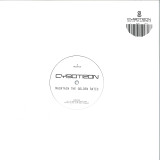
Cybotron has re-emerged in our contemporary cybercultural age when artifactual futures begin a transition into a new era of "Meta".
By combining their knowledge of philosophy, science fiction, and mechanical engineering, at a time when electronic instrument companies were only just beginning to distribute their products to the masses, two prosumer audio technicians named Juan Atkins and Rik Davis were able to re-engineer Cybotron – a combination of the words “Cyborg” and “Cyclotron” (an atomic particle accelerator) – to be used as a home studio performance music that would change the course of independently produced and distributed electronic music.
Dissolving the boundary between singer, songwriter, and producer, Juan Atkins named Cybotron’s future forward funkadelic sound “techno” in reference to Alvin Toffler’s concept of unlikely “techno rebels” against technocracy. Techno is music that sounds like technology, and its purpose was to help society survive our collision with a universally felt “future shock” by inserting an audio virus into the cultural matrix.
Techno’s blueprint spread across the Detroit-Berlin Axis between Metroplex and Tresor. As human society began its transition from a post-industrial to an information-based market economy, Cybotron enabled a thorough system override of the human senses towards a tangible man-machine hybridity and showed the world how to channel their emotions and imaginations into new sound technologies and create new ‘sonic’ spatialities where listeners can transport themselves out of the physical world into the future. The cover of their debut album Enter (1983) transmitted a fragmented view of a body in motion being digitized mid-stride, dissolving physical and virtual reality into sonic fiction.
Today, the man-machine hybridity of Cybotron is still the truest form of techno, coevolving in conversation with the technological music they created and inspired. The latest data disk marks a new chapter that reflects a techgnostic musical expression of the knowledge acquired during their decades-long hiatus. Unlike the dance music industrial replications of the Model 500 formula, acknowledging the content marketing expectations that segments music into specific, sellable genres, this techno music is self-aware. Cybotron processes dance music tropes spawned from its very own blueprint with a meta-tactical precision out of sync with our current rave new world.
Cybotron’s return demonstrates a studied engagement with what techno was and should be with a peerless update of Juan Atkins’ initial inventive idea of do-it-yourself electrically reengineered music xeroxed onto both sides of the 12” – uploaded directly into the alleys of your mind.
- The Rhythmanalyst

Buscar:machìna
The debut recording by Setting, a trio comprising Nathan Bowles (solo/trio, Pelt, Black Twig Pickers); Jaime Fennelly (Mind Over Mirrors, Peeesseye); and Joe Westerlund (solo, Califone, Sylvan Esso, Jake Xerxes Fussell). Deluxe LP edition features 140g black virgin vinyl and a reverse board jacket with art by Timothy Breen. Deluxe CD edition features a gatefold jacket with art by Timothy Breen. RIYL: Popol Vuh, Brian Eno’s Ambient 4, Harmonia, The Necks. Setting, befitting its name which can be read as noun or verb, and simultaneously suggests the sun, or any star in the firmament from our earthbound perspective; a story and its surroundings, its scenic context or mise en scène; or a psychedelic experience, as in the prescription to mind one’s “set and setting” arose outdoors, uncontained and unconstrained by architecture. The group’s debut recording Shone a Rainbow Light On traverses textural, phosphorescent topography with a certified organic folk-engine. Kosmische correspondences are inevitable and valid, but also somewhat deceptive, given this meditative music’s terrestrial rootedness in the familiar natural world, more in native humus and humidity than in outer space. Fuelled by a vibratory hybrid of acoustic and electronic instrumentation, these four stately longform pieces sound like a UFO slowly sinking into a peat bog (or, as we call it in North Carolina, a pocosin). An instrumental trio comprising Nathan Bowles (solo/trio, Pelt, Black Twig Pickers) on strings, keys, and percussion; Jaime Fennelly (Mind Over Mirrors, Peeesseye) on harmoniums, synthesizers, and piano zither; and Joe Westerlund (solo, Califone, Sylvan Esso, Jake Xerxes Fussell) on drums, percussion, and metallophones, Setting established its own setting and found its footing in regularly scheduled improvisational sessions outside Westerlund’s home in Durham, North Carolina, beginning in 2021. The three players began as two, in the context of occasional Bowles and Westerlund percussion duo performances dating back to 2018. Fennelly provided the initial impetus to gather and play together with intentionality and discipline, as well as an harmonic adhesive and thickening agent in the grain and gravity of his harmonium and synthesizer. As always, Bowles’s background as a pianist and drummer informs his approach to banjo, imparting a woodiness, a piney verticality and resinous tang. Westerlund’s training with Milford Graves is apparent in his polyrhythmic flow and its correspondences to human circulatory and corporeal rhythms. They recorded their collective discoveries with engineer Nick Broste in the spring of 2022.The record begins, like the group’s name, and like the language of its unique instrumental interplay, with ambiguous grammar: “We Center,” the first and longest track at thirteen and a half minutes, builds patiently to a percolating climax of tidal heaving, with ceremonial connotations. “Zoetropics,” the shortest piece, follows, offering a more diaphanous counterpoint to the density of its predecessor. The zithery, shivering “A Sun Harp,” its title redolent of Sun Ra, showcases Westerlund’s unfettered drumming, which skitters restlessly until anchored, at its conclusion, by a minor bass progression. Finally, “Fog Glossaries” exhales through the maritime and meteorological evocations of its title, distant buoys clanging. Although certainly elements and strategies of so-called ambient and drone musical traditions are invoked and deployed, those diffuse terms feel inadequate to describe everything else happening here: the devotional valences, the minimalist rigor, and even submarine jazz inclinations perceptible beneath the surface. Throughout this four-movement program, which invites deep listening, it is often difficult to differentiate individual instruments from the massed choir of the group’s unified sonic presence. At times what sound like field recordings cicadas, birds, wind, water splash out of this slow but powerful current, only to be revealed as overtones produced by harmonium, banjo, or cymbals. Setting’s sound is fundamentally synthetic in the sense of synthesis, not artifice—in a manner remarkable for its almost entirely acoustic arsenal of instrumentation, often registering as the product of a single alien technology, perhaps the rainbow lights of that bog-marooned UFO. (“Setting,” of course, can also refer to a machine’s variable operational amplitude its temperature, volume, speed, elevation, etc.) Sometimes the most seemingly extraterrestrial lifeforms are in fact our unfamiliar earthbound neighbors. Despite the destruction of many such habitats, the coastal plains of eastern, tidewater North Carolina is home to more pocosins freshwater, evergreen wetlands with deep, acidic, sandy, peat soils than anywhere else in the world. These threatened peat-bog ecosystems are the only native environment to sustain the carnivorous Venus flytrap, among other oddities. The sonic ecosystem of Setting similarly deep, acidic, and boggy contains equivalent wonders, savage and delicate, for listeners willing to take the time to sink.
Cititrax present two new releases by Cosmetics, a Vancouver-based synth wave duo formed by Nic Emm and Aja Emma in 2008. Cosmetics reappeared in 2022 after having been relatively quiet since its very memorable releases on Captured Tracks in 2010. In 2023, the band returns with a phenomenal full-length LP entitled ‘Baby’ and a 7” single entitled Pillow Talk / Tell Me (Alternate Versions). Their music is sultry, minimalist, and atmospheric, backed by lush analog synths and sparse drum machines. Aja’s seductive vocals cut through the perfectly crafted dark synthpop forming a filmlike narrative that draws us in. The ‘Baby’ LP will have you listening on repeat and the single featuring alternate versions of two songs from the album will bring you from your bedroom listening to the dance floor. Cosmetics continue the lineage of Minimal Wave into the present day.
The ‘Baby’ LP will be pressed on 160-gram ultra clear vinyl and presented in a spot-gloss LP sleeve accompanied by a photobooth strip of the band.
††† (Crosses) —Chino Moreno (Deftones) and producer/multi-instrumentalist Shaun Lopez — release their anticipated new album Goodnight, God Bless, I Love U, Delete. on October 13th with notable features from EL-P and Robert Smith.
The arrival of Goodnight, God Bless, I Love U, Delete. will follow the band's critically acclaimed EP PERMANENT.RADIANT, which recently received a new spin on the duo's PERMANENT.RADIANT.REMIXED. The reimagined release contained remixes from a noteworthy list of electronic innovators including Hudson Mohawke, suicideyear, AWAY, and Machinedrum.
With new single “Invisible Hand,” Moreno and Lopez embark upon a new chapter filled with merciless creations as they continue making music without compromise.
2023 Repress
Best Record lights up a surefire classic from the annals of Italian dance music, made courtesy of Italo-Disco heavyweights Klein & MBO, who were not a company looking to get rich, but just 2 individuals: Tony Carrasco (USA), Mario Boncaldo (Italy), in one word... LEGENDARIES! with something burning inside to share. Italy certainly had a huge influence on the nascent Chicago house scene which embraced the best jams of Italo-Disco and created a movement of those simple yet complex sounds like those of "The MBO Theme", beautiful song, smooth and sweet, to give you time to think about some amazing dance moves and bring back very beautiful memories. The song was originally a hit created by the likes of Ron Hardy thanks to his punchy synth bass and captivating European vocals. So this was the first house song ever made and it's from the '80s, loved from the beginning by Derrick L. Carter, one of the pioneers of House Electronica in Chicago and Farley "Jackmaster" Funk, who broadcast on WBMX-FM of Chicago as a member of the DJ team Hot Mix 5. Pure Italo-Disco! Simple analog drum machine (sounds like a TR-606) and analog synthesizer, which in the case of Klein & MBO, is most likely a Sequential Circuits Pro-one. Italo's first purely minimal songs from the early 80s. This sought-after dancefloor gem has been given a faithful remastering touch, as is the Best Record method, which also brought out a previously unreleased edit of the track called "Italian Version", which extends the club qualities of the jam to the maximum impact of the party.
Chicago"s Axis: Sova hit the beaches of southern California with Ty Segall to make a total hi-fi classic. Often feral and consistently catchy, Blinded By Oblivion is lit up with interlocking drum kit + drum machine, adventuresome guitar, bass, and harmonic vocals on every song. Icy lyrical perspectives, rendered in a sunshiny natural paradise, transmit the fun and fraud of human polarities with urgency and an occasional eye roll. Making for an undeniably good/bad time, streamlined and more reflexibly physical than previously known, Blinded By Oblivion begs the universe to bring back rock and roll radio. All the elements are there: compassion for our collective fallibility, rebuke on the tip of the tongue, all rolled tight with hook-laden, high-energy construction. "Bout halfway through Blinded By Oblivion, we hear Sova say, "I think my heart is made of metal." Yuuuup. But we"d argue there"s at least a ventricle or two made of post punk! And with vena cavae split between psych and southern boogie. And cardiac veins of glam, power pop, and punk Sometimes the heart is simply filled with sweet melody - so man, the beats of this metallic muscle are insane!
Die spanischen Old-School-Death-Metaller DECAPITATED CHRIST sind zurück in bester Form mit einem neuen Hammerschlag-Album namens 'Glorious Tyrannizing of Human Rats'.
Dieses 5. Album der Band ist ohne Zweifel ihr bisher stärkstes, eingängigstes und brutalstes Werk.
FFO: Fans von DEICIDE, AEON, VITAL REMAINS usw..
- A1: Good Girl Feat. Asia Argento
- A2: Losers Feat. Anna Prior
- A3: One More Time Feat. Delila Paz
- A4: Ghost Rider
- A5: Everyone Feat. Jehnny Beth
- B1: New Love Feat. Best Youth
- B2: Bright Lights, Big City Feat. Ray And Sean Riley
- B3: Keep It Burning Feat. Sarah Rebecca
- B4: Once I Knew No Pain Feat. Calcutá
- B5: Will We Be Alright
My ZEITGEIST. (in the words of The Legendary Tigerman)
Musically, I tried to follow the path left behind by early modular synths explorers like Suzanne Ciani or Wendy Carlos, mixing it with the raw & powerful energy of early punk explorers like The Cramps, Suicide or The Sonics (my teenage heroes!) and the orchestral universe of people like Lee Hazlewood or Scott Walker, looking back at the past while keeping an eye out for the future.
Zeitgeist is also the point where my work as a soundtrack composer meets my life as a punk Rock’n’roller.
The Legendary Tigerman is the artistic name of Portuguese musician and composer Paulo Furtado. With a solid career stemming from the DIY movement and characterized by the reinvention of genres such as blues, rock, and garage rock, while always maintaining a punk attitude, The Tigerman's recognition is founded on a galloping international career, marked by the release of the iconic album "Naked Blues" in 2001. In a few years, he goes from a cult artist to a reference name and with the acclaimed "Femina" (2009), he writes his name in the pantheon of the most creative rock made in Europe.
With "True" (2014) and "Misfit" (2018), he consolidated his position in the international rock scene with two albums that explore the dense soundscapes of a rock 'n' roll that moves away from common places. Live, the unstoppable and infernal rock machine, consisting of Paulo Furtado on vocals and guitar, Filipe Rocha on bass, Mike Ghost on drums, and Cabrita on saxophone, makes concerts unpredictable and explosive, exactly as expected from a rock 'n' roll act.
The success of The Legendary Tigerman goes beyond the borders of Portugal, thanks to tours in various countries in Europe, Asia, and Latin America. In addition to his work on stage, Paulo Furtado has become notable for his prominent career in theater, cinema, soundtrack creation, photography, and film direction.
Focused on being a catalyst for unique and authentic music, The Legendary Tigerman is one of the main European rock names, renewing himself with creativity and innovation with each album. In 2023, there will be a new album, featuring more ethereal and intimate sounds alongside rock 'n' roll, but always keeping it punk.
Die indische Tech Death Metal Formation Demonstealer präsentiert ihren 4. Longplayer 'The Propaganda Machine'! Klingt wie Obscura, Blood Red Throne, Hour of Penance, Vital Remains, Kataklysm oder Fleshgod Apocalypse.
Jay Tripwire has popped up a lot recently, which is always going to be good news for fans of those freaky late-night tech sounds that he is so well known and loved for. He kicks off Serenity's fifth release here alongside Jehr on 'Magic Man', a deep cut underlapping drum funk and lots of whirring machine sounds.
Parisian space techno talent Cyberduck then takes care of both tunes on the flip - firstly 'Arzach', a deep and dynamic cut that hurriedly scans a vast cosmic world with silvery drums and lush melodies. Then 'Cerclon' gets a little more edgy, with dark and nagging baselines moving up through the mix as the crisp, well-swung tech drums power along.
The EP also includes a remix of the popular single ‘SAMO’, which
spent four weeks on the BBC 6 Music playlist, accompanied by an
animated lyric video paying homage to the graffiti tag it was named
after by Al Diaz and American artist and wunderkind, Jean-Michel
Basquiat. The final track on the EP is a remix of ‘Waiting on a Train’,
presenting a new and special version of the original song, with the
presence of featuring artists Ellen Beth Abdi and Chunky remaining
strong.
Formed in 1978 with a core line-up of Jez Kerr, Martin Moscrop and
Donald Johnson, A Certain Ratio emerged from the hallowed grounds
of the late 1970s punk scene, and from that day on they’ve moved
forwards with gleeful disregard for the boundaries of style and genre,
their eye fixed firmly on constant progression.
Brotherhood Of Peace (aka B.O.P.) brought the world some of the best breezy power pop, Southern rock and heavy boogie all packed into one brilliant album in 1976, the fittingly titled Cuttin’ Loose. The album is a free-flowing nine song collection of genre blending would-be hits suited for both ’70s AM gold and FM album rock that never received its proper due, until now. The album flows somewhat similar to the way Big Star combined heavy riffs with airy pop sweetness, but B.O.P. brought more of a blues rock groove to the proceedings, resulting in heavier undercurrents to songs with glowing three-part harmonies and impeccable power trio musicianship. By the mid-’70s, rock ’n’ roll was truly anything goes. Experimentation, excess and inventing new genres was all the rage, and the trio of spritely young men—guitarist / vocalist Dennis Tolbert, bassist / vocalist Mike Arrington and drummer / vocalist Ronnie Smith—gamely tackled whatever sound they pleased. Fortunately, the band captured it all on their lone album, released on the small independent label Avanti Records in March 1976. The Mount Airy, North Carolina trio got its start as teens in 1969 as the backing band to a large 20-50 person traveling church choir called the New Americans. By 1970, the band was ready to move on to performing on their own. First as a sextet, the band soon trimmed down to a three-piece, working the local club circuit like madmen, sometimes playing three shows a day. At the height of their live tightness, B.O.P. recorded the album with local musicians Don Dixon and Robert Kirkland of the band Arrogance who worked at Charlotte recording studio Reflection Sound in October 1975. The band laid out the highlights of their live set in the studio, which ran the range of influences from The Raspberries to Deep Purple, Doobie Brothers to Nazareth, Lynyrd Skynyrd and Grand Funk. The initial pressing of 1000 copies was released in March 1976, but without major label machinery for retail distribution, radio and press, the album never took off. The band mostly sold them at live shows, via consignment at local stores and in limited distribution in the Southeastern region. However, to date, the record still occasionally pops up for sale online worldwide at exorbitant collectors’ prices. Until now, finally getting a proper reissue via Riding Easy Records.
- Here Comes The Black Moon
- Liftoff In Stereo
- Trial By Fire
- The Clouds Will Drop Ladders
- Triumph Of The Metal People
- Frequency Converter
- Birth To Death In Slow Motion
- Dream Scientist
- Bird Wings
- Nudists Disc
- The Landing
- Under The Mountain
- Sonar
- Mercury
- The Valium Machine
- Spies
- V
- Inside The Static Cult
- Then, In 2060 A.d
- Alum Rock
- Interruptor
- Slower
- Excerpt From Mount Hamilton
- 96:
- Spark Collector
Just as Duster's landmark debut album Stratosphere was making its first orbit, Clay Parton, Dove Amber, and Jason Albertini tracked a largely improvised companion capsule under their Valium Aggelein alter ego. An ode to '70s Kosmische, Hier Kommt Der Schwartze Mond is a skeletal space nap for the prozac generation. Remixed and remastered from the original 16 track analog tapes, the 1998 album has been adjoined by 15 period-appropriate bonus tracks. A fuzzy masterpiece, hidden in plain sight, by the most important slowcore band of all time.
- 1: The Last Time
- 1: 2Let It Slide
- 1: 3Moonshine
- 1: 4Nobody's Cryin
- 1: 5You Don't Even Know Me
- 1: 6Somebody's Baby
- 1: 7Out Of My Head
- 1: 8Half Moon
- 1: 9Again, I Need Your Lovin
- 1: 0Lucky
- 1: Dreams & Dreams Of You
- 2: 1Sidecar
- 2: Love You Anymore
- 2: 3Underdog
- 2: 4Honey, They're Onto Us
- 2: 5Hollywood Lovesong
- 2: 6Keep It Together
LTD. TURQUIOSE MARBLE VINYL[46,18 €]
Dirty Dollhouse is the multi-genre music of Philadelphia-based artist Chelsea Mitchell, a folk chanteuse with classical training and a retro-pop composer with a soft spot for country. After releasing her first lo-fi EP, Married in the Aviary, Mitchell received the Tri-State Indie Vocalist of the Year award and the lyrics to her song Nobody's Daughter were showcased in American Songwriter Magazine. Her follow-up EP, 25 Shades, saw a departure from traditional folk and embraced a Nashville vibe while 2017's full-length album Vinyl Child was a mixture of darkly contemplative pop songs and quiet, intimate confession. Drawing from many muses has produced a uniquely diverse catalogue, but it has also made it near-impossible to pin down who Mitchell sounds like. In sultry-toned moments you might hear Nicole Atkins, a soft bird-like peak could make you think of Kacey Musgraves, and a certain belt may summon Brandi Carlile. Though her vocals range from soft twang to unabashedly operatic, it would suffice to say that Mitchell's songs all fit under the same 'singer-songwriter' umbrella as her lyrics weave a diary page to life and her band expands on structural simplicity with subtle grace. As bassist Joshua Machiz, drummer Eric Lawry, and lead guitarist August John Lutz II are now full-time members, Dirty Dollhouse has found a new and exciting momentum, opening for rising stars like Nikki Lane and Amanda Shires and playing to a wider audience.
When South Korean balearic prodigy Mogwaa came to MM Discos with an idea for his rst full-length album, we were a bit surprised.
He said, ‘I want to do an album of bossa tracks with synths, a drum machine and my guitar’. We obviously had to take him up
on that deal.
Fresh from the recent Bandcamp feature on his own brand of danceoor-ready modern boogie, Seungyoung Lee (aka Mogwaa)
arrives back on MM Discos with his - and our - rst full length exercise. With six tracks per side of 80s inuenced synth and bossa
badness, ‘Hazy Dreams’ is an exercise in simplicity, and more proof of the ever-expanding musical horizons of one of the scene’s
most virtuosic instrumentalists.
Pairing a sensitivity to the construction of ambient, funk, bossa and cassette-tape 80s experiments with his own cinematic subtlety,
‘Hazy Dreams’ takes a gentle, minimalistic approach, crafting its own escapist world that oers a welcome diversion from the
steady ow of busy balearica and downtempo.
Opening track ‘Full Bloom’ paints a picture of midsummer at dawn, some clear-skied island where lush vegetation climbs through
hibiscus gardens. ‘Nacimiento’ is an AOR/bossa crossover evoking West Coast yachting in full afternoon, and A3, ‘Soothing’, adds
a touch of wistfulness with reverb-doused guitars over meandering bass motifs.
The easy kick-and-snare combo of ‘Levitation’ sets the scene for a drum machine love aair, unrequited love on the rocks, and
‘Flashback’ plays with short delay trails and o-kilter melodic sequences, where you feel the soft presence of the nebula approaching
at the break of day. Closing out the A-side, ‘Dispatching’ reaches out even further into the imagined cosmos of Mogwaa’s
picture-perfect world, portraying an ambience at dusk, observing, calmy, as pued-up pink clouds melt into the evening canvas.
On the other side, Mogwaa explores quiet corners with ‘Illusions’, a slow meditation on the nature of simple presence, and ‘Echoes
of You’, a stream of subdued brush strokes that crescendo into higher frequencies on gently undulating pads. B3, ‘Moondance’,
ups the tempo and recalls classic Mogwaa with its sideways shue and starry melodic refrain, pivoting through folk-dance
moods and surprising chord changes.
Nearing the end of the album, ‘Footprints’ wades through tall grass in search of altered states, innite and hypnotic, changing
course only to crouch down and study the landscape, and B5, ‘It always comes and goes’, pictures the to-and-fro of jetstreams and
comets in the blinding midday sky. Finally we have the closing credits of ‘Swingin’ that looks o into the horizon, jaunty and exalted,
a guitar-led tribute to an easy-going world, and ultimately mindful of the power of dreams.
We’re humbled to have such a special record for our rst full-length release on the label.
- A1: Profesor Baltazar (Opening Credits From Professor Balthazar)
- A2: Maxol (Theme From Maxol)
- A3: Maestro Koko (Theme From Maestro Koko)
- A4: Horacijev Uspon I Pad (Theme From The Rise And Fall Of Horatio)
- A5: Tetke Pletke (Theme From Knitting Pretty)
- A6: Profesor Baltazar (Zagrebfilmijada Vocal Version)
- A7: O Misu I Satovima (Theme From Of Mouse And Ben)
- A8: Horacijev Uspon I Pad (Animal Choir From The Rise And Fall Of Horatio)
- B1: Stonozica Bosica (Theme From Tenderfeet Centipede)
- B2: Vjetrovita Prica (The Balthazar Machine From A Windy Story)
- B3: Lutke Bez Kose (Theme From Bald Is Beautiful)
- B4: Oblacno Sa Svadjavinama (Theme From Cloudy With Brawlstorms)
- B5: Krojac Silvestar (Bozica Sings From The Grave Little Tailor)
- B6: Peppino Cicerone (Theme From Peppino Cicerone)
- B7: Maxol (The Lullaby From Maxol)
Original soundtrack from the animated TV series 'Professor Balthazar' (1967 - 1978) by Tomislav Simovic.
Gatefold LP, cut from the original master tapes, liner notes by Zeljko Luketic and exclusive graphics by Boris Stapic.
Master tapes were considered lost; now found and restored for this unique release celebrating Yugoslavia's biggest cartoon export of the times.
Professor Balthazar was filmed from 1967 to 1978 in Zagreb. It was a huge international success: from large fan base in Scandinavia to broadcasting on USA television and countries like Germany, Italy, UK, France and even Iran. It's still aired on various TV programs and video platforms.
Animation style and content is widely praised for being one of the rare cartoons that does not feature any kind of violence or aggression. The character of Professor Balthazar solves problems in a peaceful way. He uses his inventions and science to help his friends. Distinctive visual influence is a crossover of bright, psychedelic colors, weird shapes and naive art, typical for Zagreb School of Animated Film. This soundtrack is mastered from original tapes, composed and conducted by Tomislav Simovic.
The music is busy, playful and mixes influences of jazz, modern classical and even electronica. Fox & His Friends Records, also the curators of the largest ever multimedia exhibition on Professor Balthazar series in Museum of Modern and Contemporary Art in Rijeka as a part of the European Capital of Culture program in 2020, present the masters without any interventions in sound. This album cut includes longer rare version of main credits, made exclusively for Zagrebfilmijada, an event of public screenings of Professor Balthazar and other cartoons in cinemas in 1970's Yugoslavia.
Die japanische Band CHAI verzauberte die Welt 2017 mit ihrem Debütalbum PINK, einer Sammlung von Songs, die ihren einzigartigen, verspielten Pop vorstellten. Das enthusiastisch-feministische Nachfolgealbum PUNK wurde von der Musikpresse und anderen Künstlern hoch gelobt. Das führte zu WINK, das CHAI per Remote-Zoom-Sessions aufnahmen - eine Einschränkung, die sich als Stärke erwies, da MANA (Leadgesang und Tasten), KANA (Gitarre), YUNA (Schlagzeug) und YUUKI (Bass und Texte) mit Künstler*innen im Ausland zusammenarbeiten konnten, um ein Werk zu schaffen, das in ihrer internationalen Gemeinschaft Katharsis fand. Im Gegensatz zu WINK kehren CHAI auf ihrem neuen, selbstbetitelten Album zu ihren Wurzeln zurück und lassen sich von ihrem japanischen Erbe und der Musik, mit der sie aufgewachsen sind, inspirieren. "Alles, was sich in den Texten widerspiegelt, drückt unsere Erfahrungen als japanische Frauen aus", sagt MANA. CHAIs Ethos ist das der Inklusion, und die erste Ssingle "We The Female!" - die live aufgenommen wurde, um die krawalligen Auftritte der Band zu würdigen - lädt die Zuhörer zu dieser Mission ein. Während ihrer Tourneen nach der Pandemie, bei denen sie vor riesigen Menschenmengen in Städten wie Santiago, Buenos Aires und Sao Paulo auftraten, wurde CHAI klar, dass sie sich ein globales Publikum erschlossen hatten. CHAI schrieben das neue Album unterwegs und fanden zwischen den Auftritten im Stones Throw Studio in L.A., in der Ometusco Sound Machine in Mexico City und in der Grand Street in New York Zeit für die Aufnahmen. Als sie erkannten, dass ihre befreiende, ermächtigende Botschaft auch für Menschen außerhalb Japans gilt, überlegten CHAI, welche Facetten ihrer Erziehung beim Publikum außerhalb ihres Heimatlandes Anklang finden könnten. Auf CHAI schöpft die Band direkt aus dem City-Pop, einem in Tokio entstandenen Sound, der in den 70er und 80er Jahren populär war. City-Pop war eine japanische Interpretation westlicher Lounge-Musik, die Anleihen bei Jazz, Boogie, Funk und Yacht-Rock machte, um einen Sound zu kreieren, der sich zwischen zwei Kulturen bewegte. Während der City-Pop in letzter Zeit über TikTok und YouTube ein US-Publikum gefunden hat, sind CHAI mit diesem Genre aufgewachsen. Für die Produktion griffen sie auf ihren früheren Mitarbeiter Ryu Takahashi zurück, der ihre Vorliebe für City Pop, Eurobeat und die Melodien von J-Pop-Künstlern wie Maria Takeuchi teilte. "Sie wollten sich mit ihrer japanischen Identität auseinandersetzen, nicht im traditionellen Sinne, sondern auf diese gefilterte westliche Art", sagt Takahashi. Die Arbeit in gut ausgestatteten Studios ermöglichte es ihnen, mit einer Ästhetik zu experimentieren, die auf einem CHAI-Album noch nicht zu hören war.