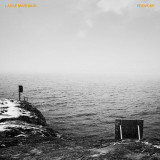
San Jose slowcore / space rock outfit Duster return with surprise album, ‘In Dreams’, continuing theirinclination of sonically capturing an open-ended
question.
These thirteen tracks hone in on the band’s trademark dark, droning guitar tones, dialled back percussion, and alluring hard-panned vocals while expanding and exploring synth-heavy drum machine avenues.
It’s the fifth Duster album.
LP available on Aqua Tofana coloured vinyl and black vinyl.
quête:machine drum
Die Slowcore-/Space-Rock-Band Duster aus San Jose kehrt mit ihrem Überraschungsalbum "In Dreams" zurück und setzt damit ihre Vorliebe fort, eine offene Frage klanglich zu fassen. Die dreizehn Tracks konzentrieren sich auf die für sie typischen dunklen, dröhnenden Gitarrentöne, die zurückgenommene Perkussion und den verführerischen, harten Gesang, während sie gleichzeitig Synthesizer-lastige und Drum-Machine-Alleen erforschen und erweitern. Auf dem Höhepunkt ihrer Lo-Fi-Power liefern Duster ein Album ab, das den charakteristischen atmosphärischen Sound der Band gekonnt einfängt und noch weiter ausbaut.
- 1: Peach Blossom Paradise
- 2: Demon Cicadas In The Night
- 3: The Cold Curve
- 4: Saying Yes To Everything
- 5: Lighthouse
- 6: Revisionist Mystery
- 7: The Meander
- 8: The Wheel Of Persuasion
- 9: Another Tomorrow
- 10: Common Exotic
Prairiewolf make easy listening music for an age of fracture. They almost do it in spite of themselves. No one can seriously question the head music bona fides of the members of this Colorado-based trio.
Guitarist Stefan Beck has already assembled a formidable discography of jewel-toned guitar zone-outs under his Golden Brown moniker. And keyboardist and guitarist Jeremy Erwin and bassist Tyler Wilcox have both made their reputations as chroniclers of the vast world of out-music. Erwin helms the indispensable Heat Warps blog, a performance-by-performance archive of Miles Davis’s labyrinthine electric period. And Wilcox has been covering the ragged edges of psychedelia and experimental rock at Aquarium Drunkard and other publications, not to mention his own virtual basement for heads, the great bootleg blog Doom and Gloom from the Tomb.
These guys come by it honestly. And yet, given their backgrounds, Prairiewolf’s self-titled debut last spring was remarkably free of face-melters, brown acid blowouts, and ascendant spiritual jazz odysseys. Instead, they dropped a record of beautiful, elegant, low-key cosmic groovers that sounded like the piped-in background music to a resort hotel on Jupiter. It was an unlikely psychedelia, brocaded with mid-twentieth century sonic threading from the hi-fi era: vintage synthesizers, smears of spaghetti western, luxe tropical details, the faint schmaltz of space age pop. Imagine something like a Harmonia residency in the airport lounge. And yet somehow it all worked brilliantly. Prairiewolf became last summer’s cool-down standard. After a year woodshedding around Colorado’s Front Range region, the Prairiewolf boys have fired up their trusty Korg SR-120 drum machine for another outstanding collection of suborbital exotica. The appropriately titled Deep Time operates in its own chronology, unspooling at its unhurried pace. All its incongruous period and stylistic references—the new age pulses, Hawaiian steel, shaggy hippie rambles, lysergic guitar spirals, and orchestral synthesizer flourishes—float atop the album’s own singular temporality. Deep Time makes its own time.
From the moment Beck folds his slide guitar, origami-like, into a sound resembling the call of gulls on the tranquil album opener, “Peach Blossom Paradise,” there is a sense of departure from everyday life. The shimmering “Lighthouse” has a similar sunbaked nonchalance, like an afternoon passed day-drinking in a seaside bar. That they named their lush, kaleidoscopic downtempo track “The Meander” pretty much says it all. The ranging, propulsive “Saying Yes to Everything” seems like a nod in the direction of Rose City Band’s brand of wookie krautrock. And the motorik noir of “Demon Cicadas in the Night” also goes hard. Beck and Erwin’s intertwined guitar jam on the eerie album standout “The Cold Curve” evolves into something that sounds like primitive computer music. A genteel bassline from Wilcox on another album highlight, “Revisionist Mystery,” sets the stage for a loopy space jazz turn from guest clarinettist Matt Loewen of Rayonism. The title of post-rock cowboy tune “Another Tomorrow” might refer to the alternative future that so many critics heard in the music of Prairiewolf’s first album. Or it might simply refer to the persistence of time, however deep. Either way,
I’m thankful for the way Prairiewolf make each of their tunes a little oasis or sanctuary, each subsisting according to its own crystalline little logic for a few minutes. It is no simple task to filter out the omnipresent anger and anxiety of everyday life these days. But Prairiewolf are out here making it seem easy.
Brent S. Sirota
The last couple of years have seen a renaissance for West Coast singer-songwriters. LA-based youngsters such as Drugdealer and Sylvie have attracted considerable attention releasing warm and mellow records tonally reminiscent of the early 70s. Most fans of this new/old sound are unaware of Bart Davenport's early explorations in the same sonic territory. His now 20-year-old "Game Preserve"album should gain an appreciative new audience with its first ever vinyl release.
In the year 2000, Bay Area troubadour Bart Davenport and several other musicians were recruited by a major tech corporation in Seattle to work on an algorithm-based music matching/search engine. It was what looked like the beginning of a promising career. After a year, however, the project was shelved. Bart and his colleagues were laid off with a healthy severance package... on the 12th of September, 2001. Not only had the musician's life changed, so had the world. Rather than blow the money on a holiday or new car, Bart knew he had to make a record. A proper album that meant something.
Back in Oakland, he entered Wally Sound Studios with former Kinetics bandmate Jon Erickson at the controls, and a swathe of talented local musicians. "With Game Preserve," Bart explains, "Jon and I really wanted to knock it out of the park. I wanted to utilize people from my old bands like Loved Ones drummer John Kent. I also invited my newer indie-pop friends from Call & Response, and a young Nedelle Torrisi. Harmony singing by The Moore Brothers was an essential ingredient on Game Preserve as well."
Both Erickson and Davenport fondly recall growing up in households where the music of The Carpenters, Joni Mitchell and The Eagles soundtracked their young lives. By the early 00s they were ready to reconnect with what is often referred to as the "Laurel Canyon" sound. "I'd buy used tapes at garage sales and play them in the car. "Ladies Of The Canyon" by Joni and Jackson Browne's first album were both in heavy rotation. Jon Erickson was getting deeper into the Steely-Mac-Doobie yacht-rock sound in earnest. A certain amount of childhood nostalgia led a lot of us back to that part of the 70s. I'd flirted with classic soft-rock on my first album, but that record was pretty scattered esthetically. I wanted my next one to be more focused. Jon and I made some ground rules: no electric guitars (except on 'Bar-Code Trees'). No synths. Most importantly, all the songs have an air-tight, super dead, close mic'd drum sound. Putting these sorts of limitations on the sessions will give your record a specific quality. In the case of "Game Preserve"it's mostly about tight drums, acoustic instruments and analog production. We used a 24-track, two-inch tape machine for tracking, then ran the mixes through an analog board straight to a 1/4 inch master tape."
While the album's sonic palette may be firmly planted in 1970, Davenport's songwriting covers a sizable landscape of moods and reflections. From the quasi-flamenco intro of 'Sweetest Game' to the somber Wurlitzer of 'Nowhere Left To Go', to the 12-string shimmer of 'Intertwine', "Game Preserve" tells a story of young love, lost innocence and redemption, crossing borders and oceans along the way.
Released in 2003 on family-run Oakland label Antenna Farm, the ultra-analog sounding "Game Preserve" was only made available on digital formats, including CD. Copies were later pressed by labels in Germany and Spain; the latter being one country the album actually did well in, establishing Bart Davenport with a small but loyal fanbase he still enjoys today. Two European tours as support for Kings of Convenience also helped gain a foothold on the continent. Back in the US, however, Davenport and his sophomore album remained quite obscure.
Limited promotion meant it did little, but for the music lovers that heard it, the album undoubtedly remains a classic of the era, deserving far more. Twenty years on, it now finally receives its vinyl debut. "I personally think it holds up well," says Bart of the album two decades later. "The idea was to make something that could be an homage to late 60s/early 70s West Coast pop but hopefully timeless as well. Years on, I hear it as just that. It was a colorful and brief period of my life that felt at times like it could last forever. I discovered the joy of working in a proper studio with a perfect cast of characters. I'm still very close with all these people and still play music with many of them."
Pain Management presents a debut collaborative release from Bristol’s Larry McCarthy & mysterious newcomer Eris FM. The limited edition single fuses hellish Bristolian dub with tender vocal excursions on two dark cuts in equal parts tough and tender. A heartfelt comedown offering for the hyperactive via two cathartic weapons primed for maximum emotional release.
The A side’s foolish titular opener is a hellish mess of dub delays and eerie narrative exposition. Reminiscent of blown-out early No Corner offerings; a tangled mess of sirens and harsh noise ensnare FM’s disembodied commands. Turn your phone off / Tell no one where you are / Go out / Press your lips to the cracks in the soil. Overtly human exposition shrouded in a plosive shell of sawtoothed frequencies and machine drum paranoia. The effect is an unsettling hybrid of softness and uncertainty. A teeth-grinding mess of grit and potent anxiety primed for anti-dancefloor devastation; one to comfort the disturbed or disturb the comfortable depending on where you’re at.
On the flip ‘Red’ applies this same methodology to a beatless format, noisy chaos swapped out for ascendent grandeur. Here FM’s voice has more room to breathe, floating above an ever expanding synthscape. Reflective prosaic cohesion replaces the A side’s splintered present-tense directives.The rawness remains but on Red it takes the form of a commanding emotive clarity rather than claustrophobic uncertainty. A subtle heartbeat rhythm pulses beneath the nebulous pads, swaying like a slow dance in the early hours.
Hyper-limited run of 100 7” records
Lisbon's Para?so is back with its 14th release 'Crossroads' by local legend-in-the-making Salbany and remixes from portuguese dance music pioneer Cisco Ferreira a.k.a. The Advent and Detroit's own AMX otherwise known as The AM. The record opens with 'My Life', a warm yet propulsive detroit-referencing techno cut with pad washes, shuffling hi hats, an introspective vocal sample, cascading organ solos and arpeggios to a blissful effect. A2 'Crossroads' brings us a raw, bouncy, jam-like rhythmic section with syncopated toms and snares offset by a piano stab motif and emotive strings. 'Next Morning' closes side A, a hypnotic, curveball roller featuring a warm, rolling bass, offbeat drum hits glued together by immersive pads and UR-esque strings. Side B opener 'Mito' delves into trippier territories with admirable skill - not losing an inch in dancefloor potential - fusing bleeps and bells, beautiful chord progressions and hyper groovy drum machine programming. Techno icon Cisco Ferreira steps in with his 'Lisbon Dub' remix, transforming 'Crossroads' into a sparser, delay-infused slow-burner held together by a dope bass line. AMX brings the lead synth of 'Mito' to a lower octave, mutating it into a swingy midwestern experimental cut that inspires urgency and life force. A restless mantra emerges via the digital bonus track, an alternate 'Elevated' remix of 'Crossroads' that superbly merges original detroitian leanings and industrial textures in a no-frills peaktime banger. This is one of those records that lovingly reminds us techno is about emotion, swing, energy. As in life, nothing here sits still: movement, physical and metaphysical, is the messenger of progress.
- Obsession
- The Duke Ellington Bridge
- Conduit
- Fascist Discotheque
- Restructuring
- Apocalyptic Boom Boom
- Angola
- Elvis And Nixon
- Miles Davis Headwound Blues
- Backwards Man
- Arthur Lee Bomb Squad
- Psychic Bloc
- Des Demonas Against Fascism
Washington, DC’s DES DEMONAS have been hailed as a favorite of Henry Rollins (KCRW FM/Black Flag), Marc Riley (BBC6 Music/The Fall), and Iggy Pop (BBC6 Music/The Stooges) since the release of their debut LP on In The Red Records and their subsequent singles and EP. DES DEMONAS’ much anticipated follow-up LP “APOCALYPTIC BOOM! BOOM!” is out this fall on In The Red Records. The group is made up of some familiar names from the DC punk, garage, and indie scenes. A Kenyan punk-poet-politique Jacky “Cougar” Abok (Foul Swoops, Thee Lolitas) is on vocals & percussion, Mark Cisneros (Hammered Hulls, Kid Congo and the Pink Monkey Birds, The Make-Up) is on guitar, Paul Vivari (Benjy Ferree, DJ Soul Call Paul) is on Farfisa organ and bass machine, and Matt Gatwood (Two Inch Astronaut) is on drums. Des Demonas’ music is a melding of disparate sounds and influences, hitting with a driving pulse and fiery intent. “The sonic fuel of the band is a blend of post punk, punk, funk, blues, psych rock, Afro beat, even bubble gum but the noise you hear is pure Des Demonas.” - Kim Salmon / The Scientists “Dig the Des Demonas. Play it loud. Twist your wig.” - Kid Congo Powers
An overwhelming, concentrated outpouring of perceptual stimuli, AGORAPHOBIC NOSEBLEED's long awaited full-length Frozen Corpse Stuffed With Dope is a snarling digital nightmare, dealing lethal doses of their dementia-producing machine gun hyper-grind. Nasty, systematic beatings arise from 2000 beat per minute drum onslaughts, vein-splitting vocals and a piranha-like six-string attack.
Producer, designer, publisher, filmmaker, all-round scene phenom - Lasse Marhaug returns with his first album since relocating from Oslo to the Arctic Circle, surveying his 35-year career for a set of grizzled, doom-pocked rhythms and foghorn drones pulled from the aether. Expansive and hard to categorise, it's a precision-tooled set of ice-cold tonal productions that heavily lean into Mika Vainio’s rhythm experiments, with extra levels of growling bass and curious noises to send us deep into the uncanny.
Lasse Marhaug has put his mark on literally hundreds of albums - working with artists like Jenny Hval, Merzbow, Jim O'Rourke, Kevin Drumm, Hilary Woods - so many others - yet he still regards himself as a primarily visual artist who got diverted into an occasionally different path. If his last album 'Context' was a kiss goodbye to decades of life in Oslo, 'Provoke' turns a new page, but one that draws heavily from memories of the distant past, reflecting on the way the topographies of Norway's frozen north helped shape his creative worldview. Weaving electronics into environmental recordings captured in the bleak Arctic winter, the album was mixed during the Polar night season, when, for two straight months, the sun never rose past the horizon. Somehow, even at its bleakest, Marhaug avoids the usual aesthetic signifiers for this kinda thing, finding elements of queered beauty in all the severity, juxtaposing elements that shine a bright light on all the odd spaces in-between.
A consideration of noise music's place in 2024, and whether it can still be a tool for subversion when its aesthetics have been so commodified, ‘Provoke’ also refernces an experimental '70s Japanese art magazine that attempted to define a new language for photography. Operating somewhere between these two guiding poles, Lasse feels his way through a subtly altered mode of expression, a new approach to familiar concepts. Album opener ‘Plates’, for example, gives it the full Ø treatment, like some exceptional ‘Oleva’-outtake, but , eventually, shards of interference start to exhale like horses blowing, creating uncanny sensations that hit through ambiguous feeling rather than sheer noise terror. Ritualistic, corporeal - hard to know what you’re listening to and why it makes you feel that certain way - so much more than just machine cycles optimised for their ultimately hollow brutalist aesthetic.
Marhaug paints vivid pictures from a carefully chosen palette, drawing us into a soundworld that's rich with contradictions and contrasts. Even the relatively deafening 'New Topographics' offsets its wall of distortion with a muffled, perforating kick drum, cutting into the noise like a knife through butter. And all of this preparation makes the album's lengthy centrepiece 'Monochrome Head' even more impactful; hinging on a Pan Sonic-like alloy of bass and drums, the track snowballs through tempered feedback and improv scrapes and whistles that pick up into an orchestral din. Marhaug accents the bluster with rhythmic hums that gather in momentum until they're almost oppressively heavy, as if everything's about to collapse.
A masterclass in quietly subversive world-building, 'Provoke' invites us to peer at an expansive sonic landscape and marvel at its intricacies, but this time around there's a Lovecraftian behemoth lurking somewhere beneath its icy surface.
In this next installment of Token, Brussels' own Border One steps in to showcase 'Echoes from the Abyss', another swinging, modular-driven project destined for controlled sound systems. In these four tracks, the seasoned producer does what he knows best: engaging the dancefloor through his signature sound design and use of space.
'Echoes from the Abyss' the track, like the EP, is a collection of sound associations that are synonymous with Border One's sound. Resonant and cerebral yet bouncy and full of groove, the A1 presents a shimmering veil of synthwork that gives off a truly hypnotic effect. The follow up is much more sequence-based, focusing on the elements' interactions. The producer plays along freely with his drum machine, responding to a classically loopy and dissonant main synth that insists its way from beginning to end. Tension is everything, especially when met with a sustained chord in the second half, turning the record into a weapon of suspense. 'Celestial Observer' comes back straight and center with a focused tone and a progressive arrangement. With a thick low end and shrill highs, Border One flicks through percussion patterns and filter sweeps to make an intense, at times close eyed dancefloor experience. Ducking back into obscurity for the last track, 'Escaping the Void' takes on a more minimally produced style that breathes a bit after its previous, denser productions. Concluding with a question mark is always very appropriate, and here we're faced with a record caught between ethereal soundscapes and tense implications. With 'Escaping the Void', Border One closes with his latest contribution to Token with class as always, appealing to genre veterans and newcomers alike.
This third volume of Universal Synthesizer Interface delves further into early MIDI sequencing software for personal computers, focusing on Intelligent Music Software founded by Joel Chadabe in 1984. In a short period of time (1986-1990) Intelligent Music published a series of MIDI sequencing software titles that would have rippling effects throughout the music world: M, Jam Factory, UpBeat, MidiDraw, Ovaltune, Realtime, as well as an unreleased first version of Miller Puckette’s Max. These programs were a reflection of Chadabe’s desire to create interactive and intelligent algorithmic tools for home computers. Intelligent compositional tools had been floating around for decades in mainframe computer labs, but they had largely only been accessible to people working in academic or corporate laboratories. With the birth of Intelligent Music, these tools became available to anyone with a home studio. As the personal computers of this era had become less expensive and more accessible, they had also grown exponentially in processing power and seeming intelligence. In the music press from this time, we find the same two words used again and again to describe algorithmic computer systems: smart and intelligent. The tone of such articles may seem quaint by today’s standards, when AI and algorithmic control underpin so much of our technology, but the question of machine intelligence remains. Universal Synthesizer Interface VOL III Focuses exclusively on one of the more obscure of Intelligent Music’s software creations - UpBeat: The Intelligent Rhythm Sequencer, released in 1987, and hailed by reviewers of the time as “the world’s best drum machine.”
Continuing the theme of bringing through up and coming talent, Western Lore snaps up rising Manchester star, WDDS for his very first vinyl release.
After continuous support for his expertly crafted beats (previously digitally self released and via Repertoire Music) on Dead Man’s Chest’s SWU & Kool FM radio shows, Lore LTD sees the release of a trio of WDDS’ most heavyweight tunes on wax. Spaceship Riddim Jungle Tool is an utter dance floor destroyer. With an instantly recognisable and energy lifting hook and an all out assault of bassline heaven and amenisim to match, this rhythm is guaranteed to make a rave lift off.
Track A2 steps into Footwork territory, with a dance floor weapon of an entirely different ilk, pairing looped up vocal cuts with swung out and percussive drum machine rhythms, while the B side drifts back into rugged amen territory, this time drenched in deep sub and organic ambience
There are few hidden gems that we can find on the different streaming channels, and it is precisely our job to have them for you. This Saturday we want to bring you a Chilean band that is born from transversal rock and its variants. We talk about The Cruel Visions. The Cruel Visions is the name that Pablo Giadach (founder) proposes to imagine a luminous and nostalgic interior landscape, expressed in songs of subtle composition and evocative beauty. The guitarist and musician in the bands Casino, Trancemission and The Ganjas, brings with him an album weathered by the passage of time in nightly improvisations and his recording studio, influenced mainly by the sounds of the early 80's, new wave, paisley underground, post punk and dark wave. The Cruel Visions was born from the idea of grouping together different recordings that Pablo made in parallel to his work with The Ganjas between 2015 and 2017 at different times and formats. Most of the album is a collection of demos and improvisations with a Rickenbacker 12-string guitar, an echo chamber and a drum machine, which were then worked on for almost 3 years in the free time at Estudio Lautaro, where he also performs. as an engineer and producer. His authorial present discovers the ethereal and light sounds that bands like The Cure or The Jesus and Mary Chain decanted, who left the initial rawness to give way to a more atmospheric and personal repertoire, which, although luminous, maintains traces of the darkest noise of the post-punk era. This time the path taken in other formations where Pablo provides precise sounds, completed with effects such as reverb and distortion, gives shape to a more personal list of songs that sails with the wind in its favor through foggy waters, already known to listeners of English 80's alternative music. Vocals and some arrangements were done at Woodbine St Recording by John A. Rivers, who has produced records by Love and Rockets, The Specials, Nikki Sudden, Close Lobsters and Dead Can Dance, among many others
Even as the obstacles to meaningful connection mount into an Everest-ian hurdle, artists nevertheless find ways to bend the technologies of our days to foster visceral human connection, rather than bereft isolation. Comprised of a West Coast bassist (Kristian Dunn of El Ten Eleven) and an Appalachia-adjacent drummer (Damon Che of Don Caballero), Yesness forges a friendship mediated through the language of collaboration, all formed through emailed song sketches and text exchanges of Van Halen demos. The odd couple of Kristian Dunn (El Ten Eleven) and Damon Che (Don Caballero) was the result of some clever musical matchmaking by Karl Hofstetter, founder and curator of Joyful Noise Recordings. Karl introduced Dunn and Che via email in April 2023 after Dunn's prolific output outgrew the resources and abilities of his instrumental duo El Ten Eleven. Less than a year later, after countless text messages and song sketches were exchanged, and one fateful meeting at a recording studio was organized, their nascent project's debut record, See You at the Solipsist Convention, was complete. "We were ships in the night of the musical variety until Karl found a way to merge our paths," Che said of his introduction to Dunn. "There are very few comparisons in the aesthetic approach to how we created the music. We worked remotely for eight months before physically meeting for the first time at the recording studio." Neck-deep in their own ambitions, Che and Dunn swapped musical ideas and quirky song titles throughout the summer, working at a breakneck pace. Star Wars references were intertwined with walloping bass lines ('If You Say So'); non-sequiturs were punctuated by Che's signature frenetic percussive jabs ('Horror Snuggle'). Scaffolded around eight-string bass, knotty percussion, and intricate syncopation, See You at the Solipsist Convention is a carnival of delights for fans of the post-everything persuasion—uncategorizable yet reverent to the altar of instrumental rock. Tearing through the record's evocative instrumentals is a delightful bolt of strangeness, felt as much as heard in the spontaneous chemistry between Che and Dunn. "Occasional Grape?" dances like a waltz played with a sledgehammer—delicate moments shattered by bursts of aggression, while still embedding a rhythmic earworm deep into your heart. 'Nice Walrus,' a string-studded panorama featuring Kishi Bashi, volleys between nervy hyperactivity and heartfelt grandeur. The album's closing track, "Non-incredible Visitor," contrasts Che's meticulous precision with Dunn's imaginative instrumentation, bonding bass and percussion like nesting dolls. Just as the track seems to settle, it drives off an uncharted auditory cliff—abruptly, without ceremony, leaving the listener grasping for meaning in the murk. Beyond all measure, Yesness stands as a testament to the powerful dividends of friendship and collaboration. We are nothing without each other – our partners, our local record store clerks, our neighbors. Music, too, thrives on our entanglements. With twelve tracks, an upcoming tour, and an unexpected friendship stemming from one email, Yesness underscores the brilliant machinery of human connection.
Repress!
Techno, Disco, Italo, Electronics, House, Library, Cosmic and Ambient frequencies - These are the bedrocks of the Midnight Drive ethos and sound. A label shining a light on overlooked or unheralded creations and respectfully reissuing them for the contemporary audience.
A label that respects and understands the connection between these disparate and sometimes forgotten forms of musical expression and celebrates them. Midnight Drive are extremely proud to reintroduce the world to the sublime after-hours, cult downtempo sounds of Belgian duo Pieter Kuyl and Jan Van Den Bergh aka Mappa Mundi.
Mappa Mundi's sole release 'Musaics' was released on Belgium's legendary USA Import label in 1990, riding on the wave of early trance and ambient house sounds and exploring the same sonic terrain and worlds as The Orb, The KLF, Sun Electric and other like minded outfits. A wonderful swirling collage or mosaic of breakbeats, samples and new-age synth stylings, 'Musaics' is indeed a real trip.
A spontaneous late night studio concoction borne of endless takes and experimentation between Kuyl and Van Den Bergh who both display a deep knowledge and a shared love of different sounds from around the world. The end result is a meditative, sprawling journey that touches on many different styles from languid widescreen techno to frantic drum machine driven machine-funk, all while retaining a feeling of post-rave atmospherics and psychedelia.
This is a very special record indeed, and is somewhat of a lost gem from a very fertile and interesting period in sample based music. Undoubtedly the perfect soundtrack to numerous late nights and early mornings to come, remastered and spread across 2 discs for maximum sonic playback.
Marionette presents 'dessus oben alto up', the first collaborative recording by Andrea Belfi and Jules Reidy. Hailing from different ends of the globe (Australia and Italy) but both longtime residents of Berlin, Reidy and Belfi’s approaches have much in common, bringing together compositional precision and electroacoustic rigour with improvisation freedom, the immediate gratifications of rhythmic pulse, and an overtly lyrical sensibility. Working together during a residency at the sound studio of Berlin’s Callie’s, an arts institution housed in a 19th century machine factory, the pair (with Marco Anulli manning the desk) have conjured up four expansive pieces where the beautifully recorded percussive clarity of Belfi’s drums threads through a sparkling haze of guitars and electronics.
Opener ‘dessus’ begins with Reidy’s distinctive just-intoned guitar figures, shimmering over a delicate substratum of Befli’s brushwork and bass drum accents. As in all of Reidy’s recent work, the guitar is twisted out of cliché by the unfamiliar tuning and electronic processing. Hanging almost inaudibly in the background for much of the piece, a rush of synthetic tones surges into the foreground to end it. ‘oben’ is built from kinetic patterns of picked guitar arpeggios, locking into irregular grooves with Belfi’s drums, which move from elegant rolls and cymbal patter to driving closed hi-hats and explosive rock interjections. Around the traditional instruments and across the stereo field, electronic sounds swarm and swirl, fizzing and popping in a sun-drenched soundscape that at points suggests both vintage analogue synth destruction and glitching harmonies. ‘alto’ begins in similar territory but turned up a notch, eventually settling into a propulsive 6/8 groove of shifting drum accents, manically strummed 12 string acoustic, and burbling synth chords.
The B side is dedicated to the fifteen-minute ‘up’, where the strategies adopted on the other pieces are put in the service of a more relaxed, slowly unfolding epic. Anchored by a steady pulse throughout, the piece combines chiming guitars, dubbed-out bass lines and constantly adjusted percussive details into a complex flux of sound. Change is at once so subtle and so ever-present that, at any given moment, the listener can never be entirely sure quite how they got there.
Erste remasterte Reissue von Minoru Fushimis rarem Debütalbum 'Thanatos Of Funk' (1985) in limitierter Auflage auf rot-gold-farbigem Vinyl, ein Meilenstein der japanischen Underground- und Electro-Funk-/frühen Hip-Hop-Geschichte. Die von Fushimi selbst produzierte und vertriebene Rarität ist eine Liebeserklärung an die Gegenkultur, DIY, Drum Machines und Synthesizer, gepaart mit Killer-Shamisen und Gitarren. Die Neuauflage enthält den handgeschriebenen Original-Comic von Fushimi mit englischen Übersetzungen. Essentiell!
The only album to soundtrack both late-'70s Minneapolis lounges and a Travis Scott x Dior fashion show. Recorded in a host of living rooms with only a Fender Rhodes piano, a Donca Matic Mini Pops drum machine, and Senrick's wide-eyed, 20-year-old voice, the 1977 LP disappeared into the wild and joined the Wendigo in Minnesota lore. A provocative mix of marina soul, easy listening, and loner folk, Dreamin' is a sanguine sliver of the American private mind garden. Harsh winters coupled with a relative lack of interest amongst siblings allowed Chuck Senrick years of unfettered access to the family piano in their Farmington, Minnesota, home. Learning both by ear and by instruction, Senrick began gigging professionally at age 15, joining John Zimmer and the CR4 for a weekly rundown of Allman Brothers, Blind Faith, and Cream covers at the Sea Girt Inn in Lake Orchard. Tapping into James Taylor's pop-chart achievements in songwriting and enunciation, Senrick composed the bulk of the songs featured on Dreamin' before graduating from Farmington High School. At 20, Senrick migrated 30 miles north to the Twin Cities to pursue music full-time. Using borrowed equipment and borrowed living rooms, a string of informal recording sessions generated the quarter-inch tape for Dreamin'. "I didn't know how to do it," Senrick says about producing an album. "I just knew it could be done." Constructed with vocals, Fender Rhodes, and an assortment of rhythm presets on his Donca Matic Mini Pops drum machine, a mere 200 copies of the private-press masterpiece were stamped and sleeved and sold hand-to-hand at performances. Chuck's wife Lesli illustrated the album cover_a pen-to-paper portrait of her husband against the backdrop of the Minneapolis Skyline, she and their newborn son situated on a nearby knoll. Any plans for a re-press were quashed when producer Bruce W. Hansen lost the reels during a messy divorce. "I was a kid with big ideas and not much hope to do anything but play," Senrick said of the Dreamin' era. "It still amazes me that people are interested in it."
Belgian-born producer Gratts and pioneering Chicago vocalist Robert Owens first collaborated on 'Brighter Future' back in 2021 after meeting in the streets of Kreuzberg years before. The pair now join forces again for follow up 'Today', a powerful and emotive, 90s inspired deep house cut with layered backings and Owens' lilting affirmations soaring above. The extended club version takes you straight to house music's ecstatic heydays, while the twelve also includes an acapella tool for those singalong moments. On the flip, Mark Hand's slower, soulful rendition takes things into sideroom territory. Finally, 'Mount Olympus', home to the Greek deities, fuses a rattling drum machine, arpeggiated synth lines and a potent analogue bassline - with added bonus beats to bang the box and get weird!
Amp Fiddler was one of Detroit's most prominent musicians of the past 40+ years, widely known as a longtime member of George Clinton’s Parliament Funkadelic touring outfit, a collaborator with luminaries like Prince, Raphael Saadiq and J Dilla, and was a co-writer and performer on classic singles such as Seal’s “Kiss from a Rose” and Maxwell’s “Til The Cops Come Knockin.”
Amp was well known for teaching a young J Dilla to play the Akai MPC drum machine, as well as effectively catapulting him towards a successful career by introducing him to Q-Tip from A Tribe Called Quest in 1994 on the Lollapalooza tour.
Amp Fiddler passed away in December 2023, shocking the music world and receiving published obituaries in the New York Times and Los Angeles Times, as well as nationally-televised recognition at the Grammy Awards and BET Awards.
Detroit City Council declared May 16 as Amp Fiddler Day in the city of Detroit, planned as a yearly event, as defined by the Detroit Free Press as "a “collective acknowledgment” by the Detroit community of his impact and legacy."
Will Sessions are a mainstay on the Detroit music scene, having released masterful full-length projects in vastly different styles, from the faithful hip hop recreations of “The Elmatic Instrumentals,” the futuristic jazz of 2022’s “Electromagnetic Reality,” and the deep 70’s funk of 2017’s “Deluxe.”
Dames Brown is a Detroit-based vocal trio who have a forthcoming full-length LP ”As I Am” on dance-music powerhouse Defected Records, as well as a self-titled EP on Sessions Sounds dropping in 2025.
The overlooked 2018 boogie masterpiece from Detroit maestro Amp Fiddler and jazz/funk virtuosos Will Sessions is finally back on vinyl! "The One" transports you to a time when rich arrangements and big-studio production values didn’t mean sacrificing the funk!
Fronted by powerhouse lead vocals from Amp, "The One" features everything you want out of a roller disco classic: analog synths, snappy guitars, air-tight percussion, Fender Rhodes & Clavinet mastery, and plenty of slap bass. Sprinkle in some lush string and horn arrangements, and the cherries on top are supreme background vocals from the unstoppable female trio Dames Brown.