Toying with the familiar but not afraid to break with expectations, AVEM presents a versatile range of works that make up his debut album.
Dream State was largely written and produced in times of the pandemic, specifically during lockdown periods — a context that grants the album an air of melancholic isolation. Offering seven songs on a double LP, it marks the collective imprint LOKD’s vinyl premiere. Merging sounds of Electronica, House and Techno, LOKDLP001 finds its place neatly outside of common categories.
In the past years, the Swiss DJ, producer and live act has made a name for himself with a steadily growing catalogue: not only through a handful of EPs, but also by releasing countless singles, remix- es and live recordings. In autumn of 2023, the Basel– based artist now reveals his first studio album.
Instrumentation ranges from studio percussion re- cordings, synthesizer & drum machine classics, all the way to ethereal piano and vocal performances; all performed and recorded by the artist himself.
Familiar structures of House and Techno are introduced, only to be broken again by gleam- ing twists and turns. A focus on percussion is ap- parent throughout the album, be it in the dynamic texture of drum recordings or in the evolving break- beat rhythms of a guiding bass drum.
Dream State tells an ephemeral tale of the uncertain, treading through an unique territory of opposites — from rapid progression to outright hypnosis, from weightless yearning all the way to euphoric catharsis.
Cerca:machine drum
You have said too much to a stranger in a bar bathroom; your back is killing you because of everything you haven’t said; you’ve overwatered your houseplants again. Small Million is here for you. Flowing from the collaboration of longtime creative partners Ryan Linder and Malachi Graham, the Portland-based indie pop outfit welds deeply affecting sonic production to smart lyrics about intuition and inhibition, losing control and ending up in unexpected places, being willing to fuck up, bodies hurt and bodies joyful.
The effect is both intimate and epic, delicate and fierce. Listen to it to ache, dance to it to heal. In the time since Small Million's last release, years of chronic pain have led lead vocalist and lyricist Malachi Graham to deep explorations of embodiment that have changed everything from her singing voice to her dance moves to her observation of human frailty. “There’s one side of chronic pain that leads you towards intuition, self-discovery, and listening closely to yourself. But it also means you end up sitting on the side of the room a lot, watching people and paying attention. Also you’re pissed,” notes Graham. Producer and instrumentalist Ryan Linder’s background as a filmmaker informs the textured richness and intelligent restraint of his song building. He approaches production with obsessive technical rigor that’s always in service of centering intense emotion.
Graham’s clear, unadulterated vocals breathe at the heart of Linder’s rich sonic terrain, drawing comparisons to The Cranberries and Florence + the Machine. Linder and Graham have been writing as a duo for a decade, but for their newest chapter they've expanded the band, enlisting Ben Tyler (Small Skies) on drums and Kale Chesney (Lo Pony) on bass and harmonies.
Small Million's evolution into a four-piece has expanded the band’s sound from their synth pop origins to encompass more organic, raw indie rock energy. Small Million has played with artists like Fakear, IDER, Hatchie, HÆLOS, Lo Moon, and Loch Lomond, and their tracks have been featured on compilations by Tender Loving Empire, PDX Pop Now!, and Vortex Music Magazine. They released their debut EP Before the Fall in June 2016, their follow-up, Young Fools, in Fall 2018, and singles “Saintly” and “Tarot” in 2019. Their newest music is dropping throughout 2022.
- A1: Manifest
- A2: Everything Was Set On Fire
- A3: Doba Extazy
- A4: Plague Remedy
- A5: Zmrzli
- A6: Odovzdat
- A7: Dialogicke Vyvolavania
- A8: Goddess Disappears In The Sky
- A9: Puhpowee
- A10: Artemisia
- A11: It Felt Like I Was Supposed To Follow It
- A12: Septat
- A13: Otvorit Zilu
- A14: Doba Odriekania
- A15: Devat Mien
- A16: Ked Si Pan, Zaplat Dzban
- A17: Pohar Viny
- A18: Crash It To Dust
- A19: The Catharsis Of Human Sorrow
- A20: Death Comes When You Stop Counting On It
- A21: A Goddess Comes From Within The Earth
- A22: Chytat Sa
- A23: 13Th Month
In 2020, electronic musician Nina Pixel was offered a track on a compilation album of songs from the Liptov region. What started as a rearrangement of a single folk song eventually grew in scope and size, eventually becoming a series of releases. Titled Ancestral Archaeology, the series counts two self-released EPs, an audiovisual show in co-operation with Adrián Kriška, and now, after two years, a double LP published by Weltschmerzen. In this definitive form of an album, Ancestral Archaeology reveals itself as a musical reimagination of traditional historical Slovak culture at large.
Nina Pixel averts the perils of lapsing into inauthentic fakelore by building her music with, rather than on, the ethnographic riches of Slovakia. With the eagerness of a genuine archeological prospector, Ancestral Archaeology invokes the always present but seldom perceived linchpins of folklore culture: the desperate clinging to the memory of pre-Christian paganism and witchcraft, songs with narratives of beautiful innate wyrdness that is utterly unfit for mass culture, and superstition as the most serious longing for the balance between sense and irrationality.
If we acknowledge the truism of folklore as the shared way of expression in rural society, the techno music on Ancestral Archeology proposes that, in the urban society of ours, this role is served by raves. The argument isn't as much declared as it's implied // in music and in the spoken-word lyrics that are rife with historical and contemporary sources. An 18th-century recipe by the writer and priest Juraj Fándly proposes snorting the grounded flowers of the medicinal weed Valerian as a way of curing bad vision. "It is a proven remedy!" we are repeatedly assured, and it's not hard imagining Fándly and his parishioners, strung out on Valerian, moving almost involuntarily to the rhythms of their era just as we can move to Ancestral Archeology.
Nina Pixel is a Slovak music artist based in Berlin. Lyrics are inspired by Slovak folklore traditions, songs and shared beliefs.
Manifestation tools: cello, overtone flute koncovka, fujara, gong, metal bowls, sheep bell, field recordings of Slovak forests, Andreas's tom and various drum machines.
In the beginning there was FAUVE, cult french rock band with unique on-fire spoken-word singing & epic concerts.
4 out of the 5 former Fauve members decided to resume creation and to change everything. They are back on a new name : MAGENTA & with a totally different global identity, up to the music: new foundations. No more rock, pure electronic music from classic french touch to new electro vibes. But still featuring lyrics & singing reminding their former roots. And electronic played live using a drummer & a guitarist on top of machines & keyboards.
On its’ release in November 2022, Daniel Stenger’s debut mini-album as Flashbaxx, Take Care My Friend, won plenty of plaudits for its’ enticing blend of jazz-funk instrumentation, audible warmth, effortless musicality, and memorable, sun-soaked songs. Now the set returns in remixed and reworked form, with a sextet of artists taking it in turns to put a new spin on the German producer’s carefully crafted and immaculately executed tracks.
The six-cut vinyl version boasts two revisions that have already made waves on digital download: a genuinely life-affirming hip-hop-soul take on ‘Strangers’ courtesy of East Midlands’ maestro Atjazz, where Katherine Kempf’s smouldering lead vocals rise above head-nodding beats, woozy electric piano chords, yearning horn arrangements and smooth bass guitar, and a sublime Moods mix of ‘Love Boat’ that re-frames the track as a languid, groove-fired shuffle through Balearic jazz-funk territory.
The other four reworks, which are exclusive to this EP, are similarly inspired. Chris Pookah collaboration ‘City Lights’ is given the remix treatment not once, but twice. First NuNorthern Soul regulars Mike Salta and Mortale re-imagine the track as a gently breezy, dusk-ready blend of bouncy, samba-influenced grooves and colourful Balearic nu-disco, before BJ Smith – the first artist to release music on Phil Cooper’s imprint way back in 2012 – takes the track into semi-acoustic, blue-eyed-soul-meets-Balearic jazz-funk territory. Gentle, tactile, and vibrant, it’s a stunning, soul-stirring revision.
To round off the EP, two producers renowned for creating atmospheric, sunrise-ready soundscapes deliver their versions of Stenger’s kaleidoscopic, musically rich aural visions. Marshall Watson handles ‘Alright’, smothering a languid, slow-motion drum machine beat in jazzy double bass, delay-laden electric piano motifs, lazy jazz guitars, rising synth strings and the dreamiest of pads.
Then, to round things off in considerable style, Tambores En Benirras reworks title track ‘Take Care My Friend’, teasing out the track’s inherent musical colour and warmth whilst adding his own distinctive spin. Pleasingly hard to pigeonhole, his remix makes extensive use of deep, dubby bass, Latin-style percussion, leisurely beats, blossoming synth sounds and all manner of effects-laden instrumental flourishes – including guitar solos that recall some of Dave Gilmour’s most laidback, eyes-closed moments. It provides a genuinely brilliant conclusion to an effortlessly impressive set of remixes.
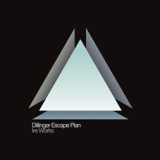
After Miss Machine, Dillinger Escape Plan fans were divided. Many of the folks who were attached to the screaming mathematical metal of Calculating Infinity bailed on the band, disapproving of the experimental musical direction and the meathead appearance of new singer/screamer Greg Puciato. Open-minded listeners were excited about the progressive journey they were taking and many critics hailed the group as a true innovator of metalcore. Ire Works succeeds in many of the same ways that their previous album did, while branching out creatively. They continue to toy with technical metal, blistering hardcore, jazz breaks, and post-punk, but here they evolve again by adding more twists and turns with additional electronic elements. While the merging of too many styles in hardcore can make for a convoluted result (see Avenged Sevenfold's self-titled release), the added instruments and genre changeups enhance the result rather than acting as ornamental distractions. Edgy Aphex Twin-style drill'n'bass drum breaks and stretched and squeezed electro blips feel strangely at home next to the psychotic time-signature changes and manic riffs, especially on the tracks "Sick on Sunday," "Dead as History," and "When Acting as a Wave." Violins, pianos, and trumpets sit nicely in the mix, and the group's willingness to take chances leads to stunning artistic endeavors rather than stale attempts at crossing genres just for the sake of being clever. Original vocalist Dimitri Minakakis makes an appearance, as does Mastodon guitarist Brent Hinds, but the most notable inclusion is drummer Gil Sharone, who proves himself an expert at picking up the slack after the departure of founding member Chris Pennie to play in Coheed and Cambria. Undoubtedly, this act added anger to fuel the fire of their heavier numbers. "82588," "Fix Your Face," and "Party Smasher" are as wicked and manic as their most difficult earlier stuff; conversely, the melodic hooks and falsetto of "Black Bubblegum" and the watery ambience of "Mouth of Ghosts" balance out the album nicely. It can be inaccessible and terrifying all at once, but in a genre overly saturated with formulaic groups, Ire Works is a true standout. If DEP aren't careful and continue down this innovative path, they could easily be labeled the Radiohead of metalcore
Close your eyes and merge into Benedikt Frey’s 'Fastlane'. Imagine sitting in the driver’s seat of a an automobile, one with exceptional horsepower and torque, as you stare out the windshield at the red light, warping in fata-morgana a mile down the road. It’s a straight-away, a black top with two lanes, and against your better judgment you decide to floor the gas. No hesitation in your muscle, your ankle or the ball of your foot, which you now realize is some kind of universal pivot, the first point of contact fusing your body with the will of machine. In this moment you’re in awe that you, a human, an animal, grew from pond scum into something so advanced as to engineer this thing, a mechanical beast capable of overwhelming power and exhilaration. But you also feel a seductive dread, an outside force diverting you from caution toward a dangling carrot of curiosity, asking yourself, ‘How far can I take this thing?’ The dread, now a constant, is numbed, equalized by an adverse intoxicating gratification. You feel both sensations in real time, however, rather than take responsibility for yourself, friends, family and innocent bystanders, you cement your foot to the floor and lean your head back. Noise around you fades to mute. Smell the benzene-scented air, feel the wind on your face, the menacing vibration of the vessel you control beneath you and every grain of asphalt under its tires. This mile has now lasted an eternity and you’ve left your body for some objective view, as if watching climax of a film. Past the point of no return, you embrace abandon and lean into fate. The film becomes slow motion, a crawling pace so mesmerizing you convince yourself of an option to eject yourself from this madness, but as you finally let go of your last morsel of fear, you run the red light head-on into the nucleus of a fantastic glistening sculpture of torn metal, glass, oil, broken dreams and heartache. 'Fastlane' may be just drum machines and synthesizers if you’re timid, but listen harder and know the catastrophic reality of existence, a wreckage so gruesome we dare not rubberneck, but afterall it is our nature to stare.
Factory Benelux presents a limited (500 copies only) 180g black vinyl edition of Part-Primitiv, the fifth studio album from post-punk trailblazers Section 25, originally released in 2007.
Recorded after a hiatus lasting almost two decades, Part-Primitiv saw founder members Larry and Vin Cassidy joined by former Tunnelvision guitarist Ian Butterworth, as well as multi-instrumentalist Roger Wikeley. Combining raw postpunk power and retro-futurist electro, the album marked a convincing return to form and drew praise from reviewers.
"Haunting, melancholic beauty - part post-rock, part trance" (Plan B)
"A vibrant, fierce collection of songs played with all the intense, live-wire energy one could want. Well worth the wait" (All Music Guide)
"The music on Part-Primitiv is informed by all phases of the band's back-catalogue, incorporating their early post-punk impulse alongside their later disposition towards electronic music. She's So Pretty is one of the band's closest brushes with pop music, while Power Base is a surprisingly straight-forward venture into techno, with its rampaging drum machine" (Boomkat)
Two tracks, Dream and Better Make Your Mind Up, were written and sung by Jenny Cassidy before she lost her battle with cancer in 2004. Best known for her beguiling vocal on 1984 club hit Looking From A Hilltop, on subsequent SXXV projects Jenny would be replaced by her daughter Beth.
Two Saviors is Buck Meek's second album, following 2018's self-titled LP also released on Keeled Scales and currently on its third pressing. The Big Thief lead guitarist worked with producer and engineer Andrew Sarlo on this album (who's produced all four of Big Thief albums, as well as coproducing Bon Iver's i,i ). Andrew agreed to record it only if it was made under his conditions-- that they make the album in New Orleans during the hottest part of the year, spend no more than seven days tracking live, on an 8-track tape machine, with only dynamic microphones and no headphones, and not allowing the players to hear back any of the takes until the final day. The band, featuring Adam Brisbin (guitar, vocals), Mat Davidson (bass, pedal steel, fiddle, vocals), Austin Vaughn (drums), and Buck's brother Dylan Meek (piano, organ, vocals), set up in a Victorian house one block from the Mississippi River, and worked within these limitations, encouraging every recording to be imbued with the living, intuitive, and human energy of a first take.
Singer-songwriter house, outsider or campfire dance. Katerina’s full-blown debut EP for Running Back melds cultural images of both places she calls home. Alternatively hailing from Helsinki or Sofia, she serves ethereal vocals, heartbreaking melodies and the chilly melancholic strains of the north to meet an optimistic and at times cheerful mood, paired with pop music themes, heavy bass lines and an upbeat drum section. Six tracks of idiosyncratic and independent dance motifs (including two ambient takes) that all go against the grain of the fast pace of life today, cheap thrills and unnecessary kills. All symbolized in the lyrics of the lead song Get To Know You or the instrumental love ballad Rain In Her Eyes and bound together by Marsu The Cat or Time Machine. An EP with the depth of an LP, lots of weight and even more character. Powerful, wonderful and more durable than the remains of one day.
"Life Plans and Parallel Side Tracks" by Ismael Zouaoui (aka Ish) is the highly anticipated album on Libertine Records. Spanning Electro, Drum 'n' Bass, Dark-Wave, and Ambient, Ish's versatile production shines. Inspired by diverse influences like Brave New World, Japanese Anime, and early Techno/Trance, the album's contemporary, textured sound captivates.
Immerse yourself in blissed-out melodies, masterful sampling and improvised synthesis in four diverse clubready tracks by Melbourne based producer and live electronic artist Skinny Wizard. With a background in keyboards and improvisation, and a strong career in the Australian live music scene, Skinny Wizard ¦rst emerged in 2019 with a live show featuring a collection of drum machines, sequencers and synthesisers, and quickly became a sought-after live artist and DJ in the Melbourne club scene. "Off Lead EP" showcases his further development in bridging the gap between his unique improvised live sound and studio productions.
- A1: Don't Stop
- A2: Message From The Other Side
- A3: 3 A.m. At Moëf Gaga
- A4: When The Rain Is Falling ('85 Interlude)
- A5: Talk Too Much (Instrumental)
- B1: Jump In The Water (24-Track Mix)
- B2: Armer Teufel Am Morgen Nach Dem Maskenball
- B3: Close To You ('86 Interlude)
- B4: September Garden (Instrumental)
- B5: Message From The Other Side (Alternative Instrumental Mix)
"Don't Stop" is the third album retrospectively released by Ghia. As the subtitle "Early Works & Artefacts 1984-1987" implies, it features some of their earliest compositions as well as tracks that were recorded during the same period as their "Curaçao Blue" LP.
The album is a fusion of diverse music styles. Listeners will delight in a range of genres, including electro, funk, soul, jazz-funk, synth pop, and even rap/hip-hop, all woven together as a cohesive work that remains mostly instrumental. As a whole, "Don't Stop" represents Ghia's funkiest and most experimental release to date. Notably, the LP features a rap version of Hermann Hesse's controversial German poem "Armer Teufel am Morgen nach dem Maskenball" ("Poor Devil the Morning After the Costume Ball") from 1926, accompanied by a drum machine rhythm and funky guitar. This poem depicts a person who drank too much the night before, telling the story and describing his hangover. The title track "Don't Stop" and the thrilling minimal electro-funk tune "3 A.M. at Moëf Gaga" both evoke old-school electro influences. The latter references the Spanish discotheque Moëf Gaga, located on the Balearic coast, which the dynamic duo of Lutz Boberg and Frank Simon frequented during their 1980s holidays. While the exact music played at 3 A.M. is unknown, listening to Ghia's track will undoubtedly capture the mood of the place.
One of the key tracks of the album is "Message From The Other Side", which could easily be noted as one of the nicest European synth-funk instrumental pieces ever. The track is based on a sick synth bass line, sparkled with DX7 chord hits, funky guitar, and a delightful "marimba" solo in the last third. The solo was actually played on Boberg's keyboard, using a special sound cartridge. This particular track had to be edited and technically revised by Marian Tone and DJ Scientist as the existing demo version of the song could not be used as is. With its stunning groove, this track will surely be a DJ's favorite.
Listening to the complete album, there is more of Boberg's keyboard wizardry: could you believe that the trumpet solo on "Jump In The Water" as well as the short but stunning slap bass solo on "Talk Too Much" were both played by on the DX7? However, this new release, unlike the jazzy "Curaçao Blue", is not about solos or virtuous playing - it clearly shows the duo's direction towards more electronic composition and clear song structures. The versions of "September Garden", "When The Rain is Falling" as well as "Talk Too Much" are actually instrumental mixdowns of vocal songs. And again, we get a blissful take of "Close To You", here a version from 1986. This soulful jazz-funk ballad could already be heard on "Curaçao Blue" while the final vocal version with singer Lisa Ohm can be found on the recently released "This Is" LP. This shows that the Ghia composers, Boberg and Simon, were perfectionists - tracks were reworked again and again, making them better and better.
The album was mastered and restored with great care, and we are pleased to provide you with a perfect example of mid 1980s home-recording pleasures, tinged with a youthful spirit and providing a sound that cannot be recaptured anymore nowadays. Alongside "This Is" and "Curacao Blue" it should be another perfect addition to any 80s groove collection as well as a great pick for DJs that love and play disco, leftfield electro and funk. The LP is limited to 500 copies.
Warehouse Find!
Smoove gets his hands on the Multitrack layers of an all time classic Blaxploitation tune and brings out the drum break to great effect while fusing epic orchestral breakdowns.
On the flip side Smoove reworks one of his favourite tunes by stripping it back to a vamp section and replacing the original drum machine with some alternative outtake drums!
Incredible jazz / prog / folk score to groundbreaking tattoo film by maverick filmmaker. Unreleased until now, so don’t go saying it’s a reissue because it isn’t, but I’m sure some people will because they always do.
John Samson (1946 - 2004) was a truly great documentary maker. He must be as I’ve been obsessed with his work for many years. Educated first at Glasgow School Of Art (circa 1963) and then finally in the art of film making at The National Film And Television School in Beaconsfield - he headed there in its opening year of 1971 having made a short film that got him a scholarship.
It was at the NFTS that Samson met Mike Wallington, who was to become his right hand man and eventual producer; together as a quite brilliant team they made a handful of inspiring, entertaining and hugely prescient films about important, overlooked, unseen and marginal fringes in society. Tattoo (1975) Exploring the rather clandestine world of tattooing in the UK. Dressing For Pleasure (1977) Exploring the rather clandestine world of festish in the UK. Brittania (1979) A film about railway enthusiasts and a steam train restoration.
Arrows (1979) The life of dart player Eric Bristow. Drag Ball (1981) An unreleased film about the annual Porchester Hall Drag Ball. The Skin Horse (1983) BAFTA winning film about The Outsiders Club, a dating agency for disabled people. The subject matter in all films was always unusual for the time, and Samson managed to navigate his way with compassion, interest and subtlety, immersing himself in the chosen scene and producing moving, fascinating and sometimes darkly amusing situations. His documentaries also do not rely on traditional voiceovers, with stories, facts and narrative threads being dictated by the subjects.
I’ve tried for a long time to find the music for a couple of his early films (there was actually an original 7” for Arrows) - so far this is the only unreleased soundtrack I have found. This one was written by Steve Jolliffe, who met Samson at the NFTS. Joliffe was the resident composer and had a room at the college complex where he could work on scores for the fledgling film makers. Jolliffe was and still is a multi-instrumentalist and prolific composer who had met Edgar Froese at the Berlin Konservatorium in the late 1960s and played in an early incarnation of Tangerine Dream. He toured with blues rock outfit Steamhammer, before hanging out at the NFTS, making this recording (and many others) and eventually rejoining Tangerine Dream in the late 1970s. Jolliffe still writes, records and releases today and once i had made contact with him we traced the original Tattoo master tape to a box at his brother’s house. Musically it’s charming, slightly folky, a touch baroque, there’s a whiff of prog too, and it perfectly suited this early documentary about the art and desire of tattoos. I only wish it was longer. But the film is only 16 minutes long. Seek it out if you can. Try and find all the Samson films, they really are a joy.
As well as featuring intimate footage of tattooed people, the film also includes a rare and very early interview with Alan Oversby (better known as Mr Sebastian), a seminal character in the development of tattoos and body modifications worldwide - it was he who eventually was to tattoo and pierce Genesis P-Orridge.
The images for this vinyl release were all found in Mike Wallington’s Tattoo documentary research folder from 1974, and were photos sent in to Mike and John by people who wanted to feature in the film. Most answered an advert in Time Out, and others included people from my home town of Aldershot where tattooist Bill Skuse and his wife, Rusty (the most tattooed woman in Britain at the time, and featured in the film) were based. His parlour was situated at the back of the arcade where we all used to lose all our pocket money in the slot machines.
The Musicians:
Steve Jolliffe - keyboards, flute, sax Geoff Jolliffe - bass guitar Julian Furniss - guitar Mick Kirby - drums
The always tasteful Half Baked crew looks to one of their own for this fresh slice of delicious minimal. Sam Bangura was a new young resident for the party back in 2018 and since then has really honed his own sound. It's laid bare here across four fine cuts, with opener 'Range Finder' serving up bristling drum machine grooves and cheeky basslines overlaid with cosmic chords. 'Axel's Limp' is a brilliantly vibrant melodic overload with scintillating drums and plenty of neon colours.
'Bugbear' gets more gritty with a standout bassline powering forwards rugged tech house and 'How Are U Feeling?' then gets spaced out and slick.
Carl Finlow keeps on keepin' on. Not only is Finlow one of the most respected names in electro, a producer who boasts a sprawling catalogue that takes in a wide variety of aliases, but he's also spent recent years establishing himself as a mainstay for Sheffield's Central Processing Unit label. Soft Robotics, the new EP from Finlow's Silicon Scally project, is the fifth Silicon Scally release in five years to boast one of CPU's instantly-recognisable black-and-white covers.
The reason that Silicon Scally and CPU keep linking up is simple; they're a perfect fit for one another. Central Processing Unit has established itself as a haven for post-Drexciya producers since launching in 2012, and there are few artists better than Finlow at building on the Detroit group's sound. The union bears fruit once more on Soft Robotics, an EP of lithe machine-funk jams that will both do damage in the dance and also reward more concentrated home listening.
Things begin at a steadier speed than one might expect. Rather than barrelling off with the kind of sinewy roller one associates with the CPU name, Soft Robotics' title-track takes things at mid-pace. The groove reveals itself without hurry, Silicon Scally adding or subtracting elements - twitchy modular loops, pensive pads, the occasional blurt of low-end - atop the chugging bass/drums groove. It's a track which wins you over with guile rather than force.
As the name of subsequent cut 'Jitters' intimates, this one picks things up a little after 'Soft Robotics'. The tempo is higher here, the central beat more nervy. At their cores, though, 'Jitters' and 'Soft Robotics' are kindred spirits. Here, another slyly insistent bit of drum programming comes swirled up with all sorts of extraterrestrial tones, from little nuggets of melody supplied by the keys to electrifying synth stabs and percussive squelches.
Things limber up further still on first B-side 'Spin Ratio'. The track's 808 kicks are punchier than those of the A-side jams, and there's a dizziness to the bass tone which gives 'Spin Ratio' an intriguingly off-kilter feel. Atop the booming beat we find ourselves hypnotised by cells of melody and harmony interlocking or moving apart - particularly the staccato module at the track's heart. Sure enough, 'Spin Ratio' is the Soft Robotics joint which cleaves closest to Drexciya, invoking other Detroit disciples like Jensen Interceptor in the process.
After Soft Robotics picks up speed in the middle, closer 'Super Fluid Tones' brings us back to where we started. This track returns to the more measured delivery of the record's opener - there's a steady pulse to the drums, and once again Silicon Scally packs the mix with so many intriguing whizzes, bangs, blips and blurts that it's impossible not be won over by this tune's construction. 'Soft Robotics' and 'Super Fluid Tones' bookend Soft Robotics very nicely, and Silicon Scally's smart pacing gives the EP a lovely ebb and flow.
The ever-excellent Carl Finlow drops a Silicon Scally release via Central Processing Unit for the fifth year running. Like its predecessors, Soft Robotics is an excellent and deftly-crafted collection of modern machine-funk.
RIYL: Drexciya, Jensen Interceptor, Fleck E.S.C., The Advent
black LP[26,85 €]
The drowsiest and earliest inklings of the slowcore movement can be traced to Codeine’s 1991 debut. Combining the Louisville scene’s relaxed tempo with doom metal’s distorted slurry, the album is a
depressing masterpiece of hushed vocals, noisy guitar and punishing drums.
clear LP[28,78 €]
The drowsiest and earliest inklings of the slowcore movement can be traced to Codeine’s 1991 debut. Combining the Louisville scene’s relaxed tempo with doom metal’s distorted slurry, the album is a
depressing masterpiece of hushed vocals, noisy guitar and punishing drums.
Imagine if Eric Carle had been signed to Ghost Box, or if the Look Around You team had ended up taking over the Radiophonic Workshop. If you can picture that kind of sound, we’re ready to welcome you to the Cosmic Neighbourhood.
Cosmic Neighbourhood’s Gatherings is an album made for wild imaginations and deep daydreams. Its fourteen tracks provide the kind of trip you can take if you close your eyes tight enough and let your mind wander. It’s the music of small things, groovy sounds from way underground that’s inspired as much by Martin Rev and Moondog as it is by walking trees, pine cones catching the bus, nocturnal farmyard symphonies and the movements of butterflies reimagined through restless drum machines. Sounds good? Come join the gathering. There’s room for everyone.
Cosmic Neighbourhood is the musical alias of York-based illustrator and musician Adam Higton. Adam’s work encompasses comic strips, collage and sound art and documents the daily goings-on of the forest folk within the realm of the Cosmic Neighbourhood. His two albums on Kit (|Collages I and II) see each song acting as a response to a series of paper-and-scissors compositions. Sonically, these records straddle new and old, taking modular electronics, flutes, bells and softly pattering drum machines, before colouring them all with the amber glow of some forgotten, psychedelic kids' TV programme. Higton's benign toots and echoing jingles bring to mind Daphne Oram's early delay experiments or the meandering playfulness of Tom Cameron. Radiophonic and time-worn, it still somehow sounds like the future.
Gatherings follows previous Cosmic Neighbourhood albums Library Vol 1 and Collages I and II. Previous Rivertones releases include spoken word and found sound collages by Robert Macfarlane & Chris Watson, poetry and elemental music by Will Burns & Hannah Peel and the soundtrack to Wolfgang Buttress’ Hive structure at Kew Gardens by Be.