To mark 10 years since SOPHIE’s game-changing singles collection PRODUCT, Numbers are celebrating with a special edition featuring 11 songs across Deluxe Vinyl and Compact Disc.
This anniversary release includes bonus tracks, track-by-track slide posters, and a SOPHIE PRODUCT Card. Physical editions are now available for pre-order and released on 11th July 2025.
SOPHIE classics ‘BIPP’, ‘LEMONADE’ and ‘VYZEE’ are joined by two immaculate PRODUCT-era songs ‘OOH’ and ‘GET HIGHER’ recorded and produced at the time, each with colourful single artwork completing the set.
‘OOH’ is one of SOPHIE's earliest productions that has been through several revisions since 2011. It was one of three original tracks that Numbers had signed when SOPHIE uploaded the song alongside 'BIPP' and 'ELLE' to her Soundcloud, and while it had been through several iterations and speed changes, this finalised version was completed by SOPHIE in 2019.
SOPHIE once described ‘OOH’ as “hi tech club dance pop”. Musically speaking, the earworm hook is carved out by her signature portamento-infused synths and candy-coated lyrics, a firm cult classic approved by AG Cook and Charli XCX. Initially titled 'MAKE RESPECT', the track was first performed live by SOPHIE in 2011 to a handful of lucky people at a beach afterparty surrounding Sonar Festival, Barcelona and later that year at Manhattan's New Museum. The vocal was recorded as the first track in the same one-day recording session as SOPHIE's debut single 'NOTHING MORE TO SAY', released on the Huntley & Palmers label, where Sophie's songwriting was performed by the London vocalist Jaide Green.
The genesis of the ‘OOH’ and ‘NOTHING MORE TO SAY’ recording session is lore-worthy in its own right: after watching Jaide Green perform live with Olly Murs during the sixth series of The X Factor in 2009, SOPHIE reached out and invited Jaide to record in her home bedroom studio.
‘GET HIGHER’ was born during joyous sessions in 2013, when SOPHIE’s beat was introduced to the vocalists Cassie Davis and Sean Mullins. The track feels like a visionary precursor to ‘Vroom Vroom’, and doesn't sound out of place next to the sub-clang intensity of SOPHIE’s ‘HARD’ and ‘MSMSMSM’. Striking a playful balance between blissed-out hyperpop and club-ready Atlanta trap, it showcases SOPHIE’s signature, laser sharp sound design. Originally released as a bonus track on the Japanese CD edition of PRODUCT, ‘GET HIGHER’ has remained a hidden gem.
A groundbreaking producer, songwriter and performer, SOPHIE's visionary approach reshaped the landscape of pop and electronic music. Emerging in the early 2010s, SOPHIE introduced a hyper-detailed, futuristic sound defined by metallic textures, elastic basslines, and an uncanny blend of synthetic and emotional tones. Collaborating with artists including Charli XCX, Madonna, Vince Staples and Arca, SOPHIE helped pioneer a new pop movement while challenging conventions around identity, genre and production. SOPHIE's work continues to resonate deeply, leaving a lasting impact on a generation of artists and listeners alike. Discography: PRODUCT (2015), OIL OF EVERY PEARL'S UN-INSIDES (2018), SOPHIE (released posthumously, 2024).
Cerca:mad work
Nu Groove spotlights the artists that made the legendary NYC label a firm favourite of crate diggers then and now with this special vinyl release of their vital tracks revisited by leading selectors of today. The label, born in 1988 by Frank and Karen Mendez as an outlet for the experimental works of the Burrell Brothers, quickly became a home for up-and-coming genre pioneers. Nu Groove Edits, Vol. 7 opens with the NiCe7 Edit of ‘Feel It’ by NYC favourites The Sound Vandals. More monikers of Rheji Burrell appear in the collection too, as the seminal ‘APT. 2B’ by N.Y. House’n Authority is reworked by Steve Bug, followed by Darius Syrossian’s edit of ‘C’Mon’ by Rheji’s Avant Garde moniker. Make A Dance’s edit of the Rhano Burrell classic ‘I’ve Fallen And I Can’t Get Up’, under his You Know Who! alias, closes out this vinyl collection of future record box staples.
- A1: When I Sing, I Slip Into The Microphone. Into That Void, I Bring Comrade "Prayers", Then, Turning To Face The Outside, Together We Explode. Part I
- B1: When I Sing, I Slip Into The Microphone. Into That Void, I Bring Comrade "Prayers", Then, Turning To Face The Outside, Together We Explode. Part Ii
- C1: When I Sing, I Slip Into The Microphone. Into That Void, I Bring Comrade "Prayers", Then, Turning To Face The Outside, Together We Explode. Part Ii (Continued)
- D1: When I Sing, I Slip Into The Microphone. Into That Void, I Bring Comrade "Prayers", Then, Turning To Face The Outside, Together We Explode. Part Ii (Conclusion)
- D2: When I Sing, I Slip Into The Microphone. Into That Void, I Bring Comrade "Prayers", Then, Turning To Face The Outside, Together We Explode. Part Iii
Among the true Keiji Haino devotees, Nijiumu’s Era of Sad Wings (released on P.S.F. in 1993) has always held a special place in the pantheon. Operating for only a few years in the early 90s and apparently only performing a handful of shows, Nijiumu operated at the opposite end of the dynamic spectrum to Haino’s famed power trio Fushitsusha, dwelling in a hushed, meditative realm of mysterious droning sonorities and free-floating melodies that occasionally erupts into violence. Black Truffle is pleased to announce a new double-LP edition of a lesser-known 1994 Nijiumu recording, When I sing, I slip into the microphone. Into that void, I bring comrade “prayers”, then, turning to face the outside, together we explode. Here, Nijiumu is the trio of Haino, Tetuzi Akiyama and the obscure Takashi Matsuoka, the three performing on a wide variety of string, wind and percussion instruments, as well as electric guitar and bass, and Haino’s unmistakeable voice.
Like on the early solo Haino album that shares the group’s name (released on P.S.F. in 1993), the instrumentation swims in reverb (the use of which Akiyama recalls as ‘a kind of point of the band’), often obscuring the instrumental sources. On the short opening piece, a distant reed instrument arcs long buzzing melodies over a bed of cymbals and gongs, like a psychedelic take on Tibetan music. The epic second part, occupying almost 50 minutes, begins as a splayed, near-formless cloud of electric guitar and bass, shadowed by bowed and plucked strings, the three elements working through twisting atonal shapes. At various points in the recording, we hear what seems to be the sounds of musicians moving between instruments, their shuffling and bumps fitting seamlessly into this radically open music. Eventually, what sounds like electric guitar moves closer to the foreground, fixing on a repeated melodic cell around which hover mysterious clouds of long tones and a sporadic shaker. At the half-hour mark, the music begins to build to a violently emotive climax, Haino’s impassioned vocal cries punctuating a lumbering, bass-heavy murk, contrasted at points by what sounds like a tin whistle. Suddenly, the volume drops to a near-whisper, opening the way for the stunning final moments, which touch on the slow-motion balladry of Haino’s classic Affection, here given an eccentric twist by an occasional woodblock hit. The third piece opens with a hazy trio of rumbling bass, bowed strings and abstracted slide guitar, the latter calling to mind some of Akiyama’s later solo work. Eventually joined by Haino’s voice, its fragile, haunted tone might remind the listener of the man in black’s documented love of the madrigals of the murderous Count Gesualdo, before the recording abruptly breaks off mid-note. In this new edition, the Nijiumu trio recording is supplemented by a piece recorded solo by Haino in 1973, a bracing electronic blowout stretching almost half an hour. Using a homemade electronics setup to unleash a barrage of crunching distortion and shuddering harmonic fuzz, it takes its place in the canon of extreme live electronics next to Robert Ashley’s Wolfman and Walter Marchetti’s Osmanthus fragrans, looking forward to extreme noise years before Merzbow. Taken as a whole, these four sides of music are a stunning document of some of the lesser-known waystations of Haino’s singular creative path.
Since his earliest days, Ben Frost has been fascinated by the cinematic qualities of the guitar. His output to this point has hinted at this, but with »Steel Wound« he makes a bold statement of intent.
Finding his way to a deserted stretch of Johanna Beach along the Great Ocean Road (Victoria, Australia) in early 2003 Frost set up a remote studio at a derelict cabin overlooking the icy waters of Bass Strait. With a constant wind flowing off the sea his only companion, Frost started work on a series of improvisations that would eventually become »Steel Wound«. A few months go by and Frost has made his way back to civilization. He begins editing the masses of treated guitar from the Johanna Beach improvisations and before long a theme takes hold - one that very much reflects the isolation of the environment where the tracks were created.
Each of the pieces on »Steel Wound« is a epic journey, coloured with a deep sense of filmic narrative and suggested dialogues. The textural quality of the works, laced with field recordings and lost vocal fragments, sketches out the emotional soundscapes Frost had unwittingly gathered during his time at Johanna Beach. Each piece is a splintered fragment in time – a forgotten memory beautifully rediscovered in a moment of introspection.
DJ Support: Fred P, Mark Farina, Harvey Sutherland and more
When two underground icons like James Curd and Fred P join forces, the result is more than just acollaboration-it's a cross-continental meeting of deep house minds. The track was born in James Curd's Adelaide studio while Fred P was in Australia, capturing a rare and organic creative moment between two respected figures in house music. James Curd, known for his work with Greenskeepers and his extensive catalog across labels like Classic, Defected, and DFA, brings a playful yet precise groove, while Fred P, the introspective deep house pioneer behind Black Jazz Consortium, adds soulful depth and hypnotic finesse. The remix package elevates things even further. Harvey Sutherland, a staple in Australia's modern funk and electronic scene, brings his analog synth wizardry-his remix credentials include Disclosure and Jamiroquai. Austin Ato, a UK house innovator with a DFTD remix for Groove Armada, injects vibrant dancefloor energy. And Junior Sanchez, a long-time figure in New York's club culture, rounds it out with a heavyweight version - he's flipped everyone from A-Trak to Madonna. This is a lineup that speaks volumes before you even hit play.
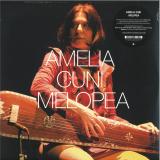
Black Truffle is pleased to announce Melopea, presenting two new pieces highlighting the incredible voice of Amelia Cuni (1958-2024), the great Italian singer, based in Berlin in later life, whose mastery of the classical Indian dhrupad developed in parallel with a commitment to contemporary experimental approaches. After two stunning archival releases documenting traditional dhrupad performances in India in the 1990s (BT079 and BT092), the two side-long pieces here embody the freedom with which Cuni explored new contexts and settings for her singing.
Both make use of a long recording of Cuni singing the pentatonic Raag Bhoop (or Bhopali) made in 2012 by her partner Werner Durand in Berlin. ‘Melopea’ began from Cuni and Durand’s superimposition of this recording with violinist Silvia Tarozzi and cellist Deborah Walker’s performance of Éliane Radigue’s ‘Occam River II’. Inspired by the beauty of this chance encounter (and other experiments with non-synchronous collaboration during the pandemic years), Tarozzi and Walker recorded independently, without hearing Cuni’s voice but ‘having her present in memory’. Tarozzi and Walker’s bowed strings places Cuni’s magisterial performance in a new context, emphasising, as Radigue commented upon hearing the initial layering of her piece with Cuni’s voice, a shared ‘searching toward the partials, overtones, these natural constituents of acoustical sounds in their richness’. Beginning with whispered bowed harmonics, the violin and cello swap the stability of dhrupad’s traditional tanpura drone for a slowly evolving, uneasy web of harmonic interactions recalling some of Harley Gaber’s work, sometimes sitting on dissonances for long periods or allowing changing interference patterns to come to the fore. Primarily focusing on her lower register, Cuni’s performance demonstrates her mastery of microtonal pitch subtleties, elegant sweeping glissandi and meditatively unhurried pacing.
The continuation of the same recording by Cuni forms the foundation of ‘Bhoop-Murchana’, with Anthea Caddy on cello and Werner Durand on soprano saxophone. In contrast to the randomised layering of the first piece, here Durand and Caddy have carefully selected pitches based on the raag Cuni sings, using the ‘Murchana’ form, which uses the constituent notes of the raag as tonics of new raags, retaining the same interval structure. Both players who have developed tones of striking depth and harmonic purity on their instruments, Caddy and Durand’s patient long tones are simultaneously rigorously grounded in the physical properties of sound and possessed of an immaterial, floating quality. Combined with Cuni’s voice and, near the piece’s end, her contributions on hammered and plucked tanpura, the effect borders on miraculous. To surrender to this music is like slipping into an onsen pool, feeling the instantaneous release of every tension. Accompanied by liner notes from Durand, Tarozzi and Walker, Melopea is both a moving tribute to the profound art of Amelia Cuni and, for the uninitiated, a perfect introduction to it.
Exit were a five-piece ensemble of journeymen musicians from the lone star state of Texas who came together in the early 1980’s to record a handful of popular local 45’s including two Football-mania songs. The groups line-up consisted of lead guitarist and vocalist Clennis High, rhythm guitarist Lonnie Jones, his brother Johnny K. Jones the groups keyboardist, bassist Frank Houston Jr and George Oliver on Drums.
Clennis High, a promising Football player with a flair for playing the guitar began his early musical career while attending Wheatley High school. Aged 17, Clennis played on several Crazy Cajun, Huey P Meaux’s recording sessions for Eugene Gamble and Barbara Lynn. Further recording sessions on Roy Head followed before he accepted an invitation by his neighborhood friend Willie Parnell to play alongside a group of fellow students in a band called ‘The Drells’. ‘The Drells’ had been founded by Archie Bell in 1966 pulling together neighborhood friends James Wise, base singer Cornelius Fuller, Billy Butler, Willie Parnell joined later by Archie’s brother Lee Bell. Clennis would play with ‘Archie & The Drells’ through their time on Skipper Lee Frazier’s Ovide label often accompanied by the ‘Texas Southern University Toronadoes’ where they scored a hit with the dance instruction song “Tighten Up” which on the strength of Atlantic Records picked the group up. Clennis played on all 3 of the Drells studio albums “Tighten Up”, “I Can’t Stop Dancing” and There’s Gonna Be A Showdown” under Gamble and Huff’s tutelage before quitting to return home to complete his degree. He continued to play with several local Houston bands including the Cold Four who recorded the sort after “Love And Care/Low Riden” (Drells).
Clennis later formed ‘The Reality Band’ with his friend Jerald Grey which introduced him to George Oliver and Frank Houston Jr. Occasionally ‘The Reality Band’ played with other groups, one group in particular (which Jerald previously knew) being an outfit from Conroe, Texas called the ’58 Engineers.
‘The 58 Engineers’ were founded by Johnny and Lonnie Jones, taking their name from the Army unit Johnny served with during his time in the service. By 1973 having grown to 8 members the group entered the studio to record the highly collectable and popular funk outing “The Funky Fly (Part1 & 2)” on their own Bryant Records label (Bryant being the Jones brother’s mother’s maiden name).
As members of the ‘58 Engineers’ moved on, the Jones brothers found themselves working more and more with the ‘Reality Band’ so when Jerald Grey too later moved on the remaining ‘Reality Band’ members Clennis, George and Frank having grown fond of the two “Country Brothers from Conroe” as they affectionally called the Jones’s made the decision to continue working with them, which led to the foundation of the group, Exit.
During 1980 the recently formed Exit recorded the first of their two Football -mania songs but it is from the groups 1981 release “Success/One More Hour” (Dat-Tex 105) that Soul Junction have taken the splendid ballad “One More Hour” to pair with the flipside of the groups third release “The Little Green Monster” (Dal-Tex 106) which is now highly regarded and sort after by sweet soul/lowrider connoisseurs alike. Both of these songs have been put back-to-back to feature on Soul Junction’s forthcoming September 45 release.
After two albums inspired by vast northern landscapes, the forces of nature, and an ever-present sense of duality, Glass Museum shifts gears. The Brussels-based group-originally formed in 2016 by pianist Antoine Flipo and drummer Martin Grégoire-welcomes bassist Issam Labbene as an official third member, opening up a richer, more immersive sound and setting its sights on the rhythms of the modern city.
A true turning point in Glass Museum's career, the new album 4N4LOG CITY twists the codes of electronic music, explores the depths of jazz, and asserts its eclecticism through a fresh and infectious groove.
Signed to the forward-thinking Belgian label Sdban Records, the group shapes its identity within the vaulted ceilings of Volta, a creative hub in Brussels frequented by the vanguard of Belgium's "new scene." Sharing space with acts like ECHT!, Lander & Adriaan, and Tukan, the band continues to push its boundaries through collaboration and reinvention.
Recorded between the French countryside of Drôme, the industrial edges of Brussels, and Volta, 4N4LOG CITY features striking guest appearances. Swiss drummer Arthur Hnatek-known for his work with Tigran Hamasyan and Erik Truffaz, and praised by Gilles Peterson and Laurent Garnier-drives the opener "GATE 1" into hypnotic, krautrock-inspired territory. Meanwhile, rising vocalist JDS lends soulful grace to "Call Me Names", evoking the emotive textures and elegance of vintage soul-jazz reminiscent of the likes of Jordan Rakei or Tom Misch & Yussef Dayes.
Without abandoning their melodic roots and foundational approach, the trio takes daring steps into new terrain. The experimental centerpiece "III" explores the piano as a textural and rhythmic force, drifting between ambient and breakbeat. Elsewhere, the gritty "VAN GLAS"-a hip-hop-tinged track featuring rapper JAZZ BRAK of STIKSTOF-the band ventures far beyond their comfort zone, injecting streetwise lyricism in their mix of electronics and jazz.
Fueled by the heartbeat of the city, 4N4LOG CITY captures the mechanical ebb and flow beneath concrete towers-the anonymous rhythms of daily life moving over the asphalt, and the fleeting, meaningful connections made along the way. Produced by Antoine Flipo and mixed by Elsa Grelot (Avalanche Kaito), the album stands at the intersection of human emotion and urban architecture-a post-modern, deeply cinematic work that asserts Glass Museum's place at the cutting edge of European music.
Book[37,40 €]
In the final month of 2024, Meitei arrived in Beppu, a city long steeped in vapor, myth, and mineral memory. Invited to create onsen ambient music commemorating Beppu’s 100th anniversary, he immersed himself in the city’s geothermal psychogeography, where sound rises from the ground and time clings to mist.
Known for his Lost Japan (Shitsu-nihon) works, which channel forgotten eras into flickering auditory relics, Meitei took residence in the warehouse of Yamada Bessou, a century-old inn perched by the bay. Over two weeks, he listened intently to steam, to stone, to the atmosphere itself. The resulting work, Sen’nyū, traces the inner spirit of onsen culture. Like water finding its path, the music emerged with quiet inevitability, shaped by Meitei’s synesthetic sensibility and deep attunement to place.
Equipped with a microphone, he wandered Beppu’s sacred sites: Takegawara Onsen, Bouzu Jigoku, Hebin-yu, and the private baths of Yamada Bessou. There, he captured the breath of the springs, bubbling mud, hissing vents, wind against bamboo, and the murmurs of daily visitors. These field recordings became the sonic bedrock of Sen’nyū, an act of deep listening that attempts to render even the rising mist and shifting heat into sound.
Unfolding as a single, continuous piece, Sen’nyū drifts like fog through sulfur and stone. It traverses the veiled madness of Bouzu Jigoku, the spectral resonance of Yamada Bessou’s inner bath, and the hushed voices of Takegawara Onsen. It is a gesture of quiet reverence, for water’s patience, the land’s memory, and the hands that have bathed here for generations.
Where Meitei’s earlier works conveyed his personal impression of a fading Japan, Sen’nyū is grounded in tactile presence, music not imagined but encountered. Here, his practice moves closer to the spirit of kankyō ongaku, environmental music born from place, shaped by it, and inseparable from it.
As part of the project, Meitei conceived a two-day public sound installation inside Takegawara Onsen, culminating in a live performance. Bathers soaked in mineral-rich waters while submerged in sound, an embodied ritual of place, body, and listening.
Sen’nyū marks Meitei’s first full-length work centered entirely on onsen and opens a new chapter of his Lost Japan project under the expanded title 失日本百景 (One Hundred Lost Views of Japan), a series exploring extant sites of longing still quietly breathing within contemporary life. The album will be accompanied by Meitei’s first photo book, a visual document of his time in Beppu. A new layer is added to the world he has, until now, built only through sound.
Sen’nyū continues Meitei’s devotion to Japan as subject, while opening new terrain: both ritual and remembrance, an immersion into the mineral soul of Beppu.
Following the vinyl release of Delfonic's reworks of Roy Ayers tracks taken from the BBE Music compilation Roy Ayers-Virgin Ubiquity, it's now Osunlade's turn to add his production and remix enchantment to the music of the master craftsman with these remixes of Brand New Feeling. Featuring the exceptional vocal talents of Merry Clayton, perhaps best known for her blistering performance on the Rolling Stones' Gimme Shelter and her own Webster Lewis penned hit Emotion, alongside Jazz vocalist and Earth, Wind & Fire, Ubiquity and Harvey Mason collaborator Silvia Cox, Osunlade's Yoruba Soul remixes have added new dimensions to this track. Hailing from St Louis, USA Osunlade's CV includes writing music for Sesame Street to working with and producing artists as varied as Patti Labelle, Freddie Jackson, Eric Benet, Martha Wash, Salif Keita, Nadirah Shakoor and Cesaria Evora. He started the Yoruba Soul project and label after his move to New York because of 'the continued need to create the music I wanted' and it is this musical freedom that has made him one of the most distinctive music makers, producers, DJs and remixers around today. Brand New Feeling is released as a vinyl EP featuring two tracks, the Yoruba Soul Mix Parts 1 & 2.
First things first, I want to thank Nectax for his patience, because he's been regularly sending me his music for well over 2 years & I was so swamped with other music being sent to me on a regular basis from other people, that I never made the time to actually check most of what he was sending me or to properly get back to him in response to the tracks of his that I did check. It's hard making time for listening to demos submitted for Future Retro London, amongst all the other commitments I have to take care of on a day-to-day basis, but he kept at it until I was finally able to realise what I had been sleeping on for so long.
Now that's out of the way, I was first made properly familiar with his music through his release on Over/shadow, as well as seeing some of his sets in London and hearing other people supporting his music, which made me more vigilant towards any music he'd send to me.
He sent me "London Bridge" and I really liked it, so much so that it gave me some ideas that I wanted to add to it & we turned it into a collab. He also sent me "Akaizen" which to me, is my favourite track of his that I'd heard of everything he'd sent me (that I actually made effort to check!), which Harmony has done a great job remixing. And then to complete the release, he met up with Champa B (who's based near him) to work on "Prisoners Of Psilocybe", and like that, it all came together in the end!
Big thanks to Nectax for his music (& again, sorry for being so consistently slow to respond!), to Harmony for his quality version of "Akaizen" & to Champa B for collaborating on "Prisoners Of Psilocybe".
This plate is about to welcome back one of the unsung heroes from the 45 Seven lands of dub, meditating with us from day one. Weather it may be about 4578's foundations of the rolling Dub Over Distance along the shuffly Dub Pacifico or the later forward lurking tribal jungles of Black Lake flipped by Lack Blake on 45719: Dub Across Borders always knows to amaze with both a contemplating deep inner focus of well laid-out hand-made instrumentation and vintage dubbing as well as refreshing ear-opening sounds and soul-pleasing vibes collected from all over the world, creating a very own sphere of what feels like some kind of ancient sci-fi riddim, rooting upwards to the phuture.
When sweating over a hot mixing desk and hoping for a fresh breeze, the roots of Come Rain were laid in a form of bassdrums knocking at the sky's gates, stabby infra subs foreseeing well-wished thunders and moist dark skank works are calling for storm. An inner shout for the elements, incarnating in a certainly minimal yet pretty heavy 160 stepper, rolling over all the dry hot air out there.
Yeh Sih Dub comes after the rain: new branches grow, fresh leaves spread, foggy clouds reach up for a mountain-high rainforest. Awakening the world bass side of Dub Across Borders, it gives you ceremonial Bhuddist horns as well as houting sounds of the tantric Khamak, a poundy stab bass and the shimmering spring-splashing ride sitting on top as its crown. Only rarely 80 bpm bass has been as easily touching and moving at the same time.
Take a deep breath and dive into this piece of both mindful and reflective space bass, launching sub-heavy Jungle onto imaginery moons of spacial perception. We are actually just about to start this journey, feel free to get aboard!
"Absolute gold, thanks a bunch" Will be supporting lots" Pugilist
"Epic Dub pressure, big fan of Dub Across Borders" Sun People
"Sounding great as usual, will play for sure!" Tracy & E3 of Zamzam
Berlin-based musician and media artist Michael Vorfeld celebrates the 20th anniversary of his unique sonic explorations with a new volume of his Glühlampenmusic (Light Bulb Music). Mastered by Rashad Becker.
Michael Vorfeld is a musician and media artist, plays percussion and self-designed string instruments, and realizes electroacoustic sound pieces. He works in the field of experimental, improvised music and sound art, realizing installations and performances with light and sound, and working with photography and film. In addition to his solo activities, he is a member of various ensembles and collaborates with artists who work in many different art forms, e.g. Burkhard Beins, Mazen Kerbaj, Ute Wassermann, Reinhold Friedl, to name a few. Based in Berlin, his list of activities includes numerous concerts, performances and exhibitions in Europe, America, Asia and Australia. Michael Vorfeld participated in the documenta 8, Kassel with the sound performance group "Heinrich Mucken".
Since the mid-1980s, Vorfeld has been realizing a multiplicity of partly site-specific light works (most of which also included sound) and where the incandescent lamp played an essential role. He conducted many tests to research the interplay of light and sound, experimented with all kinds of incandescent lamps in relation to various light-controlling devices and used many different types of microphones and pickups to "eavesdrop" into the acoustic potential of the various light events. The result of this research is Glühlampenmusik (Light Bulb Music), an electro-acoustic and audio-visual performance where sounds are generated through the use of different light bulbs and actuating electric devices. The incorporation of different analog light controllers such as switches, dimmers, relays, flashers and various others leads to diverse variations within the light event, made audible with the help of various microphones and pickups. The changes in the light intensity, the incandescence of the filaments and the rhythmic variety of the flickering and pulsing lights is directly transformed into a comprehensive and microcosmic electro-acoustic world of sound. First performed publicly under the titleGlühlampenmusikin the Labor Sonor series at Kule, Berlin in January 2005, and released in 2010, this new volume of Glühlampenmusik celebrates its 20th of these sonic adventures that can range from sparse abstractionism to almost "clubby" pulsations.
It was the 90s. Paris had the blues, French rap was beginning its slow rise, and a new musical genre was emerging: Acid Jazz. Imported from England by DJ Gilles Peterson, this groovy style blended 70s funk with a certain idea of jazz tailored for the dancefloor. Its heroes were Galliano, Brand New Heavies, Incognito, and the James Taylor Quartet. Jamiroquai topped the charts, MC Solaar recorded with Urban Species, and suddenly, France was swept up in the swing whirlwind. Starting in 1993, Parisian clubs embraced this union of jazz and groove, and in 1994, a compilation was released: Paris Groove Up. Around ten groups delivered the French version of this British style: Mellowman, Mad In Paris, Vercoquin, Ready Made... and Dis Bonjour À La Dame. The band wasn’t new—their roots went back to the late 80s, when bassist Marc Israël brought together a brass section and some seasoned musicians. But the real beginning of DBALD came in 1992 with the arrival of singer Sital. "Christophe Denis joined on guitar and songwriting. In 1993, we opened for Jamiroquai and Maceo Parker, and that’s when the major labels interested in the acid jazz market started noticing us," recalls Marc. Their track Chris’tal, the centerpiece of the compilation, was released as a single, and Dis Bonjour À La Dame's album began production in late 1994 in London, at Roundhouse Studio. “We must’ve been among the last sessions there—it was demolished shortly after. It was a very 70s studio, with old gear, a Fender Rhodes, everything was vintage! We recorded for a month, all playing together live, then added the brass and finally Sital’s vocals. We were lucky to have two exceptional backing singers, Sarah Brown and Mark Anthoni, who worked with Incognito and Urban Species.” The self-titled album came out in early 1995, and it had all the ingredients of a hidden funky gem from the 90s: Hey Mama with its ironclad groove, the irresistible instrumental Sheherazade Groove opening the record, Soul Body with its R\&B sensuality... The hip-hop touch came courtesy of Lee Rick’s, the MC from Mellowman, who laid down rhymes on Hall Blues. The brass section was on fire, the bass went wild, and Sital added a sensual spark to the whole thing. In short, a solid album produced by Fred Versailles (producer of NTM’s first album) and mixed by Paul Borg (Urban Species, UFO, -M-, Mory Kanté), a testament to a time when big funky bands made Paris groove—with Dis Bonjour À La Dame leading the charge. Nearly thirty years later, it’s time to (re)discover DBALD.
Zopelar has built a distinguished place in the Brazilian electronic music industry. He is known as a complete and versatile DJ and music producer, and is a key figure in São Paulo’s underground music scene.
With his signature “retro-futuristic-funky-groovy” style, Zopelar has made some celebrated albums and EPs released by labels like Apron Records, Clone Records, Tartelet Records, Soul Clap Records and others.
A prolific producer and sound designer, Zopelar’s work extends beyond music production into the realm of contemporary art and film scoring. His sound pieces have been showcased in prestigious
exhibitions and galleries, including New Museum (NYC) and the Venice Biennale.
Zopelar is now back for his third solo release on Apron Records - LP titled "Call it Love” The first single "We Can Make It" feels nostalgic but with a modern to the future twist which compliments the Apron DNA! It features Brazilian artist Ashira, she lays her beautiful voice over Zopelar classic R&B production..
The second single Je t'aime features French born Brazilian based L’Homme Statue plus Amsterdam’s Retromigration” giving a tropical and very hot Brazilian house for the dance floors and the last single
features US Virgina Beach very own MC “Hernbean5150” With a soulful downtempo smooth production with a perfect complimentary vocal, Some say he reminds them of MF Doom”.
Overall this LP slams in every way and its very well put together, whether at home, driving, in nature or in the clubs, it takes you on a journey for your listening pleasure!
- A1: Alain Peters - Plime La Misère
- A2: Altin Gün - Goca Dünya
- A3: Mauskovic Dance Band - Repeating Night
- A4: Esplendor Geometrico - Moscu Esta Helado
- A5: Hyperculte - Temps Mort
- A6: Madalitso Band - Wandiputa Dala
- B1: Meridian Brothers - Puya Del Empresario
- B2: Derya Yildirim & Grup Simsek - Nem Kaldi
- B3: Nordine Staifi - Zine Ezzinet
- B4: Cyril Cyril - Les Gens (Radio Edit)
- B5: Africa Negra - Zimbabwe
- C1: Yin Yin - One Inch Punch
- C2: Les Abranis - Chenar Le Blues
- C3: Orchestre Tout Puissant Marcel Duchamp - Breath
- C4: Coco Maria - Me Veo Volar
- C5: Amami - Ivory
- C6: Lalalar - Abla Deme Lazim Olur
- C7: Nusantara Beat - Djanger
- D1: Yalla Miku - Asmazate
- D2: Chouk Bwa & The Ångströmers - Amounay
- D3: Sami Galbi - Dakchi Hani
- D4: Baby Berserk - What I Mean
- D5: Dressed Up Animals - Mondtanz
Ten years, a compilation. It"s not a conclusion, nor a greatest hits. More like a pause, a moment to reflect - a look back to better move forward. Since 2015, Les Disques Bongo Joe have been navigating instinctively, yet with a compass all their own: a love for free-spirited sound, a curiosity for the undefined, and a clear idea of what a label can be - a space for listening, care, and invention. The compilation offers a journey - subjective, fluid, and unapologetic - through ten years of sonic activism. A selection of tracks drawn from the label"s corners and crevices: from early releases to recent ones, from essentials to rarities, from cult reissues to contemporary works that carry the label"s energy forward. The record flows between raw intensity and sonic finesse, between remastered archives and flashes of electronics, between fragile voices and hammered percussion.
Right now, right this second and of course right this moment while you listening to it or even while reading this line of text may be witnessed the real royalty of the underground of Thailand - DOTT. Pakarapol, the mastermind behind this release has made his name in concrete actions towards the development of the local and international scene whether it’s to play sweaty basements or grand festivals, releasing quality music or being one of the driving forces behind the record store called “More Rice” which is located in the heart of the capital city - Bangkok. On the title track of the release there has been intensive remix work done by the Uruguay’s own diamond level producer Luis Malon. Luis has brought his view and vision of how things are done and has flawlessly executed this doing so. With this Thai - Uruguayan connection the release is born for our ears and souls to indulge in and of course without any doubt to raise that dust from the floors, roofs or any given surfaces once the low ends of the record starting to give off its vibrations.
Serenda is a London-based DJ and producer of Guyanese and Greek heritage, known for her rich, eclectic sound rooted in house but never confined by it. Her sets fold between soulful depth and experimental edge, always delivered with a bold, contemporary vision.
Her sets are grounded in rhythm and instinct, built less around genre than sensation. She blends percussive house, warped club music, and raw, organic textures; crafting dancefloors that feel immersive and visceral and emotioanlly charged . There’s a physicality to her sound that edges toward the primal. For Serenda, DJing is a form of play - fluid, responsive, and deeply connected.
She deconstructs and distorts house music with intent, letting in pressure, dissonance, and emotional rupture. Her sets draw on the “timeless mindless states” of Mancuso’s The Loft, unfolding as rituals that don’t smooth over the chaos, they work with it.
Following the release of her debut EP The Prophecy on Josh Caffe’s Love Child label, she made her mark with a headline show in Fabric’s Room 2 and a Rinse FM residency. A regular in London’s queer underground, Serenda is also shaped by New York’s experimental club scene, where experimental sound and unfiltered expression mirror her own ethos.
Afro-diasporic and South American ritual in tension with city life, instinctive rhythm against digital overstimulation. Her fascination with world-building and quantum physics runs through everything she creates, fusing sonic design and sensory experience into one evolving landscape
- A1: Kajagoogoo - Kajagoogoo (Instrumental)
- A2: Simple Minds - Don't You (Forget About Me)
- A3: Orchestral Manoeuvres In The Dark - If You Leave
- A4: Oingo Boingo - Weird Science
- A5: Furniture - Brilliant Mind
- A6: Dave Wakeling - She’s Having A Baby
- B1: The Flowerpot Men - Beat City
- B2: The Psychedelic Furs - Pretty In Pink
- B3: Flesh For Lulu - I Go Crazy
- B4: Dr. Calculus - Full Of Love
- B5: Lick The Tins - Can't Help Falling In Love
- B6: Steve Earle & The Dukes - Six Days On The Road (A
- C1: Kirsty Maccoll - You Just Haven't Earned It Yet Bab
- C2: Suzanne Vega & Joe Jackson - Left Of Center
- C3: Pete Shelley - Do Anything (Soundtrack Version)
- C4: Carmel - It's All In The Game
- C5: The Dream Academy - Power To Believe (Instrume
- C6: Kate Bush - This Woman's Work
- D1: The Beat - March Of The Swivelheads (Rotating He
- D2: Nick Heyward - When It Started To Begin
- D3: Orchestral Manoeuvres In The Dark - Tesla Girls
- D4: Big Audio Dynamite - Bad
- D5: Killing Joke - Eighties
- D6: The Specials - Little Bitch
- E1: Gene Loves Jezebel - Desire (Come And Get It) (Us
- E2: Flesh For Lulu - Slide
- E3: Love And Rockets - Haunted When The Minutes Dr
- E4: Sigue Sigue Sputnik - Love Missile F1-11 (Ultraviole
- E5: Lords Of The New Church - Method To My Madnes
- F1: The Jesus And Mary Chain - The Hardest Walk (Sing
- F2: Echo & The Bunnymen - Bring On The Dancing Hor
- F3: General Public - Tenderness
- F4: The Blue Room - I'm Afraid
- F5: Belouis Some - Round, Round
- F6: Thompson Twins - If You Were Here
- F7: The Dream Academy - Please, Please, Please Let M
- G1: Yello - Oh Yeah
- G2: Book Of Love - Modigliani (Lost In Your Eyes)
- G3: Otis Redding - Try A Little Tenderness
- G4: Patti Smith - Gloria In Excelsis Deo
- G5: Westworld - Ba-Na-Na-Bam-Boo
- G6: Divinyls - Ring Me Up
- G7: Topper Headon - Drummin' Man
2LP Edition[87,35 €]
Demon Music group in conjunction with the Hughes family are proud to present the first official compilation of music
from the movies of legendary filmmaker John Hughes, covering the classic eighties period 1983 – 1989.
For anyone growing up in the 1980s, the films of John Hughes are some of the most iconic of the decade and have
created a lasting cultural impact still felt and referenced across TV, film and music. As well as the characters and
stories created in these iconic movies, what made John Hughes’ movies different from the rest was the symbiotic
relationship between scene and music. Whether Cameron Frye staring at the painting in Ferris Bueller’s Day Off set to
The Dream Academy’s “Please, Please, Please Let Me Get What I Want (Instrumental)”, Duckie and Andie from Pretty
In Pink at prom set to Orchestral Manoeuvres In The Dark’s “If You Leave”, or even Neal and Del’s classic “Those aren’t
pillows” scene from Planes, Trains and Automobiles set to Emmylou Harris’ “Back In Baby’s Arms”.
“Music was a huge part of filmmaking for him, it was a thing he seemed to like the most.” Matthew Broderick
Curated by John Hughes’ music supervisor Tarquin Gotch, this 6LP vinyl boxset includes 73 tracks from the movies
National Lampoon’s Vacation, Sixteen Candles, The Breakfast Club, Weird Science, Pretty In Pink, Ferris Bueller’s Day
Off, Some Kind Of Wonderful, Planes, Trains And Automobiles, She’s Having A Baby, The Great Outdoors and Uncle
Buck.
“Back when we were working on these movie soundtracks, the best way to send music around the world was the
cassette, by Fedex. We sent John cassettes of newly released music, of demos, of just finished mixes (and in return he
would send VHS videos of the scenes that needed music).” Tarquin Gotch
The films of John Hughes spawned many classic tracks, some licensed for the films, some commission specifically, and
many going on to become huge international hits from acts such as Simple Minds, Kate Bush, Furniture, Yello, and
The Psychedelic Furs.
“It serves as a reminder not just to the musicians he championed in the 1980s, but to how intensely his search for
music expanded beyond this era. Until his final days, he was still collecting outrageous amounts of music from around
the world, galaxies removed from the New Romantic and new wave sounds that, to many, still define him.” James
Hughes
Also includes an extensive 24-page booklet including memories from Matthew Broderick, James Hughes, Tarquin
Gotch, Ron Payne, plus track-by-track sleeve notes.
“John said he only made movies so he could choose what music to put in them, so as his success at the Box Office
grew, and thus his power with the studios, the number of tracks in his films, by up and coming UK bands, steadily
grew.” Tarquin Gotch
Billy Idol - "Catch My Fall" (From The 1987 Movie 'Some Kind Of Wonderful')
The Association - "Cherish" (From The 1986 Movie 'Pretty In Pink')
Penguin Cafe Orchestra - "Music For A Found Harmonium" (From The 1988 Movie 'She's Having A Baby')
Zapp - "Radio People" (From The 1986 Movie 'Ferris Bueller's Day Off')
Blue Room - "Cry Like This" (From The 1987 Movie 'Some Kind Of Wonderful')
Ray Charles - "Mess Around" (From The 1987 Movie 'Planes, Trains & Automobiles')
Joe Turner - "Lipstick, Powder & Paint" (From The 1989 Movie 'Uncle Buck')
Darlene Love - " (Today I Met) The Boy I'm Gonna Marry" (From The 1984 Movie 'Sixteen Candles')
Marvin Gaye - "How Sweet It Is (To Be Loved By You)" (From The 1988 Movie 'She's Having A Baby')
Perry Como/Mitchell Ayres & His Orchestra/The Ray Charles Singers - "Juke Box Baby" (From The 1989 Movie 'Uncle Buck')
The Chordettes - "Mr Sandman" (From The 1989 Movie 'Uncle Buck')
Ray Anthony & His Orchestra - "The Peter Gunn Theme" (From The 1984 Movie 'Sixteen Candles')
Lindsey Buckingham - "Holiday Road" (From The 1983 Movie 'National Lampoon's Vacation')
Emmylou Harris - "Back In Baby's Arms" (From The 1987 Movie 'Planes, Trains & Automobiles')
Hugh Harris - "Rhythm Of Life" (From The 1989 Movie 'Uncle Buck')
Spandau Ballet - "True" (From The 1984 Movie 'Sixteen Candles')
Propaganda - "Abuse" (From The 1987 Movie 'Some Kind Of Wonderful')
The Dream Academy - "The Edge Of Forever" (From The 1986 Movie 'Ferris Bueller's Day Off')
Yello - "Lost Again" (From The 1987 Movie 'Planes, Trains & Automobiles')
Bryan Ferry - "Crazy Love" (From The 1988 Movie 'She's Having A Baby')
The Rave-Ups - "Positively Lost Me" (From The 1986 Movie 'Pretty In Pink')
Los Lobos - "Don't Worry Baby" (From The 1985 Movie 'Weird Science')
Steve Earle - "Continental Trailways Blues" (From The 1987 Movie 'Planes, Trains & Automobiles')
The Revillos - "Rev Up" (From The 1984 Movie 'Sixteen Candles')
Boston - "More Than A Feeling" (From The 1988 Movie 'She's Having A Baby')
Balaam & The Angel - "I'll Show You Something Special" (From The 1987 Movie 'Planes, Trains & Automobiles')
The Rave-Ups - "Rave Up/Shut Up" (From The 1986 Movie 'Pretty In Pink')
Pop Will Eat Itself - "Beaver Patrol" (From The 1988 Movie 'The Great Outdoors')
The Vapors - "Turning Japanese" (From The 1984 Movie 'Sixteen Candles')
Silicon Teens - "Red River Rock" (From The 1987 Movie 'Planes, Trains & Automobiles')
out
- A1: John Simmons - Ain't Nothing Like The Love (3 48)
- A2: Le Cop - Law, Order & Peace (2 47)
- A3: The Medlows - Love (Part 1) (2 57)
- A4: The Whale & Flea - Ridin' On (4 00)
- B1: Liberation Of Man - Lovely Day (3 11)
- B2: Thrills - Telephone (4 00)
- B3: East Wind Band - Read The Fine Print (3 31)
- B4: Late Nite Music Band - Sundance (4 45)
- C1: Gulden Karabocek - Dokunma Keyfine Yalana Dunyanin (3 29)
- C2: Nukhet Ruacan - Golge (3 11)
- C3: Carlos Bivar - Amargo Amar (3 50)
- C4: Art Carey & Magnum Force - Good-Bye My Love (4 37)
- D1: New Way - Holding On (2 46)
- D2: Flashback - Piece Of Mind (4 30)
- D3: Spectrym - In Flight (3 58)
- D4: John Academia - Open Our Eyes (4 45)
Black Vinyl[28,53 €]
With two critically acclaimed compilations already under his belt, DJ / collector miche returns to Mr Bongo with the third instalment of his With Love series. Testament to his ever-expanding taste, Volume 3 isn’t just a subs bench call-up from the past compilations, it’s an evolution and progression casting the net deeper and wider than before.
Keeping true to the series, but with some fresh surprises along the way, this carefully curated compilation is a celebration of soulful, independently released music from across the globe, and the amazing (often unsung) musicians and vocalists that made these sublime records.
Across the third volume, miche explores a jazzier side of his tastes. “The deeper I went, the more I found myself gravitating towards jazzier music - not leaving soul behind, but following that same feeling into new territory”, he explains. Tracks like the gliding jazz funk found on Late Nite Music Band’s ‘Sundance’, or the glorious jazz-soul number ‘In Flight’ by Spectrym are shining examples of this.
That defining soulful thread of previous volumes is still in full effect throughout this latest edition. “There’s a healthy dose of impossible-to-find soul gems that have that unmistakable, heartwarming feel. Tracks like John Simmons' 'Ain't Nothing Like The Love', which I've adored ever since Zaf Love Vinyl played it, sit perfectly alongside records like Le Cop and New Way”, states miche.
The addition of some top-tier Turkish music showcases another side to his ever-broadening taste. Nükhet Ruacan's 'Gölge' is something unique, a floaty Brazilian-inspired gem recorded in Turkey and not what you’d typically expect from Turkish records of this era.
It also wouldn’t feel right to leave out a stop in Brazil, with miche looking to the work of Carlos Bivar whose track 'Amargo Amar' carries that undeniable groove of samba-funk from Rio.
Spreading the With Love message far and wide the series has led to miche DJing across the globe, “from batucada sessions in Timisoara, to all-night sets in a club in Beijing, and even an eight-hour Root Down With Love stage takeover at We Out Here festival, joined by Danilo Plessow, Jeremy Underground, and of course, my mentor and buddy Rainer Trüby.”
Volume 3 then, carries that message even further. It’s an eclectic but intentional collection, built for the music lover who wants to discover something new. Working just as well as a soundtrack to cook dinner to, as it does keeping a packed dancefloor moving into the small hours.