Percussion mastermind Ploy arrives on Dekmantel with a double-pack of unbridled dancefloor heat that sees him reconnecting with his house roots.
Before he made a striking breakthrough as Ploy with wayward broken techno for Hessle Audio and Timedance, Samuel Smith's first releases as Samuel were leftfield house excursions. On this release for Dekmantel he wanted to reflect on a decade of releasing music and the many high-impact dancefloors he's shared with the label, from Selectors to De School, over the years.
The common denominator across these eight tracks is no-nonsense house, offering up grooves that will serve a DJ exactly what they want in the mix. At the same time, Ploy doesn't dilute the distinctive edge of his sound, from the abundance of perfectly balanced percussion to the nagging hooks of an off-key synth line dropped at just the right moment. Wry samples inject the mischievous humour he's always creeping into his craft. This is where dancefloor magic is nurtured, hitting the sweet spot between rock solid reliability and the wild card energy that brings a heads-down set to life.
From 'Admirer's big room peaks to 'It's Later Than You Think's cosmic incantations, this is the sound of Ploy showing exactly what it takes to make laser-focused club bombs without losing one iota of his inimitable style.
quête:made to dance
The Ibex Band, with Giovanni Rico and Selam Woldemariam at the creative helm, provided the musical backbone for legends like Aster Aweke, Girma Beyene, Tilahun Gessesse, Mulatu Astatke, and Mahmoud Ahmed, including the iconic album Ere Mela Mela, shaping modern Ethiopian music as we know it today. This 1976 album (Ge’ez Year 1968) played a pivotal role in that legacy and has now resurfaced to set the record straight.
There’s a tendency to talk about the seventies as a golden age of Ethiopian music. There are good reasons for that, and just as good reasons against it. However, the notion of a golden past privileges the role of Western explorers and suggests that the pinnacle of Ethiopia’s musical culture is something only a foreigner can appreciate and unearth. It downplays the complexities of Ethiopia’s culture and history, creating an artificial divide between then and now. And it underestimates the constantly evolving sound that has followed.
The legendary musical outfit The Ibex Band, later metamorphosed into The Roha Band, has played a central role in defining the sound of many of the greatest stars on the music scene of Ethiopia from the mid-seventies onwards–but their golden output has never really waned. The story of the origins of the band that provided the musical backbone for greats such as Aster Aweke, Girma Beyene, Tilahun Gessesse, backing the solo career of group member Mahmoud Ahmed as well as backing Mulatu Astatke and many others has yet to be properly told.
Two misconceptions plague the image of Ethiopian music, one is that the music is pure because it is, by some notion, unexploited, the other is that it is all traditional. To begin with, a combination of political changes between the late sixties and the mid-nineties created an environment where only the most dedicated and skilled musicians struggled on and pursued a musical career against fierce odds. The whole Ibex Band, with Giovanni Rico and Selam “Selamino” Seyoum Woldermarian at the creative helm, are arguably the origo of the vibrant scene in the mid-seventies, and the said pair are foremost responsible for not only navigating the band through troubled times, but also modernizing the 6/8 chickchicka rhythm to a contemporary form. Giovanni laid the rhythmic foundation with heavy looped basslines that reinvented traditional melodies as dance music, and with Selamino’s innovative guitar work they influenced scores of musicians from Abegaz Kibrework Shiota to Henock Temesgen. Even Giovanni’s Fender bass and Selamino’s Gibson guitar inspired younger musicians in their choice of instruments. Not only in choice of instruments but also in sound–even as the digital revolution hit Ethiopian music, a lot of popular music still took its cue from the masters from Ibex and Roha.
Ibex emerged out of the ashes of the sixties group the Soul Echos band, adding Giovanni and Selamino to their ranks and taking their cues from a slew of influences, such as Motown and The Beatles, fused with traditional music. A tighter-knit unit than most bands at the time – Ibex has remained six to seven members throughout their whole career, compared to many bands that were as large as fifteen or sixteen men strong when Ibex set out. Their playing has been viciously focused, economical yet heavy. Just a year before the recording sessions of the album in your hands, Giovanni and Selamino made a contribution to the popular musical lexicon of Ethiopia that was simply defining the popular sound: their arrangement and recording of bandmate Mahmoud Ahmed’s solo effort and real commercial breakthrough tune and eponymous album, Ere Mela Mela, from 1975.
Selamino has never limited himself to being an adroit lead guitarist, but has always been a scholar of history, and as such he has probably contributed as much to modern Ethiopian music with his guitar playing and compositions as with a deepened understanding of modern or contemporary – Zemenawi – Ethiopian music. Selamino’s contributions serve as a metaphor for those of the whole band, at one and the same time creating and defining a new, danceable and updated sound anchored in Giovanni’s bass, whilst also elevating the broader scene through their support for others on the scene and on top of that, increasing the understanding of the music.
There is an understandable desire to romanticize the musical heyday Ibex and Roha were at the forefront of, because so much of the output is sorrowfully hard to come by. Ibex creativity was nothing short of ridiculously fierce compared to many of their Western contemporaries. Based on their sheer recorded output alone they could have usurped the title “hardest working in show business” from James Brown, recording more than 250 albums or 2500 songs in the seventies and eighties. Some only surface as cassettes today, others were never given full LP release, and some are simply impossible to find today. In the light of that, it’s nothing short of a miracle that the recording Stereo Instrumental Music from 1976 (Ge’ez Year 1968) has resurfaced. Unearthed in perfect condition on a chrome cassette, this is musical history comes alive–to set the future straight. Stereo Instrumental Music was recorded in collaboration with Karl-Gustav Lundgren, a Swedish national working for the Radio Voice of the Gospel. It took two sessions at the Ras Hotel ballroom in Addis Ababa. The Ibex Band was the first band in Ethiopia to employ a four-track recorder for their recording (the first available in the country, lent by Karl-Gustav). Later the same week, Giovanni and Selamino realized that, lengthwise, the recorded material fell short of what they wished for, so they recorded four more tracks in one more session on a single-track recorder. The Ras Hotel and Ghion Hotel, where the Ibex Band held musical residencies were to Ethiopia in general and Addis Ababa in particular what Motown was to the USA and Detroit a few years earlier – a hotbed of musical creativity and showmanship.
The most astonishing thing about Ethiopian music of the last half century is how tradition and modernity are intertwined. Because of this feature, it’s kind of hard to tell when there ever was or when we are in a “golden age”. So much of music from the past has been criminally neglected, but because of the hardships in the past, it would be an oversimplification to say that said past was a golden age. Probably, the golden age is what we are approaching, because for the first time both the past and future are accessible, and the monumental contributions from before can lay a firm foundation for a thriving music scene today. The Ibex Band stands firmly in the past, present and the future. That, if anything, is golden.
The detailed history of Stereo Instrumental Music is in many ways unique. To begin with, it couldn’t have been recorded earlier (there were no four-track recorders available) and it really couldn’t have been recorded afterwards either, at least not in the years directly following, because of the toll the musical scene took from the unfavorable political climate that followed when the nascent Derg regime and rival groups tried to assert themselves, the musical equipment lent from The Voice of Gospel Radio simply disappeared from Ethiopia when the radio station folded in 1977. Karl-Gustav Lundgren,
the Swedish foreign national who assisted during the recording, worked with the Ethiopian Evangelical Church Mekane Yesus at the time, recalls how they only had about fifteen minutes to get the microphones in place for the recording as to not alert neither the management at Ras Hotel nor the authorities and most importantly, to complete the recording before the curfew came into effect at midnight. In leaping to the opportunity to use previously unavailable equipment to push their sound forward and improvising to meet the logistical challenges, the Ibex Band displayed the very avant-gardism and adaptability that explains their longevity as a band through the years. The recording of Stereo Instrumental Music is from a given time in history, but it sounds as beyond time.
Much of the energy that burst out of the scene that Stereo Instrumental Music came out of dissipated or got sidetracked during the societal changes Ethiopia went through in the 1970s and 80s. Whilst leaders might have professed to be revolutionary, the work ethic of the Ibex Band can truly be described as that. They never called it quits, but adapted, toured extensively abroad in Africa, Europe, and the Middle East, and found ways to work even in the face of the curfew that curtailed a lot of musical life. They even played major arenas in the nineteen eighties, despite said curfew and restrictions. The whole extent of their legacy has never been told, but their music speaks louder than words, so therefore… tune in to the Ibex Band’s Stereo Instrumental Music.
The Delights formerly unissued recording “Listen To Me Girl” first made it’s vinyl debut during 2017 when released back to back with Tearra’s modern soul anthem “Just Loving You” (SJ1008). Having sold out very quickly this release now commands a price of £60.00 a copy. So, with demand still high we have decided to release “Listen To Me Girl” for a second time with the addition of two recently found unissued master tape tracks, which make their vinyl debut as part of this 3 track EP.
The Delights story began in the early 1960’s while as a children’s group from Chester PA. known as ‘The Twilights’ they began entering local talent shows which culminated in a performance at Philadelphia’s prestigious ‘Uptown Theatre’ during 1963. ‘The Twilights’ made their professional recording debut in 1964 for Weldon McDougal III, Johnny Stiles and Luther Randolph’s Harthon Production’s label with “It’s Been So Long/She Put Me Down” (TW-34). A second Twilights 45 came in 1967 “Shipwreck/For The First Time” (TW-35) which sold sufficiently well to be picked up for national distribution by Cameo Parkway. The group consisted of four male vocalists, brothers Kemp “Toppy” Hill, Ellis “Butch” Hill (the eldest) and Jaime “Peanut” Hill and their friend Raymond, plus lead singer and only female member Brandi ‘Peaches’ Wells (born Marquerite J. Pinder) who was only 9 years old when she sang on the group’s first Harthon 45, (Jaime Hill reputedly never featured on either of the two Harthon 45 recordings).
The Hill Brothers were cousins of Manny Campbell and it’s through this family connection that the group came to Emandolynn Productions initially as backing singers before being persuaded by Manny to drop their former performing name of ‘The Twilights’, to become ‘The Delights’. Under Manny and fellow Philadelphian Charles J. Bowen’s tutelage they recorded the delightful crossover dance track “Listen To Me Girl” during the months of July and August of 1968. Recent unearthed master tape finds from these early sessions have since yielded the featured “Come And Rejoice” an energetic subtle gospel influenced dance track which Manny wrote and produced on them in the hope of giving them a wider body of work and appeal as he shopped their demos around local record companies. The original backing track to “Listen To Me” is also featured on this release.
During the mid-1970’s ‘The Delights’ under the tutelage of respected Philly producer, arranger and songwriter Morris Bailey Jr recorded two 45 releases for the Jamie/Guyden distributed Phil-L.A Of Soul label “It’s As Simple As That/I’ve Got Enough Sense” (PH-374) and “Face The Music/Things Ain’t What They Used To Be” (PH-379). Brandi Wells had left the group prior to the Phil-L.A Of Soul releases to firstly join Major Harris’s backing singers ‘Brown Sugar’ before forming the group ‘Breeze’ who backed fellow WMOT label stable mates Billy Paul, Fat Larry & Philly Cream (a.k.a Ingram). Breeze later evolved into the group Slick who recorded the self-named album which produced the chart hits “Space Bass” and “Sexy Cream”. In 1981 Brandi recorded her first solo debut album ‘Watch Out’ which reached #37 on the Billboard R&B Chart, her second solo album entitled “20TH Century Fox” followed in 1985 for the Omni label. She recorded the Butch Ingram penned “I Love You” 12” single for Butch’s Society Hill records in 1992. Sadly, Brandi Wells passed away in 2003 at the age of 47.
Sex Tags UFO presents the first part of the non stop ongoing HOUSE music collaboration between
the Burger man and Berlin based DJ Sommer! Music created as house music as a FEELING!
A four track EP smashing out some fine underground house music, all with the mix of DJ Sommers studio skills and old-school hardware approach, and the Burger man's wonky touch! The almost weekly live session recorded in DJ Sommer's studio, then arranged and mixed at Casa de Fett bare some fruits, and here is their first record!
The opening track, the first one the duo ever produced. Heavy present bass and kicking 909, atmospheric deep soundscapes, and an emotional uplifting melody! Simple, basic and efficient. Heavy stomping groover and a classic house workout!
Second track a more mellow and relaxed tune, still got the groove and the 909, but this time with a classic Ibiza guitar to set the mood for the sunrise or sunset! Massive vibe, deep, emotional and groovy for a perfect vibe for promising events to come.
One the flip side another emotional house tune, with the driving present dance bass, a shuffled 909 workout to make it swing, the pads keeping it deep, sentimental and groovy! House music and the dreamscape meet.
The last tune on the record, a heavy acid house workout, loud, raw and unpolished in the edges, tougher than the previous tracks, but with an atmospheric pad that gives it deepens in combination with the intense landscapes of the drums and the acidic drips!
A versatile, simple, raw dance floor oriented HOUSE EP made in and for the underground!
Enjoy!
- B2: The Bahama Soul Club - Never Roam No More (Smoove Remix)
- B3: Vice Beats - That Love (Smoove Remix)
- B4: Tgh Collective - Higher Level (Smoove Remix)
- C2: Nautilus - Georgy Porgy (Smoove Stripped Back Remix)
- C3: The High & Mighty - Funk-O-Mart (Smoove Remix)
- D4: Kraak & Smaak - Never Too Late (Smoove Remix)
- A1: Betty Black & The Family Fortune - Sweet Dreams (Are Made Of This)
- A3: Max Sedgley - I Want Your Soul (Smoove Remix)
- A2: Whirlwind D - Labels (Smoove Mix)
- A4: King Bee - Bee To The Flower (Smoove Remix)
- B1: Emma Noble - Table Dancer (Smoove 12Inch Remix)
- C1: Carmy Love - I Just Came To Dance (Smoove Heavy Goods Remix)
- C4: United Disco Organisation – Feel It For Yourself (Smoove Rework)
- D1: The Jazz Defenders & Doc Brown - Rolling On A High (Smoove's Jazz Remix)
- D2: Izo Fitzroy – Blind Faith (Smoove Remix)
- D3: Smoove & Turrell - It's You (Smoove's Extended Dub Mix)
Smoove ist einer der produktivsten und beständigsten, britischen Produzenten, ob als Komponist/Produzent seiner Geordie-Soul-Band Smoove & Turrell, als Produzent hinter der hochgeschätzten Multitrack-Vinyl-Re-Edits-Serie oder als Remixer für zahlreiche Hip-Hop/Soul/Funk-Acts. Abgesehen von Smoove & Turrell war sein erster Soloauftritt bei Jalapeno Records eine Zusammenstellung einiger seiner besten Remixe, die in einem DJ-freundlichen Paket mit dem Titel "First Class" 2012 zusammengefasst waren. 2019 folgte die zweite Sammlung namens "Recorded Delivery" und nun geht es mit dem Remix-DJ-Paket #3 "Heavy Goods" weiter. Auf diesem finden wir wirklich umwerfende Cuts von Betty Black & The Family Fortune, Emma Noble, Kraak & Smaak, Izo FitzRoy, The High & Mighty und Bahama Soul Club, alle in der charakteristischen Smoove-Produktionsmagie.
a Betty Black & The Family Fortune - Sweet Dreams (Are Made Of This) Smoove Extended Remix
c Max Sedgley - I Want Your Soul (Smoove Remix) feat. Tasita D'Mour
[f] The Bahama Soul Club - Never Roam No More (Smoove Remix) [feat. John Lee Hooker]
[g] Vice Beats - That Love (Smoove Remix) [feat. Greg Blackman & Audessey]
[h] TGH Collective - Higher Level (Smoove Remix) [feat. Lee Scratch Perry]
[j] Nautilus - Georgy Porgy (Smoove Stripped Back Remix) [feat. John Turrell]
[k] The High & Mighty - Funk-O-Mart (Smoove Remix) [feat. Chubb Rock]
[p] Kraak & Smaak - Never Too Late (Smoove Remix) [feat. Janne Schra]
[a] Betty Black & The Family Fortune - Sweet Dreams (Are Made Of This) [Smoove Extended Remix]
[c] Max Sedgley - I Want Your Soul (Smoove Remix) [feat. Tasita D'Mour]
[f] The Bahama Soul Club - Never Roam No More (Smoove Remix) [feat. John Lee Hooker]
[g] Vice Beats - That Love (Smoove Remix) [feat. Greg Blackman & Audessey]
[h] TGH Collective - Higher Level (Smoove Remix) [feat. Lee Scratch Perry]
[j] Nautilus - Georgy Porgy (Smoove Stripped Back Remix) [feat. John Turrell]
[k] The High & Mighty - Funk-O-Mart (Smoove Remix) [feat. Chubb Rock]
[p] Kraak & Smaak - Never Too Late (Smoove Remix) [feat. Janne Schra]
[a] Betty Black & The Family Fortune - Sweet Dreams (Are Made Of This) [Smoove Extended Remix]
[c] Max Sedgley - I Want Your Soul (Smoove Remix) [feat. Tasita D'Mour]
[f] The Bahama Soul Club - Never Roam No More (Smoove Remix) [feat. John Lee Hooker]
[g] Vice Beats - That Love (Smoove Remix) [feat. Greg Blackman & Audessey]
[h] TGH Collective - Higher Level (Smoove Remix) [feat. Lee Scratch Perry]
[j] Nautilus - Georgy Porgy (Smoove Stripped Back Remix) [feat. John Turrell]
[k] The High & Mighty - Funk-O-Mart (Smoove Remix) [feat. Chubb Rock]
[p] Kraak & Smaak - Never Too Late (Smoove Remix) [feat. Janne Schra]
- A1: Leuchtturm (Remastered 2025) 04 28
- A2: Neuland (Remastered 2025) 05 30
- A3: Ag Penthouse ( 2 Epoche ) (Remastered 2025) 05 17
- A4: Unland (Remastered 2025) 05 39
- A5: Ral 7035 (Remastered 2025) 04 09
- B1: Wanderlust (Remastered 2025) 06 50
- B2: Distel (Remastered 2025) 07 16
- B3: Traumschön (Remastered 2025) 05 29
- B4: Junge Männer Von Gestern (Remastered 2025) 01 43
- B5: Der Endlos Blaue Himmel (Remastered 2025) 01 55
Originally released on CD only – those were the days – “Triola im Fünftonraum“ counts as one of the most iconic albums of the early Kompakt era. Experience this timeless masterpiece of lush electronica lovingly restored and remastered for the first time on vinyl – 21 years after its inception.
We found this review from back in the days that perfectly sums up what “Triola im Fünftonraum” is all about:
The press material for “Triola im Fünftonraum” made allusions to home listening, when the album is mostly about movement… in a car …preferably a fast one … on a muggy spring day.
This might catch followers of producer Jörg Burger off guard. Up until this point, the producer’s Triola tracks – limited to three consecutive appearances on Kompakt’s yearly Pop Ambient series and a spot on “Leichtes Hören Teil 1” – were free-floating ambient washouts (albeit wondrous free-floating ambient washouts) with no pulse. The album, on the other hand, is beat-driven. Though still resolutely ambient – more an update of Burger’s lushest Bionaut tracks, only fully engaging instead of mildly diverting.
The soft, synthetic hand drums and tranquil vapors of “Leuchtturm” from Pop Ambient 2003, remain untouched and begin the album. Two other tracks that might sound familiar receive dynamic overhauls, now supported with quick dance rhythms and additional layers of synth gauze; the whispy flute trills and lightly flickering keys of “AG Penthouse”, for instance, are melted into a churning rhythm and some singing keyboard vamps that resemble a relaxed take on Tangerine Dream’s suspenseful soundtrack work for “Thief” (minus the crazy guitars).
What really makes the whole thing glow is the manner in which the tracks are attached, flowing in and out of another, rising and cresting and receding, with supreme poise – even if its title provides no indication, the album is as much a travelogue as Carl Craig’s “Landcruising”, Morgan Geist’s “Driving Memoirs” and Model 500’s “Deep Space”.
These are some of Burger’s most inventive productions, a remarkable feat since he’s been doing this so long. Catch yourself in the right frame of mind and you’ll wonder if everything he has released has been one extended ramp-up to this. In this age, it’s also refreshing to have a purely ambient techno album with absolutely no connection to “Boards of Canada”.
In other words, it’s a landmark for both its label and its genre.
Andy Kellman
Copyright 2025 TiVo Corporation
Ursprünglich nur auf CD veröffentlicht – das waren noch Zeiten – zählt „Triola im Fünftonraum“ zu den ikonischsten Alben der frühen Kompakt-Ära. Dieses zeitlose Meisterwerk schwelgerischer Electronica erscheint nun 21 Jahre nach seiner Entstehung erstmals liebevoll restauriert und remastered auf Vinyl.
Wir haben diese zeitgenössische Rezension gefunden, die perfekt zusammenfasst, worum es bei „Triola im Fünftonraum“ geht:
Das Pressematerial für „Triola im Fünftonraum“ spielt auf das Zuhören zu Hause an, obwohl es in dem Album hauptsächlich um Bewegung geht … in einem Auto … vorzugsweise einem schnellen … an einem schwülen Frühlingstag.
Das könnte die Fans des Produzenten Jörg Burger überraschen. Bis zu diesem Zeitpunkt waren die Triola-Tracks des Produzenten – beschränkt auf drei aufeinanderfolgende Auftritte in der jährlichen Pop-Ambient-Reihe von Kompakt und einen Platz auf „Leichtes Hören Teil 1“ – frei schwebende Ambient-Auswaschungen (wenn auch wundersame frei schwebende Ambient-Auswaschungen) ohne Puls. Das Album hingegen ist beatgetrieben, obwohl es immer noch entschieden Ambient ist – eher eine Aktualisierung von Burgers üppigsten Bionaut-Tracks, nur dass es voll und ganz fesselt, statt nur leicht abzulenken.
Die sanften, synthetischen Handtrommeln und die ruhigen Dämpfe von „Leuchtturm“ aus Pop Ambient 2003 bleiben unangetastet und bilden den Auftakt des Albums. Zwei weitere Stücke, die einem bekannt vorkommen könnten, erhalten eine dynamische Überarbeitung, die nun von schnellen Tanzrhythmen und zusätzlichen Schichten von Synthesizer-Gaze unterstützt wird; die flüsternden Flötentöne und leicht flackernden Tasten von „AG Penthouse“ zum Beispiel verschmelzen zu einem aufgewühlten Rhythmus und einigen singenden Keyboard-Vamps, die an eine entspannte Version des spannenden Soundtracks von Tangerine Dream erinnern, der für „Thief“ (ohne die verrückten Gitarren) verwendet wird.
Was das Ganze wirklich zum Leuchten bringt, ist die Art und Weise, wie die Tracks miteinander verbunden sind, wie sie ineinander fließen, ansteigen und ihren Höhepunkt erreichen und wieder abklingen, und das mit höchster Gelassenheit – auch wenn der Titel nichts darauf hindeutet, ist das Album ebenso ein Reisebericht wie Carl Craigs „Landcruising“, Morgan Geists „Driving Memoirs“ und Model 500s „Deep Space“.
Dies sind einige von Burgers einfallsreichsten Produktionen, eine bemerkenswerte Leistung, wenn man bedenkt, wie lange er schon dabei ist. Wenn man sich in die richtige Stimmung versetzt, fragt man sich, ob alles, was er bisher veröffentlicht hat, eine einzige Vorbereitung auf dieses Album war. In der heutigen Zeit ist es auch erfrischend, ein reines Ambient-Techno-Album zu hören, das absolut nichts mit „Boards of Canada“ zu tun hat.
Mit anderen Worten: Es ist ein Meilenstein für das Label und das Genre.
Andy Kellman
Copyright 2025 TiVo Corporation
SCI+TEC celebrates a pivotal moment in its history with the release of I Feel Speed (2025 Remixes), a special project revisiting one of Dubfire’s earliest solo works and one of the label’s foundational releases. Originally released in 2007, Dubfire’s cover of Love and Rockets’ “I Feel Speed” marked a bold venture into uncharted territory, with the Grammy-winning artist taking on vocal duties himself to reimagine the iconic ballad.
In Dubfire’s own words, “Throughout my career, I’ve made no secret of my love—bordering on worship—for Love and Rockets (and, of course, Bauhaus). Tackling their soft ballad ‘I Feel Speed’ in 2007 was a daunting but transformative experience. Over the years, fans and colleagues have kept their love for that cover alive, which makes this new remix package even more meaningful.”
This release brings together a stellar list of artists, each offering a distinctive interpretation of the classic. Stephan Bodzin adds his signature emotive touch, while Yulia Niko dives deep into hypnotic textures. SNYL, whose admiration for the original track sparked the project, delivers a rework that strikes a balance between reverence and reinvention. Rafael Cerato and Laherte craft a dynamic reinterpretation, and indie dance pioneer Erol Alkan offers a genre-blurring remix full of energy and innovation.
I Feel Speed (2025 Remixes) is a testament to Dubfire’s enduring legacy, the timeless influence of Love and Rockets, and SCI+TEC’s continued role as a beacon of innovation in electronic music.
Following several releases that continue to establish Glitterbox as the hub for independent house and disco worldwide, four sought-after mixes that have soundtracked the label's parties appear on wax for the first time. Leading Glitterbox Jams Volume 7 is label head Melvo Baptiste alongside Detroit trio Dames Brown with the infectious 'Sweat', a track that made waves in 2023 with its irresistible rhythms and stellar vocals. Marking their first original track on the label, Lovebirds ‘Burn It Down’ showcases the Berlin-based duo as the house and disco authorities that they are. Next up, Art Of Tones & Inaya Day make dancefloor magic with their uplifting collaboration 'Give My Love', before sensual earworm ‘Smooth Sweet Talker’ by Young Pulse & Fleur De Mur closes out the compilation. This four-track package once again shows the disco, funk and soul sound of Glitterbox at its very best.
- A1: Searchin' Ft. Jem Cooke
- A2: Falling Down - Totally Enormous Estinct Dinosaurs & A-Trak
- B1: Y Don't U
- C1: Alive Ft. Bloom Twins
- C2: R U Dreaming? Ft. Mathew Jonson
- D1: So Low Ft. Zoe Kypri
- D2: La Hija De Juan Simon Ft. Mëstiza
- E1: Warrior Dance Ft. Jojo Abot
- F1: Sunrise Generation Ft. Fink
- F2: Force Ft. Jojo Abot
Audio alchemist Damian Lazarus continues to redefine the boundaries of electronic music with his fifth studio album, ‘Magickal’.
Renowned for his unparalleled ability to craft transformative sonic journeys, Damian Lazarus is a master of rhythm, melody, and vibration—a true pioneer among his generation’s visionary artists. Damian’s broad depth of experience encompasses a variety of disciplines: tastemaker, selector, label owner, A&R and a Grammy-nominated artist in his own right - each informed by his unique ear for sound. He is chief wizard of the hugely influential and culture-defining Crosstown Rebels label, a globally renowned DJ with a penchant for exotic outdoor locations and a highly regarded recording artist with four albums and a plethora of solo cuts, collaborations and remixes in his sprawling discography.
With his fifth album, ‘Magickal’, Damian steps into his next evolutionary phase, combining his newly found sobriety with a more mature outlook while still pushing boundaries and creating unforgettable moments. At the root of it all is the magical power of togetherness and human connection that only music can facilitate. Driven by this core ethos, Damian continues on his mission to share his heartfelt music, taking the dance floor into unexplored realms of experience, facilitating moments of transcendence, bliss and pure, unadulterated magic.
Damian Lazarus, the avant-garde architect of spiritually nourishing sounds, is joined by a stellar lineup of collaborators on his latest excursion. It’s imaginative and mystical, rhythmically captivating and daring in its own way, as is typical of Damian’s approach. Taking consideration of his past, the album references his previous work to create a tapestry of compositions that tap into the energy of key moments from his discography. Drawing on his existing catalogue creates cohesive through lines and thematically serves as a continuation of previous stories. November’s single, ‘Sunrise Generation’, for instance, works as a companion to ‘Vermillion’, which was recorded by Damian with his band The Ancient Moons and vocalist Moses Sumney back in 2015. ‘Sunrise Generation’, featuring the beautiful vocals of Fink, was Damian’s first major release since his Grammy-nominated 2021 collaboration ‘Don’t Be Afraid’ with Diplo and Jungle, and continues to take inspiration from global gatherings at solstice and those moments of collective awe at sunrise.
Indeed, the album’s themes of mental elevation and psychedelic sonic journeys are evident throughout. Damian channels this energy through tracks like the soulful ‘So Low’, featuring the incredible Zoe Kypri, and the luminous ‘Searchin’, with Jem Cooke, whose collaboration with Damian dates back to ‘Flourish’ (2020) and lead single ‘Into The Sun’. Uplifting is the operative word here, as Damian aims straight for our hearts and inner selves, stripping away the layers to take us on a trip inwards, and out into the ether all at once. There’s a clear nod to Damian’s appreciation of amapiano when he teams up with Ghanaian interdisciplinary healer Jojo Abot on ‘Warrior Dance’. Old friend and inspirer Mathew Jonson brings his virtuoso touch to ‘Are You Dreaming?’, while TEED and A-Trak form an awesome alliance for ‘Falling Down’ with its heartrending vocals. ‘Alive’ features the Bloom Twins, and also additional production from acclaimed producer Mark Ralph, who incidentally worked on Damian’s debut album ‘Smoke The Monster Out’ in 2009 and forms another throughline to the past. ‘Alive’ blends pop sensibilities and song structure with Damian’s inimitable sound - and could become one of Damian’s biggest moments to date. ‘La Hija De Juan Simon’ delves into the Latin energy synonymous with vibrancy and self-expression as Damian teams up with acclaimed Spanish flamenco-influenced duo Mëstiza. On a solo tip, he rolls out with the eight-minute-plus soulful funk flex ‘Why Don’t U’.
In a suitably aligned instance of serendipity, the arrival of ‘Magickal’ comes at a pivotal period in Damian’s life, just as it has been with previous album concepts. Albums made and released during big shifts in his life speak to the correlation between growth, personal evolution, creativity, catharsis and sharing that process musically. The last album ‘Flourish’, for instance, was recorded and released in the space of a few months during the first summer of the global pandemic. As a result, there’s a kind of vulnerability in the music, a subtle story that’s being told with emotional touchpoints that will be relevant to anyone listening. The universal human experience and spectrum of emotions are things almost everyone can relate to. With the enhanced clarity of his sobriety, Damian’s compositions embody the uplifting nature of simply being alive, connected and unified in our love for music and one another.
Day Zero, Damian’s iconic annual festival, is intrinsically linked to ‘Magickal’. It’s the setting for his imagination when producing the music, it’s the launchpad for each year’s kaleidoscopic adventures around the world, and this year’s edition will be the backdrop to the release of ‘Magickal’. As the pinnacle of Damian’s annual experiences, Day Zero marks a vital milestone for his artistry, an extension of his inner realm, carefully curated and created for his global family of lovers and dancers to revel in the awe-inspiring beauty of Mother Nature. Central to the ethos of Day Zero is its sustainability practices and deep consideration for the locality within which it is held. Connections with local elders embolden its depth, cultivating a strongly aligned purpose with the ritual, customs and energy of the land and its people.
‘Magickal’ will be released in the same week as Day Zero, tying the two projects together in a neat dovetail. 12 years since it started, Day Zero continues to play a significant role in the music Damian makes, curates and plays. For him, it’s the epitome of his vision: a stunning natural setting, the very best party people from around the world, an unparalleled lineup of friends and family, high production values, eco-centric policies and music from another dimension. With these interdimensional transmissions, Damian channels his inner alchemist, which, in turn, permeates into the vibrational framework of ‘Magickal’.
Never one to adhere to convention, Damian has opted for a disruptive album release. ‘Magickal’ is to be kept under wraps and then announced and released on Crosstown Rebels on 8th January 2025, bypassing the modern trend of prolonged single drops and ‘tombstone’ album releases. ‘Magickal’ is the embodiment of Damian and his intentional, against-the-grain approach and reinforces the album as a complete artistic statement, offering listeners the full cohesive experience from the very beginning. This is a return to the album as the pinnacle moment and not the afterthought. Singles, edits and remixes will follow the ‘Magickal album’ release, and, of course, there will be a world tour to promote the album (including Glastonbury and Coachella) and a chance to present the album in exciting, innovative and unique ways.
Forever dreaming, a sincere student of magic, new and old, social sorcerer, lover of nature and master of musical wizardry, Damian Lazarus is a potent force. With ‘Magickal’, he reaffirms his place as one of electronic music’s most influential figures, taking listeners on a profound journey into sound, spirit, and connection.
- A1: She Loves Me
- A2: Dansons Dans
- A3: Nobody Moved
- A4: Dance Riff
- A5: No Trip
- B1: Shadance
- B2: Sequence X
- B3: A Cut & A Wipe 2024
- B4: Aceton
- B5: Iootd Dream Feat. Adrienne Altenhaus
- C1: Constant Click Feat. Adrienne Altenhaus
- C2: Mission Control
- C3: Princeton
- C4: A Car
- C5: Sonate Part Iii
- C6: Kunst-Zaken '87
- D1: Minimalize
- D2: Linda
- D3: À Saint-Tropez
- D4: A Shadow
- D5: Abstractions
2LP in printed inner sleeves + 12 page booklet with detailed info, secrets and unpublished pictures written by Walter Verdin himself. This collection dives deep into Verdin's prolific and experimental music from 1980 to the beginning of this millennium, capturing an era of a DIY punk spirit, improvisation, creative freedom and swimming against the tide.
We are thrilled to announce the upcoming release of 'Pingpong', a 2LP compilation showcasing previously unreleased works by Walter Verdin, the founding member behind Pas De Deux, the Belgian band which delivered 80's cult classics 'Rendez-Vous' & 'Cardiocleptomanie'. This collection dives deep into Verdin's prolific and experimental music from 1980 to the beginning of this millennium, capturing an era of a DIY punk spirit, improvisation, creative freedom and swimming against the tide.
This album is not just a compilation-it's a sonic journey into Verdin's unique approach to music-making, which he nurtured in the AV studio at KU Leuven's Audiovisual Department (AVD). Having begun his civil service there in 1980, Verdin was exposed to a rich array of audio and video tools that would shape his work for years to come. From the outset, Verdin's process was defined by an openness to experimentation, where he would explore sound and music organically rather than following pre-existing concepts.
The songs on Pingpong reflect his fascination with creating spontaneous, layered compositions. These recordings were made using limited tools, such as his duophonic Yamaha CS-40M synthesizer, borrowed drum machines, and tape loops, and were further enriched by techniques such as reverb and vintage sound manipulation. The results are raw, tactile, and full of personality-often more vibrant and personal than the polished, commercial recordings that would follow in professional studios.
Throughout the 1980s and 1990s, Verdin developed his craft, regularly drawing from his diverse interests in film history, soundtracks, video art, and avant-garde music. His innovative use of tape recorders, improvisational techniques, and later, MIDI and digital tools, makes for a fascinating and varied listening experience. This compilation includes everything from proto-techno and abstract new wave to avant-pop songs, sample-driven experiments, and the oddball TV-inspired tunes that have long been a staple of his work.
This selection is a true reflection of Verdin's "keen amateur" approach: a method focused on discovery, happy accidents, and unexpected results. These compositions aren't about achieving technical perfection, but about capturing moments of sonic exploration and transformation. The 21 recordings have been meticulously curated, with some tracks freshly arranged while others remain true to their original, unedited forms.
'Pingpong' finally brings these forgotten gems into the light. The album includes not only unreleased music but also fragments from Verdin's video art and multimedia projects, offering a rare glimpse into his creative evolution over two decades. Stretching up the boundaries between medium and message, aligning his own musical univers.
Take a deep breath and dive into the works of an artist whose explorations pushed his boundaries of sound and technology.
A Belgian sonic cut up, ping ponging in between many worlds.
- We The People
- Rope
- Still Life
- Wither Away
- Step Into The Side Show
- Falling Down
- Smile Electric
- Rejection
- Power Tool
- Drown
- Minus One
- Jonesin
Invitation to the Dance is the second album by nu metal band 40 Below Summer. The album was released on October 16, 2001. The album combines the downtuned riffs of nu metal/alternative metal with elements of New Jersey hardcore, hip hop, jazz and hard rock. Invitation to the Dance was made with the help of with well-known rock and metal producer GGGarth (Rage Against the Machine, Mudvayne) Allmusic wrote about the album "Invitation to the Dance at first glance may seem to be just another hard rock album, but along with further observation it is apparent that 40 Below Summer is striving to spice up what modern hard rock became in the 21st century." Invitation to the Dance is now available for the first time ever on vinyl, it's a numbered limited edition of 750 copies on translucent green coloured vinyl and includes an insert.
Rerelease of the fourth album of the Intercommunal Free Dance Music Orchestra recorded with the Guinean saxophonist Jo Maka. The title says it all: Vol.4 – Jo Maka.
The Intercommunal Free Dance Music Orchestra was created in 1971 by an “old hand” of French free jazz, François Tusques. Free Jazz, was also the name of the recording made by the pianist and other like-minded Frenchmen (Michel Portal, François Jeanneau, Bernard Vitet, Beb Guérin and Charles Saudrais) in 1965. But, six years later Tusques had had his fill of free jazz.
So he then founded the Inter Communal, an association a name under which the different communities could become closer and compose, simply. In 1976, on the first album: L’Inter Communal, we can already hear Tusques playing without borders in the company of Carlos Andreu, Ramadolf, Michel Marre and Jo Maka (as a conclusion to this Vol. 4, we can hear them in 1977 at the Moulin de Prades Le Lez). Over the next decade, the, association kept going with concerts at the Dunois theatre, in 1980 and 1981, it welcomed old hands and new recruits (Bernard Vitet, Jean-Jacques Avenel, Jacques Thollot, Sylvain Kassap…).
If Vol. 4 – Jo Maka is an homage to the Guinean saxophonist, who passed away a few months before the release of this selection of concert recordings, it also displays a proud collective inspiration! One foot in the blues, and ears open to everything else, Tusques begins with a lament that the Company rapidly transforms into a joyful dance (“Vive la Commune”), weaves a full-blown party piece (“Poses ton fardeau et remets la machine en route”, “7 rue des prêcheurs”, “Mazir”) or gets fabulous with Mingus (“Fable Of Faubus”). And there you have it, with so many revolutions François Tusques is almost back to free jazz.
- Aretha Franklin - I Say A Little Prayer
- Dionne Warwick - Walk On By
- Marvin Gaye - I Heard It Through The Grapevine
- Stevie Wonder - I Was Made To Love Her
- The Drifters - Save The Last Dance For Me
- The Temptations - My Girl
- Smokey Robinson & The Miracles - The Tracks Of My Tears
- Otis Redding - (Sittin' On) The Dock Of The Bay
- Jimmy Ruffin - What Becomes Of The Brokenhearted
- The Supremes - Stop! In The Name Of Love
- The Ronettes - Be My Baby
- The Marvelettes - Please Mr. Postman
- The Velvelettes - He Was Really Sayin' Somethin
- Martha Reeves & The Vandellas - (Love Is Like A) Heat Wave
- Four Tops - Reach Out I'll Be There
- Sam & Dave - Soul Man
- Arthur Conley - Sweet Soul Music
- Eddie Floyd - Knock On Wood
- Wilson Pickett - In The Midnight Hour
- Ike & Tina Turner - River Deep - Mountain High
- Jackson 5 - I Want You Back
- Stevie Wonder - Uptight (Everything's Alright)
- Barrett Strong - Money (That's What I Want)
- Four Tops - I Can't Help Myself (Sugar Pie, Honey Bunch)
- Otis Redding - Try A Little Tenderness
- Mary Wells - My Guy
- Dionne Warwick - Don't Make Me Over
- Brook Benton - Rainy Night In Georgia
- Dinah Washington - Mad About The Boy
- James Brown - It's A Man's Man's Man's World
- Nina Simone - Feeling Good
- Aretha Franklin – Respect
- Fontella Bass - Rescue Me
- Freda Payne - Band Of Gold
- Smokey Robinson & The Miracles - The Tears Of A Clown
- Martha Reeves & The Vandellas - Dancing In The Street
- The Supremes - Baby Love
- The Toys - A Lover's Concerto
- The Drifters - On Broadway
- Ann Peebles - I Can't Stand The Rain
- Erma Franklin - Piece Of My Heart
- The Temptations - Papa Was A Rollin' Stone
- Sly & The Family Stone - Family Affair
- Curtis Mayfield - Move On Up
- Isaac Hayes - Theme From "Shaft
- Edwin Starr – War
- Frankie Valli & The Four Seasons - The Night
- Marlena Shaw - California Soul
- Gloria Jones - Tainted Love
- William Devaughn - Be Thankful For What You Got, Part 1
- Ben E. King - Stand By Me
- The Spinners - Could It Be I'm Falling In Love
- Marvin Gaye - What's Going On
- Al Green - Let's Stay Together
- Bill Withers - Ain't No Sunshine
- Billy Paul - Me And Mrs. Jones
- Harold Melvin & The Blue Notes - If You Don't Know Me By Now
- The Stylistics - You Make Me Feel Brand New (Let's Put It All Together Version)
- The Delfonics - Didn't I (Blow Your Mind This Time)
- Timmy Thomas - Why Can't We Live Together
- Roberta Flack - Killing Me Softly With His Song
- Minnie Riperton - Lovin' You
- Deniece Williams - Free
- The Three Degrees - When Will I See You Again
- Gladys Knight & The Pips - Midnight Train To Georgia
- The Floaters - Float On
- Jackson 5 - I'll Be There
- Diana Ross - Ain't No Mountain High Enough
- Barry White - You're The First, The Last, My Everything
- Earth, Wind & Fire – Fantasy
- The Isley Brothers - Summer Breeze, Pt. 1
- The Tymes - Ms. Grace
- The O'jays - Love Train
- George Mccrae - Rock Your Baby
- Harold Melvin & The Blue Notes - Don't Leave Me This Way
- Frank Wilson - Do I Love You (Indeed I Do)
- Booker T. & The M.g.'s - Green Onions
- Percy Sledge - When A Man Loves A Woman
- Commodores - Three Times A Lady
- Rose Royce - Wishing On A Star
- Peaches & Herb - Reunited
- Heatwave - Always And Forever
- Gladys Knight & The Pips - Best Thing That Ever Happened To Me
- George Benson - The Greatest Love Of All
- Marvin Gaye - Let's Get It On
NOW Music is pleased to announce NOW Presents…Classic Soul, a stunning 5LP boxset of 85 of the greatest 60s & 70s Soul tracks ever... Out September 22nd!
LP1 opens with ‘I Say A Little Prayer’ from the “Queen of Soul”- Aretha Franklin, the peerless ‘Walk On By’ from Dionne Warwick and followed by massive hits from Marvin Gaye with the #1 ‘I Heard It Through The Grapevine’ and Stevie Wonder’s ‘I Was Made To Love Her’, plus classic tracks from The Temptations and Otis Redding. Flip to the other side for legendary groups – The Supremes, The Ronettes, The Marvelettes, The Velvelettes and Martha Reeves & The Vandellas.
LP2 begins with the powerhouse vocals of Tina Turner (with Ike) on ‘River Deep, Mountain High’. Top tracks from the Jackson 5 & the Four Tops give way to a run of Northern Soul classics from Frankie Valli & The Four Seasons with ‘The Night’, ‘Tainted Love’ from Gloria Jones, Frank Wilson’s legendary ‘Do I Love You’, and ‘Green Onions’ from Booker T. & The M.G.'s. Side 2 begins with the superb vocals of Ben E. King with ‘Stand By Me’ and Percy Sledge with ‘When A Man Loves A Woman’. Another Otis Redding classic alongside the genius of both James Brown and Nina Simone brings this LP to a close.
The A-Side of LP3 kicks off with the signature smash from Aretha Franklin ‘Respect’ before the first UK #1 for the Motown label from The Supremes with ‘Baby Love’, and there’s still room for Smokey Robinson & The Miracles, The Drifters, and another #1 from Freda Payne. Side B begins with one of the most iconic and funky baselines ever on ‘Papa Was A Rollin’ Stone’ from The Temptations and the classic grooves ‘Move On Up’ from Curtis Mayfield, Isaac Hayes’ ‘Theme from “Shaft”’, the emphatic ‘War’ from Edwin Starr and the cool sophistication of ‘California Soul’ from Marlena Shaw lead to the closing track ‘Could It Be I’m Falling In Love’ from The Spinners.
LP4 begins with a run of beloved tracks from iconic artists opening with the politically charged masterpiece ‘What’s Going On’ from Marvin Gaye, followed by Al Green, Bill Withers and Billy Paul, plus The Stylistics and The Delfonics to add to the selection of celebrated groups on this release. The second side begins with the exceptional ‘Killing Me Softly With His Song’ from Roberta Flack, before the stunning vocals of Minnie Riperton’s ‘Lovin’ You’ and Deniece Williams, The Three Degrees and Gladys Knight. The Jackson 5 bring this disc to a close with their timeless ballad ‘I’ll Be There’.
LP5 contains a run of 1970s favourites beginning with ‘Ain’t No Mountain High Enough’ from Diana Ross and ‘You're The First, The Last, My Everything’ from Barry White. ‘Fantasy’ from Earth, Wind & Fire, ‘Summer Breeze, Pt. 1’ from The Isley Brothers and ‘Love Train’ from The O’Jays all feature before the Commodores kick off the final side with ‘Three Times A Lady’. Rose Royce, Peaches & Herb and a second selection from Gladys Knight & The Pips feature along with George Benson, before the “Prince of Soul” Marvin Gaye brings this essential collection home with ‘Let’s Get It On’.
85 tracks across 5 stunning LPs, NOW Presents Classic Soul... Out September 22nd!
- A1: Do U Fm
- A2: Novelist Sad Face
- A3: Green Box
- A4: Dusty
- A5: The Linda Song
- A6: Dm Bf
- B1: I Tried
- B2: Melodies Like Mark
- B3: Wildcat
- B4: How U Remind Me
- B5: Pocky
- B6: Bon Tempiii
- B7: Pt Basement
- B8: Alberqurque Ii
- B9: Mary's
Yellow Coloured Vinyl[29,37 €]
Kneading dough is tricky – you should know how it’s supposed to feel. If you try too hard you could make it worse. It’s a beautiful practice – creation with a gentle touch, to work at something so it can be left alone. “If it’s too drawn out it’s awful. It’s easy to give too much.” Dance in the mirror. Contemplate your veiny hands. Who do they remind you of?
You begin by mixing flour and water. “What happens when your people die? Why’d they move the rock to the other side of Ulster Park?” Eliza Niemi asks two seemingly unrelated questions in a rising melody with guitar accompaniment, like fingers playing spider up to the nape of your neck. Gentle pressure. Strands of gluten form to bind the mix. A new question lingers in the binding. When she admits “but I don’t know how to tell if I’m feeling it or not,” that question surfaces through the text. It is reiterated throughout the album. When I’m working with dough I think the same thing to myself.
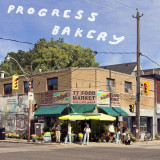
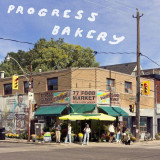
On Progress Bakery, her second album as a solo artist, Eliza knows to leave some questions alone – to let juxtaposition and tension be the proof. It doesn’t have to be hard. The feelings and revelations they provoke rise in the heat. The smell is sweet. Crispy on the outside and soft all the way through. She playfully slip-slides through words and sounds and images, delighting in surprise, skimming ideas like stones cast across clear water, touching down briefly with uncommon grace.
The question provoked between those opening lines resurfaces in the strands between songs – “Do U FM” is fully formed and beautifully layered, while “Novelist Sad Face” is a short, acapella rendering of gentle curiosity. What is holding these ideas together? Some songs demand more, seem to carry a whole load – eventually the skipping stone will halt to sink and resume its idle duty – while others drift in and out of focus, the way thoughts and dreams become interwoven before the mind is sunk into true sleep.
Music and words don’t always have to interact. Where she decides to keep them apart gives a new contour to where and how she puts them together. The kind of thing you’re supposed to take for granted with songs and their singers comes alive in Eliza’s hands – the little miracle of mixing, kneading, stretching, and stopping.
So often on Progress Bakery, Eliza teases out truth and meaning by asking questions. “Do I wanna be crying?” “Do you want me good or do you want me bad?” “Do I need an eye test?” “I’m writing songs in my head while you’re going over stuff with me — is that cruel??” In “Pocky” Eliza ends with a question that feels to me like the actual biography, succinct and revealing:
I don’t wanna be made to see
I just wanna ask “what’s that?”
Grace that ought to be rare, but in its care and precision is offered humbly, with great generosity, and without announcing itself. Eliza’s simple, miraculous music is given further form and shape by a group of collaborators – invaluable guest musicians Jeremy Ray, Evan Cartwright, Steven McPhail, Kenny Boothby, Ed Squires, Carolina Chauffe, Dorothea Paas, Louie Short, and Avalon Tassonyi. Together with Louie Short, who recorded, mixed, and produced the album along with Jeremy Ray and Lukas Cheung, Eliza has cultivated a richness in sound and texture that prods and provokes the ticklish ear. Barely audible guitar tinkering, a brief lo-fi field recording of trumpets, the harmonic clicking of a looped synthesizer, a flourish of reeds, a child’s conversation, each uncanny sound perfectly placed, rippling out under a soft breeze.
Lay in bed alone at night and ask aloud to the stillness,
“What were you doing at the Albuquerque Airport?
What were you doing there??”
And hear your question answered by a dream of swelling, undulating cellos. Try to grasp at the melody and structure. It’s not an answer (if there could be one), but it moves deeper, closer to the weird layer of fleeting moments and disconnected images, barely perceptible at its core. Wait for the dream reel to click into place.
Eliza took me for a ride in Nicole (her beloved Dodge Grand Caravan) and told me she’d been thinking of the album as an embodiment of transition – and I think every transition, known or unknown, carries the weight of new meaning, skittering off the surface tension of life as you know it, creating ripples, sometimes bouncing off and sometimes breaking through. There is a trick you can use to tell if a dough is glutinous enough. You’re supposed to stretch it out as thin as you can without breaking it and hold it up to the light. If you can see through, even if it renders the world murky and uncertain, you should leave it alone. I love this trick. It’s one that Eliza seems to know intuitively: work gently and ask questions and don’t always expect answers, and when you can, take a glimpse at something new, and then leave.
Kneading dough is tricky – you should know how it’s supposed to feel. If you try too hard you could make it worse. It’s a beautiful practice – creation with a gentle touch, to work at something so it can be left alone. “If it’s too drawn out it’s awful. It’s easy to give too much.” Dance in the mirror. Contemplate your veiny hands. Who do they remind you of?
You begin by mixing flour and water. “What happens when your people die? Why’d they move the rock to the other side of Ulster Park?” Eliza Niemi asks two seemingly unrelated questions in a rising melody with guitar accompaniment, like fingers playing spider up to the nape of your neck. Gentle pressure. Strands of gluten form to bind the mix. A new question lingers in the binding. When she admits “but I don’t know how to tell if I’m feeling it or not,” that question surfaces through the text. It is reiterated throughout the album. When I’m working with dough I think the same thing to myself.
On Progress Bakery, her second album as a solo artist, Eliza knows to leave some questions alone – to let juxtaposition and tension be the proof. It doesn’t have to be hard. The feelings and revelations they provoke rise in the heat. The smell is sweet. Crispy on the outside and soft all the way through. She playfully slip-slides through words and sounds and images, delighting in surprise, skimming ideas like stones cast across clear water, touching down briefly with uncommon grace.
The question provoked between those opening lines resurfaces in the strands between songs – “Do U FM” is fully formed and beautifully layered, while “Novelist Sad Face” is a short, acapella rendering of gentle curiosity. What is holding these ideas together? Some songs demand more, seem to carry a whole load – eventually the skipping stone will halt to sink and resume its idle duty – while others drift in and out of focus, the way thoughts and dreams become interwoven before the mind is sunk into true sleep.
Music and words don’t always have to interact. Where she decides to keep them apart gives a new contour to where and how she puts them together. The kind of thing you’re supposed to take for granted with songs and their singers comes alive in Eliza’s hands – the little miracle of mixing, kneading, stretching, and stopping.
So often on Progress Bakery, Eliza teases out truth and meaning by asking questions. “Do I wanna be crying?” “Do you want me good or do you want me bad?” “Do I need an eye test?” “I’m writing songs in my head while you’re going over stuff with me — is that cruel??” In “Pocky” Eliza ends with a question that feels to me like the actual biography, succinct and revealing:
I don’t wanna be made to see
I just wanna ask “what’s that?”
Grace that ought to be rare, but in its care and precision is offered humbly, with great generosity, and without announcing itself. Eliza’s simple, miraculous music is given further form and shape by a group of collaborators – invaluable guest musicians Jeremy Ray, Evan Cartwright, Steven McPhail, Kenny Boothby, Ed Squires, Carolina Chauffe, Dorothea Paas, Louie Short, and Avalon Tassonyi. Together with Louie Short, who recorded, mixed, and produced the album along with Jeremy Ray and Lukas Cheung, Eliza has cultivated a richness in sound and texture that prods and provokes the ticklish ear. Barely audible guitar tinkering, a brief lo-fi field recording of trumpets, the harmonic clicking of a looped synthesizer, a flourish of reeds, a child’s conversation, each uncanny sound perfectly placed, rippling out under a soft breeze.
Lay in bed alone at night and ask aloud to the stillness,
“What were you doing at the Albuquerque Airport?
What were you doing there??”
And hear your question answered by a dream of swelling, undulating cellos. Try to grasp at the melody and structure. It’s not an answer (if there could be one), but it moves deeper, closer to the weird layer of fleeting moments and disconnected images, barely perceptible at its core. Wait for the dream reel to click into place.
Eliza took me for a ride in Nicole (her beloved Dodge Grand Caravan) and told me she’d been thinking of the album as an embodiment of transition – and I think every transition, known or unknown, carries the weight of new meaning, skittering off the surface tension of life as you know it, creating ripples, sometimes bouncing off and sometimes breaking through. There is a trick you can use to tell if a dough is glutinous enough. You’re supposed to stretch it out as thin as you can without breaking it and hold it up to the light. If you can see through, even if it renders the world murky and uncertain, you should leave it alone. I love this trick. It’s one that Eliza seems to know intuitively: work gently and ask questions and don’t always expect answers, and when you can, take a glimpse at something new, and then leave.
- A1: Special
- A2: B.a.b.e
- A3: Fantasy
- A4: Not Hell, Not Heaven
- A5: Tonight (I’m Afraid)
- B1: Fleshed Out
- B2: Let You Down
- B3: Cellophane
- B4: Suffer The Fool (How High Are You?)
- B5: Haunted
- B6: Are We All Angel
Olive Green Vinyl[28,15 €]
Scowl is a band that sounds exactly like their name implies. Venomous, fierce, antagonistic. A sneer not to be crossed. Over the last five years, the Santa Cruz, California, band has firmly planted their flag in the hardcore scene with their vicious sound and ripping live show, sharing stages around the world with Circle Jerks, Touché Amoré, and Limp Bizkit, and filling slots at prominent festivals like Coachella, Sick New World, and Reading and Leeds. But with their new album, Are We All Angels (Dead Oceans), Scowl is aiming to funnel all that aggression through a more expansive version of themselves. Much of Are We All Angels grapples with Scowl’s newfound place in the hardcore scene, a community which has both embraced the band and made them something of a lightning rod over the past few years. Standout single “Not Hell, Not Heaven” outright rejects the narratives cast onto them by outsiders. “It’s about feeling victimized and being a victim, but not wanting to identify with being a victim,” explains vocalist Kat Moss. “It’s trying to find grace in the fact that I have my power. I live in my reality. You have to deal with whatever you're dealing with, and it ain’t working for me.” The band breaks from a sense of disassociation to seek deeper connections on “Fantasy.” “It’s incredibly challenging to try to balance my love for the scene while also feeling, in some spaces, extremely alienated and hated,” Moss says. “‘Fantasy’ is about feeling like I don't know how to connect with these people anymore, because I have shelled myself away so hard.” The album ends in a philosophical place on the closing, titular track, “Are We All Angels,” asking questions like, “Is this all there is?” and ultimately putting it on the listener to decide. “It’s about the personal struggle between good and evil. It doesn’t matter how ‘good’ or ‘bad’ you are, there are systems that will try to rewrite your narrative no matter what you actually do,” explains Moss, noting that punctuation on “Are We All Angels” has been deliberately omitted in an attempt to leave the statement open-ended. Are We All Angels is the highly anticipated follow-up to Scowl’s debut, 2021’s How Flowers Grow, a 16-minute primal scream over punishing riffs. But amidst the pounding chaos, it was the record’s sonic outlier, a cleaner interlude called “Seeds to Sow,” that, true to its name, planted the seed for what was to come for the band. “It kind of laid out this destiny for us, and I feel like now we’re fulfilling that,” says drummer Cole Gilbert. The band continued to expand their sound on 2023’s widely acclaimed Psychic Dance Routine EP, incorporating more pop hooks and favoring gentler singing over heavy screaming, paving the way for what would come next. Scowl’s growth got a huge boost from producer Will Yip (Turnstile, Title Fight, Code Orange, Balance and Composure), who broadened the band’s scope. “Will would say, ‘Everything you have here is correct, but it’s in the wrong place,’” says Gilbert. Moss adds: “Will really helped restructure a lot of the material. Some songs he tore apart to make more space for the really good hooks and choruses.” But even through this more eclectic approach, Scowl loses none of their edge, and still manages to convey the anger and frustration that lies underneath. They are deeply committed to carrying the ethos of punk and its sense of community. “Hardcore and punk have sculpted how we operate, what we want to do as a band, and how we participate,” says guitarist Malachi Greene. “At our core, we are a punk and a hardcore band, regardless of how the song shifts and changes.
With a growing international reputation for championing forward-thinking artists in the contemporary jazz space, Denmark"s April Records proudly presents the third album from instrumental collective Andorra. Their most ambitious undertaking yet, the audio-visual release invites audiences to fully immerse themselves in the energetic grooves, lyrical melodies, and colorful modern production that define their sound. Andorra"s eponymous 2021 debut reunited five friends who met at the Funen Music Conservatory and went on to work across a range of disciplines, from film music and orchestral work to large ensembles and chamber jazz. Realising their long-held desire to explore their collective creative potential, the ensemble describes their sound as "modern vintage", bringing together the nostalgic warmth of analog synthesis, present-day digital audio manipulation techniques, and jazz musicianship steeped in tradition. Taking a decisive step to perfect the production of their music, the quintet recorded at Lundgaard Studios - one of Denmark"s most prestigious studios - and placed the responsibility of mixing in the hands of their own synth-guru Peter Moller, whose deep understanding of the band"s sound made him best suited for the role. Taking a step back from the dark, brooding music often associated with the Nordic countries, "III" is a playful, high-energy, deep pocket collection of seven original pieces that are unapologetic in their grooving, in-your-face attitude. Driving complex drum parts, shimmering guitar textures, squelching synth pads, thick old-school bass tones, and lush timbres from Mads La Cour"s horns deliver catchy and danceable hooks as easily as they do spacious explorations of texture and vivid harmony. The entire album has been shaped into a concert film directed by photographer Jesper Van, set to premiere at select cinemas across Denmark - soon to be available online - offering global listeners a comprehensive experience of Andorra"s creative vision.
dreamcastmoe is the recording project of singer, songwriter, producer, and DJ Davon Bryant, a lifelong resident of Washington, DC. His music moves freely between moods and modes, hypnotic, romantic, traversing electronic, R&B, funk, soul, and hip-hop... Resident Advisor dubs it "soulful, cross-genre dance music." This ability to adapt and finesse, to twist in different directions while staying true and coherent in vision, can be traced to his home city and its complex cultural history. "Most Black kids in DC don't ever get to this point," he says. "This is what I am making this music for, in the DC tradition of soul and empathy and love that is rooted in this city. My music is for real people dealing with shit every day." A versatile, modern artist and collaborator, dreamcastmoe has thrived in the underground since his first uploads to Soundcloud and Bandcamp in 2017 and subsequent releases with labels like People's Potential Unlimited, Trading Places, and In Real Life Music. Bryant's laid-back personality, emotional honesty, and infectious energy shine through his work and how he talks about it, as Crack Magazine notes in their 2021 Rising feature: "a steady combination of confidence, creativity, and calmness." He grew up playing drums in church; he's worked dead-end jobs, had ups and downs, even sold off all his gear one time, but never stopped reinvesting in himself. He is quick to praise his co-producers, rattle off influences _ the visual feel of NBA 2K, the comedic timing of Bernie Mac, the savvy legacy of Duke Ellington, for starters _ and credit resourceful DC breakouts like Ankhlejohn that showed him the roadmap. His voice, a steady instrument, seemingly connects it all, capable of slow falsetto flow, swaggering talk-rap, and outright croon. His storytelling style is choppy yet fluid, like a mixtape, which is how Bryant sees Sound Is Like Water, his debut on Ghostly's International's freeform label, Spectral Sound. The two-part project culminates as a full-length LP release in November 2022. The first side, released as Part I, opens on the blurred beats of "El Dorado," which dreamcastmoe dedicates to his journey. It's a head-nodder, an off-kilter earworm co-produced by Max D (Future Times, RVNG Intl, etc.), with Bryant harmonizing hooks with synth jabs and a pitched-down presence. "Complicated" is the slow jam, delivered smoothly from a Saturday night crossroads. dreamcastmoe is contemplative and committed... gliding and locking ad-libs into skittering rhythms courtesy of co-producer Zackary Dawson _ but also willing to let something go, "acknowledging that everything in life IS NOT easy." "RU Ready" takes off from the jump as a tribute, challenge, and promise to his partner and his city ("The times you sat with me when I needed you the most / Told me the things that I needed to see / Young black man, really trying to be what I can be / And I'm really from DC). In its potent two-plus minutes, the sonics (co-produced by ZDBT) press the message, all cymbal crashes, breakbeats, and serrated synth lines. "Cloudy Weather, Wear Boots" is a blitzing dance-punk track made in collaboration with Jordan GCZ on Bryant's first trip to Amsterdam. The album's flipside opens on "Much More," the first of two synth-and-beat ballads co-produced by ZDBT. Later on "Long Songz," he claims, "I'm not writing love songs no more," prioritizing the vibe with "all my day ones." He calls it "a cry for more normal moments. Everything doesn't have to be a fantasy love story, more time spent getting to the money, growing, and making a way." He saves two of his most propulsive cuts for the finale, co-produced by Sami, co-founder of DC dance label 1432 R. As their titles suggest, "Take A Moment" and "Make Ya Mind" operate as anthems for movement, with Bryant free-flowing commands above wildly-styled percussion. Per Bryant, the latter is both "wake & bake jam" and a "dance floor bomb." His parting line: "Action / You got to show me action / Reaction." The world of dreamcastmoe straddles virtual reality and the realness of DC, images both imagined and lived-in. Bryant has a knack for unexpected melodies but what makes his music so exciting is his capacity to defy the expectations of genre and image. A fluid ingenuity and vulnerability bottled by Sound Is Like Water, and this is just the beginning.
Back in what now feels like a golden period in music and creativity, in the 1970s, many bands were formed by students. It almost seems like so many people could either sing, play, dance or write songs! This was also the case of several Woodland High School students in New York, who created Newban with fellow classmates.
The group started gigging around the tri-state area of New York, Connecticut and New Jersey, and were soon brought to the attention of legendary Bell Recording Studios audio engineer Malcolm Addey, who recorded with the band over a two-month period in 1974. Three years later the tracks made up two superb and sought-after albums released by tax scam label Guinness.
In 1977, Newban headed out to play the Los Angeles nightclub scene, closed a deal with A&M, and changed the band name to Atlantic Starr at the request of Herb Alpert.
For the first time on a 7” format, Soul4Real brings you two of the best songs from Newban. Enjoy the music...