Search:made to play

Styles
All
BANJAR TERATAI CAPUNG - TUNGGAK SEMI LP 2x12"

“Tunggak Semi” is the third album from Indonesian musician and producer Bambang Pranoto. Originally released in 2000, it’s an exemplary slice of what has become his signature style, a dream-like meditation on aspects of nature, combining elements of accordion, acoustic guitar, flute and percussion. The compositions cross eastern and western notation to inhabit a world of their own, a world between worlds, where harmonies reflect the beauty and joy of nature.

Bambang had a rather atypical entry into music, and studied electronics and telecommunications, before he took advantage of the wave of computer software like Cubase and Protools in the 1990s that enabled him to set about recording his own compositions and soundscapes. After playing in groups, he developed his own approach to constructing his productions. He invites musicians to record interpretations of his themes, which he then pieces together in Protools like a jigsaw puzzle. “The musicians have never even met!” he chuckled on a Skype call.

“Tunggak Semi” refers to the giant trees that appear all over Bali, and their process of renewal and regeneration. “If you cut the tree, and leave the roots, they will grow again. Everytime we cut, they grow again. It’s limitless. This philosophy means there’s always something new coming, whether an idea or music, anything.” This approach has grown out of Bambang’s studies into meditation, including Indian and Chinese scriptures, also Balinese and Indonesian religions. Music, like meditation, is a daily practice, and acceptance of the music and its ‘unfinishedness’, forms a central part of the process.

“We must not just think, but we must also feel, and we must accept that feeling,” explains Bambang, and that’s a step of opening one’s mind to possibility. It seems in keeping with two of Bambang’s musical inspirations, namely Ryuichi Sakamoto and Peter Gabriel, both known for their love of world folk music, and fusion of musical traditions. That’s mirrored in Bambang’s own collage-like approach, recording elements and piecing them together to make something unimagined. While the acoustic sound palette for “Tunggak Semi” is rooted in live recordings, Bambang is not afraid to put the digital technology to good use.

“We have to use the computer as a tool in the best way we can,” Bambang says. “Sometimes people say music is made by people, not by the computer, but it’s just another piece of equipment. What can we compose from this equipment? It’s technology music!”

Written and produced by Bambang Pranoto at interactive garden studio, Depok, Bogor between September and December 2001. 2025 version remastered by Wouter Brandenburg at Brandenburg Mastering.

pre-order now26.09.2025

expected to be published on 26.09.2025

22,27
Harlem River Drive - Harlem River Drive LP

“New York’s Harlem River Drive is a dividing line, a highway where the rich zip past the poor,” says singer Jimmy Norman. Eddie Palmieri’s Latin-funk band of the same name tackled these hard truths, playing prisons and speaking to the common man. Ultimately, Norman and Palmieri made a powerful socio-political statement that continues to resonate to this day." Pablo Yglesias/Wax Poetics. When initially released in 1971, many critics panned Eddie Palmieri’s album Harlem River Drive. Those critics were wrong. Regardless of critical opinion, the release was not the crossover success Palmieri and Roulette Records had hoped for, at least in the immediate. Over the years the release has developed a following among listeners, DJs, and aficionados of rare-grooves. The record may have been recorded towards the end of the Latin soul era, yet it features that genre's wonderful mix of Puerto Rican soul, Spanish Harlem Latin, and New York funk. Palmieri worked with an incredibly talented crew of Latin and R&B session musicians to create this quintessential New York vibe, a synthesis of funk and Afro-Cuban sounds. Contributors include Victor Venegas from Mongo Santamaria’s band, Palmieri’s brother Charlie, an accomplished musician in his own right, Bruce Fowler who went on to join Frank Zappa’s band, Dick Meza who went on to great things with Tito Puente, Ray Barretto and Celia Cruz, as well as Andy Gonzalez who’s pedigree includes recordings with Barretto, Johnny Pacheco, Willie Colon and even Chico O’Farrill. Also appearing Randy Brecker and one of the all-time greatest of the greats Bernard Purdy. An over-arching theme of Harlem River Drive is the thought that, as Palmieri puts it “The U.S. is richest country, all this immense wealth, side by side with the most intense poverty, racial prejudice; how is that possible?” A question that’s perhaps more even more relevant today than it was in 1971. A question that can be further explored with Get On Down’s reissue of this seminal recording.

out of Stock

Order now and we will order the item for you at our supplier.

28,99

Last In: 7 years ago
Jamback - Can't Resist

Jamback

Can't Resist

12inchHMGRWN012
HOMEGROWN Records
26.09.2025

HMGRWN Welcomes up and coming Dutch talent Jamback to the label. With his debut EP which includes two tracks that have been huge peak time plays for ROSSI. over the past few months. The A1 is 'Can't Resist', a track with captivating vocals and gritty baselines, a track that has taken over dancefloors across the world this summer - On the B1 is 'Attention' a peak-time track with a groove heavy drop, with garage influences... A track made for peak-time moments that has seen much attention itself throughout the summer already!

out of Stock

Order now and we will order the item for you at our supplier.

14,24

Last In: 4 months ago
GOLDEN APPLES - SHOOTING STAR
  • Another Grand Offering For The Swine
  • Noonday Demon
  • Mind
  • Ditto
  • Freeeee
  • Divine Blight
  • Happy
  • Feliz
  • Breeze
  • Fantasia
  • Songs For The Record Exchange
  • How Long Must I Stay In This Place?

Following the "rich jangle and big, well-developed songs" (Bandcamp) of 2023's Bananasugarfire, Edling sought to deconstruct his creative process by centering collaboration instead of a more solitary pursuit in songwriting, even as personal matters made isolation a more natural instinct. He describes taking time to make notes of the ways, timing and forms in which songs came to him in the process of demoing the record, and regularly questioning if his approach was like that of "watching a pot of water boil" or waiting for a bolt of light to appear in the sky. In many ways, Shooting Star is an appeal to the muse, a record of "songs about writing songs" born from Edling's desire to trust his instincts despite the posturings of inner demons and creative roadblocks, and to celebrate the little wins along the way. The result is a sprawling new work packed to the brim with playful eccentricities and dynamism, one that owes as much of its inspiration to mid-century folkies like Michael Hurley and Karen Dalton as it does to alt rock of the nineties like Yo La Tengo and Stereolab. Shooting Star is a constellation of influences, experiences, reckonings-with the state of the world, with others, with creativity, with oneself-with no two songs created in the same way. Instead of holing up in a recording studio, the creation of the record was formed by a patchwork of collaborations in a variety of recording locales, all which were later alchemized by mix engineer Matthew Schimelfenig. - RIYL Sparklehorse, John Cale, Yo La Tengo, Superviolet, Spirit of the Beehive, Horse Jumper of Love, Of Montreal

pre-order now19.09.2025

expected to be published on 19.09.2025

22,65
múm - History of Silence

múm

History of Silence

12inchMORR206-LP
Morr Music
19.09.2025

múm are returning with a new album on Morr Music. »History of Silence« is the first full body of work by the Icelandic collective since 2013's »Smilewound« and their seventh studio album to date—recorded, deconstructed, put back together again, refined and finished over the course of two years. Vibrantly oscillating around a carefully curated palette of electronic and analogue sounds, the eight new tracks reflect the group's continuous strive to explore sonic spaces through subtle yet gripping songwriting.

For a long time now, múm have been exploring the idea of distance in their music. In the beginning, this was born purely out of necessity. Founded in Iceland in the late 1990s, the members soon began embarking on journeys across the world—collectively while touring, but also individually, exploring new places to live and create. Settling in, moving on, catching up: The concept of distance soon became an integral part of the collective's process. »History of Silence« leans into this idea, with space and time becoming indispensable pillars of the arrangements. While being coherent and structured, they echo their origins from different seasons, cities, and spaces—neatly stitched together with unparalleled craftsmanship. They breathe an overall airy and intimate atmosphere, yet resonate with the structural heft of time.

On »History of Silence« time manifests in unexpected, liberating, and mesmerizing ways. It does not move reliably forward; it drifts, takes twists and turns, even disappears completely. Electronic textures blur into acoustic sounds, voices flicker and dissolve, melodies stumble and repeat. The arrangements often feel like they’re wandering, gently resisting direction. »Our Love is Distorting,« for instance, begins with a subtle piano motif, playing hide and seek with feedback noises, digital artefacts, and lush—yet very quiet—string arrangements, before gradually forming into a distinctive song. It's a perfect illustration of múm's general approach on this album. »Mild at Heart« turns this idea upside-down, flowing freely from start to finish with moments of silence sprinkled in—serving to emphasize the musical elements. The music on »History of Silence« moves like weather: unexpected, intimate, quietly detailed. Contrasted with vivid phrases, rhythmic shifts, and small hooks, the album offers a new angle of compositional clarity and vision.

Work on »History of Silence« began at Sudestudio in southern Italy. Additional recordings were made in Reykjavík, Berlin, Athens, Helsinki, New York, and Prague. The strings were recorded by Sinfonia Nord at the Hof concert hall, Akureyri, arranged and conducted by Ingi Garðar Erlendsson, who has worked with the band for many years. The orchestral elements don’t dominate the record—instead, they surface gently, adding depth and resonance to the songs without disturbing the songs' fragility.

Contrary to what the album title suggests, »History of Silence« is a collection of bold and colorful songs, no matter how muted they might sound at times. They tickle like a feather drifting through the wind, ending up in unexpected places, stimulating long-forgotten thoughts and feelings, intimate moments of introspection. The songs move through the echoes those moments leave behind: the emotional traces of things unsaid, the weight of stillness. Offering closeness by means of distance and much-needed support.

pre-order now19.09.2025

expected to be published on 19.09.2025

26,01
múm - History of Silence

múm

History of Silence

12inchMORR206-LPX
Morr Music
19.09.2025

múm are returning with a new album on Morr Music. »History of Silence« is the first full body of work by the Icelandic collective since 2013's »Smilewound« and their seventh studio album to date—recorded, deconstructed, put back together again, refined and finished over the course of two years. Vibrantly oscillating around a carefully curated palette of electronic and analogue sounds, the eight new tracks reflect the group's continuous strive to explore sonic spaces through subtle yet gripping songwriting.

For a long time now, múm have been exploring the idea of distance in their music. In the beginning, this was born purely out of necessity. Founded in Iceland in the late 1990s, the members soon began embarking on journeys across the world—collectively while touring, but also individually, exploring new places to live and create. Settling in, moving on, catching up: The concept of distance soon became an integral part of the collective's process. »History of Silence« leans into this idea, with space and time becoming indispensable pillars of the arrangements. While being coherent and structured, they echo their origins from different seasons, cities, and spaces—neatly stitched together with unparalleled craftsmanship. They breathe an overall airy and intimate atmosphere, yet resonate with the structural heft of time.

On »History of Silence« time manifests in unexpected, liberating, and mesmerizing ways. It does not move reliably forward; it drifts, takes twists and turns, even disappears completely. Electronic textures blur into acoustic sounds, voices flicker and dissolve, melodies stumble and repeat. The arrangements often feel like they’re wandering, gently resisting direction. »Our Love is Distorting,« for instance, begins with a subtle piano motif, playing hide and seek with feedback noises, digital artefacts, and lush—yet very quiet—string arrangements, before gradually forming into a distinctive song. It's a perfect illustration of múm's general approach on this album. »Mild at Heart« turns this idea upside-down, flowing freely from start to finish with moments of silence sprinkled in—serving to emphasize the musical elements. The music on »History of Silence« moves like weather: unexpected, intimate, quietly detailed. Contrasted with vivid phrases, rhythmic shifts, and small hooks, the album offers a new angle of compositional clarity and vision.

Work on »History of Silence« began at Sudestudio in southern Italy. Additional recordings were made in Reykjavík, Berlin, Athens, Helsinki, New York, and Prague. The strings were recorded by Sinfonia Nord at the Hof concert hall, Akureyri, arranged and conducted by Ingi Garðar Erlendsson, who has worked with the band for many years. The orchestral elements don’t dominate the record—instead, they surface gently, adding depth and resonance to the songs without disturbing the songs' fragility.

Contrary to what the album title suggests, »History of Silence« is a collection of bold and colorful songs, no matter how muted they might sound at times. They tickle like a feather drifting through the wind, ending up in unexpected places, stimulating long-forgotten thoughts and feelings, intimate moments of introspection. The songs move through the echoes those moments leave behind: the emotional traces of things unsaid, the weight of stillness. Offering closeness by means of distance and much-needed support.

pre-order now19.09.2025

expected to be published on 19.09.2025

27,69
múm - History of Silence (TAPE)

múm

History of Silence (TAPE)

CassetteMORR206-CS
Morr Music
19.09.2025

múm are returning with a new album on Morr Music. »History of Silence« is the first full body of work by the Icelandic collective since 2013's »Smilewound« and their seventh studio album to date—recorded, deconstructed, put back together again, refined and finished over the course of two years. Vibrantly oscillating around a carefully curated palette of electronic and analogue sounds, the eight new tracks reflect the group's continuous strive to explore sonic spaces through subtle yet gripping songwriting.

For a long time now, múm have been exploring the idea of distance in their music. In the beginning, this was born purely out of necessity. Founded in Iceland in the late 1990s, the members soon began embarking on journeys across the world—collectively while touring, but also individually, exploring new places to live and create. Settling in, moving on, catching up: The concept of distance soon became an integral part of the collective's process. »History of Silence« leans into this idea, with space and time becoming indispensable pillars of the arrangements. While being coherent and structured, they echo their origins from different seasons, cities, and spaces—neatly stitched together with unparalleled craftsmanship. They breathe an overall airy and intimate atmosphere, yet resonate with the structural heft of time.

On »History of Silence« time manifests in unexpected, liberating, and mesmerizing ways. It does not move reliably forward; it drifts, takes twists and turns, even disappears completely. Electronic textures blur into acoustic sounds, voices flicker and dissolve, melodies stumble and repeat. The arrangements often feel like they’re wandering, gently resisting direction. »Our Love is Distorting,« for instance, begins with a subtle piano motif, playing hide and seek with feedback noises, digital artefacts, and lush—yet very quiet—string arrangements, before gradually forming into a distinctive song. It's a perfect illustration of múm's general approach on this album. »Mild at Heart« turns this idea upside-down, flowing freely from start to finish with moments of silence sprinkled in—serving to emphasize the musical elements. The music on »History of Silence« moves like weather: unexpected, intimate, quietly detailed. Contrasted with vivid phrases, rhythmic shifts, and small hooks, the album offers a new angle of compositional clarity and vision.

Work on »History of Silence« began at Sudestudio in southern Italy. Additional recordings were made in Reykjavík, Berlin, Athens, Helsinki, New York, and Prague. The strings were recorded by Sinfonia Nord at the Hof concert hall, Akureyri, arranged and conducted by Ingi Garðar Erlendsson, who has worked with the band for many years. The orchestral elements don’t dominate the record—instead, they surface gently, adding depth and resonance to the songs without disturbing the songs' fragility.

Contrary to what the album title suggests, »History of Silence« is a collection of bold and colorful songs, no matter how muted they might sound at times. They tickle like a feather drifting through the wind, ending up in unexpected places, stimulating long-forgotten thoughts and feelings, intimate moments of introspection. The songs move through the echoes those moments leave behind: the emotional traces of things unsaid, the weight of stillness. Offering closeness by means of distance and much-needed support.

pre-order now19.09.2025

expected to be published on 19.09.2025

16,18
BDF Elektro ft. Soothsayer Horns - Ital Warrior Rhythm Shower Pt.1

Here we are with the Earth perched on a thin tenuous wire. The neo-liberal order and its fascist mirror world burning through fossil fuels and the souls of vulnerable peoples the globe over. Conflict, warfare, climate degradation, misinformation. The time is nigh to break the spell with music.

Right on time comes IC007 – Four cuts of progressive elektro roots to shine a light on only four of the multitudinous hot spots of suffering while also inspiring a musical movement forward through the storm. Dedicated to the peoples of the Sudan, Palestine, Ukraine, and Taiwan this tune is another ITAL COUNSELOR sound system scorcher.

The message at its very core is to keep keeping on. Never give up. Forward through the storm like an ITAL WARRIOR! This RHYTHM SHOWER is a guideline toward a better tomorrow.

Delivering this message are some of ITAL COUNSELOR MUSIC’s stalwart players. Inyaki Basque Dub Foundation returns to the fold with yet another top-notch original rhythm – A drum and bass workout that harkens back to the best of Sly & Robbie’s Compass Point era science fiction dubwise and just a little bit of Aswad’s “To The Top” era progressive roots. Both raw and rhythmically complex, Inyaki makes the drum and bass hit hard with the mixing help of top studio man James Zugati. The dubwise cuts on side two are of course custom made to make bass bins rumble and weakheart drop.

Alas, we cannot forget Soothsayer horns – here as always proving that they are the best horn section out there. They feel it. They know it. They execute it in the hardest and sharpest of manors. Heavy heavy hornsman manners…

Progressive. Heavy. Horns. Elektro. Roots. Forward.

One Love and Guidance along the Way,
Andy G, IC

pre-order now19.09.2025

expected to be published on 19.09.2025

16,77
DUSTED ANGEL - THIS SIDE OF THE DIRT

DUSTED ANGEL

THIS SIDE OF THE DIRT

12inchHPSLTD359
HEAVY PSYCH SOUNDS
19.09.2025

Transparent orange vinyl, limited to 300 copies. Dusted Angel is a band that likes to keep it in the family. Made up of a group of close friends that have known each since the early 80s, stemming from playing in various intertwined bands engraved in the extended Santa Cruz family of friends. Featuring Ed Gregor, guitar (hedgehog, no use for a name), Eric "Dog" Fieber, guitar (Mock, creature, fire sermon) Steve Ilse drums (creature, Herbert, Automatic Animal) Clifford Dinsmore vocals (Bl'ast!, Seized Up, Spaceboy) and Eliot Young (Lost in Line, Seance) on bass. Formed in 2009, Dusted Angel is a sleeping giant that awakens from time to time to enlighten people with their unique brand of heavy, heavy groove laden music. Now it's time for a new album via Heavy Psych Sounds Records!

pre-order now19.09.2025

expected to be published on 19.09.2025

24,58
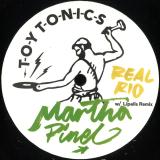
Martha Pinel - Real Rio EP

Martha Pinel

Real Rio EP

12inchTOYT188
TOY TONICS
19.09.2025

A new Toy Tonics artist! Brazilian DJ, vinyl collector, party promoter, and style aficionado Martha Pinel has joined the Toy Tonics family.

Originally from Rio de Janeiro, where she is a well-established DJ and a prominent figure in the lifestyle scene, Martha also resides in Berlin, where she became friends with the Toy Tonics crew.

She is the creator of Assembleia, a celebrated party in Rio de Janeiro known for its laid-back and unpretentious atmosphere. Assembleia has also become a Carnival sensation, hosting unforgettable annual editions that are now a highlight of the season. In Brazil, she is also known as the co-founder of the Croma project, where fashion and music merged to revolutionize Rio de Janeiro's alternative scene. She has been featured on the cover of GQ Brazil, which named her one of the "13 artists giving voice to the generation that is changing the world."

Martha has been DJing worldwide at festivals such as KALA Festival, Paris Fashion Week, DGTL, and Boiler Room. She has made a name for herself in the diggers scene, sharing the stage with DJs such as Hunee, Antal, Yusu, Sam Ruffillo, Prins Thomas, and many others.

Martha is passionate about discovering music daily and crafts dynamic, non-linear sets that play with the audience's emotions. Known for her bold approach, her sets are always powerful and brimming with personality. They seamlessly blend ethnic musical influences with cutting-edge productions from Brazil and beyond, incorporating African and Middle Eastern sounds, space disco, Italo disco, Balearic beats, house, and its subgenres.

Martha Pinel's debut EP, Real Rio, was born during a moment of rediscovery in her hometown, Rio de Janeiro, after spending a long time abroad. This project is a celebration of that reconnection, capturing the city's most authentic and visceral aspects-a place where beauty and chaos coexist, with dramatic highs and lows.

In the track "Uber Moto," Martha reflects on the urban phenomenon of app-based motorcycles, which have become a symbol of the city.

"Espírito de Estado," on the other hand, is a track that embodies the spirit of the Carioca Carnival, the greatest party in the world.

Finally, "Assim" offers a personal reinterpretation of Marcos Valle's classic Estrelar. In this track, Martha and Gabto leave their mark on this Brazilian music icon, reflecting on the concept of Body Culture-it's often said that it's impossible to walk along Ipanema Beach without noticing the Carioca cult of the body.

out of Stock

Order now and we will order the item for you at our supplier.

9,87

Last In: 8 months ago
DUSTED ANGEL - THIS SIDE OF THE DIRT
  • Plastic People
  • Death Crushes Hope
  • Redman
  • This Side Of The Dirt
  • Kiss O Shame
  • Little Lizzy
  • The Thorn
  • Seeking The Dawn
also available

Transparent orange vinyl[24,58 €]


Dusted Angel is a band that likes to keep it in the family. Made up of a group of close friends that have known each since the early 80s, stemming from playing in various intertwined bands engraved in the extended Santa Cruz family of friends. Featuring Ed Gregor, guitar (hedgehog, no use for a name), Eric "Dog" Fieber, guitar (Mock, creature, fire sermon) Steve Ilse drums (creature, Herbert, Automatic Animal) Clifford Dinsmore vocals (Bl'ast!, Seized Up, Spaceboy) and Eliot Young (Lost in Line, Seance) on bass. Formed in 2009, Dusted Angel is a sleeping giant that awakens from time to time to enlighten people with their unique brand of heavy, heavy groove laden music. Now it's time for a new album via Heavy Psych Sounds Records!

pre-order now19.09.2025

expected to be published on 19.09.2025

21,81
Alex G - Trick (LP+7”)

Alex G

Trick (LP+7”)

12inchLUCKY76LPX
Lucky Numbers Music
18.09.2025
 
13

Lucky Number are thrilled to announce the release of both TRICK and RULES the latest albums to be released by the Philadelphia-based songwriter Alex Giannascoli, more commonly known as Alex G. Trick and Rules follow on the acclaimed heels of the November 2014 international release of Alex's fifth album, DSU. Recorded prior to DSU and previously only available via Alex's Bandcamp account, the albums have now been professionally mastered and are being made commercially available for the very first time.

Trick features many of the fan favourites that Alex has been playing at shows recently, including the infectious off-kilter anthem 'Forever', the dreamy and surreal 'Animals' and the charmingly lo-fi 'Change'. Trick is soaked in the distinctive personality that is Alex G, the professionally mastered versions of these tracks affirming that underneath all the unconventional guitar lines and scrawls of fuzz, Alex has a serious knack for melodic songwriting.

Trick continues to showcase a prodigious song-writing talent, reaffirming that Alex G is one of the most promising and prolific American musicians today.

out of Stock

Order now and we will order the item for you at our supplier.

27,94

Last In: 5 months ago
Outrage & Sonar's Ghost - FR040

When I played b2b with Sonar's Ghost on my radio show on NTS last year, he played a new tune entitled "Eggs2C" and it sounded really good, so I asked him what the deal with it was. He said that he was working on it with Outrage and that it was going to be part of an EP they were working on, with Future Retro London in mind for releasing it on. It was the first I'd heard of this EP being made for me haha, but I was curious about what the rest of the release sounded like. He sent me the rest of the tunes and I was into them, so here it is!

out of Stock

Order now and we will order the item for you at our supplier.

16,60

Last In: 7 months ago
Al Karpenter - Greatest Heads LP

Released by Hegoa Records and Night School Records.
Greatest Heads is the fourth album by the radical Basque- Berlinesque group Al Karpenter. A deconstruction of structured “rock” music, here Al Karpenter re-imagine “the band” to explore the intersection between Free music, afro-beat, the avant garde and gonzo rock.
If Theodore Adorno wrote “To Write Poetry after Auschwitz is Barbaric” in 1949, Al Karpenter attempts to answer the difficult question today; what kind of music can be done in the face of a genocide? Álvaro Matilla, Marta Sainz, Enrique Zaccagnini & Mattin’s response to the planet’s slipping into a vortex of hate is to create a music ecstatic, a music of protest bursting with multiple musical languages and glossaries, full of overlapping histories and thrilling tensions.
Greatest Heads posits a plurality of musics both in opposition and intertwined: Al Karpenter play rock instruments pulled apart in the studio in post-production. Distorted rhythm chunks bit-crushed and dissipated, segments of freedom oppressed by waves of sound invading from every direction. The interplay between the chief instrumentalists and renowned, storied sound artist Mattin creates something akin to ESP freedom-seekers Cro Magnon playing in Miles Davis’ early 70s groups, The Los Angeles Free Music Society tightening up into a clenched fist of plunderphonics and runaway percussion.
We Are All Karpenters opens Greatest Heads with the most straight-forward song refrain of the record accompanied by a band that soon crash into eruption, imagining Sun City Girls in full free rock mode.
The modulating synth sound soon sucks the band into its wake to create a spine-chilling climax of distorted sound, made fully orgasmic with mastering engineer Rashad Becker’s attention to detail. On Izugarrizko Buruak (Greatest Heads), Matilla intones in Basque over a mangled distorto-beat. A Brand New Astraphobia creates a black space for a heavily processed guitar to blow up before falling to earth at night, a gentle figure serenading the coming end.
On Side B, the band begins by being masticated by a brutal phaser, squelching and stretching the music into new territories. The overt message of Stop The Genocide! is besieged by violence before Worm City aggressively samples the ghosts of soul music, mixing in noise bursts, prepared piano and swiping, abstracted sound. Epic closer Perfect Love feels like a beat poetry performance on a burnt world, still grasping for community, for home, for some sort of human love. A Mad love, then; an angry love fuelled by solidarity and collaboration.
The band’s cascading layers of references and polyglottal musics attempt to create the perfect lover, alive with rage and disorientating ecstasy: Al Karpenter.

pre-order now12.09.2025

expected to be published on 12.09.2025

30,46
EDENA GARDENS - DISPOSSESSED

Edena Gardens

DISPOSSESSED

12inchEPRLP81
El Paraiso
12.09.2025
  • Hiraeth
  • Fills The Well
  • Cantor Dew
  • Vanishing Point
  • Light In August
  • Heim
  • Dispossessed
  • Aftenstjerne

Stripping away excess layers, Dispossessed lives up to its title. The band went into Causa Sui's Jonas Munk's studio on the last day of February 2025. In an a priori session, the first note played together since 2023's Dens - the conclusion of a trilogy and a live album all in less than a year. Has something shifted during the silence? Added aggression? Faster tempo? Darker ambiance? The feeling of losing time? Or is it simply the listener who's world has tilted? In a fast paced world, Edena Gardens shows us how to resist and tune to our own inner chord. Edena Gardens deals in subtle shifts that can only be summoned from something played for the first time. From the sludgy blasts of opener Hiraeth to the droning ambience of 10-minute ender Aftenstjerne. As always, the band travels far yet stays in the same internal realm. The band's own Jakob Skott has made minor edits to cut a record from hours of free improvisation, and every dubbed ambience has been culled directly from the material recorded that day, bringing into play the band's gestalt in a way that shows their both outer and inner workings: Dispossessed. Edena Gardens is: Jakob Skott: Drums (Causa Sui) Nicklas Sorensen: Guitar (Papir) Martin Rude: Baritone guitar & Bass (London Odense Ensemble)

pre-order now12.09.2025

expected to be published on 12.09.2025

28,53
Vital Disorders & Kotoa - Zombie (7")

Vital Disorders & Kotoa

Zombie (7")

7"-VinylWAH7065
Wah Wah 45s
11.09.2025
  • A1: Vital Disorders - Zombie
  • B1: Kotoa - Zombie

Wah Wah 45s present a unique moment from 1982 where New Wave and Post Punk collided with Afrobeat in the shape of Norwich DIY outfit Vital Disorders and their subversive yet instantly memorable version of the Fela Kuti classic, Zombie.

Band member Suzy Cox explains more:

"The song came to the band through our vocalist Lenneka Van Gilst who was in the group between January 1980 and December 1981. Lenneka grew up in Nigeria and had the original track on vinyl. When she moved to Trowse House, Norwich, the flat under Chris, the VD's bass player, he heard the vibes floating through the floorboards. One thing led to another and it was in our set for ages. Lenneka had left the band to travel to Mexico by the time we recorded the track. We did well to choose it as the song has really stood the test of time. Lenneka had a lot of African Beat which was a big influence on us."

The track came to label boss Dom Servini's attention having been unearthed by BBC 6 Music DJ Gilles Peterson in late 2024, and a vinyl reissue of this rare and one-off gem was the obvious choice. Rather than pairing it with its original punky B-side though, Dom enlisted new signings to the label - young Afro-dub outfit Kotoa - to record their take on the Kuti classic. The quintet delivered what is a three minute, intense take on the Afrobeat genre, complete with youthful voices of protest echoing those of over 30 years ago.

The 7-inch vinyl only release of Zombie comes with re-worked art courtesy of our award winning designer Animisiewasz, taking the home-made look of the original cover and updating it respectfully for 2025.

out of Stock

Order now and we will order the item for you at our supplier.

18,07

Last In: 86 days ago
Various - Dolores: Salsa & Guaracha From 70's French West Indies

In Guadeloupe, many people think that jazz and ka music are like a ring and a finger. To some extent, the same could be said about so called Latin music and the music played in the French West Indies.

Both aesthetics were born in the Caribbean and bear so many connections that they can easily be considered cousins. In constant dialogue, there are lots of examples of their fruitful alliance and have been for a while. The English country dance that used to be practiced in European lounges came to be called kadrille in Martinique and contradanza in Cuba. They both featured additional percussion instruments inherited from the transatlantic deportation. Drawing from shared feelings about the same traumatized identity – later to be creolized – it would be hard not to assume that they were meant to inspire each other. The golden age of the orchestras that graced the Pigalle nights during the interwar period further proves the point. As soon as the 1930s, Havana-born Don Barreto naturally mixed danzón and biguine music in a combo based at Melody's Bar. In the following decade, Félix Valvert, a conductor who was born and raised in Basse-Terre in Guadelupe, also worked wonders in Montparnasse with La Coupole, which was an orchestra made up of eclectic musicians. Afro- Caribbean performers of various origins were often hired on rhythm and brass sections in jazz bands, which used to enliven the typical French balls of the capital. In the 1930s and onwards, Rico’s Creole Band was one of them.


Martinican violinist-clarinettist Ernest Léardée, who would become the king of biguine music as well as the main figure of French Uncle Ben's TV commercials (a dark stigma of post-colonial stereotypes), had musicians from the whole Caribbean sphere play at his Bal Blomet – and they all enchanted "ces Zazous-là" (according the words of Léardée's biguine-calypso piece). In les Antilles (French for French West Indies), music history started to speed up in the 1950s, when trade expanded and radio stations grew bigger. The Guadelupean and Martiniquais youth tuned in their old galena radio sets to South American and Caribbean music. As for the women traders, les pacotilleuses, they bought and sold goods across different islands (the "passing of items through various hands" was thought to be most pleasurable) and brought back countless sounds in their luggage. Such was the case of Madame Balthazar, who once returned from Puerto Rico with the first 45rpm and 33rpm to ever enter Martinique.

Out of this adventure was created the famous Martinican label La Maison des Merengues, a music business she opened and undertook with her husband and which proved to be a major landmark. At the end of the 1950s, in Puerto Rico, Marius Cultier competed in the Piano International Contest playing a version of Monk's Round 'Midnight. He won the first prize and this distinction foreshadowed everything that was to come. Cultier, the heretic Monk of jazz, was quickly praised for writing superb melodies, always tinged with a twist that conferred a unique sound to his music. It didn't take long for the gifted self-taught musician to get to play with Los Cubanos, making a name for himself thanks to his impressive maestria on merengues.

The rest is history. Besides, in the late 1950s, Frantz Charles-Denis, born into the upper middle class in Saint-Pierre and better known by his first name Francisco, went back home after working at La Cabane Cubaine – a club located rue Fontaine where he had caught the Latin fever. Francisco's music was therefore heavily marked by his Cuban cousins' influence, which gave the combos he led a specific style and also led to renewal. Things were swinging hard in La Savane, located in the main square in Fort-de-France. He set up the Shango club close by and tested out the biguine lélé there, a new music formula spiced up with Latin rhythms. Soon afterwards, fate had him fly to Puerto Rico and Venezuela.

As for percussionist Henri Guédon (percussions were only a part of his many talents), he was born in Fort-de-France in May 22nd 1944, the day marking the celebration of the abolition of slavery. As an old man, he could remember that in " his father's Teppaz, a lot of hectic 6/8 music was constantly playing...". In the opening lines of his Lettre à Dizzy, a small illustrated collection of writings published by Del Arco, he highlighted the huge impact that cubop had on him as a teenage boy, around 1960. He eventually turned out to be the lider maximo in La Contesta, a big band steeped in Latin jazz. He was also the one who originated the word zouk to describe music which brought the sound of the New York barrio to Paris. It was the culmination of a journey that started in Sainte-Marie: "a mythical place for bélé, the equivalent of Cuban guaguancó". In the early 1960s, the tertiary economy developed to the detriment of agriculture. Yet rural life was where roots music emerged in Martinique and in Guadeloupe.

Record companies played a major part in the process of Latin versions sweeping across the islands – before reaching everywhere else. Producer Célini, boss of the great Aux Ondes label, and Marcel Mavounzy, both the head of Émeraude records - a firm which was founded in 1953 - as well as the brother of famous saxophonist Robert Mavounzy, were big names to bear in mind. Although there were many of them - all of whom are featured on this record - Henri Debs was definitely the major figure in the recording adventure. He proved to be so influential that he even got compared to Berry Gordy. In the mid 1950s, when he acquired his first Teppaz, he worked on his first compositions: a bolero and a chachacha. Then, he became the one man who made people discover Caribbean music, from calypso to merengue. He was among the first ones to rush out to San Juan, Puerto Rico, to buy records and distribute them through a store run by one of his brothers in Fort-de-France. He had members of the Fania All Star come and perform there, which he was madly proud about. He was also the first one to pay attention to Haitian music, such as compas direct and various other rhythms which would soon flood the market. As a result, many of the combos hitting his legendary studio would end up boosted by widespread "Afro-Latin" rhythms. However, he never denied his identity: gwo ka drums were given a major role, although they were instruments which had long been banned from the "official" music spheres. The present selection bears witness to such a creative swarming. Here are fourteen tracks of untimely yet unprecedented cross-fertilization: all types of music rooted in the Creole archipelago have found their way, whatsoever, to the tracklisting. Whether originating from the city or being more rural, they all go back to what Edouard Glissant, in an interview about the place of West Indian music in the Afro-American scope, called "the trace of singing, the one which got erased by slavery." "It is so in jazz, but also in reggae, calypso, biguine, salsa... This trace also manifests through the drums, whether Guadelupean, Dominican, Jamaican or Cuban... None of them being quite the same. They all point to the idea of a trace, seeking it out and connecting to each other through it. This is the hallmark of the African diaspora: its ability to create something new, in relation to itself, out of a trace. It may be the memory of a rhythm, the crafting of a drum, a means of expression which doesn't resort to an old language but to the modalities of it." The opening track features one of the emblematic orchestras of this aesthetic identity, criscrossing many music types from the archipelago. The 1974 Ray Barretto guajira – Ray Barretto was a major New York drummer influenced by Charlie Parker and Chano Pozzo – is magnificently performed by Malavoi, a legendary Fayolais group (i.e from Fort-de-France). Additionally, the compilation ends on a piece by Los Martiniqueños de Francisco. It symbolically closes the circle as it is a genuine potomitan of Martinique culture which also functions as a tireless campaigner for Afro-Caribbean music. Practicing the danmyé rounds (a kind of capoeiria) to the rhythm of the bèlè drum, it delivers a terrific Caterete, a kind of champeta of Afro- Colombian obedience which was originally composed by Colombian Fabián Ramón Veloz Fernández for the group Wgenda Kenya. The icing on the cake is Brazilian Marku Ribas, who found refuge in Martinique in the early 1970s, bringing his singing to the last trance-inducing track. These two "versions" convey the whole tone of a selection composed of rarities and classics of the tropicalized genre, swarming with tonic accents and convoluted rhythms. It is the sort of cocktail that the West Indians never failed to spice up with their own ingredients. For instance, the Los Caraïbes cover of Dónde, a famous Cuban theme composed by producer Ernesto Duarte Brito, has a typical violin and features renowned Martinique singer Joby Valente and his piquant voice.


The track used to be – or so we think – their only existing 45rpm. The meaningful Amor en chachachá by L'Ensemble Tropicana, a band which included Haitian musicians among whom was composer and leader Michel Desgrotte, also recalls how Latin music was pervasive in the tropics in the mid-1960s. They were the ones keeping people dancing at Le Cocoteraie in Guadelupe and La Bananeraie in Martinique. Around the same time, another "foreign" band, Congolese Freddy Mars N'Kounkou's Ryco Jazz, achieved some success on both islands by covering Latin jazz classics – such as their adaptation of Wachi Wara, a "soul sauce" by Dizzy Gillespie and Chano Pozo whose interweaving of strings and percussions can have anyone hit the dancefloor. How can you resist Dap Pinian indeed, a powerful guaguancó by Eugene Balthazar, performed by the Tropicana Orchestra and published by the Martinique-founded La Maison des Merengues? It also acts as a symbol of the maelstrom at work. Going by the name Paco et L'orchestre Cachunga, Roger Jaffory used to play guaguancó too: his Fania-inspired Oye mi consejo is one example of his style. Baila!!!!! Dancing was also one of the Kings' focus points. Oriza is a Puerto Rican bomba and a "classic" originally composed by Nuevayorquino trumpeter Ernie Agosto, which reserves major space for brasses, giving it a special sheen.

Emerging from the New York barrios crucible was also La Perfecta, a Martinique group originating from Trinidad, whose name directly references the totemic Eddie Palmieri figure as well as his own band, also called La Perfecta. Here they borrow Toumbadora from Colombian producer and composer Efraín Lancheros and interpret it by emphasizing percussions, which set fire to the track even more than the wind instruments. The same goes for Martinique's Super Jaguars, who use Tatalibaba – a composition by Cuban guitarist Florencio "Picolo" Santana which was made famous by Celia Cruz & La Sonora Matencera – as a pretext for sending their cadences into a frenzy. In a more typically salsa vein, the Super Combo, a famous Guadelupean orchestra from Pointe-Noire that was formed around the Desplan family and had Roger Plonquitte and Elie Bianay on board, adapt Serana, a theme by Roberto Angleró Pepín, a Puerto Rican composer, singer and musician also known for his song Soy Boricua. Here again, their vision comes close to surpassing the original. In the 1970s, L'Ensemble Abricot provided a handful of tracks of different syles, hence reaching the pinnacle of the art of achieving variety and giving pleasure. They played boleros, biguines, compas direct, guaguancó and even a good old boogaloo - the type they wanted to keep close to their hearts for ever, "pour toujours", as they sang along together in one of their songs. Léon Bertide's Martinican ensemble excelled at the boogaloo which had been composed by Puerto Rican saxophonist Hector Santos for the legendary El Gran Combo.


Three years later, in 1972, Henri Guédon, with the help of Paul Rosine on the vibraphone, tackled the Bilongo made famous by Eddie Palmieri. Such a classic!!!!! And so were the Aiglons, the band from Guadelupe: choosing to execute Pensando en tí, a composition by Dominican Aniceto Batista, on a cooler tempo than the original, they noticeably used a wonderfully (un)tuned keyboard in place of the accordion. On the high-value collectible single – the first one released by Les Aiglons under the Duli Disc label – there is a sticker classifying the track under the generic name "Afro". Now that is what we call a symbol. Jacques Denis

out of Stock

Order now and we will order the item for you at our supplier.

21,43

Last In: 87 days ago
GASTR DEL SOL - CROOKT, CRACKT, OR FLY
  • Wedding In The Park
  • Work From Smoke
  • Parenthetically
  • Every Five Miles
  • Thos. Dudly Ah! Old Must Dye
  • Is That A Rifle When It Rains?
  • The C In Cake
  • The Wrong Soundings

Gastr del Sol"s second album returns at last to the vinyl format - its first physical manifestation in well over a decade. Once again, a drop of the needle may ignite any number of queries, summed simply in one: What IS this music? Such is the potent energy of Crookt, Crackt, or Fly, retaining its otherworldly qualities some 32 years and countless musical movements since. Crookt, Crackt, or Fly expands upon The Serpentine Similar"s minimalist stance in unexpected ways, imposing further austerity in the soundscape but for an unpredictable expansive quantity periodically overflowing, waves of blood sluicing through the elevator doors. This is partially due to a change within the group dynamic: the departure of bassist Ken "Bundy" Brown and the arrival of a new partner for guitarist and singer David Grubbs - guitarist and sound fuckerer Jim O"Rourke. O"Rourke"s initial work with Gastr involved editing and recomposing recordings of the Grubbs-Brown-&-sometimes-John-McEntire lineup, producing an utterly outré collage of cut-ups and other types of tape processing. This became the "20 Songs Less" single, after which he was invited to play with the group. It was a time of flux; Brown recalls playing a Gastr show at the Metro around this time featuring himself, John McEntire, Grubbs and O"Rourke - and one of the pieces played was a Tortoise song! Throughout these shifts, Gastr del Sol"s music was never less than fully considered and composed, even in moments redolent with the suggestion of the random and the non-sequitur. Grubbs and O"Rourke made no attempt to replicate Serpentine"s arrangement of thick, scaly drones and hypnotic song-visions in their own partnership, finding Crookt, Crackt,"s sound instead in spiny, gamelan-like interactions between their (mostly acoustic) guitars, played precisely in and out of formation with bright, fleet-fingered abandon. O"Rourke"s fondness for field recordings and his capacity for tape manipulation intersected with Grubbs" sensibilities, edifying his evolving song style: written with increased sharpness and sly surreal humor, sung closer to silence. Halfway into "Work from Smoke", the sudden collapse of the sound-walls around us signals Crookt, Crackt"s major departure. From the thicket of guitars, a swell of drones and free-jazz squeals, made up of bass clarinet, vibraphone and organ, pulls the listener into an entirely other acoustic space. "Every Five Miles" derails in similarly tactile fashion: a guitar duet boils up thunderously, then fragments and spirals apart. As a free electric guitar part crops up, improbably holding the center, the acoustic space around it continues to disintegrate in ambient stereo. A wedding of folk music idioms to classical, improvised and modern compositional modes (including Gastr"s own formative post-punk mode), Crookt, Crackt, or Fly is a song-based reality steadily giving way to its alternative alchemies playing out within.

pre-order now05.09.2025

expected to be published on 05.09.2025

31,72
AESOP ROCK - FREEDOM FINGER (MUSIC FROM THE GAME)
  • Play Dead
  • Kowp
  • Drums On The Wheel
  • Play Dead (Instrumental)
  • Kowp (Instrumental)
  • Drums On The Wheel (Instrumental)
  • Rat Skull
  • Snowmobile
  • Twice Fried
  • Frozen Caveman

Recently I was approached by my old friend Travis Millard to make some original music for Freedom Finger - a crazy space-shooter video game he had been developing with Jim Dirschberger and Wide Right Interactive game studio. I was able to land 6 instrumentals that pop up at various points throughout the gameplay.As the game was being rolled out, the idea arose to have me do 3 more tracks - this time fully fleshed out songs with lyrics mostly inspired by Freedom Finger's gameplay. These tracks would accompany some brand new levels that would be made available as downloadable content for the game.We have decided to release all of the music I have done for Freedom Finger as a 10" vinyl EP available through Rhymesayers Entertainment. This includes the 3 full length vocal tracks, as well as the 6 shorter beats that loop throughout the game. Some of these tracks also feature additional instrumentation from my friends and frequent collaborators, Grimace Federation.Furthermore, Jim has directed a video for the song Drums on the Wheel - featuring Freedom Finger gameplay, and some brand new visuals drawn by Travis and animated by Steven Gong.The game is an absolute blast, and I hope you enjoy this music. All relevant links below. <3Love,A.R.

pre-order now05.09.2025

expected to be published on 05.09.2025

15,92
Teppana Jänis & Arja Kastinen - Teppana Jänis LP

Teppana Jänis was born in the village of Uuksujärvi in Suistamo on 21 June 1850. After becoming blind in the late 19th century, he went house to house, supporting himself by playing the kantele, a traditional Finnish and Karelian plucked string instrument belonging to the southeast Baltic box zither family. He performed at dances and in schools, and also participated in the Suistamo kantele and runosong competitions in 1911.

In the summers of 1916 and 1917, the young folk music researcher Armas Otto Väisänen (1890-1969) made collecting trips to Border Karelia. His aim was to collect kantele tunes, laments and shepherd melodies, which were confusingly few in the archives. The 1916 trip was financed by the Finnish Literature Society, who provided a phonograph for recording purposes. In 1917, the trip was financed by the Kalevala Society and the recording was carried out using a parlograph. During these two summers, Väisänen recorded kantele players in the parishes of Suojärvi, Korpiselkä, Suistamo, Tuupovaara, Kitee and Impilahti. Väisänen met Teppana Jänis in both summers and transcribed 22 kantele melodies from him. He recorded 14 of these on wax cylinders.

This LP, titled simply 'Teppana Jänis' fuses and intertwines the original raw cylinder recordings with replayed pieces by Kantele player and researcher Arja Kastinen together with the now late Finnish folk musician Taito Hoffrén, taking into account the additional information and notes found in Väisänen's sheet music manuscripts. Warm thanks to the Finnish Literature Society for permission to use the archive recordings, to Risto Blomster for his invaluable assistance, and to the Karelian Cultural Foundation.

pre-order now05.09.2025

expected to be published on 05.09.2025

23,49
Items per Page:
N/ABPM
Vinyl