Swiss bass music maestro Bit-Tuner presents a widescreen ambient album about interactions and the traces they leave behind.
Bit-Tuner's 7th album "EXO" marks a milestone in his work: the widescreen and mostly beatless opus focusses on musical storytelling and atmospheric depth. The album was written and recorded towards the end of Bit-Tuner's 2-year stay in Athens.
Influenced by topics like the social and structural turmoils of the past years, the strong connections between communities and the sensation of being in an economic deadlock, Bit-Tuner wrote an album that urges to be listened to in a (self-)reflective way.
It is a call to listeners to listen closely, delve into the sounds surrounding them in any given moment and draw a quiet but firm inspiration from within. Following his field recording-based albums "The China Syndrome" and "The Japan Syndrome", "EXO" highlights his interest in cinematic music and soundtracks.
For the album, Bit-Tuner is collaborating with film maker Joerg Hurschler, who is creating animated footage that will be screened, mixed and live scored at Bit-Tuner's shows in 2020. Joerg Hurschler's work tells the story of molecular objects being propelled into a world similar to ours, where they operate, interact and affect their surroundings, creating and leaving behind something new and strange. What is it that surrounds us, and how do we approach and interact with forces that are beyond our (apparent) reach?
Поиск:maes
Все
March 2017: Alessandro Alessandroni's 'Afro Discoteca' is released on a blasting 12'' containing 4 cosmic/disco tracks drawing influences from African music – never published before these incredibly powerful and evocative recordings were rescued from an old dusty tape found in the Maestro's vaults.
The EP became an instant classic for diggers and worldwide tastemakers, bringing the name of Alessandroni to new audiences,
far beyond the circle of film scores and library music aficionados.
March 2019: Four Flies asks to a rock band (CALIBRO 35) and three amongst the most brilliant and visionary Italian DJs and producers (Jolly Mare, L.U.C.A., pAd) to rework the original tracks, giving them new life for refined modern dancefloors.
The result is a stunning collection of electronic/cosmic/balearic reworks, which respects the spirit of Alessandroni's compositions, projecting them into our present
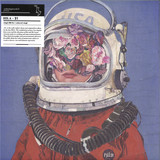
"21" is the well-crafted, sharp and original first album by the duo HILA, composed by American cellist Artyom Manukyan (who already worked with Kamasi Washington, Daedalus, Flying Lotus, Run DMC, Gretchen Parlato, Raphael Saadiq, Clive Lowe Mark...) and french producer Dawatile.
The combination of jazz, Los Angeles beat-scene and the vibrations of 80s and 90s Soviet Armenia make it a striking and unprecedented fusion. These kind of nostalgic and unconventional references forcefully shake the codes of mainstream culture to create a sincere, raw and intimate expression.
"HILA" was born from a spontaneous and intense creative impulse between Artyom Manukyan, a Los Angeles-based Armenian celloist and his partner in crime, David Kiledjian aka Dawatile, a French multi-instrumentist of Armenian descent. This project is proving to be a true master stroke given that it only took 21 days for the duo to make it a reality.
"HILA" was made in less a moon cycle but captivates and electrifies audiences upon its first outings. "H.I.L.A" colors the warmth of the Californian "High" with Armenian vibes. The artists chose this name for their creation since both have a close and valuable connection to these locales. This journey began in 2007, on the day Dawatile went to Yerevan, the capital of this small country in the Caucasus mountain to realize a first fusion project centered around local folkloric music genres.
There he was introduced to local musicians including the Armenian Navy Band, one of the country's foremost groups in which Artyom played the bass and cello. In this context, he also met many musicians such as Tigran Hamasyan and Norayr Kartashyan. This will be the beginning of connections between Lyon, Yerevan and Los Angeles. The following year, the two artists will be be seen performing next to Taylor Mc Ferrin at the Jazz à Vienne festival. More recently, they partnered up again when the cellist, who had freshly relocated in California, invited Dawatile to produce his album. As soon as the studio’s threshold was crossed, they decided to postpone this record and create a joint project: Hay (as the Armenians call themselves) / High In Los Angeles. HILA was born at the end of these 21 days of intense creation. The association of Artyom Manukyan and Dawatile is the combination of two visions, two versions of Armenia, two personalities, the reunion of the Eastern and Western blocs.
One grew up nurtured by the sounds of hip-hop and jazz in Europe and the other by art music and Russian-influenced 1980s Armenian folkloric music before moving to L. A., Ca. The cornerstone of it all, the glue that unites everything : Armenia and music. They generate a new identity synthesizing two perceptions, their complicity transcending these cultural discrepencies. To achieve this, they will scour through images of Artyom’s childhood, within the popular culture of Soviet Armenia. Together, they revisit this decidedly retro vibe, based on the work of Caucasian groups inspired by African American music. This background is rehashed and fused with ancestral Armenian sounds. The DNA of the album "21" is molded by these dear influences.
We can also hear the ancestral sounds of Armenia, a country at the edges of both Europe and Asia. The presence on two tracks of Armenian music Master Norayr Kartashyan, infuses the languor of past melodies and traditions. These purposeful anachronistic sounds offer a fantastic depth to this powerful opus. Listening to the album, one can appreciate the successful fusion of styles and influences. Those combinations, however, manage to preserve individual identities only to enhance the art through an adamant musical dialogue.
Being driven by the urge to transpose Armenian musical traditions into a unique universe, the daring artists, offer an innovative combination by blending, for the first time, these ancestral sounds with the world of Los Angeles beat-scene and jazz. An invention largely fueled by the magic strings of Artyom and maestro Miguel Atwood-Ferguson, a pillar of the genre in Los Angeles combined. These associations resonate with a triumphant equilibrium. HILA is musical uncharted territory in which Artyom's cello strings intertwine to ignite the harmonies of keyboards, the machines, the vocals and electronic layers Dawatile pieced together. HILA plays the soundtrack of an adventure set between Armenia around the end of the Soviet era and a mysterious near future.
Artyom Manukyan grew up in Armenia in the 90s. At the time, he studied Russian classical music while learning jazz with assistance by his father, a music journalist. Being an unconditional music lover, he went on to sharpen his skills at the prestigious Berkelee College of Music. Subsequently, he’s been lucky enough to travel the world touring with numerous acts and mainly with the Armenian Navy Band. The group has fostered alacritous success honored by a BBC Award as a crowning achievement. He moved on 10 years ago and made his way to L.A. with his cello on his back. In the City of Angels, he quickly became a popular figure of the jazz and hip-hop scenes thanks to his first album "Citizen". He’s accompanied prestigious musicians such as Kamasi Washington, Melody Gardot, Daedalus, Flying Lotus, Run DMC, Gretchen Parlato, Raphael Saadiq, Clive Lowe Mark, or Vulfpeck. He released his solo album on the cello, "Alone" in October 2019.
Dawatile is a bold producer and multi-instrumentist as well as a passionate and resolute musician molded by jazz. As a versatile artist, he handles and juggles the saxophone, the keys, the bass and composition. Simultaneously, Dawatile produces cross-over projects and soundtracks for the movie industry. He, as well, has had the opportunity to be a part of many tours, including with his electro hip-hop band, Fowatile and more recently with the "Future Kreyol" trio, Dowdelin. Being the ever workaholic, he has under his belt a string of prestigious collaborations with the likes of Talib Kweli, Foreign Beggars, Roy Ayers, Tigran Hamasyan, Mathieu Boogaerts, Voodoo Game and Piers Faccini. His taste for developing new musical recipes and his know-how in production make him a much sought-after album producer. In concert, the HILA duo offers a sober, precise and rhythmic performance. "21" is an aerial and lively album taking the audience on an at times joyous and sometimes melancholic dreamlike journey. The magic of "HILA" operates at the speed of light and positions it already as an avoidable group.
Italian production duo natural/electronic.system. is back on their homebase Tikita Recordings. With four immersive deep techno cuts they continue the journey they've started when debuting on the label back in 2016. Now they could be seen as one of the key figures on the Moroccan based imprint with 'Mediterranea' being their third full EP on the label.
'Scirocco' starts in a deep mood, on low pace and mesmerizing percussion improvisations. 'Grecale' is the most swinging cut of all four with its tribal drum flow rambling on a playful up-tempo groove. Flipping to the b-side 'Libeccio' comes in at a lower bpm but still an unavoidable catchy and danceable motive where 'Maestrale' ends this playful EP with a lush and dreamy electro jam in deep blue space atmospheres.
Aussie house maestro, Matt Meler debuts on House Puff with a tasty club-focused four track release. The A-side kicks of with 'The Looker' full of freq'd 'n' filtered stabs and pads that'll get the juices flowing. A2 strips a few layers off for a hypnotic bumper, 'Rub- A-Dub'.
Incognito Cognito, thumps us with a heavy hearted groove with etherial textures and psychedelic atmospheres. Closing out the B-Side is 'Nice Things', Saturated with classic deep influences, wonky LFO's and hats for days. Wrap your head around this all class EP.
UKNOWY music is back with a new installment on its more house-leaning "Plastic Garment" vinyl series. This time the EP title is "Midnight Impulse" as every track carries the treats of nocturnal life: it's dark, it's fresh and it's open to all possibilities! Starting with Salomo we have a delivery of a definite club banger with "Transform" - devotees of the likes of Kyle Hall or Steven Julien/Funkineven will definitely get their fancy tickled here. Next comes Italian break-beat maestro Sofa Talk with a rhythmically sophisticated yet deep "ALBA", much in the vein of earlier Plastic Garment releases. Munich house duo Rhode & Brown starts the B side with "You & Me" building intricate synth arpeggios over catchy chords. St. Petersburg's very own Dices closes things off with his more dreamy and at the same time incredibly complex and beautiful "See You There" - a track for the listener or the later hours of the night.
- A1: Sul Ponte Di Istanbul
- A2: Notte Cromatica
- A3: Meditazione Melodica
- A4: Fuga In Svizzera
- A5: Balletto Col Morto
- A6: Troppo Triste Per Essere Allegro
- A7: Caduta E Ripresa
- A8: Fuga In Svizzera 2
- A9: Jazzetto Classico
- B1: Jazzetto Moderno
- B2: Meditazione Melodica 2
- B3: Fox Astratto
- B4: Affresco Con Bambino
- B5: Fox Astratto 2
- B6: Troppo Triste Per Essere Allegro 2
- B7: Shake Del Giudice
- B8: Tempo Di Marcia Con Bambino
... Finally on Vinyl !
One of the most sought after and mysterious scores by the Maestro ENNIO MORRICONE! With the help of the magical voice of Edda Dell’Orso (Sul Ponte di Istambul) this score follows the steps of the most famous soundtracks composed by the Maestro combining melancholic melodies with wild funky tunes as the brilliant “Shake del Giudice”. END OF THE GAME (also known as IL GIUDICE E IL SUO BOIA aka ASSASSINIO SUL PONTE aka DER RICHTER UND SEIN HENKER) is a 1975 cult noir movie starring the great John Voigt and Jacqueline Bisset.
Pedro "Ramayá" Beltrán, born in Patico, a small town in Colombia's Bolívar province, is a maestro of Colombian folkloric music known as the King of the 'caña de millo' flute, although he is also proficient in various percussion instruments as well as the reed instrument known as 'gaita'. He founded La Cumbia Moderna de Soledad in the early 1970's. With this group he set out to "modernize" the folkloric music of his people, adding electric bass and a brass section to
fresh arrangements of cumbias, porros, fandangos, puyas and other costeño genres. "La Clavada" (1979) was La Cumbia Moderna de Soledad's sixth record and first for Codiscos' Costeño imprint.
The LP has many excellent examples of Beltrán's inventive mix of the ancient and the modern, making for a collection of tunes brimming with tradition and yet fearlessly bristling with innovation, not the least of which is 'Crees que soy sexy', with its gaita refrain mimicking the main melody of Rod Stewart's international disco smash 'Da Ya Think I'm Sexy'.
The album's title song was a massive hit in Colombia and has become a standard of the genre. Restored to its original glorious sound, this LP is poised to be rediscovered as an innovative yet rootsy gem. Presented in facsimile artwork and pressed on 180g vinyl.
Part of Vampisoul's reissue series of classic LP's from Colombia's Codiscos and it's sublabels such as Zeida, Costeño and Famoso.
“Osondi owendi. What is cherished by some is despised by others. One man’s meat is another man’s poison. Different strokes for different folks. To each their own. Osondi owendi.
It’s a conventional aphorism in the Igbo language but if you utter the word “osondi owendi” in Nigeria today, the first thing that comes to anybody’s mind is the cucumber-cool highlife music maestro Chief Stephen Osita Osadebe and his legendary album that takes its name from the adage. Released in 1984, Osondi Owendi was instantly received as Osadebe’s magnum opus, the crowning event of an exalted career stretching back to the early years of highlife’s emergence as Nigeria’s predominant popular music.
Stephen Osadebe first appeared on the music scene in 1958 as a spry, twenty-two year-old vocalist in the Empire Rhythm Skies Orchestra, directed by bandleader Steven Amechi. With his dapper suits, urbane Nat King Cole-influenced vocal stylings and jaunty, uptempo, calypso-scented dance tunes, he personified the frisky spirit and anxious aspirations of a young, educated generation that had come of age in the wake of the Second World War, in a Nigeria that was rapidly shaking off British colonization and marching towards an independent future. 1959 would be the year that he truly made his mark in the business with his debut solo single “Lagos Life Na So So Enjoyment.” A giddy exhortation of the music, sex, fun and freedom availed by life in the big city, the song became a sensation and an anthem, and Stephen Osadebe became the leader of his own popular dance band, the Nigerian Sound Makers.
Osadebe would ride this wave of acclaim through most of the nineteen sixties, but a change in direction would be called for at the dawn of the seventies. As Nigeria emerged from a devastating civil war, so did a new generation of youth inspired by rock and funk, confrontational sounds reflective of a more violent, less idealistic era. All of the sudden, the idioms of the post-WWII dance orchestras that nurtured Osadebe’s cohort seemed quaint, the stuff of nostalgia. Osadebe needed to evolve to respond to the new tumultuous, turned-up times.
His response? He cooled it down.
Abetted by a new crop of fire-blooded young players, Osadebe slowed his music to a mellow, meditative tempo, brought forward the lumbering, Afro Cuban-accented bass and percussion, from the rockers he borrowed searing lead lines on the electric guitar. Over this musical bedrock, doesn’t so much as sing as he dreamily muses, coos, sighs aphorisms, words of wisdom and inspiration. “When one listens to my music, all I say appears meaningful,” Osadebe explained his lyrical approach, “at times they are in the form of proverbs which provoke much thought afterwards.” The result is a blend that is both rollicking and soothingly languid. Osadebe christened the style Oyolima—a tranquil, otherworldly state of total relaxation and pleasure. Osondi Owendi represents oyolima at its finest, and possibly Nigerian highlife in epitome.
Osondi owendi. What is cherished by some is despised by others. In some way, the album’s title constitutes a paradox. Because Osondi Owendi is a record that it’s almost impossible to imagine being despised by anybody."
- A1: Diego Carpitella & Alan Lomax - E Ballamu Tutti Ddhoi Ti Paru
- A2: Diego Carpitella & Ernesto De Martino - Pizzica Tarantata N 014
- A3: Diego Carpitella & Ernesto De Martino - Pizzica Tarantata N 015
- A4: Diego Carpitella & Ernesto De Martino - Pizzica Tarantata N 026
- A5: Diego Carpitella & Ernesto De Martino - Pizzica Tarantata N 030
- A6: Diego Carpitella - Santu Paolu Meu De Galatina
- B1: Bjorn Torske & Trym Søvdsnes - Pizzica Tarantata N 026 (Rework)
- B2: Uffe - Pizzica Tarantata N 015 (Rework)
- C1: Lns - Pizzica Tarantata N 014 (Rework)
- C2: Bottin - Santu Paolu Meu De Galatina (Rework)
- D1: Don't Dj - Pizzica Tarantata N 014 (Rework)
- D2: Kmru - Pizzica Tarantata N 030 (Rework)
After their first issue focus on Benga, a Kenyan musical movement, FLEE is proud to present its new project: «Tarantismo: Odyssey of an Italian Ritual», available on 2LP Gatefold and as a bundle with 2LP Gatefold and a 168 pages Book.
Please note that the book only is not available
Dedicated to Tarentism, this project tells the story of a centuries-old choreo-musical ritual from Southern Italy, mobilizing frenetic rhythms and maniac dances, to exorcise women of a mysterious evil caused by the bite of a spider. Trans-disciplinary, this effort of documentation and artistic re-interpretation of one Europe’s most mysterious trance phenomenon is comprised of a double LP vinyl compilation including original recordings from Italian Maestro's Carpitella, Lomax and De Martino with reinterpretations from Don't DJ, Bottin, LNS, Bjorn Torske & Trym Søvdsnes, KMRU, Uffe and a hardcover Italian/English book.
We're proud to present these four tracks of pure electronica on a Ferox debut EP from Macedonian maestro Mihail P. Despite his young age, it's easy to hear the influence of 90's UK techno in this release with a slight hint of Terrace and Dan Curtin.
With five quality releases under his belt, Mihail is already fast becoming a favourite on the underground electronic scene and obviously injects his own techno soul into his productions. Available on 180g vinyl only.
red & black marbled vinyl
Navigating between time and space, label head Foreign Material continues his historical journey with The Quest , a piece inspired by medieval legends.
Of Faith and Glory leads the way, an epic track which carries the knights' fervor and devotion through strong rhythmics and mystical eerie pads. American maestro Eric Cloutier provides a deep reverberating rework which brings us far underwater.
Of Flesh and Duty dives deeper into medieval madness with fierce rolling toms and hypnotic acid line. The track takes us along knights venturing deep into mysterious woods, accompanied by devastating celestial choirs into a glorious and deadly final. Deep techno craftsman A Sacred Geometry shares his vision with a strong remix that goes into battle frenzy with a powerful and mesmerizing reinterpretation.
At last, Of Fire and Fate (Digital Only Track) releases the rising tension and gives a relief after the storm with broken beats and shamanic vibes. This heroic conclusion underlines the impossibility of a far yet necessary goal leading only to death.
A bloody never-ending Quest...
While filming "The Library Music Film", Shawn Lee & Paul Elliott travelled the world interviewing legendary composers, musicians and producers. This meant visiting some incredible recording studios, studios almost as famous as the music created in them, places like Telecine Sound Studio in Rome, Angel Studios in London, Studio CBE in Paris and Piero Umiliani's Sound workshop in Rome.
f you have ever met Shawn Lee & Paul Elliott, you will know they can't resist picking up an instrument or two for an impromptu jam, so it was inevitable that the pair would create some music in at a least a couple of these world-renowned studios. This special 7" release is the result of their spontaneous, off the cuff musical moments.
"Mexican Marimba" was kick started in The Sound Workshop Studio in Rome, when Shawn and Paul played the Maestro Piero Umiliani's Mexican Marimba with their fingers - the mallets where not next to the instrument, so they just played anyway!
"French Attack" began life when Paul improvised a piece on Studio CBE's tack piano, while Shawn sat on the floor beating out the rhythm on a bass drum and tom toms - this moment can briefly be seen in "The Library Music Film"
Both recordings were then taken back to London to Shawn Lee's own studio for the finishing touches and the music was included in the film's underscore. Here it is released commercially for the first time!
Funky soul-jazz organist Caesar Frazier crafted superior Hammond funk. 75, his second LP, is a rare gem. It’s comfortably his greatest artistic statement.
The follow-up to Hail Ceasar!, it’s a taut, grooving set that expands his sound and, put simply, it’s got better songs. The key elements of his debut album are all there – production from maestro Bob Porter, accompaniment from hip players (Bernard “Pretty” Purdie, Cornell Dupree, John Tropea) and arrangement from Horace Ott - but the overall sound is elevated. The tightly jamming, expressive jazz-funk makes for a richer, fuller, more satisfying experience.
75 is a mixture of hard-driving originals, deeply beautiful slower numbers to vary the tempo and a couple of classy covers. The crazy bombastic “Mighty Mouse” - a riot of horns, organ and in the pocket drums - became an acid jazz classic at Dingwalls and it’s easy to see (hear?) how. A blissed out, lushly instrumental take on Seals and Crofts’s “Summer Breeze” follows, perfect for those sunshine sets.
Side A closes with the heavenly “Sweet Children”. A loping, funky jazz masterpiece famously sampled by Kanye West for Common’s “Real People” from Be. It opens beautifully, with soaring sax and a funky horn section combining with weightless keyboard tones atop snapping drums. Unsurprisingly, the excellence endures right through to the end.
The B side opens with perhaps the album’s most famous track. "Funk It Down” contains the familiar “I can feel the funk” vocal refrain throughout. But it’s the gorgeous, insouciant bridge that you should all know and love, having been used as the hook for Gang Starr’s “Ex-Girl To Next Girl”. A great cover of Stevie Wonder's “Living for the City” comes next, with an unforgettable bass-line which anchors the entire heavy rhythm section workout. Dizzying organ, triumphant horns and sun-dappled guitar grooves combine to create “Walking On The Side”, rounding out a pretty smoking set.
This is one of those rare 70s funk-soul-jazz LPs on which a bad track cannot be found. It’s all essential. So of course finding original copies on vinyl at affordable prices has been tough for years.
Mastered brilliantly by Simon Francis, cut by Pete Norman and with painstakingly reproduced artwork by the Be With team, this fresh Be With reissue ensures this legendary LP now sounds, looks and feels as sensational as it should.
One year after its release, Quartet Series proudly presents the remix EP of Nachtbraker's successful debut album When You Find a Stranger in the Alps. A collection of remixes by some serious talent. These three producers were carefully selected by Nachtbraker because of their impeccable reputation and ability to bring something unique to the world of music.
Humble Danish maestro Central (Help, Dekmantel) flips "Flambo" into a Jori Hulkkonen'esque summer anthem with a highly addictive bassline. Preacher of wonkiness Frits Wentink (Wolf, Heist, Bobby Donny) took "LOL" and brought it some serious keys on a solid breakbeat while maintaining its jolly character. Flipping the record, Nachtbraker brings us the evolution of "Just Doing My Thang" turning it into a quirky dance floor tune whilst also showcasing his ear for detail. Up and coming talent Nemo Vachez (Forest Ill, Opia Records, Rakya) dives deep into "Horsepony" as if he's cruising the depths of a rainforest in a submarine. His surreal dub mix is the perfect final track of this fine piece of wax
Another fine slab of that Disco goodness from the mighty Kojak stable. Toronto party machines & re-edit maestros The Patchouli Brothers step up to the plate this time with 2 monstrous sides of peak-time Disco heat.
'BDSM / Gert A Chance' will not leave your bag, these cuts are primed, ready and able to lift the roof off of your discotheque, road-tested by the bros and deemed suitable the gods at Kojak Giant Sounds & Disco Promotions. Say no more. Essential wax for the discerning mirror ball fiend right here. Limited, as always. Do it!
Transversales Disques proudly presents the first LP reissue of Défense de savoir (L’uomo a destra basso nella fotografia) original soundtrack written by italian composer Bruno Nicolai.
During the Giallo boom of the early 70’s, a lot of French film directors started working with maestro Ennio Morricone. French director Nadine Trintignant decided to hire the maestro’s
musical orchestrator and collaborator Bruno Nicolai to compose the score of her fourth movie, a political thriller starring her husband Jean-Louis Trintigant. Recorded at Morricone’s Ortophonic studio in Rome, this OST is undoubtedly the most
underrated Bruno Nicolai’s soundtrack, probably because it was only released in France at the time. Presented here with previously unreleased tracks as an alternative to the rare original
french pressing. Limited Edition. Remastered from the original master tapes.
It seems KPM have long been fans of Smith and Mudd and, after being introduced to each other by mutual friend Andy Allday, the peerless Balearic maestros were invited to contribute to the library label’s digital-only “Album Shorts” project. The results are predictably wonderful.
With past projects under our belt working with everyone involved so far it made perfect sense for Be With to take on the vinyl release of this instant library classic. But why is it called “Tea With Holger”?
“Holger” is of course Holger Czukay and the whole LP is dedicated to Smith and Mudd’s time spent with him and Ursa Major at Can’s famous Inner Space Studio in Weilerswist, near Cologne.
When not recording it seems they spent a great deal of time sat around being entertained by Holger’s stories and drinking many cups of different sorts of tea from all over the world. These moments provide some their fondest memories of their visits:
“Looking back, it was pretty incredible that we spent part of our lives with Holger in one of the most magical places we’ve ever known, Inner Space Studio. We have our memories and, of course, the Bison album we made with him. But to honour the time we spent with him, we wanted to dedicate an album to him called ‘Tea With Holger’. The names of the tracks are about that time.”
The album was recorded over several years in London, Margate and Gorthleck, a small hamlet in the Scottish Highlands. Mike Piggott, who played with Bert Jansch, handled the strings and played violin whilst Sam Creer lent his virtuoso cello work to the proceedings. The sessions employed a key recording technique from their time with Holger: hit record and play. They wanted to capture magical improvisational moments live and not do the work later on in editing.
In their own words (and in classic library record sleeve style) these tracks are collectively described as “Balearic themes including breezy soul, sun-dappled melodies, warm pianos and sweeping strings”. You want to hear this, right?
The album is vintage Smith and Mudd. The gentle piano ushering in opening track “The Gardener” is soon joined by low, bubbling drums. When the time is just right, lush guitars glisten above a Welsh language vocal that floats like silk. Easy as a sea breeze. “Innerspace” is of course a nod to Can’s aforementioned studio. Dark, heavy piano meets rolling drums before warm chords and luscious strings take over, gliding over moody grooves to drive you home. Closing out side A, “Weilerswist” delivers more beautifully rolling piano and guitars over thumping cellos and building drums.
Side B opens with the full, string-enhanced version of “Away From Me”. This is Smith and Mudd’s prefered version and it’s only available here on this vinyl issue. For us it’s the standout on this all-highlight album. Tribal tones, piano and cello set a melodic staccato for violin to soar over while rolling piano lines and gospel organ chords descend into a drum drop that leads to a glorious vocal lead finale.
Distant synths introduce sun-drenched guitars and uplifting strings in “Kölner Street”, before a spacey Moog solo leads to a spellbinding, sci-fi drop. The sunshine returns before the track ends. The album closes with “Tea With Holger”. Airy vocal swells are punctuated by plucked cellos and picked guitars, all wonderfully warmed by a soulful piano.
Cut by Pete Norman and pressed in the Netherlands by Record Industry, “Tea With Holger” comes in a classic KPM green sleeve complete with track descriptions from Smith and Mudd themselves. The finishing visual touches come courtesy of Richard Robinson. We’ve given this record the same care and attention as we give to each our KPM re-issues, and it’s just as essential.
Originally released in 1983 on independent label For Sale (sub-label of the highly influential Baby Records, home of some of the most striking italo-disco ever), this album is quite a different monster. Produced, composed and arranged by Maestro Gian Piero Reverberi (once part of the progressive cult heroes Le Orme and then the man behind the ‘classical gone disco’ project Rondò Veneziano) Presage lives in a ‘twilight-zone’ where new-wave, post-prog and disco weirdness collides. Some of these numbers could have been easily played at the Hacienda in Manchester or even used as a soundtrack for some mid-eighties Argento movie. Part of the musicians used to be involved in the prog band from Genova Struttura & Forma, while others spent time behind the desk with some minor disco stars. All in all quite an unusual heavy rare-groove collection.