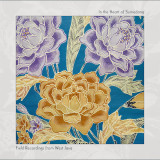
"We are delighted to be able to bring you these gorgeous field recordings from the Sumedang Province of West Java which, over their 50 minutes, present two distinct sides of Sundanese musical and devotional culture.
Although West Java is a Muslim country, these recordings highlight currents of pre-Islamic animist beliefs and practices that continue to flourish in the small towns and villages of the highlands of West Java. The recordings showcase two forms of trance music that are essential to the spiritual life of the Sundanese people in the highland regions.
Tarawangsa trance music is a traditional ceremonial genre known for its deep spiritual and hypnotic qualities. This music is made using only two instruments, the tarawangsa, a two-stringed fiddle, accompanied by the jentreng, a seven-stringed zither, creating a unique blend of resonant, droning sounds. Historically, tarawangsa music has been performed as part of sacred rituals and agricultural celebrations to honor local deities and ancestors, particularly associated with the Sunda culture. The minimalist, repetitive melodies gradually build, guiding participants and listeners into a meditative, trance-like state, during which dancers can be possessed by the spirits of ancestors or deities from the spirit realm, the music serving as a link between the two worlds.
In stark contrast to the calm, medititive sound of tarawangsa, we also present here two long pieces from Panca Buana Reak Group. Sundanese Reak trance music is like the punk rock of Sunda folk music, combining powerful and driving rhythms played on a number of hand drums and percussion instruments with the buzzing sound of the tarompet, a double reed wind instrument often amplified through whatever mobile speaker system might be at hand. Sometimes the group will play gamelan gongs, as heard on the first piece on the album, although this remains a music that is popular mainly with the working class youth of the rural villages, many of whom will also be fans of Indonesia's burgeoning metal and punk scenes. Reak performances are often wild, anarchic events that feature masked dancers, costumes, public trancing and spirit possession.
These recordings were made by Xenia At during her travels through West Java earlier this year. The tarawangsa recordings were made in a home in the village of Rancakalong on the evening of 17th January 2024, while Panca Buana Reak Group were recorded during rehersals in the village of Cinunuk on 19th and 20th January 2024."
Limited edition of 100 copies.
The musicians:
Overture (played by Panca Buana Reak Group, musicians: Rian Hidayat, Daffa, Rendi, Haswa, Doni, Aconk, Bayu, Zidan, Iwan Uwak, Mahadewa Sehu, Bebet, Adi, Bebet).
Reundeu - Master Yayat (kacapi), Tedi Kurniadi (tarawangsa).
Degung - Master Yayat (kacapi), Teguh Permana (tarawangsa).
Pamapag__Gelar Mataram__Panimang__Limbangan - Akbar Nendi (kacapi) & Tedi Kurniadi (tarawangsa).
Reak Lugay Pusaka Pajajaran (played by Panca Buana Reak Group, musicians: Aconk (tong), Rendi (brung), Hendrik (tarompet), Ade (kecrek), Riki (bedug), Doni (talingtit), Adi (badublag).
Xenia would like to extend gratitude to:
Master Yayat, Tedi Kurniadi, Akbar Nendi, and Teguh Permana for their incredible talent that turned this recording into a magical experience.
Ibrahim Adi Surya for technical support.
The Juarta Putra and Panca Buana Reak groups for explaining the cultural significance of local traditions.
Anggun Tresnasari for sharing her deep knowledge of regional music traditions.
Igor Moskalenko, Kate Snap, Stasya Frolova, Roman Gold, Misha Maltsev, Ilona Popychko, Galih Muhammad, Wildan Wiliansyah, Rizalu Ramadhan, Rahi Rahmat, Fahmi Solihin and Muhammad Ismael whose unwavering belief made this project possible.
Hive Mind would like to thank Luigi Monteanni (Artetetra) and Palmer Keen (Aural Archipelago) for their invaluable work and research in this region.
Cerca:magic system d j
"This is the time that we, who have benefitted from the Last Poets shouldbe able to say, 'it's the Last Poets. It's them we should be honouring, because we did not honour them for so many years_"
KRS One wasn't just addressing the hip hop fraternity when he uttered
those words by way of introducing the video for Invocation - a poem
written thirty years ago, around the time of the Last Poets' last significant comeback. He was speaking to everyone who's been affected by the word, sound and power issuing from the most revolutionary poetry ever witnessed, and that the Last Poets had introduced to the world outside of Harlem at the dawn of the seventies.
In 2018 the two remaining Last Poets, Abiodun Oyewole and Umar Bin
Hassan, embarked on another memorable return with an album -
Understand What Black Is - that earned favourable comparison with theirseminal works of the past, whilst showcasing their undimmed passion andlyrical brilliance in an entirely new setting - that of reggae music. Trackslike Rain Of Terror ("America is a terrorist") and How Many Bullets demonstrated that they'd lost none of their fire or anger, and their essential raison d'etre remained the same.
"The Last Poets' mission was to pull the people out of the rubble o f their lives," wrote their biographer Kim Green. "They knew, deep down that poetry could save the people - that if black people could see and hear themselves and their struggles through the spoken word, they would be moved to change."
Several years later and the follow-up is now with us. The project started when Tony Allen, the Nigerian master drummer whose unique polyrhythms had driven much of Fela Kuti's best work, dropped by Prince Fatty's Brighton studio and laid down a selection of drum patterns to die for. That was back in 2019, but then the pandemic struck. Once it had passed, the label booked a studio in Brooklyn, where the two Poets voiced four tracks apiece and breathed fresh energy, fire and outrage into some of the most enduring landmarks of their career. Abiodun, who was one of the original Last Poets who'd gathered in East Harlem's Mount Morris Park to celebrate Malcolm X's birthday in May 1968, chose four poems that first appeared on the group's 1970 debut album, called simply The Last Poets. He'd written When The Revolution Comes aged twenty, whilst living in Jamaica, Queens. "We were getting ready for a revolution," he told Green. "There wasn't any question about whether there was going to be one or not. The truth was many of us still saw ourselves as "niggers" and slaves. This was a mindset that had to change if there was ever to be Black Power." He and writer Amiri Baraka were deep in conversation one day when Baraka became distracted by a pretty girl walking by. "You're a gash man," Abiodun told him. The poem inspired by that incident, Gash Man, is revisited on the new album, and exposes the heartless nature of sexual acts shorn of intimacy or affection. "Instead of the vagina being the entrance to heaven," he says, "it too often becomes a gash, an injury, a wound_" Two Little Boys meanwhile, was inspired after seeing two young boys aged around 11 or 12 "stuffing chicken and cornbread down their tasteless mouths, trying to revive shrinking lungs and a wasted mind." They'd walked into Sylvia's soul food restaurant in Harlem, ordered big meals, then bolted them down and run out the door. No one chased after them, knowing that they probably hadn't eaten in days. Fifty years later and children are still going hungry in major cities across America and elsewhere. Abiodun's poem hasn't lost any relevance at all, and neither has New York, New York, The Big Apple. "Although this was written in 1968, New York hasn't changed a bit," he admits, except "today, people just mistake her sickness for fashion." Umar is originally from Akron, Ohio, but had arrived in Harlem in early 1969 after seeing Abiodun and the other Last Poets at a Black Arts Festival in Cleveland. That's where he first witnessed what Amiri Baraka once called "the rhythmic animation of word, poem, image as word- music" - a creative force that redefined the concept of performance poetry and stripped it bare until it became a howl of rage, hurt and anger, saved from destruction by mockery and love for humanity. When Umar's father, who was a musician, was jailed for armed robbery he took to the streets from an early age where he shined shoes and raised whatever money he could to help feed his eight brothers and sisters. By the time he saw the Last Poets he'd joined the Black United Front and was ready to join the struggle. Once in Harlem, Abiodun asked him what he'd learnt in the few weeks since he'd got there. "Niggers are scared of revolution," Umar replied. "Write it down" urged Abiodun. That poem still gives off searing heat more than fifty years later. In Umar's own words, "it became a prayer, a call to arms, a spiritual pond to bathe and cleanse in because niggers are not just vile and disgusting and shiftless. Niggers are human beings lost in someone else's system of values and morals." And there you have it. It's not just race or religion that hold us back, but an economic system that keeps millions in poverty and living in fear - a system born from political choice and that's now become so entrenched, so bloated on its own success that it's put mankind in mortal danger. It was many black people's acceptance of the status quo that inspired Just Because, which like Niggers Are Scared Of Revolution, was included on that seminal first album. Along with their revolutionary rhetoric, it was the Last Poets' use of the "n word" that proved so shocking, but it would be wrong to suggest that they reclaimed it, since it never belonged to black people in the first place. There's never any hiding place when it comes to the Last Poets. They use words like weapons, and that force all who listen to decide who they are and where they stand. Umar's two remaining tracks find him revisiting poems first unleashed on the Poets' second album This Is Madness! Abiodun had left for North Carolina by then where he became more deeply enmeshed in revolutionary activities and spent almost four years in jail for armed robbery after attempting to seize funds related to the Klu Klux Klan. Meanwhile, the 21 year old Umar was squatting in Brooklyn and had developed close ties with the Dar-ul Islam Movement. A longing for purity and time-honoured spiritual values underpins Related to What, whilst This Is Madness is a call for freedom "by any means necessary," and that paints a feverish landscape peopled by prominent black leaders but that quickly descends into chaos. "All my dreams have been turned into psychedelic nightmares," he wails, over a groove now powered by Tony Allen's ferocious drumming. Those sessions lasted just two days, and we can only imagine the atmosphere in that room as the hip hop godfathers exchanged the conga drums of Harlem for the explosive sounds of authentic Afrobeat. Once they'd finished, the recordings and momentum returned to Prince Fatty's studio, since relocated from Brighton to SE London. This was stage three of the project, and who better to fill out the rhythm tracks than two key musicians from Seun Anikulapo Kuti's band Egypt 80? Enter guitarist Akinola Adio Oyebola and bassist Kunle Justice, who upon hearing Allen's trademark grooves exclaimed, "oh, the Father_ we are home!" Such joy and enthusiasm resulted in the perfect fusion of Nigerian Afrobeat and revolutionary poetry, but the vision for the album wasn't yet complete. He wanted to create a new kind of soundscape - one that reunited the Poets with the progressive jazz movement they'd once shared with musicians like Sun Ra and Pharoah Sanders. It was at that point they recruited exciting jazz talents based in the UK like Joe Armon Jones from Mercury Prize winners Ezra Collective, also widely acclaimed producer/remixer and keyboard player Kaidi Tatham, who's been likened to Herbie Hancock, and British jazz legend Courtney Pine, whose genius on the saxophone and influence on the UK's now vibrant jazz scene is beyond question. The instrumental tracks on Africanism are in many ways as revelatory and exciting as the Last Poets' own. It's important to remember that the kaleidoscope of styles and influences we're presented with here aren't the result of sampling but were played "live" by musicians responding to sounds made by other musicians. That's where the magic comes from, aided by Prince Fatty's peerless mixing which allows us to hear everything with such clarity. Music fans today have grown accustomed to listening to all kinds of different genres. Their tastes have never been so broad or all- encompassing, and so the music on this new Last Poets' album is as groundbreaking as their lyrics, and perfectly suited to the era that we're now living in. John Masouri
Mischievous festa punk meets astral steppas, kalaedoscopic free ambient meets harsh noise, scattered amen breaks with IDM and free jazz trumpets meets the earthly plod of digidub. It can only be Felinto from Sao Paulo.
UTOPIA MILHÃO honors the life forces that allow us to transform the darkness where dreams reside. The album brings a new moment of intimacy for Felinto's musical expression flowing through dirty, raw, dense and brilliant dub fractals, ready to transform unexpectedly into a new shape then another, and another, and another... featuring collaborations with magical people: Sarine (Deafkids), Douglas Leal (Deafkids), Guizado (Afrobombas), Sandra X, Paula Rebellato (Rakta), Lorena Hollander, Yao Bobby, Kiko Dinucci, Paulo Papaleo, Cint Murphy, Rodrigo Lima.
Felinto is a political agitator and musician at the heart of the São Paulo underground - a movement that confronts the various effects of the capitalist system of racial, sexual, ,,,,, and 22222 lawand material oppression.
His provocations range from yoga for children and parenting studies (SACYOGA), theatre (PROJETO CRIOULOS and PROJETO JAMES BALDWIN), web series highlighting the black presence in electronic music in São Paulo (MODULAÇÃO PRETA), reflective groups on gender violence and masculinities, occupation of public spaces for political art q(Coletivo Sistema Negro), artistic curatorship (Residência SOMSOCOSMOS) and studies with sound as a tool in conflict mediation practices. Felinto composes for film, theatre and immersive installations such as MEGACITIES presented at the National Gallery of Victoria, Canada in 2023.
He is currently researching - as part of a masters project in clinical psychology - the collectivised dream realities of black people. A field of action that contemporary anthropology, psychoanalysis and psychology call ONIROPOLITICA.
His interest in affinity groups, autonomous networks of micro-political articulation and penal abolitionism led him to the questions: what do black people dream about within the permanent context of civil war and state violence (like the one in Brazil)? How does this experience create dreams and how does the dream affect the construction of identities beyond the boundaries established by the capitalist unconscious?
The Nightstalker - Mystical sounds from the shadows of the night The Zurich duo The Nightstalker, consisting of producers Dan Piu and Popshop (Gary Rich), create a cosmos of sound that plunges deep into the darkness and unfolds an almost magical attraction.
After two acclaimed albums on the Berlin label Childhood Intelligence, they now invite us on a sonic fantasy journey with their new mini-album ‘Isoutopic Fantasia’ on World Wide Web Records.
With six tracks that oscillate between danceable darkness and playful, surreal moments, ‘Isoutopic Fantasia’ embodies a seductive fusion of mystical depth and bizarre beauty. The sounds are addictive and lead us through a musical dream realm where each beat reveals a new twist and the melodies unfold into sprawling, unexpected dimensions. A sonic fantasy carried by the shadows of the night, in which light and darkness unite in a hypnotic dance.
All tracks written & produced by The Nighstalker (Dan Piu & Gary Rich)
Mastering by Johanz Westerman at Ballyhoo Studio (NL)
Suffocating, the hidden child of Plastikman, Farmer's Manual and Warp. The glitches could just as well be the disgusting sound system of the club crackling under the humidity as a rhythmic pan too well timed to be honest. From durations to sound grain, the gloves are removed. The standards are far behind, the pleasure vibrates from the ears to the lower abdomen. The listener manages to get lost on a straight line, the perfect labyrinth according to Borges, but the exits flash red for those who want to escape. Will Elvis leave the building?.
The eighth and latest slate of refined retro-futuristic synth-pop by Liz Wendelbo and Sean McBride aka Xeno & Oaklander is named after and inspired by "the study of what not to do, a negative image of a positive, the other side, the other:" Via Negativa (in the doorway light). Recorded in the fall of 2023 at their modernist Connecticut home fashioned into a two-story synthesizer laboratory and mixing studio, the album is uniquely visionary in spirit yet precision in execution, a contrast central to the duo's enduring chemistry. Embryonic piano sketches were translated to nuanced modular systems, which McBride weighted with "harmonic padding," tuned percussion, and a spectral transfer device capable of "rendering spasms of rhythmic overtonal filigree." Despite the technological complexity of their craft, emotively the songs require no deciphering - these are technicolor widescreen anthems of the cybernetic age. The eponymous opening track sets the pace, soaring sleekly over glittering synths and call-and-response vocals about arias, shattered light, and faces in stereo. From there the record expands and contracts, cycling through a gallery of moods and masks, animated by the band's fascination with drama, "the idea of personae," and theatrical characters. Track by track, a murky, tragic backstory reveals itself: forlorn figures navigating a treacherous mercury mine, alternately poisoned by fumes or buried in collapsing caverns. The tension between Teutonic, utopian synthetic pop and lyrical narratives of ghosts in silos, ruined mills, and the traumas of mineral excavation creates a compelling friction, alternately futurist and obsolete, elevated and subterranean. Wendelbo describes the music's polarities perfectly: "The heavy machinic din of extraction in contrast with the enchantment of the mined precious gems and metals." From bilingual odes to bloodstones ("O Vermillion") to cosmic chrome dance floor classics ("Lost & There" "The present tense can never feel real / So many pasts conspire in the burning sun") to strutting EBM sensualities ("Actor's Foil"), Xeno & Oaklander re-prove themselves masters of the axis of technology and poetry, snaking cables and synesthesia, mining melodies and myths across 15 years of focused artistry. Theirs is a muse still gilded and gleaming, burnished red and silver, attuned to "the unobservable, the unfamiliar, that which you don't see directly."
The eighth and latest slate of refined retro-futuristic synth-pop by Liz Wendelbo and Sean McBride aka Xeno & Oaklander is named after and inspired by "the study of what not to do, a negative image of a positive, the other side, the other:" 'Via Negativa (in the doorway light)'. Recorded in the fall of 2023 at their modernist Connecticut home fashioned into a two-story synthesizer laboratory and mixing studio, the album is uniquely visionary in spirit yet precision in execution, a contrast central to the duo’s enduring chemistry. Embryonic piano sketches were translated to nuanced modular systems, which McBride weighted with "harmonic padding," tuned percussion, and a spectral transfer device capable of "rendering spasms of rhythmic overtonal filigree." Despite the technological complexity of their craft, emotively the songs require no deciphering – these are technicolor widescreen anthems of the cybernetic age.
The eponymous opening track sets the pace, soaring sleekly over glittering synths and call-and-response vocals about arias, shattered light, and faces in stereo. From there the record expands and contracts, cycling through a gallery of moods and masks, animated by the band’s fascination with drama, "the idea of personae," and theatrical characters. Track by track, a murky, tragic backstory reveals itself: forlorn figures navigating a treacherous mercury mine, alternately poisoned by fumes or buried in collapsing caverns. The tension between Teutonic, utopian synthetic pop and lyrical narratives of ghosts in silos, ruined mills, and the traumas of mineral excavation creates a compelling friction, alternately futurist and obsolete, elevated and subterranean. Wendelbo describes the music’s polarities perfectly: "The heavy machinic din of extraction in contrast with the enchantment of the mined precious gems and metals."
From bilingual odes to bloodstones ("O Vermillion") to cosmic chrome dance floor classics ("Lost & There" "The present tense can never feel real / So many pasts conspire in the burning sun") to strutting EBM sensualities ("Actor's Foil"), Xeno & Oaklander re-prove themselves masters of the axis of technology and poetry, snaking cables and synesthesia, mining melodies and myths across 15 years of focused artistry. Theirs is a muse still gilded and gleaming, burnished red and silver, attuned to "the unobservable, the unfamiliar, that which you don’t see directly."
The eighth and latest slate of refined retro-futuristic synth-pop by Liz Wendelbo and Sean McBride aka Xeno & Oaklander is named after and inspired by "the study of what not to do, a negative image of a positive, the other side, the other:" 'Via Negativa (in the doorway light)'. Recorded in the fall of 2023 at their modernist Connecticut home fashioned into a two-story synthesizer laboratory and mixing studio, the album is uniquely visionary in spirit yet precision in execution, a contrast central to the duo’s enduring chemistry. Embryonic piano sketches were translated to nuanced modular systems, which McBride weighted with "harmonic padding," tuned percussion, and a spectral transfer device capable of "rendering spasms of rhythmic overtonal filigree." Despite the technological complexity of their craft, emotively the songs require no deciphering – these are technicolor widescreen anthems of the cybernetic age.
The eponymous opening track sets the pace, soaring sleekly over glittering synths and call-and-response vocals about arias, shattered light, and faces in stereo. From there the record expands and contracts, cycling through a gallery of moods and masks, animated by the band’s fascination with drama, "the idea of personae," and theatrical characters. Track by track, a murky, tragic backstory reveals itself: forlorn figures navigating a treacherous mercury mine, alternately poisoned by fumes or buried in collapsing caverns. The tension between Teutonic, utopian synthetic pop and lyrical narratives of ghosts in silos, ruined mills, and the traumas of mineral excavation creates a compelling friction, alternately futurist and obsolete, elevated and subterranean. Wendelbo describes the music’s polarities perfectly: "The heavy machinic din of extraction in contrast with the enchantment of the mined precious gems and metals."
From bilingual odes to bloodstones ("O Vermillion") to cosmic chrome dance floor classics ("Lost & There" "The present tense can never feel real / So many pasts conspire in the burning sun") to strutting EBM sensualities ("Actor's Foil"), Xeno & Oaklander re-prove themselves masters of the axis of technology and poetry, snaking cables and synesthesia, mining melodies and myths across 15 years of focused artistry. Theirs is a muse still gilded and gleaming, burnished red and silver, attuned to "the unobservable, the unfamiliar, that which you don’t see directly."
King Tubby the Dub Master, who's output was as prolific as it is sought after, and who's presence is surely missed. We would like to take you on another dub excursion. This time through some essential cuts made for the Producer / DJ Tappa Zukie. King Tubby always added something a little special to the tracks he worked on. Producers would often bring their already recorded tracks to his home studio at 18 Drummlie Avenue in the Kingston district of Waterhouse. The backing tracks which were laid at various other studios around Kingston. Like Channel 1and Randy's Studio 17, would then be voiced/Re-voiced at King Tubby's. Tubby and his team which included Prince Jammy and Philip Smart would be left to create the version cut.
Having listened to the track it would be striped back to the bone of bass and drums and rebuilt. Sprinkling his magic over the track by dropping the bass in and out, adding echo and emphasising various elements of the song. In some cases, dubbing the cut into something unrecognisable from its original sound.
The tracks would be aired on Tubby's Hometown Hi-Fi Sound System. Which acted much like a pre-release for the record to gauge the crowd’s reaction, before the tracks would be unleased on the public. We think we have sourced another fine collection of Tubby Cuts see also King Tubby's Lost Treasures JR001, comprising of work with Mr Tappa Zukie. Lost cuts to some of his own tracks like 'First Street Rock', alongside productions he undertook with the great Prince Allah, Junior Ross and the Spears. Also, the much-overlooked vocal group Knowledge. Some great rhythms, some great tracks, worked over by the greatest dub mixer of them all. Hope you enjoy the set as much as we have compiling it...
Respect Jah Floyd.
- A1: L'intro
- A2: System System (Ft Lass)
- A3: Love And Death (Ft Joao Selva)
- B1: Trouble Travel (Ft Nai-Jah)
- B2: Anna Est Partie (Ft Pat Kalla & Ayuune Sule)
- B3: Too Young To Die (Ft Olivya)
- C1: Mtae Rock
- C2: Sane Kunda (Ft Lass)
- C3: Jolie Sarah (Ft Pat Kalla)
- C4: Les Temps Ont Changé (Ft Fouley Badiaga)
- D1: Faché (Ft Pat Kalla)
- D2: Tu Nous Fatigues (Ft Fouley Badiaga)
- D3: C'est La Danse
- D4: Life
For almost 10 years and with 3 albums on the clock, Voilaaa has established itself with a unique style, reviving African rhythms and atmospheres in the colors of Disco dancefloors and Funky arrangements, all often accompanied by lyrics and vocals tinged with humor and commitment.
As a result, the Afro-Tropical adventure launched by producer Bruno “Patchworks” Hovart today leaves behind a host of hits (“On te l’avait dit”, “Spies Are Watching Me”, “Ben Bene La”, …), as well as trips around the globe and as many gigs and festivals, but also and above all numerous and lasting collaborations with singers like Lass, Pat Kalla, Sir Jean, Ayuune Sule, Rama Traore, or Fouley Badiaga, the latter which also marks its great return on two tracks of the album.
With C'est tout, Voilaaa returns to us without revisiting this unstoppable recipe, while seasoning things with a more Latin and Caribbean inspiration, brought back in Bruno Hovart's suitcases after several stays in South America in recent years. Introduced last spring with the release of a first maxi single, this new opus once again delivers hit after hit.
As on the already famous “Faché” alongside Pat Kalla, which displays all the classic assets of Voilaaa’s sound: punchy Afrobeat horns, woozy chords and crunchy clavinet licks rising above a low-slung, hypnotic, dub disco-meets-Afro-boogie groove. The rest of the album is not to be outdone with a total of 14 wild tracks entirely composed by an unstoppable Bruno Hovart.
Two exceptions confirm the rule, a beautiful interpretation of the song "Love and Death" by Ebo Taylor, where Voilaaa's Afro skills perfectly melt with Angolan and Brazilian vapors, beamed by Joao Selva's lovely vocals; as well as a magical cover of “Too Young to Die”, transporting Jamiroquai to the crossroads of Africa and the Antilles, carried by the superb vocal performance of singer Olivya (Dowdelin) for a first collaboration.
Well, Voilaaa is back as its best, “that’s all” (C’est tout).
repress !
Patrice Scott emerges from the studio, once again, with a fresh 4-tracker of authentic Sistrum sounds to soothe, move and invigorate listeners, worldwide.
The vibes are high and the grooves are modern, yet firmly rooted in tradition. Put simply, this is proper deep house music for the heads, crafted as only Patrice can. Enjoy the sonic journey…
1 – For My People
A low-slung groover, “For My People” opens the EP in fine form. Soft chords lay the groundwork as the bassline bobs and weaves through the rhythm section. Liquid synth stabs soon punctuate the groove, as dreamy layers float in and out. Without a doubt, this is a high quality head-nodder and a dancefloor delight.
2 – Let’s Dance
Elevating the BPMs ever-so-slightly, “Let’s Dance” gets moving with a proper, straight ahead rhythm, sprinkled with just enough shuffle to add that P. Scott signature. Blippy keys bounce atop a backdrop of sweet synth chords while the bassline punches through in refined fashion. This is the Sistrum brand of deep, hypnotic, spiritual house music, straight up.
3 - Abstract Jazz
This one is all about those keys… Amidst the crisp, punchy beats, the electric piano dances and hypnotizes. There is really only one option when this cut is on the system - close your eyes and feel it.
4 - The Detroit Track
Nothing less than an homage to his hometown and the sounds and culture that have shaped a musical revolution, “The Detroit Track” is a study in timeless quality. Jazzy synth riffs, punchy bass, spacey echoes and classic, shuffled beat structures remind us that Detroit house music has a special magic unto itself. Feel the magic and let it move you.
“I am OBSESSED with the 80s. I love the loud neon colours and fashion and the kinetic energy of the music. It’s uplifting and bittersweet with a ton of keyboards, what’s not to like?” reasons Morgane when asked what it is she likes about the decade. This exuberance is brightly reflected in the mirror ball synthpop of her third album released at the end of September. It is her second long player to appear on vinyl after the release of Between The Funk And The Fear debut on the Polytechnic Youth label.
Morgane was the keyboard player in Stereolab between 1995 and 2001 during which time they released Emperor Tomato Ketchup (her favourite) and Dots And Loops. As a teenager though she first played the drums, then guitar and bass. She only learnt the keyboards one month before joining the group. “They gave me 40 songs to learn, it was a baptism of fire”.
After leaving Stereolab, Morgane first moved to New York for nine years; she’d always planned to move to America having spent a lot of time there with her parents and of course those space-pop pioneers. The warmer weather of LA enticed her though and you can hear its pulse in Day-Glo Chaos. The album’s thumping heart is pumped by the city’s night sky and when asked she cites three particular albums as her favourites: the oddball analogue electro of Jacno’s 1979 debut; John Carpenter’s ‘Escape From New York’ and The B-52’s ‘Cosmic Thing’. There’s also a strong nod to the playful computerised harmonies of Yellow Magic Orchestra whilst she’s somewhat partial to the synth prog of Yes and Soft Machine. “I actually created a synth on Ableton Live named after Rick Wakeman’. I should create one after Mike Ratledge next!”
Throughout her work (but especially on this record) you can hear the influence of computer games. “I’m an avid gamer and have been one since I was a teenager and fell in love with my Commodore 64”. Though not a fan of Hotline Miami or the GTA series (“too violent”) she liked Hang On and loved Outrun which she used to play a lot on her Sega Master System. “I just got the soundtrack reissue from Data Disc and it is beautiful” she enthuses.
You’ll see and hear such influences on the lead single from the album ‘Midnite Rogue’ the video to which pays (im)perfect juddering homage to such arcade culture. Car tyres glued to sticky tarmac, French pop music lost in the air. The title was inspired by a Fighting Fantasy book which she adored as a kid. “I love the idea of this entity causing mischief during night time”, she beams. It’s not hard to see why.
“The Firebird” is a ballet and orchestral concert work by the Russian composer Igor Stravinsky. It was written for the 1910 Paris season of
Sergei Diaghilev’s Ballets Russes company based on the Russian fairy tales of the Firebird and the blessing and curse it possesses
for its owner. The Firebird’s mortal and supernatural elements are distinguished with a system of leitmotifs placed in the harmony dubbed
“leit-harmony”. Stravinsky intentionally used many specialist techniques in the orchestra, including ponticello, col legno, flautando, glissando,
and flutter-tonguing. Set in the evil immortal Koschei’s castle, the ballet follows Prince Ivan, who battles Koschei with the help of the magical Firebird.
Recorded in 1961 by The Columbia Symphony Orchestra.
This version in limited pressed on Solid Orange vinyl.
- A1: Start
- A2: Saving Flowers (With Rina Sawayama)
- A3: Reason (With Karma Kid)
- A4: Lift Off! (With Disclosure)
- B1: Maybe It's U (With Sam Gellaitry)
- B2: Go! (With ???????)
- B3: True Magic, Bonus Round
- C1: One Of Those Nights (With Empress Of)
- C2: Move Faster
- C3: System
- C4: Softly (With Léa Sen)
- D1: Luv Stuck (With Piri)
- D2: Perfect (With Leilah)
- D3: Drive (With Leilah)
Ltd Yellow Vinyl[30,04 €]
Der aus Wien stammende und mittlerweile in Manchester beheimatete Produzent salute (Pronomen mittlerweile „him/ they“, folglich im Deutschen wieder Singular) kündigt sein kommendes Album, „TRUE MAGIC“, an, das am 12. Juli 2024 bei Ninja Tune erscheint. Auf dem kommenden Album von salute sind außerdem Disclosure, Empress Of, Karma Kid, Sam Gellaitry, piri, Léa Sen, LEILAH und Nakamura Minami vertreten.
Mit ästhetischer und auditiver Inspiration durch alte japanische Autowerbung, die salute stundenlang in YouTube-Archiven recherchierte, entwickelte er ein Konzept für das Album, bei dem sie den legendären 1985er Toyota MR 2 W1 in einem Rennen namens „TRUE MAGIC“ fahren. Dieses sehr visuelle Konzept half dabei, den Sound des Albums voranzutreiben und dem Album ein Gefühl von treibender Dynamik zu geben. Die Albumankündigung folgt auf seine allererste Nominierung bei den MOBO Awards 2024 in der Kategorie „Best Electronic/ Dance Act“ nach der Veröffentlichung von salutes EP, „Shield“, die von The FADER als „verträumt“ und von Clash als „Surging with spring-like energy“ gelobt wurde. „Shield“ folgte auf die früheren Singles „Joy“ und „Therapy“ und wurde von Künstlern wie Four Tet, DJ Seinfeld, Floating Points, Mall Grab, Daphni, Skrillex, Fred Again und anderen bestätigt, was ihn zu einer Kultsensation machte und die Bühne für ein größeres Album bereitete. salute wurde mit 18 Jahren in die britische Clubszene eingeführt, nachdem er nach Brighton und dann nach Manchester gezogen war. Dort kam er mit der Clubkultur in Berührung, die sich zuvor nur auf Videos bei YouTube und Boiler Room beschränkt hatte. Von hier aus verfeinerte er seinen unverwechselbaren Sound, der sich aus seinem neu gewonnenen Verständnis für Genres wie Grime, Garage und Dubstep speiste.
- A1: Start
- A2: Saving Flowers (With Rina Sawayama)
- A3: Reason (With Karma Kid)
- A4: Lift Off! (With Disclosure)
- B1: Maybe It's U (With Sam Gellaitry)
- B2: Go! (With ???????)
- B3: True Magic, Bonus Round
- C1: One Of Those Nights (With Empress Of)
- C2: Move Faster
- C3: System
- C4: Softly (With Léa Sen)
- D1: Luv Stuck (With Piri)
- D2: Perfect (With Leilah)
- D3: Drive (With Leilah)
Black Vinyl[28,78 €]
Der aus Wien stammende und mittlerweile in Manchester beheimatete Produzent salute (Pronomen mittlerweile „him/ they“, folglich im Deutschen wieder Singular) kündigt sein kommendes Album, „TRUE MAGIC“, an, das am 12. Juli 2024 bei Ninja Tune erscheint. Auf dem kommenden Album von salute sind außerdem Disclosure, Empress Of, Karma Kid, Sam Gellaitry, piri, Léa Sen, LEILAH und Nakamura Minami vertreten.
Mit ästhetischer und auditiver Inspiration durch alte japanische Autowerbung, die salute stundenlang in YouTube-Archiven recherchierte, entwickelte er ein Konzept für das Album, bei dem sie den legendären 1985er Toyota MR 2 W1 in einem Rennen namens „TRUE MAGIC“ fahren. Dieses sehr visuelle Konzept half dabei, den Sound des Albums voranzutreiben und dem Album ein Gefühl von treibender Dynamik zu geben. Die Albumankündigung folgt auf seine allererste Nominierung bei den MOBO Awards 2024 in der Kategorie „Best Electronic/ Dance Act“ nach der Veröffentlichung von salutes EP, „Shield“, die von The FADER als „verträumt“ und von Clash als „Surging with spring-like energy“ gelobt wurde. „Shield“ folgte auf die früheren Singles „Joy“ und „Therapy“ und wurde von Künstlern wie Four Tet, DJ Seinfeld, Floating Points, Mall Grab, Daphni, Skrillex, Fred Again und anderen bestätigt, was ihn zu einer Kultsensation machte und die Bühne für ein größeres Album bereitete. salute wurde mit 18 Jahren in die britische Clubszene eingeführt, nachdem er nach Brighton und dann nach Manchester gezogen war. Dort kam er mit der Clubkultur in Berührung, die sich zuvor nur auf Videos bei YouTube und Boiler Room beschränkt hatte. Von hier aus verfeinerte er seinen unverwechselbaren Sound, der sich aus seinem neu gewonnenen Verständnis für Genres wie Grime, Garage und Dubstep speiste.
*REMASTERED ROUGH TRADE 4 TRACK E.P LIMITED TO JUST 500 COPIES*
Everything on “Up Home!” is bigger, richer; the guitars are huge, as though they’re being played through the clouds, massive gusts of blue-green noise that move across the stereo spectrum like weather systems. “Baby Milk Snatcher” is built around face-flattening dub bass, with glinting piano and shards of guitar ricocheting through the song. “W.O.G.S.” is delirious to the point of expiration; “One Way Mirror” is their attempt at weird, lopsided ‘anti-funk’, the song’s melody crushed by avalanches of six-string interference. And the closing “Up” is AR Kane’s masterpiece, a disembodied thud pulsing at its heart as a six-note guitar melody spirals ever onward, Ayuli’s voice lost in its own reverie, hymning escapism via references to Jamaican political activist Marcus Garvey’s ‘black star line’.
• Jon Dale, lead review in Uncut Magazine
who grew up together in Stratford, East London. From the off the pair were outsiders in the culturally mixed (cockney/Irish/West Indian/Asian) milieu of the East End, with Alex and Rudy’s folks first generation immigrants from Nigeria and Malawi, respectively. The two of them quickly developed and fostered an innate and near-telepathic mutual understanding forged in musical, literary and
artistic exploration. Like a lot of second-generation immigrants, they were ferocious autodidacts in all kinds of areas, especially around music and literature. Diving deep into the music of afro-futurist luminaries such as Sun Ra, Miles Davis, Lee Perry and Hendrix, as well as devouring the explorations of lysergic noise and feedback from contemporaries like Sonic Youth and Butthole Surfers, they also thoroughly immersed themselves in the alternate literary realities of sci-fi and ancient history (the fascination with the arcane that gave the band their name), all to feed their voracious cultural thirsts and intellectual curiosity.
It was seeing the Cocteau Twins performing on Channel 4 show the Tube that spurred A.R. Kane into being - “They had no drummer. They used tapes and technology and Liz Fraser looked completely otherworldly with those big eyes. And the noise coming out of Robin’s guitar! That was the ‘Fuck! We could do that!
The duo debuted with the astonishing ‘When You’re Sad’ single for One Little Indian in
1986. Immediately dubbed a ‘black Jesus & Mary Chain’ by a press unsure of WHERE to put a black band clearly immersed in feedback and noise, what was immediately apparent for listeners was just how much more was going on here – a tapping of dub’s stealth and guile, a resonant umbilicus back to fusion and jazz, the music less a conjuration of past highs than a re-summoning of lost spirits.
The run of singles and EPs that followed picked up increasingly rapt reviews in the press, but it was the ‘Up Home EP’ released in 1988 on their new home, Rough Trade that really suggested something immense was about to break. SimonReynolds noted the EP was: Their most concentrated slab of iridescent awesomeness and a true pinnacle of an era that abounded with astounding
landmarks of guitar-reinvention, A.R. Kane at their most elixir-like.
If anything, the remastered ‘Up Home’ is even more dazzling, even more startling than it was when it first emerged, and listening now you again wonder not just about how many bands christened ‘shoegaze’ tried to emulate it, but how all of them fell so far short of its lambent, pellucid wonder. This
remains intrinsically experimental music but with none of the frowning orthodoxy those words imply. A.R. Kane, thanks to that second generation auto-didacticism were always supremely aware about the interstices of music and magic, but at the same time gloriously free in the way they explored that connection within their own sound, fascinated always with the creation of ‘perfect mistakes’ and the possibilities inherent in informed play.
- A1: Masters Of Ceremony – Rocking With The Best
- A2: Evil Activities – Mc’s And Dj’s
- A3: Kasparov – Part Of The Project
- A4: D-Fence – Krakaka
- B1: The Viper & Neophyte – Coming Home
- B2: Hard Creation – I Will Have That Power (The Stunned Guys Remix)
- B3: Evil Activities & Dj Mad Dog – 911
- B4: Nosferatu & Sefa – Killer Beat
- C1: Kasparov, System Shock & Revolter Ft Zwaargewicht – Poeder In Je Neusgat
- C2: Tha Playah & Restrained – Let It Burn
- C3: Neophyte & Nosferatu – Rubberduck
- C4: Neophyte Records All Stars – Door Het Dak!
- D1: Furyan & Angerfist – Hoax
- D2: Tha Playah – Controlled By Chaos
- D3: D-Fence – Pompen
- D4: Guerrillas – Can’t Stop Us Now
Introducing a new double vinyl: Neophyte Records – 25 Years Of Hardcore Legacy – Volume 1! A timeless journey through the decades of hardcore music that has left an indelible mark on the scene. This exclusive vinyl celebrates a quarter-century of Neophyte Records, taking you on a nostalgic trip back in time.
A Musical Odyssey Across Decades:
Relive the evolution of hardcore as Neophyte Records presents a curated selection of tracks spanning all eras. From the iconic beats of the late ‘90s to the raw energy of the 2000s and beyond, this vinyl encapsulates the essence of hardcore.
Special Artwork Design:
Immerse yourself in the visual spectacle of 25 Years Of Hardcore Legacy. The vinyl features specially commissioned covers that captures the spirit of each era, making it a collector’s item not just for the ears but for the eyes as well.
Limited-Edition Collectors Item:
This vinyl is not just an album; it’s a piece of history. Limited to a select number of copies, this vinyl is a rare gem that will become a prized possession for hardcore enthusiasts and collectors.
Anniversary Edition Celebration:
Join the celebration of Neophyte Records’ 25th anniversary with this special edition vinyl. Commemorate the legacy of one of the pioneering labels in the hardcore scene! Embrace the passion, dedication and innovation that has defined Neophyte Records over the years.
Whether you’re a devoted hardcore fan, a collector or someone looking to rediscover the magic of hardcore through the ages, this vinyl is a must-have addition to your collection. Secure your copy now and become part of the enduring legacy of hardcore music!
Repress!
Landing next on Toolroom is our most recent instalment in our 4-track vinyl sampler with some of our biggest recent releases including Kurd Maverick vs Adeva, Friend Within, Retna, Toolroom head-honcho, Mark Knight and label favourite, GW Harrison.
First up is Kurd Maverick vs Adeva who makes a huge return with the infectious 'In & Out My Life'. A straight up cut of 90's house & rolling tech house influences mixed into one, sampling cuts from the feel-good classic 'In & Out My Life' by Adeva, turning the original on its head.
Next on the sampler is fresh heat incoming from DJ and producer Friend Within, the artist behind previous toolroom hits 'Lonely', 'The Truth' and 'Waiting'. Having been a secret weapon of choice for the likes of Paul Woolford, John Summit, Dombresky and Danny Howard to name a few, 'Monkeys Bars' has been bubbling for months and is now set to blow!
London based producer Retna returns to the label with Mark Knight as the pair deliver a debut collab that's been carving up dance floors worldwide in 2022. 'What I Need' takes things to the next level, focusing on Retna’s raw, arpeggiated synth line that cuts through the records tough, chunky bassline and groove. Throw in Mark Knight's magic touch for creating top-quality, club focused productions that'll tear through any system it's played through, and you'll get their latest outing – 'What I Need'.
Abode resident DJ and frontrunner GW Harrison completes the package with latest outing, ‘Feels Good’, enlisting the powerful voice of Laura Davie, the vocalist behind some of Toolroom’s most popular releases from Mark Knight’s ‘If It’s Love’ to Illyus and Barrientos’ ‘Disco Hearts’. Feels good’ offers a summertime piano house belter featuring a staunch bassline and pumping groove that pushes that euphoric, hands in the air feeling to the max.
Four killer cuts that you will not want to miss, this is ‘Toolroom Sampler Vol. 3’!
Radio:
Radio plays on Radio 1 from Danny Howard, Sarah Storie, Pete Tong
Alongside plays on Kiss Fm, Toolroom Radio, Sirius Xm, Data Transmission Radio, Radio 1 Dance Anthems, Radio 1 Party Anthems, Rinse Fm, Select Radio, Tomorrowland Radio
DJ Support:
Danny Howard, Annie Mac, Mistajam, Pete Tong, Charlie Hedges, Kraak & Smaak, Maxinne, Todd Terry, Alex Preston, Full Intention, Rudimental, Alaia & Gallo, Illyus & Barrientos, Johan S, David Penn, Sam Divine, Riva Starr, Claptone, Nice7, Dario D’attis, Mousse T, S-Man, Huxley, Dombresky, Gorgon City, Pirupa, TCTS, Alan Fitzpatrick, Low Steppa
The Slovak band Shallov releases their new track "Refrain" on the experimental label Weltschmerzen just one year after the release of "Coexist". Two tracks that both span more than 10 minutes in length, work together as one coherent audiovisual art piece and are out as an EP on 10" vinyl. Music videos do not only visually supplement both tracks but they are equally autonomous art pieces.
The visual feature of the music pieces is highlighted by the vinyl's cover painted by Slovak artist Michal Fízik. The previous back cover carries a photograph which served as an inspiration for the painting while the current back has been created via AI reinterpretation.
The musical component of Refrain is based on a repetition building into a hypnotic trance, gradually disintegrating so it eventually ends in a monumental climax. It contrasts the band's previous work as well as the track Coexist which uses rather neverending rhythmic variations, and a changeable vibe and atmosphere.
The concept of the visuals in Coexist is a result of a collective fusion between the theatre director Adam Dragun, Viktor Ori and dozens of other participating non-actors. The video depicts individualistic egoist actions shaping a contradicting and incomprehensible totality of the world which ultimately seems to be alienated to everybody.
Refrain is an introspective journey leading to the dissolution of the individualistic experience of human existence. The video's concept, direction and production was conducted by the visual artist and performer Jak Užovič who also tends to inter-media art and object installations.
As Shallov and Jak Užovič explain the track's conceptual background: "The idea of owning one's own body and mind is an unnatural way of looking at ourselves imposed by the dominant paradigm. It's a blind ideology - the view of a body as a machine or a commodity is incomplete and represents a materialistic utopia which is being systematically internalized. We're not a community that acts right or wrong, our intentions are determined by an ideology which pretends not to exist - our relations are relations of masters and slaves, of domination and exploitation. We are a society bound by these features and even though we refuse to admit it, the world presented to us is only a legend we're striving to keep alive at all costs, while believing that there is no alternative. Our quality doesn't stem magically from the inside, on the contrary, it's determined by the conditions within which we interpret it through collectively shared fictions. We don't get to know our consciousness through ourselves, but we recognize it through others as they create and form us."