
warehouse find !
No en stock
Haga su pedido ahora y le encargaremos el artículo en nuestro proveedor.
5,84 €
Ültimo hace: 2 Años
warehouse find !
Haga su pedido ahora y le encargaremos el artículo en nuestro proveedor.

After the success of “Navegar” (2021) Joao Selva continues to spread wings, taking us on a journey into his musical universe, always as sunny as it is abundant. His new album “Passarinho” span a generous palette of musical influences: from Angolan semba to Cape Verdean funaná, via Caribbean zouk or Congolese rumba – João Selva's music channels the musical pulse of the Black Atlantic. In the most (im)pure Brazilian tradition, he also digests the contribution of North American music and freely incorporates elements from elsewhere into the irresistible rhythms of Brazil.
This new album transposes the elegant melodies and magnetic vocals of Joao Selva into unexpected musical universes, each producer having had complete freedom to add their own soundscapes. Patchworks present a sublime acoustic version of "Passarinho" mixing Caribbean percussion and captivating vocal harmonies. Art of Tones brings its sense of fiesta, transforming the infectious optimism of “Cantar cantar" into exuberant Afro-Latin euphoria. Voilaaa serve us his raw afro-disco grooves on “Vai te curar” adding smooth horns, sparkling funky keys and acid basslines. Canadian dancefloor killer Poirier takes "Chuva" to another dimension, adding his science of beats and a powerful bass to keep us dancing all night long (and even in the rain!). Uptown Funk Empire delivers an additive version of the irresistible "Menina me encanta", while Ireke elegantly revisits “Sete Ventos”.
Joao Selva and his crew distill lively and joyful music, full of good vibes and perfect for fully enjoying the summer. Take your caipirinha and go dance!
Haga su pedido ahora y le encargaremos el artículo en nuestro proveedor.

Haga su pedido ahora y le encargaremos el artículo en nuestro proveedor.
Rolling up on Leipzig’s finest disco emporium, Riotvan, Mexican sensations Kalexis and Paulor make their debut with a fresh four track selection on their ‘In Between’ EP.
Well, ok. Not strictly a debut. Our Mexico maestro, Paulor, did feature on the third instalment of our Familiar Faces series back in 2020, and now he’s back, as one half of our new cosmic couple. As resident DJ of the legendary Futuro Primitivo he has soundtracked the nights for so many and showcased his own music on Life And Death, DGTL, Kompakt and more.
Partner-in-shine, Kalexis. A supreme selector. Deadly behind the decks and an artist who finally cut her production teeth with 2021’s ’Neptune Rising’, now readies her latest work… Right here on Riotvan.
The pair ease us in with the beatless opener ‘Going Through The Void’, before hitting us square in the chest with the growling stomp of ‘Energy’. On the flip they entice with the electrified folk feels of ‘Lashes’, before the rotor-blade drone of ‘Magnetic’ closes the EP.
Haga su pedido ahora y le encargaremos el artículo en nuestro proveedor.

777 is a captivating collaboration between rapper Raz Fresco and producer Figub Brazlevic that takes listeners on a remarkable musical journey. Released to critical acclaim, the album seamlessly blends Raz Fresco's introspective lyricism with Figub Brazlevic's masterful production skills, resulting in a project that pushes the boundaries of contemporary hip-hop. 5 different color pressings sold randomly (Purple, Lime, Orange, Red, Green).
Haga su pedido ahora y le encargaremos el artículo en nuestro proveedor.

Catorce reflexiones sobre el fin (Fourteen Reflections on the End) originated from an installation exhibited at the Museo de Arte Contemporáneo de Oaxaca, Mexico, in 2019. Fourteen magnetic bodies of tape that dialogued with the fourteen pieces of electroacoustic music now contained in this album composed from the sound anthology of Angélica Castelló. Thus, Catorce reflexiones sobre el fin is a complex piece consisting of multiple parts that, although articulated with each other, hold a life of their own.
Like every body, these have a unique history made up of mixed fragments spun by Angélica, ranging from field recordings, references, and self-references to previous pieces, experiences, and voice recordings made specifically for these compositions re-recorded in various formats, from lo to high fidelity, analog and digital, composed, decomposed and recomposed (Castelló, A., 2019). Likewise, as any body, they also reflect on their end, whether absolute or temporal, of the many ways of being finite and of saying goodbye.
During the Catorce reflexiones sobre el fin, Castelló takes you on a journey that is difficult to locate. An ethereal space between shattered glass, stridulation of cicadas, war drums, murmurs in French, Italian maledictions, and soft recitations in Spanish. From uproar to solace, all wrapped in a soft abstraction that only allows access to the subtle whisper of these expressions. A gesture between invitation and sharing because who does not recognize oneself in this emotional storm?
First, the approach of the winds, the first breeze that caresses the body. Then the bewilderment announced by the scent of uncertainty condensed in the air’s humidity. The prelude to the storm, to something that will shake you from head to toe, something from which there will be no return.
To the acceleration of the winds comes the percussions, the tremor of the storm with its lightning. la Ira (1). A vibration running through the whole body, unstoppable. This reverberating sound, resulting from its re-percussion with our body acoustics, owes its tones and echoes to the cavities and organs of different masses. From what is hollow and what is full; what is void and what is matter. There is no turning back. It is a dive into the void; to fight and resist because there is no other way to go. It is a matter of survival.
Ma fin est mon commencement Et mon commencement ma fin (2)
After this, the cicada resumes at the crack of dawn, a gentle breeze, and solitude, that temporarily musical silence of embraces (3) with hints of harpsichord and bells.
The breaking of the waves in Sicily is accompanied by the antenna that picks up radio transmissions that already invite other tastes. The Mediterranean and its currents mingle and divide tense routes of escape, exchange, and struggle between Blutorangen, tides, and birdsongs.
An immersion into deep waters.
And in the end, we all commit sins! Queste maledette! (4)
Lorena Moreno Vera, 2023
debe ser publicado en 07.07.2023
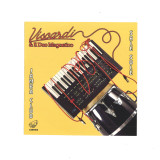
Viscardi & Il Duo Magnetico is the new collaborative project between italo-swiss DJ, producer and singer Pascal Viscardi,
Yavor Lilov and Alain Sandri, respectively drummer and percussionist of the swiss cult band L’Éclair.
The three musicians joined forces in Geneva and worked in the studio for the past two years with Viscardi as the main
vocalist, Lilov producing the tracks and playing drums, bass and keys, and Sandri on guitar, percussion, and backing vocals.
The result is a unique and contemporary version of italian pop, peppered with new-wave, boogie, disco and world music
references.
On Sale Sole Pascal's mellifluous lyrics float on a midtempo boogie groove, projecting visions of sun drenched cities and
summer sunsets. On the flip side Jamba Club is a reggae infused slow burner, reminiscent of night encounters and forgotten
love stories.
Sale Sole / Jamba Club marks the project’s debut release and serves as a sneak peek into the upcoming full-length album,
set to release on Cosmic Romance in fall 2023.
Haga su pedido ahora y le encargaremos el artículo en nuestro proveedor.

Japanese folk-rock legend Morio Agata stunned fans with this way-outta-left-field dispatch - a synthesizer-laden, new-wave/post-punk classic. Originally released by Osaka’s Vanity Records in 1980 and back on vinyl for the first time in nearly 40 years, this fully authorized reissue has been remastered from the original analog tapes. In tip-on sleeve, with double-sided insert.
50 years ago, Hokkaido-born singer-songwriter Morio Agata released his debut single, Sekishoku Ereji (Red Elegy), an emotive, shuffling piano ballad that (shockingly) sold half a million copies in Japan. While he would never have another Top-40 hit, Agata would spend the next half century issuing a series of idiosyncratic, experimental pop albums. Today, he’s a beloved cult figure, still actively touring and recording in his seventies.
In his first decade as a recording artist, Agata released a stream of classics right out of the gate — Otome No Roman (1972) melded American-styled folk rock with traditional Japanese melodies, Zipangu Boy (1976) was a sprawling, Haruomi Hosono-produced psychedelic opus, and Kimi No Koto Suki Nan Da (1977) saw Agata tackle slick, lightly funky AOR. While this sort of stylistic schizophrenia might sink your average artist, Agata’s singular voice and magnetic charisma elevates everything he touches, and subsumes it all into Morio Agata World — a joyous, playful and frequently unhinged world.
Arguably the biggest left-turn of Agata’s early career, however, came in 1979, when legendary experimental label Vanity Records’ Yuzuru Agi paired Agata with major players from his label’s roster and the Osaka punk scene for an impromptu recording session. An impressive list of musicians took part (SAB, Yukio Fujimoto (Normal Brain), Masahiro Kitada (INU), Taiqui (Ultra Bide), Jun Shinoda (SS), Chie Mukai (Che-Shizu), and others) and even though they all came from different wings of the underground music scene, together they built an arresting, minimalistic bedrock of synthesized and acoustic sounds for Agata to work his magic over. The recording sesssions were tense and it took a while for the collective to find their footing. But the hard work paid off — Norimono Zukan is a masterpiece of ramshackle new wave and droning dirges, topped off with Agata’s unmistakeable croon, at times delicate, other times twisted. It’s a relatively short album, but a deep one, and Mesh-Key is honored to introduce it to a new generation of music fans.
Haga su pedido ahora y le encargaremos el artículo en nuestro proveedor.

Brüder und Schwestern, wir haben uns versammelt, um die Heavy-Götter auf dem Altar des Metal anzubeten. HIGH PRIEST kommen aus Chicago, Illinois in den Vereinigten Staaten von Amerika, um unsere Tage mit einer hoffnungsfrohen Botschaft des Doom zu erhellen. Ihre Prophezeiung in Form des Debütalbums "Invocation" ist in Stoner Rock gehauen und in metallene Schrift gegossen. HIGH PRIEST haben sich die Worte der Ältesten zu Herzen genommen. Ihre glorreichen Harmonien und Melodien tragen die eingängige Handschrift von THIN LIZZY. Die düstere Schwere wurde von BLACK SABBATH vorausgesagt und von ELECTRIC WIZARD wiederbelebt. Sogar einige Verse von METALLICAs klassischen Riffs haucht den Songs ihr Leben ein. Und aus den Schriften des Grunge kommt eine emotionale Kraft, die durch an ALICE IN CHAINS gerichtete Gebete empfangen wurde. All diese Herrlichkeit wird in einem neuen Testament aus bluesigen Gitarrenriffs und gefühlvollem Gesang dargeboten. HIGH PRIEST entstanden mit einer klaren Vision in den Köpfen von vier Freunden, die seit ihrer Jugend schon in diversen Bands und Besetzungen zusammen gespielt hatten. Während einer ELECTRIC WIZARD Show in ihrer Heimatstadt im Jahr 2015 gelangten sie spontan und gleichzeitig zu der Erleuchtung, dass sie fortan Doom und Old School Metal spielen mussten. Ihr erstes öffentliches Bekenntnis zum Metal-Evangelium war die im Jahr 2016 erschienene EP "Consecration", die HIGH PRIEST nicht nur viel Aufmerksamkeit in der Doom und Stoner Metal-Szene einbrachte, sondern auch einen Plattenvertrag mit Magnetic Eye. Dies führte zunächst zur Veröffentlichung der zweiten EP "Sanctum" im Jahr 2019. Nun ist es soweit: HIGH PRIEST liefern ihr mit Spannung erwartetes Debütalbum ab. "Invocation" hält nicht nur, was die beiden EPs versprachen, sondern trägt seine Hörer auf einem Wagen aus feurigen Riffs direkt in den Himmel. Amen!
debe ser publicado en 23.06.2023

Brüder und Schwestern, wir haben uns versammelt, um die Heavy-Götter auf dem Altar des Metal anzubeten. HIGH PRIEST kommen aus Chicago, Illinois in den Vereinigten Staaten von Amerika, um unsere Tage mit einer hoffnungsfrohen Botschaft des Doom zu erhellen. Ihre Prophezeiung in Form des Debütalbums "Invocation" ist in Stoner Rock gehauen und in metallene Schrift gegossen. HIGH PRIEST haben sich die Worte der Ältesten zu Herzen genommen. Ihre glorreichen Harmonien und Melodien tragen die eingängige Handschrift von THIN LIZZY. Die düstere Schwere wurde von BLACK SABBATH vorausgesagt und von ELECTRIC WIZARD wiederbelebt. Sogar einige Verse von METALLICAs klassischen Riffs haucht den Songs ihr Leben ein. Und aus den Schriften des Grunge kommt eine emotionale Kraft, die durch an ALICE IN CHAINS gerichtete Gebete empfangen wurde. All diese Herrlichkeit wird in einem neuen Testament aus bluesigen Gitarrenriffs und gefühlvollem Gesang dargeboten. HIGH PRIEST entstanden mit einer klaren Vision in den Köpfen von vier Freunden, die seit ihrer Jugend schon in diversen Bands und Besetzungen zusammen gespielt hatten. Während einer ELECTRIC WIZARD Show in ihrer Heimatstadt im Jahr 2015 gelangten sie spontan und gleichzeitig zu der Erleuchtung, dass sie fortan Doom und Old School Metal spielen mussten. Ihr erstes öffentliches Bekenntnis zum Metal-Evangelium war die im Jahr 2016 erschienene EP "Consecration", die HIGH PRIEST nicht nur viel Aufmerksamkeit in der Doom und Stoner Metal-Szene einbrachte, sondern auch einen Plattenvertrag mit Magnetic Eye. Dies führte zunächst zur Veröffentlichung der zweiten EP "Sanctum" im Jahr 2019. Nun ist es soweit: HIGH PRIEST liefern ihr mit Spannung erwartetes Debütalbum ab. "Invocation" hält nicht nur, was die beiden EPs versprachen, sondern trägt seine Hörer auf einem Wagen aus feurigen Riffs direkt in den Himmel. Amen!
debe ser publicado en 23.06.2023

Brüder und Schwestern, wir haben uns versammelt, um die Heavy-Götter auf dem Altar des Metal anzubeten. HIGH PRIEST kommen aus Chicago, Illinois in den Vereinigten Staaten von Amerika, um unsere Tage mit einer hoffnungsfrohen Botschaft des Doom zu erhellen. Ihre Prophezeiung in Form des Debütalbums "Invocation" ist in Stoner Rock gehauen und in metallene Schrift gegossen. HIGH PRIEST haben sich die Worte der Ältesten zu Herzen genommen. Ihre glorreichen Harmonien und Melodien tragen die eingängige Handschrift von THIN LIZZY. Die düstere Schwere wurde von BLACK SABBATH vorausgesagt und von ELECTRIC WIZARD wiederbelebt. Sogar einige Verse von METALLICAs klassischen Riffs haucht den Songs ihr Leben ein. Und aus den Schriften des Grunge kommt eine emotionale Kraft, die durch an ALICE IN CHAINS gerichtete Gebete empfangen wurde. All diese Herrlichkeit wird in einem neuen Testament aus bluesigen Gitarrenriffs und gefühlvollem Gesang dargeboten. HIGH PRIEST entstanden mit einer klaren Vision in den Köpfen von vier Freunden, die seit ihrer Jugend schon in diversen Bands und Besetzungen zusammen gespielt hatten. Während einer ELECTRIC WIZARD Show in ihrer Heimatstadt im Jahr 2015 gelangten sie spontan und gleichzeitig zu der Erleuchtung, dass sie fortan Doom und Old School Metal spielen mussten. Ihr erstes öffentliches Bekenntnis zum Metal-Evangelium war die im Jahr 2016 erschienene EP "Consecration", die HIGH PRIEST nicht nur viel Aufmerksamkeit in der Doom und Stoner Metal-Szene einbrachte, sondern auch einen Plattenvertrag mit Magnetic Eye. Dies führte zunächst zur Veröffentlichung der zweiten EP "Sanctum" im Jahr 2019. Nun ist es soweit: HIGH PRIEST liefern ihr mit Spannung erwartetes Debütalbum ab. "Invocation" hält nicht nur, was die beiden EPs versprachen, sondern trägt seine Hörer auf einem Wagen aus feurigen Riffs direkt in den Himmel. Amen!
debe ser publicado en 23.06.2023

INDUSTROLLUTION: The lethal audio toxin of rhythmic machinery.
Drivetrain (Detroit, USA)
“Spin The Record”
Functional, purposeful and guaranteed to ignite any dance floor; put the needle on the record and wait for the climatic twist.
Jay Strata (Glasgow, Scotland)
“Heart Strings”
Drenched in rich, creamy chords, the seduction of a deep, melodic rapture, effortlessly takes control.
Teknobrat (Ottawa, Canada)
“Acid Barnako”
With elements known and beyond integrating in acid oscillation, the magnetic chorus refrain pushes the frequecy spectrum.
DJ Mourad (Tunis, Tunisia)
“Illegal Alien”
A mysteriously abstract high-tech warning signal clouds the atmosphere while the unforgiving thunder-pulse clears the air.
Haga su pedido ahora y le encargaremos el artículo en nuestro proveedor.

Warehouse find!
Teenage Fanclub have announced news of their tenth studio album, Endless Arcade, released 5th March. Even if we weren’t living through extraordinarily troubling times, there is nothing quite like a Teenage Fanclub album to assuage the mind, body and soul, and to reaffirm that all is not lost in this world.
Endless Arcade follows the band’s ninth album “Here”, released in 2016 to universal acclaim and notably their first Top 10 album since 1997; a mark of how much they’re treasured. The new record is quintessential TFC: melodies are equal parts heart-warming and heart-aching; guitars chime and distort; keyboard lines mesh and spiral; harmony-coated choruses burst out like sun on a stormy day.
In the 1990s, the band crafted a magnetically heavy yet harmony-rich sound on classic albums such as “Bandwagonesque” and “Grand Prix”. This century, albums such as “Shadows” and “Here” have documented a more relaxed, less ‘teenage’ Fanclub, reflecting the band’s stage in life and state of mind, which Endless Arcade slots perfectly alongside. The album walks a beautifully poised line between melancholic and uplifting, infused with simple truths. The importance of home, community and hope is entwined with more bittersweet, sometimes darker thoughts - insecurity, anxiety, loss.
Such is life. But the title track suggests, “Don’t be afraid of this endless arcade that is life.”
A preview from the album came in February 2019 with Raymond’s ‘Everything Is Falling Apart’, an online single released at the outset of a six-month tour and a highlight of Endless Arcade.
Everything is falling apart? Well, yes, but the song was written long before COVID-19 arrived. Neither was Raymond’s inspiration political or social, but more, “the entropy in the universe, the knowledge that everything eventually decays,” he explains. But Raymond says relax. Or rather, “Relax, find love, hold on to the hand of a friend”.
Fortunately, Endless Arcade was virtually finished by the time lockdown was announced, bar the odd tinker under the engine hood. It seems timely, given how everyone had to initially stay home under lockdown, that the album starts with Norman’s ‘Home’, though it was chosen in part because of its opening line: “Every morning, I open my eyes...” The album’s longest track (at seven minutes) typifies TFC’s relaxed groove, culminating in Raymond’s peach of a guitar solo.
Norman’s search for ‘home’ could be literal: after all, he’s been living in Canada for the last 10 years. But it’s also figurative. Like Norman’s other Endless Arcade songs – The Sun Won’t Shine On Me’, ‘Warm Embrace’, ‘I’m More Inclined’, ‘Back In The Day’ and ‘Living With You’ – his words on ‘Home’ are etched by loss and yearning. “Without going into too much detail, the last eighteen months have been challenging for me on an emotional level,” he admits. “But it’s been cathartic channelling some of these feelings and emotions into song.”
In contrast, Raymond’s songs – he’s also responsible for ‘Come With Me’, ‘In Our Dreams’, ‘The Future’ and ‘Silent Song’ – are philosophical and questing. As he sings in ‘The Future’: “It’s hard to walk into the future when your shoes are made of lead”, but he’s still going to try, “and see sights we’ve never seen.”
In the band’s own near future, they’re already planning another new album given they can’t yet tour the one they’re releasing now. Welcome back, Teenage Fanclub, unafraid of this endless arcade that is life.
debe ser publicado en 02.06.2023

Warehouse find!
Teenage Fanclub have announced news of their tenth studio album, Endless Arcade, released 5th March. Even if we weren’t living through extraordinarily troubling times, there is nothing quite like a Teenage Fanclub album to assuage the mind, body and soul, and to reaffirm that all is not lost in this world.
Endless Arcade follows the band’s ninth album “Here”, released in 2016 to universal acclaim and notably their first Top 10 album since 1997; a mark of how much they’re treasured. The new record is quintessential TFC: melodies are equal parts heart-warming and heart-aching; guitars chime and distort; keyboard lines mesh and spiral; harmony-coated choruses burst out like sun on a stormy day.
In the 1990s, the band crafted a magnetically heavy yet harmony-rich sound on classic albums such as “Bandwagonesque” and “Grand Prix”. This century, albums such as “Shadows” and “Here” have documented a more relaxed, less ‘teenage’ Fanclub, reflecting the band’s stage in life and state of mind, which Endless Arcade slots perfectly alongside. The album walks a beautifully poised line between melancholic and uplifting, infused with simple truths. The importance of home, community and hope is entwined with more bittersweet, sometimes darker thoughts - insecurity, anxiety, loss.
Such is life. But the title track suggests, “Don’t be afraid of this endless arcade that is life.”
A preview from the album came in February 2019 with Raymond’s ‘Everything Is Falling Apart’, an online single released at the outset of a six-month tour and a highlight of Endless Arcade.
Everything is falling apart? Well, yes, but the song was written long before COVID-19 arrived. Neither was Raymond’s inspiration political or social, but more, “the entropy in the universe, the knowledge that everything eventually decays,” he explains. But Raymond says relax. Or rather, “Relax, find love, hold on to the hand of a friend”.
Fortunately, Endless Arcade was virtually finished by the time lockdown was announced, bar the odd tinker under the engine hood. It seems timely, given how everyone had to initially stay home under lockdown, that the album starts with Norman’s ‘Home’, though it was chosen in part because of its opening line: “Every morning, I open my eyes...” The album’s longest track (at seven minutes) typifies TFC’s relaxed groove, culminating in Raymond’s peach of a guitar solo.
Norman’s search for ‘home’ could be literal: after all, he’s been living in Canada for the last 10 years. But it’s also figurative. Like Norman’s other Endless Arcade songs – The Sun Won’t Shine On Me’, ‘Warm Embrace’, ‘I’m More Inclined’, ‘Back In The Day’ and ‘Living With You’ – his words on ‘Home’ are etched by loss and yearning. “Without going into too much detail, the last eighteen months have been challenging for me on an emotional level,” he admits. “But it’s been cathartic channelling some of these feelings and emotions into song.”
In contrast, Raymond’s songs – he’s also responsible for ‘Come With Me’, ‘In Our Dreams’, ‘The Future’ and ‘Silent Song’ – are philosophical and questing. As he sings in ‘The Future’: “It’s hard to walk into the future when your shoes are made of lead”, but he’s still going to try, “and see sights we’ve never seen.”
In the band’s own near future, they’re already planning another new album given they can’t yet tour the one they’re releasing now. Welcome back, Teenage Fanclub, unafraid of this endless arcade that is life.
debe ser publicado en 02.06.2023

Stepback Records next release sees the Moot Tapes and Made Magnetic boss Polytunnel making his debut for the Edinburgh based label.
Polytunnel goes deep into electro made for dance floors.
His style of melodic electro mixed with breakbeat influenced acid has seen his music gain acclaim from the likes of Mixmag, DJ Mag, Inverted Audio, XLR8R and supported by the late great Andrew Weatherall on his much-missed NTS show, Musics Not for Everyone.
Previously released on labels including We’re Going Deep, Seventh Sign Recordings and Childsplay with support from the likes of Truncate, Dan Curtin, Placid, Vladimir Ivkovic, Marvel Dettmann, Ame and more.
Haga su pedido ahora y le encargaremos el artículo en nuestro proveedor.

Dire Straits' arresting self-titled debut arrived in the midst of punk's reign but couldn't have been further removed from the era's slash-and-burn style. Recorded in West London in February 1978, the band's tasteful, jazz-inflected set embraces folk, blues, and pub rock while also tracing a direct line back to the beat-oriented sound of early rock n' roll. Country and roots accents further distinguish the British quartet's stripped-down music from any 1970s peers, as does the transparent production, which has remained revered among audiophiles the world over – and which has never been better than on this meticulous pressing.
Mastered from the original master tapes and pressed at RTI, Mobile Fidelity's 180g 45RPM 2LP version of Dire Straits features natural tonalities, superb balances, you-are-there imaging, deep-black backgrounds, and pristine clarity. Even if you've heard this album hundreds of times before, you've never experienced it with such lifelike sonics and premium richness. This numbered-edition collector's set immerses you within the smoky, laidback atmospherics of every song. This is how all vinyl should sound.
Crucial to every arrangement, Mark Knopfler's winding guitar lines emerge with supreme transparency and multi-hued textural detail. His intricate playing comes across as if it's being transmitted via his 60s-era Fender Vibrolux amplifier placed right before you. The cleanliness, dimensions, and live feel are that good. His bandmates, too, benefit from the extra groove space afforded by this 45RPM edition. Rhythms skate and swirl; percussive effects resonate with crispness and attack; the leading edges of notes naturally decay.
Dire Straits' strong, well-edited batch of original material further enhances the overall enjoyment and makes the record one whose pleasures go far beyond the organic sonics. Just as Knopfler's narratives pour forth with poetic and surrealist texts, the musical settings – an intoxicating combination of easygoing shuffles, back-hall boogies, and pop-honed ballads – mirror the old-fashioned soulfulness inherent in the classic recordings of the late 50s and early 60s. The lyrics are equally captivating.
Drawing from his time as a youth in Newcastle, Leeds, and London, Knopfler invests tunes with an autobiographical slant and emotional connectivity that become obvious the moment he opens his mouth to sing. "Down to the Waterline," "Wild West End," and "Lions" all feature colloquial touches that add to their reach. By extension, "In the Gallery" functions as a tribute to Leeds sculptor Harry Phillips (father of future Knoplfer collaborator, Steve Phillips) while the record's breakout smash, "Sultans of Swing," pays homage to struggling bar bands.
Through it all, Dire Straits performs with a subtle cool and clever poise that no band ever matched. Just how good is the chemistry? Bob Dylan heard the quartet and invited Knopfler and drummer Pick Withers to play on Slow Train Coming. But even Dylan himself didn't hear Dire Straits sound this magnetic back in its original heyday. Now, everyone can.
debe ser publicado en 30.05.2023

An explorative sonic landscape with the beautifully eclectic sounds of drum and bass at its core, Sustance’s debut album is every bit as thought-out, polished, and innovative as we’ve come to expect from one of drum and bass’ brightest prospects.
Having grown up listening to seminal Shogun albums like Spectrasoul's 'Delay No More' and Icicle's 'Under The Ice', ‘Perceived Connections’ acts as a full circle moment for the producer, who now finds himself following in the footsteps of the artists who profoundly influenced his approach to creating music.
Written between London and Berlin across a twelve-month period, 'Perceived Connections' encapsulates both of the alluring sides of Sustance's sound. In the same fashion that the album's writing process pivoted between two capital cities, Sustance's debut album presents both deep and expressive tracks such as 'I Want You' and 'Sweet Relief', as well as showcasing heavy, sound system-destroying tunes like 'Undercurrent' and 'Ten Ton’.
“The album title comes from the Zen idea that everyone perceives the world through their own perspective. Two people can listen to a record side by side and have totally different experiences. I really liked that idea as music is inherently so subjective. Sustance
Accompanying Sustance on this LP voyage is a plethora of D&B’s hottest talent, with Pola & Bryson, Visages, Flowdan, Strategy, Duskee, T-Man, Catching Cairo & Zara Kershaw all sprinkling their own flavours across the album.
Traversing an array of sounds, styles, and genres throughout, 'Perceived Connections' is nothing short of an exceptional extended body of work from a producer whose razor-tight approach to music has seen him emerge with one of the crispest and most captivating sonic palettes in drum and bass music.
Haga su pedido ahora y le encargaremos el artículo en nuestro proveedor.

The album showcased Cornfield's knack for crafting deeply personal songs with an observational tone and witty lyric delivery. She took these heartbreakingly relatable songs on the road, playing numerous shows & festivals across North America and Europe, including opening for Pedro The Lion, Stars, Sarah Harmer and others.
On Cornfield's new album, Could Have Done Anything, she teamed up with producer and Bonny Light Horseman member, Josh Kaufman in Upstate New York, first at the stained- glass- tinted Dreamland Recording Studios, then at the nearby Isokon Studio, run by engineer D. James Goodwin (Kevin Morby, Whitney) and his assistant, Gillian Pelkonen. Kaufman and Cornfield played every instrument themselves, channeling the energy of her favorite classic records,
from Elliott Smith's Figure 8 and Jeff Buckley's Grace to Neil Young's Harvest -- albums where the listener is simply carried by the songs, and their musicians' beautiful playing. Standouts like "You And Me" highlight intimacy and absence, while "Gentle Like The Drugs" captures memories from Cornfield's spring 2022 tour with Pedro the Lion - her first time seeing sunsets in Arizona.
debe ser publicado en 26.05.2023

The Emergency Declaration has been issued, so... past iron up... between iron chan... it is commonly known as the limited express... the chill system (Red Belt) + (Blue Belt) formation crab-crab. Limited operation @ Sultan Al Sham, Magnetic Dress, and Dedicated Computer Realm.
Haga su pedido ahora y le encargaremos el artículo en nuestro proveedor.

Alison Goldfrapp has set a towering bar for British synth-pop in the 21st century and she’s only just getting started. The magnetic London-born singer, songwriter and producer’s seven albums with Goldfrapp were fuelled by an unfailing modernity and a sixth sense for sounds that were more timeless than any trend. With the release of her debut solo album The Love Invention—an electrifying dance-pop suite—her multi-faceted musicianship reaches a new peak.
The Love Invention marks Alison’s reawakening as a dancefloor priestess, in an intoxicating showcase of the disco and house influences that have always been at the heart of her musical DNA. “So Hard So Hot” bottles the ephemeral joy of a dancefloor with its anthemic house beat, disco handclaps, and an exquisitely alluring vocal from Alison. The sense of uninhibited liberation courses through album highlights like “In Electric Blue,” a yearning synth-pop confection with a chorus as blissful as love’s first butterflies. On “Never Stop,” she is flooded with the rush of an all-encompassing love over a buoyant, rubberised beat; the sublime synth-pop of “Fever” is an ode to the intoxicating majesty of the dancefloor, with a chorus that explodes as if setting off a glitter cannon.
Haga su pedido ahora y le encargaremos el artículo en nuestro proveedor.
