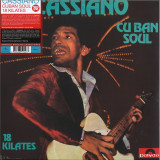
"Cuban Soul-18 Kilates" is Cassiano's third studio album, released in 1976, and stands as a milestone in Brazilian soul music. It combines Brazilian rhythms with classic American soul elements, creating a unique fusion. Cassiano's smooth, soulful vocal style and the album’s larger-than-life arrangements, reminiscent of Tim Maia's sound, give it a rich, deep feel.
The standout track, ‘Onda,’ is a relaxing anthem evoking beach vibes that has become a DJ’s favorite in recent years and also made it into several compilations. "Cuban Soul-18 Kilates" has earned cult status over the years, securing its place as one of the most coveted Brazilian records of all time. Remastered from the original tapes and pressed on 180g vinyl. This release is part of a new reissue series that will include many other outstanding Brazilian classics like Evinha “Cartão Postal” or Gerson King Combo.
"Cuban Soul-18 Kilates" is Cassiano's third studio album, released in 1976, and stands as a milestone in Brazilian soul music. Influenced by artists like Otis Redding, Eddie Kendricks, Stevie Wonder, and others, it combines Brazilian rhythms with classic American soul elements, creating a unique fusion. The album features 9 tracks, with ‘A Lua e Eu’ becoming a major commercial hit and the theme song for the soap opera “O Grito”. Cassiano's smooth, soulful vocal style and the album’s larger-than-life arrangements, reminiscent of Tim Maia's sound, give it a rich, deep feel. The standout track, ‘Onda,’ is a relaxing anthem evoking beach vibes, with its captivating bassline, subtle percussion, and natural sounds of the sea, making it perfect for moments of relaxation. This song, along with the album’s other tracks, showcases Cassiano's mastery of Brazilian soul, making “Cuban Soul-18 Kilates” a definitive and cherished record in the genre. This album has earned cult status over the years, securing its place as one of the most coveted Brazilian records of all time. Once incredibly rare and expensive, it's now at the top of every serious collector's wishlist. After not being available outside of Brazil for years, it’s finally been reissued – don’t miss your chance to own this legendary piece of music history.
Search:maia
Hyldon, Brazil’s highly revered vocalist, musician and producer, has partnered with Adrian Younge to create a new psychedelic soul album, HYLDON JID023. The duo, highly inspired by Hyldon’s seminal work in the ‘60s and ‘70s, revisits’ the spirit of this epoch while creating a modern-day classic. Hyldon’s unique voice and lyrical depth, combined with Younge’s innovative analogue production, ensures this album will not be forgotten. JID023 is one of the last recordings featuring Hyldon’s long-time collaborator and friend, the late drummer Ivan “Mamao” Conti of Azymuth.
Hyldon, a musical pioneer and early contributor to the “Black Rio” movement is a genius in synthesizing the sounds of MPB, Tropicália and Black American R&B. His unique voice, coupled with his rich arrangements and laid-back grooves set him apart from the contemporaries of the time. In ’75, his remarkable debut album, Na Rua, Na Chuva, Na Fazenda changed the sound of Brazil forever. Hyldon’s earnest and experimental approach in creating that album served as the inspiration for Younge’s production on the new JID023.
Months before Mamão's untimely passing, Adrian Younge and Hyldon invited the legendary drummer to join them at Younge’s Linear Labs studio in Los Angeles. Mamão and Hyldon shared a rich musical history — Azymuth, Mamão’s group, served as the rhythm section for much of Hyldon’s work, including his iconic 1975 LP, Na Rua, Na Chuva, Na Fazenda. Their goal was ambitious: to craft an album that would stand alongside Hyldon’s finest achievements, one that would captivate fans who love his unique blend of psychedelic and soulful “Música Brasileira.” The result is nothing short of remarkable.
“Producing a Hyldon album was a dream come true. I’ve studied his catalogue for so many years and highly respect the way he mixed the sound of The Beatles, with that of Marvin Gaye and Tim Maia. I’m still enamored by the fact that he is even a better singer now than he was, in what many deem, his prime. Also, we greatly miss our dear friend and contributor Mamão, the late drummer of Azymuth. We dedicated this album to his memory, and we wish he could have had the chance to hear the finished album.” – Adrian Younge
Songs such as “Olhos Castanhos” evoke the ethereal nature of The Beatles “Strawberry Fields” as the mellotron flutes and Hyldon’s vulnerable performance captivates our hearts. Mamão’s gritty and funky drumming on “Nhanderuvucu (The Creator of God)” showcase what made him a leading pioneer in Brazil’s samba funk scene. Apart from the remarkable drumming, multi-instrumentalist Younge accomplishes the unthinkable by playing every other instrument on JID023. The experimental fusion of horns, analog synthesizers and acoustic instrumentation on songs like “Viajante de Planeta Azul” take listeners on a funky journey to the blue planet; a fictional space that Hyldon lyrically describes with passion and conviction.
Hyldon JID023 is an unexpected, yet remarkable addition to the canon of Brazilian Music. Hyldon’s emotional resonance, coupled with Younge’s sophisticated production and Mamao’s outstanding drumming make this a standout album within the deep catalogue of Jazz Is Dead.
- A1: Love To All Doulas! 03 52
- A2: Some Rest For The Midwives . . . 07 19
- A3: Real Vital Organs 03 57
- A4: Surges, Expansions 02 43
- A5: In Appreciation Of Chico Hamilton's Vast Influence On The West Coast Sound 02 44
- B1: Birthworkers Magic, And How We Get Hear . . . 07 21
- B2: This "I" Was Not 02 37
- B3: Placenta, Nourishment, New Home, The Galaxy 09 03
- C1: Carla's Beads 01 51
- C2: Moonlight Watsu In Dub 04 34
- C3: Generous Pelvis 04 26
- C4: Bi-Location 09 08
- D1: Play Kerri Chandler's Rain" 17 32
black 2x12"[28,15 €]
Placenta is the fourth collection of broadly imaginative and highly collaborative Carlos Niño & Friends music released on International Anthem since 2021. But perhaps more notably for the zeitgeist of today, it is the first new music to be released by Carlos Niño & Friends following the November 2023 release of André 3000’s New Blue Sun – an album which Carlos produced alongside André, while co-writing, performing, and co-mixing every song. The announcement of Placenta also comes while Carlos is in the middle of tours with André to support New Blue Sun, where Carlos wields an immense presence as music director, bandleader, and percussionist, and performs alongside many of the same musicians that are present on his recent & Friends albums, including this new one.
Placenta is announced on the 1st solar return of Moss Niño, of whom Carlos and his partner Annelise are Earth parents. Their experience of pregnancy, labor and delivery were all profoundly impactful for Carlos. Becoming a father again (a whole 25 years after the birth of Azul Niño, who has become a regular artistic collaborator for Carlos) he felt total Inspiration for this set of recordings, and hence it is perhaps the most conceptually-grounded Carlos Niño & Friends album we've yet to present–fully connected to the spirit of family, birth, and "how we get here."
In Niño’s words, Placenta is “dedicated to Mothers, Children, Babies, Aunties, Doulas, Midwives, Birthworkers...,” and a short list of track titles includes: "Love to all Doulas!," "Some Rest for the Midwives," "Real Vital Organs," and "Generous Pelvis." The centerpiece of the album, the sprawling "Placenta, Nourishment, New Home, The Galaxy," is an unbelievably vivid immersion in the sonic architecture of Niño's memory-scape...like being present in his energy field...or being present in a birthing room, or maybe even being born yourself. And it just might be the most powerful, unique piece of music Niño has ever created.
Featured artists on Placenta, in order of their entry on the album, include: Nate Mercereau, Jamire Williams, Sam Gendel, Jamael Dean, Dexter Story, Brandon Eugene Owens, Maia, André 3000, Jesse Peterson, Ariel Kalma, Surya Botofasina, Annelise, Haize Hawke, Aaron Shaw, Devin Daniels, Tiffany de Leon, Michael Bolger, Michael Alvidrez, Moss, Iasos, Photay, Deantoni Parks, Adam Rudolph, Andres Renteria, and Cavana Lee.
Grief doesn’t have an endpoint. No matter how much time passes or how much healing you can muster, the absence stays ubiquitous. But with patience and care, you can endure and live with it. Sour Widows know this. The Oakland-based indie rock outfit was formed in 2017 by bandleaders and best friends Maia Sinaiko and Susanna Thomson during personal upheaval and tragedy: Sinaiko’s partner died and Thomson’s mother was diagnosed with cancer. Their bond and their band anchored them through this time and the songs they wrote processed the death surrounding them. Their debut album Revival of a Friend is resonant indie rock about the spiritually purifying power of connection and love in the face of loss. Across 10 winding and potent guitar-led tracks, they channel their mourning into solidarity and comfort.
- A1: Montego Bay - Everything (Paradise Mix) 04 59
- A2: Atelier - Got To Live Together (Club Mix) 06 06
- A3: Golem - Music Sensations 04 56
- B1: The True Underground Sound Of Rome Feat. Stefano Di Carlo - Gladiators 05 26
- B2: Eagle Parade - I Believe 04 26
- C1: Dj Le Roi - Bocachica (Detroit Version) 05 28
- C2: Green Baize - Synthetic Rhythm 01 41
- C3: M.c.j. Feat. Sima - Sexitivity (Deep Mix) 05 30
- D1: Kwanzaa Posse Feat. Funk Master Sweat - Wicked Funk (Afro Ambient Mix) 06 31
- D2: Progetto Tribale - The Bird Of Paradise 06 29
- D3: Mbg - The Quite 06 59
Vol 1[28,99 €]
Googling “paradise house”, the first results to pop up are an endless list of European b&b’s with whitewashed lime façades, all of them promising “…an unmatched travel experience a few steps from the sea”. Next, a little further down, are the institutional websites of a few select semi-luxury retirement homes (no photos shown, but lots of stock images of smiling nurses with reassuring looks). To find the “paradise house” we’re after, we have to scroll even further down. Much further down.
It feels like yesterday, and at the same time it seems like a million years ago. The Eighties had just ended, and it was still unclear what to expect from the Nineties. Mobile phones that were not the size of a briefcase and did not cost as much as a car? A frightening economic crisis? The guitar-rock revival?! Certainly, the best place to observe that moment of transition was the dancefloor. Truly epochal transformations were happening there. From America, within a short distance one from the other, two revolutionary new musical styles had arrived: the first one sounded a bit like an “on a budget” version of the best Seventies disco-music – Philly sound made with a set of piano-bar keyboards! – the other was even more sparse, futuristic and extraterrestrial. It was a music with a quite distinct “physical” component, which at the same time, to be fully grasped, seemed to call for the knotty theories of certain French post-modern philosophers: Gilles Deleuze, Félix Guattari, Paul Virilio... Both those genres – we would learn shortly after – were born in the black communities of Chicago and Detroit, although listening to those vinyl 12” (often wrapped in generic white covers, and with little indication in the label) you could not easily guess whether behind them there was a black boy from somewhere in the Usa, or a girl from Berlin, or a pale kid from a Cornish coastal town.
Quickly, similar sounds began to show up from all corners of Europe. A thousand variations of the same intuition: leaner, less lean, happier, slightly less intoxicated, more broken, slower, faster, much faster... Boom! From the dancefloors – the London ones at least, whose chronicles we eagerly read every month in the pages of The Face and i-D – came tales of a new generation of clubbers who had completely stopped “dressing up” to go dancing; of hot tempered hooligans bursting into tears and hugging everyone under the strobe lights as the notes of Strings of Life rose up through the fumes of dry ice (certain “smiling” pills were also involved, sure). At this point, however, we must move on to Switzerland.
In Switzerland, in the quiet and diligent town of Lugano, between the 1980s and 1990s there was a club called “Morandi”. Its hot night was on Wednesdays, when the audience also came from Milan, Como, Varese and Zurich. Legend goes that, one night, none less than Prince and Sheila E were spotted hiding among the sofas, on a day-off of the Italian dates of the Nude Tour… The Wednesday resident and superstar was an Italian dj with an exotic name: Don Carlos. The soundtrack he devised was a mixture of Chicago, Detroit, the most progressive R&B and certain forgotten classics of old disco music: practically, what the Paradise Garage in New York might have sounded like had it not closed in 1987. In between, Don Carlos also managed to squeeze in some tracks he had worked on in his studio on Lago Maggiore. One in particular: a track that was rather slow compared to the BPM in fashion at the time, but which was a perfect bridge between house and R&B. The title was Alone: Don Carlos would explain years later that it had to be intended both in the English meaning of “by itself” and like the Italian word meaning “halo”. That wasn’t the only double entendre about the song, anyway. Its own very deep nature was, indeed, double. On the one hand, Alone was built around an angelic keyboard pattern and a romantic piano riff that took you straight to heaven; on the other, it showcased enough electronic squelches (plus a sax part that sounded like it had been dissolved by acid rain) to pigeonhole the tune into the “junk modernity” section, aka the hallmark of all the most innovative sounds of the time: music that sounded like it was hand-crafted from the scraps of glittering overground pop.
No one knows who was the first to call it “paradise house”, nor when it happened. Alternative definitions on the same topic one happened to hear included “ambient house”, “dream house”, “Mediterranean progressive”… but of course none were as good (and alluring) as “paradise house”. What is certain is that such inclination for sounds that were in equal measure angelic and neurotic, romantic and unaffective, quickly became the trademark of the second generation of Italian house. Music that seemed shyly equidistant from all the rhythmic and electronic revolutions that had happened up to that moment (“Music perfectly adept at going nowhere slowly” as noted by English journalist Craig McLean in a legendary field report for Blah Blah Blah magazine). Music that to a inattentive ear might have sounded as anonymous as a snapshot of a random group of passers-by at 10AM in the centre of any major city, but perfectly described the (slow) awakening in the real world after the universal love binge of the so-called Second Summer of Love.
For a brief but unforgettable season, in Italy “paradise house” was the official soundtrack of interminable weekends spent inside the car, darting from one club to another, cutting the peninsula from North to centre, from East to West coast in pursuit of the latest after-hours disco, trading kilometres per hour with beats per minute: practically, a new New Year’s Eve every Friday and Saturday night. This too was no small transformation, as well as a shock for an adult Italy that was encountering for the first time – thanks to its sons and daughters – the wild side of industrial modernity. The clubbers of the so-called “fuoriorario” scene were the balls gone mad in the pinball machine most feared by newspapers, magazines and TV pundits. What they did each and every weekend, apart from going crazy to the sound of the current white labels, was linking distant geographical points and non-places (thank you Marc Augé!) – old dance halls, farmhouses and business centres – transformed for one night into house music heaven. As Marco D’Eramo wrote in his 1995 essay on Chicago, Il maiale e il grattacielo: “Four-wheeled capitalism distorts our age-old image of the city, it allows the suburbs to be connected to each other, whereas before they were connected only by the centre (…) It makes possible a metropolitan area without a metropolis, without a city centre, without downtown. The periphery is no longer a periphery of any centre, but is self-centred”.
“Paradise house” perfectly understood all of this and turned it into a sort of cyber-blues that didn’t even need words, and unexpectedly brought back a drop of melancholic (post?)-humanity within a world that by then – as we would wholly realise in the decades to come – was fully inhuman and heartless. A world where we were all alone, and surrounded by a sinister yellowish halo, like a neon at the end of its life cycle. But, for one night at least, happy."
Die Band strotzt vor Überzeugung und Klasse, Lifesons Gitarrenarbeit ist einfallsreicher und kraftvoller als je zuvor, aber es ist die talentierte Maiah Wynne, die ihren Sound wirklich defi niert. Die 11 Songs wurden akribisch auf ihre wesentlichsten und fesselndsten Elemente komprimiert. Präziser, straffer und einprägsamer als alles, was sie bisher gemacht haben, ist ‘Stygian Waves‘ das Werk einer Band, die sich auf dem Höhepunkt ihres Könnens befi ndet - und doch erst am Anfang steht.
- A1: Progetto Tribale - The Sweep
- A2: Onirico - Echo Giomini
- A3: Open Spaces - Artist In Wonderland
- B1: Alex Neri – The Wizard (Hot Funky Version)
- B2: M C.j. Feat. Sima - To Yourself Be Free - Instrumental Mix Energy Prod
- B3: Mato Grosso - Titanic Expande
- C1: Dreamatic - I Can Feel It (Part 1)
- C2: Carol Bailey - Understand Me Free Your Mind (Dream Piano Remix)
- C3: The True Underground Sound Of Rome - Secret Doctrine
- D1: Don Carlos - Boy
- D2: Lazy Bird – Jazzy Doll (Odyssey Dub)
Vol 2[28,99 €]
Volume 1 of this expertly curated project of 90s Italian House - put together by Don Carlos.
If Paradise was half as nice… by Fabio De Luca.
Googling “paradise house”, the first results to pop up are an endless list of European b&b’s with whitewashed lime façades, all of them promising “…an unmatched travel experience a few steps from the sea”. Next, a little further down, are the institutional websites of a few select semi-luxury retirement homes (no photos shown, but lots of stock images of smiling nurses with reassuring looks). To find the “paradise house” we’re after, we have to scroll even further down. Much further down.
It feels like yesterday, and at the same time it seems like a million years ago. The Eighties had just ended, and it was still unclear what to expect from the Nineties. Mobile phones that were not the size of a briefcase and did not cost as much as a car? A frightening economic crisis? The guitar-rock revival?! Certainly, the best place to observe that moment of transition was the dancefloor. Truly epochal transformations were happening there. From America, within a short distance one from the other, two revolutionary new musical styles had arrived: the first one sounded a bit like an “on a budget” version of the best Seventies disco-music – Philly sound made with a set of piano-bar keyboards! – the other was even more sparse, futuristic and extraterrestrial. It was a music with a quite distinct “physical” component, which at the same time, to be fully grasped, seemed to call for the knotty theories of certain French post-modern philosophers: Gilles Deleuze, Félix Guattari, Paul Virilio... Both those genres – we would learn shortly after – were born in the black communities of Chicago and Detroit, although listening to those vinyl 12” (often wrapped in generic white covers, and with little indication in the label) you could not easily guess whether behind them there was a black boy from somewhere in the Usa, or a girl from Berlin, or a pale kid from a Cornish coastal town.
Quickly, similar sounds began to show up from all corners of Europe. A thousand variations of the same intuition: leaner, less lean, happier, slightly less intoxicated, more broken, slower, faster, much faster... Boom! From the dancefloors – the London ones at least, whose chronicles we eagerly read every month in the pages of The Face and i-D – came tales of a new generation of clubbers who had completely stopped “dressing up” to go dancing; of hot tempered hooligans bursting into tears and hugging everyone under the strobe lights as the notes of Strings of Life rose up through the fumes of dry ice (certain “smiling” pills were also involved, sure). At this point, however, we must move on to Switzerland.
In Switzerland, in the quiet and diligent town of Lugano, between the 1980s and 1990s there was a club called “Morandi”. Its hot night was on Wednesdays, when the audience also came from Milan, Como, Varese and Zurich. Legend goes that, one night, none less than Prince and Sheila E were spotted hiding among the sofas, on a day-off of the Italian dates of the Nude Tour… The Wednesday resident and superstar was an Italian dj with an exotic name: Don Carlos. The soundtrack he devised was a mixture of Chicago, Detroit, the most progressive R&B and certain forgotten classics of old disco music: practically, what the Paradise Garage in New York might have sounded like had it not closed in 1987. In between, Don Carlos also managed to squeeze in some tracks he had worked on in his studio on Lago Maggiore. One in particular: a track that was rather slow compared to the BPM in fashion at the time, but which was a perfect bridge between house and R&B. The title was Alone: Don Carlos would explain years later that it had to be intended both in the English meaning of “by itself” and like the Italian word meaning “halo”. That wasn’t the only double entendre about the song, anyway. Its own very deep nature was, indeed, double. On the one hand, Alone was built around an angelic keyboard pattern and a romantic piano riff that took you straight to heaven; on the other, it showcased enough electronic squelches (plus a sax part that sounded like it had been dissolved by acid rain) to pigeonhole the tune into the “junk modernity” section, aka the hallmark of all the most innovative sounds of the time: music that sounded like it was hand-crafted from the scraps of glittering overground pop.
No one knows who was the first to call it “paradise house”, nor when it happened. Alternative definitions on the same topic one happened to hear included “ambient house”, “dream house”, “Mediterranean progressive”… but of course none were as good (and alluring) as “paradise house”. What is certain is that such inclination for sounds that were in equal measure angelic and neurotic, romantic and unaffective, quickly became the trademark of the second generation of Italian house. Music that seemed shyly equidistant from all the rhythmic and electronic revolutions that had happened up to that moment (“Music perfectly adept at going nowhere slowly” as noted by English journalist Craig McLean in a legendary field report for Blah Blah Blah magazine). Music that to a inattentive ear might have sounded as anonymous as a snapshot of a random group of passers-by at 10AM in the centre of any major city, but perfectly described the (slow) awakening in the real world after the universal love binge of the so-called Second Summer of Love.
For a brief but unforgettable season, in Italy “paradise house” was the official soundtrack of interminable weekends spent inside the car, darting from one club to another, cutting the peninsula from North to centre, from East to West coast in pursuit of the latest after-hours disco, trading kilometres per hour with beats per minute: practically, a new New Year’s Eve every Friday and Saturday night. This too was no small transformation, as well as a shock for an adult Italy that was encountering for the first time – thanks to its sons and daughters – the wild side of industrial modernity. The clubbers of the so-called “fuoriorario” scene were the balls gone mad in the pinball machine most feared by newspapers, magazines and TV pundits. What they did each and every weekend, apart from going crazy to the sound of the current white labels, was linking distant geographical points and non-places (thank you Marc Augé!) – old dance halls, farmhouses and business centres – transformed for one night into house music heaven. As Marco D’Eramo wrote in his 1995 essay on Chicago, Il maiale e il grattacielo: “Four-wheeled capitalism distorts our age-old image of the city, it allows the suburbs to be connected to each other, whereas before they were connected only by the centre (…) It makes possible a metropolitan area without a metropolis, without a city centre, without downtown. The periphery is no longer a periphery of any centre, but is self-centred”.
“Paradise house” perfectly understood all of this and turned it into a sort of cyber-blues that didn’t even need words, and unexpectedly brought back a drop of melancholic (post?)-humanity within a world that by then – as we would wholly realise in the decades to come – was fully inhuman and heartless. A world where we were all alone, and surrounded by a sinister yellowish halo, like a neon at the end of its life cycle. But, for one night at least, happy.
Mr Bongo is proud to present an official reissue of Zé Rodrix E A Agência De Mágicos ‘O Esquadrão Da Morte’. Written, arranged and composed by the genius of Zé Rodrix and performed by his band 'Agência de Mágicos’, this Brazilian library funk beauty is the soundtrack to Carlos Imperial's 1975 film of the same title. Echoing European soundtrack maestros such as Roy Budd and Ennio Morricone, but with a Brazilian swagger, Zé Rodrix's score is a sublime gem that needs rediscovery.
Rich in 70's soundtrack cool, the score is packed with orchestrated jazz, chase scene-funk, breaks, psychedelic freakouts and plenty of drama. The loose and quirky break-beat jazz-funk of 'Assalto' feels almost tailor-made for today's hip-hop production aesthetic. The opening drum break of 'Esconderijo' is a sampler’s dream and has already been reinterpreted by the Turkish Rapper Anıl Piyancı, as well as Brazil's DJ Caique.
Carlos Imperial was a jack of all trades. As a songwriter and music producer, he created a highly impressive back catalogue. It includes working with or writing songs for Tim Maia, Elza Soares, Brigitte Bardot, and Wilson Simonal. He also co-wrote the rare cult Brazilian 7" compacto 'Lindo Sonho Delirante (L. S. D') by Fábio. Carlos Imperial wrote liner notes and was an actor, filmmaker, television presenter, and media figure. His film 'O Esquadrão da Morte' is a violent heist movie starring Beto Bandeira, Claire Chevalier, and Baby Conceicao; in the vein of exploitation films and gritty, raw B-Movie cinema of the day. Both the film and album share striking, macabre artwork by artist Benicio.
The instrumentalist, arranger, and singer-songwriter Zé Rodrix has a musical achievements list that is also one to admire. He’s worked with the cream of Brazilian music, having written songs covered by the greats, including Quarteto Em Cy, Ronald Mesquita, Elis Regina, Karma, and Célia, to name just a few. His written arrangements have graced the music of Luli Lucinha E O Bando and Helio Matheus. He was a member of the iconic group Som Imaginário and played piano and synthesizer on Secos & Molhado's classic 1973 album.
We are super pleased to make this dusty treasure available again. It is a wonderful soundtrack score that more than holds its own with its European and American counterparts of the era.
'It was such an honor to play on Dwight Trible's album.
His singing has inspired me since I was 15 years old. He has a way of bringing such a unique life and feel to every song that he sings.
His voice has power, soul, and beauty, qualities that all us horn players strive for.
Thank you Dwight for having me on this masterful piece of art'
Kamasi Washington (early 2019)
The godfather of the LA sound, and possibly the World's greatest living Jazz Vocalist, returns with his masterpiece.
Timeless, yet made for our times - this is a double album of spiritual jazz, soul, gospel, and psychedelic rock.
Recorded at LA's Sunset Sound, and backed by a band of legendary musicians (including Kamasi Washington), this is a
work of true beauty. A tour de force that reveals Dwight's kinship with Spiritualism.
Musicians:
Dwight Trible vocals
Kamasi Washington tenor sax
Mark de Clive-Lowe piano
John B. Williams double bass
Ramses Rodriguez drums
Maia harp
Miguel Atwood Ferguson viola
Derf Reklaw percussion
Carlos Nino hand percussion
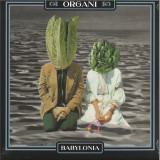
Well-versed in vintage vernaculars, Oakland-based producer/musician Mike Walti is about to return with his sophomore offering under the Organi moniker – as new album “Babylonia” follows 2020’s “Parlez-vous Français?,” a landmark in vibe acquisition ever since.
Wyldwood Studios is a portal. It’s a secret gateway to analog spheres. Cross the threshold and you’ll feel the difference: you can pick any ol’ time, any place, any tongue or vibe, in fact. Hit the dancefloor in 1967, feel that plushy loveseat in the early 70s. It’s a welcoming place where better, saner vibes are still within reach. Fueled, at least in part, by those long-classic 12”s on the walls – just imagine the sepia-tinted countenance of Melody Nelson alongside actual Birkin sans wig, right next to Shadow’s immortal crate diggers, forever blurred –, and channeled through ancient time travel devices such as the MCI 416B only to arrive on classic 2-inch tape (MM1000 aka Ol’ Bessy), it’s a haven for all things organic, for all things imbued with that warm élan. Built and run by Oakland’s own Mike Walti, countless artists from many different genres have felt that flair, creating sonic spheres and moving back and forth along the malleable axis that is space-time. Capturing magic.
Emerging from this unique portal back in 2020, Walti’s aka Organi’s first studio album was a stunning answer to its titular question – “Parlez-vous Français?” It was a soothing, somewhat psychedelic trip so magnétique and alluring that it immediately brought back those bits of Franglais you never knew you remembered. Whereas the debut LP indeed felt like a spontané voyage to the French Riviera ca. 1968, its follow-up “Babylonia” is so much more than linguistic confusion and ancient Akkadian Rhythms. Using that hidden portal near Alameda’s finest port to access all kinds of remote regions and sonic spheres, it’s super tight and feels, well, decent, even though, just like the ol’ Babylon, it’s full of surprising tongues and dreams, schemes and melodies.
“Where do we go from here?,” someone asks in opening “Organii-“ – all majestically cinematic boom bap, buoyant bass, sick strings. A fittingly massive opener that feels like cracking open a cold one after long weeks at work (that ecstatic “ahhhh”), it perfectly sets the tone for another half hour of pure time traveling, globe-spanning bliss. Whereas that certain prédilection pour all things French makes “La Rockette” so tempting and tantalizing (think MalMalNonBien), the sophomore album’s Berlin-based guest singer Nana Lacrima soon takes us elsewhere: title track “Babylonia” spins ever so softly, like a magic lantern, with images of dreamier Stones Throw funksters or Savath y Savalas looming over the steady flow of an arrangement that washes you clean like an ancient, unpolluted River Euphrates or Brazil’s actual Amazon. A sexy Portuguese-flavored anthem, occasional guest singer Alix Koliha also enters the scene to add yet another layer of French chic to this Brazilian landscape. Next, we’re back at the Riviera, but the “Italiano” version of it, splendido sunsets and bell towers in the distance, the ragazze laughing and shaking it up, perhaps even some Portofino Gin so you can really feel that “me ne batto il belin,” as your fingers align form some half-serious “ma che vuoi?”
Tim Maia-penned “Padre Cicero” (1970) deals with the stunning transformation of the titular hero – “De reverendo a lutador,” and what a soaring, sensual hook –, and Organi’s take on Elephant Memory’s “Old Man Willow” (now an “Old Man Waltz”) perfectly underlines what Walti’s Wyldwood endeavor is all about: Easy-Going Experimental Dream Pop, fueled by Gainsbourg, Broadcast, Stereolab, etc.
Later on, even though something seems to be tres complique in “Remembering Anna,” it all sounds carefree like a spontaneous Friday afternoon with a bottle of fine wine. Right before the outro, key album guest Yea-Ming Chen (of Yea-Ming & The Rumors) returns to the mic, adding her dark and dusky trademark timbre to melancholy anthem “Pictures Of Your Face”. Reminiscent of Nico and Trish (rip & rip), it’s a track that’s both dark and strangely propelling, hypnotic and hip-shaking.
A third generation Bay Area native, Mike Walti aka Organi has been running Wyldwood Studios in Oakland CA for some 15+ years (recording artists like Tommy Guerrero, Spelling, Why?, Latyrx, Del, Dan The Automator, and Big Freedia, to name but a few). A multi-instrumentalist who’s obviously in love with the 60s/70s, he loves to work with analog equipment (“We just love us some analog!” “Just listen to those relays purr…”). Recorded and mixed by Mike Walti at Wyldwood, “Babylonia” will be released on vinyl/digital by Alien Transistor.
- A1: Von Der Schönheit Und Zerbrechlichkeit Der Dinge 2:45
- A2: Chaos Mit Dhurata Dora 2:31
- A3: Welt 2:38
- A4: Phantasie 2:51
- A5: Ich Bin 2:46
- A6: Danke Dass Es Dich Gibt 2:58
- A7: Heimlich Traurig 3:02
- B1: Ich Mag Dich 2:09
- B2: Unendlichkeit (Bordsteingedanken) 3:10
- B3: Heimatplanet 2:44
- B4: November 3:18
- B5: Edvard Munch 3:14
- B6: Welt Mit Maïa 2:39
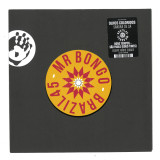
Two 1980s Brazilian boogie bombs from Sandra de Sá and Equipe Rádio Cidade get a remastered reissue as part of Mr Bongo Brazil 45’s series.
Sandra de Sá’s ‘Olhos Coloridos’ is an ‘80s MPB/boogie jam, taken from her self-titled 1982 LP on RGE Brazil, that sits perfectly alongside the likes of Tim Maia, Marcos Valle, Robson Jorge and Lincoln Olivetti. No surprise then that Lincoln Olivetti and Robson Jorge feature on the track, backed by some of the members from Banda Black Rio. A joyous combination of funk basslines and dreamy Rhodes that marry with jubilant horns and Sá’s incredible vocal tones.
On the B side, Equipe Rádio Cidade ‘Bons Tempo Sao Paulo (Good Times)’ was originally released on a rare promo only 7 inch from 1980. Giving a Brazilian boogie makeover to Good Times by Chic / Rapper’s Delight by Sugarhill Gang, the track is voiced by radio DJs from Sao Paulo wishing their listeners a Merry Christmas and Happy New Year.
This replayed version, heavy on the clavinet with a samba-infused, cuica-laced percussion breakdown, gives a true Brazilian spin on one of the most distinctive melodies out there.
Remastered with refreshed artwork.
180g vinyl + Deluxe hard-cardboard sleeve + OBI + resealable outer sleeve
This isn’t just a seminal album. It is an estuary. All the black rivers that would form Brazilian funk/hip-hop flow through it. Led by Paulista pianist Salvador Silva Filho – Dom Salvador – “Som, Sangue, e Raça” from 1971, one year after the explosion of Tim Maia on the scene, catalyzed the bossa nova and jazz background of its leader with the rhythm and blues of its members like saxophonist Oberdã Magalhães, nephew of samba-enredo master Silas de Oliveira and future leader of Banda Black Rio, who since the group Impacto 8 (which had, among others, Robertinho Silva on drums and Raul de Souza on trombone) had already been trying to reconcile MPB with Stevie Wonder and James Brown. Add to all this a mixture of samba, Nordestino accent, and even the black side of the Jovem Guarda represented by the authorial presence of Getúlio Cortes (older brother of Gerson King Combo, our James Brown “cover”) in ‘Hei! Você’. Alongside these elements and the presence of Rubão Sabino (bass), who still called himself ‘Rubens’, drummer Luis Carlos (another member of Black Rio), the record enlists the trumpet and flugelhorn of symphonic musician Darcy in place of the original Barrosinho (yet one more founder of Black Rio), who was traveling during the recording but would end up being a leading force of the band.
The album ‘Som, Sangue e raça’ paves the way for future generations of musicians and producers of the Carioca scene at the beginning of the 1970s. The lyrics that dealt with the question of race and the explosive fusion of samba, soul, jazz, and funk, elaborated by Dom Salvador and his troupe, Abolição, established the bases for the development of new sounds and tendencies in Brazilian music.
This isn't just a seminal album. It is an estuary. All the black rivers that would form Brazilian funk/hip-hop flow through it. Led by Paulista pianist Salvador Silva Filho - Dom Salvador - 'Som, Sangue, e Raça' from 1971, one year after the explosion of Tim Maia on the scene, catalyzed the bossa nova and jazz background of its leader with the rhythm and blues of its members like saxophonist Oberdã Magalhães, nephew of samba-enredo master Silas de Oliveira and future leader of Banda Black Rio, who since the group Impacto 8 (which had, among others, Robertinho Silva on drums and Raul de Souza on trombone) had already been trying to reconcile MPB with Stevie Wonder and James Brown. Add to all this a mixture of samba, Nordestino accent, and even the black side of the Jovem Guarda represented by the authorial presence of Getúlio Cortes (older brother of Gerson King Combo, our James Brown 'cover') in 'Hei! Você'. Alongside these elements and the presence of Rubão Sabino (bass), who still called himself 'Rubens', drummer Luis Carlos (another member of Black Rio), the record enlists the trumpet and flugelhorn of symphonic musician Darcy in place of the original Barrosinho (yet one more founder of Black Rio), who was traveling during the recording but would end up being a leading force of the band.
The album 'Som, Sangue e raça' paves the way for future generations of musicians and producers of the Carioca scene at the beginning of the 1970s. The lyrics that dealt with the question of race and the explosive fusion of samba, soul, jazz, and funk, elaborated by Dom Salvador and his troupe, Abolição, established the bases for the development of new sounds and tendencies in Brazilian music.
2024 Restock
Released in 1989, Marisa Monte's first album was a critical and public success. Produced by Nelson Motta and recorded live, the 11 tracks featured a singer with a sweet and powerful voice, interpreting a repertoire of varied styles and eras, who conquered the country. In addition to the only unreleased, the hit "Bem que se quis", MM brings in the repertoire "Comida" (Tit–s), Preciso me encontrar (Candeia), "Ando meio desligado" (Arnaldo Baptista/Rita Lee/Sergio Dias), "South american way" (Al Dubin / Jimmy McHugh) and "Comida" (Tim Maia), among others.
Grief doesn’t have an endpoint. No matter how much time passes or how much healing you can muster, the absence stays ubiquitous. But with patience and care, you can endure and live with it. Sour Widows know this. The Oakland-based indie rock outfit was formed in 2017 by bandleaders and best friends Maia Sinaiko and Susanna Thomson during personal upheaval and tragedy: Sinaiko’s partner died and Thomson’s mother was diagnosed with cancer. Their bond and their band anchored them through this time and the songs they wrote processed the death surrounding them. Their debut album Revival of a Friend is resonant indie rock about the spiritually purifying power of connection and love in the face of loss. Across 10 winding and potent guitar-led tracks, they channel their mourning into solidarity and comfort.
- A1: Love To All Doulas! 03 52
- A2: Some Rest For The Midwives
- A3: Real Vital Organs
- A4: Surges, Expansions
- A5: In Appreciation Of Chico Hamilton's Vast Influence On The West Coast Sound
- B1: Birthworkers Magic, And How We Get Hear
- B2: This "I" Was Not
- B3: Placenta, Nourishment, New Home, The Galaxy
- C1: Carla's Beads
- C2: Moonlight Watsu In Dub
- C3: Generous Pelvis
- C4: Bi-Location
- D1: Play Kerri Chandler's Rain
purple 2x12"[29,37 €]
Placenta is the fourth collection of broadly imaginative and highly collaborative Carlos Niño & Friends music released on International Anthem since 2021. But perhaps more notably for the zeitgeist of today, it is the first new music to be released by Carlos Niño & Friends following the November 2023 release of André 3000’s New Blue Sun – an album which Carlos produced alongside André, while co-writing, performing, and co-mixing every song. The announcement of Placenta also comes while Carlos is in the middle of tours with André to support New Blue Sun, where Carlos wields an immense presence as music director, bandleader, and percussionist, and performs alongside many of the same musicians that are present on his recent & Friends albums, including this new one.
Placenta is announced on the 1st solar return of Moss Niño, of whom Carlos and his partner Annelise are Earth parents. Their experience of pregnancy, labor and delivery were all profoundly impactful for Carlos. Becoming a father again (a whole 25 years after the birth of Azul Niño, who has become a regular artistic collaborator for Carlos) he felt total Inspiration for this set of recordings, and hence it is perhaps the most conceptually-grounded Carlos Niño & Friends album we've yet to present–fully connected to the spirit of family, birth, and "how we get here."
In Niño’s words, Placenta is “dedicated to Mothers, Children, Babies, Aunties, Doulas, Midwives, Birthworkers...,” and a short list of track titles includes: "Love to all Doulas!," "Some Rest for the Midwives," "Real Vital Organs," and "Generous Pelvis." The centerpiece of the album, the sprawling "Placenta, Nourishment, New Home, The Galaxy," is an unbelievably vivid immersion in the sonic architecture of Niño's memory-scape...like being present in his energy field...or being present in a birthing room, or maybe even being born yourself. And it just might be the most powerful, unique piece of music Niño has ever created.
Featured artists on Placenta, in order of their entry on the album, include: Nate Mercereau, Jamire Williams, Sam Gendel, Jamael Dean, Dexter Story, Brandon Eugene Owens, Maia, André 3000, Jesse Peterson, Ariel Kalma, Surya Botofasina, Annelise, Haize Hawke, Aaron Shaw, Devin Daniels, Tiffany de Leon, Michael Bolger, Michael Alvidrez, Moss, Iasos, Photay, Deantoni Parks, Adam Rudolph, Andres Renteria, and Cavana Lee.
Razor-sharp production of the highest order from two of the masters of the early 80™s Rio de Janeiro boogie sound, Robson Jorge and Lincoln Olivetti. Both were highly acclaimed music producers of the time, starting around the mid-70™s. Over the course of his career Olivetti worked with artists including Rita Lee, Erasmo Carlos, Don Beto, Marcos Valle, Tim Maia, Gilberto Gil, Gal Costa, Sandra Sa, Painel de Controle and many more. The album takes in mid-tempo, AOR, boogie and even latin all way through the tempo™s to ultra-quick Prince style disco-funk workouts. Includes several standout tracks ˜Aleluia™ and ™Ginga™ being our two favourites. Synths, horns, claps, drum machines, guitars, keys and vocal harmonies combine effortlessly.
2024 repress.
“Déjà Vu”, a true labour of love project featuring 5 previously unreleased songs from two of Brazil’s most celebrated artists, Robson Jorge and Lincoln Olivetti. Recorded between 1982 and 1986, these tracks take off from the legendary boogie-disco, jazz-funk fusion sound they presented in their first – and only – album together and allow us to have a glimpse of what their planned second volume would sound like. This collection of songs is a must-have for DJs, Brazilian music fans, and music aficionados alike.
Robson Jorge and Lincoln Olivetti have been influential figures in the Brazilian music scene for decades, with their innovative and groovy sound inspiring many artists in Brazil and beyond. They participated in more than 1,000 records, including groundbreaking work with Tim Maia, Marcos Valle, Gilberto Gil, Gal Costa, Rita Lee, and Jorge Ben, either arranging, producing and/or playing in their albums. This release offers a unique opportunity to experience some of their never-heard-before material, each song expertly restored and remastered from Lincoln Olivetti’s vaults to ensure that the original recordings were preserved.
For disco DJs, this record is a treasure trove of dancefloor gold, specially the opening track “Suspira”, certified material to get any party started. Brazilian music fans worldwide will appreciate the unique blend of Brazilian rhythms with disco and funk elements. And for music aficionados, this release is a rare gem, offering a peek into the creative process of two legendary musicians and producers. In the end, this very special release has the potential to be a hit with a wide range of music lovers.
“F(r)icciones is a complicated piece of miscellaneous works. A set of experiments in preparation for a gig at a noise convention in Orozco that never happened, an 18 women choir piece composed for a soundtrack to a documentary that doesn’t have a release date yet or trying to create a drone piece by accumulating guitar noise. The result? Burnt psychedelic blues with electronics ”
Partly an official soundtrack to “Durangas”, a documentary focusing on women and heritage, discussing civil war, education, sex or violence in the town of Durango, Basque Country. And partly a non musical accompaniment to an imaginary movie, F(r)icciones is the new album by A. Maiah.
Self described as Guitarist / Composer / Improviser of Idiomatic Noise / Microtonal Blues Ist or Psychedelic Populist, Asier has been self-releasing albums for nearly a decade now, focusing mostly on prepared guitar or improvised noise
Durangas was composed by Asier, arranged/conducted by Garazi Navas, performed by an 18 women choir from Durango and recorded live at San Agustin Cultural Centre. All of the other tracks were recorded between 2021-2022 in between portable recorders in Burgos or at Estudios Nomadas.