Over the years, the sonic world of Heist has grown into a place where energetic house, live instruments and worldly electronics move together in the most natural way. We're very proud of the fact that we can showcase artists that cross boundaries or simply create their own universe, while keeping a strong connection with the identity of the label.
Our next release, the 'Exposures EP' by Teleseen, fits perfectly into this aesthetic. Teleseen is the main project of nomadic DJ, producer and multi-instrumentalist Gabriel Cyr and draws influence from deep house, afro house, samba, batucada as well as the experimentalism and sound system cultures of his home town NYC. His sound leans heavily on polyrhythmic programming and he's nothing short of a synth wizard. His 'Exposures EP' features 3 originals, and a remix by Berlin based Italian house guru Black Loops.
The record features a number of collaborators and recordings of various instruments, ranging from percussive sections to synths and guitar. This live approach to electronic music is one that is deeply rooted into Gabriel's work. His upcoming release on Soundway as 'Thaba' is another good example of this approach and also shows how diverse his sounds really is.
The title track is a thrilling synth affair with tribal-like chants running through a vocoder. The combination of handclaps, crunchy synths and steady drums make for a thrilling afro house track that hints towards early motor city electronics.
Black Loops is known for his deep grooves and built his fame with his releases on Freerange, Pets and Shall not Fade. His take on 'Exposures' sees him upping the tempo to a pacey 130 bpm, where an introvert vibe of reverbed hits and bleeps take you into full dream mode. He expertly chops up the original into a contemporary track that fits somewhere between high tempo tech-house and minimalistic deephouse.
On the flip we get to hear more of the sonic world Teleseen has to offer. 'Dekalb' is a track that seems impossible to box into a genre. Its mood is set by a lovely section of free-flowing Rhodes chords and the chopped vocals and open synth- bass give the track a whole new feel. It is that ballsy electronic edge combined with dreamy textures and live rhythms that give 'Dekalb' its unique vibe.
The final track of the EP -'Transfer'- takes us down to a mid-tempo percussive workout with a balearic twist. The steady electronic groove and the free flowing guitar take you to yet another corner of Teleseen's beautifully crafted universe.
Enjoy the music and play it loud!
Yours Sincerely,
Lars & Maarten
Suche:main connection
- A1: Bel Air Ltd - Mentors Heritage (Lp1 - Feat Derrick May)
- A2: Sergie Reza - It's Like (Feat Ursula Rucker)
- B1: Takuya Yamashita - Tronic Illusion (Feat Stacy Pullen - Detroit Love Mix)
- B2: Phase Phorce - The Loft
- C1: Lady B - Monte (Lp2 - Carl Craig Edit)
- C2: Fred P - Aos Si (Mirko Loko's Hos Remix)
- D1: Feather - Faces Of Life
- D2: Sergie Reza - Cruising Around Motor City
Following contributions from Carl Craig, Stacey Pullen and Wajeed, Swiss DJ and producer Mirko Loko steps forward to mix the fourth volume of Planet E's mix series, Detroit Love. Active since the late nineties when he first began DJing in the clubs of Lausanne, Switzerland, Mirko Loko has always felt a deep connection to the music of Detroit. Having been personally invited by Carl Craig to play at the Detroit Electronic Music Festival in 2001, that connection has stayed consistent and electric ever since. Mirko Lokois also known as a Cadenza mainstay and a curator of Verbier's Polaris Festival, but the music of the Motor City has been the guiding force of his creative career.
Faitiche presents a new album by Frank Bretschneider. abtasten_halten was made as part of the raster.labor installation first presented at CTM Festival in 2019. It is perhaps the most radical work in Bretschneider’s distinctive oeuvre: abtasten_halten is a self-generating composition for synthesizer modules whose sole sound source is the movement of two VU meter needles. The resulting percussive sounds coalesce into rhythmic combinations – all random, without repetition. The album resembles a meditation on infinite rhythmic variation. abtasten_halten is Frank Bretschneider’s first release on Faitiche.
One sound can give birth to thousands of tones through self-fertilization. Pierre Henry, 1982
Frank Bretschneider on abtasten_halten:
abtasten_halten (sample_hold) is a largely self-generating composition for a modular synthesizer system. Self-generating here means that as soon as a current flows, the various modules interact, but within limits set by the composer via the connections between the modules (patches): timing, tempo, timbres, dynamics. These conditions are kept variable to a certain extent or left to chance, so that the composition created is always similar but never the same. On the one hand, the use of random generators opens up possibilities that would not otherwise have been considered. On the other, it offers the fascination of the unfinished and the unique: totally unexpected musical events that you might hear only once.
abtasten_halten combines my preferences for percussive music in general and electronic music in particular. Largely avoiding repetitive structures, the piece is more like a free improvisation, quiet and diffuse, but also extremely dense, in ever-changing contrasts and transformations.
The tone generators are two modified VU meters whose needles, driven by trigger impulses, create a simple one-bar pattern by hitting against a metal spring that is connected to a piezo element (thanks to Gijs Gieskes / Gieskes.NL). The tempo is continuously varied over a period of about ten minutes by several mutually modulating LFOs, ranging from about 0.06 Hz up to the lower audio range of about 18Hz.
The percussive sounds thus obtained are then passed through low-pass filters with moderate resonance and random frequency modulation to additionally colour the sound. Further processing is then executed by an echo module whose tempo and repetitions are again determined by random parameters. Finally the audio signal is occasionally enriched with reverb to add more spaciousness to the sound.
The concept for the installation raster.labor was developed by Olaf Bender, Frank Bretschneider and David Letellier. Many thanks to raster - artistic platform.
On Frank Bretschneider:
Frank Bretschneider works as a musician, composer and video artist in Berlin, making mainly electronic work based on complex rhythmic structures and interlocking textures, whose many-layered sound is inspired by the experimental set-ups of modern physics, often supplemented by perfectly synchronized computer-generated visualizations. In 1986, he founded AG Geige, one of the most influential underground bands in East Germany. In 1996, he co-founded the label raster-noton and has since released many solo albums.
Parisian label Chuwanaga curated by Clémentine & Saint-James is back in the production game with fresh music from Ishkero, maybe the hottest Jazz-Fusion band of the capital city. Going from Jazz-Funk to Afrobeat through Prog and Psychedelic influences, Brume infuses together killer grooves, irresistible melodies and excellent musicianship. The 12inch, coming with its beautiful illustration, reveals a uniformly good yet diverse musical journey. Behind Ishkero, you’ll find five young and gifted musicians with strong jazz knowledge: Tao Ehrlich (drums), Adrien « Dridri » Duterte (flute & percussion), Antoine Vidal (bass), Victor Gasq (guitar) and Arnaud Forestier (keys). With its strong evocation power fuelled by their youthful energy and creativity, Ishkero’s music is a one-of-a-kind variation on the Jazz genre. Fusion at its best potential! Expect intense rhythmic sections, virtuoso solos, lush FX sections and robust arrangements. Used to play a lot live, the musicians developed a vigorous connection that really shines on stage and during studio sessions. Collectively with Saint-James as their co-producer, they recorded Brume in summer 2019 at Studio Delta (Paris) with sound engineer David Cukier aka Greita (Disques Flegon). The first track, "Triple B", is an ode to 70’s jazz-funk carried by Jeff Mercadié’s Sax performance. "Tonik Gin"’s mighty jazz-rock groove which comes afterwards brings the genre to its emotional climax. B side starts with the main track "Brume", bringing together long-tailed reverberated guitars and Mizell-like piano chords for a very warm and hazy effect. As the last track, "Gare De l’Ouest" is a nice jazz variation on the Afrobeat genre, again with Jeff Mercadié on Saxophone.
ANNA HOMLER & ALESSIO CAPOVILLA - VASI COMUNICANTI
Vasi Comunicanti is the oneiric record born from the collaboration between L.A. performer and avant-garde artist Anna Homler and Alessio Capovilla, co-founder of Gang of Ducks.
Alessio Capovilla (1985, Turin, Italy ) is an Italian composer interested in sound modelling.
Imperfect sounds, unpunctual distortion and unsuitable atmospheres are constantly researched by Alessio.
A dialogue between ancient tools and new technologies through synthesis, computer music and field recording, crossing beats and genres towards something not easily definable.
Co-founder of the collective Gang Of Ducks, on which he's published two releases ("NO" and "Eocity") under the moniker of XIII, alter-ego through which he mainly examines the most tactile and digital part of his sound.
Anna Homler is a multy-disciplinary artist working on a blurred line between music, performance, spiritual and visual arts and giving birth to several different projects.
In 1985 she released, in collaboration with composer Steve Moshier, the seminal album "Breadwoman & Other Tales", shamanic and meditative songs brought to life with astonishing live performances.
The record was then re-released in 2016 by NYC label RVNG Intl, bridging the gap with a new generation of listeners, discovering the universal and unique world of Homler.
Capovilla, who was born in the same year of the original release, is one of them. His work focuses on imaginary landscapes and oneiric feelings. He has released two records on Gang of Ducks with his XIII moniker, dedicated to his digital and more computer-oriented sound.
The two of them met for the first time for an improvised live performance in Torino in 2017, after which they decided to spend studio time together exploring where this connection could lead.
The record flows along 5 tracks, with Capovilla taking care of synths, drums programming and audio engineering, and Homler singing in her melodic phonetic language, mixing unique voice and sound effects .
"De'la cocce" moves around on a slow quasi-dub rhythm accompanied by whistle and vocal interventions. In "Ricordo" Anna's voice is more prominent, travelling through a digital dimension made of flutes, Buchla Music Easel sequences and rainsticks.
The B side starts with "Bread Dance", where different layers of vocals and drums repeat themselves in an obsessive and haunting atmosphere.
"Be'ya Sa'di" is an ambient and cinematic piece, which quietly introduces "Mem", the most emotionally and intense song of the collection, transporting the listener into a different dimension.
The whole record creates a world with no geographical coordinates, where humans meet their primary feelings in a suspended time, escaping the present and the intelligible world.
The Bees are a textbook case of the chew and spit cycle that was the late 80’s South African music industry. Although their unknown story is likely unique, it is just as likely that it is no different to that of many other young artists who dreamed of getting their music heard at the time.
By 1988, the independent record label was no longer as uncommon as it had been at the beginning of the decade. As the 80s went on, more seasoned A&R reps and Producers that had gained experience and connections from their work under major labels would be trying to cash in on a market they helped create. Without the need of big rooms or expensive recording equipment, the digital advancements allowed many Producers to open or work in smaller studios and promote unknown artists under their own imprints. They would then have their catalogs marketed and distributed by the same major labels they had been working for just years prior. This would open up the possibility of a new era of stars as potential talent no longer had to be pitched to major labels in hopes of them taking a chance on a new signee over their already established artists. With the market growing and a struggle to keep up with the demand for new sounds this agreement would allow the major labels to put new emerging artists or groups on their catalog with little investment and high reward if it happened to be a hit.
ON Records was just one of the independent players at the time. Ronnie Robot had just signed the unlikely trio The Bees in hopes of adding a hit group to his label roster that consisted of solo acts. Despite the debut’s fresh house inspired sound, it failed to catch on was outsold by the bubblegum disco the label was known for. Over the years unsold back stock and promos would build up with the distributor. Luckily this allowed sealed copies from the label’s catalog to survive into the 90s when the distributor’s stock was unloaded and picked up by legendary Johannesburg jazz shop Kohinoor. Here sealed copies of the Bees first attempt sat under appreciated for over 20 years before becoming a hot title after they started circulating online and became club staples. This is how the first album of an unknown group with no success was able to become a collectors item and earn a reissue over 25 years later.
With their first record behind them The Bees were ready move forward and get back into the studio. A suggestion from producers had the trio change camps and go work with the newly formed Creative Sound Recordings, the label that promised “Music for the Future” and ended up being an essential studio in the early years of Kwaito. They would work with producer Chris Ghelakis and guitarist George Vardas, while a young Marvin Moses sat behind the desk. Musically the sophomore album was as good as a follow up as you could get. Building on the first album, Mashonisa delivers catchy melodies backed by heavy drum programming that would score points with any Pantsula. The Black Box inspired “ Never Give Up” was one of two tracks chosen to be pressed as the promo for the album, hoping to trick listeners with their catchy version of the hit( A year later the label would release their first volume of Black Box covers sang by neo soul diva BB, it would be a great seller). The label printed up an unknown amount of these in a last attempt to push the release in Shabeens and on Radio. The cheaper route of flooding the market with promo copies would only pay off 25 years later when unplayed copies started being rediscovered and had survived the years in a quantity that original run of the full album could not. Once again it was clear that with no mainstream appeal, the quality of the music on its own was not enough to garner any success at the time. The album flopped worse than their first and failed to make it past it’s initial run, making it one of the harder titles to get from the CSR catalog.
Mashonisa would be the last attempt from the Bees. They would disappear from the scene as quickly as they appeared. Of the three members it is only known that lead Singer Solomon Phiri continued in music fronting a wave dance group before he mysteriously vanished in 1993, never to be heard from again. Through a combination of luck and circumstance the group, which is unknown in South Africa to even the most plugged in musicians, producers and radio hosts of the time, managed to finally get some of the recognition they deserved 30 years later. Unfortunately this small blip of fame would happen with none of the band members present to give their side of the story, or even aware of how their two albums became popular enough to be printed on different continents in a new millennia. The Bees suffered the same fate as countless other artists of the time, who thanks to emerging independent labels and willing producers were given an opportunity to have a short career, only to be replaced by the meat grinder of the music industry when they failed to produce a hit.
UFO Inc. starts the new decade with fast, dark improv-techno tracks by the New York DJ, producer and singer Heidi Sabertooth. The four tracks on UFO4 are an impressive testimony to her passion for vintage gear and are the result of an interplay of mainly three machines with which she also plays live: Roland SH-101, Korg ESX2 Electribe and Yamaha DX200 - Sabertooth knows her tools inside and out by heart and tried on this EP to sound as "live" and spontaneous as possible. She plays her machines like instruments and want them to have some life and breath in them because she grew up playing all kinds of wind and string instruments and played in bands many years before she became a DJ. Her approach to making tracks is to capture as much live experimentation and weirdness as possible, while still making something that grooves and kicks on the dancefloor. She is not so concerned about making things perfect, in fact sometimes she intentionally try to disrupt things if it starts sounding too polished or square: ,,I like things to be human. I think you can feel it in the recording when the hands are touching the machine - it is human/machine/spirit connection.?This is why I named the EP as such - With The Void - this is how I like to create: jump into outerspace, into the unknown, with my machines and we all have an experience together - a cosmic electric dance - and that's when I hit the record button." On UFO4 you can definitely hear the fun she and her machines had in the recording process.
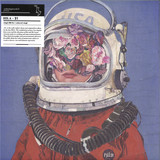
"21" is the well-crafted, sharp and original first album by the duo HILA, composed by American cellist Artyom Manukyan (who already worked with Kamasi Washington, Daedalus, Flying Lotus, Run DMC, Gretchen Parlato, Raphael Saadiq, Clive Lowe Mark...) and french producer Dawatile.
The combination of jazz, Los Angeles beat-scene and the vibrations of 80s and 90s Soviet Armenia make it a striking and unprecedented fusion. These kind of nostalgic and unconventional references forcefully shake the codes of mainstream culture to create a sincere, raw and intimate expression.
"HILA" was born from a spontaneous and intense creative impulse between Artyom Manukyan, a Los Angeles-based Armenian celloist and his partner in crime, David Kiledjian aka Dawatile, a French multi-instrumentist of Armenian descent. This project is proving to be a true master stroke given that it only took 21 days for the duo to make it a reality.
"HILA" was made in less a moon cycle but captivates and electrifies audiences upon its first outings. "H.I.L.A" colors the warmth of the Californian "High" with Armenian vibes. The artists chose this name for their creation since both have a close and valuable connection to these locales. This journey began in 2007, on the day Dawatile went to Yerevan, the capital of this small country in the Caucasus mountain to realize a first fusion project centered around local folkloric music genres.
There he was introduced to local musicians including the Armenian Navy Band, one of the country's foremost groups in which Artyom played the bass and cello. In this context, he also met many musicians such as Tigran Hamasyan and Norayr Kartashyan. This will be the beginning of connections between Lyon, Yerevan and Los Angeles. The following year, the two artists will be be seen performing next to Taylor Mc Ferrin at the Jazz à Vienne festival. More recently, they partnered up again when the cellist, who had freshly relocated in California, invited Dawatile to produce his album. As soon as the studio’s threshold was crossed, they decided to postpone this record and create a joint project: Hay (as the Armenians call themselves) / High In Los Angeles. HILA was born at the end of these 21 days of intense creation. The association of Artyom Manukyan and Dawatile is the combination of two visions, two versions of Armenia, two personalities, the reunion of the Eastern and Western blocs.
One grew up nurtured by the sounds of hip-hop and jazz in Europe and the other by art music and Russian-influenced 1980s Armenian folkloric music before moving to L. A., Ca. The cornerstone of it all, the glue that unites everything : Armenia and music. They generate a new identity synthesizing two perceptions, their complicity transcending these cultural discrepencies. To achieve this, they will scour through images of Artyom’s childhood, within the popular culture of Soviet Armenia. Together, they revisit this decidedly retro vibe, based on the work of Caucasian groups inspired by African American music. This background is rehashed and fused with ancestral Armenian sounds. The DNA of the album "21" is molded by these dear influences.
We can also hear the ancestral sounds of Armenia, a country at the edges of both Europe and Asia. The presence on two tracks of Armenian music Master Norayr Kartashyan, infuses the languor of past melodies and traditions. These purposeful anachronistic sounds offer a fantastic depth to this powerful opus. Listening to the album, one can appreciate the successful fusion of styles and influences. Those combinations, however, manage to preserve individual identities only to enhance the art through an adamant musical dialogue.
Being driven by the urge to transpose Armenian musical traditions into a unique universe, the daring artists, offer an innovative combination by blending, for the first time, these ancestral sounds with the world of Los Angeles beat-scene and jazz. An invention largely fueled by the magic strings of Artyom and maestro Miguel Atwood-Ferguson, a pillar of the genre in Los Angeles combined. These associations resonate with a triumphant equilibrium. HILA is musical uncharted territory in which Artyom's cello strings intertwine to ignite the harmonies of keyboards, the machines, the vocals and electronic layers Dawatile pieced together. HILA plays the soundtrack of an adventure set between Armenia around the end of the Soviet era and a mysterious near future.
Artyom Manukyan grew up in Armenia in the 90s. At the time, he studied Russian classical music while learning jazz with assistance by his father, a music journalist. Being an unconditional music lover, he went on to sharpen his skills at the prestigious Berkelee College of Music. Subsequently, he’s been lucky enough to travel the world touring with numerous acts and mainly with the Armenian Navy Band. The group has fostered alacritous success honored by a BBC Award as a crowning achievement. He moved on 10 years ago and made his way to L.A. with his cello on his back. In the City of Angels, he quickly became a popular figure of the jazz and hip-hop scenes thanks to his first album "Citizen". He’s accompanied prestigious musicians such as Kamasi Washington, Melody Gardot, Daedalus, Flying Lotus, Run DMC, Gretchen Parlato, Raphael Saadiq, Clive Lowe Mark, or Vulfpeck. He released his solo album on the cello, "Alone" in October 2019.
Dawatile is a bold producer and multi-instrumentist as well as a passionate and resolute musician molded by jazz. As a versatile artist, he handles and juggles the saxophone, the keys, the bass and composition. Simultaneously, Dawatile produces cross-over projects and soundtracks for the movie industry. He, as well, has had the opportunity to be a part of many tours, including with his electro hip-hop band, Fowatile and more recently with the "Future Kreyol" trio, Dowdelin. Being the ever workaholic, he has under his belt a string of prestigious collaborations with the likes of Talib Kweli, Foreign Beggars, Roy Ayers, Tigran Hamasyan, Mathieu Boogaerts, Voodoo Game and Piers Faccini. His taste for developing new musical recipes and his know-how in production make him a much sought-after album producer. In concert, the HILA duo offers a sober, precise and rhythmic performance. "21" is an aerial and lively album taking the audience on an at times joyous and sometimes melancholic dreamlike journey. The magic of "HILA" operates at the speed of light and positions it already as an avoidable group.
The hyper talneted Stellar Om Source (NOT NOT FUN, RVNG, NO 'LABEL) blowing up new styles on this one!
"If there is one thing that leaps out from Stellar OM Source’s music, it is the sense of a highly active mind at work. There is an indivisible feeling that a real person is behind this dynamic flurry of tones, waves, vibrations and modulations. On I See Through You, the first full Stellar OM Source release in over four years, the spark that first LP piqued the interest of so many listeners is glowing stronger than ever.
In the 2010's, Christelle Gualdi carved a name as one of the most essential live electronic musicians around, dazzling dancers and home listeners in kind with her bombastic, acidic hardware jams. Circumstances outside her control forced a stop for the Stellar OM Source project. It was touring, including two shows in the summer of 2019 at Dekmantel Festival and Listen! that Gualdi credits as year highlights, which proved to be the integral jump-start to the engine.
Inspiration came rushing back thanks to the human connection of performing. Seeing a younger generation connect with her put fresh charge into the circuitry of her gear. All this accrued into new material on the road, and thus I See Through You was born.
The spirit of 2013’s cult favourite Joy One Mile is alive and well on I See Through You. There is once again immediacy, urgency and lust. But Stellar OM Source stepping into a comparatively more poppy and playful mode on these four tracks could also throw some. Fundamentally she says, it comes from a similar place, and ends with an enmeshed and positive outcome. Gualdi credits both “1995 rave” and “the clarity, bass and breath” of hi-def hip-hop productions as being twin northern stars for her to follow.
The artwork comes from friend and highly respected photographer & director Pierre Debusschere, whose work similarly flits between arresting close-ups and, well, the widescreen luxe of Beyoncé videos. “I’m definitely not a purist anymore,” Gualdi laughs – and with club-ready impact meeting human warmth, this shows in abundance.
“Night Alone” wastes no time in getting the listener up to speed. Is that an LFO sample running through “Night Alone”? Is this a lost Metro Area classic? Is that Stellar OM Source taking a diversion into searching Ibiza-rousing vocal for a moment, or did we imagine that in a heat haze? Where are the kicks? Oh there they are. How many elements are buried and revived within just over five minutes?
It’s hard to tell. Before we know it, “Lost Codes” is up and away, keeping pulses racing. A pitter-patter of baby kicks feel like a pre-tremor before a welting electro-Italo lead crashes into play. With fizzing energy, rasping synths and a frisson of danger, fans of Unit Moebius and The Hacker will be doing somersaults of joy.
“White Echoes” wastes kicks off the flip side with low gurgles descending briefly like a UFO reverse parking into the spot SOS had vacated. Soon, 303s are twisting like Chinese burns while warm chords offer a salve. The mood maintains on “Wild Palms”, the only song on this record not to feature additional mixing work from Peaking Lights’ dub-wise sensei Aaron Coyes.
True to form, the B2 is all Stellar: elements switching up and out, with all the fun and frenzy of capital-L Live action. Kick drums and bassline darting back and forth like a synchronised swimming routine, all elements in concert. The momentum of a runaway mine cart that you can’t help but strap yourself to. I See Through You is one for the dancers who have given Stellar OM Source the motive to move forward once again."
DJ Richard's first release of 2019 sees him drop four invigorating electro tracks on Flexxseal titled "Eraser".
Emerging from the Providence noise scene, DJ Richard forges a path of disciplined selectiveness as a producer and DJ with his idiosyncratic style allowing him to make impressive, self-assured connections between 80s EBM, new beat and Italo disco, electro, techno and "post-minimalist" house. DJ Richard's feral approach evolved from the roots of his White Material imprint which quickly achieved cult status after early releases from himself and co-founders Galcher Lustwerk and Young Male.
As a solo artist, DJ Richard continues to push the boundaries of his talent and influences reflected in his two utterly distinctive and bewitching albums released in alliance with influential German electronic label, Dial. "Eraser" sees him join up with fellow American Christopher Joseph and his Flexxseal imprint as DJ Richard masterfully maintains his skill in propagating ephemeral and raw sounds with his aptitude for electronic body control.
"Critical Damage" kicks things off with resilient oscillations fused beautifully with angelic leads and thudding percussion reflecting a post-punk aesthetic while "Eraser" delivers tough, acidic swirls undulating beneath sharp, broken grooves and growling undertones.
On the flip, a slow, chugging drum sequence balanced with haunting modulations and machine-like vibrations that echo throughout take the focus in "His Threshing Floor" before "Casca's Theme" concludes the EP with meandering, robotic synth flutters and distorted bass resonations driven by hypnotic rhythms and world-ending atmospheres in this powerful electro cut.
Sonido Gallo Negro has been a mainstay of the current revival of tropical and psychedelic music throughout Central and South America since the first of their three albums was released in 2011. Hailing from Mexico City, a hub of cumbia, chicha, surf and garage music for over five decades, it's no wonder that SGN has such a wonderful and integrated blend of traditional styles that have travelled from the Caribbean, up the Andes, through the Amazon, around the shores of coastal Peru and back through Central America. SGN is part of a long line of artists in Mexico to make these cosmic connections found in the music's terrestrial path, yet are completely unique in their own mystical approach, both visually and sonically. As a hefty 9-piece orchestra, the band is quite capable of summoning a rich tapestry of sounds from an array of instruments of the psychedelic persuasion: farfisa, electric guitar, flute, theremin and, in the case of B-side Niño Perdido, accordion from master Colombian artist and NYCT alumnus, Carmelo Torres. It's the making of a swirling kaleidoscope of sounds and squiggles, all of which ride effortlessly over the fluid percussion and pace of those beloved Afro-Latin rhythms. In anticipation of their next full length release,Unknown Future, Names You Can Trust presents the first 7-inch 45 single to ever be released from SGN, a double-sided dose ofsonido psicodélico, spectacularly swirled into a perfect concoction of old meets new.
Untameable Anatolian feline fuzzy folk funk finally uncaged. A spontaneous Turkish-Norwegian-Dutch expedition, where seafaring jazz cats entangled with fugitive roadies and Tee-Set mods, makes the story of Durul Gence’s highly anticipated/ill-fated Asia Minor Mission group the stuff of lost-rock legend and remains one of Turkish music’s great “what ifs?” The black cat is finally out of the bag...
Having forged a celebrity status as one of Turkey’s premier percussionists and bandleaders, Durul Gence assembled the underground fusion group known as Asia Minor Mission (AMM) in early 1972 (with Irfan Sumer, Oguz Durukan and Ugur Dikmen) while trying to escape the constant daze of paparazzi camera flashes that followed him across Turkey. During a far-fetched post-gig brainstorm the group pondered relocating to Norway (based on fact that none of them had ever visited the country) when a local seaman who claimed to have recording studio connections in Oslo overheard them. Enlisting the roadie services of a streetwise Istanbul taxi driver friend on the run from the police AMM took the plunge, accepting the sailor’s offer of passage on his next sailing.
In these new idyllic surroundings, the same region that played host to fellow Turkish percussionist Okay Temiz, Durul found the peace he desired discovering a muse in Norway’s welcoming creative climate. Much like Barıs Manço and Mogollar in France, Cem Karaca and Gökçen Kaynatan in Germany, Gence’s relationship with Norway rekindled a passion for composition in ways he couldn’t have imagined in his homeland, opening doors thought previously unreachable. As a potential prodigal son for Anadolu pop Durul joined a wider pop-cultural diaspora alongside electronic pioneer Ilhan Mimaroglu, Tülay German (aka Tuly Sand) Kardasllar’s “Alex” Wiska (collaborator with Krautrockers Can) and Maffy Falay from the band Sevda.
Despite a blooming fan base and original repertoire the Nordic dream was not to be and after two years without a studio session, AMM called it quits during a tour of Holland after which Durukan and Dikmen went home to join Cem Karaca’s band Dervisan - Dikmen’s keyboards feature on Finders Keepers releases by Turkish singer Selda (FKR011). Retreating to the city of Delft to ponder his next move, Durul met Peter Tetteroo, former vocalist from successful Dutch psych-pop combo Tee-Set, who also found himself in a lonely boat after the demise of his long-running group. As an AMM fan, Tetteroo suggested they record two Gence penned AMM demos for Dutch Philips signed exotic songbird Sasi Naz at Peter’s home studio. A session was hastily arranged and a talented, yet unconfirmed, guitarist was enlisted. Durul maintains it was the work of Ferry Lever from Tee-Set/After Tea, something Ferry has denied, and with Tetteroo having died in 2002 the question remains. Upon entering the humble studio Durul stumbled upon a skeletal drum kit. Lacking hi-hat, toms or even a snare he cobbled together a bongo and a tambourine and set to work. Together, under the watchful eye of Tetteroo, the pair jammed stripped back versions of the AMM live staples Black Cat and Boo Song, with an added freak factor otherwise missing from their jazzier approach. Laid down in just 30 minutes, with Gence’s accomplished guide vocals and fuzzy overdubs, the rudimentary but professional recordings never made it to Philips execs and the tapes returned to Turkey under Durul’s arm as one of only two documented AMM recordings (the other being a live performance in Oslo’s Hennie-Onstad Art Centre in May 1973).
Unintended for commercial release, curiouser and curiouser, Finders Keepers proudly present these previously unheard tracks sourced directly from original tapes, which stand as a testament to the inimitable talent of Gence and the only studio document of the mythical AMM Turk jazz funk troubadours, representing a pop-psych Hollandaise holiday postcard which has taken five decades to be delivered. 45 revolutions later... The cat’s got the cream.
Together as AceMoMa for the first time, AceMo (Adrian Mojica) and MoMa Ready (Wyatt Stevens) have crafted a sound that captures the contrasting grit and shimmering new energy that can currently be found in New York City's electronic music scene. Booming drum & bass and four on the floor house beats are paired with airy synth leads and watery vocal samples, giving the tracks a sense of strong forward momentum as well as a softer, more introspective side. Their new four track EP sounds like what a long night out in NYC feels like in 2019.
Jenkem Recordings is the music imprint of Jenkem Magazine , a skateboarding and culture media outlet, based in the same neighborhood Mojica and Stevens are creating and performing their music. Jenkem Recordings’ main goal is to continue to push the strong connections between music and skateboarding by finding new artists to support who have a strong connection to both communities. The AceMoMa EP marks Jenkem Recordings second release, with many more to come in the future.
- A1: Aurora Feat Madjo
- A2 5: Th Season Feat Fakear
- A3: Typical Boy Feat Zefire
- A4: Nobu Feat Grems & 20Syl
- A5: Free Flow Feat Sara Lugo
- A6: I Thought Feat Unno
- A7: What Eva Feat Mr J Medeiros
- B1: Lying
- B2: Maluca
- B3: Illa Beez
- B4: The Source Feat T3 & Illa J
- B5: Va Volver
- B6: Fonk Jedi Feat Declaime & Georgia Anne Muldrow
- B7: Ouroboros
New LP from French beat-makers La Fine Equipe featuring Illa J, T3, 20Syl, Mr J Medeiros, Georgia Anne Muldrow, Fakear ...
Let's be clear: La Fine Equipe is a band. The numerous hats wore by its four members are so various that it could mislead one's. Indeed, surrounding Blanka, oOgo, Chomsky and Mr. Gib, there are recording studios, collaborations, lives, side-projects... There is also and especially a whole universe built during the past ten years around their passion for beatmaking, embodied by the release of « 5th Season », new album.
So yes, La Fine Equipe is a band, but it's also much more than that.
Since their creation in 2006 and their first album « La Boulangerie » two years later, the four producers became inevitable when you think about a new scene breaking the barriers between musical genders. Hip Hop is at the heart of their craft, corner stone of their musical background and inspirations where the paths of J Dilla, Madlib, Flying Lotus, Kaytranada and the turntablists A-Trak, C2C and Birdy Nam Nam are crossing ways. Two things gather La Fine Equipe and those big names, the constant need of collaboration with other artists, and this thirst of discovery, main feature of the digger.
From 2008 to 2014, La Fine Equipe mastered its craft with the « Boulangerie », compilation gathering 34 beatmakers on 113 tracks. They also work on the creation of the label Nowadays Records (Fakear, Skence, Unno, Clément Bazin, Leska, Douchka...) and released more than 75 EPs and LPs in five years.
With an outrageous number of shows across the world, tour in Asia, South America, collaborations with several international artists... Their success changed the game: Whereas many producers coming from this environment where isolated, La Fine Equipe federated a growing scene and became its reference.
After years spent paving the way for other artists and creating a structure that could support the growth of a musical scene, they decided to go further and launch a new era with « 5th Season ».
Because the band works with eight hands and four brains, there's nothing surprising in the fact that the album sounds like a condensed of each and everyone inspirations and experiences, from hip hop and sampling, to electronica, jazz and Latinas inspirations. If homogeneity is the new trend, La Fine Equipe isn't ready to sacrifice its wishes to fit the mould.
« 5th Season » is also a glance at the world looking over our planet's current state, the cosmos, the vegetal and these things that are greater and stronger than us, and the things and behaviour that could led to our loss.
It's an almost apocalyptic vision of our future, but full of optimism at the same time. There is something solar and cinematographic in this album, a format that goes beyond the one chosen before, closer to playlist and compilations such as the three Boulangerie opuses remind us.
Loyal to their status of ambassadors, the four beatmakers keep on inviting other artists to complete their universe. Illa J and T3, respectively brother and partner (Slum Village) of the late J. Dilla, make the connection between a glorious past and the future embodied by La Fine Equipe on the track « The Source ». With « Aurora », it's the solemn and mystical voice of Madjo that take this electro-pop track to another level. The American rapper Mr. J. Medeiros on the boom bap anthem « What Eva », the Montrealer ZeFire on « Typical », each and every artists brings its stone to the edifice of « 5th Season », giving to the album a limitless and freed musical richness.
But to release an album isn't enough. In parallel, each member of La Fine Equipe continues to fulfil its multiples tasks and work on a new concept live show bringing a scenic and visual show in addition to their music. It is what the artists looking toward the future do, and La Fine Equipe is looking straight ahead.
_________________________________________________________________________
TRACK BY TRACK
AURORA (Ft. Madjo)
Already remixed by the quatuor on the beautiful track « Choose The Heart », it's Madjo's turn to be invited by La Fine Equipe for a collaboration. Her mystical voice, which fragility paradoxically seems to strengthen its power, turns the track into an epic pop anthem.
NOBU (Ft. Grems & 20syl)
The association of these three names seems obvious, like a family reunion. Grems did the visual of the anniversary box of La Boulangerie, 20syl (C2C, Hocus Pocus) was one of the beatmakers who took part in the project.
This time, the two big brothers are side by side behind the mic, for the first French speaking collaboration of La Fine Equipe.
On this trapy/footwork beat, the two rappers ring the alarm before it's too late to save our house, the earth.
THE SOURCE (Ft. T3 & Illa J)
In the family of Hip Hop jewels of 5th Season, here is one coming from the USA. Fans of J Dilla and Slum Village since the first hour, La Fine Equipe pays its respects to its influences by inviting T3 and Illa J. Respectively member of Slum Village and brother of the legendary Detroit producer, these two MCs build a bridge between the eras and let their sharpened flows confuse our perception of time.
5TH SEASON (Ft. Fakear)
A second collaboration with their little brother from the Nowadays Family, Fakear. Eponymous title, it represents the universe of both entities, true road trip through Fakearians melodies and La Fine Equipe's funk declined in five seasons.
TYPICAL BOY (Ft. ZeFire)
With « Typical Boy », La Fine Equipe express its love for House music with chopped rhythms and a heavy but swaying bass line. The freed track oscillate between power and lightness. A beat that quickly becomes ZeFire's playground. The Montreal singer, already heard on Her's tracks, brings a missing r'n'b touch to create the perfect chemistry.
Names You Can Trust presents the second installment of Rueda de Bullerengue, a collaborative series with NY-based Bullerengue collective, Bulla En El Barrio. Named after the group's ongoing monthly performance and workshop in Brooklyn, Bulla's collaborative spirit and dedication to the tradition of los bailes cantados has made an indelible mark on the bubbling tropical music scene of New York City, and in turn, found their way into the crates and sets of DJs and vinyl aficionados via their first 7-inch release on NYCT in 2017. Since those initial moves, Bulla has continued to grow and add working members while maintaining a philosophy and connection grounded in the traditions of their Colombian origins. They've studied and collaborated with elders and legends like Emilson Pacheco and Darlina Sáenz, and this past year embarked on a recording with Barranquilla-based collective Tonada Baile Cantado — the focus of this edition's recording and release.
Considered one of the premier groups advancing the tradition of Bullerengue within Colombia, this incredibly talented group of young musicians are a rarity for their skill and age. In a region where there are ongoing festivals celebrating the tradition of Bullerengue that still command massive audiences and performers, Tonada is a true representative of what can happen when such an amazing tradition is passed forward to an eager next generation. Produced by Bulla members Camilo Rodriguez and Diana Herrera (aka Carolina Oliveras) in between their time smashing stages across the U.S. for Combo Chimbita, this is a carefully nurtured and powerful bridge to the beloved traditions of Colombia's Caribe region.
Without further ado, here lies Volume 2 of Rueda de Bullerengue, featuring Tonada Baile Cantado, a new generation of traditional Colombian dance music transmitted directly from Barranquilla — Four dance floor crashers in the styles of fandango and chalupa, ready-made for your 45 spins in the inimitable style of Names You Can Trust.
If you read the name Shankar you may right away think of Ravi Shankar, the grand master of contemporary Indian folk music who was very popular in the 60s due to his connection with the music industry in the United States despite staying away from the pure pop music by maintaining his classic sitar and tabla style ragas to express himself musically. Ananda Shankar used to be his nephew who also made a journey to the USA to gather inspirations from rock artists like Jimi Hendrix among others. His first album from 1970, a conglomerate of classic Indian folk tunes and instrumental versions of the hottest rock songs of the day clothed in a veil of sitar melodies and backed up with tabla drum grooves, was an attempt to combine the spiritual approach of his cultural origins with the light minded blissful attitude of western psychedelic pop music. It worked well in the sense that it is still, nearly fifty years later on, a groovy little album that leaves nobody sitting around at any random hippie party. He took a five year break from recording to create what should become his second album and this is what I am about to present to you now. The cover-tunes were replaced by all original compositions with a lush instrumentation that features the typical sitar, tabla and bowed string instruments such as sarong and sera arrangements mixed with sounds that have a definite western origin such as rock guitars, Hammond organ and moog synthesizers plus full drum kits that take care to enhance the actual groove. Psychedelic rock, raga, fusion-jazz and funk flow into each other quite naturally giving birth to something fresh and exciting I would label as Bengali pop'. The borders between eastern and western music get abrogated here. If it was not for a few deeply mythical chants on a bed of drones here and there you could not even tell this was a record by an Indian artist. This album is quite accessible most of the time and comes with a certain slickness that makes it easy for the listener to understand and appreciate what is going on. Still there is the other side of the coin, the depth pop music often lacks. So in the end this might have been too far out for the average western mainstream fanatic back in 1975 when disco began to rule but it is an awesome sound trip for fans of psychedelic dance music like INCREDIBLE BONGO BAND and all eastern influenced popular rock.
No one had been through those doors in years. Unchanged, seemingly untouched, just a Guard watching over it, one wondered whether the place would ever see the light of day again. Built in the 70s by Scotch, there were only twenty such places in the entire world. Twenty studios, all identical. Most had undergone a digital makeover in the 80s, but not this one; situated in Lomé, this studio had stayed true to its original form. Silent and uninhabited but waiting for one thing, and one thing only: for the sacred fire to be lit once again. That of the Togolese Recording Office, is studio OTODI for those in the know. Through thick layers of dust, the console was vibrating still, impatient to be turned on and spurt out the sound so unique to analog. That sound is what Peter Solo and his band Vaudou Game came to seek out.
The original vibrations of Lomé's sound, resonating within the studio space, an undercurrent pulsing within the walls, the floor, and the entire atmosphere. A presence at once electrical and mystical sourced through the amps that had never really gone cold, despite the deep sleep that they had been forced into. In taking over the studio's 3000 square feet, enough to house a full orchestra, Vaudou Game had the space necessary to conjure the spirits of voodoo, those very spirits who watch over men and nature, and with whom Peter converses every day.
For the most authentic of frequencies to fully imbibe this third album, Peter Solo entrusted the rhythmic section to a Togolese bass and drum duo, putting the groove in the expert hands of those versed in feeling and a type of musicianship that you can't learn in any school. This was also a way to put OTODI on the path of a more heavily hued funk sound, the backbone of which maintains flexibility and agility when moving over to highlife, straightens out when enhanced with frequent guest Roger Damawuzan's James Brown type screams, and softens when making the way for strings. Snaking and undulating when a chorus of Togolese women takes over, guiding it towards a slow, hypnotic trance. Up until now, Vaudou Game had maintained their connection to Togo from their base in France. This time, recording the entire album in Lomé at OTODI with local musicians, Peter Solo drew the voodoo fluid directly from the source, once again using only Togolese scales to make his guitar sing, his strings acting as channels between listeners and deities...
On Respective Edges Of America — Oregon And Maine — Keith Kenniff Records Quiet Music At Night. 'when Things Are Calmer,' He Says. 'my Mind Is Less Distracted When I Know That Everything Is Dark Outside.' For Over A Decade, Such Has Been The Mode — Nocturnal, Unrushed, Using The Same Mini-cassette Recorder, "a Lovely Little Imperfect Way To Treat Sounds" — For One Of The Country's Most Understated Composers. Kenniff Has Housed Dozens Of Ambient Releases Under The Name Helios Since 2004, Alongside Post-classical Output As Goldmund, Shoegaze Pop With His Wife Hollie As Mint Julep, And Commissions For lm And Television. It Is A Reliably Transportive Body Of Work That's Earned Kenniff A Cult Following, And A Genuine Modesty That's Kept Him On The Fringes, Right Where He Prefers, In The Dark.
Kenniff Mostly Lets His Music Breathe Free Of Explanation, Open To Interpretation. As Listeners, We Follow Subtle Suggestions — The ery Sky On The Cover Of 2012's Moiety, The Countryside Daydream Of 2015's Yume — Extracting Meanings From Imagery And Inscriptions. Veriditas, The Sixth Helios Full-length, Shares Its Name With Twelfth-century Philosopher Hildegard Von Bingen's Notion Of "the Greening Power Of The Divine," The Term Derived From The Union Of Two Latin Words: Green And Truth. Bingen Saw The Abundance Of The Earth As Vitality To Be Cultivated, Interconnected With The Body And Spirit. Take The Concept In Concert With Veriditas' Vistas Of Sound, Gazing Beyond The Tree-lined Wonder On Its Artwork, And We Undoubtedly Recognize The Album's Rooting. Kenniff Elaborates, "while I'm Not A Very Spiritual Person As It Relates To A Religious Belief, I Do Feel An Overwhelming Connection Between The Aesthetics I nd Pleasing In My Experience Of Nature And My Experience Of Writing Music."
Running Back welcomes Andreas Grosser for the start of it's non-dancefloor series 'Running Back Incantations'. Think Tornado Wallace's 'Lonely Planet' or Suzanne Kraft's 'Missum' who both would have been good and early contenders for a series like that, and you are half way there. Andres Grosser though, was 'there' and that way before. Probably best-known for his 1987 collaboration 'Babel' with Klaus Schulze, Grosser is a bit of a dark horse in the universe whose big bang was krautrock and that went on to be called cosmic, space music or simply new age.
A native East-Berliner, Grosser crossed the Wall in 1981 and next to studying piano, his day job was to advise, sell, maintain and invent electronic music instruments. Naturally, Grosser had a good connection to and support from local Berlin musicians and groups, while working at night in his own studio and in those of others. Fast forward 37 years and Andreas is now one the worlds leading microphone technicians specialising in German and Austrian vintage types.
'Venite Visum' is an anthology of recordings made between 1976 and1980. Released in 1981 on UK's York House Recordings as a cassette tape only, it features some of the most out there, hypnotic and still state-of-the art space music ever to be known to man. For the first time transferred onto vinyl, compact disc and available as a digital download, it was perhaps best described by one reviewer at the time as; "powerfully relentless, repetitive themes which are constantly embellished and subjected to variations in tone colour and instrumentations. The music surges, coming in waves that approach and recede, but with each surge the waves seem to be higher up the shore.'
Now carefully transferred from an archived tape, remastered and compiled on a double album for the first time, it features the previously unreleased and not less mesmerizing 'The Quantum Leap'. Come and visit the hidden and almost forgotten
Russian producer Nocow debuts on Rekids with five murky tracks this December. Based in St. Petersburg, Nocow is undoubtedly one of Russian electronic music's
most remarkable protagonists having released on Clone, Figure, Fauxpas Musik, Gost Zvuk and Styrax. Recognised for maintaining consistency whilst traversing various sub-genres, Nocow is as comfortable producing intricate IDM and robust
techno as he is calm ambient and melancholic electronica.
In 'Soul Connection' a spoken word vocal mutters over metallic percussion and ominous stabs whilst a dense pad washes over everything. An undulating synth and ethereal effects make up 'Disappear' before moving onto syncopated drums
and shadowy atmospherics in 'Samaya Dolgaya Noch'. Next up, 'Stop' is comprised of mesmerising melodies, sturdy kicks and a looped vox until Nocow concludes the package with a short 2-step cut titled 'Aesthetic Mind'.