Search:major iv

Styles
All
JOE BUCKNER & MAJOR IV / HAL FRAZIER - I WISH I KNEW / I STAND BLUE

• Joe Buckner was lead singer of the Major IV, a Chicago group who recorded in Los Angeles in the late 60s. ‘I Wish I Knew’ had been issued by the Ballads on Venture in 1969 and that outfit later re-cut it as ‘Butterfly’ in 1975. Joe and the Majors give an equally impressive performance on this great Leon Ware/Susaye Greene song. ‘I Stand Blue’ is another Ware composition that we first featured by writer/producer Mickey Stevenson on the Kent 100 Club Anniversary single of 2019. Big-voiced Hal Frazier also gives a top performance on the excellent beat ballad.

pre-order now28.10.2022

expected to be published on 28.10.2022

11,35
Matt Gold & Dustin Laurenzi - Devotional Fade LP
  • 01: Devotional Fade
  • 02: Clown Car
  • 03: Morocco
  • 04: Cool Whip
  • 05: Soft Hold
  • 06: Seven On The Floor
  • 07: Arpeggio
  • 08: End Of The Horn

Matt Gold and Dustin Laurenzi present Devotional Fade, a collaborative record of electroacoustic rhythmic improvisations – equal parts meditation and dance, released on We Jazz Records, 24th April. Laurenzi and Gold, key collaborators in the Chicago creative scene and with genre spanning artists such as Bill Callahan and Makaya McCraven, step forward here with a major artistic statement, a product of extended improv sessions capturing the duo's hypnotic interplay. This is the sound of two of Chicago's most vibrant instrumental voices listening deeply, communing in sound.

Recorded in Laurenzi's attic studio, Devotional Fade emerged from a series of weekly sessions over the course of a single month. The duo kept the tape rolling continuously each day and selected a number of immersive sonic worlds to present, oscillating between patient, sacred minimalism and wild, dancefloor-worthy combustion.

The pair set two parameters to heighten the sessions' stakes: editing would be kept to a minimum, and a rule of "no pitched overdubs" was put in place – ensuring that all melodic and harmonic gestures would have to be committed in real time. Laurenzi and Gold held true, only sparingly adding a stray shaker or brush to these already largely complete improvisations. Devotional Fade is imbued with quiet propulsion and ecstatic repetition.

Matt Gold is a guitarist, multi-instrumentalist, songwriter, and producer based in Chicago, IL. His work pulls from diverse traditions of electric and acoustic music. Matt has performed across six continents and contributed to over fifty recordings as a collaborator and instrumentalist, garnering critical praise from Pitchfork for playing "one of the most exhilarating guitar solos of recent memory, in any genre." Gold has several long-running collaborative bands spanning jazz, folk, experimental, and chamber music including Sun Speak, Storm Jameson, and Tin. He performs and records with an array of creative artists including Makaya McCraven, Marquis Hill, Jamila Woods, Natalie Merchant, and Greg Ward. Gold co-curates the record label and concert series Flood Music.

Chicago saxophonist/multi-instrumentalist Dustin Laurenzi has developed a personal approach to improvisation and composition that has garnered the attention of the city's creative music community. Laurenzi's music is inspired and informed by jazz, folk, and improvised music. His inventive improvisational sensibilities have made him a sought-after musician in many circles of Chicago's vibrant music scene and beyond. Laurenzi has toured extensively with songwriter Bill Callahan and is featured on Callahan's 2024 release Resuscitate! He has toured with Grammy award-winning artist Bon Iver and appears on the band's critically lauded 2016 release 22, A Million. Laurenzi has also performed with Jeff Parker & The New Breed, Marquis Hill, Makaya McCraven, Matt Ulery, Japanese Breakfast, and This Is The Kit.

pre-order now22.05.2026

expected to be published on 22.05.2026

22,65
Original Soundtrack - Back To Titanic (2x12")
  • A1: Titanic Suite
  • B1: An Irish Party In Third Class - Gaelic Storm
  • B2: Alexander's Ragtime Band - I. Salonisti
  • B3: The Portrait - James Horner
  • B4: Jack Dawson's Luck
  • C1: A Building Panic
  • C2: Nearer My God To Thee - I. Salonisti
  • C3: Come Josephine, In My Flying Machine - Máire Brennan
  • C4: Lament
  • C5: A Shore Never Reached
  • D1: My Heart Will Go On (With Dialogue From The Film) - Celine Dion
  • D2: Nearer My God To Thee - Eileen Ivers
  • D3: Epilogue - The Deep And Timeless Sea

Back to Titanic is the second soundtrack album released for the ultimate classic film Titanic. Composer James Horner created a new suite of light and dark music to represent "the soul” of his original score. The inspiration used in composing the original soundtrack formed the basis for the new pieces Horner developed for this album. It features a piano solo performed by James Horner in “The Portrait” and newly recorded suites by the London Symphony Orchestra and the Choristers of King's College.

The first highlight is the opening 19-minute suite, "Titanic Suite", which captures the essence of the film. The other major suite is the final track, titled “Epilogue - The Deep and Timeless Sea”. James Horner returns to the main Titanic theme in a subtle way, honoring the losses of the disaster.

The soundtrack of Back to Titanic is available as a limited edition of 1500 individually numbered copies on violet vinyl. The records are packaged in a deluxe sleeve finished with linen laminate and includes a 4-page booklet with liner notes by director James Cameron.

pre-order now12.06.2026

expected to be published on 12.06.2026

43,66
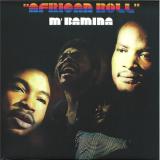
M’BAMINA - AFRICAN ROLL

Gatefold Sleeve

M’Bamina – African Roll (1975)
The story of an album born between Africa, Italy, and the nightclub culture of the 1970s
In the heart of 1970s Italy — a country undergoing profound social change and a music scene just beginning to open itself to distant sounds and cultures — an extraordinary, almost improbable story took shape. It is the story of a group of young African musicians who found their way to Europe, of a Turin nightclub that became a crossroads for communities and experimenters, and of an album which, released in small numbers and largely unnoticed at the time, is now considered a rare jewel of Afro-fusion.
The band called themselves M’Bamina — an ensemble of musicians from Congo, Cameroon, and Benin, who arrived in Italy in the early Seventies. Settling between northern Italy and the Pavia area, they began performing in small clubs and community events, bringing with them a vibrant rhythmic heritage: African polyrhythms, call-and-response vocals, funk-infused bass lines, and Caribbean or Afro-Latin colours absorbed along their musical journeys. Their raw, contagious energy on stage quickly drew attention.
Meanwhile, in Turin, another story was unfolding. There was a venue becoming almost legendary: Voom Voom, one of the city’s liveliest nightclubs, run by Ivo Lunardi. The club attracted an eclectic crowd — students, artists, foreigners, night owls — and Lunardi quickly understood that the dancefloor wasn’t just a place for music, but a melting pot for a new kind of cultural energy. Out of this vibrant atmosphere came his idea: to turn the club’s name into a small independent record label, Voom Voom Music, capable of capturing the spirit of those years and giving voice to unconventional projects.

When Lunardi heard M’Bamina, he immediately sensed that this was the sound he had been searching for: fresh, different from anything circulating in Italy at the time, and capable of blending African tradition with funk and European sensibility. He brought them into the studio.
Production was handled by Lunardi along with Christian Carbaza Michel, while the engineering was entrusted to Danilo Pennone, a young sound technician with a sharp, intuitive ear.
The recording sessions — held in Turin in 1975 — produced a remarkably warm and direct sound. The music feels almost live: grooves rooted in African tradition, but open to funk-rock structures and modern arrangements. It is a natural fusion, never forced. Tracks move between tribal rhythms, funk basslines, light electric guitars, congas and Afro-Latin percussion, with call-and-response vocals and melodies that echo both Congolese tradition and the lineage of Latin jazz. Not by chance, one of the album’s most striking tracks, Watchiwara, reinterprets a Latin standard through M’Bamina’s own rhythmic language.

The album was titled African Roll — a name that was already a statement of intention. It is African music that “rolls,” that moves, adapts, transforms within a new geographic and cultural setting. It is not strictly Afrobeat, nor Congolese rumba, nor Western funk: it is a spontaneous, hybrid blend, shaped more by lived experience than by any calculated aesthetic program.
When African Roll was released, the world around it barely noticed. Distribution was limited, and 1970s Italy had yet to develop a cultural framework for receiving such music. The national music press rarely paid attention to African or “world” productions. The album slipped into silence — though the band’s own story did not.

M’Bamina continued performing across Europe and Africa, even sharing a stage in Cameroon with none other than Manu Dibango. By the late Seventies, they moved to Paris, signed with Fiesta/Decca, and recorded a second LP, Experimental (1978). Meanwhile, the peculiar record they had made in Turin began to resurface quietly among vinyl collectors, Afro-funk enthusiasts, and DJs hunting for forgotten grooves.
That is when the album’s fate began to shift.

Over the decades, African Roll emerged as an almost unique document: a snapshot of an intercultural Italy before the word “intercultural” even existed, a fragment of migrant history, a spontaneous experiment in musical fusion born far from major industry circuits but rich in authenticity. Original copies began commanding high prices on the collector’s market, and the album became recognized as one of the hidden classics of European Afro-fusion from the 1970s.
Today, more than fifty years later, this reissue finally restores visibility and dignity to a project that deserves to be heard, studied, and celebrated. It is not simply an album: it is the testimony of a rare cultural encounter, born in an Italy unaware of how fertile such exchanges would one day become.

It is the story of a visionary producer, an extraordinary band, and a fleeting moment in which music, migration, and nightlife came together to create something genuinely new.
African Roll is — now more than ever — the sound of a bridge: between continents, between eras, between cultures. A record that, after rolling far and wide, has finally come home.

In Stock

On Stock and ready to ship

23,49
Jamie Cullum - The Pianoman At Christmas: The Complete Edition
 
23

Multi platinum-selling musician and multi-instrumentalist Jamie Cullum today announces The Pianoman At Christmas - The Complete Edition. Due for release on 19th November via Island Records. The deluxe album completes last year’s critically acclaimed hit album The Pianoman At Christmas Part 1, with its Second Part - featuring 11 covers of classic Christmas songs, as well as two original songs, including lead single ‘Christmas Don’t Let Me Down’, out now.

Drawing from the past and inspired by the present, The Pianoman At Christmas - The Complete Edition sees Jamie team up with London jazz innovators Kansas Smitty’s, as well as composer and producer The Vernon Spring and acclaimed LA-based jazz singer Lady Blackbird to complete a piece of work that is imbued with seasonal sophistication. Alongside his two original tracks, Jamie breathes new life into classics such as ‘Winter Wonderland’, ‘Silent Night’ and ‘Frosty The Snowman’, ranging from ‘Amazing Grace’ to ‘Man With The Bag’ and ‘Sleigh Ride’. The Complete Edition will be released on double CD and double black vinyl formats, alongside a limited run of 180G Heavyweight coloured vinyl in red and gold.

Speaking on the release, Jamie said -

“I had a huge amount of fun creating part two of TPAC. Recorded live, all in the room together - it’s the party after the big show, with friends, drinks and some of the finest musicians on planet earth.”

Released almost a year to the day before The Complete Edition is due out, The Pianoman At Christmas featured 11 original songs played by 57 of Britain’s best musicians, recorded in Abbey Road’s famous Studio 2 and produced by Greg Wells whose The Greatest Showman soundtrack spent 28 weeks at number 1. The album sold over 37,000 copies, spending 6 weeks in the album chart and peaking at number 11. In December Jamie broke the Guinness World Record for the largest music lesson ever, when he held a virtual piano lesson for 2,282 people, teaching them the carol ‘In The Bleak Midwinter’ with special guests Robbie Williams, Sigrid and Dodie.
With 10 million album sales and over 890 million streams to date, Jamie is a celebrated musician the world over with loyal fans in every corner of the globe. With a career spanning over 20 years, his legendary live shows have seen him perform and work alongside artists as diverse as Herbie Hancock, Pharrell Williams, Kendrick Lamar and IDLES - Jamie writing on the latter’s album Ultra Mono. The success of Jamie’s major label breakthrough, Twentysomething in 2003 and its follow up Catching Tales saw him nominated for a BRIT, Grammy and numerous other awards around the world. In 2020 he won an Ivor Novello Award for his track ‘Age of Anxiety’, taken from his acclaimed 9th studio album Taller. In addition to his enduringly successful recording career, Jamie has also established himself as a multi-award winning music broadcaster; his BBC Radio 2 show celebrated its 11th year on air this year.

With her debut album Black Acid Soul earning critical praise, Lady Blackbird is a revelatory new talent with music that transcends the jazz scene through which the LA-based artist is rooted. Reflecting influences as varied as Billie Holiday, Gladys Knight, Tina Turner and Chaka Khan, with critics drawing comparisons to Adele, Amy and Celeste, Lady Blackbird’s distinct and beguiling voice is not one to be missed.

UK band Kansas Smitty’s have developed a musical voice wholly unique from what’s happening around them. They are led by band leader and producer Giacomo Smith who's cinematic compositions feature on their releases, most recently 2021's acclaimed Things Happened Here for Berlin based label !K7. In 2015 they launched their own east London venue and bar, of the same name, which became one of the conception points for the current UK jazz boom.

Londoner Sam Beste aka The Vernon Spring is a polymath in music who has production, writing and performance credits as eclectic as Amy Winehouse, Matthew Herbert, Kano, Joy Crookes, Beth Orton, Blood Orange, Gabriels and MF DOOM. Since 2019 he has been making waves with solo project The Vernon Spring, which foregrounds his rare capacity to hold sophistication and simplicity in the same hands through highly intimate muted-piano compositions and improvisations.

In Stock

On Stock and ready to ship

28,36
Lee "Scratch" Perry - King Scratch (Musical Masterpieces from the Upsetter Ark-ive) 4x12"
 
22

Boxset !

Overview
Arguably the greatest Jamaican record producer of all time, Lee ‘Scratch’ Perry was instrumental in transforming the island’s national sound throughout the Sixties and Seventies, with his unique approach to music making pushing the music beyond previously perceived boundaries.

To mark the first anniversary of his passing, the very best of his work is showcased across a number of products, all of which effectively demonstrate why Perry was widely venerated figure for so long..

The deluxe box set comprises four vinyl LPs and four CD sets featuring his best known and most influential recordings including a previously unreleased mix of Junior Murvin’s powerful ‘Police And Thieves’, UK chart-buster ‘Hurt So Good’ by Susan Cadogan and the Upsetters’ boss reggae classic ‘Return Of Django’, as well as numerous major Jamaican hits.

Aldo included in the set is a 50 page fully illustrated page book, penned by Scratch’s official biographer, David Katz and featuring an array photos by celebrated photographer Adrian Boot, and a newly designed two sided full colour 24” x 24” poster.

The 2x gatefold LP and 2x CD set collection focus upon of the legendary music-maker’s best known productions from the Sixties and Seventies, performed by some of the giants of Jamaican music, with both extensive notes on the man whose talent and imagination took reggae to new heights of excellence.

In Stock

On Stock and ready to ship

83,99
POISON POINT - WANDERING ECHOES LP

Poison Point is the trancey body music solo project operated by Paris-based producer and live artist, Timothée Gainet.

Started off in 2016, he shared the stage with bands such as Drab Majesty, Xeno & Oaklander, Adult, Rendez-Vous and Silent Servant, shared remixes with Qual, Sydney Valette, Blind Delon, all this while running his other industrial techno outfit IV Horsemen. You can tell Timothée is a busy guy and yet he managed to grow Poison Point since his debut album on Third Coming, getting releases out on Aufnahme + Wiedergabe and Young And Cold.

Over the years, his sound gradually shifted from the motorik post-punk of the early recordings to one much more dancefloor-oriented dark electronics with some sort of nice military pop Je ne sais quoi.

If one could see this coming with 2022’s album Poisoned Gloves, his new full-length is a major step-up in Poison Point game. Skilfully produced by Gainet himself and mastered once again by Mr Baggio for the best groove, Wandering Echoes drops nine new floor fillers for the romantic and the nostalgic at heart.

Just click Play on the first track Blue Idol and you will be hurled into a crystal world of imaginary memories while floating on the scales drawn by the synth arpeggios. Rude awake to the lead single Mysteries In Fire and his intoxicating body music and start wandering the room around you. Keep up the pace with further bangers loaded with electricity, romance and angularity like Flowers & Surrender, Echoes Of Dreams, Slow Kill, Fast Love. Get sweaty as you reach the end of this music journey: final track Les Meurtrières de LʼAube, properly sung in Timothée’s native tongue French, will show you the way to the rest of the just.

If your favourite vibes dwell somewhere between Phase Fatale and Lust For Youth, Wandering Echoes is the record for you.

In Stock

On Stock and ready to ship

15,17
VARIOUS - Italian Dancefloor Outsiders 1987-1994 (2x12")

Double LP compilation featuring Italian dancefloor music from the end of the Afro/Cosmic scene to the beginning of the Italian Rave era, between 1987 and 1994.

Stunning bit of research by Andrea Dallera (Dualismo Sound) and Gabriele Casiraghi who've been meticulously digging Italian bins. After endless sifting through this crucial time in Italian dance floor music, we are presented with their final distillation of this transitory period between 80's afro cosmic and Italo's peak into early 90's rave and Italo house era. In their words: “The whole concept was born as we started to find records that were into a kind of hybrid zone that was clearly pre-announcing some of the huge musical changes brought by the 90’s. The sound at play can be understood as looking closely to Belgian New Beat, Uk's Acid House and German early Techno but still connected with some dynamics of the ‘80s sounds: lashing snares and catchy melodic phrases joined by filthy acid bass lines, highly compressed kicks and 'World music' samples are just some of the most recurring elements.”

Hands down mandatory for any dance floor oriented record collection.

In Stock

On Stock and ready to ship

24,79
Various - House Of Riviera Vol.2 (2x12")

Following up on the success of House Of Riviera released in 2019, Mona Musique releases House Of Riviera Volume 2 curated by label head Nick V, a compilation that pays homage to forgotten gems of the classic Italian House scene, circa 1991-1994. 9 tracks from the artists and record labels that were central to this seminal era of House music, including two never released cuts from Ricky Montanari, Davide Ruberto and Ivan Iacobucci.

In the early 1990s, Italy hosted one of the most prolific scenes in the burgeoning world of House music. Whilst the majority of Europe was only just beginning to digest the arrival of this new musical genre born in the US, Italian clubs, DJs and labels were hot on the heels of their counterparts in the already established scenes of New York and London. The clubs of the Adriatic coast, also known as the Italian Riviera, were full every weekend, hosting the major US and UK Djs of the time, but also seasoned resident DJs that had been honing their trade since the early 80s. By the early 90s, Italian House music was regularly exported around the world with labels such as UMM, MBG, Flying, Palmares, DFC, Oversky, Zippy, D:Vision, Irma - and its sublabels Antima and Calypso, releasing tracks inspired by the original New York House and Garage sound, but with a very different, unique and emotional take. This was the specific aesthetic that was to become the House sound of the Riviera, the soundtrack to the golden era of Italian House music.

With all releases between 1992 and 1994, House Of Riviera Vol. 2 unites a selection of 9 tracks that encapsulates the atmosphere, the energy and creativity that reigned during that era. Including 2 previously unreleased tracks from Ricky Montanari and Davide Ruberto, and Ivan Iacobucci, both in the vaults since 1992, the compilation spans the different shades of the genre : from classic deep vocal house by Ricky Montanari and Sound Set, to the more dubbier late night dance floor cuts by Workin’ Happily and Night Communication, with Mental Detector and More Heavy Soul bringing some well chosen disco samples to their contributions, without forgetting the characteristic deep Italian dream house style by Green Baize. Artists featured are iconic producers and DJs from the day : Ricky Montanari & Davide Ruberto, Alex Neri & Marco Baroni, Ivan Iacobucci, Workin’ Happily and More Heavy Soul.

In Stock

On Stock and ready to ship

23,49
Foals - Everything Not Saved Will Be Lost Part 1

From playing chaotic house parties in their home city of Oxford to becoming major festival headliners across Europe, Foals' trajectory has been remarkable. They've earned critical acclaim (NME and Q Award wins, plus Mercury Prize, Ivor Novello and BRIT Award nominations) and fan devotion (1.7 million sales of their four Gold-certified albums) in equal measure. And while the majority of contemporaries have fallen by the wayside, Foals continue to hit new peaks.

After more than a decade in the game, Foals again embrace that love for the unconventional with the bravest and most ambitious project of their career: not one, but two astonishing new albums: 'Everything Not Saved Will Be Lost'. A pair of releases, separate but related, they share a title, themes and artwork. 'Part 1' will be released on March 8th, with 'Part 2' following later in the year.

'They're two halves of the same locket,' frontman Yannis Philippakis explains. 'They can be listened to and appreciated individually, but fundamentally, they are companion pieces.

Fundamentally tethered but possessing their own personalities, the two bodies capture the most compelling, ambitious and cohesive creations they've ever produced. Eager to break the traditional pop song structure which they felt they were becoming increasingly tapered to, the 20 tracks defy expectation. There are exploratory, progressive-tinged tracks alongside atmospheric segues which make the music an experience rather than a mere collection of songs. Yet the band's renowned ability to wield relentless grooves with striking power and skyscraper hooks also reaches new heights.

The album's lead single 'Exits' is a case in point, featuring Philippakis conjuring the image of a disorienting world via a contagious vocal melody. It's a fresh anthem for Foals' formidable arsenal, but also an ominous forecast.

'There's a definite idea about the world being no longer habitable in the way that it was,' says Yannis. 'A kind of perilousness lack of predictability and a feeling of being overwhelmed by the magnitudes of the problems we face. What's the response And what's the purpose of any response that one individual can have'

'Exits' signposts what to expect thematically from both instalments of 'Everything Not Saved Will Be Lost'. The title is a warning that anything - from the tiniest fleeting moment of inspiration through to the planet's own biological diversity - can be under threat of being irrevocably erased.

It's a theme that permeates throughout the album's material, as Foal mirror the public neuroses that have been provoked by our current cultural climate. Paranoia of state surveillance Fear of environmental collapse Anxiety over Trump's next potentially cataclysmic move It's all there in these apocalyptic songs.

'Lyrically, there are resonances with what's going on in the world at the moment,' summarises Yannis. 'I just feel like, what's the utility of being a musician these days, if you can't engage with at least some of this stuff These songs are white flags, or they're SOSs, or they're cries for help... each in a different way.'

The new albums' journeys began as the 'What Went Down' era ended. Founding bassist Walter Gervers departed on amicable terms after playing the Festival Paredes de Coura in Portugal in August 2017. Foals felt that he couldn't be replaced - a decision that ushered in a period of recalibration, reorganisation and, ultimately, rejuvenation.

After taking a little time out, Foals - completed by Jimmy Smith (guitar), Jack Bevan (drums) and Edwin Congreave (keys) reconvened - with Yannis on production duties, who, together with Edwin, also covered the bass parts. They began by writing in a rehearsal space before exporting those sketches into the recording phase at 123 Studios, Peckham, with the assistance of engineer Brett Shaw. They'd repeat the cycle between the two spaces, effectively creating an ongoing feedback loop as they sought to push every new idea to the finish line.

1 x 12" black vinyl 180gsm
- label 4/c
- discobag on reverse board with matt varnish
- gatefold on reverse board with matt varnish
- shrinkwrap

In Stock

On Stock and ready to ship

27,69
NAT BIRCHALL QUARTET - Path Of Enlightenment LP
  • 1: Red, Gold & Green
  • 2: Amenhotep
  • 3: Path Of Enlightenment
  • 4: Menat
  • 5: Visitation Of The Spirits
  • 6: Sphesihle

Some words from Nat about the music – “For this recording I composed some songs using more “exotic” (for want of a better word) modes,
which I have always meant to explore in more depth but never really got around to very much. The first song for instance, Red, Gold & Green, uses an Ethiopian scale.
The title comes from the colours of the Ethiopian flag, which is also symbolic in Rastafari so has a kind of double meaning, like a lot of my songs.The title track, Path of Enlightenment, uses several modes,
starting in a major key then moving to the Phrygian mode, then to a minor key. The piano solo is in a 28 bar minor blues form. Menat is based on a mode of the Byzantine scale,
I’m not sure if it has a particular name or not. Amenhotep was the name of several Egyptian pharaohs,
Amenhotep IV being the original given name of Akhenaten.When I was writing this song it put me in mind of my song, Akhenaten, simply because they are both in 5/4 time,
so I decided to give this one a pharaonic name too. Spheshile is a Zulu word (and sometimes name) that means “beautiful gift”, the title was suggested by a friend from South Africa.
All this means nothing of course if the music doesn’t tell a story, I think the unfamiliar modes allowed us to speak of interesting things that may not have come to us otherwise.
Finally, I chose to use the quartet format for this recording because it occurred to me that it tends to make for a more cohesive group sound, and it had been a while since we recorded this way.”

pre-order now01.05.2026

expected to be published on 01.05.2026

27,94
Martin Stadtfeld - Baroque Colours 2x12"
  • A1: Martin Stadtfeld - Neue Clavier-Übung I, Partie V In G Major Prelude 01:43:00
  • A2: Martin Stadtfeld - Neue Clavier-Übung I, Partie V In G Major Gigue 01:04:00
  • A3: Martin Stadtfeld - L'art De Toucher Le Clavecin Prelude No 7 In B-Flat Major 01:28:00
  • A4: Martin Stadtfeld - Pièces De Clavecin, Sixième Ordre No 5 In B-Flat Major, "Les Baricades Misterieuses" 02:35:00
  • A5: Martin Stadtfeld - Sonata In D Minor, Bwv 964 Iii Andante 02:37:00
  • A6: Martin Stadtfeld - Sonata In F Minor, K 466 03 16:00
  • A7: Martin Stadtfeld - Sonata In A Minor, K 54 01 57:00
  • A8: Martin Stadtfeld - Suite In B-Flat Major, Hwv 434 / I Prelude 01 26:00
  • A9: Martin Stadtfeld - Suite In B-Flat Major, Hwv 434 / Ii Allegro (Sonata) 01 23:00
  • A10: Martin Stadtfeld - Suite In B-Flat Major, Hwv 434 / Iii Aria Con Variazioni 02 34:00
  • A11: Martin Stadtfeld - Suite In E Minor, Rct 2 Iv Gigue En Rondeau Ii 01:40:00
  • A12: Martin Stadtfeld - Suite In E Minor, Rct 2 Viii Tambourin 01:11:00
  • B1: Martin Stadtfeld - Passatempo Al Cembalo, Sonata No 3 In C Minor / I. Allegro Moderato 02 10:00
  • B2: Martin Stadtfeld - Passatempo Al Cembalo, Sonata No 3 In C Minor / Ii. Allegro 01 41:00
  • B3: Martin Stadtfeld - Sonata No 21 In C-Sharp Minor, R.21 02 25:00
  • B4: Martin Stadtfeld - Pièces De Clavecin Xiv Le Marche Des Scythes 05:21:00
  • B5: Martin Stadtfeld - The Well-Tempered Clavier, Book Ii Prelude And Fugue In E-Flat Major, Bwv 876 / I Praeludium 03:01:00
  • B6: Martin Stadtfeld - The Well-Tempered Clavier, Book Ii Prelude And Fugue In E-Flat Major, Bwv 876 / Ii Fuga 03:20:00
  • B7: Martin Stadtfeld - & Lilian Akopova The Well-Tempered Clavier, Book I Prelude No 1 In C Major, Bwv 846 (Arr. For Piano Four Hands By Martin Stadtfeld -) 01:44:00
  • B8: Martin Stadtfeld - / Lilian Akopova Armide, Lwv 71, Act V Passacaglia (Arr For Piano Four Hands By Martin Stadtfeld -) 03:45:00
  • C1: Martin Stadtfeld - / Lilian Akopova Canon, P 37 (Arr. For Piano Four Hands By Martin Stadtfeld -) 03 34:00
  • C2: Martin Stadtfeld - The Fairy Queen, Z 629, Act Ii Hush, No More, Be Silent (Arr. For Piano By Martin Stadtfeld -) 02:32:00
  • C3: Martin Stadtfeld - The Fairy Queen, Z 629, Act V Chaconne (Arr. For Piano By Martin Stadtfeld -) 02:28:00
  • C4: Martin Stadtfeld - Four Seasons Summer Variation (After Violin Concerto In G Minor, Op 8, No. 2, Rv 315 Iii. Presto) 02:44:00
  • C5: Martin Stadtfeld - Four Seasons Winter Variation (After Violin Concerto In F Minor, Op 8, No. 4, Rv 297, Iii. Allegro-Lento) 01 43:00
  • C6: Martin Stadtfeld - Trumpet Concerto In D Major, Twv 51 D7: Iv Allegro (Arr. For Piano By Martin Stadtfeld -) 01:40:00
  • C7: Martin Stadtfeld - Canarios (Arr For Piano By Martin Stadtfeld -) 01 30:00
  • C8: Martin Stadtfeld - Praise (After Israel In Egypt, Hwv 54 Dank Sei Dir, Herr) 02:13:00
  • C9: Martin Stadtfeld - Piano Improvisation 1 (After Prelude From Neue Clavier-Übung I, Partie V) 01 06:00
  • C10: Martin Stadtfeld - Piano Improvisation 2 (After Prelude From Neue Clavier-Übung I, Partie V) 01 16:00
  • D1: Martin Stadtfeld - Minuet Piano Meditation 1 (After Minuet In D Minor, Bwv Anh 132 From Notebook For Anna Magdalena Bach) 01 03:00
  • D2: Martin Stadtfeld - Minuet Piano Meditation 2 (After Minuet In D Minor, Bwv Anh 132 From Notebook For Anna Magdalena Bach) 01 23:00
  • D3: Martin Stadtfeld - Air Piano Meditation (After Air From Orchestral Suite No 3, Bwv 1068) 01 53:00
  • D4: Martin Stadtfeld - Fugue Piano Meditation (After Fugue For Organ In G Minor, Bwv 578) 01 47:00
  • D5: Martin Stadtfeld - Chaconne Piano Meditation (After Chaconne In G Major, Hwv 435) 01 44:00
  • D6: Martin Stadtfeld - Sarabande Piano Meditation (After Sarabande From Suite In D Minor, Hwv 437) 01 11:00
  • D7: Martin Stadtfeld - Aria Piano Meditation (After "Eternal Source Of Light Divine" From Ode For The Birthday Of Queen Anne, Hwv 74) 01 53:00
  • D8: Martin Stadtfeld - Folia Piano Variation 1 (After Violin Sonata In D Minor, Op 5, No. 12) 00 47:00
  • D9: Martin Stadtfeld - Folia Piano Variation 2 (After Violin Sonata In D Minor, Op 5, No. 12) 00 58:00
  • D10: Martin Stadtfeld - Prelude Piano Variation (After Prelude From Violin Sonata In F Major, Op 5, No. 10) 01 51:00D11 Martin Stadtfeld - Piano Improvisation 1 (After "Ach Bleib Mit Deiner Gnade") 02:21:00
  • D12: Martin Stadtfeld - Piano Improvisation 2 (After "Ach Bleib Mit Deiner Gnade") 02 19:00
  • D13: Martin Stadtfeld - Piano Improvisation 3 (After "Ach Bleib Mit Deiner Gnade") 00 58:00
  • D14: Martin Stadtfeld - Piano Improvisation 4 (After "Ach Bleib Mit Deiner Gnade") 02 50:00

Mit seinem neuen Doppel-Album "Baroque Colours" präsentiert Martin Stadtfeld eine einzigartige Palette farbenreicher Werke des Barocks. Und das in einer ganz besonderen Form: Für den ersten Teil wählte er 19 wunderbare kleine Originalstücke aus, u.a. von Bach, Rameau oder Händel, aber auch von weniger bekannten Komponisten wie Johann Kuhnau oder Joseph-Nicolas-Pancrace Royer. Für den zweiten Teil hat Stadtfeld einige seiner Lieblingstücke des Barocks ausgewählt und für Klavier neu bearbeitet. So gibt es aus Vivaldis berühmten "Vier Jahreszeiten" die mitreißenden Melodien aus dem "Sommer" und dem "Winter" neu zu erleben - als kurze, wunderbar klingende Piano-Stücke. Oder den berühmten "Kanon" von Johann Pachelbel in einer neuen Fassung für Klavier zu vier Händen, die Martin Stadtfeld mit der Pianistin Lilian Akopova eingespielt hat. Diese ist auch seine Partnerin bei den vierhändigen Fassungen des ersten Präludiums von Bach sowie der "Passacaglia" aus Lullys Oper "Armida". Ein Erlebnis sind auch die Klavierfassungen von Purcells Musik aus der Oper "Fairy Queen". Nahezu meditativ klingen Stadtfelds Improvisationen über Themen von Bach (u.a. das berühmte "Air" und "Menuett"), über Werke von Arcangelo Corelli sowie über das Kirchenlied "Ach bleib mit Deiner Gnade". Aufgenommen wurden die insgesamt 45 Stücke mit einem modernen Steinway mit einem sehr nahen und warmen Klangbild, so dass sich die Farbenpracht und Intensität unmittelbar auf den Hörer überträgt. Es ist, als ob man vor einem farbenreichen barocken Gemälde stehen würde und dabei immer neue Farben entdeckt.

out of Stock

Order now and we will order the item for you at our supplier.

29,37

Last In: 10 days ago
Iivana Mišukka & Arja Kastinen - Iivana Mišukka LP

Death Is Not The End present a further volume of Arja Kastinen's eerie amalgamations of 110 year old wax cylinders with her own meticulously transcribed takes, this time focussing in on Armas Otto Väisänen's field recordings of kantele player Iivana Mišukka (b. 1861 d.1919).

"Ivana Mišukka (1861–1919) was one of the Karelian kantele players recorded by the folk music researcher Armas Otto Väisänen on wax cylinders in 1916 and 1917. In the early 20th century, the remote areas of Border Karelia were undergoing the final phase of a transformation in musical culture, with the ancient runo song tradition giving way to newer forms of music. This transition is reflected in Mišukka's repertoire and choice of instrument. The ancient small kantele, hollowed out of a single piece of wood, was already rare at the turn of the century. Mišukka's kantele was a new type of instrument with 26 strings, constructed of several parts, but he played it using the traditional plucking technique. Like other Border Karelian kantele players, his repertoire consisted of music rooted in runosong culture, as well as newer dances and songs from the east and west. Most of the recorded material falls into the latter category.

Ivan Bogdanov Mišukka was born out of wedlock in Suursara village, Suistamo, on 1 May 1861. He began playing the kantele at the age of five or six, quickly mastering the instrument. In adulthood, he was considered one of the area's best master players. Mišukka was landless for most of his life and lived in different parts of the Suistamo parish. His first wife, Tekla Markintytär, died in 1897 at the age of 40, and his second wife, Jevdokia Filipintytär Jeminen, died in 1907 at the age of 50. Seven children were born from the first marriage, two of whom died young. The third wife, Maria Ignatintytär Gurnan (Kuurnanen), was a well-known master of lamentations. Together with Maria, Iivana Mišukka worked as a tenant farmer in the village of Suursara. Mišukka suffered from rheumatism, which prevented him from participating in physical work like Maria. This was apparently partly the reason why Iivana Mišukka went to earn extra money by playing the kantele on gig trips. He often had other traditional artists from Suistamo as his travelling companions, such as the runosingers Konstantin Kuokka and Iivana Onoila. Iivana Mišukka died in Leppäsyrjä village, Suistamo, on 18 May 1919 at the age of 58, and his kantele was donated to Teppana Jänis.

Mišukka only used 14 of the 26 strings on his kantele, playing the same tunes either a fourth higher or lower. He tuned his kantele to the major scale using fifths, except for a low seventh scale degree on the upper strings, but not below the fundamental. Since he did not use the seventh note of the scale on the upper strings at all, he could use the major scale both lower and a fourth higher with this tuning. According to Mišukka, the sound of higher, or 'finer', strings is 'more beautiful', while that of lower ones is 'greater'. Among runosingers, the size of the thirds varied, ranging from major to minor to neutral. A similar phenomenon can be observed in kantele tunings, where the third, sixth and seventh scale degrees vary in a comparable way.

During a meeting, Väisänen suggested that Mišukka play the smaller kantele belonging to Konstantin Kuokka. The idea was to bring it closer to the horn to improve the recording quality. However, the kantele was completely out of tune, and now Mišukka tuned it to the Lydian scale (track 18).

Using the old plucking technique, Mišukka placed his right middle finger on the fundamental tone, his right index finger on the second scale degree, his left middle finger on the third scale degree and his left index finger on the fourth scale degree, and his right thumb on the fifth. The thumb also played the notes above the fifth note of the scale. As Mišukka remarked to Väisänen: 'Peigaloll' tuloo enemb ruadoa' (the thumb has to do more work). However, he did not use the seventh note of the scale on the upper strings at all. Below the fundamental note, he played the seventh and sixth notes of the scale with his right middle finger of and the fifth note of the scale with his right ring finger. This fifth scale degree below the fundamental is almost always used as a drone. Sometimes, when the melody required it, Mišukka, like other players, also varied the fingering. He would also occasionally strike the same string with the side of his fingernail after plucking it.

The wax cylinder recordings of Karelian kantele players are kept in the archives of the Finnish Literature Society in Helsinki, Finland. Copies were made of them onto reel-to-reel tapes in both the 1960s and 1980s. The 1960s copies are mono and the 1980s copies are stereo. However, not all kantele recordings from these decades have survived.

The sound of the kantele is difficult to hear in wax cylinder recordings due to its low volume, and it occasionally becomes completely obscured by noise. During the copying process, the cylinder sometimes rotates unevenly, resulting in breaks or jumps in the music. Additionally, the rotation speed of the cylinder in the copies does not correspond to the performance speed of the original music, which alters the pitch. However, since Väisänen's precise notes are available in the archive, it is possible to deduce the melodies, their speed, and the tuning level of the kantele in the recordings. Of the copies of the original recordings from the 1960s and 1980s, I have selected the one that best met the requirements of this publication and adjusted the speed of the recording to align with Väisänen's notes. To enhance the listening experience, I have replayed the songs, which now partly overlap the old recordings on this release."

— Arja Kastinen

pre-order now27.03.2026

expected to be published on 27.03.2026

22,65
Iivana Mišukka & Arja Kastinen - Iivana Mišukka (Tape)
  • 01: Maanitus &Amp; Tšiižik
  • 02: Markka
  • 03: Melkutus
  • 04: Letška
  • 05: Kuuen Parin Hoirola
  • 06: Brišatka
  • 07: Tšiižik
  • 08: Kirkonkellot
  • 09: Kirkonkellot Korkea
  • 10: Hoirola, 3 Parin
  • 11: Lippa
  • 12: Kyngäkiža
  • 13: Ristakondra
  • 14: Vanha Polkka
  • 15: Viistoista
  • 16: Vanha Valssi
  • 17: Kiberä
  • 18: Maanitus Kuokan Kanteleella
  • 19: Tuuti Lasta Nukkumahe
also available

Vinyl[22,65 €]


Death Is Not The End present a further volume of Arja Kastinen's eerie amalgamations of 110 year old wax cylinders with her own meticulously transcribed takes, this time focussing in on Armas Otto Väisänen's field recordings of kantele player Iivana Mišukka (b. 1861 d.1919).

"Ivana Mišukka (1861–1919) was one of the Karelian kantele players recorded by the folk music researcher Armas Otto Väisänen on wax cylinders in 1916 and 1917. In the early 20th century, the remote areas of Border Karelia were undergoing the final phase of a transformation in musical culture, with the ancient runo song tradition giving way to newer forms of music. This transition is reflected in Mišukka's repertoire and choice of instrument. The ancient small kantele, hollowed out of a single piece of wood, was already rare at the turn of the century. Mišukka's kantele was a new type of instrument with 26 strings, constructed of several parts, but he played it using the traditional plucking technique. Like other Border Karelian kantele players, his repertoire consisted of music rooted in runosong culture, as well as newer dances and songs from the east and west. Most of the recorded material falls into the latter category.

Ivan Bogdanov Mišukka was born out of wedlock in Suursara village, Suistamo, on 1 May 1861. He began playing the kantele at the age of five or six, quickly mastering the instrument. In adulthood, he was considered one of the area's best master players. Mišukka was landless for most of his life and lived in different parts of the Suistamo parish. His first wife, Tekla Markintytär, died in 1897 at the age of 40, and his second wife, Jevdokia Filipintytär Jeminen, died in 1907 at the age of 50. Seven children were born from the first marriage, two of whom died young. The third wife, Maria Ignatintytär Gurnan (Kuurnanen), was a well-known master of lamentations. Together with Maria, Iivana Mišukka worked as a tenant farmer in the village of Suursara. Mišukka suffered from rheumatism, which prevented him from participating in physical work like Maria. This was apparently partly the reason why Iivana Mišukka went to earn extra money by playing the kantele on gig trips. He often had other traditional artists from Suistamo as his travelling companions, such as the runosingers Konstantin Kuokka and Iivana Onoila. Iivana Mišukka died in Leppäsyrjä village, Suistamo, on 18 May 1919 at the age of 58, and his kantele was donated to Teppana Jänis.

Mišukka only used 14 of the 26 strings on his kantele, playing the same tunes either a fourth higher or lower. He tuned his kantele to the major scale using fifths, except for a low seventh scale degree on the upper strings, but not below the fundamental. Since he did not use the seventh note of the scale on the upper strings at all, he could use the major scale both lower and a fourth higher with this tuning. According to Mišukka, the sound of higher, or 'finer', strings is 'more beautiful', while that of lower ones is 'greater'. Among runosingers, the size of the thirds varied, ranging from major to minor to neutral. A similar phenomenon can be observed in kantele tunings, where the third, sixth and seventh scale degrees vary in a comparable way.

During a meeting, Väisänen suggested that Mišukka play the smaller kantele belonging to Konstantin Kuokka. The idea was to bring it closer to the horn to improve the recording quality. However, the kantele was completely out of tune, and now Mišukka tuned it to the Lydian scale (track 18).

Using the old plucking technique, Mišukka placed his right middle finger on the fundamental tone, his right index finger on the second scale degree, his left middle finger on the third scale degree and his left index finger on the fourth scale degree, and his right thumb on the fifth. The thumb also played the notes above the fifth note of the scale. As Mišukka remarked to Väisänen: 'Peigaloll' tuloo enemb ruadoa' (the thumb has to do more work). However, he did not use the seventh note of the scale on the upper strings at all. Below the fundamental note, he played the seventh and sixth notes of the scale with his right middle finger of and the fifth note of the scale with his right ring finger. This fifth scale degree below the fundamental is almost always used as a drone. Sometimes, when the melody required it, Mišukka, like other players, also varied the fingering. He would also occasionally strike the same string with the side of his fingernail after plucking it.

The wax cylinder recordings of Karelian kantele players are kept in the archives of the Finnish Literature Society in Helsinki, Finland. Copies were made of them onto reel-to-reel tapes in both the 1960s and 1980s. The 1960s copies are mono and the 1980s copies are stereo. However, not all kantele recordings from these decades have survived.

The sound of the kantele is difficult to hear in wax cylinder recordings due to its low volume, and it occasionally becomes completely obscured by noise. During the copying process, the cylinder sometimes rotates unevenly, resulting in breaks or jumps in the music. Additionally, the rotation speed of the cylinder in the copies does not correspond to the performance speed of the original music, which alters the pitch. However, since Väisänen's precise notes are available in the archive, it is possible to deduce the melodies, their speed, and the tuning level of the kantele in the recordings. Of the copies of the original recordings from the 1960s and 1980s, I have selected the one that best met the requirements of this publication and adjusted the speed of the recording to align with Väisänen's notes. To enhance the listening experience, I have replayed the songs, which now partly overlap the old recordings on this release."

— Arja Kastinen

pre-order now27.03.2026

expected to be published on 27.03.2026

16,39
The Roots - Do You Want More?!!!??!

The Roots

Do You Want More?!!!??!

3x12inch0743911
UMC
20.02.2026

Do You Want More?!!!??! Is the second studio album and the major-label debut from The Legendary Roots Crew. The album, recorded with the original crew, including Scott Storch, was released January 17th, 1995, and was immediately welcomed with open arms by critics, the Chicago Tribune wrote, “This is an impressive display of skills, intelligently arranged and performed.” Do You Want More?!!!??! prepped fans for what The Roots were capable of, and would later show on their magnum opus, Things Fall Apart.

pre-order now20.02.2026

expected to be published on 20.02.2026

56,26
IVAN THE TOLERABLE - CHROMOPHOBIA LP 2x12"
  • A1: Pale Dogwood (4:21)
  • A2: Field Drab (5:14)
  • A3: Ceda Chast (5:10)
  • A4: Wild Blue Yonder (8:39)
  • B1: Inchworm (6:23)
  • B2: Vetiver (3:50)
  • B3: Orange Crayola (7:37)
  • C1: Black Olive (5:19)
  • C2: Wild Strawberry (4:00)
  • C3: African Violet (6:39)
  • C4: Deep Sky (4:52)
  • D1: Permanent Geranium Lake (6:23)
  • D2: Carnelian (4:09)
  • D3: Helltrope (7:56)

Ivan The Tolerable returns with Chromophobia, an expansive new double album and his fourth for Riot Season after ‘Water Music’ & ‘Vertigo’ (both 2024) and ‘An Orphan Form’ (2025)
Chromophobia carries with it a deep personal history. The earliest recording sessions date back to 2018 at the IDI in Middlesbrough, engineered by longtime collaborator Nigel Crooks over the course of three weekends. The material was left unfinished for years, shelved for reasons that accumulated and compounded - until the tragic passing of Crooks in 2023. His unfinished work lingered, and the desire to complete it became a mission.
“In the end, I finished this record for Nigel, above all else,” says Oli Heffernan (Ivan The Tolerable). “It always annoyed him that it never got done.”

To bring the album to completion, the original stems were passed to producer Hugh Major (formerly of Benefits) in early 2024. Across a year of meticulous experimentation - countless versions, radical reconstructions, entire songs torn down and rebuilt - the album transformed into something wholly new. The final collection spans 14 tracks, reimagined from the ground up yet still anchored to the spirit of the sessions that began it.
“It’s a very different beast from where it started,” Heffernan adds, “but I think Nigel would really like it - and be glad it was finally finished.”
Chromophobia stands as both a reinvention and a tribute: a document of persistence, creative overhaul, and the enduring impact of a lost collaborator.

pre-order now06.02.2026

expected to be published on 06.02.2026

22,65
Capcom Sound Team - ‘Mega Man Zero/ZX: The Collection’ (5x12")
  • Side A
  • Theme Of Zero (From Mega Man X)
  • Intermission
  • Express Ug
  • Deadzone
  • Scorching Desert
  • Hell Plant
  • Infiltration
  • Side B
  • Crash
  • Result Of Mission
  • Neo Arcadia
  • X, The Legend
  • Fake
  • For Endless Fight
  • End Title
  • Area Of Zero / Main Theme Of Zero
  • Cyberelf
  • LP2: ‘Music From Mega Man Zero 2’
  • Side A
  • Title Ii
  • For Endless Fight Ii
  • Departure
  • Instructions
  • Ice Brain
  • Platinum
  • Gravity
  • Sand Triangle
  • Power Bom
  • Side B
  • Passionate
  • Cool Hearted Fellow
  • The Cloudy Stone
  • Silver Wolf - Yggr-Drasill
  • Supreme Ruler
  • The Last - The Wish Punished
  • In Mother's Light
  • Awakening Will
  • LP3: ‘Music From Mega Man Zero 3’
  • Side A
  • Title Iii
  • Break Out
  • Exiled One -Omegacurse Of Vile
  • Prismatic
  • Volcano
  • Old Life Space
  • Final Count Down
  • For Endless Fight Iii
  • Cold Smile
  • LP3: ‘Music From Mega Man Zero 3’ (Cont.)
  • Side B
  • Trail On Powdery Snow
  • Submerged Memory
  • High-Speed Lift
  • Hell's Gate Open
  • Judgement Day
  • Cannon Ball
  • I, 0 Your Fellow
  • Everlasting Red
  • Labo - System-A-Ciel
  • LP4: ‘Music From Mega Man Zero 4’
  • Side A
  • Title Iv
  • Caravan - Hope For Freedom
  • Nothing Beats
  • Holy Land
  • Esperanto
  • Kraft
  • Max Heat
  • Queen Of The Hurt
  • Side B
  • Cage Of Tyrant
  • Straight Ahead
  • Crossover Station
  • Cyber Space
  • Falling Down
  • Ciel D'aube
  • Promise - Next New World
  • LP5:
  • Side A ‘Music From Mega Man Zx’
  • Green Grass Gradation
  • En-Trance Code
  • Wonder Panorama
  • Misty Rain
  • Onslaught
  • Black Burn
  • Snake Eyes
  • Cannon Ball
  • Side B ‘Music From Mega Man Zx Advent’
  • In The Wind
  • Overloaded
  • Path To The Truth
  • Trap Phantasm
  • Drifting Floe
  • Whisper Of Relics
  • Mirai E Tsuzuku Kaze
  • Green Grass Gradation (Mega Man A Ver)

Capcom and Laced Records invite you to return to a world of Reploids and cyber-elves, betrayal and Bio-Metals...

Thoughtfully sequenced with a disc covering each of the Mega Man Zero games, and a fifth covering ZX and ZX Advent, this box set will allow fans to fully ensconce themselves in the series.

ultimatemaverickx returns as sleeve artist, producing lore-faithful, vibrantly colorful panels depicting memorable story moments and highlighting major characters in iconic poses.

The Mega Man Zero/ZX soundtracks' glorious mix of urgent acid house, ambient, face-melting metal, and even soaring pop feel downright prophetic in the modern music landscape. Transported from their '00s hardware origins to your turntable come the sounds of our present, broadcast from the past - and it rips.

pre-order now15.12.2025

expected to be published on 15.12.2025

115,34
Ruth - Polaroïd Roman Photo (40th Anniversary Edition) + 7"

INTEMPORARY AND INDETRONABLE FRENCH COLD WAVE CLASSIC in a SPECIAL EDITION to celebrate the 40th anniversary of this mythical album.


This edition includes a 45T with 2 previously unreleased tracks, available nowhere else.


Thierry Müller, who initiated the RUTH project, is not at his first try when the album POLAROÏD/ROMAN/PHOTO including the eponymous track is released in 1985. His older brother Patrick along with one of their cousins make his musical education and he quickly becomes familiar with contemporary and experimental music. He starts quite early to tinker sounds on old tape recorders by himself but it is in 1977 that Thierry launches with some friends his first group, ARCANE, while studying at the School of Applied Arts. Their sound is weird, a mixture of saturated scratches and feedback tapes: there is no discographic or scenic testimony of this experience.


Alongside ARCANE, Thierry is already working solo on his ILITCH project / concept, an experimental and innovative work, whose first album Periodmindtrouble is released in 1978 on the Oxigène label. Despite insubstantial sales, this album brings Thierry recognition and success in the very elitist circles of experimental and underground music.


ILITCH’s musical bias was too narrow for Thierry’s ceaseless experimental curiosity, parallel to these activities, he therefore develops a Punk project called RUTH ELLYERI with the author, actress and photographer Murielle Huster. The title is an anagram of Thierry Müller (the complete name is Ruth M. Ellyeri). The character is meant to impersonate one of his schizophrenic facets and allows him to extend his field of expressions to musical styles differing from those in ILITCH.

From this work, the very cult punk piece Mescalito emerges, song that can be found on the mythical but unfortunately very rare compilation 125g de 33 1/3 tours (1979) of the Oxigène label (first “french punk” sampler). At the end of 1978, he meets Philippe Doray at the Oxigene office. Doray is another big name of French experimental music. Thierry moves to his home near Rouen, a remote farmhouse with a music studio made of odds and ends.


They work on their respective creations but meet from time to time on experimentations in common, including CRASH (a tribute to JG Ballard) As early as 1982, a first version of the track Polaroïd/Roman/Photo is out under the name of the project RUTH. “I wanted to write a piece to make the girls dance and make fun of the boys. I plugged a small handmade clock on my Farfisa organ as a sequencer. I had a small Roland synth-guitar, I put the organ in it and that’s how it started.” Philippe is quite amused by the idea of working on a more Pop project and offers to write the text. Thierry works on other tracks for the future LP and asks some friends to write other texts : Edouard Nono, visual artist, writes the lyrics of Mots, Frédérique Lapierre those of Misty Mouse and Tu m’ennuies . It is her voice you hear on these 2 tracks and on the first version of Polaroïd/Roman/Photo. Later, Thierry settles down in the Anagramme recording studio to carry out acoustic sound recordings. But when the sessions are over, the 2 musicians are not too happy with the results of Polaroïd/Roman/Photo: according to them, they lack “flamboyance”. They decide then to record a new female voice with a professional singer and the sound engeneer Patrick Chevalot offers to mix the track in the Synthesis studio “so that it blows out”.


With his tape ready and the help of Jacques Pasquier (S.C.O.P.A. / Invisible records where Ilitch’s second album, 10 Suicides, is released) he starts to contact record companies. “I visited almost all the major record companies and was thrown out every time. Only at RCA’s I found someone interested in my music. It was Francis Fottorino who had signed Kas Product but when it reached the the big boss, no way! Philippe Constantin from Virgin records raised some hope but in vain.


The album was finally released in 1985 with Paris Album, a small independant label.” The album barely sells 50 copies in 1985, despite the eponymous title as a potential success. « In 2004, 2 DJs Marc Colin and Ivan Smagghe discover the track Polaroïd/Roman/Photo and decide to exhume it from oblvion. They release it on a compilation called So Young but so cold (Tigersushi) and then with Born Bad records on the BIPPP compilation in 2008. Thanks to them, the track and the album start a new life.


Alongside his activity as graphic designer, Thierry Müller carries on producing music under his name, those of ILITCH and RUTH for his own creations and various collaborations.

out of Stock

Order now and we will order the item for you at our supplier.

23,95

Last In: 3 months ago
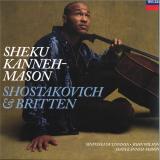
Sheku Kanneh-Mason, Sinfonia of London, John Wilson, Isata Kanneh-Mason - Shostakovich: Cello Concerto No. 2; Britten: Cello Sonata 2x12"

Sheku Kanneh-Mason’s Debütalbum ”Inspiration”, das 2018 die Charts stürmte, drehte sich um das 1. Cellokonzert von Schostakowitsch - jetzt hat er das 2. Cellokonzert während seiner von der Kritik gefeierten Tournee mit John Wilson und der Sinfonia of London aufgenommen. Das Werk erklingt neben der Schostakowitsch-Cellosonate und der Britten-Cellosonate, die er mit seiner Schwester und häufigen Duopartnerin Isata Kanneh-Mason eingespielt hat.

Der junge Brite gewann den Wettbewerb BBC Young Musician of the Year sowie den Royal Philharmonic Society Young Instrumentalist Duet Prize und erhielt im selben Jahr einen Vertrag bei Decca Records. Im Oktober 2018 wurde er mit dem Opus Klassik als Nachwuchskünstler des Jahres (Cello) ausgezeichnet. Einem breiten Publikum wurde er darüber hinaus bekannt, als er am 19. Mai 2018 bei der weltweit übertragenen Hochzeit von Prinz Harry und Meghan Markle in Windsor Castle spielte.

out of Stock

Order now and we will order the item for you at our supplier.

34,66

Last In: 7 months ago
Various - Early Works, Vol. 2: Music from the Archives

ATA Records is pleased to announce the release of Early Works 2: Funk, Soul & Afro Rarities From The Archive, a compilation of tracks recorded in the fledgling days of the label paired with some rediscovered treasures from more recent years. While the majority of the album is previously unreleased material several tracks have appeared on different formats.

This is a rare chance for listeners to experience the birth of the ATA's enduring concept and recording techniques from the comfort of their own home.

In 2020 label founder and musician Neil Innes decided to destroy the studio he had spent 14-years building, destroy it and rebuild it from the ground up.

Once the studio began to take shape again and Innes was finally able to take a breath he began rooting through the label's archives, pulling out reels that had been propping up tables, holding open doors and generally lurking in nooks and crannies for years.

His trip down memory uncovered a wealth of dusty musical treasures and also got him thinking about tracks from newer artists, nuggets to compliment the archive gold.

Along with the first airings of tracks by The Harmony Society, The Disarrays this 11track comp includes appearances by studio favourites: The Magnificent Tape Band, The Sorcerers, The Mandatory Eight, Ivan Von Engleberger's Asteroid and long time collaborator Chris Dawkins (recording under Earl Dawkins).Also on the comp is Joe Tatton's Bang Bang Boogaloo, previously only released on 7 inch and greatly desired by record diggers everywhere.

out of Stock

Order now and we will order the item for you at our supplier.

28,99

Last In: 3 years ago
Items per Page:
N/ABPM
Vinyl