quête:major notes

Genres
Tout
Ruth Brown - Rock & Roll LP

Rock & Roll, indeed. Ruth Brown’s sizzling full-length debut — also known by its eponymous title — symbolizes what was exciting, fresh, invigorating, and raw about the burgeoning style in its halcyon days. Originally released in 1957, and reissued here in audiophile quality for the first time in partnership with Atlantic Records’ 75th anniversary, the set remains a testament to one of the most pioneering and talented vocalists to ever command a stage.

Mastered on Mobile Fidelity Sound Lab's renowned mastering system in California, pressed at RTI, housed in a Stoughton jacket, and strictly limited to 2,000 numbered copies, Mobile Fidelity’s 180g mono LP of Rock & Roll plays with an immediacy, vibrancy, and fullness that showcase the reach, power, and emotionalism of Brown’s voice. The sound of her support musicians — brassy horns, swinging rhythm combos, echoing backing vocalists, rollicking pianists, jaunty guitarists — is made clear and vivid, helping the upbeat fare to jump, juke, and jive with newfound energy and exuberance. In a related manner, Brown’s slower, more understated material crackles with an intimacy and passion that let you know you're in the presence of a woman who has lived what she sings. The longtime Rock and Roll Hall of Fame member deserves nothing less.

In an era dominated by big-throated vocalists, few — if any — came grander than Brown. The singer, whose repeat million-selling ‘50s success with Atlantic Records led many to call the then-indie label “The House That Ruth Built,” charted two dozen R&B hits in the span of a decade for the fledgling imprint. Rightly coined “Miss Rhythm,” the extroverted Brown put Atlantic on the national map, became the best-selling female musician of the ‘50s, and established a precedent that would ultimately lead to Grammy and Tony Awards. Her early works have lost none of their fire or flair.

Akin to many full-length LPs of its era, Rock & Roll doubles as a collection. Its 14 tracks comprise some of the more famous sides Brown recorded for Atlantic, beginning in 1949 with the all-time-great rendition of the ballad “So Long,” and continuing through 1956. After the song caught the public’s ear, the Virginia native briefly became known for her smoldering style with lovelorn material and torch songs, approaching them (see “Oh What a Dream,” “Old Man River”) with a combination of pained sadness and hardened resilience that had no contemporary equal. Encouraged to pursue the style by Atlantic Records co-founder Ahmt Ertegun, her R&B-driven material soon made her a constant chart presence.

Demonstrating what fellow legend Bonnie Raitt deemed “sex with class and dignity,” Brown merges blues and jazz, swing and gospel in electrifying fashion. She dares you not to move, dance, and get on your feet. A majority of Rock & Roll explodes with uptempo runs and jaunty readings of hot-blooded R&B numbers. Sweaty and sultry, bawdy and bold, Brown eclipses the anthemic blare of the saxophones and joyful clatter of the 88s, singing with a slight catch in her voice and hurricane-gale force that threatens to blow the roof off whatever room her voice occupies.

Evidence abounds. Listen to her prod the band and encourage the band members to blow a fuse on a sizzling “Hello Little Boy,” complete with cries and wails; stretch her phrasing to the heavens on the swaying “Wild Wild Young Men,” laden with romp-and-stomp beats; plead and persuade on the snaking “5-10-15 Hours,” which flips the script on the age’s notions of dominance; use her raspy tones, high notes, and breath control to mesmerizing effect on the smash “Mama He Treats Your Daughter Mean,” recorded with a group led by Ray Charles; survey the scene and take charge on the steaming “As Long as I’m Moving”; and tap a classy albeit flirtatious vein on “Lucky Lips,” which dented the pop charts as her first crossover hit.

Throughout Rock & Roll, Brown knows the lyrical connotations and spirited architecture of the songs inside-out. Her assertive voice — never harsh, strident, or false — is the epitome of the passionate desires and sonic strains that turned into nascent rock ’n’ roll. Brown played a pivotal role in helping the style develop, the record a timeless reminder of a lasting legacy that will never be forgotten.

pré-commande15.03.2024

il devrait être publié sur 15.03.2024

67,19
Jascha Heifetz - The Lark LP

Jascha Heifetz

The Lark LP

12inchIMXLP6052
IMPEX Records
29.02.2024

All-Analogue Vinyl LP for the First Time in Almost 50 Years!
Mastered by Bernie Grundman from a 1-to-1 Flat Transfer of the Original Analogue Master Tapes!

Pressed on RTI's HQ-180 for the First Time Ever!

Deluxe "reversed" tip-on jacket that faithfully reproduces the original with highest-grade materials
Exclusive full-colour insert with new historical and production notes by Charles L. Granata and photos from the Sony Music Archives


This next all-analogue, HQ-180 gram LP is an impeccably performed and stunningly recorded late-period gem from The Titan of modern violinists. The Lark revisits works that helped define Heifetz in various points of his illustrious career and which highlight his crisp attacks, imaginative phrasings, and mellifluous sustained notes.

The repertoire is intriguing, combining two iconic pieces (Tomaso Antonio Vitali's Chaconne in g minor for Violin and Continuo, written in the Baroque period; and Gabriel Fauré's Violin Sonata No. 1 in A Major, Op. 13, written in the late-Romantic period) with Mario Castelnuovo-Tedesco's The Lark: Poem for Violin and Piano (a 20th-century modern tone poem). Although nearly two-hundred years separate their composition, these pieces complement each other beautifully: a testament to the discerning judgment of Heifetz and producer John (Jack) Pfeiffer, who helped create his albums.*

The LP was cut by Bernie Grundman from a straight 1-to-1 copy of the original session masters, meticulously created by Andreas Meyer at Swan Studios NYC. No digital processing of any kind was used. The original reverse-tip-on-style jacket and a brand new 4-page insert split the difference between the authentic, nostalgic feel of a mint original and a reissue's value proposition you've come to expect from Impex Records.

pré-commande29.02.2024

il devrait être publié sur 29.02.2024

52,90
OMNI - SOUVENIR LP

Omni

SOUVENIR LP

12inchSPLPX1593
Sub Pop
16.02.2024

The music of Atlanta trio Omni has always swung fast and hit hard. And Souvenir, their fourth album and second for Sub Pop, packs their biggest punch yet. Inactive during the majority of the pandemic-the longest downtime in their history-they approached this recording with lots of pent-up energy. Guitarist Frankie Broyles, singer/bassist Philip Frobos, and drummer Chris Yonker converted their creative fuel into sharp, driving songs that land immediately, sporting chopping riffs, staccato beats, and wiry melodies. Why does Souvenir sound so sharp? Because each track is a compact unit that stands on its own, reflecting the time and place in which it was created. That's why Omni called the album Souvenir: it's a collection of audio objects, a stash of musical miniatures. Think of it as a family photo album, a binder of rare playing cards, a shoebox holding precious gems. Take "Plastic Pyramid," the first song Omni wrote after coming out of lockdown. Filled with twists and turns, it's a journey unto itself, charged by clanging chords, spinning rhythm, and Frobos trading lines with Izzy Glaudini of Automatic, with whom Omni toured with last fall. (Glaudini sings on two other Souvenir tracks, the first guest vocalist the band has collaborated with). Or take opener "Exacto," a slicing web of intertwined guitar and bass. Its razor-fine notes and syncopated beats perfectly match pointillist Frobos lyrics such as "Exacto, de facto, concise, quite right"-a line that could well be an Omni mantra. The precision and clarity of Souvenir comes from some new Omni developments. For one, this is their first album with Yonker as their full-time drummer, and his forceful playing adds exclamation points to every pointed moment on Souvenir. In addition, the trio worked with Atlanta-based engineer Kristofer Sampson for the first time. Sampson pushed the band to a higher degree of power, with Frobos's vocals more upfront in his pulsing mix and the rest of the music leaping out of the speakers. You might notice that Frobos' singing is a bit more emotional and even nostalgic this time around. In crafting his vocals, he was inspired by the early college radio rock of formative favorites like REM, the Cure, and Big Audio Dynamite-the kind of bands whose melodies could have been top 40 hits in an alternative universe. The lyrics on Souvenir are also by turns funny, absurd, and even cryptic. A wry humor has always coursed through Omni's songs, and this time, it comes in shades of both dark and light. In "Granite Kiss," an "astronomical" love story concludes with the hope that "we can decay together," while in "PG," a romantic walk in the park includes a rose-colored mugging. Immediacy rushes throughout every moment of Souvenir, making it the band's most powerful album to date. Omni has truly crafted a musical keepsake-a set of songs that you'll want to keep close, an aural memento you'll cherish for the rest of time.

pré-commande16.02.2024

il devrait être publié sur 16.02.2024

23,49
Various - SAM Records Anthology – The Sound of New York City 1975 – 1983 LP 2x12"

This is the story of the one the great disco labels, a legendary label who were at the forefront of a genre during it fruition and creative peak. Sam Weiss started SAM Records in Long Island City, New York in 1976. Sam, and his brother Hy, were born in Romania before moving to the Bronx in New York City when they were young. Sam and his brother were no strangers to the music business having been in the industry since the mid-50s running labels Old Town and Parody Records. • During the mid-1970s Disco took New York by storm and emerged into a revolutionary musical force that re-shaped the face of the City. It was however a genre major labels largely ignored initially. It was the smaller, independent labels that led the way in disco’s early years. Founded in 1974, Salsoul was the first. Sam’s new label SAM Records arrived a year later, followed by West End and Prelude in 1976: four labels from which umpteen disco classics emerged. • This compilation compiles all of the classic material that SAM release during the years 1975 and 1983. Offering up a treasure trove of disco essential this compilation features tracks from Gary’s Gang, John Davis & The Monster Orchestra, Komiko, Rhyze, Convertion, Vicky “D”, Greg Henderson alongside deeper cuts by Lucy Hawkins, K.I.D and more. • The audio used here has been sourced from the SAM archives and in many cases the mixes are appearing in their truest 12-inch form. The set is complete with extensive liner notes by The Guardian’s chief music critic and disco authority Alexis Petridis. • SAM Records has forever left its footprint on the Disco and music history, and this compilation is an essential addition to anyone’s collection.

pas en stock

Commandez maintenant et nous commanderons l'article pour vous chez notre fournisseur.

32,98

Last In: 16 months ago
Mal Waldron - Reminicent Suite

Mal Waldron

Reminicent Suite

12inchBBE682ALP
BBE Music
26.01.2024

As the BBE Music J Jazz Masterclass Series hits its 19th title, the milestone is suitably matched by a collaboration between two giants of jazz brought together to deliver an exceptional album, working with a band of the very best Japanese jazz musicians. ‘Reminicent Suite’ by American pianist Mal Waldron and Japanese trumpeter Terumasa Hino was originally released in 1973 on the famed Victor label and was one of several Japan-only albums recorded and released by Waldron over a thirty-year period, most of which have never been available outside Japan. ‘Reminicent Suite’ comprises two extended tracks, both taking up a side each. The title track on Side A is composed by Waldron, and is a dark, brooding heavy groove typical of his early 70s sound. ‘Black Forest’ on side B is written by Hino and is a vivid and energetic piece, layered and textured with dense percussion and Hino’s signature trumpet tone. Mal Waldron started out in the early 1950s working extensively on the Prestige label with notable figures such as Gene Ammons, Jackie McLean and Charles Mingus. Most famously, he worked with Billie Holiday before leaving the States in the mid-60s and relocating to Europe where he established himself as a major figure working across many countries including France, Italy, and Germany, where he made his home in Munich. In 1969, Waldron recorded the first releases for two major European jazz labels, ECM and Enja, before visiting Japan on tour for the first time in 1970. Waldron instantly fell in love with Japan and, over the next three decades, extensively toured and recorded there for numerous labels. Terumasa Hino is one of the towering figures of post-war modern jazz in Japan. Coming to prominence via the Hideto Shiraki and Sadao Watanabe bands in the mid-60s, Hino soon emerged as one of the prime movers in new jazz generation that changed the direction of jazz in Japan. He explored a more open, freer, and improvised sound, mixing psychedelic and rock elements with freeform and post-bop jazz. Hino recorded for many of the leading jazz labels of the era including Columbia, Three Blind Mice, and East Wind and would go on to relocate to the US in the mid-70s, immersing himself with the leading fusion players of the New York scene including Larry Corryell, Mtume, Al Foster, Dave Liebman and many more. In the early 80s, Hino’s jazz funk tracks were dancefloor smashes on the UK jazz dance scene. Joining Waldron and Hino on ‘Reminicient Suite’ is a band made up of the very best Japanese jazzman of their day: Takeo Uematsu on sax, Terumasa’s brother, Motohiko Hino, on drums, and the legendary bass master, Isao Suzuki. Together, they deliver one of the very best albums of the era, a richly articulated and dynamic session that exemplifies the very best that the Japanese jazz scene was doing in the early 1970s. ‘Reminicent Suite’ is pressed on 200g vinyl presented in a gatefold sleeve plus obi strip, with new photos by Tadayuki Naito; translated original sleeve notes; and a 7500-word essay including interview with Terumasa Hino from Tony Higgins, co-curator of the J Jazz Masterclass Series. This is the first time this album has been available outside of Japan

pré-commande26.01.2024

il devrait être publié sur 26.01.2024

38,61
THE SPACE LADY - THE SPACE LADY'S GREATEST HITS LP

'The Space Lady's Greatest Hits' features the best of these recordings - mostly covers of 60s pop and psych alongside interstellar originals and features archival photographs and liner notes from The Space Lady herself. "Greatest Hits" contains The Space Lady's personal favourites; her haunting take on The Electric Prunes' "I Had Too Much To Dream (Last Night)," a frantic "Ballroom Blitz", and an unbelievably perfect version of "Major Tom" - amidst other reconstructed pop music.

pré-commande19.01.2024

il devrait être publié sur 19.01.2024

23,49
LEE HAZLEWOOD - 13 LP  2x12"

Lee Hazlewood

13 LP 2x12"

2x12inchLITADLX142
Light In The Attic
19.01.2024

- Newly Expanded Deluxe Double LP Edition! - Includes the original 1972 album, plus all of Larry Mark's acoustic demos and tracks from his unreleased 1970 LHI LP for the first time on vinyl - Previously unreleased session outtake of "Cold Hard Times" plus demos of obscure Hazlewood compositions "Drums," "The - Start," "Susie," "Miracle on 19th Street," and "Peppermint Morning" - 30 total tracks - Remastered by GRAMMYr-nominated mastering engineer John Baldwin - Liner notes by GRAMMYr-nominated reissue producer Hunter Lea including interviews with Larry Marks, Joe Cannon, Torbjörn Axelman & Suzi Jane Hokom - Lee Hazlewood comic strip, the story of 13 told through original artwork by Jess Rotter - Double LP housed in a gatefold jacket // DESCRIPTION "Pimps_ whores_ pushers_ dopers_ gangsters_ and bottom of the human chain shit-heels. Now you're probably thinking I'm writing about major record companies and their unscrupulous executives_ and lawyers. You could be right_ but this time_ YOU'RE WRONG! I'm describing the characters in my album `13' _Some I knew_ some I invented _ some are true_ some are false_ some I liked_ some I didn't. But they all had a story to tell and I told it_none of `em seem to care_ and I don't either_ have fun_" - Lee Hazlewood "He (Lee) took my voice off the album and put his voice on the album. Now don't forget these were in my keys, it was my charts, it was my everything. Lee Hazlewood was not even remotely going to be considered as an artist for this album and that's the way he wanted it." - Larry Marks The album 13 was never supposed to be a Lee Hazlewood album. It is perhaps the strangest record in one of the most varied discographies in music. The Bombastic brass heavy funk, deep blues and soul paired with Hazlewood's subterranean baritone would be best enjoyed with a tall Chivas in an off-strip seedy Vegas lounge. By 1972 Lee Hazlewood had settled in his new homeland of Sweden. His days were spent carousing, making movies with Torbjörn Axelman and releasing albums. To keep up his prolific recorded output, Lee began to mine the recently defunct LHI Records archives for material. One such gem, was an unreleased album by Larry Marks (LHI producer, artist and the voice of the first Scooby-Doo theme). Larry's concept was to take Hazlewood's strongest compositions and arrange them in a soul vibe. An album was completed, but with no distribution in America and no funding, Lee had no vehicle to release Larry's record. The tapes were taken to Sweden, Larry's voice was wiped and Hazlewood's was dubbed_ 13 was born.

pré-commande19.01.2024

il devrait être publié sur 19.01.2024

60,46
VARIOUS - Anime & Manga Synth Pop Soundtracks 1984-1990

Trailblazing instrumental synth pop experiments created to soundtrack Japan’s booming 1980s cartoon and comic industries. The brightly futuristic instrumentals on this collection reflect the mindset of composers and musicians who believed in a technological future where everything was possible.

In the late 1980s Japan experienced a brief but heady period where societal changes combined with new-found wealth to open up a world of possibilities. A huge influx of cash - artificially created by slashed interest rates after an agreement with the US to weaken the dollar relative to the yen - resulted in the inflation of real estate and stock market at a rapid pace. While the economic bubble it created was unprecedented and impossible to sustain, for a while money was in plentiful supply.

The musical genre City Pop reflected the aspirations of the country’s booming leisure class. Video games flourished with Nintendo's 1983 launch of their Family Computer (or FamiCom). Studio Ghibli was founded 1985 to later became one of the most famous and respected animation studios in the world, and Anime and Manga were established as major forms of entertainment for all generations of the Japanese public.

Music was no mere footnote to the anime and manga boom: the two forms of media often went hand in hand, and not simply through the presence of background melodies. With generous budgets available, even two-dimensional static manga comics could be released with an accompanying soundtrack of original music known as an ‘Image Album’.

Composer and arranger Kazuhiko Izu was one such beneficiary of this open budget approach. Written to accompany artist Katsuhiro Otomo’s manga comic Domu, the composer and arranger took advantage of the world-leading (and wallet-busting) Japanese synthesiser technology available at King Records’ fully equipped studio. Featured on this compilation, A3: Act 2 Scene 26 reflected the story’s sci fi themes with a blazingly futuristic yet warmly funky slice of synth pop that presents a joyful celebration of synthesisers and their seemingly endless possibilities.

Kan Ogasawara was another composer who made early mastery of the litany of synthesisers, drum machines and sequencers that had become available. Two tracks written to accompany the 1985 period manga Yume No Ishibumi are featured here; Honowo’s experimental electronic textures add spice to a jaunty electro pop melody that recalls the Rah band’s 1983 hit Messages From Stars; the jazz-tinged Utage rounds out Ogasawara’s shimmering synth textures with beautifully crafted backing from legendary musicians Yuji Toriyama (guitar), Pecker (percussion) and Jun Fukamachi (piano).

Before becoming one of the pioneers of Japanese Kankyo Ongaku (Ambient Music), Takashi Kokubo worked on the proto techno track Kiki (Jungle At Night). It was put together for the 1984 anime film Shonen Keniya (Kenya Boy) using some of the most expensive music technologies available at the time. This Africa-Inspired dance track offers a contemporary parallel to the early techno music that young Detroit based producers were then creating using cheap Japanese Roland drum machines and synthesisers.

This is the first compilation of Japanese anime and manga soundtracks curated by Kay Suzuki and Rintaro Sekizuka from Vinyl Delivery Service (a Tokyo based online record shop which also operates in East London's renowned wine and hifi shop Idle Moments). With a cover by artist Kazuki Takakura and two pages of liner notes, this vinyl only compilation of music never before released outside of Japan, captures a vital aural snapshot of an era whose forward-thinking sounds went hand in hand with cutting edge technology.

pré-commande

Cet article n'a pas encore été publié. Vous pouvez pré-commander le produit maintenant.

26,85
MARCOS VALLE & AZYMUTH - FLY CRUZEIRO

2023 REPRESS - Rare Brazilian Bossa Nova - Latin album - Comes with insert/liner notes & packaged in a gatefold jacket - 180g TANGERINE COLORED vinyl limited to 500 copies w/obi strip // Marcos Valle needs little introduction, born in Rio de Janeiro in 1943, Mr. Valle is an award-winning/chart-hitting Brazilian singer, songwriter and record producer. He was raised on a staple diet of classical, Brazilian popular music and North American jazz. Marcos Valle grew up to be one of the most influential & innovating musicians of the Bossa nova period and is regarded as one of the greatest Brazilian artists of all time. He has recorded albums for North American labels such as EMI, Warner Brothers & Verve_cementing his career with a series of tight musical workouts moving seamlessly between funk, samba, soundtracks, soul, jazz, dance and rock. Valle contributed to some of the most important recordings by artists including Sarah Vaughan, Frank Sinatra, Sergio Mendes, Leon Ware, Chicago and Airto Moreira. Mr. Valle's work has been sampled/remixed by major artists from the likes of Jay-Z, Kanye West & Madlib.One of Valle's favorite bands to frequently collaborate with was no doubt Azymuth, who took their name from a Valle song!Azymuth (Bertrami-Malheiros-Conti) started their individual careers in the 1960s in the emergent Bossa nova and jazz scene of Rio, living in the same bohemian block in Copacabana and playing in small bars as session musicians under various other names.It was the early 1970s when Azymuth really began to cause a stir and Marcos Valle invited them to record on a soundtrack LP he was doing. The unique Azymuth sound was now born: a mix of electronic music, samba, funk and jazz that they defined as MPB-jazz (MPB stands for Musica Popular Brasileira). Over the decades Azymuth released extremely successful albums (selling millions of copies) on labels such as Polydor, Som Livre and Atlantic. Hitting the charts on multiple occasions, Azymuth played at the Monterrey and Montreux jazz festivals and at venues around the globe.The band has worked with legendary musicians from Joe Henderson to Stevie Wonder and they've also been remixed/sampled by artists such as Flying Lotus, will.i.am, MF DOOM and Peanut Butter Wolf. Their unique brand of fusion-music has influenced three generations of musicians, DJs, and producers. Music journalists across the spectrum from mainstream to underground, celebrated these raw yet wildly imaginative and musically accomplished tracks that were a revelation of jazz, funk and disco, with some even stating that the roots of EDM were on display in their early recordings.On the album we are presenting you (Brazil by Music - Fly Cruzeiro) the listener is getting yet another fantastic early Valle/Azymuth collaboration. Released in 1972, this rare album was pressed and gifted to customers of the `Cruzeiro' airline company. This promotional record came as no surprise because the connection between Cruzeiro Airlines and Valle was very tight (Valle's father was the manager and his brother was a co-pilot there).Next to the Valle/Azymuth material present, other songs include some of the all-time best Brazilian standards originally written by renowned artists such as Jorge Ben & Antonio Carlos Jobim. Take a flight with us through this fantastic album and into some of the best Jazz, Funk & Bossa Nova the Brazilian musical landscape has to offer.Tidal Waves Music now proudly presents the first ever vinyl reissue of `Fly Cruzeiro' since its release in 1972 (only 500 copies were pressed upon its original release in 1972).

pré-commande01.12.2023

il devrait être publié sur 01.12.2023

40,13
Ella Fitzgerald - North Sea Jazz Concert Series-1979-

BERTUS DISTRIBUTION INTRODUCES NORTH SEA JAZZ CONCERT SERIES

Bertus Distribution, in collaboration with NTR, AVROTROS and MOJO, presents a new vinyl series consisting of live recordings of legendary artists through the decades made at the renowned North Sea Jazz Festival.

The North Sea Jazz Concert Series will include officially licensed releases that will be released as standard on 180-gram white vinyl in a sleeve of heavy paper printed on reversed board. The records will be captured in mainly black-and-white artwork by Hans Pol in his signature style of the festival with inspiration from the covers of classic older jazz releases from the Blue Note label, for example. The liner notes are written by journalist and jazz expert Jeroen de Valk.

For the first release in this series, the honour is given to one of the most famous jazz singers ever, Ella Fitzgerald. On Friday 13 July 1979, she gave a raucous and peerless performance at the festival then still held in The Hague. The "First Lady Of Song" worked her way with verve through standards like 'There Will Never Be Another You', 'Satin Doll', ''Round Midnight' and 'Mr Paganini'. Her accompanists that night were Paul Smith on piano, Keter Betts on bass and Mickey Roker on drums; a trio line-up with the power of a big band.

Future releases will include NSJ recordings by such notables as Dizzy Gillespie, Buddy Rich, Ray Charles, Dexter Gordon and Jan Akkerman. It will be a long-running series with the aim of releasing the most extraordinary NSJ performances on vinyl.

The first edition of the North Sea Jazz Festival took place in 1976 at The Hague’s Nederlands Congresgebouw with some 9,000 visitors. In the first year, jazz legends such as Sarah Vaughan, Count Basie, Dizzy Gillespie and Stan Getz performed alongside a host of artists from the Dutch avant-garde.

The festival, officially NN North Sea Jazz since 2018, has now developed into a major international event that is also known beyond the Dutch borders as an event where jazz from the past, present and future merges with other genres such as blues, soul, funk, hiphop, pop and more. Over the years, it has grown to fifteen venues, around thirteen hundred musicians and an annual audience of between eight-five and ninety thousand. Since 2006, the festival has been held in new wider venue, namely Rotterdam Ahoy.

pré-commande01.12.2023

il devrait être publié sur 01.12.2023

28,78
Various - The Complete Obscure Records Collection 10x12"
 
57

ONLY AVAILABLE ON PREORDER!!

The first-ever LP box set gathering the entire 10 albums collection of Obscure Records produced by Brian Eno’s.
Curated by Gavin Bryars

Originally issued between 1975 and 1978, nearly 50 years on the output of Obscure remains radically forward-thinking - offering glimpses of a future yet to be fully seen - and amounts to one of the most important, influential, and creatively accomplished album series ever conceived.
Co-curated by Eno and the composers Gavin Bryars and Michael Nyman - issuing the recording debuts of Bryars, Nyman, John Adams, Christopher Hobbs, David Toop, Max Eastley, Jan Steele, Simon Jeffes / The Penguin Café Orchestra, and Harold Budd, in addition to important works by John Cage, Tom Phillips, and John White - Obscure’s collective output is a groundbreaking landmark in the histories of Minimalism, modern composition, and Experimental music, and laid much of the groundwork for the soon to emerge movement of Ambient music.

Illuminating the remarkable, and largely otherwise undocumented, creative ferment within and between the British and American scenes of experimental music during the mid to late 1970s, this collection - made in full collaboration with all of the composers or their estates - contains the entire 10 album output of Obscure, the majority of which have been out of print for years, with a number having never received a CD reissue.

Offering each of Obscure’s albums, completely remastered and housed in faithful replicas of their original covers and liner notes, as well as a 80-page book (LP dimension) for LP-BOX SET, filled with rare photos, archival material and texts by - among others - Gavin Bryars, Bradford Bailey, David Toop, Max Eastley, Richard Bernas, and Tom Recchion, this historic collection marks the first time this seminal series has received a complete LP repress.

pré-commande24.11.2023

il devrait être publié sur 24.11.2023

317,23
The Scorpions & Saif Abu Bakr - Jazz, Jazz, Jazz LP

'I heard about Seif Abu Bakr and The Scorpions maybe 3-4 years ago. Their album 'Jazz, Jazz Jazz' ended up on my radar because of an eBay auction with the bids eventually rising daily up to a staggering 1000$. The music is a unique combination of incredible horn arrangements powerfully performed, a vigorous drummer contributing a funky backbone and Seif's vocals uniting those elements. The results range from instrumental tracks awaking memories of 1970s crime thriller soundtracks to more Sudanese-rooted tracks, a lot of them modernized versions traditional rhythms of the diverse regions of Sudan and even an excursion into Colgolese Soukouss.
I went for my second trip to Sudan in December 2018 and after doing some research on the first trip my local colleagues Larissa and Yassir had managed to reach Amir, The Scorpions band leader and he was happy to meet. We got together with him in a Cafe right at the Nile in Omdurman. It was a happy occasion for everyone. He told us stories about him meeting Jimmy Cliff and Lewis Armstrong when they visited Sudan and how he and his band mates from The Scorpions played extensively in Kuwait, both in club residencies as well as for television. Amir brought tons of incredible photos illustrating not only the bands history but the vivid cultural live in the many music clubs in Khartoum of the 1970s. During this decade up until 1983 the capital was home to a huge number of clubs, bards and concert halls. This scene started to perish after president Nimeiry's turn away from his socialist policies, that he was widely associated with in the first decade of his rule, towards the implementation of Sharia law in 1983. During the first decade of his rule he had actively supported various artists of the Jazz scene, taking some of them on trips throughout Africa. The 1989 coup of Bashir and his generals then caused the final blow to a once thriving scene. Both of these political events within 6 years lead to significant drawbacks for the Sudanese jazz scene resulting into hardly no gig opportunities left and parties and concerts being critically observed. A number of musicians faced prosecution, most of the time for their political views; some left Sudan for good. Music never completely vanished from public life and even the regime kept selected artists close, but for a majority of those bands affiliated to the jazz scene life and making ends became a lot harder. The Scorpions dissolved as a group around the same time.
The re-release was produced with a clean copy of the vinyl version as a source. The original reel tape of the album stayed with Saif Abu Bakr along with another reel with other recordings that were never released. Unfortunately it was lost when Saif Abu Bakr had to flee to Kuwait temporarily during the second gulf war when Iraq raided Kuwait. Vinyl version comes with extensive booklets with photos, interviews, liner notes. The vinyl version also has a DLL code.

pas en stock

Commandez maintenant et nous commanderons l'article pour vous chez notre fournisseur.

20,04

Last In: 12 months ago
Cassandra Miller - Traveller Song / Thanksong

Black Truffle is pleased to announce its first release from celebrated London-based Canadian composer Cassandra Miller. Though her body of mature work stretches back almost twenty years, many listeners were introduced to Miller through the success of her astonishing 2015 Duet for Cello and Orchestra, which sets an imperturbable two-note cello part against a series of increasingly dense orchestrations of an Italian folk melody; in 2019, it was selected by The Guardian as one of the ‘best classical music works of the 21st century’. Traveller Song / Thanksong, the first release of her music on vinyl, presents a pair of compositions for voice and ensemble that exemplify Miller’s gently absurd, strikingly beautiful, and utterly unique work.

Like many of Miller’s compositions, these pieces originate in existing music. Traveller Song (2016/2018) begins from a 1950s song of an anonymous Sicilian cart driver recorded by Alan Lomax and Diego Carpitella, which Miller recorded herself singing along to, going on to then record herself singing to her own layered voices. Miller’s untutored voice is an unsteady, wavering wail that has, in her words, ‘more in common with a quasi-shamanistic keening than anything Sicilian’. Heard sometimes alone, sometimes layered, her pre-recorded voice is accompanied by a chamber sextet drawn from London’s Plus-Minus Ensemble. In the first section, Miller’s exposed warble is set to a spare piano accompaniment, somehow both faintly preposterous and magisterial. Following the voice note for note, the piano part often makes use of almost mechanical sequences of parallel chords, reminiscent both of Satie’s Rosicrucian period and the abrupt harmonic movements of a chord organ. The orchestration then opens up to guitar, clarinet, and sliding strings, a delicate environment for Miller’s voice, which, especially when it begins to be layered, generates a powerful sense of intimacy. In its concluding minutes, the folk roots of the original melody return in the form of a glorious full ensemble setting dominated by accordion, clarinet, and strummed guitar. Thanksong begins from recordings of Miller singing along to the third movement of Beethoven’s late quartet in A minor (Op. 132), the ‘holy song of thanks’ the composer wrote to express his gratitude for (temporarily) recovering from illness. Recording herself singing along repeatedly to each of the individual parts of the quartet, Miller created an aural score where each member of the string quartet listens to their own part on headphones, playing by ear. Performed on this recording by Montreal's Quatuor Bozzini, with whom Miller has a decades-long relationship, they are joined by the British soprano Juliet Fraser, who sings material from the Beethoven quartet ‘as slowly and quietly as possible’. The atmosphere of the opening of Beethoven’s Dankgesang, of hushed reawakening and thoughtful reflection, is sustained throughout the fourteen minutes of Miller’s piece, building at points almost to sentimentality before the five individual parts again fall back into a gentle burble of unsynchronised melodic gestures. Like Traveller Song, here the use of the voice is a long way from the mannered performance of much contemporary music, reaching for a human and bodily presence more connected to the reality of the everyday, albeit suffused with wonder. Presented in a stylish sleeve adorned with photography by Lasse Marhaug and liner notes by Cassandra Miller, this is a key release from a major contemporary composer whose work challenges and dazzles in equal measure. .

pas en stock

Commandez maintenant et nous commanderons l'article pour vous chez notre fournisseur.

20,97

Last In: 2 years ago
A.R. Kane - A.R. Kive LP 4x12"

A.r. Kane

A.R. Kive LP 4x12"

4x12inchRGIRL133
ROCKET GIRL
08.09.2023

A.R. Kive collates the three most astonishing works from that most miraculous of duos - A.R. Kane - comprising the ‘Up Home’ EP from 1988 that signified the band’s dawning realisation of their own powers and possibilities, their legendary debut LP ‘sixty nine’ (1988) and its kaleidoscopic, prophetic double-LP follow up ‘i’ (1989).

In founder-member Rudy Tambala’s new remastering, the music on these pivotal transmissions from the birth of dream pop, have been reinvigorated and re-infused with a new power, a new depth and intimacy, a new height and immensity. Vivid, timeless and yet always timely whenever they’re recalled, these records still force any listener to realise that despite the habits of retrospective myth-making and the
safe neutering effects of ‘genre’, thirty years have in no way dimmed how resistant and dissident to critical habits of categorisation A.R. Kane always were. Never quite ‘avant-pop’ or ‘shoegaze’ or ‘post-rock’ or any of those sobriquets designed to file and categorise, A.R. Kive is a reminder that those genres had to be coined, had to be invented precisely to contain the astonishing sound of A.R. Kane, because
previous formulations couldn’t come close to their sui generis sound and suggestiveness. This is music that pointed towards futures which a whole generation of artists and sonic explorers would map out. Now beautifully repackaged, remastered and fleshed out with extensive sleeve notes and accompanying materials, ‘A.R. Kive’ reveals that 35 years on it’s still a struggle to defuse the revolutionary and inspirational possibility of A.R. Kane’s music.

A.R. Kane were formed in 1986 by Rudy Tambala and Alex Ayuli, two second-generation immigrants who grew up together in Stratford, East London. From the off the pair were outsiders in the culturally mixed (cockney/Irish/West Indian/Asian) milieu of the East End, with Alex and Rudy’s folks first generation immigrants from Nigeria and Malawi, respectively. The two of them quickly developed and fostered an innate and near-telepathic mutual understanding forged in musical, literary and artistic exploration. Like a lot of second-generation immigrants, they were ferocious autodidacts in all kinds of areas, especially around music and literature. Diving deep into the music of afro-futurist luminaries such as Sun Ra, Miles Davis, Lee Perry and
Hendrix, as well as devouring the explorations of lysergic noise and feedback from contemporaries like Sonic Youth and Butthole Surfers, they also thoroughly immersed themselves in the alternate literary realities of sci-fi and ancient history (the fascination with the arcane that gave the band their name), all to feed their voracious cultural thirsts and intellectual curiosity.

It was seeing the Cocteau Twins performing on Channel 4 show the Tube that spurred A.R. Kane into being - “They had no drummer. They used tapes and technology and Liz Fraser looked completely otherworldly with those big eyes. And the noise coming out of Robin’s guitar! That was the ‘Fuck! We could do that! We could express ourselves like that!’ moment”, recalls Tambala - and through a mix of
confidence, chutzpah, ad hoc almost-mythical live shows and sheer innocent will the duo debuted with the astonishing ‘When You’re Sad’ single for One Little Indian in 1986. Immediately dubbed a ‘black Jesus & Mary Chain’ by a press unsure of WHERE to put a black band clearly immersed in feedback and noise, what was immediately apparent for listeners was just how much more was going on here - a
tapping of dub’s stealth and guile, a resonant umbilicus back to fusion and jazz, the music less a conjuration of past highs than a re-summoning of lost spirits.
The run of singles and EPs that followed picked up increasingly rapt reviews in the press, but it was the ‘Up Home EP’ released in 1988 on their new home, Rough Trade that really suggested something immense was about to break. Simon Reynolds noted the EP was: Their most concentrated slab of iridescent awesomeness and a true pinnacle of an era that abounded with astounding landmarks of guitar-reinvention, A.R. Kane at their most elixir-like.

If anything, the remastered ‘Up Home’ that forms the first part of ‘A.R. Kive’ is even more dazzling, even more startling than it was when it first emerged, and listening now you again wonder not just about how many bands christened ‘shoegaze’ tried to emulate it, but how all of them fell so far short of its lambent, pellucid wonder. This remains intrinsically experimental music but with none of the frowning orthodoxy those words imply. A.R. Kane, thanks to that second generation auto-didacticism were always supremely aware about the interstices of music and magic, but at the same time gloriously free in the way they explored that connection within their own sound, fascinated always with the creation of ‘perfect mistakes’ and the possibilities inherent in informed play.

‘sixty nine’ the group’s debut LP that emerged in 1988 had
critics and listeners struggling to fit language around A.R. Kane’s sound. As a title it was telling - the year of ‘Bitches Brew’, the year of ‘In A Silent Way’, the erotic möbius between two lovers - and as originally coined by the band themselves, ‘dream pop’ (before it became a free-floating signifier of vague import) was entirely apposite for the music A.R. Kane were making. Crafted in a dark small basement studio in which Tambala recalls the duo had “complete freedom - We wanted to go as far out as we could, and in doing so we discovered the point where it stops being music”. There was an irresistibly dreamy, somnambulant, sensual and almost surreal flow to ‘sixty nine’s sound, but also real darkness/dankness, the ruptures of the primordial and the reverberations of the subconscious, within the grooves of remarkable songs like ‘Dizzy’ and ‘Crazy Blue’. Alex’s plangent vocals floated and surged amidst exquisite peals of refracted feedback but crucially there was BASS here, lugubrious and funky and full of dread, sonic pleasure and sonic disturbance crushed together to make music with a center so deep it felt subcutaneous, music constructed from both the accidental and the deliberate, generous enough to dance with both serendipity and chaos. ‘sixty nine’ remains - especially in this remastered iteration - ravishing, revolutionary.

The final part of this ‘A.R. Kive’ contains 1989’s astonishing double-LP ‘i’ which followed up on ‘sixty nine’s promise and saw the duo fully unleash their experimental pop sensibilities over 26 tracks, plunging the A.R. Kane sound into a dazzlingly kaleidoscopic vision of pop experiment and play. Suffused with new digital technologies and combining searingly sweet and danceable pop with perhaps the duo’s strangest and boundary-pushing compositions, the album did exactly what a great double-set should do - indulge the artists sprawling pursuit of their own imaginations but always with a concision and an ear for those moments where pop both transcends and toys with the listeners expectations. Jason Ankeny has noted that “In retrospect, ‘i’ now seems like a crystal ball prophesying virtually every major musical development of the 1990s; from the shimmering techno of ‘A Love from Outer Space’ to the liquid dub of ‘What’s All This Then?’, from the alien drone-pop of ‘Conundrum’ to the sinister shoegazer miasma of ‘Supervixens’ — it’s all here, an underground road map for countless bands to follow.” Perhaps the most overwhelmingly all-encompassing transmission from A.R. Kane, ‘i’ bookended a three year period in which the duo had made some of the most prophetic and revelatory music of the entire decade.

After ‘i’ the duo’s output became more sporadic with Tambala and Ayuli moving in different directions both geographically and musically, with only 1994’s ‘New Clear Child’ a crystalline re-fraction of future and past echoes of jazz, folk and soul, before the duo went their separate ways. Since then, A.R. Kane’s music has endured, not thanks to the usual sepia’d false memories that seem to maintain interest in so much of the musical past, but because those who hear A.R. Kane music and are changed irrevocably, have to share that universe which A.R. Kane opened up, with anyone else who will listen. Far more than other lauded documents of the late 80s it still sounds astonishingly fresh, astonishingly livid and vivid and necessary and NOW.

pré-commande08.09.2023

il devrait être publié sur 08.09.2023

105,84
Laura Nyro - TREES OF THE AGES LP

Laura Nyro Live In Concert in 1994! Previously available only in Japan Includes live versions of the classics “And When I Die,” “Wedding Bell Blues,” “Stoned Soul Picnic,” and more Member of both the Songwriters and Rock & Roll Halls of Fame A member of both the Songwriters and Rock & Roll Halls of Fame, Laura Nyro not only wrote songs that became hits for acts including The 5th Dimension, Blood, Sweat & Tears, Three Dog Night, Barbra Streisand, and many more, but has been cited as a major influence by Kate Bush, Elton John, Elvis Costello, Cyndi Lauper, Todd Rundgren, Broadway composer Stephen Schwartz Godspell, Wicked, and countless others. She recorded 10 studio albums (one released posthumously), but a live performance from Nyro was always an event. Originally issued only in Japan as Live In Japan in 2003, these 16 tracks recorded at Kintetsu Hall, plus 5 recorded at On Air West return as Trees Of The Ages: Laura Nyro Live In Japan. From Nyro-penned hits including “And When I Die,” “Wedding Bell Blues,” and “Save The Country,” to covers of Bacharach/David, Smokey Robinson, and Phil Spector classics, Trees Of The Ages is an essential document of Laura’s February 1994 historic visit to Japan. With Laura on piano and vocals, with harmonies by Diane Wilson, Dian Sorrell, Diane Garisto, the performances are sublime. Newly remastered by Grammy®-winner Michael Graves, and produced for release by Grammy®-winner Cheryl Pawelski and George Gilbert with the approval of The Laura Nyro Trust, the packaging contains updated artwork and new liner notes from author and musician John Kruth. Looking and sounding incredible, this essential addition to Nyro’s discography is available worldwide for the first time. Trees Of The Ages: Laura Nyro Live In Japan cements the legend of the incomparable Laura Nyro.

pré-commande25.08.2023

il devrait être publié sur 25.08.2023

38,61
Yu Su - I Want An Earth

Pinchy & friends is delighted to present the latest offering from Kaifeng-born and raised, Vancouver-based musician Yu Su.

In her first major release of original music since 2021’s acclaimed “Yellow River Blue” LP, Yu Su says elements for the EP began to form during time spent in the deserts of Ojai, California and the fertile coastal areas around her home in British Columbia. Of the new release, Yu Su says the ideas are thanks to “the objects around (colors, reflections of light, wood burning in the fireplace, and material rhyme with the sounds in the room) the desert and valley plants, the ground where citrus grows, and the flood a rainstorm created.” She notes that “the golden earth is the changing point of the matter, earth centers, stabilizes, and conserves, nurtures, and seeks to draw all things together with itself.”

Likewise, the four varied pieces of the EP match four very different landscapes: Earth-of-water (Wet/Cold Earth) Earth-of-Fire (Arid/Hot Earth) Earth-of-Metal (Dry/Hard Earth) Earth-of-Wood (Loose-Fertile/Warm Earth).

Additional guitar and bass were provided by Scott Johnson Gailey and Aiden Ayers - who also play in Yu Su’s live band.

The vinyl release comes on 180g vinyl in a full-colour sleeve by Seoul based Lobde Kim, with OBI STRIP.

pas en stock

Commandez maintenant et nous commanderons l'article pour vous chez notre fournisseur.

15,55

Last In: 10 months ago
Howard Jones - Sings What Is Love LP

Howard Jones was an icon of the synth-pop era of the early 80s, with a few major hits which have since been etched into the memories of anyone in reach of a radio well into the 90s. While his major breakthrough came with the 1984 album Human's Lib, there was also a curious compilation put together in Japan entitled Howard Jones Sings What Is Love? which pulled together some of his early singles, including extended 12" mixes, but the release never made it past promo stage. As such, it's been a collectors item for a long time, and now Cherry Red have given it a first official release with attention to detail in the artwork and English translation of the original Japanese sleeve notes.

pré-commande30.06.2023

il devrait être publié sur 30.06.2023

30,21
Albert Ayler - In Greenwich Village

In the mid-'60s, Albert Ayler found himself at the center of major transformations within jazz. On his albums for ESP-Disk', his delivery was radically aggressive and his tone blistering – aiming for something beyond the New Thing. His music would be further energized when (at the behest of John Coltrane) Bob Thiele signed him to Impulse! As Ayler told The Plain Dealer at the time, "It's not about notes anymore. It's a sound – a feeling. The approach we're taking will discontinue the use of the word 'jazz.'"

In Greenwich Village, Ayler's first LP on Impulse!, perfectly captures the Cleveland-born saxophonist's radiant intensity. Sourced from a pair of live engagements – February '67 at the Village Theatre on New York's Lower East Side and December '66 at the Village Vanguard – these recordings show an improved clarity in production and performance.

Both sets feature two basses (including Alan Silva and Henry Grimes) which allowed the ensemble to go in different harmonic directions while maintaining an organic unity. Of particular interest are "For John Coltrane," a tribute to Ayler's mentor who would pass later that year, and "Truth Is Marching In" where trumpeter Donald Ayler joins his brother to celebrate and ultimately deconstruct several jazz traditions to stunning effect.

Vibrant in sound and vision, Albert Ayler's In Greenwich Village is a landmark statement in free jazz and a career high-point for this truly original artist. Superior Viaduct is honored to present this classic album on vinyl for the first time domestically in 30 years.

pré-commande30.06.2023

il devrait être publié sur 30.06.2023

24,92
MEV - Symphony No. 107 - The Bard
 
2

Black Truffle is pleased to announce Symphony No. 107 –The Bard, a previously unheard archival recording of the legendary improvising ensemble MEV (Musica Elettronica Viva), captured in concert at Bard College, New York in 2012. Formed by a group of American expat composers in Rome in 1966, the MEV ensemble played an important role in the development of free improvisation, bridging the live electronics tradition begun by Cage and Tudor and the high-energy squall of free jazz. Early recordings like Spacecraft or The Sound Pool unleash volleys of metal and glass amplified with contact microphones, howling winds, primitive synthesizer bleep and raucous audience participation, the intensity of which puts much later ‘noise’ to shame. In later decades, the ensemble would go through many iterations, often including legendary free players like Steve Lacy and George Lewis. In its final years, MEV settled into the core trio of founding members heard here: Alvin Curran, Frederic Rzewski, and Richard Teitelbaum, using piano, electronics, and small instruments.

Curran, Rzewski, and Teitelbaum were life-long friends blessed, as Curran says, with ‘incompatible personalities’: major figures in the post-Cagean experimental tradition, they explored countless divergent and even contradictory paths as composers and performers, from agitprop songs to brainwave-controlled synthesis. MEV is the sound of these three personalities coming together, their contributions radically individual yet attaining a state of ‘fundamental unity’ that Rzewski, in a text written in the collective’s earliest years, defined as the ‘final goal of improvisation’. Of course, listeners familiar with aspect of the trio’s individual works might hazard some guesses about who is doing what: the crisp piano figures are probably Rzewski’s, the cut-up hip-hop samples most likely Curran’s, the sliding, squelching synth possibly Teitelbaum’s. But often these identities are dissolved in a constantly shifting hall of mirrors, the listener unable to tell which of these pianos is live and which is a sample of a past virtuoso, or whether a horn blast derives from ethnographic documentation or Curran cutting loose on Shofar. The two side-long sets here occupy a similar terrain of constantly shifting texture and instrumentation, unexpected interruptions, and moments of sudden beauty. The first set is sparser, at times almost ominous, as a bell repeatedly sounds across wheezing harmonica, seasick orchestral textures, and creaking wood, making room for episodes of yodelling and delicate prepared piano before exploding into a storm of buzzing synth and piano fragments. The second set is more frenetic, moving rapidly across centuries and continents: cars crash into post-serial piano pointillism, wailing voices collide with chopped and screwed hip-hop samples, Hollywood strings are buried under layers of electronic gurgles. The performance slows in its final moments, making way for a sampled voice repeating the phrase ‘protest and the good of the world’, reminding us that MEV’s idea of freedom was always more than musical. Symphony No. 107 –The Bard is a beautifully recorded example of the endlessly multi-layered later MEV sound, accompanied by new liner notes by Alvin Curran (now the only surviving member of the group) and a selection of previously unseen photographs from across the many decades of the group’s activity. Arriving in an elegant sleeve bearing a beautiful photograph by Francis Zhou of the Olin Hall at Bard College where the concert was recorded, this is an essential document from a major group in the history of experimental music. As Rzewski wrote, this music is ‘like life, unpredictable, sometimes making sense, mostly not’.

pas en stock

Commandez maintenant et nous commanderons l'article pour vous chez notre fournisseur.

23,95

Last In: 2 years ago
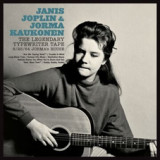
Janis Joplin & Jorma Kaukonen - The Legendary Typewriter Tape: 6/25/64 Jorma’s House

The legendary 1964 rehearsal collaboration receives its first official issue Restoration and Mastering by Grammy®-winning engineer Michael Graves Packaging contains rare photos plus liner notes from Jorma Kaukonen Jorma Kaukonen (later of Jefferson Airplane and Hot Tuna) met a singer named Janis Joplin at a hootenanny in San Jose, California, in the fall of 1962. Over the following years, Janis would call on Jorma to accompany her at gigs. As they continued to play together, the Bay Area was changing musically and developing into the legendary San Francisco scene to which both Janis and Jorma would be integral. During a rehearsal for a show in North Beach, Jorma started his reel-to-reel machine to capture what they were working on. For decades, this recording was the stuff of legend, with inferior, multi-generational transfers making their way through select collector’s circles. Now, for the very first time, it is available officially, with the blessing and cooperation of both the Janis Joplin Estate and Jorma Kaukonen. The Legendary Typewriter Tape: 6/25/64 Jorma’s House contains this legendary recording, featuring Restoration and Mastering from acclaimed, Grammy®-winner Michael Graves. The tracks include Joplin on vocals, Kaukonen on guitar, and Jorma’s wife Margareta typing away intermittently in the background. This may have just been a rehearsal, but it is so much more. Featuring Joplin originals, as well as blues classics, The Legendary Typewriter Tape is an intimate glimpse into two major artists at the beginnings of what would become highly influential careers. As Jorma says in his liner notes: “This is indeed a window into a simpler time when the music truly was everything.” Available on CD and Digital December 2, 2022, the release will also be available on vinyl exclusively for Record Store Day Black Friday, November 25, 2022 Enjoy being a fly on the wall and revel in the magic of The Legendary Typewriter Tape.

pré-commande02.06.2023

il devrait être publié sur 02.06.2023

23,11
Articles par page:
N/ABPM
Vinyl