
Cerca:make a move

- A1: Mc Trix – Big Greetings!
- A2: Oer Beatz- Boty 2025
- A3: Dj Plash- Shobo
- A4: Markowy - Organ'izm
- A5: Dj Spike / Breakdafunk Orchestra - Brown Funk
- A6: Dj Pablo - Momentum
- B1: @600V - Flute Groove
- B2: Dj Spike / Breakdafunk Orchestra- Make My Day
- B3: Decó - Rock On
- B4: Merrenda – Mystic
- B5: Dj Feel-X - Let Me Get Down
The Battle of the Year Poland 2025 Official Soundtrack is a powerful compilation created especially for b-boys and b-girls, capturing the energy and raw essence of the Polish breaking scene. Curated to accompany the prestigious Battle of the Year Poland event, this release features exclusive tracks from some of the most respected and influential producers in the country.
The tracklist showcases an all-Polish lineup, including talents such as Oer Beatz (IBE Beat Battle Winner), DJ Plash (Official DJ – Olympic Games 2024 Paris), the legendary DJ 600V, DJ Pablo, and many more. Each beat is crafted to elevate the dancefloor and pay tribute to the roots and future of hip-hop culture in Poland.
This soundtrack is not just a musical release—it's a celebration of movement, rhythm, and community, reflecting the strength of the Polish breaking scene on the global stage.

- A1: Don't Try To Tell Me - Berna-Dean
- A2: This Mornin' - The Jesse Stone Singers
- A3: All Around The World - Vermettya Royster With James Brown's Band
- A4: What's On Your Mind - The Four Bars
- A5: Don't Look Now - Wilbur "Hi-Fi" White & King Kolax Band
- A6: Money Talks - Kenny Smith
- A7: Hey Little Girl Pt 1 - Roosevelt Lee
- B1: Goin' Away Baby (Round Like An Apple) - Smokey Wilson
- B2: Hey Hey Baby - T-Bone Walker
- B3: I'm A Good Woman - The Afterglows
- B4: You Make Me Mad - Johnny Madara
- B5: Money Talks (Tell Me What I Say) - The Citations
- B6: Tell Me Why - Richard Berry
- B7: Mary Don't You Weep - The Delights
New R&B discoveries continue to emerge and entertain the many followers of the New Breed musical cult; nobody finds more than the Kent connoisseurs.
Berna Dean’s two previously unheard recordings are by far her best. They were laid down at Cosimo Matassa’s New Orleans’ studios by GNP Crescendo but eschewed in favour of two relatively average sides. The great 50s R&B songwriter Jesse Stone provides a rocker for the much-admired Jimmy Breedlove and a super-catchy ‘This Morning’ for an unknown mixed vocal group that has a joyous gospel feel. Jesse also penned ‘Private Eye’, a classic early 60s story-song, for Buddy Wilkins which was issued on Al Sears’ Tri-Ess imprint.
The title track is used twice, on two very different Fraternity recordings. Kenny Smith’s version was issued in 1964 and has many followers, but the equally meritorious Coasters-inspired composition by the Citations is newly discovered. Win Menifee’s ‘I’m Runnin’ Around’ from the same Cincinnati label comes complete with a fascinating back-story.
There are three cover versions. Vermettya Royster’s ‘All Around The World’ is backed by James Brown’s 1961 band, while Roosevelt Lee's 1970 update of the 1947-originated ‘Hey Little Girl’ funks the tune up a la Godfather of Soul. The cover that will make the biggest noise is undoubtedly west coast band the Afterglows’ version of Barbara Lynn’s evergreen dancer ‘I’m A Good Woman’ – this is a future monster.
Golden Crest provides two fabulous male vocal group sides – the swinging ‘What’s On Your Mind’ by Eddie Daye’s Four Bars and the delightful harmonies of the appropriately-named, but unknown Delights ‘Mary Don’t You Weep’.
Blues still thrived into the 70s as Albert Washington’s mean and moody ‘Case Of The Blues’ proves. Smokey Wilson took the music into the late 70s with the storming ‘Goin’ Away Baby (Round Like An Apple)’, which benefits here from a 45-style edit. His Pioneer Club on 88th Street in South Central L A provides the atmospheric photo for this collection.
More early 60s movers come from Wilbur “Hi-Fi” White with ‘Don’t Look Now’, future hit songwriter Johnny Madara’s raucous ‘You Make Me Mad’ and Big Boy Groves ‘Bucket O’ Blood’ which brilliantly describes the kind of club these tracks would fit right into.
The LP version loses a few tracks, but so many collectors have strong preferences we’ve thrown the vinyl junkies a lifeline.

- A1: Movement | Is Therapy
- A2: Nowhere Id Rather Be
- A3: All Dancing Under The Same Sky
- A4: Innervision
- B1: Ca Va Aller
- B2: Pressure Makes Diamonds
- B3: Last Sunrise In Barcelona
- B4: Easy To Love
- C1: Paradiso
- C2: Naarms Sunset
- C3: Time
- D1: Everybodys Beautiful When They Do What They Love
- D2: U Made The World A Better Place
- D3: Irreplaceable
14
Folamour ist zurück mit seinem neuen Album. Diese 14-Track-LP ist ein wahrer Wirbelwind der Emotionen, eine Mischung aus Euphorie und Tagträumen, getragen von House-, Disco-, Funk- und Soul-Einflüssen. Nach einem dreiteiligen Album im Jahr 2024, schuf der Sänger eine kaleidoskopische Kombination aus Delirium und Euphorie, aufgebaut auf den Grundpfeilern von House, Disco, Funk und Soul. Er plädiert für Musik als verbindende Kraft, als Ort, an dem Barrieren zerfallen und Platz machen für den gegenwärtigen Moment und für Liebe in all ihrer Vielfalt. Das Album ist auch eine Ode an die Freiheit, die Freiheit, man selbst zu sein und zu akzeptieren, wer man wirklich ist. Auf der Tracklist und den beiden Singles finden sich viele lebendige Nuancen des elektronischen Spektrums, angetrieben von erhabenen House-Beats mit Kabusa Oriental Choir, und "Ça Va Aller", einer Hymne der Hoffnung mit viel Groove, gefühlvollen House-Vibes und einem eingängigen Gesangs-Hook. Der Sommer kann kommen!

Markantonio returns to vinyl with Radici, a bold statement that dives deep into his origins, both in name and sonic identity. This four-track EP marks a pivotal moment in his artistic journey, bridging the raw energy of early techno with his signature funky groove-driven approach.
A vital force in shaping the Neapolitan techno identity since 2001, AnalyticTrail now takes a new step in its evolution with the release of Radici. Markantonio, the label's founder and one of Italy's most influential techno figures, makes a striking return to the forefront. This release doesn't just mark his comeback to vinyl, it reflects a renewed connection to his roots and a forward-thinking vision that continues to drive the underground movement.
Opening with Welcome to Disco, the A-side sets the tone with an infectious rhythm, pulsating basslines, and shimmering synths that light up the floor with hypnotic flair. Rising Dutch talent Isaiah delivers a bold reinterpretation with his Rework, injecting a darker, more driving edge layered with brooding atmospheres and relentless percussion. On the B-side, the title track Radici dives deeper into tribal-infused territory, blending hypnotic loops with raw percussive energy, while Groover rounds out the EP with a stripped-back, minimalist roller designed for late-night momentum.
A must-have for techno lovers, Radici captures the essence of where it all began and where it's headed next.

- 1: Echo-Logik
- 2: Bass Temprature
- 3: Train To Transylvania
- 4: Emperor Dub
- 5: Mother Dubber
- 6: The Orientalist
- 7: Hempro 905
- 8: N 1 Station
- 9: Rajaskank
- 10: Lysergic Sound Of Dub
- 11: Antivitrolles Dub
- 12: Dubiously
With Bass Temprature, rediscover on one single CD the first three vinyl EPs by High Tone: Bot Dub Seasons, Low Tone, and Bass Temperature-a total of 12 tracks that propelled the Lyon-based group into the ranks of electro-dub heavyweights. In addition to these two reissues, four extra tracks have been added, making for a 12-track album just as compelling as it's predecessor. It marks a shift toward a more roots-oriented sound while remaining firmly grounded in the electro-dub genre. The album opens with Echo-Logik, a warrior-like chant followed by a driving bassline that makes you want to move-DJ Twelve's scratches laid over the groove offer a brilliant showcase of the band's talent. The title track, Bass Temprature, follows-perhaps the least striking piece, though that's only relative given the strength of the rest. Worth noting are the mystical vocal samples in Train to Transylvania, evoking vampires and devils, while N1 Station brings a heavy psych sound, a more energetic beat, and moments that border on hard-tek. Other influences also emerge, such as the strong Eastern vibe in The Orientalist. As always, High Tone delivers a stunning dub album sure to delight ears tired of the everyday noise pollution that surrounds us.

- The Devil Is Here
- Save My Life
- Still We Fight
- Wait On The Wind
- See My Demons
- Barrow Hill
- Chorale/Slaves To Righteousness
- Victory
- Angel Take Me
Wytch Hazel's stellar 2016 debut Prelude confirmed these Lancastrian apprentice wizards to be Britain's most promising new hard rock band. Two years on, that promise comes to abundant fruition on II: Sojourn, an album that moves Wytch Hazel on from the innocence and exuberance of the debut to a darker, more profound and complex place, carefully wrought into optimum shape by the band's singer, guitarist, songwriter and mastermind Colin Hendra. "I'm really into the idea of an album," notes Colin. "I don't do mix-tapes, I don't listen to singles, I'm interested in albums. I want to make a good, listenable, cohesive work, that is the whole thing." Asked what inspirations were brought to bear this time, Colin has good news, and even better taste: "I was listening to plenty of Judas Priest, Thin Lizzy and Wishbone Ash last year," remarks the frontman. "This seems to be more of a hard rock album, where the last one was more rock-folk. It's definitely more rock than folk!" The most crucial influence fully expresses itself via Les Paul guitars in sweet twin harmony through cranked Super Lead Marshalls - "Exactly the same type of amp that Thin Lizzy would have used," beams Colin - a benefit of working in James Atkinson's Hand Of Law Studio, a converted gaolhouse in Leeds. "We knew there would be a lot more great gear, more amps, more options," enthuses Colin of this productive new work environment. "We were more prepared, we planned better. I had a lot more vocals to record on this album, pretty much every song has at least three harmonies, but James is a really chilled out guy, he made it easy for us. I had a very clear idea of how I wanted each song to sound, I thought about every single aspect. I probably over-prepared for this album, and it paid off!" Wytch Hazel's proud, avowed Protestant Christianity continues to set them apart from the occult hocus-pocus of their peers, and the very title Sojourn has a Biblical inspiration: "It's used a lot in the Old Testament, people would travel somewhere to stay for a short period of time," explains Colin, comparing the idea to Wytch Hazel's development since Prelude. "We're going to reside here with this sound for a while, and the next album might not sound the same. Come and have a listen to this aspect of Wytch Hazel - it's a temporary stay. We'll be here for a while, then there will be something else. I'm always writing, it's a constant stream, but I'm always trying to raise the bar, because I don't want the next album to be not as good as the other ones!"

- A1: Free State Fence
- A2: The Surfer
- A3: Prayer For Civilisation
- A4: Hillbrow 1
- A5: Hillbrow 2
- B1: Hippo In Town
- B2: Independence Day
- B3: Don't Dance
- B4: Crossed Cheques
- B5: September 1984
This is an album made during a crucial period in South Africa’s history during which there was a palpable feeling of a slow turning towards the collapse of the apartheid state side by side with an increasingly well-organised culture of resistance through the formation of the United Democratic Front (UDF) and various affiliated bodies. However, as a result, there was increased pushback from the state security establishment, a turning to dirty tricks and the formation of hit squads whose members murdered and tortured many of our friends and created chaos throughout South Africa as well as neighbouring countries.
This album is situated in this political environment however it took advantage of the new do-it-yourself music technologies available at that time. Technologies that made it possible to make and release records without interference from traditional record company executives. Two musician friends of mine pooled their resources after their respective bands had broken up. Ivan Kadey (National Wake) and Lloyd Ross (Radio Rats) built an 8-track recording studio control room and fitted it out in a second hand caravan and called it Shifty. They parked it in a garage attached to the only house left in a demolished and derelict mining village near Soweto on the outskirts of Johannesburg.
All the work on this album was completed there, mainly after hours and mostly alone where I enjoyed an exhilarating freedom to develop a whole new set of musical skills and ideas, incorporating my love of a wide range of music I’d grown up with. Influences of 1970s progressive/kraut/and psychedelic rock combined with mbaqanga bass styles, early reggae/dub and Indian tabla rhythms. Stockhausen, early Zappa and Holgar Czukay were radio text and shredding influences, and Chris Cutler’s band Henry Cow & Art Bears helped me see a way to political expression. Mostly though was the exciting post-punk and no-wave music coming through to us from Europe and America: bands like This Heat, the Mekons, Raincoats, Sonic Youth and Pere Ubu were immensely important to me as was my reading from the period: J.M.Coetzee’s first 3 novels are strong influences on Free State Fence; the stark landscape, superstition, ritual, and sexual repression are in many of his settings. JG Ballard was a constant presence throughout that period, especially whilst living in such a surreal environment, surrounded by mine dumps, but mostly I think the whole French post-modern philosophical movement—Derrida, Foucault and of course, Baudrillard’s Simulacra and Simulation—set out a new sense of possibilities, possible ways to express oneself, ways to think, and ways to try and analyse the political intersection of public and private life. Most important at that time was the influence of sound recordings I had made and experiences garnered from working as a sound recordist on documentary films. These financed my work and later the studio and were consistent employment throughout the 1980s. Film work also enabled me to experience much of South Africa that was hidden from most. The track Independence Day is a good example; drawn from some time spent in the rural homeland of Venda. This then was the first full length Kalahari Surfers album, completed in summer of 1984 it was taken to EMI pressing plant but rejected by the cutting engineer as being ""political, pornographic and anti religious"". Chris Cutler at Recommended Records took up the challenge and released the album through his label. He wrote the original liner note
4
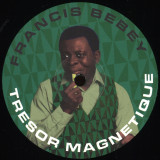
Francis Bebey was a visionary who explored the intersection of African traditions and global music long before it became a global trend. Born in Cameroon, Bebey's sound was an eclectic blend of his rich cultural heritage and his deep exploration of modern music, spanning genres from traditional folk and jazz to funk and electronic experimentation. As an artist, Bebey was ahead of his time, using his unique voice and instruments to forge new paths for African music to be heard worldwide. His legacy is not just in the music he created but in the way he opened doors for the global recognition of African artists, influencing generations of musicians, producers, and fans alike.
This release marks an exciting moment, as we introduce remixes of bebeys iconic productions by contemporary electronic producers, giving new life through creative re imaginings.
Tracks:
Le Grand Soleil De Dieu (Psychemagik Remix): The UK-based musical duo are known for their eclectic blend of electronic music, psychedelic rock and mystical global sounds. Formed by Danny McLewin and Tommy McLewin, the duo has carved out a unique niche within the global music scene though their intricate arrangements. Their Remixes and Collaborations have been with artists like Fleetwood Mac, Tame Impala, and Hercules & Love Affair. Their psychedelic dub remix has otherworldly qualities, with dreamy atmospheres and bouncing baselines throughout this brilliant opening track.
Guinee (Turbotito Edit): The Berlin-based DJ and producer known for his infectious blend of house, disco, and funk. With a knack for smooth, groovy beats and a deep love for melody, Turbotito's music brings a fresh, energetic vibe to the dance floor. On this track, he effortlessly re-imagines and elevates the world of Guinee to match his signature sound. A combination of a great pulsing base line, ethereal vocals and bird sound effects incorporated into the percussion makes this track an absolute stand out.
Agatha (Voilaaa Remix): Bruno "Patchworks" Hovart from Lyon is the brains behind the Voilaaa project. Fusing soulful grooves, funk, and disco with an unmistakable French touch, Voilaaa creates infectious, feel-good rhythms that blend classic and contemporary influences. In this track we find the first big hook of the album vocally, coupled with Bebey's lively humour in spoken French on top of joyous instrumentation. The smooth vocals, catchy melodies, and vibrant arrangements, bring a fresh energy to the original hit track - a brilliant homage.
Forest Nativity (Red Axes Edit): Red Axes are a dynamic electronic music duo from Tel Aviv, blending disco, house, and psychedelic influences into infectious, genre-defying tracks. Known for their unique sound, warm analog textures, and hypnotic rhythms, Niv Arzi and Dori Simao craft music that moves both the body and the mind. Forest Nativity arrives as a full circle closer, incorporating some of the most authentic African instruments such as a Balafon, an instrument similar to a xylophone and a Djembe, a hand drum central to many West African traditions. The 7 minute track is guaranteed to take you on a fascinating journey through Bebey's culture and livelihood.

- A1: No G D.m
- A2: Exhibitionism
- A3: Be A Boy
- A4: Tropical Comic Strip
- B1: Nice Mover
- B2: Cologne Intime
- B3: Opposite Numbers
- B4: Vendor's Box
- C1: Strip Tease
- C2: I C. Code
- C3: Kaddish
- C4: Hypnosis_Hypnose
- D1: Babylon Generation
- D2: Die Kunst Des Liebens (The Art Of Loving)
- D3: Kanal Banal
- D4: French Lift
- D5: Waiting
17
Gina X makes her way to Dark Entries for Greatest Fits, a compilation of gems and jams from the eccentric New Wave icon. Gina X Performance was formed in Cologne in 1978 when art history student and chanteuse Gina Kikoine teamed up with synth wizard Zeus B. Held. Inspired by Patti Smith and Lou Reed, Kikoine aimed to create "the absolute union of music, poetry and travesty," a lofty goal that she most certainly would achieve. 1979 saw the release of the classic first LP, Nice Mover, which put Held’s lush electronic production in dialogue with Gina X’s deadpan delivery. Songs explore androgyny, decadence, and avant-garde art in a fashion that is stylish, sexy, and more than a touch transgressive. Nice Mover quickly became a cult favorite thanks to tracks like the euphoric “Nice Mover” and the dancefloor bomb “No G.D.M.”, dedicated to queer icon Quentin Crisp. Three more LPs followed in the coming years: X-Traordinaire in 1980; Voyeur in 1981; and Yinglish in 1984. The duo continued their genre deviance throughout, exploring uptempo space disco on “Strip Tease,” punk-laced New Wave on “Babylon Generation,” and icy electro-pop on “French Lift.” Greatest Fits is the first-ever double LP compilation of Gina X material.
The 17 tracks on Greatest Fits were selected by Kikoine and Held, reflecting the duo’s most cherished moments from their wide-ranging catalog. The record comes housed in a gatefold sleeve designed by Eloise Shir-Juen Leigh featuring press clippings and photographs, and includes an insert with lyrics and memories about each song from Kikoine and Held.

11
TAMTEN, the master storyteller behind the synthesizers, extends his invitation to every curious listener to ponder the same questions that haunt him throughout his peculiar career: what impacts the sound of an era? How are we shaped by what we hear and see? Do we channel our collective feelings of longing and desire for higher purpose in accord or in opposition to major historical and political forces?
On "Wschodnia Fala: The Reimagined Vision of Eastern-European Wave Music" TAMTEN takes us on a kaleidoscopic voyage through a parallel universe where the symbols and echoes of days gone by are so much more than just archived exhibits of nostalgia. Through an array of meticulous, cut & paste rearrangements, the Warsaw-based artist manages to animate yet another fantastic world of "what could be", following his more apocalyptical take on the previous LP.
There is boldness in every aspect of the release. The saga-like story unfolds evoking the excitement of seashore autobahn ride, thrills of long-forgotten discotheque nights, rush of obsessive romance and intriguing, noir-inspired drama of introspection. The analogies between Polish wave music (with nods to Aya RL, Republika, Klaus Mittfoch, Papa Dance or even Bajm) and global disco-era top chart phenomenons like Kraftwerk, Grace Jones, Giorgio Moroder and Duran Duran, could spark hour-long musicology debates. The melodies and harmonies heard on the album resemble compositions everybody knows but also sound completely new and exhilarating, just as western music clips experienced for the first time behind the Iron Curtain and then collected compulsively on VHS tapes. The feeling of the author's frenetic attempt to capture sensations, memories, artifacts and ideas never escapes the listener till the very last minute of the recording.
"Wschodnia Fala" could pass for an eerie, anonymous late 80s lost-and-found cassette mixtape unearthed on any of the Berlin Wall's sides, if it wasn't for its crystal-clear, contemporary production value and the fluent, educated use of samples ranging from bizarre and opaque to deliberately retro-pop-influenced. Those elaborate winks of the eye for those in the know are already TAMTEN's trademark and they reflect his long-standing fascination with the dancefloor anthropology rather than just the dancefloor itself. Even though never leaning towards formulaic, easy-to-mix, club-ready stompers, his ideas are still groovy enough to make anyone move.
The album strives for some sort of unattainable totality - it's a ticket to a seance, an experience, a rite. It is a chance to time travel and dance with your ancestors in a glass labyrinth on acid or to watch an 80s teenage adventure, coming-of-age, road cruising film in the cinema of your imagination with only a soundtrack provided. A "the best of" CD compilation of hits from a childhood we remember from a different timeline. A comic book sketch, a diary of an archivist, an elegy for the times that never were and a party you wish you could go to right now. The adventure is always different with another listen.
Step in. Close your eyes. Reimagine.
Embrace the wave
- Battle Ready
- What You Make It
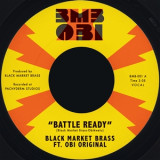
'BMB x OBI' marks a new venture for the long-time instrumental powerhouse Black Market Brass. Teaming up with Obi Original, the young and visionary Minneapolis talent with a mission to share the heart of African music with the world, Black Market Brass delivers both proverbial and prophetic messages for the year to come - 'You've got to be Battle Ready!'. Inspired by the raw energy and messages of Fela Kuti and indebted to Orchestre Poly-Rythmo de Cotonou for their heavy fusion of voodoo-infused Afro-beat, Black Market Brass points in both directions towards the resurgent history of West African funk and the future of where a younger generation can lead us. These tracks are bursting at the seams with energy and force the listener to wise up and march along as soon as the drums thunder and the horns blare their first notes. The A-side, 'Battle Ready,' is what it claims: a band armed and ready to take on whatever may come. Strapped to the hilt with three drummers, this infectiously rhythmic track simmers, if not boils, under Obi's demands to mount up. The energy is high, edgy, and proves that getting nine musicians in the same room to track live captures a passion that bulldozes through anything placed in its way. The B-side, 'What You Make It,' encapsulates a musical quality that Black Market Brass has refined over its many years together, with polyrhythmic ideas you don't have to understand to know it feels good. Infused with elements of ethno-funk and classic highlife, this Ebo Taylor & Pat Thomas inspired work approaches the listener with a simple message amongst a danceable cacophony of sounds - 'Life is what you make it.' Move in 4, dance in 3, or sway in 6. Whichever you choose, choose it deliberately; the music will be there to support you.


- Sauna Motif I
- Päiväkahvit
- Afternoon Springs
- Go North
- They Came In Through The Front Door (Fadi Tabbal Rework)
- Tropic Movements (Amulets Rework)
- Bottles + Birds
- Sauna Motif Ii
- The Vala River (Чудья Жени – Post-Dukes Rework)
- Badminton On The Shore
- Miten Aloittaa
- A Pale View Of Dem Hills (Jeremy Young Rework)
- Veden Yli
13
When the trio of Sontag Shogun gathered at Laura Naukkarinen's home on the Finnish island of Kimitoön in the summer of 2019, they had not the slightest inkling that the world was about to change irretrievably with the onset of a long-predicted pandemic the following year. By the time their collaborative album, Valo Siroutuu ("The Light Scatters"), was released nearly two years later, the intimate and reflective nature of the work they had created together had taken on new meaning, resonating powerfully (and quietly) with a world in which the proverbial cracks in the wall only seem to be widening.
Päiväkahvit completes the story that began with Valo Siroutuu, featuring 9 songs from the original sessions as well as 4 interpretive reworks courtesy of Amulets, Fadi Tabbal, Post-Dukes, and Jeremy Young. Available digitally and in a one-time vinyl pressing of 300 copies, the album flows seamlessly from beginning to end, incorporating field recordings, tape, sublime vocal melodies, and a host of acoustic and electronic instruments. Richly textured and immersive, Päiväkahvit positively crackles with warmth and a sense of creative embrace.
"We invite the listener into the sauna, out to the garden and onto the trampoline, to sit by the water’s edge and to take a coffee in the waning afternoon light, and to stay as long as they like." – Jesse Perlstein
Lau Nau, aka Laura Naukkarinen, is a Finnish composer whose music is imbued with an idiosyncratic, finely honed sound world. Her palette consists of acoustic instruments, singing voice, modular synthesisers, reel-to-reel tape recorders and field recordings. To date Lau Nau has released ten albums on record labels in Europe, the USA and Japan and a large number of collaborative releases. Lau Nau is known for her music to films and multi channel sound installations. She was awarded the Finnish State Prize for the Performing Arts 2021 as a sound designer. She has toured abroad for over 20 years, playing in venues such as Super Deluxe in Tokyo, the Lab & Castro Theatre in San Francisco and Blank Forms & Issue Project Room in New York.
Sontag Shogun is a collaborative trio that makes use of analog sound treatments and nostalgic solo piano compositions in harmony to depict abstract places in our memory. Textures built from organic materials such as sand, slate, boiling water, brush and dried leaves, both produced live in performance and recorded to weathered 1/4" tape warm up the space between lush piano themes. All of which is abstracted coolly in the reflective digital space of treated vocals and a live-processed feed from the piano. Bringing us back, like a faded passing scent or any natural emotive trigger, but to where? The wordless journey there will inevitably be more revealing than the destination itself.

12
Dummy is a rock band from Los Angeles comprised of Alex Ewell, Emma Maatman, Nathan O'Dell, and Joe Trainor. Their debut full-length "Mandatory Enjoyment" (Trouble in Mind) arrived in late 2021, becoming one of the year 's sleeper hits and garnering praise from Pitchfork, Stereogum, and more. Coming out of lockdown, the band spent two years touring in support of the record, and it is this transformational experience that pulses through "Free Energy ", the exhilarating follow-up to "Mandatory Enjoyment". A creatively restless band, Dummy (Ewell: drums, synths, bass; Maatman: vocals, synths, organ; O'Dell: vocals, guitar, organ; Trainor: guitar, bass, synths) wanted to get harder, dancier, more psychedelic for their next record. This meant applying explorative potentials of electronic textures to the elemental qualities of rock i.e. more vocal loops, sampling, more crazy rhythms, and playful synths - but make those samples of Trainor 's guitar, let Maatman sing bolder, experiment with using cold mechanical elements in warm and sparkly ways, and lean harder into traditional-yet-still-awesome forms of rock guitar experimentation like feedbackThe result is a record that celebrates music's ability to move the body, whether that be through a teeth-rattling wall of MBV-esque noise, a sticky pop chorus, or a joyous drum machine_or, if you're Dummy, maybe all of them in the same song. Pop music has always been a big part of Dummy's sound and it manifests in different ways all over Free Energy: the bubbly synth sequence made with a Korg EM1 popping all over "Nullspace," the revved-up drone-pop inspired by second and third wave Dunedin Sound bands like Look Blue Go Purple and Dadamah, and the motorik beat powering "Nine Clean Nails," perhaps the most confidently pop song Dummy has ever recorded and one that exemplifies "Free Energy "'s balancing of live performance intensity with electronic augmentations, the dancier rhythmic elements created out of a drum loop recorded by Ewell while the bridge recalls the Feelies with call-and-response guitars from O'Dell and expressive vocals from Maatman. "Free Energy " also features guest appearances from Oakland-based saxophonist and electroacoustic artist Cole Pulice (Moon Glyph) contributes saxophone and wind synths and Jen Powers of Powers / Rolin Duo (Astral Editions, Feeding Tube Records).

After limping back from retirement with a remix or two and a single on Neroli, Domu makes it back to his birthplace, 2000black.
After 25 years of ups and downs, highs and lows and down and ups, it's now time to rest for good. As the spirit of his jungle past still haunts the hallways of what is left of record and clubland, Domu instead lays down to accept, for him at least, enough has been said.
A Madness is the result of layers and layers of random obscure rhythmic samples with some textbook Domu keys. Urgency pours out of it. Quick let me finish this before I die.
Not him again is a result of a jam with long time collaborator Robert Marin with Domu leading the creative direction. Do we like house records that could be on the wrong speed? Yes. Do we like Hip Hop that doesn't accept any of the standard conventions of Hip Hop? Yes. And this is the result.
And finally Them Things. Domu has been trying this whole time to convey a feeling, that weird feeling that those special 'odd numbers' create. Not a specific genre or tempo or movement with a catchy name, just a thing you can't quite explain. Maybe he got close now and again, maybe he didn't but this feels like it could be the closest we'll ever hear.
Miss this end of an era at your peril.

- A1: Warfare-Bunny Lee All Stars
- A2: The Conquerer-Derrick Morgan
- A3: Bossa Moon-Ss Binns
- A4: The Return Of Jack Slade-Derrick Morgan
- A5: Annie Pama-Bunny Lee All Stars
- A6: Cutting Blade-King Horror
- A7: Revenge Of Eastwood
- B1: Melting Pot-Max Romeo
- B2: Clap Clap-The Hippy Boys Featuring Max Romeo
- B3: Walk With Des-The Des Allstars
- B4: Peace Maker-The Hippy Boys
- B5: Death Rides A Horse-The Hippy Boys
- B6: Dreams To Remember -The Hippy Boys
- B7: In The Spirit-Lloyd Chambers
14
2025 Repress
The Sound of Now...mentioned in 'The Return of Jack Slade' by Derrick Morgan was the sound of 1969/1970 and that sound was the sound of Jamaican Reggae.The look at the time was the Skinhead fashion borrowed heavily from the Jamaican Rude Boy style.
The Skinhead movement started around 1968 and by the following year of 1969 became the style and fashion of many British teenagers.The uniform of the Skinheads consisted of boots,braces and jeans and the upbeat Reggae sound seemed to match the style perfectly.
Never before has a music matched a look more perfectly than that of the Skinhead/Rude Boy and Jamaican Reggae sound.
So stand up and move your feet one more time to the Skinhead Reggae Sound!!!
Hope you enjoy the set....

- A1: For The Love Of Life (Ending Theme Full Version) 04 21
- A2: Grain (Opening Theme) 01 26
- A3: Drift Mind 03 01
- A4: Part 02 00
- A5: Float Flower 02 22
- A6: Collage Man 01 39
- A7: Sweet Home 01 53
- A8: Gingerly 01 40
- A9: Nacht Tour 01 36
- A10: Xenia 01 36
- A11: Room 02 16
- B1: Idler Wheel 01 13
- B2: Bush 02 01
- B3: Drift 01 47
- B4: Rest 01 33
- B5: Sweeper 03 03
- B6: Be Lit Up 01 30
- B7: Decola 01 35
- B8: Mid Point 01 44
- B9: Twip 02 03
- B10: Red Line 01 42
- B11: Angel Hand 01 48
- B12: Make It Home 03 47
- C1: What Do I See 02 25
- C4: Hold On 01 24
- C5: Close Your Eyes 01 55
- C6: Our Destinations Calls 02 08
- C7: Right And Wrong 01 35
- C8: Cast Upon The Wind 01 45
- C9: Catch 01 47
- C10: You Are The Move You Mak 03 11
- D1: S’alright 01 35
- D2: Faith 02 16
- D3: Than One 03 59
- D4: Present 01 32
- D5: The More That I See 01 58
- D6: It’s A Long Way To Go 02 02
- D7: We’ll Be Waiting For The Night 03 48
- D8: Changes 01 55
- C2: The Seeds Of Time 04 26
- C3: Before You Go To Sleep 02 15
41
A young doctor on the verge of greatness finds his career and life shattered after choosing to treat two children rather than the town mayor. The deaths of one of the children are inexplicable. What if he had saved a monster?
Monster, the manga created by Naoki Urasawa, is an acclaimed psychological thriller that has been a huge critical and commercial success. The complex and gripping story, which follows the moral choices of a surgeon confronted with a serial killer he has saved, has attracted a wide international audience. Monster has won several awards and is regarded as one of Urasawa's major works, affirming her place as a master of suspense in the world of manga.
Kuniaki Haishima is a Japanese composer best known for creating the soundtrack to the anime Monster. In addition to his contribution to Monster, Haishima has also composed music for TV series (Terra Formars and S-CRY-ed) and films (Tokyo Tribe and Helter Skelter).

Repress of 2018’s classic compilation from Brownswood.
A primer on London’s bright-burning young jazz scene, this new compilation brings together a collection of some of its sharpest talents. A set of nine newly-recorded tracks, We Out Here captures a moment where genre markers matter less than raw, focused energy. Looking at the album’s running order, it could easily serve as a name-checking exercise for some of London’s most-tipped and hardworking bands of the past couple of years. Recorded across three long, fruitful days in a North West London studio, the crossover between each of the groups speaks to the close-knit circles which make up the scene.
Surveying the way that London’s jazz-influenced music had spread outside of its usual spaces in recent years, this album bottles up some of the vital ideas emanating from that burgeoning movement. Giving a platform to a scene where mutual cooperation and a DIY spirit are second-nature, it’s a window into the wide-eyed future of London’s musical underground.
Ubiquitous, much-lauded saxophonist Shabaka Hutchings is the project’s musical director. His own recent projects span from South Africa-connected, spiritually-minded jazz players Shabaka and the Ancestors to Sons of Kemet, who match diasporically-connected compositions with viscerally-direct live shows. His entry on the album, ‘Black Skin, Black Masks’, is typically difficult-to-define: with an off-kilter, shifting rhythmic backbone, repeated phrases – mirrored between clarinet and bass clarinet – shape the track with an alluring hue. His input ties together a deft, genre-agnostic sensibility that’s shared through all the players on the record.
Theon Cross – who’s also part of Sons of Kemet with Hutchings – starts his track, ‘Brockley’, with the solo, distinctive low rumble of his tuba. Winding and mesmeric, it sees tuba and sax lines winding together in rhythmic and melodic parallels. Ezra Collective – whose drummer and bandleader Femi Koleoso has toured with Pharaohe Monch – run a tight, Afrobeat-tipped rhythm on ‘Pure Shade’, with the final third changing gear into a melodic, momentous closing stretch.
Joe Armon-Jones, whose ludicrous chops on the piano have seen him touring with the likes of Ata Kak, showcases earworm-like, insistent motifs on ‘Go See’, balanced with a playful, improvisatory approach with room for ad-libbing and solos a-plenty. Taking a softer tact than many of the other entries, Kokoroko – whose guitarist Oscar Jerome has been making waves with his solo material – spin a lyrical, steady-paced meditation on ‘Abusey Junction’, matching chanted vocals with gently-played guitar.
Nodding to spiritual jazz influences, Maisha’s ‘Inside The Acorn’ is a wandering, explorative rumination, balancing delicate washes of piano and percussion with sharp interplay between flute and bass clarinet. In contrast, Nubya Garcia’s ‘Once’ is taut and carefully-poised, her tenor sax guiding a carefully-built energy to an explosive conclusion. And finally, Triforce’s ‘Walls’ is a performance in two parts: starting with Mansur Brown’s languorous, lyrical guitar, the second half switches up to a low-slung, g-funk-tipped groove.

Art is a term that's often associated with Robert Hood's work and the next vinyl release on M-Plant comprises his recent digital releases - the March single "Art Form" and April's double-header "Art Class / Art School" to create the "Art Project EP".
The acidic "Art Form" is Hood's first Techno release since 2024's "Alpha Key EP". The Minimal Techno originator continues to show off his prowess with "Art Class" which stays on the Acid path we hear on "Art Form" but delves even deeper. Meanwhile, "Art School" on the B-side brings sci-fi sounds and an atmospheric punch.
Robert Hood has said of his M-Plant label: "M-Plant is what I've always wanted to hear: the basic stripped down, raw sound. Just drums, basslines and funky grooves and only what's essential. Only what is essential to make people move. I started to look at it as a science, the art of making people move their butts, speaking to their heart, mind and soul. It's a heart-felt rhythmic techno sound. M-Plant is just M. minimal."
