In Rumi's poem A Great Wagon he writes of a place of total acceptance. "Out beyond ideas of wrongdoing and rightdoing, there is a field. I'll meet you there," It is a boundless, liminal space where we can release the judgments we make and carry of ourselves, and the comparisons to others. When we think of this field, there is a sense of tranquility that only comes when we are undisturbed by the shadow self and see existence as neither bright nor dim, white nor black. But as lead singer Greg Bertens explains, arriving there is a whole different story. "This is a poem I've returned to over the years, and I love the idea of this place, but getting there is life's journey." Bertens adds "I think the longing for and elusiveness of this field is a recurring theme in our music." Field is enveloped by themes of regret, disconnection and frustration but with the space to understand that these feelings are a natural part of the struggle between reconciling the inner and outer self. The Los Angeles/San Francisco-based group have been indie shoegaze stalwarts since their formation in 2001. After two decades and a handful of line-up changes, their extensive discography presents a dynamically textural, lush psychedelic rock that has featured guest appearances by members of Pavement, My Bloody Valentine, and Snow Patrol, among others. 2021's LP We Weren't Here was hailed for its dense instrumental blanket, where unrelenting hi-hats and heavy kicks exist alongside dreamy drone guitar. This propulsive nature permeates Field, as members Bertens, Noël Brydebell (vocals), Nyles Lannon (guitar), Jason Ruck (synths), Justin LaBo (bass), and Adam Wade (drums) produce a kaleidoscopic sonic landscape. Patient, sprawling instrumentation builds a foundation in which Bertens' themes of endurance, perseverance and clarity can bloom with a considered poise. As a lyricist who writes in response to the instrumental arrangements, rather than a focus on a specific theme or person, Field is a testament to Film School's ability to create in the moment, and to showcase the magic that stems from when we are truly present. Album opener "Tape Rewind" is a swirling rush of color, as sustained guitars, darkened bass lines and urgent, percussive swells dance alongside each other. "This is the newest of all the songs on the record and feels like a new level of heaviness for the band," Bertens explains, noting that its lyrical context of struggling to move past trauma adds to its cathartic essence. Field is bookended by heavier themes, with closer "All I'll Ever Be" taking on the perspective of those we hurt when we embrace our own toxic behaviors. Originally written to be a simple acoustic guitar and vocals song soon turned into an ethereal, effects-laden composition, with Noël's hazy lead vocals ushering in a new-found acceptance. "It's all I want / To be released / And all I can be," she laments, cementing Field's message of accepting ourselves in whatever form we find ourselves in. "Defending Ruins" is a murky relentless underworld, inspired by the freewheeling tones of Texas-based band Holy Wave. "Defending the ruins, defending remains," Bertens spits, among a richly-layered outro. "Don't You Ever" confirms Film School's ability to merge both delicate and growling instrumentation throughout the album, with the song's softly spoken section hovering above sparkling guitar. "Is This A Hotel" bends towards the electronic aspects of the band, with wailing synths accompanying a story of bitter desire. With over two decades in the industry, Field cements Film School as a distinct, dominant force in the shoegaze scene. Soaked in an emotionally open, imaginative atmosphere, the album is both singular and expansive, and leaves the door open for a constantly evolving interpretation. Film School have never confined themselves to the rigidity of specifics, and it's on Field that they urge us to look beyond the binary of certainty, and to take a second look
Cerca:make a move
Boy Harsher, Portishead, Thom Yorke, Radiohead, Beak>, ERAAS, SUUNS. Over the past seven years, Public Memory's distinctive use of analog synthesizers, electronic beats mixed with organic percussion, lo-fi sound design, and gritty ambience has created a singularly eerie and shadowy world. The first seconds of Public Memory's new record, Elegiac Beat, thrust us immediately into that world. We are in media res, with a feeling of sudden movement from a sensible point A to B. Given some time however, we realize that there is something askew–a bit of brightness here, some shadows pushed aside, some jazz and funk amongst the dub and Krautrock. This is an unfamiliar, ambiguous mood that pushes Public Memory towards new ground. We still drift past the clouded lights and hollowed out buildings of previous albums, but with an occasional bounce in our step now, a bit of golden haze around the edges. First single "Savage Grin" cements this clearly. The track has a jazzy, trip-hop flavor, albeit filtered through Public Memory's narcotic, hazy lens. We could be in a hotel lounge in the alps somewhere on holiday, or out of time in a majestic, sparkling ballroom. But we still have the feeling of being haunted, or perhaps even hunted in some way. This feeling intensifies and comes to a head towards the ever-darkening end of the track, leading directly into "Afterimage", in which someone almost imperceptibly sings "I hear them coming" in a twisted, auto-tuned flail. Second single "7 Floor" begins with flanged drums and damaged synthesizer stabs, evoking a kind of apparition floating towards us in the mist. As the track moves on there is, similarly to "Savage Grin", a contrast in feeling between a cold exterior roaming and an interior, warmer, human place. This time however, we move from the colder to the warmer as the synths from the track's beginning make way for a Rhodes-style organ and backing string synth, infusing an unexpected sense of peace. But like "Savage Grin", the track moves to its end through an in-between place beyond the haze. Faded and distant synthesizers meld with voices–human, or perhaps otherwise–that beckon us, or perhaps warn us. We can't be sure which. Third single "Far End Of The Courtyard" brings us closest to classic Public Memory territory with hip-hop beats, chopped and screwed samples, lo-fi ambience, and ghostly electric pianos complementing the vocals. There is darkness, perhaps more here than in the previous two singles, but with a crucial moment of uplifting lightness so subtle it may be missed upon first listen. As an inverse to both "Savage Grin" and "7 Floor" we end with brightness, the jazzier side of the record pushed to the forefront as the track fades away on that golden haze. In the end though, the haze may be just that: a vapor, a mist, a slight dusting of some other world on top of the degraded one Public Memory so effectively portrays. Elegiac Beat is between two places, and as it straddles the line between the two, we are uncertain if the light it brings shines directly from the sun, or if it is dimly reflected through that majestic ballroom world. For fans of 1990s Bristol trip hop, coldwave, and Thom Yorke's The Eraser
RAWAX welcomes Ferdinand Steinbacher aka Brevis Bounce to the artist family! We are very happy to present you this great talent HOUSEWAX. After joining a RAWAX micro GARDEN FESTIVAL with Move D, Ferdinand went home and started (impressed from David's set) to jam. He uploaded the video on social media. Luckily we saw it and asked him to make us some tracks - the result is his first vinyl release called "Vibrant Remedy" which will be out in January.
Highly recommended!
- A1: We Crossed The Atlantic
- A2: The Love You Bring
- A3: When I Was Howard Hughes
- A4: Failed Adventure
- B1: Stars (Twilight Mix)
- B2: Grand Central
- B3: International Exiles
- B4: Merry-Go-Round
- B5: Radios Appear
- C1: City Terminus
- C2: Min Min Light
- C3: Oregon Snow
- C4: Cherry Lake
- C5: Blackout
- D1: Please Don’t Say Goodbye
- D2: Museum Station
- D3: Blue Train
- D4: You Were There
- D5: Something Better Beginning
Selected Songs 1997-2003 compiles some of the finest moments in the recording history of Hydroplane, the Melbourne-based indie-pop three-piece that operated alongside The Cat’s Miaow through the second half of the nineties. It’s the third release in what feels, now, like a loosely planned series by World Of Echo, documenting the music made by this group of friends in Melbourne sharehouses (The Cat’s Miaow’s Songs ’94-’98, 2022), or in the case of The Shapiros (Gone By Fall, 2023), while traversing the International Pop Underground.
Hydroplane would be familiar to anyone already following these breadcrumb trails – Andrew Withycombe, Bart Cummings and Kerrie Bolton were the group’s core, all members of The Cat’s Miaow. With Cat’s Miaow drummer Cameron Smith itinerant, having moved to London, the trio used this opportunity to expand their music. It’s a subtle, but important shift. If The Cat’s Miaow was about the perfect, minimalist, two-minute pop song, Hydroplane’s music was far more open-ended, embracing the loops and drones, sampled house-y shuffle beats, the burbling of a Roland Jupiter-4 synth, all of which the trio joined, effortlessly, to their endless capacity for moving, elegant melodicism.
They may have only planned to release one seven-inch single, but the sound Hydroplane created was so bewitching, so compelling, that the project’s lifespan ran for around half a decade, and they ended up releasing three albums, including a self-titled debut recently reissued by Efficient Space, and seven singles. There are all kinds of compelling things happening in the music compiled here – the hazy repetition of the gentler side of Krautrock is in here, somewhere, which also suggests Stereolab at their most intimate and disarmed; the gently drifting guitars, gauzy and oneiric, set the songs adrift and floating, each one lost in its own imagined, distracted world. Songs like “The Love You Bring” set indistinct tonal floats across dance rhythms, in a way not quite heard since My Bloody Valentine’s “Instrumental” – but with the added gift of Bolton’s gorgeous voice.
This loose coalition with dance music, and the quiet experimentalism at the heart of Hydroplane, also gestures towards peers like Hood, Acetate Zero and Other People’s Children, and releases on renegade labels like Wurlitzer Jukebox and Enraptured. Like those groups and labels, The Cat’s Miaow were reconciling independent pop music’s past – sweet melody and melancholy, chiming and droning guitars – with the futures promised by DIY electronics and nascent digitalia, the interface of indie and IDM that led to some of the underground’s most blissful, texturally swoonsome music. All that is here, but also, the poise of the melodies is pure Cat’s Miaow, though, with Bolton’s voice sailing, pacifically, over some of the most pared-down, gorgeous music made during their decade.
It was a time, too, when such music could make waves – “We Crossed The Atlantic”, one of their early singles, was picked up by John Peel, who played it repeatedly on his legendary radio show, the song reaching #13 on his 1997 Festive 50. That the song itself was a cover of a tune by 1960s Australian beatnik-pop-poet Pip Proud felt even more perfect – a group of outsiders paying tribute to another outsider, played on the radio one of the few broadcasters brave and human enough to take a chance on this music. But it was a time where everything was up for grabs, and genres were flowing into each other: folk songs went drone; indie re-discovered noise; ambient pop floated, again, out onto the dancefloor. And while they may have been sequestered away in Melbourne, Australia, Hydroplane felt core to that scene, a quietly driving force.
Compiling material from across their brief but mercurial career, this double album perfectly captures the magic and mystery of Hydroplane’s dreamlike, perfect pop songs.
Summer is now upon us, and with it one of our dearest dancefloor artillerymen returns to Timedance.
Ploy's « For when we haven’t slept » stands as a mission statement for the party athlete, it is a celebration of weekends ran like both a sprint and a marathon and its three tracks narrates the spirally craze that keeps you out and makes the dancers forget the sole existence of their beds.
Starting with the first hits of strobe lights on a Saturday night, as the energy rises and the dancefloor manically comes together (Crazy BB), it then moves on to a welcome and slightly hectic high octane after-party (Rose) before rolling all the way through to the sheer moments of lustful euphoria that defines the best Sunday sessions (Finally).
Bass pressure and intoxicating techno collide seamlessly without falling into the traps of forced seriousness, while hints of hook-laden house music keep the groove at peak levels, so the bodies can keep moving, beyond sleep and exhaustion and into the final stages of pure frenzy, for when we haven’t slept.
- 1: Summertime In London
- 2: I've Been Watching You / You've Been Watching Me
- 3: Jim
- 4: Like A Face That's Been Starved Of A Kiss
- 5: It's A Brand New Morning
- 6: Me & My Old Guitar
- 7: A Town Called Home
- 8: Bob & Veronica's Big Move
- 9: It Isn't Easy Being An Angel
- 10: If I Make It Back To Mary's House
- 11: Together Through The Rain
They drift with phantom ease from spare, intimate, literate alt-country to a nuanced, weighted music bearing the marks of rock'n'roll history..." Classic Rock 8/10 // ”...slow burning, emotional intensity" Mojo **** // ”Alluring and seductive." Uncut **** // Morton Valence’s eighth, and eponymously titled album, comes to you, courtesy of Cow Pie Recordings, featuring 11 new songs, produced by the legendary BJ Cole. Robert ‘Hacker’ Jessett and Anne Gilpin, who form the nucleus of Morton Valence, effortlessly take the country music genre, which is generally considered a uniquely American musical form, and create something uniquely English, without ever compromising their authenticity. The atmosphere that BJ Cole brings to the album is palpable, in both production values, and his unmistakable pedal steel guitar performances, on songs such as the plaintive ‘Together Through the Rain’, where an estranged Anne and Hacker reunite under the shelter of an umbrella, walking through the rain and trading verses along the way. Or the more upbeat country rock of ‘I’ve Been Watching You/You’ve Been Watching Me’, which is almost as if Richard and Linda Thompson had touched down in some Nashville backbar before heading for the bright lights. And of course, the scintillatingly down-beat opener, and instant urban-country classic; ‘Summertime in London’, where Hacker reflects on his home city from afar, through simultaneously tear-stained and rose-tinted glasses. What gives the album its country hallmark, are the narratives in the songs. However, they forego the typical Americana for an altogether more kitchen-sink aesthetic. We see the return of MV alter egos Bob and Veronica in ‘Bob and Veronica’s Big Move’, as they make their way from the big city to what could only be the arcadian blue-collar tranquillity of Hastings, or Skegness perhaps? There’s the bewildered small-town homecoming of a wannabe prodigal son in ‘A Town Called Home’. And a conversation with ‘Jim’, a seemingly old-school kind of bloke, with a penchant for midday drinking and late-night city shenanigans. As well as BJ Cole’s steel guitar, there are other collaborations too. ‘Like a Face that’s Been Starved of a Kiss’, co-written with Band of Holy Joy front man, and lyrical visionary Johny Brown. Flamenco guitar genius, Amir John Haddad, sits in on the urban-cowboy ballad, ‘Me & My Old Guitar’, the skewed violin of Dylan Bates brings something of the vaudeville to songs such as ‘It Isn’t Easy Being an Angel’, Guy Jackson adds his sublime keyboards throughout, and the whole thing is held together by unsung rhythm section heroes Jamie Shaw on drums and Josh De Mita on bass. As with all Morton Valence albums, along with the shade, there is always some light, in particular the escapist cosmic romp of ‘It’s a Brand-New Morning’, or the wryly observant, ‘It Isn’t Easy Being an Angel’, where the protagonist discovers that he’s living in some weird kind of purgatory where even the late Johnny Thunders has quit smoking. This is an ambitious album, formed through a unique symbiosis of musical characters, which is ready to redefine UK country music, put ‘urban country’ centre-stage, and should be heard by everyone
Limited new repress on blue vinyl. RIYL: Sharon Van Etten, Big Thief, Phoebe Bridgers, Angel Olsen, Neko Case, Bonnie “Prince” Billy, Bill Callahan, Steve Gunn, Kurt Vile, Cass McCombs, Jessica Pratt, Kevin Morby, Molly Burch Phosphorescent, Waxahatchee, boygenius. Recorded and mixed by Joshua Wells (Destroyer, Lightning Dust, ex-Black Mountain). Guest vocals from Bonnie “Prince” Billy on the “Don’t Slow Me Down” single. Guest pedal steel guitar from Paul Rigby (known mostly for his studio work with Neko Case) on 3 of the 10 tracks. Support thus far from FLOOD Mag, Stereogum, KEXP, KCRW, Popular TV (ex-Nylon writers), Pitchfork, Exclaim! & more. “Tonight” single synced for a Netflix series 13 Reasons Why in March 2017. Ashley Shadow winks at darkness, but she won’t lead you towards it. It’s easy to fall under the spell of Ashley’s haunting voice. The Vancouver, B.C. based songwriter forged her own identity as a songwriter with 2016’s eponymous self-titled debut. Her sophomore effort, Only the End, maintains the moody introspection that is ingrained in Pacific Northwest life, but now comes armed with a palpable hope complementing her signature melancholy. Ashley explains, “I wanted to make a more upbeat album, something you could play with some friends over. Some of the songs I wrote were initially bummers, but when we went to record them, we lightened them up.” Balancing a couple of jobs and navigating life and love in increasingly unstable times, the album was written over two years by Ashley at her apartment. Her confident vibrato above lightly, distorted guitars mirrors the album’s theme of resilience, if not triumph, over adversity. There is comfort in these warm songs that endorse the realism of contented acceptance, rather than the naïve search for non-existent utopias. While the songs were conceived in contemplative solitude, Ashley invited some very capable collaborators for their journey into the studio. Ashley’s first album saw her take center stage after more than a decade of gracing friends’ projects in a supporting role. The move to the front was a cautious one. “First record was, can I do a solo album? This time, I know what I’m doing. It’s way more clear.” "Don’t Slow Me Down" reunites Ashley with Bonnie “Prince” Billy for the first time on record when she sang vocals on Bonnie's Lie Down In Light album in 2018. The album also includes contributions from Paul Rigby (Neko Case), Colin Cowan (Elastic Stars), Joshua Wells (Black Mountain, Lightning Dust) and Ryan Beattie (Himalayan Bear). It’s clear to anyone listening. It’s Only the End. If only all endings were so glorious
- A1: I Wanna Dance With Somebody (Who Loves Me) (Who Loves Me)
- A2: Just The Lonely Talking Again
- A3: Love Will Save The Day
- A4: Didn't We Almost Have It All
- A5: So Emotional
- B1: Where You Are
- B2: Love Is A Contact Sport
- B3: You're Still My Man
- B4: For The Love Of You
- B5: Where Do Broken Hearts Go
- B6: I Know Him So Well
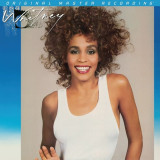
Whitney did more than turn Whitney Houston into a pioneering sensation known around the world by her first name. Originally released in June 1987, the singer's blockbuster sophomore record became the first album by a female artist to debut at No. 1 on the Billboard 200 chart — a position it claimed for a total of 11 weeks en route to selling more than 10 million copies in the U.S. The Diamond platinum effort also contains four No. 1 Hot 100 hits that, when combined with the three chart toppers from her 1985 debut, gave her seven consecutive No. 1 singles — an accomplishment that no other artist has accomplished. Commercially and creatively, Whitney stands on hallowed ground — especially now that the record plays with a sound that puts into perspective just how extraordinary, engaging, and vital Houston's music remains.
Mastered from the original master tapes and pressed on MoFi SuperVinyl at RTI, Mobile Fidelity's 180g 33RPM SuperVinyl LP of Whitney invites listeners to experience the Rock & Roll Hall of Fame inductee's pivotal album in audiophile quality for the very first time. Free of the dynamic limitations and tonal flatness prevalent on prior vinyl and CD pressings, it lets the music breathe and reveals the copious detail, nuance, and texture within the immaculately produced songs. MoFi's SuperVinyl profile offers further advantages in the forms of a nearly inaudible noise floor, dead-quiet surfaces, and superb groove definition.
In addition to featuring extreme clarity and immediacy, this numbered-edition reissue does wonders for the attribute that inspired more than 20 million people around the globe to add Whitney to their record collections: that inimitable voice. Houston's trademark mezzo-soprano — an acrobatic instrument equally capable of taking off on fantastic flights and unwinding for hushed meditations — benefits from the fantastic airiness and transparency afforded by this meticulously restored edition. Whitney has never sounded or looked better. The crossover landmark deserves nothing less.
Issued just two years after Houston's breakthrough debut, Whitney immediately signalled the genre-defying singer's intent to continue to push ahead and expand her palette. Shot by photographer Richard Avedon, the album cover depicts an iconic image of Houston — captured with a gleaming smile, bright eyes, teased-out afro, toned arms, and a right hand that appears to wave a friendly hello — whose active, athletic profile stands in contrast to the extremely formal sit-down shot of her that graces her '85 record. The change is telling: Whitney overflows with unfettered joy, rhythmic vibes, and deep-seated emotions that forever endeared her to the hearts and minds of countless listeners — and which set the standard for the wave after wave of divas that followed in her footsteps.
It's no coincidence that the first track on Whitney is the declarative "I Wanna Dance with Somebody (Who Loves Me)." Like Michael Jackson's "Billie Jean" and Madonna's "Material Girl," the feel-good smash is one of the quintessential '80s gems — a lithe, melodic, celebratory release of pent-up energy and loneliness that glides across club floors, shouts to the rooftops, and shrugs off any concerns about vulnerability or embarrassment. Houston's swooping voice moves in sync with the sleek beats and dipping-and-diving synths. She practically takes her fellow musicians by their hand and leads them in a blissful dance that nobody would dare sidestep. Focusing on Houston's singing — a task made challenging only because of the impossible-to-ignore hooks and grooves — showcases the virtuosic facets of not only her register but her control, discipline, smoothness, and warmth.
That she replicates those feats for the entirety of the nearly 53-minute-long album makes Whitney that much more special. Houston reaches back and channels her childhood gospel training on the R&B-flared "So Emotional"; effortlessly slips into Quiet Storm mode on the duet with her mother, gospel great Cissy Houston, on "I Know Him So Well"; flirts with smooth jazz and collaborates with tenor saxophonist Kenny G on the lush "Just the Lonely Talking Again"; conjures dreamscapes and shadow-boxes with supple funk on a romantic cover of the Isley Brothers' "For the Love of You"; and, for the majestic power ballad "Didn't We Almost Have It All," displays the sky-scraping reach of her vocals amid a grand arrangement made even bigger by Houston's sweeping performance and triumphant finish.
Houston's once-in-a-generation talents weren't lost on the adoring public, radio deejays, or industry experts. In addition to harbouring four No. 1 hits and receiving nominations for four Grammy Awards, Whitney generated another Top 10 success in the guise of the Afro-Cuban-leaning "Love Will Save the Day." The album also netted Houston four American Music Awards; two Billboard Music Awards; back-to-back People's Choice Awards; a Soul Train Award; and various other accolades. It all makes the crux of the Washington Post's July '87 review of the album appear prophetic: "Her voice sounds stronger still and the songs are varied but so consistent she could garner 10 Top 10s out of a field of 11."
That claim still holds true. A brilliant fusion of pop, R&B, smooth jazz, and soul, Whitney is a showstopper – and one of the key reasons Houston is the most-awarded female artist of all time.
Big Crown Records is proud to present the debut full length offering from Les Imprimés, Rêverie. The stirring and ethereal sounds of Les Imprimés have been making fans of anyone who hears them since their first 7" single hit the speakers. Morten Martens is the man behind the band. Born, raised, and working in Kristiansand, Norway, he keeps a low prole while making his heart felt, highly infectious, and unique music. This album is a long time coming for Martens and it is sure to make him a name to be reckoned with. The first thing you notice listening to Les Imprimés is the high level of musician-ship. Martens plays nearly every instrument on the recordings and handles the production and arranging. He has been making records for decades, winning a Spellemann Award (aka, the Norwegian Grammy) in 2006 for producing a HipHop album as well as getting nominations across three other genres. While awards and accolades speak to the level of his talent, this new album really shows who he is an artist on his own terms. Moving away from being a hired gun on the touring scene naturally led him to start doing more studio work. Slowly collecting gear and getting more experi-ence behind the boards he built his own studio on the island of Odderoya and was making a living playing with and recording other people's music. As the story goes, after those sessions would end he would work on his own project into the wee hours of the night. From these late night sessions, Les Imprimés was born and Rêverie began to take shape. However, "it wasn't until COVID, when things locked down, that I was really able to nd the time to focus on Les Imprimés" Morten says about creating and leading his own solo project. "It was a scary time. But I knew I had to do something with it." He took the sum of his inuences, combined them with his own vibe and got busy writing the music, playing the instruments, and singing the songs. "It's soul music, but I don't exactly have the soul voice," Morten explains humbly. "But I do it my own way, in a way that's mine. "It is his sound, his fingerprint, his sensibility, that makes his music hard to put in a box. The album showcases both Martens' range and his ability to make a cohesive album. The lead single "Falling Away" starts with a raw drum break and turns into a lushly arranged tune that paints the picture of love when it slips away. On "Still Here" he professes his resilience through life's twists and turns over a thundering track that puts a new spin on the B side ballad genre. Songs like "You" and "Our Love" mix tones from 60s and 70s Soul with arrangement nods to Doo Wop records while Martens' lyrics and delivery leave you singing the melodies long after they finish. "Love & Flowers" finds Martens in a moment of clarity with a song that ts the niche sub genre of happy break up tunes, the four on the floor track will move the dancefloor or while the message will resonate with anyone who put too much effort into the wrong situation in their lives. However, it is songs like "Muse" and "Chess" that really encapsulate the uniqueness of Les Imprimés as they push the boundaries of genre, one a profession of love for music and the other a cover of an electronic record respectively. Martens' lyrics, emotion, and delivery truly make the whole thing come together and stand out from any of his peers. There's an infectiousness and a pop sensibility in the writing that is done with the utmost class and taste giving Les Imprimés the rare quality of immediate attraction that only deepens the more you listen.
Big Crown Records is proud to present the debut full length offering from Les Imprimés, Rêverie. The stirring and ethereal sounds of Les Imprimés have been making fans of anyone who hears them since their first 7” single hit the speakers. Morten Martens is the man behind the band. Born, raised, and working in Kristiansand, Norway, he keeps a low profile while making his heartfelt, highly infectious, and unique music. This album is a long time coming for Martens and it is sure to make him a name to be reckoned with.
The first thing you notice listening to Les Imprimés is the high level of musicianship. Martens plays nearly every instrument on the recordings and handles the production and arranging. He has been making records for decades, winning a Spellemann Award (aka, the Norwegian Grammy) in 2006 for producing a Hip Hop album as well as getting nominations across three other genres. While awards and accolades speak to the level of his talent, this new album really shows who he is as an artist on his own terms.
Moving away from being a hired gun on the touring scene naturally led him to start doing more studio work. Slowly collecting gear and getting more experience behind the boards he built his own studio on the island of Odderøya and was making a living playing with and recording other people's music. As the story goes, after those sessions would end he would work on his own project into the wee hours of the night. From these late night sessions, Les Imprimés was born and Rêverie began to take shape.
However, "it wasn't until COVID, when things locked down, that I was really able to find the time to focus on Les Imprimés" Morten says about creating and leading his own solo project. "It was a scary time. But I knew I had to do something with it." He took the sum of his influences, combined them with his own vibe and got busy writing the music, playing the instruments, and singing the songs. "It's soul music, but I don't exactly have the soul voice," Morten explains humbly. "But I do it my own way, in a way that's mine."
It is his sound, his fingerprint, his sensibility, that makes his music hard to categorize. He has crafted an album of songs with different energies that all fit together to make one gorgeous record. The lead single “Falling Away” starts with a raw drum break and turns into a lushly arranged tune that paints the picture of love when it slips away. On “Still Here” he professes his resilience through life’s twists and turns over a thundering track that puts a new spin on the B side ballad genre. Songs like “You” and “Our Love” mix tones from 60s and 70s Soul with arrangement nods to Doo Wop records while Martens’ lyrics and delivery leave you singing the melodies long after they finish. “Love & Flowers” finds Martens in a moment of clarity with a song that fits the niche sub genre of happy break up tunes, the four on the floor track will move the dancefloor while the message will resonate with anyone who put too much effort into the wrong situation in their lives. However, it is songs like “Muse” and “Chess” that really encapsulate the uniqueness of Les Imprimés as they push the boundaries of genre, one a profession of love for music and the other a cover of an electronic record respectively. Martens’ lyrics, emotion, and delivery truly make the whole thing come together and stand out from any of his peers. There’s an infectiousness and a pop sensibility in the writing that is done with the utmost class and taste giving Les Imprimés the rare quality of immediate attraction that only deepens the more you listen.
A new perspective is coming from the beaches of Acapulco bay.
Colourful shirts and sensual moves in the shade of palm trees. Presenting the new extravaganza duo “Acapulco Heat”. Comprised of none other than Felipe Valenzuela and new wonder boy, Ossios. 3 tracks to embody different moments and occasions for a set full of mindfulness and unique vibes. Serious but not so serious, futuristic but present, “Intellectuelle EP” will make you surf your inner self. Direct hit for the body with an innovative consistency. Undeniably timeless music to keep in your mind and in your record bag. Extra bonus remix by american producer Titonton Duvante.
Julian Cannonball Adderley's only Blue Note album, Somethin' Else, would likely forever be famous in music lore if just for the presence of Miles Davis. The iconic composer/trumpeter steps into the role of sideman on the 1958 set, one of just a handful of times he'd make such a move after the calendar passed the mid-1950s. Yet evaluating Somethin' Else strictly on Davis' involvement misses the big picture. Plain and simple, Adderley's jubilant work remains a jazz landmark due to the chemistry of its Hall of Fame personnel, enthusiasm of its participants, and sophistication of its arrangements – not to mention the reference-grade production and inclusion of the definitive renditions of two all-time jazz standards.
Limited to 6,000 numbered copies, pressed on dead-quiet MoFi SuperVinyl at RTI, and mastered from the original master tapes, Mobile Fidelity's ultra-hi-fi UltraDisc One-Step 180g 45RPM 2LP collector's edition pays tribute to the record's merit and includes the bonus track "Allison's Uncle." Offering reference-calibre sonics, this spectacular collector's version provides a clear, transparent, ultra-dynamic, and up-close view of a cornerstone effort that witnesses Adderley and Davis sharing horn duty alone for the only time in their fabled careers – an arrangement that occurred as a result of Adderley having joined Davis' majestic sextet a year prior.
The premium packaging and beautiful presentation of the UD1S Somethin' Else pressing befit its extremely select status. Housed in a deluxe slipcase, it features special foil-stamped jackets and faithful-to-the-original graphics that illuminate the splendour of the recording. No expense has been spared. Aurally and visually, this UD1S reissue exists as a curatorial artefact meant to be preserved, touched, and examined. It is made for discerning listeners that prize sound quality and production, and who desire to fully immerse themselves in the art – and everything involved with the album, from the iconic photos to the gorgeous finishes.
The vibrant potency reveals itself openly on an analogue set that provides full-range reproduction of an ensemble that also includes pianist Hank Jones, bassist Sam Jones, and drummer Art Blakey. Each and every snare hit, downbeat, and cymbal splash registered by the latter take on realistic proportions, blooming and decaying as they would right in front of you on a stage. Jones' foundational bass lines register with uncommon depth and palpability, the litheness of the strings and fullness of the instrument epitomizing the definition of rhythm. Stellar, too, are the surefooted 88s. Sublime in scale, tonality, and attack, with the delineation such you can practically separate the white and black keys in your mind. As for that liquid interplay between Adderley and Davis? Breathtakingly lifelike in timbre, naturalism, purity, and presence. This collector's version takes you there – there being Rudy Van Gelder's legendary New Jersey studio in March 1958 to witness it all unfold, again and again.
For reasons that extend far beyond the outstanding playing and flawless repertoire, Somethin' Else is without question a record you'll always want to watch and hear come together. As veteran critic Bob Blumenthal observed writing about the album four decades after its release, "The instant rapport achieved by the quintet is thus the product of much shared and common history, though the tensile strength that they create throughout created a totally unique feeling that can be attributed to the sensitive musicianship of all concerned, including the supposedly hard bopping leader and drummer." Such inimitable feeling, or emotion, courses throughout every passage, and no where more obviously than on "Autumn Leaves" and "Love for Sale."
Without question, the discreet interpretations of the Johnny Mercer and Cole Porter songs, respectively, found on Somethin' Else have long been considered part of jazz's alluring mystique. Adderley and Davis bring contrasting approaches to the table yet sound of a singular mind on "Autumn Leaves," with the latter's muted trumpet and the headliner's lush alto saxophone dovetailing into a performance that endures as a blueprint for expression, counterpoint, sophistication, fluidity, and linearity. Blues, melody, and romance pour from their horns. Their bandmates, picking up on the intimate vibe and calm mood here – as well as on the spry, head-over-heels spirit of "Love for Sale" – join in on the conversation with sharp economy and float-on-air roundedness.
Not to undersell the other three numbers, all deserving five-star status. Twelve measures in length, the title track offers a slow burn in swing. Written by Adderley's brother, Nat, the 12-bar "One for Daddy-O" transmits funk flavors. The closing "Dancing in the Dark" pops with lushness and temptation, its stream of bold colours and understated textures calling for a moonlight twirl, or at least fantasies suggestive of a memorable night. Somethin' else, indeed.
*REISSUED ON LIMITED EDITION BLUE VINYL*
London-based electronic songwriter Ryan Lee West aka Rival Consoles to release his most personal work to date in the form of a mini-album titled ‘Night Melody’ through Erased Tapes on 5th August 2016. During the release of his acclaimed full-length album ‘Howl’ and heavy touring in late 2015, Ryan came out of a 13-year long relationship and found himself making music throughout the winter months. The result of his efforts is a 34-minute, 6-track mini album ‘Night Melody’, born out of and shaped by long hours working into the night. It’s nocturnal in sound; mysterious in the way that the early hours so often are.
“I found myself, in a silent home, with the days getting dark very early. I’ve never before in my life been affected by the lack of light so much. I just remember it always being night time. I would either make music into the night, go out drinking with friends, or go to parties and dance into the early hours, every day, week after week, month after month, until eventually the days became brighter again.” The opening statement ‘Pattern of the North’ starts off with a collage of spliced synth melodies, inspired by anxiety that accompanies going home for Christmas. It’s followed by ‘Johannesburg’, an early sketch gradually filled out during his tour in South Africa.
“After playing it around some of the cities, I got a lot of inspiration to bring it to life and push it into something that really moves me. I think this is one of my most colourful pieces of music, with its driving rhythm and almost a homage to Terry Riley’s ‘In C’ towards the end, with a build of very simple, hypnotic parts. I especially love that for over five minutes the piece is tied to just one note. This makes the ending very dramatic, because all of a sudden there is this harmonic change.” ‘Lone’ started life around the time Ryan was working on his ‘Sonne’ EP in 2014. It’s the result of constant adjustments to find the perfect balance of fragility and assurance. As everything on the album, it’s a carefully considered, emotionally mature piece. “I think, as I get older, I need music to represent something and not just sound interesting, though of course the two are connected.” The closing statement ‘What Sorrow’ is a fitting end to the album, building from gentle melancholia to a joyous crescendo. It’s a sensibility that’s central to the record; joy and sorrow both find their counterpoints.
“This record is very personal to me and I hope it offers something for other people, as it helped me to make it and to listen to it. Almost every synth line was recorded intuitively, without perfection but with a lot of intention and expression. I’m not interested in making something sad or making something happy. I want music to be bittersweet, to be more complex, like life – containing moments of vibrant colour and hope, as much as darkness and sadness.” This summer will see Ryan follow on from his recent North American Tour with the appearance at many festivals including Lovebox, Secret Garden Party, La Route Du Rock, Sea Change and Tale of Us-curated Afterlife party at Space, Ibiza.
“Where are you, my sunny feeling I knew as a kid?” This is the question that Origami Angel asks with their latest output, a sharp and shining 8-song mixtape called The Brightest Days. Its opening title track begins with one of many new tricks for the DC two-piece––a ukulele––but quickly turns left-field as childhood innocence makes way for blistering intensity and hopelessness. Told through the lens of a shitty east coast summer, The Brightest Days was written throughout the spring and summer of 2020, and later recorded in August 2022 with producer Drew Portalatin, with assistance from Jake Chekoway and vocalist/guitarist Ryland Heagy (he/him). Across the mixtape are some of the most creative and adventurous moves Gami has ever made. Not quite an EP or an LP, the differences between each track on The Brightest Days is what makes it such a special release, and thus garnering the ‘mixtape’ moniker; diving into specific tones and different vocal techniques on each track allowed Heagy and drummer Pat Doherty (he/him) to shine in ways they never have before. The Brightest Days may be few and far between—with that gap stretching further each day—but as a mixtape, it’s a cloudless collection of the most realized and strongest music that Origami Angel has written yet.
Repress!
The Self Split EP features Kouhei Matsunaga at his chimeric best for Diagonal, delivering two jazzy, freehand concrète collabs with Japanese sound artist and Eartaker noise maker, Masayuki Imianishi, plus two dance-offs with himself as NHK yx koyxen and Speedy K.Gelling Kouhei's many sonic handles for a full spectrum showcase of style and pattern, the set is riddled with a singular mischievous genius at every fold and warp. The Texture Foggy pieces render a more reflective, cosmic aspect of Kouhei's character. Working with Masayuki Imianishi, he terraforms paper, radio, field recordings and synths into vivid alien ecologies of shimmering electronics and spheric melody with a highly visual quality that perhaps betrays Kouhei's talents as an illustrator. For virulent examples of Kouhei at the rave, NHK yx koyxen and Speedy K's Step Move #01 is quite possibly the wonkiest peaktime juggernaut of the year, and the acid wormhole of Early Mellow Darkness sounds like the bald - as in bad - acid offspring of Luke Slater and Ed Rush. Once again Kouhei makes us go mad at the rave, but this time with something to come home and melt into as well.
Stepanida Borisova is an outstanding singer from the republic of Sakha-Yakutia, Siberia, and its most reknowned exponent of folk theatre. As a singer, Stepanida performs in many different styles of traditional Sakha singing. She is mostly known as a performer of poems - tojuks, one of the genres of Sakha storytelling folklore. Tojuks, long with other genres of singing, form the core of the Sakha epic Olonkho, an anthology of supernatural and heroic legends and fables, an absolute essence of Sakha poetic and vocal expression.
Her signature style of singing is "enelgen", a disturbing and somewhat dark yet mesmerising, ecstatic, meditative and improvisational style, conveying a very intimate and personal feeling of love, loneliness or longing. "Music puts restrictions on you. It puts you in the mould. But the real life is different. Without thinking about musicality and form, one must sing what one feels" Stepanida Borisova comments on her art and performance.
During her long career, her desire to break out of the restrictions of tradition and to expand her sound, led her to perform with musicians from many different cultures - Europe, Middle East and Asia. But of all Stepanida's collaborations, the duo with the Czech drummer and composer Pavel Fajt is undoubtedly the most long standing and well documented project.
Fajt, with his relentless desire for experimentation and musical challenge, is probably one of the most reknowned musicians on the Czech alternative rock/jazz scene. With his musical career starting in the early 1980s, he was crucal in laying the foundations of the Czech folk/rock movement, first with legendary rock band Dunaj, then moving on to work with the violin player and singer Iva Bittova, guitarist Fred Frith, Jim Meneses and many other musicians.
The soaring spiritual dialogue between the two free spirits in music began with a run of successful concerts and a TV debut in Prague in 1998 and still continues. Stepanida's stunning embodiment of the ecstatic female shaman, Pavel's vibrant and expressive drumming manner - combined with the theatrical background and performing experience of both - make an amazing spectacle of sound and vision, in which all the colours of Stepanida's unearthly and powerful voice are neatly dovetailed into Pavel's ornamentation of beats and rhythm.
The songs presented on this album were recorded in Brno in 2002 and are finally seeing their first vinyl release.
Mike Cooper wrote his final songwriter record, a suite of gloaming glam-rock anthems performed with a spiritual jazz trio, while living on the Costa Tropical of Granada, Spain, an era when he was considering retiring from music altogether. A chance encounter and a last-ditch record deal convinced him to make one last album, which he recorded in 1974 at Pathway Studios in London, with “The Greatest Rock and Roll Band in the World,” featuring the inventive South African jazz rhythm section of Louis Moholo and Harry Miller with UK saxophonist Mike Osborne. This first-ever reissue includes a bonus CD of Milan Live Acoustic 2018, a previously unreleased solo set that represents Cooper’s return, after forty-four years pursuing free improvisation and electronics, to a new, deconstructed approach to singing, steel guitar, and songcraft. The deluxe LP+CD edition also features a six-panel insert with additional artwork and an essay by the artist about both records. The deluxe 2xCD gatefold edition features an eight-panel version of the same insert. In the wake of his magisterial triptych of early 1970s avant-folk-rock records Trout Steel (1970), Places I Know (1971), and The Machine Gun Co. (1972) the British songwriter, guitarist, and fledgling improviser Mike Cooper retreated to the Costa Tropical of Granada, Spain. With no prospects for touring or recording again, his fiery band the Machine Gun Co. had disintegrated. Cooper sets the scene in his liner notes of the first-ever reissue of his unjustly forgotten next album Life and Death in Paradise (1974): No one came running with offers of fame and riches, and we fell apart, and I left the country and headed for the beach, disillusioned and a bit disorientated musically. I went to Almuñécar in Andalusia, a place I had been going since 1969, because a painter friend from Reading, Rowland Fade who made the collage in the gatefold of my earlier album Trout Steel had moved there in 1968. It was in this synthetic coastal “paradise,” unmoored and adrift, considering retiring from music altogether, that he began tentatively writing new songs. A chance encounter with producer Tony Hall, who offered Cooper a last-ditch record deal on Hall’s nascent Fresh Air label, convinced him to make one last album with the stipulation that he could assemble what he called “The Greatest Rock and Roll Band in the World.” I told Tony that I would do it if I could hire some of my South African jazz musician friends that I had used on my Pye/Dawn albums and some friends from Reading that I still knew and admired. I called up Harry Miller, Louis Moholo, and Mike Osborne, who were in fact a trio at the time … and several local Reading heroes, including the singer-songwriter Terry Clarke. The result, recorded live with minimal overdubbing at Pathway Studios in London, was Life and Death in Paradise, an utterly singular suite of gloaming glam-rock anthems performed with a spiritual jazz trio comprising the inventive South African jazz rhythm section of Moholo and Miller with UK saxophonist Osborne. Unlike anything else in Cooper’s extensive catalog. Fresh Air fizzled, and Life and Death became Cooper’s final record as a songwriter, having pushed the form as far as he could. Drifting north from Spain back to the UK, he fell into the scene of the London Musicians Collective (LMC) including Paul Burwell, David Toop, and saxophonist Lol Coxhill, Cooper’s bandmate in the Recedents and fully embraced free improvisation. He was still, however, interested in singing and lyrics, so, influenced by Tom Phillips, William Burroughs, and Brion Gysin, he began experimenting with text collage and cut-up techniques, arriving at his own hybrid compositional strategy for improvisatory songs. The previously unreleased solo set Milan Live Acoustic 2018 represents Cooper’s return, after more than four decades pursuing free improvisation and electronics, to a new, deconstructed approach to singing, lap steel guitar, and songcraft. Presented here together with Life and Death in Paradise, the two records provide fascinating bookends to Mike Cooper’s long, mercurial, and pioneering practice as a songmaker.
Available for the first time on vinyl - a 20th anniversary release of The Mystic Chords Of Memory's seminal, unique DIY psych-folk debut. By Beachwood Sparks singer/songwriter Chris Gunst & Aislers Set's Jen Cohen. Mastered at Abbey Road. The seeds of this exquisite album are scattered among the tracks of Make The Cowboy Robots Cry - the LP Beachwood Sparks hung their hats on before a ten year break. A further step forward from west coast country psych towards something with folkier roots but new, mysterious and above all free. Chris and Jen's conjuring of magical, unforced, domestic spirituality. Recorded in a little wood cabin amongst the redwoods overlooking a running creek with a range of collected musical toys. Just give it 5 minutes once you’ve dropped the needle & you’ll be right there. Here’s Amanda Petrussich’s brilliant write up in Pitchfork - “With its soft melodies, sweet vocals, and scratchy DIY production, Mystic Chords of Memory is also an overwhelmingly intimate record, focused and domestic - much closer to Elliott Smith than former-benchmarks the Byrds and Buffalo Springfield…. The duo's wordy moniker was lifted from Abraham Lincoln's first inaugural address, a lecture delivered in the spring of 1861 and boldly eternalised at the base of Mount Rushmore... Appropriately, the band's sound is just as archaic as a truly striking political speech: Gunst and Cohen blend tinkling bells, melodica, harp, keyboards, bits of samples, tinny drums, and strummy guitars, presenting a vaguely contemporary update on the British folk phenomenon of the late 1960s with more blips. Mystic Chords of Memory is a surprisingly coherent re-introduction to Gunst, and his professional coupling with Jen Cohen has proven both a freeing and inspired move.” Two decades later it’s obvious how seminal a record they conjured up. They forged a path that came to define the wave of US indie that followed for a while. In our opinion, the original has a natural, guileless, effortless beauty that trumps them all. Without a whiff of Starbucks. "Mystic chords of memory speech I interpreted the meaning as the underlying psyche fabric we are all creating on this land together. Jen and I thought it would be a great name to inspire our music together. This was really close to post 9/11 times and we were thinking about all of this and also wanting to improve our own contribution to the psychological fabric of the world.” Chis Gunst.
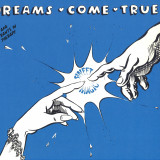
HiNRG masterpiece and often heard anthem in Mexico's Sonidos movement parties. Originally released in '89 at the tail-end of the HiNRG epoch as “house music” was starting to stake its territory in the charts, this production remained an underground hit by Los Angeles based duo Tyrants in Therapy (aka Dreams Come True). The melodic themes and lyric nuances explored in Sweet Magic make it a unique and unforgettable hymn you'll be humming when you wake up after a night at Patrick Miller. Faithfully remastered from the original master tapes which we managed to find and digitize in Los Angeles. Featuring a new stripped down extended mix by Castro using the original stems from the master tapes.