Cerca:mala

Generi
Tutto
DOUGIE POOLE - THE RAINBOW WHEEL OF DEATH

country songwriter from Brooklyn's indie underground, Dougie Poole blurs the lines between genre and generation on his third solo album, The Rainbow Wheel of Death. Rooted in sharp songwritingvand the organic sounds of a live-in-the-studio band, it's a classic-sounding record for the modern world. The Rainbow Wheel of Death's title nods to the colorful pinwheel that appears onscreen whenever a computer's application stalls. For Poole _ who found himself working as a freelance computer programmer once the pandemic brought his touring schedule to a temporary halt in 2020 _ it's also a reference to the holding pattern that's left much of society feeling stuck, unable to move ahead in an uncertain world. That feeling was pervasive when he in his New York City bedroom and wrapping up the songwriting process in the recording studio itself. Once hailed as the "patron saint of millennial malaise" for his sardonic wit and topical, tongue-in-cheek songwriting, Poole broadens his reach here. "High School Gym" builds a bridge between 2020s lo-fi textures and 1980s pop vibes, while "Must Be In Here Somewhere" _ whose narrator sits at a lap top, searching through "every server burning in North Carolina" for a digital souvenir of a long-lost relationship _ mixes modern concerns with classic country instrumentation. If records like 2017's Wideass Highway and 2020's breakthrough release The Freelancer's Blues told stories about uninspired Millennials languishing in dead-end jobs and no-good relationships, then The Rainbow Wheel of Death focuses on more universal issues like mortality, love, and the passing of the time. With The Rainbow Wheel of Death, Dougie Poole breathes new life into country music, retaining the acclaimed elements of his previous work _ drum machines, synthesizers, and his deep-set voice _ while pushing toward something warm, organic, and prismatic.

pre-ordina ora20.10.2023

dovrebbe essere pubblicato su 20.10.2023

22,06
DOUGIE POOLE - THE RAINBOW WHEEL OF DEATH

country songwriter from Brooklyn's indie underground, Dougie Poole blurs the lines between genre and generation on his third solo album, The Rainbow Wheel of Death. Rooted in sharp songwritingvand the organic sounds of a live-in-the-studio band, it's a classic-sounding record for the modern world. The Rainbow Wheel of Death's title nods to the colorful pinwheel that appears onscreen whenever a computer's application stalls. For Poole _ who found himself working as a freelance computer programmer once the pandemic brought his touring schedule to a temporary halt in 2020 _ it's also a reference to the holding pattern that's left much of society feeling stuck, unable to move ahead in an uncertain world. That feeling was pervasive when he in his New York City bedroom and wrapping up the songwriting process in the recording studio itself. Once hailed as the "patron saint of millennial malaise" for his sardonic wit and topical, tongue-in-cheek songwriting, Poole broadens his reach here. "High School Gym" builds a bridge between 2020s lo-fi textures and 1980s pop vibes, while "Must Be In Here Somewhere" _ whose narrator sits at a lap top, searching through "every server burning in North Carolina" for a digital souvenir of a long-lost relationship _ mixes modern concerns with classic country instrumentation. If records like 2017's Wideass Highway and 2020's breakthrough release The Freelancer's Blues told stories about uninspired Millennials languishing in dead-end jobs and no-good relationships, then The Rainbow Wheel of Death focuses on more universal issues like mortality, love, and the passing of the time. With The Rainbow Wheel of Death, Dougie Poole breathes new life into country music, retaining the acclaimed elements of his previous work _ drum machines, synthesizers, and his deep-set voice _ while pushing toward something warm, organic, and prismatic.

pre-ordina ora20.10.2023

dovrebbe essere pubblicato su 20.10.2023

24,79
UPCHUCK - BITE THE HAND THAT FEEDS LP

Channeling the speed of youth and the heaviness of a fleshy, lived life in equal proportion, Upchuck’s second LP, Bite the Hand That Feeds, is a Trojan Horse par excellence, craftily smuggling in waves of sentimental emotion and clever pop songwriting under a veil of pulsing rhythms and scorching riffs. What binds Upchuck together is a purity of intention, an organic loyalty to a thick knot of uncalculated friendships, struggles, and desires. These are songs about the joy of continuing to live, songs that find each other in the rush of a crushing reality, propelling the listener onward towards a collective release, however brief it may last. Themes of surviving through the night, youth-blinded love, cheap champagne soaked back-alley parties, and chaotic street protests are subsumed under a single unifying thread: the needs we have for one another, our shared hunger for connection. In a world saturated with arbitrary rules and paper-thin moralism, Upchuck offer free¬dom through sensation, a type of unserious transcendence found through the swirl of bodies melting into one another in the passion of dance. With Bite the Hand That Feeds, Upchuck isn’t trying to tell anyone how to live. Rather, they are simply trying to find a way to make life more worth living for both themselves and their friends—if the music compels you to move, you might as well consider yourself their friend too. Shortly after the release of their debut album Sense Yourself, Upchuck absconded to Southern California to record Bite the Hand That Feeds, enlisting the production talents of Ty Segall and the airy reprieve of his secluded Topanga Canyon home studio. Upchuck credits Segall, who recorded the entire record live to tape over the span of five days, with helping to elevate the arrangements of their second record to bold new heights—fans of Segall’s extensive catalog will undoubtedly recognize the shadow of his creative touch in Bite the Hand That Feeds’ commanding, layered drum polyrhythms, tasteful use of oddball effects, and fuzzed out, every-guitar-pushed-into-the-red ethos. All the same, final credit for Upchuck’s evolution from Sense Yourself to Bite the Hand That Feeds must be paid to the band itself. Following the release of their debut LP, Upchuck embarked upon a break-neck string of live shows, touring alongside the likes of Segall’s Fuzz, Amyl and the Sniffers, Negative Approach, OFF!, and Sub¬humans. The razor tight focus of Bite the Hand That Feeds was forged in the fire of these live shows, speaking directly to the power of their in-person presence—these are songs meant to be heard pressed up against a barricade, blasted through dimed guitar amps placed so close to your ears that you can practically reach out and touch them. In its totality, Bite the Hand That Feeds offers a sonic portrait of what it feels like to be young and caught up in the thrill of it all, coursing between ripping dance grooves and thundering dirges, anti-self-serious crowd anthems and charming pop hooks.

non in magazzino

Ordina ora e ordineremo l'articolo per te presso il nostro fornitore.

33,82

Last In: 2 years ago
JOHNNIE TAYLOR / BOBBY BLAND - LET´S GET BACK ON TRACK / HEART, OPEN UP AGAIN

Johnnie Taylor was an accomplished soul artist despite having little instrumental skill and he rarely wrote any of his own material. He was known variously as the ‘Blues Wailer’ and the ‘Philosopher Of Soul’ and recorded over 30 albums and 120 singles throughout a career that cemented his status as one of the leading male soul vocalists during the late sixties and throughout the seventies.

He started his recording career mid-50s with the doo-wop group The Five Echoes and gospel groups The Highway Q.C.’s and then in 1957, The Soul Stirrers, replacing Sam Cooke who had left the group for a solo career. Taylor followed that path a few years later signing for Cooke’s SAR label. and had a minor hit in 1962 with “Rome Wasn’t Built In A Day”.

in 1964 he moved to Stax Records where he started as a blues artist enjoying many fruitful years, most notably with “Who’s Making Love” selling more than a million copies. Following the unfortunate demise of Stax in 1976 he moved to Columbia Records where he went platinum with the hit “Disco Lady” (ironically not a disco track at all) and the album from which it came ‘Eargasm’ (1976) was a commercial peak he would never scale again. However, he continued with many collectable releases before moving to Beverly Glen Music in the early eighties and then Malaco Records in 1984, where his style became the more soul-blues based sound that was synonymous with the label. He remained with them until he died of a heart attack in Dallas aged 66 in 2000.

“Let’s Get Back On” Track comes from the CD ‘Gotta Get The Groove Back’ (1999) produced (and co-written with Charlie Brooks) by Frederick Knight, who also used the same backing track some 7 years later with his production of the David Sea track “Stay In My Arms” which was a modern soul favourite and will help to register the significance of this earlier production. It is now available as a vinyl release for the first time. It was taken from his final album although Malaco released ‘There’s No Good In Goodbye’ posthumously in 2003.
Robert Calvin Brooks, known professionally as Bobby “Blue” Bland spent his early career in Memphis, developing a sound that mixed gospel with blues and R&B and was known as the ‘Lion Of The Blues ‘and the ‘Sinatra Of The Blues’. His father abandoned the family not long after his birth and he acquired his name from his stepfather, Leroy Bland. His formative musical years were centered around the Beale Street scene and he was scouted by Ike Turner for Modern Records.

His progress was interrupted by a two year stint in the US Army and when he returned to Memphis he signed for Duke Records, run by Don Robey. Bland was illiterate and Robey helped him sign his contract which only gave him half a cent per record sold instead of the industry standard of 2 cents. He had his first hit in 1957 and continued a successful run of R&B chart entries without breaking through into the mainstream markets and was ranked number 13 of the all time chart-topping artists in Joel Whitburn’s “Top R&B/Hip-Hop Singles: 1942-1995”.

Duke Records sold out to ABC and with them he managed to return to the R&B charts but he still couldn’t succeed in the pop charts. In 1985 Bland signed for Malaco who were specialists in the Southern black music sound and he recorded many albums and toured for them, frequently with B.B. King, and was inducted into the ‘Rock And Roll Hall Of Fame’ in 1992.

Whilst “Heart Open Up Again” was a vinyl release in 1985 it was not chosen to be the single release from the Tommy Couch & Wolf Stephenson produced album Members Only (1985). This beautiful ballad, penned by George Jackson/Robert Miller/Michael Wooten, was never before released as a single and is a fabulous pairing with the topside – two of the best from two of the all-time greats.

pre-ordina ora13.10.2023

dovrebbe essere pubblicato su 13.10.2023

19,50
Hamid El Shaeri - The SLAM! Years (1983-1988) LP

If you were to ask for a defining Habibi Funk track, there are a few that come to mind: from Fadoul’s “Sid Redad,” Dalton’s “Soul Brother” to Ahmed Malek’s “Omar Gatlato.” However, none are as widely connected with us at this point as Hamid Al Shaeri’s “Ayonha.” We heard the track for the first time when we were working on selecting tracks for your first compilation and we instantly loved it. We obviously had heard of Hamid El Shaeri’s music before, but only material from his Al Jeel phase when he was already the full-blown
superstar he is now.

Listening to his releases from the early 1980’s opened a whole new door for us. At the time, Hamid had just left Libya to pursue his career in Egypt via a detour in London, where he recorded his first album. Hamid’s distinct sound of the sound is quintessentially reliant on heavy synths and so it was particularly important to purchase these synths in a timely manner. “Whenever a new one synthesizer would come out, we would have to buy it immediately, otherwise someone else would get their hands on that sound.” London also played an important role for Hamid as a musical epicenter.

He fondly reminisces about the many live shows he attended there, including some of the biggest international musicians like Freddie Mercury and Michael Jackson. After returning to Cairo where he also recorded his following albums, he connected with SLAM! for the
release of his debut, laying the foundation of a collaboration that lasted for 5 albums. Luckily, we were able to connect with Hamid through our friend Youssra El Hawary, whose extensive network has opened many doors for us within the Egyptian music scene. We met Hamid for the first time probably in 2016 at his office / rehearsal studio in the outskirts Cairo. We were expecting a larger-than-life
character in-line with his status as a certified superstar, yet the actual person turned out to be very approachable and super easy to connect with. He liked the idea of an effort to amplify his early works again,
which, when originally released, were far from an economic success.

While he was down to assist with an interview and his blessing for the project he also told us that for any license we needed to speak with the original label SLAM! who released these songs, still held the rights and also remained in business over the decades though they didn’t actively release any new music. Hany Sabet had started SLAM! records in the early 1980s and focused on cassette tape releases, the
format that expedited the success of a new generation of record labels in Egypt. By the mid 1980’s, SLAM! had become one of the most successful and economically dominant record labels in Egypt, with Hamid El Shaeri being just one of their key artists, alongside Mohamed Mounir, Hanan, Hakim, Mustafa Amar and many more. Luckily, Hany Sabet turned out to be a friend of our colleague Malak Makar’s father, which probably helped to warm him to the idea of licen- sing “Ayonha” to this - in the scale of his world - tiny label
from Germany. Eventually “Ayonha” ended up becoming a widely successful release and either Hany or we brought up the idea of a full album dedicated to Hamid El Shaeri’s work on SLAM!.


"Maktoub Aleina” is the first single and will be released January 14th. Following the massive success of "Ayonha,” “Maktoub Aleina” is another mid-tempo groover with a beautiful, synth-forward melody, that brings together a lovely combination of soul, disco and Arabic pop music of the highest order, giving a taste of full album. The second single, “Yekfini Nesma Sotak” will be released January 28th and combines Hamid’s unique formula of soul and pop, held together by a catchy synth melody. “Yekfini Nesma Sotak” picks up the
pace a bit, making the uplifting mood of the track even more powerful. Third single, arriving February 11th, is “Dari Demou’ek,” one of the stand out tracks of Hamid’s early recordings done for SLAM! in the early 1980s. Dominated by a disco infused bassline, the track offers a lot of space of the funky production to shine while Hamid inserts his vocals at all the right moments. A masterpiece of disco touched by Arabic pop music.

Full album arrives February 25th. This release is dedicated to Hany Sabet, the founder of SLAM! and his wife Rosemary Jane Sabet (who
took the photos we used for the cover and the booklet), who sadly passed away during the time it took us to prepare the release.
Vinyl comes with an extensive booklet with an interview with Hamid as well as unseen photos

non in magazzino

Ordina ora e ordineremo l'articolo per te presso il nostro fornitore.

21,81

Last In: 13 months ago
Joao Donato - A Bad Donato LP
  • The Frog
  • Celestial Showers
  • Bambu
  • Lunar Tune
  • Cadê Joel? (The Beautiful One)
  • Debutante's Ball
  • Straight Jacket
  • Mosquito (Fly)
  • Almas-Irmas
  • Malandro

On this 1970 album recorded in Los Angeles, Donato departs from his Brazilian bossa nova roots, incorporating an eclectic, and electric, mix of funk, fusion and psychedelic pop. The result is a groovy Fender Rhodes driven set, highlighted by “The Frog” and “Lunar Tune”.

This Verve By Request title is pressed on 180-gram vinyl at Third Man in Detroit.

pre-ordina ora13.10.2023

dovrebbe essere pubblicato su 13.10.2023

38,61
Hamid El Shaeri - The SLAM! Years (1983-1988) LP

If you were to ask for a defining Habibi Funk track, there are a few that come to mind: from Fadoul’s “Sid Redad,” Dalton’s “Soul Brother” to Ahmed Malek’s “Omar Gatlato.” However, none are as widely connected with us at this point as Hamid Al Shaeri’s “Ayonha.” We heard the track for the first time when we were working on selecting tracks for your first compilation and we instantly loved it. We obviously had heard of Hamid El Shaeri’s music before, but only material from his Al Jeel phase when he was already the full-blown
superstar he is now.

Listening to his releases from the early 1980’s opened a whole new door for us. At the time, Hamid had just left Libya to pursue his career in Egypt via a detour in London, where he recorded his
first album. Hamid’s distinct sound of the sound is quintessentially reliant on heavy synths and so it was particularly important to purchase these synths in a timely manner. “Whenever a new one synthesizer would come out, we would have to buy it immediately, otherwise someone else would get their hands on that sound.” London also played an important role for Hamid as a musical epicenter.

He fondly reminisces about the many live shows he attended there, including some of the biggest international musicians like Freddie Mercury and Michael Jackson. After returning to Cairo where he also recorded his following albums, he connected with SLAM! for the
release of his debut, laying the foundation of a collaboration that lasted for 5 albums. Luckily, we were able to connect with Hamid through our friend Youssra El Hawary, whose extensive network has opened many doors for us within the Egyptian music scene. We met Hamid for the first time probably in 2016 at his office / rehearsal studio in the outskirts Cairo. We were expecting a larger-than-life
character in-line with his status as a certified superstar, yet the actual person turned out to be very approachable and super easy to connect with. He liked the idea of an effort to amplify his early works again,
which, when originally released, were far from an economic success.

While he was down to assist with an interview and his blessing for the project he also told us that for any license we needed to speak with the original label SLAM! who released these songs, still held the rights and also remained in business over the decades though they didn’t actively release any new music. Hany Sabet had started SLAM! records in the early 1980s and focused on cassette tape releases, the
format that expedited the success of a new generation of record labels in Egypt. By the mid 1980’s, SLAM! had become one of the most successful and economically dominant record labels in Egypt, with Hamid El Shaeri being just one of their key artists, alongside Mohamed Mounir, Hanan, Hakim, Mustafa Amar and many more. Luckily, Hany Sabet turned out to be a friend of our colleague Malak Makar’s father, which probably helped to warm him to the idea of licen- sing “Ayonha” to this - in the scale of his world - tiny label
from Germany. Eventually “Ayonha” ended up becoming a widely successful release and either Hany or we brought up the idea of a full album dedicated to Hamid El Shaeri’s work on SLAM!.


"Maktoub Aleina” is the first single and will be released January 14th. Following the massive success of "Ayonha,” “Maktoub Aleina” is another mid-tempo groover with a beautiful, synth-forward melody, that brings together a lovely combination of soul, disco and Arabic pop music of the highest order, giving a taste of full album. The second single, “Yekfini Nesma Sotak” will be released January 28th and combines Hamid’s unique formula of soul and pop, held together by a catchy synth melody. “Yekfini Nesma Sotak” picks up the
pace a bit, making the uplifting mood of the track even more powerful. Third single, arriving February 11th, is “Dari Demou’ek,” one of the stand out tracks of Hamid’s early recordings done for SLAM! in the early 1980s. Dominated by a disco infused bassline, the track offers a lot of space of the funky production to shine while Hamid inserts his vocals at all the right moments. A masterpiece of disco touched by Arabic pop music.

Full album arrives February 25th. This release is dedicated to Hany Sabet, the founder of SLAM! and his wife Rosemary Jane Sabet (who
took the photos we used for the cover and the booklet), who sadly passed away during the time it took us to prepare the release.
Vinyl comes with an extensive booklet with an interview with Hamid as well as unseen photos

non in magazzino

Ordina ora e ordineremo l'articolo per te presso il nostro fornitore.

23,24

Last In: 3 years ago
Park End - SNKRX013

Park End

SNKRX013

12inchSNKRX013
Sneaker Social Club
02.10.2023

Reach for the geiger counter - Park End comes shelling in the direction of Sneaker Social Club with some plutonium-plated, 2-stepping swelterweight gear for the grubbiest of dancehalls. All we can ascertain about the shadowy figure on the buttons for this latest release is that they’re clearly schooled in the lineage of UK hardcore, pirate radio culture and the sympathetic tenets of UKG, jungle and dubstep.

Opening up the A side, ’Same Dream’ is a claustrophobic, gnarly creeper with razor-sharp snares, growling low end and enough heads-down malaise to turn the most blissful sunrise set ice-cold. ‘The Immortality Of The Crab’ pays tribute to the fine tradition of illegal radio broadcasting and its importance for the development of rave, leaning on a staggered, mucky garage beat that smacks hard just how we like it.

On the flip, Park End turns attention to the synergy between RnB and garage with a refix of BBL Sound’s ‘BBS’, pairing the sweetest vocal chops with plenty of bitter b-line pressure, while ‘Rekt’ draws on an unnamed voice for another fission between human sensitivity and mechanised intensity. This parting shot borders on anti-anthemic by the time it reaches its peak while holding true to the pitch-black vibe creeping out around the edges of this rough diamond of an EP.

non in magazzino

Ordina ora e ordineremo l'articolo per te presso il nostro fornitore.

14,50

Last In: 2 years ago
Malayeen - Malayeen

Malayeen

Malayeen

12inchCREP10
Discrepant
22.09.2023

Discrepant proudly presents the Vinyl edition of Lebanese trio Malayeen. Malayeen is the project of Lebanese musicians Raed Yassin (Keyboards, Turntables & Electronics), Charbel Haber (Electric Guitar & Electronics) and Khaled Yassine (Darbouka, Percussion). Born from Yassin and Haber's love for the music of quintessential Egyptian guitarist Omar Khorshid, Malayeen disassembles and re-configures the work and style of the iconic guitarist innovative take on Arabic music. The final result makes for an original and unique update of Khorshid & belly dancing inspired songs from the past. Over the course of 7 compositions, appropriately named after Khorshid and famous belly dancers from the Arabic diaspora, the three musicians' varied backgrounds and techniques collide and coalesce in an experimental yet magical fashion, not actually playing Khorshid's music, but inspiring themselves from the cult guitarist's genius to create something completely new, modern and unexpected. A unique LP featuring the combined talents by key players of the Lebanese avant-garde. The Malayeen LP edition is released by Discrepant in collaboration with Lebanese exploratory label Annihaya effectively combining East and West musical strains of thought as well as conclusively deconstructing and displacing this particular form of 'popular' music. Design by Studio Safar S.A.L. Comes with full color poster painting by Omar Khouri Special vinyl one time pressing to 500 copies. "Uplifting, beat-driven pieces, often melodic, definitely Arabic, with destabilizing touches from external sounds, sound manipulations, and textural plays. The 17- minute 'Samia' is a roller-coaster ride culminating in a dizzying solo/duo between Yassine's darbouka and a darbouka track from a record played by Yassin. Great stuff. Monsieur Délire

pre-ordina ora22.09.2023

dovrebbe essere pubblicato su 22.09.2023

21,81
Geri Allen, Charlie Haden, Paul Motian - In The Year Of The Dragon LP

Pianistin Geri Allen, Bassist Charlie Haden und Drummer Paul Motian schließen sich in den 80er Jahren zu einem Trio zusammen. Haden, weltberühmt als Mitglied von Ornette Colemans Doppelquartett sowie von Keith Jarretts Trio mit Motian am Schlagzeug, der wiederum mit dem Bill Evans Trio Jazzgeschichte schreibt, und Allen, der mit Steve
Coleman die Jazzwelt revolutioniert, präsentieren Bud Powells groovigen Klassiker „Oblivion", Ornettes Post-BopIkone „The Invisible" und ihre eigene geschaffene Werke, die die hohe Kunst des Trios manifestieren.

pre-ordina ora22.09.2023

dovrebbe essere pubblicato su 22.09.2023

20,80
A.R. Kane - A.R. Kive LP 4x12"

A.r. Kane

A.R. Kive LP 4x12"

4x12inchRGIRL133
ROCKET GIRL
08.09.2023

A.R. Kive collates the three most astonishing works from that most miraculous of duos - A.R. Kane - comprising the ‘Up Home’ EP from 1988 that signified the band’s dawning realisation of their own powers and possibilities, their legendary debut LP ‘sixty nine’ (1988) and its kaleidoscopic, prophetic double-LP follow up ‘i’ (1989).

In founder-member Rudy Tambala’s new remastering, the music on these pivotal transmissions from the birth of dream pop, have been reinvigorated and re-infused with a new power, a new depth and intimacy, a new height and immensity. Vivid, timeless and yet always timely whenever they’re recalled, these records still force any listener to realise that despite the habits of retrospective myth-making and the
safe neutering effects of ‘genre’, thirty years have in no way dimmed how resistant and dissident to critical habits of categorisation A.R. Kane always were. Never quite ‘avant-pop’ or ‘shoegaze’ or ‘post-rock’ or any of those sobriquets designed to file and categorise, A.R. Kive is a reminder that those genres had to be coined, had to be invented precisely to contain the astonishing sound of A.R. Kane, because
previous formulations couldn’t come close to their sui generis sound and suggestiveness. This is music that pointed towards futures which a whole generation of artists and sonic explorers would map out. Now beautifully repackaged, remastered and fleshed out with extensive sleeve notes and accompanying materials, ‘A.R. Kive’ reveals that 35 years on it’s still a struggle to defuse the revolutionary and inspirational possibility of A.R. Kane’s music.

A.R. Kane were formed in 1986 by Rudy Tambala and Alex Ayuli, two second-generation immigrants who grew up together in Stratford, East London. From the off the pair were outsiders in the culturally mixed (cockney/Irish/West Indian/Asian) milieu of the East End, with Alex and Rudy’s folks first generation immigrants from Nigeria and Malawi, respectively. The two of them quickly developed and fostered an innate and near-telepathic mutual understanding forged in musical, literary and artistic exploration. Like a lot of second-generation immigrants, they were ferocious autodidacts in all kinds of areas, especially around music and literature. Diving deep into the music of afro-futurist luminaries such as Sun Ra, Miles Davis, Lee Perry and
Hendrix, as well as devouring the explorations of lysergic noise and feedback from contemporaries like Sonic Youth and Butthole Surfers, they also thoroughly immersed themselves in the alternate literary realities of sci-fi and ancient history (the fascination with the arcane that gave the band their name), all to feed their voracious cultural thirsts and intellectual curiosity.

It was seeing the Cocteau Twins performing on Channel 4 show the Tube that spurred A.R. Kane into being - “They had no drummer. They used tapes and technology and Liz Fraser looked completely otherworldly with those big eyes. And the noise coming out of Robin’s guitar! That was the ‘Fuck! We could do that! We could express ourselves like that!’ moment”, recalls Tambala - and through a mix of
confidence, chutzpah, ad hoc almost-mythical live shows and sheer innocent will the duo debuted with the astonishing ‘When You’re Sad’ single for One Little Indian in 1986. Immediately dubbed a ‘black Jesus & Mary Chain’ by a press unsure of WHERE to put a black band clearly immersed in feedback and noise, what was immediately apparent for listeners was just how much more was going on here - a
tapping of dub’s stealth and guile, a resonant umbilicus back to fusion and jazz, the music less a conjuration of past highs than a re-summoning of lost spirits.
The run of singles and EPs that followed picked up increasingly rapt reviews in the press, but it was the ‘Up Home EP’ released in 1988 on their new home, Rough Trade that really suggested something immense was about to break. Simon Reynolds noted the EP was: Their most concentrated slab of iridescent awesomeness and a true pinnacle of an era that abounded with astounding landmarks of guitar-reinvention, A.R. Kane at their most elixir-like.

If anything, the remastered ‘Up Home’ that forms the first part of ‘A.R. Kive’ is even more dazzling, even more startling than it was when it first emerged, and listening now you again wonder not just about how many bands christened ‘shoegaze’ tried to emulate it, but how all of them fell so far short of its lambent, pellucid wonder. This remains intrinsically experimental music but with none of the frowning orthodoxy those words imply. A.R. Kane, thanks to that second generation auto-didacticism were always supremely aware about the interstices of music and magic, but at the same time gloriously free in the way they explored that connection within their own sound, fascinated always with the creation of ‘perfect mistakes’ and the possibilities inherent in informed play.

‘sixty nine’ the group’s debut LP that emerged in 1988 had
critics and listeners struggling to fit language around A.R. Kane’s sound. As a title it was telling - the year of ‘Bitches Brew’, the year of ‘In A Silent Way’, the erotic möbius between two lovers - and as originally coined by the band themselves, ‘dream pop’ (before it became a free-floating signifier of vague import) was entirely apposite for the music A.R. Kane were making. Crafted in a dark small basement studio in which Tambala recalls the duo had “complete freedom - We wanted to go as far out as we could, and in doing so we discovered the point where it stops being music”. There was an irresistibly dreamy, somnambulant, sensual and almost surreal flow to ‘sixty nine’s sound, but also real darkness/dankness, the ruptures of the primordial and the reverberations of the subconscious, within the grooves of remarkable songs like ‘Dizzy’ and ‘Crazy Blue’. Alex’s plangent vocals floated and surged amidst exquisite peals of refracted feedback but crucially there was BASS here, lugubrious and funky and full of dread, sonic pleasure and sonic disturbance crushed together to make music with a center so deep it felt subcutaneous, music constructed from both the accidental and the deliberate, generous enough to dance with both serendipity and chaos. ‘sixty nine’ remains - especially in this remastered iteration - ravishing, revolutionary.

The final part of this ‘A.R. Kive’ contains 1989’s astonishing double-LP ‘i’ which followed up on ‘sixty nine’s promise and saw the duo fully unleash their experimental pop sensibilities over 26 tracks, plunging the A.R. Kane sound into a dazzlingly kaleidoscopic vision of pop experiment and play. Suffused with new digital technologies and combining searingly sweet and danceable pop with perhaps the duo’s strangest and boundary-pushing compositions, the album did exactly what a great double-set should do - indulge the artists sprawling pursuit of their own imaginations but always with a concision and an ear for those moments where pop both transcends and toys with the listeners expectations. Jason Ankeny has noted that “In retrospect, ‘i’ now seems like a crystal ball prophesying virtually every major musical development of the 1990s; from the shimmering techno of ‘A Love from Outer Space’ to the liquid dub of ‘What’s All This Then?’, from the alien drone-pop of ‘Conundrum’ to the sinister shoegazer miasma of ‘Supervixens’ — it’s all here, an underground road map for countless bands to follow.” Perhaps the most overwhelmingly all-encompassing transmission from A.R. Kane, ‘i’ bookended a three year period in which the duo had made some of the most prophetic and revelatory music of the entire decade.

After ‘i’ the duo’s output became more sporadic with Tambala and Ayuli moving in different directions both geographically and musically, with only 1994’s ‘New Clear Child’ a crystalline re-fraction of future and past echoes of jazz, folk and soul, before the duo went their separate ways. Since then, A.R. Kane’s music has endured, not thanks to the usual sepia’d false memories that seem to maintain interest in so much of the musical past, but because those who hear A.R. Kane music and are changed irrevocably, have to share that universe which A.R. Kane opened up, with anyone else who will listen. Far more than other lauded documents of the late 80s it still sounds astonishingly fresh, astonishingly livid and vivid and necessary and NOW.

pre-ordina ora08.09.2023

dovrebbe essere pubblicato su 08.09.2023

105,84
Small Million - Passenger  LP

Small Million

Passenger LP

12inch0655469053854
Tender Loving Empire
01.09.2023

You have said too much to a stranger in a bar bathroom; your back is killing you because of everything you haven’t said; you’ve overwatered your houseplants again. Small Million is here for you. Flowing from the collaboration of longtime creative partners Ryan Linder and Malachi Graham, the Portland-based indie pop outfit welds deeply affecting sonic production to smart lyrics about intuition and inhibition, losing control and ending up in unexpected places, being willing to fuck up, bodies hurt and bodies joyful.

The effect is both intimate and epic, delicate and fierce. Listen to it to ache, dance to it to heal. In the time since Small Million's last release, years of chronic pain have led lead vocalist and lyricist Malachi Graham to deep explorations of embodiment that have changed everything from her singing voice to her dance moves to her observation of human frailty. “There’s one side of chronic pain that leads you towards intuition, self-discovery, and listening closely to yourself. But it also means you end up sitting on the side of the room a lot, watching people and paying attention. Also you’re pissed,” notes Graham. Producer and instrumentalist Ryan Linder’s background as a filmmaker informs the textured richness and intelligent restraint of his song building. He approaches production with obsessive technical rigor that’s always in service of centering intense emotion.

Graham’s clear, unadulterated vocals breathe at the heart of Linder’s rich sonic terrain, drawing comparisons to The Cranberries and Florence + the Machine. Linder and Graham have been writing as a duo for a decade, but for their newest chapter they've expanded the band, enlisting Ben Tyler (Small Skies) on drums and Kale Chesney (Lo Pony) on bass and harmonies.

Small Million's evolution into a four-piece has expanded the band’s sound from their synth pop origins to encompass more organic, raw indie rock energy. Small Million has played with artists like Fakear, IDER, Hatchie, HÆLOS, Lo Moon, and Loch Lomond, and their tracks have been featured on compilations by Tender Loving Empire, PDX Pop Now!, and Vortex Music Magazine. They released their debut EP Before the Fall in June 2016, their follow-up, Young Fools, in Fall 2018, and singles “Saintly” and “Tarot” in 2019. Their newest music is dropping throughout 2022.

pre-ordina ora01.09.2023

dovrebbe essere pubblicato su 01.09.2023

25,00
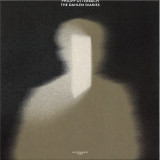
PHILIPP OTTERBACH - THE DAHLEM DIARIES LP

The new LP by Krefeld-born, Berlin-based artist Philipp Otterbach entitled 'The Dahlem Diaries'.

Recorded in a little-visited corner of the German capital, 'The Dahlem Diaries' is a convergence of ideas, sketches and tracks, both old and new, most of which were produced between 2020-2022. Whilst eerie atmospheres, electronics and drums have played a pivotal role in Philipp’s earlier releases, his latest is a rather more introspective affair, in which the guitar takes a leading role. A role Otterbach uses to quietly bring light and hope to his music.

Speaking about his writing process, Philipp explains that, based around his original compositions, “Friends were nice enough to contribute additional parts on their instruments which I then reworked, put together and re-contextualized. The recordings encapsulate a very specific moment in time, one that would have sounded perhaps very different the day before or after.”

Combined with a strong use of effects and field recordings, 'The Dahlem Diaries' feels somewhat like a scene or fragment from a story, in which the narrative remains undefined. It is a playful album that is something of a blurred underwater adventure, sounding as bright as it is hazy, even psychedelic at times, yet with an almost melancholic positivity. In Philipp’s own words: “It could be an album about friendship and being at one with myself, whilst at the same time bringing a certain seriousness to my music, but not necessarily to myself; there is also a playful humour hidden in there. ”

non in magazzino

Ordina ora e ordineremo l'articolo per te presso il nostro fornitore.

21,22

Last In: 2 years ago
TULLIO DE PISCOPO - ACQUA E VIENTO

Tullio De Piscopo is an Italian drummer, percussionist and singer- songwriter born in Naples, Italy. During his musical career he began working as a session drummer, playing with international artists, including Chet Baker, Gil Evans, Gato Barbieri, Eumir Deodato and many others.

His 6th solo album Acqua E Viento, released in 1983, includes the Italian #1 single “Stop Bajon (Primavera)” which also ranked to #58 in the UK Singles Chart of that same year. “Stop Bajon (Primavera)” was a favourite in Rimini (Italy) Discotheques, a Balearic Islands classic, a Chicago favourite during the early house days, and became an anthem of the Italo Disco movement. The album includes guest musicians Don Cherry on trumpet, percussionst Famoudou Don Moye and composer and songwriter Pino Daniele.

pre-ordina ora18.08.2023

dovrebbe essere pubblicato su 18.08.2023

34,24
Jorge Ben - Solta O Pavão

Jorge Ben

Solta O Pavão

12inchSVVRCH009CV
Survival Research
04.08.2023

A reissue of Jorge Ben's Solta o Pavao, originally released in 1975. Jorge Ben is one of Brazilian music's iconic and best-loved figures. Born Jorge Duilio Lima Menezes in Rio in 1942, he took the stage name, Jorge Ben, in deference to his mother's Ethiopian roots, and later used Jorge Ben Jorge for further distinction. Playing tambourine and singing in a church choir from an early age, Ben began playing in Carnival blocos and was performing in nightclubs as a teen. Signed to Philips in 1963, his "Mas Que Nada" became an instant international sensation that has never waned, despite being sung entirely in Portuguese. Beginning in samba, Ben's openminded approach saw him embrace aspects of bossa nova, the "Jovem Guarda" rock movement of the mid-1960s and the experimental Tropicalia form, the broad palette and diverse influences yielding a number of adventurous and abstruse albums during the 1970s, of which Solta o Pavao is one of the most rated by connoisseurs, though somewhat overlooked in general; its title translates roughly to "Unleash the Peacock" and apparently concerns the outward expression of inner beauty. Against a backdrop of lushly produced samba rock with shades of MPB, highlights include opener "Zagueiro", in which Ben salutes football center-backs in typically playful and poetic language; closing number "Jesualda" is a heady ballad of a chance encounter leading to a girl's social climbing and "Para Ouvir No Radio (Luciana)" a love song with striking flute and string arrangements; Dadi Flavi's bubbling bass and occasional string synths help keep the sound non-standard.

pre-ordina ora04.08.2023

dovrebbe essere pubblicato su 04.08.2023

19,54
Mary Jane Leach - Woodwind Multiples

Mary Jane Leach is a composer focussed on the physicality of sound, its acoustic properties and how they interact with space. She has played an instrumental role in NYC’s pioneering Downtown scene alongside Arthur Russell, Ellen Fullman, Peter Zummo, Philip Corner and Arnold Dreyblatt, as well as devoting years to the preservation and reappraisal of Julius Eastman’s work since his death in 1990, compiling the »Unjust Malaise« 3CD set in 2005 and editing the 2015 book »Gay Guerrilla: Julius Eastman and His Music«. »Woodwind Multiples« is her second album for Modern Love, following »(f)lute songs« (2018).

»Woodwind Multiples« features four pieces for multiples of the same instrument: four bass flutes, nine oboes, nine clarinets, and seven bassoons. Each piece works closely with the unique sound of each instrument, combining pitches that create other, sometimes unexpected, tones, primarily combination and interference tones, as well as rhythmic patterns. What you hear is what happens naturally - there is no processing or manipulation.

»8B4 (1985/2022)«, played by Manuel Zurria, is for four bass flutes. It is a revision of 8x4, which was written in 1985 for the DownTown Ensemble and was only performed once, due to its unusual instrumentation: alto flute, English horn (originally bass oboe), clarinet, and voice.

»Xantippe’s Rebuke« (1993) was written for Libby Van Cleve, for eight taped oboes and one live, solo oboe. The eight taped parts are equal and dependent, while the solo part is meant to be a solo with the tape as accompaniment. The piece works with the unique sound of the oboe, starting with unison pitches that create the richest sound, building the piece from there. Pitches and rhythmic patterns that occur naturally are notated and then played later, which in turn create other pitches and rhythmic patterns. So, in effect, the nature of the oboe and its natural sound determine the direction of the piece.

»Charybdis« (2020), played by Sam Dunscombe, is for solo clarinet and eight taped clarinets. It combines a somewhat obscured reference to Weep You No More, a John Dowland piece, which combines with the sound phenomena created from the melody and supporting chords of the Dowland.

»Feu de Joie« (1992) was written for bassoonist Shannon Peet and is an homage to the bassoon and its wonderful sound. It is for seven parts—six taped and one »live.« The taped bassoons combine to create a bed of sound that exploits the unique qualities of the bassoon, creating combination and interference tones, starting off with unison pitches, creating a rich sound that builds from there. Most of the subsequent pitches and phrases occur naturally, and are then notated later on in the piece, which in turn creates other notes and phrases.

pre-ordina ora04.08.2023

dovrebbe essere pubblicato su 04.08.2023

30,04
Various - Lets Go Into Space VII LP
non in magazzino

Ordina ora e ordineremo l'articolo per te presso il nostro fornitore.

28,78

Last In: 2 years ago
Tiken Jah Fakoly - Brakuage De Pouvoir LP 2x12"

Highly anticipated new album (the 11th) of the African Reggae Voice. Militant and sharp in his texts, powerful and unstoppable in his groove.

Recorded between Abidjan, Bamako and Paris. Co-produced by jamaican veteran Tyrone Downie (Bob Marley), and French musicians Guillaume Stepper (Sly & Robbie) and Mael Donion (City Kay).

With featurings by Amadou & Mariam, Grand Corps Malade, Winston McAnuff and Dub Inc. Sung in french, english, dioula and bambara. One of this year World Music major piece.

non in magazzino

Ordina ora e ordineremo l'articolo per te presso il nostro fornitore.

27,52

Last In: 2 years ago
Various - Transform I LP 2x12"

When Transform-I was released in 2009, Bristol’s Dubkasm were unmistakably prominent on the reggae scene but it is this LP - their tenth release - that put them on the map and cemented their status as outernational roots innovators and one of the most creative outfits in reggae. By 2006, Jah Shaka had been rinsing their percussive vocoder smash ‘Zulu Dawn’ (track 15) at the end of every dance for close to three years. Dubplates from the LP became firm favourites on some of the greatest soundsystems in the world, including Aba Shanti-I, Iration Steppas, and Channel One.
DJ Stryda and producer Digistep’s reputation grew still further when the pair managed to get an extremely rare vocal from the legendary Dub Judah, who at the time had not voiced a tune for many years. The resulting 7”, ‘From the Foundation’ (track 2) was the first tune to be released from Transform-I, an album which took the music world by storm with its singular blend of a deep, conscious roots reggae sound with instrumentation that drew on Digistep’s Brazilian heritage.

As the great DJ and journalist Steve Barker said in his rave Wire magazine review of the initial release, ‘Like many innovations heard for the first time, you wonder why this has not been done before’. Indeed, the LP’s blend of percussion instruments like zabumba, cavaquinho, and cuica with an absolutely stellar cast of vocalists including Tenastelin, Christine Miller, and Ras B, with a pre-Reggae Reggae Sauce fame Levi Roots recording from his living room, became timeless the moment it was released. Barker praised the album for being ‘more orthodox than expected’, by which I think he meant that the album is a completely authentic roots record, rather than an attempt to mix musical flavours to conceal a lack of ideas. Instead, ideas flew back and forth across the Atlantic, as basic tracks were laid in the Dubkasm Studio (then in Brazil, now in England) and overdubs and vocals were recorded in London, Nottingham, Bristol and Norway, with the final mixes being done at the Daddy Roots studio in Bristol. The combination is seamless both because Digistep grew up with Brazilian music, courtesy of his father, and because Dubkasm have lived and breathed reggae since their formation in 1994 – just go and listen to early releases like ‘Chemical Reaction Dub’ (1996) or ‘Hornsman Trod’ (2003) and you’ll hear heavyweight productions with a Rasta ethos immersed in U.K. soundsystem culture.

Since the album’s release, Dubkasm have gone from strength to strength and collaborated with a dazzling array of artists. Transform-I was remixed by some of Bristol’s best electronica producers in 2010, and 2013’s 12” ‘Victory’ became a huge soundsystem hit around the world, before being voiced by two of the greatest singers of all time, Luciano and Turbulence, and being remixed the following year by one of the world’s finest dubstep producers, Mala (who in 2016 released his own project fusing Latin music with electronic bass – the excellent Mala in Cuba).
The first project of its kind, beautifully reissued in its original format by Dubquake (the outfit behind France’s incredible OBF Soundsystem), Transform-I is the LP that launched Dubkasm on their current trajectory and has truly lived up to its name.

non in magazzino

Ordina ora e ordineremo l'articolo per te presso il nostro fornitore.

27,31

Last In: 2 years ago
Gerry Cinnamon - Live at Hampden Park 2x12"
 
21

Gerry Cinnamon, an already legendary live performer, made history last summer after selling out Scotland's national football stadium twice over to become the first independent act - and the first Scot - to sell out multiple nights at Hampden Park. A year on, the definitive live album from the multi-platinum singer/songwriter will be released on 14 July 2023. "Well that was a trip and a half. Played all sorts of gigs all over the world but that was something else. Over 100,000 of us. Music is a magical thing that connects people in a special way. History made. Memories made more importantly. Felt the Hampden roar right in my chest and it was mighty." - Gerry Cinnamon. The homecoming shows concluded his 350,000-capacity UK and Ireland tour, originally due to happen in 2020, instead taking place across 2021-22, also included sold out shows at Birmingham and Manchester Arena, London’s iconic Alexandra Palace, the 25,000 capacity Malahide Castle, Dublin, and Musgrave Park Stadium, Cork.

pre-ordina ora15.07.2023

dovrebbe essere pubblicato su 15.07.2023

40,76
Articoli per pagina:
N/ABPM
Vinyl