Matching brooding, tense undercurrents of drone with strained soulfulness, Malcolm Pardon makes a notable shift in his creative approach on his third album.
Leaving his piano behind, the Stockholm-based artist explores the richly varied tones lingering in the background of his past compositions.
Born from his extended live improvisation for Gustaf Broms’ Köttinspektionen exhibition in Uppsala, Flesh & Bonesbecomes a haunting suite of compositions focused on texture and spatial processing, mixed by longtime collaborators Aasthma (Peder Mannerfelt & Pär Grindvik). From Hidden Path’s cavernous wells of low-frequency tone to Under Over’s sustained synth blooms, and the woozy two-chord refrain of Speaking In Tongues, Pardon's seasoned approach to dramatic scene-setting leads his music into its own captivating, compelling sphere, where emotions entwine and conjure strange new plains of expression.
Suche:malcolm
"Described by Zimbabwean journalist Liam Brickhill as “a new star in the southern sky”, and by his legendary mentor, Bra Johnny Mekoa, as “the future Jonas Gwangwa”, Malcolm Jiyane is a cornerstone of the contemporary South African Jazz scene. From his teenage years, it was under Mekoa’s tutelage that Jiyane developed his prodigious talents into the multi-instrumentalist that he is today. What Theon Cross is to the tuba, Malcolm is to the trombone, although his ability to embody musical production extends far beyond one instrument. His work thus far constitutes, amongst other works, film score (which he composed as a teenager), and debut album UMDALI (meaning ‘creator’ in Zulu), which was received to universal acclaim, including a 5-star review (and Global Album Of The Month nod) from The Guardian. In 2024, Malcolm Jiyane Tree-O (Tree-O is the name of his band), returns with his sophomore album ‘TRUE STORY’, an exploration of the current state of the rainbow nation through a series of songs inspired by real people and their stories. TRUE STORY releases on 14 June, on digital, vinyl and CD. "
Two mavericks, out on the weekend, trying to make it pay...
"Maverick was the word that came to mind when I listened to this music. A slightly wayward independence of spirit and outlook. The word originally referred to an unbranded male calf that had become separated from the herd (because Texan rancher Sam Maverick was so negligent in his branding - ‘if it ain’t branded, it’s a Maverick’). But Sam’s grandson Maury Maverick gave it a different twist in his short but stormy Congressional career as the only liberal member of the Southern Democratic caucus. Maury was so out of step with his own folks that he not only voted in 1937 to make lynching a federal crime, he even addressed the House to condemn the practice as barbaric. His attempt to ban racist mob murder sadly failed, but it’s that refusal to march in step which distinguishes the two ‘mavericks’ who made this record.
Who would attempt to combine cunning ethnological forgery, Scottish folk songs, claw-hammer guitar, untutored horn-tootling, elastically relaxed drumming and garage electronic fuckery? Only Greg and Stefan, high on sea, sunshine and mis-judged micro-dosing – that’s who. ‘Don’t drown’ was offered as practical advice during the self-described ‘Yellow Submarine’ phase of making this record. And while they managed to avoid literally doing so (phew), they sound here like they got pretty ‘deep in’ to an Octopus’s sound world all their own. This surprisingly clear analogue recording has just enough Bikini Bottom grit to ensure traction. The tunes are inviting, and the sonic disruptions are too good-natured and goofy to upset even the most delicate digestion.
The sessions have had a couple of years to marinate, courtesy of some pandemic, and are here offered in that most Archducal of vinyl formats, the double ten inch. What are you waiting for, a side of Crabby Patties? Get your water-wings and dive in (unless you’re tripping)!" - Bruce Russell (The Dead C)
Pumice is the long-running, endlessly inventive project of New Zealand native Stefan Neville (1974), whose shambolic music is equally reminiscent of Kiwi pop groups such as The Clean and Tall Dwarfs as well as the country's experimental noise-rock bands like the Dead C. Largely recorded solo by himself on junky equipment, his songs typically feature blown-out guitars, wheezing chord organs, and vocals disguised by tape hiss and static.
Greg Malcolm (1965) is a guitarist from New Zealand who has played everywhere on the globe and with all most everyone, including Rosy Parlane, Toshimaru Nakamura, Tetuzi Akiyama and Bruce Russell, as well as solo releases on his own label, Corpus Hermeticum, Kraak and Celebrate Psi Phenomenon.
Waxwork Records is thrilled to release PHANTASM Original Motion Picture Score by Fred Myrow and Malcolm Seagrave. In celebration of the iconic Horror film's 45th Anniversary, this special triple LP features the complete score sourced from the original 1979 master tapes for the first time in any format, a full LP of never before released cues from the Phantasm score recordings sessions, and the newly re-mastered original 1979 score album.
Directed by Don Coscarelli, Phantasm has become a horror classic due to its surreal and unconventional storytelling. Filming on weekends over the span of a year, and working with a budget of only $300,000, Coscarelli and his crew created a bizarre, gorey, and entirely original horror film. Some of the most famous aspects of the film, like the floating silver orb, come directly from Coscarelli’s dreams, which give the film an even more ethereal feel. Composers Fred Myrow and Malcolm Seagrave were inspired by the horror scores of Goblin (Suspiria) and Mike Oldfield (The Exorcist) to create the haunting sounds of Phantasm. Myrow and Seagrave were working with synthesizers in the early days of the instrument. Says Coscarelli, “The synthesizers we used back then were so primitive that you couldn't repeat something; you would program the synthesizer, which means setting all of these dials to create a sound, and you went back and tried to get it again and forget it - it was impossible.
"I recently received notice that our long-term film storage vault in the basement of the historic Howard Hughes Headquarters building on the corner of Romaine and Sycamore in Hollywood was being permanently closed. During the process of moving out our negative materials, I came across the original three reels of Ampex 456 analog tape used in the Phantasm score recording sessions. Listening now to the score, including the outtake tracks, I am impressed with how inventive and adventurous Fred and Malcolm were in their approach to scoring Phantasm."
Waxwork Records is excited to release the definitive PHANTASM Original Motion Picture Score by Fred Myrow and Malcolm Seagrave as a deluxe 3xLP with features including the expanded and complete score sourced from the original 1979 master tapes, never before released score cues from the Phantasm recording sessions, and the newly re-mastered original 1979 score album. Each disc is pressed to "Silver Sphere" metallic silver colored vinyl and housed in a heavyweight triple gatefold jacket. Also included are exclusive liner notes by Phantasm writer, director, and producer Don Coscarelli, an 11""x11"" insert, and full album artwork by Graham Humphreys.
Das Bristoler Trio Waldo's Gift, eine elektrisierende frische Kraft in der neuen Welle britischer Experimentalmusik, veröffentlicht über das Ishmael Ensemble-Label Severn Songs sein Debüt. "Malcolm's Law" ist eine knisternde, maximalistische, unglaublich komplexe Gitarrenplatte. Während die Band aufgrund ihres Fokus auf Improvisation mit der aktuellen UK-Jazz-Explosion in Verbindung gebracht wird, gibt es hier Anklänge von Prog-Metal, Math-Rock und den intensiveren Enden von Squarepusher und Aphex Twin. "Wir schmuggeln Metal wie ein Trojanisches Pferd in Jazz-Lokale", lacht Vine. Es ist unglaublich, aber jeder Track ist ein einzelner Live-Auftritt, aufgenommen ohne Overdubs oder Extras. "So zu klingen wie wir, ist wie ein verschwitztes, chaotisches Durcheinander, kurz davor auseinanderzufallen. Wir sind alle am Limit dessen, was wir körperlich spielen können, und genau daraus entsteht der Spass."
Malcolm Pardon (Roll The Dice) is back into the fold for his second solo album, "The Abyss". The album, which will be released on Leaf, is a meditation on the taboos that surround mortality in our culture, looking past the bleak or macabre to observe death as a multi-layered, lifelong acquaintance. It"s also highly melodic and very beautiful. Malcolm has enlisted some remarkable creative talent around the project, including photographer Chris Shonting, designer Peter Ström and film-maker Oskar Wrangö.
- A1: Mon Dié Sénié 4 29
- A2: Walking With Satie 4 03
- A3: Père Lachaise 3 43
- A4: Miles And Miles Of Miles Davis 2 04
- A5: Jazz Is Paris 5 16
- B1: Rue Dauphine 3 25
- B2: Paris Paris With Catherine Deneuve 5 23
- B3: Je T'aime .. Moi Non Plus 4 36
- B4: Club Le Narcisse 3 20
- B5: La Main Parisienne With Amina 5 01
- C1: Driving Into Delirium 2 33
- C2: Revenge Of The Flowers With Françoise Hardy 404
- C3: In The Absence Of The Parisienne 4 26
- C4: Anthem 3 52
- C5: Who The Hell Is Sonia Rykiel? 6 18
- D1: Paris Un 4 39
- D2: Paris Deux 4 02
- D3: Paris Trois 9 42
- D4: Paris Quatre 3 35
Malcolm McLaren, New York Dolls and Sex Pistols’ manager, writer, musician, fashion designer, marked the history of pop culture. His album “Paris” released in 1994 on the French Vogue label was produced by Robin Millar (Sade, The Style Council, Everything But The Girl). This is the first time the album has been available on vinyl and arrives a few weeks before the opening of Paris Olympic Games which should see lead track ‘Paris Paris’ with Catherine Devenue on vocals widely referenced. Also features Francoise Hardy & Amina. This is a x19 trk double Black LP Vinyl in gatefold sleeve. Promo & marketing activity..
- One Of Many Voices
- Dreams Of Lamp Filament Numbers
- The Full Del Monte Variety (Ft.malcolm Delmonte)
- Momma Mia! Imade You Some Sangria( Ft.malcolm Del Monte & Kadesha Drija)
- The Provocation (Ft. Malcolm Delmonte)
- Ajourney Towards Total Inward Isolation
- Then, Nothing
- Let’s See What You Could Have Won
- The Jolly Green Giant (Ft. My Name Isian)
- Milk Tray Man (Ft. Mathias Kom)
- Jet From Gladiator (Ft. Kadesha Drija)
- Malcolm, Come Back
- Plenty Of Fish In The Sea
- Better Than We Could Have Been (Ft. The Full Cast)
Orange vinyl, 100 only
Cardiff-based, DIY-folk-pop collective, Quiet Marauder, are set to release their 5th album at the end of October 2023. This follows on from their madcap 111-song debut album, MEN (2013), as well as the more recent Tiny Men Parts (2020) and The Gift (2021), and continues their long-established relationship both with their label, Bubblewrap Collective, and Canadian collaborators, The Burning Hell.
Recorded in a Snowbird Studios pop-up in Lourinha, Portugal, Introducing Malcolm Del Monte continues the band’s fascination with high concepts and musical, album-length storytelling. At its core, it is an album about self-identity, isolation, and our innate fluctuations as human beings. Set during the pandemic, the album's a very loosely autobiographical (read: almost entirely false) account of band leader Simon M. Read's day-to-day life during Covid lockdowns with partner, Kadesha Drija, and imaginary friend, Malcolm Del Monte.
Choosing to largely avoid the topic of the pandemic altogether, Introducing Malcolm Del Monte instead charts the highs and lows of these living arrangements. These range from outrageous daytime drinking (high) to disagreements on the nature of perversion (low), with the first half of the album covering Malcolm’s emergence and ultimate expulsion from the house. With his absence being sorely felt, the second half sheds light on the alternative voices looking to fill that Malcolm-shaped space: a murderous green giant; a despondent Milk Tray Man; and a broken-necked, hypersexual Jet from Gladiators.
As with their previous story-based albums, the foreground narratives act to enable background allusions to other core concerns: the power of nostalgia; advertising and cultural consumption; well-being and isolation; balancing acts of the self. Ultimately, the album’s message is of striking a balance between self-questioning and improvement, and most of all, not being too hard on yourself when things don’t feel quite right.
Sonically and seamlessly ranging from alt-folk to industrial synth to melodic indie-pop, Introducing Malcolm Del Monte covers a lot of ground. Injected with the musicality of Quiet Marauder themselves, as well as Canadian kindred spirits, The Burning Hell, instrumentation includes flute, piano, chunky bass, acoustic and electric guitar, programmed beats, synthscapes, bamboo clarinet, bongos, and a heap load of vocals. Indeed, alongside the main lead voices of Simon M. Read, Kadesha Drija and Malcolm Del Monte (Rowan Liggett) there are guest performances from My Name Is Ian and The Burning Hell’s Mathias Kom.
The album will be preceded by lead single and video Momma Mia! I Made You Some Sangria! on 22nd September,
Be With present the first ever reissue of the ultra rare double pack DJ promo of Malcolm McLaren & Bootzilla Orchestra's "Call A Wave". Originally slipping out in 1989 to a select few, there were rumoured to be only ever 300 copies pressed. Indeed, the entire package never got a proper release and now goes for a small fortune.
Say what? Bootsy Collins, Jeff Beck and Malcolm McLaren, all in one band, composing over a Barry White sample? And that's just the original. But you can forget about that for now. Here we have the incredibly sought-after "DFC Dance Mix", mixed by Massimino Lippoli of Morenas / Sueño Latino fame for the legendary DFC Italy. It's a throbbing, vital, dramatic slice of dreamy ambient house. A deep, entrancing track that's both blissful and dancefloor dynamite. It features the iconic, disaffected female vocal chopped up over elegant piano snatches, Beck's ace guitar stylings over rolling, heavy drums and a killer, hypnotic bassline with sparkling harp coming and going. It's exotic, otherworldly and brimming with that very special late 80s/early 90s Mediterranean vibe. Yes, it's Balearic, it's House. Above all else, it's a pure uncut slice of halcyon summer days, pressed on wax.
But on side B we also have the mesmeric "Breakdown Mix", again mixed by DFC Italy. For some, *this* is the mix to have - and who are we to argue? This time, the vocals are treated so they're uttered backwards, contributing to the wonderfully disorienting magic of this particular mix.
And how could we forget the equally iconic "Orbital Mix"? Not by the actual group Orbital, but courtesy of S'Express's Mark Moore & William Orbit, no less. A brilliant, beautiful remix that's perhaps more musical. They make more obvious use of the sample from the original Barry White track ("I'm Gonna Love You Just a Little More Baby") that Malcolm was inspired by. Flip over to Side D to find the duo's uber-horizontal "Return To The Deep Ambient Mix", a floaty, beatless gem that'll leave you swooning.
To round out this quite astonishing package, the "New Age Mix", again coming from the DFC Italy camp, elegantly sends us off into the cosmos with minimal percussion and maximum vibes.
Every mix on this DJ double pack is truly killer. Simon Francis remastered the original audio for this release and Cicely Balston's precise cut for Alchemy at AIR Studios ensures this 2x12" well and truly pumps. The immaculate Record Industry pressing will ensure this incredibly sought-after masterpiece finds a home in many more DJ boxes this and every summer. For the artwork, we've recreated the original DJ promo, a plain white gatefold sleeve complete with the iconic burnt orange hype sticker. Hold tight. Roof down, tops off.
Scottish jazz trumpeter Malcolm Strachan releases his second solo album "Point Of No Return" on Haggis Records on 27th January 2023. A follow-up to his debut album "About Time" from March 2020 (also on Haggis Records), which received great critical acclaim and strong radio support across the globe. Once again, Malcolm delivers an album of original music written by himself and featuring material covering a broad spectrum of jazz styles. From modal jazz grooves to Brazilian samba beats, Latin rhythms to cinematic soundtrack vibes, and along the way, some beautiful ballads.
If the first album nodded slightly to mid-late 1960s classic Blue Note Records type jazz, this one is more reminiscent of the jazz fusion albums that Malcolms's jazz trumpet hero Freddie Hubbard recorded for the legendary CTI Records label in the early-mid 1970s. The same groove-based jazz where soul and funk beats are at the heart of the arrangement. Rock solid rhythms that allow complex horn parts and improvisation to float over the top with ease. The ensemble playing is strong and the leader's trumpet solos show why he's been one of the most in-demand session musicians in the UK for the last 20 years.
He's recorded and toured with the likes of Mark Ronson, Amy Winehouse, Corinne Bailey Rae, Jamiroquai, Martha Reeves and The Vandellas, Jess Glynne, The Craig Charles Fantasy Funk Band, Black Honey, The New Mastersounds, Abstract Orchestra and Blue Note Records jazz saxophone legend Lou Donaldson. Of course, he's also a founder and existing band member of the UK funk kings The Haggis Horns.
The core band on "Point Of No Return" are musicians that Malcolm has known and worked with for over two decades, often in The Haggis Horns, and most appeared on the debut album. Those musicians making a welcome return are Atholl Ransome (tenor sax/flute), George Cooper (piano), Danny Barley (trombone), Courtny Tomas, (double bass), and Erroll Rollins (drums). Newcomers this time are longtime Haggis Horns guest percussionist Sam Bell plus special guest vocalist UK jazz singer Jo Harrop, who adds non-verbal Flora Purim style vocals on tracks one and three. Three tracks feature strings, arranged by Phil Steel, with all the strings played by Richard Curran. One of the tracks is the beautifully poignant ballad for strings and trumpet "The Last Goodbye" which could easily have come from a film soundtrack and where Malcolm digs deep into his love for jazz ballads in his solo.
"Point Of No Return" by Malcolm Strachan will definitely appeal to lovers of contemporary acoustic jazz with a classic jazz feel. For those who love the music of Blue Note Records and CTI Records and trumpeters Freddie Hubbard, Donald Byrd, Lee Morgan, Art Farmer, and Miles Davis. Without a doubt, it will be one of the standout UK jazz releases of 2023.
Repress! Little Barrie And Malcolm Catto Team Up For Seven Tracks Of Breaks And Sci-Fi Fuzz For Maverick Producer Madlib's Label
Quatermass Seven, the meeting of minds between guitarist Barrie Cadogan, bassist Lewis Wharton and drummer Malcolm Catto represents a re-birth of sorts for Little Barrie, with these their first recordings since 2017’s Death Express and the untimely passing of their gifted drummer and friend Virgil Howe. As Lewis explains, the sessions played a part in the healing process, a way to re-connect through music without any intentions to necessarily come away with a finished record. “It was good to get in the studio again after such a long break especially as we didn’t go in with any agenda or expectations,” he explains. There was no preconceptions that we would make a new Little Barrie record, it was just an opportunity to work on some things Barrie had written for fun with zero pressure.” With most tracks recorded live with minimal overdubs, and produced by Malcolm at his Quatermass studios, The Heliocentrics’ main man brings new flavour to the band’s rhythm section by blending his power behind the drum kit and his expansive skills behind the mixing desk to take Little Barrie’s music forward into new territories. Recorded on Catto’s treasure trove of analogue gear, and mastered onto ¼” tape, the overall effect is guitar, bass and drums finding a sweet spot where genres collide, delivering a record that takes the influences of the past and pushes them towards somewhere more contemporary. “I definitely hear in Barrie’s songs a lot of common musical ground’” explains Malcolm. “It felt like a great thing to do, work with Malcolm while we’re figuring out what we wanna do,” Barrie concludes, “let’s just go in and do some playing and see what happens, and we came out with more than we ever intended.” Quatermass Seven delivers a dark, deep and expansive set of grooves, layered with frazzled and flawless guitar and flowing melodies, as well as pointing toward a future of exciting new musical opportunities. “Still here, so fine, just a little darker state of mind” sings Cadogan on ‘Steel Drum’, words which sum up hope in times of uncertainty, whilst unintentionally offering a perfect description of Quartermass Seven.
This killer double sider includes the two best and rarest songs by Hugh Malcom “Good Time Rock” and “Love Brother Love (aka Hands Of The Wicked”. It is the first repress on a 7inch for both songs. “Good Time Rock” was initially released in Jamaica on the Amalgamated and Pressure Beat labels and on Amalgamated in the UK whilst “Love Brother Love” was released on the Jamaican label Clancy’s Records only, all in 1968.
- 1: Intruh (Feat. Nui Moon)
- 2: 7Th Day (Feat. Kevin Mark Trail)
- 3: Loan-Sum (Feat. Mike Thesis And Thamson.p)
- 4: Beaut-I-Full World (Feat. Zima And Kalala)
- 5: Existential Lessons (Feat. Tiana Khasi)
- 6: Stars (Feat. Whosane And Pataphysics)
- 7: Full Moon (Feat. Ruru 432)
- 8: Sazon (Feat. Izy)
- 9: S.f Holiday (Feat. Izy)
- 10: Black Bond
- 11: Mercy
- 12: Us (Feat. Krown, Pookie, Nelson Dialect, 1/6, Mike Thesis, Tumi The Be, Clandestino, Jaal And Rara Zulu)
- 13: Hold On (To The Fallen Ones)
- 14: Fresh Gold Bloom-Age
- 15: This 2 (4 Moses)
- 16: Curtis On The Hiss
- 17: The Price Of Forgiveness (Feat. Dj Spell And Pataphysics)
Australian hip-hop/neo soul duo SO.Crates are a boom-bap prayer sent live and direct from the heart of two of the culture’s most committed students. The group features Melbourne based beatmaker and DJ Skomes alongside California-via-Adelaide MC & poet Cazeaux O.S.L.O, not to mention the MUSE, a forever changing third party who completes the creative trinity of the Crates. With a legacy built on releasing a steady flow of cold-crush records and delivering uplifting live performances to the party people, SO.Crates prove that hip-hop’s golden era is not a lost date in time, but a foundational state of mind. Functioning as a considered preview of what to expect from the album to follow, the hypnotic first release 'Stars' is an auditory exploration of what happens when two opposing charges collide; the joyful and the melancholy. Here, layers of instrumentation, samples and vocals sit atop a foundation of grounding beats — the track's roots from which piano samples, live trumpet and vocal embellishments spring. "When Skomes gets in his stride, it's always a bit of a happy/sad feeling. It can go either way, like a mood ring", says Cazeaux O.S.L.O. "I guess you could say we make mood ring beats, and 'Stars' is no exception".
Charismatic trombonist and pianist Malcolm Jiyane debut album as frontman is more than merely one individual’s breakthrough. Workshopped and recorded within two days in Johannesburg, UMDALI stretches the idea of what it means to improvise within the context of jazz.
Operating from the fringes of the South African jazz scene, the enigmatic yet charismatic trombonist and pianist Malcolm Jiyane delivers a major contribution to the canon -- one shaped around dedications to key figures in his personal and professional life. Several years ago, Jiyane was dealing with the death of a band member, the birth of a daughter and the passing of his beloved mentor Johnny Mekoa, founder of the Music Academy of Gauteng, which Jiyane attended from a young age. These life-altering events give shape to the music’s emotional register and its thematic concerns.
In Black Music, his book of essays and critiques, Amiri Baraka makes the point that jazz musicians, be it in the construction of solos or in other aspects of composition, always draw on the works of their contemporaries or elders. How much outsiders pick up on that is really dependent on how au fait they are with the music. In this album, Jiyane finds comfort in this well-trodden path. Two songs make for great examples. Umkhumbi kaMa, a jazzfunk track celebrating the creative force as inhabited by women, the motif to Herbie Hancock’s Ostinato (Suite for Angela) is a clear reference, connecting in one swift move, not only the musical traditions of the Black Atlantic but also the struggles and triumphs of women across space and time. On the same note, the free-form Solomon, Tsietsi & Khotso, conjured in the same jam session that yielded SPAZA’s UPRIZE!, appears here in a more fleshed out form as Senzo seNkosi; a tender dedication to Malcolm Jiyane Tree-O bass player Senzo Nxumalo.
Jiyane’s path to the realisation of his debut album as frontman is more than merely one individual’s breakthrough. Workshopped and recorded within two days in Johannesburg, UMDALI, not unlike Miles Davis’ landmark Kind of Blue, stretches our idea of what it means to improvise within the context of jazz.
Operating from the fringes of the South African jazz scene, the enigmatic yet charismatic trombonist and pianist Malcolm Jiyane delivers a major contribution to the canon -- one shaped around dedications to key figures in his personal and professional life. Workshopped and recorded within two days in Johannesburg, UMDALI stretches the idea of what it means to improvise within the context of jazz.
Scottish trumpeter Malcolm Strachan is a founder member of top UK funk/jazz-funk band The Haggis Horns as well as being one of the busiest session musicians in the UK today. In a professional career spanning 20 years, he's recorded with the likes of Mark Ronson, Amy WineHouse, Corinne Bailey Rae, Jamiroquai, Martha Reeves and The Vandellas, Jesse Glynne, The Craig Charles Fantasy Funk Band, Black Honey, The New Mastersounds and Blue Note saxophone legend Lou Donaldson. Now he's finally releasing his first solo album, aptly titled "About Time", on Haggis Records and he's going back to his original roots... Jazz.
The album is a collection of original compositions, all written and arranged by Malcolm, which are firmly rooted in the classic acoustic modern jazz style typified by the great 60's and 70's recordings on the legendary Blue Note Records label. A nice variation of themes and tempos feature throughout the album. From full-on latin vibes to beautiful ballads, soul jazz grooves to cinematic soundtrack flavours, all woven together by a great group of experienced musicians.
Malcolm's core quartet is himself on trumpet/flugelhorn, fellow Haggis Horns members George Cooper (piano) and Erroll Rollins (drums), plus Courtny Tomas on double bass. Featured guests are Atholl Ransome on tenor sax (The Haggis Horns), Rob Mitchell on baritone sax (Abstract Orchestra) and Danny Barley on Trombone. Strings are courtesy of Richard Curran and the percussionist is one of the finest session players in Europe, Karl Vanden Bossche (Incognito, Robert Palmer, Joss Stone, The Gorillaz, Sade, Blur - He and Malcolm met while touring with Mark Ronson)
Malcolm's love of jazz comes from his parents. Aged 7, his jazz musician father gave him a trumpet. From then on, jazz was his life. His musical education came via music teachers, youth jazz orchestras and jazz summer schools but mostly from his dad's record collection listening to Art Blakey and Dizzy Gillespie records and learning to improvise and solo by ear. At 18, he enrolled at Leeds College of Music and quickly immersed himself in the city's vibrant acid jazz, funk and soul scene and from making his recording debut in 1999 with The New Mastersounds, jazz was his musical passion but took a back seat to funk/soul/pop which were the day job. Until now.
Jazz is back. The wait is over. It really is "About Time" for Malcolm Strachan.
- A1: Three Sides & The Truth
- A2: Everydaelife
- A3: Own The Nite
- B1: Hot 4 Me (For U) (For U)
- B2: Faithful, Fearful
- B3: Lunchtime Gaze
- C1: Rodalies R1
- C2: Enllac (Luvfatuated Micx)
- C3: Purple Hindu
- D1: While You Slept (Despres De L'enllac) (Despres De L'enllac)
- D2: Regrets (Think About It) (Think About It)
- D3: We'll Find Each Other Again
Really love this album. This is probably some of Malcolm's best works, although it's hard to decipher as we like nearly everything he writes. As an album, it sounds like he's put everything he has into it, full of emotion and diversity. It's hard to say which track is our favorite but we are torn between Faithful Fearful and Regrets. Keep up the good work Malcolm as this is a masterpiece. Anyone who sleeps is missing out.
- A1: Gil Scott-Heron - The Revolution Will Not Be Televised
- A2: Mandingo Griot Society With Don Cherry - Sounds From The Bush
- A3: Roy Ayers Ubiquity - Red, Black And Green
- A4: Philip Cohran And The Artistic Heritage Ensemble - Malcolm X
- B1: Sarah Webster Fabio - Sweet Songs
- B2: Phil Ranelin - Vibes From The Tribe
- B3: Horace Tapscott With The Pan Afrikan Peoples Arkestra - Desert Fairy Princess
- C1: David Mcknight - Strong Men
- C2: Joe Henderson - Black Narcissus
- C3: Oneness Of Juju - African Rhythms
- D1: Doug Carn - Suratal Ihklas
- D2: Duke Edwards And The Young Ones - Is It Too Late
- D3: Carlos Garnett - Mother Of The Future
Underground Jazz, Street Funk & The Roots Of Rap 1968-79. Soul Jazz Records' new release 'Soul of a Nation: Afro-Centric Visions in the Age of Black Power' is released in conjunction with a major worldwide art exhibition, Soul of A Nation: Art in the The Age of Black Power which takes place at the Tate Modern, London, UK (July-Oct 2017) and The Brooklyn Museum, New York, USA.
The album shows how the ideals of the civil rights movement, black power and black nationalism influenced the evolvement of radical African-American music in the United States of America in the intensely political and revolutionary period at the end of the 1960s following the assassinations of Malcolm X, Martin Luther King and the rise of the Black Panther party.
Featuring groundbreaking artists such as Gil Scott-Heron, Roy Ayers, Don Cherry, Oneness of Juju, Sarah Webster Fabio, Horace Tapscott, Phil Ranelin and many others, Soul of A Nation shows how political themes led to the rise of 'conscious' black music as new afro-centric styles combined the musical radicalism and spirituality of John Coltrane and radical avant-garde jazz music alongside the intense funk and soul of James Brown and Aretha Franklin and the urban poetry and proto-rap of the streets.
The Soul of a Nation exhibition draws on the links between Black art forms - art, music, poetry - and how they came together during the civil rights and black power era as part of the wider black arts movement across the United States.
Iconic African-Amercian revolutionary figures such as Martin Luther King, Malcolm X and Angela Davis, John Coltrane, Muhammad Ali all appear in the radical artworks of Barkley L. Hendricks, Romare Bearden, Norman Lewis, Lorraine O'Grady and Betye Saar.
A selection of original radical jazz record sleeves artworks which appear in Soul Jazz Records' earlier groundbreaking Freedom, Rhythm and Sound - Revolutionary Jazz Original Cover Art book will also be on show at the Tate, London throughout the exhibition. The Freedom, Rhythm and Sound book is also newly back-in-print in conjunction with this major exhibition and the release of the Soul of a Nation album.
Stuart Baker (founder of Soul Jazz Records) will appear on the panel of Jazz for Soul of a Nation: Art in the Age of Black Power discussion at the gallery as part of the show. Soul of a Nation comes with extensive sleeve-notes and exclusive photography in a large 36-page outsize booklet and slipcase. Double gatefold vinyl album edition comes with full colour inners + bonus download code and includes full sleeve-notes/photography.
- A1: Java - Augustus Pablo
- A2: Hospital Trolly - I Roy
- A3: King Of Babylon - Junior Byles
- A4: Don't Go - Horace Andy
- A5: A Little Love - Jimmy London
- A7: Cheater - Dennis Brown
- A9: For The Love Of You - John Holt
- A10: Too Late To Turn Back Now - Alton Ellis
- A11: Be Thankful - Donovan Carless
- A12: Woman Of The Ghetto - Hortense Ellis
- A13: Children Of The Ghetto - Senya
- A14: Lonely Soldier - Gregory Isaacs
- A16: Going To Zion - Black Uhuru
- A17: Ordinary Man - Lloyd Parks
- A18: Ordinary Version 3 - Impact All Stars
- A19: Hold Tight - African Brothers
- A20: Righteous Man - Keith Poppin
- A21: Created By The Father - Errol Dunkley
- A22: The Race - The Gladiators
- A24: My Guiding Star - The Heptones
- A27: No Jestering - Carl Malcolm
- A28: Knotty No Jester - Big Youth
- A29: Fattie Bum Bum - Carl Malcolm
- A25: Something On Your Mind - Hubert Lee
- A26: Country Boy - Charley Ace & Dirty Harry
Chapter Two[36,35 €]
RANDY'S 50th ANNIVERSARY CHAPTER ONE / VARIOUS - First time on vinyl for Chapter Two second part of the acclaimed previously CD only set that was released to celebrate the 50th Anniversary of Randy's Records. From Augustus Pablo's groundbreaking 'Java' to Carl Malcolm's UK pop crossover hit 'Fattie Bum Bum' Chapter Two showcase classic after classic from a all-star line up of the 70's reggae music greats including Black Uhuru, Horace Andy, Dennis Brown, Gregory Isaacs, The Heptones & Big Youth. Beautifully packaged with inner sleeves featuring rare photos and liner notes by reggae historian, Dennis Katz.
- A1: Java - Augustus Pablo
- A2: Hospital Trolly - I Roy
- A3: King Of Babylon - Junior Byles
- A4: Don't Go - Horace Andy
- A5: A Little Love - Jimmy London
- A6: Cheater - Dennis Brown
- A7: For The Love Of You - John Holt
- A10: Too Late To Turn Back Now - Alton Ellis
- A11: Be Thankful - Donovan Carless
- A12: Woman Of The Ghetto - Hortense Ellis
- A13: Children Of The Ghetto - Senya
- A14: Lonely Soldier - Gregory Isaacs
- A16: Going To Zion - Black Uhuru
- A17: Ordinary Man - Lloyd Parks
- A18: Ordinary Version 3 - Impact All Stars
- A19: Hold Tight - African Brothers
- A20: Righteous Man - Keith Poppin
- A21: Created By The Father - Errol Dunkley
- A22: The Race - The Gladiators
- A24: My Guiding Star - The Heptones
- A25: Something On Your Mind - Hubert Lee
- A26: Country Boy - Charley Ace & Dirty Harry
- A27: No Jestering - Carl Malcolm
- A28: Knotty No Jester - Big Youth
- A29: Fattie Bum Bum - Carl Malcolm
Chapter One[36,35 €]
RANDY'S 50th ANNIVERSARY CHAPTER ONE / VARIOUS - First time on vinyl for Chapter Two second part of the acclaimed previously CD only set that was released to celebrate the 50th Anniversary of Randy's Records. From Augustus Pablo's groundbreaking 'Java' to Carl Malcolm's UK pop crossover hit 'Fattie Bum Bum' Chapter Two showcase classic after classic from a all-star line up of the 70's reggae music greats including Black Uhuru, Horace Andy, Dennis Brown, Gregory Isaacs, The Heptones & Big Youth. Beautifully packaged with inner sleeves featuring rare photos and liner notes by reggae historian, Dennis Katz.
- A1: Java / Augustus Pablo
- A2: Hospital Trolly / I Roy
- A3: King Of Babylon / Junior Byles
- A4: Don’t Go / Horace Andy
- A5: A Little Love / Jimmy London
- A6: Cheater / Dennis Brown
- B1: For The Love Of You / John Holt
- B2: Too Late To Turn Back Now / Alton Ellis
- B3: Be Thankful / Donovan Carless
- B4: Women Of The Ghetto / Hortense Ellis
- B5: Children Of The Ghetto / Senya
- B6: Lonely Soldier / Gregory Isaacs
- C1: Going To Zion / Black Uhuru
- C2: Ordinary Man / Lloyd Parks
- C3: Ordinary Version 3 / Impact All Stars
- C4: Hold Tight / African Brothers
- C5: Created By The Father / Errol Dunkley
- C6: The Race / The Gladiators
- D1: My Guiding Star / The Heptones
- D2: Something On Your Mind / Hubert Lee
- D3: Country Boy / Charley Ace & Dirty Harry
- D4: No Jestering / Carl Malcolm
- D5: Knotty No Jester / Big Youth
- D6: Fatty Bum Bum / Carl Malcolm
Von Augustus Pablos bahnbrechendem „Java” bis zu Carl Malcolms UK-Pop-Crossover-Hit „Fattie Bum Bum” präsentiert Chapter Two einen Klassiker nach dem anderen von einer All-Star-Besetzung der Reggae-Größen der 70er Jahre, darunter Black Uhuru, Horace Andy, Dennis Brown, Gregory Isaacs, The Heptones und Big Youth. Wunderschön verpackt mit Innenhüllen mit seltenen Fotos und Liner Notes des Reggae-Historikers David Katz.
- A1: Java - Augustus Pablo
- A2: Hospital Trolly - I Roy
- A3: King Of Babylon - Junior Byles
- A4: Don't Go - Horace Andy
- A5: A Little Love - Jimmy London
- A6: Cheater - Dennis Brown
- B1: For The Love Of You - John Holt
- B2: Too Late To Turn Back Now - Alton Ellis
- B3: Be Thankful - Donovan Carless
- B4: Woman Of The Ghetto - Hortense Ellis
- B5: Children Of The Ghetto - Senya
- B6: Lonely Soldier - Gregory Isaacs
- C1: Going To Zion - Black Uhuru
- C2: Ordinary Man - Lloyd Parks
- C3: Ordinary Version 3 - Impact All Stars
- C4: Hold Tight - African Brothers
- C5: Righteous Man - Keith Poppin
- C6: Created By The Father - Errol Dunkley
- C7: The Race - The Gladiators
- D1: My Guiding Star - The Heptones
- D2: Something On Your Mind - Hubert Lee
- D3: Country Boy - Charley Ace & Dirty Harry
- D4: No Jestering - Carl Malcolm
- D5: Knotty No Jester - Big Youth
- D6: Fattie Bum Bum - Carl Malcolm
Beginnend mit dem fröhlichen Ska von Lord Creators Unabhängigkeitshymne 'Independent Jamaica' zeigt das Chapter One Album den wahren Verlauf der jamaikanischen Musik in den 1960er Jahren mit einer virtuellen Who's Who der Reggae-Musik, darunter Bob Marley, Peter Tosh, Toots & The Maytals, Rico, Skatalites, John Holt & Alton Ellis. Wunderschön verpackt mit Innenhüllen mit seltenen Fotos und Liner Notes von Steve Barrow von Blood & Fire.
- A1: Hurts And Noises
- A2: Wake Up
- A3: I Don't Wanna Be A Rich
- A4: Terrorist Bad Heart
- A5: Provocate
- A6: Lucifer Sam (Pink Floyd)
- B1: Happy!?
- B2: So Lazy
- B3: I Feel Down
- B4: Stupido
- B5: Guilty
- B6: Caroline Says (Loo Reed)
UILTY RAZORS, BONA FIDE PUNKS.
Writings on the topic that go off in all directions, mind-numbing lectures given by academics, and testimonies, most of them heavily doctored, from those who “lived through that era”: so many people today fantasize about the early days of punk in our country… This blessed moment when no one had yet thought of flaunting a ridiculous green mohawk, taking Sid Vicious as a hero, or – even worse – making the so-called alternative scene both festive and boorish. There was no such thing in 1976 or 1977, when it wasn’t easy to get hold of the first 45s by the Pistols or the Clash. Few people were aware of what was happening on the fringes of the fringes at the time. Malcolm McLaren was virtually unknown, and having short hair made you seem strange. Who knew then that rock music, which had taken a very bad turn since the early 1970s, would once again become an essential element of liberation? That, thanks to short and fast songs, it would once again rediscover that primitive, social side that was so hated by older generations? Who knew that, besides a few loners who read the music press (it was even better if they read it in English) and frequented the right record stores? Many of these formed bands, because it was impossible to do otherwise. We quickly went from listening to the Velvet Underground to trying to play the Stooges’ intros. It’s a somewhat collective story, even though there weren’t many people to start it.
The Guilty Razors were among those who took part in this initial upheaval in Paris. They were far from being the worst. They had something special and even released a single that was well above the national average. They also had enough songs to fill an album, the one you’re holding. In everyone’s opinion, they were definitely not among the punk impostors that followed in their wake. They were, at least, genuine and credible.
Guilty Razors, Parisian punk band (1975-1978). To understand something about their somewhat linear but very energetic sound, we might need to talk about the context in which it was born and, more broadly, recall the boredom (a theme that would become capital in punk songs) coupled with the desire to blow everything off, which were the basis for the formation of bands playing a rejuvenated rock music ; about the passion for a few records by the Kinks or the early Who, by the Stooges, by the Velvet mostly, which set you apart from the crowd.
And of course, we should remember this new wave, which was promoted by a few articles in the specialized press and some cutting-edge record stores, coming from New York or London, whose small but powerful influence could be felt in Paris and in a handful of isolated places in the provinces, lulled to sleep by so many appalling things, from Tangerine Dream to President Giscard d’Estaing...
In 1975-76, French music was, as almost always, in a sorry state ; it was still dominated by Johnny Hallyday and Sylvie Vartan. Local rock music was also rather bleak, apart from Bijou and Little Bob who tried to revive this small scene with poorly sound-engineered gigs played to almost no one.
In the working class suburbs at the time, it was mainly hard rock music played to 11 that helped people forget about their gruelling shifts at the factory. Here and there, on the outskirts of major cities, you still could find a few rockers with sideburns wearing black armbands since the death of Gene Vincent, but it wasn’t a proper mass movement, just a source of real danger to anyone they came across who wasn't like them. In August 1976, a festival unlike any other took place in Mont-de-Marsan – the First European Punk Festival as the poster said – with almost as many people on stage as in the audience. Yet, on that day, a quasi historical event happened, when, under the blazing afternoon sun, a band of unknowns called The Damned made an unprecedented noise in the arena, reminiscent of the chaotic Stooges in their early adolescence. They were the first genuine punk band to perform in our country: from then on, anything was possible, almost anything seemed permissible.
It makes sense that the four+1 members of Guilty Razors, who initially amplified acoustic guitars with crappy tape recorder microphones, would adopt punk music (pronounced paink in French) naturally and instinctively, since it combines liberating noise with speed of execution and – crucially – a very healthy sense of rebellion (the protesters of May 1968 proclaimed, and it was even a slogan, that they weren’t against old people, but against what had made them grow old. In the mid-1970s, it seemed normal and obvious that old people should now ALSO be targeted!!!).
At the time, the desire to fight back, and break down authority and apathy, was either red or black, often taking the form of leafleting, tumultuous general assemblies in the schoolyard, and massive or shabby demonstrations, most of the time overflowing with an exciting vitality that sometimes turned into fights with the riot police. Indeed, soon after the end of the Vietnam War and following Pinochet’s coup in Chile, all over France, Trotskyist and anarcho-libertarian fervour was firmly entrenched among parts of the educated youth population, who were equally rebellious and troublemakers whenever they had the chance. It should also be noted that when the single "Anarchy in the UK" was first heard, even though not many of us had access to it, both the title and its explosive sound immediately resonated with some of those troublemakers crying out for ANARCHY!!! Meanwhile, the left-wing majority still equated punks with reckless young neo-Nazis. Of course, the widely circulated photos in the mainstream press of Siouxsie Sioux with her swastikas didn’t necessarily help to win over the theorists of the Great Revolution. It took Joe Strummer to introduce The Clash as an anti-racist, anti-fascist and anti-ignorance band for the rejection of old-school revolutionaries to fade a little.
The Lycée Jean-Baptiste Say at Porte d’Auteuil, despite being located in the very posh and very exclusive 16th arrondissement of Paris, didn’t escape these "committed" upheavals, which doubled as the perfect outlet for the less timid members of this generation.
“Back then, politics were fun,” says Tristam Nada, who studied there and went on to become Guilty Razors’ frontman. “Jean-Baptiste was the leftist high-school in the neighbourhood. When the far right guys from the GUD came down there, the Communist League guys from elsewhere helped us fight them off.”
Anything that could challenge authority was fair game and of course, strikes for just about any reason would lead to increasingly frequent truancy (with a definitive farewell to education that would soon follow). Tristam Nada spent his 10th and 11th unfinished grades with José Perez, who had come from Spain, where his father, a janitor, had been sentenced to death by Franco. “José steered my tastes towards solid acts such as The Who. Like most teenagers, I had previously absorbed just about everything that came my way, from Yes to Led Zeppelin to Genesis. I was exploring… And then one day, he told me that he and his brother Carlos wanted to start a rock band.” The Perez brothers already played guitar. “Of course, they were Spanish!”, jokes their singer. “Then, somewhat reluctantly, José took up the bass and we were soon joined by Jano – who called himself Jano Homicid – who took up the rhythm guitar.” Several drummers would later join this core of not easily intimidated young guys who didn’t let adversity get the better of them.
The first rehearsals of the newly named Guilty Razors took place in the bedroom of a Perez aunt. There, the three rookies tried to cover a few standards, songs that often were an integral part of their lives. During a first, short gig, in front of a bewildered audience of tough old-school rockers, they launched into a clunky version of the Velvet Underground's “Heroin”. Challenge or recklessness? A bit of both, probably… And then, step by step, their limited repertoire expanded as they decided to write their own songs, sung in a not always very accurate or academic English, but who cared about proper grammar or the right vocabulary, since what truly mattered was to make the words sound as good as possible while playing very, very fast music? And spitting out those words in a language that left no doubt as to what it conveyed mattered as well.
Trying their hand a the kind of rock music disliked by most of the neighbourhood, making noise, being fiercely provocative: they still belonged to a tiny clique who, at this very moment, had chosen to impose this difference. And there were very few places in France or elsewhere, where one could witness the first stirrings of something that wasn’t a trend yet, let alone a movement.
In the provinces, in late 1976 or early 1977, there couldn’t be more than thirty record stores that were a bit more discerning than average, where you could hear this new kind of short-haired rock music called “punk”. The old clientele, who previously had no problem coming in to buy the latest McCartney or Aerosmith LP, now felt a little less comfortable there…
In Paris, these enlightened places were quite rare and often located nex to what would become the Forum des Halles, a big shopping mall. Between three aging sex workers, a couple of second-hand clothes shops, sellers of hippie paraphernalia and small fashion designers, the good word was loudly spread in two pioneering places – propagators of what was still only a new underground movement. Historically, the first one was the Open Market, a kind of poorly, but tastefully stocked cave. Speakers blasted out the sound of sixties garage bands from the Nuggets compilation (a crucial reference for José Perez) or the badly dressed English kids of Eddie and the Hot Rods. This black-painted den was opened a few years earlier by Marc Zermati, a character who wasn’t always in a sunny disposition, but always quite radical in his (good) choices and his opinions. He founded the independent label Skydog and was one of the promoters of the Mont-de-Marsan punk festivals. Not far from there was Harry Cover, another store more in tune with the new New York scene, which was amply covered in the house fanzine, Rock News (even though it was in it that the photos of the Sex Pistols were first published in France).
It was a favorite hang-out of the Perez brothers and Tristam Nada, as the latter explained. “It’s at Harry Cover’s that we first heard the Pistols and Clash’s 45s, and after that, we decided to start writing our first songs. If they could do it, so could we!”
The sonic shocks that were “Anarchy in the UK”, “White Riot” or the Buzzcocks’s EP, “Spiral Scratch” – which Guilty Razors' sound is reminiscent of – were soon to be amplified by an unparalleled visual shock. In April 1977, right after the release of their first LP, The Clash performed at the Palais des Glaces in Paris, during a punk night organised by Marc Zermati. For many who were there, it was the gig of a lifetime…
Of course, Guilty Razors and Tristam were in the audience: “That concert was fabulous… We Parisian punks were almost all dressed in black and white, with white shirts, skinny leather ties, bikers jackets or light jackets, etc. The Clash, on the other hand, wore colourful clothes. Well, the next day, at the Gibus, you’d spot everyone who had been at this concert, but they weren’t wearing anything black, they were all wearing colours.”
It makes sense to mention the Gibus club, as Guilty Razors often played there (sometimes in front of a hostile audience). It was also the only place in Paris that regularly scheduled new Parisian or Anglo-Saxon acts, such as Generation X, Siouxsie and the Banshees, the Slits, and Johnny Thunders who would become a kind of messed-up mascot for the venue. A little later, in 1978, the Rose Bonbon – formerly the Nashville – also attracted nightly owls in search of electric thrills… In 1977, the iconic but not necessarily excellent Asphalt Jungle often played at the Gibus, sometimes sharing the bill with Metal Urbain, the only band whose aura would later transcend the French borders (“I saw them as the French Sex Pistols,” said Geoff Travis, head of their British label Rough Trade). Already established in this small scene, Metal Urbain helped the young and restless Guilty Razors who had just arrived. Guitarist for Metal Urbain Hermann Schwartz remembers it: “They were younger than us, we were a bit like their mentors even if it’s too strong a word… At least they were credible. We thought they were good, and they had good songs which reminded of the Buzzcocks that I liked a lot. But at some point, they started hanging out with the Hells Angels. That’s when we stopped following them.”
The break-up was mutual, since, Guilty Razors, for their part, were shocked when they saw a fringe element of the audience at Metal Urbain concerts who repeatedly shouted “Sieg Heil” and gave Nazi salutes. These provocations, even still minor (the bulk of the skinhead crowd would later make their presence felt during concerts), weren’t really to the liking of the Perez brothers, whose anti-fascist convictions were firmly rooted. Some things are non-negotiable.
A few months earlier (in July 1978), Guilty Razors had nevertheless opened very successfully for Metal Urbain at the Bus Palladium, a more traditonally old-school rock night-club. But, as was sometimes the case back then, the night turned into a mass brawl when suburban rockers came to “beat up punks”.
Back then, Parisian nights weren’t always sweet and serene.
So, after opening as best as they could for The Jam (their sound having been ruined by the PA system), our local heroes were – once again – met outside by a horde of greasers out to get them. “Thankfully,” says Tristam, “we were with our roadies, motorless bikers who acted as a protective barrier. We were chased in the neighbouring streets and the whole thing ended in front of a bar, with the owner coming out with a rifle…”
Although Tristam and the Perez brothers narrowly escaped various, potentially bloody, incidents, they weren’t completely innocent of wrongdoing either. They still find amusing their mugging of two strangers in the street for example (“We were broke and we simply wanted to buy tickets for the Heartbreakers concert that night,” says Tristam). It so happened that their victims were two key figures in the rock business at the time: radio presenter Alain Manneval and music publisher Philippe Constantin. They filed a complaint and sought monetary compensation, but somehow the band’s manager, the skilful but very controversial Alexis, managed to get the complaint withdrawn and Guilty Razors ended up signing with Constantin with a substantial advance.
They also signed with Polydor and the label released in 1978 their only three-track 45, featuring “I Don't Wanna be A Rich”, “Hurts and Noises” and “Provocate” (songs that exuded perpetual rebellion and an unquenchable desire for “class” confrontation). It was a very good record, but due to a lack of promotion (radio stations didn’t play French artists singing in English), it didn’t sell very well. Only 800 copies were allegedly sold and the rest of the stock was pulped… Initially, the three tracks were to be included on a LP that never came to be, since they were dropped by Polydor (“Let’s say we sometimes caused a ruckus in their offices!” laughs Tristam.) In order to perfect the long-awaited LP, the band recorded demos of other tracks. There was a cover of Pink Floyd's “Lucifer Sam” from the Syd Barrett era – proof of an enduring love for the sixties’ greats –, “Wake Up” a hangover tale and “Bad Heart” about the Baader-Meinhof gang, whose actions had a profound impact on the era and on a generation seeking extreme dissent... On the album you’re now discovering, you can also hear five previously unreleased tracks recorded a bit later during an extended and freezing stay in Madrid, in a makeshift studio with the invaluable help of a drummer also acting as sound engineer. He was both an enthusiastic old hippie and a proper whizz at sound engineering. Here too, certain influences from the fifties and sixties (Link Wray, the Troggs) are more than obvious in the band’s music.
Shortly after a final stormy and rather barbaric (on the audience’s side) “Punk night” at the Olympia in June 1978, Tristam left the band ; his bandmates continued without him for a short while.
But like most pioneering punk bands of the era, Guilty Razors eventually split up for good after three years (besides once in Spain, they’d only played in Paris). The reason for ceasing business activities were more or less the same for everyone: there were no venues outside one’s small circuit to play this kind of rock music, which was still frightening, unknown, or of little interest to most people. The chances of recording an LP were virtually null, since major labels were only signing unoriginal but reassuring sub-Téléphone clones, and the smaller ones were only interested in progressive rock or French chanson for youth clubs. And what about self-production? No one in our small safety-pinned world had thought about it yet. There wasn’t enough money to embark on that sort of venture anyway.
So yes, the early days of punk in France were truly No Future!
- 1: Say It With Your Chest
- 2: Elsewhere (Feat. Meshell Ndegeocello & Georgia Anne Muldrow)
- 3: Withness
- 4: Hollyweird
- 5: Skinfolk
- 6: For The Congo
- 7: I Came To The Poem
- 8: To Sister (Feat. Ganavya & Brandee Younger)
- 9: I Know That I Don't Know
- 10: Working Class Musicians
- 11: Love Is A Choosing (Feat. Mereba)
- 12: Song Of Myself
- 13: Melting Clocks (Feat. Mick Jenkins & Vic Mensa)
- 14: Every Media Minute
- 15: Indigo
aja monet ist eine surrealistische Blues-Dichterin, Musikerin und Bandleaderin, deren Werk fließend zwischen Poesie, Musik und politischem Ausdruck wechselt. Aus der Spoken-Word-Szene der Lower East Side in New York City hervorgegangen, wurde sie die jüngste Gewinnerin des Nuyorican Grand Slam Poetry-Titels, bevor sie ihr Schaffen auf genreübergreifende musikalische Darbietungen ausweitete, die ihre Wurzeln im Jazz, Blues und experimentellen Sound haben. Ihr Debüt-Poetry-Album ,when the poems do what they do" wurde 2024 für einen Grammy Award in der Kategorie ,Best Spoken Word Poetry Album" nominiert und etablierte Monetas als einzigartige Stimme in der zeitgenössischen schwarzen Musik- und Performance-Szene. Das Projekt verbindet Poesie mit Live-Instrumentierung und Improvisation und erkundet Themen wie Widerstand, Liebe und Freude durch einen kollaborativen, ensembleorientierten Ansatz. Als tourende Bandleaderin ist sie weltweit bei großen Festivals und in bedeutenden Veranstaltungsorten aufgetreten, darunter das Newport Jazz Festival, das North Sea Jazz Festival, das Montreal Jazz Festival, das Guggenheim, das Lincoln Center, das Barbican Centre und die Fremantle Biennale. Neben ihrer musikalischen Arbeit ist monet eine gefeierte Dichterin und Autorin. Ihr erster vollständiger Gedichtband, ,my mother was a freedom fighter" (2017), wurde für den NAACP Image Award in der Kategorie Poesie nominiert. Ihr jüngstes Buch, ,florida water", erschienen bei Haymarket Books, schöpft aus mehreren Jahren des Lebens und der Organisationsarbeit in Südflorida und setzt ihre Auseinandersetzung mit Ort, Bewegung und kollektivem Gedächtnis fort. Zu ihren Auszeichnungen zählen der Marjory Stoneman Douglas Award für Poesie, der Nelson Mandela Changemaker Award, der Harry Belafonte Voices for Social Justice Award, der EBONY 100 Artist in Residence Award sowie der Malcolm X & Dr. Betty Shabazz Vanguard Award. Zudem ist sie künstlerische Kreativdirektorin von V-Day, der globalen Bewegung zur Beendigung von Gewalt gegen Frauen und Mädchen, und Schöpferin von VOICES, einem Hörspiel aus dem Jahr 2022, das die Geschichten schwarzer Frauen in der Diaspora und auf dem afrikanischen Kontinent in den Vordergrund rückt. aja monet's zweites Studioalbum, ,the color of rain", wird im Mai 2026 bei drink sum wtr erscheinen.
- 1: Tame In The Water
- 2: Dazed And Confused
- 3: Fighting Your Shadow
- 4: Woman Got Soul
- 5: Ain't Enough
- 6: Fool
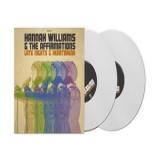
- 7: Late Nights & Heartbreak
- 1: In Your Arms
- 2: Still In My Head
- 3: Callin' Me Back
- 47: Am To Seville
- 5: Another Sunrise
- 6: Your Luck Can Change
Record Kicks freut sich, die Vinyl-Neuauflage zum 10-jährigen Jubiläum von ,Late Nights & Heartbreak" zu präsentieren, dem Durchbruchsalbum von Hannah Williams & The Affirmations, auf dem der Song zu finden ist, der zum emotionalen Rückgrat von Jay-Zs wegweisendem Album ,4:44" wurde. ,Late Nights & Heartbreak" kam 2016 raus und wurde von Kritikern gelobt. Seitdem ist es ein moderner Soul-Klassiker. Sein Vermächtnis wurde besiegelt, als Jay-Z den Titelsong von ,4:44" komplett um Hannah Williams' Originalaufnahme herum aufgebaut hat. Der Song, der als unverfälschtes Geständnis der Untreue genutzt wurde, war Jay-Zs Antwort auf ,Lemonade" von seiner Frau Beyoncé und machte Hannahs unverwechselbare Stimme einem weltweiten Publikum bekannt. Aufgenommen im Quatermass Studio in London - der Heimat der Kulthelden The Heliocentrics - zeigt ,Late Nights & Heartbreak" Hannah, begleitet von ihrer neu gegründeten Band The Affirmations. Produziert wurde das Album von Malcolm Catto, der für seine Arbeit mit Künstlern wie Mulatu Astatke, Orlando Julius, Floating Points, Quantic, DJ Shadow und Madlib. Das Album wurde komplett analog gemischt und auf Band gemastert und bietet einen rohen, druckvollen und zutiefst eindringlichen Sound. Auf 13 Tracks erkundet ,Late Nights & Heartbreak" viszeralen, kraftvollen Soul mit einem subtilen psychedelischen Touch. Von der eindringlichen ersten Single ,Tame in the Water" bis zum unerbittlichen achtminütigen Groove von ,Still in My Head" zeigt das Album die schiere Kraft und Kontrolle von Hannahs Stimme in ihrer elektrisierendsten Form. ,Woman Got Soul" liefert fünf Minuten mitreißenden, kraftvollen Funk, während tiefgründigere Stücke wie ,Another Sunrise" und ,Your Luck Can Change" einen üppigen, emotionalen Hintergrund für Themen wie Liebe, Lust, Sehnsucht, Wut und Verletzlichkeit bieten. Alle Songs sind Originalkompositionen, die von dem in Bristol ansässigen Kollektiv um The Affirmations unter der Leitung von Musikdirektor James Graham geschrieben wurden - mit Ausnahme einer atemberaubenden, psychedelisch-souligen Neuinterpretation von ,Dazed and Confused", die stark von der Originalversion von Jake Holmes inspiriert ist. Hannah Williams, die schon früh von der verstorbenen Sharon Jones gesegnet wurde, eroberte 2012 mit ihrem Debütalbum ,A Hill of Feathers" die Soul-Szene. Die Single ,Work It Out" wurde ein Indie-Radiohit und ebnete den Weg für eine Karriere, die von moderner Soul-Mythologie geprägt ist. Aufgewachsen in einem musikalischen Haushalt, sang Hannah ab dem Alter von sechs Jahren im Kirchenchor und konnte Noten lesen, bevor sie richtig lesen konnte. Heute ist sie eine unaufhaltsame Kraft - eine Künstlerin mit einem seltenen Talent, wie es nur einmal in einer Generation vorkommt. Zehn Jahre später kehrt ,Late Nights & Heartbreak" in dieser speziellen Jubiläumsausgabe auf Vinyl zurück und bestätigt erneut, warum Hannah Williams & The Affirmations nach wie vor zu den kraftvollsten Stimmen des zeitgenössischen Soul gehören.
MOb return this November with their second album on Veego Records, continuing the adventurous journey they began with their 2023 debut MOb 1. Hailed by the press as one of the boldest and freshest statements in the Greek scene, their first record moved seamlessly between jazz, punk, and electronic forms, creating a sound often described as “an entire orchestra played by just three musicians.”
On their new release, Marios Valinakis (saxophone, effects, synthesizers), Alexandros Delis (bass, double bass), and Panagiotis Kostopoulos (drums) construct an even more intricate and ambitious sonic universe. The compositions range from the explosive energy of “Tipping Point” and the dark atmospheres of “Utu and Sin”, to the radical reimagining of Wayne Shorter’s “Fall” and the polyphonic outburst of “The Listener”, featuring the Kos Choir.
Guest appearances further expand the palette: Phillip “Felipe MC” Manev lends his voice to “Tipping Point” and “Encounters”, while Angelos Polychronou enriches “Encounters” and “The Listener” with his percussions.
The album was produced and recorded by MOb themselves, with Bruno Ellingham handling mixing and mastering for most tracks, while “Utu and Sin” was mixed by Malcolm Catto at the Quatermass Sound Lab. The cover artwork is designed by Apostolos Mitrelis, and the back cover features a photograph by Maciej Moskwa.
If MOb 1 revealed a band capable of fusing free improvisation with rhythm-driven “bangers” that reached audiences beyond Greece, the new album confirms their evolution: more intense, more diverse, and more imaginative. With one foot rooted in tradition and the other firmly in the present, MOb deliver a work that breaks boundaries and builds bridges across genres and audiences, solidifying their reputation as one of the most exciting groups in today’s Greek music scene.
MOb return this November with their second album on Veego Records, continuing the adventurous journey they began with their 2023 debut MOb 1. Hailed by the press as one of the boldest and freshest statements in the Greek scene, their first record moved seamlessly between jazz, punk, and electronic forms, creating a sound often described as “an entire orchestra played by just three musicians.”
On their new release, Marios Valinakis (saxophone, effects, synthesizers), Alexandros Delis (bass, double bass), and Panagiotis Kostopoulos (drums) construct an even more intricate and ambitious sonic universe. The compositions range from the explosive energy of “Tipping Point” and the dark atmospheres of “Utu and Sin”, to the radical reimagining of Wayne Shorter’s “Fall” and the polyphonic outburst of “The Listener”, featuring the Kos Choir.
Guest appearances further expand the palette: Phillip “Felipe MC” Manev lends his voice to “Tipping Point” and “Encounters”, while Angelos Polychronou enriches “Encounters” and “The Listener” with his percussions.
The album was produced and recorded by MOb themselves, with Bruno Ellingham handling mixing and mastering for most tracks, while “Utu and Sin” was mixed by Malcolm Catto at the Quatermass Sound Lab. The cover artwork is designed by Apostolos Mitrelis, and the back cover features a photograph by Maciej Moskwa.
If MOb 1 revealed a band capable of fusing free improvisation with rhythm-driven “bangers” that reached audiences beyond Greece, the new album confirms their evolution: more intense, more diverse, and more imaginative. With one foot rooted in tradition and the other firmly in the present, MOb deliver a work that breaks boundaries and builds bridges across genres and audiences, solidifying their reputation as one of the most exciting groups in today’s Greek music scene.
Flash Atkins has pulled together a crack team of musicians for Sanza Mibale Ya Bo Pemi.
It is a tribute to the golden age of Afro-Disco, when the sounds of 70's New York found their way to the continent and fused with local musical styles and rhythms.
Felix Ngindu sings in his native Lingala language from the DRC over a locked bass, congas, keys, percussion, rhythm guitar and a brass section from Haggis Horn's Atholl Ransome and Malcolm Strachan.
Funk, disco, soul and jazz all blend for a peak time jam.
The Flash Dub strips things back to the rhythm section for heads down, dubby action and a tracky take that still packs a dance floor punch.
The incomparable Bosq steps up for remix duties and knocks it out of the park. Layered drums and percussion give things a more Latin swing before the beats break, piano enters the fray, and it's a tropical-funk party-starter all the way. The dub does the beat thing, rocking a hard groove for the dancers.
Hands in the air? F**ck yeah!
LTD Edition in individually sprayed sleeves !
- A1: The Meditation Singers - Let Them Talk
- A2: Charlie Brown - The Whole World Is Watching
- A3: Martha Bass - Since I've Been Born Again
- A4: The Williams Singers - So Good To Be Alive
- A5: The Faithful Wonders - Ol' John (Behold Thy Mother)
- A6: The Salem Travelers - Crying Pity And A Shame
- B1: The East St Louis Gospelettes - Soon I Will Be Done
- B2: Power And Light Choral Ensemble - Stand Up America, Don't Be Afraid
- B3: The Masonic Wonders - Just To Behold His Face
- B4: The Majestic Choir & The Soul Stirrers - Why Am I Treated So Bad
- B5: The Jordan Singers - My Life Will Be Sweeter
- B6: Lucy Rodgers - I'm Fighting For My Rights
- C1: The East St Louis Gospelettes - I'll Take Care Of You
- C2: The Williams Singers - Don't Give Up
- C3: The Soul Stirrers - Don’t You Worry
- C4: The Meditation Singers - I've Done Wrong
- C5: The Jordan Singers - Lord Have Mercy
- C6: The Kindly Shepherds - Lend Me Your Hand
- C7: The Violinaires - Groovin' With Jesus
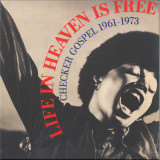
- D1: Cleo Jackson Randle - Life In Heaven Is Free
- D2: The Violinaires - Mother’s Last Prayer
- D3: The Inspirational Singers - Bless Me
- D4: The Bells Of Joy - Give An Account At The Judgement
- D5: Stevie Hawkins - Same Old Bag
- D6: The Soul Stirrers - Striving
Gospel melts into Soul in this dazzling collection of sides originally released by the Chess subsidiary.
Devised by the same team supporting the likes of Muddy Waters and Etta James at Chess, the vintage of Checker Gospel celebrated here is distinguished by its expertly raw, rugged, live feel — thumping bass and pounding drums, bluesy guitar and horns — and its keen engagement with contemporary realities and politics, with an underlying, unwavering commitment to the Civil Rights movement. Not forgetting its sheer, startling, richly diverse soulfulness.
Key architects of the Chicago Sound and Motown are amongst the scores of contributors: Charles Stepney, Gene Barge, Eddie Kendricks, and Leonard Caston Jr. are in the house… Morris Jennings, drummer on Curtis’ Superfly and Terry Callier’s What Color Is Love… Louis Satterfield from The Pharaohs and Earth Wind & Fire… Ramsey Lewis’ guitarist Byron Gregory… Phil Upchurch… Laura Lee…
Producer Monk Higgins joined Checker in 1967, bringing his experience of R&B and Gospel hit-making for the labels One-derful and Satellite, together with a loyal cohort of musicians. A protege of Willie Dixon, engineer Malcolm Chisholm set up the Ter Mar studio as if preparing for a live gig, carefully teasing measures of bleed into the microphones. With Ralph Bass from King Records running A&R, they knew exactly what they were after. ‘I’m using horns and an R&B sound in gospel recordings,’ said Bass. ‘We have no charts. All the musicians are given the chord changes. I want the cats to think when we’re cutting. I want spontaneity, and that’s what we’re getting.’ And: ‘There is more to gospel than just finding solace in the church. This follows the same message of Martin King, who was fighting for a new way of life. Kids are tired of hearing Jesus Give Us Help. They want a positive message.’
Focussed on the late sixties and early seventies, the twenty-five recordings here are all killer no filler, but try these four, random entry points: the heavy funk ostinato of the Violinaires’ Groovin’ With Jesus, working itself up into a post-James-Brown brass frenzy, sure to knock your socks off; Cleo Jackson Randle’s title track, for those who like their Gospel straight-up and hard-core; Eddie Kendricks’ achingly timely choral call-to-arms, Stand Up America, Don’t Be Afraid; the East St Louis Gospelettes’ heart-stopping, fathoms-deep rendition of Bobby Bland’s I’ll Take Care Of You.
A beautiful gatefold sleeve; a full-colour booklet with excellent notes by Robert Marovich; top-notch sound. Another knockout selection by Greg Belson and David Hill.
A shoo-in for soul compilation of the year.
LP + insert with extended liner notes and download code including extra bonus track 'Movements of The Mind'.For his second album on the Belgian leftfield imprint Cortizona, Devin Brahja Waldman gathered a group of insanely gifted and talented musicians to start a new and highly moving musical chapter titled 'Nebulizer'.
From the first moment the pulsating tone of Devin's synth blends with the whispering voices of Earth, Wind and Choir and the menacing bells Naima Karlsson set in motion this record you just know and feel immediately 'Nebulizer' will be a soul-searching journey, soaking you deep into an unknown and very personal musical world.
Devin Brahja Waldman is a New York saxophonist, drummer, synthesizer player and composer who leads the group BRAHJA. He has performed with Patti Smith, William Parker, Nadah El Shazly, Malcolm Mooney, Thurston Moore, Godspeed! You Black Emperor, Charles Hayward, Luke Stewart and Yoshiko Chuma. Waldman is also a member of NYC's Heroes Are Gang Leaders (led by poet Thomas Sayers Ellis and saxophonist James Brandon Lewis), of Sam Shalabi's Land of Kush, and of the Norwegian hardcore group MoE.
In 2022 BRAHJA released the critically acclaimed album 'Watermelancholia' on the Belgian leftfield imprint Cortizona. For his second album on the same Cortizona label, Devin Brahja Waldman gathered a group of insanely gifted and talented musicians to start a new and highly moving musical chapter titled 'Nebulizer'.
Together with Adam Kinner, Georgia Wartel Collins, Earth, Wind and Choir, Luke Stewart, Kenichi Iwasa, Naima Karlsson, Alexis Mercelo, Janice Lowe, Watson and Damon Hankoff, Devin forms a slow-burning fireball unity.
A devotional séance channelling unknown powers proving music is a healing force of the universe.
Rejoicing the Holy Jazz Spirit.
Ready to nebulize the world and bring light out from the darkness. Head cleaning the world in 4 musical parts: Geological Drum, Nebulizer, Bushido and Movements of The Mind. Nebulizer is an elevating meditation on our estrangement of nature.
Interstellar sonic stardust from a mindblowing collective that will leave you flabbergasted.
Be prepared and hear it to believe it.
For fans of: Art Ensemble of Chicago, Archie Shepp, Pharoah Sanders, John & Alice Coltrane, Kamasi Washington, Shabaka Hutchings, SAULT, Ill Considered, Jamie Branche, Angel Bat Dawid, Mackaya Craven, Matana Roberts, Sun Ra and other good music.
Since its founding back in 2014, Blume has carved a unique place in cultural landscape, issuing free-standing works, spanning the historical and contemporary, that represent singular gestures of creativity within the field of experimental sound. Joining their broad efforts in building networks of context and understanding that already includes the works by Werner Durand, Sarah Hennies, Bruce Nauman, John Butcher, Jocy de Oliveira, Mary Jane Leach, Valentina Magaletti, Alvin Curran, Julius Eastman, Alvin Lucier, and others, Blume return with the first ever vinyl release to attend to James Tenney’s legendary “Postal Pieces”, Marking the first ever appearance of five of the suite’s works - “Maximusic, for Max Neuhaus” (1965), “Having Never Written a Note for Percussion, for John Bergamo” (1971), “FFor Percussion Perhaps, or... Night, for Harold Budd” (1971), “Cellogram, for Joel Krosnick” (1971), and “Beast, for Buell Neidlinger” (1971) - on vinyl, drawing upon recordings made in 2003, by the Amsterdam based ensemble, The Barton Workshop, under the direction of James Fulkerson. Among the most important and highly regarded efforts in Tenney’s canon of compositions, as well as within the history of 20th Century music, these five pieces represent a crucial bridge between Fluxus-oriented conceptualism, minimalism, and the microtonal complexities that would emerge in their wakes. Issued in a highly limited vinyl edition of 300 copies, it includes exact replicas of the original postcard graphic scores, and features newly commissioned liner notes by Bradford Bailey, Blume’s brand new edition takes great steps to centring Tenney at the eye the storm during some of experimental music’s most important years.
A student of composition under Carl Ruggles, John Cage, Harry Partch, and Edgard Varèse - remaining close to all of them, and later performing in both Cage and Partch’s ensembles - as well as acoustics, information theory, and tape music composition under Lejaren Hiller, James Tenney carved a wide path within the contexts of experimental and avant-garde music during the second half of the 20th Century. Not only was he a tangible bridge between the generations of composer’s who laid much of the groundwork and the later movements of Fluxus, Minimalism, and the broader practices of experimental music, but Tenney is credited as having contributed one of the earliest applications of gestalt theory and cognitive science to music in 1961, before helping to pioneer the field of computer music at Bell Labs, during the following years.
Over the course of his career, Tenney produced music of such complexity and sophistication - paying little mind to the seductions of taste or dominant tropes of its own moment - that his work and legacy have largely remained under-recognised by the broader publics that have attended to most of his peers. Perhaps more pertinently, the body of work he produced can be perceived as too varied and complex to fit neatly within standard creative histories or critical frameworks, comprising harmonically complex works for acoustic instrumentation, musique concrète, the groundbreaking 1961 “plunderphonic” composition, “Collage No.1 (Blue Suede) (for tape)” - sampling and manipulating a recording of Elvis Presley - as well as algorithmic and computer synthesized music. Even here, within this single decade, a clear image of Tenney’s endeavours remains elusive. In addition to penning important theoretical texts, he collaborated and / or played with Max Neuhaus, La Monte Young, Steve Reich, Philip Glass, Michael Snow, Terry Riley, and numerous others; was an active member of Fluxus; starred in and composed music for Stan Brackage’s films; regularly worked with the Judson Dance Theater; co-founded and played in the ensemble, Tone Roads, with Malcolm Goldstein and Philip Corner; was a vocal advocate of the works of Conlon Nancarrow and Charles Ives, playing a significant part in the revival of both of their legacies; and regularly collaborated as a composer, musician, and actor with his then-partner, the artist Carolee Schneemann, notably co-starring in her film, “Fuses” (1965) and her legendary 1964 performance, “Meat Joy”, as well as creating sound collages for her films “Viet Flakes” (1965) and “Snows” (1970). Curiously, for a relatively absent figure in the historical and critical narratives, Tenney seems to have been the thread that bound multiple generations and disciplines of avant-garde practice in New York during this period.
Tenney was deeply invested in the quality and perception of sound. By 1970, this led him back to composing exclusively for acoustic instrumentation (though sometimes processed with tape delay) - in most cases utilising non-well tempered tuning systems to explore harmonic perception - a practice that he would remain steadfast to for the remainder of his life. This development roughly corresponded with his relocation to California, at the outset of the 1970s, following an invitation to teach at the newly founded music department at California Institute of the Arts (CalArts) in Valencia. Finding himself in regular contact with the harpist Susan Allen and the artist Allison Knowles, as well as at a great distance from many of his friends, in 1971 he completed (with the assistance of Knowles and Marie McRoy) “The Postal Pieces”, a project he had begun in 1965.
A suite of eleven compositions, “The Postal Pieces”, stands among Tenney’s well known and celebrated compositions, and illuminates the dualities embraced by the composer, notably his use of sound to develop consciousness in and of others, and his willingness to draw on elements and observations of everyday life; citing his strong dislike of writing letters as being the primary inspiration for their inception. In lieu, he conceived to send his friends - John Bergamo, Allison Knowles, Pauline Oliveros, La Monte Young, Harold Budd, Philip Corner, Joel Krosnick, Buell Neidlinger, Susan Allen, Max Neuhaus, and Malcolm Goldstein - short scores on the back of postcards. The suite is composed around three themes: Tenney’s concept of swell form (utilizing repetition and progressing through a structurally symmetrical arch), intonation, and the desire to produce “meditative perceptual states”.
A hugely important addition to Blume’s ever expanding efforts in context building and networks of creative practice, James Tenney’s “Post Pieces” is issued in a highly limited vinyl edition of 300 copies, which includes a exact replicas of the original postcard graphic scores, and features newly commissioned liner notes by Bradford Bailey.
In July 2019, eleven years after Jay-Z became the first hip-hop artist to headline Glastonbury, Stormzy became the first English rapper to follow suit. Wearing a customised stab-proof vest designed by Banksy, the South London rapper delivered an explosive performance and finished by thanking the “legends for paving the way,” name-checking Wiley, Dizzee Rascal, and Giggs. Despite how unlikely it seemed for decades, UK rap was now firmly a part of pop music and the greater hip-hop canon.
Rich, nuanced, and often misunderstood, the history of UK rap is a story of music that refused to stand still. Factoring in socioeconomics, gender, identity, music industry disruption, and innovation, What Do You Call It? charts the artform’s first four decades, beginning when rap landed on our island in the early 1980s. Shaped by sound system culture, inspired by punk, and accelerated by rave, it has evolved from Britcore, UK hip-hop, and trip-hop of the late twentieth century to garage, grime, and drill.
Through cultural theory, historical research, and original interviews with key figures and collaborators in the UK rap scene, from pioneers like Malcolm McLaren, Soul II Soul, Tricky, Roots Manuva, and Roll Deep to modern artists like Dave, CASISDEAD, Little Simz, Loyle Carner, and Skengdo x AM, adds a rich human dimension to the UK rap story — one that helped change British music and culture forever.
“A long overdue exploration of rap music in the UK and its longstanding – albeit overlooked – legacy and influence. In an era when UK rappers dominate the charts, star in major movies and TV shows and front huge advertising campaigns for multi-national corporations, Kane traces back the arduous journey from maligned sub-culture to celebrated mascot of neoliberal capitalism.” Jehst
“David Kane writes with a deft touch and possesses a disarming and deeply insightful interview style. Sparking life, humour, and sorrow across every page of more than three decades of UK rap history.” Charlie Dark MBE
“Kane builds bridges in a rich musical universe full of heroes and villains—and plot twists. With an inimitable style, he merges culture high and low to bring new meaning to the music. What Do You Call It? is a landmark tome for UK rap music.” Brian DiGenti, Wax Poetics
“A mind rich in ideas” Stanley Ledbetter, The New Yorker