- 1: Intro Feat. Killa Kela
- 2: Put My Feet Up
- 3: It Wasn't Easy
- 4: Final Results Feat. Grafh
- 5: Different Fabric
- 6: Imposter Feat. Spyda, P Money & Rag'n'bone Man
- 7: Bad Boy Sound Feat. Eksman & Shabba D
- 8: Labour Of Love Feat. Scrufizzer
- 9: Motion Picture
- 10: Stay Defiant
- 11: Legendary Feat. Fliptrix, Jazz T & Verb T
- 12: Wild Bunch Feat. Leaf Dog
- 13: Chasing A Buzz
- 14: New Breed
- 15: Overthinking
- 16: Lazy Days
- 17: You Deserve It
- 18: Breathing Under Water
- 19: Salute Feat. Dj Prime Cuts
- 20: Odyssey Feat. Terri Walker
- 21: No Competition Feat. Westman
Cerca:man da
New single by Romperayo on 7-inch vinyl spinning at 45 rpm, released by the Austrian label discos
elgozo.
This record is a tribute to the sound of Cumbia Sabanera de Acordeón from Colombia, in dialogue with
Mexico’s Cumbia Sonidera. It also pays homage to the melodic line of the first generation of
Colombian accordion masters of Cumbia Sabanera such as Joaquín Betín, Emiro Caicedo, and
Policarpo Calle.
The two tracks are built on a solid rhythmic foundation of bass and percussion, accompanying a
melodic interplay between accordion and analog synthesizer.Mixed and produced by Pedro Ojeda Acosta at Romperayo Studios, both songs were recorded live, in
quartet format, at Mambo Negro Studios in Bogotá, Colombia, by Daniel Michel, featuring Iván
Medellín on accordion, Nicolás Eckardt on electric bass, Juan Manuel Toro on analog synth, and Pedro
Ojeda on percussion.
This single offers a first taste of Romperayo’s upcoming LP, set for release in early 2026 — once again
on discos elgozo.
- A1: Babysbreath
- A2: Teardrop
- A3: Iwantyou
- A4: Fur
- A5: Dizzy
- A6: Plume
- A7: Burst
- A8: Tinkerwench
- A9: Charm
- B1: Sugaredglowing
- B2: Glimmer
- B3: Finger
- B4: Moinaexquisitewallflower
- B5: Butterfly
- C1: Youreyesimmaculate
- C2: Bloweyelashwish
- C3: Crushing
- C4: Precious
- C5: Darkglassdolleyes
- C6: Halo
- D1: Babysbreath (Mycomium Version)
- D2: Spidervelvet
- D3: Lips To Kiss
- D4: Feathermouth
- D5: Moinaexquisitewallflower (Original Version)
Eine atmosphärische Symphonie aus ätherischem Verfall, die zum Klassiker des 21. Jahrhunderts aufgewertet wurde. Aufgenommen 1992 zu Hause mit einer 12-saitigen Gitarre, einem 4-Spur-Recorder, einem Loop-Pedal, unendlichem Hall und dem strukturierten Gesang der geheimnisvollen Sängerin Melissa Arpin Duimstra, verwandelte Scott Cortez' bezauberndes Projekt postadoleszente Tagträumereien im Schlafzimmer in ein ruhiges, mondbeschienenes Schweben auf einem endlosen Meer. Diese erweiterte und remasterte Doppelalbum-Edition enthält fünf weitere verzerrte Reflexionen aus dem Archiv, mit Texten und einer Replik einer Postkarte, in denen man sich verlieren kann. Hier braucht man keine Augenspülstation - Blindheit ist beabsichtigt.
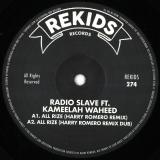
Harry Romero and Samaran remix Radio Slave and Kameelah Waheed’s ‘All Rize’ on Rekids It follows the release of the original single in May 2025, arriving this October. NYC House legend Harry Romero and respected Paris DJ, producer, and sound designer Samaran step up to remix Radio Slave and Kameelah Waheed’s ‘All Rize’, arriving via the label 24th October 2025. Originally released in May ‘25, ‘All Rize’ was dubbed a ‘perfect moment’ tune by Mano Le Tough, with support from the likes of Bradley Zero, Call Super, Sean Johnston, and more.
“Glad to be working a lot closer with Radio Slave on his label and projects. It’s just one of those brands that put out quality. So before I even heard what I was asked to remix for Matt, my answer was yes. My idea was to put a completely different twist on the original and make a new version that was peak time. So glad I took a chance!” - Harry Romero
“I wanted to create a darker club vibe for All Rize, adding another bassline, just keeping the vocal elements that have a strong character and some percussion to keep some organic groove to it. The idea was to keepa minimal idea as the original and make it Rize for darker clubs.” – Samaran
Founded in 2006, Radio Slave’s Rekids has since launched the Techno-focused Rekids Special Projects in 2017 and its latest sublabel, REK’D, in 2024. With Matt Edwards as the sole A&R, Rekids has been instrumental in developing emerging artists and remains a trusted home for House and adjacent sounds, recently featuring names such as Hilit Kolet, Tal Fussman, Frankey & Sandrino, Mathias Kaden, Huxley, and many more.
"It may surprise some that, after two decades of silent films, when Alam Ara broke the silence in 1931, it and every South Asian talkie that followed was what we in the West think of as a "musical." Music had been integral to the culture's staged drama going back to the Gupta Dynasty — sometime between the 4 th and 6 th Century CE. Since its inception, South Asian cinema drew heavily from Marathi, Parsi, and Bengali musical theatre and silent film screenings were often accompanied by live music to mimic a live staged experience.
When sound films arrived, actors with serious singing skills became the next wave of stars. Songs were performed live while shooting, with musicians hidden off-camera, to the side or sometimes even in trees. Playback singing — the practice of dubbing a real singer's voice over a lip-syncing actor — didn't become standard until the 1940s.
Thus, the biggest stars of the 1930s were also the greatest singers, with some, like Govindrao Tembe and Pankaj Mullick, excelling as both composers and vocalists. None, however, were more beloved than K.L. Saigal, whose emotional, untrained crooning captivated audiences across the subcontinent. Saigal's voice inspired a young Lata Mangeshkar, who vowed to become India's greatest filmi singer to win his heart. Sadly, Saigal grew increasingly addicted to alcohol, unable to perform without it, and passed away at age 42, seven months before the Partition. Lata never married.
This collection features some of the earliest songs from South Asian cinema, sourced from CDs and LPs found in Jackson Heights, Queens, Coney Island Avenue in Brooklyn, Lexington Avenue in Manhattan, and Oak Tree Road in Iselin, New Jersey — areas home to vibrant immigrant communities. South Asian immigration to New York and New Jersey surged after the 1965 Immigration and Nationality Act, which lifted non-European quotas. By the 1990s and 2000s, the region's Indian, Pakistani, and Bangladeshi media outlets flourished, especially in Jackson Heights, where such stores outnumbered the total number of regular record shops throughout the five boroughs.
The nascent period of sound film featured a limited palette of musical styles, predominantly Marathi Bhagveet, like the Ghazal, but with greater flexibility of subject matter and rhythm, and Rabindra Sangeet, the approximately 2,000 songs and poems composed by Bengali Nobel laureate Rabindranath Tagore. But there was some evolution as well, with the success of South Asian cinema's first woman composer, the classically trained Saraswati Devi, and the introduction of Western instruments including the piano and Hawaiian guitar.
While much of the music was dark and brooding, perhaps exemplified best by Devika Rani's interpretation of Saraswati Devi's "Udi Hawa Mein" from 1936's Achhut Kannya (Untouchable Maiden), there were moments of brightness, such as R.C. Boral's "Lachhmi Murat Daras Dikhaye" sung by Kanan Devi in Street Singer, an otherwise thoroughly depressing film from 1938 that cemented Devi's and co-star K.L. Saigal's superstardom.
This selection was chosen to emphasise a range of expressivity, instrumentation and style achieved even within the decade's relatively limited scope, setting the listener up for the relative explosion of possibility in the 1940s, to be covered in the next installment of this series."
2025 Record Store Day title - now available for general sale. A nice blend of afro, jazz, rare groove funk and reggae, for your listening and dancing pleasure. Featuring Vin Gordon, Abdul-Teejay, AJ Franklin, Barry Issac, Ashanti Selah, and many more.
Erstmals auf Vinyl: Die digitale "I Can Be Your Mother" EP (2024) der US-Künstlerin Sofia Isella, ergänzt um fünf frühe Singletracks, darunter "All Of Human Knowledge Made Us Dumb" und "Hot Gum". Sofia Isella ist ein aufstrebender Alternative-Pop-Star und erlebt gerade einen grossen Moment.
Nachdem sie 2024 Taylor Swift in der Londoner Wembley Arena supportete, stieg ihr Bekanntheitsgrad rasant an und eine Kult-Fangemeinde baut sich derzeit auf - mit 1,1 Mio. Follower auf Instagram und 810.000 auf TikTok. Ihre US-Tour im Frühjahr 2025 war komplett ausverkauft und im ersten Quartal 2025 war sie ...
Four cuts of unapologetic, immediate Jungle that capture Tim Reaper’s frantic energy and Fracture’s deadly sonics — a perfect balance of aggression and detail. No holds barred, examined with a fine-tooth comb. Precision Pandemonium. Alongside the music, the collaboration extends to artwork, with each label’s iconic logo reimagined in the other’s style. This visual partnership spans the 12” label and sleeve design, as well as an extensive range of streetwear merch.
Fracture says:
I’ve known Ed for over 15 years, going back to the forum days of Subvert Central and Dogs On Acid. Even then, his approach to Jungle was authentic and compulsive. He’s stayed on that path with unwavering focus, never chasing trends—just pure, raw Jungle. What he’s built with Future Retro London is so desperately needed in this day and age: a space where music and community come first, shining a light on artists and DJs often overlooked by mainstream channels that favour gimmicks. His passion for Jungle is infectious, and I’ve always wanted to work with him so doing a full label collaboration feels completely right. Working with Ed is a real eye opener - he’s so full of ideas and the speed at which he can generate patterns is scary. Watching him fly around his laptop, chopping breaks and writing basslines is like watching a Grandmaster play speed chess—always on, never off. Shout out Tim Reaper each and every. An incredible DJ as well.
Tim Reaper says:
I think this is probably the longest ever I've spent on any release for Future Retro London, clocking in at just over 3 years of back & forth between me & Fracture in the making of this. There's a lot of backstory behind this project, so excuse my ramblings below.
The story starts with me hearing Sully playing a tune by Fracture called "Booyaka Style" which I really liked and thought would be great to release. I reached out to Fracture about it and found out later that he already made plans to include it on an album project (0860) that he was working on at the time which later came out on his label Astrophonica. He asked if I would be up for sending him any tunes to be considered for release on Astrophonica, but in response to this, I suggested a joint label project that both of us would have tunes on & he seemed keen to do it.
Few months later, I got back in touch to ask if he had done any tracks for this release but he was still busy with other things and instead sent me a track he had been working on, with the suggestion of us collaborating on it. We finished a track together that we both liked & felt as if it was a good starting point for the release. We then got a few more collabs done with a fair bit of back & forth, but upon reflection, he felt as if they could be a lot better than what they currently were and so, the release started to change in format a bit. Fracture suggested that we should meet up in his studio and work on some tunes together in person, with the aim of getting a few bits done over a bunch of sessions and getting it all sorted out in a much quicker timeline. Thankfully, this actually worked, we managed to get some collabs done that both of us are very happy with (even managing to sample a recording of Blackeye from a set from a Future Retro London event!)
Thanks to Fracture for his co-operation & perseverance with this release, helping to see it through to the end & not allowing it to be anything less than the best possible version of itself, thanks to Mark at Sequence for his role in helping with the logistics/manufacture of this release, thanks to Utile for assisting on the design on this release and most importantly, a very special thanks to all the obstacles along the way that I faced in the making of this release, which helped me appreciate getting to this point so much more than I ever could have!
Debut album by Cindy is aptly called I'm Cindy. Produced by Kai Hugo a.k.a. Palmbomen II. Vinyl comes with a 20-page handmade booklet, an individually signed and kissed handkerchief of Cindy (some of them even have her teardrops on them) and a huge fold-out poster! Who exactly is Cindy? If producer Kai Hugo used oblique strategies it would be this question that's been central to his past four years of musical output. First appearing on his 2015 LP Palmbomen II as the titular subject of the track Cindy Savalas, her life has become intertwined with the producer's. "Following that release, I made a music video for Cindy Savalas, where Cindy came to life through the portrayal by Blue LoLan,' Hugo explains. 'I really felt a connection with this character and went deeper into developing who she was and the world she lived in. The result was the creation of the LP Memories Of Cindy, where my goal was to reveal more about Carmel Vista, the town Cindy lived in. Afterwards, I imagined Cindy having her own 'lost' album, as if she had once released a record that was kind of forgotten.' I'm Cindy is altogether different though. It sits at an uncommonly explored intersection between Italo disco and shoegaze - Cocteau Twins and Slowdive are mentioned as influences and you can hear that in the blurred textures and hazy synths of the 13 tracks here. But Hugo also revels in a chance to use his self-created character as a conduit to explore his love of both mainstream pop and its more skewed forms. In many ways the record is as much LoL?n's. It was she who gave the character her voice - initially across 27 tracks recorded with the producer - but her own connection to Cindy runs deeper than that. 'It makes me really nostalgic thinking about everything Cindy went through, she and I have similar feelings' says the vocalist. 'Cindy is a mix of me and Kai so when I listen to the album I feel like I'm half entering Kai's head and half in mine, with a whole bunch of deep emotions, purity and loneliness that just makes me want to dance and cuddle with all my cats in a disco forest somewhere outside of Carmel Vista.'
Debut album by Cindy is aptly called I'm Cindy. Produced by Kai Hugo a.k.a. Palmbomen II. Who exactly is Cindy? If producer Kai Hugo used oblique strategies it would be this question that's been central to his past four years of musical output. First appearing on his 2015 LP Palmbomen II as the titular subject of the track Cindy Savalas, her life has become intertwined with the producer's. "Following that release, I made a music video for Cindy Savalas, where Cindy came to life through the portrayal by Blue LoLan,' Hugo explains. 'I really felt a connection with this character and went deeper into developing who she was and the world she lived in. The result was the creation of the LP Memories Of Cindy, where my goal was to reveal more about Carmel Vista, the town Cindy lived in. Afterwards, I imagined Cindy having her own 'lost' album, as if she had once released a record that was kind of forgotten.' I'm Cindy is altogether different though. It sits at an uncommonly explored intersection between Italo disco and shoegaze - Cocteau Twins and Slowdive are mentioned as influences and you can hear that in the blurred textures and hazy synths of the 13 tracks here. But Hugo also revels in a chance to use his self-created character as a conduit to explore his love of both mainstream pop and its more skewed forms. In many ways the record is as much LoL?n's. It was she who gave the character her voice - initially across 27 tracks recorded with the producer - but her own connection to Cindy runs deeper than that. 'It makes me really nostalgic thinking about everything Cindy went through, she and I have similar feelings' says the vocalist. 'Cindy is a mix of me and Kai so when I listen to the album I feel like I'm half entering Kai's head and half in mine, with a whole bunch of deep emotions, purity and loneliness that just makes me want to dance and cuddle with all my cats in a disco forest somewhere outside of Carmel Vista.'
- A1: The Velvet Note Lounge (Skit)
- A2: Hollow Tips
- A3: Cut Throat Game
- A4: Playas Need Love (Feat. Rocci)
- A5: True Playas
- A6: I'm Not Yo Daddy
- A7: Boulevard Nights (Feat. Jason Joshua & Rocci)
- A8: Playing The Fool (Skit)
- A9: Money Don't Stop For You (Feat. Rocci)
- B1: Shake Junt Hoes
- B2: Pushin On Some Paper
- B3: Chain Swangin (Feat. Mikey The Magician)
- B4: Scrapin Tha Corner
- B5: Never Listen
- B6: Don't Lose Hope
- B7: Cadillac Burnin (Feat. Rocci)
- B8: Goodbye & Goodnight (Skit)
Tape[15,50 €]
Ramirez returns with THA PLAYA$ MANUAL II, the long-awaited sequel to his cult classic that helped solidify his place as one of underground rap’s most distinctive voices. Steeped in Southern-fried funk, Bay Area swagger, and Memphis-style menace, this new chapter finds Ramirez sharper, smoother, and more seasoned—delivering game like a streetwise sage with a gold grill grin.
Where the original Playa$ Manual was gritty and raw, THA PLAYA$ MANUAL II sounds like a player who's leveled up. The beats knock harder, the flows glide slicker, and the game is deeper. Ramirez weaves tales of betrayal, come-ups, late-night drives, and cold-hearted reality with the same charismatic cool that made him a standout in the $uicideboy$-adjacent G59 movement—but this time with a more refined, cinematic approach.
From trunk-rattling bangers to syrupy smooth cuts that soundtrack late-night escapades, THA PLAYA$ MANUAL II feels like a ride through Ramirez’s world with tinted windows up and the bass on max. It’s a record for the hustlers, the heartbreakers, the loners, and the legends in the making.
This is more than a sequel—it’s a statement: the playa’s still active, and the manual’s been updated.
- A1: Natty Dub Source: Natty Dread In A Greenwich Farm / Cornell Campbell
- A2: Lee's Dub Source: Lee's Dream / Derrick Morgan
- A3: Wonder Why Dub Source: Wonder Why / Cornell Campbell
- A4: I'm Gone Dub Source: I'm Gone / Derrick Morgan
- A5: Country Boy Dub Source: Country Boy / Cornell Campbell
- A6: True Believer Dub Source: True Believer / Johnny Clarke
- A7: Care Free Dub Source: Care Free / Mighty Diamonds
- A8: Rasta Train Dub Source: Mule Train / Johnny Clarke
- B1: Move Out Of Babylon Dub Source: Move Out Of Babylon / Johnny Clark
- B2: Give A Little Man A Great Big Hand Dub Source: Give A Little Man A Great Big Hand / Cornell Campbell
- B3: Feel So Good Dub Source: Feel So Good / Derrick Morgan & Paulette
- B4: For The Rest Of My Life Dub Source: Wonder Why / Cornell Campbell
- B5: When Will I Find My Way Dub Source: When Will I Find My Way / Owen Grey
- B6: I'm Leaving Dub Source: I'm Leaving / Derrick Morgan & Hortense Ellis
- B7: Feel Lost Dub Source: Feel Lost / Bb Seaton
- B8: Dawn Dub Source: Dear Dawn / Barrington Spence
2024 Reissue
“Tubby did three original dub albums, ‘Dub From The Roots’. ‘The Roots of Dub’ and the third is ‘Brass Rockers’ with Tommy McCook ‘pon the flying cymbals. Where he mixed it with the horn going in and out in a dub way and one named ‘Shalom Dub’ you can call Tubby’s too because he mixed the versions as they were off forty fives’’
Bunny ‘Striker‘ Lee
King Tubby and Producer Bunny ‘Striker’ Lee are intertwined in the birth of Dub Music. After discovering a mistake that made a ‘serious joke’ ( more of which later...) they went on to release the first pressings of this new musical genre namely ‘Dub Music’. Tubby’s vast knowledge of electronics and Bunny’s vast catalogue of rhythms would lay the foundations of what today is taken as a standard... the Remix / Version cuts to an existing vocal tune.
Osbourne ‘King Tubby’ Ruddock was born in Kingston, Jamaica on 28th January 1941 and grew up in the High Holborn Street area of downtown Kingston. He studied electronics at Kingston’s National Technical College and also on two correspondence courses from the U.S.A... When he had qualified Tubby began repairing radios and other electrical appliances in a shack in the back yard of his mother’s home. His work in the early days included winding transformers and building amplifiers for Kingston’s Sound Systems. Tubby built his first Sound System in 1957 playing jazz and Rhythm & Blues at local weddings and birthday parties. His reputation as a man who knew and understood both electronics and music grew steadily and as the sixties drew to a close. Tubby purchased his own basic two track equipment. He installed this alongside his dub cutting machine, a home made mixing console and his impressive collection of Jazz albums in the back bedroom of his home at 18 Dromilly Avenue which he christened his music room.
Tubby and Striker were at Treasure Isle Studio’s one day while Ruddy from Spanish Town was working with the engineer Byron Smith....
“Tubby and myself was talking when Ruddy was cutting some dub but Smithy (engineer) made a mistake through we were talking and forgot to put in the voice. It was two track recording in those days. Ruddy said ‘No Man! Make it stay! and so they cut the rhythm. When I went over to Ruddy’s that Saturday night a dance was in progress and when they played the vocal to the tune... then he said we’re going to play ‘Part Two’. They never called it ‘Version’..and then he played the rhythm track. The song was a catchy song and everybody started to sing along and the deejay started to toast so everything went down well. On Monday morning I went up and I said ‘Tubbs the mistake we made was a serious joke.It mash up Spanish Town! The people went wild. So you have to start to do that now ‘cause when the man put on the ‘Part Two’ everyone start singing this song. It played about twenty times. I said you try Tubbs!’...Well the next Saturday night now when Tubby strung up down the farm U Roy said he’s going to play ‘Part Two’ but Tubby did it different now. He started with the voice then dropped it out and let the rhythm run and then he brought in the voice in the middle and from there Tubby started to get really popular.’’
Bunny ‘Striker’ Lee
Dynamic Sounds upgraded to sixteen track recording in 1972 and Tubby purchased, again with the help of a deal brokered by Bunny Lee. The old four track equipment and the MCI console from their Studio B. The four tracks now gave him far wider scope to work with and he began to create a new musical form where the bass and drum parts were brought up while the faders allowed Tubby to ease the vocal and rhythm in and out of the mix. It was only a matter of time before Tubby’s dub plate experiments began to make it on to vinyl and the first ever long playing King Tubby releases would feature a collection of his mixes to a selection of Strikers rhythms. So please sit back and enjoy this historic set of sounds. Lovingly restored and with a few extra gems added to the CD Editions. These releases were the first to carry the name of King Tubby and the first to credit the great musicians that contributed so much to the rhythms that made these albums possible.
- 1: Unknown Legend
- 2: From Hank To Hendrix
- 3: You And Me
- 4: Harvest Moon
- 5: War Of A Man
- 1: One Of These Days
- 2: Such A Woman
- 3: Old King
- 4: Dreamin' Man
- 5: Natural Beauty
- 1: The Old Laughing Lady
- 2: Mr. Soul
- 3: World On A String
- 4: Pocahontas
- 5: Stringman
- 6: Like A Hurricane
- 7: The Needle And The Damage Done
- 1: Helpless
- 2: Harvest Moon
- 3: Transformer Man
- 4: Unknown Legend
- 5: Look Out For My Love
- 6: Long May You Run
- 7: From Hank To Hendrix
- 3: Driveby
- 4: Sleeps With Angels
- 5: Western Hero
- 6: Change Your Mind
- 1: Blue Eden
- 2: Safeway Cart
- 3: Train Of Love
- 4: Trans Am
- 5: Piece Of Crap
- 6: A Dream That Can Last
- 1: Song X
- 2: Act Of Love
- 3: I'm The Ocean
- 4: Big Green Country
- 5: Truth Be Known
- 1: Downtown
- 2: What Happened Yesterday
- 3: Peace And Love
- 4: Throw Your Hatred Down
- 5: Scenery
- 6: Fallen Angel
- 1: My Heart
- 2: Prime Of Life
- 1: Spongebob Squarepants Theme - Avril Lavigne
- 2: Spongebob & Patrick Confront The Psychic Wall Of Energy - The Flaming Lips
- 3: Just A Kid - Wilco
- 4: The Goofy Goober Song - Mike Simpson With Spongebob, Patrick & Goofy Goober
- 5: Prince Paul’s Bubble Party - The Waikikis, Prince Paul & Wordsworth
- 6: Bikini Bottom - Electrocute
- 7: The Best Day Ever - Spongebob
- 8: They’ll Soon Discover - The Shins
- 1: Ocean Man - Ween
- 2: Under My Rock - Patrick
- 3: Now That We’re Men - Spongebob, Patrick & The Monsters
- 4: Goofy Goober Rock - Tom Rothrock With Jim Wise
- 5: You Better Swim - Motörhead
- 6: The Jellyfish Song By The Jellyfish Band - Plus-Tech Squeezebox Featuring Spongebob
- 7: Spongebob Squarepants Theme (Movie Version) - The Pirates
Celebrate the SpongeBob SquarePants Movie with the iconic movie soundtrack. Dive into the Bikini Bottom with tracks like "Goofy Goober Rock" and "Ocean Man," and songs from Wilco, Ween, and Avril Lavigne transporting you to the whimsical world under the sea. This soundtrack is a must-have addition to any music collection. On Yellow Vinyl
- A1: Prelude - Calm Before The Storm
- A2: After The Bomb
- A3: Pool Of Piranhas
- A4: Castle Walls
- A5: Hammers Rule
- A6: If You Only Knew
- B1: Set Me Free
- B2: She‘s A Rocker
- B3: Little Girls
- B4: Sex Drugs And Rock‘n‘roll
- B5: Kamikaze - Mission Of Death
- B6: Stop The World
- C1: Eulogy Of Sorrow / Awakening - (Remix 2020)
- C2: Hunger (Remix 2020)
- C3: Infinite Voyage (Remix 2020)
- C4: Cursed Be The Deceiver (Remix 2020)
- C5: Tame The Lion (Remix 2020)
- C6: Entity / Watching From The Sky (Remix 2020)
- C7: Sanctuary - (Remix 2020)
- C8: Truth To The Cross (Remix 2020)
- C9: Poseidon Socity (Remix 2020)
- C10: Eulogy Of Sorrow (Reprise) (Remix 2020)
- D1: Eulogy Of Sorrow / Awakening (Original Mix, Remaster 2020)
- D2: Hunger (Original Mix, Remaster 2020)
- D3: Infinite Voyage (Original Mix, Remaster 2020)
- D4: Cursed Be The Deceiver (Original Mix, Remaster 2020)
- D5: Tame The Lion (Original Mix, Remaster 2020)
- D6: Entity / Watching From The Sky (Original Mix, Remaster 2020)
- D7: Sanctuary (Original Mix, Remaster 2020)
- D8: Truth To The Cross (Original Mix, Remaster 2020)
- D9: Poseidon Society (Original Mix, Remaster 2020)
- D10: Eulogy Of Sorrow (Reprise) (Original Mix, Remaster 2020)
- E1: Anvil Of Crom
- E2: Metal
- F1: Broadsword
- F2: Heavy Metal Adventure
Einem US-Metalfan die Band Griffin zu erklären hieße Eulen nach Athen tragen. Während das Debüt noch traditionellen Heavy Metal in Reinkultur bietet, tendierte die Gruppe um den außergewöhnlichen Sänger William McKay in Richtung Speed- und Thrash Metal, aber ohne dabei ihre Trademarks einzubüßen. „Protectors Of The Lair“ erschien 1986 bei Steamhammer/SPV. Musikalisch war man am Puls der Zeit, doch der Stil kann auch ebenso als kauzig und individuell bezeichnet werden. Das größte Manko war allerdings immer der dünne Sound, der sich fast nur in den Mitten und Höhen abspielte. Dies wurde nun gleich doppelt behoben!
Es ergab sich das seltene Glück, dass die originalen 24-Spur-Bänder noch vorlagen und nach einigen Reparaturen überspielt werden konnten. Somit war nicht nur ein Remaster möglich, sondern ein Remix, der von Neudi 2020 angefertigt wurde und nun die LP 1 füllt. Die zweite Scheibe beinhaltet den Original Mix von 1986, allerdings remastert von Patrick Engel (Metal Blade, High Roller, etc.).
Hammers Rule gelten als Kultgruppe des US-Metal, deren LP „Show No Mercy“ und EP „After The Bomb“ (1984/1985) heute gesuchte Sammlerobjekte sind. Man wollte sich vom Härtegrad nicht festlegen und decken dadurch ein enorm breites Spektrum des US-Metal ab. Während die ersten vier Tracks zwischen Epic-, Heavy- und Speed Metal liegen (ebenso die beiden EP-Tracks „Kamikaze“ und „Stop The World“), war die B-Seite der Original-LP etwas zugänglicher und passt auch gut zum hohen Haarsprayverbrauch der Achtziger. Doch auch diese Stücke stecken voller Energie und Spielwitz. Einer der Gründe ist die unfassbar gute Rhythmussektion aus Drummer Chuck Hohn und Bassist Shaun Henley.
Die beiden Musiker operierten auf einem Niveau wie Steve Harris und Nicko McBrain (Iron Maiden). Zudem ersetzt der Bass durch das kräftige Spiel und die Präsenz im Mix auf beeindruckende Weise eine zweite Gitarre. Das Album und auch die EP wurden weitestgehend live im Studio aufgenommen. Golden Core war das erste Label, bei dem die verbleibenden Bandmitglieder einer Wiederveröffentlichung zugestimmt haben. Die Golden Core LP enthält die EP-Tracks als 7“ Single.
Legendry haben 2020 eine spannende EP mit drei Coverversionen (u.a. „Metal“ von Manilla Road) und einem neuen, eigenen Song (das titelgebende „Heavy Metal Adventure“) eingespielt, die auch optisch ins Konzept der drei Vorgänger passt. Wer auf Epic Metal steht kommt um „Heavy Metal Adventure“ nicht herum!
- A1: Do What You Gotta Do
- A2: Looking For A Fox
- A3: Slippin' Around
- A4: I'm Qualified
- A5: I Can't See Myself
- A6: Wind It Up
- B1: Part Time Love
- B2: Thread The Needle
- B3: Slip Away
- B4: Funky Fever
- B5: She Ain't Gonna Do Right
- B6: Set Me Free
Clarence Carter, blind from birth, was a blues singer with lascivious wit, a talented guitarist, a songwriter with a twinkle in his eye, and a champion of down-to-earth soul grooves who taught himself to play the guitar.
He sang in a gospel choir, completed a degree in music, and grounded the duo Clarence & Calvin but was not however very successful.
After a car crash involving Calvin Scott, Carter started on a solo career and signed a contract with Rick Hall and the Fame label as a soloist.
Among the earliest singles recorded at the Muscle Shoals studio were a few hits. After leaving Fame for Atlantic, he managed to enter the Top 20 of the R & B charts with "Looking For A Fox". His breakthrough came with "Slip Away", which sold a million copies and was awarded a Gold Record.
The legendary Fame Studios in Muscle Shoals remained the home basis, as it were, for Carter during his career with Atlantic. "This Is…" begins with a contemplative, soft sound. "Do What You Gotta Do", written by Jim Webb, is a lovely, melancholic mid-tempo ballad, saturated with Barry Beckett’s keyboard and smothered by lush, plaintive winds.
But the man is primarily funky here … as three danceable, finger-snapping tracks prove; "Wind It Up", with further witty improvisations and a fervid organ solo, the highly syncopated, playful "Thread The Needle", and the smoky, irresistible "Funky Fever" – all written by Carter himself.
Dan Penn’s and Spooner Oldham’s "Slippin’ Around" has an unorthodox bossa nova-like beat that is reminiscent of Ray Charles’s "What’d I Say", while Carter’s unmistakable chuckle is to be heard for the first time on the riotous funk-rock number "I’m Qualified", which has the very same unique, infectious groove as was to be heard on Wilson Pickett’s "In The Midnight Hour". "She Ain’t Gonna Do Right", composed by the same man, brings more Alabama Country to the mix, whereby Beckett contributes a catchy, persistent organ riff in the refrain.
- Super Combo Los Famosos - El Bailador De La Esquina
- Sexteto Manaure - Bajo El Trupillo Guajiro
- La Protesta De Colombia - El Campesino
- Sonora Guantanamera - Sal Y Agua
- Orquesta Salsa Panamericana - El Fantasma Salsero
- La Integracin - Hecho Y Derecho
- Galileo Y Su Banda - No Me Conviene Tu Amor
- The Latin Brothers - Llorars
- Piper Pimienta Y Su Orquesta - El Sufrido
- Fruko Y Sus Tesos - Soy Tu Dueño
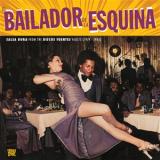
This curated collection highlights hard-to-find salsa 45s from the Discos Fuentes vaults-deep cuts that have long flown under the radar but still light up dance floors today. These tracks, once pressed in small numbers, feature top tier musicianship, fiery brass, unforgettable grooves, and lyrical gems that reflect the rich diversity of Colombia's musical landscape. Among the featured artists are: Super Combo "Los Famosos" with their irresistible barrio anthem 'El Bailador de la esquina', capturing the spirit of Cali's street life, Sexteto Manaure, delivering a poignant son that blends regional pride with poetic nostalgia, La Protesta de Colombia, a revolutionary Barranquilla outfit that gave a young Joe Arroyo his early spotlight and channeled the rebellious pulse of the times. This compilation also includes a range of studio experiments and covers-where artists like Piper Pimienta, Galileo y Su Banda, and La Integración reimagined beloved hits, from boleros to vallenatos, through a distinctly Colombian salsa lens. These obscure gems, long scattered across dusty crates and forgotten jukeboxes, now find new life. They speak not just to the past, but to a timeless rhythm that still moves dancers and dreamers alike.
- A1: Bing Crosby, David Bowie - Peace On Earth / Little Drummer Boy
- B1: Bing Crosby - White World Of Winter
The now-classic duet of ‘Peace On Earth / Little Drummer Boy’ with David Bowie from Bing Crosby's 1977 television special, ‘Merrie Olde Christmas’ is back on a brand new, collector's edition, picture disc 12” vinyl.
The picture disc features the iconic image of David Bowie and Bing Crosby at the piano. "Peace on Earth/Little Drummer Boy" is a Christmas song performed by David Bowie and Bing Crosby. Recorded on September 11, 1977 at ATV Elstree Studios near London for Crosby's television special Bing Crosby's Merrie Olde Christmas, the song features Crosby singing the 1941 standard "The Little Drummer Boy" while Bowie sings the counterpoint tune "Peace on Earth", written by the special's musical supervisors Ian Fraser and Larry Grossman, and scriptwriter Buz Kohan, specifically for the collaboration.
The duet was one of Crosby's final recordings before his death in October 1977. Following the special's broadcast during the 1977 holiday season, ‘Peace on Earth/Little Drummer Boy’ went unavailable for many years. It was eventually released as a single by RCA Records in November 1982 and was a commercial success, peaking at number three on the UK Singles Chart. It was Crosby's final popular hit. It became one of the best-selling singles of Bowie's career, with total estimated sales over 400,000 in the UK alone.
The song has since become a Christmas classic in the United States, Canada and United Kingdom and has been referred to by The Washington Post as "one of the most successful duets in Christmas music history“.
- A1: Anuradha Paudwal – Gayatari Mantra
- A2: Baba Zula – Arsiz Saksagan (Cheeky Magpie)
- A3: Orchestra Tout Puissant Marcel Duchamp – So Many Things (To Feel Guilty About)
- A4: Christopher Martin – Playing Games With My Heart
- B1: Geir Sundstøl – C’est Vide En Ville
- B2: Brother Ah – Transcendental March (Creation Song)
- B3: Les Abranis – Therrza Rathwenza
- B4: Sparkels – That Boy Of Mine
- C1: Maximum Joy – Stretch (7” Mix)
- C2: Chillera – Schax
- C3: Elijah Minnelli – I Hope The Goats Come Back (Ze-Hood De-Sham Lichdal)
- C4: Siti Muharam – Pakistan
- D1: Muriel Grossmann – Traneing In
- D2: Catford Gyrations – Land Of 1000 Presets **
- D3: Living Daylights – Let’s Live For Today
- D4: Natalie Bergman – Shine Your Light On Me
Orange Vinyl[41,98 €]
Crate digger and music enthusiast James Endeacott compiles ‘Unlock Your Mind With Morning Glory’ for Two-Piers Records – A glorious heady mix of the weird and wonderful eclectic music from his radio show ‘Morning Glory’
“One weekday afternoon towards the end of 2017 I sat in The Lyric pub on Great Windmill Street, Soho with my dear friend Raf. I’d just finished another of my weekly Soho Radio shows and was starting to think about the next one. Raf had been on as a guest playing some of his favourite tunes of the day. We had a few drinks, told a few stories and started to plot and scheme. It was always a dream of mine to have a daily radio show. Radio had always informed and excited me from my early teens listening to John Peel under the blanket when I should’ve been either sleeping or revising right up to the present-day musical excursions of NTS, WFMU and numerous internet based stations.
We decided to speak to Adrian and Dan who ran Soho Radio to see if they’d be up for us doing a daily morning show. To our surprise they were into the idea and within 5 minutes Adrain came up with the name Morning Glory. We all liked it. We were all excited. It was all systems go. In December 2017 Raf and myself started a daily 2 hour show. We did the show together, got guests in and the musical policy was whatever we felt like that day. After several months Raf found the mornings too much. Off he went into the distance occasionally coming back with a smile, and a bag of new music. I carried on alone and then suddenly in March 2020 the world stopped, and we went into lockdown.
We set up in my house in Catford, Southeast London and carried on. The show became 3 hours a day and I started to invite friends, record labels, record shops, bands etc.. to supply me with hour long mixes that I played every day. The show took off during this time. My musical tastes expanded as I spent all day long searching for new sounds from around the globe. People started to send me more and more music. I became obsessed with the show. The audience started to take to social media and ask for certain tracks or artists to be played. I got listeners to make me mixes to play on the show and I did several phone interviews with musicians while playing some of their favourite tunes.
I was grateful that Soho Radio left me to my own devices. They never told me what to do or what to play – they trusted ma and I trusted my instincts.
The music on this compilation is not a ‘best of’ it’s just how I felt when I compiled it at the start of 2025. Apart from a couple of tracks they are all things I’ve come across since the show started in December 2017. If I did a list of tracks now I’m sure it would be completely different. Surely that’s the point. We never stick in one place. We are always moving and searching. Always trying to unlock our minds. Put it on. Take your time and let it take you somewhere” James Endeacott 2025