(Cargo Collective Title) RIYL: Silver Mt Zion, Rachel’s, Grails & Do Make Say Think. 180g LP, custom window-cut letterpress jacket with artworked 300gsm inner + DL. Esmerine presents Everything Was Forever Until It Was No More, its first album in five years, following a celebrated run of Juno Award winning and nominated records throughout the preceding decade. Founded by ex-Godspeed You! Black Emperor percussionist Bruce Cawdron and cellist Rebecca Foon (Saltland, Silver Mt Zion, Set Fire To Flames), the acclaimed instrumental music ensemble and has long embroidered emotive chamber works using threads of post-classical, post-rock, Minimalism, neo-Baroque, jazz, pop and a wide array of folk traditions. Esmerine conjures a distinctive and immediately identifiable sound that consistently defies the trappings of “fusion”, forging emotive cinematic soundtracks under the overriding sonic sensibilities of postpunk grit, Wall-of-Sound, drone and dark ambient. Recorded by longtime co-producer Jace Lasek (The Besnard Lakes), the new album manifestly carries on in this fine tradition. Everything Was Forever Until It Was No More completes Esmerine’s “Anthropocene” triptych: a series of album-length meditations that began in 2015. The album title itself has minor meme status in eco-artistic circles, appropriated from its original context Alex Yurchak’s 2005 book about the collapse of Soviet Russia by several exhibitions and works interrogating artistic production in the age of environmental crisis. (Foon is also well-known for her climate activism as co-founder of Pathway To Paris.) The album grapples with existential tensions between atmosphere and airlessness, seclusion and claustrophobia, forbearance and satiation, scarcity and abundance; it is one of Esmerine’s most restrained and wistful works. Instrumental densities ebb and flow, melding into each other with gauzy timbral warmth, sometimes tracing fleeting tendrils outwards, but always rotating around the saturnine gravitational force of a darkly glowing sonic center. Everything Was Forever Until It Was No More is like a somber forest lit by a closely-orbiting opalescent planet; it could be the alternate score to Von Trier’s Melancholia or Cormac McCarthy’s The Road.Esmerine planted these compositional seeds before pandemic rooted everyone in place, under the auspices of a grant from the Canada Council for the Arts and a 2019 residency at Le Château de Monthelon in France. Lasek then began documenting the band between lockdowns in various stripped-down configurations with spartan remote equipment at the rural Québec homesteads of Cawdron and Foon, culminating in final sessions at Foon’s converted barn in summer/fall 2021, notably with extensive use of the barn’s resonant acoustic piano. Brian Sanderson appears on his fourth Esmerine album since joining in 2012, continuing to expand the ensemble’s ethnomusicological sensibility and melodic sound palette with guitars, ngoni, ekonting, hulusi, and brass horns of all sorts. Everything Was Forever… also signals the full integration of bassist Philippe Charbonneau, who joined Esmerine as a touring member pre-pandemic and plays throughout the new album, along with sound design contributions via synth, tape echo and other processing. Everything Was Forever Until It Was No More features the pandemic collage artwork of Maciek Sczcerbowksi, in a second Esmerine album art collaboration following their Juno award for Album Package of the Year for Lost Voices in 2015.
Buscar:man make music
Anton Klint hails from Sweden and likes to make music at night. In his first release for Hivern he shows once again his knack for producing highly amusing electronic dancing sounds. Both of his tracks in 'Lyckliga Mnniskor' are twisted, playful and hard to pin down, which gives them a unique freshness. The title track is a schizoid take on tribalistic house, in which playful percussion layers and nervous synth sequences provide the background to its menacing vocal sample. 'Djembe Unchained' is, as its title suggests, still heavy on the percussion, but these are generously processed through delays to build a spaced-out and dizzy atmosphere. The track gets the remix treatment by our long-time favourite Black Merlin, who sharpens the beat to invoke mystic forces and push 'Djembe Unchained' into slo-mo cosmic techno territories. The artwork is by Barcelona-based artist Xavier Marin.
Red Vinyl[27,10 €]
The iconic US blues-rock guitarist Walter Trout is set to release his 30th
solo album, Ride on 19 August via Provogue/Mascot Label Group.
However fast or far a man travels, he can never truly outrun his past
On his new album he found himself eyeing the horizon and the green shoots of
his triumphant late career. There was a new record deal with Mascot/Provogue. A
move from California to Denmark with his beloved family. Even now, aged 70,
Trout was still writing fresh chapters of his life story.
The last time we saw Trout stepping out, he was on the road in support of 2020's
Ordinary Madness. The campaign ended in frustration, when Covid rendered live
work too dangerous, both for this liver- transplant survivor and his fans,
condemning Trout to an enforced downtime in Denmark that he hadn't known in a
half- century. "I've been at this since '69, when I started out in the New Jersey
bars," he reflects. "Suddenly, I'm sat on my ass for sixteen months, although I did
still practice guitar every day. My wife and manager Marie knew I needed to make
music. So her present to me for my 70th birthday was a brand-new record deal
she had negotiated. My producer, Eric Corne, scoped out a new studio in LA, and
my plan was to fly home to make a new album."
The result is Ride, providing an emotional release-valve – both for its creator and
his loyal listeners – perhaps this veteran artist can reconcile with his past, accept
his future and live in the present as it unfolds. "I think you can interpret this album
title a few different ways," he concludes. "I mean, this album is definitely a
musical ride and I certainly tried to cover a lot of ground. But, really, life is kind of
a ride too, isn't it? And I want to live mine to the fullest."
Black Vinyl[27,10 €]
The iconic US blues-rock guitarist Walter Trout is set to release his 30th
solo album, Ride on 19 August via Provogue/Mascot Label Group.
However fast or far a man travels, he can never truly outrun his past
On his new album he found himself eyeing the horizon and the green shoots of
his triumphant late career. There was a new record deal with Mascot/Provogue. A
move from California to Denmark with his beloved family. Even now, aged 70,
Trout was still writing fresh chapters of his life story.
The last time we saw Trout stepping out, he was on the road in support of 2020's
Ordinary Madness. The campaign ended in frustration, when Covid rendered live
work too dangerous, both for this liver- transplant survivor and his fans,
condemning Trout to an enforced downtime in Denmark that he hadn't known in a
half- century. "I've been at this since '69, when I started out in the New Jersey
bars," he reflects. "Suddenly, I'm sat on my ass for sixteen months, although I did
still practice guitar every day. My wife and manager Marie knew I needed to make
music. So her present to me for my 70th birthday was a brand-new record deal
she had negotiated. My producer, Eric Corne, scoped out a new studio in LA, and
my plan was to fly home to make a new album."
The result is Ride, providing an emotional release-valve – both for its creator and
his loyal listeners – perhaps this veteran artist can reconcile with his past, accept
his future and live in the present as it unfolds. "I think you can interpret this album
title a few different ways," he concludes. "I mean, this album is definitely a
musical ride and I certainly tried to cover a lot of ground. But, really, life is kind of
a ride too, isn't it? And I want to live mine to the fullest."
"After 11 pm, you stop hearing regular rock on the classic hits radio
station and start hearing more strange stuff, one-hit wonders from 1976,
or really minor singles from artists I thought I didn't like because I just
hadn't heard this one weird song before," says Bloomington, Indianabased singer-songwriter Damion - Rather than let those offbeat classics
fade into the twilight on his late-night drives, Damion returned home and
went straight to the Tascam cassette machine - Inspired by both the
sound and the bleary-eyed ambiguity, the result of that late-night
recording is the bronzy Special Interest, a record bathed in memory and
the antigravity of '70s AM radio
Once he had finished demoing songs at home, Damion brought the nine tracks
that would make up the album to his preferred studio, Russian Recording, and
worked with Ben Lumsdaine and Lewis Rogers to polish them up. Aesthetically,
Damion aimed to fit within the limits of the era that inspired the songs.
"Recording to cassette tape, you either have to play the part right or learn to love
the way it sounds wrong, so even in the studio we abided by those same
limitations," he says. Rather than limitations, the structures and styles of vintage
rock perfectly suit the album's lithe falsetto, eerily familiar melodies, and hazy
storytelling--the listener immersed in a soup of poetic fragments, Damion himself
always at a beguiling arm's length. On lead single and opener "Company Man",
resonant acoustic guitar and Super Ball bass provide a platform for Damion's
knowing ability to split the difference between confident swagger and laid-back
charm. The singer-songwriter pulls joy out of musical echos and lyrical wordplay,
in part coming from his love of classic songwriters and long history as a
performer. "I am mostly inspired by singer- songwriters like Carole King, Todd
Rundgren, etc.
The Body has been an iconic force in heavy music for over 2 de- cades with a long history of collaborations. Recent collaborators include BUMMER, Full of Hell, Thou, Uniform. Lee Buford from The Body is also in Manslaughter 777 and Sightless Pit. BIG| BRAVE have a singular voice in heavy music, honed over 5 albums The Body and BIG|BRAVE are both bands possessed with an unequaled ability to convey overwhelming weight with simplicity, repetition, and detailed sonic atmospheres; artists who continue to alter the definition of what it means to be a heavy band. The Body are consistently prolific while increasingly ambitious as untethered producers and collaborators. BIG|BRAVE shape sound with dense waves of guitar and feedback, minimalist and hypnotic crashes, and emotionally exacting vocal melodies. In collaboration, The Body and BIG|BRAVE shift the gravity of their compositions to woven layers of percussion and unspooling guitars that sprawl through stark frameworks of earthy folk. Their debut collaborative album Leaving None But Small Birds distills the two ensembles" pioneering approach to heavy music into psalms for the forgotten, threnodies of lost love, and odes to vengeance. Typical to The Body"s creative process, Leaving None But Small Birds was composed almost entirely in the studio at Machine With Magnets with engineer/producer Seth Manchester. The Body and BIG|BRAVE aimed to challenge themselves to craft a fully realized and cohesive work that strayed outside the boundaries of the music they make individually. The Body"s Lee Buford set up the initial challenge: collaborating to make an album that evoked the country and folk roots of The Band. BIG|BRAVE"s Robin Wattie compiled lyrics and melodic lines from across Appalachian, Canadian, and English hymns and folk songs. Select phrases were then reworked and precisely arranged to center the experiences of marginalized characters, victims of hardship, and those yearning for love within each story. The despair and empowerment of these traditional tunes draw remarkable parallels with each group"s focus on championing people often cast aside in history. The Body and BIG|BRAVE, following a folk tradition, make each song their own through shifts in perspective and a synthesis of passages from kindred tales. BIG|BRAVE"s roots as a minimalist folk band and The Body"s love of old-time, country blues, and folk music enable the quintet to strike a formidable balance between sorrowful lamentation and uplifting resolve to weighty effect. Leaving None But Small Birds thatches together two monumental innovative forces that render the emotionally profound with lucid, devastating vitality
- 1: Haizea - Egunaren Hastapena
- 2: Izukaitz - Xori Bele
- 3: William S. Fischer - Pello Joxepe
- 4: Magdalena - Lanera Sartzen
- 5: Enbor - Agurra Ii
- 6: Itoiz - Ezekielen Ikasgaia
- 7: Koska - Ogia Eska
- 8: Itziar - Ameskoi
- 9: Errobi - Andere
- 10: Lisker - Amets Jazarriak
- 11: Amaia Zubiria Eta Pascal Gaigne - Itxasoan Laino Dago
- 12: Gontzal Mendibil - Hasperen Itun
- 13: Urria - Arrano Beltza Eta Amaia
1972-1985 KATEBEGIAK - Prog-Rock, Psych-Folk & Jazz-Rock Music from the BASQUE COUNTRY. The album KATEBEGIAK, now published by ELKAR, contains 13 tunes on double LP gatefold edition from Haizea, Izukaitz, William S. Fischer, Magdalena, Enbor, Itoiz, Koska, Itziar, Errobi, Lisker, Amaia Zubiria & Pascal Gaigne, Gontzal Mendibil & Taldea and Urria, and the CD-Book edition adds an extra bonus track by the great unknown artist Juan Arkotxa. Complied by Mikel Unzurrunzaga Schmitz aka DJ Makala. Music produced in the 70's in the Basque Country got trapped between two earth shattering artistic currents; Ez Dok Amairu in the 60s and Basque Radical Rock in the 80's, and unfortunately, most of the lovely discs and tunes created at that magical time have been pushed to a remote (and sometimes even despised) corner of our collective memory. 60's and 80's music currents are almost opposite, and both work as magnetic poles with a very strong power of attraction, and maybe also as a burden for any of the later artistic currents. 60's generation of artists searched within their rich and ancient cultural roots to acknowledge and update them, in proud, hopeful and unforgettable folk songs. The 80's one on the other hand, worked in a flammable environment in constant social and political conflict and found in punk the perfect way to express their anger and weariness for so many unfulfilled promises and the lack of opportunities into short, noisy, direct and corrosive songs, technically sparse but full of energy and expressive power. Most of the "classic" names engraved in our memory come from one or the other like Benito Lertxundi, Mikel Laboa, Lourdes Iriondo and Xabier Lete or Kortatu, Hertzainak, Zarama, Las vulpes, Eskorbuto or Cicatriz. 70's generation and their music work somehow as the "missing link" ("katebegia" in Basque) between the two. They loved folky tunes and don't forget their ancient roots, but they also look outside for inspiration and experimentation. Just as the 80's boys and girls found punk the 70's guys found a completely different sonic and aesthetic landscape in the works of Grateful Dead, Fairport Convention, King Crimson, Soft Machine, Gong_ and worked closely with keen souls in other neighboring regions such as Maquina!, Pau Riba or Sisa in Catalonia or Smash and Triana in Andalusia. This resulted in more abstract and poetic lyrical content, much longer psych-folk-prog-jazz tunes, full of complex instrumental passages and mesmerizing structures of sheer ambition and masterful execution in many cases. But, most important of all, they found a voice of their own, rich, unique, and fascinating, and that's what makes them so valuable to us. Not only to us, but also to lots of vinyl collectors and crate-diggers around the world, who have in many cases paid fortunes for some of the original editions of LPs that are the source of tunes in this compilation. Mikel Unzurrunzaga Schmitz aka DJ Makala, DJ and producer of worldwide scope and wisdom, noticed this fact first and decided to pay homage to these wonderful tunes through this masterful and dedicated selection for your pleasure and as an open invitation to dig deeper into your adventures in the dark and hidden side of Basque popular music.
The newest psychedelic space ranger Cumbia band from Bogotá's infamous DIY scene have been sent to earth to save the party! Los Cotopla Boyz make the walls sweat, they set fire to your feet on the dance floor. It all started in Bogotá, which you might say is the tropicanibal venue par excellence, a place that has brought life to acts like Frente Cumbiero, Los Meridian Brothers, Romperayo, Chúpame el dedo, Dub de Gaita, Los Pirañas, Onda trópica and León Pardo, among other eccentricities that have taken the world and stand out not only for their virtuosity but also the connection that lives between that salvaging of traditional folklore and lysergic futurism that expands hypnotically around the world. From this musical hotbed that emerged in the second decade of the new millennium, there is now a new generation to continue the tropicanibal scene, with groups such as La Sonora Mazurén, La Tromba Bacalao, Los Yoryis, El Conjunto Media Luna and, of course, Los Cotopla Boyz, a five-piece that formed in Bogotá in 2018 but inhabit a post-pandemic dystopian multiverse where their mission is to save the party. So their live performances have that illusion of frantic Power Rangers singing about their adventures, as if these were epic chants, except instead of heroic feats they sing with humor about their everyday lives. Mamarron, Vol. 1 consists of seven millennial cannon shots inspired by Los Mirlos, Los Hechizeros Band, Anan, Wendy Sulca, La Sonora Cordobesa, Bad Bunny, Yandel and Los Corraleros de Majagual. The tracks were laid down on their debut record that saw the light in 2020 in the middle of the pandemic and are now re-released in 2022 by ZZK Records imprint AYA records and being pressed on vinyl. The vinyl album also will include the bonus track "El Peruanito" remixed by Colombian producer Santiago Navas. Los Cotopla Boyz are a sweaty, schizophrenic cumbia experience that has been witnessed by emerging Bogotá clubs like Matik-Matik, Boogaloop, El Chamán, Tejo Turmequé, Videoclub and the festival Hermoso Ruido, providing nights of wild abandon to the beat of an outrageous big cumbia sound, a ritual of release giving those present a maximum catharsis that has no compare, not even the most animalistic moves of any metaller shaking his powerful mane. Los Cotopla make the walls sweat, they set fire to your feet on the dancefloor, drawing amorphous moves from their fans on exquisite nights.
- A1: Quad
- A2: Don't Know Yet
- A3: Chipped
- A4: Slow Down
- A5: U33
- B1: Television
- B2: Woke Up
- B3: Widowmaker
- B4: Taken Too Much
- B5: Coogan's Bluff
- C1: Chipped (Peel Session, Maida Vale 10/11/95)
- C2: Widowmaker (Peel Session, Maida Vale 10/11/95)
- C3: Theme (Peel Session, Maida Vale 10/11/95)
- C4: Woke Up (Peel Session, Maida Vale 10/11/95)
- C5: Spliff Riff (Peel Session, Maida Vale 10/11/95)#
- D1: Quad (Live Bbc Radio 1 Rock Show, Glasgow 31/03/96)
- D2: U33 (Live Mark Radcliffe Bbc Radio 1, Manchester 02/05/96)
- D3: Television (Live Mark Radcliffe Bbc Radio 1, Manchester 02/05/96)
- D4: Jellystoned Park ( B-Side Of Television 7")
BLACK VINYL REPRESS
ITS 25 YEARS Since the first Heads album was released.. .so.. for 2021..Rooster has decided to get the album back in print on vinyl.. but changing the artwork. With some silver foiling and bordering, the single sleeve has been boosted to a sweet gatefold, Rooster also got the Radio 1 sessions from the time remastered, and re-cut along with the huge b-side to their Television 7” “Jellystoned Park”.
So there you have it, a double vinyl silver jubilee reissue of a fantastic debut album!
From the original reissue sales notes:
“The Heads had self-released a couple of 7"', and then Cargo Uk's inhouse label Headhunter UK got to release a further 7", and then the Debut album in 1996. Amidst a world suffocating in Britpop smarm, the Heads cut a timely swathe with their unkempt rock psychedelique. The album contained 10 tracks of guitar driven, amp destroying rock, with cues taken straight from the US underground, Stooges, MC5, Mudhoney, Pussy Galore, early Monster Magnet too but with a disitinctly British stamp, some of the drone and fuzz from Loop / Spacemen 3, some of the attitude of the Fall, Pink Fairies and Walking Seeds and overlaid with the spaced rock of early Hawkwind. It was obvious that the four members of the Heads were music obsessives. The debut album was recorded at Foel studios (owned by Dave Anderson from Hawkwind) and engineered by Corin Dingley, it was mastered by John Dent at LOUD.”
We’ve asked for some new appraisal of the Heads for the Silver Jubilee edition from good friends....
Stewart Lee February 2021
“The Halley's Comet victory orbits of historic heavy artefacts from Detroit, like The Stooges or The MC5, leave grateful onlookers aghast. But, hidden away in Bristol, The Heads are still with us now, our homegrown acid-garage godfathers, an ongoing thirty-two year old concern with a back catalogue arguably more consistent than the super-dense psyche-rock groups that inspired them. The Heads arrived fully formed and have spent three decades becoming more like themselves, a musical black hole that sucks in all surrounding matter. I love The Heads “
Phil Alexander February 2021
“The Heads make music for freaks in the know. If you were there in 1996, you’ll know just what that means…
Back then, they were gloriously out of step with the pop-cheese of the time and geezerly lumpiness of Britpop. Theirs was an altogether different take on music – a take inspired by the glorious burn-out of the ‘60s, the sonic overdrive of the ‘70s and the axis of joy created by the combination of excess volume and repetition.
We could name-check some inspirations and kindred spirits: The Stooges, Hawkwind, Floyd, Loop, Sabbath, Amon Düül II, Spacemen 3, Walking Seeds, Mudhoney, Monster Magnet among them... But in all honesty, The Heads have always existed in a world of their own, surfacing as and when the mood takes them, before returning to their subterranean rehearsal room to jam their way through yet more mind-altering riffs and mood-altering rhythms.
Relaxing With The Heads is their first defining statement. It is also possibly their most straight-forward release, the sound of a band attempting to find structure in their playing rather than abandoning themselves to their wildest impulses. That would come later…
And yet, 25 years on, this album blasts forth like few records from that time, its slacker charm welded to super-fuzzed riffs that propel its 10 tracks ever onwards. Righteous is probably the only word for it…”
Sometimes a band grows so exponentially from one record to the next, it’s almost jarring. Hell Fire has already established themselves as the preeminent masters of a new hybrid breed of Bay Area thrash and NWOBHM in just a few short years, but their fourth album Reckoning is the type of ascendance that truly sets a band apart.
Reckoning is their Master of Puppets, their Number of The Beast, their Defenders Of The Faith. From the very first notes of the album opening title track, you can feel a vital new energy and inspiration to their music. To say Hell Fire used the recent global downtime to dig within and fully refine their sound would be an understatement. It truly is a reckoning.
“This album is every aspect of our band amplified to its maximum potential,” says singer/guitarist Jake Nunn. “This is the record we've always wanted to make, and it feels like we're just getting started,” guitarist Tony Campos adds. “We wanted to push ourselves musically and capture some of our frustrations, anger, loneliness, and rage over being locked inside and dealing with life during a global pandemic in the days when no one really knew how to navigate,” says drummer Mike Smith.
With no touring on the horizon in 2020, the band hunkered down and recorded nearly a full album in preproduction home demos. “I set up a little studio in my garage to record guitar, bass, and vocal tracks,” Campos says. “While Mike bought an electronic drum set and we demoed every song so we were more prepared going into the studio.” Each of them found themselves practicing more on their own and ironing out every last detail and nuance before finally being able to once again play in a room together.
The band’s heightened professionalism also brings in guest bassist Matt Freeman (of Rancid and Operation Ivy fame) on the album after original bassist Herman Bandala departed the band amicably during the initial writing process. New bassist Kai Sun joined Hell Fire in Fall 2021. Reckoning was recorded and mixed at Atomic Studios in Oakland, CA with Chris Dugan.
The title track kicks things off with a slight nod to the layered melodies of acoustic and harmonized guitars of Metallica’s “Battery” before the band rips into its signature galloping guitar picks, soaring harmonies and blistering rhythms. It’s an anthem and a gauntlet thrown down with Nunn’s shimmering screams and guttural howls while dueling guitar solos and Smith’s relentless double bass drum shuffle bring home the point that Hell Fire is born anew. “Medieval Cowboys” hearkens to the epic attack of Iron Maiden’s Powerslave with glistening melodies and complexly interwoven musical shifts that showcase exactly how tight and precise the band has become. “Addicted To Violence” is blistering thrash and “Thrill Of The Chase” soars with rich harmonies while both songs lyrically reflect hard truths the band faced in isolation. The lush acoustic based ballad “A Dying Moon” shows the band effortlessly stretching out in new directions. “It Ends Tonight” is an epic anthem served as a mission statement to the band’s return wherein arpeggiated riffs, squealing pinch harmonics, group chant vocals and Smith’s octopus-armed beats will have legions raising their fists in the air in salute.
“It’s somehow the heaviest and most melodic work we’ve done, and I’m proud of the discipline it took,” Nunn says. “It’s a wild thing.”
Retro house sounds from Italy on this release... tunes that still go down well with some of the big name festival dj's during their summer tour! A track that remained unpublished for 33 years until Devil Dee decided to make it public and bring his own voice to the spotlight joined by jazz-blues singer Joan Faulkner, (former supporting voice of Boney M and Milli Vanilli, also known by her stage name 'Dee-Vah'). Devil Dee is Davide Mancori - a cinematograph with a flattering career as a club-dj from 80s-90s onwards - who lovingly produced this release which differs from most of the releases on Best Record by its housey vibe. 'And The Beat Goes On', was written in Germany in 1989 by Leonie Gane and Ryan Paris. Laying the crucial foundations for an evolutionary step of the italian disco music. A step forward for the 'Italo' movement which at the end of the 80s was been considered obsolete and defunct. In fact, the track is also referring to the latest Italo-Disco which entirely covered the scene of the 1980s with furious activity, If the meeting between Devil Dee and the famous interpreter of 'Dolce Vita' - Mister Ryan Paris - creates the alchemy, the explosive mix is completed with the precious work of Marco Magrini. The arrangement by Pierluigi Cerin and the executive work of Claudio Casalini close the magic circle. Five friends and a great singer from Indiana to fill the dance floors all over Europe, while the images of the provocative and surreal video-clip capture the audience by splitting in two. There are those who do not want to see certain issues publicized and those who appreciate their cheekiness, such as Best Record which by publishing the vinyl printed at 180 grams celebrates the 40 years of activity.
- A1: Let The Light In (Feat Douglas Dare)
- A2: Wknd (Feat Liz)
- A3: Don't Wanna Dance With U (Feat Albertina)
- A4: Sweat (Feat Liz)
- B1: X Hopeless Romantic (Feat Little Boots)
- B2: Remember To Forget Me (Feat Chester Lockhart)
- B3: Joyful Death (Feat Tyler Matthew Oyer)
- B4: Remember 2 Forget Me (Feat Douglas Dare - Piano Version)
SONIKKU announces the release of their new album ‘Joyful Death’, via Bella Union. “I love songs that make you want to cry and dance at the same time,” says Tony Donson, the London-based musician who records as SONIKKU. That sense of unfettered release and liberation drives their new album, ‘Joyful Death’. A fluent, fertile and full-colour hybrid of vibrant Italo-house, liquid synth-pop, righteous disco and French philosophical asides, it’s an album that signals the emergence proper of SONIKKU - a fully formed dancefloor artist. It’s also a farewell of sorts, perhaps, but with an emphatic rebirth at its heart. “This album feels like a transformation in the sense that I’m creating the music I’ve always wanted to make. A fully realised, coherent pop record that showcases my craft as a song-writer and producer.” Total control of their craft is swiftly asserted on ‘Let The Light In’, where the
influences of lost-in-music disco and the Pet Shop Boys merge under vocals from immersive, exploratory British singer-songwriter Douglas Dare. The pace accelerates as ‘WKND’ gets into a groove pitched somewhere between Madonna, Daft Punk and Indeep, with LA future-pop singer LIZ primed for dancefloor abandon on vocals. Meanwhile, SONIKKU’s independent intent is firmly asserted on the freestyle-inspired ‘Don’t Wanna Dance with You’, where singer Aisha Zoe coolly brushes off unwanted advances in favour of dancefloor pleasures.
LIZ assumes vocal duties again for ‘Sweat’, a song fully equipped to make dancefloor devotees do as its title suggests. Dreamily melodic evidence of SONIKKU’s dynamism (and love of melancholy Swedish electro-pop queen Robyn) beckons on ‘X Hopeless Romantic’, where Little Boots contributes a sweetly loved-up vocal over a sublimely
infectious chorus. Pummelling synths signal a dramatic shift of pace on the almost electro-darkwave dash of ‘Remember To Forget Me’, where actor/singer Chester Lockhart presides over a summit meeting between Depeche Mode and New Order. Performance artist Tyler Matthew Oyer takes the vocals for the Italo-disco-inspired title-track, a vividly imagined album manifesto - of sorts - inspired to varying degrees by an 1892 poem, French thinker Gilles Deleuze’s concept of the “body without organs” and a 1997 anime called The End Of Evangelion. Finally, that grand piano takes over as Dare returns, presiding over an achingly stripped-back version of ‘Remember To Forget Me’. With help from friends and artists they admires on vocals, ‘Joyful Death’ is a hugely confident and self-contained leap forward for SONIKKU after his time as a feted DJ. Having moved from Derby to London at the age of 18, Donson worked as an intern (at MTV, Dazed & Confused, SHOWstudio and elsewhere) then turned to DJing (from
London to Tokyo, Paris and Berlin) after they were signed to London label Lobster Theremin. Though they continues to DJ regularly at Tottenham’s LGBTQ rave-up Adonis, they have extra ambitions in mind: “I love DJing but I’m more looking forward to developing a live show.” LP pressed on mint green vinyl with digital download.
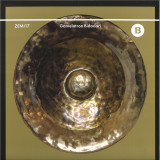
The Gamelatron is many things; one could call it a sculpture, a multimodal installation, an instrument, a robot, a feat of engineering, a vision—and it is all of these things. More importantly, though, it is a concept sustained by Aaron Taylor Kuffner, aka Zemi17, whose Gamelatrons are “sound producing kinetic sculptures” designed to create an immersive, visceral experience for the listener. Not a small feat, and yet the ambitions of Zemi17 are absolutely realized in this long-standing project, culminating now in his third release for The Bunker NY: Gamelatron Bidadari.
The Gamelatron Bidadari is not just a name—it is one of seventy-plus musical sculptures that Zemi17 has conceptualized, designed, and fabricated. Therefore, it would be inaccurate to think of this release as simply a series of arrangements composed in a finite period of time. Rather, it’s a window into a project and a process that is much larger than any single album can encapsulate. Gamelatron Bidardi is the culmination of more than a decade of work, and is central to Zemi17’s evolution, not only as a musician but as an artist.
Having studied gamelan for many years in Indonesian villages and at the Institut Seni Indonesia in Yogyakarta, Kuffner is a musician, an artist, technologist, and craftsman. The gongs in his sculptures are co-created with master Indonesian artisans. Each Gamelatron composition is site-responsive, meaning its sounds are composed for the acoustics and intentions of the space it inhabits, whether it’s an art gallery, a wooded landscape, or the inner temple of Burning Man. The Gamelatron does not stand alone: it is in constant co-creation with its physical environment, and in dialogue with gamelan’s long-standing history.
Originally exhibited at the Smithsonian Renwick as part of a show entitled, No Spectators: The Art of Burning Man, the Gamelatron Bidadari produces sounds that are delicate yet strong, and deeply hypnotic. Textured chiming creates intricate polyrhythmic patterns that are both complex and simple, or in a word, elegant. On Gamelan Bidadari, Zemi17 refrains from adhering to the strict musical structures; his approach to composition is free flowing.
He says, “I want to evoke what the music tells me it has to offer. It is like following water to its conclusion (or non-conclusion).” The arrangements on this album, written by Zemi17 and performed by the robotic arms of the Gamelatron, leaves the listener feeling enchanted, nourished and enriched.
A sense of the mystical comes through in the tonal quality of the instrument, and is conceptually felt in the sculpture’s name: the Bidadari, which loosely translates to “forest nymph.” The music conjures up natural wonder, and the four sculptures that make up the Gamelatron Bidadari, in fact, resemble trees. They are four independent yet connected entities, each with a large gong situated at their structural base—the sonic “roots” of the sculpture—while smaller gongs branch off of a golden, trunk-like spine. The Gamelatron Bidadari is as physically stunning as it is mesmerizing to the ear. A kind of divinity is invoked through its sound, or a sacred cohesion between past and present, tradition and new form. Meant to be viscerally experienced, the sounds of the Gamelatron call for sublime togetherness. Gamelatron Bidadari is not just an album but the crystallization of Kuffner’s work; it is a condensed yet spacious glimpse into the sonic power of Zemi17’s Gamelatrons, which have already been heard and experienced live by over a million people.
Runhild Gammelsæter and Lasse Marhaug are two Norwegian musicians/sound artists. Both started in the early 1990s music underground and have worked in many constellations with a wide range of collaborators.
Despite knowing each other for a long time, Gammelsæter and Marhaug’s first collaborative work was the “Quantum Entanglement” LP in 2014. The album ignited a collective spark that both wanted to pursue further. Still, other commitments got in the way, and the project lay dormant until Stephen O’Malley, and Greg Anderson invited them to open for Sunn O))) for a special gig in the St. James Church of Culture in Oslo in the autumn of 2019. The two gathered for a long series of rehearsals, and after the successful performance, it was clear that it was time to start working on new compositions and recordings. That process initiated in late 2019 and continued to early 2021, encompassing before and after the world went through the lockdown. The result of this long development to be heard accumulated upon their new album “Higgs Boson” on Ideologic Organ Music.
Throughout the profound process of creating “Higgs Boson”, Gammelsæter and Marhaug drew inspiration from various subjects and artists. For Marhaug, it was concepts informed by the structuralist experimental cinema of Japanese directors Takashi Ito and Toshio Matsumoto, futurist worlds of French comic book artists Philippe Druillet and Jean Moebius Giraud, landscape photography of Fay Godwin, Kåre Kivijärvi, and Tamiko Nishimura, amongst others.
It became a metaphysical juxtaposition involving Gammelsaeter’s research and lyrical ideas based on several seemingly unrelated principles. A process of association inspired by “the Glass Bead Game” by Herman Hesse. The discovery of the Higgs Boson as a confirmation of the physical universe. The work of Ernst Schrödinger on the uncertainty principle. The four forces of physics. The Force. Helplessness under armed forces - as the war sailors in World War II. The influence of magic as expressed in tarot.
Gammelsæter experiments with a boundary involving the thresholds amongst various states of focus and legibility by forensic experimentation with techniques such as exclusive expression of consonants, syllabic repetition, retrograde text vocalisations and multi-lingual layering. Her vocal inspirational sources include Sidsel Endresen, Diamanda Galas, Natacha Atlas, the choral works of Rachmaninov, and the bands Carcass and Grave.
Two worlds coming together, making the music special. Mixing hard facts with science fiction helps create a kaleidoscopic cross point between the complex realities of the past and a possible future.
“Quantum Entanglement” featured two long-form pieces centred around a prepared piano and layered voice, while “Higgs Boson” developed a much more elaborate and ambitious compositional work. Across eight parts, the two artists brought a broad palette of instrumentation and sound. Electronic and acoustic, objects and field recordings, and pipe organ define the structures of which the centre is Gammelsæter’s magnificent voice. She has become known for her legendary voice, with her vast and unique range of inflective techniques and affective colour through her 30 years creating music. In the mix, Lasse approached the instrumental elements like landscapes, then Runhild’s vocals as characters that inhabit those worlds. Often, Gammelsæter multiple characters fused with the landscape. Make them occupy space, sometimes blend into it, sometimes dominate it. Constructing and setting visual guidelines helps set focus and open possibilities.
As an album, “Higgs Boson” is direct and focused, drawing on song structures. Within these tracks are vast strata of sound, an immersive multi-dimensional depth of music. Creating a feeling of depth while working with a flat two-channel stereo format - and how dimensions of texture and distortion can help develop the illusion of a space. The album structure is a story-like arc, a malleable subjective path, set as the album traverses oblique and suggestive areas, opening the concepts for the listener to unpack as they like.
– exclusive consultation with Gammelsæter & Marhaug, edited by Stephen O’Malley, June 2022
- A1: Giacobinid Meteor Shower Attack (The Man From Giacobinid Meteor Comet)
- A2: Viva Astro Django
- A3: Sailing On Giacobini's Orbital
- B1: The Golden Apple And 400 Wives (Five Dimensional Nightmare)
- B2: Magic Fingers Of The Undesired Fiend
- B3: Or A Spell For Sargasso Of Space
- C1: Love Electrique
- D1: Pink Lady Lemonade (May I Drink You Once Again?) (May I Drink You Once Again?)
Continuing the ‘first time on vinyl’ purge of the AMT archives. Here’s the band's classic 2006 album finally available on double vinyl for the first time. Housed in full colour gatefold sleeve.
‘Myth of the Love Electrique’ is another scorcher from these ridiculously prolific psych masters. This album is notable for being the debut of their newest band member: Kitagawa Hao. Kitagawa's presence doesn't dominate the recording by any means, but her contributions nicely complement the swirling chaos the group generates. Acid Mothers Temple always manages to find a breath of fresh air at the most opportune times, and this is no exception. While remaining a tight unit, bringing Kitagawa into the fold adds another dimension to their chaotic sprawl without having to sacrifice any of their strengths on this incendiary album.
“Comprised of four lengthy tracks, the album explodes with a start: "The Man from Giacobinid Meteor Comet." Kawabata Makoto's guitar quickly becomes a tangle of screams, a frenzied surge that drags the band along with it. The rhythm section is ferocious. Bassist Tsuyama Atsushi frequently ventures out to the stratosphere, but he also knows when to hold back or to provide a vaguely melodic foundation. Likewise, the amount of energy drummer Shimura Koji dedicates to his performance is a lesson in endurance. Divided into three movements, this track eventually cools down and then glides to a drone landing, alighting the listener breathlessly upon calmer ground.
Kitagawa's voice makes its first appearance on "Five Dimensional Nightmare," floating over a bouzouki arrangement that sounds like singing glass. This one is divided into three sections like the previous track, but starts airy and then goes into a drone as Tsuyama briefly takes over the vocals. From here, strings are tortured like fingernails on a blackboard before a guitar and Higashi Hiroshi’s water drop electronics restore balance.
As much as I loved the two previous tracks, the band forges ahead into something different on "Love Electrique." Kitagawa's presence is most felt on this track. Her voice streaks across the mix as blistering guitars and freaky electronics blast all over the place. Over the course of 20 minutes, it hits several different moods and textures on a truly transcendent journey.
Of the four tracks, only the live staple "Pink Lady Lemonade (May I Drink You Once Again?)" may seem a little redundant. Kitagawa, however, breathes new life into this standard by bringing her vocals to the fore over the entire track, as if restoring an element that previously had been missing. It's hard to call it a definitive version because so many other excellent versions already exist, but it is a great one in its own right. For fans who may be weary of this song after all of its appearances over the years, it is easy enough to stop the disc after gorging on the first hour of music, and it is still a welcome dessert if the mood should strike”
The third release from Night Dreamer’s essential “Direct-to-Disc” sessions sees an incredible meeting between legendary US saxophonist Gary Bartz and leading UK spiritual jazz ensemble, Maisha, featuring two Bartz classics and three brand new joint songs written by both Bartz & Maisha in close collaboration.
Having cut his teeth playing with the likes of Charles Mingus, Max Roach, Art Blakey and finally in 1970, Miles Davis at the peak of his electric period, Gary Bartz became a leading figure of the early-to-mid 70s spiritual jazz movement, releasing a string of ground-breaking albums on legendary NYC jazz label Prestige Records with his NTU Troop, featuring classics such as “Celestial Blues”, “Uhuru Dance” and “I’ve Known Rivers”, before collaborating on Blue Note Records with the Mizell Brothers on the anthemic jazz funk of “Music Is My Sanctuary”. An oeuvre much loved by soul jazzers and hip hop fans alike.
Led by drummer Jake Long, Maisha have been central to the UK’s jazz explosion, and have fast become the UK’s most exciting and in-demand young spiritual jazz ensemble, from steller shows at Jazz re:freshed, Total Refreshment Centre & Church of Sound and supporting the Sun Ra Arkestra, to releasing their critically acclaimed debut LP, “There Is A Place” on Gilles Peterson’s Brownswood Recordings in 2018. Theirs is an organic & explosive sound that blends influences from afrobeat and broken beat to Persian music, with a deep love and understanding of jazz, particularly the heritage of spiritual jazz led by titans such as Pharoah Sanders, Alice Coltrane and of course, Gary Bartz.
Which makes this collaboration even more special. Bartz was first invited to share a stage with Maisha by Gilles Peterson to headline the inaugural We Out Here festival. Their chemistry was rich and instantaneous, certainly a two-way street, with the young musicians reinvigorating the legend’s performance and wowing the intergenerational festival audience. A European tour followed, including a London Jazz Festival highlight at the Royal Festival Hall, celebrating the 50th anniversary of his album “Another Earth”, originally featuring fellow legends, Pharoah Sanders, Charles Tolliver, Stanley Cowell, and John Coltrane’s own bassist, Reggie Workman.
Now the relationship has evolved into a special straight-to-disc recording for Night Dreamer Records, that captures the vitality of their collaboration. Whilst Bartz and Maisha reinvent classic Bartz compositions “Uhuru Sasa” and “Dr Follows Dance”, extending the pieces into long piece improvised grooves, their recording session gave birth to three brand new joint compositions, written the very same day. These include the propulsive “Leta’s Dance” that magically combines the Bartz’ soulful musical lyricism with Maisha’s African-jazz influences, and the organic jazz
funk of “Harlem to Haarlem”, featuring a hot solo from guest trumpeter Axel Kaner-Lidstrom of Cykada & Levitation Orchestra fame.
Like previous Night Dreamer efforts from afrobeat star Seun Kuti & Egypt 80, and the beautiful collaboration between Brazilian stars Seu Jorge & Rogê, the album was recorded in Haarlem’s Artone Studio, a stones throw from Amsterdam, in just one-take, straight-to-disc, avoiding post-production embellishments and retaining the purity of the performance lost in modern recording techniques.
This record really is an event, in and of itself, a meeting of talents, minds, generations and zeitgeist moments, captured in a unique and pure manner. The music does not disappoint, as Maisha have been inspired to reach new heights whilst we find Bartz truly reinvigorated, and both artists in tune to the spirit of the other.
Recorded direct-to-disc @ Artone Studio, Haarlem, The Netherlands on Tuesday 29th Wednesday 30th October 2019
DJ Revive has been a long time label friend and a very talented producer, and we are honoured to finally have this long awaited EP released Second Drop. He has an energy about his music that makes people dance, and this breakbeat hardcore record will have you toe tapping and head nodding for sure! These tracks are a great homage to the 1994/95 sound and DJ Revive draws influence from some of the biggest names of the era whilst finishing it all off in his own style.
Club / DJ Support
Jay Cunning, Billy Bunter, the Fat Controller, Liquid, Hyper On Experience, Glowkid, Slipmatt, Dj Jedi, Dj Luna-C, Dj Brisk, Paul Bradley, Jimni Cricket, Bustin, Jimmy J, Doughboy, Lowercase, Dave Skywalker, Ponder and many others
(feat. Claire Davis)
300 copies pressed
The A side was released back digitally in March. "Hope To See You Again" Which is an original song with Claire Davis on lead vocals
Better things is coming out digitally 15th July and it will be on a Ltd edition 45 vinyl. The Pre-Orders for the vinyl will be starting soon.
The B side is a killer version of her classic tune, "Better Things" The soulful vocals of Claire Davis are accompanied by jaunty horns and keyboards, and the cool groovebefits the positive lyrics ("I'm a better woman than I have been")
Introducing The HP's. This talent-studded Hamilton-based funk/soul collective is poised to make major moves with the release of their debut 45. The group is the brainchild of drummer/bandleader 'Parkside' Mike Renaud, the founder/owner of noted Canadian music company Hidden Pony Records & Management. A life-long fervent fan of funk and old school soul, Parkside has assembled a crack team of musicians and vocalists dedicated to his vision of breathing vibrant new life into these classic forms. Drawing inspiration from the likes of James Brown and The J.B.'s and Sharon Jones and The Dap Kings. The title pays tribute to Renaud's hometown, Hamilton, and The H.P.'s sound
honours The Hammer's core characteristics of rugged authenticity. Get ready to get Gritty!
— The HP's have partnered with UK based soul label LRK Records for the release of their latest single "Hope To See You Again", featuring Canadian soul singer and LRK alum Claire Davis
— "Hope To See You Again" arrives digitally March 31st, 2022 with the 45" expected summer 2022
— The 45" single will also include a cover of the Sharon Jones & The Dap Kings classic "Better Things"
The HP's.
To the Canadian music industry, 'Parkside' Mike Renaud is best known as the founder and owner of Hidden Pony
Records & Management, now widely recognized as one of Canada's premiere talent-development labels and artist
management companies. Past and present artists on Renaud's roster include Said The Whale, The Elwins, The Dirty
Nil, Hannah Georgas, Imaginary Cities, Jeremy Fisher, Odds, and many more.
Not many are aware that this popular industry power player actually got his start in music as a drummer in a '90s
Montreal soul/funk band called Parkside Jones (the source of his nickname). When he moved over to the business
side of music, beginning with top indie label Aquarius Records, Mike Renaud packed the kit away, launching himself
into the biz with full passion, commitment, and skill.
Mike has now resurrected his kit (after 20 years), honed his chops, and emerged as the driving force behind The
Renaud recalls the spark that reignited his love of playing drums: "The first time I played them in 20 years was at the
memorial for industry comrade Jon Box at The Opera House in Toronto. I was talked into playing with Chris Murphy
Sloan, Terra Lightfoot, and the Dirty Nil guys on a version of 'Handle With Care.'"
This renewed love affair would lead to Mike's vision for The H.P.'s. From his teenage years, his favourite musical
genre has been classic soul and funk, and he has an encyclopedic knowledge of these styles. Heartened to see the
growing international community building around these sounds, Mike decided to make his own creative contribution to
the form. He recruited musical and vocal collaborators from his hometown (plus a couple of Toronto imports) for the
project, and The H.P.'s were born.
The group name, The H.P.'s, pays homage to James Brown's legendary band, The J.B.'s, with these initials
referencing Hidden Pony. The album title is a tribute to Renaud's hometown, Hamilton, and The H.P.'s sound
honours The Hammer's core characteristics of grit and authenticity. Mike actually spent some time co-managing the
current J.B.'s.
The late Sharon Jones, a key inspiration for Renaud, is honoured via a killer version of her classic tune, "Better
Things." The soulful vocals of Claire Davis are accompanied by jaunty horns and keyboards, and the cool groove
befits the positive lyrics ("I'm a better woman than I have been").
Giving this cover extra resonance are the memorable encounters both Davis and Renaud had with Jones back in
2015. A documentary portrait of the soul great, Miss Sharon Jones!, had its world premiere at the Toronto
International Film Festival (TIFF), and Claire Davis was doing a house concert playing DapKings songs that night.
The band came across the party and jammed along, then, when one of the Dap Kings backup singers couldn't cross
the border, Claire got the call to fill in at Sharon Jones' headlining show at Hamilton's Supercrawl fest.
In a cool twist of fate, Mike Renaud was one of the organizers of that show, and was tasked with looking after
Sharon. The two bonded instantly and deeply, as Mike recalls. "While driving her to soundcheck, Sharon confided in
me that her cancer had returned. She didn't want anyone to know, as the documentary was about her conquering it,
and she didn't want people to be bummed out at the news. It was my 40th birthday that day, and Sharon actually
stopped her show to sing me Happy Birthday in a soulful way!"
Shakethehoof added "Hope To See you Again' to their playlist musicto/shake-a-hoof/the-hps-ft-claire-davis-hope-to-see-you-again-the-hoof-chats/
"BETTER THINGS" has gone straight into the UK Soul chart breakers at No 8
UK label Dawn State continue their hot streak this summer with further eclectic moods for the dance floor and beyond. On the tools for the fifth outing on the label is KIDWHO, a blossoming talent who through the last years whilst enduring the pandemic found light by burying himself in his studio experiencing new creative flows. The “Warez House” EP varies in tastes, similar to the highs and lows of the times that just passed us by.
Diving into the deep end is the title track, “Warez House”, loopy and hypnotic, swaying between shades of low end leaned house and techno. Off kilter synths and pads maneuver their way around the driving force of the track. “It came together layer by layer, eventually turning into a dense (and at times, unruly!) groove. A final touch
of atmospherics from an old Roland ROMpler and the track was done - bar a generous helping hand in mixdown from Joel Kane (who also turned out a heads-down dub version which might make an appearance!).”
Leaning in a more hazy direction is the blissful cruiser, “Leploop Lagoon”, a deep and emotive vibe crafted especially for the early mornings. A sophisticated deep house energy from the talented producer. “‘Leploop Lagoon’ is the oldest track on the EP, a cleaned-up version of a rough jam I made around four years back. It takes its name from the Leploop, a quirky semi-modular analogue groovebox of sorts, hand-built in Italy. A very unique and unpredictable machine, it’s on bass duties here as well as providing some percussion sounds via the MPC sampler.”
On the flip side lies “Spectral Pattern”, and it packs a certain punch. The rolling arrangement converses in harmony with icy hi-hats that flash in and out teasing the energy, all of the elements having space to breathe and work their magic.“‘Spectral Pattern’ came together quickly one very productive weekend in the studio last year. It developed from the bass sequence, which comes from a Yamaha TG-33, an unassuming 80s digital synth known for its glassy mix of ROM samples and FM tones - very New Age sounding, or 90s computer game soundtracks. But when you strip it back to basics, it punches hard in the low-end.”
Slipping on to the B side is a five minute transcendental trip, offering yet another series of textures to this otherworldly EP. The final track “At Least We Hav Music” is an ethereal soundscape waiting to be explored, wandering amongst ambient realms throughout. “The label was keen to include an ambient track on the release, and I wanted to record something specially for them. At first I had in mind something droning and melancholic, but after a few experiments with cassette
loops and reverb pedals this was the one that stood out. It was recorded during one of the lockdowns, and I guess I needed to create something that sounded more hopeful than brooding. I messaged DS boss Tom Haus with a rough version, and we went on to have a grumble about the gloomy state of things, locked-down in our respective cities and missing friends, family, activities… At some point I wrote ‘at least we have music’ - and almost as soon as I had sent it I knew I had found the track’s title. I’m very lucky to have had my home studio as a refuge through the long months of lockdown, and I’m honoured to have the chance share some of my output from this period on this record.”
KIDWHO fitting the Dawn State ethos to a tee here as they set up shop for what looks to be another fantastic release. “Each of these tracks came about in quite different ways. Like many creative people, I had moments of struggle during the pandemic, where the lack of variety and day-to-day stimulation lead to periods of writer’s block, and so I used those times to focus on smaller, more manageable projects such as making synth patches, recording sounds and and throwing together short loops in my samplers for later use. A number of
these short loops eventually laid the foundations for title track ‘Warez House’. Big thanks to Dawn State, Joel Kane, El Choop and everyone else who has helped make this happen.” -
KIDWHO
incl. mp3
A deepening sense of life, love, health, loss, and luck shaped the outlines of Tuttle’s fifth, and most collaborative album to date. Following a surprising exhilaration and exhaustion from the hitherto most innocuous of moments in mid-2020 - a half-hour drive to collect an online order, the furthest distance he’d traveled in months; Tuttle commenced working on new musical ideas loosely based around navigating the aftermaths and interregnums of a restless era. “I was thinking about what’s going on in the world and how localised it has become for so many of my friends in different places,” Tuttle explains. “Not in a negative way but more so focusing on how lovely it is when things are good.”
Thinking of musician friends and peers around the world – each confined to their own immediate surroundings – Tuttle’s generative and collaborative musical practice became a silvery through-line, connecting American innovators Steve Gunn, Chuck Johnson, Luke Schneider and Michael A. Muller (Balmorhea), to French/Swedish violinist Aurelie Ferriere and Spanish guitarist Conrado Isasa, back to Australian friends such as Voltfruit (aka Flora Wong and Luke Cuerel) and Darren Cross (Gerling) – among many others – each fitting seamlessly into Tuttle’s vibrant musical world.
Whilst previously a feature of Tuttle’s music, the exploration of space and texture found within Fleeting Adventure feels particularly vast and generous. The involvement of Chuck Johnson and Lawrence English mixing and mastering the album respectively, as with their work on Tuttle’s previous and breakthrough album Alexandra (Room40, 2020), inspired Andrew to develop songs that are as serene and patient as he’s ever sounded. Stripping elements back, the idea of pulling the songs apart somewhat, was just as important as adding the work of Andrew’s collaborators. “It is spacious through intent, process and assistance,” he confirms. "I thought carefully about what instruments - both what I played and what I asked others to provide based on my unadorned banjo track - would best work with what I was wanting to create.”
The road to Fleeting Adventure has been both long and short, but it sits as a tender and perhaps even vital reflection of an era in progress, in retrospect and in anticipation. A poignant contemplation on the many bonds that make up our lives from friends and family to the myriad places we inhabit and pass through along the way. The idea that an adventure doesn’t necessarily have to be a grand statement Andrew Tuttle has gathered up a number of his contemporaries and crafted something quietly spectacular, a new beginning to familiar habits.
“Tuttle’s plaintive banjo is encircled by an array of majestic sounds: serpentine electric guitar from Steve Gunn, enveloping electronics courtesy of Balmorhea’s Michael A Muller, violin swirls from Aurelie Ferriere , and the gentle saxophone of Joe Saxby. The result is a lush and unabashedly beautiful sonic landscape.’’ 8/10 UNCUT LEAD REVIEW
Andrew Tuttle's new single New Breakfast Habit is the perfect sonic condiment for the most important meal of the day. A banjo flecked ambient/cosmic journey with a psychedelic video courtesy of Matmos
His new album 'Fleeting Adventure' is the soundtrack of the world re-emerging and getting a release on Basin Rock (Julie Byrne, Aoife Nessa Frances, Johanna Samuels) this summer.