Gondwana Records sign LA bassist and composer Seth Ford-Young's Phi-Psonics project and announce a remastered deluxe-edition of The Cradle featuring bonus material
Phi-Psonics is a meditative, immersive instrumental group from Los Angeles, led by bassist Seth Ford-Young and featuring Sylvain Carton on woodwinds, Mitchell Yoshida on electric piano, and Josh Collazo on drums. Their deeply soulfulmusic draws on jazz and classical influences together with Ford-Young's own musical experiences, relationships, and his introduction to spirituality, yoga and philosophy at a young age, to create something uniquely its own. Phi-Psonics' name and ultimate aim is to find 'Phi' – the golden mean – in art, nature and self. Ford-Young explains:
"It's a bit of a cliché, but music saved my life many times and instilled in me a belief in the great power of healing through art. It is my hope and intention that this music provides healing to someone somewhere."
Originally from Washington DC area, Ford-Young moved to California in the early 90s and fell in love with the deep sounds of the upright bass and the music of Charles Mingus, John and Alice Coltrane, and Duke Ellington along with Bach, Chopin, Pärt, and Satie. He immersed himself deeply in music and keen to learn combinedintense personal study with collaborations, tours, and recordings with artists such as Tom Waits, Beats Antique, and John Vanderslice. In 2010 he moved from the San-Francisco Bay area to the Los Angeles hills and continued his explorations. But great music is rarely just about music and Ford-Young's meditative, soulful music draws on more than just the twin wellsprings of jazz and classical music:
"My mother was a yoga teacher from the early 70's until recently and taught me yoga and meditation at an early age, my stepfather is an Aikido instructor and student of the teachings of Gurdjieff. Those were all early areas of study that I came back to many times throughout my life. Phi-Psonics has been a project that unapologetically synthesizes some of these ideas into our music".
It's this mixture of influences, musical and extramusical, that gives the music of Phi-Psonics it's immersive quality and quiet power. Revealingly the music that would becomeThe Cradle, wasn't written specifically for an album, originally Ford-Young was just writing down what was coming through. As time went by and the album began to take shape, the world situation seemed to be getting darker and his compositions aim to offer hope as a response to the negative influences that abound today. Remarkably for such a beautiful sounding record, it was recorded at the composer's home, rather than in a studio, but the relaxed nature of this process gives the music an airy lightness that propels the music to some magical spaces.
Originally self-released on vinyl in a limited run just as the world went into lockdown, The Cradle reached Matthew Halsall (founder of Gondwana Records) when he aws looking for music for his Worldwide FM show and he was blown away, hearing a kindred spirit at work. Halsall explains:
"Phi-Psonics make beautiful, humble and honest music, it's not showy, but it has a deep vibe that will elevate your mind and soul if you let it. When we heard The Cradle we reached out and are really super delighted to welcome Seth and his band to our label". Whereas for Ford Young: "Connecting with Matthew and the Gondwana records family has been a light in the darkness of the last years - to have my music make connections even as we are more isolated."
Ford-Young is currently putting the finishing touches to the second Phi-Psonics record, but aware that only a select few had heard The Cradle, let alone had the chance to buy a copy, and entranced by its deceptive simplicity and elevating energy, Halsall suggested that Gondwana present the album as a remastered 'deluxe edition' with an extended running time featuring extra tracks and new artwork from Daniel Halsall.
The Cradle starts with First Step, perfectly setting the tone for the whole album, it is a beautiful, soulful slice of musical calm gently propelled by Ford-Young's resonant bass and elevated by sublime flute and Wurlitzer electric piano solos. The seductive title track The Cradle was written way back in 2011 during a time of great personal change that led the composer to a feeling of newness and nurture. The magical, winsome Desert Ride is inspired by many rides through the grandly cinematic Mojave Desert. You can experience how incredibly full of life it's harsh landscape is if you slow down to its tempo. The gentle, sublime Mama is a tribute to mothers of all kinds, beautiful and heroic. Drum Talk was largely improvised, Ford-Young and the band agreed on a topic and recorded their conversation. Choosing their notes based on how Josh's drums were tuned. Like Glass is named for the special properties of Glass. Like some music, glass is delicate, yet has structure. The first of the two bonus tracks Still Dancing was written during the early days of 2020 in response to the challenges we all were facing then. It's a reminder that the figurative dance continues and that real dancing is essential. And the second, The Searcher, also written as a response to 2020, is a gently hypnotic song about the introspection and growth that can spring from a difficult situation.
This then is The Cradle, a quiet self-contained masterpiece, life-affirming and elevating in equal measure and the first offering from a wonderful new voice in spiritual jazz and the latest members of the global Gondwana Records family.
quête:man make music
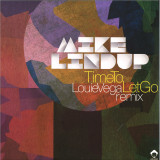
Vega Records is proud to present its newest release “Time To Let Go” with Mike Lindup, singer, keyboard player composer and founder member of the legendary band Level 42. Formed in 1980 with Mark King, Phil and Boon Gould, the band has sold over 30 million albums and still performing worldwide. Mike Lindup has performed onstage with many artists including George Harrison, Eric Clapton, Ringo Star, Sting, and more. Even on theater stages in London’s West End, Mike Lindup has played on shows Thriller Live, Let It Be, and has completed four tours on the Thriller Live tour production, twice as Musical Director. “Time To Let Go” is taken from the new Mike Lindup album “Changes 2” with smokin’ remixes by Two Soul Fusion AKA Louie Vega & Josh Milan. The Remixers deliver two versions, one taking you to the soul house funky grooves of Two Soul Fusion and the other catapulting you into the world of Afro House. It’s all about Mike Lindup’s unique voice and his powerful, brilliant lyrics that make a huge statement well needed in the world today. Grooves to make you dance are no problem for Two Soul Fusion but when you have award winning lyrics its a whole other level here. The man who sang the lead vocal on New York City’s favorite dance club culture classic “Starchild” by Level 42 has now blessed Vega Records with the new gem “Time To Let Go”.
Vector Music by Suren Seneviratne is a true homage to the Yamaha TG33, a synth that he was hoping to keep forever, or at least a very long time until Covid-19 struck.
During the early months of 2020, Suren, like many other artists, went without work and was forced to sell surplus belongings to help subsidise food, rent and other necessities. Some sneakers and clothes went first but he avoided considering his music gear for as long as possible. As the pandemic continued to cause havoc throughout the year, selling gear was inevitable. The rare Yamaha TG-33 programmable synthesizer module was next.
By bittersweet chance, this was the perfect opportunity to make use of this unsung synthesizer one last time, and to make it count. The synth sold via Twitter and Suren suddenly had a deadline in which to make the most of it in the two days before it would be gone forever and so he decided to record a body of work using only the TG33, to shine a spotlight on its quirks and idiosyncrasies and give it the attention it deserved. This ultimatum proved to be really fruitful and resulted in the recordings that form the eight tracks on this album “Vector Music”; a raw and intimate portrayal of a forgotten digital instrument from the 1990s. The broader collective sentiment of loss, anxiety and seasonal depression during the thick of the pandemic mixed with feelings of uncertainty, distress and fear binded throughout the recording process and became sewn into the very fabric of the music.
The song titles are taken from various stages of sleep: the once instinctive process which, since 2020, was radically altered and experienced a new for millions of people around the globe due to the phenomena known as Pandemic Dreams.
Composed and produced by Suren Seneviratne
Mastered by Luca Sammartin
Original artwork and layout by Marco Ciceri
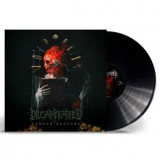
Across eight studio albums, DECAPITATED grew from the adolescent dream of teenagers from a small Central European town to one of the leaders of the metal genre. Each successive album further expands the band’s sound with genre-bending authenticity and integrity. As Metal Injection rightfully observed, “any self-respecting death metalhead knows the name well.”
DECAPITATED’s music is a weapon forged by four young men from a historic medieval-fortified town in Poland, which catapulted them to the top of a worldwide subculture. Like a rose in the devil’s garden, the DECAPITATED story builds triumph from tragedy. The gleeful grotesquery of extreme metal imagery and rifftastic bludgeoning beckons listeners to uncover broader truths.Upon the release of 2017’s Anticult, Metal Hammer declared DECAPITATED “a serious successor to the likes of Pantera and Lamb Of God – a band who can draw new legions into the metal world as its new champions.” Their diverse follow-up, 2022’s Cancer Culture, delivers on that promise.
Instantly recognizable devastation and deceptively sinister hooks abound. Freshly minted DECAPITATED anthems like “Last Supper,” “Hello Death,” “Just Cigarette,” “No Cure,” “Iconoclast,” and “Cancer Culture” shimmer with sonically sharp production and unrelenting bombast. There’s also a newly increased emphasis on melody, even venturing into darkly romantic territory. Wacław "Vogg" Kiełtyka (guitar), Rafał "Rasta" Piotrowski (vocals), Paweł Pasek (bass), and James Stewart (drums) are at the top of their game, delivering the goods at peak performance. Jinjer vocalist Tatiana Shmayluk and Machine Head frontman Robb Flynn make guest appearances.
Set on the descending plains of a mountain range amid a dense forest, Krosno boasts a 14th-century Gothic church, a Subcarpathian museum, and stunning artisan glassware. In this Polish town, teenage music student Wacław "Vogg" Kiełtyka discovered records from bands like Morbid Angel, Cannibal Corpse, Metallica, and Machine Head. The guitarist and his younger brother, drummer Witold “Vitek” Kiełtyka, cofounded DECAPITATED in 1996, inspired by a wide range of technical death, blackened thrash, and local heroes, like KAT and the world-renowned Vader. Death and black metal reigned supreme in the Polish scene of the 1990s, where Behemoth originated as well. In fact, a Vader song called “Decapitated Saints” inspired the band’s moniker.
The organic musical chemistry between the Kiełtykas was akin to the brotherly connectivity and vibe driving Pantera, Gojira, and the classic era of Sepultura. In 2006, Kerrang! praised the first three DECAPITATED albums - Winds of Creation (2000), Nihility (2002), and The Negation (2004) – as “superbly conceived and executed eruptions of technical brilliance and razor-sharp songwriting that turned these youthful Poles into one of the genre’s most widely respected bands.” That year’s Organic Hallucinosis further perfected Vogg’s penchant for blending extremity with catchy hooks.
The rule-breaking ferocity and invention of the first four albums reinvigorated death metal, as DECAPITATED inspired a new generation of bands who followed suit. Sadly, this era came to a shocking end in late 2007. While touring Russia, the band’s bus collided with a large truck near the border with Belarus. Both Vitak and then-singer Adrian “Covan” Kowanek sustained severe head injuries. Tragically, Vitak passed away in a Russian hospital a few days later. He was just 23.Vogg summoned the courage to continue, in honor of his brother and what they created, and returned with a new incarnation of DECAPITATED and the fiercely adventurous comeback album, Carnival is Forever (2011) featuring new vocalist Rafał "Rasta" Piotrowski. Blood Mantra (2014) introduced bassist, Paweł Pasek. Blabbermouth declared it “perhaps the most poised and gutsy” DECAPITATED album, adding “its courageous bends make it a turbulent but pleasurable ride.”
Cancer Culture sounds brilliant, modern, and tasty. “There is no place for any fake, plastic, bullshit drum machine or anything like that,” Vogg insists. “It’s all organic, pure, and clear, showing the true face of the band. Vogg and company entrusted the Cancer Culture mix to David Castillo at Sweden’s Fascination Street Studios / Studio Gröndahl (Sepultura, Carcass, Opeth, Katatonia), and legendary American producer Ted Jensen (Metallica, Slipknot, Pantera, Machine Head, Korn).
The devoted supporters who traveled to see DECAPITATED on international tours with the likes of Lamb Of God, Meshuggah, Soulfly, Fear Factory, and Suffocation over the years will recognize the ever-present pummeling backbone. Longtime fans and newcomers alike will connect to the variety of atmospheric depth throughout Cancer Culture’s ten boundlessly energetic and creative tracks.
“If you told me 25 years ago, in my neighborhood in the South of Poland, that I would be in Machine Head, sharing riffs with Robb Flynn,” Vogg marvels. “It’s simply incredible. It means that everything is possible in your life. That gives me the faith to believe that I can achieve even more in my career. The dreams we have when we are kids, things we can barely imagine, can happen.” Flynn contributes a hauntingly beautiful vocal to the Cancer Culture track “Iconoclast.” “Clean vocal singing is a really new thing in DECAPITATED,” Vogg notes. “It’s really unique and amazing.”
Driven by Vogg’s passion and integrity, the dual emphasis on creative invention and technical prowess maintains DECAPITATED’s stature as genre-leaders in 2022 and beyond. The band’s supporters continually demonstrate confidence and absolute certainty DECAPITATED will deliver.
Across eight studio albums, DECAPITATED grew from the adolescent dream of teenagers from a small Central European town to one of the leaders of the metal genre. Each successive album further expands the band’s sound with genre-bending authenticity and integrity. As Metal Injection rightfully observed, “any self-respecting death metalhead knows the name well.”
DECAPITATED’s music is a weapon forged by four young men from a historic medieval-fortified town in Poland, which catapulted them to the top of a worldwide subculture. Like a rose in the devil’s garden, the DECAPITATED story builds triumph from tragedy. The gleeful grotesquery of extreme metal imagery and rifftastic bludgeoning beckons listeners to uncover broader truths.Upon the release of 2017’s Anticult, Metal Hammer declared DECAPITATED “a serious successor to the likes of Pantera and Lamb Of God – a band who can draw new legions into the metal world as its new champions.” Their diverse follow-up, 2022’s Cancer Culture, delivers on that promise.
Instantly recognizable devastation and deceptively sinister hooks abound. Freshly minted DECAPITATED anthems like “Last Supper,” “Hello Death,” “Just Cigarette,” “No Cure,” “Iconoclast,” and “Cancer Culture” shimmer with sonically sharp production and unrelenting bombast. There’s also a newly increased emphasis on melody, even venturing into darkly romantic territory. Wacław "Vogg" Kiełtyka (guitar), Rafał "Rasta" Piotrowski (vocals), Paweł Pasek (bass), and James Stewart (drums) are at the top of their game, delivering the goods at peak performance. Jinjer vocalist Tatiana Shmayluk and Machine Head frontman Robb Flynn make guest appearances.
Set on the descending plains of a mountain range amid a dense forest, Krosno boasts a 14th-century Gothic church, a Subcarpathian museum, and stunning artisan glassware. In this Polish town, teenage music student Wacław "Vogg" Kiełtyka discovered records from bands like Morbid Angel, Cannibal Corpse, Metallica, and Machine Head. The guitarist and his younger brother, drummer Witold “Vitek” Kiełtyka, cofounded DECAPITATED in 1996, inspired by a wide range of technical death, blackened thrash, and local heroes, like KAT and the world-renowned Vader. Death and black metal reigned supreme in the Polish scene of the 1990s, where Behemoth originated as well. In fact, a Vader song called “Decapitated Saints” inspired the band’s moniker.
The organic musical chemistry between the Kiełtykas was akin to the brotherly connectivity and vibe driving Pantera, Gojira, and the classic era of Sepultura. In 2006, Kerrang! praised the first three DECAPITATED albums - Winds of Creation (2000), Nihility (2002), and The Negation (2004) – as “superbly conceived and executed eruptions of technical brilliance and razor-sharp songwriting that turned these youthful Poles into one of the genre’s most widely respected bands.” That year’s Organic Hallucinosis further perfected Vogg’s penchant for blending extremity with catchy hooks.
The rule-breaking ferocity and invention of the first four albums reinvigorated death metal, as DECAPITATED inspired a new generation of bands who followed suit. Sadly, this era came to a shocking end in late 2007. While touring Russia, the band’s bus collided with a large truck near the border with Belarus. Both Vitak and then-singer Adrian “Covan” Kowanek sustained severe head injuries. Tragically, Vitak passed away in a Russian hospital a few days later. He was just 23.Vogg summoned the courage to continue, in honor of his brother and what they created, and returned with a new incarnation of DECAPITATED and the fiercely adventurous comeback album, Carnival is Forever (2011) featuring new vocalist Rafał "Rasta" Piotrowski. Blood Mantra (2014) introduced bassist, Paweł Pasek. Blabbermouth declared it “perhaps the most poised and gutsy” DECAPITATED album, adding “its courageous bends make it a turbulent but pleasurable ride.”
Cancer Culture sounds brilliant, modern, and tasty. “There is no place for any fake, plastic, bullshit drum machine or anything like that,” Vogg insists. “It’s all organic, pure, and clear, showing the true face of the band. Vogg and company entrusted the Cancer Culture mix to David Castillo at Sweden’s Fascination Street Studios / Studio Gröndahl (Sepultura, Carcass, Opeth, Katatonia), and legendary American producer Ted Jensen (Metallica, Slipknot, Pantera, Machine Head, Korn).
The devoted supporters who traveled to see DECAPITATED on international tours with the likes of Lamb Of God, Meshuggah, Soulfly, Fear Factory, and Suffocation over the years will recognize the ever-present pummeling backbone. Longtime fans and newcomers alike will connect to the variety of atmospheric depth throughout Cancer Culture’s ten boundlessly energetic and creative tracks.
“If you told me 25 years ago, in my neighborhood in the South of Poland, that I would be in Machine Head, sharing riffs with Robb Flynn,” Vogg marvels. “It’s simply incredible. It means that everything is possible in your life. That gives me the faith to believe that I can achieve even more in my career. The dreams we have when we are kids, things we can barely imagine, can happen.” Flynn contributes a hauntingly beautiful vocal to the Cancer Culture track “Iconoclast.” “Clean vocal singing is a really new thing in DECAPITATED,” Vogg notes. “It’s really unique and amazing.”
Driven by Vogg’s passion and integrity, the dual emphasis on creative invention and technical prowess maintains DECAPITATED’s stature as genre-leaders in 2022 and beyond. The band’s supporters continually demonstrate confidence and absolute certainty DECAPITATED will deliver.
- A1: Dobie Gray - Out On The Floor (02:54)
- A2: The Show Stoppers - Ain't Nothin' But A House Party (02:39)
- A3: Richard Temple - That Beatin' Rhythm' (02:16)
- A4: Billy Butler & The Enchanters - The Right Track (02:30)
- A5: The Valentines - Breakaway (02:31)
- A6: The M.v.p.'s -Turnin' My Heartbeat Up (02:17)
- A7: Melba Moore - Magic Touch (02:25)
- A8: The Seven Souls - I Still Love You (02:23)
- B1: James Barnett - Keep On Talking (02:34)
- B2: The Olympics - Baby Do The Philly Dog (02:20)
- B3: The Hesitations - I'm Not Built That Way (02:42)
- B4: Eddie Parker - I'm Gone (02:46)
- B5: Mary Love - Lay This Burden Down (02:38)
- B6: Maxine Brown - It's Torture (02:33)
- B7: Kim Weston - Helpless (02:53)
- B8: Chairmen Of The Board - Give Me Just A Little More Time (02:42)
- B9: Earl Van Dyke & The Motown Brass - 6 By 6 (02:19)
- C1: Ann Sexton - You've Been Gone Too Long (02:16)
- C2: Eloise Laws - Love Factory (03:25)
- C3: Barbara Lynn - Movin’ On A Groove (03:17)
- C4: Tommie Young - Hit And Run Lover (02:34)
- C5: The Montclairs - Hung Up On Your Love (03:22)
- C6: Four Below Zero - My Baby's Got Esp (03:32)
- C7: Freda Payne - Band Of Gold (02:55)
- D2: The Chandlers - Your Love Makes Me Lonely (02:25)
- D3: The Monitors - Crying In The Night (03:05)
- D4: Tommy Good - Baby I Miss You (02:58)
- D5: Chuck Jackson - Hand It Over (02:22)
- D6: Frances Nero - Keep On Lovin' Me (02:25)
- D7: Edwin Starr - Headline News (02:33)
- D8: Jimmy Radcliffe - Long After Tonight Is All Over (02:30)
- C8: Just Brothers - Sliced Tomatoes (02:20)
- D1: Al Wilson - The Snake (03:30)
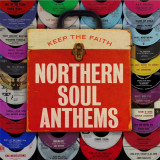
Demon Music is proud to bring together a selection of popular and exciting classic Northern Soul Anthems on a new 2LP thirty-three track collection. These are the original recordings by some familiar names and one or two that may have passed you by.
As the Sixties came to a close and the initial success of labels like Atlantic and Motown began to wane, there remained a dedicated fanbase of Soul devotees who would rather be out on the floor than wearing flowers in their hair. They continued to seek out new and previously overlooked releases, many on small labels that had never enjoyed chart success, making surprise hits of a few in the process.
Northern Soul could easily have passed into music history as a fad, something on the fringes of mainstream popular music; instead its popularity has remained and even grown. It is no longer the preserve of venues in the north of England (who had always attracted coachloads of devotees from across the nation), with Soul clubs opening in Europe, Asia, Australia and even - in perhaps the ultimate example of "coals to Newcastle" – America
Every few years Northern Soul enjoys a resurgence in popularity and welcomes a new generation of younger fans, keepers of the faith. This collection is for those with a passing interest and fans both old and
new - music fashions may change but the quality, the infectious excitement and the urge to get up and dance has endured in these fantastic records.
"Queen Of Nowhere" is the result of the photographic works by Kourtney Roy and the musician Dayve Samek (Trance Farmers) initiated by IIKKI, between November 2021 and March 2022.
The man behind the name Trance Farmers is Dayve Samek, a wanderer from Los Angeles to Louisiana, and his music has picked up just about every influence it can along the way. He has recorded his first album in 2014 on Leaving Records (Stones Throw Records). Not sure how to classify his music ranges, but something between sweaty, garage-born ballads brush shoulders with drifter anthems and gasoline drenched doo wop with at some points some beats close from the past Anticon works should make the point.
The Canadian photographer Kourtney Roy was born in Northern Ontario in 1981. Intrigued by the possibility of creating a tragic mythology of the self, she conjures an intimate universe pervaded by both wonder and mystery. Her photographer’s eye is drawn to places and settings whose lyrical qualities underscore the sublime banality of everyday life.
Roy’s studies in photography, at Emily Carr University of Art and Design in Vancouver and later at the Ecole Nationale Supérieure des Beaux-Arts in Paris, inspired her to develop her finicky aesthetic, which lends itself particularly well to both glossy paper and film. Roy works extensively as an independent photographer/filmmaker in the art world. Instilled with a dark sense of humor, taking their clues as much from the grotesque nature of seemingly placid settings as from the tensions simmering just under the surface, her photographs have garnered many prizes, including the Prix Picto in 2007, The Emily Award in Canada in 2012 and the Prix Carte Blanche PMU/Le Bal in 2013 and the Pernod Ricard Carte Blanche in 2018.
"Queen Of Nowhere" is the result of the photographic works by Kourtney Roy and the musician Dayve Samek (Trance Farmers) initiated by IIKKI, between November 2021 and March 2022.
The man behind the name Trance Farmers is Dayve Samek, a wanderer from Los Angeles to Louisiana, and his music has picked up just about every influence it can along the way. He has recorded his first album in 2014 on Leaving Records (Stones Throw Records). Not sure how to classify his music ranges, but something between sweaty, garage-born ballads brush shoulders with drifter anthems and gasoline drenched doo wop with at some points some beats close from the past Anticon works should make the point.
The Canadian photographer Kourtney Roy was born in Northern Ontario in 1981. Intrigued by the possibility of creating a tragic mythology of the self, she conjures an intimate universe pervaded by both wonder and mystery. Her photographer’s eye is drawn to places and settings whose lyrical qualities underscore the sublime banality of everyday life.
Roy’s studies in photography, at Emily Carr University of Art and Design in Vancouver and later at the Ecole Nationale Supérieure des Beaux-Arts in Paris, inspired her to develop her finicky aesthetic, which lends itself particularly well to both glossy paper and film. Roy works extensively as an independent photographer/filmmaker in the art world. Instilled with a dark sense of humor, taking their clues as much from the grotesque nature of seemingly placid settings as from the tensions simmering just under the surface, her photographs have garnered many prizes, including the Prix Picto in 2007, The Emily Award in Canada in 2012 and the Prix Carte Blanche PMU/Le Bal in 2013 and the Pernod Ricard Carte Blanche in 2018.
Fine Art Book, Ltd. to 700 copies:
Hardcover book printed on Arctic G-Snow 150g/m2 // 132 pages, 24cm x 22cm, 95 photos // Logo, slot and circle embossed // Hand-numbered, hand-stamped
The latest offering from French shape-shifter Maxime Primault (High Wolf, Black Zone Myth Chant, etc.) is both a distillation and deepening of psychedelic soundsystem strategies honed across a decade plus of production and performance, in crisscrossing trenches of vibrational exploration. The four cuts comprising IN D EV IL were born of bass and syrup, designed as anthems for baser desires: “I just wanted to make bangers really.” Alien squelches and insectoid chatter pulse above thick swells of low end, intercut with sirens, screwed voices, and seasick wobble, alternately pummeling and prismatic. Masterfully disorienting, flickering with FX, drops, and narcotic murmuring, at the threshold of dissociative and dubstep.
Recent years spent performing in clubs influenced Primault’s listening habits, both in taste and production methods, skewing towards a starker contrast of highs and lows. IN D EV IL encapsulates this evolution, hallucinatory but urgent, like DJ tools for an underworld afterhours: tight, tripped, and lightless. The EP’s tracks vary in energy and density but share Primault’s premise of “tunes that sound fat and heavy.” Club music as dimensional gateway, booming and liminal, rippling with tremors, texture, and undertow. Whether deployed in public or private, these designs manifest vividly altered states, testament to their creator’s omnivorous vision of rhythm and sound.
For Richard Dorfmeister and Rupert Huber, the idea of rebirth is a creative driving force - an artistic device which not only informs their work, but anchors it. As the avant-garde electronic group Tosca, the two artists have lived many musical lives, from their early electronic experiments with tape decks to the blissed-out dub compositions with which they have made their name. Their latest project, OSAM, takes this idea of renewal even further. A meditative journey through rhythm and texture, the album represents a new chapter for the Austrian duo. It's as much an instrument for change as it is a source of inspiration. 'Osam' is a direct translation of the number eight in Serbian, but it also acts as the mediaeval symbol for a fresh start - a renaissance. This is their ninth studio album but in true Tosca style when they started working on the concept for the record, they thought it was their eighth.
Gilmer’s first release came out in 2015, called ‘Brain Poacher’ on Lobster Theremin. Showcasing a production style taht lands between Ancient Methods, Sandwell district and a more rugged version of the live-orientated Karen Sound. Keeping the Rhythms and grooves undulating under booted foot. The next year after the nuclear arms test that was the ‘Brain Poacher’, Gilmer returns to the lobster family via Lucid, Murky sub-label Mörk with his second record called ‘Lost Tapes’. Taking a much more languid and contemplative approach to his follow up. ‘Lost Tapes’ finds itself washed ashore on waves of warm, translucent, salt-infused techno and house giving his next release the opportunity to make his debut in Turbo Recordings with a foour track EP called ‘Baker Shit Ton’. After releasing on Lobster Theremin and Turbo, Gilmer Galibard launches his own imprint ‘Gilmer Galibard Records’. This project is a pure expression of his personal experiences and stories through music and visual art using each release as a timeline of his life. The concept of the label is also to explore boundaries of introspective musical experiences, taking sound design as a way to connect with his body and soul. These tracks were written in a period of uncertainty and a s big change in Gilmer, seeking powerful change in his life and his music. Inspired by Austin Osman Spare and his book ‘Book of Pleasure’ Gilmer gave birth to Novaturient, to honour that important moment of his life. Novaturient (Rainforest Spiritual DUB) is the first track of GIL01 and delivers almost over 7 minutes worth of deep harmonics and metallic textures, manifesting Gilmer’s own sound design. Even though the core ideology remains correlative. B-Sides Komorebi (Getwaway To The Sun Mix) creates its own identity by venturing into a deep industrial techno with drops of light and hope accompanied by an organic percussion through the track. All tracks produced written and Mixed by Gilmer Galibard
Released on Karl Kronfeld's Synoptik Records, it was the label's only release, thus becoming a rare, sought after, private pressing.
Weird, intriguing atmospheres and a plethora of synthesized sounds, sequencers, cold sounding keyboards and even mellotron parts make this a darker offering than Aphorisms Insane.
Venturing into stark, spooky post-industrial territories it manages to combine the primitive cosmicism of early Tangerine Dream with the dystopic sound-scapes of Asmus Tietchens, 80's Conrad Schnitzler or the synthetic gothicisms of Peter Frohmader.
An album that should appeal not only to fans of cosmic synthetic music, but also those interested in the more experimental strains of cold wave & minimal synth (Robert Rental, Dome, a.o.)
The Wah Wah edition is the first ever reissue of this rare sought after collector's item.
100% analogue lacquer cut direct from the original master tape by Moritz illner @ Duophonic Gmbh and reproducing the original Dalí-esque sleeve artwork in a strictly limited edition of 500 copies only.
These words by legendary bassist/composer Charles Mingus are a touchstone for Little Big, the quartet led by pianist Aaron Parks. The band’s new recording, Little Big II: Dreams of a Mechanical Man, communicates with a clarity and simplicity that belies its ultimate depth. “I want to cast a spell,” explains Parks, “to lull you into a trance where you think you know where you’re going, and then take you somewhere unexpected, almost without realizing how you got there.”
This new music continues the band’s cultivation of a musical language that marries creative improvised music to more groove-centered music—electronica, indie-rock, hip-hop, and psychedelia—but without a trace of mannered “fusion” or a sense that the music is cobbled together from disparate styles. Rather, it feels seamlessly integrated, whole in and of itself.
Dreams of a Mechanical Man is Little Big’s second release on Ropeadope Records, recorded after more than two years of touring for Parks, guitarist Greg Tuohey, bassist David “DJ” Ginyard, and drummer Tommy Crane. One primary distinction of this new album, according to Parks, is that “today, the band operates as a single organism. The first record was about the tunes and the aesthetic. This album keeps that focus and also captures the chemistry we’ve developed on the road, the way this band feels as it makes music in the moment.”
2022 Repress On Elephantine, Cairo-based Maurice Louca guides a 12-piece ensemble through a 38-minute masterwork that might best be described as panoramic. Elements of free improvisation, Sun Ra's cosmic jazz, gorgeous Arabic melody, trancelike African and Yemeni music and minimalism meet in his wholly unique compositional vision. Louca also makes vital contributions on guitar and piano, and inspires stirring performances from a global lineup.
One of the most gifted, prolific and adventurous figures on Egypt's thriving experimental arts scene, Louca has in recent years garnered a global reputation through two previous solo albums and an expanding, evolving lineup of genre-defying collaborations. The Wire called his 2014 sophomore solo effort, Salute the Parrot, "remarkable music-dense, driven and splashed with colour." In 2017, the self-titled debut by Lekhfa, the trio of Louca and vocalists Maryam Saleh and Tamer Abu Ghazaleh, was praised as an "edgy triumph" in The Guardian and picked by BBC Radio 3's Late Junction as one of the very best 12 albums of 2017.
For Louca, 36, Elephantine serves as both the pinnacle of his wide-ranging experience and a bold next step in his development as a composer, arranger and bandleader. The celebrated Egyptian visual artist Maha Maamoun has created the album cover art, following her contribution to Salute the Parrot. "There was a blessed thing about the process of making this record," Louca says of the sessions, held last year in Stockholm and featuring the leader on guitar and piano. "The dynamic between us musically but also as people ...What these musicians delivered was really more than I could ask for, Everyone played their hearts out on this record."
The music-from its pensive lulls through its stretches of hard-grooving hypnosis and moments of avant-jazz catharsis-testifies to that rapport. Best absorbed as a continuous performance, Elephantine's six individually named tracks nonetheless present striking self-contained landscapes. "The Leper" entrances through a deft use of repetition that Louca gleaned from cosmic jazz, African and Yemeni music and other transcendental modal traditions. (Those who've followed Louca's work might be reminded of the Dwarfs of East Agouza, his mesmeric unit with Shalabi and Sun City Girls' Alan Bishop.)
"Laika" manages to evoke the minimalists, though on the combustible terms of '60s and '70s free jazz; "One More for the Gutter," on which Louca ingeniously pits one half of his ensemble against the other, albeit in a synergistic way, mines similarly fiery terrain. "The Palm of a Ghost" distills the band to a Cairo-rooted core, featuring stirring spontaneous melodies from oud player Natik Awayez, violinist Ayman Asfour and vocalist Nadah El Shazly. The album's title track follows, and it too blurs the border between composition and improvisation with gorgeously atmospheric results. "Al Khawaga," with its colossal ensemble riffs, beautifully dirty swing and impassioned blowing, is an ideal finale.
- A1: Wlodzimierz Kotonski - Study For One Cymbal Stroke (1951)
- A2: Symphony. Electronic Music, Part I (Performed By Bohdan Mazurek) (1966)
- A3: Elzbieta Sikora - Letters To M. (1980)
- B1: Bernadetta Matuszczak - Libera Me (1991)
- C1: Elzbieta Sikora - View From The Window (1978)
- C2: Magdalena Dlugosz - Mictlan I (1987)
- D1: Barbara Zawadzka - Greya Part V (1991)
- D2: Krzysztof Knittel - Poko (1986)
A Collection of Sounds from the Studio Eksperymentalne Polskiego Radia (1959-2001)
Art by Zofia Kulik
"Would it sound just as bad if you played it backwards?" assembles a collection of audio experiments created at the Polish Radio Experimental Studio (PRES) from 1959 to the beginning of the millennium. These exceptional works are presented alongside images from the Polish artist Zofia Kulik, whose career reached its apogee between the late 1960s and early 70s. While PRES and Kulik remain important artifacts in the recent history of the Polish avant-garde, presenting them together in one release may not seem like an obvious choice. There are, of course, some historical intersections-he most notable being a shared interest in Polish artist and architectOskar Hansen's Open Form theory. Open Form promoted a modular theory of architecture that became a tool adapted by its users and inhabitants to ??????????????..Hansen's ideas influenced Kulik's early works and also manifested in the PRES's iconic "black room", a music studio designed by Hansen, himself, which was equipped with moveable sound panels that absorbed or reflected sounds to promote a greater, creative freedom from its users. And yet, as it usually goes, the most obvious connections are usually the most deceitful. Whereas Kulik initially followed Open Form, she later turned away from it. And as for the black room-it mostly worked in theory but not in practice. What is it then that makes the two work together?
Polish Radio Experimental Studio - PRES (Polish: Studio Eksperymentalne Polskiego Radia) was an experimental music studio in Warsaw, where electronic and utility pieces were recorded. The establishment of the Polish Radio Experimental Studio was conceived by W?odzimierz Sokorski, head of the Radio and Television Committee. Between 1952 and 1956 he was a Minister of Culture, and as a strong supporter of socialist realism he fought against any manifestations of modernity in music. The Polish Radio Experimental Studio was founded on the 15th of November 1957,1 but only in the second half of the following year was it adapted for sound production.23 It operated until 2004.4
Until 1985, for 28 years the studio was headed by its founder - Józef Patkowski - musicologist, acoustician, and the chairman of the Polish Composers' Union. The second most important person in the Studio was Krzysztof Szlifirski, an electro-acoustics engineer. Before founding the studio Józef Patkowski visited similar hubs in Cologne, Paris, Gravesono and Milan.5 Though the studio was a place where autonomous electronic pieces were recorded, this wasn't its main purpose. It was launched as a space for the creation of independent compositions, sounds illustrations for radio dramas, and soundtracks for theatre, film and dance.
‘Cinnamon Sea’ is the perfect introduction to one of the most mysterious, ever-morphing underground bands from New Zealand. The Garbage and the Flowers make their long awaited return with another psychedelic masterpiece from the band that gave us 1997's cult dreampop gem 'Eyes Rind As If Beggars'. A hybrid fusion of the Velvets, Elephant 6 and any God-fearing stoned strummers you can think of, with a nod to Charlie Manson’s bedside balladry to boot. On their return, the band hone their songcraft with tracks like ‘Eye Know Who You Are’, a tantalising piece of Mazzy Star on steroids, a spiralling sonic rumble, that reaches a miasmic high on every hummed chorus. It opens the Pandora’s box of this release, a sleight of ear collection of five songs from this cosmology-observing Australia-based outfit. Tracks like ‘Red Star’ exist in a land where sound levels are destroyed by savage birds. ‘On The Radio’ trips into an untuned lagoon. There’s a quasi-religious zeal to proceedings, a nod to Sterling Morrison’s Velvet strum elsewhere, everything that would have been key to the Elephant 6 conglomerate not so long ago, maybe, if you can even imagine, My Bloody Valentine unplugged. ‘Cinnamon Sea’ was recorded in an abandoned courthouse in Freyerstown, a ghostly village in Victoria’s Goldfields in Southeast Australia, where you’re more likely to meet giant grey kangaroos bounding on its dusty main street than tottering prospectors these days. It unravels with claustrophobic glee as we traverse the structured climes of exemplary songwriting seasoned with the salt of improvisation. This from a band who previously released an album famously dubbed ‘Stoned Rehearsal’. It closes with the track ‘Jacob B’, a melancholy tale that’s a hybrid of Manson’s troubled tunes and the psychedelic folk songs of Quicksilver’s Dino Valente. File under: outsider music for insiders. “By some measure Wellington's most brilliant pop band, The Garbage & The Flowers are classic underground rock'n'roll with a hazy ramshackle sound pockmarked by bursts of genius.” Forced Exposure
With their duo debut, Dean Spunt and John Wiese invite you to experience
the frenzy of percussive space and discreet sound found inside ‘The Echoing
Shell’.
This is the first official collaboration between the two veteran music-makers,
though their connection goes back to 1999. As John recalls, “Dean was in a
high school arts program at CalArts. A friend and I were recording the first
Sissy Spacek demo in the design studios there, and taking a tape to my car
over and over again to check the mix. Dean was walking through the parking
lot with a Locust shirt on, we said hello, and he immediately got into a car
with two strangers to ‘listen to a tape’.”
The tape-listening ended well, apparently. Dean and John became friends
and fellow travellers in LA circles and beyond: in 2005, John did a remix for
Dean’s first band, Wives; in 2007, Dean played percussion with Sissy
Spacek’s 13-Tet Los Angeles; John toured with No Age several times and
collaborated live with them in 2010.
Under the Sissy Spacek name as well as his own, John’s recordings for his
own Helicopter label and many others kicked things off for him around the
end of the century; since then, he’s been constantly engaged in solos and
collaborations on record, performances, and installations around the world.
In addition to Dean’s ever-growing discography with No Age, he curates his
own label, Post Present Medium. In 2018, Radical Documents released
Dean’s solo debut ‘EE Head’, which explored concrète and experimental
techniques in a four-part, album length piece.
‘The Echoing Shell’ is born of Dean and John’s shared understanding, using
John’s process common to Sissy Spacek: elaborate sound-collage works
using source material originating from punk, hardcore and improvised music.
A series of impositions, tape manipulation and edits recompose the material,
cracking open the crust of the source, freeing its implied guts to steam forth
in gushes of extreme noise. On ‘The Echoing Shell’, this is as often noise as
it is extreme intimacy, seeming at times to be sourced from within Dean’s
drumkit, at other times appearing to emanate from the capsules of
microphones and the circuits of the signal path itself.
One may read these collaged sounds as abstraction, but there is a unique
language conveyed in their assembly, forming something like word-shapes
and meaning. And intention: the two side-long pieces, comprised of many
short sections, form a linear whole, creating alternately ripping and
discriminating music - and meaning - in the process.
‘The Echoing Shell’ is a fantastic conception in contemporary musique
concrète, combining incendiary post-rock power, dry humour and astonishing
depth of field. Whether projecting the sound through headphones, ear buds,
bookshelf speakers or your own personal amp stack, crank up ‘The Echoing
Shell’.
Following years of international touring and a lengthy list of critically-acclaimed collaborations with Brian Jonestown Massacre's Anton Newcombe in recent years (most recently the duo's self-titled 2018 LP), the new album will be Parks' first full-length solo offering since her debut, 'Blood Hot', was released back in 2013 on Alan McGee's 359 Music label. "In my mind, this album is like hopscotch", Parks says: "These songs were pieced together over time in London, Toronto and Los Angeles with friends and family between August 2019 and March 2021. So many other versions of these songs exist. The recording and final completion of this album took over two years and wow - the lesson I have learned the most is that words are spells. If I didn't know it before, I know it now for sure. I only want to put good out into the universe." A growing disillusionment with the state of the world paired with an injury that stopped Parks from being able to play guitar and piano for months meant the album was nearly shelved. "I really felt discouraged to complete this album", she recalls: "I stopped listening to music for honestly about a year altogether and turned to painting instead. I really had to convince myself again that it's important to just share whatever good we can - having faith in ourselves to know that our lights can shine on and on through other people and for other people. The thought of anyone not sharing their art or being shy of anything they create seems like a real tragedy to me. Even if it's not perfect, you're capturing a moment." Recorded over a two year period but with songs, lyrics and ideas dating back over a decade in some form, 'And Those Who Were Seen Dancing' is an album full of such moments, people and places. Col LP is on 180g ultra-clear vinyl, standard sleeve.
Sam Gendel and Antonia Cytrynowicz didn't set out to make a record – it just happened. LIVE A LITTLE, a collection of songs resulting from one late summer afternoon in Gendel's Los Angeles home, is less an album and more a moment. The ten tracks here were recorded mostly in one sitting, fully improvised, in the order in which they appear. It was the first and last time the songs have been played – a snapshot of an idea, an artifact of inspiration, at once both a beginning and an end. At the time of recording, Cytrynowicz was only eleven years old. The younger sister of Gendel's significant other and creative partner Marcella, Cytrynowicz is an artist in her own way. She has no formal musical training, but is the product of a creative family and is someone who makes art the way many kids do – in the purest way, simply because they are moved to. On LIVE A LITTLE, she spontaneously crafted all the melodies and lyrics on the spot as Gendel played alongside her. Cytrynowicz's musicality is sophisticated, strange, and other-worldly, and the resulting record is experimental jazz colliding with some sort of fantasy universe. Because of that, LIVE A LITTLE is a stand-out amidst Gendel's extensive and varied catalog. Over the years, the multi-instrumentalist has been known for his prolific musical output as both a sought-after collaborator and as a solo artist. During 2021 alone he collaborated with Vampire Weekend, Maggie Rogers, Moses Sumney, Laurie Anderson, and Mach Hommy, as well as released Notes With Attachments with Blake Mills & legendary bassist Pino Palladino. In the same year he also released the 52-track Fresh Bread, as well as the follow-up to the acclaimed Music for Saxophone & Bass Guitar with Sam Wilkes. Then Mouthfeel / Serene, AE-30, Valley Fever Original Score, and singles "Isfahan" and "Neon Blue." LIVE A LITTLE, though, exists on its own island. For one, the majority of Gendel's work under his own name skews instrumental, but here the playfulness of his saxophone and nylon-string guitar work alongside the twinkle of Cytrynowicz's voice. It’s the sound of unapologetic imagination running amok – and really, more than anything, the sound of having fun. Cytrynowicz is the ideal collaborator for Gendel, who throughout his career has remained largely unconcerned with the pageantry and presentation of the music business, instead focused solely on the music-making itself. Here, he found the purest sort of writing partner – he admires Cytrynowicz' "supreme openness," explaining: "Whatever is happening, she's there with you. We really meet right where we are. She's all ears, I'm all ears. I don't even know how to explain what it is. It just works out somehow." LIVE A LITTLE is a series of "what ifs" cascading into one another, off-kilter and experimental, a kaleidoscope of spontaneity and imagination. It's a sweet distillation of the musical present, of daring to follow through on an impulse – what happens when a project is helmed by someone who doesn't have time for second thoughts or self-doubt. The moment is the thing, and LIVE A LITTLE just happens to capture it.