When Ajax Tow travels in his Pop Western landscapes, you can be sure there’s always a perfect 70’s road trip soundtrack. Italians cowboys meeting the legendary Miriam Makeba in Rennes suburbs... For his 3rd album The Soul Vegetable Orchestra, Ajax Tow is bringing us on a ten tracks sonic adventure, where many inspirations and references collide. The succession of tracks inspires many feels and moods from sipping a good old bourbon, dance in the kitchen, or gallops though the plains of Napoli.
We can found the influence of Danger Mouse paying hommage to the late Ennio Morricone (Roma, 2011), a cinematic side of Shawn Lee and Misha Panfilov, from music library à la Jean-Claude Vannier to the Band Voilaa, a little glimpse of pimped Ninja tune, a Reworked organic Mo’Wax vibe, all mixed up and spiced up with a Tricky style.
This album is also the result of a collaboration with Dan Voisin (Modul-Club, Eighty…) at the production and drums with Rennes city scene musicians who gives a hand on this album: Romain Baousson (Coupe Colonel, Bikini Machine…) on drums, Sax Machine and Racecar (Saxtoys Records) on horns and vocals, Dj Marrrtin (Funky Bijou, Lord Paramour) on beatmaking, Medline (My Bags) on Flûte.
As a special guest, the late and legendary Miriam Makeba appears on “Magic Miriam”. “Feel it” is definitely setting a west coast on the LP with a Jurassic 5 inspiration, accompanied by a spicy rhythm, MC Racecar (Sax Machine) flows and lyrics brings even more energy to the track. On “Movie” and “Silence”. Ajax Tow give us a nice taste of his favorite psychedelic blends, romantic and intimate at the same time, where we found back Fuzz guitar with 60’s Eric Clapton style (Cream era) and Pink Floyd synths Flavors. The cinematic style and first notes of “So What” reminds Air first EP and the beautiful bass of “Melody Nelson”. For the dessert, “Smallville” is a kind of wedding cake with 70’s loops sprinkling that brings us to Phillipe Sarde’s La Grande Bouffe soundtrack, but with a more contemporary feeling.
Search:man make music
The music of CARM features horns in roles typically reserved for drums, guitars, and voices, while also escaping the genre categorizations reserved for music featuring an instrumentalist as bandleader. It is not jazz or classical music, nor is it a soundtrack. This is contemporary popular music that features a sound normally used as a background color and texture as the unabashed lead voice. According to CARM, aka CJ Camerieri, "It started with the question: `What kind of record would my trumpet-playing heroes from the past make today?' I believe they would want to work with the best producers, beat makers, song-writers, and singers to create new, truly culturally relevant music, and that's what I sought to do with this project." Produced in Minneapolis by Ryan Olson ( Polica , Lizzo ) and featuring collaborations with Sufjan Stevens , Justin Vernon ( Bon Iver ), Yo La Tengo , Shara Nova , Mouse on Mars , Francis and the Lights and many others. It is a completely unique sound that additionally serves as a survey of the collaborations that have come to define the artist's career thus far. Says Vernon, "I truly believe there isn't a more accomplished brass player in the entire world of music. And this is way more than a 'horn' record. It's a discovery of new heights with what is possible in creating music." The album begins with an orchestral brass choir of french horns, which quickly gives way to a piano sample from Francis, as Stevens and Lupin combine voices over a lush bed of horns to sing "Song of Trouble." The album bookends with the same piano sample used as a springboard to an iconic lyric by Vernon in the album closer "Land." Between these two generation-defining artists we have upward sweeping melodies and fanfares reminiscent of Ennio Morricone . The acutely original sound of Georgia Hubley and Ira Kaplan of Yo La Tengo in "Already Gone" give way to the virtuoso sound of Nova's voice. A more experimental path emerges before the strings from yMusic bring us back to the piano sample that started the record. Instead of recycling well-trodden sounds, CARM offers a respite for those seeking an original voice.
- A1: Samba Negra - Eberebijara
- A2: King Somalie - Monkey 'S Dance
- A3: El Grupo Folclórico - Tamba
- A4: Los Viajeros Siderales - El Campanero
- A5: Rio Latino - Ayu
- B1: Aníbal Velásquez - La Mazamorra Del Diablo
- B2: La Francachela - Mosquita Muerta
- B3: El Grupo Folclórico - Juipiti
- B4: King Somalie - Le Mongui
- C1: El Grupo Folclórico - El Tornillito
- C2: Samba Negra - Long Life Africa
- C3: La Banda Africana - Te Clavo La... Mano
- C4: Myrian Makenwa - El Platano
- D1: El Grupo Folclórico - Tucutru
- D2: Grupo Bola Roja - Caracol
- D3: El Grupo D'abelard - Otro Perro Con Ese Hueso
- D4: Conjunto Barbacoa - Wabali
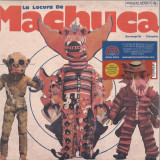
La Locura de Machuca is the story of one man’s bizarre odyssey into Colombia’s coastal music underground, and the wild, hypnotic sounds he helped bring up to the surface.
One night in 1975, a successful tax lawyer named Rafael Machuca had his mind blown in Barranquilla’s ‘Plaza de los Musicos’. Overnight he went from a high ranking position in the Columbian revenue authority to visionary production guru of the newly formed record label that bore his name, Discos Machuca, and for the next six years he devoted his life to releasing some of the strangest, most experimental Afro Psychedelia Cumbias ever produced. La Locura de Machuca is the story of one man’s bizarre odyssey into Colombia’s coastal music underground, and the wild, hypnotic sounds he helped bring up to the surface.
The Colombian music industry was thriving in the mid-seventies, but while homegrown bolero and vallenato tunes were doing well on the charts, it was imported African records that were setting crowds on fire at the picos – the sound-systems that fuelled neighbourhood parties – and wherever those records were played there were always a handful of groups who were inspired to plug traditional Cumbia directly into the electric currents coming from across the Atlantic.
It was these obscure bands, who fused Colombian and African rhythms with the swirling organs and psychedelic guitars of underground rock, that fired Machuca’s imagination. While the label made its money releasing popular hits by legends such as Alejandro Durán and Aníbal Velásquez, that money was poured back into a unique run of experimental releases by fringe artists such as La Banda Africana, King Somalie, Conjunto Barbacoa, and Abelardo Carbono, one of the godfathers of Champeta Criolla.
When Machuca couldn’t find groups to realise his particular vision, he simply created them himself. Drawing on a fearsome roster of musicians associated with the label, he assembled bands that lasted only as long as it took to record an album ,and unleashed the results – complete with arrestingly unusual album covers – under a series of different names such as Samba Negra or El Grupo Folclórico. This unorthodox approach led his longtime recording engineer, Eduardo Dávila, to describes Machuca’s productions as the “B-Movies of Colombian music.”
The story of Doctor Machuca and his eccentric exploits tells of one of Colombia’s most atypical and peculiar record companies; a defining pillar of Afro-Caribbean psychedelia. His productions have come to represent the roots of Champeta and set the pedigree standards for Afro and Costeño avant-garde. The seventeen tracks on La Locura de Machuca, harvested from the darkest, strangest corners of the Discos Machuca catalogue, sound like little else recorded before or since.
ACCEPT ARE BACK! The German kingpins of heavy metal will release their new, eagerly-awaited studio album via Nu- clear Blast on January 15th 2021. The ingenious title of the masterpiece is “Too Mean To Die”.
Speaking of heavy metal kingpins, when ACCEPT first launched at the end of the 70s, the metal genre didn’t even exist - at first the band could only be labelled with the (quality) seal “crazy loud and crazy wild”. Today we know that this was (and is) metal par excellence. And we also know that ACCEPT opened the door to thrash metal, inspiring giants such as Metallica. Guitarist Kirk Hammett recently stated in the German magazine “Gitarre & Bass”: “Wolf Hoffmann has a huge influence on me.“
ACCEPT, who once had their origins in the city of Solingen, a city of sound, have been a worldwide music phenomenon for more than 40 years. They still impress with razor-sharp guitar licks and a steel-hard sound. The band created all-time metal classics like “Balls To The Wall”, “Metal Heart” and many more.
Countless world tours and headline slots at the biggest, cutting-edge festivals cemented the band’s reputation as one of the best, hottest and loudest live acts ever. In addition, the band has sold millions of records, has achieved gold status in the USA, top 10 chart positions worldwide and a number 1 album (Germany, Finland) for “Blind Rage” (2014).
Now with “Too Mean To Die” their 16th studio album is in the starting blocks - it is the fifth album that US vocalist and front man Mark Tornillo has put his incomparable vocal stamp on.Recorded in the world music capital of Nashville (USA), ACCEPT’s music was once again produced by British master producer Andy Sneap, who is responsible for the mix. Sneap, who works for Judas Priest and Megadeth among others, has also been responsible for all ACCEPT productions since 2010.
Special circumstances often lead to very special albums. This is certainly true for “Too Mean To Die”, which of course alludes to the Corona period, although in a different way than one might assume. Hoffmann says: “Its to be expected that many musicians will address the Corona situation in their songs. There will certainly be slogans for cohesion, through which positive vibes should be spread, which is also good. But we have decided to not let ourselves be influenced by it. The fans will get a hard, direct and uncompromising metal album, but of course accompanied with a wink: We are too mean to die! Weeds do not go away! ACCEPT do not let themselves get down!”
Wolf isn’t wrong - the title track is a classic Accept cracker: dynamic and unwavering, turned up to eleven!
Zombie Apocalypse’, also relentless and hard, strikes the same note in the band’s signature style.
The first single - which will be released on October 2nd 2020 together with a remarkable video - is different. Titled ‘The Undertaker’, its a terrific midtempo number with great vocals and a built-in character that chugs along – certain to deliver some mermorable live moments! According to Wolf Hoffmann its one of the most catchy, pleasing pieces of the album.
New to the band, and thus to be heard for the first time on an ACCEPT album, is Philip Shouse (Gene Simmons Band, among others). The US guitarist fights hot duels with Hoffmann, while Uwe Lulis makes the guitar trio perfect and pro- vides the right rhythm. “Phil was part of our orchestra project and was also completely convincing live. We recognised his great talent immediately and simply didn’t let him go,” explains Hoffmann.
Just how varied the ACCEPT guitar trio performs on the new album is proven by one of the secret highlights: ‘The Best Is Yet To Come’ – a beguiling ballad in which Mark Tornillo is at his best. The metal world knows that Mark can scream like no other, but here it shows once again that the frontman can also sing magnificently. “Mark sang this, for us rather unusual song stunningly well. The fantastic thing about Mark is that he not only masters the typical metal screams, but can also sing melodically and beautifully. He proves this impressively in this song”, chief guitarist Hoffmann raves.
In addition, ACCEPT have strengthened their team even further with newcomers Martin Motnik (bass) and Philip Shouse (guitar), thus forming an unbeatable team together with “Drum God” Christopher Williams and “Rhythm Mas- ter” Uwe Lulis.
There’s no doubt that with “Too Mean To Die” Accept are once again playing at the top of the Champions League of the genre. Wolf Hoffmann & Co. present the (music) world eleven masterpieces at the beginning of 2021 - eleven songs for eternity!
As Midnight Sister, multi-disciplinary LA artists Juliana Giraffe and Ari Balouzian make motion pictures. Yes, sometimes with moving images _ but most often only with the music they create together. Balouzian's serpentine, string compositions are movie scenes that allow Giraffe, a brilliant character actor, to cloak herself in a new roles and voices. A bit of Jon Brion's score work; some old Hollywood strings; a solid dose of glam and outsider disco from 70s independent cinema. Any perceived artifice is always matched by an indelible human fingerprint, something perfectly off. Giraffe and Balouzian's respective work in fashion, visual art, video and film scoring _ along with the gang of virtuosos with which they surround themselves _ all wonderfully coalesce as Midnight Sister. And if 2017's `Saturn Over Sunset' was their collection of short films about outcast life in The San Fernando Valley, then their new album `Paining the Roses' is the inventive, meta motion picture that cements them as auteurs. `Painting the Roses' is in many ways a fairy tale -- not so much the sweet-and-happyending kind as something richer, packed with imagination and rooted in the complex human messiness beneath a story's artifice. Frontwoman Giraffe describes it as "this tightrope of being real yet synthetic, organic yet staged, light yet dark, logical yet irrational, beautiful yet dilapidated. Joyful nonsense." Here, disguises like masks and paint are not meant to hide but to liberate, to "set a part of us free", and Midnight Sister often embody this themselves, appearing highly stylized, curious, warm and inviting but a little askew. `Painting the Roses' is a story told through the looking glass, one where we examine ourselves in a funhouse mirror but find clarity in its twists. Giraffe traveled to visit family in Argentina during the making of the album and reconnected greatly with that part of her family history, art and culture. Balouzian created the core album opener "Doctor Says" during a session in the desert outside of LA. The guitar, which reminded Giraffe of South America, has a slow, sweltering surf-tango to it, like Dick Dale doing Carlos Gardel. And even though the song was inspired by Giraffe's reconnection with Argentina, the song is about the fading of some close friendships during the making of the album. "Man, you have changed," Giraffe sings, unclear if tis directed to a friend or to herself. Later on the album, "Wednesday Baby" _ named after Giraffe's rescue dog _ is patient, subtly baroque pop. It follows Giraffe through one of those gloomy days spent in tunnelvision doldrums from which only a sunbathing turtle or your canine companion can pull you out. By the time collaborator Max Whipple's saw comes beaming down from heaven in the song's 3rd part, we're hypnotized by the song's charming ennui. The song lands someplace both familiar and aloof, a little slice of timelessness taken straight from The Cake of Perfect Songcraft.
- A1: Born To Play
- A2: Born To Play Reprise
- A3: Bigger Than Us
- A4: Collard Greens & Cornbread Strut
- A5: Joe's Lowdown Blue
- A6: 22'S Getaway
- A7: Apex Wedge
- A8: Let Your Soul Glow
- A9: Feel Soul Good
- A10: Looking At Life
- A11: Fruit Of The Vine
- A12: The Epic Conversationalist/Born To Play
- A13: Celestial Spaces In Blue
- A14: Spiritual Connection
- A15: The Initial Pursuit
- B1: The Initial Pursuit
- B2: Space Maker
- B3: Cristo Redentor
- B4: Danceland
- B5: Epistrophy
- B6: I Let A Song Go Out Of My Heart
- B7: Blue Rondo A La Turk
'Available exclusively on Disney+ beginning Dec. 25, 2020, Disney and Pixar’s feature film “Soul” introduces Joe Gardner, a middle-school band teacher with a serious passion for jazz music. The story is particularly relatable to the artists behind it. For Jamie Foxx, who lends his voice to Joe, it begins with jazz. “Like Joe, I hear music in everything,” said Foxx. “When you’re a jazz artist, man, you talk a little different: ‘Hey, cat!’ I got a chance to go to a few jazz fests and meet Herbie Hancock, Chick Correa—hang out with those guys. They have a way of talking, a way of dressing—everything funnels toward their music, toward the jazz."
Alfredo "El Inca" Linares is one of the best and most beloved musicians in the history of salsa. Fans love his piano playing because of his authentic Cuban feel and 'swing' combined with progressive arrangements and uncompromising phrasing. "Lo Que Tengo" is full of rock solid dance floor killers and no filler, recorded in 1980 with some of the cream of the crop of contemporary Venezuelan salsa musicians (members of Mango, Madera, El Trabuco Venezolano, Los Dementes, Los Melódicos, Dimensión Latina, Guaco, and La Salsa Mayor) and launched there on the indie label A.L.G. Records as ¡Con Todo!, and then a year later on the much larger Velvet Records with a different cover. This a classic Alfredo Linares album, but with the updated studio sound of 1980s Caracas. With five perfectly paced salsas, one funky cha cha chá, a steamy bolero and a dance-friendly Latin jazz number to top it off, there is something for everybody on this record. Thankfully today's generation can now enjoy this rarity at a fraction of the cost of an original copy. Presented in its original artwork and pressed on 180g vinyl. Good to know: Alfredo "El Inca" Linares is one of the best and most beloved musicians in the history of salsa. Fans love his piano playing because of his authentic Cuban feel and 'swing' combined with progressive arrangements and uncompromising phrasing that puts one in mind of Eddie Palmieri. As a composer, arranger and band-leader Linares is highly respected as well. Ever since the 1960s in Lima Peru when his career began, his records have always been on point, being super tight, sharp, and hard as hell, what salseros call salsa brava con afinque. It's no surprise that Lo Que Tengo is exactly that: full of rock solid dance floor killers and no filler, played with verve and flair. Unlike some of his other records that were patched together from various sessions made in different studios (sometimes even in several countries!), this album has the advantage of being produced, recorded and mixed by Alfredo Linares all in one studio and block of time, and backed by hand-picked seasoned professionals who Linares had already played with, both in the studio and on stage, lending it a consistency and sonic integrity that is excitingly manifest in every groove. The album was recorded in 1980 in Caracas with some of the cream of the crop of contemporary Venezuelan salsa musicians (members of Mango, Madera, El Trabuco Venezolano, Los Dementes, Los Melódicos, Dimensión Latina, Guaco, and La Salsa Mayor) and launched there on the indie label A.L.G. Records as ¡Con Todo!, and then a year later on the much larger Velvet Records with a different cover. The LP was also released in Colombia (INS, 1982) and the US (Gallo, 1984), both editions utilizing the Velvet Records cover. During this time Linares had been in Venezuela for some five years and was under contract with a nightclub in Caracas. Through being on the salsa scene there he became friends with the band Mango and even guested on an album with them in 1976. After the contract was up Linares was a free agent again and he was able to draw on his friendship with Mango and assemble a band to back him, first for the Colombian/Venezuelan production Salsa de Verdad (Fonodisco, 1976) and then again with ¡Con Todo! / Lo Que Tengo. One of the distinctive aspects of Alfredo Linares tunes is the 'break' (la cierre)-there are always plenty of dramatic hand-clapping breakdowns followed by an infectious tumbao (sustained vamp) section that sends shivers up the spine and makes the dancers go crazy. In addition, Linares always lets his musicians stretch out, especially in the percussion section. Again, Lo Que Tengo is no exception: there are so many examples of typical arrangements here that one could call this a classic Alfredo Linares album, but with the updated studio sound of 1980s Caracas, which was awash in petro-dollars at the time and so had the latest equipment and a strong consumer base for the salsa market. The album's title tune (originally credited on the Venezuelan edition as 'Lo que tengo que crear'-'What I Have To Create') is by Mango's timbalero José "Cheo" Navarro and sums up Linares' central career philosophy: the musician lives every day to create music, to spread joy and create a party, without complications, wherever he goes. With five perfectly paced salsas, one funky cha cha chá, a steamy bolero and a dance-friendly Latin jazz number to top it off (note the bluesy piano solo from Linares and the sublime vibes of Mango's Freddy Roldán), there is something for everybody on this record. Thankfully today's generation can now enjoy this rarity at a fraction of the cost of an original copy.
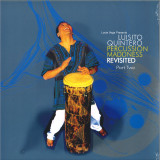
Grammy award winner & multi grammy nominated Luisito Quintero grew up with the Latin American and African tradition of percussion. His father is just as much a percussionist as his uncle Carlos Nene Quintero and his cousin Roberto Quintero . He became a member of the Orquesta Simfonica de Venezuela , but soon appeared with ensembles such as Grupo Guaco and El Trabuco
Venezolano and toured with Oscar D'León .
He then moved to New York, where he initially worked with Latin jazz musicians such as Willie Colón , Eddie Palmieri , Tito Puente and Celia Cruz . He then turned to the fusion of jazz, funk, salsa and African music and performed with George Benson , Herbie Hancock , Ravi Coltrane and Toshiko Akiyoshi , but also with pop musicians such as Gloria Estefan and Marc Anthony .
Vega Records are proud to present his new vinyl release “Percussion Maddness Revisited” Part Two. From the Osibisa remake by Luisito Quintero “Music For Gong Gong” to collaborations with the Great Richard Bona, Latin Jazz legend Hilton Ruiz and Salsa Veterans Jose Mangual and Milton Cardona, you can see the caliber of musicians that make up this timeless piece. For the afrohouse heads you have the new track “Yemaya” Featuring Nina Rodriguez remixed by Afrohouse King Manoo. Prepare for the sonic fun with vinyl pressings by Optimal !!
Percussions Maddness Revisited Part Two Double Vinyl Set out soon at a vinyl store near you !!!
Azumah was the coming together of a group of talented young dancer-musicians from Soweto (South Africa) with musician and instrument-maker Smiles Mandla Makama of eSwatini (formerly Swaziland). Long Time Ago is the surprising and enticing, resultant album from 1985, recorded in the house of theatre stalwarts Des and Dawn Lindberg in Johannesburg.
Produced by David Marks (3rd Ear Music, Hidden Years Music Archive Project), Des Lindberg and Smiles Makama, this album takes us back to a priceless musical moment in the dark and wild eighties of apartheid South Africa. Smiles Makama is a gifted and visionary music-maker. He was born in South Africa but grew up in eSwatini, the small kingdom enveloped by South Africa and Mozambique on each side. He tells the story of the process leading to the recording of this remarkable album: “I was invited from Swaziland by a Soweto-based group, Azumah. … One of the members knew that there was a wizard in the mountains in Swaziland, building instruments. As I was in the mountains in my hut and then I saw people arrive. They found me. It all started there.”
Instead of simplistic images of a generic ‘Africanness’ or ‘South Africanness’ and pictures of constructed and exotic ethnic identity, a contemporary, fresh listen to this album encourages an appreciation of the composition and musical skill at play in this music. Few people speak about the individual innovation and experimentation involved in the creation of this music (or the music of Amampondo for instance). “Woza Moya” sticks out as a dark and melancholy creation, different tonally to what has come before, evoking the work of Naná Vasconelos or Don Cherry. One thing that remains the same decades later is that encouraging deeper listening to the sounds of the mbira, the nyunga-nyunga, the uhadi or makhoyane bows is still challenging. Discouraging the superficial, short-lived acknowledgement of this ‘unchanging’, ‘African cultural expression’ is the everlasting hurdle. This is made so much easier by albums like Long Time Ago: when artists create music to be loved and entangled with, to be challenged by, derived from the musical roots and structures of these instruments and then expanded upon with creative freedom, risk, humour and funk.
Azumah did this in 1985 and we have this album again today, newly released, to remind us of that moment and the moments since when musicians have urned inward and done similar. As Smiles has it: “Indigenous music doesn’t fade out. It’s just waiting to be discovered, all the time.”
- A1: Mega Corp - Jon Sewi
- A2: Gladdics - Black Soyls
- A3: It's Tea Time - Renegades Of Jazz
- A4: Jagged - Serafin Plum
- A5: Opera - The Maenads
- A6: Sheikah - Double Screen
- A7: Put It On Ice - Stubby Dials
- B1: The Cards - Lucinate
- B2: Waving At A Melting Square Tooth Of A Specific Rabbit (Short Version) - Woodpecking Mantis
- B3: Lucempight - Wrenasmir
- B4: Poets And Rockets - Jay Solomon
- B5: Midnight Sun - The Motion Orchestra
- B6: What - Teis Ortved
- B7: The Last Recording From Earth - Funki Porcini
This compilation sees the coming together of independent music makers from across the globe to meet in one place and gather as a single entity. That simmering hub of warmth and affection is known as Motor Jazz - a place for artists to congregate and share their devotion for songs that are infused with rhythms created by anodic wires, buttons and other digital paraphernalia. That's electronic music to you and me, and in this case electronic music with swing, a sense of freedom and improvisation that some might call 'Jazz'.
The album opens with the ominous drone of the Mega Corp., sounding like one of the parties responsible for 2020's almost post-apocalyptic feel. It's perhaps an unlikely opener for a what's a positive and optimistic collection courtesy of young musicians from across the globe, but we all need to be reminded of who's in charge sometimes, and Dutch producer Jon Sewi does just that!
The mood soon lightens though, with the soulful strings and enticing keys of Gladdics by the mysterious Black Soyls, before well established German musical artisan Renegades of Jazz brings the family in for It's Tea Time with ticking clocks, warm tea pots and slices of cake, whilst being serenaded by a very vintage sounding horn section.
Serafin Plum almost steer us into drum & bass territory with their off-the-wall percussive nugget Jagged, whilst keeping a calming hand on the shoulder (as all good parents should) with soothing keys, before it's playtime once again.
There's nothing conventional about the Motor Jazz family though, and after tea time and play time, it's time to rave! In Greek mythology, The Maenads were female followers of Dionysus; their name literally translating as "the raving ones". Often they were portrayed as being inspired by the god into a state of ecstasy through a combination of dancing and intoxication, during which time they would dress in fawn skins and carry a thyrsus - a long stick wrapped in ivy or vine leaves and tipped with a pine cone. With a sound ranging between Jazz, Techno, Rave and Breaks their track, Opera, delivers a psyche and Jazz influenced piece with colliding styles, busy drums and rich melodies.
Heading over to Dublin, Ireland, and multi-talented producer, musician and DJ, Donal Sharpson (aka Double Screen) makes his presence known with grandiose brass preempting a four-to-the-floor wood block frenzy in the shape of Sheikah, complete with enthusiastic whoops and a persuasive bassline. Meanwhile, somewhere below the Irish Sea, aquatic artiste Stubby Dials delivers the bass worrying Put It On Ice the only way he knows how - living in a submarine, he emerges from time to time to leave his master tapes on the beach with a note saying "Release this!" before submerging, never been seen again.
Back in the Netherlands, Bram van der Hoeven, otherwise known as Lucinate, is an electronic Jazz producer par excellence. His effortless balance of organic musical roots like Fusion, Bossa Nova and Soul, into the world of modern beat orientated sounds is something to behold, and with The Cards he offsets life-affirming keys with rolling drums reminiscent of some of the seminal liquid Drum & Bass he grew up with.
As the global Motor Jazz family expands, we head to Canada, where the wonderfully monikered Woodpecking Mantis brings a little acid to the party with his squelchy, stuttering and brilliantly entitled Waving At A Melting Square Tooth Of A Specific Rabbit……. We're guessing they like acid a lot in Canada.
We're going down under to Newcastle, Australia next, where things take a more serene turn. Wrenasmir, known to his parents as Craig Smith, used to be a baroque pipe organist before he discovered samplers and synthesizers. Now he makes imaginary soundtracks at his studio for the twilight beachside city that lives in his head - full of vinyl and pixels and bittersweet memories. The gorgeous Lucempight is exactly that.
Keeping things low key and tranquil, Poets And Rockets, the latest offering from Jay Solomon is a horn driven slice of futuristic dub that makes way for The Motion Orchestra's majestic Midnight Sun, complete with Alexander Bednasch on double-bass, Mark Matthes on violins, Andy Sells on drums and David Hanke on electronics and production. Though influenced heavily by neo-classical and jazz sensibilities they occupy a musical space that sits in neither sphere, with a compositional style that deftly fuses the orchestral and electronic worlds. The full Motion Orchestra album, All One, will be released later this year on Bathurst.
Sixteen year old, self taught producer and multi-instrumentalist Teis Ortved is something of a prodigy. The Copenhagen based wunderkind has so far self-released two EPs, and if What, his offering here, is anything to go by, he's going to be making big waves across the eclectic music spectrum for years to come.
If Teis is the new kid on the block then what better way to round off this compilation that with its patriarchal figure. Funki Porcini has over a quarter of a century of recordings in his back catalogue, and has spent fifteen of those years dedicated to the independent UK behemoth that is Ninja Tune records. The Last Recording From Earth is exclusive to this album and is in many ways the perfect closing song. Perhaps more concept art than traditional piece of music, the idea behind it is that an alien archeologist has found this recording tens of thousands of years after humans have disappeared into the sand…. You never know, it might just happen, and hopefully Them To Us will take on a whole new meaning.
Releasing a full EP on Metalheadz for a third year in a row, it's safe to say Jem One is now a firm and ardent member of the label family.
For 'The Rain EP' the Midlands based producer makes his Platinum debut bearing 6 finely crafted tracks with 3 making the vinyl cut once again. Throughout, there's an innate ability to create music that fully resonates with the Metalheadz of the past, present and future, placing Jem One in an inimitable position for the years to come.
Dark Green Marbled Vinyl
One town, three times of the day, a triarchy of Techno music, rolling into the deep – coming as green marbled vinyl with an exclusively designed festival wristband!
Rico Puestel rears a monument to his growing-up-town „Uslar“ with three different approaches on this second part of the home-loving „Solling“ series that dig deep into a downscaled and natural framework of sound (all recorded and produced right at that place).
The initiation ritual on A1 with Uslar at 6'23 in the morning starts off with an actual electric guitar theme, originally recorded back in 2003, that builds the foundation hub to one crisp and point-blank Techno-Electro ceremony. The clean minimalistic sound will showcase all the details of any structure within while one's certainly getting caught by the overall force of melodic attraction like the sun working its path through the misty valleys.
At 13'35 noon, a rising rhythmical and progressive interpretation of the initial morning sounds makes an appearance on the flipside that doesn't allow much time to leap right into the centre of the da(y)nce, immediately creating the guesswork where side AA is leading all along.
The evening hours at 21'55 then take a flying leap into the mystical peak of the whole process, taking the morning sounds from side A into some uneasy realms and sceneries, prevailed by an almost voodoo-like momentum and a dance into the depths of its surrounding woods that will coherently dignify 90's loop Techno par excellence.
This fourth record on Exhibition is and feels right here and right now, paying tribute to the past and many different streams of Techno while cherishing a future that has yet to be written, celebrating the
In March of 2020 bassist Dezron Douglas & harpist Brandee Younger were nestled in their apartment in Harlem, New York, not long after every live concert in the world was cancelled and most folks in the United States were forced to shelter in place for the covid lockdown. With all their gigs cancelled and their incomes strapped.. the two came up with an idea. They would host a live-stream performance from their living room, where they would perform classic tunes for friends and family to watch online, and folks could send them donations. They called it “Force Majeure: Brunch in the Crib with Brandee & Dezron,” the first part in homage to the ubiquitous contract clause that never seems to have any use (except all of sudden, c/o a covid-induced live music industry collapse). The immense popularity of their first performance roped them into doing it again, and again, until it eventually became a weekly ritual for Douglas, Younger, and their many friends and family who tuned in every Friday morning (ourselves included). Knowing the beautiful, natural sound they made in their living room would be as enjoyable (or more) as a record as it was through a social media stream… we mailed them a microphone to record themselves. What’s heard on this album, Force Majeure, is a collection of highlights from Douglas & Younger’s legendary lockdown livestream brunch sessions. It includes gorgeous interpretations of songs by Alice & John Coltrane, The Stylistics, The Jackson 5, Pharoah Sanders, Kate Bush, Sting, and The Carpenters… plus some solid gold nuggets of their banter between tunes. It’s an uplifting suite of real, soulful comfort music – a spiritual salve, emanating warmth from the hearth of a Harlem sanctuary.
Dezron Douglas & Brandee Younger are long time companions in life and in music. The two East Coast natives met early in life and have accompanied each other, personally and professionally, through their equally prolific careers. Douglas, a bassist who has established himself as a musician’s musician, is known to many for his work with Pharoah Sanders, Ravi Coltrane, David Murray, and Keyon Harold. Younger, a harpist who has distinguished herself as one of the premiere voices in her field, is known for her work with Jack DeJohnette, Charlie Haden, Stevie Wonder, The Roots, Lauryn Hill, and Moses Sumney. To the day Douglas and Younger often accompany each other in many of the ensembles they lead, respectively. The two played together in sessions for Makaya McCraven’s 2018 release Universal Beings, on which they are both featured artists. Of Force Majeure, McCraven says: “It’s a testament to the power of music to uplift us through the most challenging times.
- Track 1 Rub-A-Dub Style - Shorty The President
- Track 2 Gorgon Style - U Roy
- Track 3 Greedy Girl - Jah Stitch
- Track 4 Babylon Dub – Dillinger
- Track 5 Dub Dunza - U Brown
- Track 6 Stick By Dub - Dennis Alcapone
- Track 7 Dub To The Lonely - Prince Jazzbo
- Track 8 Control Dub - Shorty The President
- Track 9 3 Wisemen In Dub - I Roy
- Track 10 Yu Nuh Here Dub - U Brown
- Track 11 Dub Chalice - Prince Jazzbo
- Track 12 Rebel Dub Skank - Shorty The President
- Track 13 Don’t Touch The Dub - I Roy
- Track 14 Hard Time Dub - U Brown
One of the two great chapters in reggaes history was the DJ phenomenon that conquered the Sound Systems in and around Kingston town in those heady 1970's, the other was the dub plates specials that allowed the DJ's to explore a tune in the first place. Giving some fine question and answers to its original vocal, emphasising its meaning or taking it into another subject matter altogether. When you have these two styles and add to it that original vocal, dubbed in at various points you get a fantastic melting pot that lifts a tune and can take it almost anywhere it likes.
Although DJ's were operating in Jamaica in the 1950's and 1960's with the likes of Count Matchuki and Sir Lord Comic, their role was that of mainly selector with a few vocal embellishments to instrumental tracks to gee up the crowd. 1969 saw the art form broaden with the likes of DJ King Stitt (Winston Spark) who scored a couple of hits for producer Clancy Eccles with 'Fire Corner' and 'Herbsman Shuffle'. But it was Clancy Eccles next releases with a certain U Roy (Ewart Beckfort) in the same year that saw the style explode. When hearing the DJ holding the crowd’s attention on King Tubby's Home Town Hi - Fi Sound System, the producer rushed the DJ into the studio and cut 'Wake the Town' and 'Rule The Nation'. Which would top the Jamaican charts in the soon to follow 1970.
In true Jamaican musical style when a new sound hits on the radio waves, many would soon follow. With an abundance of already tried and tested hits, producers would get the new
toasters of which there were many and revamp and breathe new life into their back catalogues.
But what makes this set of cuts, chosen for this release that little bit more interesting, are the working of the dub plates and effects alongside these vocal talents. Adding another layer to this musical cake.
A fine selection of tunes worked over by the cream of the 1970's DJ circuit.U Roy, I Roy. Jah Stitch, U Brown, Dillinger, Prince Jazzbo, Dennis Alcapone and the vastly underrated Shorty the President alongside some classic King Tubby dubs surely a match made in heaven...
Hope you enjoy ride…….
Despite current circumstances, Speedy have had a busy year. The London-based label run by producer Dan Carey alongside Alexis Smith and Pierre Hall were recently coveted with the Best Small Label Award by AIM after being nominated for the second year in a row. Carey also picked up UK Producer Of The Year earlier in the year at the prestigious Music Producer Guild Awards. He also produced the critically acclaimed sophomore album ‘A Hero’s Death’ by Fontaines D.C. which landed a welldocumented No. 2 position in the official album charts.
Speedy Wunderground released their fastest ever selling 7” - The Lounge Society’s timely tour de force ‘Generation Game’, the second band to be signed to the label for a forthcoming EP release following Squid’s ‘Town Centre’ EP in 2019. They also announced the label’s first ever full album release - Tiña’s ‘Positive Mental Health Music’, with recent single ‘Golden Rope’ having just come off the A-list at 6 Music.
Bringing bands into the studio wasn’t an option so the label started an ongoing project called ‘The Quarantine Series’ in which Carey under his Savage Gary techno/electronic alter ego collaborated with artists and friends, old and new over the internet and then uploaded them to the label’s Soundcloud/socials with little or no fanfare - no PR-ing or radio pluggers, just let the bands do their own thing, organically.
The common thread throughout all is Carey, whether it be in his regular name or his Savage Gary guise. However, collaborators in the series so far have included a wide range of people: Kae Tempest, PVA, Willy Mason, Heartworms, Warmduscher, Charlotte Spiral, Boxed In, Stephen Fretwell, Goat Girl and more.
“We chose two tracks/artists that I think we really wanted to shed some more light on” says label co-runner Pierre Hall. “Two that we really didn’t want to go under the radar - and in our opinion reflect this parallel strand of the label that’s forming - with new artists we’re really excited about - and that will hopefully draw people in to explore the series as a whole.”
First on the release is ‘Wait & See’ from rising Bajan artist RoRo. A hypnotic masterful flow which meanders seamlessly around Carey’s pulsating electronics. It’s bursting with attitude and originality. “I saw Dan Carey play with Kate Tempest on one of my first few times ever being out in London” she says, “it was such an amazing show. I was extremely excited to then get the chance to work with him. I’d been trying to do so while in London, but it didn't quite work out that way. We did manage to make it happen remotely whilst I was back in Barbados though, and we knocked it out!”
Second is ‘Cigarettes Pt. 2’ from the enigmatic Londoner youngblackmale AKA Rutare Savage: “It’s a poem, transformed into a song by the ever amazing Dan Carey. It touches (lightly) upon the topics of fear of the police, drug and alcohol abuse, family, and pulling oneself out of a nihilistic worldview driven by a newfound lust for life. This is me trying to reason with the void.”
Relapse Records is proud to announce the first ever fully-authorized reissue of GISM's landmark debut LP, ‘Detestation’. Originally released in 1984, Detestation has since remained one of the most innovative, bewildering, extreme, and wildly influential albums in the punk and metal canon. To say ‘Destestation’ was ahead of its time would be a huge understatement -- it incorporated elements from so many genres: hardcore, punk, heavy metal, glam, thrash, industrial, and experimental. It was almost as if listeners didn’t know what to do with the record’s music but gravitated to it nonetheless as they recognized it was something unique and special. Maximum Rocknroll’s Jay Bentley’s 1984 review of ‘Detestation’ made that sentiment clear, describing the record as "Churning Metal-punk, or perhaps even speed-metal, depending on where you draw the distinction. GISM are undoubtedly a heavy metal band who've been heavily influenced by hardcore, but the music is so intense and the vocals so ominous that even I’m in a state of shock. These guys make VENOM sound like the KNACK, especially on side 1."
GILA is an electronic music producer from Denver, Colorado. His debut album, Energy Demonstration, blends bass-heavy, leftfield techno with detailed ambient textures, and showcases GILA’s impeccable production style.
Energy Demonstration - out 20th November on Lex Records - follows earlier, club-focused releases on XL Recordings, LuckyMe & Benji B’s Deviation. GILA, (pronounced “hee-la”) takes his name from the gila monster, the only venomous lizard native to the United States -- slow yet powerful with a potentially deadly bite, this colourful reptile possesses many of the same qualities as GILA’s music.
GILA started to make his mark as one half of rap duo, Gorgeous Children, before striking out on his own. As GILA, his signature, hard-edged sounds have been championed by Thom Yorke, Flying Lotus, Benji B, Jamz Supernova, and led to collaborations with Boys Noize and Rustie. Since signing with Lex, GILA’s released a pair of EPs; 2019’s Trench Tones and 2020’s Three Riders.
As a DJ GILA has shared stages with Metro Boomin, Telefon Tel Aviv and fellow Lucky Me alumni Rustie & Hudson Mohawke.
The band that modernised Zimbabwean music, and by doing so revolutionised the music industry in their country. Available for the first time on vinyl (180 gramms) with gatefold cover, and now all tracks fully remastered !
In 1972, the country of Rhodesia – as Zimbabwe was then known – was in the middle of a long-simmering struggle for independence from British colonial rule.
In the hotels and nightclubs of the capital, bands could make a living playing a mix of Afro-Rock, Cha-Cha-Cha and Congolese Rumba. But as the desire for independence grew stronger, a number of Zimbabwean musicians began to look to their own culture for inspiration. They began to emulate the staccato sound and looping melodies of the mbira (thumb piano) on their electric guitars, and to replicate the insistent shaker rhythms on the hi-hat; they also started to sing in the Shona language and to add overtly political messages to their lyrics (safe in the knowledge that the predominantly white minority government wouldn’t understand them).
From this collision of electric instruments and indigenous traditions, a new style of Zimbabwean popular music – later known as Chimurenga, from the Shona word for ‘struggle’ – was born.
And there were few bands more essential to the development of this music than the Hallelujah Chicken Run Band. The band came into being when a young trumpet player named Daram Karanga offered to assemble a group to entertain the workers at a copper mine in the town of Mhangura.
The original line-up – which included legendary singer Thomas Mapfumo, who would bring the sounds of Chimurenga to the world in the early 1980s with his band the Blacks Unlimited, and Joshua Hlomayi, one of the pioneers of mbira- style guitar – started out playing the Rumba and Afro-Rock styles popular in the capital. Although this was a hit with the white owners of the mine, the workers greeted it with indifference. But when they started adding electric arrangements of traditional Shona music to their repertoire, the audience went wild.
With the addition of “Zim” sounds to their arsenal, the HCR Band became unstoppable. Their reputation spread quickly and, in 1974, they were invited to the capital to compete in a national music contest organised by the South-African Teal label. Not only did they win the competition, but they also attracted the attention of famed producer Crispen Matema, who quickly organised their first recording sessions.
On their first day at Jameson House studios, they recorded half a dozen songs, including “Ngoma Yarira” and “Murembo”, two singles that would alter the course of Zimbabwean popular music.
During the next five years, the band would relocate from their small mining town to the capital city, go through numerous line-up changes and pay a few more visits to the recording studio, without ever losing the raucous urgency that had transformed them from popular entertainers into titans of Zimbabwean culture.
- A1: If I Could See Heaven Without Dying Feat Scott Burton
- A2: Ce-Les-Tial
- A3: Sunwalkers Part Two And Three Feat Bill Summers
- A4: Just A Little While Longer
- A5: African Bahia Sol Feat Dr Who Dat?
- B1: Viberian Waves 1 & 2 Feat Capitol Peoples
- B2: Broken Arted
- B3: Banana Peel (Cáscara De Plátano) Featuring Masauko Chipembere
- B4: Trop-Pics
- B5: Let The Cuica Play Feat Café And Micröclimate
In 2018 Far Out Recordings signed a record deal with Brooklyn born, nomadic producer Jneiro Jarel. Having just put the finishing touches to the recordings, Jarel suffered an ischemic stroke while living and working in Costa Rica and his wife Indigo was forced to set up a crowd fund to cover special medical transport back to the states to receive treatment. The release was put on hold, but thanks to the generosity of friends and fans around the world, Jarel was able to get the care he needed and is now on the long road to recovery. We’re overjoyed to finally announce that Jneiro Jarel’s After A Thousand Years is now set for an October 2020 release.
Throughout a career that has spanned over twenty years and seen collaborations with MF DOOM, Thom Yorke, Damon Albarn, BadBadNotGood, Portishead’s Beth Gibbons, Kimbra and Khujo Goodie (Dungeon Family), Jneiro Jarel’s consistently distinctive, forward thinking productions, as well as his love for the music of Brazil, made his partnership with Far Out a perfect fit.
Recorded between New York, New Orleans, Miami and Costa Rica, After A Thousand Years features legendary multi-instrumentalist Bill Summers, famed for his work with Herbie Hancock, Quincy Jones and Eddie Henderson. The album also features Malawian-American guitarist Masauko Chipembere who has worked with the likes of RZA from Wu-Tang Clan and Ladybug Mecca from Digable Planets.
For Jarel, After A Thousand Years is “a culmination of the longstanding musical contributions of the African diaspora.” Permeating the Brazilian music and Latin jazz Jarel has loved and drawn inspiration from, as well as the stateside jazz, soul and funk Jarel grew up around, the influence of Africa and its musical history, on both North and South America, is key to the album’s sound.
On lead single “Banana Peel”, Jarel’s outernational perspective makes for a track that is almost impossible to place geographically: you can hear the swing of Jarel’s native New Orleans jazz, the vibrance of Costa Rican rainforests as well as the influence of Jarel’s vast collection of Brazilian records. “Viberian Waves 1&2” is equally nonconformist, morphing from funky baroque-flavoured instrumental hip hop into a bossa inspired, percussive jam.
Taking its inspiration from the biblical prophecies found in the books of Isaiah, Daniel, and Revelation, foretelling the fully realized, physical and spiritual restoration of the earth and mankind after the thousand year reign of the Messianic Kingdom, After A Thousand Years contemplates and celebrates a world where everlasting love, peace, and harmony abound under a sovereign, divine rulership.
After A Thousand Years will be released on Vinyl LP and CD on the 30th October 2020 via Far Out Recordings.
FEEDBACK
“great release. Really like this!” Antal (Rush Hour)
“Banana Peel is exactly what we need now. Visionary Jneiro Jerel at his finest channelling healing sounds and rhythms from Mother Earth. A much-anticipated lens through Jneiro’s third eye. Thank you!” King Britt
“Sounding real good!” Errol Anderson (Touching Bass)
“I love it!!!!!!!” Raffaele Costantino (RAI RADIO 2)
“Sounds great. Congratulations. Will play it on my radio shows.” Batida
“Will pitch album to my editors” Dean Van Nguyen
“Please send me the full album once it's finished.” Francisco Noronha (Publico PT)
“Beautiful man. So happy that he's ok” King Hippo (WLPN-LP / Worldwide FM)
“cracking tune. already lined up to add to playlist. might go into radio show too.. love it” Oli Brunetti (Collectivo Futuro / Olindo Records)
“Amazing! Ive not heard anything from JJ for a long time but a welcome return, this is a cracking track. Looking forward to hearing more new material.” Mickey Jukes (1BTN FM)
“Very vibrant, fresh release! It gets better every time I am listening to it.” Shantisan (Superfly FM Vienna)
“This is a pretty special track , unique sound but very accessible , like it a lot and will play in my show Look forward to hearing the LP” Andy Wilson (Ibiza Sonica Radio)
“So good to hear Jneiro again, loving this cut. Thanks!” Chris Knight (Astrojazz)
“sublime !!!! will definitely play !!!” Mark Milz (Radio Corax)
“I-Robots approved!” Thanks for sharing...” I-Robots
The Mighty Jah Stitch was a legend in Jamaica, making the move as so many ghetto youth’s have tried from Bad Man to Music Man. Jah Stitch embraced the DJ Culture that he himself was an integral part of.
He put not one but two musical stamps on the format. His initial Big Youth sounding chants grew from working alongside the man on the mic. The second almost spoken vibe came about after a well documented incident that led to him being shot .He lived to tell the tale and cut some of the finest Roots DJ cuts, with his new vocal style that many copied but few have surpassed.
We have selected some of his best known tracks to show the knack of working a killer rhythm and dubbed vocal with an almost call and response story telling style.
The opening and title track to this set ‘Dread Inna Jamdown’ sees him working over John Holt’s ‘In The Springtime’.
The second cut ‘Dem Seek Natty Everywhere’ works another John Holt classic ‘Forgot to Say I Love You’.
After some hits in the 1970’s, the 1980’s would see a short name change to Major Stitch.
But we feel that his best loved monicker Jah Stitch serves the man well.
So sit back and enjoy some fine DJ Cuts
No Dread Can’t Dead…Jah Stitch R.I.P