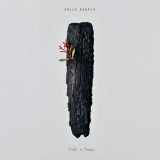
Runar Magnusson is an Icelandic/Danish sound artist and musician, currently based in Austria. With a masters degree in Electronic Music Composition from The Royal Academy of Music, Aarhus, Denmark, he is inspired by the sounds of nature, noise, and meditation. Magnusson specialises in atmospheric disturbances through minimalist compositions. A sly humour cuts through the dark hues of his works.
Magnusson writes: "The two works which make up "Inside Out of Chaos" are somewhat related. They were made at the same time and share the same source materials somewhat – a pool of sounds I had been experimenting with for a couple of years. Two separate projects created the opportunities for me to realise them in these finished forms.
At the beginning of 2020 I was invited to participate in an acousmatic concert series at the Traktorfabrikken in Vienna. Curated by Austrian composer Christian Tschinkel and performed on his Akusmonautikum sound system this particular event, titled Kill & Kaoss, was the last in the series. I named my piece after the event and dedicated it to Tschinkel´s Akusmonautikum system. Without my knowing, I had witnessed this system in action half a year earlier at a concert at the Hermann Nitsch Museum in Mistelbach, with Hermann Nitch playing the organ and Tschinkel operating the sound system – a profoundly enjoyable performance. I was very happy when I connected the dots soon after the invitation to participate. I intended my work for Kill & Kaoss to be a way to greet the new lunar year of the rat – a year which held many surprises… The event took place on 22nd of February 2020 at Traktorfabrikken, Vienna.
"Inside Out (for Trattner)" was composed for Austrian artist Josef Trattner. It was the soundtrack for a film that was a part of his exhibition "Inside Out" at the Kiesler Foundation in Vienna, 2020. I assisted with the installation of the exhibition, itself a filmed action that evolved into the movie of which this is the score. The installation was a very hard physical process that left me bloody and blistered. It was also a fascinating, trance-inducing experience. Mining with ones bare hands, digging out this huge structure and creating a womblike cave, a tunnel system, a playground, a hideaway while experiencing ever-increasing pain in the fingers and hands. The exhibition ran from 27 February 2020 until 23 December 2020.
I consider this release as the final part of a trilogy I refer to as "the three sisters of sorrow". These three releases are an insight into my state of mind at the time – a mental collapse, somewhat triggered by a move to a new country, the death of my friend Jóhann Jóhannsson and the loss of my father a year later. Between 2018 and 2021 I had the trilogy almost ready but had not been able to finish them. I sought professional help to lift me up from the deep and was diagnosed with ADHD, which explained many things in my life. Only after the darkness had lifted could I see that these three releases were connected. They depicted both the mental state I had been in – an incapacitating downward spiral, a crushing chaos – and also my search for the light, a way out of the maze and my path up to the surface."
Runar Magnusson, Vienna, 13 November 2023
Cerca:man make music
Repress!
Two of dance music's most recognisable names come together once more as Nic Fanciulli returns on the mighty Rekids.
Fanciulli has long been one of the leading lights in the house world. His Saved Records label is one of the go-to outlets for forward-thinking grooves thanks to his own music and his on-point A&R of many other talents. Over the years, his releases have explored every facet of house and tech, while the man himself has played every major club and festival in the world. This is Fanciulli's third outing on Rekids after 12"s in 2019 and 2020, and it might be his best yet.
The stylish and seductive sounds of 'On My Mind' open up with loopy and catchy vocals, disco-tinged house beats and plenty of feel-good energy. The funky basslines and innovative samples make this a fun, full flavour and heart-warming groove that is sure to get crowds locked in and hands in the air. The brilliant 'U Gotta' is another track steeped in classic references but with a modern twist. It builds in careful layers that tease and please with sustained strings and low, grinding bass offset by the diva vocals and atmospheric crowd noise. When it drops, it is the sort of tune to bring real rapture to the party.
Fly Me To The Moon is the fifth installment in Rod Stewart’s
The Great American Songbook series of pop standards and is considered by many as the best album in the series. On the album, Stewart swings around through well-known songs such as “Fly Me To The Moon”, “What A Difference A Day Makes”, “Beyond The Sea”, and “I’ve Got You Under My Skin” among others.
Fly Me To The Moon is available on black vinyl.
Mayday is the third LP by Montreal-based artist, Myriam Gendron. It follows her earlier, critically acclaimed albums, Not So Deep As A Well (2014) and Ma délire - Songs of love, lost & found (2021). Myriam began exploring the complex folk traditions of Quebec (and beyond), with Ma délire, which combines traditional and original songs with arrangements that make space for avant-garde musical interludes by such folks as guitarist Bill Nace (Body/Head) and renowned jazz percussionist Chris Corsano. Mayday presents an even more syncretic fusion of the elements Myriam uses to create her sound. Most of the songs are original, sung in both English and French, and they blend traditional and avant elements with abandon. She is often accompanied on this album by the guitarist Marisa Anderson and drummer Jim White (Dirty Three, Xylouris White), whose work provides a quietly aggressive sort of free-rock base. Additional players include Montreal bassist Cédric Dind-Lavoie, Bill Nace and saxophonist Zoh Amba. Mayday is a thoroughly thrilling effort that manages to create new vistas of sound while maintaining a feel that is both intimate and familiar. The music here certainly possesses a richly serious tone, but Myriam Gendron (like Leonard Cohen) is able to infuse her darkness with a subtle, powerful light that reminds us that even the most pitch-black night is but a transitional state. Beautiful work.
- A1: Gwaing Reverie
- A2: Lucelle Sista Of The Soil
- A3: Mantis Praise
- A4: Amaseh Amen
- A5: For Peter & Ruth
- A6: Terug Blik
- A7: Threnody For The Khoisan
- A8: Ambient Khoi
- B1: Mcinci Song I
- B2: Morenga
- B3: Evidence Of Things Unseen
- B4: Lockdown Duet Milano-Cape Town
- B5: Roesdorp Requiem
- B6: The Ascension Of Milford Graves
Garth Erasmus is an artist and musician based in Cape Town, South Africa. 'Threnody for the KhoiSan' is his first album under his own name. Since 1985 his artistic interests have broadened to include music-making, designing and making his own instruments based on indigenous KhoiSan knowledge. From 1999 to 2012 he was a member of the South African First Nation activist group Khoi Khonnexion. In the past couple of years Garth Erasmus has also been a pivotal part of various international performance pieces and exhibition projects which brought him regularly to Europe. Most of these activities were developed and performed in collaboration with the Hamburg based band Kante and his band Khoi Khonnexion. In April 2024 Garth Erasmus will be part of the group exhibtion 'Oscillations' at Akademie der Künste, Berlin.
His works in music are predominantly characterized by a restless quest for alternative forms of expression and materials including self build instruments, field recordings or various electronic music devices.
In this context the music on 'Threnody for the KhoiSan' takes on a primal and metaphorical meaning. Rather than a formal, physical initiation, this process is more spiritually inclined, yet it is a spirituality which is consistently put into action.. “Ever since I was an art student I have experimented with alternative materials to release me from the Western education values I received. When I started to make these instruments in the 1980s, my intention was to create art objects but when I discovered the sound they made, it unlocked a door that transported me deeper in my quest in the realization that I was on the right path.
In fact all instruments which appear on 'Threnody for the KhoiSan' are products of a process of discovery starting from square one. All this is based and founded on the beauty of simplicity and minimalism as symbolized by the single string Khoisan musical bow and arrow as trance musical instrument. In this sense it soon became manisfest for Garth Erasmus to combine the bow instruments with various electronic instruments. Besides developing his own unique language in music he also shared an expressed interested in experimental sound aesthecis, Avantgarde composition and Free Jazz. However, his non - academic approach towards sound and music was always fueled by the desire for a reconnection to the land and to the idegenious knowledge of the KhoiSan, whose struggle for First Nation status continues.
Song for Morenga
This song is dedicated to a guerilla leader, named Jacob Morenga, who was the leader of the nama/herero anti-german uprisings that occured between 1904 and 1907.
Amaseh Amen
This is a classic mouthbow piece that conjures the spiritual nature of Khoisan cultural praxis.
Gwaing Reverie
It was composed as a personal gift to the other members of newly formed electro-acoustic trio „Gwaing". „Gwaing" is an ancient Khoisan place name, meaning the mouth of the river.
Mcinci Song
A typical meditation on the traditional Mcinci flute. This flute was originally played by shepherds and was made of reed.
The Ascension of Milford Graves
This piece attends to capture the risen spirit of the legendary African American drummer Milford Graves. It was composed soon after his death in 2021.
Song for The Sisters of the Soil
A live improvisation dedicated to Lucelle and Melissa (The Sisters of the Soil) on the occasion of visiting them at their residence, known as „Oppieyaart" on the Cape Flats. On 10 September 2022 there is an online event with them at Kunsthaus Hamburg.
- A1: Goldne Abendsonne, Wie Bist Du So Schön
- A2: Aprilnacht
- A3: Urin Deiner Blüten 1
- A4: Mutter Maria Zwischen Den Himmeln
- A5: Requiem Für Eine Ringelnatter
- A6: Urin Deiner Blüten 2
- B1: Apfelbaum, Kuh Und Backofen
- B2: Nie Kann Ohne Wonne, Deinen Glanz Ich Sehn
- B3: Requiem Für Ein Schwalbennest
- B4: Morgensonne
- B5: Afra Altar Maidbronx
Originally released on tape by SicSic in 2014, Aprilnacht commemorates a decade of music from Brannten Schnüre and marked the spring in a tetralogy of albums about the four seasons when it came out. Back then the Würzburg-based project consisted solely of Christian Schoppik, who later welcomed Katie Rich to take over the vocals. He used to perform as Agnes Beil, but dropped the name when, while making this album realized his music was becoming "much gentler and more fragile". Aprilnacht already captured the particular musical ideas that Schoppik would thoroughly keep exploring, delving deeper and deeper into the use and manipulation of samplers from sources so diverging as to wander between the five continents to post-war German family television and cult cinema. Heir of the ritualistic intensity of Coil, of the intricate sampler assemblies of Ghédalia Tazartès', and of the dusty, dismal old ballads from around the world, Brannten Schnüre manages to make these paths cross in a territory that is as inherent as it is uncanny; sieged by the past and intimate as a hearth. An organic approach to folk, ambient, and sound collage, where ethereal yet thoroughly textured pieces coalesce in enthralling, delicate, and innermost musical rituals.
The album cover paintings reveal the temper: dreary old towns where shadows come to dim the slow passage of crepuscular colors, a soft area of reanimation where wind and light come close and foresee the night of spring. Aprilnacht was inspired by the stories of German philosopher and writer Friedrich Alfred Schmid Noerr, whose work exhaustively examines the conflict between paganism and Christianity, safeguarding myth in a way that Schoppik describes as boldly modern, humorous and unpredictable in its variations of the Germanic folklore motifs. "I wanted to do the same with the music," he states, and the music here could as well be suitable for a night when household deities welcome wandering will-o'-the-wisps, water nymphs, and gyrovagues to discuss Perchta's leadership of The Wild Hunt, but this album is not a folk tale, it's not an elegy to worlds already gone, hidden in years; it's an intersection of routes that open mysteriously before our ears like a congregation of vapors. Aprilnacht is a gathering of voices; "There are too many children, and none of them keeps quiet," reads the last verse of «Requiem für eine Ringelnatter.»
Sensuality drips over the music to celebrate both the voluptuousness and tragic quality of nature; "It's raining on me, urine from your flowers," Schoppik sings in «Urin deiner Blüten» and later on, faced with a snake's erotic features, as if he wanted to be embraced by it: "Your quick, sharp tongue and your warm venom; that's what the pond is missing." Orality is where this profusion of contents thrives. When the voices get closer and condense, the words reveal the saliva employed to pronounce them; we feel the mouth and the tongue, but when breath envelops them in sorrow and softens their edges, they sound distant, diffused in the atmosphere, letting go of the body that held them. These two vocal facets oscillate permanently and interact naturally with the fertile assembly of samplers and instruments that develop throughout the album, which condense and disperse impersonating each other, interweaving to search for a specific syntax. Tangled whisperings of enigmatic phrases, timid voices that stick out to check the scene but hide away quickly, shivering trance chants and monastic ambiances, distant screams and clamors in between chaos and warfare swirl until bursting into subtle songs where even Mother Mary comes forth softly. Soothed by foggy atmospheres and crackling punctuations, these voices shape a vulnerable crowd, an occasion of fragility. Along this swarm of songs thrown into thin air, accordions sound like heavy-breathing lungs; clarinets sigh like curtains shaking; violin solos wander around like bees; Gjallarhorns cries distend like fleeing cattle; glockenspiels evoke remote music boxes and inherited toys; backward emanations emerge like slender waves retreating. On the banks of stretching loops and ember textures is where the songs slowly nest, collecting the words to find their tone.
A poem by Jorge Teillier says, "To talk with the dead you have to choose words that they recognize as easily as their hands recognized the fur of their dogs in the dark. To talk with the dead you have to know how to wait: they are fearful like the first steps of a child. But if we are patient one day they will answer us with a flame that suddenly revives in the fireplace." This may be Brannten Schnüre's main purpose: To find the voice to speak to those of whom we were a vision. Not in mourning, but acknowledging the obscure and volatile nature of spring's regenerative force, searching for the treasure of balance, as evidenced in the lyrics of «Requiem für ein Schwalbennest,» "Its nest was destroyed so many times before it was finished, and despite that, the shallow builds as if it is infatuated." The same idea is here in the words of Schmid Noerr, who made poetry an act of resistance to the horror of Nazism; "Since having seen the ability of a brilliant spirit to die, with a calm mouth that everyone saw, health is true again and we affirm it, even if rivers of blood flow." And as we call for the dusk's kindness, waiting to return home and eat with our kin by the stove, our ears become used to the games of the night. We feel like we're rowing on wetlands, while the "moon musick" keeps us vigilant against the slightest movement of water or sweet moan because eeriness here is imperative for survival. Do not succumb to the insipid howl of death, for nothing may last but mutability. You see, the rock has moved a little during the night; the rest is just wind fleeing from the void.
Another well kept secret from the Italian cult electronic music imprint - Interactive Test. A 4 track EP with a wide range of flavours in "house" music, very much dependent on the different samples employed. A side starts off with a deep house track echoing similar atmospheric qualities as to some of the dancefloor oriented productions making their way into US underground scene around that time, specifically Chicago and Detroit. The Percapella Mix makes the dedication to the Canadian Disco legend Gino Soccio very clear with a lengthy sample of "There's a Woman", a track which uses early electronics in a pioneering way, with what could possibly be one of the first examples of an Acid Bass line. On the B-side, things slow down a a notch with more clear cut explorations in Acid house featuring layers of synths and percussive samples and occasional placement of vocal samples from countries far away from Italy, all made possible thanks to the new exciting technologies that had recently been made available to producers at the time. Remastered by Man Made Mastering in Berlin and re-released with new full cover artwork.
- A1: Pikiran Dan Kepentingan (Thoughts And Concerns)
- A2: Fenomena Demi Fenomena (From Phenomena To Phe-Nomena)
- A3: Lubuk Yang Terdalam (The Depths Of The Depths)
- A4: Manusia Oh Manusia (Human, Oh Human)
- B1: Selalu Ada Jalan Keluar (There Is Always A Way Out)
- B2: Meyakini Sebuah Jawaban (Believe In An Answer)
- B3: Kepada Cahaya Yang Menerangi Jiwa (To The Light Which Illuminates The Soul)
Born in 1977, in Malang, East Java, Wukir Suryadi began playing music for theatre at the age of 12 with the Idiot The-ater Studio, and later with the Rendra Theater Workshop. In his solo work, and as a member of Senyawa, Error Scream, Bendera Hitam Setengah, Potro Joyo and other groups, Wukir breaks the boundaries of traditional music, death metal and avant-garde performance. On this new release, “Cycle and Prayer,” recorded in 2023, he expands the edges of his unique artistic world further, by digging in to meditative improvisation, art, and community building in his home workshop in the mountains of central Java. These recordings vibrate inwards, toward the microcosmic ecologies of forests and rivers; they distort outwards, resonating with global waves of apocalyptic change that are forcing all living beings to the edges of existence on earth. The result is a meditative poem that moves, as its titles an-nounce, from phenomena to phenomena, praying that humans find a way out from the depths of the depths to the light that illuminates the soul.
An essential mode of creative work for Wukir is the creation of unique instruments, using these sound sources as “bullets of expression.” In addition to the spear-like tube zither Bambu Wukir, he has created the Solet, Enthong, Garu, Luku, Arrows, and Industrial Mutant instruments, which in addition to being used in live performance, have been exhibited in the Instrument Builders Project and the 2017 Jakarta Biennale. In the past few years, Wukir has begun to collaborate with local guitar makers, carpenters, and suppliers of native endemic wood in the mountain region of Salatiga. Using earthen bricks along with local woods (suren, coconut, mindi, and waru lengis) as building materials, he constructed a new studio and workshop space in Tingkir, where this album was made. The trees, water and air of the local environment have exerted a powerful influence in Wukir’s documentations of instrumental sound. On this recording, he uses the simple Cetta guitar, an instrument designed in Bali and made for Indonesian children and local communities of folk and popular musicians, in order to explore the different sonic characteristics of a more “normal” instrument built from local wood.
The themes of the album -- cycle and prayer -- arise from a foreboding series of meta-events that shook Indonesia and the world over the past years, following one after the other: the COVID-19 pandemic, the Ukrainian-Russian war, the Kanjuruhan Stadium tragedy in which football supporters were gassed and killed by police, revelations of govern-ment failures and corruption, the rise of personal vehicles, the increasing disturbance of natural patterns of the rainy season and other ecological cycles. “In these waves of technology and narratives of truth made for certain interests, playing a sound at a certain frequency and repeating can try to bring images and feelings to a certain point of con-sciousness,” Wukir told me. “Sound is a prayer that creates a change, whether gradual or rapid, in the behaviour of living things, to face the demands of the time, as humans struggle to live according to what they believe.” The draw-ings and sketches used for the cover spontaneously emerged alongside the recordings, as an instinctive depiction of “time and sound, nature that is outside of oneself, and nature that is within.”
2024 Repress
Imagine a held-up-in-traffic Wayne Shorter arriving late to a Weather Report studio session and Joe Zawinul, Victor Bailey, and Omar Hakim filling in the time by jamming on a grooving house cut. Had that happened, it might have sounded a little bit like “It Never Stops,” one of two ultra-fresh tracks on Kaidi Tatham's Yore debut. Jazz and house are obviously distinct genres, yet as this irresistible cut makes clear swing is common to both. The other track, the cerebrally titled “One for the Brain,” locates itself closer to house music proper but is no less appealing for doing so.
Given the jazzy vibe of “It Never Stops,” it's fitting that Benji B once deemed Tatham the "Herbie Hancock of the United Kingdom.” Regarded as one of the originators of the Broken Beat sound, the UK-based multi-instrumentalist has worked with many an artist, from Bugz In The Attic and The Herbaliser to DJ Jazzy Jeff, and his session work credits list Slum Village, Amy Winehouse, Soul II Soul, and others. His own discography includes EPs and releases for labels such as 2000 Black, First World Records, Theo Parrish's Sound Signature, Eglo Records, and now, of course, Yore.
“It Never Stops” rolls in on a wave of silky synthesizer textures and percolating precision with a tight, funky groove that instantly pulls you into its velvety world. Triangles, electric bass, and clavinet add collective radiance to the material as the tune struts its way into your psyche. As if to make the jazz connection even more explicit, Tatham works an acoustic piano solo into the cut's second half before shifting focus back to the groove for the coda. “One for the Brain,” by comparison, digs into its chugging house pulse with fervour whilst also sweetening the arrangement with painterly synth flourishes. This one charges with breathless determination and like “It Never Stops” nods in jazz's direction with the inclusion of a freewheeling piano solo. Every minute and second on this strictly limited 12“ release seem's meaningful. No Represses / Limited 200 Copies.
Warehouse Find!
Red D is back for a follow up to his brilliant Chez EP which dropped last year and this time he's going for the jugular! The man responsible for
some of the finest house music of the last decade as FCL (with San Soda) and FCL vs VFB (with Motor City Drum Ensemble) knows a thing or two about
what makes the dancefloor lose its s**t, with tracks such as Let's Go Seven, It's You and Can We Try all testament to this.
When he's not DJing at the likes of Panorama Bar or hosting his own stage at Tomorrowland, Red D can be found running his own mighty fine We Play House label from his Ghent HQ.
Moan The Mania opens this release in suitably back to the raw fashion! A minimal drum machine groove and clipped bassline lay the foundations of this tribute to all things jacking with a sprinkling of porno groans to help you on your way. This is sleazy machine funk at it's very best. Next up we have a remix from Eli Escobar, the native New Yorker who has recently been making major waves following the release of his LP Happiness on Classic.
As someone who has remixed the likes of Lana Del Rey, Kim Ann Foxman, Honey Dijon and Holy Ghost we knew he'd be the man to take Red D's baton and run with it.
Keeping the overall vibe of the original intact
Eli cranks the energy further with additional in your face percussion parts and a couple of perfectly placed build ups. Flipping over we have Chase The Cat which takes a similarly stripped-back and minimal approach as Moan The Mania but goes heavier on the 707 beats. Finally we have Dusk Or Dawn closing the release with a deeper mood.
Simple FM synth stabs and glassy chimes provide a tender and naive-sounding counterpoint to the basic beats.
Red D proving once again that limiting your tools and not over-complicating things can often have so much more impact when it comes to house music.
Freerange welcomes Italian via Berlin producer/DJ/label boss Enzo Elia for his debut on the label entitled The Lost Guitar Tapes. Enzo is someone who has been releasing consistently great music for many years, although
often hidden behind a myriad of pseudonyms and underground imprints. For starters he's responsible for a mysterious yet established and very excellent edits label as well as being a member of Balearic Gabba Sound System alongside Bjorn Torske amongst others. Following the philosophy of this collective, Enzo is also producing lovingly and respectfully created re-edits of long lost techno and house tracks as well as many new tunes
for influential labels including Golf Channel and Compost.
But for now we turn to The Lost Guitar Tapes and specifically the original mix of Drifting which opens up the release with a brilliant tension builder. A rolling bassline, crisp minimal drums and a subtly Middle Eastern-influenced melodic line give just a hint of mysticism to this jewel of a track.
For the remix we have none other than the Tel Aviv via Berlin producer Moscoman, fresh from his brilliant debut LP on ESP Institute and releases on Eskimo and his own Disco Halal label. Moscoman's organic, percussion- heavy sound and Middle Eastern roots make him the perfect choice to take
on Drifting and we couldn't have wished for a better outcome. He manages to inject his own identity to the track with newly recorded live guitar and bass parts and taking in elements of techno, new wave and house, he's created a sublime piece of dancefloor drama. Finally we have an alternate Dub version which lays down a firmer four on the floor, extra percussion and dubby stabs for a more driving atmospheric club tool.
- A1: Oriana Ikomo - Never Forget
- A2: Moodprint - Eartha
- A3: Kin Gajo - Exit, Gajo!
- A4: Adja - Told You So
- A5: Bodies - Brioche
- B1: Orson Claeys - Conversations
- B2: Bodem - Kleine Mars
- B3: Honey - Bossa Dolce
- C1: Azmari - Sheep Party
- C2: Le Ministère - De L'amour
- C3: Ciao Kennedy - Parcifal Pt. I
- D1: Echofarmer - Beginning Would Have Been Outside
- D2: Kassius - Escapism
- D3: Bruno X Soet X Moene - Ott
Vol. 1[22,27 €]
Vol.2 Black Vinyl[24,79 €]
Vol.2 Limted Red Vinyl[26,01 €]
Vol. 3 Black Vinyl[24,16 €]
Limted version on 2LP transparent violet vinyl in gatefold sleeve, 300 copies! ‘Lefto presents Jazz Cats' is back with volume 3 and still doing what it does best: putting you in the front row of what the thriving Belgian jazz scene currently has to offer and revealing a melting pot of the musical talent.
'Lefto presents Jazz Cats' is back with volume 3 and still doing what it does best: putting you in the front row of what the thriving Belgian jazz scene currently has to offer and revealing a melting pot of the musical talent coming out one of the smallest countries in Europe. Never change a winning team they say, so we're happy to have Belgian DJ and eclectic connoisseur Lefto on board again.
Although you expect thecompilation to be talking jazz, volume 3 explores a broader array of styles, genres, and sounds than ever before, arriving at a point where the 'young cats' of today don't bother no more. It may focus on the Belgian scene, but let's face it, seeing the influences, this one could be compiled from all over the world. From the empowering and bittersweet voices of Oriana Ikomo and Adja, over the more acoustic-electronic productions of Moodprint, Ciao Kennedy, Kassius and echofarmer. It's even expanding the Jazz Cats universe to dub and bass-heavy tracks with Kin Gajo and Le Ministère, Ethio-jazz from Azmari, while sending you back to earth with bodies' swirling sax and drums. That saxophone still rings in your ears when you end up in the orbit of the march-like drums of Bodem, Orson Claeys' piano testing your ability to follow him, slamming the breaks to go smooth cruisin' with HONEY (Morricone meets Khruangbin, anyone?), to crashing in a raging tempo on that last track of Bruno x Soet x Moene. And there you are, back with us.
2018's 'Lefto presents Jazz Cats' included tracks from some of Belgium's biggest hitters, including Black Flower, STUFF. De Beren Gieren and Glass Museum who have all gone on to receive global acclaim. The album was given the accolade of 'Album of the Week' on Worldwide FM and also received further radio support from Jazz FM in addition to numerous glowing reviews. The 2022 follow-up 'Jazz Cats volume 2' paved the way for a new generation inspired by its peers, entering another era of very talented individuals and collectives. Maybe even more so than 4 years before. It uncovered a beautiful balance of more established but also obscure musicians and artists. Opening up to electronics and dance, enter bands like ECHT!, Stellar Legions and TUKAN. Thrilling innovative soundscape grooves and jazz fusion with Bandler Ching and L?p?GangGang, not to forget about the weaving musical odyssey that is M.CHUZI. In addition, there's the balanced unease of One Frame Movement, the laidback 'acoustic electronica' of Boombox Experiments, the classic funky jazz stylings of Cargo Mas and cinematic The Brums, all of these have set volume 2 on the map as an essential release for any jazzhead with a passion for new sounds.
Tastemaker, selector, curator, DJ and producer, these words often get mentioned when Lefto's name pops up in discussions. And rightly so. If you've ever had the pleasure to listen to one of his incredible Boiler Room sets or one of his many radio shows, you'll know why. Famed for his gloriously eclectic taste on the decks, he switches effortlessly between hip hop, funk, breaks, neck-snapping beats, future bass, South-American influences, bruk riddims, some wild African rhythms and of course, jazz.
Growing up as a child, his father would have the sounds of jazz flowing through the speakers. Which led him to bars around town to hear the latest jazz ensembles. Falling in love with the genre, he would later refine his knack for record digging and fine ear for music working at Belgium's legendary Music Mania record store in his hometown Brussels. Which makes that Lefto is consistently a couple steps ahead. He doesn't wait for the next thing to land in his lap, but actively seeking it out.
Lefto on Jazz Cats volume 3:
"Another release in less than two years! I am very impressed by the amount of creative "jazz" talent we've managed to compile over the last couple of years. Thanks to the internet, young musicians find inspiration from around the globe and incorporate diverse influences into their work. Given the history and heritage of jazz in this country, it has managed to create a healthy jazz scene supported by festivals, venues, press, and labels. Therefore, I am very proud to present to you the thirdinstallment of Jazz Cats. This compilation is dedicated to the young and hardworking musicians who are the present and the future of Belgium's jazz scene."
I Know I'm Funny haha is Webster's most realized manifestation yet of this emotional and musical alchemy. Continuing to bloom from her 2019 breakthrough and Secretly Canadian debut Atlanta Millionaires Club, Webster's sound draws as much from the lap-steel singer-songwriter pop of the 1970s and teardrop country tunes as it does from the audacious personalities of her city's rap and R&B community. The album began for Webster with the stirring ballad "In a Good Way," as in "You make me want to cry in a good way"_an instantclassic Faye Webster one-liner. It's beguilingly simple, the kind of melody and arrangement that seem to have existed forever. A sense of relief charges the neo-psychedelic pop of "Cheers," where Webster experiments with an overdriven guitar tone. She also collaborated, on "Overslept," with the Japanese artist Mei Ehara, who she calls the biggest influence on her new music. Webster's music is full of personality. Many of her songs contain bits of girl-group-esque talk-singing, which color her atypical storysongs. Webster says she's in a growth mindset, pushing herself to learn more, to be more vulnerable. "Growth is really important to me," she says. "I hope people will relate to my songs, and not just be like `this is a good record' but `this makes me feel something. This is making me think differently, this is making me question things.' I told myself a few years ago that I was going to be more honest in my songwriting, that honesty is the best route to take with music. If I have a voice and people are listening to me, I'm not going to waste it."
- 01: Make A Wish
- 02: Hollow Inside (Original Cassette Version)
- 03: Faded (Original Cassette Version)
- 04: Not Like I Was Doing Anything (Original Cassette Version)
- 05: Disappointed
- 06: I Wanted None Of This
- 07: Fire Damage
- 08: Halo
- 09: Aurora
- 10: It Might Never Happen
- 11: Nothing's Ever Quite That Simple
- 12: Brighter Star
- 13: The Phoebe I Know (Original Cassette Version)
- 14: Little And Small
- 15: Sleepyhead
- 16: Dust From A Memory
- 17: A 50S Ballad
- 18:
- 19: A Few Words
- 20:
- 21: From My Window
- 01: Third Floor Fire Escape View (Original Cassette Version)
- 02: You Left A Note On The Table (Original Cassette Version)
- 03: Short Sighted (Original Cassette Version)
- 06: Icecream
- 07: Saviours For The Hurrying Man
- 08: Ferry No. 6
- 09: Nothing New (Original Cassette Version)
- 10: Climb My Stairs (Original Cassette Version)
- 11: Autumn (Original Cassette Version)
- 12: I Really Don't Know (Original Cassette Version)
- 13: Sunday 14. Memphis 54
- 15: Walk On By
- 16: Georgie
- 04: I Hate Myself More Than You Do
- 05: Talking To Trees
The Cat's Miaow return to World Of Echo with Skipping Stones: The Cassette Years '92-'93, their second compilation for the imprint, and the fourth in a loosely defined series of reissues associated with the group (also including The Shapiros' Gone By Fall: The Collected Works of The Shapiros and Hydroplane's Selected Songs 1997-2003). It's a smart selection of songs by one of Australia's finest independent pop music groups, whose initial run, across the nineties, was as mysterious as it was bewitching. A generous double album featuring thirty-five songs drawn from The Cat's Miaow's history, Skipping Stones lets listeners in on a bunch more secrets. The four cassettes that Skipping Stones draws from - Little Baby Sour Puss, Pet Sounds (both 1992), From My Window, and How Did Everything Get So Fucked Up (both 1993) - were released or assisted by Toytown, a Melbourne cassette label of rare taste, savvy and intelligence. Diving into that two-year period, Skipping Stones is full of surprises, rich with unexpected and inspired detours, while reminding everyone just how clear and distinct The Cat's Miaow's music was from the very start. Looking in from the outside, they always felt like a group that knew just what they were doing, but intuitive as they are, they weren't forcing anything: these songs always sound exactly what they need to be, rough edges, playful moments and all. The Cat's Miaow may have been bedroom dreamers, but their songs were richly informed, with the sweetest of girl-pop moves sashaying into walls of tremolo-d and distorted guitar, jangling six strings tangling with melodic bass that's pure Peter Hook/Naomi Yang, while the gentle trickle of a drum machine or the earthy twitch of brushes on drum skins provided the spine for Kerrie's and Bart's lovely, unforced singing. This double LP on World Of Echo feels like the very core of the thing - some of the most heartbreakingly beautiful, effortlessly lush and deeply moving pop music you're likely to hear. RIYL: Hydroplane, The Cannanes, Magnetic Fields, Belle and Sebastian, Jesus and Mary Chain
The opening line of Emily Dickinson’s short poem ‘‘Hope’ is the thing with feathers’ inspired the central image of Emily Barker’s new single ‘Feathered Thing’, written while she navigated cumulative grief.
When Barker was first introduced to producer Luke Potashnick (Gabrielle Aplin, Jack Savoretti, Katie Melua) in May 2022, she brought with her a full album’s worth of songs. But after visiting Potashnick’s storied studio, The Wool Hall and hearing his ambitious production ideas, she was inspired to write one more song.
“I also needed to process some heavy news” she comments. Barker and her husband Lukas Drinkwater had been trying to start a family. Following a couple of failed IVF cycles (and other “starts that we’d lost”), they investigated adoption and had decided to relocate to Australia to be closer to Barker’s family.
“It felt like we couldn’t work out what we wanted, but we finally reached a point where we both felt at peace with not having kids,” Barker recalls. “It had been an incredibly intense time, coinciding with a house move and the pandemic.”
And then Barker found she was pregnant. “We’d done all these things to try to make it happen, and then it happened naturally (and against all biological odds). Having previously navigated losses throughout our pregnancy journey, we now had to get our heads around what having this new person in our lives might look like - emotionally and practically.”
Soon after work began on the album, Barker had a miscarriage.
“Songwriting has always been a way of processing throughout my life.” Barker reveals how the new song came quickly as she sat at her piano at home. She shared an early version with Potashnick and remembers him politely asking, “Do you mind telling me what this is about?”
“I think I’d left it too abstract, initially,” she reflects. “It was difficult to open up about the miscarriage, but Luke was very supportive and encouraged me to dig a little deeper without necessarily being specific. I revisited the lyrics, and the result is much stronger.”
“I went to the burnt-out woods/ A tourist with some damaged goods/ Remembered how the trees withstood fires before…”
“The opening line is a metaphor for knowing that I’ll get through this,” Barker clarifies. “It’s about recovery and hope, allowing yourself both the space to grieve and permission to move on”. But Barker’s optimism is never misplaced – she knows the imprint of imagined futures and lost children are carried in hearts and minds forever:
“It’s so hard to let go, wanted to know wanted to know you …”
“I think that it's important to share and normalise these stories, which are all too common, yet not openly spoken about. People hide their pain and don’t want to burden friends and family. I think behind all this anguish, there’s a deep, often untold story.”
Now that Barker is settled back in Western Australia, she’s embracing being an auntie. “I’ve got three younger siblings over here who I’m close to, and they all have kids,” she enthuses. “I look after my brother's kids, aged two and five, one morning a week.”
Recorded - along with the entirety of the new album - at The Wool Hall, ‘Feathered Thing’ begins gently, with oscillating piano and distant drums, until the arrangement gradually transforms into an instrumental dervish of vibrant strings, bass drones and cymbal crashes. Throughout, Barker’s vocals float tantalisingly like a slipstreaming feather.
Watch the video, filmed at The Wool Hall here. The Wool Hall is a studio in Beckington, Somerset, set up by Tears for Fears in the 1980s and used by artists including The Smiths, Pretenders, Joni Mitchell and many more.
Emily Barker is an award-winning singer-songwriter, best known as the writer and performer of the theme to the hugely successful BBC crime drama ‘Wallander’ starring Kenneth Branagh.
Her last album, 2020's ‘A Dark Murmuration of Words’, was produced by Greg Freeman and recorded at StudiOwz, a converted chapel in the Welsh countryside. Lyrically probing, by turns both dark and optimistic, Barker searches for meaning through the deafening clamour of fake news and algorithmically filtered conversation, delivering a timely exploration of the grand themes of our age. It garnered widespread acclaim, with Uncut calling it “…a kind of Australian equivalent of PJ Harvey’s Let England Shake”.
Barker has released music and toured as a solo artist as well as with various bands and collaborations, most notably her long association with Frank Turner, and has written for TV and film, including composing the soundtrack for Jake Gavin’s lauded debut feature ‘Hector’ starring Peter Mullan and Keith Allen.
‘Fragile as Humans’ is scheduled for release on May 3rd 2024 through Everyone Sang/Kartel Music Group. The album will also feature earlier singles: the vast, cinematic ‘Wild to be Sharing This Moment’ and the meditative, crestfallen ‘Loneliness’.
Experimental Japanese operator Lemna returns to Mantis with another five intricately sculpted cuts that toy with tension, release and the mysterious atmosphere of the forest at dawn. Lemna adopts a considered, patient approach to her music practice, creating interlocking rhythms which take cues from Autonomic fragmentation as much as techno hypnosis, but it's the spatial pressure and textural sound design which makes her music truly fly. Taking predawn walks in woods at the foot of the mountain she calls home, she drew inspiration from five different organisms within the vibrant ecosystem around her to create a collection of tracks she aptly refers to as 'Nocturnal Assembly'.
Finnish deep techno maestro Kaspiann makes his Mantis debut with four densely packed depth charges of dancefloor meditation. The Helsinki-based artist has been entrenched in the city's underground scene for a long time, organising official and unofficial parties, DJing prolifically and performing live. Since establishing his VALA label in 2021 via a split release with regular collaborator Multicast Dynamics, his sound has refined towards an elegant, heads-down sound which is represented perfectly on this four-track excursion. From the even-tempered mantra of 'Satakieli' to the aqueous, lightly dubbed electro of 'Tuiskussa Langennut', the warm after hours synth bath of 'Havinavalssi' and the pensive percussive of 'Solina', Kaspiann demonstrates a keen balance between richly layered detail and an overall subtlety - heavyweight music that feels light on the ears.
METAL HAMMER - 8/10 review. FOR FANS OF : Lustmord, Om, Sunn O))) . “An exercise in freeform ambience, ritualistic repetition and the rapturous, womb-like power of bass…strange and affecting. We remain lucky to share in the great man’s vision.”
It’s a dream diary narrating a passage through Summer Isle where Flying Saucer Attack are wafting out of a window, a distant Fairport Convention are being remixed by dub master Adrian Sherwood, celestial scanners Tangerine Dream are trying to drown out Bert Jansch and Hawkwind are playing Steeleye Span covers, all prised out of time yet bound to its singularity.
Released periodically on three of 2024’s full moons – April 23rd’s Pink Moon, July 21st’s Buck Moon and October 17th’s Hunter Moon – the three-album cycle, “Triptych”, is (Steve Von Till from Neurosis) Harvestman’s most ambitious undertaking yet.
Guest musicians including Al Cisneros of Sleep / OM who plays bass on one track for each LP, of which he will also mix a dub version on the B-Side of each LP. Dave French of Yob, Sanford Parker and Wayne from Petbrick all make appearances.
Released periodically on three of 2024’s full moons – April 23rd’s Pink Moon, July 21st’s Buck Moon and October 17th’s Hunter Moon – the three-album cycle, “Triptych”, is (Steve Von Till from Neurosis) Harvestman’s most ambitious undertaking yet.
Guest musicians including Al Cisneros of Sleep / OM who plays bass on one track for each LP, of which he will also mix a dub version on the B-Side of each LP. Dave French of Yob, Sanford Parker and Wayne from Petbrick all make appearances.
It’s a dream diary narrating a passage through Summer Isle where Flying Saucer Attack are wafting out of a window, a distant Fairport Convention are being remixed by dub master Adrian Sherwood, celestial scanners Tangerine Dream are trying to drown out Bert Jansch and Hawkwind are playing Steeleye Span covers, all prised out of time yet bound to its singularity.
Bone White opaque + Black Galaxy effect vinyl in dub style jacket (jacket sleeve with centre hole cut out so label shows throug
Drawn to the megaliths, ruins and ancient sites mapped out along the British and European mainland’s geographical and psychic landscapes, the folklore and apocrypha forever resurfacing as portals from a rational world, “Triptych” is a meditation forged from traces and residues, and an hallucinatory recollection of artists who have tapped into that enduring otherworldliness embedded within us all.
Woven together from home studio recordings that span two decades, this fifth outing as Harvestman finds parallels with nature’s cycles not just in its release dates but in the repeated structure that binds each album, like an imprint refracted though three separate strata. “Part One”, as with the forthcoming Parts Two and Three, starts on a collaboration with Om bassist and long-term friend of Steve’s, Al Cisneros, with a dub take opening the B-Side. Here, the opening track “Psilosynth" orbits a grandfather-clock mechanism passing through a nebula haze, all waved on by an acid-fried deity. From there on, “Part One” journeys through the elegiac “Give Your Heart To The Hawk”, with the sampled poetry like a documentary retrieved from a long-lost world, Philip Glass wistfully attending a rescue beacon from the far corner of the universe on Coma, as well as percussion recordings performed by Steve and friend Dave French (drummer of Yob) on a rusted torn open stock tank outside Steve’s barn, treated bagpipes and old reel-to-reel recordings, all reiterated across the next volumes in ever more out-there contexts.
If “Triptych” is a multi- and extra-sensory experience, it extends to the remarkable glyph-style artwork of Henry Hablak, a map of correspondences from a long-forgotten ancient and advanced civilization. As with “Triptych” itself, it’s an echo from another time, an act of binding, a guide to be endlessly reinterpreted, and a signpost to the sacred that might not indicate where to look, but how.
In 2012 we at Soul Junction were able to release two previously unissued songs on the Internationally renowned recording artist, Oliver Cheatham. The songs recorded in Detroit circa 1974/75 were cut under the supervision of Olivers cousin William R. Miller. “Don’t Pop The Question (If You Can’t Take The Answer)” went on to become Soul Junction’s biggest seller, selling in excess of over a thousand copies, but such is the enduring quality of the song that there hasn’t been a week gone by where we haven’t received a sales enquiry for a copy. So, after much deliberation we have decide to re-release the 45 again with a nifty 300 limited press run to hopefully satisfy this continuing demand. During the ensuing years the soulful sweet soul ballad b-side “Good Guys Don’t Make Good Lovers” has also grown in stature with collectors of this genre with many of the sales enquiries received coming from the direction of the West Coast’s lowrider scene.
Oliver Cheatham will forever be remembered for his timeless 1983 R & B hit “Get Down Saturday Night” on MCA records, which he co-wrote with fellow Detroit musician and ‘One Way’ group member Kevin McCord. Oliver’s own career began way back in the mid 1960’s when his future brother-in- law Allen Cocker invited Oliver to join his group the ‘Young Sirs’ to recorded the mellifluous “There’s Something The Matter (With Your Heart)” for Ernest and Barbara Burt’s Magic City label with Oliver now being the groups lead singer.
Into the 70’s the Young Sirs, briefly became ‘Butch & The Newports’ who under the auspices of George McGregor recorded “I’m Only A Man/Out Of My Mind” on the Black Rock label, with Butch being Oliver’s nickname. “I’m Only A man” was released for a second time on Marvin Higgin’s Grand Junction label, this time credited to ‘The Gaslight’ along with a further two releases. A subsequent Gaslight release “Just Because Of You/It’s Just Like Magic” reputedly came out on the local T.E.A.I label before being picked up for national distribution by Polydor Records. Under the guidance of influential Detroit radio DJ and record producer Al Perkins, Oliver firstly became the lead singer of the group Sins Of Satin later re-named Roundtrip and then following a further re-naming just becoming known as Oliver.
Following on from “Get Down Saturday Night” Oliver continued to score chart success with “SOS”, “Celebrate Our Love” followed by two duets with Jocelyn Brown “Turn Out The Lights” and “Mind Buster”. Further chart success came in 2003 when Oliver featured as a guest vocalist on Room 5’s UK No1 hit “Make Luv” which incidentally sampled Oliver’s “Get Down Saturday Night”. Oliver at this juncture was residing in England and had previously recorded a garage version of the old standard “Our Day Will Come” with the London based band, Native Soul. Sadly, Oliver passed away in November 2013.
- A1: Magic Momentum
- A2: Rockets To Mars
- A3: The News These Days
- A4: Life (Skit)
- A5: Love Vibration
- B1: Original Flow
- B2: Hold On
- B3: Surviver (Skit)
- B4: Tatamaka Pt.1
- B5: Tatamaka Pt.2
- C1: Time (Skit)
- C2: Time
- C3: Jinja (Skit)
- C4: Kochirakoso
- C5: Our Tactus
- C6: Nah Personal
- D1: No Chains
- D2: Push Comes To Shove
- D3: We No Let Y'all In
- D4: Mexico (Skit)
- D5: Future For Our Children
We Release JAZZ is very happy to announce an exciting new body of work by Joseph Deenmamode aka Mo Kolours. The singular musical spirit’s new 21-track album Original Flow is available as a double LP housed in a heavy 350gsm sleeve with original artwork by Mo Kolours himself and the classic WRJ obi strip, as well as in digipack CD and digital formats.
A catalog of critically acclaimed records, including his self-titled debut (2014), ‘Texture Like Like Sun’ (2015), 2018 album ‘Inner Symbols’ and three companion EPs, established Deenmamode as a prodigious musician and vocalist. Pitchfork extolled his “hypnotic, tribal-infused dance grooves”, DJ Mag appreciated the “colourful celebration of soundsystem culture”, and Resident Advisor advocated that “no one sounds quite like Mo Kolours”. Musical analogies were drawn by The Guardian as “The best album Curtis Mayfield never made with A Tribe Called Quest and Lee Perry” and Mojo as “like Marvin Gaye produced by J Dilla”.
Five years ago, Deenmamode moved to the Japanese countryside. Far away from familiarity, he contemplated his place and further questioned his identity. “I had none of my ‘own’ people around. I had time to really find what makes me tick musically. Japan has helped me go back to those subconscious leanings, really go deep, and reflect the aspects that make up my story”.
The tracks on ‘Original Flow’ have been constructed from sessions, improvisations and soundbites captured around the world during this time; collecting contributions from musicians including Deenamode’s brothers Reginald Omas Mamode and Jeen Bassa plus Andrew Ashong, Charles Bullen, Dwaye Kilvington, Eddie Hick, Stefan Asanovic, Myele Manzanza, Ross Hughes, and Tom Dreissler. Deenamode says “I’m proud of this album’s creative process. Coming from a tradition of scouring through hours of records, I wanted to create my own samples, to find that perfect loop that no other producer could put their hands on. I decided to invite a group of friends and acquaintances, who also happen to be incredible musicians, to a studio in Crystal Palace to improvise based on some loose ideas I had. We spent all day, and recorded everything”.
‘Original Flow’ is an album of UK street-soul nouveau, future indigenous jazz fusion, Rasta Segga, Nyahbinghi jazz, Malagasy Hebrew hip hop. While retaining a spirit of exploration and improvisation, it sees Deenmamode grow and flex beyond beat tape brevity, expanding composition and stretching his musical muscle to play live with other musicians. Themes of empowerment, overcoming adversity, and mental liberation coexist with notes from ancient history, futurism, and science, as well as musings on family and togetherness.
‘Magik Momentum’ springs from a discussion that features at the start of the song, an inspiring mentor answering a question from Deenmamode about improvisation and what role it plays in life when planning and manifesting the future. ‘Rockets to Mars’ questions the lack of care for the billions of people with nothing, while governments plan to explore space. “This sparked a comparison in my mind to a Sonny Okuson song that I would reference when performing. Okuson’s song talked of the lack of resources in many communities in the world, while governments go to the moon”.
He says the music behind ‘The News These Days’ is “possibly my favourite on the album”. Looped like he would a late sixty jazz-fusion sample, there was nothing added and the track was complete within a matter of minutes. “It was the first and best moment from the entire Crystal Palace session”, he adds. The album’s contrasting title track with minimal instrumentation played solo by Deenamode. While frustratingly searching for gems in past recordings, he thought in a burst of ego, “I don’t need no-one else to make a dope beat!” picked up his ravanne, (the traditional frame drum of his fathers home-land of Mauritius), pressed record, and started to play. He says, “In my thoughts were the rhythms of the Nubians in Upper-Egypt and Sudan, the swing of the huge drums played by Mauritanian women, of-course the Sega beat of Mauritius, and the ever inspiring beat of James Yancey”.
Driven by UK broken beat, Cuban congas, Nigerian and Mauritian inflections, ‘Love Vibration’ follows the concept that all emotions carry a vibratory frequency and pays homage to the frequency of creation and the power of love. The two part ‘Tatamaka’ tells of the history of Deenmamode’s ancestors, the maroons of Mauritius. “We are people who managed to run from our oppressors and find refuge in a corner of the island called ‘Le Morne’ where they could not reach us. One bloody day they came in numbers to re-capture, to revenge. Many of us chose to jump to our deaths, rather than be taken back into subjugation. The poem by Creole Richard Sedley Assonne says; “there were hundreds of them, but my people, the maroons chose the kiss of death over the chains of slavery”. Tatamaka was the name of a famed maroon leader who was murdered for claiming his, and our people’s freedom. The song is the imagined journey of escape and freedom by an ancestor of the maroons of Le Morne”.
Born in the west midlands and raised on the traditional sega music of his father’s Indian Ocean homeland of Mauritius alongside records by the likes of Jimi Hendrix, Santana and Michael Jackson; his influences expanded with late 90s jungle and drum and bass nights in Bristol, experiments at art college in Camberwell, and the rich culture of Peckham, “at the time we called it the Afro Quarters of London” says Deenmamode, adding hip hop, dub, soul and soundsystem styles to his individual sound.
He explains, “I love drum music, from hand-drums to 808s. I love music from the ancient past, heritage music, indigenous music, traditional music passed down from the beginning of time. Music from the body, hand claps, grunts and foot stomps. Music with audible depth, busy, bustling, highly charged. Music from the soul, the music from beyond. I love music from the islands and the mountains. The music of the streets, hustle music, alleyway beats. Club music”.
He describes the creative process as thinking in images. “The visual world and the world of sound seem to intermingle in my thought process. When I play the drum with my eyes closed, a world of imagery dances and moves with beat. Improvised drumming feels like I am listening to what I want to hear, rather than trying to play what I want to hear. Following the rhythm and finding new pathways to walk within the patterns is what I experience. In this way I often feel I am just a listener, instead of the player”.
Original Flow is pressed on biovinyl, a sustainable alternative to traditional vinyl. Biovinyl replaces petroleum in S-PVC by recycling used cooking oil or industrial waste gases, resulting in 100% CO2 savings in bio-based S-PVC production. Furthermore, it is 100% recyclable and reusable, embracing the circular economy ideology.