‘Empires into Sand’ is the first album of new material from Normil Hawaiians in 40 years. The group first refined their sound during the early 80s, hitting on a pastoral experimentalism that drew on ambient drone, motorik impulse and post-punk pep.
‘Empires into Sand’ came together in the familiar manner of their original three albums, with improvisation and nuance informing the blueprint of the tracks. It was with the official release of this last record ‘Return of the Ranters’ (originally recorded in 1984/85, but then unconsciously shelved) in 2015 by Upset The Rhythm that led to the group reconnecting with the intention of playing music together again. Normil Hawaiians played a launch show for that ‘lost album’ and followed that up with more concerts, including an appearance at Supernormal, a residency at the Edinburgh Festival, gigs at Cafe OTO. They were even chosen by Richard Dawson to perform with him in London.
Throughout this time, Normil Hawaiians revisited their original songs for live performance. However for a group always so interested in evolving their sound, it came as no surprise that they shirked at the idea of a faithful retread. The band pushed their songs into new inventive dimensions, still progressive at core, but now imbued with a cosmic uncanny. A cinematic approach that was always quietly present has come to the fore. The quaint weirdness of folk song, the humanity of communal practice and the group’s ecological mindedness have all found a place in Normil Hawaiians’ current sound world.
When Normil Hawaiians write and record music they prefer to gather in a remote location and live together for a while, such is their communal ethos. Being far-flung across the UK, the Family Hawaii (numbering seven key members) decided to encamp to Tayinloan, a small village on the west coast of the Kintyre peninsula in Scotland. They set up their own studio in an isolated, windswept house overlooking the sea and started the tape rolling. Noel Blanden from the band explains the process neatly: “we set up and began playing, slowly and patiently, allowing the music to take its own shape based on where we were staying and our ongoing friendship. We recorded for days, capturing everything. A lot of new and rich ideas began to emerge”.
Normil Hawaiians took their time to develop these threads at their own pace, allowing songs to mutate and settle over months. Simon Marchant deftly produced and recorded the album whilst also performing in the band, this marked the first time the band had total control of their own sound. The last few years has seen the band reconvene in Herne Bay, Faversham, London and Leith to record new parts, constantly responding to the changing form of these quietly spectral songs of defiance.
‘Empires into Sand’ incorporates samples from old rehearsals and live music into the new finished pieces, this is in continuum with their previous records. Snippets of sound from the static of short wave radio and satellite transmissions also embellish the work. In fact the whole album is stitched together with interludes, creating an acutely immersive 45 minutes. ‘Exiles’ opens the album amid swirling atmospheres, synth flights and recordings of Vilnis Egle (father of Zinta Egle from the band) retelling his experience of fleeing his home in Latvia during Soviet occupation in 1942. George Bikandy also features on this track talking about his flight from Syria in 2014. ‘Ghosts of Ballochroy’ is a winding river of a song featuring a lively discourse in Scots courtesy of Rodney Relax. There’s a commitment to truth telling present across this hopeful album populated with angels, incoming tides, long shadows and the rose-washed sun. “From our broken windscreen, we feel the breeze” soars Guy Smith triumphantly over the driving beat of ‘Waterfalls : Bedford 330’. ‘Big City Sky’ flutters and sparkles with rapid synth runs, tape-looped drums and Jimmy Miller’s commanding vocal. With ‘In The Stone’ Zinta’s melody is deliberately jagged and blunt, exaggerated by octave-layered vocals and interjections from Guy.
This is thought-provoking, boundary-bothering music. Honest in intent, a solidarity of vision. The album’s title is derived from a poem by band member Mark Tyler, who sadly passed away during the recording process and the transience of life is felt heavily throughout. Noel best coins the group’s wish for the album: “we wanted to create an album that acknowledges our history and also reflects who we are today. We remained true to ourselves and we wanted to make something beautiful without removing the edges.” ‘Empires into Sand’ certainly does that, it’s an echo from the past, an echo from the future.
Поиск:man with no shadow
Все
In 2002, the American heavy metal band Mudvayne released their sophomore album The End Of All Things To Come, which expanded their sound with a more versatile range of sounds, dynamic, moods and vocalization. The band wrote the album's songs in less than a month, drawing inspiration from their self-imposed isolation during the songwriting process, and crafted a more mature sound which drew from jazz and progressive rock influences, as well as elements of death metal and thrash metal. For the production, Mudvayne worked with three-time Grammy Award winner David Bottrill. The album spawned two singles: “Not Falling” and “World So Cold”, which were both a commercial success and charted well. The End Of All Things To Come is available as a limited edition of 1500 individually numbered copies on purple marbled vinyl. The 2LP is housed in a gatefold sleeve and includes a 4-page booklet.
- I Guess I'll Have To Change My Plan
- I Could Have Told You
- Stormy Weather
- That Old Feeling
- My One And Only Love
- As Time Goes By
- Imagination
- How Deep Is The Ocean
- Here's That Rainy Day
- Where Is The One
- Day In - Day Out
- I Couldn't Sleep A Wink Last Night
- Sentimental Journey
- Somewhere Along The Way
- These Foolish Things (Remind Me Of You)
- Stardust
- Young At Heart
- Polka Dots And Moonbeams
- All The Way
- Nevertheless
- On A Little Street In Singapore
- Melancholy Mood
- That Old Black Magic
- Come Rain Or Come Shine
- Autumn Leaves
- Why Try To Change Me Now
- Full Moon And Empty Arms
- Where Are You
- What'll I Do
- That Lucky Old Sun
- I'm A Fool To Want You
- The Night We Called It A Day
Bob Dylan released “Triplicate”, his third collection of pop standards. Like Dylan’s earlier albums, “Shadows in the Night” (2015) and “Fallen Angels”(2016), most of the songs have an association with the great Frank Sinatra. This double LP presents Frank Sinatra’s versions of many of the songs Dylan sang in these three forays into The Great American Songbook. Orchestras accompanying the iconic singer are led by Nelson Riddle, Gordon Jenkins, Billy May, Alex Stordahl, and Tommy Dorsey, among others. Dylan once related this about an encounter he had with Ol’ Blue Eyes: “He was funny, we were standing out on his patio at night and he said to me, ‘You and me, pal, we got blue eyes, we’re from up there,’ and he pointed to the stars. ‘These other bums are from down here.’ I remember thinking that he might be right.”
Tangential Music is pleased to present the new album from veteran Spanish DJ and producer, Dj Toner (aka Antonio Herrera). Alongside his co-writer/arranger Daniel Molina and with guests that include the legendary Blue Note Records innovator Erik Truffaz and Grammy winning flautist and saxophonist Jorge Pardo, he has created a 10 track collection of slow-burning instrumentals that straddle the worlds of hip hop, jazz and electronica.
With a personal, precision tooled approach to his craft, the Andalusian has offered up an album of finely modelled downbeat moods.
At first glance, ‘Out Side’ is made up of recognisably superior hip hop instrumentals but if you listen carefully, and with patience, one can hear a craftsman at work. A wooden box is just a box until you look closer. The hidden joints, the perfect lining up of the grain, the years of artisanal graft and laser-focussed attention to detail that go into making something that has nothing present, that doesn’t deserve to be there. This is how Dj Toner operates.
The two singles that preempt the album’s release reveal different sides of his craft. ‘Camina’ struts with tough intentions. Soundtrack-y in an exploitation police drama manner, the get-out-of-my-way drum break and tension-filled chords suggest the bad cop, Erik Truffaz’s piercing lyrical trumpet lines, the good. The Afro-jazz horns led second release ‘Surprise’ is an altogether more playful, sunbaked affair. Sensual and slow-burning, there’s still an edge but it’s too hot to quarrel.
Dj Toner’s minimalist attitude to creation is shared with his co-composer Molina - an individual’s contribution may be cut to the bone, leaving just its aura or tone. The echo of a piano, a single blast of tuneful wind from a flute, a perfectly positioned drum hit.
Since the Wu-Tang Clan’s RZA began applying his beatmaking prowess to movie soundtracks, the hip hop instrumental has been acknowledged as something to listen to, as much as being used as a DJ tool or backing for an MC. Dj Toner’s instrumentals can, therefore, be seen as soundtracks. Soundtracks to his life and craft, vignettes of his environment in both the urban sprawl and the wider and slower spaces of “el campo”.
The sweet-tempered jazz-blues of ‘La Rimosa’ is a gentle welcome to the album. A simple, laid back groove with the most romantic of piano hooks that one could imagine Common dropping rhymes on. You’re kept on your toes with the odd purposeful moment of discordant interruption but the tender heart of the composition is never far away.
‘O’Beat’ hints at John Coltrane with the sparse but full-sounding upright bass before a head-snap break leads into a curious piano groove, a vintage organ swirls into a psychedelic fractal, whilst the bluesy female vocal snippets add the spice, that zing in the Granadan gazpacho.
The flamenco guitar driven ‘Flama’ is an excellent example of intricate sample placement and musicality. Old school (school yard) scratch interludes, sweet piano hooks, a minimalist but knife sharp flute contribution from Jorge Pardo, and the crunchiest of drums taking us for an intriguing walk round the corner.
We’ve mentioned them before but it’s on ‘Sweetband’ that we can feel that Wu-Tang dread hanging off its shoulders. A brooding orchestral number with powerful horns and a cavernous piano hit. The title of the piece is in stark contrast to the dark shadows of the tune.
Erik Truffaz returns in fine form on the super lethargic jazz-funk-hop of ‘The Day’. His instantly identifiable muted trumpet sound paints dazzling colours over the more earthy tones of the filtered down keys as a rubbery upright bass keeps the forward momentum. Dj Toner’s ‘Blessed Are The Weird People’ album, was rated in Jazz Magazine as one of the 20 jazz albums of 2021, so he isn’t some dilettante when it comes to playing with the complex hues of jazz but he does like to strip it to its bare essentials.
‘Fanega’ sees a gorgeous flute contribution from Jorge Pardo. An eerie boom-bap groove with sprinkles of electronic pulses and washed out chords is the canvas on which the award-winning multi-instrumentalist evokes the heat shimmer of the savannah.
‘Esperanza’ translates as ‘hope’ in English and this lovely slow, swinging jazzy groove really does provoke feelings of positivity and belief. Sublime vibraphone and another stunning trumpet offering from Erik Truffaz, take us on a journey of warm days and possibilities, the shuffling drums and sweet chord patterns are nicely finished off by a tranquil horn chorus towards its unhurried end.
‘Under Beat’ ends on a beefy boom-bap groove with a liquid funk bassline, elegant synth strings and old school scratching. Again, there’s that undisputable soundtrack edge, action and motion, the smell of the city.
There you have it, 10 tracks that go beyond the surface, deep into the dedicated craft of Dj Toner. Decades of experience and collaboration purified and refined into beat-heavy emotions, listen closely or crank it up, it’s down to you!
- A1: A Few Friends Save Manhattan
- A2: A Baby Carriage Meets Heavy Traffic
- A3: Venkman's 6Th Ave Strut
- A4: Order In The Court
- A5: He's Got Carpathian Eyes
- A6: The Sensitive Side Of Dana
- A7: In Liberty's Shadow
- B1: Rooftop Broom Kidnap
- B2: The Scoleri Brothers
- B3: Oscar Is Quietly Surrounded
- B4: A Slime Darkened Doorway
- B5: One Leaky Swere Faucet
- B6: Vigo's Last Stand
- B7: Good With Kids
- B8: Enlightenment
- B9: Family Portrait/Finale
Randy Edelman’s score soundtrack to the 1989 film classic. The music had not been previously released (the CD release in August was the first time on any format). This is a 140g vinyl in a luxury spotglossed cover also featuring a booklet pressing on white and pink splatter vinyl. The album includes original tracks as well as 3 newly re recorded tracks and a track originally recorded for Ghostbusters II but not featured in the film. Marketing activity.
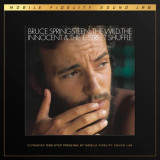
Released only eight months after his exhilarating debut, Bruce Springsteen's The Wild, the Innocent & the E Street Shuffle contains rousing dispatches from the boardwalk, the street, the beach, and the bedroom. It explodes with energy, dares to dream, teases with humour, crackles with tragedy, clings to hope, and overflows with discovery, youthfulness, and personality. It features an unforgettable cast of characters — corner boys, teenage hustlers, doomed lovers, jazz men, junk men, factory girls, fortune tellers, alley cats, pimps, escorts, and more — illuminated by vivid colour, breathtaking detail, and poetic action.
Musically, the heartfelt 1973 record is inhabited by sympathetic vignettes and cinematic arrangements steeped in rock 'n' roll, soul, jazz, and R&B. It finds the New Jersey native looking beyond the parameters of his preceding record and seeking to move on from environments he knows well (and chronicles here) by rushing headlong toward unknown territories, adventures, and people. Underpinned by the singer-guitarist's ambitious poetic enterprise and will to succeed, The Wild, the Innocent & the E Street Shuffle is the album on which Springsteen becomes the Boss.
Mastered on Mobile Fidelity's renowned mastering system, pressed at RTI on MoFi SuperVinyl, and strictly limited to 7,500 numbered copies, Mobile Fidelity's UltraDisc One-Step 180g 33RPM LP set is the definitive-sounding version of Springsteen's sophomore record. Benefitting from SuperVinyl’s nearly non-existent noise floor, superb groove definition, and dead-quiet surfaces, The Wild, the Innocent & the E Street Shuffle plays with a clarity, energy, presence, and openness that complement the expressiveness, dynamics, and scope of the seven restless songs that comprise a work Rolling Stone ranked the 345th Greatest Album of All Time.
Beyond the audiophile sonics that practically place you behind the console at 914 Sound Studios — listen to the separation between the instruments, natural decay of the notes, interplay within the widescreen soundstaging, and nothing-to-lose youthfulness of Springsteen’s voice — this reissue takes seriously this record’s influential merit by presenting it in packaging that underlines its status. Tucked in a beautiful slipcase, the LP is housed in a special foil-stamped jacket with faithful-to-the-original graphics. This reissue is made for listeners who prize sound quality and who want to engage themselves in everything involved with the invigorating set that busted Springsteen loose from the club circuit and landed him on the radio
Determined to liberate anyone within earshot and unafraid to come on strong, The Wild, the Innocent & the E Street Shuffle serves as the debut of the E Street Band — not only heard but seen for the first time by most of the public courtesy of the back-cover photograph. This is where saxophonist Clarence Clemons, organist-accordionist Danny Federici, and pianist David Sancious step out of the shadows — and drummer Vini Lopez and bassist Garry Tallent again stoke a fiery rhythmic engine that helps drive the untamed, reimagined big-band swing of “Kitty’s Back,” breathless R&B thrust of “Rosalita (Come Out Tonight),” and carefree dance steps of the funky “The E Street Shuffle.”
Of course, the main attraction remains a then-24-year-old visionary on the precipice of becoming a sensation and turning a then-bloated rock scene on its head. Recorded over three months while Springsteen and company were busy touring his debut LP, The Wild, the Innocent & the E Street Shuffle reflects the high-octane approach the vocalist embraced onstage and drifts away from the label-dictated acoustic-based frameworks of his debut. The set also witnesses Springsteen deepening his observational skills, with narratives such as the romantically tinged “4th of July, Asbury Park (Sandy)” and redemptive epic “Incident on 57th Street” mirroring changes taking place in the singer’s own life, small towns, and America at large.
A thrilling collision of memories, reflections, and composites — Sandy, Rosalita, and the latter’s parents are all based on actual people Springsteen knew, as is the community depicted in the opening track — the aptly titled The Wild, the Innocent & the E Street Shuffle resonates decades on due to its truths, authenticity, and spirit. Those characteristics — as well as the fact that many of its lengthy songs come on as the equivalent of sweaty, feverish soul revue that won’t stop until you’ve been exhausted — also explain how this now-iconic album triumphed over the reservations of industry “experts” that both demanded Springsteen re-record it and instructed deejays not to play it.
Yet there’d be no stopping a record that saw the past, present, and future, a band whose will would not be denied, and a phenomenon who was born to run. A never-ending invitation to act real cool and stay up all night, The Wild, the Innocent & the E Street Shuffle always feels alright.
An’archives presents the latest album by Japanese free saxophonist and vocalist Harutaka Mochizuki, Doppelgänger ga boku wo. Since the early 2000s, Harutaka has quietly, yet steadily, released a string of solo and collaborative releases that have allowed multiple perspectives on one of the most singular voices in modern music. In collaboration, he seems to prefer the duo format, and digging through his discography, you’ll find releases where he pairs with Tomoyuki Aoki (of Up-Tight), Michel Henritzi, and Hideaki Kondo. But Harutaka’s solo performances, with their lyricism and physicality, are where the magic truly happens.
If earlier albums, like Solo Document 2004 (Bishop, 2005) and Pas (no label, 2014), were raw documentations of solo alto saxophone performances, in recent years, Harutaka’s solo albums have become more complex, more mystifying. Most significantly, they’ve become more personal; there are few musicians extant whose albums feel quite so much like diaristic interventions, and Harutaka’s music now is deeply moving in its intimacy. Developing that thread of revelation, Doppelgänger ga boku wo offers a still richer exploration of many facets of Harutaka’s artistry.
The two double-tracked alto saxophone performances here feel consummate, with Harutaka shadowing himself, exploring the possibilities of the multiple self: Doppelgänger is me, indeed. The playing here is rich with affect, but still exploratory, voiced with rigour and intent. Two short pieces for keyboard and voice (about Giacometti and Genêt, respectively) are fragile miniatures, with clusters of chords, and passing phrases, wrapping around Harutaka’s untutored but lovely singing.
The ‘karaoke’ performance that closes the album, of “Woman ‘W no higeki’ yori”, speaks to the iterative aspects of Harutaka’s music. A cover of the Hiroki Yakushimaru song, the theme to Shinichirō Sawai’s 1984 film W’s Tragedy, he’s returned to this song several times, and here, his delivery perfectly captures the spirit of what Michel Henritzi, in his typically beautiful liner notes, evocatively details as “one of those sad love songs that accompany lonely sake drinkers in smoky night bars, sharing their spleen.”
Gorgeous, human, heartrending - Doppelgänger ga boku wo is Harutaka Mochizuki in element and in spirit.
DJ Support: Danny Howard, Annie Mac, Mistajam, Pete Tong, Charlie Hedges, Kraak & Smaak, Maxinne, Todd Terry, Alex Preston, Full Intention, GW Harrison, DJ Rae, Rudimental, Alaia & Gallo, Illyus & Barrientos, Johan S, David Penn, Sam Divine, Riva Starr, Claptone, Nice7, Dario D’Attis, Mousse T, S-Man, Huxley, KC Lights, Friend Within, Dombresky, Gorgon City, Chris Lake, Format:B, Pirupa, TCTS, Alan Fitzpatrick, Low Steppa, Mat.Joe, Raumakustik, Eskuche
Leading the charge with the next Toolroom Trax vinyl series is Mark Knight’s remix on a euphoric dance anthem from Dave Spoon (aka Shadowchild) & Nick Reach Up who update Elaine Mai & MuRli's track 'Ready'. An underground House work-out that's been tried & tested on the dancefloor throughout 2023 and inspired by the euphoric House sound of the 90's, Mark’s mix makes use of the original's hypnotic vocal, combined with driving bass and big euphoric synths. House heavy-weight CASSIMM lands back on our Trax vinyl series with another essential club cut 'Wanna Feel Something'. The Italian, London based hit machine rose to new heights in 2023 with a Beatport House #1 'LOVE DESIRE' on Claptone's Golden Recordings, and chart-topping releases on Toolroom, Spinnin', Myth Of NYX and more. Full of fun, funk and house goodness, CASSIMM yet again delivers another irresistible party starter! Label favourite, Crusy steps up on remix duties for this next offering and a milestone 300th release for the label with an updated mix of Superchumbo & Victoria Wilson James’ ‘The Revolution’. An influential anthem from 2001 'The Revolution' spent over two decades in clubland since icon Danny Tenaglia originally broke the record at the infamous WMC Miami, later going on to recieve support from global superstars such as Pete Tong, X-Press 2, Roger Sanchez and more. Crusy’s signature drums, percussion and grooves drive through
that Latin influenced energy throughout. Last but definitely not least, James Hurr and Electro pioneer Arthur Baker team up with their unique blend of underground house and 80's hip-hop in new club controller, 'Powder In The Nose'. This collaboration marks a triumphant return for James Hurr on Trax who has previously released successful club cuts on the label, and an exciting debut for Arthur Baker, an artist who needs no introduction. The Boston-born producer is widely recognized as one of the pioneers of the Electro genre, with a career spanning over four decades. Baker's unique sound, which fuses elements of hip-hop, funk, and electronic music, has made him a household name and a highly sought-after collaborator. Together, Hurr and Baker are a powerhouse duo, with their combined expertise and passion for dance music 'Powder In The Nose' is nothing short of spectacular.
ountless radio plays on Radio 1 from Danny Howard, Sarah Storie, Pete Tong Other notable radio plays – Kiss FM, Toolroom Radio, Sirius XM, Data Transmission Radio, Radio 1 Dance Anthems, Radio 1 Party Anthems, Rinse FM, Select Radio, Tomorrowland Radio
An enormous production with musicians of the highest calibre combine to create a bombastic spectacle. The show's infrequencies make it evermore unique. In September 2023, Arjen Lucassen sold out five performances of '01011001 - Live Beneath the Waves' at the Poppodium 013 in Tilburg, The Netherlands. Talking about the show Arjen Lucassen says: "When I wrote the 01011001 album back in 2007, it was never meant to be played live.
So I could make it as complicated as I wanted with countless instrumentalists and no less than 17 singers!" Ayreon mastermind Arjen Lucassen and keyboardist Joost van den Broek managed to gather a large number of the original cast of the 01011001 album and many special guests, including Simone Simons (Epica), Damian Wilson (Threshold), Anneke van Giersbergen, Jonas Renkse (Katatonia), Tom Englund (Evergrey), Daniel Gildenlow (Pain of Salvation), Marcela Bovio (MaYan), Brittney Slayes (Unleash the Archers), Hansi Kursch (Blind Guardian), John Jaycee Cuijpers (Praying Mantis). Maggy Luyten (Beautiful Sin), Michael Mills (Toehider) and Wudstik are among other incredible musicians.
"Miranda Winters, as the voice of Chicago’s much-loved noisemakers Melkbelly, has spent the past few years happily in her own shadow. While she has quietly written and occasionally released her own music for 15 years, Winters finally steps out into the bright light with the release of Lawn Girl, the debut album under her Mandy moniker.
The album, a combination of older songs and newer creations, feels positively and endearingly alive–like a freeing of pent-up energy, an intimate rebuilding of the self. While Winters recorded and produced a number of the songs herself, she worked with Taylor Hales at Electrical Audio to feed those songs back into the studio, where they were re-recorded with room mics and worked back into the original versions. “I see it like photocopying,” she says of the process. “I’ve always loved working with photocopying and related printing techniques in my visual art because of the way everything decays and falls apart. It was nice to honor that on the record.”
Performed by an all-women band–Linda Sherman (guitar), Lizz Smith (bass) and Wendy Zeldin (drums)–the songs on Lawn Girl suitably find Winters ruminating on the idea of femininity; about her mom (who graces the album cover) and being a mother herself; her female friends; and what it means and what is required to make art and music in a female space intentionally."
Electro duo Human Rebellion delves into the timeless conflict between light and darkness. As our world gradually descends into shadow, they emerge as advocates of free will. Their mission: to infuse the digital landscape with a distinctly human essence, like flowers growing in a digital wasteland. Their latest creation, the "Light and Shadow" EP (LDI012), is not just an electro release. It is a sonic manifesto. A testament to their vision. As their story unfolds, American artist Terrestrial Access Network provides the final twist: A remix that echoes across the binary expanse.
- A1: Goldne Abendsonne, Wie Bist Du So Schön
- A2: Aprilnacht
- A3: Urin Deiner Blüten 1
- A4: Mutter Maria Zwischen Den Himmeln
- A5: Requiem Für Eine Ringelnatter
- A6: Urin Deiner Blüten 2
- B1: Apfelbaum, Kuh Und Backofen
- B2: Nie Kann Ohne Wonne, Deinen Glanz Ich Sehn
- B3: Requiem Für Ein Schwalbennest
- B4: Morgensonne
- B5: Afra Altar Maidbronx
Originally released on tape by SicSic in 2014, Aprilnacht commemorates a decade of music from Brannten Schnüre and marked the spring in a tetralogy of albums about the four seasons when it came out. Back then the Würzburg-based project consisted solely of Christian Schoppik, who later welcomed Katie Rich to take over the vocals. He used to perform as Agnes Beil, but dropped the name when, while making this album realized his music was becoming "much gentler and more fragile". Aprilnacht already captured the particular musical ideas that Schoppik would thoroughly keep exploring, delving deeper and deeper into the use and manipulation of samplers from sources so diverging as to wander between the five continents to post-war German family television and cult cinema. Heir of the ritualistic intensity of Coil, of the intricate sampler assemblies of Ghédalia Tazartès', and of the dusty, dismal old ballads from around the world, Brannten Schnüre manages to make these paths cross in a territory that is as inherent as it is uncanny; sieged by the past and intimate as a hearth. An organic approach to folk, ambient, and sound collage, where ethereal yet thoroughly textured pieces coalesce in enthralling, delicate, and innermost musical rituals.
The album cover paintings reveal the temper: dreary old towns where shadows come to dim the slow passage of crepuscular colors, a soft area of reanimation where wind and light come close and foresee the night of spring. Aprilnacht was inspired by the stories of German philosopher and writer Friedrich Alfred Schmid Noerr, whose work exhaustively examines the conflict between paganism and Christianity, safeguarding myth in a way that Schoppik describes as boldly modern, humorous and unpredictable in its variations of the Germanic folklore motifs. "I wanted to do the same with the music," he states, and the music here could as well be suitable for a night when household deities welcome wandering will-o'-the-wisps, water nymphs, and gyrovagues to discuss Perchta's leadership of The Wild Hunt, but this album is not a folk tale, it's not an elegy to worlds already gone, hidden in years; it's an intersection of routes that open mysteriously before our ears like a congregation of vapors. Aprilnacht is a gathering of voices; "There are too many children, and none of them keeps quiet," reads the last verse of «Requiem für eine Ringelnatter.»
Sensuality drips over the music to celebrate both the voluptuousness and tragic quality of nature; "It's raining on me, urine from your flowers," Schoppik sings in «Urin deiner Blüten» and later on, faced with a snake's erotic features, as if he wanted to be embraced by it: "Your quick, sharp tongue and your warm venom; that's what the pond is missing." Orality is where this profusion of contents thrives. When the voices get closer and condense, the words reveal the saliva employed to pronounce them; we feel the mouth and the tongue, but when breath envelops them in sorrow and softens their edges, they sound distant, diffused in the atmosphere, letting go of the body that held them. These two vocal facets oscillate permanently and interact naturally with the fertile assembly of samplers and instruments that develop throughout the album, which condense and disperse impersonating each other, interweaving to search for a specific syntax. Tangled whisperings of enigmatic phrases, timid voices that stick out to check the scene but hide away quickly, shivering trance chants and monastic ambiances, distant screams and clamors in between chaos and warfare swirl until bursting into subtle songs where even Mother Mary comes forth softly. Soothed by foggy atmospheres and crackling punctuations, these voices shape a vulnerable crowd, an occasion of fragility. Along this swarm of songs thrown into thin air, accordions sound like heavy-breathing lungs; clarinets sigh like curtains shaking; violin solos wander around like bees; Gjallarhorns cries distend like fleeing cattle; glockenspiels evoke remote music boxes and inherited toys; backward emanations emerge like slender waves retreating. On the banks of stretching loops and ember textures is where the songs slowly nest, collecting the words to find their tone.
A poem by Jorge Teillier says, "To talk with the dead you have to choose words that they recognize as easily as their hands recognized the fur of their dogs in the dark. To talk with the dead you have to know how to wait: they are fearful like the first steps of a child. But if we are patient one day they will answer us with a flame that suddenly revives in the fireplace." This may be Brannten Schnüre's main purpose: To find the voice to speak to those of whom we were a vision. Not in mourning, but acknowledging the obscure and volatile nature of spring's regenerative force, searching for the treasure of balance, as evidenced in the lyrics of «Requiem für ein Schwalbennest,» "Its nest was destroyed so many times before it was finished, and despite that, the shallow builds as if it is infatuated." The same idea is here in the words of Schmid Noerr, who made poetry an act of resistance to the horror of Nazism; "Since having seen the ability of a brilliant spirit to die, with a calm mouth that everyone saw, health is true again and we affirm it, even if rivers of blood flow." And as we call for the dusk's kindness, waiting to return home and eat with our kin by the stove, our ears become used to the games of the night. We feel like we're rowing on wetlands, while the "moon musick" keeps us vigilant against the slightest movement of water or sweet moan because eeriness here is imperative for survival. Do not succumb to the insipid howl of death, for nothing may last but mutability. You see, the rock has moved a little during the night; the rest is just wind fleeing from the void.
Repress!
The publication of "Jet Sounds" in October 2000 and its subsequent release on the international market represented the turning point from the initial productions carried forward by Schema and the new course taken by the label reaching sales of 40,000 copies and still counting. It's the year 2000 and the avant-garde of the new jazz pop Italian scene is called "Jet Sounds". The debut album by Nicola Conte features nearly 20 musicians and moreover the visionary, sophisticated appeal of Nicola with a sound that has already become T . He tells a cinematic story as the images become a soundtrack for the music: Scene 1: A young woman is walking on the sea shore. She's alone, only white sand and crystal blue water by her side. It's late in the afternoon and the sun is glancing over her shoulders while a soft bossa nova fills the air. Scene 2: He's drivin' fast, there's little time left and a man to chase. Like busy spiders working a web, the beat of the big band pulses a 5/4 jazz theme. Scene 3: It's night; the park; shadows following, shadows hiding mystery? Undefined eastern/oriental sounds adrift on a pulsing psychedelic beat. What's the next move...?
- 01: Absolutely Cuckoo
- 02: I Don't Believe In The Sun
- 03: All My Little Words
- 04: A Chicken With Its Head Cut Off
- 05: Reno Dakota
- 06: I Don't Want To Get Over You
- 07: Come Back From San Francisco
- 08: The Luckiest Guy On The Lower East Side
- 09: Let's Pretend We're Bunny Rabbits
- 10: The Cactus Where Your Heart Should Be
- 11: I Think I Need A New Heart
- 12: The Book Of Love
- 01: Fido, Your Leash Is Too Long
- 02: How Fucking Romantic
- 03: The One You Really Love
- 04: Punk Love
- 05: Parades Go By
- 06: Boa Constrictor
- 07: A Pretty Girl Is Like
- 08: My Sentimental Melody
- 09: Nothing Matters When We're Dancing
- 10: Sweet-Lovin' Man
- 11: The Things We Did And Didn't Do
- 01: Roses
- 02: Love Is Like Jazz
- 03: When My Boy Walks Down The Street
- 04: Time Enough For Rocking When We're Old
- 05: Very Funny
- 06: Grand Canyon
- 07: No One Will Ever Love You
- 08: If You Don't Cry
- 09: You're My Only Home
- 10: (Crazy For You But) Not That Crazy
- 11: My Only Friend
- 12: Promises Of Eternity
- 01: World Love
- 02: Washington, D.c
- 03: Long-Forgotten Fairytale
- 04: Kiss Me Like You Mean It
- 05: Papa Was A Rodeo
- 06: Epitaph For My Heart
- 07: Asleep And Dreaming
- 08: The Sun Goes Down And The World Goes Dancing
- 09: The Way You Say Good-Night
- 10: Abigal, Belle Of Kilronan
- 11: I Shatter
- 01: Underwear
- 02: It's A Crime
- 03: Busby Berkeley Dreams
- 04: I'm Sorry I Love You
- 05: Acoustic Guitar
- 06: The Death Of Ferdinand De Saussure
- 07: Love In The Shadows
- 08: Bitter Tears
- 09: Wi' Nae Wee Bairn Ye'll Me Beget
- 10: Yeah! Oh, Yeah!
- 11: Experimental Music Love
- 01: Meaningless
- 02: Love Is Like A Bottle Of Gin
- 03: Queen Of The Savages
- 04: Blue You
- 05: I Can't Touch You Anymore
- 06: Two Kinds Of People
- 07: How To Say Goodbye
- 08: The Night You Can't Remember
- 09: For We Are The King Of The Boudoir
- 10: Strange Eyes
- 11: Xylophone Track
- 12: Zebra
Limited edition silver vinyl anniversary reissue of the Magnetic Fields' classic 1999 rumination on, of course, love. Funny, smart, dark, memorable, and a lifetime's worth of listening. Stephin Merritt solidifies his songwriting genius on his "most ambitious and fully realized work". (AMG) This vinyl reissue is remastered for vinyl and beautifully packaged in a 10" slipcase box with three double gatefold sleeves and a 24 page booklet!
- A1: 1000 Light Years Ft. High Times Players, Lloyd Obeah Denton
- A2: In The Shadow Ft. Vin Gordon, Glen Dacosta, Sheldon "Atiiba" Bernard
- A3: Whitewater Ft. Ibo Cooper, Lew Chang
- A4: Memories Of Old Ft. Ernest Ranglin, Tyrone Downie
- A5: Rose Hall’s Birds Ft. Vin Gordon, Glen Dacosta
- B1: Squirrel Inna Barrel Ft. Ernest Ranglin, Vin Gordon, Karl Bryan
- B2: Under The Cotton Tree Ft. Glen Dacosta, Ibo Cooper, Cat Coore
- B3: 45 Charles Street Ft. Roots Radics, Dwight Pickney, Dean Fraser
- B4: Everlasting Love Ft. Sly & Robbie, Dean Fraser, Peace Diouf
Bringing together over 50 of Jamaica's greatest session musicians, whose work spans from the birth of reggae in the late 1960s until today, Roots Architects is the largest gathering of Jamaican musical talent on one all-instrumental album. Never before have so many veterans, who helped create the immortal rhythms that made reggae internationally successful, been assembled to play on new material without vocals. This album aims to celebrate and pay tribute to the unsung heroes of reggae music: the rhythm builders or Roots Architects.
The project is the brainchild of Swiss keyboardist and producer Mathias Liengme. In 2013, he travelled to Kingston, Jamaica, to produce The Inspirators project, an all-star album gathering Leroy ”Horse-mouth” Wallace, Lloyd Parks, Earl ”Chinna” Smith and Sangie Davis, the four of them acting both as musicians and vocalists. This first experience in Kingston studio life paved the way to what would become the Roots Architects project. In February and March 2017 Mathias Liengme travelled for the fifth time to Kingston to record as many of reggae’s greatest living veteran musicians as he could. With the help of a few of these Architects like Robbie Lyn, Fil Callender or Dalton Browne, he managed to gather over 50 session musicians aged 60 to 85 on nine instrumental songs.
Roots Architects are legends back together in Kingston studios doing what they do best: creating in-strumental music all together!
1998 was a fertile year defined by juggernaut projects from Black Star, Lauren Hill, Outkast, and others, all of whom synced experimentation with foundational tenets that made the 1990s ferociously groundbreaking.
Out of Oakland, California, a collective known as Hieroglyphics were positioning away from industry control, to helm their own assets in manners more suited to their own marketing self-vision. While artists have certainly went solo prior, this came at a critical juncture for the crew during a spiraling and newfound Internet world. Born out of this independent spirit was the crew’s first official studio album 3rd Eye Vision.
The album spans twenty-two songs, all featuring beats by Domino who manned the lion’s share of production. A-Plus, Opio, Del, Casual, and Phesto also contributed beats. MCs each had their own song, short interludes highlighting their individuality through short verses, a clear espirit de corps statement.
Even among standouts like “Oakland Blackouts” or “At The Helm,” perhaps the most celebrated song off the release is “You Never Knew,” a track that propelled 3rd Eye Vision to #88 on the Billboard Top 200, not an entirely easy feat as a new label competing with the late ‘90s’ abundant onslaught of classic material.
In celebration of 20 years of 3EV, Fat Beats and Hiero Imperium are proud to present this CD/Vinyl reissue in deluxe packaging, expansive liner notes and the full original album tracks and a bonus for the very first time in one package.
Clear Vinyl
Since her re-discovery in 2013 via cult favourite The Space Lady’s Greatest Hits, The Space Lady’s mission of galactic peace and celestial harmony has grown into a world-wide underground phenomenon. Recorded in 1990, The Space Lady’s original repertoire is a parallel universe greatest hits: songs familiar are transmogrified into shimmering bliss while new compositions amplify the message. The Space Lady’s Other Hits, released on April 20th for Record Store Day 2024, constitutes the songs recorded by Susan “The Space Lady” Dietrich Schneider as part of that repertoire that never made the original Greatest Hits, save for a limited bonus CD on the first CD pressing. Remastered by Mikey Love for vinyl, The Space Lady’s Other Hits completes the picture.
The Space Lady began her odyssey on the streets of Boston in the late 70s, then San Francisco ten years later, playing versions of contemporary pop music with an accordion and dressed flamboyantly. Following the theft and destruction of her accordion , The Space Lady invested in a then-new Casio keyboard, complete with a phase shifter, delay pedal and headset mic, birthing an otherworldly new dimension to popular song that has captured the imaginations of the underground and its leading exponents ever since.
The Space Lady’s Other Hits were recorded as they were played on the street, live, one-take, with Schneider playing, singing and simultaneously manipulating the various effects. Beginning with Elvis Presley’s iconic All Shook Up, the walking bassline underpinning the vocal, phasing in and out of this dimension, providing a fragile, extraterrestrial shadow to Presley’s original lust-driven performance. Slapback Boomerang is an original composition, written by Schneider’s then-husband Joel Dunsany a Rock ’n’ Roll pounder that could have been performed by The Cramps, its tale of relationship turmoil changed into a meditation on the nature of echo and feedback. There are moments where Schneider performs vocal caesuras, swimming in delay and phase for the pleasure of it, a pantomime drama performance that rings out. Closing Side B, Puttin’ On The Ritz is Irving Berlin’s 20s smash hit manipulated into a sombre ballad with its latent class struggle narrative brought to the fore.
A staple of The Space Lady’s performances to this day, Golden Earring’s 70s global hit Radar Love retains something of the original’s driving gallop but in The Space Lady’s telling it is shorn of the tight-trousered, taut machismo. The Space Lady coos and reaches up into the heavens away from the road, the phaser waves drenching the composition with transcendence.
Schneider’s falsetto performances in the choruses do nothing but lift the spirits ever-arching upwards. Next, The Space Lady emasculated Jim Morrison’s performance in The Doors’ 20th Century Fox. Faithfully playing Ray Manzarek’s keyboard parts on her Casio, Schneider disintegrates Morrison’s lust into waves of echo and delay, creating a Dubbed out version of the song, sounding eroded and decayed in all its ghostly glory. Pioneering Rock ’n’ Roll outfit Pete & The Pirates’ 1960 hot Shakin’ All Over, something of a response to Elvis’ All Shook Up, is blown out in warm fuzz and the celestial hug of The Space Lady’s
spirit.
- 01: How Can I Help You
- 02: We`ll See
- 03: Away From The Loud Crowd
- 04: Tonight In My Dreams She Found Me And We Finally Fell In Love And It Was A Feeling Long Unknown
- 05: 15Mm Pb
- 06: Floats And Strings
- 07: End Of The Summer (Early Version)
- 08: Veronica
- 09: Louis Vuitton Vs. Guilliame Apollinaire
- 10: I Am The Monster
- 11: No Part
- 12: A Song For The Trees, For The Swell Swishy Trees
- 13: Vyznanie #1
On the outskirts of Bratislava, in the pulsating shadows of a refinery's burning chimneys, on the plot of a family house, there stood a small shack. Initially, it housed trials in domestic mushroom growing. Later, after a makeshift acoustic touch-up - lining the walls with old cardboard egg cartons - it became a shelter for music. Sensitive, evocative, nostalgic, lo-fi music by a man named Cadillac Face.
Today we would probably use the term 'safe space', but back then it was (in Cadillac's words) kutica, a cubbyhole. He hid there from a world that ached. Here, Cadillac secretly smoked, sang, and composed. And tried not to go crazy from anxiety. He wrote music unlike anything during his time.
Here, he struggled. With sound (unable to adjust it to his liking), with instruments (which he couldn't bring himself to play), with the world (with which, understandably, he was at odds).
Cadillac Face was a man who didn't belong here.
He wrote and sang in English (in a post-socialist and early-capitalist Slovakia, when command of English was no matter of course); he also wrote in Slovak (blogs and diaries, which, due to a stream-of-consciousness and surrealist style, were as incomprehensible as they were immersive and intimate); gave advice to teenagers (to their quasi-banal questions on talking forums about relationships, life and adolescence, where they were often met with ridicule and mockery); he composed electronic and noise music (at a time when no one had a clue what the abbreviation DAW meant).
This Cadillac's compilation album is not aiming to compete with/replicate Noizy Days - a compilation of Cadillac's contributions to the project Noize Konspiracy. Underground compilations circulated through a local proto-social network. Borderline music without rules - open but often inaccessible. There, Cadillac contributed mostly with experimental-electronic compositions. Noizy Days was compiled by Ďuro Ďurček, one of the initiators of Noize Konspiracy. Both Ďuro and Cadillac have been dead for years.
Songs For The Trees is a selection from Cadillac's songwriting. The most intimate of his intimate recordings. Cadillac at his most fragile, brittle, and quiet. The most romantic, the most tormented, the most painful and direct of his songs I know.
Cadillac became an anthropomorphic grotesque tree. Neither broadleaf nor conifer. Or perhaps it's a candle slowly incinerating – bored, sad, playing the guitar. A tragicomedy. Sometimes it kindles what it doesn't mean to, and it can't put itself out. Or can it?
Superb 45 featuring two Hammond-led instrumentals! We caught up with Mr Guy Hamper for an insightful Q&A_ Q: What a cracking single this is! 'Instrument of Evil' in particular has a very eerie vibe. What was the inspiration for it? A: The track is the sequel to '7% Solution', which featured on the last Guy Hamper Trio LP with Thee Headcoats standing in as rhythm section. A 7% Solution being the amount of morphine Dr Watson administered to Sherlock Holmes. For 'Instrument of Evil' I took Sherlock Holmes' later designation of his syringe as "an Instrument of Evil". This is originally a quote from the bible: "Wicked men do at times reject God's purpose for the state, transforming the good of civil government into an instrument of evil." Point of interest: Morphine addiction happens to tie in with another aspect of the song. In the section that nods to Elmer Bernstein's main title theme to the film of the book The Man With the Golden Arm, in which the main character is also a morphine addict. Another ingredient - we added six-string bass to that section in tribute to Jet Harris - he formerly of top group The Shadows, who recorded a great version of Bernstein's classic. To top it all off the record sleeve references the fine graphics of the great Saul Bass. Phew! Q: The track features contributions from Tom Morley (trumpet) and Anna Jordanous (sax). What's it like working with them? A: They are great and easy to work with. I basically make a playground and let them loose in it with very little direction, apart from pointing out the swings and location of the roundabout. I told Tom "You're a Spanish trumpeter stood on a hill in Spain." For Anna, I think we said "go low and nasty." Q: On the flip side you have 'Incense Rising From a Censer'. A very evocative title for an evocative track. Do you have lyrics in mind for this for a possible later release? A: No lyrics have sprung to mind as yet - but it's always possible. The title is from The Elders observation in Dostoevsky's The Brothers Karamazov, a book I really recommend. Prayer rises to God on the smoke of the incense burning in the censer. I imagine this track being some kind of antidote to 'Instrument of Evil'. Q: This single marks your first time in the new premises of Jim Riley's Ranscombe Studio. What's the new place like? A: The studio is great - the sound - using my old Mighty Caesars drum kit, and Jim engineering, is pure, easy with a better sound than the old premises. Q: Any more Guy Hamper Trio releases in the pipeline? A third album perhaps? A: Again, anything is possible. Me and Jamie (James Taylor, Hammond organ) have talked of writing together in the future. Jamie is a truly great musician - the cherry on the cake if you will. We're just busted old eggs, sour milk, and some gunk. Q: A live Guy Hamper Trio show would be amazing. Any chance of that happening or will it remain a studio-based project? A: It could happen if someone came up with a very cunning plan.
- Gods On Safari
- The World Shadow
- Rocket Number Nine
- The Voice Of Pan
- Dawn Over Israel
- Space Mates
- Conversation With Saturn
Black Vinyl[25,42 €]
2024 REPRESS
To understand the significance of the word 'featuring' on Featuring Pharoah Sanders And Black Harold, consider how infrequently Sun Ra used it and the exact way it had been used. The October Revolution in Jazz, organized by Bill Dixon in the West Village in 1964, presented a vivid cross section of approaches to the new music, including a sextet led by Ra. For the October Revolution's continuation, titled Four Days in December, held at nearby Judson Hall on the last days of 1964, the Arkestra performance presented Pharoah Sanders as well as a flautist (who was and remained obscure thereafter) named Harold Murray, nicknamed Black Harold. It wasn't until long after Sanders had achieved worldwide acclaim with John Coltrane that Ra and manager Alton Abraham decided to issue the music they'd recorded at Judson Hall. After its first release in plain or handdecorated covers in 1976, Featuring Pharoah Sanders And Black Harold remained an exceptionally rare item in the El Saturn discography, known to a few lucky collectors. We're lucky to have this glimpse of what Sanders sounded like in such a different context, galvanizing the large group and in turn being inspired to make his first significant contribution on record.' —John Corbett (excerpt from the liner notes)