Buscar:mana terra

Estilos
Todo
Mana Terra (DJ TOOL & Whrikk) - Initiation EP

This release is an act of breaking out of conventional categories for Seismic records. Established boundaries of genres are completely dissolved into an unpredictable flow of sonic associations. It’s an unexpected collaboration, yet it makes perfect sense from the first kick. Two artists from seemingly opposite ends of the musical universe come together to create a project which fearlessly embarks on the synthesis of hypnotic trance-techno and utter sonic chaos. This project is anything but predictable.

The duality is noticeable from the very first moment. One side brings relentless movement forward in the project: a raw, hypnotic pulse based on rhythm and precision, locking the listener in the present moment and not letting go. Unpredictable textures and psychedelic ornaments are constantly weaving through the rhythmic framework.

A dedicated listener may recognize that the whole EP carries the legacy of David Lynch’s work. The sense of peculiar uneasiness and indecipherability, overridden by the desire to find out what comes next, are exactly what the artists manage to capture and what is so characteristic of Lynch himself. At one point, the EP even reveals a moment as if a red curtain parts in the depths of the track and the listener momentarily catches echoes from the town where owls are not what they seem. Hidden within is a playful nod to the iconic Twin Peaks soundtrack.

No en stock

Haga su pedido ahora y le encargaremos el artículo en nuestro proveedor.

12,56

Ültimo hace: 3 Días
VARIOUS - TEN YEARS OF GALA LP 2x12"

GALA announce Ten Years of GALA – a compilation marking a decade of independent culture

Ten Years of GALA is both an archive and a horizon: a reflection on where GALA has come from, and a signal of what lies ahead.

Founded in 2016 as a one-day gathering in South London, GALA has grown into a global point of reference for dancers, artists and collectives drawn together by a shared commitment to independence, collaboration and underground music culture. Rather than charting success through scale alone, the festival has consistently prioritised integrity, community and musical curiosity – values that underpin this release.

Spanning fifteen tracks, Ten Years of GALA unfolds as a considered journey. It opens with an intimate spoken contribution from Charlie Dark, grounding the compilation firmly in GALA’s home of Peckham before gradually expanding outward into fuller, club-focused terrain. From there, the record moves between moods and tempos, tracing a path from reflective moments into the physical language of the dancefloor.

The compilation brings together longtime friends of the festival alongside newer voices drawn into its orbit in recent years. Each artist contributes a distinct perspective, but collectively the tracks form a coherent portrait – not of a single sound, but of a shared ethos shaped over ten years of gatherings, collaborations and days spent dancing together.

Rather than a retrospective in the conventional sense, Ten Years of GALA functions as a living document. It captures fragments of past editions, scenes and relationships, while remaining firmly oriented toward the future. These are not museum pieces, but records designed to be played, shared and folded back into the spaces from which they came.

Together, the compilation holds a piece of GALA’s first decade – not as a closed chapter, but as a foundation for what comes next.

Reservar17.04.2026

debe ser publicado en 17.04.2026

29,37
Various - Tchic Tchic: French Bossa Nova 1963-1974  Colored Edition LP 2x12"
  • A1: Les Masques - Il Faut Tenir (1969)
  • A2: Isabelle Aubret - Casa Forte (1971)
  • A3: Christianne Legrand - Hlm Et Ciné Roman (1972)
  • A4: Jean Constantin - Pas Tant D'chichi Ponpon (1972)
  • A5: Billy Nencioli & Baden Powell - Si Rien Ne Va (1969)
  • B1-: Marpessa Dawn - Le Petit Cuica (1963)
  • B2: Jean-Pierre Sabar - Vai Vai (1974)
  • B3: Sophia Loren - De Jour En Jour (1963)
  • B4: Isabelle - Jusqu’à La Tombée Du Jour (1969)
  • B5: Sylvia Fels - Corto Maltesse (1974)
  • C1: Frank Gérard - Comme Une Samba (1972)
  • C2: Ann Sorel - La Poupée Des Favellas (1971)
  • C3: Charles Level - Un Enfant Café Au Lait (1971)
  • C4: Andrea Parisy - Les Mains Qui Font Du Bien (1970)
  • C5: Audrey Arno - Quand Jean-Paul Rentrera (1969)
  • C6: Aldo Frank - T’as Vu Ce Printemps (1970)
  • D1: Christianne Legrand - Cent Mille Poissons Dans Ton Filet (1972)
  • D2: Clarinha - Lemenja (1970)
  • D3: Hit Parade Des Enfants - Aquarela (1976)
  • D4: Jean-Pierre Lang - Tendresse (1965)
  • D5: Magalie Noël - Une Énorme Samba (1970)
  • D6: Françoise Legrand - La Lune

Ever since the late 1950s bossa-nova revolution, Brazil’s influence on French music has been undeniable. Pierre Barouh, Georges Moustaki and a vast array of lesser known artists, all made the Musica Popular Brasileira (MPB) an axis of promotion at the service of a cool and metaphysical, modern and mixed Brazilian lifestyle. Some were seduced by the poetic languors of the bossa, some were looking for fun, and others just loved the American hybridization of jazz-bossa, jazz-samba.


What is bossa nova? One of its creators, Joao Gilberto said: "Its style, cadence, everything is samba. At the very start, we didn't call it bossa nova, we sang a little samba made up of a single note - Samba de uma nota so .... The discussion around the origins of bossa nova is therefore useless”. It is nevertheless useful to remember that these magnificent Brazilian songs, which the guitarist describes as samba, were shifted and balanced around improbable chords. "I like things that lean, the in-betweens that limp with grace," said Pierre Barrouh, quoting Jean Cocteau.


With emotion, arrangements for violin and supple guitar licks, bossa nova rapidly changed. A transformation that can be heard in the Tchic, tchic, French Bossa Nova 1963-1974 compilation, the result of a cultural reappropriation, which traveled through the United States and supplemented itself in France.

A musical revolution that has remained significant, bossa nova was born in Rio. From 1956 to 1961, Brazil lived through its golden years. In five years, the country had invented its modernist style. Elected president in 1956, Juscelino Kubitschek de Oliveira, an elegant man with a broad forehead, brandished a promising slogan: "Fifty years of progress in five years". He quickly got to work. Not worried about increasing debt, he launched the project for a new federal capital, Brasilia, designed by the communist architect Oscar Niemeyer. Volkswagen opened state-of-the-art factories and created the “fusquinha”, the Beetle. In Rio, the Vespa made its first appearance. The Arpoador Surf Club crew run into the “girl” from Ipanema, Helô Pinheiro - the tanned garota ("chick"), between a flower and mermaid, who at 17 walked by the Veloso bar, where the fiery author and composer, Tom Jobim and Vinicius de Moraes, were getting drunk on whiskey. From then on, bossa symbolized cool.

In 1958, Joao Gilberto recorded Chega de Saudade, which the directors of Philips denied, calling it "music for fagots". The marketing director, who believed in it, secretly pressed 3000 78-inch vinyls and distributed them at schools around Rio, creating a tidal wave.

American jazzmen then took over. In particular, trumpeter Dizzy Gillespie and guitarist Charlie Byrd. In November 1962, the Brazilian Ministry of Foreign Affairs funded a "Bossa-Nova" concert at Carnegie Hall in New York, inviting the genre’s pioneers. Unprepared, the show soon turned to disaster. But the troupe was invited to the White House by Jackie Kennedy. The first lady loved "the new beat" and in particular Maria Ninguem, a song by Carlos Lyra, later covered by Brigitte Bardot.

In Brazil, the 1964 military coup quickly ended this euphoria. The destructive atmosphere that ensued pushed many Brazilian musicians to leave, if not to exile. Thus, Tom Jobim, Sergio Mendes and Joao Gilberto arrived to the United States. In New York, Joao Gilberto met saxophonist Stan Getz. At the time, he was married to the Bahianese Astrud Weinert Gilberto, who had a German father. She had never sung before, but she knew how to speak English. Getz therefore asked her to replace her husband on The Girl From Ipanema. The Getz/Gilberto record with Tom Jobim on piano, was released in March 1964. Phil Ramone, the "pope of pop" was in charge of sound.

Bossa nova arrived in Paris through the classic “guitar-voice” channel (Pierre Barouh, Baden Powell, Moustaki…) But France loved jazz and Paris had already welcomed its American contributors. All these good people were to pass through Saint-Germain-des-Prés. The cabaret l'Escale became the Mecca of Latin American sound where one could find Pierre Barrouh and his friends, such as the Camara Trio, samba-jazz aces, whose only record was published by the Saravah label. With a band strangely called Les Masques (a band that included Nicole Croisille and Pierre Vassiliu, among others), the Camara Trio recorded an interesting Brazilian Sound, including the track Il faut tenir which is present on this tasty compilation of rarities.

Other enlightened musicians can also be found on the compilation, such as Jean-Pierre Sabar (songwriter for Hardy, Auffray, Leforestier ...) and the French pop rock organist Balthazar. In 1975, Sabar recorded Aurinkoinen Musiikkimatka on a Finnish label, which featured the crazy Vai, Vai, included on this record. We are now following the footsteps of Brazilian electronic musicians such as Sergio Mendes, Eumir Deodato or Marcos Valle who created funk and disco sounds on their keyboards and synthesizers. A style that influenced Véronique Sanson when she wrote Jusqu’à la Tombée de la nuit in 1969 for Isabelle de Funès, the niece of Louis and a great friend of Michel Berger - Sanson did end up singing this track on her 1992 Sans Regret record.


The pinnacle of exoticism and travel, Sylvia Fels’ Corto Maltese includes bongos, sea mist and ocean sounds. The title was taken from Jacky Chalard’s concept album written in 1974, Je suis vivant, mais j’ai peur (I am alive, but I am scared), based on Gilbert Deflez’s science fiction novel.


However, bossa nova extended the scope of popularity. "In the 1970s, I was a fan of Sergio Mendes, Getz / Gilberto. I fell in love with this music that I knew because I had been an orchestral singer, " explained Isabelle Aubret, who in 1971 delivered a composite record of covers by the very funky Jorge Ben, Orfeu Negro, Tom Jobim, Vinicius de Morais and Jean Ferrat. "I recorded this album for Meys Records in Paris, far from Brazil, with wonderful musicians, François Raubert, Roland Vincent, Alain Goraguer...". The latter wrote the arrangements for Casa Forte, a very percussive title borrowed from Edu Lobo, one of the initiators of the bossa who spent time in California. "Jazz and bossa came together and produced very rhythmic music. I love singing, it allows me to dream, to have fun, to feel a high on stage, and these songs brought me joy, made me swing, my singing felt like a dance.”


The world tours of French singers and their desire for the tropics, often brought them to Rio with its hills, forests, caipirinhas and tanned bodies. There are surprises though, like this Iemenja (Iemenja is the goddess of the sea in the Afro-Brazilian candomblé religion). Not unlike the composer and musician Jean-Pierre Lang, based in Sao Paulo, Claire Chevalier taught Brazil to Brazil. In 1970, the singer and painter published a 45-inch vinyl, Mon mari et mes amants (My husband and my lovers), under the improbable pseudonym of Clarinha (little Claire). She was then living in Rio, with her husband, Joël Leibovitz, who founded a band called Azimuth, and who owned a record label specialized in "sambas enredos" songs for samba school parades.


For its B side, she asked Pierre Perret to come up with lyrics for a song composed by Carlos Imperial: "Oh goddess of the sea, o goddess Iemenja, I bring a white rose to adorn your long hair ..." . "Perret came to see us, and we had fun, remembers Joël Leibovitz. We wrote Lemenja for fun, we recorded it at the Havaí studio, behind the Central do Brasil the central station. Erlon Chaves, the arranger who worked with Elis Regina, joined us" adding his share of Afro-Brazilian percussions and funky brass to the mix.

There is a common misunderstanding in Franco-Brazilian history: that bossa, admittedly hedonistic, is perceived as funny, even though the poets who wrote the texts are often philosophizing on the human condition. Its French interpreters pull it towards a carnival inspired universe, far removed from its fundamental essence. Thus, Jean Constantin covered the famous Samba da minha terra, an ode to the art of samba written by the classic Bahian composer Dorival Caymmi, renaming it with the enticing title of Pas tant de tchi tchi pompon: "On your pier there is no tchi tchi / when you arch your back, you know everything is alright ”(lyrics by Gérard Calvi). This expedited bossa aims for the absurd, but retains a certain elegance.

Indeed, Jean Constantin was not an idiot, the rather large man had a huge mustache and liked fantasy, (Les pantoufles à papa, Le pacha, inspired by cha-cha-cha-cha, salsa and jazz) but he was also the lyricist of Mon manège à moi interpreted by Edith Piaf, the composer of Mon Truc en plume by Zizi Jeanmaire and the soundtrack of François Truffaut’s 400 Blows. Le Poulpe, published in 1970, from which this bossa is extract, was arranged by Jean-Claude Vannier, an accomplice of Serge Gainsbourg’s Melody Nelson. In short: "There is enough of samba / By looking at the parasol / Because my poor cabeza / Is going to die in the sun".

Even the American actress Marpessa Down, who was at the heart of the bossa nova revolution with her role as Euridyce in Marcel Camus’ film Orfeu Negro, winner of the 1959 Cannes Palme d'or, fed the clichée with Je voudrais parler au petit cuica - "Tell me how you manage to always make people want to dance / It's true, I must admit that I cannot resist your magic" - in consequence, once can hear the cuica, a little drum inherited from the Bantu.


But bossa nova had many angles. Societal, of course, pushing actresses who were symbols of women's liberation like Brigitte Bardot, Jeanne Moreau, or Sophia Loren to engage in the exercise of accelerated bossa. In February of 1963, Sophia Loren made a record in French in Rome, Je ne t'aime plus, featuring the song De jour en jour, a bossa written by two Italians, Armando Trovajoli and Tino Fornai, which was released a little later by Barclay. Bossa accompanied the 1960s, a decade of moral liberation. Ann Sorel, who interpreted La Poupée des favellas, caused a sensation with L’amour à plusieurs, a provocative song written by Frédéric Bottom and Jean-Claude Vannier. As for the actress Andrea Parisy, she displayed her bourgeois cheekiness in Marcel Carné's Les Tricheurs before interpreting Les mains qui font du bien. And Magalie Noël, the friend of Boris Vian, who sung Johnny fais-moi mal, was hired to sing Une énorme Samba, composed by Alain Goraguer (arranger to Gainsbourg, Bobby Lapointe and Jean Ferrat) with lyrics by Frédéric Botton.

But in the end, of what wood is bossa nova made of? The answer is given by Christianne Legrand, daughter of Raymond the conductor, and sister to Michel the composer: "With me, with jà" - jà means "immediately" in Portuguese. In 1972, the singer, an expert in vocal jazz and a member of the Double Six, published Le Brésil de Christianne Legrand. Two songs included on the Tchic Tchic compilation that demonstrate how bossa, jazz, funk, rock, etc. work like a swiss army knife: the music is used to denounce broken systems, or miracles, HLM et ciné roman, Cent mille poissons dans ton filet, two songs from the O Cafona soundtrack, a successful telenovela broadcast, at the time in black and white, on TV Globo. The first was adapted in French by the fighter and friend of the Legrand tribe, Agnès Varda. The second is content with a play on words, jostling them into a summer fun.


Véronique Mortaigne

Reservar17.04.2026

debe ser publicado en 17.04.2026

27,31
Kiran Leonard - Real Home LP
  • 1: Pass Between Houses
  • 2: Theatre For Change
  • 3: Real Home
  • 4: Treat Me A Stranger
  • 5: Utopia Of Bog
  • 6: Void Attentive
  • 7: My Love, Let's Take The Stage Tonight
  • 8: The Kiss
  • 9: He Had Always Led

Cathartic avant-rock, literate DIY folk & experimental composition exploring displacement, love, climate change, belonging & the places we call home - RIYL Jim O’Rourke, Richard Youngs, This Heat, Richard Dawson, Flying Nun. ‘Real Home’ is the new album by the Manchester-born, London-based artist Kiran Leonard. His sixth album proper (not including innumerable tour-only CD-Rs and short-run cassettes), since his precocious debut in 2013, ‘Real Home’ finds Leonard invigorated by inspiration and experience, making passionate, literate, and mercurial music that explores displacement, love, memory, climate change, connections to home and more. Encompassing songs recorded after moving to South London, ‘Real Home’ reflects on ideas of belonging and domesticity through folkloric, stream-of-consciousness songwriting. Across nine tracks, Leonard traces lived impressions of the household and the city, expressing sentiments of dislocation, alienation and stasis, but contentment too. Infusing the avant-rock effervescence, terraced dynamics and visionary lyricism of his music with what he defines as a greater sense of openness, Leonard is as versatile, fervent and imaginative as ever on ‘Real Home’, yet his music is somehow more intimate, affecting, and acutely expressive. Shaped by dual considerations of simplicity and formalism, ‘Real Home’ is by turns beautiful, allusive, and ruminative, an album on which Leonard considers what his songs have resembled in the past and what they mean now. In recent years, Leonard has crafted eloquent chamber music inspired by the likes of James Joyce and Clarice Lispector (‘Derevaun Seraun’), responded to contemporary politics and communication breakdown in the digital age (‘Western Culture’), and compiled solo works and ensemble recordings for a longform ode to Jonas Mekas and to one of Leonard’s enduring themes; home (‘Trespass On Foot’). On ‘Real Home’, Leonard reiterates this abiding thematic focus yet ascends to new, different heights, in music of cathartic delicacy and dissonance where all the myriad dimensions of his work to date seem to crystallize. There are sinuous songs about struggle and defying the pace of city life through drift and diversion (‘Pass Between Houses’), stirring songs of intense feeling and crescendo, described as a form of speculative detective fiction (‘Theatre for Change’). There are touching solo piano ballads (the title track), symbolic contentions with carbon capture and climate change (‘Utopia of Bog’), modes of experimental minimalism (‘Void Attentive’), and other profuse feats of compositional range, embroidered with wild tendrils of narrative and lyrical depth. A record to pore over, and get lost in. Exemplifying the vast aesthetic scope of Leonard’s music, lead single ‘My Love, Let’s Take The Stage Tonight’ is inspired by country lodestar Hank Williams, Russian poetry and a late period love poem by William Carlos Williams. Yet for Leonard, the song signals a sense of accessible materiality, and is the product of a more linear approach to writing songs: “My imitation of the great Hank Williams, in spirit if not in substance…This is one of the best efforts on Real Home at a song-as-object. Looking at it now I realise I was trying to write a song that made itself known as a song to the listener, and I wonder whether that’s crucial if you want a song to transcend its context. And that this is either accomplished through a total openness – by being inviting, by laying the tricks of the song out plain to see, as Williams and his many ghostwriters did so well – or by adopting a knowing aloofness, positioning oneself against the listener but letting it be known that that’s what it’s doing. In this song I try both, but mostly the former: as in, I wanted to write a song where every line follows on from the next.” Imbuing the endlessly elaborate and inventive qualities of his music with a newfound streak of candid, clear-cut melodicism, Leonard has reached a special place in his artistry, on a record that feels familial, and expresses closeness. Assembled with affiliates including Lauren Auder, Otto Willberg, Jasper Llewellyn (caroline), Tom Hardwick-Allan (Shovel Dance Collective), Magda McLean (caroline, The Umlauts), Alex Mckenzie (caroline, Shovel Dance Collective), Isabelle Thorn (Dear Laika) & more, the recording process had a significant influence on the subject matter of ‘Real Home’, in sessions defined by close-knit camaraderie and artistic eccentricity: “The theme of the home obviously recurs throughout the record; the album was mostly recorded in domestic spaces with friends, and the name of the album is Real Home. I like the qualifier ‘real’, like you’re getting past the cloak of the word and towards the thing-itself…also nearly all the percussion in this record was recorded on items from my dad’s shed (jam jars, sandpaper, blocks of wood, etc). Real home record!” ‘Real Home’, like anything by Kiran Leonard, is a record of dazzling multiplicity. Yet it’s a companionable prospect with a central premise; a collection of songs where listeners old and new can find a home. An album led by a scene; of Leonard standing at the threshold, ready to welcome you inside. “Exceptional songs that linger” - The Guardian // “An autodidact of amazing talent & energy” – Pitchfork // “A ridiculous amount of talent…confrontational, celebratory, provocative or perverse – he manages all of these emotions & more” - The Quietus /

Reservar24.04.2026

debe ser publicado en 24.04.2026

21,81
Various - Values

Various

Values

12inchWUVA1
Warm up
12.09.2025

It's time for a new compilation in our house and we have some good music to fill it up. This collection of talent is going to be served in two flavours, the physical one a four cut vinyl EP featuring previously only digital tracks and the second one a ten track selection from our back catalogue featuring some of the best producers in our family.

Asier Morillas ( A4 ) is probably one of the most original sci fi specialists out there and he's been part of our sound since his first steps into production. His track Kynosoura is a perfect example of hi tech jazz.

David Reina is also a science fiction specialist, also featured with a full length work in our catalogue, our pick for this collection is Autoscopy, a mental and complex sonic voyage into the best outer space techno.

From Mod 21 we have selected one of his most played tools, Escalation of Violence, the perfect hypnotic drill to boost your mixes properly.

Vertical Spectrum brings us to hyperspace in BALN006 combining a distorted groove with floating alien bleeps in a sci-fi techno masterpiece.

This four cuts will be pressed on wax, let's talk about the next eight:

From his Idle Ep we have chosen Temudo's Spiritual Song, a merciless floor weapon heavily tested on the best clubs and big stages out there.

Next comes BiiBii by Null Forms approaching a more abstract and sci-fi terrain, maintaining the danceable pulse and well-managed distortion. The result is more mental and synthetic. A kind of controlled chaos.

Axial Rotation from Translate starts with a fast paced groove, heavily bass fuelled with a continuous synth line moving across the basement. All sound elements are constantly mutating and evolving although the mood is linear and loopy.

Eight cut comes from Dutch veteran Dimi Angelis, the third from his
A Journal of Impossible Things EP from 2023. The hypnotic bleep penetrates your mind while the dirty sound of the old drum machine sets the pace for your feet. Special mention to the occasional resonant sweep that appears from time to time creating the required tension.

On the ninth, Ruman's Lizard from Where The Ring Ends LP, mental and hypnotic, perfect for adding tension to a mix, again heavily tested on the best dancefloors extensively.

Closing the release, CONCEPTUAL with Red Sun a magnificent closing anthem, no more words needed here.

With this collection you get a tiny snapshot of the sonic palette of Warm Up Recordings sound. Check our full catalogue to get the proper picture.

Disponible

En el almacen y preparando para el envío

12,56
BLANCMANGE - PRIVATE VIEW LP

Private View is distinctly Blancmange while also expanding into new sonic terrain. There’s a deft marriage of futuristic electronic sounds, Neil Arthur’s unmistakable vocal hooks, and songs veer from buoyant and joyful to dark and brooding. Private View will be released on London Records almost exactly 40 years to the day since the label released Blancmange’s debut album Happy Families. This neat full circle of Blancmange re-signing to the same label that ignited things all those years ago is also reflected in the album itself, being the perfect crystallisation of four decades of creativity.

On Private View Neil returns with key collaborator Benge (Wrangler, John Foxx, John Grant), and David Rhodes (Kate Bush, Peter Gabriel, Scott Walker) also returns as the guitarist, having previously performed with the band as early as 1982’s Happy Families (as well as several other Blancmange albums).

Private View is a record that manages to capture an artist who is potently in the moment when it comes to creating new work, while also being able to draw on 40 years’ worth of knowledge, experience, and built-in intuition. “I'm really lucky to be able make the music completely on my own terms,” Arthur says. “Being able to just continue being creative...that's when I'm happiest.” As he said before: “within myself there are no limits.”

Blancmange is also reflected in the ongoing influence the music has on younger generations of artists and fans over the years. Contemporary electronic producers like Honey Dijon and Roman Flügel have paid tribute with remixes, Moby once called Blancmange “probably the most underrated electronic act of all time.”; while John Grant continues to profess his love for Arthur’s music, old and new, and has invited Blancmange to perform as part of Grace Jones’ Meltdown festival.

Disponible

En el almacen y preparando para el envío

28,99
Moisk - Deoxyribose EP

Moisk

Deoxyribose EP

12inchGRFF014
Griffé
04.12.2023

For our last release of 2023 we’re thrilled to welcome Moisk! Duo composed of Alex Pletnev and Logeshen Moorgan aka Fourmi Rouz, during recent years Moisk have released top notch music on labels such as Pleasure Express, Lost Poncho, Terra Magica, Warning and Mana Abundance. Their Deoxyribose EP is composed of two trancey 4/4 dancefloor bombs on the A side while B side is more about breaks and uptempo jungle madness. Top stuff!

Disponible

En el almacen y preparando para el envío

11,98
VTL One - Language Machine EP

Forming a wide spectrum of sounds, Comics Trip Records always manage to include a plenty of influences into their releases but with a uniquely future retro slant. Next up to instil this musical identity is VTL One and the third story of Comics Trip Records.

Disponible

En el almacen y preparando para el envío

11,98
ELIZIO DE BUZIOS - TAMANQUEIRO

Elizio De Buzios

TAMANQUEIRO

7"-VinylND011
NEW DAWN
22.12.2021

Reissue of Elizio De Buzios's "Tamanquiro". Remastered and pressed on 45 RPM!

Sitting a good 90-minute drive away from Rio de Janeiro’s crowded beaches and packed tourist hot-spots, Campo Grande is not a neighbourhood that attracts travellers from around the World. Traditionally it is home to the city’s lower middle-class, whose aspirations of moving up the social ladder were played out in a suburb that has always been solidly working-class.

Campo Grande is home to Elizio De Buzios, a Brazilian musician who started playing music in the late 1970s and early 1980s. De Buzios began as a drummer, before learning to play guitar and starting to compose and sing his own music. When he turned 18, De Buzios joined a local band formed by some of his friends and other like-minded local musicians: Sol da Terra. The band mostly played samba in neighbourhood bars and small venues around Camp Grande, but De Buzios was interested in more than just samba. While he naturally admired great samba composers such as Cartola and Beth Carvalho, his musical pass went far beyond Brazil’s national music. He also loved MPB and bossa-nova and at home he listed to Joäo Bosco, Milton Nascimento, Luis Melodia, Tom Jobim, and many bossa-nova singers.

In 1980 De Buzios was noticed by a local representative of international major label Polygram, who gave him the opportunity to record two songs. He was excited, so started searching for inspiration for the songs he would eventually lay down. He found that inspiration close to home while passing a neighbourhood shop which made and sold clogs. After noticing a display of then fashionable Portuguese clogs outside the store, De Buzios popped inside to talk to the owner. It turned out that he was a tamanqueiro – as clog-makers are traditionally called in his native Portugal – and was as passionate about music as he was about the footwear he made. Thus inspired, De Buzios returned home to work more on the lyrics and music.

The next day, he headed into the studio to record the song, with Vale Ribeiro, who later went on to produce tracks for Marcos Valle, behind the desk. With Ribeiro’s assistance, De Buzios managed to record two songs in one day: ‘Tamanqueiro’ and ‘Sou Um Louco’, a ballad with English lyrics blended into the mostly Portuguese text. From the start, it was clear that ‘Tamanqueiro’ would be the single’s A-side. Incredibly catchy and funky, with some subtle disco elements, the song remained distinctively Brazilian thanks to the use of the cuíca. Listening back all these years on, De Buzios’ lyrics seem almost spontaneous, carry the track forward, and make it almost impossible not to sing along. Its infectiousness and funkiness made it an instant hit with the first few people to hear it.

When it was released, responses to the song were enthusiastic, even if it never became the Brazil-wide smash it should have been. It resonated well in the local clubs and on the radio, but unfortunately the marketing was handled by an inexperienced Polygram employee who failed to adequately promote the track. As a result, the record sank without trace and De Buzios’ dreams of stardom evaporated. Having just started a family, he realized he could not live off the uncertainty of being a musician. Instead, he got a job at city hall as a civil servant, a role he continued until his retirement a few years ago. ‘Tamanqueiro’ and ‘Sou Um Louco’ remain the only two songs he ever recorded.

In the early 2000s, with the rise of diggers’ culture, ‘Tamanqueiro’ slowly surfaced again. It became a sought after, hard to find seven-inch single, finding its way onto the airwaves once more and into the ears of a new generation of listeners. Some started appreciating the song so much that it was referred to as the “best-Jorge-Ben-song-Jorge-Ben-never-recorded”. And they are right: ‘Tamanqueiro’ does have that Jorge Ben-straight-forwardness. It’s a completely honest song that’s almost impossible not to fall in love with. Thanks to this remastered reissue on Rush Hour, De Buzios may now get the props his sole record so richly deserves.

Now for the good news: De Buzios is still singing in local bars and clubs in and around Campo Grande. He is surprised, but also incredibly proud, that the record he had almost forgotten about is appreciated so much by a group of music lovers he didn’t even know existed. But above all, he is happy that more than 40 years after the recording session, the record lives on – not only on this re-release, but also in his weekend sets in the bars of Campo Grande.

Disponible

En el almacen y preparando para el envío

12,40
Roméo Poirier - Off The Record

Roméo Poirier

Off The Record

12inchFAIT-39LP
Faitiche
02.10.2025

Off The Record (faitiche 39), the new album by French collagist Roméo Poirier, is an amusing romp through the discarded history of recording studios. It contains fourteen miniatures based on accidental recordings of studio talk, revealing things that were never meant for the public: we hear instructions from studio staff, scraps of talk between musicians, or just microphones being adjusted, as well as false notes, false starts: everyone stops. Start again: 1, 2, 3, 4!

Poirier’s approach recalls Accumulation, an artform practiced by Arman, Jean Tinguely and Daniel Spoerri that involved piling up everyday items into assemblages. The objects themselves often remained unaltered, the artistic gesture consisting in the careful curating of a distinctive selection. Poirier’s audio collages explore similar terrain. The fourteen pieces on Off the Record combine more than a thousand found sounds from studio archives into complex miniatures. The audio content of these outtakes is twisted, stretched, cut, reassembled, slowed down and accelerated. Voices cut into a microgroove, from a very old recording, intertwine with digital voices gleaned from YouTube. All of them in dialogue, engaging the listener with the impression of being part of a new music group.

Poirier uses the mundane routine of setting up before the actual recording gets underway to tell a universal story about working in a recording studio. And he manages something few achieve, transforming specialist knowledge into a narrative whose beauty goes far beyond its immediate subject. It speaks to everyone, because the story is told in a musical language that is open and accessible, evoking magical images reminiscent of Oz – a world consisting less of events than of camp hallucinations, captured in grainy black-and-white photographs. En passant, Poirier shows us how the notion of material accumulation can produce great art.

Written and produced by Roméo Poirier, mastered by Stephan Mathieu, photos by Roméo Poirier, graphic design by Tim Tetzner.

No en stock

Haga su pedido ahora y le encargaremos el artículo en nuestro proveedor.

22,65

Ültimo hace: 6 Meses
HxH - STARK PHENOMENA

Hxh

STARK PHENOMENA

12inchOF04LP
OFNOT
03.04.2025

Chris Ryan Williams (trumpet & electronics) and Lester St. Louis (cello & electronics) work together as HxH (H by H). Their skills have seen them move smoothly across various situations, constantly carving out new terrain and working in new configurations of musicians at a rapid pace. While worth reading, their biographies capture only a part of their complex rhizome.

HxH started about three years ago. The project is a direct response to all their activity with others and more importantly all their future leaning sonic desires. Their debut album STARK PHENOMENA is both their first studio recording and their first physical release. The album is appropriately set to be released by KMRU on his growing label OFNOT. It’s an ideal introduction to their sound world and their approach.

HxH describe their music as “electroacoustic,” but until recently the presence of Black musicians in this field has been greatly overlooked and largely ignored, making this phrase only partially appropriate. What HxH do really is to always be unpredictable. Every gig is a new soundscape. Sometimes you might hear echoes of Autechre or Robert Hood but then the sound-field will open up into a new terrain all their own. Chris and Lester bring together techniques from across the sound spectrum of electronic music and also draw on their deep backgrounds in Jazz, Improvisation, Classical and Noise scenes to create a sound that is true to them. After all, these two have worked with the likes of Bennie Maupin and the music of Black Fluxus artist Ben Patterson. Their rhizome is deep.

One of the ways that their unique approach manifests is in their merging of both acoustic instruments and electronic instruments in real time. This is something few have managed to do – but their spontaneous leanings work in both complex and accessible ways because of their deep understanding of landscape crafting. You can hear this clearly on the track “Pyrex Vision.” Their approach makes it tempting to compare their music to Sun Ra jamming with Laurel Halo – a comparison that would be only partly accurate.

Chris and Lester note that the sounds on STARK PHENOMENA are “imbued with such hopeful, gracious care; one that is far flung from obsessive carefulness or fuck the world carelessness, but more a caring embrace without the fuzziness of nostalgia.”

They note that when they began working together, they would “always come back to speaking on our concepts of an architecture of the expanse,” noting that their live sets often take on the joyfully noisy task of “dreaming big.” For HxH it was essential that STARK PHENOMENA have a quality that is “almost sculptural.” They consider the album “an object to be viewed from all sides.” This kind of thinking has resulted in them directly engaging with numerous sculptors and artists including Torkwase Dyson. Shape wise HxH’s sound fields work in a parallel to Dyson’s black architectural works.

They also note that the opening cut “BEACH” (the opening and longest track from the album) was “written weeks after our first gig in a studio session donated to us by our dear friend jaimie branch.” And that Pyrex Vision “was continually being edited months after sending our ‘final mixes’ to KMRU.” Their sound sources and samples come from studio sessions, live gigs, durational installations, 3am improvised downloads and more.

KMRU notes: "I think there is an in-between layer on this record. I was first caught by the Pyrex Vision track which organically flows between monologue, subtle field recording, and instrumentation. It's such a beautiful track, evoking deep emotion through simplicity. STARK PHENOMENA effortlessly glides in between imaginative mosaics of sounds — free yet complex — unlocking memories within its layers."

No en stock

Haga su pedido ahora y le encargaremos el artículo en nuestro proveedor.

22,27

Ültimo hace: 5 Meses
DJ Terrace - Signed EP

Dj Terrace absolutely smashed it with the first in his "postal" trilogy - the much loved "Tracked" EP. He follows it up with "Signed" and once again brings his usual clever mix of old skool jungle and modern production, hitting a place which few artists manage to reach, keeping it both authentic and underground. A 4 tracker with no filler, Signed is an essential part of any modern jungle Djs collection...

No en stock

Haga su pedido ahora y le encargaremos el artículo en nuestro proveedor.

15,08

Ültimo hace: 18 Meses
The Mars Volta - Amputechture LP 2x12"

The Mars Volta

Amputechture LP 2x12"

2x12inch4250795602484
CLOUDS HILL
04.10.2024

Amputechture Beneath the technical flash, the fury, the fearless creative brinkmanship of the first two Mars Volta albums lay a potent seam of the blues, an existential vexation that powered every twist and turn of Omar and Cedric’s imaginations. That mournful vibe would come to the surface of the group’s third full-length Amputechture, a simmering/blistering set that was unquestionably the group’s darkest yet. There was no overarching theme here, no interlinking concept binding the songs together, though Cedric concedes that, lyrically, the album was influenced “by a lot of stuff I was going through, a really bad break-up and a lot of other crazy stuff, and trying to put that feeling into the record.” But Amputechture – its name another of the late Jeremy Michael Ward’s invented words – was no downbeat bummer. Opener Vicarious Atonement might’ve been a deliciously gloomy, slow-burning thing, capturing Cedric in delirious duet with Omar’s swooning guitar lines, accompanied by squalling saxophone by Adrian Terrazas-Gonzales and dream-frequency fuckery by the group’s new sonic manipulator, former At The Drive- In member Paul Hinojos. But second track Tetragrammaton swiftly set pulses racing, an epic-in-miniature and containing more ideas within its 16 minutes than most bands manage over an entire career, its proggy, complex guitar figures tessellating in infinite configurations and converging as if conforming to mathematical formulae from another reality. The raw material Amputechture was hewn from started life on the road. Omar now travelled with his own mobile recording studio – a little Neve ten-channel tape recorder and an array of microphones – and was able to work on new ideas on tourbuses, in hotel rooms and during soundcheck (and, occasionally, after the show was done). After touring for Frances The Mute was complete, Omar relocated to Amsterdam, staying with his photographer friend Danielle Van Ark and her partner, Nils Post. It’s here that he demoed Amputechture, flying in engineer Jon DeBaun, drummer Jon Theodore and his brother, Chino, to work on these raw sketches. He later returned to Los Angeles, where the album was finally recorded. Omar ceded guitar duties to his dear friend and kindred spirit John Frusciante, instead assuming the role of musical director. “I wanted to hear the sound of the band,” he says. “I thought, I’ll be able to sit at the console, feel the air of the speakers moving, the unified sound of everything, and not feel distant from it. It was fun, but it was also challenging.” Part of Omar’s new method was to teach the musicians their parts only moments before the tapes rolled. “To keep things fresh, and to keep everyone on edge,” he says, before chuckling. “No, not on edge – on their toes. Amputechture would prove The Mars Volta’s most diverse set yet, drawing into the group’s tornado of influences moments of fiery jazz spirituality and esoteric folk introspection, finding space for passages of devastating subtlety and also their most fierce and full-on moments to date. The aforementioned Vicarious Atonement found its meditative mood echoed by Asilos Magdalena, an intimate, acoustic piece that invoked traditional Latin folk music, as Cedric sang in Spanish a sorrowful tale of a lost soul’s quest for sanctuary within a Magdalen Asylum, a refuge set up by the Catholic church for “fallen women”. The shadowy, sinister closer El Ciervo Vulnerado, meanwhile, tapped into the darker side of spiritual jazz to further explore the album’s themes of redemption and religious myth and magick. Elsewhere, the interplay between guitar and clarinet on Viscera Eyes created complex, unsettling counter-melodies, while the coiling, ornate Meccamputechture – Cedric’s wild fusion of sacred texts, occultism and dystopian science fiction – proved a great showcase for Ikey Owens’ swarming, infernal organ runs, in concert with Frusciante’s arcane guitar-play. But it was Day Of The Baphomets that would prove Amputechture’s most ambitious and most defining epic. Cedric’s lyrics tore into the hypocrisy of religious cant and myths of sin and punishment. “I wanted to make a song that was like the movie The Believers, where this cabal stole kids and did some occult shit with them,” he explains. “But I wanted it to be like, ‘What if the people you hire to do jobs you don’t wanna do rise up one day and then pull some shit like that?’ Like it was the guerrilla warfare, them taking over – wouldn’t that be some fucked up shit? And the music just lent itself to that – the big intro, the bass solo, and all of the ruckus that occurs.” That ruckus was some of the most thrilling Mars Volta music yet, as Omar directed his musicians to rumble through fiery modes of wild tribal groove, ransack-the-palaces riot- rock and supreme progressive experimentalism. Amputechture, then, is the sound of The Mars Volta in imperial mode: fearless, insatiable, unstoppable.

Reservar04.10.2024

debe ser publicado en 04.10.2024

33,57
CHRIS CORSANO / BILL ORCUTT - MADE OUT OF SOUND LP

REISSUED!!! Received an 8.1 rating from Pitchfork. "Sadly, many will hear Chris Corsano & Bill Orcutt's latest LP, Made Out of Sound, as 'not-jazz,' though it would be more aptly described as 'not-not-jazz.' In a better world, it would warrant above-the-fold reviews in Downbeat, or an appearance on David Sanborn's late-night show (if someone would only give it back to him). More likely, we can hope for a haiku review on Byron Coley's Twitter timeline to sufficiently connect the various improvised terrains trodden by this long-time duo—but if you've been able to listen past the overmodulated icepick fidelity of Harry Pussy, it should surprise you not an iota that Orcutt's style is rooted as much in the fractal melodies of Trane and Taylor as it is in Delta syrup or Tin Pan Alley glitz. As for Corsano, well, it may seem daft to call this particular record 'jazz' (because duh, it has a drummer), but to me Corsano is beyond jazz, almost beyond music, his ambidextrous, octopoid technique grappling many stylistic levers and spraying a torrent of light from every direction. Corsano's ferocity has elevated many 'mere' improv records to transcendence, but here he's crafted his polyrhythms within more narrative channels, bringing to mind his 'mannered' playing in the lamented Flower-Corsano duo. It's not 'groove' playing precisely, but it follows many grooves simultaneously, much like Orcutt's own melodic musings—which is why they're so naturally lock-in-key here. Which maybe makes it all the more surprising that Made Out of Sound was in fact recorded in different rooms on different coasts at different times, and stitched together by Orcutt on his desktop. Corsano recorded the drums in Ithaca, NY, and (as Orcutt states), 'I didn't edit them at all. I overdubbed two guitar tracks, panned left/right. I'd listen to the drums a couple times, pick a tuning, then improvise a part, thinking of the first track as backing and the second as the 'lead', though those are pretty fluid terms. I was watching the waveforms as I was recording, so I could see when a crescendo was coming or when to bring it down.' Fluidity ties the tracks together. With a little more groove and a little less around-the-beat maneuvering, one could almost hear the boiling harmonic layers as Miles-oid in 'Man Carrying Thing,' but with new-found Sharrockian modalities, Corsano accentuating the tumbling nature of the falling notes. The Sharrock vein continues with 'How to Cook a Wolf,' its Blind Willie-esque melodic simplicity and repetition extrapolated 360-style in a repetitive descending riff that falls into Cippolina-isms (by way of Verlaine ) until the end crashes upon the shore. Much like Orcutt's last solo album, Odds Against Tomorrow, there's a gentler, almost pastoral flow to some tracks ('Some Tennessee Jar,' 'A Port in Air,' 'Thirteen Ways of Looking') that calls to mind the mixolydian swamplands of Lonnie Liston Smith—but unlike Odds , other tracks ('The Thing Itself') smash that same lyricism into overdriven, multi-dimensional melodic clumps that push several vector envelopes at once in an Interstellar Space vein. With the help of Corsano, Orcutt has managed to slither even further out of the noise/improv pigeonhole lazy listeners/writers keep trying to shove him into. Looking at the back cover of Made Out of Sound , we should not see Orcutt hurling a guitar into the air with post-punk bravado, Corsano toiling behind him in the engine room—we should witness an instrument levitating from his hands, rising on invisible major-key tendrils of melody, fired by percussion, spiraling into an invisible event horizon..."—Tom Carter

Reservar20.09.2024

debe ser publicado en 20.09.2024

33,19
ZENANA - WITCHES

Zenana

WITCHES

12inchRHRSS37
Rush Hour
12.09.2024

2024 repress

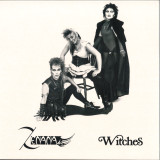
Rush Hour’s RSS series excels in unearthing buried treasure, offering a second chance for artists and releases that have long been overlooked. That’s certainly the case with ‘Witches’, the superb sole single by British 1980s wave trio Zenana.

Originally released on seven-inch by the tiny PRM label in 1986, ‘Witches’ was the product of a sister-brother songwriting team whose music was mostly recorded in the front room of a terraced house in Nanpean, a small industrial village in Cornwall, England’s most south-westerly county. While the single was infectious, impeccably produced and dancefloor-ready, it sold in limited quantities at the time.

Zenana’s story can be traced back to the early 1980s, when singer-songwriter Anita Tedder founded the all-female trio as a vehicle for her musical ambitions. To bring her songs to life, she joined voices with her brother Mike, an early adopter of electronic music who had built a studio – nicknamed MFR, short for ‘Mike’s Front Room’ – in his Cornish home.

Countless Zenana tracks were recorded at ‘MFR’ between 1984 and ’86, with the resultant demo cassette securing the band a management contract, a slew of live bookings, a video shoot and even a television appearance. Buoyed by this underground success, they headed to the remote Sawmills Studio in Cornwall – famously only accessible by boat – to re-record ‘Witches’, a song inspired by local folk tales of witches gathering near Mike’s home.

While this version of ‘Witches’ failed to make an impact at the time, it has become something of a cult classic following its’ rediscovery by crate digger Kiernan Abbott – and subsequent championing by other dusty-fingered DJs including Antal, Skyrager, Trevor Jackson and Luke Una – in early 2023. The buzz inspired Zenana to perform live again for the first time in decades, with the story of their surprise comeback being covered by British media outlets including the BBC and (more surprisingly) the Daily Mail.

Now presented in re-mastered form, ‘Witches’ is a genuinely slept-on gem. Propelled forwards by punchy drum machine beats, a killer synth bassline and fizzing keyboard sounds, the song benefits greatly from strong vocals and an extra-percussive middle eight layered with vocalisations, cosmic spoken word sections and swirling noises.

It comes backed by a brand-new extended ‘spell of love’ courtesy of Bristol duo Bedmo Disco, AKA music journalist Matt Anniss (author of Join The Future: Bleep Techno and the Birth of British Bass Music) and DJ/production partner Gareth Morgan. Anniss is a long-time friend of Mike and Anita Tedder who has fond memories of visiting Mike’s home studio with his family around the time that ‘Witches’ was recorded.

Working from Zenana’s original MFR eight-track recording (tapes of the single version were lost years ago), Anniss and Morgan have turned in the extended ‘dance mix’ the track never had first time around. More atmospheric, clandestine and dancefloor-focused, it offers authentic nods to New York proto-house, mid-80s Shep Pettibone dubs, and the pioneering synth-pop productions and dub mixes of Factory Records regular Martin Rushent.

No en stock

Haga su pedido ahora y le encargaremos el artículo en nuestro proveedor.

15,92

Ültimo hace: 8 Meses
Hartta - Euphoria Jones

Hartta

Euphoria Jones

12inchINDV002
Industrias 94
03.09.2024

Industrias94 is back at the frontline with 3 new rave hits, lovingly pressed on 12” vinyl. Pre-order and digital downloads available now on our Bandcamp.

Euphoria Jones represents a sonic journey towards the golden era of UK hardcore, filling our heads with catchy stabs that will stick with you for days, alongside heavy and distorted drum breaks. After some years mashing dance floors as a dubplate, we are very proud to finally announce its release in a special limited edition.

This record is brought to us by the Sevillian regent of breaks and bass, Hartta! Producer and DJ from Seville, who lived in Bristol for some years where he drank from the legendary local sounds and its soundsystem culture which shaped the current electronic music scene. Alongside Random Vestax, they manage the label-collective Dead Trax, releasing music and putting on iconic club nights featuring local artists and international bookings, some of them playing for the first time in Andalucía, such as Nikki Nair, Aloka or Interplanetary Criminal.

“Who said that the hardcore would die?” Thus yells out the sample in Midnight Eulogy, the second track of this record, which in itself is proof that this genre is more alive than ever. The evolution of 90s breaks crystalizes in this banger, containing all the classic sonic elements from the rave anthems we love, but creating a fresh piece by combining these elements with an idiosyncrasy unique in its species.

The B-side is completed by a radical and ruthless remix of the title track “Euphoria Jones”, by none other than our own Bazofia! From the Fontanal, he brings us an acidic and darker version taking us through an all-terrain 4x4 beat to a drop representing a truly electrifying slap to the face.

No en stock

Haga su pedido ahora y le encargaremos el artículo en nuestro proveedor.

17,23

Ültimo hace: 14 Meses
Ezéchiel Pailhès - Ventas Rumba LP

With his new instrumental album Ventas Rumba, the French composer (and singer) returns to his signature instrument, the piano, blending it with warm synth tones. This album represents a "return to his roots ", allowing Ezéchiel Pailhès to reinvent himself in a seamless way while still exploring ballads and ritornellos, halfway between light-heartedness and melancholy. Ezéchiel Pailhès has been meaning to write a solo piano album for as long as he can remember. Hardly surprising, of course, for this academically-trained pianist, brought up on classical music and then studied jazz. Yet, since his 2001 debut with the electro-pop duo Nôze, and his subsequent four albums, the artist had constantly postponed this project that was so close to his heart. Then in 2022, just as he was getting ready to start producing an album of new songs, this long-standing aim finally materialized.
The melodies he wrote seemed to stand on their own naturally, spurring him on to compose this series of fourteen tracks, recorded in sessions split between France and Latvia.
A new piano: the Una Corda
Ezéchiel wanted this project dedicated to the piano to begin a new narrative, to explore new instrumental terrain and new tones, something far removed from the familiar piano he has been playing all his life. He opted for the Una Corda piano, designed by David Klavins, a groundbreaking instrument builder renowned for his distinctive pianos with vertical shapes and frames.

The Una Corda, created in 2014, is an upright piano with a single string per note (unlike three strings on traditional pianos). Enticed by the "crystalline and unique" tones of this instrument, which is hard to find in France, Ezéchiel travelled to Kuldiga, Latvia (where David Klavins set up his workshops and studios), to record the first part of the album. Although the title of the album may initially conjure up images of a distant, sensual dance, the reality is quite different. Ventas Rumba indeed refers to the waterfall and rapids (in Latvian: rumba) of the river Ventas, which runs near this small village in the western part of the country. Ezéchiel chose to blur the lines, as the sound and musicality of the title likely evoke both his short stay in the Baltic country, and also a form of distant exotic imagery perfectly in tune with his own mischievous wit. Tracks as short stories

Back in France, Ezéchiel enhanced the first tracks recorded in Kuldiga with subtle synth tone layers, and added other tracks composed and recorded at his Montreuil studio. The album reflects a deliberate and sensitive orchestration of piano, synth keyboards and digital effects, as he puts it: "playing to erase the differences between the tones of the various instruments", as if each instrument's texture echoed the others. According to Ezéchiel, you can listen to Ventas Rumba as you would leaf through "a collection of short stories", through compositions that rarely exceed three minutes and evoke figures of movement, lightness, curves or modulation, such as "La ligne", "La valse des singes" or "Fly Finger". Others more seriously relate to a kind of spirituality, which quietly infuses such different tracks as "Ferveur", "Éclair" and "Louanges". Ezéchiel adds: “I’m by no means religious, but I like what God has managed to get musicians to achieve (laughs)". "Louanges", for instance, despite its electronic edge, "refers to Olivier Messiaen, a very devout composer who I greatly admire". Other tracks are directly inspired by the classical music he listens to on a daily basis. For example, Chopin's “8th Nocturne” formed the backdrop of “Pianovado”. Likewise, the harmonic structure of Beethoven's “Waldstein Sonata No. 21” inspired “Opus 53”. Aside from these multiple references and inspirations, which quickly recede behind a style that is uniquely his, Ezéchiel Pailhès keeps exploring ideas already found on his first solo albums, this time in an instrumental format, undoubtedly purer, fostering an imaginary world that evokes the shapes and themes of ballads, ritornellos, light-heartedness, passing time, reverie or a universal subdued melancholy.

No en stock

Haga su pedido ahora y le encargaremos el artículo en nuestro proveedor.

21,81

Ültimo hace: 23 Meses
Nia Archives - Silence Is Loud LP

Nia Archives

Silence Is Loud LP

12inch6500353
Island
12.04.2024

Nia Archives is the star at the forefront of the latest era of jungle. Since her emergence in 2020, her collagist soundscapes have helped bring the sound to a new generation of clubgoers (though fair warning: don’t call her a “revivalist” – she’s the first to point out that the scene never went away). So when it comes to talk of the 24-year-old producer, DJ, singer and songwriter’s much-anticipated debut album, the odds are you’re thinking of a full-length record of weightless jungle tracks with basslines so intense they’ll leave your ears ringing.

But the reality of the Bradford-born, Leeds-raised artist’s first ever album – while very much replete with that exquisite jungle sound she does so well – is also doing something a little different. On the thrilling and freeing Silence Is Loud, Nia Archives is looking to make music for beyond the rave. As she explains: “I think music can be experienced in different ways, and there’s different kinds of music for different scenarios. Say you’re at a festival listening to music with thousands of other people, that can feel really uniting. But then you might listen to an album on your own in the bus, or in a taxi; and this project is definitely more a record to sit and listen to than a collection of club tracks.” Nia is intent that Silence Is Loud is taken in as a full body of work of something “more song-focussed, putting interesting sounds on jungle.” It means that this is a record which finds gloomy Britpop, warm Motown, soaring indie, a love for Kings of Leon’s Aha Shake Heartbreak, skittering IDM, Madchester, classic rock, old skool hardcore and more, woven and fused into her ragga and junglist tapestry, all layered with feeling, imbued with her songwriterly lyricism about loneliness, relationships, family, navigating her 20s, and the intense potential power of silence.

The vast sonic palette on Silence Is Loud comes down to Nia’s broad array of influences through her life. With her Jamaican heritage, Nia remembers hearing jungle as a child via her nana, as well as at Bradford Carnival, where she was drawn to the soundsystem culture, dancing carefree on the floats in the parade. The first album she ever bought was Rihanna’s debut, Music of the Sun, and she also went to Pentecostal church back then, and was obsessed with gospel. Aged 16, she moved to Manchester, where she didn’t really know anybody: and so, her solution to meeting people was going out. “Partying was a huge part of my life,” she says, “They used to do little freestyle cyphers at the house parties and I would join in – that’s kind of how I got into singing.” She had found music boring at school, but in meeting all these new people she became interested in making her own music as a hobby. “I was making boom-bap kind of stuff which I didn’t really like in the end,” she laughs, “My lyrics are quite deep, so on a hip-hop beat it all sounds really depressing. I wanted people to dance to my music.” And so she began experimenting with faster tempos alongside that melancholy songwriting, teaching herself how to make beats on Logic: “It’s all been a lot of trial and error, really.”

Nia went to study music in London, and was also interested in visual art, making collages and VHS: “Before the music, I was trying to make a visual archive of my life and the people around me,” she explains, “And then my music was like my diary, and a sonic archive, as well.” Hence, she paired the word “archives” with her middle name, Nia. To this day, in her spare time she’s working on pulling together a documentary on the global nature of the jungle scene.

Back on those first two EPs, Headz Gone West (2021) and Forbidden Feelingz (2022), she honed that junglist sound, painting it with new flecks of colour and vibrance. It was only after she started releasing work that she realised pursuing music could be a viable life path for her. The decision has been paying off ever since. Nia Archives placed third in the prestigious BBC Sound Poll for 2023, alongside garnering a nomination for the Brit Awards’ Rising Star prize, plus wins at the DJ Mag, NME, the MOBOs and Artist and Manager Awards. She has also toured the world – be it North America, Europe or Asia – and even opened a show in London as part of a little something called Beyoncé’s Renaissance World Tour. She’s renowned as a party-starter in her own right, too, with takeovers at Glastonbury, Warehouse Project and her own Bad Gyalz day event. She’s done official remixes for the likes of Jorja Smith, had a huge summer hit with her Yeah Yeah Yeahs rework ‘Off Wiv Ya Headz’, and worked with brands like Corteiz, Nike, Flannels, Burberry, FIFA and Apple. In just three years, it’s fair to say that Nia Archives has become a need-to-know name in dance music.

But Nia is not interested in being one fixed thing. Building on the terrain from her third EP, Sunrise Bang Ur Head Against Tha Wall, the universe of Silence Is Loud is not totally unfamiliar territory; but it’s still emblematic of a bolder scope than we’ve heard from the artist before. Working with Ethan P. Flynn (the songwriter and producer known for his work with FKA twigs and David Byrne), the resulting record is an impressive feat of deftly-sculpted textures; sometimes big and euphoric, like the wobbly, lusty bass of ‘Forbidden Feelingz’, or elsewhere notably gentle and quiet – see: the gorgeous, surprisingly drumless ‘Silence Is Loud (Reprise)’, a heartfelt number that sits somewhere in the school of Adele. “I really sharpened my songwriting skill on this project,” Nia says, “I was really intentional about what I was writing about, and I really loved co-producing with Ethan. His process is so different to anyone I’ve worked with before, and he’s got a kind of DIY set-up like me.” Flynn’s flat overlooks the Barbican, adding that unquantifiable futurist urban quality that the area holds to the music. The pair enjoyed the collaborative process so much that the album was done within three and a half months.

Perhaps this is why Silence Is Loud maintains an exuberant immediacy while still being sleek and spacious, interspersed with flourishes of metallic beats, lush melody and topped with her sugary but powerful vocal, floating over it all. There is an intimacy to the record, perhaps in part due to Nia writing most of her lyrics while sitting in bed in her flat in Bow (once a bedroom producer, always a bedroom producer). You can hear it on the refrain for lead single ‘Crowded Roomz’, which finds rippling guitar lines cutting taut through the beats as Nia refrains: “I feel so lonely crowded rooms.” The song is an examination of life on tour, constantly surrounded by people, but not necessarily those she can be herself around; more than that, the track is exemplary in the category of sad bangers.

Silence Is Loud often finds itself in that push and pull between melancholy and euphoria. There’s a celebration of her unconditional love for her younger brother (the title track), a rumination of an evening with an Irish boy she met by Temple Bar (‘Cards On The Table), or a letter to herself on the light and airy ‘Unfinished Business’, even coming to terms with a lover having a past they haven’t quite processed yet (“nobody comes with a clean slate”). The latter was recorded the week after a music festival, and accordingly captures Nia’s vocal in its not quite healed, husky state.

Nia’s work is always a snapshot of where she’s at when she’s making it. This might not be the debut album you were expecting, but that’s what makes Silence Is Loud so special. Nia Archives has learned the rules of her sound, and is unafraid to break them, pushing jungle and herself into new, unchartered territories that, in turn, go some way to map the history of the greats of British dance music. More than that, it plants her firmly in that lineage.

No en stock

Haga su pedido ahora y le encargaremos el artículo en nuestro proveedor.

28,36

Ültimo hace: 10 Meses
ZA! & PERRATE - Jolifanto LP

Za!&Perrate

Jolifanto LP

12inchLMNK79LP
Lovemonk
22.03.2024

"Jolifanto" takes its name from the first verse of "Karawane", a seminal Dadaist phonetic poem by Hugo Ball. When Ball first recited it in 1916 at the Cabaret Voltaire, both the author and the audience embraced a trance that left Ball exhausted, requiring assistance off the stage as the audience claimed the spotlight.

Over a century later, by a series of fortuitous events, "Jolifanto" is also the title of an album featuring two powerful musical entities. Artists stemming from diverse backgrounds converge with a shared experimental spirit, curiosity and passion for exploration in their music.

"Jolifanto" is an unexpected explosion propelled by (poly)rhythm, expanding into seemingly distant territories under the influence of flamenco. The Dadaist spirit permeates the work, where a constant tension between the improvised and the meticulously planned is evident. ZA! and Perrate together form an organism traveling from the roots to the rave, with nothing sounding out of place because the place is yet to be defined.

Perrate witnessed ZA!'s concert in a festival he attended as part of the audience. The Catalans surprised him with a proposal that he found radical and unclassifiable. Later, after being invited to prepare a collaboration for the Música y Museos season in Seville, Perrate decided to move off the beaten path, approaching ZA!, who quickly embraced the proposal. Exchanges of ideas and audio tracks ensued in a short time and they quickly  found out that they were in the same wavelength. A week before the concert, they met in the same physical space for the first time, dedicating a couple of days to composition and preparing the gig at La Mina Studios in Seville. The concert took place, hailed as "the best concert most attendees had experienced in a long time", as reported by the Diario de Sevilla. That energy needed to be captured, and so it was, at the Happy Place studio in Seville, where the album was recorded between March 6th and 9th, 2023.

The Catalan duo ZA!, "the duo that mash up terrace-chant mayhem with... everything else" (The Wire #384), has operated independently and self-managed since their inception in 2004. They overlap genres and amalgamate sounds that move, with intensity, between wild jazz, post-rock and avant-garde electronics, among other influences. In their acclaimed latest work, they have revived the Phoenician language, exploring Mediterranean sounds alongside MegaCobla and Tarta Relena.

Perrate, active since the late 90s, explores the outer edges of flamenco without forsaking its profound essence rooted in lineage and tradition, evident in every note of his voice. His latest work, "Tres golpes" (Lovemonk/El Volcán, 2022), named flamenco album of the year by Babelia/El País, and one of the albums of the year for BBC3's Late Junction, reflects an innate curiosity, possibly the seed of all the fortuitous events leading to this album.

The encounter between Perrate and ZA! is the result of serendipitous events interwoven with the narrative of artists dedicated to experimentation and radicalism in all its forms.

Reservar22.03.2024

debe ser publicado en 22.03.2024

23,32
VARIOUS - MERENGUE TIPICO : NUEVA GENERACION ! LP

Merengue Típico: Nueva Generación! delves into the heart of Dominican merengue, a genre whose significance often eludes the spotlight. Bongo Joe's venture into unexplored terrain takes us to the Caribbean, specifically the Dominican Republic, shedding light on its musical tapestry. Curated by Xavier Daive, aka Funky Bompa, the compilation unveils rare '60s and '70s gems, providing a glimpse into a transformative period following the fall of the Trujillo regime.

With over 20 years in the Dominican Republic, Xavier Daive meticulously sources original 45s, offering a snapshot of merengue's evolution during a creatively charged era post-Trujillo. The genre's roots, dating back to the 19th-century Dominican Republic, predate salsa, establishing its unique identity with the introduction of accordions via German trade ships. The genre's classic típico configuration emerged in the mid-'60s, leaving a lasting impact on its evolution.

Focused on the explosive '60s and '70s merengue típico scene, influenced by genre pioneers like “Tatico” Henríquez and Trio Reynoso, the compilation showcases technical finesse and high-speed rhythms. Tracks like Rafaelito Román’s "Que Mala Suerte" embody the genre's infectious energy. Aristides Ramírez’s "Los Lanbones" adds a touch of humor, cautioning against pub freeloaders. Merengue Típico: Nueva Generación transcends the realms of a typical reissue; it's an immersive journey into mthe roots of Dominican merengue, expanding its narrative beyond borders to enrich the global musical landscape.

This compilation goes beyond individual tracks, providing a historical and cultural context, enriching our understanding of the genre's evolution in the Dominican Republic during a crucial period. Designed for both connoisseurs and wild dancefloors, this compilation is not only a historical and cultural exploration but also a treasure trove for DJs seeking to infuse their sets with the vibrant rhythms of merengue típico.

Reservar

El artículo no se ha publicado. Tú puedes reservar ahora el artículo y después de ser pagado se te será enviado.

21,81
Artículos por página
N/ABPM
Vinyl