This release is an act of breaking out of conventional categories for Seismic records. Established boundaries of genres are completely dissolved into an unpredictable flow of sonic associations. It’s an unexpected collaboration, yet it makes perfect sense from the first kick. Two artists from seemingly opposite ends of the musical universe come together to create a project which fearlessly embarks on the synthesis of hypnotic trance-techno and utter sonic chaos. This project is anything but predictable.
The duality is noticeable from the very first moment. One side brings relentless movement forward in the project: a raw, hypnotic pulse based on rhythm and precision, locking the listener in the present moment and not letting go. Unpredictable textures and psychedelic ornaments are constantly weaving through the rhythmic framework.
A dedicated listener may recognize that the whole EP carries the legacy of David Lynch’s work. The sense of peculiar uneasiness and indecipherability, overridden by the desire to find out what comes next, are exactly what the artists manage to capture and what is so characteristic of Lynch himself. At one point, the EP even reveals a moment as if a red curtain parts in the depths of the track and the listener momentarily catches echoes from the town where owls are not what they seem. Hidden within is a playful nod to the iconic Twin Peaks soundtrack.
Cerca:mana terra
- 1
- Amaliah - No Way Out
- Call Super - I Love Like Your Men
- Chaos In The Cbd - Orange Blank
- Charlie Dark - Foundation And History
- Dreamcastmoe - In And Out
- Isaac Carter - Take U There
- Joe Armon-Jones Maxwell Owin - Se Discoteque
- Kink Feat. Rachel Row - Its Already Here
- Manami - Scramble Clip
- Marcellus Pittman - #Eastsidechampions
- Mr. Redley Transatlantic Era
- Nat Wendell - Tell Me
- Niks - Lilac Skies
- Suze Ijó - Up There
- Yu Su - Flourish
GALA announce Ten Years of GALA – a compilation marking a decade of independent culture
Ten Years of GALA is both an archive and a horizon: a reflection on where GALA has come from, and a signal of what lies ahead.
Founded in 2016 as a one-day gathering in South London, GALA has grown into a global point of reference for dancers, artists and collectives drawn together by a shared commitment to independence, collaboration and underground music culture. Rather than charting success through scale alone, the festival has consistently prioritised integrity, community and musical curiosity – values that underpin this release.
Spanning fifteen tracks, Ten Years of GALA unfolds as a considered journey. It opens with an intimate spoken contribution from Charlie Dark, grounding the compilation firmly in GALA’s home of Peckham before gradually expanding outward into fuller, club-focused terrain. From there, the record moves between moods and tempos, tracing a path from reflective moments into the physical language of the dancefloor.
The compilation brings together longtime friends of the festival alongside newer voices drawn into its orbit in recent years. Each artist contributes a distinct perspective, but collectively the tracks form a coherent portrait – not of a single sound, but of a shared ethos shaped over ten years of gatherings, collaborations and days spent dancing together.
Rather than a retrospective in the conventional sense, Ten Years of GALA functions as a living document. It captures fragments of past editions, scenes and relationships, while remaining firmly oriented toward the future. These are not museum pieces, but records designed to be played, shared and folded back into the spaces from which they came.
Together, the compilation holds a piece of GALA’s first decade – not as a closed chapter, but as a foundation for what comes next.
- A1: Les Masques - Il Faut Tenir (1969)
- A2: Isabelle Aubret - Casa Forte (1971)
- A3: Christianne Legrand - Hlm Et Ciné Roman (1972)
- A4: Jean Constantin - Pas Tant D'chichi Ponpon (1972)
- A5: Billy Nencioli & Baden Powell - Si Rien Ne Va (1969)
- B1-: Marpessa Dawn - Le Petit Cuica (1963)
- B2: Jean-Pierre Sabar - Vai Vai (1974)
- B3: Sophia Loren - De Jour En Jour (1963)
- B4: Isabelle - Jusqu’à La Tombée Du Jour (1969)
- B5: Sylvia Fels - Corto Maltesse (1974)
- C1: Frank Gérard - Comme Une Samba (1972)
- C2: Ann Sorel - La Poupée Des Favellas (1971)
- C3: Charles Level - Un Enfant Café Au Lait (1971)
- C4: Andrea Parisy - Les Mains Qui Font Du Bien (1970)
- C5: Audrey Arno - Quand Jean-Paul Rentrera (1969)
- C6: Aldo Frank - T’as Vu Ce Printemps (1970)
- D1: Christianne Legrand - Cent Mille Poissons Dans Ton Filet (1972)
- D2: Clarinha - Lemenja (1970)
- D3: Hit Parade Des Enfants - Aquarela (1976)
- D4: Jean-Pierre Lang - Tendresse (1965)
- D5: Magalie Noël - Une Énorme Samba (1970)
- D6: Françoise Legrand - La Lune
Ever since the late 1950s bossa-nova revolution, Brazil’s influence on French music has been undeniable. Pierre Barouh, Georges Moustaki and a vast array of lesser known artists, all made the Musica Popular Brasileira (MPB) an axis of promotion at the service of a cool and metaphysical, modern and mixed Brazilian lifestyle. Some were seduced by the poetic languors of the bossa, some were looking for fun, and others just loved the American hybridization of jazz-bossa, jazz-samba.
What is bossa nova? One of its creators, Joao Gilberto said: "Its style, cadence, everything is samba. At the very start, we didn't call it bossa nova, we sang a little samba made up of a single note - Samba de uma nota so .... The discussion around the origins of bossa nova is therefore useless”. It is nevertheless useful to remember that these magnificent Brazilian songs, which the guitarist describes as samba, were shifted and balanced around improbable chords. "I like things that lean, the in-betweens that limp with grace," said Pierre Barrouh, quoting Jean Cocteau.
With emotion, arrangements for violin and supple guitar licks, bossa nova rapidly changed. A transformation that can be heard in the Tchic, tchic, French Bossa Nova 1963-1974 compilation, the result of a cultural reappropriation, which traveled through the United States and supplemented itself in France.
A musical revolution that has remained significant, bossa nova was born in Rio. From 1956 to 1961, Brazil lived through its golden years. In five years, the country had invented its modernist style. Elected president in 1956, Juscelino Kubitschek de Oliveira, an elegant man with a broad forehead, brandished a promising slogan: "Fifty years of progress in five years". He quickly got to work. Not worried about increasing debt, he launched the project for a new federal capital, Brasilia, designed by the communist architect Oscar Niemeyer. Volkswagen opened state-of-the-art factories and created the “fusquinha”, the Beetle. In Rio, the Vespa made its first appearance. The Arpoador Surf Club crew run into the “girl” from Ipanema, Helô Pinheiro - the tanned garota ("chick"), between a flower and mermaid, who at 17 walked by the Veloso bar, where the fiery author and composer, Tom Jobim and Vinicius de Moraes, were getting drunk on whiskey. From then on, bossa symbolized cool.
In 1958, Joao Gilberto recorded Chega de Saudade, which the directors of Philips denied, calling it "music for fagots". The marketing director, who believed in it, secretly pressed 3000 78-inch vinyls and distributed them at schools around Rio, creating a tidal wave.
American jazzmen then took over. In particular, trumpeter Dizzy Gillespie and guitarist Charlie Byrd. In November 1962, the Brazilian Ministry of Foreign Affairs funded a "Bossa-Nova" concert at Carnegie Hall in New York, inviting the genre’s pioneers. Unprepared, the show soon turned to disaster. But the troupe was invited to the White House by Jackie Kennedy. The first lady loved "the new beat" and in particular Maria Ninguem, a song by Carlos Lyra, later covered by Brigitte Bardot.
In Brazil, the 1964 military coup quickly ended this euphoria. The destructive atmosphere that ensued pushed many Brazilian musicians to leave, if not to exile. Thus, Tom Jobim, Sergio Mendes and Joao Gilberto arrived to the United States. In New York, Joao Gilberto met saxophonist Stan Getz. At the time, he was married to the Bahianese Astrud Weinert Gilberto, who had a German father. She had never sung before, but she knew how to speak English. Getz therefore asked her to replace her husband on The Girl From Ipanema. The Getz/Gilberto record with Tom Jobim on piano, was released in March 1964. Phil Ramone, the "pope of pop" was in charge of sound.
Bossa nova arrived in Paris through the classic “guitar-voice” channel (Pierre Barouh, Baden Powell, Moustaki…) But France loved jazz and Paris had already welcomed its American contributors. All these good people were to pass through Saint-Germain-des-Prés. The cabaret l'Escale became the Mecca of Latin American sound where one could find Pierre Barrouh and his friends, such as the Camara Trio, samba-jazz aces, whose only record was published by the Saravah label. With a band strangely called Les Masques (a band that included Nicole Croisille and Pierre Vassiliu, among others), the Camara Trio recorded an interesting Brazilian Sound, including the track Il faut tenir which is present on this tasty compilation of rarities.
Other enlightened musicians can also be found on the compilation, such as Jean-Pierre Sabar (songwriter for Hardy, Auffray, Leforestier ...) and the French pop rock organist Balthazar. In 1975, Sabar recorded Aurinkoinen Musiikkimatka on a Finnish label, which featured the crazy Vai, Vai, included on this record. We are now following the footsteps of Brazilian electronic musicians such as Sergio Mendes, Eumir Deodato or Marcos Valle who created funk and disco sounds on their keyboards and synthesizers. A style that influenced Véronique Sanson when she wrote Jusqu’à la Tombée de la nuit in 1969 for Isabelle de Funès, the niece of Louis and a great friend of Michel Berger - Sanson did end up singing this track on her 1992 Sans Regret record.
The pinnacle of exoticism and travel, Sylvia Fels’ Corto Maltese includes bongos, sea mist and ocean sounds. The title was taken from Jacky Chalard’s concept album written in 1974, Je suis vivant, mais j’ai peur (I am alive, but I am scared), based on Gilbert Deflez’s science fiction novel.
However, bossa nova extended the scope of popularity. "In the 1970s, I was a fan of Sergio Mendes, Getz / Gilberto. I fell in love with this music that I knew because I had been an orchestral singer, " explained Isabelle Aubret, who in 1971 delivered a composite record of covers by the very funky Jorge Ben, Orfeu Negro, Tom Jobim, Vinicius de Morais and Jean Ferrat. "I recorded this album for Meys Records in Paris, far from Brazil, with wonderful musicians, François Raubert, Roland Vincent, Alain Goraguer...". The latter wrote the arrangements for Casa Forte, a very percussive title borrowed from Edu Lobo, one of the initiators of the bossa who spent time in California. "Jazz and bossa came together and produced very rhythmic music. I love singing, it allows me to dream, to have fun, to feel a high on stage, and these songs brought me joy, made me swing, my singing felt like a dance.”
The world tours of French singers and their desire for the tropics, often brought them to Rio with its hills, forests, caipirinhas and tanned bodies. There are surprises though, like this Iemenja (Iemenja is the goddess of the sea in the Afro-Brazilian candomblé religion). Not unlike the composer and musician Jean-Pierre Lang, based in Sao Paulo, Claire Chevalier taught Brazil to Brazil. In 1970, the singer and painter published a 45-inch vinyl, Mon mari et mes amants (My husband and my lovers), under the improbable pseudonym of Clarinha (little Claire). She was then living in Rio, with her husband, Joël Leibovitz, who founded a band called Azimuth, and who owned a record label specialized in "sambas enredos" songs for samba school parades.
For its B side, she asked Pierre Perret to come up with lyrics for a song composed by Carlos Imperial: "Oh goddess of the sea, o goddess Iemenja, I bring a white rose to adorn your long hair ..." . "Perret came to see us, and we had fun, remembers Joël Leibovitz. We wrote Lemenja for fun, we recorded it at the Havaí studio, behind the Central do Brasil the central station. Erlon Chaves, the arranger who worked with Elis Regina, joined us" adding his share of Afro-Brazilian percussions and funky brass to the mix.
There is a common misunderstanding in Franco-Brazilian history: that bossa, admittedly hedonistic, is perceived as funny, even though the poets who wrote the texts are often philosophizing on the human condition. Its French interpreters pull it towards a carnival inspired universe, far removed from its fundamental essence. Thus, Jean Constantin covered the famous Samba da minha terra, an ode to the art of samba written by the classic Bahian composer Dorival Caymmi, renaming it with the enticing title of Pas tant de tchi tchi pompon: "On your pier there is no tchi tchi / when you arch your back, you know everything is alright ”(lyrics by Gérard Calvi). This expedited bossa aims for the absurd, but retains a certain elegance.
Indeed, Jean Constantin was not an idiot, the rather large man had a huge mustache and liked fantasy, (Les pantoufles à papa, Le pacha, inspired by cha-cha-cha-cha, salsa and jazz) but he was also the lyricist of Mon manège à moi interpreted by Edith Piaf, the composer of Mon Truc en plume by Zizi Jeanmaire and the soundtrack of François Truffaut’s 400 Blows. Le Poulpe, published in 1970, from which this bossa is extract, was arranged by Jean-Claude Vannier, an accomplice of Serge Gainsbourg’s Melody Nelson. In short: "There is enough of samba / By looking at the parasol / Because my poor cabeza / Is going to die in the sun".
Even the American actress Marpessa Down, who was at the heart of the bossa nova revolution with her role as Euridyce in Marcel Camus’ film Orfeu Negro, winner of the 1959 Cannes Palme d'or, fed the clichée with Je voudrais parler au petit cuica - "Tell me how you manage to always make people want to dance / It's true, I must admit that I cannot resist your magic" - in consequence, once can hear the cuica, a little drum inherited from the Bantu.
But bossa nova had many angles. Societal, of course, pushing actresses who were symbols of women's liberation like Brigitte Bardot, Jeanne Moreau, or Sophia Loren to engage in the exercise of accelerated bossa. In February of 1963, Sophia Loren made a record in French in Rome, Je ne t'aime plus, featuring the song De jour en jour, a bossa written by two Italians, Armando Trovajoli and Tino Fornai, which was released a little later by Barclay. Bossa accompanied the 1960s, a decade of moral liberation. Ann Sorel, who interpreted La Poupée des favellas, caused a sensation with L’amour à plusieurs, a provocative song written by Frédéric Bottom and Jean-Claude Vannier. As for the actress Andrea Parisy, she displayed her bourgeois cheekiness in Marcel Carné's Les Tricheurs before interpreting Les mains qui font du bien. And Magalie Noël, the friend of Boris Vian, who sung Johnny fais-moi mal, was hired to sing Une énorme Samba, composed by Alain Goraguer (arranger to Gainsbourg, Bobby Lapointe and Jean Ferrat) with lyrics by Frédéric Botton.
But in the end, of what wood is bossa nova made of? The answer is given by Christianne Legrand, daughter of Raymond the conductor, and sister to Michel the composer: "With me, with jà" - jà means "immediately" in Portuguese. In 1972, the singer, an expert in vocal jazz and a member of the Double Six, published Le Brésil de Christianne Legrand. Two songs included on the Tchic Tchic compilation that demonstrate how bossa, jazz, funk, rock, etc. work like a swiss army knife: the music is used to denounce broken systems, or miracles, HLM et ciné roman, Cent mille poissons dans ton filet, two songs from the O Cafona soundtrack, a successful telenovela broadcast, at the time in black and white, on TV Globo. The first was adapted in French by the fighter and friend of the Legrand tribe, Agnès Varda. The second is content with a play on words, jostling them into a summer fun.
Véronique Mortaigne
- 1: Pass Between Houses
- 2: Theatre For Change
- 3: Real Home
- 4: Treat Me A Stranger
- 5: Utopia Of Bog
- 6: Void Attentive
- 7: My Love, Let's Take The Stage Tonight
- 8: The Kiss
- 9: He Had Always Led
Cathartic avant-rock, literate DIY folk & experimental composition exploring displacement, love, climate change, belonging & the places we call home - RIYL Jim O’Rourke, Richard Youngs, This Heat, Richard Dawson, Flying Nun. ‘Real Home’ is the new album by the Manchester-born, London-based artist Kiran Leonard. His sixth album proper (not including innumerable tour-only CD-Rs and short-run cassettes), since his precocious debut in 2013, ‘Real Home’ finds Leonard invigorated by inspiration and experience, making passionate, literate, and mercurial music that explores displacement, love, memory, climate change, connections to home and more. Encompassing songs recorded after moving to South London, ‘Real Home’ reflects on ideas of belonging and domesticity through folkloric, stream-of-consciousness songwriting. Across nine tracks, Leonard traces lived impressions of the household and the city, expressing sentiments of dislocation, alienation and stasis, but contentment too. Infusing the avant-rock effervescence, terraced dynamics and visionary lyricism of his music with what he defines as a greater sense of openness, Leonard is as versatile, fervent and imaginative as ever on ‘Real Home’, yet his music is somehow more intimate, affecting, and acutely expressive. Shaped by dual considerations of simplicity and formalism, ‘Real Home’ is by turns beautiful, allusive, and ruminative, an album on which Leonard considers what his songs have resembled in the past and what they mean now. In recent years, Leonard has crafted eloquent chamber music inspired by the likes of James Joyce and Clarice Lispector (‘Derevaun Seraun’), responded to contemporary politics and communication breakdown in the digital age (‘Western Culture’), and compiled solo works and ensemble recordings for a longform ode to Jonas Mekas and to one of Leonard’s enduring themes; home (‘Trespass On Foot’). On ‘Real Home’, Leonard reiterates this abiding thematic focus yet ascends to new, different heights, in music of cathartic delicacy and dissonance where all the myriad dimensions of his work to date seem to crystallize. There are sinuous songs about struggle and defying the pace of city life through drift and diversion (‘Pass Between Houses’), stirring songs of intense feeling and crescendo, described as a form of speculative detective fiction (‘Theatre for Change’). There are touching solo piano ballads (the title track), symbolic contentions with carbon capture and climate change (‘Utopia of Bog’), modes of experimental minimalism (‘Void Attentive’), and other profuse feats of compositional range, embroidered with wild tendrils of narrative and lyrical depth. A record to pore over, and get lost in. Exemplifying the vast aesthetic scope of Leonard’s music, lead single ‘My Love, Let’s Take The Stage Tonight’ is inspired by country lodestar Hank Williams, Russian poetry and a late period love poem by William Carlos Williams. Yet for Leonard, the song signals a sense of accessible materiality, and is the product of a more linear approach to writing songs: “My imitation of the great Hank Williams, in spirit if not in substance…This is one of the best efforts on Real Home at a song-as-object. Looking at it now I realise I was trying to write a song that made itself known as a song to the listener, and I wonder whether that’s crucial if you want a song to transcend its context. And that this is either accomplished through a total openness – by being inviting, by laying the tricks of the song out plain to see, as Williams and his many ghostwriters did so well – or by adopting a knowing aloofness, positioning oneself against the listener but letting it be known that that’s what it’s doing. In this song I try both, but mostly the former: as in, I wanted to write a song where every line follows on from the next.” Imbuing the endlessly elaborate and inventive qualities of his music with a newfound streak of candid, clear-cut melodicism, Leonard has reached a special place in his artistry, on a record that feels familial, and expresses closeness. Assembled with affiliates including Lauren Auder, Otto Willberg, Jasper Llewellyn (caroline), Tom Hardwick-Allan (Shovel Dance Collective), Magda McLean (caroline, The Umlauts), Alex Mckenzie (caroline, Shovel Dance Collective), Isabelle Thorn (Dear Laika) & more, the recording process had a significant influence on the subject matter of ‘Real Home’, in sessions defined by close-knit camaraderie and artistic eccentricity: “The theme of the home obviously recurs throughout the record; the album was mostly recorded in domestic spaces with friends, and the name of the album is Real Home. I like the qualifier ‘real’, like you’re getting past the cloak of the word and towards the thing-itself…also nearly all the percussion in this record was recorded on items from my dad’s shed (jam jars, sandpaper, blocks of wood, etc). Real home record!” ‘Real Home’, like anything by Kiran Leonard, is a record of dazzling multiplicity. Yet it’s a companionable prospect with a central premise; a collection of songs where listeners old and new can find a home. An album led by a scene; of Leonard standing at the threshold, ready to welcome you inside. “Exceptional songs that linger” - The Guardian // “An autodidact of amazing talent & energy” – Pitchfork // “A ridiculous amount of talent…confrontational, celebratory, provocative or perverse – he manages all of these emotions & more” - The Quietus /
It's time for a new compilation in our house and we have some good music to fill it up. This collection of talent is going to be served in two flavours, the physical one a four cut vinyl EP featuring previously only digital tracks and the second one a ten track selection from our back catalogue featuring some of the best producers in our family.
Asier Morillas ( A4 ) is probably one of the most original sci fi specialists out there and he's been part of our sound since his first steps into production. His track Kynosoura is a perfect example of hi tech jazz.
David Reina is also a science fiction specialist, also featured with a full length work in our catalogue, our pick for this collection is Autoscopy, a mental and complex sonic voyage into the best outer space techno.
From Mod 21 we have selected one of his most played tools, Escalation of Violence, the perfect hypnotic drill to boost your mixes properly.
Vertical Spectrum brings us to hyperspace in BALN006 combining a distorted groove with floating alien bleeps in a sci-fi techno masterpiece.
This four cuts will be pressed on wax, let's talk about the next eight:
From his Idle Ep we have chosen Temudo's Spiritual Song, a merciless floor weapon heavily tested on the best clubs and big stages out there.
Next comes BiiBii by Null Forms approaching a more abstract and sci-fi terrain, maintaining the danceable pulse and well-managed distortion. The result is more mental and synthetic. A kind of controlled chaos.
Axial Rotation from Translate starts with a fast paced groove, heavily bass fuelled with a continuous synth line moving across the basement. All sound elements are constantly mutating and evolving although the mood is linear and loopy.
Eight cut comes from Dutch veteran Dimi Angelis, the third from his
A Journal of Impossible Things EP from 2023. The hypnotic bleep penetrates your mind while the dirty sound of the old drum machine sets the pace for your feet. Special mention to the occasional resonant sweep that appears from time to time creating the required tension.
On the ninth, Ruman's Lizard from Where The Ring Ends LP, mental and hypnotic, perfect for adding tension to a mix, again heavily tested on the best dancefloors extensively.
Closing the release, CONCEPTUAL with Red Sun a magnificent closing anthem, no more words needed here.
With this collection you get a tiny snapshot of the sonic palette of Warm Up Recordings sound. Check our full catalogue to get the proper picture.
Private View is distinctly Blancmange while also expanding into new sonic terrain. There’s a deft marriage of futuristic electronic sounds, Neil Arthur’s unmistakable vocal hooks, and songs veer from buoyant and joyful to dark and brooding. Private View will be released on London Records almost exactly 40 years to the day since the label released Blancmange’s debut album Happy Families. This neat full circle of Blancmange re-signing to the same label that ignited things all those years ago is also reflected in the album itself, being the perfect crystallisation of four decades of creativity.
On Private View Neil returns with key collaborator Benge (Wrangler, John Foxx, John Grant), and David Rhodes (Kate Bush, Peter Gabriel, Scott Walker) also returns as the guitarist, having previously performed with the band as early as 1982’s Happy Families (as well as several other Blancmange albums).
Private View is a record that manages to capture an artist who is potently in the moment when it comes to creating new work, while also being able to draw on 40 years’ worth of knowledge, experience, and built-in intuition. “I'm really lucky to be able make the music completely on my own terms,” Arthur says. “Being able to just continue being creative...that's when I'm happiest.” As he said before: “within myself there are no limits.”
Blancmange is also reflected in the ongoing influence the music has on younger generations of artists and fans over the years. Contemporary electronic producers like Honey Dijon and Roman Flügel have paid tribute with remixes, Moby once called Blancmange “probably the most underrated electronic act of all time.”; while John Grant continues to profess his love for Arthur’s music, old and new, and has invited Blancmange to perform as part of Grace Jones’ Meltdown festival.
For our last release of 2023 we’re thrilled to welcome Moisk! Duo composed of Alex Pletnev and Logeshen Moorgan aka Fourmi Rouz, during recent years Moisk have released top notch music on labels such as Pleasure Express, Lost Poncho, Terra Magica, Warning and Mana Abundance. Their Deoxyribose EP is composed of two trancey 4/4 dancefloor bombs on the A side while B side is more about breaks and uptempo jungle madness. Top stuff!
Reissue of Elizio De Buzios's "Tamanquiro". Remastered and pressed on 45 RPM!
Sitting a good 90-minute drive away from Rio de Janeiro’s crowded beaches and packed tourist hot-spots, Campo Grande is not a neighbourhood that attracts travellers from around the World. Traditionally it is home to the city’s lower middle-class, whose aspirations of moving up the social ladder were played out in a suburb that has always been solidly working-class.
Campo Grande is home to Elizio De Buzios, a Brazilian musician who started playing music in the late 1970s and early 1980s. De Buzios began as a drummer, before learning to play guitar and starting to compose and sing his own music. When he turned 18, De Buzios joined a local band formed by some of his friends and other like-minded local musicians: Sol da Terra. The band mostly played samba in neighbourhood bars and small venues around Camp Grande, but De Buzios was interested in more than just samba. While he naturally admired great samba composers such as Cartola and Beth Carvalho, his musical pass went far beyond Brazil’s national music. He also loved MPB and bossa-nova and at home he listed to Joäo Bosco, Milton Nascimento, Luis Melodia, Tom Jobim, and many bossa-nova singers.
In 1980 De Buzios was noticed by a local representative of international major label Polygram, who gave him the opportunity to record two songs. He was excited, so started searching for inspiration for the songs he would eventually lay down. He found that inspiration close to home while passing a neighbourhood shop which made and sold clogs. After noticing a display of then fashionable Portuguese clogs outside the store, De Buzios popped inside to talk to the owner. It turned out that he was a tamanqueiro – as clog-makers are traditionally called in his native Portugal – and was as passionate about music as he was about the footwear he made. Thus inspired, De Buzios returned home to work more on the lyrics and music.
The next day, he headed into the studio to record the song, with Vale Ribeiro, who later went on to produce tracks for Marcos Valle, behind the desk. With Ribeiro’s assistance, De Buzios managed to record two songs in one day: ‘Tamanqueiro’ and ‘Sou Um Louco’, a ballad with English lyrics blended into the mostly Portuguese text. From the start, it was clear that ‘Tamanqueiro’ would be the single’s A-side. Incredibly catchy and funky, with some subtle disco elements, the song remained distinctively Brazilian thanks to the use of the cuíca. Listening back all these years on, De Buzios’ lyrics seem almost spontaneous, carry the track forward, and make it almost impossible not to sing along. Its infectiousness and funkiness made it an instant hit with the first few people to hear it.
When it was released, responses to the song were enthusiastic, even if it never became the Brazil-wide smash it should have been. It resonated well in the local clubs and on the radio, but unfortunately the marketing was handled by an inexperienced Polygram employee who failed to adequately promote the track. As a result, the record sank without trace and De Buzios’ dreams of stardom evaporated. Having just started a family, he realized he could not live off the uncertainty of being a musician. Instead, he got a job at city hall as a civil servant, a role he continued until his retirement a few years ago. ‘Tamanqueiro’ and ‘Sou Um Louco’ remain the only two songs he ever recorded.
In the early 2000s, with the rise of diggers’ culture, ‘Tamanqueiro’ slowly surfaced again. It became a sought after, hard to find seven-inch single, finding its way onto the airwaves once more and into the ears of a new generation of listeners. Some started appreciating the song so much that it was referred to as the “best-Jorge-Ben-song-Jorge-Ben-never-recorded”. And they are right: ‘Tamanqueiro’ does have that Jorge Ben-straight-forwardness. It’s a completely honest song that’s almost impossible not to fall in love with. Thanks to this remastered reissue on Rush Hour, De Buzios may now get the props his sole record so richly deserves.
Now for the good news: De Buzios is still singing in local bars and clubs in and around Campo Grande. He is surprised, but also incredibly proud, that the record he had almost forgotten about is appreciated so much by a group of music lovers he didn’t even know existed. But above all, he is happy that more than 40 years after the recording session, the record lives on – not only on this re-release, but also in his weekend sets in the bars of Campo Grande.
Off The Record (faitiche 39), the new album by French collagist Roméo Poirier, is an amusing romp through the discarded history of recording studios. It contains fourteen miniatures based on accidental recordings of studio talk, revealing things that were never meant for the public: we hear instructions from studio staff, scraps of talk between musicians, or just microphones being adjusted, as well as false notes, false starts: everyone stops. Start again: 1, 2, 3, 4!
Poirier’s approach recalls Accumulation, an artform practiced by Arman, Jean Tinguely and Daniel Spoerri that involved piling up everyday items into assemblages. The objects themselves often remained unaltered, the artistic gesture consisting in the careful curating of a distinctive selection. Poirier’s audio collages explore similar terrain. The fourteen pieces on Off the Record combine more than a thousand found sounds from studio archives into complex miniatures. The audio content of these outtakes is twisted, stretched, cut, reassembled, slowed down and accelerated. Voices cut into a microgroove, from a very old recording, intertwine with digital voices gleaned from YouTube. All of them in dialogue, engaging the listener with the impression of being part of a new music group.
Poirier uses the mundane routine of setting up before the actual recording gets underway to tell a universal story about working in a recording studio. And he manages something few achieve, transforming specialist knowledge into a narrative whose beauty goes far beyond its immediate subject. It speaks to everyone, because the story is told in a musical language that is open and accessible, evoking magical images reminiscent of Oz – a world consisting less of events than of camp hallucinations, captured in grainy black-and-white photographs. En passant, Poirier shows us how the notion of material accumulation can produce great art.
Written and produced by Roméo Poirier, mastered by Stephan Mathieu, photos by Roméo Poirier, graphic design by Tim Tetzner.
Chris Ryan Williams (trumpet & electronics) and Lester St. Louis (cello & electronics) work together as HxH (H by H). Their skills have seen them move smoothly across various situations, constantly carving out new terrain and working in new configurations of musicians at a rapid pace. While worth reading, their biographies capture only a part of their complex rhizome.
HxH started about three years ago. The project is a direct response to all their activity with others and more importantly all their future leaning sonic desires. Their debut album STARK PHENOMENA is both their first studio recording and their first physical release. The album is appropriately set to be released by KMRU on his growing label OFNOT. It’s an ideal introduction to their sound world and their approach.
HxH describe their music as “electroacoustic,” but until recently the presence of Black musicians in this field has been greatly overlooked and largely ignored, making this phrase only partially appropriate. What HxH do really is to always be unpredictable. Every gig is a new soundscape. Sometimes you might hear echoes of Autechre or Robert Hood but then the sound-field will open up into a new terrain all their own. Chris and Lester bring together techniques from across the sound spectrum of electronic music and also draw on their deep backgrounds in Jazz, Improvisation, Classical and Noise scenes to create a sound that is true to them. After all, these two have worked with the likes of Bennie Maupin and the music of Black Fluxus artist Ben Patterson. Their rhizome is deep.
One of the ways that their unique approach manifests is in their merging of both acoustic instruments and electronic instruments in real time. This is something few have managed to do – but their spontaneous leanings work in both complex and accessible ways because of their deep understanding of landscape crafting. You can hear this clearly on the track “Pyrex Vision.” Their approach makes it tempting to compare their music to Sun Ra jamming with Laurel Halo – a comparison that would be only partly accurate.
Chris and Lester note that the sounds on STARK PHENOMENA are “imbued with such hopeful, gracious care; one that is far flung from obsessive carefulness or fuck the world carelessness, but more a caring embrace without the fuzziness of nostalgia.”
They note that when they began working together, they would “always come back to speaking on our concepts of an architecture of the expanse,” noting that their live sets often take on the joyfully noisy task of “dreaming big.” For HxH it was essential that STARK PHENOMENA have a quality that is “almost sculptural.” They consider the album “an object to be viewed from all sides.” This kind of thinking has resulted in them directly engaging with numerous sculptors and artists including Torkwase Dyson. Shape wise HxH’s sound fields work in a parallel to Dyson’s black architectural works.
They also note that the opening cut “BEACH” (the opening and longest track from the album) was “written weeks after our first gig in a studio session donated to us by our dear friend jaimie branch.” And that Pyrex Vision “was continually being edited months after sending our ‘final mixes’ to KMRU.” Their sound sources and samples come from studio sessions, live gigs, durational installations, 3am improvised downloads and more.
KMRU notes: "I think there is an in-between layer on this record. I was first caught by the Pyrex Vision track which organically flows between monologue, subtle field recording, and instrumentation. It's such a beautiful track, evoking deep emotion through simplicity. STARK PHENOMENA effortlessly glides in between imaginative mosaics of sounds — free yet complex — unlocking memories within its layers."
Dj Terrace absolutely smashed it with the first in his "postal" trilogy - the much loved "Tracked" EP. He follows it up with "Signed" and once again brings his usual clever mix of old skool jungle and modern production, hitting a place which few artists manage to reach, keeping it both authentic and underground. A 4 tracker with no filler, Signed is an essential part of any modern jungle Djs collection...
Amputechture Beneath the technical flash, the fury, the fearless creative brinkmanship of the first two Mars Volta albums lay a potent seam of the blues, an existential vexation that powered every twist and turn of Omar and Cedric’s imaginations. That mournful vibe would come to the surface of the group’s third full-length Amputechture, a simmering/blistering set that was unquestionably the group’s darkest yet. There was no overarching theme here, no interlinking concept binding the songs together, though Cedric concedes that, lyrically, the album was influenced “by a lot of stuff I was going through, a really bad break-up and a lot of other crazy stuff, and trying to put that feeling into the record.” But Amputechture – its name another of the late Jeremy Michael Ward’s invented words – was no downbeat bummer. Opener Vicarious Atonement might’ve been a deliciously gloomy, slow-burning thing, capturing Cedric in delirious duet with Omar’s swooning guitar lines, accompanied by squalling saxophone by Adrian Terrazas-Gonzales and dream-frequency fuckery by the group’s new sonic manipulator, former At The Drive- In member Paul Hinojos. But second track Tetragrammaton swiftly set pulses racing, an epic-in-miniature and containing more ideas within its 16 minutes than most bands manage over an entire career, its proggy, complex guitar figures tessellating in infinite configurations and converging as if conforming to mathematical formulae from another reality. The raw material Amputechture was hewn from started life on the road. Omar now travelled with his own mobile recording studio – a little Neve ten-channel tape recorder and an array of microphones – and was able to work on new ideas on tourbuses, in hotel rooms and during soundcheck (and, occasionally, after the show was done). After touring for Frances The Mute was complete, Omar relocated to Amsterdam, staying with his photographer friend Danielle Van Ark and her partner, Nils Post. It’s here that he demoed Amputechture, flying in engineer Jon DeBaun, drummer Jon Theodore and his brother, Chino, to work on these raw sketches. He later returned to Los Angeles, where the album was finally recorded. Omar ceded guitar duties to his dear friend and kindred spirit John Frusciante, instead assuming the role of musical director. “I wanted to hear the sound of the band,” he says. “I thought, I’ll be able to sit at the console, feel the air of the speakers moving, the unified sound of everything, and not feel distant from it. It was fun, but it was also challenging.” Part of Omar’s new method was to teach the musicians their parts only moments before the tapes rolled. “To keep things fresh, and to keep everyone on edge,” he says, before chuckling. “No, not on edge – on their toes. Amputechture would prove The Mars Volta’s most diverse set yet, drawing into the group’s tornado of influences moments of fiery jazz spirituality and esoteric folk introspection, finding space for passages of devastating subtlety and also their most fierce and full-on moments to date. The aforementioned Vicarious Atonement found its meditative mood echoed by Asilos Magdalena, an intimate, acoustic piece that invoked traditional Latin folk music, as Cedric sang in Spanish a sorrowful tale of a lost soul’s quest for sanctuary within a Magdalen Asylum, a refuge set up by the Catholic church for “fallen women”. The shadowy, sinister closer El Ciervo Vulnerado, meanwhile, tapped into the darker side of spiritual jazz to further explore the album’s themes of redemption and religious myth and magick. Elsewhere, the interplay between guitar and clarinet on Viscera Eyes created complex, unsettling counter-melodies, while the coiling, ornate Meccamputechture – Cedric’s wild fusion of sacred texts, occultism and dystopian science fiction – proved a great showcase for Ikey Owens’ swarming, infernal organ runs, in concert with Frusciante’s arcane guitar-play. But it was Day Of The Baphomets that would prove Amputechture’s most ambitious and most defining epic. Cedric’s lyrics tore into the hypocrisy of religious cant and myths of sin and punishment. “I wanted to make a song that was like the movie The Believers, where this cabal stole kids and did some occult shit with them,” he explains. “But I wanted it to be like, ‘What if the people you hire to do jobs you don’t wanna do rise up one day and then pull some shit like that?’ Like it was the guerrilla warfare, them taking over – wouldn’t that be some fucked up shit? And the music just lent itself to that – the big intro, the bass solo, and all of the ruckus that occurs.” That ruckus was some of the most thrilling Mars Volta music yet, as Omar directed his musicians to rumble through fiery modes of wild tribal groove, ransack-the-palaces riot- rock and supreme progressive experimentalism. Amputechture, then, is the sound of The Mars Volta in imperial mode: fearless, insatiable, unstoppable.
REISSUED!!! Received an 8.1 rating from Pitchfork. "Sadly, many will hear Chris Corsano & Bill Orcutt's latest LP, Made Out of Sound, as 'not-jazz,' though it would be more aptly described as 'not-not-jazz.' In a better world, it would warrant above-the-fold reviews in Downbeat, or an appearance on David Sanborn's late-night show (if someone would only give it back to him). More likely, we can hope for a haiku review on Byron Coley's Twitter timeline to sufficiently connect the various improvised terrains trodden by this long-time duo—but if you've been able to listen past the overmodulated icepick fidelity of Harry Pussy, it should surprise you not an iota that Orcutt's style is rooted as much in the fractal melodies of Trane and Taylor as it is in Delta syrup or Tin Pan Alley glitz. As for Corsano, well, it may seem daft to call this particular record 'jazz' (because duh, it has a drummer), but to me Corsano is beyond jazz, almost beyond music, his ambidextrous, octopoid technique grappling many stylistic levers and spraying a torrent of light from every direction. Corsano's ferocity has elevated many 'mere' improv records to transcendence, but here he's crafted his polyrhythms within more narrative channels, bringing to mind his 'mannered' playing in the lamented Flower-Corsano duo. It's not 'groove' playing precisely, but it follows many grooves simultaneously, much like Orcutt's own melodic musings—which is why they're so naturally lock-in-key here. Which maybe makes it all the more surprising that Made Out of Sound was in fact recorded in different rooms on different coasts at different times, and stitched together by Orcutt on his desktop. Corsano recorded the drums in Ithaca, NY, and (as Orcutt states), 'I didn't edit them at all. I overdubbed two guitar tracks, panned left/right. I'd listen to the drums a couple times, pick a tuning, then improvise a part, thinking of the first track as backing and the second as the 'lead', though those are pretty fluid terms. I was watching the waveforms as I was recording, so I could see when a crescendo was coming or when to bring it down.' Fluidity ties the tracks together. With a little more groove and a little less around-the-beat maneuvering, one could almost hear the boiling harmonic layers as Miles-oid in 'Man Carrying Thing,' but with new-found Sharrockian modalities, Corsano accentuating the tumbling nature of the falling notes. The Sharrock vein continues with 'How to Cook a Wolf,' its Blind Willie-esque melodic simplicity and repetition extrapolated 360-style in a repetitive descending riff that falls into Cippolina-isms (by way of Verlaine ) until the end crashes upon the shore. Much like Orcutt's last solo album, Odds Against Tomorrow, there's a gentler, almost pastoral flow to some tracks ('Some Tennessee Jar,' 'A Port in Air,' 'Thirteen Ways of Looking') that calls to mind the mixolydian swamplands of Lonnie Liston Smith—but unlike Odds , other tracks ('The Thing Itself') smash that same lyricism into overdriven, multi-dimensional melodic clumps that push several vector envelopes at once in an Interstellar Space vein. With the help of Corsano, Orcutt has managed to slither even further out of the noise/improv pigeonhole lazy listeners/writers keep trying to shove him into. Looking at the back cover of Made Out of Sound , we should not see Orcutt hurling a guitar into the air with post-punk bravado, Corsano toiling behind him in the engine room—we should witness an instrument levitating from his hands, rising on invisible major-key tendrils of melody, fired by percussion, spiraling into an invisible event horizon..."—Tom Carter
2024 repress
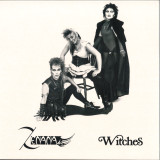
Rush Hour’s RSS series excels in unearthing buried treasure, offering a second chance for artists and releases that have long been overlooked. That’s certainly the case with ‘Witches’, the superb sole single by British 1980s wave trio Zenana.
Originally released on seven-inch by the tiny PRM label in 1986, ‘Witches’ was the product of a sister-brother songwriting team whose music was mostly recorded in the front room of a terraced house in Nanpean, a small industrial village in Cornwall, England’s most south-westerly county. While the single was infectious, impeccably produced and dancefloor-ready, it sold in limited quantities at the time.
Zenana’s story can be traced back to the early 1980s, when singer-songwriter Anita Tedder founded the all-female trio as a vehicle for her musical ambitions. To bring her songs to life, she joined voices with her brother Mike, an early adopter of electronic music who had built a studio – nicknamed MFR, short for ‘Mike’s Front Room’ – in his Cornish home.
Countless Zenana tracks were recorded at ‘MFR’ between 1984 and ’86, with the resultant demo cassette securing the band a management contract, a slew of live bookings, a video shoot and even a television appearance. Buoyed by this underground success, they headed to the remote Sawmills Studio in Cornwall – famously only accessible by boat – to re-record ‘Witches’, a song inspired by local folk tales of witches gathering near Mike’s home.
While this version of ‘Witches’ failed to make an impact at the time, it has become something of a cult classic following its’ rediscovery by crate digger Kiernan Abbott – and subsequent championing by other dusty-fingered DJs including Antal, Skyrager, Trevor Jackson and Luke Una – in early 2023. The buzz inspired Zenana to perform live again for the first time in decades, with the story of their surprise comeback being covered by British media outlets including the BBC and (more surprisingly) the Daily Mail.
Now presented in re-mastered form, ‘Witches’ is a genuinely slept-on gem. Propelled forwards by punchy drum machine beats, a killer synth bassline and fizzing keyboard sounds, the song benefits greatly from strong vocals and an extra-percussive middle eight layered with vocalisations, cosmic spoken word sections and swirling noises.
It comes backed by a brand-new extended ‘spell of love’ courtesy of Bristol duo Bedmo Disco, AKA music journalist Matt Anniss (author of Join The Future: Bleep Techno and the Birth of British Bass Music) and DJ/production partner Gareth Morgan. Anniss is a long-time friend of Mike and Anita Tedder who has fond memories of visiting Mike’s home studio with his family around the time that ‘Witches’ was recorded.
Working from Zenana’s original MFR eight-track recording (tapes of the single version were lost years ago), Anniss and Morgan have turned in the extended ‘dance mix’ the track never had first time around. More atmospheric, clandestine and dancefloor-focused, it offers authentic nods to New York proto-house, mid-80s Shep Pettibone dubs, and the pioneering synth-pop productions and dub mixes of Factory Records regular Martin Rushent.
Industrias94 is back at the frontline with 3 new rave hits, lovingly pressed on 12” vinyl. Pre-order and digital downloads available now on our Bandcamp.
Euphoria Jones represents a sonic journey towards the golden era of UK hardcore, filling our heads with catchy stabs that will stick with you for days, alongside heavy and distorted drum breaks. After some years mashing dance floors as a dubplate, we are very proud to finally announce its release in a special limited edition.
This record is brought to us by the Sevillian regent of breaks and bass, Hartta! Producer and DJ from Seville, who lived in Bristol for some years where he drank from the legendary local sounds and its soundsystem culture which shaped the current electronic music scene. Alongside Random Vestax, they manage the label-collective Dead Trax, releasing music and putting on iconic club nights featuring local artists and international bookings, some of them playing for the first time in Andalucía, such as Nikki Nair, Aloka or Interplanetary Criminal.
“Who said that the hardcore would die?” Thus yells out the sample in Midnight Eulogy, the second track of this record, which in itself is proof that this genre is more alive than ever. The evolution of 90s breaks crystalizes in this banger, containing all the classic sonic elements from the rave anthems we love, but creating a fresh piece by combining these elements with an idiosyncrasy unique in its species.
The B-side is completed by a radical and ruthless remix of the title track “Euphoria Jones”, by none other than our own Bazofia! From the Fontanal, he brings us an acidic and darker version taking us through an all-terrain 4x4 beat to a drop representing a truly electrifying slap to the face.
With his new instrumental album Ventas Rumba, the French composer (and singer) returns to his signature instrument, the piano, blending it with warm synth tones. This album represents a "return to his roots ", allowing Ezéchiel Pailhès to reinvent himself in a seamless way while still exploring ballads and ritornellos, halfway between light-heartedness and melancholy. Ezéchiel Pailhès has been meaning to write a solo piano album for as long as he can remember. Hardly surprising, of course, for this academically-trained pianist, brought up on classical music and then studied jazz. Yet, since his 2001 debut with the electro-pop duo Nôze, and his subsequent four albums, the artist had constantly postponed this project that was so close to his heart. Then in 2022, just as he was getting ready to start producing an album of new songs, this long-standing aim finally materialized.
The melodies he wrote seemed to stand on their own naturally, spurring him on to compose this series of fourteen tracks, recorded in sessions split between France and Latvia.
A new piano: the Una Corda
Ezéchiel wanted this project dedicated to the piano to begin a new narrative, to explore new instrumental terrain and new tones, something far removed from the familiar piano he has been playing all his life. He opted for the Una Corda piano, designed by David Klavins, a groundbreaking instrument builder renowned for his distinctive pianos with vertical shapes and frames.
The Una Corda, created in 2014, is an upright piano with a single string per note (unlike three strings on traditional pianos). Enticed by the "crystalline and unique" tones of this instrument, which is hard to find in France, Ezéchiel travelled to Kuldiga, Latvia (where David Klavins set up his workshops and studios), to record the first part of the album. Although the title of the album may initially conjure up images of a distant, sensual dance, the reality is quite different. Ventas Rumba indeed refers to the waterfall and rapids (in Latvian: rumba) of the river Ventas, which runs near this small village in the western part of the country. Ezéchiel chose to blur the lines, as the sound and musicality of the title likely evoke both his short stay in the Baltic country, and also a form of distant exotic imagery perfectly in tune with his own mischievous wit. Tracks as short stories
Back in France, Ezéchiel enhanced the first tracks recorded in Kuldiga with subtle synth tone layers, and added other tracks composed and recorded at his Montreuil studio. The album reflects a deliberate and sensitive orchestration of piano, synth keyboards and digital effects, as he puts it: "playing to erase the differences between the tones of the various instruments", as if each instrument's texture echoed the others. According to Ezéchiel, you can listen to Ventas Rumba as you would leaf through "a collection of short stories", through compositions that rarely exceed three minutes and evoke figures of movement, lightness, curves or modulation, such as "La ligne", "La valse des singes" or "Fly Finger". Others more seriously relate to a kind of spirituality, which quietly infuses such different tracks as "Ferveur", "Éclair" and "Louanges". Ezéchiel adds: “I’m by no means religious, but I like what God has managed to get musicians to achieve (laughs)". "Louanges", for instance, despite its electronic edge, "refers to Olivier Messiaen, a very devout composer who I greatly admire". Other tracks are directly inspired by the classical music he listens to on a daily basis. For example, Chopin's “8th Nocturne” formed the backdrop of “Pianovado”. Likewise, the harmonic structure of Beethoven's “Waldstein Sonata No. 21” inspired “Opus 53”. Aside from these multiple references and inspirations, which quickly recede behind a style that is uniquely his, Ezéchiel Pailhès keeps exploring ideas already found on his first solo albums, this time in an instrumental format, undoubtedly purer, fostering an imaginary world that evokes the shapes and themes of ballads, ritornellos, light-heartedness, passing time, reverie or a universal subdued melancholy.
Nia Archives is the star at the forefront of the latest era of jungle. Since her emergence in 2020, her collagist soundscapes have helped bring the sound to a new generation of clubgoers (though fair warning: don’t call her a “revivalist” – she’s the first to point out that the scene never went away). So when it comes to talk of the 24-year-old producer, DJ, singer and songwriter’s much-anticipated debut album, the odds are you’re thinking of a full-length record of weightless jungle tracks with basslines so intense they’ll leave your ears ringing.
But the reality of the Bradford-born, Leeds-raised artist’s first ever album – while very much replete with that exquisite jungle sound she does so well – is also doing something a little different. On the thrilling and freeing Silence Is Loud, Nia Archives is looking to make music for beyond the rave. As she explains: “I think music can be experienced in different ways, and there’s different kinds of music for different scenarios. Say you’re at a festival listening to music with thousands of other people, that can feel really uniting. But then you might listen to an album on your own in the bus, or in a taxi; and this project is definitely more a record to sit and listen to than a collection of club tracks.” Nia is intent that Silence Is Loud is taken in as a full body of work of something “more song-focussed, putting interesting sounds on jungle.” It means that this is a record which finds gloomy Britpop, warm Motown, soaring indie, a love for Kings of Leon’s Aha Shake Heartbreak, skittering IDM, Madchester, classic rock, old skool hardcore and more, woven and fused into her ragga and junglist tapestry, all layered with feeling, imbued with her songwriterly lyricism about loneliness, relationships, family, navigating her 20s, and the intense potential power of silence.
The vast sonic palette on Silence Is Loud comes down to Nia’s broad array of influences through her life. With her Jamaican heritage, Nia remembers hearing jungle as a child via her nana, as well as at Bradford Carnival, where she was drawn to the soundsystem culture, dancing carefree on the floats in the parade. The first album she ever bought was Rihanna’s debut, Music of the Sun, and she also went to Pentecostal church back then, and was obsessed with gospel. Aged 16, she moved to Manchester, where she didn’t really know anybody: and so, her solution to meeting people was going out. “Partying was a huge part of my life,” she says, “They used to do little freestyle cyphers at the house parties and I would join in – that’s kind of how I got into singing.” She had found music boring at school, but in meeting all these new people she became interested in making her own music as a hobby. “I was making boom-bap kind of stuff which I didn’t really like in the end,” she laughs, “My lyrics are quite deep, so on a hip-hop beat it all sounds really depressing. I wanted people to dance to my music.” And so she began experimenting with faster tempos alongside that melancholy songwriting, teaching herself how to make beats on Logic: “It’s all been a lot of trial and error, really.”
Nia went to study music in London, and was also interested in visual art, making collages and VHS: “Before the music, I was trying to make a visual archive of my life and the people around me,” she explains, “And then my music was like my diary, and a sonic archive, as well.” Hence, she paired the word “archives” with her middle name, Nia. To this day, in her spare time she’s working on pulling together a documentary on the global nature of the jungle scene.
Back on those first two EPs, Headz Gone West (2021) and Forbidden Feelingz (2022), she honed that junglist sound, painting it with new flecks of colour and vibrance. It was only after she started releasing work that she realised pursuing music could be a viable life path for her. The decision has been paying off ever since. Nia Archives placed third in the prestigious BBC Sound Poll for 2023, alongside garnering a nomination for the Brit Awards’ Rising Star prize, plus wins at the DJ Mag, NME, the MOBOs and Artist and Manager Awards. She has also toured the world – be it North America, Europe or Asia – and even opened a show in London as part of a little something called Beyoncé’s Renaissance World Tour. She’s renowned as a party-starter in her own right, too, with takeovers at Glastonbury, Warehouse Project and her own Bad Gyalz day event. She’s done official remixes for the likes of Jorja Smith, had a huge summer hit with her Yeah Yeah Yeahs rework ‘Off Wiv Ya Headz’, and worked with brands like Corteiz, Nike, Flannels, Burberry, FIFA and Apple. In just three years, it’s fair to say that Nia Archives has become a need-to-know name in dance music.
But Nia is not interested in being one fixed thing. Building on the terrain from her third EP, Sunrise Bang Ur Head Against Tha Wall, the universe of Silence Is Loud is not totally unfamiliar territory; but it’s still emblematic of a bolder scope than we’ve heard from the artist before. Working with Ethan P. Flynn (the songwriter and producer known for his work with FKA twigs and David Byrne), the resulting record is an impressive feat of deftly-sculpted textures; sometimes big and euphoric, like the wobbly, lusty bass of ‘Forbidden Feelingz’, or elsewhere notably gentle and quiet – see: the gorgeous, surprisingly drumless ‘Silence Is Loud (Reprise)’, a heartfelt number that sits somewhere in the school of Adele. “I really sharpened my songwriting skill on this project,” Nia says, “I was really intentional about what I was writing about, and I really loved co-producing with Ethan. His process is so different to anyone I’ve worked with before, and he’s got a kind of DIY set-up like me.” Flynn’s flat overlooks the Barbican, adding that unquantifiable futurist urban quality that the area holds to the music. The pair enjoyed the collaborative process so much that the album was done within three and a half months.
Perhaps this is why Silence Is Loud maintains an exuberant immediacy while still being sleek and spacious, interspersed with flourishes of metallic beats, lush melody and topped with her sugary but powerful vocal, floating over it all. There is an intimacy to the record, perhaps in part due to Nia writing most of her lyrics while sitting in bed in her flat in Bow (once a bedroom producer, always a bedroom producer). You can hear it on the refrain for lead single ‘Crowded Roomz’, which finds rippling guitar lines cutting taut through the beats as Nia refrains: “I feel so lonely crowded rooms.” The song is an examination of life on tour, constantly surrounded by people, but not necessarily those she can be herself around; more than that, the track is exemplary in the category of sad bangers.
Silence Is Loud often finds itself in that push and pull between melancholy and euphoria. There’s a celebration of her unconditional love for her younger brother (the title track), a rumination of an evening with an Irish boy she met by Temple Bar (‘Cards On The Table), or a letter to herself on the light and airy ‘Unfinished Business’, even coming to terms with a lover having a past they haven’t quite processed yet (“nobody comes with a clean slate”). The latter was recorded the week after a music festival, and accordingly captures Nia’s vocal in its not quite healed, husky state.
Nia’s work is always a snapshot of where she’s at when she’s making it. This might not be the debut album you were expecting, but that’s what makes Silence Is Loud so special. Nia Archives has learned the rules of her sound, and is unafraid to break them, pushing jungle and herself into new, unchartered territories that, in turn, go some way to map the history of the greats of British dance music. More than that, it plants her firmly in that lineage.
"Jolifanto" takes its name from the first verse of "Karawane", a seminal Dadaist phonetic poem by Hugo Ball. When Ball first recited it in 1916 at the Cabaret Voltaire, both the author and the audience embraced a trance that left Ball exhausted, requiring assistance off the stage as the audience claimed the spotlight.
Over a century later, by a series of fortuitous events, "Jolifanto" is also the title of an album featuring two powerful musical entities. Artists stemming from diverse backgrounds converge with a shared experimental spirit, curiosity and passion for exploration in their music.
"Jolifanto" is an unexpected explosion propelled by (poly)rhythm, expanding into seemingly distant territories under the influence of flamenco. The Dadaist spirit permeates the work, where a constant tension between the improvised and the meticulously planned is evident. ZA! and Perrate together form an organism traveling from the roots to the rave, with nothing sounding out of place because the place is yet to be defined.
Perrate witnessed ZA!'s concert in a festival he attended as part of the audience. The Catalans surprised him with a proposal that he found radical and unclassifiable. Later, after being invited to prepare a collaboration for the Música y Museos season in Seville, Perrate decided to move off the beaten path, approaching ZA!, who quickly embraced the proposal. Exchanges of ideas and audio tracks ensued in a short time and they quickly found out that they were in the same wavelength. A week before the concert, they met in the same physical space for the first time, dedicating a couple of days to composition and preparing the gig at La Mina Studios in Seville. The concert took place, hailed as "the best concert most attendees had experienced in a long time", as reported by the Diario de Sevilla. That energy needed to be captured, and so it was, at the Happy Place studio in Seville, where the album was recorded between March 6th and 9th, 2023.
The Catalan duo ZA!, "the duo that mash up terrace-chant mayhem with... everything else" (The Wire #384), has operated independently and self-managed since their inception in 2004. They overlap genres and amalgamate sounds that move, with intensity, between wild jazz, post-rock and avant-garde electronics, among other influences. In their acclaimed latest work, they have revived the Phoenician language, exploring Mediterranean sounds alongside MegaCobla and Tarta Relena.
Perrate, active since the late 90s, explores the outer edges of flamenco without forsaking its profound essence rooted in lineage and tradition, evident in every note of his voice. His latest work, "Tres golpes" (Lovemonk/El Volcán, 2022), named flamenco album of the year by Babelia/El País, and one of the albums of the year for BBC3's Late Junction, reflects an innate curiosity, possibly the seed of all the fortuitous events leading to this album.
The encounter between Perrate and ZA! is the result of serendipitous events interwoven with the narrative of artists dedicated to experimentation and radicalism in all its forms.
- Trio Rosario - Cuando Yo Muera
- Fefita La Grande - Cana Brava
- Aristides Ramirez - Los Lanbones
- Bilo Y Sus Tipicos - La Negra
- Negrito Figueroa - Por La Mananita
- Trio Royecell - La Pasion De Cristo
- Victor Suriel Y Trio Rio Verde - La Mecha
- Rafaelito Roman - Que Mala Suerte
- Bilo Y Sus Tipicos - Cuande Baje De La Loma
- Trio Ramirez - Me Gustan Las Pegajosas
Merengue Típico: Nueva Generación! delves into the heart of Dominican merengue, a genre whose significance often eludes the spotlight. Bongo Joe's venture into unexplored terrain takes us to the Caribbean, specifically the Dominican Republic, shedding light on its musical tapestry. Curated by Xavier Daive, aka Funky Bompa, the compilation unveils rare '60s and '70s gems, providing a glimpse into a transformative period following the fall of the Trujillo regime.
With over 20 years in the Dominican Republic, Xavier Daive meticulously sources original 45s, offering a snapshot of merengue's evolution during a creatively charged era post-Trujillo. The genre's roots, dating back to the 19th-century Dominican Republic, predate salsa, establishing its unique identity with the introduction of accordions via German trade ships. The genre's classic típico configuration emerged in the mid-'60s, leaving a lasting impact on its evolution.
Focused on the explosive '60s and '70s merengue típico scene, influenced by genre pioneers like “Tatico” Henríquez and Trio Reynoso, the compilation showcases technical finesse and high-speed rhythms. Tracks like Rafaelito Román’s "Que Mala Suerte" embody the genre's infectious energy. Aristides Ramírez’s "Los Lanbones" adds a touch of humor, cautioning against pub freeloaders. Merengue Típico: Nueva Generación transcends the realms of a typical reissue; it's an immersive journey into mthe roots of Dominican merengue, expanding its narrative beyond borders to enrich the global musical landscape.
This compilation goes beyond individual tracks, providing a historical and cultural context, enriching our understanding of the genre's evolution in the Dominican Republic during a crucial period. Designed for both connoisseurs and wild dancefloors, this compilation is not only a historical and cultural exploration but also a treasure trove for DJs seeking to infuse their sets with the vibrant rhythms of merengue típico.
The fresh-faced folk pop band Stornoway seem promising: They play with guileless vigor, have a light-stepping chemistry as a unit, harmonize well. Their lead singer Brian Briggs has a lovely, pure high tenor, the kind of voice that effortlessly conveys simple longing. And yet, on their second album, Tales from Terra Firma, they continue to be almost crushingly dull, making well-appointed and cheerfully empty music that successfully communicates next to nothing.
Their Achilles Heel is a simple and unfortunate one, the same on Tales as it was on 2010's Beachcombers Windowsill. Stornoway are clearly in love with Celtic and British folk, and yet they can't write a memorable melody to save their lives. Try to sing along to the verse melody of "Zorbing", their most well-known tune, and pay attention to what your face muscles are doing; most likely furrowing with the effort of recall. Each of Tales' painstakingly arranged nine songs sinks underneath the weight of this insurmountable problem, which is a shame.
If you're making folk-pop, an inability to write a catchy melody is a difficult deficiency to overcome. Stornoway try valiantly with their complex arrangements, which quickly grow exhausting. “You Take Me as I Am” is cluttered with horn charts and pointlessly banging piano. “(A Belated) Invite to Eternity” builds to a full Explosions in the Sky crescendo, with glimmering tremolo guitar and a “Tonight, Tonight”-style sweeping string section, but having built zero momentum and generated zero heat until that point, their planned fireworks display fizzles.
“Farewell Appalachia” follows the same pattern, with celesta, finger-picked acoustic and electric guitar all tracing an emptily pretty circle with nothing in the center. The melody of "The Great Procrastinator" is almost cleanly written enough to be memorable-- and then the ersatz Dixieland jazz interlude crashes in. Stornoway are deft players, and the transitions are tightly managed, but this is praise on the same order as praising the brushwork in a hotel-room painting.
Briggs’ lyrics are filled with uncomplicated images of the good old British countryside, but his lyrics trample over all these dew-covered fields with wordy, awkward phrasing: "And in the gathering dew, I was lucid as a floodlight,” goes a line from “(A Belated) Invitation to Eternity”. “There's a hunger in the air/ A lemon swollen in the trees" he bleats on “Knock Me on the Head”. On “The Great Procrastinator”, he sings that he is “a scientist with far too many metaphors and far too little data to conclude in time.” They don’t read particularly well, and they don’t sound much more natural when sung.
Tales From Terra Firma is a peculiar record-- carefree music that feels leaden; tuneful-sounding songs that offer no tunes to hold onto. They seem an odd fit for 4AD, a label mostly home to singular voices. They may be a mercenary signing, an attempt to ride the coattails of Mumford and Sons' success. But Mumford and Sons, as head-smack simple and pandering as they are, have a pretty crucial ingredient in their arsenal: they write anthems. In that regard, they have Stornoway pretty thoroughly beat.
Bassmæssage is the heaviest and most consistent bass music night out of Leipzig, operating way over 30 low frequency terrapeutic events since 2007.
Hosting ventral vibrations by the likes of Mungo's Hifi, Moonshine, Rupture, Hardwax and the homies of Jahtari, maintaining strong relations within the local soundsystem culture like Zoumo and Plug Dub and pushing a ton of grass-roots DJs and visual artists, out of doubt it is a sure shot for all who like it low and want it vibrant.
2015 saw the release of the "Volume One" vinyl, blending all kinds of styles and tempi by artists who had played at a Bassmæssage. Dub met Dubstep, Footwork went along some Snailfunk Drum'n'Bass and even Skweee had a cameo. And all this happened on one plate with a warm vibe from start to finish.
It is about time to revive the label with a new vinyl compilation named "Second Drop", following the tradition of a nice roundup across various bass music tearitorries. One side pumps at uplifting 160 BPM, while the flipside is shifting down to relaxing 135 and even 120 speeds.
Nuphlo and Bukkha team up for the energetic modern halftime piece "Drip". Nuphlo might ring a bell as part of The Nasha Experience from London and Leeds, connecting asian roots with nowadays UK bass sounds. Bukkha is state-side born and has recently emigrated to Spain, from where this worldwide touring DJ machine is firing a plethora of bass music styles on renowned labels like Moonshine, System and Innamind.
DjBadshape passes the breakbeat driven torch with handsome melodies and subby kickbass on "Drift" to reflect Leipzig's well various scenes. While checking her tracks on Defrostatica and Human, one may also find artworks for Bassmæssage and more.
Sun People is closing the 160 side with the deep but dirty retro 90s jungle bit "Rise Up". Combining Techno, Footwork and UK Hardcore Breakbeats, the Graz based bass buab made it to releases on Exit, Rua and Alphacut.
Flipping sides, Dub Across Borders redefines steppers dub into the dreamy yet rolling "Bass Tree Dream". The project was found by a Copenhagen dubber when living in Colombia, fusing the rural folklore with soundsystem energy into a world-bass music. This can be heard on labels like Basscomesaveme, Translation and 45Seven and is best to be experienced in its live dubbing appearance which premiered at a Bassmæssage in 2015.
Paranoid One grabs these feelings and drops them a bit more sinister, "Glimp" manages to hide a playful 4 to the floor kick as well beyond its smooth soundscapes and percussions. As Paranoid Society these split personalities from Tallinn were delivering to Modern Urban Jazz and Alphacut already since a decade at least.
bhed finishes with the slow far-away dubsteppish "Minerva". Make sure to not only check the releases on Row and Trusik but also the freshly baked Neuburg based live act in between cosy ambient and lush bass music at the next Bassmæssage on 18th November in LeipZig!
- 01: Trio Rosario - Cuando Yo Muera
- 02: Fefita La Grande - Caña Brava
- 03: Aristides Ramirez - Los Lanbones
- 04: Bilo Y Sus Típicos - La Negra
- 05: Negrito Figueroa - Por La Mañanita
- 06: Trio Royecell - La Pasion De Cristo
- 07: Victor Suriel Y Trio Rio Verde - La Mecha
- 08: Rafaelito Roman - Que Mala Suerte
- 09: Bilo Y Sus Típicos - Cuande Baje De La Loma
- 10: Trio Ramirez - Me Gustan Las Pegajosas
Merengue Típico: Nueva Generación! delves into the heart of Dominican merengue, a genre whose significance often eludes the spotlight. Bongo Joe"s venture into unexplored terrain takes us to the Caribbean, specifically the Dominican Republic, shedding light on its musical tapestry Curated by Xavier Daive, aka Funky Bompa, the compilation unveils rare "60s and "70s gems, providing a glimpse into a transformative period following the fall of the Trujillo regime.
Five groups, one mythical studio - documenting the emergence of a generation!
The initial postulate was simple: five groups, one emblematic studio and 24 hours for each to imagine and record two unreleased tracks with one objective - the will to document a French jazz scene in the midst of renewal.
In these last few years, several innovative currents have shaken up the world of jazz and attracted new fans. They have bubbled up from Los Angeles, impregnated with hip-hop culture (Kamasi Washington, Terrace Martin, Thundercat), or from London, tinged with African rhythms (Nubya Garcia, Kokoroko, Ezra Collective). Meanwhile, in France, a new scene is emerging, carrying with it more of a dancefloor-oriented sound influenced by electronic music - an obvious kinship with the French Touch explosion of the late 90s.
Historically, every movement has been assimilated to a certain neighbourhood, to specific clubs where late at night, young guns stayed up to imagine the jazz of tomorrow - the Cotton Club for the jazz of the 20s, Minton’s Playhouse in Harlem for Be-Bop, the Black Hawk in San Francisco for West Coast jazz, Birdland in New York for Hard-Bop or a lot more recently, the Total Refreshment Centre which has been the playing field for the new London scene.
In Paris too, this new sound is associated with actual venues, places which have allowed these groups to form, create a repertoire and forge an aesthetic - Le Baiser Salé for Monsieur Mâlâ, La Gare/Le Gore for Photon, La Pêche in Montreuil for Ishkero, La Petite Halle for Underground Canopy and also le Duc des Lombards and le 38 Riv’ for Alex Monfort; it’s in a live context that this music will always continue to evolve.
Keeping this “live” spirit, with all its spontaneity, was actually the guiding line for the elaboration of this Studio Pigalle compilation. Each take was recorded in the most organic way possible, bringing all the musicians together in the same room to limit post-production alterations before the final cut was assembled, in just one day, by studio in-house sound engineer, Felix Rémy.
A feeling of urgency permeates a record guided by an artistic production taking care to crystalise the essence of this artistically free-range generation whose childhoods were rocked just as much by Bill Evans and Roy Hargrove as by J Dilla and Jeff Mills. One of the two tracks recorded is geared towards the dancefloor, and the other, more cosmic/ambient gives freer rein to individual interpretation.
There were therefore many possible ways of interpreting these guidelines for the five formations which number among the most distinctive on the current French musical landscape, and the occasion, for some, to rummage through their archives! With Transe (Mbappé) and Da Verdere (Vella), Monsieur
Mâlâ present us with two unreleased tracks issued from the very first rehearsals of the quintet reworked especially for this compilation. “Seen the aesthetic range of this group, it all worked out very naturally in the studio”, recounts keyboardist Nicholas Vella “Recording like they did in the sixties with all the channels live and working with small imperfections was a very interesting task, even when it came to the mix, we had to make do with the takes we had... “
“Our group is very recent, and with this session, in just two tracks, we had the opportunity to present the entirety of our musical universe,” says Photons pianist Gauthier Toux. “All too often, we assimilate this fusion between jazz and dance music to computers and post-production modifications. For “Dessine”, we kept the first take, and we must have recorded just three or four for the other track with more of a techno bent. In one day, we understood that we could play our entire repertoire live, from A to Z”.
“When the Komos label offered me this project, it immediately spoke to me”, remembers Alex Monfort “Straight away, I thought of “Since I Met You”, a track with a nine/four time signature which really is reminiscent of a new- soul groove, but with this extra cosmic vibe! I wrote the words to the chorus and Nina Tonji placed her voice on the track, adding her own verses. For “Tonight”, the up-tempo track, I wanted to head off in more of a hybrid direction inspired by Kaytranada or the Black Radio series by Robert Glasper. A cross-over between jazz and hip-hop which really does represent my world, and I also tried to place vocals centre stage (Emcee Agora)”.
“We truly resonated with the way Antoine Rajon imagined this compilation and the recording session”, confide Warren Dongué and Jérémy Tallon from Underground Canopy. “When arriving in this studio we felt as if we had gone backtothe70s! Inkeepingwiththespiritofthisera,heknewhowtoletus keep our spontaneity, without recording in too many takes, and that’s how we like to work”.
“We managed to adhere to the themes of the compilation without changing our instrumentation, we wanted to remain faithful to the sound of Ishkero on these new compositions and take them somewhere else” – says drummer TaoEhrlich -“Withoutaddinganyelectronics.Thesessionwassupervisedin a truly subtle and benevolent manner. From a human perspective, it was also a wonderful experience”.
Whether turned towards hip-hop, ethnic or electronic music, the artists featured on this Studio Pigalle compilation represent the eclecticism of a new generation in the process of writing the first chapters of its history. Open to experimentation, these artists continue to hold high an immutable love for improvisation and creation in the moment... another definition of the word Jazz!
Simone De Kunovich
Mythical Figure
Use variably, whenever you need: D.J. at MainStage, High Profile Fashion Event, Underground
Basement Club, Balearic Terrace Situation.
Gifted selector. Room filling presence. Oversized packaging.
He (here) deals three cards.
“Flow My Tears“ High Roller Euro House
„Super Mana Drain“ OMG Modern High Energy
„Warp Lord“ Early Morning, Playful Dark Eternal Bliss
„He who masters the sound glows“
Questions will inevitably have to be asked here as to how / why Hooj have shamelessly broken the informal UN backed agreement to NOT REMIX / RE RELEASE C*F* D*L M*R, EVER AGAIN. But after the Hooj Catalogue owners cajoled the old A +R team into a Hooj Electronic Orchestra album in 2021, the then up and coming Borai + Denham Audio were enlisted for remixes, and fast forward a couple of years, the Bristol duo are smashing it in 2023, and vinyl does indeed beckon.
And with some justification it has to be said, as the Bristol duo took chunks of the original Wim Mertens melody and somehow still managed to drag it into new terrain, introducing rough breaks and hardcore sensibilities into proceedings, for the first time in the track's 30 + years journey.
On the B - side, another star turn from the early 90's get's the BDA treatment, as Transformer 2's Fruit of Love get's a more polished/ musical approach on the Audio Redux mix ( though with no compromise on bottom end / beats dynamics) , and Borai contributes a rolling, percussive 4/4 dub.
Since its beginnings, Hypnótica Colectiva has always shown a special interest in the music recorded and released in the city of Detroit.
A place with which we have both a blood and spiritual bond because of what occurred there socially and artistically during the 20th century.
This love led us to become ambassadors of what was happening there on a musical level, holding cultural events to screen documentaries translated into Spanish, as well as a number of themed sets at our events, dedicated motor city sections in our record shop or recently lectures on the history of the city and its music at the Museum of Illustration and Contemporary Art of Valencia (Muvim).
The time has now come to bring all this history, this musical influence, to the editorial section of our label HC records.
Detroit Legacy was born from the idea of capturing these influences on vinyl. Seeking artists from all over the world who share this passion that inspires them to create their music, what we can define as the universal Neo-Detroit.
For this first edition or first volume, the collective has enlisted in its ranks creators affiliated to the label who have shown us in their careers, this influence and this feeling.
Paul Cignol opens the record with Distance. From Dublin he offers us a track of warm sequences inspired by Deep Techno, with deep pads responding to organ keys and a subtle touch of 303.
Mallorcan LLuis Barcelo Sureda is responsible for the second track Funk Station. With a Techno Soul character that we might hear from Detroitish labels like Acacia or producers like Blake Baxter.
A real eminence in Techno is the Catalan Don Alex Martín, who already released in the mid-90s on Monssieur Garnier's label (France Communications). The Barcelona native brings his wealth of experience and wisdom through Megatech, which transports us to the spectrum of Derrick May’s Transmat who, in his day, was nicknamed "The Innovator". This track provides agile sequences of complex syncopated rhythms, combining with a dreamy Michigan style synth.
The anthem of the album comes from Ghent. The sublime Belgian creator, Mariska Neerman, once again makes our hairs stand on end and our hearts melt with a heavenly composition entitled Stellium.
No one interprets Neo-Detroit quite like Mariska, whom we baptise as a sovereign heiress of the genre in the world. If we have to think of an influence for this piece, we go straight to the genius of Detroit, the one and only Jeff Mills, in his most symphonic and harmonic facet of tracks released on his label Axis Records such as "The March", A Universal Voice That Speaks To All That Will Listen or A New Found Sense Of Being.
Some of these songs have been re-interpreted by world class philharmonic orchestras such as the Montpellier Philharmonic Orchestra at the 2005 Blue Potential (Pont Du Garde). Mariska's score in this song fuses organ keys with harmonic layers and violin - favourite instruments of the Detroitian extraterrestrial - with a harmonic result of strength and hope. An authentic anthem of classic emotional Techno.
Old School electro takes centre stage with the Master from Terrassa Ivan Arnau a.k.a. Dark Vektor. In the influence of Juan Atkins (the creator) as Cybotron or Model 500 and later creators who developed this sound like Aux 88. Metaverso Frik is a great recital of a urban poetry created and interpreted by Ivan, to completely devastating effect.
Croatian Bojan Jascur a.k.a. N-TER, closes the vinyl with We Will Emerge, in a exercise of vindication, a common weapon in the context of Detroit music. Raging, trippy electro in the purest style of Cosmic Force or Dynarec.
This first tribute to 8 Mile doesn't end with the vinyl, as 2 digital bonus tracks are included in the release.
We return to Barcelona with Pastin Futon in another sequence of consecutive oscillated rhythms oscillated much like Kevin Saunderson (The Elevator) in his day and the Techno Groove that we know today.
The most robotic touch of the release is the closer with this synthetic jigsaw puzzle of a track with echoes of the 1967 Detroit Riot, the Detroit Rebellion. Again produced by another Barcelona native, The Bandit (Dj Spy / Util Records). The sequences are very reminiscent of Arpanet and Drexciya.
The idea for the cover comes from Motor City itself by Jon Yowell, first cousin of HC records founder and head of HC records David Verdeguer.
Born, raised and a lifelong resident of Detroit, Jon is an enormously talented musician capable of writing lyrics, performing them on the mic and manipulating a number of stringed instruments as well as the drums, where he is a true master.
The cover is a tribute to the formative backgrounds of many of the city's musicians in every sonic trend. Wayne State University in the capital of Michigan.
Founded in 1868, it has offered didactic teaching to many of the city's musicians.
Not all of Detroit's creators went to university, and even less so when talking about Techno, many artists are self-taught or learned in a non-academic way, but it seems to us a good base to begin to highlight the origins of the city's music in a historic building, where those who have the opportunity to learn about music have been and continue to be educated.
The adapted designs are the work of our image manager Dani Requeni.
Mastering by Steve Voidloss at Black Monolith Studios in London (UK).
Private View is distinctly Blancmange while also expanding into new sonic terrain. There’s a deft marriage of futuristic electronic sounds, Neil Arthur’s unmistakable vocal hooks, and songs veer from buoyant and joyful to dark and brooding. Private View will be released on London Records almost exactly 40 years to the day since the label released Blancmange’s debut album Happy Families. This neat full circle of Blancmange re-signing to the same label that ignited things all those years ago is also reflected in the album itself, being the perfect crystallisation of four decades of creativity.
On Private View Neil returns with key collaborator Benge (Wrangler, John Foxx, John Grant), and David Rhodes (Kate Bush, Peter Gabriel, Scott Walker) also returns as the guitarist, having previously performed with the band as early as 1982’s Happy Families (as well as several other Blancmange albums).
Private View is a record that manages to capture an artist who is potently in the moment when it comes to creating new work, while also being able to draw on 40 years’ worth of knowledge, experience, and built-in intuition. “I'm really lucky to be able make the music completely on my own terms,” Arthur says. “Being able to just continue being creative...that's when I'm happiest.” As he said before: “within myself there are no limits.”
Blancmange is also reflected in the ongoing influence the music has on younger generations of artists and fans over the years. Contemporary electronic producers like Honey Dijon and Roman Flügel have paid tribute with remixes, Moby once called Blancmange “probably the most underrated electronic act of all time.”; while John Grant continues to profess his love for Arthur’s music, old and new, and has invited Blancmange to perform as part of Grace Jones’ Meltdown festival.
(feat. Claire Davis)
300 copies pressed
The A side was released back digitally in March. "Hope To See You Again" Which is an original song with Claire Davis on lead vocals
Better things is coming out digitally 15th July and it will be on a Ltd edition 45 vinyl. The Pre-Orders for the vinyl will be starting soon.
The B side is a killer version of her classic tune, "Better Things" The soulful vocals of Claire Davis are accompanied by jaunty horns and keyboards, and the cool groovebefits the positive lyrics ("I'm a better woman than I have been")
Introducing The HP's. This talent-studded Hamilton-based funk/soul collective is poised to make major moves with the release of their debut 45. The group is the brainchild of drummer/bandleader 'Parkside' Mike Renaud, the founder/owner of noted Canadian music company Hidden Pony Records & Management. A life-long fervent fan of funk and old school soul, Parkside has assembled a crack team of musicians and vocalists dedicated to his vision of breathing vibrant new life into these classic forms. Drawing inspiration from the likes of James Brown and The J.B.'s and Sharon Jones and The Dap Kings. The title pays tribute to Renaud's hometown, Hamilton, and The H.P.'s sound
honours The Hammer's core characteristics of rugged authenticity. Get ready to get Gritty!
— The HP's have partnered with UK based soul label LRK Records for the release of their latest single "Hope To See You Again", featuring Canadian soul singer and LRK alum Claire Davis
— "Hope To See You Again" arrives digitally March 31st, 2022 with the 45" expected summer 2022
— The 45" single will also include a cover of the Sharon Jones & The Dap Kings classic "Better Things"
The HP's.
To the Canadian music industry, 'Parkside' Mike Renaud is best known as the founder and owner of Hidden Pony
Records & Management, now widely recognized as one of Canada's premiere talent-development labels and artist
management companies. Past and present artists on Renaud's roster include Said The Whale, The Elwins, The Dirty
Nil, Hannah Georgas, Imaginary Cities, Jeremy Fisher, Odds, and many more.
Not many are aware that this popular industry power player actually got his start in music as a drummer in a '90s
Montreal soul/funk band called Parkside Jones (the source of his nickname). When he moved over to the business
side of music, beginning with top indie label Aquarius Records, Mike Renaud packed the kit away, launching himself
into the biz with full passion, commitment, and skill.
Mike has now resurrected his kit (after 20 years), honed his chops, and emerged as the driving force behind The
Renaud recalls the spark that reignited his love of playing drums: "The first time I played them in 20 years was at the
memorial for industry comrade Jon Box at The Opera House in Toronto. I was talked into playing with Chris Murphy
Sloan, Terra Lightfoot, and the Dirty Nil guys on a version of 'Handle With Care.'"
This renewed love affair would lead to Mike's vision for The H.P.'s. From his teenage years, his favourite musical
genre has been classic soul and funk, and he has an encyclopedic knowledge of these styles. Heartened to see the
growing international community building around these sounds, Mike decided to make his own creative contribution to
the form. He recruited musical and vocal collaborators from his hometown (plus a couple of Toronto imports) for the
project, and The H.P.'s were born.
The group name, The H.P.'s, pays homage to James Brown's legendary band, The J.B.'s, with these initials
referencing Hidden Pony. The album title is a tribute to Renaud's hometown, Hamilton, and The H.P.'s sound
honours The Hammer's core characteristics of grit and authenticity. Mike actually spent some time co-managing the
current J.B.'s.
The late Sharon Jones, a key inspiration for Renaud, is honoured via a killer version of her classic tune, "Better
Things." The soulful vocals of Claire Davis are accompanied by jaunty horns and keyboards, and the cool groove
befits the positive lyrics ("I'm a better woman than I have been").
Giving this cover extra resonance are the memorable encounters both Davis and Renaud had with Jones back in
2015. A documentary portrait of the soul great, Miss Sharon Jones!, had its world premiere at the Toronto
International Film Festival (TIFF), and Claire Davis was doing a house concert playing DapKings songs that night.
The band came across the party and jammed along, then, when one of the Dap Kings backup singers couldn't cross
the border, Claire got the call to fill in at Sharon Jones' headlining show at Hamilton's Supercrawl fest.
In a cool twist of fate, Mike Renaud was one of the organizers of that show, and was tasked with looking after
Sharon. The two bonded instantly and deeply, as Mike recalls. "While driving her to soundcheck, Sharon confided in
me that her cancer had returned. She didn't want anyone to know, as the documentary was about her conquering it,
and she didn't want people to be bummed out at the news. It was my 40th birthday that day, and Sharon actually
stopped her show to sing me Happy Birthday in a soulful way!"
Shakethehoof added "Hope To See you Again' to their playlist musicto/shake-a-hoof/the-hps-ft-claire-davis-hope-to-see-you-again-the-hoof-chats/
"BETTER THINGS" has gone straight into the UK Soul chart breakers at No 8
- A1: Turning Poison Into Medicine
- A2: Drones (Feat Kendrick Lamar, Snoop Dogg, Ty Dolla Sign & James Fauntleroy)
- A3: Leave Us Be
- A4: Work It Out (Feat Cordae)
- A5: This Morning (Feat Arin Ray & Smino)
- A6: Tapped (Feat Channel Tres & Celeste)
- A7: Reflection (Feat James Fauntleroy)
- B1: Leimert Park
- B2: Griots Of The Crenshaw District (Feat Hit Boy, Kamasi Washington & Robert Glasper)
- B3: Evil Eyes (Feat Yg & Malaya)
- B4: Sick Of Cryin' (Feat Leon Bridges & D Smoke)
- B5: Don't Let Go
- B6: Listen (Feat Kim Burrell, James Fauntleroy & Robert Glasper)
Terrace Martins neuestes Projekt Drones beschreibt der Künstler als "Black Disneyland" - eine Mischung aus überdimensionalen, farbenfrohen Charakteren, die als Avatare von Emotionen in kleinen Welten innerhalb einer größeren Welt funktionieren. Um seine Vision zum Klingen zu bringen, rief Martin - ein dreimaliger Grammy-Nominierter, der einige der größten Namen der Rap-Szene von Los Angeles sowie legendäre Genre-Pioniere wie Herbie Hancock und Clark Terry produziert hat und gleichzeitig Teil des West Coast Get
Down ist (zu dem auch Kindheitsfreund Kamasi Washington, Bass-Architekt Thundercat und andere moderne musikalische Koryphäen gehören) - Freunde, Nachbarn und Kollaborateure an. Kendrick Lamar , Snoop Dogg , Ty Dolla $ign und James Fauntleroy tauchen im Titeltrack auf und meditieren zu Slinky Funk und R&B darüber, wie wir in Beziehungen als Automaten funktionieren können. Die Töne, für die Martin bekannt ist, tauchen auf "Griots of the Crenshaw District" auf, einer instrumentalen Jazzexplosion, die von Grammy-Gewinner
Hit-Boy produziert wurde und bei der Martin, Tenorsaxofonist Kamasi Washington und Urban Maestro Robert Glasper verschlungene Noten in die Luft blasen. Aber es macht auch Platz für Songs wie das butterweiche "This Morning" von Arin Ray und Smino und "Reflection", James Fauntleroys digitalisiertes Plädoyer für Sehnsucht und Sinnlichkeit in einem ruhigen Sturm
- A1: Stephen Brown – Level Steps
- B1: Claude Vonstroke – Moody Fuse
- C1: Denis Horvat – Monomono
- D1: Daniel Avery – Your Future Looks Different In The Light
- E1: Jeroen Search – Subversive Elements
- F1: Marco Bailey – Kanai
- G1: Damiano Von Erckert – 500 People, 500 Hearts, 1 Love
- H1: Yokto – Vision99
- I1: Jonathan Kaspar – Ccc
- J1: The Emperor Machine – The Art Of Electronics
- K1: Carl Finlow – Surface Control
- L1: Defekt – Terraform
Cocoon Recordings presents: Cocoon Compilation T
Limited Vinyl Box Set including 6x blue vinyl & download code
Another year, another expertly curated compilation touches down courtesy of Cocoon Recordings. Somehow, the world keeps turning and with it the Cocoon universe keeps expanding, causing subtle yet persuasive shifts in the sonic soundscape that continue to
capture and captivate the imagination. In time-honored tradition the old guard and the new combine with devastating effect, to define the current state of play…
Veteran Techno producer Stephen Brown makes it clear the compilation series is back with a bang, opening things up in epic fashion with the lucid dreamscape ‘Level Steps’ - a true work of art. Another heavy-weight hitter steps straight up in the form of Claude von Stroke, who adds his own unique swagger to proceedings with those trademark shuffling beats and freaky, hypnotic bleeps scuffling for dominance on ‘Moody Fuse’. Denis Horvat then slows things down on ‘Monomono’, with post-raveNew Release Information
abstractions and disobedient synth-patches causing mayhem before the track finally unfolds in all its terrifying beauty.
Motoring on, the collection wastes no time reaching that familiar tipping point as we enter the techno phase of the journey. A very special appearance from Daniel Avery makes it all the more worthwhile amid a dense forest of chiming melodies and blistering electrical surges on ‘Your Future Looks Different In The Light’, before Jeroen Search’s aptly titled ‘Subversive Elements’ lead us deeper and
deeper, into the matrix.
Marco Bailey then kicks off a triptych of trance with some massive filtered piano action on ‘Kanai’ that’s destined to trigger a serotonin smile with everyone it touches. Revisiting the huge,
ever-growing pulsating brain of planet Orb, Damiano van Erckert continues the loved-up vibe on the gorgeously titled ‘500 People 500 Hearts 1 Love’, expertly complimenting the classic ambience with
some slick 909 snare and cymbal interplay. The melodic pull of ‘Vision99’ then signifies that the party is peaking at just the right moment as YOKTO concocts a glistening, psychedelic groove. The
emotional resonance climbs ever higher with brittle melodies endlessly circling a lush, throbbing bass drone to create the sense of something stirring out of reach.
Just when you think the acid sound is done and dusted, up pops a track like Jonathan Kaspar’s ‘CCC’ that somehow manages to offer an entirely new perspective. Riding in on a wave of expectant
arpeggios, the squelching bass and noise filter go toe to toe before Kaspar gets busy with a freaky tempo excursion that’ll be destroying dance floors all year long. ‘The Art of Electronics’ is, as the title
suggests, another superlative example of pure analogue fire, served up by UK legend, Andrew Meecham aka The Emperor Machine. The funk starts to flow as the bass drops, the machines cut loose and a swarm of cascading bleeps ride the trans-europa express to oblivion.
Electro overlord Carl Finlow, has come to define the UK take on the genre over the last couple of decades. Here, he makes his long overdue label debut, taking us into the closing straight with a
nervous sliver of dystopian futurism, complete with molten basslines and a fuzzy logic that underpins the tight, laser-guided groove on ‘Surface Control’. DeFeKT then draws this great adventure to a close
with the deliciously dark robo-disco overtones of ‘Terraform’ creating a dusky landscape that skillfully seduces the listener before the tension finally breaks in a wash of ecstatic chords.
All in all, it’s a supremely ambitious collection of tracks, generously featuring some of the most inspirational and durable artists of their respective generations. In fact, is this perhaps the best Cocoon
Compilation to date
‘Raiz’, the first release on the OITO//OITO Discos label, draws the musical focus towards the sound archives of Michel Giacometti, a French ethnomusicologist who dedicated his life to studying the oral traditions of Portugal which had become either lost or forgotten, with his collections still exhibited today in the Museum of Portuguese Music in Estoril. As with their previous releases, the duo carefully manage the source material and interweave it with their Acid House undertones, with both the original cuts ‘Ceifeiras’ and ‘A Poda’ doing a beautiful job at merging the powerful vocals with driving bass lines and rhythms. The opener in particular has a deep mysticism to it, the vocals leading the line as razor sharp pads craft a pulse alongside a steady but powerful drum structure. ‘A Poda’ takes things in a trippy-er direction, with the vocals stretched out in that prog house style that keeps the mind ticking over and the body left to its own devices. The breakdowns in this track are very effective, and really portray the soul of the original vocal performance and allow for the listener to connect with the wider feeling being conveyed. On the flip, the duo asked producers Switchdance and Terra Chã to put their spin on ‘Ceifeiras’, and the results only add to the atmosphere. Switchdance takes things down into murky depths, with a low slung beat expertly interspersed with driving bass notes, as sweeping chordal lines meander up above, giving a whole new angle to the original and winning over our hearts. Terra Chã’s version injects some swing into proceedings, with looping chordal stabs pulsating through the middle along with some beautiful melodic additions that exalt and inspire in equal measure.
Balanced, referential, blissful, dynamic. All this, and more, feature heavily on the first edition of OITO//OITO Discos, so why not come along and meander through time and space – it’s worth the trip…
Imperfect Stranger is the pseudonym of Glasgow based soundtrack composer and producer Kenny Inglis. “Everything Wrong is Right” is his debut solo album for Castles in Space.
Born in 1975, Kenny didn't listen to much music, unless it was the opening credits to a TV show or a film score that had caught his ear. "I loved the pre-title music on a lot of those 80's U.S. TV shows. From the family orientated stuff like The A-Team, to darker dramas such as The Equalizer. My mother would let me stay up to watch the opening sequence of the latter then send me to bed because the story would be too heavy for a kid. That left me with this hanging sense of ambiguity as to what would happen in that hour after the titles came up.”
Exposure to a work colleague’s tiny project studio in a kitchen cupboard was a lightbulb moment for him and the experience of utilising music technology as a way of writing and producing entire tracks stirred a wave of determination to chase a career in music using the opportunities that technology could offer. Kenny figured the best way to move forward was to start a small project studio and learn his craft as a recording engineer. "It was a bit of a shock to the system. I literally had no idea how to work any of the equipment. Kenny focused on learning as much about the craft as he could whilst winging his way through recording and mixing everyone from the likes of singer/songwriters to bands, to voiceovers artists and anything in between. "Eventually, I stopped writing the music I thought people would want to hear, and started writing the music I wanted to make. I didn't come from a music loving background, but I was always obsessed by the way music and film would interact - how music brings this atmosphere and tone to even the most mundane visual stuff. I wanted to capture that. I wanted to grab some of that ambiguity I felt from the TV shows of my childhood and make it into a project of some sort". That project was Spylab. A dark, downtempo project with a cinematic edge. The initial demo consisted of three tracks, with the melancholic 'This Utopia' leading the playlist.
"At the time you did demos on normal cassette tapes. I remember having this endless battle with the bias control to try and get the best sound I could on these little tapes. Ten went in the post one Monday morning, and the following Monday there were three offers from three different labels. Studio K7 were interested in a singles deal, as was Flying Rhino in London. But then there was an offer from a Chicago based label by the name of Guidance Recordings. They wanted an album, and were offering a $15,000 advance. It wasn't a difficult decision to make"
Writing and recording Spylab 'This Utopia' began in 1999. The album took a whole year to produce. The album was to catch the attention of Mary Anne Hobbs at Radio One. At the time Mary Anne was presenting The Breezeblock - a late Sunday night show with an eclectic playlist of alternative electronic music. Picking out the album's title track 'This Utopia', Mary Anne would go on to play it no less than 8 weeks in a row. A request for Spylab to DJ on the show was to follow. "I had never DJ'd before. I think I had a week to figure out how to do that and put a playlist together. I'm not entirely sure how I pulled that off.” In March 2001 the Spylab album was finally released to a hoard of excellent reviews. A North American live tour would follow. From the launch party in Los Angeles, to a sell out show at SXSW in Austin. "I then started a new project under the name Cinephile. It had some of the core elements of the Spylab sound but it was deeper, more cinematic.” Kenny received news that a track from the previous project Spylab had been requested by HBO for the first episode of a new TV drama called Six Feet Under. This was to become a major turning point in Kenny's career. The Spylab track 'Celluloid Hypnotic' dropped during a poignant party scene of the first Six Feet Under episode. Within a couple of days Kenny was getting requests for music from other music supervisors. "It was a chain reaction. The Six Feet Under sync was like the tip of an iceberg. One day I called CBS in America and they put me on to the CSI music supervisor and I managed to get on a call with him. I sent the Cinephile stuff out and within a few months I got this fax through from CBS - a quote request for one of the tracks for a potential use on CSI. It changed my life."
The tone and style of Kenny's music sat perfectly with the CSI score requirements. So much so he found himself part of a pool of incidental writers who worked on all three aspects of the franchise - CSI, CSI: NY, and CSI: Miami. This would continue until 2013, when the last of the series would come to an end.
"I was juggling a bunch of stuff for those ten years. Writing material for CSI, whilst releasing new Cinephile stuff and playing live. As Cinephile continued to gather pace, one of the tracks from Kenny's efforts on CSI was chosen for the Hollywood trailer for the Samuel L. Jackson film 'Lakeview Terrace'. Further trailers would follow, from Gangster Squad to Dead Man Down, Spike Lee's Undisputed Truth, to Fifty Shades Freed.
At the same time, Kenny picked up his first factual commissions in the UK, and this too would be the beginning of a regular run of fully scoring factuals and documentaries. By 2021, six of these had won BAFTAs. He also would find himself soundtracking adverts for the likes of Nike, Audi, and American AirlinesIn early 2020, Kenny made a return to focusing on his own music under the pseudonym Imperfect Stranger. A tweet from Colin Morrison from Castles In Space regarding a charity compilation album 'The Isolation Tapes' caught his eye. Kenny had made a start on his debut album as Imperfect Stranger and submitted the track 'Hymn To The Sun' (which would become the lead track on the album). Further discussions ensued, and the album found a home on CiS. "I had been doing TV and film stuff for almost ten years. It paid the bills and was as close to a 'real job' as I'd had, but I yearned to get back to writing for myself, so doing an album for Castles in Space was a joy.
“The music I write is like a diary. There's an authentic narrative to everything i do. I don't write tracks for the sake of writing. I write tracks to diarise and process the stuff that I've lived through, and the experiences that have come along with the passing years. That's what makes me tick. It's a very public and vulnerable way of expressing myself. If people want to know the real me, all they have to do is listen."
Time Cow & Ossia take 2 tracks from Jabu’s 2020 album ‘Sweet Company’ into unfamiliar (and dance floor friendly) territory. Side A sees ‘Us Alone’ gets transformed by Time Cow from slo-mo tearjerker into syrupy disco wrecker, managing to somehow touch on reference points everywhere from east LA lowrider anthems through 00s garage and all propelled fwd by an eyeball shaking low end pressure. On the flip Ossia takes snatches of the original ‘Slow Down’ and flashes them in around a 4/4 and a synth melody, fragments of Daniela’s vocal floating like a half remembered conversation. Later Rakhi’s strings come in but in a more unsettling way than the original, eventually dissolving to a kind of Majora’s Mask (in dub) conclusion. All terrain / all weathers - club / bbq / afterparty / late night introspection sessions.
2022 Repress On Elephantine, Cairo-based Maurice Louca guides a 12-piece ensemble through a 38-minute masterwork that might best be described as panoramic. Elements of free improvisation, Sun Ra's cosmic jazz, gorgeous Arabic melody, trancelike African and Yemeni music and minimalism meet in his wholly unique compositional vision. Louca also makes vital contributions on guitar and piano, and inspires stirring performances from a global lineup.
One of the most gifted, prolific and adventurous figures on Egypt's thriving experimental arts scene, Louca has in recent years garnered a global reputation through two previous solo albums and an expanding, evolving lineup of genre-defying collaborations. The Wire called his 2014 sophomore solo effort, Salute the Parrot, "remarkable music-dense, driven and splashed with colour." In 2017, the self-titled debut by Lekhfa, the trio of Louca and vocalists Maryam Saleh and Tamer Abu Ghazaleh, was praised as an "edgy triumph" in The Guardian and picked by BBC Radio 3's Late Junction as one of the very best 12 albums of 2017.
For Louca, 36, Elephantine serves as both the pinnacle of his wide-ranging experience and a bold next step in his development as a composer, arranger and bandleader. The celebrated Egyptian visual artist Maha Maamoun has created the album cover art, following her contribution to Salute the Parrot. "There was a blessed thing about the process of making this record," Louca says of the sessions, held last year in Stockholm and featuring the leader on guitar and piano. "The dynamic between us musically but also as people ...What these musicians delivered was really more than I could ask for, Everyone played their hearts out on this record."
The music-from its pensive lulls through its stretches of hard-grooving hypnosis and moments of avant-jazz catharsis-testifies to that rapport. Best absorbed as a continuous performance, Elephantine's six individually named tracks nonetheless present striking self-contained landscapes. "The Leper" entrances through a deft use of repetition that Louca gleaned from cosmic jazz, African and Yemeni music and other transcendental modal traditions. (Those who've followed Louca's work might be reminded of the Dwarfs of East Agouza, his mesmeric unit with Shalabi and Sun City Girls' Alan Bishop.)
"Laika" manages to evoke the minimalists, though on the combustible terms of '60s and '70s free jazz; "One More for the Gutter," on which Louca ingeniously pits one half of his ensemble against the other, albeit in a synergistic way, mines similarly fiery terrain. "The Palm of a Ghost" distills the band to a Cairo-rooted core, featuring stirring spontaneous melodies from oud player Natik Awayez, violinist Ayman Asfour and vocalist Nadah El Shazly. The album's title track follows, and it too blurs the border between composition and improvisation with gorgeously atmospheric results. "Al Khawaga," with its colossal ensemble riffs, beautifully dirty swing and impassioned blowing, is an ideal finale.
Clear Vinyl
The Psychedelic Romance experience is birthed, combining future-facing electronic music, art and healing. The venture is a collaboration between former Trouw & De School resident JP Enfant, energy practitioner & artist Cuevawolf and artist & label manager Maren Monika Brombeiss. It will offer an immersive sensory experience to its audience via an event series and label, with music produced at 432hz, a frequency known to uplift emotional wellbeing.
The trio linked in Amsterdam last year. JP had been previously running Psychedelic Romance events at the legendary Trouw, an opportunity he used to explore the musical terrain linking techno, UK bass and ambient. Over the years, the cream of the underground scene was invited to play, from Pearson Sound to boundary-pushing dubstep/bass producer 2562. He met Cuevawolf by chance mid-way through 2020, after fate would have the Mexican artist “stuck” in the Dutch capital during the pandemic. The click was instantaneous. Seasoned music industry professional and yoga practitioner Maren Monika completed the triangle. Together they seek to combine their passion for cutting-edge electronic music with consciousness-raising events and healing.
The label strand of Psychedelic Romance comes to life via JP Enfant’s ‘Somewhere Else EP’, a veritable musical Rubik’s Cube encompassing techno, ambient and bass. The five-track work includes a remix of lead track ‘Muzieklokaal’ from Bristol’s acclaimed experimental producer LCY, who reworks the playful original into a dynamic pastiche of industrial breaks and techno.
Dubbed a “local legend” of the Amsterdam scene by RA, JP Enfant has built up a credible reputation with gigs across Europe including Berghain, Melt Festival and fabric. His nuanced approach to techno has seen releases on Planet X, a.r.t.less and DGTL Records.
The conscious ethos of the project runs through every thread of Psychedelic Romance. Alongside the music being produced at 432hz, a frequency believed to support a calm body and mind, at upcoming Psychedelic Romance events, Cuevawolf will play the crystal singing bowls, which will transition the night from an uplifting sound healing session into an immersive electronic rave experience, led by JP. “Our goal is to create purposeful healing frequencies through music and art that ultimately raises and harmonizes our audience’s vibration,” Cuevawolf explains. “The idea is to marry electronic music and spirituality providing a safe space for transcendental and self-healing experiences that evolve onto a dancefloor.”
Psychedelic Romance hosted an intimate family and friends gathering during ADE week at Amsterdam’s Pamela, with music led by JP and emerging Amsterdam selector DJ Corridor. On the label front, other artists slated for appearances on Psychedelic Romance include Dutch techno artist Mary Lake and ascendant Austrian talent Arthur Robert.
Emerging from Lower Franconia's hidden reverse, Johannes schebler, known as ambient-poltergeist "Baldruin" and surreal folklorists Christian Schoppik & Katie Rich of "Brannten Schnüre"-fame have puzzled and amazed outernational audiences from the stranger end of the avant/lo-fi spectrum in recent years. The trio is now collectively dreaming as "Freundliche Kreisel",reaching for terra incognita rather than common ground on their most bewildering and accessible outing to date. Arch-pontifices of the electro-acoustic and outsider-art realm, they fill in gaps and invent missing links on the go with somnambulistic ease, confusing the hypersensitive and hyaline timbres of contempo-electronic aesthetics with the naïve charm of Germany's obscure Kassettentäter and mutant-NDW.
Think Daniele Mana and Lorenzo Senni digitally rewiring the 4-track recordings of Gareth Williams' Flaming Tunes or sometimes, much scarier, it feels as if it's the other way round. There certainly is an air of whimsical yet post-ironic romanticism to the songs contained here, a madcap, tongue-in-cheek ghost story as filtered through the transcendental senses of a childhood perspective. This attitude is best personified in the disarming innocence of Katie's vocals whose intonation touches on nursery rhymes as much as on dirges and bizarre 'schlager' kitsch.
Heirs to the tradition of magic realism, examining fragments of an arcane sacred mundanity like a crack in the concrete of everyday life, Freundliche Kreisel dwell on this often neglected microcosmic topography, yielding an adventurous and visionary piece of a decidedly Franconian next-level post-modern folklore.
Roy Montgomery, a pioneer of the NZ underground,
believes there is always new sonic terrain to investigate.
His latest series of albums for Grapefruit marks forty
years of rigorous exploration in which he’s managed
to navigate disparate genres, scenes, and atmospheres,
always at the forefront of experimental independent music.
To commemorate, Grapefruit will be releasing four new
Montgomery albums in 2021, which can be purchased
individually or via subscription.
The third release of the series, Rhymes Of Chance, is the
darkest entry of the four. Songs sound particularly spacious
and minimal, with two tracks centering forlorn melodies
around trusty collaborator Emma Johnston’s singing and
two others sung by Montgomery himself. While Side A
presents the six-part “Rhymes Of Chance” suite, Side B’s
“Aspiratory” holds a clue to Montgomery’s approach on this
record; a floating dirge stretches time, much in the manner
Mark Hollis (to whom the song is dedicated) approached
music.
- A1: The Anatomy Of Clouds
- A2: Breaking The Horizon
- A3: Reflected In The Waves
- A4: In Spite Of The Weather (Bill Ryder-Jones Re-Imagining)
- A5: Breaking The Horizon (Eluvium Broken Mix)
- B1: The Warmth Of The Sun (Peter Gregson Duet)
- B2: The Anatomy Of Clouds (Yann Tiersen Remix)
- B3: The Anatomy Of Clouds (Malibu Sweet Hereafter Remix)
FEATURING REWORKINGS BY YANN TIERSEN, BILL RYDER-JONES, MALIBU, ELUVIUM and
PETER GREGSON.
140g black vinyl with lacquers cut by Alchemy, printed inner sleeve, limited to 500 copies.
Michael Price has announced a new album, The Hope of Better Weather - part reissue, part reworks - due out onThe Control Room on 15 October 2021.
The new album takes his 2012 EP, The Hope of Better Weather, originally recorded by Price alone in a room with a
piano improvising, and brings it fully to life with the addition of a series of reworkings by Yann Tiersen, Bill
Ryder-Jones, Malibu, Peter Gregson and Eluvium.
He explains, “I wasn't trying to control what anybody else was doing. Everybody that joined in with the project gives
their own little piece of freedom. I was really interested in what freedom we all give ourselves, as well as being
fascinated to see what a little germ of an idea can mean to somebody else.”
Listen to Yann Tiersen’s rework of ‘The Anatomy of Clouds’: LINK
Listen to the original version of ‘The Anatomy of Clouds’: LINK
The five pieces, alongside these new reworkings capture a stark beauty, tenderness and delicacy in their tone. But
they are also wind-like in their shifting, expansive and elemental essence - capturing an exploration of the natural
world. “Nearly 10 years ago when I recorded these improvisations, I felt like I was missing the natural world - things
like the weather, the beach at Scarborough and all those kinds of visceral things.”
When Price revisited the work in recent months - at a time when many of us found ourselves more aware of the
natural world - he reconnected with it in a way that looks to connect with his next artistic steps. “You start off with
listening to 10 year old piano recordings and then you go through the reinterpretations of people looking at that
material now through their own lens. The fixation with weather, coastlines and with people connected with nature, is
really strong all the way through this project. Coming out the other side of it, it's kind of like a Northern weather feeling
- coming out with your collar turned up with a hat on, a bit drizzly and shit outside, but with a kind of determination
that is the route forward.”
Most musicians, if they are lucky, will master one craft or field within their career. For Michael Price, he’s managed
three, with his music spanning across piano, orchestral and soundtrack work. The soundtrack work - for TV shows
such as Sherlock, Dracula, and Unforgotten, and films such as Eternal Beauty, Cheerful Weather and Just Jim - has
seen Price win an Emmy, as well as receive countless nominations (including a BAFTA nomination). His work as a
solo artist takes the form of beautiful improvised piano works, such as Diary (2017), or via lush, grand, hyper-detailed
orchestral work, as heard on critically acclaimed releases via Erased Tapes such as Entanglement (2015) and Tender
Symmetry (2018). His latest release, The Hope of Better Weather, is rooted in the piano world but also exists as a
bridge crossing into new terrain..
The process of putting together the release has been an emboldening and liberating one for Price, and he finds
himself feeling buoyant about the possibilities of what lies ahead – which includes a new solo orchestral album. “It is
super freeing and liberating,” he says. “There's these little green shoots of a freedom emerging.”
Working his mellow magic on the Growing Bin, Sorcerer entertains your inner child with eight tracks of instrumental west coast pop suitable for dancing, dreaming and surfing a wave or two.
While Basso sat in a Teutonic treehouse, feeding his head with the sounds of the woodland, Dan Judd danced on the sands of San Francisco's Baker Beach. Stretching between them, like the world's longest tin can radio, was the Dream Chimney. This legendary forum, run by Ryan Bishop, better known as The Beat Broker, helped to launch a thousand labels, and the Growing Bin is one of them - all hail the Chim!
Here, Dan, naturally mystic in his Sorcerer guise, satisfies all our sensory needs with a Kinder Surprise of sweet melodies, coastal cool and playful rhythms inspired by his children's earliest responses to music. Following his feelings and avoiding overthinking, he creates open, enticing and accessible cuts; each living and breathing that mellow magic you only get on the West Coast.
'Kids World' kicks into gear with the spheric bass of '2000 Studio', a bouncy embodiment of that spacious San Francisco sound. There's a nod to nu disco but the dreamy dubiness takes the track much deeper, especially as those surf guitars start to detune in the summer heat. The breezy fretwork continues on 'Disco Drums', topping a wriggling groove tailor made for the terrace. Shades of rave refract through a healing crystal at the midpoint, encouraging al fresco dancing from sunrise to sunset. The A3 sees Sorcerer get into the groove of 'Bahia Brothers', rolling that rubberised B-line out of his own Paradise Garage before putting the top down for the carefree Balearic pop of 'Spray Paint.'
The B-side glides into being via the night dubbing grooves of 'Fire Feel', a reverb laden journey though glassy tones, off beat perx and gorgeous chord progressions. Next up, the new wave inspired 'Crunchy' translates Sheffield's daring synth pop into a wide eyed blast of psychedelic house, boosting our mana ahead of the loose limbed and light footed 'First Wave'. Ringing guitars reference Ghanaian highlife, shimmering in the heat haze as Dan funks up the drum kit ready for the broken beat and blissed out energy of sundowning set closer 'Escape Route'.
Roy Montgomery, a pioneer of the NZ underground, believes there is
always new sonic terrain to investigate. His latest series of albums for
Grapefruit marks forty years of rigorous exploration in which he’s
managed to navigate disparate genres, scenes, and atmospheres, always
at the forefront of experimental independent music. To commemorate,
Grapefruit will be releasing four new Montgomery albums in 2021.
The first installment, Island Of Lost Souls, arrived to great acclaim
in January. The second and latest album, His Best Forgotten Work,
features Montgomery’s rare, brooding vocals across nine gorgeous
tracks recorded from his home in Christchurch, New Zealand.
His Best Forgotten Work follows the intense, all-instrumental Island
Of Lost Souls. It departs in spirit with darkly buoyant variations on
popular songs, including two highly anticipated covers of legendary
songs by The Carpenters (“Superstar”) and Tim Buckley (“Song To
The Siren”). Montgomery shows the listener that these influences
aren’t such strange bedfellows after all; one need only listen closely.
Where some might be inclined to relax and lean into their legacy
at this stage in a sprawling career, Montgomery’s new music
continues to seek and challenge. His compositions are beautiful as
well as disconcerting, and often speak to precarity and dread. His Best
Forgotten Work is a title with tongue planted firmly in cheek, alluding
to the artist’s position of enjoying a peculiar bit of fame in relative
obscurity. But listening to his dry wit and rich voice, one will find it
isn’t easily forgotten.
12" Vinyl with Download Code. Expanding their rich sound palette Forbidden Dance moves on to the next plateau with their third release. After releasing two legends Alton Miller and Vick Lavender, new EP is signed by a young and sound broad producer from Naples - The Mechanical Man. Drawing influences from the sound of Chicago, Philadelphia and Motor City he achieved to catch the multi essence of the house sound into a four-track journey marked with slow and fast-paced soulful corners dominated by toned vocals and stripped-down beats all the way to the underexposed lounge sections and playful intermissions.
Drum programming is a strong point for The Mechanical Man and it can be clearly heard in "A1 - The Streets Of Revelation". Infused with most probably vintage Linn Drum hits, the track intertwines numerous elements in a hoppy and gentle swirl riding on double vocals. Everything takes a full sonic conclusion in the third quarter when the main synth starts to breathe fully.
Residing on almost the same rhythm hits, "A2 - I Keep Thinking" is more of a deep dive into love dreams. Emotional and subtle pads and chords progression are really felt here as the track rubs under soft vocals in need of a response.
The light essence is captured on "B1 - What Your Eyes Don't See". While the delayed vocals are cutting the motion and the rhythm is rougher, it still manages to keep the terrace vibe movement. Rhode-like section carries the track all the way with occasionally reduced percussion hits spicing up the background.
On the other note, "B2 - Take Her In Your Arms" is a gentle dance of maracas and rhodes. The acoustic bass is quite seductive and inviting whilst flutes and other elements riddle the track with a toned-down lounge feel and sway into hypnotic slow-motion.
Diverse, rich and enchanting tunes by The Mechanical Man!
Videosphere, the debut album by Kompakt’s latest signing, the London-based artist Lake Turner (aka Andrew Halford), swoons into focus with “The Sunbird”, a teasing drift of lilting, ambient tones, riding out a submerged piston-pulse rhythm. Across its brief 109 seconds, it manages to traverse evocative terrain – something mythopoetic, something both humble and grandiose, a glimpse of the other behind the sky’s curtain. “I wanted to conjure up something resembling an ancient ceremony or death procession,” Turner nods. “Like a hymn to the surroundings of a faraway hill.” It’s both sky-bound and earthen, a ritual incantation to call in the music of the spheres.
Turner was introduced to the Kompakt family by his sometime collaborator Yannis Philippakis of Foals. He’d previously made music in post-punk and indie groups Great Eskimo Hoax and Trophy Wife, but Videosphere is the first time he’s fully articulated his own vision of electronic music, aside from one limited lathe-cut 12”, 2018’s Prime Mover EP, on Algebra. The lush ambient-disco-techno dreams of Videosphere were constructed and completed in his London studio and at his parents’ arable and sheep farm in Worcestershire, which might help explain the hazy, unhurried pastoralism of the album.
“There was a slight bittersweetness in finishing the record (in Worcestershire) as my parents were in the middle of selling my childhood home,” he sighs, before quipping, “on the plus, I ended up shearing a lot of sheep over the summer.” A student of archaeology and ancient history, Turner is no doubt carefully attuned to the twisting cogs of history and memory, and it’s no surprise that Videosphere has a nostalgic, melancholic cast; much of its beauty rests in the way it tugs, gently, at the heart strings – see the tear-stained cheeks of the lush, dappled “Honeycomb”, or the sweetly sad electro-roundelay of “No Way Back Forever.”
It’s not all drift-dream hypnosis, though – Videosphere is very much grounded in the now. ““No Way Back Forever” is a nod to the linear nature of time,” Turner explains by way of example, “and the tipping point of the world climate crisis that scientists have now declared.” Jayne Powell’s vocals are sent spinning through the song, wound like candyfloss; she takes centre stage on the techno hymnal title track, too. Throughout, there’s a sense of forward movement, despite the life stasis we find ourselves collectively bound by in mid-2020; there’s also a yearning for the communal, for community, that’s captured in the album title, a nod to an object Turner encountered at London’s Geoffrey Museum, “a television set in the shape of a spaceman’s helmet from the 1970s.”
“The vision I loosely had was to make an electronic record that had a communal warmth and almost ceremonial or ritual feel. I wanted to examine the relationship of our archaic minds in the trappings of the modern world,” Turner concludes. “What the Videosphere also symbolizes for me is the oneness of humanity and community, prevailing.”
Eröffnet wird "Videosphere", das Debütalbum von Kompakts jüngstem Signing, dem in London ansässigen Künstler Lake Turner (alias Andrew Halford), mit "The Sunbird" - einem herausfordernden Strom aus Ambient Sounds, die zu schweben scheinen, um sich dann in einen subtilen, maschinellen Rhythmus zu verwandeln. In gerade mal 109 Sekunden gelingt es dem Stück, ein gewaltiges Terrain abzuschreiten - etwas Mythopoetisches, bescheiden und grandios zugleich, gibt uns eine Ahnung davon, was sich hinter dem Himmel verbirgt. "Ich wollte etwas heraufbeschwören, das einer alten Zeremonie oder Totenprozession ähnelt", sagt Turner, "wie eine Hymne an die Umgebung eines weit entfernten Hügels." Himmlisch und irdisch zugleich, eine rituelle Beschwörung von Sphärenmusik.
Der Kompakt Label-Familie wurde Turner von dessen zeitweiligen Mitarbeiter Yannis Philippakis (Foals) vorgestellt. Zuvor hatte er in den Post Punk- und Indie-Bands Great Eskimo Hoax und Trophy Wife gespielt. Bis auf eine limitierte lathe-cut 12", der "Prime Mover EP" auf Algebra von 2018, artikuliert Turner mit "Videosphere" zum ersten Mal seine eigene Vision von elektronischer Musik.
Die üppigen Ambient-Disco-Techno-Träume von "Videosphere" hat Turner in seinem Londoner Studio und auf der Schaffarm seiner Eltern in Worcestershire produziert, was den nebulösen, gemächlichen und beinahe pastoralen Charakter des Albums erklären könnte.
"Es gab einen bittersüßen Moment als ich mit der Platte (in Worcestershire) fertig geworden war, da meine Eltern gerade dabei waren, das Haus meiner Kindheit zu verkaufen", seufzt er, bevor er witzelt, "das Positive war, dass ich im Laufe des Sommers eine Menge Schafe geschoren habe". Als Student der Archäologie und der Geschichte des Altertums ist Turner zweifellos mit den sich unaufhörlich drehenden Rädern der Geschichte und der daran geknüpften Erinnerungen vertraut, und es ist keine Überraschung, dass "Videosphere" einen nostalgischen, melancholischen Einschlag hat; viel von seiner Schönheit liegt in der Art und Weise, wie es einem sanft ans Herz geht - die Tränen benetzten Wangen von "Honeycomb" oder der ambivalente Elektro-Reigen von "No Way Back Forever".
Trotz allem hypnotischen Driften und Träumen - Videosphere ist sehr stark im Jetzt verankert. "`No Way Back Forever`ist eine Anspielung auf die lineare Natur der Zeit", erklärt Turner beispielhaft, "und auf den Wendepunkt der globalen Klimakrise, den Wissenschaftler gerade ausgerufen haben". Jayne Powells Gesang wirbelt dabei wie Zuckerwatte durch den Song und steht auch im Mittelpunkt des technoid hymnischen Titelstücks. Überall ist ein Gefühl der Vorwärtsbewegung zu spüren, trotz der Stagnation, in der wir uns Mitte 2020 kollektiv befinden; trotzdem existiert eine Sehnsucht nach dem Gemeinsamen, nach Gemeinschaft, die im Albumtitel eingefangen ist - eine Referenz an ein Objekt, dem Turner im Londoner Geoffrey-Museum begegnete, "ein Fernsehgerät in Form eines Raumfahrerhelms aus den 1970er Jahren".
„Die lose Vision, die ich hatte, bestand darin, eine elektronische Platte zu machen, die eine soziale Wärme und eine fast zeremonielle oder rituelle Atmosphäre ausstrahlt. Ich wollte die Beziehung unseres archaischen Geistes in den Fallstricken der modernen Welt untersuchen", so Turner abschließend. "Was `Videosphere` für mich auch symbolisiert, ist die Einheit von Menschlichkeit und Gemeinschaft, die am Ende obsiegt".
Triangulating a slinky signal to a square mile off the Swan River, Glowing Pin bring us ‘Pentagon Palette’, a master blast of frequency adjusted house, swamp stomp and chakra charmers from Australian newcomer Jonus Eric.
Though opening brace ‘The Cult’ and ‘Collect’ made first contact back in 2014, a loose connection between Perth and Hamburg hindered progress before ‘Mirrors’, ‘Emulator’ and ‘Waterfall’ walked across the web in 2019 to round out a dope debut release from this house auteur. Specialising in mind altering sound design and melodic flair, Jonus generates a neon swamp on ‘The Cult’, serving up a psychoactive roller caked in radioactive fuzz and insectile fizz. Thick bass swells and circular marimba make for a hypnotic rhythm, while a shapeshifting vocal and moody keyboard riff drag us back towards terra firma. The paradisiac refrain of ‘Collect’ soon sounds out through the jungle with a euphoric haze,
its sub-tickling bass and acid gurgle riding hyperactive drum programming as the track warps in the humidity. Soaked in serotonin and brisk at 137 BPM, ‘Mirrors’ burns off the mist to offer an airy update on the French Touch template. Though frazzled circuitry and dislocated vox serve this one with a twist, the chiming pianos and bouncy beat are still best enjoyed in a Golf GTI in the summertime. Jonus reaches for the lasers via the restless rhythm and rave sirens of ‘Emulator’, a fresh take on the funky house of the late nineties updated with unexpected breaks, squealing feedback and treated vocals usually found on a Four Set banger.
Next it’s off to the chillout room for ‘Waterfalls’, a fourth-world tone poem describing crystal caves, undiscovered wildlife and a holographic waterfall. Ditching the doof, and letting those colours tesselate, Jonus offers a +2 bump to your mana, before the post punk bassline, growling EBM vocal and off key organs of ‘YR Mind’ combine for a confrontational bonus track, only available in digital format.
Recorded mostly as a live-jam, august 2019, Il Sogno di Carmen is the result of a solitary producer meeting a nomad musician, Viscardi & Alano Santo. A brand new friendship. From there, the duo leads us to a spontaneous and fragile vacation story that yet manages to frame, with a sometimes mischievous accuracy, the current Genevan musical spirit : experimental, sincere, hybrid and hot. “I have no idea where this will lead us. But I have a definite feeling it will be a place both
wonderful and strange. Deep into summer, most definitely. The season of torrid bodies, of slowed down movements ; where melancholy creeps in the form of light and inconstant paragraphs, italian-style. Dragged around in hedonistic reunions, spiritual vagrancies and the soothing coolness of the Rhone river, Carmen is smooth and frivolous. She loosens up. Nothing is important. It can wait. Him too, you mainly. Geneva in the tropics, Bongo Joe on
the terrace, stolen emerald glances & air-conditioned airports. That's it. A wonderful and insignifiant story”.
2x12"
It’s taken Yotam Avni a little while to get to his debut album; almost a decade, really, since his debut 12”, “That’s What The World Needs”, on California’s Seasons Limited imprint. During that time, the Tel-Aviv based producer has refined his productions, tightening the groove and paring everything back to bare essentials; the power in an Avni cut is its combination of piston-pulse propulsion and a deep, but gently applied, musicality. This combination gives his techno productions added heft on the dance floor, but also a lyrical sensibility that places him squarely in a tradition of techno legends who somehow manage to make the four-to-the-floor a space of poetic intensity, of rigorous joy.
Avni’s been on Kompakt’s radar for a while, first appearing on the label last year, with his Speicher contribution, “Mañana Mañana”. (“Track For Agoria”, from that EP, also appeared on Total 19.) The connection immediately made sense – dance music that managed to feel both lush and streamlined across the same great gasp of late-night energy. But with Yotam Avni Was Here, he’s taken a huge leap. After a brief intro, Avni sets his stall with “Beyond The Dance”, which features slow-moving vocal melisma over sculptural, melting tonalities, a tintinnabulating, harpsichord-like two-note phrase pacing out the track. Then “It Was What It Was” comes into view, its strip-light textures suddenly placed into sharp relief by a muted trumpet figure that hangs in the air, melancholy and pensive.
It’s no surprise, at this point, to discover that Avni’s inspirations for Was Here took in the histories of both techno and jazz. “I wanted to try something more around Detroit Techno meets ECM,” he reflects, when explaining the motivating forces behind the album. “Carl Craig’s Just Another Day EP and Kenny Larkin’s Keys, Strings, Tambourines came out during my high school years and had huge impact on me.” Avni’s also appeared on Transmat compilations, and remixed artists like the Midwest’s Titonton Duvanté, and Orlando Voorn – the latter particularly important for the way he connected the Detroit and Amsterdam techno scenes – his career path is marked by ongoing connections, direct and indirect, to Detroit’s storied history.
“I always wanted to go back to those hi-tek soul roots on a full album,” he continues, and he’s definitely exploring that terrain here, with the sky-strafing brass on “Free Darius Now”, morse-code keys on “Vortex” and glitchy, microhouse tickles of “Know Hope” all contributing to an oblique narrative that seems to arc across Was Here – one fleshed out by guest musicians, who include dop and Gerog Levin on vocals, and trumpets by Greg Paulus (of Beirut and No Regular Play). The cover art makes the jazz connection explicit, riffing on the text-based, minimal design of The Modern Jazz Quartet’s 1955 album for Prestige, Concorde. But the way Avni has gathered around him both inspiring musicians and intriguing reference points makes me think of his broader career as well, the collectivism behind his AVADON nights in Tel-Aviv, his many and wide-ranging releases on labels like Innervisions, Hotflush and Stroboscopic Artefacts, and the openness of his productions, which seem to be all about the multiple, the possibilities of cross-pollination, of fusing this with that, of adding and subtracting, all under the pulsating thumbprint of techno.
Good things, after all, are worth waiting for.
In the late 90’s, east-side LA was in the throws of a post-indie explosion; a network of stoned bands ranging from neo-psychedelia to pseudo-country overran Spaceland (our generation’s Troubadour) and the local Silverlake Lounge. I was playing freakbeat records twice a week in dive bars, half of Spacemen 3 was crashing at my house (my drop-out roomate was Sonic Boom’s tour drummer) and it was during this blur that I met Raymond Richards, a clean-cut all-American pedal steel guitarist playing in Mojave 3 (the country-tinged side project of 4AD shoegaze royalty, Slowdive). I was instantly swept off my feet, head over heals in love with Raymond's weeping tone—the most chill-inducing, emotionally responsive dialog I’d had with music since discovering Satie as a child—it was then and it is now, truly haunting. After a year of personnel trials, my roomate and I stole Raymond for our own band, and not only did he smother our songs with his enchanting steel, he was virtuosic with a variety of atypical instruments such as baritone guitar and theremin, he utilized them all. The band was short-lived—I joined Ariel Pink, Raymond fled to Portland and me subsequently to New York City—but in founding the ESP Institute years later, there was always a recurring mental note; we must make Raymond’s pedal steel album. I had managed to wrangle his blessed performance on a remix for Project Club’s El Mar Y La Luna, but it took almost a decade until I once again wore the producer hat and we began working on The Lost Art Of Wandering, a title borrowed from Sam Shepard’s Stories. Spiritually candid, expansive yet enveloping, this is the strung-out, visceral country music that simply radiates from Raymond. Each song is his set of coordinates in a vast open terrain, holding a sentimental familiarity, a truthful longing for the simple comforts that diffuse life’s complications, a place to get lost. –Lovefingers
Ital Tek (a.k.a. Alan Myson) returns to Planet Mu with his sixth album ‘Outland‘. The album was written during a period of new beginnings following a move out of the city to a quieter space and the birth of his first child. During this time of self-imposed isolation Alan recorded a huge amount of source material and spent weeks and months sitting up at night with his newborn, listening back and making notes on how the new record should take form, focusing and developing ideas to shape this lean ten-track album.
Alan talks of the record being a collaboration between two parts of himself, something that definitely comes across as the album unfolds. Textures are something Alan excels at and on his last album, the largely beatless ‘Bodied’, it felt as if he was building a new sound-world. On ‘Outland’ he expands upon this. The album brings together the extremes of Alan's sound, contrasting roughened bass and beats with starker more detailed atmospheres and emotions.
The most beat-driven song here is ‘Deadhead’, with its gnarled bouncing bass, angular distorted melodies and cavernous textures. On tracks like ‘Bladed Terrain’ the contrasts are even more defined with buzzing drones and razor sharp drums plunging into a grainy fog, giving the track a dramatic 3D feel.
Then there are the stop-start pauses of ‘Leaving The Grid’, where the song evaporates into space before reemerging with shuddering rhythms and ghostly textures. Melodies crawl around these tracks as if they’re just waking up, as heard on the atmospheric ‘Angel In Ruin’.
The sleep-deprived fraying of the senses became Alan’s routine and one which he says gave him a renewed creative energy; half-asleep, working through the night, and then into the daytime super-focused but exhausted. Prone to audio hallucinations whilst writing the album, he aimed to capture these distortions in his perception of pitch and time, and you can hear these effects interpreted on tracks like ‘Endless’ and ‘Open Heart’ as melodies phase and slip out of time like an emotional Doppler effect.
This is also true of the soaring atonal synths at the peak of ‘Diamond Child’, which feel like the aural equivalent of eye floaters. These intuitive feelings and functions are a difficult thing to capture in sound, but Alan manages it beautifully and always makes the result feel warm and adventurous, heartfelt and epic.
- A1: Laurent Garnier - Water Planet
- A2: Mono Junk - Beyond The Darkness
- B1: Psychick Warriors Ov Gaia - The Valley
- B2: Melody Boy 2000 - Plenty Of Love
- C1: Drax Ltd Ii - Amphetamine
- C2: Dan Curtin - 3Rd From The Sun
- C3: Front 242 - U-Men
- D1: The Prince Of Dance Music - E3 E6 Roll On
- D2: Pan Sonic - Lahetys/Transmission
- D3: Burial - Archangel
Beyond Space And Time is the new record label from Japanese music festival, Rainbow Disco Club (RDC). RDC has been welcoming music loving people to Japan for over a decade. Throughout the festival's history, RDC have been fortunate to constantly encounter performers and DJs who've collaborated with them in establishing a beautiful dance floor year in, year out. These relationships have lead RDC to start their own label, and now gives them the opportunity to reveal one of the best-kept secrets: What is in a DJ's record bag?
This time around, festival regular DJ Nobu kindly opens up his collection and shares the music he loves with us all. On visual duty we welcome Senekt - his representational yet contemporary drawing illustrates the emotion we feel from DJ Nobu.
We have much more music to come in future from artists that we trust and respect.
▼ DJ Nobu describes 10 tracks this way ▼
A1. Laurent Garnier - Water Planet
Highly respected French DJ/Producer Laurent Garnier has been releasing tracks for decades capturing the very essence of Detroit Techno and Breakbeat. He always manages to create something truly emotional. This is not his biggest hit, but it's my favorite.
A2. Mono Junk - Beyond The Darkness
This track represents the very early days of Techno with it's ravey atmosphere. It has a primitive feel, and the obscure mixdown sounds almost unbalanced. That said, this one really stands out when DJing. Very cool.
B1. Psychick Warriors Ov Gaia - The Valley
It was always my intention to include this track in a compilation if were I ever to do one. It has a fat underlying groove, with some indigenous spices thrown in. The whole thing is put together beautifully. No complaints!
B2. Melody Boy 2000 - Plenty Of Love
I wanted to include a track that had Jacking feel to it - that is my definition of dance music. This track mixes well in both Techno and House DJ sets.
C1. Drax Ltd. II - Amphetamine
This is my all time favorite track by Thomas P Heckman. It asks questions and strikes down all the boring 'wanna be cool' techno tracks. It is obviously a well known tune already, but I include it here because I'm often asked for it's track ID from new kids in the game. This is a classic that should be passed down.
C2. Dan Curtin - 3rd From The Sun
Curtin's refined synth grooves and bass lines make this a true timeless classic. It do not get tired of listening to his rhythms and melodies - he always gets it just right.
C3. Front 242 - U-Men.
The originator of Electric Body Music. Their husky vocals, hard rhythms and strong synth basslines made the group very popular at the time, and they are still to this present day. To me, this track represents what the Belgian New Beat scene is all about.
D1. The Prince Of Dance Music - E3 E6 Roll On
This is the track I played the most up until around 2006. It is a genuine house track that cuts through trends in music. A hidden floor killer.
D2. Pan Sonic - Lähetys / Transmission
Electronic music has existed for decades, and if you are to choose some of the best from all scattered & hidden places, Pan Sonic's 'Lähetys / Transmission' must be considered. The track emerges beautifully - breaking structures and transcending the past. Every layer of the piece is produced with such delicacy and care, that as a whole it magically drags you into the world of the unknown.
D3. Burial - Archangel
This track merges melancholic emotions with technological prowess at the highest level, and deeply impacted the dance music scene on it's release. I recently played this track at the end of my set at the forward thinking Terraforma Festival in Milan. It faded out to huge applause from the open minded crowd. A moment to be remembered.
'Garage bands suddenly obtain cult status and become the antithesis of their initial appeal'
Garage Class were a group of reluctant outliers who produced one of the finest contributions to the wave of UK DIY music that emerged during the late 70s and early to mid-80s.
Hailing from Alsager in North West England and comprised of Tim Shutt (vocals) Phil Murphy (lead guitar) Clive Williams (guitar) Lynne Sanders (bass) and Phil Bourne (drums / bass on studio recordings) Garage Class originally went by the name of The Pits before their then manager Steve Hurt imposed an alias which, though unpopular within their ranks, would nevertheless reflect the shambolic art they would eventually capture on their first and only single.
As The Pits the group offered a loutish inflection on glam-punk flamboyance, evoking Johnny Thunder hitting the north and remaining disowned yet undeterred in a dreary old boozer. But as Garage Class the group distilled a roughcast and homespun primitivism that felt quintessentially their own. In this they proved too unruly to be assimilated into any wider scene. Early gigs descended into acrimony and recognition proved elusive. Yet what they managed to make back then now sounds like an extraordinary article of underdog ambition.
Released in 1984, four years after it was originally recorded, the Terminal Tokyo single is an unlikely triumph of exceptional messthetic punk. Though raw and unpolished the songs here are precariously pop-minded and indisputably anthemic. The titular A-side reveals the dry and detached drawl of Shutt aka The Subliminal Kid, a sharp, jaded and poetic voice that has some of the most iconic lines never heard in punk. Accompanied by second-hand guitars, on-the-fly handclaps and a chorus like a terrace chant this is the cult hit that never was, a heroically artless masterpiece that has all the ragged character and misfit euphoria of Swell Maps and The Buzzcocks if they were more impulsive and boisterous, and left to their own devices in the remote margins of a Cheshire town. The original B-side is here substituted for I Got Standards, a track that, until now, has somehow remained unreleased. An ideal twin to Terminal Tokyo there's the same brusque and dog-eared quality to the band's delivery, as well as the same upfront emphasis on strong hooks and insistent momentum. Yet again, Shutt is on impeccable form, perfecting an inflated, adolescent antagonism that has all the sardonic, malcontented charm of similarly 'shirty' buggers like Dan Treacy (Television Personalities), Patrik Fitzgerald and Mark Perry (Alternative TV).
Although never accepted in their own time both tracks represent a brief but inspired moment of fervent imperfection, one that epitomized the best of a diffuse and autonomous underground movement spearheaded by The Desperate Bicycles and built upon by the likes of Amos & Sara, The Homosexuals, The Cleaners From Venus and Family Fodder. Like them Garage Class were situated at a point where punk, art, humour and a sense of stubborn independence all intersected.
In the years since Terminal Tokyo has accumulated a retrospective appeal among certain trusted circles, with Jon Dale celebrating the single in his exhaustive and essential Story of UK DIY for Fact Magazine, and original copies regularly changing hands for a foolish forty quid or so. With this inaugural release on the Outer Reaches label Terminal Tokyo is not only restored for the very first time but given a worthy expansion courtesy of JD Twitch (Optimo).
Continuing his own fascination with the fringe history of UK DIY - documented on his own outstanding compilation Cease & Desist: DIY! (Cult Classics From The Post Punk Era 1978-1982) and in his re-edits of Crass Records classics for an early release on RVNG INTL - Twitch reinterprets I Got Standards as an incisive, dubwise outing that pictures Jaki Liebezeit and Muslimgauze on a bender in England's provinces, tasked with remixing the raw product of local punks. A new slant on Garage Class' crude magnificence, built to play loud on contemporary soundsystems.
Although the latter part of 1980 spelled the end for Garage Class with members moving on to other projects (Bourne fell in with The Colours Out of Time, Murphy went on to front The Regular Guys and Shutt eventually left to form Happy Refugees) this reissue attempts to give their fleeting time together and the unique single statement they made the treatment it deserves. If this means Garage Class have obtained cult status, their initial appeal remains. Just listen for yourself.
diamond black metallic:
confidns founded their own label 'diamond black metallic' in 2017, as a platform for releases and remixes by friends and admired producers of the techno scence's old and new generation.
The 12" debut on diamond black metallic will be released in summer 2017 with the confidns tracks EXTASE and PROMISK, as well as a dark, powerful and refined remix of EXTASE, produced by nobody less than Chris Liebing.
confidns bio:
Talking about confidns, it is impossible not to mention the rumors and legends surrounding their 2016 residency during the Afterlife label nights, hosted by Tale Of Us every thursday at famed Space Club Ibiza. The two Berlin based long term friends, who grew up in Mannheim, Germany attracted attention with their super long dj-sets, lasting up to 8 hours.
Performing the warm up on the Space Club's sunset terrace and closings in the chamber, the duo, founded in 2015, proofed a mesmerizing sense for playing with the crowd. They mastered the artistic challenge of leading the audience through the night, with both spherical ambient sets and driving techno beats. Confidns does not shy away from mixing timeless classics from genres like ebm, synth pop, dub and industrial techno with unforgettable pieces/tracks, such as from boards of Canada and Tropic of Cancer in their ambient sets. One could already experience the two daredevils in clubs like Nordstern Basel, Labyrinth Club Hasselt, Egg Club London and Loft Club Ludwigshafen, where they played two sets of 7 hours alongside Chris Liebing and Dj Deep during the official Time Warp 2017 pre-party.
Driven by the high artistic and musical standard of Tale of Us' Afterlife label, the two artists behind confidns founded their own label 'diamond black metallic' in 2017, as a platform for releases and remixes by friends and admired producers of the techno scence's old and new generation.
The 12' debut on diamond black metallic will be released in summer 2017 with the confidns tracks EXTASE and
PROMISK, as well as a dark, powerful and refined remix of EXTASE, produced by nobody less than Chris Liebing.
2017 is promising to be an exciting year for confidns. In addition to gigs at the Afterlife showcase in Privilege Ibiza
and the Sziget Festival in Budapest, the duo will start their collaboration with the booking agency Artist Alife and
AMM' ask my management.
TERRANOVA returns to the fore with the HEADACHE EP, another impressive assortment of floor-ready house weaponry - after the sublime sophistication of the PAINKILLER EP (KOMPAKT 262) and its accompanying remixes (FM X/PAIN 001), the new material shoves the pendulum back into more rugged club territory, showcasing the sort of sonic urgency and rawness the legendary project has become known for in the first place.
As missing links between the dystopian pop of TERRANOVA's turn-of-the-century work and the slick kinetic drama of their current incarnation on Kompakt, the three cuts of the HEADACHE EP congenially continue the multi-layered, nifty thrust of 2012's house nouveau epic HOTEL AMOUR (KOMPAKT 248 CD 95), but also manage to evoke the wonderstruck immediacy of an act burning through its first speakers. This becomes particularly manifest with the deployment of CATH COFFEY as vocalist for title track HEADACHE (also a primer for TERRANOVA's upcoming full-length). A member of iconic British rap outfit Stereo MCs in the early 90s and collaborator of Tricky, the singer was featured on TERRANOVA's initial outings and is a well-established presence in their early work. On the new 12", she reintroduces her unique brand of battle-hardened, deadpan soulfulness to the searing funk of the reinvigorated project.
HEADACHE, a cover of a song from Birmingham's iconic and controversial postpunk outfit The Au Pairs, as well as its instrumental sequel HEADLOCK are both fuelled by the propulsive beats and upscale hooks we've grown to expect from TERRANOVA, but there seems to be something else at work, too - a somewhat darker undercurrent that may or may not be part of the actual arrangement. In any case, this adds much-needed depth to today's dance floors, providing them with a riveting soundtrack for the most intense of prime times. There's no need for EP closer TOURETTE to hide behind its compatriots, either: it's a full-blown thrill ride in its own right, brimming with jittery sampling, arresting percussion and some pretty rad bassline abrasiveness thrown in for good measure. A well-placed shot at the dancer's solar plexus, this wraps up the HEADACHE EP nicely, giving players and punters another perfectly valid reason for post-apocalyptic celebration.
- 1