Still Wave was born from the deep outer space, in a future past of void
and broken feelings, to play violently post romantic, epically desperate
swansongs for lovers
Sing along. Hold your heart. And smile while you fall.
Line-up:
Daniele Carlo - Drums, Percussion
Luca Fois - Guitar, Keyboards, Backing Vocals
Tomas Aurizzi - Guitar, Keyboards
Manuel Palombi - Bass, Harsh Vocals
Valerio Granieri - Lead Vocals
Search:manu p
Maritime Blue Colored Vinyl. Numero's Hottest Sounds Around trio gathers castaway late-'70s grooves from across the Greater Antilles. Stan Chaman's Trinidadian Semp concern delivered Wilfred Luckie's wobbly "My Thing" and the Hamilton Brothers' calypso-disco smash "Music Makes The World Go `Round" in 1978. Across the sea, Frank Penn's G.B.I studio tracked Stephen Colebrook's Doobies-inspired "Stay Away From Music" for the cruise ship curious. All three are housed in a custom Numero sleeve inspired by Edward Seaga's Caribbean music manufacturing and distribution powerhouse WIRL (West Indies Records Ltd.)
Numero's Hottest Sounds Around trio gathers castaway late-'70s grooves from across the Greater Antilles. Stan Chaman's Trinidadian Semp concern delivered Wilfred Luckie's wobbly "My Thing" and the Hamilton Brothers' calypso-disco smash "Music Makes The World Go `Round" in 1978. Across the sea, Frank Penn's G.B.I studio tracked Stephen Colebrook's Doobies-inspired "Stay Away From Music" for the cruise ship curious. All three are housed in a custom Numero sleeve inspired by Edward Seaga's Caribbean music manufacturing and distribution powerhouse WIRL (West Indies Records Ltd.)
Tropics Green Colored Vinyl. Numero's Hottest Sounds Around trio gathers castaway late-'70s grooves from across the Greater Antilles. Stan Chaman's Trinidadian Semp concern delivered Wilfred Luckie's wobbly "My Thing" and the Hamilton Brothers' calypso-disco smash "Music Makes The World Go `Round" in 1978. Across the sea, Frank Penn's G.B.I studio tracked Stephen Colebrook's Doobies-inspired "Stay Away From Music" for the cruise ship curious. All three are housed in a custom Numero sleeve inspired by Edward Seaga's Caribbean music manufacturing and distribution powerhouse WIRL (West Indies Records Ltd.)
Numero's Hottest Sounds Around trio gathers castaway late-'70s grooves from across the Greater Antilles. Stan Chaman's Trinidadian Semp concern delivered Wilfred Luckie's wobbly "My Thing" and the Hamilton Brothers' calypso-disco smash "Music Makes The World Go `Round" in 1978. Across the sea, Frank Penn's G.B.I studio tracked Stephen Colebrook's Doobies-inspired "Stay Away From Music" for the cruise ship curious. All three are housed in a custom Numero sleeve inspired by Edward Seaga's Caribbean music manufacturing and distribution powerhouse WIRL (West Indies Records Ltd.)
Introducing ATA's latest Disco sensation: "United Disco Organisation's 'Feel It For Yourself'". Following the success of "Send The Rain/Funky Thing," this release features Kweku Sackey and his phenomenal backing singers, delivering a sun-soaked 70s afrobeat hit perfect for those endless Summer nights! Crafted during a creative session for an upcoming United Disco Organisation project, bassist Neil Innes conceived a captivating Afro-Disco concept. Picture a rhythmic journey, laden with percussion, reminiscent of Manu Dibango with a dash of Tony Allen's flair. With the UDO lineup of Neil on bass, Chris Dawkins on guitar, Joost Hendrickx on drums, and Danny Templeman on percussion, the foundation was set. Adding a distinctive touch, ATA regular Richard Ormrod contributed a mesmerizing alto sax solo, steering the track towards instrumental brilliance. However, it didn't quite align with the album's theme, so it took a brief hiatus. Enter Kweku Sackey (K.O.G.), who, during a studio visit....
repress soon !
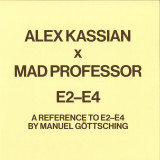
Alex Kassian's extended rendition of E2–E4 promises a 12-minute electronic odyssey, tailor-made for diverse dancefloors from it’s spiritual home Ibiza and beyond. On the flip side, Mad Professor embarks on a club-oriented version excursion, a rare gem in its own right. This reimagining breathes new life into the classic, offering fresh perspectives for music aficionados everywhere. Hot tip for release of the Summer!
After remaining unavailable for years, here's the long-awaited vinyl reissue of the debut album (originally released in 1972) by one of the epoch-making groups in the history of Peruvian rock: We All Together. Their original compositions -all sung in English- betray their passion for McCartney, taking Beatle centrism to new heights in South America. While the Uruguayan Los Shakers could remind us of the first phase of the Fab 4, We All Together is like their '70s version. Amazing compositions, with nods to prog rock and the twilight imprint of singer-songwriters living the end of the hippy dream, that show both diversity and a defined identity. A must for any '70s rock collector. DESCRIPTION Between 1967 and 1974 Saúl and Manuel Cornejo led a series of epoch-making groups on the MAG label (New Juggler Sound, Laghonia and We All Together) in the history of Peruvian rock. All these bands were directly influenced by the British invasion and used new sounds from Hammond, phase shifters, synthesizers and tapes played backwards, which stimulated rivalry with other groups. Another hallmark of the brothers was the technical quality of their records, thanks to Saul's supervision of all MAG recordings between 1972 and 1974. At the end of 1971, when Laghonia was working on the last tracks of "Etcétera", they met Manuel Antonio Guerrero's (MAG) son, Carlos, who had just got back from the USA, and gladly joined in the choruses of the last songs Laghonia was recording. They met up again soon after to rehearse some of Paul McCartney's songs. As soon as he heard them play, Guerrero Senior urged them to form a group focused on cover versions of foreign hits not yet known in Peru. Initially, the Cornejo brothers weren't enthused by a project so different from Laghonia, but ended up accepting as it gave them the opportunity to spend time in the studio. Carlos' melodic voice was another incentive, although they made it clear that the new group, We All Together (WAT), would stick to the mixing desk: "The group isn't into presentations or shows, we're about recording music and purifying it to the max," stated Saúl at that time. Their first album included four covers of Paul McCartney and Badfinger, several compositions by Carlos Guerrero -appealing Beatles-style melodies- and two songs from Saúl and Manuel's archives. 'Children', by keyboardist Carlos Salom, opens the LP: a nostalgic description of childhood, with the distinctive piano sound (achieved through mixing) that permeates the record. Although WAT sang and composed in English, they had no intention of undermining or alienating national culture. Their aim was much more innocent: they simply wanted to make it in the English-speaking world. 'It's a Sin to Go Away' was composed during Laghonía's lifetime as a band and it features guitars played backwards and a psychedelic-progressive style closely attuned to the era. After being included on several compilations, praise for the song has flowed from Europe and the United States in recent years. The album was released in July 1972 and became one of the best-selling Peruvian rock LPs.
- Normal Song
- Daybreak
"PNKSLM Recordings proudly present ""Normal Song / Daybreak” from rising stars of the Swedish indie scene 7ebra. The twin sisters' first new material since releasing their critically acclaimed debut album ""Bird Hour"" in 2023. In a natural continuation thematically from ""Bird Hour"", the new release sees the duo not only embracing their melancholy, but celebrating it.
7ebra are 27-year-old twin sisters from Malmö Sweden, who grew up playing music together. Inez plays electric guitar and sings, Ella plays a keyboard, organ and Mellotron - whilst manually playing drum samples with her feet - as they both sing haunting harmonies in a way that only twins can. Beautiful but punk, minimalist but epic."
Cleveland death metal legends-in-waiting 200 Stab Wounds have returned with Manual Manic Procedures, a superlative sophomore effort that follows 2021’s Slave to the Scalpel, their tour de force debut. The new album is a brutal slab of old school death metal with a contemporary edge. Not for the faint-hearted, Manual Manic Procedures may well be the album that puts classic gore-themed ferocity back into the metal community’s collective consciousness. The band's debut, "Slave to the Scalpel" saw 200 Stab Wounds insinuate themselves into the minds of extreme metal fans, leading to praise from Pitchfork for their “unpretentious brilliance, pitch-black sense of humor” and an “aesthetic that’s built around a chugging, groovy riff that stomps down a path of destruction.” Manual Manic Procedures sees the band upping the ante both musically and lyrically. Ultimately, for 200 Stab Wounds, it’s all about creating art that they enjoy. “I know that if we like it, our fans will like it,” says Buhl. “That's really all that matters to us. And if we keep touring, it's just gonna get bigger and bigger. Then everyone's happy, far as I'm concerned.” The songs on Manual Manic Procedures are not safe for work – perhaps unsafe most anywhere. But that’s its dark charm in a world where even heavy music can play it too safely. 200 Stab Wounds have crafted Manual Manic Procedures for themselves and like-minded brethren: thrill-seekers, carnage cravers, horror fans, and aficionados of the most extreme metal. Above all, 200SW created a future death metal classic.
Blue[26,85 €]
First in a series of reissues from Pierre Jaubert’s Parisound studio archive on Strut Record IS Lafayette Afro Rock Band's elusive funk/Afro original album, 'Malik,' originally released in 1974. Transparent blue colored LP
In 1971, an undocumented seven-member Afro-American ensemble known as the Bobby Boyd Congress made a transformative journey from the United States to France. Bandleader Frank Abel recollects, "We sensed that the soul and funk market was saturated back home, and our original plan was a brief 6-month stint in Paris. Surprisingly, we ended up staying for a decade." Upon lead singer Bobby Boyd's return to the U.S., the group rebranded as Ice and crossed paths with independent producer Pierre Jaubert, a seasoned studio professional with credits on groundbreaking recordings alongside Charles Mingus, John Lee Hooker, and Archie Shepp, among others.
Drawing inspiration from Motown's work ethic, Jaubert initiated regular rehearsals with Ice. He recalled, "I didn't want to mimic Berry, but with seven talented musicians collaborating daily, something unique emerged." The band, residing in Paris and immersed in the African-dominated Barbesse district, began infusing African elements into their music frequently performing with Paris-dwelling Camaroonian and legendary composer Manu Dibango.
Under the new moniker Lafayette Afro Rock Band, the group's music transitioned to predominantly instrumental compositions, featuring a denser Afro-funk sound. Their inaugural recording with the new name, 'Soul Makossa,' included a compelling rendition of Dibango's classic and the impactful break in 'Hihache.' The subsequent release a year later, 'Malik,' refined their sound with the percussive Afro party jam 'Conga,' the atmospheric vocoder and piano-led piece 'Djungi,' and the robust funk of 'Darkest Light.' Despite a limited impact upon its initial release, 'Malik' found appreciation as hip-hop culture flourished in the '80s, establishing itself as a rich source of samples and riffs. 'Conga' was featured in the 'Ultimate Breaks And Beats' series, while the opening horn line from 'Darkest Light' became a pivotal hip-hop motif, employed by Jay-Z, Public Enemy, Wreckx 'N' Effect, and many others
Second in a series of reissues from Pierre Jaubert’s Parisound studio archive on Strut Record IS Lafayette Afro Rock Band's elusive funk/Afro original album, 'Soul Makossa' originally released in 1973. Transparent blue colored LP
In 1971, an undocumented seven-member Afro-American ensemble known as the Bobby Boyd Congress made a transformative journey from the United States to France. Bandleader Frank Abel recollects, "We sensed that the soul and funk market was saturated back home, and our original plan was a brief 6-month stint in Paris. Surprisingly, we ended up staying for a decade." Upon lead singer Bobby Boyd's return to the U.S., the group rebranded as Ice and crossed paths with independent producer Pierre Jaubert, a seasoned studio professional with credits on groundbreaking recordings alongside Charles Mingus, John Lee Hooker, and Archie Shepp, among others.
Drawing inspiration from Motown's work ethic, Jaubert initiated regular rehearsals with Ice. He recalled, "I didn't want to mimic Berry, but with seven talented musicians collaborating daily, something unique emerged." The band, residing in Paris and immersed in the African-dominated Barbesse district, began infusing African elements into their music frequently performing with Paris-dwelling Camaroonian and legendary composer Manu Dibango.
Rechristening themselves Lafayette Afro Rock Band, the group's musical direction shifted towards predominantly instrumental compositions, characterized by a weightier, more intricate Afro-funk sound. Their debut recording under this new moniker, 'Soul Makossa,' made a powerful impact with a dynamic rendition of Dibango's classic, coupled with the intense break of 'Hihache' and the contagious 'Nicky.' Initially released by Musidisc in France and later in the U.S. via Editions Makossa, the album omitted the title track due to publishing clearance issues.
Despite modest sales upon its initial release, the album's enduring influence became evident as hip-hop culture surged in the '80s, establishing it as a primary source for samples and riffs. The iconic 'Hihache' break found fame in Biz Markie's 'Nobody Beats The Biz,' and tracks from the album were lifted by LL Cool J, The Beatnuts, Kruder & Dorfmeister, and numerous others.
- A1: Dennis Coffey And The Detroit Guitar Band - Scorpio
- A2: The Jimmy Castor Bunch - It's Just Begun
- A3: B T. Express - Energy Level
- A4: James Brown - Get On The Good Foot
- A5: Afrika Bambaataa & The Soul Sonic Force - Planet Rock
- B1: Manu Dibango - Soul Makossa
- B2: Esther Williams - Last Night Changed It All
- B3: The Mohawks - The Champ
- B4: Herman Kelly & Life - Dance To The Drummer’s Beat
- B5: Spanky Wilson - Sunshine Of Your Love
- C1: James Brown - Give It Up Or Turnit A Loose
- C2: Candido - Soulwanco
- C3: Arthur Baker - Breaker's Revenge
- C4: Manu Dibango - The Panther
- D1: Abaco Dream - Life And Death In G & A
- D2: The Jackson 5 - Dancing Machine
- D3: Mongo Santamaria - Cloud Nine
- D4: Edwin Starr - I Just Wanna Do My Thing
- D5: Badder Than Evil - Hot Wheels
Compiled by legendary producer Arthur Baker, ‘Breakers Revenge’ is a near-definitive collection of original Funk, Soul, Latin, Disco and Electro classic tracks from 1970-1984. These tracks, a combination of classics and obscurities, have all since become legendary to Breakdancers everywhere.
First played at South Bronx block parties, community halls and park jams in the 1970s and 80s, spun endlessly by the first three major hip-hop DJs – Kool Herc, Grandmaster Flash and Afrika Bambaataa – and found in the record crates of any DJ of note ever since. Seminal funk and soul tracks such as Dennis Coffey’s ‘Scorpio’, The Jimmy Castor Bunch’s ‘It’s Just Begun’, James Brown’s ‘Get on the Good Foot’, The Mohawks’ ‘Champ’ sit side-by-side here with the ground-breaking, classic electro of Afrika Bambaataa’s ‘Planet Rock’, and Arthur Baker’s own definitive ‘Breaker’s Revenge.’ Breakdancing has come a long way from its New York roots to its respected position as an art form today where, for the first time ever, it is to be featured in the Olympics held in Paris this August 2024.
The ‘breakbeat’ remains at the very heart of hip-hop, the mercurial funk, soul and disco tracks, always 100% guaranteed to get B-Boys, B-Girls and Breakdancers moving at any block party, with the percussive breakdown of each track the pinnacle soundtrack to any dance/battle between Breakdancers of any note. Similarly these tracks have been sampled many 1000s of times over by every hip-hop artist and producer of note. KRS-ONE, Marley Marl, Kanye West, Jay-Z, Public Enemy, Eric B, The Fugees, Outkast, Mos Def, Main Source, Jungle Brothers, LL Cool J, De La Soul and, well, everyone!
Compiler Arthur Baker played a pivotal role in hip-hop history when in 1982 he produced Afrika Bambaataa’s seminal ‘Planet Rock’ (as featured here), introducing electronic instruments into hip-hop for the first time ever and in the process created electro. After ‘Planet Rock’, Arthur Baker went on to remix or produce every major artist of note – from New Order to the Rolling Stones, Al Green to the Pet Shop Boys
Written, recorded, produced and mixed by OMD – Andy McCluskey and Paul Humphreys – ‘English Electric’ is a 12-track letter to technology, space, love and a grand return to form for a band whose 1980 hit ‘Enola Gay’ occupied the world’s stage at last year’s Olympics Opening Ceremony.
As percolating synth-pop is pulled along at different speeds and executed with needle-sharp finesse, late night electro ballads collide with big sounding club cuts on a record which also features three interlude tracks, including dystopian missive ‘Please Remain Seated’ and ‘Decimal’, which is accompanied by this suitably mechanical video, directed by German motion and graphic designer Henning M. Lederer.
As Andy McCluskey says of the album; “the overarching feel tends to be a sense of loss, of melancholia, that things haven’t turned
out the way you wanted them to, whether it be with technology or personal relationships.” The title itself – taken from a British industrial manufacturing company
Los Fulanos, Barcelona's champions of Latin Soul, are back on wax!
Miguelito Superstar, co-producer along with Manuel Dabove of their celebrated debut album, "Si esto se acaba, que siga el boogaloo", has crafted two electrifying versions that are pure fire. 'Why Don't We Do Some Boogaloo?', already a local classic, is paired with a take on New Order's legendary 'Blue Monday', which is transformed into a nearly unrecognizable Latin Funk powerhouse.
Both tracks receive special treatment, Miguelito has unearthed some key breaks from the original sessions and pushed the rhythm section front and center, making this 7" a must-have for you know who.
Latin Soul para que baile la gente!
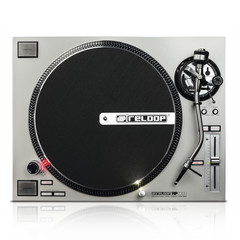
Features
NEW features of the MK2 version
Built for the club: Rigid chassis construction with an even heavier design with additional reinforcements made of metal, rubber and molding compound for high vibration damping and isolation
More powerful starting torque (adjustable from 2.8 - 4.5 kg/cm)
Fine-tuned motor control for further optimization of wow and flutter and rotation
Newly developed, height-adjustable tone arm base (VTA) and Anti-Skating control
Particularly light weight and rigid, satin aluminium material used for tone arm pipe
Pitch scale for precise adjustments
Optional ground terminal offers additional protection in complex club & studio environments
Easily replaceable, freely rotatable LED needle light in new aluminium design
High-quality and hard-wearing silver metallic finish
Quartz driven DJ turntable with upper-torque direct drive
Adjustable stop speed (0.2 - 6 sec.)
Precise control of motor with 3 speeds (33 1/3, 45 & 78 RPM)
Precision manufactured, die cast aluminium turntable
Rubber inlays for reduction of vibrations and background noise
Statically-balanced universal S-shaped tonearm with hydraulic lift and anti-skating mechanism
Universal connection for pickup systems (SME)
Pitch range +/-8 %, +/-16 %, +/-50 % (Ultra Pitch)
Quartz lock
Additional start/stop button for vertical positioning
Reverse function: switch for forwards and reverse operation
Recessed connection cavity for easy installation in cases & seamless adjustment
Phono and line out (no grounding required)
Removable mains and RCA cable
Safety mains switch
Shock-absorbing feet against vibrations
Technical Data
Turntable:
Type: direct-drive turntable
Drive: quartz driven upper-torque direct drive
Motor: 16-pole, 3-phase, brushless motor
Turntable speeds: 3 speeds, manual (33 1/3, 45, 78 RPM)
Starting torque: 2.8 - 4.5 kg/cm (adjustable)
Adjustable stop time (0.2 - 6 sec.)
Start-up time / change to RPM: 55dB (DIN-B)
Brake system: electronic brake
Platter:
Material: die cast aluminium
Diameter: 332 mm
Weight: approx. 1.5 kg
Tone arm:
Type: universal, statically balanced, S-shaped
Effective length: 230 mm
Overhang: 15 mm
Tracking error range: < 3°
VTA setting range: 0-6 mm
Useable weight of pickups: 3.5~8.5 g (incl. headshell 13~18 g)
Anti-skating range: 0 - 3 g
Effective tone arm mass: 30 g
Connections: 1x Phono/Line Out (gold-plated), 1x GND earth connection
General:
Power supply: AC 115/230 V, 60/50 Hz (EU/US), AC 100 V, 50/60 Hz (JP)
Power consumption: 13 W
Dimensions: 458 x 354 x 144,6 mm
Weight: approx. 11.7 kg
Accessories included: turntable, slipmat, LED needle light, counterweight, PHONO Cinch cable with earth, AC mains adapter, operating instructions
Nha Sentimento is the eleventh and final studio album released by Cape Verdean singer Cesaria Evora. The album consists of 14 songs, most of them written by Cesaria's well-known writers Teófilo Chantre and Manuel de Novas. For the first time in 15 years, the album is being released on vinyl and includes the bonus track ""Gaivota Pa Voa"". Nha Sentimento is available as a 15th anniversary edition of 500 numbered copies on crystal clear vinyl and includes a 4-page booklet with lyrics.
'Quintela', the debut album by Carme López, a performer, teacher and researcher of traditional oral music from Galicia, is a new experimental work for Galician bagpipe. Influenced by the approach of composers like Éliane Radigue or Pauline Oliveros, the Spanish composer creates slowly modulating sound environments, and stretches the sonic the possibilities of the bagpipe to its absolute limit. 'Quintela' is structured in four movements, plus a prologue and an epilogue, which serve as a link to the contemporary language of the instrument.
The bagpipe is strongly tied to traditional musics; its use in different genres and musical contexts is extremely limited and unimaginative. 'Quintela' brings it to a wholly unknown field, decontextualising the bagpipe in order to elevate a personal approach, and leaving behind its male-dominated past (in which it relates to ideas of prestige, dominance or carries even sexual connotations). López expertly demonstrates its grandeur and breadth; the music on 'Quintela' ranges from barely audible sounds of air passing through the hide bag through rhythmical use of its reeds to all-encompassing drones with complex harmonic structures and vibrant overtones.
The narrative arc focuses on the composer's past, its people and places, and could be conceived as a journey in and of itself. A homage to those in our memories, but also a step into the unknown, 'Quintela' is an ambitious, graceful and captivating debut.